Feeds:
Posts
Comments

Archive for January, 2017

How many times lately have I read “in these uncertain times” and “now more than ever”? Crises bring these phrases out.

So how do we inject the words with extra special urgency? I find myself thinking like Charlie Brown (or was it Lucy?) trying to fill up a book report: Now more than ever ever ever really and truly and I’m not kidding, programs about the environment such as Living on Earth are important.

Some of the Living on Earth shows — about melting ice and rising seas, for example — are crucial to our understanding of what we face. Others, like the one about a certain pig in Haiti, underline the interconnectedness of the environment and local economies. You can’t wipe out an animal people rely on and expect everything to be fine.

From Living on Earth: “In Haiti, the creole pig was a staple of the peasant economy, bringing families economic stability, devouring food waste and occasionally becoming an religious sacrifice. But as Allison Griner reports, disease killed many creole pigs and American efforts to control the swine flu took the rest. Efforts to replace the pig failed, but now peasant farmers are slowly rebuilding the creole pig herd.

“GRINER: To reverse the trend, [2015 presidential candidate Jean-Baptiste] Chavannes and his colleagues in the peasant movement decided to reintroduce the creole pig — or at least a hybrid that could fill its place.

“CHAVANNES: We want the return of the creole pig. So we led a fight, and over the years, the minister of agriculture finally started a program for the repopulation of the pigs. …

“GRINER: But just as the new pig herd was starting to grow, once again disease intervened. This time, the culprit was teschen, a virus that can kill a pig within days. Six years ago, it started to spread. And decades of work were lost. …

“Still, the fight is not yet over for the creole pig. Vaccines for teschen are already being tested in Haiti, and Chavannes hopes partnerships with international NGOs will help fight this latest disease. Part of Chavannes’ mission is to rebuild the peasant economy. But to reach that goal, bringing back the creole pig is a necessity, he says.

“CHAVANNES: We must. [Laughs] We must, and like I said, pig farming is indispensable for reestablishing the peasant economy. …

“GRINER: Already, the race to save Haiti’s pigs is well underway. This past spring, an official from the ministry of agriculture announced that the 500,000 doses of the teschen vaccine had been produced. The official says they are currently available for farmers to use.”

At Living on Earth, you can read what the pigs meant to the farmers, why they got killed off, why American pigs were a terrible replacement, and what kind of livestock peasants decided to raise while they are waiting for the creole pigs to come back.

Photo: Allison Griner
Pig in Delmas, Port au Prince, Haiti

Read Full Post »

Recently, Kara Baskin wrote for the Boston Globe about a couple of young environmental philanthropists.

Arlington (Mass.) siblings Will Gladstone (age 12) and Matthew (age 9) “run the Blue Feet Foundation, which manufactures bright blue socks with bird logos to support the endangered blue-footed booby, a threatened species found in the Galapagos Islands.

“Proceeds benefit the Galapagos Conservancy, and the brothers have raised $18,000 since launching a few months ago.

“The idea began in science class at the Fessenden School in West Newton last year. …

“The brothers started a logo contest among pals. Dad Peter Gladstone helped the pair create a final design on logo site 99designs.com and located a manufacturer to to produce the cotton footwear. …

” ‘We put a thank you card in each package, write out the label, and talk about what this will go to. We ask for photos of them wearing the socks,’ Will says. …

“Will also plans to expand his business a bit, perhaps shifting to red socks for Valentine’s Day. (Yes, there is also a red-footed booby.) …

” ‘My brother says, “If we go out of business, I hope it’s because we save the birds.” ‘ ”

Read more at the Blue Feet Foundation, here. There’s a cute photo of three generations of one family wearing the blue socks in memory of their trip to the Galapagos Islands.

6/21/17. I have to add this this heavenly surreal animation I just saw, Mr Blue-Footed Booby: https://slipperyedge.com/2017/06/08/mr-blue-footed-booby/.

Photo: chutupandtakemykarma
The Galapagos bird the blue-footed booby is endangered

Read Full Post »

Some schools are taking the current push for STEM skills (science, technology, engineering and math) a step further and putting kids on project teams with students from around the world. While you are learning science, you are getting to know what life is like somewhere else.

Dugan Arnett writes at the Boston Globe, “In just a few weeks’ time, the students in Kathy Wright’s Richard J. Murphy K-8 School STEM class have developed a keen grasp of Costa Rican culture.

“ ‘They don’t get snow there,’ said Jayd’n Washington, a 12-year-old seventh grader at the Dorchester school. Added fellow 12-year-old Fabian Riascos, ‘They have their own currency.’

“Their burgeoning interest in the Central American country stems not from a recent geography lesson plan — it’s the result, instead, of a program called Design Squad Global, which pairs American middle-school classes with students from other countries in a kind of virtual pen-pal relationship.

“Created by WGBH Boston as a spinoff of the old PBS television series ‘Design Squad,’ the program serves, at its core, as a way to introduce young students across the globe to the importance of engineering-related projects.

“But another goal — and one that organizers seem to value as much as anything — is the program’s ability to connect children from various locations, backgrounds, and cultures. …

“The DSG program connects kids ages 10-13. Currently, it operates in 25 American cities — including Boston, Chicago, and New York — and eight countries, from Brazil to Jordan to South Africa.

“At the start of the program, which can run either six or 12 weeks, two classes from different countries are paired together. In online correspondence, they tick off their names, nicknames, and interests — and as they tackle a collection of weekly projects, a virtual relationship blossoms. …

“The focus is on real-world problem-solving. Participants are charged with designing and constructing scaled-down versions of a number of projects: a structure that can withstand an earthquake, an emergency shelter, an adaptive device for someone with disabilities.

“ ‘Middle school kids can come up with some amazing solutions,’ said Mary Haggerty, who oversees educational outreach at WGBH. ‘It makes you feel very hopeful for the future.’ ”

More here.

Photo: Jonathan Wiggs/Globe staff
Jhondell Smith-Young tested his STEM project for a Dorchester class that assigns him to an international team.

Read Full Post »

Suzanne has been dolling up the studio of her birthstone-jewelry company. Would you like to see what it looks like? Margareta took the photos. I especially love the Munch-like landscape of the moon on water and the view of the river from the studio window.

Do check out the Luna & Stella website, especially if you are thinking of giving your Valentine a piece of jewelry for Valentine’s Day. Suzanne’s antique locket collection has been getting a lot of attention lately, and there is a wide variety of contemporary necklaces, bracelets, cuff links, earrings, and more, including the moons and stars that gave Luna & Stella its name.

“Who’s your moon and stars?”

012617-lunaandstella-desk-and-art

012617-lunaandstella-providence-ri


012617-lunaandstella-river-view


012617-lunaandstella-art

Read Full Post »

Two women in San Francisco felt compassion for homeless people who have nowhere to go during the day. So they arranged with a local Catholic church to welcome them.

Patricia Leigh Brown wrote the story for the Christian Science Monitor series called “People Making a Difference: Ordinary People Taking Action for Extraordinary Change.”

“Tina Christopher’s day begins at 5:45 a.m. as she cleans the sidewalk in front of St. Boniface Catholic Church in the Tenderloin, the once-colorful vice district in San Francisco now better known as a province of the poor, the desperate, the addicted, and the down and out. …

” ‘All right my beautiful brothers and sisters!’ Ms. Christopher says in her always-chipper voice. ‘Good morning! Time to get up! Wakey wakey!’ Then she unlocks the church’s heavy iron gate.

“Soon, St. Boniface’s 74 backmost pews will cradle some 150 homeless people seeking ‘sacred sleep,’ the sound of snoring permeating the incense-filled room. Beneath the saints painted on the church’s glittering dome, they stretch out for nine hours of vital slumber, resting their heads on ad hoc sweatshirt and T-shirt pillows or sometimes their folded hands. For a brief moment, their faces, beatific and babylike in sleep, do not betray the nights of fearful wandering and the way concrete seeps into a person’s bones and stays there.

“Christopher is the program director of The Gubbio Project, a pioneering effort, believed to be the country’s first. … Cofounded in 2004 by the Rev. Louis Vitale, a well-known peace and human rights advocate, the program provides a place for homeless people to sleep during the daylight hours, when most shelters are closed.

The project is named after Gubbio, the Italian town where, the story goes, residents befriended a wolf after realizing the animal wasn’t dangerous, just hungry.

“The project’s guiding lights are two women who are devoted to the dignity of the people they call ‘guests.’ Laura Slattery, Gubbio’s executive director and public voice, is a West Point graduate-turned-social justice activist who wears jeans and hiking boots and exudes a sense of calm resolve, even in a crisis. Christopher is the exuberant all-hands-on-deck ground commander who knows the name of every guest and whose finely tuned antennae swiftly intuit their needs and issues. …

“At St. Boniface, Christopher writes daily notices on the whiteboard:

“Shower bus 8:30-2
“We have Blankets!
“Tomorrow – some socks.

“She is in constant motion, eyeglasses perched atop her head, dispensing cough drops, rubber bands, tampons, shaving cream, and other necessities from a converted confessional. She makes it a point to ask guests whether they’d prefer a pink toothbrush or a blue one, a black blanket or a brown one. ‘Even the simplest things are important to people who don’t have choices,’ she explains.

“Socks and other staples come from volunteers like Roberta Snyder, who has established relationships with housekeepers at nearby hotels and provides soaps, shampoos, and other items …

“[Slattery] thinks of The Gubbio Project as ‘the ministry of presence,’ one that dispels some popular myths about homeless people along the way. Quite a number of donations to Gubbio’s $350,000 annual budget, for instance, are made by guests. ‘Last week it was $42,’ Slattery says. ‘The week before it was 24. Flips the idea of panhandling on its head, right?’ ”

Click here to read about the women’s routes to their unusual calling — one through addiction, one through West Point.

Photo: Melanie Stetson Freeman/Christian Science Monitor
Tina Christopher (l.) and Laura Slattery run The Gubbio Project, which gives people experiencing homelessness in San Francisco a place to go during the day.

1107-pmad-mgubbio

Read Full Post »

o8haafk

Photo: Imgur
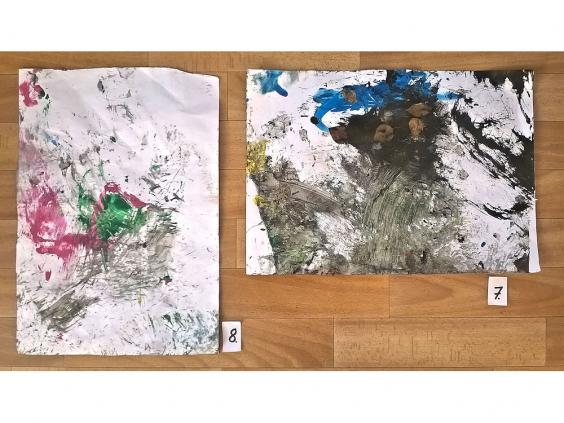
Juuso makes art by rolling in paint. Sales of his paintings help animals who, like him, have been orphaned.

This orphaned brown bear is helping to raise money for the Finnish center that rescued him. And he’s not riding a unicycle like a circus bear. He’s doing something he apparently really likes: Art.

Jussi Rosendahl and Attila Cser report at Reuters, “The artist behind the exhibition entitled ‘Strong and soft touches’ is a 423-kilogram (930 pound) brown bear named Juuso who uses his body, especially his paws, as paintbrushes.

” ‘We just leave paint for him, some plywood and paper … If we ask him to do it, he doesn’t do anything. He does all the work in his own time, when he’s alone, sitting and moving his legs on the paper,’ said Pasi Jantti, one of his keepers.

“Juuso, who is 17 years old, favors blue and red, the keeper said, adding that the paints used posed no health risk to the bear.

“His keepers discovered Juuso’s artistic bent one day while painting some facilities at Kuusamo animal center in northern Finland where he has been living since being orphaned as a cub.

” ‘Juuso got some paint in his paws and started to make marks with them. We noticed that he liked it,’ Jantti said.”

Read more at Reuters, here.

I have to hand it to keepers who noticed what the bear enjoyed, let him do it, and thought up a way it could help other animals in their care.

Photo: The Independent
Two Juuso originals that have already sold.

Read Full Post »

One of the reasons I’m a fan of KerryCan’s blog “Love Those Hands at Home” is that it’s so intelligent — not only the posts themselves but the comments she attracts.

Maybe she attracts thinking people partly because she is so faithful about going to her followers’ blogs, thinking about their posts, and making an interesting comment. I, for one, find that her regular commenting can keep me going on a bad day.

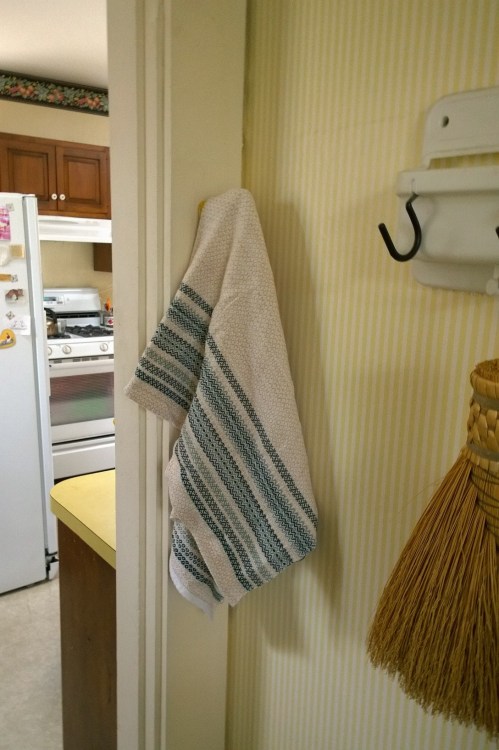
Recently KerryCan offered a giveaway to readers of her blog who would answer her question about how much the process of creation (as opposed to the product) meant to them, and I was the lucky stiff who won a handwoven custom dishtowel. Wow. I adore the craftsmanship and am almost afraid (but not quite) to use this for dishes. Everything in KerryCan’s home must be artistic if this is an example of a humble dishtowel.

I hope you will check out her blog and also her Etsy shop, where she offers antique linens, amazing chocolates, and more.

011217-woven-together-dishtowel

Read Full Post »

Photo: DW/Bern Jutrczenka
Angela Merkel, German chancellor, has welcomed people fleeing war.

Here’s another approach to finding jobs for migrants. This one involves a website started in Germany, where the nationwide employment rate is high.

Jona Kallgren writes at the Boston Globe, “A startup company in Berlin is trying to help integrate last year’s flood of migrants into the German workforce with a tailor-made online job market for new arrivals.

“The website Migrant Hire, was founded earlier this year by a mix of Germans and migrants, and operates with a staff of five volunteers out of a shared working space in a former industrial building in Berlin’s trendy Kreuzberg district.

“More than 8,000 migrants have registered on the website — a fraction of the 890,000 asylum-seekers who arrived in Germany last year but a good sign that some are serious about finding employment.

“The website helps migrants create resumes that match German standards, then connects the applicants to companies. It’s free for the migrants and relies on donors and volunteers.

“MigrantHire cofounder Hussein Shaker has channeled his own experience trying to find work as a migrant into helping others. Back in the Syrian city of Aleppo, he studied information technology, but when he came to Germany he couldn’t find any work in the IT sector. Instead he ended up working in a call center while learning German.

“When he was approached with the idea of MigrantHire by Remi Mekki, a Norwegian entrepreneur living in Berlin, he immediately quit his job and threw himself into the project.

“On a normal workday he and others help migrants write resumes, answer questions about German employment law and help migrants apply for jobs that companies have posted on the website.” More here.

Read Full Post »

I’m beginning to think that this period of history will come to be known as one of enormous creativity. It’s not just isolated incidents. I was working on the upbeat story below and skipping back and forth to Facebook, where each sign from the marches and each costume seemed to outdo the last — and where I saw women on the US-Mexico border weaving their hair together Friday — when it hit me. One and one and 50 have already made a million. And there is no sign of stopping.

The story I wanted to share is on a creative effort to help refugees, this time in the Netherlands.

Liz Alderman described it at the NY Times.

“Mahmoud al-Omar leaned over a sewing machine in the basement of a former prison being used to house refugees and began stitching jeans for a popular clothing line. With more than 15 years experience as a tailor in Syria, he zipped through one pair and moved on to another, methodically filling a small order.

“The job, set up by a Dutch organization that matches refugees with work opportunities, is only temporary. Yet after Mr. Omar fled his war-torn hometown, Aleppo, two years ago, just having a place to go each day felt like a salvation.

“ ‘Working is completely necessary to speed up integration,’ said Mr. Omar, 28, who still struggles to speak Dutch, hindering his chances of a full-time job. ‘I want to become independent as soon as possible, so I can start giving back to the country that took me in.’

“When more than one million men, women and children streamed into Europe last year to seek a haven from conflict and poverty in the Middle East and Africa, governments viewed the labor market as the quickest path to absorb newcomers. The sooner people started working, the thinking went, the faster they could get off government aid and start contributing to the economy.

“Yet permanent jobs have proven elusive. The lack of language is a big barrier, as is a skills mismatch. Some refugees do not have the right experience, while others cannot get their professional qualifications or degrees recognized.

“Private initiatives have sprung up across Europe to help. The Refugee Company, the Dutch group that steered Mr. Omar toward work, is one of scores guiding refugees into professional networks and opportunities to improve employability.” More here.

From the company’s About page: “Our mission is to empower refugees. We believe work is the best tool to integration; through work, refugees can blend in with their society and build up a new meaningful life in The Netherlands. We speed up integration by providing opportunities for newcomers upon arrival to utilize their talents again. …

“We decided Refugee Company will focus on craftsmanship. We provide work opportunities in the creation and hospitality sector, as that is where our roots lie. We see a growing demand for craftsmen and horeca [Hotel/Restaurant/Café] staff in the Netherlands.” More.

The Providence Granola Project does something similar in Rhode Island, though on a smaller scale. Language is definitely a barrier, so if you have always liked explaining English to people, consider volunteering near your home.

Photo: The Refugee Company


Read Full Post »

Who could resist a children’s book called Preaching to the Chickens? Maria Popova at Brainpickings, my favorite source for children’s book recommendations, wrote about it just before Christmas.

Popova said, “Civil rights icon and nonviolent resistance leader John Lewis (b. February 21, 1940) is rightly celebrated as a true ‘healer of the heart of democracy.’ He is also a testament to how the humblest beginnings can produce lives of towering heroism. Long before Congressman Lewis became a key figure in ending racial segregation in America, little John was one of nine siblings living on the family’s farm in southern Alabama. It was in that unlikely environment, heavy with labor and love, that young Lewis found his voice as a leader.

“Writer Jabari Asim and illustrator E.B. Lewis tell the improbable and inspiring origin story of this largehearted legend in Preaching to the Chickens: The Story of Young John Lewis. …

“One day, John is put in charge of the chickens and so begins his foray into leadership. His heart ablaze with the dream of becoming a preacher, the boy begins practicing before his willing — or, at least, tacitly agreeable — avian audience. E.B. Lewis’s luminous watercolors are the perfect complement to Asim’s lyrical prose, which together carry the story of how John Lewis incubated his talent for wielding words that move and mobilize mind, body, and spirit.”

Read more at Brainpickings, here. Popova, as usual, suggests other books that would make a good complement to this one.

Art: E.B. Lewis
A young John Lewis hones his oratory.

Read Full Post »

Today let’s hear from Sojourner Truth (1797-1883), who gave this speech extemporaneously at the 1851 Women’s Convention in Akron, Ohio. She begins by addressing two parallel causes: the fight for freedom of “the negroes of the South and the women at the North.” Then she goes on to say that as a black woman, women’s rights are her cause, too.

“That man over there says that women need to be helped into carriages, and lifted over ditches, and to have the best place everywhere. Nobody ever helps me into carriages, or over mud-puddles, or gives me any best place! And ain’t I a woman? Look at me! Look at my arm! I have ploughed and planted, and gathered into barns, and no man could head me! And ain’t I a woman? I could work as much and eat as much as a man — when I could get it — and bear the lash as well! And ain’t I a woman? I have borne thirteen children, and seen most all sold off to slavery, and when I cried out with my mother’s grief, none but Jesus heard me! And ain’t I a woman? …

“Then that little man in black there, he says women can’t have as much rights as men, ’cause Christ wasn’t a woman! Where did your Christ come from? Where did your Christ come from? From God and a woman! Man had nothing to do with Him.

“If the first woman God ever made was strong enough to turn the world upside down all alone, these women together ought to be able to turn it back , and get it right side up again! And now they is asking to do it, the men better let them.

“Obliged to you for hearing me, and now old Sojourner ain’t got nothing more to say.” Except she’s still saying it: that the rights of one group are inseparable from the rights of all.

More here.

Photo: Biography.com

mtm1otk1mzmyodiynji2mjc0


Read Full Post »

Every once in a while I feel the need to go back to this poem. This is how it ends:

Return in thought to the concert where music flared.
You gathered acorns in the park in autumn
and leaves eddied over the earth’s scars.
Praise the mutilated world
and the gray feather a thrush lost,
and the gentle light that strays and vanishes
and returns.

—Adam Zagajewski (Translated, from the Polish, by Clare Cavanagh.)
Published in the New Yorker, September 24, 2011

In 2011, Newsweek had an interesting piece on the author’s perspective.

“A week after the collapse of the Twin Towers,” wrote Matthew Kaminski, “The New Yorker ran Polish poet Adam Zagajewski’s ‘Try to Praise the Mutilated World’ on the final page of its special 9/11 issue. Written a year and a half before the attacks, the poem nevertheless quickly became the most memorable verse statement on the tragedy, and arguably the best-known poem of the last 10 years. …

“Now 66, Zagajewski is the leading poet of the Polish generation that followed Zbigniew Herbert, Czeslaw Milosz, and Wislawa Szymborska. Milosz called his cohorts ‘the poets of ruin,’ forced to grapple with Poland’s bloody 20th century. Zagajewski fits this description as well. He was an infant when his family was loaded onto cattle cars and deported from their home in Lwów [Lviv], to be relocated by Stalin to the Soviet Union. …

“Polish poets have long thought of themselves as national bards, called to engage with the harsh world around them. ‘Polish poetry is one of the marvels of 20th-century literature,’ wrote former U.S. poet laureate Charles Simic. …

“In Zagajewski’s poetry, cruelty mingles with humor, optimism, and a keen appreciation of nature. ‘Well, why not,’ he says. ‘You write a poem. You are alive. You don’t want to be a humorless person. I think that when you write poems you aspire to something whole that’s bigger than simply lament. In poetry I think you try to reconstruct what’s humanity. Humanity is always a mix of crying and laughing.’ ”

More here.

Photo: Wikimedia
Astronomical twilight as seen from a plane window.

dusk-a330


Read Full Post »

Photo: Daily Table
Fresh surplus food is sold for less, with help from a distribution platform called Spoiler Alert.

A logistics company that moves unwanted, unneeded but perfectly fresh food to people who do want and need it has chosen the perfect Internet slang for its name: Spoiler Alert. Ordinarily, “spoiler alert” is what you say if you are recommending or reviewing a film or book and don’t want to spoil the ending for someone else. In this case, it’s about delivering fresh food where it’s needed before it spoils.

Janelle Nanos writes at the Boston Globe, “Spoiled food is a costly problem, accounting for about $218 billion in financial losses to US farms, businesses, and consumers each year, according to ReFED, a group of companies, nonprofits, and foundations that was formed last year to minimize food waste. Since its launch in 2015, Spoiler Alert’s food-matching platform has been adopted by 200 businesses and nonprofits in New England to cut down on waste and encourage donations by making them easier to track.

“The company was created by two MIT Sloan School of Management graduates, Ricky Ashenfelter and Emily Malina, and their chief technology officer, Marty Sirkin, and has worked its way through the city’s accelerator programs, winning $50,000 from MassChallenge in 2015 and a spot in this year’s Techstars Boston cohort. …

” ‘At Daily Table I like to think of Spoiler Alert as an opportunity to further meet our mission of capturing healthy, tasty products before they make it to compost or trash,’ said Ismail Samad, executive chef of the Dorchester grocery store, which sells food and prepared meals gleaned from donations. He said he relies heavily on Spoiler Alert to source the food for his store shelves.

“But part of Spoiler Alert’s recent success can be credited to another, rather wonky aspect of its platform, which helps companies navigate the tax code. [In December 2015], Congress passed a bill that expanded the tax breaks companies can receive for donating food, making it easier for small businesses to donate and for farmers to assess the fair market value of their inventories.” Read how it all comes together, here.

A nonprofit organization that is also a MassChallenge winner and does similar work in the region is Lovin’ Spoonfuls, which I blogged about here. MassChallenge is a startup accelerator that helps new companies get launched. Its judges are partial to companies that can do well by doing good, bless their hearts.

Photo: Lovin’ Spoonfuls
Lovin’ Spoonfuls donates food to Safe Haven, a housing program run by the Bedford (MA) Veterans Administration.

Read Full Post »

Could food delivery by bicycle be the wave of the future? Wayne Roberts, Canadian bicycle delivery maven from grade 7 to grade 12, thinks so.  Here’s what he wrote recently at the Torontoist.

“Bicycles never used to be thought of as central to the food system, but the Internet has allowed this particular wheel to be reinvented as a prime tool for localizing food systems while reducing traffic jams, cutting global warming emissions, and providing jobs.

“This innovation comes to light on account of Uber’s recent decision to reduce the fee it provides to UberEats bicycle couriers,” which has caused  controversy.

“But there’s another issue that got revealed here, which is the transportation system best suited to strong neighbourhoods and a vibrant and resilient food system. …

“The trip that’s a real killer from a space, energy, and hassle point of view — even worse than the short trip from the local warehouse to the local retailer — is the brief car trip from the customer’s residence to the retailer and then back home again. …

“If you want to calculate the embodied energy involved in moving food, the energy to move a two-ton car four miles to bring back 10 pounds of groceries is by far the most polluting trip any grocery item from anywhere has ever been on. …

“Putting food stores and restaurants back on main streets that are walking distance from densely populated neighbourhoods could be good for many reasons: good for fitness, getting to know neighbours, and building neighbourhood cohesion, which in turn is good for child safety and local response to emergencies. …

“To be resilient, cities need to localize as many services as possible to make them independent of outside control when it comes to the basics of life. Getting access to food is one of the basics, and the means of doing that should be as localized as the food and companies that get it customer-ready.

“The last mile needs to be in the hands of the people who live there.”

More at Torontoist, here.

Photo: Kat Northern Lights Man from the Torontoist Flickr Pool

Read Full Post »

My latest photo round-up includes several from family members plus examples of my own fascination with shadows and light.

The first picture is from Erik’s mother in Sweden. I love that a Swedish gingerbread house was rendered in red board-and-batten style. Next is a funny sign about Norwegians that my husband shot in Concord. Then we have Suzanne’s photo of proto-skiers and another funny sign, this time in Vermont.

The old barn is next to the Ralph Waldo Emerson homestead. The house being torn down is the haunted one I have described before. Tearing it down revealed that it was actually haunted by a raccoon.

The six light-and-shadow photos depict a stuffed animal in bright sunlight, our front gate after a recent storm, Plato’s Idea/Form of a trash can and recycling bin, three green windows, chairs in the pocket park, and a surprising pattern of light on a window blind.

https://suzannesmomsblog.com/wp-content/uploads/2017/01/122516-swedish-gingerbread-house.jpg

011217-humorous-sign-about-Norwegians


https://suzannesmomsblog.com/wp-content/uploads/2017/01/122816-grandkids-in-vermont.jpg

122716-stowe-penquin-safety-tips


122916-barn-at-rw-emerson-house

122816-concord-demolition


010817-sunlight-on-stuffed-cat

010817-sunlight-on-snowy-walk


011617-shadow-recycling-bins

011516-three-green-shadows


011617-shadow-chairs-in-pocket-park

011617-light-on-window-shade


Read Full Post »

Older Posts »