Feeds:
Posts
Comments

Archive for March, 2019

Photo: Aventura Mall
Louise Bourgeois’s Eye Benches are among the impressive works of art at Miami’s Aventura Mall.

When Suzanne was a toddler, I loved going to the mall, Eastview Mall in Victor, New York, so she could run around. Even today, I may go to a mall for my walk when the weather is bad. But on the whole, I avoid the typically oppressive atmosphere of malls. This one in Miami would have to be an exception. It’s a real art gallery.

Alexandra Peers writes at Architectural Digest, “About a dozen years ago, [real-estate developer Jackie Soffer] began buying artworks for the 2.8-million square-foot Aventura Mall, one of the largest in America. …

“A few malls have art, a very few have good art, but almost none have the button-pushers and immersive installations that the Aventura Mall features. Artists on view include pioneers or buzzy contemporary players like Louise Bourgeois, Wendell Castle, Lawrence Weiner, Julian Opie, and Daniel Arsham. There’s a 93-foot-long slide by artist Carsten Höller, who had another one in London’s Tate Modern museum.

“At first glance, it all seems highly unlikely, but — much like Steve Wynn’s groundbreaking Bellagio Hotel, which signaled to a certain set that the luxury property in Las Vegas had Picassos — the art immediately and wordlessly brands the shopping center.

” ‘Mall has slightly negative connotations,’ Soffer notes, but in Aventura, given its size, longevity (it opened in 1983 and has expanded repeatedly since), and events program, it means to be ‘a real community center.’ Plus, the art is an audience attraction — and great selfie bait.

“[Soffer] concedes that there’s also a popular and much-photographed ‘Love’ sculpture on New York’s Sixth Avenue, near the Museum of Modern Art. But she brags happily, ‘That’s red and blue. Ours is a red, blue, and green artist’s proof!’

“Not all the mall’s retail-art mash-ups go smoothly, of course. One October, sculptures by Ugo Rondinone, a series of Easter Island–style heads atop a plinth of weathered wood, were installed in a gloomy corridor. A few weeks later, a store tenant asked when the Halloween decorations were being taken down. He found them ‘scary,’ given their tucked-away locale. It was a classic case of bad placement, laughs Soffer, who adds that the works have been moved to a wide-open area and are quite popular now. …

“Perhaps the biggest surprise of having the art collection in the mall, says Soffer, has been the unexpected number of adults, rather than kids, who want to take pictures with the pieces. An outdoor fountain of spouting bronze gorillas and animals by The Haas Brothers is, if anything, even more popular when bad weather forces the mall to turn off the water—because fans can get much closer to the figures.”

See more of the art here.

Photo: Leo Diaz/ Aventura Mall
Carsten Höller’s Aventura Slide Tower.

Read Full Post »

Photo: The Guardian
In Dar es Salaam, Tanzania, bus rapid transit on the Morogoro Road has cut typical commute times from four hours a day to 90 minutes.

Big challenges sometimes get resolved more efficiently when fancy solutions are bypassed in favor of more straightforward ones. That is what a large African city discovered when it chose the concept of dedicated bus lanes over building a subway.

Nick Van Mead has the report at the Guardian, “Dusk falls in Dar es Salaam, and for hundreds of thousands of people in this African megacity-to-be the daily chaos and frustration of the journey home begins.

“People cram themselves into dalla dalla minibuses, some even climbing through the windows once the entrance is blocked. Others hang out of the doors, but the Kilwa Road heading south towards Mbagala slum is jammed and these diesel-belchers are going nowhere fast.

“On Bagamoyo Road to the wealthier areas in the north, solo drivers in blacked-out 4x4s sit stationary too – captive customers for the hawkers. … So far, so normal for a sprawling megalopolis of 6 million with virtually no public transport and only eight lanes of major road heading to and from the centre.

“Dar es Salaam, the de facto capital of Tanzania, is one of the fastest growing cities in Africa. Its population has increased eightfold since 1980 and swells by half a million people every year. The latest UN projections anticipate it will become a megacity within seven years as its population passes 10 million. …

“Dar es Salaam is pinning its hopes on a solution that could offer a different model for Africa’s megacities, giving them an alternative to a future in thrall to the private car. Unlike many cities on the continent, Dar es Salaam isn’t trying to build a metro. It has chosen a less sexy but cheaper and more achievable route: the bus. …

“The Dart system boasts bus lanes separated from other traffic, mostly in the middle of the road to reduce stoppages. Ticket payment and control takes place at stations rather than on board, while step-free stations and boarding mean the entire route is accessible to people in wheelchairs or with buggies. …

“The average journey time from the centre to the terminus at Kimara has been slashed from two hours each way to just 45 minutes, according to sustainable transport group the ITDP. That adds up to a saving of around 50 hours a month for the average bus passenger making the full trip. The ITDP awarded the system Africa’s only ‘gold standard’ bus rapid transit (BRT) rating.

“ ‘The new buses are much, much better,’ says Paulas George, a young IT worker waiting at Manzese station. He takes the bus every day and it has cut his journey time by two-thirds. He says it is not perfect though, complaining drivers sometimes turn off the air conditioning to save fuel.

“That is not the only teething problem. A shortage of buses after the main depot flooded during the 2017 rainy season means the system is carrying 200,000 people a day – half the expected capacity. Smartcard readers at station entrances aren’t working either, forcing passengers to buy individual paper tickets for every journey. Each is printed with a scannable QR code, but there are no scanners. Station staff stand by the gates and tear tickets as people enter. …

“ ‘Much of the city will have access to a world-class transport system within the space of a few years,’ says Chris Kost, the ITDP’s Africa director. All phases are being planned to gold standards and, once complete, a third of city residents will be within a 10-minute walk of the BRT network. …

“Kost [sees the metro fad] as political expediency. ‘Because metro systems don’t take up road space and don’t take away from cars then they are politically easier,’ he says. ‘Politicians see it as a big project with no sacrifices. But what if it never gets built? What if what is built is too expensive and so limited in size it leaves the majority of city residents no better off?

“ ‘It can be tempting for those in power, but is it really addressing the needs of people of the city? Bus rapid transit has been transformational for Dar es Salaam. For millions of people in African cities, this is their best hope of ever being connected.’ ”

More at the Guardian, here.

Read Full Post »

Photo: Alfredo Sosa
The newest solar farm of Florida Power & Light Company [FPL] is equipped to generate 74.5 megawatts of power, enough for approximately 15,000 Florida homes.

Large numbers of Americans are not as concerned as I am about fossil fuels and how they hurt the planet and until recently have not supported sustainable energy. But as the cost of renewable power comes down, many of them are giving wind and solar a new, pragmatic look.

Eva Botkin-Kowacki writes at the Christian Science Monitor, “There’s a new crop sprouting in southern Florida. Amid fields of sweet corn, squash, and okra dotting the landscape outside Miami, rows and rows of solar panels now soak up the Florida sunshine. …

“Despite being the Sunshine State, Florida has long lagged when it comes to tapping into the abundant rays overhead. But now that is changing as utility companies in the state have begun to recognize solar power as a vital component of a diverse energy future. …

“As solar has become more economically viable, the state’s utility companies now see opportunity more than competition in the technology Florida utilities’ newfound embrace for solar power echoes trends seen across the country, as the renewable energy source has shifted from a fringe indulgence for wealthy environmentalists to becoming a conventional part of power production. …

“With abundant sunshine, Florida ranks ninth in the United States for solar potential. But as recently as 2015, just one-tenth of a percent of the state’s power came from the sun. …

“Solar is still a bit player in Florida. At the end of 2018, solar power made up just 1.07 percent of the state’s energy portfolio, according to the [Solar Energy Industries Association] reports. But the rapid acceleration reflects a broader shift happening nationally. …

“Some of the ways Florida stands out among states make it a particularly good indicator of the renewable energy’s newfound status as mainstream. Many leading solar energy states, such as Massachusetts, Vermont, and California, have installed solar as part of a legislative push to diversify the energy sector in pursuit of emissions reductions. Policymakers in Florida, however, have not set specific renewable energy requirements or even aspirational goals. …

“The utilities want to maintain their control over the market, says Professor Fenton of the University of Central Florida. In 2016, they fought to amend a law that required them to purchase the electricity generated by customers’ rooftop panels at the net retail rate. … The recent foray into solar is a testament to the increasing economic viability of solar power. …

“ ‘[In 2016], the price point was just becoming right for us to be able to have it make economic sense for our customers for us to go and begin building large solar energy centers,’ FPL spokeswoman Alys Daly says.” More here.

One thought: As my friend Jean, of the environmental-education nonprofit Meadowscaping for Biodiversity, reminds me, it’s important not to cut down trees for solar arrays. Trees help the environment even more than solar energy. We need to keep the big picture in mind.

Read Full Post »

Photo: Bettmann Archive/Getty Images
Though her works have largely been lost, Lois Weber made at least 138 films before 1940 — many of which addressed social issues like capital punishment, urban poverty and birth control.

Early movies were made of highly flammable nitrate, which is one reason many have not survived. In the case of the filmmaker Lois Weber, another reason might have to do with being a woman.

Howie Movshovitz reports at National Public Radio [NPR], “As Hollywood continues to struggle with the underrepresentation of women behind the camera, most people have forgotten that 100 years ago, one woman ruled.

“Her name was Lois Weber. Counting shorts and feature-length movies, she directed at least 138 films — all before 1940. She became the first American woman to direct a feature-length dramatic film with The Merchant of Venice in 1914.

” ‘In her day, she was considered one of the three great minds of the early film industry, alongside D.W. Griffith and Cecil B. DeMille,’ says Shelley Stamp, a film historian at the University of California, Santa Cruz.

“Today, most of her works are virtually impossible to see. But two of her most important films have now been restored and released to theaters and on disc.

“Shelley Stamp wrote a book about Weber and the notes for the new DVDs. She says the filmmaker often took a different tack from her contemporaries.

” ‘She was a very vocal advocate for cinema’s ability to portray complex social issues in a popular narrative form,’ Stamp says. ‘She considered cinema what she called “a voiceless language.” And by that I think she meant cinema had an ability to convey ideas to anybody, regardless of their educational level, regardless of their command of English, right, at a period when there were many immigrants to the U.S. who did not speak English as a first language.’

“Weber was born in 1879 outside Pittsburgh to a religious middle-class family. She was a child prodigy pianist who spent two years playing organ and evangelizing around the city.

” ‘She started preaching on shop corners, and when she went to New York, she started working at these Salvation Army-type places to help people,’ Dennis Doros says. With his wife Amy Heller, Doros co-founded and runs Milestone Films, which is releasing the restored version of Weber’s movies. ‘She was never really a preacher, but she was always an activist for the poor.’ …

“Before she became a filmmaker, Weber left evangelizing to tour the country as a concert pianist — until one night a key broke and shattered her nerve to perform. She left the concert stage for the theater stage, and eventually directed her first short film in 1911.

“From early on, she advocated for complex roles for women and for serious engagement with social issues. According to Stamp, Weber made films about the fight to abolish capital punishment, about drug addiction, about urban poverty, about the campaign to legalize contraception.

“Weber took up the cause of young women going to work in her 1916 film Shoes, which has been released by Milestone with a new score. …

“The same year that Weber wrote and directed Shoes, she was entrusted with Universal Pictures’ anchor film, The Dumb Girl of Portici (dumb as in mute). It stars internationally famous Russian ballerina Anna Pavlova in a sweeping historical epic.”

More at NPR, here. I was sad to read this part: “Lois Weber died penniless in 1939. Friends paid for her funeral.”

Read Full Post »

Photo: NRK2
Need to calm down? There’s always “National Knitting Night” on “Slow TV” in Norway. How about the 7-hour train ride video or the 134-hour cruise? If you prefer, you can watch a video of salmon leaping endlessly or hours of logs burning.

Is the speed of modern life getting to be too much for you? Consider slowing the pace, maybe watching Norway’s soothing “Slow TV” for a few hours.

According to Seth Doane at CBS, “It’s television’s version of taking a deep breath … a very long, very slow, deep breath. It’s called ‘Slow TV,’ and it’s a surprising smash-hit in Norway.

“It began with the broadcast of a train journey from the coastal city of Bergen to the capital, Oslo. The formula was simple: put a few cameras on a train and watch the scenery go by — for seven hours. Rune Moklebust and Thomas Hellum are the brains behind the whole thing.

” ‘Did you know where this journey would lead, how successful it would be?’ asked Doane.

” ‘No idea at all,’ said Moklebust. ‘It’s normally one of those ideas you get late night after a couple of beers in the bar, and when you wake up the next day, Ahh, it’s not a good idea after all.’

“But much to their surprise, there was a green light from their bosses at Norway’s public broadcaster NRK2. …

“About a quarter of all Norwegians tuned in to watch some part of that train trip. … Since the train, in 2009, they’ve experimented with other slow ideas, and folks at all levels have taken notice. …

“A ‘National Knitting Night’ started, of course, with shearing the sheep; knitting the sweater came much later in the 13-hour broadcast. The shows, Doane noted, ‘get slower, and slower, and slower.’ …

The show titled ‘Salmon Swimming Upstream’ ran 18 hours — and afterward, the head of the station said it felt ‘too short.’ …

“Rune Moklebust thinks one image sums up their approach: ‘Once we passed a cow on one of our journeys, and we put a camera on it. And the camera just kept rolling, and we didn’t cut away. And then you keep it, and you keep it, and then you keep it, and then, suddenly a story evolves: What is this cow doing? Why is it walking there? Where is it heading? Why is the cow alone? So suddenly, there comes a story out of it, and you have to see what happens.’ ”

More at CBS, here. Check out the photos. I liked the one of cows watching a girl knitting in a field.

Hat tip: John sent the link to the story on CBS.

Read Full Post »

031119-lobster-on-ice

The quirky Frog & Toad shop on Hope Street carries a variety of these funny metal creatures. This lobster on ice is an especially good one for New England.

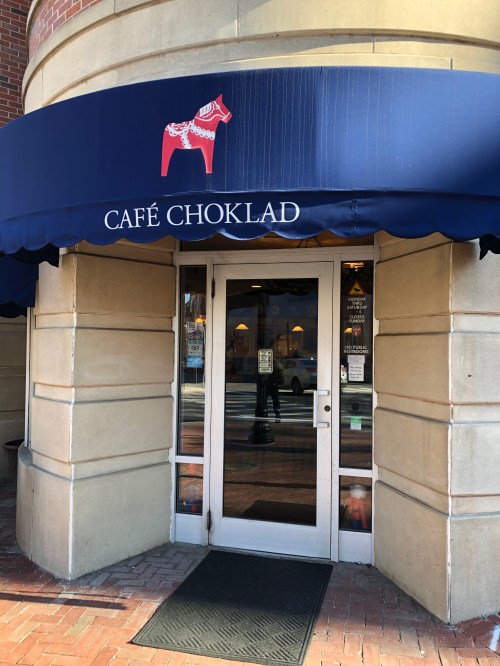
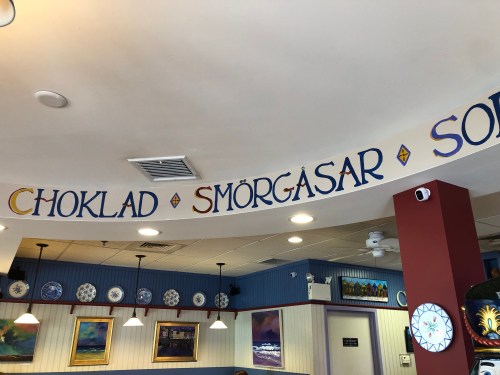
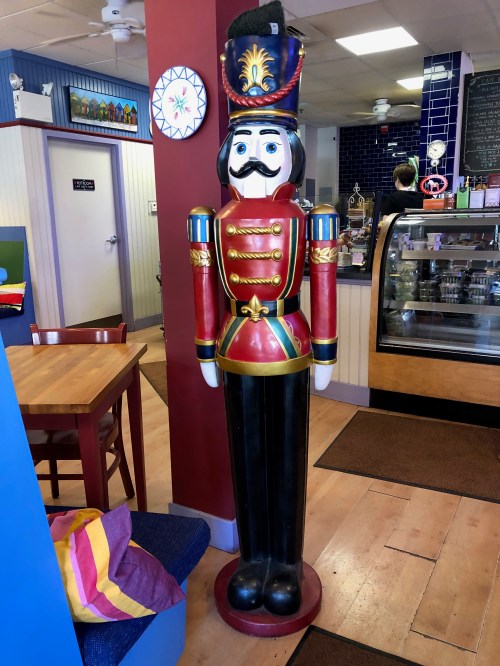
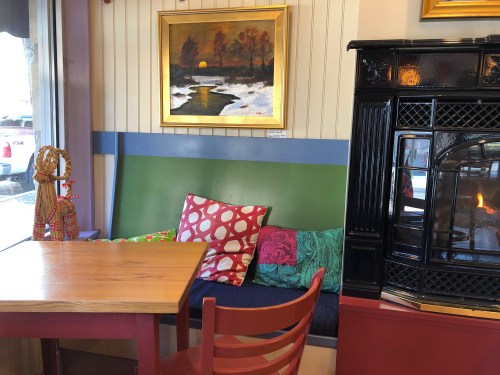
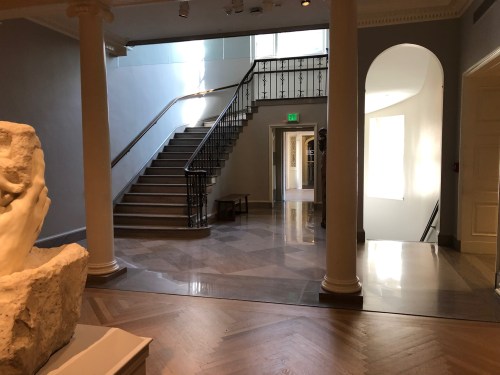
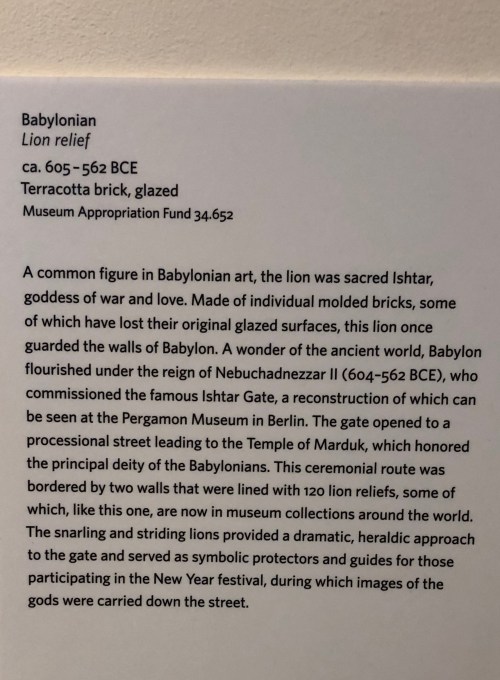
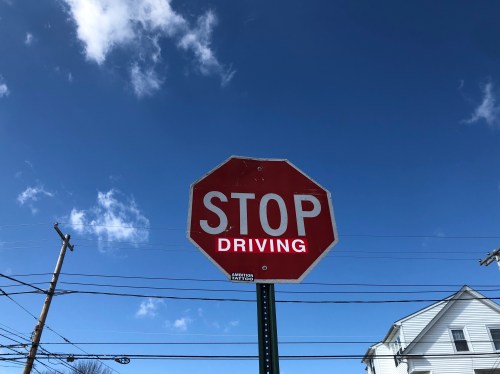
Most weeks when I am in Providence, I volunteer at Dorcas International Tuesday morning and at the Genesis Center Tuesday afternoon. Last week, because Dorcas was doing its standardized testing, I had the morning off and decided to stop in at the Swedish-themed shop called Café Choklad and then at the nearby Rhode Island School of Design Museum. Here are a few photos of that morning and another day of Providence wandering.

031919-Cafe-Choklad-Providence

031919-Swedish-shop-in-Rhode-Island

031919-Swedish-soldier

031919-cozy-corner

031919-RISD-Museum_Providence

031919-inside-RISD-Museum

031919-Babylonian-lion-at-RISD

031919-Babylonian-lion-text

031119-warm-March-day-Providence

031119-stop-driving-sign


Read Full Post »

Photo: Timothy Duffy
The album Black Cowboys, by Dom Flemons, retells the settling of America’s West through a new lens. It was nominated in the Best Folk Album category for a 2019 Grammy.

I’m not a big traveler. I’ve liked seeing whatever I’ve seen in distant parts of the world, but I can’t get over the idea that I’m missing a lot of interesting stuff in my own backyard — in my neighborhood, in my country.

Here is a story about a singer who was determined to use music to rescue an important swath of our country’s history from obscurity.

Ryan Heinsius writes at National Public Radio [NPR], “Dom Flemons’ latest album, Black Cowboys, is a collection of seldom-heard stories about the roles African-Americans played in settling the West after America’s Civil War. The album’s inspiration came during a road trip back home where the fifth generation Arizonan became enamored with an obscure collection of stories.

” ‘I came across a book called The Negro Cowboys that talked about how one in four cowboys who helped settle the West were African-American cowboys,’ Flemons, a co-founder of the Carolina Chocolate Drops, says. ‘And being an African-American person that’s half-African-American, half-Mexican-American from the Southwest, I just found that to be a fascinating story.’

“Now, the album has earned Flemons a 2019 Grammy nomination in the category of best folk album. …

” ‘You have people coming from slavery and emancipation and then, through their hard work and perseverance, in spite of the obstacles they had, they were able to create a new social order that still influences us to this day,’ Flemons explains.

“The former slaves-turned-settlers Flemons sings about were able to transcend segregation in the Western states. For example, Bass Reeves, the first African-American deputy U.S. Marshal in the West was likely the towering inspiration for the Lone Ranger.

“Working on the album over the course of two years became deeply personal for Flemons. His grandfather was a sawmill worker, preacher and World War II army veteran from East Texas and the musician says he sees his own family’s history in these cowboy stories. He also sees the societal legacy in these stories. ‘Steel Pony Blues’ chronicles Nat Love, who was born into slavery worked on an Arizona ranch and then became a railroad porter. That legacy, Flemons says, would eventually influence the early leaders of the Civil Rights Movement.” More at NPR, here.

And there’s a nice interview by Ja’han Jones at the Huffington Post, here, in which Flemons says, “one of the things I did for this album was visit the National Cowboy Poetry Gathering in Elko, Nevada. They approached me around the time I started to develop the project, so when I went there, being one of a few black people there, everybody at the event was so excited that I was doing a something about black cowboys. They knew all of these stories, but no one had ever touched this in the way I was doing. So I was given a lot of great information.”

Read Full Post »

Photos: The Hu/YouTube
The Mongolian heavy metal band the Hu, which combines traditional instruments with Western sounds, has attracted a following on YouTube. “If lions come, we’ll fight until the end … If elephants come, we’ll fight in a rage … If you come as snakes, we’ll become Garuda birds and fly over you.”

I don’t know the first thing about heavy metal, although I have always supposed it was a rebellion thing, like punk. But as I’m always interested in cultures that are foreign to my own, I was intrigued by a National Public Radio [NPR] story about how a band in Mongolia has adapted heavy metal iconography and sounds for its own purposes.

Katya Cengel wrote, “A band from Mongolia that blends the screaming guitars of heavy metal and traditional Mongolian guttural singing has picked up 7 million views for its two videos.

“Leather jackets, skull rings and bandannas alongside intricately carved Mongolian horsehead fiddles are just some of the images in the first two music videos the Mongolian band The Hu released on YouTube this fall. Excited listeners from around the globe have posted comments like: ‘This makes me want to ride a horse and shoot people with a bow’ and ‘This sounds like ancient mongol rock of 1000 b.c.’ …

“As the Soviet Union crumbled and Western influence flooded in during the late 1980s and early 1990s, Mongolian musicians chose to preserve Mongolian culture while also adapting new influences, explains University of Chicago ethnomusicology doctoral student Thalea Stokes. …

” ‘Mongolians are not just taking elements from Western music and just copying and pasting,’ says Stokes. Instead, they’re using some of these elements and making their own authentic music. ‘So it’s not rock music performed by Mongolians. It’s Mongolian rock music,’ she says.

“Mongolian rock combines traditional Mongolian instruments … It also involves singing in a guttural way known as throat singing while throwing heads back and forth reminiscent of the headbanging of ’80s heavy metal bands.  …

“The Hu call their style ‘hunnu rock’ — from the Mongolian root word for human being: ‘hu.’ The band spent seven years putting together its first album, which it expects to release this spring. They plan to call it Gereg, the name for a diplomatic passport used during the time of Genghis Khan. [The] idea was to find, study and incorporate as much of Mongolia’s musical culture as they could into a rock style, says the band’s 52-year-old producer and songwriter, B. Dashdondog, who goes by ‘Dashka.’ …

” ‘We wanted to come up with our own thing that we can offer to this big music family. Make something new,’ says Dashka, who spoke through a translator via Skype.

“It is not just their instruments that incorporate traditional elements. In the band’s first song, ‘Yuve Yuve Yu’ (What’s going on?), they mention Genghis Khan and how he was fated to bring nations together. The video begins with images of people inside playing video games, watching television and looking at their phones. A door is opened and the band’s four members step into different natural settings: cliffs, desert, forest and lake. The message they hope to convey through their lyrics and imagery is that people need to pay attention to nature and their history and culture, explains lead singer TS. Galbadrakh, known as ‘Gala,’ 29.”

More at NPR, here.

Read Full Post »

Photo: Pete Norton/Getty Images
Reuben Reid (front) of the Forest Green Rovers in England went fully vegan after the team’s owner introduced healthful food. He says it’s made a huge difference in his life.

Even after the retirement of founding host Bill Littlefield, the WBUR show Only a Game continues to have stories that appeal to sports lovers and lay people alike. I got a kick out of this one about England’s vegan soccer team.

Gary Waleik was the reporter.

“The menu at sports events has traditionally been a bit limited … and unhealthy. Especially at soccer games in England.

” ‘On a match day, you’re looking at a lot of sausages, burgers, bacon sandwiches. Quick and easy fried food,’ says Forest Green Rovers striker Reuben Reid. His team is broadening its menu with healthier fare. But that’s just one part of a much larger mission.

“In 2010, Forest Green Rovers, then a fifth-tier football club in Nailsworth, England, was in financial trouble. Dale Vince, who loved the sport as a kid, was approached by the team.

” ‘They said they needed a little bit of help to get through the summer,’ Vince says. ‘And I thought it would be a nice thing to do — because we could, so we should. But within a couple of months, it was clear that they needed much more than just a little bit of money.

” ‘And they said to me, “You really need to be the Chairman.” And I said, “I really don’t. I’ve got so much else to do.” But I then faced the choice — if I walked away, they would fold.’

“It was heady stuff for a guy who, two decades before, was living a hermit’s life on a hill in England’s bucolic Cotswolds region.

” ‘I had an old U.S. Air Force radar trailer that I rescued from a scrap yard and converted into a home,’ Vince says.

“In 1991, he was traveling in Cornwall. And something caught his eye.

” ‘It was England’s first modern, proper wind farm,’ Vince says. … That inspired him to build his own windmill farm, beginning in 1996. He called his new company Ecotricity. It was a big risk.

” ‘When I got started, renewable energy powered about 2 percent of Britain,’ Vince says. ‘Last year, it was 30 percent. And we’ve grown to be a company of about 700 people supplying about 200,000 customers.’ …

” ‘I saw the opportunity to use football as a new channel to speak to a new audience of people about sustainability,’ Vince says. ‘It’s still a football club, but it’s become something else, as well.’ …

” ‘We cut red meat out of the menu straight away for the players. We did it across the whole ground at the same time, so staff and fans and visitors as well. And then we took a series of other steps over the next couple of years toward full-on veganism.’

“The team dropped all meat, fish and dairy. By 2015, Dale Vince was the Chairman of the world’s first vegan sports team.

‘There were people at the time that said, “You’re gonna kill the club. Nobody’s gonna eat it. This kinda stuff,’ Vince remembers.”

Read more here.

Read Full Post »

Photo: Bangkok Post
Masked dance tradition rises from near extinction in Cambodia.

Dictators try their hardest to wipe out whole cultures and groups of people. They can do horrific damage, but they can never fully succeed in their evil intentions. From whatever is left, new shoots will grow. The Khmer Rouge and the tyrant Pol Pot (1963 to 1981), for example, thought they could crush traditional arts in Cambodia, but today those arts are rebounding. In addition to resurrecting Cambodian ballet, devotees are also bringing back masked dance.

Check out this story by Chantha Lach, Panu Wongcha-um at Reuters.

“Cambodia’s centuries-old tradition of masked dance was nearly wiped out by the Khmer Rouge’s ‘Killing Fields’ regime, but a handful of artists managed to keep it alive and are now working to pass it along to a new generation.

“Sun Rithy’s father and grandfather were both performers of the Lakhon Khol masked dance, but the ultra-Maoist Khmer Rouge — who scorned most art as decadent — banned its study when he was a child in the 1970s.

“Now 48, Sun Rithy leads one of the last Lakhon Khol troupes in Cambodia, made up of about 20 performers and students aged six to 15. …

“Lakhon Khol was recently listed by UNESCO, the United Nations’ cultural agency, as an intangible cultural heritage, along with neighboring Thailand’s version of the dance, known as Khon. …

“ ‘In the Khmer Rouge, I was young and they didn’t teach people dance. Lakhon Khol was destroyed,’ said Sun Rithy, who started to learn the dance when he was 14, after the Khmer Rouge were ousted from power.

“Ahead of a recent rehearsal, students stretched their legs and hands at the troupe’s a newly built theater at Wat Svay Andet, a Buddhist temple outside the capital, Phnom Penh. …

“Cambodian Minister of Culture and Fine Arts, Phoeurng Sackona, said that the dance needed immediate preservation and urged all people to get involved.

“ ‘Elderly performers are trying to preserve the dance at this Wat Svay Andet,’ Phoeurng Sackona told Reuters. ‘But it is up to young people whether they agree or not to receive knowledge from the elders.’

“Thailand’s version of the dance has fared better than its neighbor’s, but practitioners still depend on recruiting a new generation of performers. Thailand’s Khon tradition, originally centered on the royal court, is now taught by many schools and universities.

“Mom Luang Pongsawad Sukhasvasti, 67, has followed his father’s footstep in making Khon masks since he was 10 and still hand-fashions the masks from his home studio in Ayutthaya province, north of Bangkok.

“Each mask takes a month to produce, from molding the plaster to drawing the intricate details. Pongsawad said the UNESCO listing could boost awareness.

“ ‘Teachers now must do more than teaching the dance,’ he said. ‘They need to help students understand the roots as well to preserve it.’ ” More here.

This effort reminds me of the book Farenheit 451, which takes its name from the temperature at which book paper burns. Did you see the movie, with Julie Christie playing two different women? In the Ray Bradbury story, a future civilization bans books, but in a secret camp of outlaws, each individual takes on a book to memorize to keep the treasures of literature alive. They walk around most of the day reciting David Copperfield or whatever. The experience of Cambodia suggests the 1954 science fiction story was not so far-fetched.

Read Full Post »

Photo: Tom Gralish / Philadelphia Inquirer
Composer Andrea Clearfield sought new sounds when composing her Buddhist-enlightenment opera. Here she is pictured with Tibetan instruments from her personal collection.

A Philadelphia composer who was writing an opera decided that, much as she loved Western classical instruments, they wouldn’t be enough to capture “enlightenment.” So she ordered new sounds.

David Patrick Stearns had a report at the Inquirer in January.

“Philadelphia composer Andrea Clearfield knows to warn her downstairs neighbors when her opera is scheduled to erupt. ‘I’m writing a destruction scene. Beware!’ …

“The commotion-causing opera is Mila, Great Sorcerer: It will have a semi-staged presentation Jan. 12-13 [2019] in New York City’s Prototype Festival and dramatizes a Tibetan Buddhist parable of annihilation and enlightenment. The more demonic sections have music she describes as ‘macabre circus … dark tango … a nod to the Mummers strut,’ played by Western orchestra augmented with horns, bowls, and bells from Nepal.

“Yet the story — about a young man who acquires dark powers for revenge and is later transformed into one of the most venerated teachers in Tibetan Buddhism — still asked for something more.

Clearfield wanted sounds she had never heard, from an ethereal tricked-out music box to a drone that suggests something primeval welling up from the center of the Earth. Instrument maker David Kontak created seven new instruments to produce them.

” ‘I was looking for a third world,’ Clearfield said in her Philadelphia studio, ‘a world that is not electronic, not acoustic, blends the voices and instruments, is East and West, and is capable of transmitting this story of ultimate transformation.’ …

“Clearfield had been thinking about the subject matter for a while when by chance she met playwright Jean-Claude Van Itallie, who had adapted The Tibetan Book of the Dead for the stage and who had already written a libretto about Mila with Lois Walden. …

“Even better, the libretto was commissioned by a pair of producers who originally considered a film about Mila but concluded opera would be a better way to tell the story.

“ ‘I’m a composer who met the writer who had written the libretto to the opera I wanted to write,’ Clearfield said. ‘How often does that conversation happen?’ …

“[Says] Gene Kaufman, ‘and some moments choose you.’ Kaufman, who is producing the opera with his wife, Terry Eder, finds that ancient religious mythology contains ‘the accumulated wisdom of centuries to which modern life is only a retelling. We just need to listen. …

“Interestingly, much Mila iconography shows him with hand cupped to his ear: Listening was a major element of his enlightenment. …

“During Clearfield’s residency at the Yaddo artist colony in Saratoga Springs, N.Y., she often asked other Yaddo artists what enlightenment sounds like to them. The artist/author/musician/documentarian Laurie Anderson replied, ‘The resonance [that is] left in the room.’ …

“As much as Clearfield and her collaborators have immersed themselves in Tibetan culture, the greatest impact on the opera itself may not be religious or even philosophical, but elemental.

” ‘You feel the aliveness of everything [in Nepal]. Even in the rocks,’ she said.”

More here.

Bhutanese painting thanka of Milarepa [Mila]. Here Mila is listening, “reminding you to stay awake. Stay awake to your life — and move forward,” says Inquirer reporter David Patrick Stearns.

Read Full Post »

Photo: Annie Tritt for the New York Times
Muriel Miguel, a founder of the feminist Native American collective Spiderwoman Theater, is considered a grandmother of the Indigenous theater movement in the United States and Canada.

I’ve been interested to read how indigenous peoples around the world are reaching out to one another and starting to benefit from the strength of numbers. One result has been the emergence of international festivals staking out a place for native people in the arts world. I’m late with this story, but I wanted you to know about one such festival. It took place in January in New York City.

Siobhan Burke at the New York Times noted in particular that a grandmother of the Indigenous theater movement in the United States and Canada, Brooklyn-born playwright Muriel Miguel, was scheduled to be “among the 30 or so artists participating in this year’s First Nations Dialogues New York/Lenapehoking. (Lenapehoking is the homeland of the Lenape, the original inhabitants of the area encompassing New York City.) Taking place at multiple downtown theaters, the Dialogues bring together Indigenous performing artists from Australia, Canada and the United States for a week of performances, discussions and other gatherings, beginning Jan. 5. …

“In drawing attention to the breadth of contemporary Indigenous performance — with works spanning dance, theater, performance art and genres in between — the Dialogues are something rare for New York, if not unprecedented. Describing what to expect is not easy and not intended to be. In deciding what to program, the chief organizers — [Merindah Donnelly, an organizer of the series and the executive producer of BlakDance in Australia], the choreographer Emily Johnson, and Vallejo Gantner, the former director of Performance Space — set out to challenge a notion they often come across, that Indigenous performance fits any single description. …

“Ms. Donnelly said. ‘The people making it are Indigenous, but Indigenous is not a genre.’ …

The offerings here — many of which deal with themes of trauma, grief and healing — include Ms. Miguel’s Pulling Threads Fabric Workshop, in which storytelling and quilting serve as tools for mending old wounds. …

“While the tone may be somber at times, there is also much to celebrate. SJ Norman, an Australian artist of Wiradjuri and Wonnaruah heritage, said in an email that the opportunity to gather in New York ‘feels like an honoring of the continued existence of our peoples in the big city, as well as the dynamism and globalism of our peoples, which is absolutely vast.’ …

“A Native Alaskan artist of Yupik ancestry, Ms. Johnson has been working tirelessly to counter what she calls ‘the perceived invisibility’ of Indigenous performing artists, particularly in the United States. …

“One approach to bringing the United States up to speed is an ambitious pilot program, the Global First Nations Performance Network, which will be in development during this year’s Dialogues. … The network also requires, of each presenter, a commitment to undergoing what Mr. Gantner calls ‘a kind of decolonization process.’ …

“Ms. Johnson sees this year’s Dialogues as a microcosm of what the network may eventually accomplish, including opening up international exchange. For the Australian choreographer Mariaa Randall, whose ‘Footwork/Technique,’ [explores] the footwork of Aboriginal dances, a highlight of the Dialogues is the chance to simply talk and listen with peers from around the world.

“ ‘In our countries we can become kind of siloed,’ she said. ‘I want to be able to sit with and see and hear from other First Nations females: what their struggles are, their achievements, and how they continue to keep their culture and their practice together, to keep moving forward, because sometimes it is really hard.’ ”

More at the New York Times, here.

Read Full Post »

Photo: ABC Rural/ Jess Davis
To avoid using plastic, Allen Short has made more than 3,000 small berry baskets from recycled timber donated by makers of wood veneer.

Many of us have been trying to phase out our use of plastic, starting with single-use plastic, and smart companies are focused on meeting the demand.

Biofase in Mexico, for example, takes unwanted avocado pits and makes things like picnic cutlery and straws that biodegrade sustainably. I was especially glad to hear about Biofase after people complained they hated the paper straws our eco-conscious ice cream place started using — and caused the ice cream parlor to switch back to plastic. As visions of plastic-straw-choked sea turtles danced in my head, I thought I’d better let that shop know there was a better alternative than paper for getting rid of plastic straws.

Farmers, too, are working on ways to reduce their plastic footprint — and save money.

As Jess Davis reported at ABC Rural in Australia last summer, “Gippsland beef producer Paul Crock believes he can go plastic-free, despite being in an industry reliant on single-use plastics.

” ‘Without putting too fine a point on it, meat uses a lot of plastic,’ he said. … Mr Crock said it was needed for health and hygiene. Plus, vacuum packing increases shelf life by up to eight weeks.

“Mr Crock is in discussions with European companies that are looking at plastic alternatives, and he has even floated the idea of casings for meat, similar to what you would find on the outside of a sausage. …

” ‘We want to be remaining ahead of the curve and looking at ways we can minimise plastic.’

“But Melbourne butcher Tony Montesano said there was no easy solution.

” ‘Unfortunately you’ve got to use some [plastic]. You can’t exactly have just a flesh of meat. Where do you put it? You can’t exactly put it in your pockets.’

“Mr Montesano allows his customers to bring their own containers to the deli, but that is not something the two major supermarkets allow. …

“Fruit and vegetables also rely heavily on plastic packaging. Allen Short is doing his part to reduce plastic in the berry industry by making punnets [small berry baskets] out of offcuts from the timber industry.

“He started making the punnets for his neighbour, who grows strawberries near Daylesford in central Victoria, and had so far made more than 3,000. …

“Mr Short approached the Timber Veneer Association, which helped him out with scraps. Now, it deliberately sets aside the offcuts at no cost.

 ‘All these [veneer pieces] were just going into landfill, so now they’re being stacked up and given to us and we’re making full use of them,’ he said. …

“While he hoped more people would get on board with sustainable packaging, scaling up an operation like his for the industry at large would be more difficult.

” ‘We’re not going to change the industry but we’re going to do our little bit. And I can’t help but think that taking someone else’s waste product and turning it into a useful thing is a good thing.’ ” I will add that everyone doing their bit is also a good thing.

Read more at ABC, here.

Read Full Post »

Photo: Bruce Mendelsohn

A teen at a Youth Services center in Massachusetts takes a turn at conducting musicians from the Sarasa Chamber Music Ensemble.

Years ago, just before Christmas every year, I would receive a funding request from a volunteer who was concerned for teens held in state custody. He would write that these young people were largely forgotten at the holidays, and he would take whatever donations he could round up and go buy them small gifts. I always thought he sounded like a very kind person.

This past holiday season, I heard about a similar outreach to youth in trouble and wanted to tell you about it.

Cintia Lopez reported at WBUR radio, “On a recent morning, a teen living at the Metro Regional Center, a Department of Youth Services facility, nervously stood in front of a string quartet in a windowless recreation room. Trying his hand at conducting a group of classically trained musicians, he tentatively moved his hands like a conductor, setting the tempo for the musicians as they played Bach’s ‘The Art of Fugue.’

“His peers laughed in the background, while the musicians offered words of encouragement. When he got a better feel for the music, he began to dance, pointing his fingers up and down, bobbing his head and rolling his arms to the rhythm of the music.

“ ‘It kind of gave me a warm and kind of calm feeling and then as the tempo got a little bit higher it kind of gave me like a little adrenaline rush,’ another teen said of the classical performance. …

“The teens were being visited by musicians from Sarasa, a Boston-based chamber ensemble. Artistic Director Timothy Merton said he likes helping the teens talk about the music.

“ ‘They don’t have much contact with the outside while they’re there. And certainly not with arts programs,’ Merton said. He founded Sarasa about 20 years ago. … The group now performs in youth service facilities about a dozen times a year.

“For the teen, Sarasa taught him that he can listen to classical music to calm down when he is feeling angry.

‘I think it’s a very good experience for the youth here,’ he said. ‘Just to show culture that people aren’t always exposed to and it’s kind of like getting everyone to see other parts of cultures and kind of the diversity that the world has.’ …

“Later in the visit, violinist Rodolfo Richter played Krzysztof Penderecki’s ‘Cadenza’ for a second group of teens. The teens perked up at the speed at which Richter played, seemingly with ease. One teen likened the piece to an old ‘Tom and Jerry’ cartoon. …

“Here are teens, who in some ways have been hardened by life’s turns, awed by the sounds of a cartoon, revealing how much innocence they still possess.

“Seeing the teens connect with the music reminds cellist Jennifer Morsches of her own discovery of classical music.

“ ‘That’s where I learned much about classical music, watching “Bugs Bunny,” ‘ Morsches said. ‘And a lot of people react, young kids, react that way. It’s true and it does sound like Tom and Jerry chasing.’ ”

More at WBUR, here.

Read Full Post »

Photos: Giada Randaccio Skouras Sweeny

“There is an incredible amount of value of welcoming in refugees, and it benefits us from an economic perspective, it benefits us in terms of flavors and cuisines.” says the founder of Emma’s Torch restaurant, Kerry Brodie.

What are ordinary people supposed to do against the horrors of the headlines? Another violent person who has brainwashed himself with misinformation about immigrants has acted out. He did it in New Zealand, but his online buddies are everywhere.

I am an ordinary person, and here’s all I can do, little as it is. I can donate to causes that work to prevent ignorance and violence. I can remind myself that there are an awful lot of people whose views on immigration are completely different from the evil doer’s. And I can share another story about how one of those people took positive action, to the delight of many.

Amanda Holpuch reports at the Guardian, “Culinary adventures are woven into the fabric of New York City. But in Brooklyn one December night, only one restaurant could offer a five-course meal that began with salmon cake and couscous from Mali and ended with an Iraqi dessert, including in between dishes from Honduras and China.

“The restaurant is Emma’s Torch, a non-profit that teaches refugees, asylum seekers and survivors of trafficking the culinary and communication skills needed for a career in the kitchen. Six days a week, diners are offered a menu described as: ‘New American cuisine – prepared by our new American students.’

“The restaurant began as a pop-up [in 2017] before expanding this summer into a bright, airy restaurant known for its earthy black-eyed pea hummus garnished with dried chillies. The New Yorker food critic, Hannah Goldfield, touted their ‘perfect shakshuka’ served during weekend brunch service in her August review of the restaurant. In 2019, they will open a second space at Brooklyn Public Library.

“Emma’s Torch is named for Emma Lazarus, the poet whose words are inscribed on the pedestal of the Statue of Liberty: ‘Give me your tired, your poor, your huddled masses yearning to breathe free.’

“On one night each month, Emma’s Torch is also the site of a graduation dinner that showcases the flavors of students’ homes, such as the lotus root dyed pink with dragon fruit sauce that was prepared by a Chinese student for the second course of the December dinner.

“Before the first course was served, as the clock ticked down, the restaurant’s founder, Kerry Brodie, spoke over the sounds of sizzling pans.

“There is an incredible amount of value of welcoming in refugees,’ she said, ‘and it benefits us from an economic perspective, it benefits us in terms of flavors and cuisines.’

“In an eight-week, paid apprenticeship, trainees learn how to properly use knives to slice, dice and chop. They also take English classes and participate in mock job interviews. They receive 400 hours of culinary training and are paid $15 an hour for their work at the restaurant and on catered events. In 2017, every graduate was placed in a culinary job. …

“Aya fled Iraq two years ago, fearing persecution because her husband was a professor. Violence against academics became common after the US-led invasion in 2003; the couple were being threatened for her husband’s refusal to obey militias. …

“She studied computer programming for two years but that gave way to cooking, as her efforts were praised by teachers and friends. …

“In Iraq, she could buy their favorite foods cheaply and easily. In the US, she had to craft meals from start to finish, scouring markets for Arab ingredients. … But as Aya kept friends, family and teachers happy with her meals from home, it was clear her future lay in cooking, not computers. The refugee agency Hias connected her with Emma’s Torch.”

Read more about Aya and the work of Emma’s Torch at the Guardian, here.

Emma’s Torch in Brooklyn, NY, is a restaurant that values the contributions of refugees. The name refers to the poem by Emma Lazarus quoted on the Statue of Liberty.

Read Full Post »

Older Posts »