• Home
  • About

Suzanne's Mom's Blog

Arts, Nature, Good Works, Luna & Stella Lockets & Birthstones

Feeds:
Posts
Comments

Archive for November, 2019

More Doctors Prescribe Woodland Walks

Posted in Uncategorized, tagged health, minnesota, prescription, walks, woods on November 30, 2019| Leave a Comment »

You have undoubtedly discovered on your own the healing qualities of a walk in the woods, but it seems that increasing numbers of doctors are actually prescribing it.

Sarah Barker writes for the Minneapolis Star Tribune, “Your blood pressure is a little high. You could stand to lose some weight, and, yeah, you’re stressed. You leave the doctor’s office with directions to a park near your house and a prescription for 30 minutes a day out there breathing fresh air among the trees and the birds.

“Until recently, doctors encouraged patients to get more outdoor exercise but stopped short of writing a prescription. Soon, in collaboration with parks and trails organizations, community and athletic associations, some Minnesota doctors will be handing patients prescriptions for that dose of nature.

“ ‘The data is there. We’re wired to be connected to nature,’ said Dr. Brent Bauer of the Mayo Clinic in Rochester. ‘Cool things happen when you’re exposed to nature for two hours a week — inflammation is reduced, stress, anxiety, heart rate.’ …

“Bauer founded Mayo’s complementary and integrative medicine program 20 years ago grounded in the theory of biophilia — that humans have an innate need to connect with nature. That people spend 90% of their time indoors, most of it sitting, has resulted in negative consequences: obesity, diabetes, anxiety, depression, to name a few. The last 10 years have seen a ‘scientification,’ as Bauer called it, of our need for nature. It’s been studied, measured.

“At the same time, there’s been a shift toward preventive medicine — lifestyle choices like food, exercise, spirituality — and efforts to make health care more efficient. There has been collaboration between communities that haven’t overlapped — parks and the Department of Natural Resources with public health; health insurance with health clubs; sports events with hospitals. Since 2010, doctors have worked with a nonprofit called Wholesome Wave to prescribe patients fruits and vegetables.

“Bauer signed on with one of those collaborations, Park Rx America, a national nonprofit established by Washington, D.C., pediatrician Dr. Robert Zarr in 2017. … According to Zarr, there are 22 registered Park Rx health care providers in Minnesota and 96 parks listed. …

“Receiving a nature prescription from your doctor here in Minnesota is still maybe a year away. Unless you’re a child. In which case, this is old news.

“Some Twin Cities children have been leaving the pediatrician’s office with a Sweat Rx since 2014. Sweat Rx was the first formal outdoor prescription program in the country, its creators say. … Betsy Grams and Tony Schiller co-founded CycleHealth as a way to improve kids’ health through training programs, activity challenges and fun adventure races. The events were outdoors, a little bit nontraditional (the triathlon is swim-bike-run with obstacles thrown in), and noncompetitive. …

“Focusing on health rather than competition was a natural tie-in to the medical community. Through a connection with one of the doctors, Grams and Schiller met with at Central + Priority Pediatrics in Woodbury in 2014 to talk about their upcoming kids’ triathlon. …

“ ‘We were really surprised when they said they would actually prescribe the triathlon to their patients that summer. We didn’t know how hungry doctors were for a concrete tool for encouraging kids to get outdoors, to live the lifestyle they’d been talking about,’ Grams said.

“The two quickly printed a prescription-ish pad of paper with a space for the patient’s name and a link to training materials and race registration. That was the start of Sweat Rx. CycleHealth now works with 52 pediatric clinics in the Twin Cities area. …

“Cheap, readily accessible, and side-effect free, Minnesota’s 10,000 lakes and vaunted parks and trails are shaping up to be, quite literally, what the doctor ordered.”

More here.

My husband and I are lucky with where we live because if you go in one direction out of the house, you come quickly to a busy village with a library and attractive shops. If you go the other way, you are in conservation land in no time. Best of both worlds.

. 062618-John-walks-in-woods


Share this:

  • Share on X (Opens in new window) X
  • Share on Facebook (Opens in new window) Facebook
  • Share on LinkedIn (Opens in new window) LinkedIn
  • Share on Pinterest (Opens in new window) Pinterest
  • Share on Tumblr (Opens in new window) Tumblr
  • Share on Mastodon (Opens in new window) Mastodon
  • Share on WhatsApp (Opens in new window) WhatsApp
  • Share on Bluesky (Opens in new window) Bluesky
Like Loading...

Read Full Post »

The Joke’s on Them

Posted in Uncategorized, tagged acceptance, Brandi Carlile, joke, song, video on November 29, 2019| 10 Comments »

Folks, I can’t stop listening to this amazing song and watching the video. My thanks to college station WUMB for playing it on my drive home from Providence Tuesday — and telling me who the artist is.

The Joke
by Brandi Carlile

You’re feeling nervous, aren’t you, boy?
With your quiet voice and impeccable style
Don’t ever let them steal your joy
And your gentle ways, to keep ’em from running wild
They can kick dirt in your face
Dress you down, and tell you that your place
Is in the middle, when they hate the way you shine
I see you tugging on your shirt
Trying to hide inside of it and hide how much it hurts
Let ’em laugh while they can
Let ’em spin, let ’em scatter in the wind
I have been to the movies, I’ve seen how it ends
And the joke’s on them
You get discouraged, don’t you, girl?
It’s your brother’s world for a while longer
We gotta dance with the devil on a river
To beat the stream
Call it living the dream, call it kicking the ladder
They come to kick dirt in your face
To call you weak and then displace you
After carrying your baby on your back across the desert
I saw your eyes behind your hair
And you’re looking tired, but you don’t look scared
Let ’em laugh while they can
Let ’em spin, let ’em scatter in the wind
I have been to the movies, I’ve seen how it ends
And the joke’s on them
Let ’em laugh while they can
Let ’em spin, let ’em scatter in the wind
I have been to the movies, I’ve seen how it ends
And the joke’s on them

Source: LyricFind

image
Photo: Suzanne Cordeiro/AFP/Getty Images
Brandi Carlile

Share this:

  • Share on X (Opens in new window) X
  • Share on Facebook (Opens in new window) Facebook
  • Share on LinkedIn (Opens in new window) LinkedIn
  • Share on Pinterest (Opens in new window) Pinterest
  • Share on Tumblr (Opens in new window) Tumblr
  • Share on Mastodon (Opens in new window) Mastodon
  • Share on WhatsApp (Opens in new window) WhatsApp
  • Share on Bluesky (Opens in new window) Bluesky
Like Loading...

Read Full Post »

Indigenous People Speak Out

Posted in Uncategorized, tagged genocide, history, indigenous, Thanksgivng, tragedy on November 28, 2019| 4 Comments »

wampanoag_nation_singers_and_dancers

Photo: Wampanoag Nation Singers and Dancers
Many indigenous people refuse to celebrate Thanksgiving. Others use it as a chance to raise consciousness about American mythologies or just to be with extended family and give thanks.

The other day, I was asking my British neighbors if they celebrate Thanksgiving. After all, the traditional story of the First Thanksgiving is about being grateful for freedom from Britain. Why would they? They said they love the holiday and always invite a lot of expat Brits living in the area to eat turkey with them.

Just as language evolves and individuals use words in their own ways, so do customs. At Smithsonian magazine I recently learned that among indigenous Americans there are as many attitudes toward Thanksgiving as there are unique individuals.

Read Dennis Zotigh’s great piece “Do American Indians celebrate Thanksgiving?”

“In thinking about my earliest memories of elementary school, I remember being asked to bring a brown paper sack to class so that it could be decorated and worn as part of the Indian costume used to celebrate Thanksgiving. I was also instructed to make a less-than-authentic headband with Indian designs and feathers to complete this outfit. Looking back, I now know this was wrong.

“The Thanksgiving Indian costume that all the other children and I made in my elementary classroom trivialized and degraded the descendants of the proud Wampanoags, whose ancestors attended the first Thanksgiving popularized in American culture. The costumes we wore bore no resemblance to Wampanoag clothing of that time period. Among the Wampanoag, and other American Indians, the wearing of feathers has significance. The feathers we wore were simply mockery, an educator’s interpretation of what an American Indian is supposed to look like. …

“When children are young, they are often exposed to antiquated images of American Indians through cartoons, books, and movies. But Thanksgiving re-enactments may be their most active personal encounter with Indian America, however poorly imagined, and many American children associate Thanksgiving actions and images with Indian culture for the rest of their lives. … While I agree that elementary-school children who celebrate the first Thanksgiving in their classrooms are too young to hear the truth, educators need to share Thanksgiving facts in all American schools sometime before high school graduation.”

Here, for adult readers, Zotigh goes into the tragedy, which I hope you’ll make time to read. Next, he quotes an array of opinions of actual Native Americans, noting, for example, that “the United American Indians of New England meet each year at Plymouth Rock on Cole’s Hill for a Day of Mourning. …

“I turn to the Internet to find out what Native people think of Thanksgiving. A few of the responses I have received over the years, beginning with the most recent: …

“Exeter, California: ‘Being the only Native American classroom teacher at a public school, raised mostly in an urban setting steeped heavy in traditional American holidays, and around many other native people on weekends while traveling to dance, this has always been a challenging question for me that I cannot claim to know the answer for. I see many other teachers I work with who are not native struggle with knowing how to address the issue comfortably. I have to say, I have fear that if we avoid the issue altogether, Native people will be forgotten about.

” ‘I have seen some teachers decide to stop teaching about Native Americans for fear of offending. I personally get sad when I see that happen. I know Thanksgiving is a controversial subject, and there are so many viewpoints. I share the modern theme of Thanksgiving, which I think has good intentions — family and community. I have also chosen to teach about Native American culture, even more heavily in November because of Thanksgiving, even though it is no longer a part of the curriculum. I have found ways to integrate it while teaching something that I think is important. I do an assembly for the students in which we dance, and I emphasize how it is not possible to teach everything there is to know about Native Americans in just one assembly. I emphasize the diversity among native people.’

“Sevierville, Tennessee: ‘Regardless of all the political views of Thanksgiving, we can all find something to be thankful for!’

“San Antonio, Texas: ‘Except for the last four years, the twenty years before that I spent 95 percent of my Thanksgivings at the table of my brother-in-law. Our gatherings were about giving thanks for what we had. As for Native American history being left out of teaching, it is an outrage. Educate our fellow educators on how to teach it. …

“Edmonton, Alberta: ‘We have family members with addiction issues. The kids get to eat, which my mom loves. And we are thankful not only to survive colonization, but also grateful to feed family.

Norman, Oklahoma: ‘We celebrate and give thanks for our loved ones’ being able to be together again. But when my daughter was young and the realization hit, as it does all young American Indians, she said to me , “Do you think we should have helped them?” There will be extra prayers for Standing Rock at our table.

“Hydro, Oklahoma: ‘Could we just start over and go forward? We can’t change the past, but we can work for peace and unity in the future. History needs to be taught correctly in our schools—that is what needs to happen. My daughter had to write a paper about Big Tree, Satank, and Satanta. She interviewed Satanta’s great-grandson, who was in his 90s, and told the story as he told it to her, including their transport from Fort Sill and how the feather was turned into a knife as they passed the giant tree, causing the soldiers to shoot and kill Satank. She got an AAA+ from her teacher.’ …

“Santa Fe, New Mexico: ‘My family and I celebrate Thanksgiving, not so much in the way that the “Pilgrims” may have done with the Indians. We give pause, and acknowledge all of the blessings that we received in the past year. We think of family and friends; of the homeless; of those away from family in hospitals, elders in nursing homes, those incarcerated, the soldier men and women overseas, around the world, standing watch and guarding our freedom. We think of those in mourning, whose family have gone ahead of them. We also think of those in school, no matter what age. And, finally, we pray for traveling mercies said for folks traveling home. We are thankful each day for Creator’s gifts but on Thanksgiving, it seems we focus and are concentrated in our thoughts about these blessings.’ …

“For more on Thanksgiving, see the 2017 post Everyone’s history matters. The Wampanoag Indian Thanksgiving story deserves to be known.”

Read more of the fascinating comments at Smithsonian, here. It’s a real lesson in not painting any community with one brush. When we say, “Native Americans think [fill in the blank],” we need to remind ourselves that any group of people is full of unique individuals with individual thoughts.

Share this:

  • Share on X (Opens in new window) X
  • Share on Facebook (Opens in new window) Facebook
  • Share on LinkedIn (Opens in new window) LinkedIn
  • Share on Pinterest (Opens in new window) Pinterest
  • Share on Tumblr (Opens in new window) Tumblr
  • Share on Mastodon (Opens in new window) Mastodon
  • Share on WhatsApp (Opens in new window) WhatsApp
  • Share on Bluesky (Opens in new window) Bluesky
Like Loading...

Read Full Post »

Dorm Repurposed for Refugees

Posted in Uncategorized, tagged Church World Service, college dorm, north carolina, refugee, welcoming on November 27, 2019| Leave a Comment »

ws_edits_11_of_15

Photo: Victoria Bouloubasis/The World
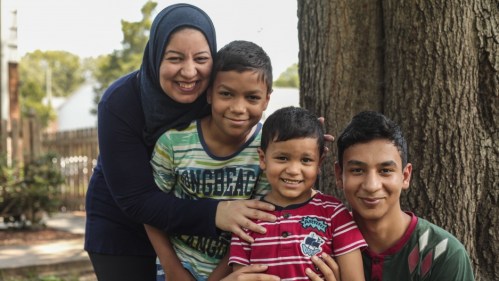
The Al-Khasrachi family lived on the Guilford College campus in North Carolina for months after arriving in the US as refugees. The father had received threats while working for a US military contractor in Iraq.

I know from my own experience as a volunteer in a refugee resettlement agency that there are few refugees coming through today although the need is greater than ever. Some agencies, like the amazing Alight (formerly the American Refugee Committee) have chosen to “do the doable” at refugee camps abroad. Other agencies and individuals give extra love to the few families still arriving — at the same time reaching out to other immigrants who live here. Today I have a story about people who welcome others with open hearts.

Victoria Bouloubasis reports for The World at at Public Radio International [PRI], “Growing up in Burundi, Blaise Pascal was fascinated with R&B music from the United States. … According to Pascal, studying those lyrics helped him become fluent in English with no formal training.

“Pascal, 31, never forgot this teen pastime. When he arrived in Greensboro, North Carolina, in February 2019, music helped him ease into his new life. It also helped that he was part of the Every Campus a Refuge (ECAR) program, an organization that provides housing and utilities for refugee families and individuals like Pascal. The organization was founded in 2015 at Guilford College and later spread to six other college campuses across the country. …

“Pascal also took advantage of the resources at his disposal at Guilford College, like the music room and soccer field. He met fellow musical minds, professors and students with whom he hosts regular jam sessions. He would also send videos of himself singing and playing guitar with his new friends to his older sister in Burundi over WhatsApp. …

“His sister raised him after their Congolese parents died when Pascal was still a young child. The siblings survived the civil war that their parents did not. Both have applied for refugee status; Pascal was resettled to the US while his sister waits. … Pascal [says] without his sister, it has left a ‘big, big darkness before me.’ …

“ ‘To go to zero is an enormous blow to the refugee resettlement program,’ says Diya Abdo, the English professor at Guilford College who created ECAR. …

“It’s also forcing resettlement agencies and supporting organizations like ECAR to rethink the future. Further cuts would be devastating to these organization, but there would be opportunities too, says Abdo — to re-focus efforts on refugee communities already in the US and finding ways to support them. …

“On a global level, the number of people seeking refuge and asylum is at 70.8 million — an all-time high — according to the UN Refugee Agency. But a mere 7% of those seeking refuge have been resettled. …

“ ‘This is about supporting human beings who are seeking security,’ [Abdo] says. ‘This should be framed always as hospitality and empathy, and it’s a way to diversify and enrich our communities.’ …

“In 2015, she asked Guilford’s president Jane Fernandes for permission to use a house on campus, framing the project against the backdrop of the college’s Quaker history.

The campus historically served much like a parish in supporting one another and the college was a site of refuge during the Underground Railroad. …

“Marwa Al-Khasrachi, her husband Ali and their three boys arrived in Greensboro from Baghdad on March 8, 2017. … The Al-Khasrachis were placed in the Guilford College house and given more than the allotted three months, since no one else was arriving. …

“The kids found immediate playmates within the community (which includes nearby housing for students who are also parents) that helped ease them into life in the US. …

“Marwa Al-Khasrachi and Abdo developed a friendship that has now withstood almost two years, one ECAR house and two apartments. Sharing an Arab heritage and rambunctious children close to the same age — Marwa is mom to three and Abdo to two — the mothers quickly became friends. … Marwa says she didn’t have continuity in friendships in Iraq, and they felt more circumstantial than cultivated.

” ‘I didn’t believe in friendship, but now I do,’ says Marwa, with Abdo translating for her. …

“The relationships built and shared experiences with Abdo give the Al-Khasrachis a sense of normalcy as they overcome the hurdle of survival and learning to flourish in a new place. Both Church World Service [CWS} Greensboro and ECAR will continue their work despite what the government may decide — by focusing on supporting communities already here.

“ ‘We have so many community members who support our work,’ says [Megan Shepard, director of Church World Service Greensboro]. ‘It couldn’t seem further than what that rhetoric is on a national level.’ ”

More at PRI, here.

Share this:

  • Share on X (Opens in new window) X
  • Share on Facebook (Opens in new window) Facebook
  • Share on LinkedIn (Opens in new window) LinkedIn
  • Share on Pinterest (Opens in new window) Pinterest
  • Share on Tumblr (Opens in new window) Tumblr
  • Share on Mastodon (Opens in new window) Mastodon
  • Share on WhatsApp (Opens in new window) WhatsApp
  • Share on Bluesky (Opens in new window) Bluesky
Like Loading...

Read Full Post »

The Heart of Nashville

Posted in Uncategorized, tagged country music, Ken Burns, Music City, nashville, stereotype on November 26, 2019| 2 Comments »

Travel Trip 5 Free Things Nashville

Photo: Mark Humphrey/AP
“More than 15 million visitors came to Nashville last year, and country music is a big reason why,” says
CityLab.

I have never been to Nashville, but when John visited, he was impressed. He told us that music and signs of music were on very street corner. A recent article added other angles to Nashville’s music story.

Lee Gardner at CityLab writes, “Thanks to a surging economy and an onrushing hot-city rep, the Music City has been gaining about 100 new residents a day. … But as the skyscrapers and rents have risen, many of the hallowed offices and studios of Music Row, the industrial heart of the country, have come under threat from the wrecking ball.

“Country music has survived a lot worse, according to Don Cusic. He’s is a Nashville-based historian of the genre who served as a consultant for Country Music, the massive new 16-hour PBS documentary series from filmmaker Ken Burns that charts the genre’s trans-Atlantic influences and tracks its nearly 100-year rise from disrespected ‘hillbilly music’ to the vox populi of the white working class, and a multi-billion-dollar business in the streaming age.

“Cusic spoke with CityLab about why Nashville became synonymous with country [and about] what’s next for the city. …

“Gardner: Why do you think Nashville became synonymous with country?

“Cusic: Actually it was Chicago and country music that were synonymous until about World War II, and after that Nashville. It starts becoming synonymous because of the radio stations. In Chicago it was WLS, in Nashville WSM — the National Barn Dance in Chicago, the Grand Ole Opry in Nashville. But the Chicago show lost its sponsor, which was Alka-Seltzer, and the Grand Ole Opry didn’t. It was sponsored by Prince Albert Tobacco.

“The other basis for the Opry’s stability was that it was owned by the National Life and Accident Insurance Company. The company used the Grand Ole Opry as a ‘door opener.’ Salesman would knock on doors with a brochure about the Opry, and that would lead into sales of insurance policies. When rock ‘n’ roll hit in the late 1950s, a number of radio stations switched to rock, [but] the Grand Ole Opry kept going because it could sell insurance. …

“Gardner: What is it about Nashville other than the Opry that allowed things like Music Row to take root?

“Cusic: It’s the people behind the scenes that made a difference. … You had a lot of these key figures who were executives who said, ‘If we’re going to have a show, it’s going to be top-notch show.’ I think that’s a lot to do with it right there.

“Gardner: People now talk about Music Row … as a forerunner of the ‘innovation district’ concept. Do you think that having this tight concentration of companies and creatives had an effect on the rise of country, and of Nashville?

“Cusic: Absolutely. Nashville attracted … a creative community, and that creative community feeds off of itself. I teach at Belmont College, and my students are always saying, ‘Where I come from, I’m the only person that writes songs; I’m the only person that plays the guitar. I get here and everybody writes songs and everybody plays the guitar.’ …

The other thing was the Nashville musicians’ union. Here, musicians could make a living playing, and when the studios developed, you had top-notch musicians here.

“Gardner: Country music — and perhaps Nashville, too — get stereotyped as being extremely white. … I gather the series explores some of those stereotypes. …

“Cusic: They did a survey not long ago, where about a third of the people in this country didn’t like country music, and not because of the music, not because of the artists, not because of the songs, but because of the image they had of it. They didn’t want that to be their self-image, and the image they had was we were backwards, we were hicks and hillbillies, we were racist. … I think this documentary takes that down quite a bit. …

“Gardner: Nashville has seen a lot of economic changes. … How is that affecting the city’s country music identity?

“Cusic: I wrote a book called Nashville Sound, and it really should have been Nashville Sounds. The public perception of Nashville is not accurate, totally, with music, because there’s a thriving jazz scene here. Contemporary Christian music has a huge presence here. You’ve got pop and rock acts here. …

“Gardner: I imagine, though, that many of the people now moving to Nashville don’t really care much about music. Do you think that the city’s musical identity has been watered down?

“Cusic: One of the things that comes through in Ken’s documentary — you can’t kill it. You can hold it underwater, but you just can’t kill it. It’s like a rubber ball that keeps bouncing back. That’s kind of frustrated the Chamber of Commerce at times, because they still want Nashville to be the Athens of the South. [But] it comes back to country music over and over again. That’s what stuck in people’s minds. Believe me, the business establishment and social establishment have tried to change that. They can’t do it.”

More at CityLab, here.

Share this:

  • Share on X (Opens in new window) X
  • Share on Facebook (Opens in new window) Facebook
  • Share on LinkedIn (Opens in new window) LinkedIn
  • Share on Pinterest (Opens in new window) Pinterest
  • Share on Tumblr (Opens in new window) Tumblr
  • Share on Mastodon (Opens in new window) Mastodon
  • Share on WhatsApp (Opens in new window) WhatsApp
  • Share on Bluesky (Opens in new window) Bluesky
Like Loading...

Read Full Post »

Fish-Scale Substitute for Plastic

Posted in Uncategorized, tagged award, fish scales, plastic, sustainable, waste on November 25, 2019| 3 Comments »

1280

Photo: Dyson
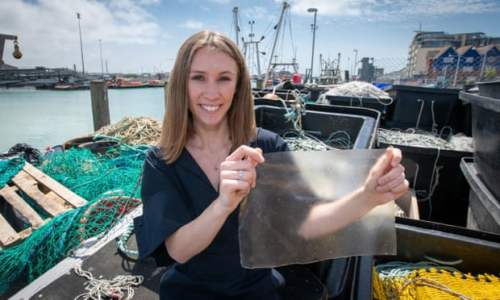
Lucy Hughes, 23, a recent graduate in product design from the University of Sussex, is a James Dyson award winner for her biodegradable plastic made of fish scales.

Today’s story is a good example of how inventions can flow from recognition of a problem. For example, most of us now recognize that plastics are a problem. A recent design graduate took things a step further and did something about it.

Rebecca Smithers writes at the Guardian, “A bio-plastic made of organic fish waste that would otherwise end up in landfill, with the potential to replace plastic in everyday packaging, has landed its UK graduate designer a James Dyson award.

“Lucy Hughes, 23, a recent graduate in product design from the University of Sussex, sought to tackle the dual problems of environmentally harmful single-use plastics and inefficient waste streams by harnessing fish offcuts to create an eco-friendly plastic alternative.

“Her solution, a biodegradable and compostable material called MarinaTex, can break down in a soil environment in four to six weeks and be disposed of through home food waste collections.

“Hughes, from Twickenham, in south-west London, used red algae to bind proteins extracted from fish skins and scales, creating strong overlapping bonds in a translucent and flexible sheet material. Although it looks and feels like plastic, initial testing suggests it is stronger, safer and much more sustainable than its oil-based counterpart. …

“An estimated 492,020 tonnes of fish waste are produced by the fish processing industry every year in the UK and it is considered a huge and inefficient waste stream with low commercial value. …

“Through research carried out on the Sussex coast, Hughes found fish skins and scales were the most promising sources for the plastic alternative, due to their flexibility and strength-enabling proteins. A single Atlantic cod could generate the organic waste needed for 1,400 bags of MarinaTex, she found. …

“Hughes said, ‘It makes no sense to me that we’re using plastic, an incredibly durable material, for products that have a life cycle of less than a day. …

‘As creators, we should not limit ourselves to designing to just form and function, but rather form, function and footprint.’ …

“The award operates in 27 countries, and is open to university students and recent graduates studying product design, industrial design and engineering. It recognises and rewards imaginative design solutions to global problems.

“This year’s runners-up are an AI-enabled wearable device to help monitor asthmatic symptoms and predict triggers, designed by Anna Bernbaum, of the Dyson School of Engineering, in London, and solar panels which can be draped over backpacks or tents, invented by Bradley Brister, of Brunel University London.”

More here.

Share this:

  • Share on X (Opens in new window) X
  • Share on Facebook (Opens in new window) Facebook
  • Share on LinkedIn (Opens in new window) LinkedIn
  • Share on Pinterest (Opens in new window) Pinterest
  • Share on Tumblr (Opens in new window) Tumblr
  • Share on Mastodon (Opens in new window) Mastodon
  • Share on WhatsApp (Opens in new window) WhatsApp
  • Share on Bluesky (Opens in new window) Bluesky
Like Loading...

Read Full Post »

Milton’s Notes on Shakespeare Found

Posted in Uncategorized, tagged handwriting, library, Milton, philadelphia, shakespeare on November 24, 2019| 5 Comments »

1019

Photo: Culture Club/Getty Images
Detail from CW Quinnell’s portrait of 17th century poet John Milton.

Never doubt the ability of a motivated academic researcher plodding along in dusty library carrels to uncover miracles. I credit the intense focus of youth, imagination, and the thrill of the chase.

Alison Flood writes at The Guardian, “Almost 400 years after the first folio of Shakespeare was published in 1623, scholars believe they have identified the early owner of one copy of the text, who made hundreds of insightful annotations throughout: John Milton.

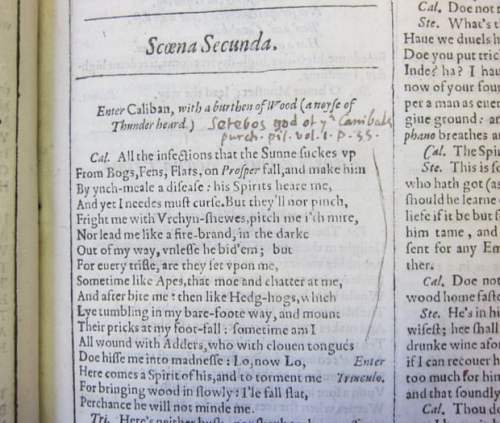
“The astonishing find, which academics say could be one of the most important literary discoveries of modern times, was made by Cambridge University fellow Jason Scott-Warren when he was reading an article about the anonymous annotator by Pennsylvania State University English professor Claire Bourne. Bourne’s study of this copy, which has been housed in the Free Library of Philadelphia since 1944, dated the annotator to the mid-17th century. … She also provided many images of the handwritten notes, which struck Scott-Warren as looking oddly similar to Milton’s hand.

“ ‘But I always think “I recognise that handwriting,” ‘ Scott-Warren said, ‘[and] normally I’m wrong. This time I thought: “The case is getting stronger and stronger.” ‘

As evidence stacked up, he said he became ‘quite trembly … You’re gathering evidence with your heart in your mouth.’ …

“Scott-Warren has made a detailed comparison of the annotator’s handwriting with the Paradise Lost poet’s. He also believes that the work the annotator did to improve the text of the folio – suggesting corrections and supplying additional material such as the prologue to Romeo and Juliet, along with cross-references to other works – is similar to work Milton did in other books that survive from his library, including his copy of Boccaccio’s Life of Dante.

“The scholar tentatively suggested in a blogpost that he might have identified John Milton’s copy of the Shakespeare First Folio of 1623, admitting that, ‘in this as in other cases, there’s usually a lot of wishful thinking, plus copious spinning of the evidence to make it seem plausible, and elision of anything that doesn’t seem to fit.’

“But he soon found that other scholars were agreeing with him. ‘Not only does this hand look like Milton’s, but it behaves like Milton’s writing elsewhere does, doing exactly the things Milton does when he annotates books, and using exactly the same marks,’ said Dr Will Poole at New College Oxford. … ‘This may be one of the most important literary discoveries of modern times.’ …

“One highlighted section in The Tempest is the song: ‘Come unto these yellow sands, / And then take hands: / Courtsied when you have and kiss’d / The wild waves whist.’ The unusual rhyme, of ‘kiss’d’ and ‘whist,’ is echoed in Milton’s On the Morning of Christ’s Nativity: ‘The winds with wonder whist, / Smoothly the waters kist.’

“ ‘We would already have known about that allusion, they are the only two writers who used that rhyme, but you can see him marking it in the text and responding to it,’ said Scott-Warren. ‘It gives you a sense of his sensitivity and alertness to Shakespeare.’ ” More here.

(Looking for a comment from blogger Laurie Graves, a devoted Shakespeare fan.)

Photo: The Guardian
Milton’s annotated first folio of Shakespeare, recently discovered in the Free Library of Philadelphia Library by a Cambridge University fellow. “He said he became ‘quite trembly … You’re gathering evidence with your heart in your mouth.’ ”

1135

Share this:

  • Share on X (Opens in new window) X
  • Share on Facebook (Opens in new window) Facebook
  • Share on LinkedIn (Opens in new window) LinkedIn
  • Share on Pinterest (Opens in new window) Pinterest
  • Share on Tumblr (Opens in new window) Tumblr
  • Share on Mastodon (Opens in new window) Mastodon
  • Share on WhatsApp (Opens in new window) WhatsApp
  • Share on Bluesky (Opens in new window) Bluesky
Like Loading...

Read Full Post »

Filling a Void in Arts Education

Posted in Uncategorized, tagged artists, classes, free arts, libraries, public schools on November 23, 2019| 2 Comments »

photo

Photo: The Art Newspaper
ProjectArt provides free after-school arts classes to children and teens at public libraries in major US cities.

When Suzanne lived in Harlem in the early 2000s, she loved her volunteer gig at a free arts program for kids who were not getting arts education in the city schools. Today I still follow FreeArtsNYC on Facebook, where I especially love the quotes from children inspired by the program.

As Tess Thackara writes at UK-based The Art Newspaper, “Exposure to the arts gives us the tools to know ourselves and others better. It bolsters our self-esteem, helps us communicate and improves our performance in academic or professional areas of our lives. … Yet, since the 1980s, access to arts education for American schoolchildren has been on the decline — particularly in school districts with high populations of minority students. …

“But where the American public school system is failing children, non-profits are stepping in to fill the void, and one in particular has ambitious plans to become the largest free art school for children in the country.

“[ProjectArt], an initiative founded by Adarsh Alphons in Harlem in 2011, is expanding to New Orleans and San Francisco, bringing arts access to two cities with large communities of homeless young people and giving the organisation a presence in a total of eight cities across the US. …

“Its executive director, Diana Buckley Muchmore, who has led the organisation’s daily operations since last November, volunteered with ProjectArt in its early days, and one experience impressed on her the impact that art can make in a child’s development.

“Joining her friend Alphons in teaching a class of ten students in a Harlem community center, Buckley Muchmore met a boy named Malikai. ‘He was non-verbal, very quiet, but I connected with him through a sculpture he was making out of foil and through this art-making, he slowly started to open up to describe his work,’ she remembers. …

“Since then, Buckley Muchmore has watched as ProjectArt has embraced a model, adopted in 2012, of partnering with the country’s public library systems. The libraries give them free space, access to existing communities and materials to inspire the children’s creations. ‘There are 16,000 public libraries in the US; there are 14,000 Starbucks — to give you an idea of the magnitude of libraries,’ she says.

“Artist-teachers, who go through a competitive review and interview process, receive a studio in a library, in addition to payment, and make their own work throughout the year, often in collaboration with the students. Students showcase their work in an exhibition at the end of the school year.

“In the meantime, the organisation is working to serve the particular needs (and capitalise on the assets) of its newest cities. In San Francisco … [Buckley Muchmore has] an eye on big companies like Airbnb and Adobe, which she hopes to approach for corporate funding. (The organisation also receives grants from foundations and individual donors.) …

” ‘In terms of less populated communities, we’ll get there too,’ says Buckley Muchmore. ‘Eventually, we’ll be in all the cities that have libraries.’ ” More here.

The model is a little different from Free Arts NYC, which relies more on volunteers, but it’s similar to one my friend Meredith founded in Lowell, Mass., which had practicing artists doing the teaching. In all three models, the classes are free for students.

Oh! And do add “Muchmore” to your list of interesting names!

Share this:

  • Share on X (Opens in new window) X
  • Share on Facebook (Opens in new window) Facebook
  • Share on LinkedIn (Opens in new window) LinkedIn
  • Share on Pinterest (Opens in new window) Pinterest
  • Share on Tumblr (Opens in new window) Tumblr
  • Share on Mastodon (Opens in new window) Mastodon
  • Share on WhatsApp (Opens in new window) WhatsApp
  • Share on Bluesky (Opens in new window) Bluesky
Like Loading...

Read Full Post »

The Great Wall of Africa Will Be Green

Posted in Uncategorized, tagged africa, drought, Great Wall of Africa, greening, reforestation on November 22, 2019| 2 Comments »

researcher20deborah20goffner20discussing20the20koyli20aplpha20gardens20with20samba20fall20garden20manager20and20change20agent2

Photo: Stockholm Resilience Centre
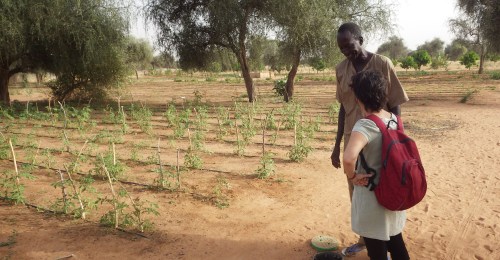
Discussing the Great Wall of Africa among drought-resistant plants in the village of Koyli Alpha in Senegal. Reforestation efforts include providing fodder for livestock.

Sometimes the places with the biggest needs are the places with the biggest innovations. Consider the greening initiative that Africa is taking on to fight drought.

Aryn Bakerwrites for Time magazine, “The seedlings are ready. One hundred and fifty thousand shoots of drought-resistant acacia, hardy baobab and Moringa spill out of their black plastic casings. The ground has been prepared with scores of kilometer-long furrows leading to a horizon studded with skeletal thorn trees. It’s early August, and in less than a week, 399 volunteers from 27 countries will arrive in this remote corner of northern Senegal to participate in one of the world’s most audacious efforts to combat the effects of climate change: an $8 billion plan to reforest 247 million acres of degraded land across the width of Africa, stretching from Dakar to Djibouti.

“The Great Green Wall project, spearheaded by the African Union and funded by the World Bank, the European Union and the United Nations, was launched in 2007 to halt the expansion of the Sahara by planting a barrier of trees running 4,815 miles along its southern edge. Now, as concerns mount about the impact of climate change on the Sahel, the semiarid band of grassland south of the Sahara that is already one of the most impoverished regions on earth, the Great Green Wall is filling a new role. The goal now, say its designers, is to transform the lives of millions living on the front line of climate change by restoring agricultural land ruined by decades of overuse; when done, it should provide food, stem conflict and discourage migration. When the project is completed in 2030, the restored land is expected to absorb some 250 million metric tons of carbon dioxide from the atmosphere, the equivalent of keeping all of California’s cars parked for 3½ years. …

“When people think of potential fixes for global warming, they tend to focus on big projects. But if human activity is at the root of climate change, whether it be the carbon emissions of the industrialized world or the overgrazing of the Sahel, then that is where the solution lies as well. Environmentalists celebrate the Great Green Wall for its epic territorial ambition, but its biggest impact will come from allowing people to meet their needs without destroying nature in the process.

“The Sahara isn’t expanding so much as the Sahel is shrinking, destroyed by decades of overgrazing, climate-change-induced drought and poor farming practices that have stripped the once lush grasslands of the fertile topsoil needed to regenerate. … Planting trees not only reduces carbon on a global scale—research in the journal Science estimates planting more than 2 billion acres of trees could remove two-thirds of all the emissions that human activity has pumped into the atmosphere since the Industrial Revolution­—it also recharges the water table and creates micro­climates that increase local rainfall. … Though it may not sound like much, the solution to climate change in the Sahel starts with getting grass to grow.

“ ‘If we can solve people’s problems by improving their living conditions now,’ says Goudiaby, ‘they will be able to help themselves by protecting the trees that protect their future.’

After all, stopping global warming isn’t about saving the planet. … It’s about saving humanity. One way to do that is by helping those who are most vulnerable to what chaos we have already created.

“Just 25 miles south of Mbar Toubab, near the village of Koyli Alpha, 50-year-old Dienaba Aka pulls her heavily laden donkey cart to the side of the road. She and her extended family have spent the day cutting grass in a ‘forage bank’ managed by the national Great Green Wall agency. … Now herders pay $1.70 a day to harvest the waist-high grass for their cattle until the rains bring new grazing opportunities. For Aka, the idea of a grass ‘bank’ is a radical departure from an itinerant childhood spent following the family herd in search of forage. Now she can feed her cattle in the lean season without stripping trees.

“Aka, like women from many villages in the region, has been planting trees for the GGW project since 2012. She earns $96 during the six-week planting season. It’s good money, she says, but most women do it because they have been told it will bring back the rain, which in turn brings the grass that feeds their livestock.

“There is another advantage to forage banking, Aka says, gazing proudly at her two 10-year-old nieces perched atop several bags of recently cut grass. ‘Before­ the Great Green Wall, the kids had to go with us when we took the cattle to graze. Now they can stay in school.’ ” More here.

Hat tip: UN Environment Programme on Twitter

Share this:

  • Share on X (Opens in new window) X
  • Share on Facebook (Opens in new window) Facebook
  • Share on LinkedIn (Opens in new window) LinkedIn
  • Share on Pinterest (Opens in new window) Pinterest
  • Share on Tumblr (Opens in new window) Tumblr
  • Share on Mastodon (Opens in new window) Mastodon
  • Share on WhatsApp (Opens in new window) WhatsApp
  • Share on Bluesky (Opens in new window) Bluesky
Like Loading...

Read Full Post »

Why Squirrels Spy on Birds

Posted in Uncategorized, tagged birdcall, birds, danger, squirrels, warning on November 21, 2019| 2 Comments »

10019115c

Photo: BGR

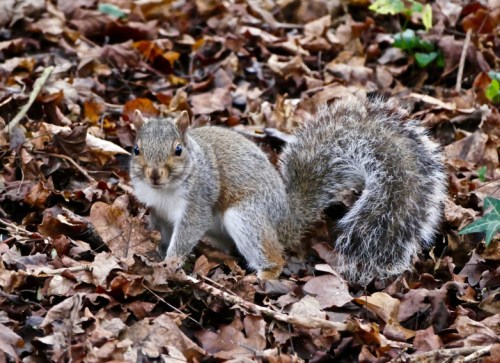
My son-in-law is no fan of grey squirrels. The squirrels in Sweden are apparently more polite. Too many times when the children were small and sleeping outside for some fresh air, an aggressive grey squirrel would crash around on the grape arbor above and shower leaves and twigs onto the stroller, ending the nap.

More recently, great pains have been taken to prevent Mr. Squirrel from getting into the bird feeder. And it’s been a revelation how many companies, observing a huge market demand, are trying to produce squirrel-proof bird stations.

But squirrels are interesting if you’re in the right frame of mind. Consider how clever they are in absorbing warnings from birds when there’s danger.

Mike Wehner writes at BGR, “A new study highlights just how important it can be for certain animals to glean information from the communication of entirely different species. The research, published in PLOS One, reveals that squirrels can sense danger simply by spying on some unwitting feathered friends.

“Squirrels, it turns out, are very good at listening to bird chatter, and have a knack for translating those chirps and tweets (or lack thereof) to sense when predators are nearby.

“For the study, researchers hunted down grey squirrels and tested their reactions to certain bird noises. Using the threatening call of a hawk to strike fear in the furry mammals, the scientists recorded the changes in their behavior when the cheerful calls of songbirds were played at various intervals. …

“The researchers write, ‘Squirrels responded to the hawk call playbacks by significantly increasing the proportion of time they spent engaged in vigilance behaviors and the number of times they looked up during otherwise non-vigilance behaviors, indicating that they perceived elevated predation threat prior to the playbacks of chatter or ambient noise.’

“The squirrels, sensing immediate danger from above, were careful in their movements and did their best to avoid making themselves an easy meal. When silence followed the recorded hawk calls, the squirrels remained in that state, but when friendly bird chatter returned the squirrels took it as a sign that the skies were clear of threats.

“ ‘We knew that squirrels eavesdropped on the alarm calls of some bird species, but we were excited to find that they also eavesdrop on non-alarm sounds that indicate the birds feel relatively safe,’ the scientists say. ‘Perhaps in some circumstances, cues of safety could be as important as cues of danger.’ ”

Read more.

Share this:

  • Share on X (Opens in new window) X
  • Share on Facebook (Opens in new window) Facebook
  • Share on LinkedIn (Opens in new window) LinkedIn
  • Share on Pinterest (Opens in new window) Pinterest
  • Share on Tumblr (Opens in new window) Tumblr
  • Share on Mastodon (Opens in new window) Mastodon
  • Share on WhatsApp (Opens in new window) WhatsApp
  • Share on Bluesky (Opens in new window) Bluesky
Like Loading...

Read Full Post »

Hospital’s Rooftop Farm

Posted in Uncategorized, tagged boston medical center, food desert, low-income, patients, rooftop garden on November 20, 2019| 4 Comments »

unnamed

Photo: Matthew Morris
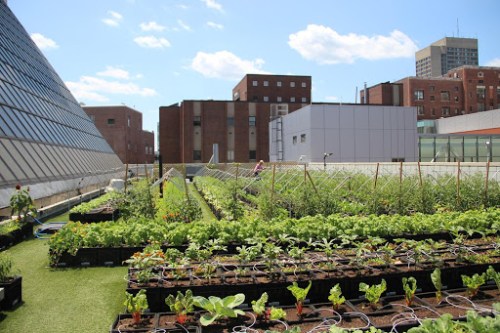
Boston Medical Center’s rooftop farm, spanning 2,658 square feet, is part of a mission to keep patients, especially low-income patients, healthy. 

For many years, visionary physicians and staff at Boston Medical Center (BMC) have been taking a holistic approach to caring for patients — more often than not, desperately poor patients. If a child had asthma from conditions in a suboptimal apartment, BMC enlisted pro bono lawyers to get the landlord to meet legal obligations. If new Americans needed help understanding the forms they were supposed to fill out, BMC rounded up translators and guides. It didn’t have to be medical forms: people could get help with any kind of form.

The story below shows BMC’s ongoing efforts to ensure patients living in food deserts get decent nourishment. Doctors started writing prescriptions for farmers markets. Now they’re supporting a move to grow healthful food on the hospital’s roof.

Lindsay Campbell has the story at Modern Farmer.

“Carrie Golden believes the only reason she’s diabetes free is that she has access to fresh, locally grown food.

“A few years after the Boston resident was diagnosed with prediabetes, she was referred to Boston Medical Center’s Preventative Food Pantry as someone who was food insecure. The food pantry is a free food resource for low-income patients.

“ ‘You become diabetic because when you don’t have good food to eat, you eat whatever you can to survive,’ Golden says. …

“Three years ago, the hospital launched a rooftop farm to grow fresh produce for the pantry. The farm has produced 6,000 pounds of food a year, with 3,500 pounds slated for the pantry. The rest of its produce goes to the hospital’s cafeteria, patients, a teaching kitchen and an in-house portable farmers market. … The facility’s 2,658-square-foot garden houses more than 25 crops, organically grown in a milk crate system.

“ ‘Food is medicine. That’s why we’re doing what we’re doing,’ says David Maffeo, the hospital’s senior director of support services. ‘Most urban environments are food deserts. It’s hard to get locally grown food and I think it’s something that we owe to our patients and our community.’

“Lindsay Allen, a farmer who has been managing the rooftop oasis since its inception, says her farm’s produce is being used for preventative care as well as in reactive care. … What people put in their bodies has a direct link to their health she says, adding that hospitals have a responsibility to give their patients better food. …

“In addition to running the farm, Allen teaches a number of farming workshops to educate patients, employees and their families on how to grow their own food. The hospital’s teaching kitchen employs a number of food technicians and dieticians who offer their expertise to patients on how they can make meals with the local produce they’re given.

“This is part of the medical center’s objective to not only give patients good food, but also provide them the tools to lead a healthy life. Golden, who has used the pantry for the last three years, says the experience has changed the way she looks at food.

“ ‘I’ve gone many days with nothing to eat, so I know what that feels like when you get something like the food pantry that gives you what you need to stay healthy,’ she says. ‘I appreciate all the people that put their heart into working in the garden. If only they knew how we really need them.’ ” Perhaps they do.

More at Modern Farmer.

Share this:

  • Share on X (Opens in new window) X
  • Share on Facebook (Opens in new window) Facebook
  • Share on LinkedIn (Opens in new window) LinkedIn
  • Share on Pinterest (Opens in new window) Pinterest
  • Share on Tumblr (Opens in new window) Tumblr
  • Share on Mastodon (Opens in new window) Mastodon
  • Share on WhatsApp (Opens in new window) WhatsApp
  • Share on Bluesky (Opens in new window) Bluesky
Like Loading...

Read Full Post »

Drought Reveals a Spanish Stonehenge

Posted in Uncategorized, tagged archaeology, drought, spain, Stonehenge, upright stones on November 19, 2019| 4 Comments »

spanish-stonehenge-1024x604

Photo: Ruben Ortega Martin, Raices de Peraleda
Drought has uncovered a Spanish version of Stonehenge, the 7,000-year-old Dolmen of Guadalperal.

As global warming brings changes to our planet, the permafrost is melting and releasing dangerous bacteria. But sometimes other, less harmful things come to light.

Caroline Goldstein writes at ArtNet, “If there’s even the slightest silver lining to the ravages of climate change, it’s that the warming conditions are revealing some previously unknown archaeological sites and artifacts.

“This past summer, an extreme drought in the Extremadura area of Spain that caused the Valdecañas Reservoir’s water levels to plummet has revealed a series of megalithic stones. Previously submerged underwater, the Dolmen de Guadalperal, often called the Spanish Stonehenge, are now in plain sight.

“Though the Dolmen are 7,000 years old, the last time they were seen in their entirety was around 1963, when the reservoir was built as part of Franco’s push toward modernization. …

“Angel Castaño, who lives near the reservoir and serves as the president of a Spanish cultural group, told the website the Local, ‘We grew up hearing about the legend of the treasure hidden beneath the lake and now we finally get to view them.’

“The approximately 100 menhirs are, like Stonehenge, hulking megalith stones — some standing up to six feet tall — that are arranged in an oval and appear oriented to filter sunlight. Evidence suggests that these stones could actually be 2,000 years older than Stonehenge.

“Castaño is working with the group Raices de Peraleda to move the dolmen before rains come and re-submerge them. ‘Whatever we do here needs to be done extremely carefully.’ he said.”

I guess so. I can’t help wondering if it would be better to move the reservoir and leave the stones, which obviously were placed where they are for a reason. But not being an engineer, I suppose moving the reservoir would be even more difficult. And already access to water is becoming a serious problem around the world. (For a heartbreaking story about the difficulty many Navajo people have getting clean water, read this.)

So hard to balance conflicting goods!

More here.

Share this:

  • Share on X (Opens in new window) X
  • Share on Facebook (Opens in new window) Facebook
  • Share on LinkedIn (Opens in new window) LinkedIn
  • Share on Pinterest (Opens in new window) Pinterest
  • Share on Tumblr (Opens in new window) Tumblr
  • Share on Mastodon (Opens in new window) Mastodon
  • Share on WhatsApp (Opens in new window) WhatsApp
  • Share on Bluesky (Opens in new window) Bluesky
Like Loading...

Read Full Post »

100-Year-Old Ballet Teacher

Posted in Uncategorized, tagged 100-year-old, ballet teacher, diet, exercise, mississippi on November 18, 2019| 7 Comments »

henry-danton-today-main-1-190910_26e176561866dbafd4741d502c270891.fit-1240w

Photo: David Sprayberry / Belhaven University
“Henry Danton was born on March 30, 1919. At 100, the former ballet star turned master teacher still drives around Mississippi teaching ballet,” reports NBC.

I’m always impressed by people who enjoy their work so much that they are still doing it at an advanced age. The 100-year-old ballet teacher in this story is a great example. I definitely don’t want to be driving at his age, but I admire him for continuing to make a contribution in the world and having fun while doing it.

A. Pawlowski at Today.com reports, “At 100 years old, Henry Danton is still the center of attention in the ballet studio, now full of students one-fifth his age.

“The former dancer once pirouetted on premier stages around the world, then became a master teacher, training new generations of ballet dancers. He continues to teach today, and says he has no intention of retiring.

“The British-born centenarian said he has a healthy body and mind, lives on his own, loves his smartphone, hasn’t been to the doctor in 10 years and still travels the world. … He recently completed a residency at the Belhaven University Dance Department in Jackson, Mississippi, and teaches ballet around the state. …

“ ‘You have to take care of yourself,’ Danton told TODAY. ‘This body is the only thing you’ve got. You’ve been given this wonderful instrument, you have to look after it. …

‘I see people who retire and they become so bored, they don’t know what to do with themselves,’ Danton said. ‘That’s when their health starts to go down. I love teaching, I don’t want to stop. Children are my vitamin.’ …

“These are the factors Danton credits for his long life and wellness:

“Diet: Danton said he became a vegetarian more than 50 years ago when he was diagnosed with Hodgkin’s lymphoma, the same illness that took his brother’s life. … He stopped eating red meat, fish and poultry at age 49 and hasn’t consumed any animal flesh since, he said.

“Danton likes to ‘live on seeds and nuts,’ enjoys organic vegetables, drinks lots of carrot juice and consumes dairy including cheese and milk. He also occasionally eats chocolate, but stays away from other sweets in his regular diet. He likes beer — ‘like a good Englishman’ — but skips other alcoholic drinks.

“Exercise: Danton credits constant movement as a dancer as one of the main factors that’s kept him healthy and helped him reach the age of 100.

“ ‘I really, absolutely believe exercise is the answer to everything,’ he said. Swimming is the best workout after ballet, Danton said. He still gets some of his exercise from teaching and composing his class for the day. He also has an extensive morning routine centered on a deep tissue massage he gives himself before getting out of bed. Starting with his scalp, then moving down to his neck, shoulders, arms, legs and feet, the one-hour-plus massage stimulates blood circulation, Danton noted.

“ ‘With your thumb, you go as deep as you can into the muscle,’ he said. ‘It works because my body is in incredible condition for my age.’

“Another part of his busy morning routine involves stretching with an elastic resistance band. After all his morning exercises, he said he never eats breakfast before 11 a.m.

“Positive [outlook]: Danton is an optimist, which he called a ‘very important’ factor in his longevity.

“ ‘There’s absolutely no point in making your life miserable,’ he said. ‘Your mood affects you physically, absolutely.’ …

“Danton stays curious about the world and said he is still learning. He has a computer and an iPhone, immediately suggesting that a caller switch to FaceTime during a recent conversation. And he loves his phone’s virtual assistant.

“ ‘Siri amazes me. She answers you immediately,’ he said. …

“Lifestyle: In his whole life, Danton said he has only smoked one cigarette. … Danton hasn’t been to see a doctor in a decade, he said, only running into his primary care physician a few years ago when he was getting a flu shot. The doctor has since retired.”

More at NBC’s Today show, here.

Share this:

  • Share on X (Opens in new window) X
  • Share on Facebook (Opens in new window) Facebook
  • Share on LinkedIn (Opens in new window) LinkedIn
  • Share on Pinterest (Opens in new window) Pinterest
  • Share on Tumblr (Opens in new window) Tumblr
  • Share on Mastodon (Opens in new window) Mastodon
  • Share on WhatsApp (Opens in new window) WhatsApp
  • Share on Bluesky (Opens in new window) Bluesky
Like Loading...

Read Full Post »

Resurrecting Soccer in Micronesia

Posted in Uncategorized, tagged coach, FIFA, football, Micronesia, soccer on November 17, 2019| 4 Comments »

01-airport-welcome

Paul Watson (right) and Matthew Conrad arriving in Pohnpei to reenergize Micronesian soccer. Previous coach Charles Musana, from Uganda, came along to do introductions.

Sometimes giving up on your dream lands you in the wrong profession. That’s what happened to Paul Watson. He wasn’t good enough to play Olympic soccer. So he tried soccer journalism, but it bored him. Then he and his friend, just for fun, started researching teams they could have qualified for had they been born in those countries.

James Parkinson reports at the WBUR radio show Only a Game, “From the time he was very young, Paul Watson had one dream: to play soccer.

” ‘My first passion was that I would play for England,’ he says. ‘You know, that was the dream. Despite not having any talent, really. No discernible sort of natural talent. [As] the years went on, it got less and less likely.’ …

“So he became a football [soccer] journalist who kept his dream alive by playing for a semi-pro team. But he says, that wasn’t enough. …

“In 2008, Paul Watson and his flatmate Matthew Conrad found themselves reflecting on their footballing dreams, wondering what life could have been like if they had made it in the professional game.

” ‘We would sit around in the evenings and kind of watch Brazilian second division football and sort of lament our lack of talent,’ Paul remembers. ‘And, one day, like a lot of fans probably around the world, we came up with the thing of saying, “Well, what team could we have played for if we’d been born there?” … We trawled through the FIFA rankings, got to the very, very bottom. … That was when we found the non-FIFA rankings — you know, places that aren’t recognized by FIFA. At the bottom of that was this island, Pohnpei.’

“Pohnpei: it’s an island in Micronesia. Population: just over 36,000. …

” ‘We sent them an email to the address that we could find for them. And that was it. That was supposed to be the end of it. But it was only actually when their head of their FA got back to us and said, “You know, I’d love to help you, but I’ve just moved to London.” ‘ …

“That man was Charles Musana, a Ugandan who had spent 15 years on the island of Pohnpei playing and coaching football.

” ‘And he said to us: “You can’t go there and play. It’s harder to get a Micronesian nationality than it is to get a British one. … Why don’t you come over and coach? The team’s basically disbanded, so come over and coach the team.” And I think he thought we’d laugh about that and go home. But instead, we said, “Yes.”  …

” ‘It was a good sort of 13 months ’til we actually were able to leave because, you know, we had to save up money, we had to give up jobs,’ Paul says. …

” ‘My long-term girlfriend — and now wife, amazingly — Lizzie, basically said, “You should do this. It’s something you want to do.” …

‘Crazy as it might seem, the thing I was most worried about, that gave me sleepless nights, was that someone would get their first,’ Paul says. …

“After 13 months of research, Paul and Matt finally booked their flights to Pohnpei. They were only planning to stay for three weeks to assess the situation. …

“Charles Musana, the man who proposed the idea of coaching the team in the first place, would come along to make introductions. …

“After 24 hours in the air, Paul and Matt arrived in Pohnpei.

” ‘It’s a U.S. protectorate, so it has a bit of a U.S. feel to it,’ Paul says. “Uses the dollar. But in many ways, it’s a tropical paradise. You know, it’s this incredible, shocking greenery and beautiful blue ocean. It’s absolutely stunning. It’s just such a friendly island. Everyone nods to everyone. It’s incredibly laid back. You drive at about 10 mph, and you swerve around all the potholes.’ …

” ‘We met the head of the Olympic committee in Micronesia — he’s called Jim Tobin, a really amazing American man who’s administrated sport there for years. … We were going down to the field every day and just seeing what level of interest there was.

” ‘And it would range. You know, some days we had a five-on-five kick around on this sort of flooded field. Other days, it would get up to sort of 20 people kicking around. Some days, we’d arrange everyone to turn up at 6:00 — they’d get there at 8:00. You know, it was a mess. But there was interest, and there were kids coming out and kicking a football who’d never done it before. There was some who were actually clearly really good.’ …

“When their three weeks on the island were up, Paul and Matt returned home to plan their next move. For Matt, that decision was taken out of his hands. He had gotten into film school — something he’d always wanted to do. But Paul decided to return to Pohnpei and take the coaching job.

“There was no pay. …

” ‘In a weird way, I felt more comfortable that way. Because if I’d taken on a professional role and commanded a salary, it wouldn’t have felt particularly ethical. Because I would have felt I was painting myself as something I wasn’t. … I was getting more out of this than they were in many ways. So it felt like a deal that made sense.’…

“When he returned to Pohnpei, he met a young man named Dilshan Senarathgoda.

” ‘He had been coaching this group of young kids. So I met up with him, and he was absolutely over the moon that I was there,’ Paul says.”

Read what happened next at WBUR, here.

Share this:

  • Share on X (Opens in new window) X
  • Share on Facebook (Opens in new window) Facebook
  • Share on LinkedIn (Opens in new window) LinkedIn
  • Share on Pinterest (Opens in new window) Pinterest
  • Share on Tumblr (Opens in new window) Tumblr
  • Share on Mastodon (Opens in new window) Mastodon
  • Share on WhatsApp (Opens in new window) WhatsApp
  • Share on Bluesky (Opens in new window) Bluesky
Like Loading...

Read Full Post »

Saltwater Beavers

Posted in Uncategorized, tagged beavers, estuaries, salmon, saltwater, washington state on November 16, 2019| 5 Comments »

beaver-map-saltwater-beavers

Illustration: Mark Garrison
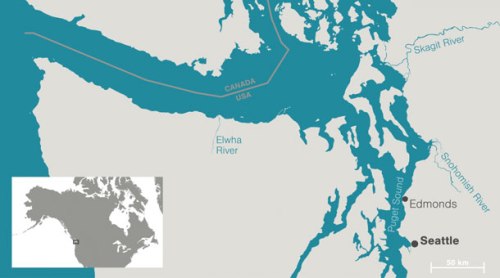
“The mouths of the Elwha, Snohomish, and Skagit rivers in Washington State provide important saltwater habitat for beavers, salmon, and other estuarine species,” says the radio show Living on Earth.

One of the main reasons I like writing a blog is that I like to learn new things and to have something interesting to think about. I save up promising links, sometimes just because the headline looks interesting. Later, when I actually work on the post, it’s such a treat to read the whole story!

When I saw that there was such a thing as saltwater beavers, I thought, Really? This is a keeper!

From the radio show Living on Earth: “Until recently, biologists assumed that beavers occupied freshwater ecosystems only. But scientists are now studying beavers living in brackish water and how they help restore degraded estuaries and provide crucial habitat for salmon, waterfowl, and many other species. Journalist Ben Goldfarb speaks with Host Bobby Bascomb.

“BASCOMB: The eager beaver is an extremely effective engineer of its environment. Beaver dams hold back water that can be a nuisance to homeowners, but they create a complex system of ponds and wetlands that are a haven for numerous plant and animal species. …

“Scientists recently discovered that beavers are also happy to live in the brackish mix of fresh and salt water in coastal areas. And just as they help restore freshwater ecosystems, beavers could also hold the key to restoring damaged coastal wetlands. Journalist Ben Goldfarb wrote about saltwater beavers for Hakai Magazine. …

“Ben, how surprised were you to find out that there are saltwater beavers? …

“GOLDFARB: It was definitely surprising. … It’s just really within the last several years, thanks in large part to this guy, Greg Hood, a scientist who works in the Skagit river in Washington, that we’ve begun to understand that [beavers are] living full-time in these intertidal estuaries. …

“BASCOMB: You actually went to visit one of those beaver lodges on this Snohomish river in Puget Sound. Can you describe that? …

“GOLDFARB: It’s kind of this huge saltmarsh that’s scored with these little freshwater channels that freshwater comes down in. But then when the tide comes up twice a day, those freshwater channels are completely submerged, they’re inundated. So it’s this really dynamic ecosystem with the tides are just going in and out all the time. And beavers are actually building in there. So they’ll build these dams that when the tide comes up, the dams are actually completely submerged under water, you could kayak over the top of one of these dams and have no idea that they were beavers building there. And then when the tide goes out again those dams suddenly reemerge. …

[It’s] almost like the beavers are anticipating these tidal fluctuations and are accounting for them in their construction, and in this really sophisticated way. …

“BASCOMB: How do their dams in these intertidal areas affect the ecosystem around them? …

“GOLDFARB: What Greg found is that [these beaver construction sites] are hugely important for juvenile salmon, especially. You know when the tide goes out, those fish would get flushed out into these estuaries where they’re really at risk of being preyed upon by larger fish, by birds. … Baby salmon were three times more abundant in these beaver pools than in other habitat. …

“BASCOMB: Wow. So, they really serve a critical function. I mean, everybody likes salmon, right? The bears, the whales, people. …

“GOLDFARB: We saw this past year just how badly the southern resident killer whales are doing, the orcas in Puget Sound, and they’re essentially starving because there’s just not enough salmon. …

“BASCOMB: It’s all connected. Now, you write about how beaver ponds can help restore degraded coastal wetlands. And there’s clear evidence for that in removal of dams on the Elwha River in Washington State. …

“GOLDFARB: Two enormous dams had basically been there since the ’20s, I think, just trapping enormous amounts of sediment and blocking salmon runs. … A few years ago the government actually bought those dams and — thanks to pressure from native tribes — removed the dams, and opened up this huge amount of spawning habitat for salmon, so now salmon are swimming up river, past the former dam sites.

“[But] the river mouth had been starved of sediment for so long that it basically just flowed straight into the ocean. There was no real estuary there. … Beavers are really going into town in there. And by creating burrows and canals and dams, they’re just creating this amazing habitat complexity. They’re just opening up lots and lots of little spaces for all kinds of salmon and trout and other fish to live in.”

More here.

Photo: Becky Matsubara, Flickr
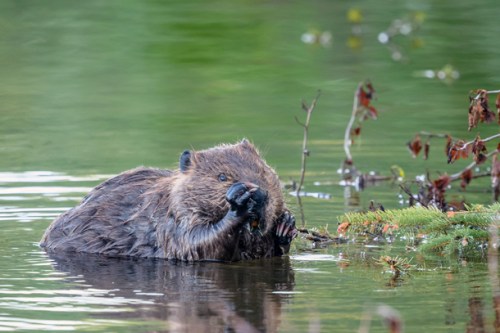
Because they build dams that shape the very environments in which they live, beavers are a classic example of a “keystone species.”

beaver-beaver

Share this:

  • Share on X (Opens in new window) X
  • Share on Facebook (Opens in new window) Facebook
  • Share on LinkedIn (Opens in new window) LinkedIn
  • Share on Pinterest (Opens in new window) Pinterest
  • Share on Tumblr (Opens in new window) Tumblr
  • Share on Mastodon (Opens in new window) Mastodon
  • Share on WhatsApp (Opens in new window) WhatsApp
  • Share on Bluesky (Opens in new window) Bluesky
Like Loading...

Read Full Post »

Older Posts »

  • Enter your email address to subscribe to this blog and receive notifications of new posts by email.

    Join 3,129 other subscribers
  • Archives

  • Blogroll

    • * Luna & Stella
    • ArtsJournal
    • Asakiyume mita
    • Gwarlingo
    • Julian Peters
    • The Marginalian
    • This Is Colossal

Blog at WordPress.com.

WPThemes.


Suzanne's Mom's Blog
Blog at WordPress.com.
  • Subscribe Subscribed
    • Suzanne's Mom's Blog
    • Join 3,129 other subscribers
    • Already have a WordPress.com account? Log in now.
    • Suzanne's Mom's Blog
    • Subscribe Subscribed
    • Sign up
    • Log in
    • Report this content
    • View site in Reader
    • Manage subscriptions
    • Collapse this bar
 

Loading Comments...
 

    %d