Feeds:
Posts
Comments

Archive for the ‘Uncategorized’ Category

2048

Photo: Erika Fish/QUT/AAP 
A pumice raft in the southwest Pacific in 2012. It is similar to the one now floating toward Australia. Pumice is a porous rock extruded by volcanoes. It can carry marine life, including coral, across the ocean and can help to replenish reefs.

Sometimes Nature works miracles that can leave a person breathless. So I feel a need to reach into Greek mythology for an explanation of the following.

The Great Barrier Reef suffered an 89% collapse in new coral after bleaching incidents in 2016 and 2017, according to the Guardian. But now from the sea bottom comes a repair kit. A message must have been sent through some mysterious channel to Poseidon, and he responded with roughly 37,000 acres of floating pumice carrying help.

Reports the Guardian, “A giant raft of pumice, which was spotted in the Pacific and is expected to make its way towards Australia, could help the recovery of the Great Barrier Reef from its bleaching episode by restocking millions of tiny marine organisms, including coral.

“The pumice raft, which is about 150 sq km, was produced by an underwater volcano near Tonga. It was first reported by Australian couple Michael Hoult and Larissa Brill, who were sailing a catamaran to Fiji, on 16 August.

” ‘We entered a total rock rubble slick made up of pumice stones from marble to basketball size,’ the couple said in a Facebook post. ‘The waves were knocked back to almost calm and the boat was slowed to 1 knot. The rubble slick went as far as we could see in the moonlight and with our spotlight.’ …

“Since then, the pair have been working with Queensland University of Technology geologist Scott Bryan by providing pictures and samples of the volcanic rock.

“Bryan said the raft will be the temporary home for billions of marine organisms. Marine life including barnacles, corals, crabs, snails and worms will tag along as it travels toward Australia and become a ‘potential mechanism for restocking the Great Barrier Reef. … Based on past pumice raft events we have studied over the last 20 years, it’s going to bring new healthy corals and other reef dwellers to the Great Barrier Reef.’ …

“Pumice forms when frothy molten rock cools rapidly and forms a lightweight bubble-rich rock that can float. The pumice raft comes from an unnamed but only recently discovered underwater volcano that satellite images reveal erupted about 7 August.

“[It] should begin to hit Australian shores in about seven months’ time, passing by New Caledonia, Vanuatu and reefs in the eastern Coral Sea along the way as coral begins to spawn. …

“Bryan said, ‘Each piece of pumice is a rafting vehicle. It’s a home and a vehicle for marine organisms to attach and hitch a ride across the deep ocean to get to Australia.’ ”

More here.


Read Full Post »

101319-curly-pumpkin-stem

There’s a blogger I enjoy reading although his posts are often sad. He is Bereaved Single Dad. Subtitle: “A Dad trying to cope with the loss of his partner and becoming a single parent.”

He lives in an isolated English village where his main goal is to make a happy life for his son, whom he describes as being on the autism spectrum. It’s a challenge partly because there is a lack of empathy at the local school and very few special needs services. The other issue is that Bereaved really doesn’t do anything to take care of himself, which to my way of thinking is bound to affect his son’s happiness.

But the two of them do seem to have some wonderful times together, and lately I’ve been enjoying a series of posts on their plans for a fun Halloween. Here is the post called “Halloween 3.”

“This Halloween has to make our son happy. Failure is not an option. Best way to achieve that simple goal was to let him choose what spooky activities we will fill our time with. At the start of the week he came up with his list. …

” * Halloween Costume. Dad I think we should try and go for a Freddie look. We don’t buy a costume, we see what we can rustle up. …

” * Watching as many Scooby Doo DVDs as we can find. Finish off with his three favourites. Boo Brothers, Kiss and Witches Ghost.

” *Watch a Hammer Horror movie. These are atmospheric but relatively tame these days.

” * Have a Lego building competition. This year it’s who can make the best haunted castle.

” * Make a spooky music playlist.

” * Make up a Halloween story. Dad, this year I think it’s a couple of kids stuck in a scary computer game. …

” * Any TV has to be spooky-related like Ghostbusters.

” * Monster knockout competition to decide the greatest ever horror character.

” * Apple Bobbing

” * Late night reading in the garden of Hound of the Baskervilles.

” * All dog walks have to be after dark.

” * Build a garden monster out of what we can find lying around. Then leave it for nature (or the dog) to dispose. …

” * Eat the cookie/biscuit game. Put a cookie on your forehead and then without using your hands try to somehow get the cookie into your mouth and it’s the first person to eat the cookie wins.

” * Jelly Bean roulette. We have stocked up on some new flavours. Cat food, Snail, Earthworm, Earwax, Squid.

” * Make Pumpkin Chilli Soup. Even I can manage that.”

You can read this devoted dad’s blog here.

102519-Halloween-witch


Read Full Post »

rewilding_longhorn-cattle-in-knepp-repton-park-landscape

Photo: Charlie Burrell/ Knepp Estate Castle
Longhorn cattle were chosen for a UK “rewilding” project as stand-ins for their extinct ancestor, the auroch.

Here’s a concept that was new to me: “rewilding” the countryside — that is, bringing the land back to an earlier and less developed state.

At the radio show Living on Earth, we learn that a UK couple was able to turn a large, unprofitable farm into a profitable one by letting the land go back to nature.

“BOBBY BASCOMB: When writer Isabella Tree and her husband, Charlie Burrell, inherited an estate in West Sussex, England, they assumed they would continue to farm as generations of family had before them. But the intensive agriculture of their predecessors grew increasingly difficult, and they decided that farming was no longer a viable option. So they began to mull over another idea: Give the land back to nature and let it take its course. Isabella Tree’s recent book is titled Wilding, and its the story of what happened to the land when they gave up farming and let nature take the reins. …

“ISABELLA TREE: We inherited this piece of land from my husband’s grandparents [in] the 1980s. And it had been intensively farmed for ever since pretty much the Second World War. [But] the farm was losing money hand over fist. [We] kept buying … bigger machines, throwing more pesticide, more fertilizer, more nitrates, built bigger dairies and changed our types of cows to more higher-milk-yielding cows. …

“We tried contract farming [and] sold all our farm equipment. It was a very, very black day. … Charlie’s ancestors have been here since the Nash castle was built two hundred and twenty or so years ago. It really isn’t for us an option to sell. [We’re] stewards of this land, and we can’t just sell up and move out. …

“BASCOMB: Well, how did you even come up with that alternative? I mean, for most farmers, I think it’s probably pretty counterintuitive to just let the land go. I mean, that’s not what you do as a farmer.

“TREE: It is a very, very difficult thing to do, you’re absolutely right. …

“BASCOMB: You talk a lot in your book about the importance of introducing herbivores. What animals did you introduce and why? …

“TREE: We had to introduce animals that we knew would be able to survive outside all year round without supplementary feeding, that would be able to fend for themselves even in a harsh or wet winter. So, we chose old breeds, we chose Old English Longhorn, wonderful cows with great white finching stripe down their backs and great big horns. And then Exmoor ponies, one of our oldest breeds of horse, they are fantastic at surviving, out in any landscape. Very, very hardy, indeed. And Tamworth pigs, another old breed that’s very closely related to Iberian swine. So, they’re the closest we felt that we could get with an English variety of pig to the wild boar. And then we had roe deer here already in low numbers. And then we introduced fallow deer and red deer. …

“BASCOMB: What does it look like? What does it smell like, even sound like, and how is that different from what you started with? …

TREE: When you walk around Knepp today is the sound of insects, for a start. On a day like this, it’s a hot, sunny day, you’ve just got the sound of crickets and grasshoppers, you’ve got bees, you’ve got hover flies, you’ve got every sort of insect out there. It’s thick with insects. If you go out there on a bicycle, you have to wear sunglasses or, you know, because you’re getting insects in your eyes. …

“This used to be the norm 50 years ago. But in the era of pesticides, we just don’t see insects anymore. So the sound of insects is astonishing. And then, of course you’ve got the bird song, surround sound bird song. Go out into the thickets, it’s sort of like the African scrub. … It’s a wonderful thing to be sitting in the middle of.

“But it’s a double edged sword because we now go on walks in other places in the UK, places where we always used to enjoy, you know, an hour or two to walk, and now we notice what isn’t there. And it’s that, it’s what Aldo Leopold called that sadness, that tragedy of having an ecological education. You know what isn’t there and what could be there, what should be there. …

“We literally haven’t introduced anything apart from the free-roaming animals. So, they’ve all found us on their own. [We] have 13 out of the 18 breeding species of bat in the UK. One of them called the Bechstein’s bat is so rare, it’s rare even in Europe. … We have Peregrine Falcons, we have them nesting in a tree. Usually you associate Peregrine falcons with cliffs and clifftops. They nest in steeples and cathedrals, but not in a tree. Nightingales are another species that is associated with woodland, but at Knepp they’re taking up territories our exploding hedgerows and our thorny scrub. And so they’re choosing a very different habitat because it’s suddenly available to them. So, it’s really changing the science books, we’ve forgotten that this is where nightingales love to be.

“And I think that’s one of the lessons from Knepp, is that we’re so used to seeing species in a very, very depleted landscape, that that’s where we think they want to be. But in fact, they’re often clinging on by their fingernails to habitat that just isn’t optimal for them. And where they’d much rather be is in the kind of habitat that we’re presenting for them at Knepp.”

More at Living on Earth, here.

Read Full Post »
day226_bill

Photo: Alight
The former American Refugee Committee, now called Alight, focuses on “doing the doable.” Alight maintains that when things seem impossible, there is always something good that can be done.

For many years, I’ve been a fan of the American Refugee Committee, now called Alight. Since the nonprofit took the new name and began to focus on “doing the doable,” I’ve enjoyed periodic news about its Changemakers.

Here is the story of a teacher who wanted to understand things firsthand. I will just point out that the term “refugee” is ordinarily applied to those who come here officially, having been screened by our State Department and accepted in advance. Now that the US is accepting so few, those of us who work with migrants are seeing more climate “refugees” and economic “refugees” — some documented, some not. This is the story of a guy who wanted to help them.

“Howdy! My name is Bill Boegeman, and I’m a high school social studies teacher in Forest Lake, Minnesota. Some of my students are from Central America – refugees now living in the U.S., many of whom made the journey to the States alone.

“Their stories are amazing – spending hours in cramped semitrailer trucks and trunks of cars, hiding from the Federales and narcotraficantes as they trekked across the Mexican desert. It’s difficult for me – and my other students – to imagine what these young people have been through, what hardships they have already endured, and the complexities they’re faced with now.

“So I wanted to go see for myself … and to try to make a difference, one day at a time.

“I traveled with Alight to the Rio Grande Valley, a vast area encompassing the southern border of Texas and parts of Mexico. In some ways, it feels a little bit like two countries living in one, cultures blended and economies interconnected. And now, Mexican-American communities are coming together with some incredible changemakers – Catholic Sisters, who Alight has recently partnered with – to serve the new waves of families who are searching for a better life.

“We began our work at La Posada Providencia, a migrant shelter just outside of San Benito, Texas. It’s a landing spot for many migrants released from detention centers with nowhere to go.

“Five years ago, Ángel was one of those migrants.

“After immigrating from Honduras and five months in detention, Ángel spent three months at La Posada where he was provided with a bed, regular meals, and mentoring services. Following a brief stint in Indianapolis, he returned to the shelter as a volunteer. Fast forward a few months and Ángel was converted into a full-fledged employee — the house cocinero — a position he still holds today.

“In addition to his cooking duties, Ángel helps to organize the shelter’s mochilas – to-go bags provided to clients who are ready to move on to their next destination. These bags include non-perishable food items, personal care products, a change of clothes, and other items that will help them along this next stage of their journey. It was here that we saw an opportunity.

“Over a lunch that Ángel prepared, La Posada’s current residents were able to provide us with ideas of items that would be useful to migrants in their mochilas as they depart the shelter for their next destinations. We landed on two primary items that we could provide: Spanish-to-English dictionaries and chapstick. While seemingly unrelated, these two things would be helpful to them in their future journeys (in the case of the chapstick, particularly those headed north). They were also absent from the supply closet on the La Posada premises.

“I asked Ángel what made La Posada Providencia such a special place. ‘It’s more than a shelter,’ he said, ‘It’s a house, a home, a family.’ ”

More at Alight, here.

Read Full Post »
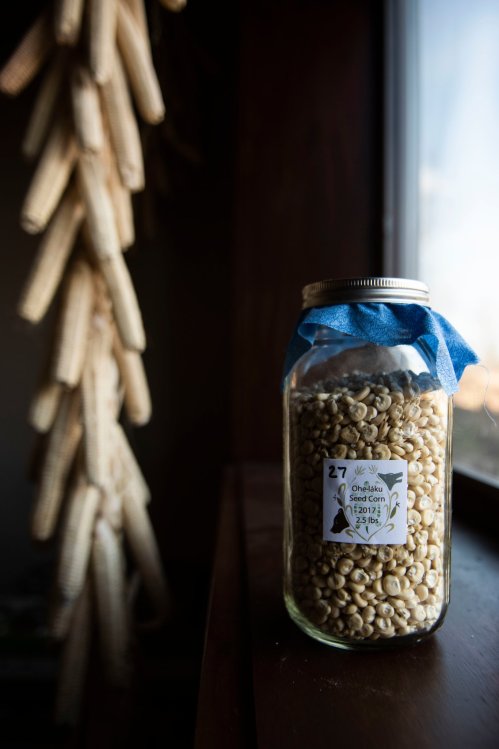
102719-fall-color-combo

I’m running out of titles for posts that are basically just “more random photos.” So since a few of today’s offerings, like the one above, were taken Sunday in the rain, I thought I’d borrow my title from the old song

“Days may be cloudy or sunny
“We’re in or we’re out of the money
“But I’m with you always
“I’m with you rain or shine.”

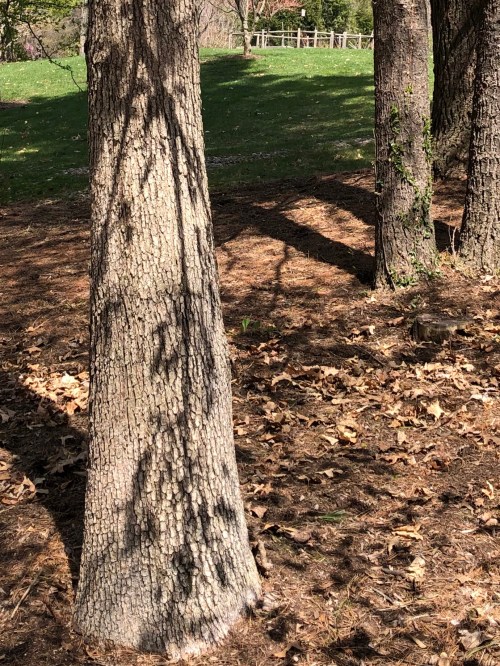
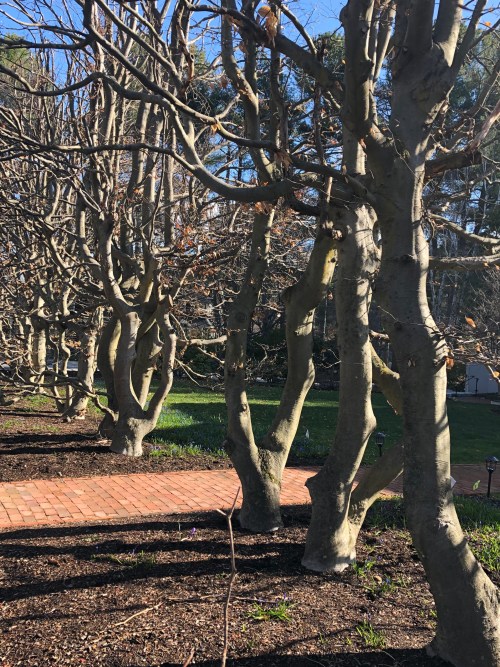
In the rain in Minuteman National Park, I shot this gnarly old tree, which looked like it had played host to a few too many young climbers. I also photographed a Wayside Pulpit, mostly for the fall colors around it. The highly articulated leaves of a Japanese maple are my favorite thing about our backyard.

Stuga40 emailed the Swedish advice after I wrote a post on yarn bombing. As near as I can tell, it means “Give it your all.”

I was initially puzzled by the sculpture that appeared recently in front of the library. That is, until the sign went up about using an increasing book pile to measure donations to the fund for the new wing. The resident who did the construction included book titles by local authors.

Sandra M. Kelly shot the magnificent entries to New Shoreham’s Painted Rock archives. The two unknown artists were smart to wait until fall to paint. In fall, the rock is less likely to get slopped over with celebratory spray cans half an hour after the painstaking artwork is finished. One artist captured the Southeast Lighthouse. The other created a small figure reaching for stars and starfish.

I will wind up today with a four-year-old rock star of my acquaintance, the newest Providence mural by Shepard Fairey, and peaceful evening shadows.

102719-gnarly-tree-North-Bridge

102719-Wayside-pulpit

102519-Japanese-Maple

20191022-yarn-bomb-give-your-all

101919-book-art-at-library

102519-library-fund-raiser

101819-Painted-Rock-5


101819-Painted-Rock-2

102119-rock-star

102219-Shepard-Fairey-mural-Providence

101519-tree-shadows-Concord


Read Full Post »
cruise-auction-4

Photo: Cruise Critic
A Park West art auction in the Star Lounge on Royal Caribbean’s Navigator of the Seas.

My family went on a cruise only once (1990, New York to Bermuda), so in terms of special features, we know about Broadway-type entertainments, and that’s it. “Let’s give a warm welcome to the Royal Viking singers and dancers, Everyone!”

But cruise lines keep trying to outdo each other in offerings. One couple I know chooses their trip based on what chamber music group will be playing. And if you are into fine art or auctions, there’s a cruise for you, too.

Of course, you’re not going to pick up something valuable for cheap.

Sarah Cascone writes at Artnet, “I was lounging poolside, cocktail in hand, when I heard the announcement. The grand finale art auction was about to start.

“It was a weekend cruise from Miami to the Bahamas aboard Royal Caribbean’s recently refurbished Navigator of the Seas. … As I entered the event, hosted by cruise-ship auctioneer Park West Gallery, I bypassed the registration table, heading straight for the auction floor, where a waiter was handing out glasses of sparkling white wine.

“From the start, it was clear that this was no regular art auction. After a brief spiel encouraging folks to buy art as a legacy to leave to their children, the auctioneer, Robert Borotescu, got down to business.

‘I don’t know if you’ve seen Oprah,’ he said. ‘We have some surprises under the chairs.’

“Cue a frenzy as the few guests in the room rushed to upturn every seat cushion. There were no car keys to be found, but there were $100 certificates for discounts on winning bids.

“Borotescu, a dark-haired Romanian man in his mid-to-late 30s, endeared himself toward the crowd by offering additional raffle tickets for $100 credits throughout the auction. … With his pleasantly urbane accent, Borotescu set his audience at ease, acknowledging that they probably never had the time to visit art museums and galleries. But they were here now, and it was his job to make sure that they went home with something they absolutely loved. …

“Borotescu told us that [Park West] operates on 100 cruise ships, and claimed that the art aboard the Navigator of the Seas alone was worth $3 million. Representing some 200 artists, the company holds 1,200 auctions every month. …

“Unlike most art world organizations, Park West seems to hire employees with largely non-art backgrounds. Borotescu’s LinkedIn lists six years in fine jewelry and watch sales at Louis Vuitton Moet Hennessy before joining the company. A quick perusal of resumes of other auctioneers and art directors at the company yields unconventional experience in HVAC, used car sales, fitness instruction, and Royal Caribbean’s beverage team, to list just a few. …

“Park West specializes in what it calls ‘graphic works’: Mass-produced reproductions of original paintings, signed by the artist and released in limited editions. Some are giclée prints — a fancy term for high-quality inkjet prints. Other pieces might look like paintings, but these more expensive offerings are often merely hand-embellished, with brushstrokes layered over a printed image to give it a more ‘authentic’ feel. …

“ [The auctioneer] said: ‘If we look at the Oxford Dictionary of Art, every single artwork that can be traced back to the artist, or was created under the artist’s supervision, is considered to be an original work of art.’ …

“Most of the time, you won’t even take home the exact work you’re bidding on. Park West will ship you a functionally identical copy from its warehouse, rather than going through the trouble of turning over the on-board stock, according to Bloomberg Business. …

“The bidding kicked off with a piece by Peter Max, a well-known Pop artist who met Scaglione, Park West’s founder, back in the late 1960s, and has been represented by him ever since. …

“ ‘This is one of the gems we have on the Navigator of the Seas,’ Borotescu told the crowd, claiming that the ‘printed painting on canvas’ was valued at $23,500, but that he could start the bidding at $20,000. Less than 30 seconds later, the work was sold for $20,700.

“Max has decades of experience exhibiting at international museums. The highest auction record for a work of his is $53,125, according to the artnet Price Database. … Other artists on offer had decidedly less impressive CVs. Borotescu proudly proclaimed that Park West is the only gallery to represent David ‘Lebo’ Le Batard, noting that the artist is known for his paintings of cats and owls. …

“Every attendee was encouraged to enter a free raffle to take home a massive, unframed Thomas Kinkade [your blogger comments, ‘Ugh!’]. … One gimmick in particular stood out: A pair of works presented turned away from the audience, and sold as one lot, without any idea of what they looked like. ‘They are going to be two of the most gorgeous works of art that anyone has ever seen,’ Borotescu promised the audience. ‘Once you turn it around, if it’s something you don’t like, you don’t have to keep it.’ …

“And then there was Tweety.

“Borotescu never named the artist responsible for designing the tiny print, relying on the Looney Toons character’s name recognition … Supposedly, the artwork, which was just a couple inches high and therefore impossible to see from across the room, was valued at $549.

“ ‘Let’s have some fun,’ Borotescu suggested, asking everyone in the room to hold up their bid card. He opened the bidding at just $20. Two thirds of the crowd dropped out when he raised the price to $40, and suddenly the auctioneer slammed down the hammer, selling the cartoon bird to a handful of guests.”

More here, where you can also read about the latest confusion surrounding works by Peter Max, one of the featured artists.

I think if you didn’t take it too seriously, an onboard art auction would be fun. Gimmicks such as surprises under the chairs somehow make me think of a kid’s birthday party. The whole experience seems to play to the child worldview that is buried but available for anyone to tap in adulthood.

Read Full Post »

shane-claiborne

Photo: Christian Today
Shane Claiborne and Dr Sally Mann with one of the garden tools made from knives seized from the streets of London by police as part of a peace-focused project. In America, Claiborne beats
guns into garden tools, in a modern version of “swords into plowshares.”

I am not devout like several of my readers, but I love stories about people of any religion who try hard to practice the humane tenets of their faith.

In this story, a Christian called Shane Claiborne was a guest of the radio show On Being to explain what his faith tells him to do about the proliferation of guns used for violence in America. Host Krista Tippett brought him together with Omar Saif Ghobash, a diplomat of the United Arab Emirates and author of Letters to a Young Muslim to talk about how they would like to refocus members of their faith who seem immune to messages of love and kindness.

From the website: “Spiritual border-crossing and social creativity were themes in a conversation between Shane Claiborne and Omar Saif Ghobash, two people who have lived with some discomfort within the religious groups they continue to love. Ghobash is a diplomat of the United Arab Emirates and author of Letters to a Young Muslim. One of his responses to the politicization of Islam has been to bring a new art gallery culture to Dubai, creating spaces for thought and beauty.

“Claiborne is a singular figure in Evangelical Christianity as co-founder of The Simple Way, an intentional neighborhood-based community in North Philadelphia. One of the things he’s doing now is a restorative justice project inspired by a Bible passage — to transform guns into garden tools.” Play the episode here.

And for more on beating weapons into garden tools, there is this story by Rob James at Christian Today.

“Shane Claiborne is no shrinking violet. Prominent speaker and bestselling author Shane heads up Red Letter Christians, a movement that is committed to living ‘as if Jesus meant the things he said.’ Consequently Shane is a passionate advocate against homelessness, war, gun violence and the death penalty. As he sees it, the Gospel of grace is a call to Christian activism, something he talked about when we met at the YMCA’s recent 175th anniversary celebrations in London.

” ‘I’m here to celebrate 175 years of the YMCA because it’s not just been an organisation about words but about action. … Young people are very aware that politicians in many of countries have failed, and as we look at the world we have been handed from our parents we can see that it is very fragile.’ …

“For Shane, faith is not simply a ticket into heaven or a licence to ignore a hurting world. Faith, he believes, should give us the determination to transform the world. … It’s not about ‘going up when we die,’ he observes, but ‘about bringing God’s dream down to earth while we live. …

” ‘The health of any society is not shown by how the stock market is doing or how rich we are but how the most vulnerable are doing. And of course justice issues are all interconnected so it’s impossible to separate caring for the environment from our care for the poor. The folk who suffer the most injustices are the most vulnerable people.’ …

“And for him, the United States is a particularly challenging context at the moment.

” ‘We are living through some historic and troubling times,’ he said. “Just before I came to London I was at the border in El Paso where we have kids who are living in cages, separated from their own families, because our own administration has said they don’t know if they will ever be reunited. …

” ‘This is not about issues but about loving our neighbour, recognising that when anyone is hurting we are all hurting, and until we can all live without fear, until all of us are free, none of us are fully free.’ ”

More at Christian Today, here, and at On Being, here.


Read Full Post »

paper_theaters_the_home_entertainment_of_yesteryear_1050x700

Photo: Wikimedia
Paper theaters like the one above were popular with children in England in the 19th century. Robert Louis Stevenson never forgot his.

Children love to put on plays. I know I did, and I see my own grandchildren acting out stories as if on “The Stage.” One form of children’s theater, popular in England in the 19th century, involved paper cutouts.

As Amelia Soth writes at JSTOR Daily, “In the Regency era (early 1800s), live theater was so popular that it regularly inspired riots. In 1809, when the Covent Garden Theater tried to raise ticket prices, audiences were so incensed that they revolted. For more than two months straight, they shouted, shook rattles, rung bells, and even brought pigs into the theater to drown out the actors. The protest was successful, and the administration gave up on the price hike. …

“People were hungry for entertainment. And in this time before Netflix and YouTube, enterprising toymakers developed a novel way to bring entertainment into the home: paper theaters. For ‘one penny plain, two cents colored,’ you got a tiny cardboard stage about the size of a paperback book, complete with a proscenium arch, curtains, and sometimes even a paper audience. The characters were laid out on sheets of paper, frozen in dramatic poses: villains brandish revolvers capped with clouds of gunpowder, jolly sailors hook arms and dance, clowns emerge from barrels. …

“Then there are the sets, storybook illustrations of extravagant palaces and howling wildernesses, to be slotted in and out of the back of the theater, behind the cavorting characters. The scripts that came with them were as miniaturized as the stage, heavily abridged and censored for children’s ears and attention spans.

“Despite the scripts, it’s easy to imagine how these stories would have expanded in the hands of the children who played with them — how the plots would zigzag, how the characters would migrate from one story to another, how scribbled additions would enrich the pre-drawn scenery.

[When] Goethe’s son August put on shows in his paper theater, the family cat always served as one of the performers. …

“The magic of the paper theater was not that it allowed children to replicate a beloved play in their home; it was that it provided them with the raw materials either to copy or create, to follow or subvert, as they saw fit.

“Perhaps this is why this short-lived children’s toy left such an enduring cultural legacy. Before Robert Louis Stevenson wrote Treasure Island, before Jean Cocteau directed his iconic, dreamlike Beauty and the Beast, before Wagner composed his Ring Cycle, they each acted out their big stories on these tiny stages.

“As the literary scholar Monica Cohen points out, Stevenson’s Treasure Island reads almost like a paper-theater drama writ large. Pirates were an unshakeable cliché of Victorian melodrama, and the grim tales of cruelty and violence that featured on the Victorian stage were brightened into candy colors in their miniature theater editions. Likewise, Stevenson’s dashing pirates come to us filtered through a sunny lens. ‘As a toy theater pirate,’ Cohen writes, ‘Billy Bones is a copy of a copy.’

“Remembering the shop where he purchased toy theaters in his youth, Skelt’s Juvenile Drama, Stevenson wrote: ‘Every sheet we fingered was another lightning glance into obscure, delicious story; it was like wallowing in the raw stuff of story-books. I know nothing to compare with it save now and then in dreams, when I am privileged to read in certain unwrit stories of adventure, from which I awake to find the world all vanity.’

“He continued, ‘What am I? what are life, art, letters, the world, but what my Skelt has made them? He stamped himself upon my immaturity. The world was plain before I knew him, a poor penny world; but soon it was all coloured with romance.’ ”

Read more here.

Read Full Post »
102319-floss

Although I’m a fan of dental floss for the normal reasons, I had no idea that it could serve many purposes that have nothing to do with teeth.

In a story adapted from a Life Kit newsletter, National Public Radio’s Suzette Lohmeyer reports, “Dental floss can be used for more than just making you feel guilty and keeping gums healthy. It’s the Swiss Army knife of modern travel, according to Onebag.com’s packing expert, Doug Dyment.

“[NPR’s] Life Kit team poked around Dyment’s website for practical tips on the many other uses of dental floss. …

“Let’s start with using floss to deliver a baby, because … wait, what? It’s true. … Whether on a plane to Norway or on a sailboat to the Caribbean, just pull out the travel dental floss and cut the umbilical cord. … Other surgical ways to use it: to suture a wound, Dyment says. …

“And dental floss can get off those rings stuck on puffy fingers. Thread the floss under the ring and then watch this YouTube video for the rest.

“Dental floss makes an excellent knife substitute while you’re traveling as well, Dyment says. Try using it to slice foods like cake, cheese, watermelon and cookie dough. …

“Dental floss can be used to tie things. Try tying the bottom of your pants legs during a hike to avoid mosquitoes and ticks, or use floss to replace a broken shoelace. You can also thread floss through the hinge of a pair of broken eyeglasses.

“If you find yourself in the middle of the woods without matches, waxed floss can be used as a fire starter. And if you need to catch a fish to cook over that fire, floss can be used to bind a knife to make a spear or as fishing line and a snare. …

“For a broken toilet chain, replace it with dental floss (yes, it is strong enough). Have a drippy faucet that is keeping you up at night? ‘Tie a piece of dental floss around the end of the faucet, and let the water dribble down the dental floss so it won’t drip, drip, drip anymore,’ says Dyment.”

OK, I get that dental floss is strong. It has to be to get between my own very crowded teeth. But some of these tips require a level of skill that sounds like pie in the sky. I mean, could you spear a fish even if you had an actual spear?

More fun stuff at NPR, here.

Read Full Post »

qa8yx8zyrhobzjys_optwa2frothkothumb800

Abstract Expressionist artist Mark Rothko had strong opinions on how to teach children art without dampening their natural creativity.

The little I know about modern artist Mark Rothko is from a theatrical production called Red that I saw in Boston. It was pretty comprehensive, but I don’t believe it covered Rothko’s views on teaching art to children. That is something I learned about from an Artsy editorial.

Sarah Gottesman wrote, “If you’ve ever seen Mark Rothko’s paintings — large canvases filled with fields of atmospheric color — and thought, ‘a child could do this,’ you’ve paid the Abstract Expressionist a compliment.

“Rothko greatly admired children’s art, praising the freshness, authenticity, and emotional intensity of their creations. And he knew children’s art well, working as an art teacher for over 20 years at the Brooklyn Jewish Center. To his students — kindergarteners through 8th graders — Rothko wasn’t an avant-garde visionary or burgeoning art star, he was ‘Rothkie.’ ‘A big bear of a man, the friendliest, nicest, warmest member of the entire school,’ his former student Martin Lukashok once recalled.

“Rothko was a thought leader in the field of children’s art education. He published an essay on the topic (‘New Training for Future Artists and Art Lovers’) in 1934, which he hoped to follow up with a book. Though he never completed the project, he left behind 49 sheets of notes, known as ‘The Scribble Book,’ which detailed his progressive pedagogy — and from which we’ve taken five lessons that Rothko wanted all art teachers to know.

“Lesson #1: Show your students that art is a universal form of expression, as elemental as speaking or singing

“Rothko taught that everyone can make art — even those without innate talent or professional training. According to the painter, art is an essential part of the human experience. … For Rothko, art was all about expression — transforming one’s emotions into visual experiences that everyone can understand. And kids do this naturally. …

“Lesson #2: Beware of suppressing a child’s creativity with academic training

“As Rothko saw it, a child’s expressiveness is fragile. When art teachers assign projects with strict parameters or emphasize technical perfection, this natural creativity can quickly turn to conformity. ‘The fact that one usually begins with drawing is already academic,’ Rothko explains. ‘We start with color.’ …

“When children entered his art room, all of their working materials — from brushes to clay — were already set up, ready for them to select and employ in free-form creations. No assignments needed.

“ ‘Unconscious of any difficulties, they chop their way and surmount obstacles that might turn an adult grey, and presto!’ Rothko describes. ‘Soon their ideas become visible in a clearly intelligent form.’ With this flexibility, his students developed their own unique artistic styles, from the detail-oriented to the wildly expressive. …

“Lesson #3: Stage exhibitions of your students’ works …

“For Rothko, an art teacher’s premier responsibility was to inspire children’s self-confidence. To do this, he organized public exhibitions of his students’ works across New York City, including a show of 150 pieces at the Brooklyn Museum in 1934. And when Rothko had his first solo exhibition at the Portland Art Museum a year earlier, he brought his students’ works along with him and exhibited them next to his own. … Rothko wanted critics to see that fine art only requires emotional intensity to be successful.

“Lesson #4: Introduce art history with modern art (not the Old Masters) …

“With 20th-century art, children can learn from works that are similar to their own, whether through the paintings of Henri Matisse, Milton Avery, or Pablo Picasso. These iconic artists sought pure, personal forms of visual expression, free from the technical standards of the past. … But while exposure to modern art can help boost children’s confidence and creativity, it shouldn’t interfere with the development of a unique style. Rothko discouraged his students from mimicking museum works as well as his own painting practice. …

“Lesson #5: Work to cultivate creative thinkers, not professional artists

“In addition to fanning students’ creative instincts, great art teachers can help students become more self-aware, empathetic, and collaborative — and this generates better citizens in the long run, Rothko believed. At the Brooklyn Jewish Center, he hardly cared whether his students would go on to pursue careers in the arts. Instead, Rothko focused on cultivating in his students a deep appreciation for artistic expression.

“ ‘Most of these children will probably lose their imaginativeness and vivacity as they mature,’ he wrote. ‘But a few will not. And it is hoped that in their cases, the experience of eight years [in my classroom] will not be forgotten and they will continue to find the same beauty about them. As to the others, it is hoped, that their experience will help them to revive their own early artistic pleasures in the work of others.’ ”

More here.

Read Full Post »

14refugee-jumbo

Photo: Mevan Babakar
Years ago, a 5-year-old Kurdish refugee received a bike from a kind man in the Netherlands. Recently, Mevan Babakar, now an adult, tracked down the man known only as Egbert to express her lasting gratitude.

As we break our hearts over what is happening to today’s Kurdish refugees, it may be time for a story about the beauty that can occur when refugees are treated with respect and compassion. The story is also about the good side of social media.

Megan Specia reported at the New York Times in August, “Memories of a brand new bicycle — and the mystery man who gave it to her when she was a 5-year-old in a Dutch refugee center — have played out as vignettes in Mevan Babakar’s mind for most of her life.

“Ms. Babakar, now 29, said the generous gift from a man whose name she couldn’t remember had shaped her childhood. On Tuesday, she suddenly found herself reunited with the man whose face had flickered through her memories for more than two decades.

“And it all began on Twitter.

“ ‘I was a refugee for 5 yrs in the 90s and this man, who worked at a refugee camp near Zwolle in the Netherlands, out of the kindness of his own heart bought me a bike. My five year old heart exploded with joy,’ Ms. Babakar wrote in a post on Twitter, before pleading with the internet to help her track him down.

“The photo she shared — a fading snapshot of the man that her mother had kept — was among a handful of belongings they had from that time. When he gave her the bike, she said, it made a lasting impact.

‘I remember feeling so special. I remember thinking that this is such a big thing to receive, am I even worthy of this big thing?’ Ms. Babakar said. ‘This feeling kind of became the basis of my self-worth growing up.’

“She and her parents fled Iraq after Saddam Hussein’s brutal crackdown on the Kurdish population in the early 1990s, which included a gas attack on a village near their home. Their journey took them to Turkey, Azerbaijan and Russia — where her father stayed behind to work for the next four years — and eventually to the Netherlands. …

“Ms. Babakar took a sabbatical from her technology job in London this summer to retrace the journey, and visited Zwolle to spend a few days attempting to piece together her scattered impressions of her time there. … While there, she wrote a Twitter post that she described as a ‘last-ditch attempt’ to learn more about the man who had struck up a friendship with her and her mother, and gave her the bike.

“Within hours, Arjen van der Zee, who volunteers for a nonprofit news site in Zwolle, saw the photo and recognized the man.

“ ‘I looked at the picture and immediately knew this guy who I had worked with in my early twenties,’ said Mr. van der Zee. … Mr. van der Zee made contact with the man’s family on social media, and they put the two in touch.

“ ‘He started to tell me that he remembered Mevan and her mother,’ Mr. van der Zee said. ‘He said he always told his wife, if there were people he wanted to see again in his life it was Mevan and her mother.’

“They quickly scrambled to arrange a meeting with Ms. Babakar, who was due to travel back to London in the coming days. …

“ ‘He was, I guess, equally overwhelmed,’ Ms. Babakar said. ‘It was like seeing a family member that you hadn’t seen in a long time. It was really lovely.’ …

“Ms. Babakar was ‘incredibly humbled’ that her story had resonated with so many people around the world — both fellow refugees and those who just felt touched by the tale. … ‘I think it’s really easy for people to forget or to feel really powerless in the face of these big, abstract problems that we hear about all the time,’ she said. “It’s really a comfort to remember we are all very powerful in the way that we treat others. Especially in the small acts, we are powerful.’ ”

More here.


Read Full Post »
The Seed Zoo

cloverlawn

Photos: Richters.com
The company behind the SeedZoo for rare species offers a range of services, including replacing lawns with edible plants.

I recently learned that in addition to Norway’s Seed Vault, where 400,000-plus seeds are (we hope) safe from global warming and other disasters, there is also a seed bank that individuals around the world can contribute to.

It’s the SeedZoo at a company called Richters. And depending on the level of your concern about invasive species, you can buy unusual seeds there or contribute your own.

From the website: “Richters is proud to introduce SeedZoo™, a project to preserve traditional and indigenous food plants from around the world. Teaming up with botanical explorers and ethnobotanists, we are searching for rare and endangered food plants that home gardeners can grow and enjoy, and help to preserve.

“Of the 7,000 or so species of food plants known to man, only 140 are cultivated commercially, and of those, most of the world’s supply of food depends on just 12.

Even as the world increasingly speaks about food security, incredible varieties that are known only to a single tribe or in small and remote localities are being lost forever.

“We sent plant explorers across the world in search of rare beans, squashes, melons, greens, and grains. They have been to the jungles of Borneo, to small farms in Japan and Italy, and to the bustling food markets of Africa. In the coming months they will visit India, Vietnam and beyond. Many of the rare and exotic plants that they bring back don’t even have names and can only be called landraces — plants with unique features found in only one region or sometimes in just one village.

“Often our explorers can bring back only a handful of seeds, sometimes fewer than 100. Because these seeds are so rare and from such remote regions of the world, they are sold on a ‘first come, first served’ basis. Once they sell out they may never be available again. …

“Join us in this grand project to preserve a part of the world’s food diversity. Try some of the planet’s treasures, and enjoy the culinary adventure. And please save some seeds and share them with your friends.”

Let me give you an example from the Richters website. How do you like the idea of the Kyrgyzstan Banane Melon?

Richters calls it a “gorgeous casaba type melon from southern Kyrgyzstan near the city of Osh. It is one of many local variations of melons found throughout central Asia. The yellow fruits have a creamy white flesh that is very sweet and delicious. It should be as easy to cultivate as other melons. Assume about 100-110 days to maturity. Will likely do best in warmer slightly drier areas. Fruit sweetness is enhanced when there is not too much water available. Fruits are picked when mature and deep yellow, and the stem begins to dry up. They are usually eaten fresh but the flesh is also dried as and used in the winter.”

I’m worried what Jean will say about this idea, but I’m pretty sure Jill will be up for it.

More here.

The Kyrgyzstan Banane Melon, with an admirer.

x9564


Read Full Post »

greece-map-1280

Photo: Greeka.com
In every language people use some expression to indicate they think certain words are impossible to understand. Many say, “It’s all Greek to me.”

In the early 2000s, I worked at a magazine that was going through a redesign. Having not been involved in anything like that before, I was startled when the designer used the word “Greek” to refer to dummy text that helped illustrate the layout.

“That’s not Greek,” I found myself blurting out. “That’s Latin”! Turns out that in the design field any incomprehensible dummy text is called “Greek” because everyone is supposed to know that means you’re not expected to understand it.

(Except that I read Greek. Or used to to.)

Today’s post is on the notion that every language has some expression for the impenetrable, and many use “Greek.” A runner up is “Chinese.”

Dan Nosowitz wrote about this phenomenon at Atlas Obscura.

“It’s a curious thing when there is an idiom — structured roughly the same way and meaning essentially the same thing — that exists in a large number of languages. It’s even more curious when that idiom, having emerged in dozens of different languages, is actually … about language. That’s the case with ‘It’s Greek to me.’ …

“These idioms all seek to describe one person’s failure to understand what the other is trying to say, but in a particular, dismissive way. It’s not just, ‘Sorry, I can’t understand you.’ It’s saying, ‘The way you’re speaking right now is incomprehensible.’ And it specifically compares that incomprehensibility to a particular language, a language agreed upon in that culture to be particularly impenetrable.

“Sometimes that original cultural peg has been lost. In English, the phrase doesn’t really indicate anything about the way modern English-speakers feel about the Greek language or Greece in general. … So where did the phrase come from, and why is its sentiment so universal?

“One theory ties it to medieval monks. In Western Europe at this time, the predominant written language was Latin, but much of the writing that survived from antiquity was in Greek. The theory holds that these monks, in transcribing and copying their texts, were not necessarily able to read Greek, and would write a phrase next to any Greek text they found: ‘Graecum est; non legitur.’ Translated: ‘It is Greek; it cannot be read.’ …

“Shakespeare’s version is a lot more literal than most of the uses of this idiom. In Julius Caesar, the Roman character Casca describes a speech made by Cicero, a scholar of Greek. Casca, one of the conspirators who assassinates Caesar, does not speak Greek. So he says, ‘Those that understood him smiled at one another and shook their heads; but, for mine own part, it was Greek to me.’ …

“English is not the only language to rely on Greek as a shorthand for gobbledygook. Spanish, Portuguese, Swedish, Norwegian, Dutch, and Afrikaans do as well. You’ll notice those are all European languages except for Afrikaans, and Afrikaans is Germanic in origin.

“Harry Foundalis, a cognitive scientist who studies Greek linguistics, says many Greek people know that in English and other languages, Greek serves as an indecipherable tongue, and many Greek people, especially young ones, speak English anyway, so they’ve encountered it before. ‘How do we feel about it? We find it funny,’ says Foundalis. …

“There are, however, an awful lot of other languages that have some version of this phrase that doesn’t use Greek. Some of these are weird in their own right. What’s up with the Baltic countries, which think Spanish is so impenetrable? Why do the Danish use Volapük, a short-lived Esperanto-type constructed language created by a German in 1880? When a Bulgarian says ‘Все едно ми говориш на патагонски,’ which uses ‘Patagonian’ instead of Greek ,,, do they mean some extinct indigenous Chonan language, or Spanish, which is the dominant language there, or Patagonian Welsh, which also apparently exists?

“And what, you might ask, do the Greeks say?

“ ‘Εμένα, αυτά μου φαίνονται Κινέζικα.’ … ‘To me, this appears like Chinese.’ Chinese happens to be the most common replacement for Greek in the idiom around the world — and the language that tops polls as the most difficult natural language to learn. …

“In Chinese, for what it’s worth, there are a couple of different sayings in the ‘It’s Greek to me’ family. A Mandarin speaker might describe incomprehensible speech as Martian, or being like the sound of birds. The way you can tell you’ve reached the peak of language difficulty is when you don’t even bother with a human language in your version of the phrase.”

It’s a long article with lots more curious factoids. Check it out here.

Read Full Post »

7lml4w4k6rdejczc77tdfn7enq

Photo: Hanjun
Music director Long Yu with the Shanghai Symphony  This orchestra carried on straight through World War I and World War II. During the Cultural Revolution, they had to play folk songs and songs of revolution. But they played.

This past August the Shanghai Symphony came to Chicago. And thanks to coverage of the visit, I learned something new about a Chinese city I visited in 2007.

Howard Reich interviewed the symphony’s conductor at the Chicago Tribune. “When the Shanghai Symphony Orchestra makes its Chicago-area debut Aug. 16 at the Ravinia Festival, no one will be prouder of the occasion than its music director, Long Yu.

“For to him, the Shanghai ensemble will be more than just a visitor from the other side of the world – it will be bringing with it a legacy stretching back to 1879, when it was established under a previous name.

“ ‘This is the first orchestra not only in China, but in the Far East,’ says Yu, speaking by phone from Hong Kong. …

“In effect, adds Yu, this orchestra ‘introduced most of the classical music to China and to Asia.’ …

“ ‘There is something wrong about how the Western world – I don’t speak about the United States only – the Western world is taking for granted our culture,’ [Chicago Symphony Orchestra music director Riccardo Muti] said. ‘In China, where we performed in this big (arts) center – where they have theater, concert halls and drama – that is so modern and fantastic, they told me that they are building a new hall!’ …

“Few could have envisioned such an embrace of Western classical music when the Shanghai ensemble was founded. But equally remarkable is the fact that it has survived through so many political, social and cultural upheavals.

“ ‘You can see this orchestra for 140 years, you can find all the programs through the First (World) War, Second (World) War, Cultural Revolution and till today – they have not stopped playing concerts,’ says Yu.

‘Especially during the Cultural Revolution, they still played! They did function in the Cultural Revolution – Chinese folk songs, but they still played. …

“ ‘Today it sounds like a very crazy idea. But during the years of the Cultural Revolution in China, it was fashionable to punish people for learning too much Beethoven, Bach and Mozart. I graduated from high school (in 1970) having been trained as a pianist, but my studies were interrupted, and I was sent to the rice fields for four years of physical labor. The government felt they needed to purify my soul, and they believed physical labor was the best way.’

“Musicians who nurtured Western culture suffered severely. Yang Bingsun, the Central Philharmonic Orchestra of China’s concertmaster, spent ‘nine years and four months in prison, my fingers constantly being injured because I was forced to work in cement,’ he told me in 1987. …

“What a difference a few decades make: In May, the First China International Music Competition launched in Beijing with an unprecedented first prize: $150,000 plus professional career management for three years (second and third prizes were $75,000 and $30,000). … Why have the Chinese put so much muscle behind classical music?

“ ‘To be placed on the international music map in a very serious way,’ Richard Rodzinski, the contest’s general director, told me earlier this year.

“Which helps explain why conductor Yu and the Shanghai Symphony Orchestra are bringing their wares here. …

“For his Ravinia program, he’ll feature cellist Alisa Weilerstein in Dvorak’s Cello Concerto, Rachmaninoff’s Symphonic Dances and Qigang Chen’s ‘Wu Xing (The Five Elements),’ a kind of East-meets-West program. But unlike some observers, Yu sees fewer distinctions between music-making in the two hemispheres.

“ ‘I don’t like to put Western music or Eastern music, Western culture or Eastern culture’ in categories, he says. ‘People ask me what is the difference between Chinese orchestras and Western orchestras? Basically, no difference. Eastern and Western orchestras do the same things, we teach every orchestra the same way, we rehearse the same way, we do the same programs.’ ”

More at the Chicago Tribune, here.

Read Full Post »

5d9d139035e5e.image_


Teenage indigenous rights activist Tokata Iron Eyes stands beside Swedish climate activist Greta Thunberg in the high school gym in Fort Yates, N.D., on the Standing Rock Sioux Reservation. (Fun to see Greta’s father came, too!)

The teenage Swedish climate activist Greta Thunberg is getting a lot of flack these days from vested interests terrified of her influence, but she shoulders on as new and old climate activists give her encouragement. In this story, indigenous people recognize a girl after their own hearts.

Natasha Rausch Forum News Service reports, “Nearly 500 Indigenous students stood in a circle surrounding two 16-year-old climate activists and their fathers Tuesday morning, Oct. 8, in the Standing Rock High School gym.

“A medicine man blessed the girls — Tokata Iron Eyes and Greta Thunberg — in what’s known as a smudging ceremony. Then, a circle of men played the drum as everyone in the gym slowly turned to face the four sacred directions.

“One of the drummers, Hans Young Bird Bradley, of the Standing Rock Environmental Protection Agency, said the tribe has ‘no choice but to support them, hold them up’ on their mission to spread awareness about climate change.

“ ‘We shouldn’t leave it on the back of two little girls to do this,’ he said. ‘It’s too much weight to carry for them. It should be all of us doing our part.’

“Thunberg … told the crowd of Indigenous students she was honored to be speaking at ‘this symbolic place of resistance’ where just three years earlier thousands of Indigenous and non-Indigenous people gathered to protest the Dakota Access oil pipeline. Though the line was eventually installed, the tribe has continued to fight it in court as others from the Standing Rock Sioux Nation have built on momentum from the protest to create a more sustainable future.

“Thunberg met Tokata Iron Eyes — one of the Standing Rock citizens who helped garner support for the Dakota Access oil pipeline protests in 2016 through the Rezpect Our Water campaign — at a September event at George Washington University. …

To see two teenagers take the stage in the Standing Rock High School gym, ‘it’s inspirational,’ said 13-year-old Chante Baker, who sat in the bleachers with her classmates. …

” ‘It took two youth to get us all together,’ said Cody Two Bears, the head of nonprofit Indigenized Energy which opened a solar farm last month near the site of the Dakota Access Pipeline protests. … We all need clean water and clean air and a safe place to call home. As Indigenous people, our culture and way of life is inherently tied to the environment.’

“Tyrel Iron Eyes, a 23-year-old from Standing Rock, said he’s proud of his cousin Tokata, and of Thunberg for getting people to listen to them.

” ‘They inspire,’ he said. ‘And at the end of the day that’s what we need is people to be inspired to make changes in their lives.’

“[Thunberg said,] ‘We need local solutions to this global problem, and of course global solutions as well.’ …

“In a closing ceremony, former Standing Rock Chairman Jay Taken Alive gifted Thunberg with a Lakota name: Maphiyata echiyatan hin win, meaning ‘woman who came from the heavens.’

“ ‘Only somebody like that can wake up the world,’ he said. “We stand with you. We appreciate you. We love you as a relative.’ ” More at the Billings Gazette, here.

And while we’re on the subject of sustainability influencers, you can see they’re having an effect in Europe, where this past summer increasing numbers of people decided to take the train instead of flying. Read about that at the Guardian, here.

By the way, does anyone know how Greta is getting home? She can’t very well take an wind-powered yacht across the Atlantic in winter.

Read Full Post »

« Newer Posts - Older Posts »