Feeds:
Posts
Comments

Archive for the ‘Uncategorized’ Category

BN_YarnBombing1.jpg

Highlights of yarn bomber Magda Sayeg’s early work include a knitting/crochet-covered bus in Mexico City.

Over the years, I’ve shared photos of guerilla-knitting projects around the world — anonymous knitted and crocheted decorations in unexpected places. Although the story is mostly a visual one, I like having some text for my posts and managed to find this interview with yarn artist Magda Sayeg.

Liza Graves at StyleBluePrint spoke with Sayeg by phone.

“Have you noticed a statue in your city covered in knitting? Or perhaps some trees, or a stop sign? This is known as yarn bombing and Magda Sayeg, a globally recognized textile artist, is known as the mother of yarn bombing. …

“Graves: When did you start knitting?

“Sayeg: Oh, maybe 15 or 16 to make a scarf for a then-boyfriend. … That first door knob? That took about three minutes. It was fast and quickly satisfying and I started doing more. …

“Graves: I recently saw an entire city block that was ‘yarn bombed’ in Columbia, South Carolina. How would I know if this was yarn bombing or a sanctioned art installation?

“Sayeg: Most likely it was sanctioned. When something is done at that level, where you can tell it took coordination on many levels … usually somebody approved something.

“Graves: What was the reaction to your first yarn bomb and when was it?

“Sayeg: That was the door handle on my boutique, in 2004, and it was surprisingly positive. … Then, I did a stop sign pole down the street. Then, several stop sign poles. Houston’s urban environment was my playground. Houston was a great city for this. It’s overdeveloped and there was not a lot of civic pride, at the time at least. As a citizen, you felt powerless. Old homes were being torn down for condos … Beautiful art comes from dark places. If you’re happy, are you motivated? When you are frustrated, you act accordingly. I was frustrated.

“Graves: Does anyone get upset about it? …

“Sayeg: Sure, there has been some backlash. Some people would say that it gets ugly and dirty. Some say it’s littering. … It’s silly for anyone to get mad about this. We are bombarded by advertising that says ‘lose weight now’ and auto insurance or other things. This has no financial profit. It’s sweet. It should not be vilified in any way. …

“Graves: Where are you? [Laughing] It’s so loud!

“Sayeg: Dover Street Market! I’m in a department store. I believe so strongly in this piece. I have so much gratitude and love for this store. I have a permanent installation here and over time, it just needs a little bit of love. We need to defuzz it and that’s what we’re doing here today.

“Graves: Do you miss anything about the South [after moving from Texas to New York]?

“Sayeg: I think we have a southern hospitality that is hard to explain unless you are southern. … I miss the accents. Texmex is something I totally miss and I will never get the same here. … And, the word y’all. Y’all means ‘all,’ and I’ve always defended that. …

“Graves: Any advice or quotes? …

“Sayeg: You can come from dark places and you can come out shining. I could live the rest of my life complaining. Now, I’m a globally recognized artist. My mother still comes from the belief that women are here for men. She doesn’t care that my TED Talk has had over a million views … she cares that I’m not married. My want is to let women know that nothing is insurmountable. You can get to the other side alive and well and be proud of yourself.” More here.

On Instagram, the artist is @magdasayeg. And there are other great pictures at Sayeg’s website, here.

Photo: Ben Sayeg
Sayeg defuzzing her knitting installation in a New York department store.

magda-sayeg-dover-market

Read Full Post »

966

Photo: FNRttC /Night Ride Cycling UK
UK participants in the Friday Night Ride to the Coast enjoy the casual pace. Smaller, more family-oriented night riding can be found in cities like Cleveland.

I’ve been meaning to write on this topic for ages — ever since I started seeing Mary Ann’s joyful Facebook posts on cycling at night with friends, family, and like-minded strangers in Cleveland.

In an article by Sam Walker at the Guardian, we learn that night cycling is a thing in England, too, but for more miles.

Walker writes that the Friday Night Ride to the Coast is a “carefully organised event run by the ‘Fridays,’ a club devoted to the singular cause of safely delivering you at a conversational pace from the Smoke to the sea. They do this every month from spring through autumn, requiring only third party insurance and an annual membership fee of £2.

“The FNRttC, as it’s known to veterans, has been spreading the joy of night riding for almost 15 years, flying quietly under the radar of most cyclists. …

“It was started by Simon Legg, who spent a decade escorting thousands to Brighton, Whitstable and other destinations with decent transport links. When he retired he entrusted his legacy to a group of seasoned ride leaders who take turns as mother hen.

“The distance ranges from 55 to 75 miles, and popular routes can attract more than 100 participants. There are tail-end Charlies and human waymarkers, sometimes recruited on the spot, to ensure nobody is lost or left behind.

“Rides begin at midnight with a chat about safety and etiquette, jokes optional. Mechanical problems along the way are met with expert assistance, though you’re advised to give your bike a thorough checkup beforehand. …

“It’s a great social mixer, but there are also opportunities for solitude as you pull each other along on an invisible stretchy rope. Punctures are a communal affair. ‘Houston, we have a problem,’ one of the minders will more or less transmit to the front, and so all will wait, grateful it wasn’t them. This time. …

“We ride at night because it’s there, conveniently out of the way of the usual routine. Less traffic is a bonus, but magic moments are made of more than this.

“There’s the moon, for a start: those times when it paints the road silver and the mist mysterious, inviting you to dabble in poetry. When not moonstruck, the darkness itself is the draw, a coverlet silencing the day’s concerns, yet granting permission for thoughts to drift forever out into space. …

There are bats and badgers and other nocturnal creatures clocking in, which helps rouse you out of any stupor you may have been falling into. Hills become easier. Shrouded in mystery, their summits mere conjecture, they are far less daunting.

“But possibly the biggest draw is the intimacy of cycling with people all on the same mission, getting a buzz off their energy, their tired happy faces in the morning’s light a mirror of your own.

“ ‘Why are you doing this?’ I’ve asked fellow riders … Answers ranged from: ‘I’m getting miles in to help with Paris-Brest-Paris’ – a 1,200km jolly – to: ‘My friend talked me into it.’ There were plenty of dreamy shrugs: ‘Why not?’ … For some, it’s an answer to a question they may not even have been aware they’d been asking themselves.”

More at the Guardian, here.

Read Full Post »

dvcisavohui6tigjnuwxqght3i

Photo: Corinna Kern/Reuters
Girls from Eritrea play in an open area opposite Tel Aviv’s artsy but grimy “new” Central Bus Station.

Things change, and sometimes names don’t fit anymore. When I was a kid, I knew a girl called Bambi. Today she would be in her 70s, and I can’t imagine the cute name still works. How about the war-torn Middle East, once called the “Cradle of Civilization,” where if you are determined, you can visit the dried-up “Fertile Crescent”?

In today’s story, a bus station still called “new” actually opened for business in 1993 and is a derelict mess. Fortunately, there is nothing like a derelict mess to inspire artists to go into creative overdrive.

Ruth Eglash reports a the Washington Post, “It’s impossible to remain apathetic toward Tel Aviv’s ‘new’ Central Bus Station, a grimy, peeling concrete structure that spans five blocks and reaches seven stories in a run-down section of this bustling city.

“No longer new — it opened its doors in 1993 — and certainly not central, the bus station evokes sharp responses from anyone who steps inside. Some are fascinated with the urban eyesore, while for others, it instills fear after years of violent crime marred its reputation.

“Designed by renowned Israeli architect Ram Karmi, the hulking station, said to be the second largest in the world, was envisioned as housing an entire city under one roof. But Karmi’s brutalist style, with coarsely strewn stairwells, mezzanine floors, winding walkways, vast corridors and dark hidden spaces made the station impractical and impossible to navigate almost from the start.

“Twenty-six years later, its legacy is as rough and as unwelcoming as the abandoned stores and deserted floors inside it. Only a small part of the station is used today for daily travel, with most commuters hurrying through, hoping to spend as little time there as possible.

“But the expansive space has given rise to a cast of exotic characters and myriad artistic initiatives that take advantage of the unique charms of this gritty interior.

“The surrounding neighborhood is populated by a mix of African migrants, Filipino care workers and longtime Israeli residents, all of whom mill about the station’s ultracheap clothing stores, bargain electronic outlets, beauty salons and foreign food markets.

“Over the past five years, artists have realized the benefits of this unadorned space, brightening its walls with graffiti on the seventh floor or filling the abandoned stores on the fifth with modern installations. A Yiddish Cultural Center and a bat colony also call the station home. …

“A local theater group has adopted the bus station for its site-specific and immersive performances. In ‘Seven,’ an artistic interpretation of the seven deadly sins, the Mystorin Theatre Ensemble spotlights some of the station’s darkest corners: a former waiting area it has renamed ‘the red square,’ the oddly painted concrete staircase and even the dreaded first floor, with its abandoned movie theater, stores, cafes and ticket booths.

‘It’s an urban playground for artists,’ said actress and theater manager Dana Forer. ‘For us, this is an ideal space. We have seven floors, and the people who come here help turn our performance into a world of fantasy and reality.’

I need to ask my friend Kai what he thinks of this example of Brutalist architecture. He’s the only person I know who has a good word to say for Boston’s unloved Brutalist city hall. Because he’s a guy who has a way of bringing out the good side of almost anyything, I try to understand what he sees in it when I pass by.

I should also mention Kai has a gentle and lovable pitbull for a pet.

For some nice pictures of the art projects in the Tel Aviv bus station, click here.

Read Full Post »

gettyimages-184252072_wide-edf142f608a14a15dc359bdb75c9dc5bacda4ae4-s600-c85

Photo: Education Images/Universal Images Group via Getty Images
Cattle graze in pasture formed by cleared rainforest land in Pará, Brazil. A new online tool makes it easier for ethical food companies to detect this kind of land-clearing by their suppliers and stop the practice.

Some big food companies have promised not to be a party to the ongoing destruction of the rainforest, often called the lungs of Planet Earth. But how can they see what their distant suppliers may be up to?

Dan Charles at National Public (NPR) describes a promising approach.

“Brazilian scientists are reporting a sharp increase this year in the clearing of forests in the Amazon. That’s bad news for endangered ecosystems, as well as the world’s climate. Deforestation releases large amounts of heat-trapping carbon dioxide.

“It’s also a setback for big food companies that have pledged to preserve those forests — or at least to boycott suppliers that clear forests in order to raise crops or graze cattle.

” ‘Traders such as Cargill, Bunge, or Louis Dreyfus; consumer good manufacturers such as Mondelēz or Procter & Gamble or Unilever; retailers such as Walmart and McDonald’s — all the major brands have made those commitments,’ says Luiz Amaral, director of global solutions for commodities and finance at the World Resources Institute.

“Most of the companies promised to cut all links to deforestation by 2020, but … turns out, it’s really hard for companies to ensure that none of their raw materials came from recently cleared land.

“So Amaral and his colleagues just created a new online tool for companies to use. They call it Global Forest Watch Pro. …

“Amaral pulls up an image of the globe. This particular image shows which areas are covered by trees. … This map is created from data collected by satellites operated by NASA. One satellite scans the entire planet every week, constantly updating this map. So it’s possible to tell whether trees disappear from one week to the next. Another satellite monitors the entire globe for fires.

“Researchers at the University of Maryland created software to filter this flood of data and detect the signals of deforestation. …

” ‘I uploaded 22 cattle farms in Brazil,’ he says. These farms show up as highlighted areas in one region of Brazil. … With a few mouse clicks, we see how much of each farm is covered with trees and how that area has changed.

“He points out one 40,000-acre-farm. Half of it is covered in forests. But we can also see that, 15 years ago, the whole thing was forest. We zoom in closer. We can see exactly where trees disappeared in this part of Brazil. …

“In a similar way, a food company can enter the locations of farms from which it buys raw materials. Global Forest Watch Pro then will send an alert whenever it detects deforestation within that area.

“The company Mondelēz International, which makes Oreo cookies and Triscuit crackers, already is using it.

” ‘I think it’s actually extremely important,’ says Jonathan Horrell, the company’s director of global sustainability. … ‘Forests [are] being cut down in order to produce raw materials that we use in our products,’ he says. Those raw materials include palm oil from plantations in Indonesia, and cocoa farms in West Africa.

“Companies that want to use Global Forest Watch Pro have to figure out exactly where their suppliers are, and that can be difficult. …

“This is easier to do when companies buy food directly from local producers, as is often the case with cocoa and palm oil. In other cases, though, products move through a long chain of intermediary companies. Farmers who raise cattle may sell them to a local slaughterhouse, not directly to McDonald’s.”

But as NPR’s Charles explains, even local slaughterhouses can use the tool. Already WRI has signed up a slaughterhouse in Paraguay for an account. And I expect more will get on board as corporate commitments to cut carbon footprints exert economic pressure.

More here.

Read Full Post »

homer

Photo: Greek Ministry of Culture
Recently discovered verses from Homer’s Odyssey are unusual both because they’re old and because they’re on clay. Most versions of the Odyssey perished early on, having been written on papyrus.

You would think that after studying Ancient Greek for five years in school, I would remember a little more of it than I actually do. But I retain an interest in all things Greek, especially literary selections that I once knew how to read in my stumbling way, like Herodotus, the great plays, and the Odyssey.

Recently I saw that a very early copy of 13 verses of the Odyssey had been found.

Jason Daley reports at the Smithsonian, “The epics of the Greek poet Homer, The Iliad and The Odyssey, have been recited around campfires and scrutinized by students for 2,800 years, if not longer. You might think that ancient copies of these books are dug up in Greece all the time, but that’s not the case. The ancient papyrus these books were written on rarely survives, meaning that ancient copies of Homer from the lands he wrote about simply don’t exist.

“But now, reports the BBC, archeologists in Greece have found 13 verses from The Odyssey chiseled into a clay tablet dating to the third century A.D. or earlier, representing the oldest lines of the poet found in the ancient land.

“The tablet was discovered near the ruins of the Temple of Zeus during three years of excavations in the ruins of the ancient city of Olympia on the Greek peninsula the Peloponnese. The verses are from the epic’s fourteenth book, in which Odysseus speaks to his lifelong friend Eumaeus, the first person he sees on his return from his decade away from home. …

“Any glimpse into Homer before medieval times is rare, and any insight into the composition of the epics is precious. It’s believed that The Odyssey and The Iliad come from an oral storytelling tradition. Whether the stories were composed by a blind poet named Homer is a source of debate. …

“There were many different versions of each work transcribed throughout the ancient world. That’s because, as Harvard classicist Gregory Nagy points out, the oral tradition of these poems was not a matter of rote memorization. Instead, bards would have told slightly different versions of the epics each time they recited them, using a technique known as composition-in-recitation. Scribes transcribing the recitations would have heard different versions depending on the storyteller, so there were likely various versions of the Homer epics works floating around the ancient world.

“The versions we know now come from medieval copies made of the complete works based on ancient sources that are now lost. After those texts were rediscovered during the Rennaissance, they became classics and have been translated endlessly. …

But not all of the earlier versions of Homer are lost. Archaeologists working in Egypt in the late 19th century began collecting scraps of papyrus containing lines, quotations and even complete chapters of the stories.

“Unlike in Greece, the dry conditions in Egypt mean some papyrus documents are preserved, including bits of Homer dating to the third century B.C. These scraps and chapters show that the medieval texts are not the only versions of the epics or even the authoritative versions — it turns out there is no one definitive Homer out there. That’s why the Homer Multitext Project is gathering all of those fragments together so they can be compared and put in sequence to provide a broader view of Homer’s epics.”

More  at the Smithsonian, here.

Read Full Post »

lowest-vocal-note-header_tcm25-584243Photo: Guinness World Records
Helen Leahey, a Welsh musician living in Germany, recently broke the record for the lowest vocal note (female).

Hello, friends, are you ready for another story on the unusual world records that adventurous humans can’t wait to break? (Remember this one on a poetry recitation in 111 languages and this one on running backwards?)

Well, let me introduce you to Helen Leahey, the “Bass Queen.”

Connie Suggitt writes at the Guinness World Records website that Leahey “sang from a D5 to a D2 note at an incredibly deep 72.5 hertz(es) in her attempt at the Music School Wagner in Koblenz, Germany.

“Helen, originally from St Asaph in Wales but now living in Germany, has recently returned to singing after the birth of her first child. …

” ‘I have been encouraged for some years to pursue a musical career professionally, in part because of my unique voice,’ Helen explained. ‘Everywhere I sing, I hear that nobody has heard a woman who can hit the low notes like me. I guess I wanted to see how unique my voice truly is.’ …

“During her attempt, Helen had eight industry professionals present, including qualified music teachers and sound engineers. Her witnesses were Tatjana Botow, a singing teacher, and Elmar Wald, a sound engineer. …

“After a couple of attempts, sound engineer Tobias Jacobs confirmed Helen had achieved the record-breaking low note. …

“Helen’s naturally deep voice has helped define and shape her music career, as has Celtic roots. In her songs, many instruments can be heard, including the guitar, Irish bouzouki, harmonica and the Irish drum (Bodhrán). …

” ‘When I play music, there is no filter, nothing, nowhere, where I can hide. Singing my own songs in front of an audience is incredibly humbling and intimate,’ Helen says on her website.” More at Guinness, here.

I have known women in a cappella groups who have deep enough voices to sing the bass line, but this takes the cake.

Read Full Post »

lead_720_405-1

Photo: Strong Museum, Rochester, New York
Candy Land was created as a distraction for young polio victims. The 1949 game board depicts a boy in a leg brace, like many polio patients had to wear.

When my children were young, I made a game called Vegetable Land because I wasn’t crazy about the enthusiasm for sugar in the Candy Land game. Little Miss Holier-than-Thou.

Come to find out, Candy Land was created 70 years ago to lighten the monotonous days of young polio victims immured in iron lungs.

Alexander B. Joy writes at the Atlantic, “If you were a child at some point in the past 70 years, odds are you played the board game Candy Land. According to the toy historian Tim Walsh, a staggering 94 percent of mothers are aware of Candy Land …

“You know how it goes: Players race down a sinuous but linear track, its spaces tinted one of six colors or marked by a special candy symbol. They draw from a deck of cards corresponding to the board’s colors and symbols. They move their token to the next space that matches the drawn color or teleport to the space matching the symbol. The first to reach the end of the track is the winner.

“Nothing the participants say or do influences the outcome; the winner is decided the second the deck is shuffled, and all that remains is to see it revealed, one draw at a time. It is a game absent strategy, requiring little thought. … Yet for all its simplicity and limitations, children still love Candy Land, and adults still buy it. … It was invented by Eleanor Abbott, a schoolteacher, in a polio ward during the epidemic of the 1940s and ’50s.

“The outbreak had forced children into extremely restrictive environments. Patients were confined by equipment, and parents kept healthy children inside for fear they might catch the disease.

Candy Land offered the kids in Abbott’s ward a welcome distraction — but it also gave immobilized patients a liberating fantasy of movement. That aspect of the game still resonates with children today. …

“The virus targets the nerve cells in the spinal cord, inhibiting the body’s control over its muscles. This leads to muscle weakness, decay, or outright fatality in extreme cases. The leg muscles are the most common sites of polio damage, along with the muscles of the head, neck, and diaphragm. In the last case, a patient would require the aid of an iron lung, a massive, coffinlike enclosure that forces the afflicted body to breathe. For children, whose still-developing bodies are more vulnerable to polio infection, the muscle wastage from polio can result in disfigurement if left untreated. Treatment typically involves physical therapy to stimulate muscle development, followed by braces to ensure that the affected parts of the body retain their shape.

“Vaccines appeared in the 1950s, and the disease was essentially eradicated by the end of the millennium. But in the mid-century, polio was a medical bogeyman, ushering in a climate of hysteria. ‘There was no prevention and no cure,’ the historian David M. Oshinsky writes. ‘Everyone was at risk, especially children. There was nothing a parent could do to protect the family.’ …

“According to Walsh, the toy historian, the [Milton Bradley executive Mel Taft met Abbott when she] brought Milton Bradley a Candy Land prototype sketched on butcher paper. …

“In 1948, when she was in her late 30s, she herself contracted the disease. Abbott recuperated in the polio ward of a San Diego hospital, spending her convalescence primarily among children.

“Imagine what it must have been like to share an entire hospital ward with children struggling against polio, day after day, as an adult. Kids are poorly equipped to cope with boredom and separation from their loved ones under normal circumstances. But it would be even more unbearable for a child confined to a bed or an iron lung. That was the context in which Abbott made her recovery.

“Seeing children suffer around her, Abbott set out to concoct some escapist entertainment for her young wardmates, a game that left behind the strictures of the hospital ward for an adventure that spoke to their wants: the desire to move freely in the pursuit of delights, an easy privilege polio had stolen from them. …

“Every element of Abbott’s game symbolizes shaking off the polio epidemic’s impositions. And this becomes apparent if you consider the game’s board and mechanics relative to what children in polio wards would have seen and felt.

“In 2010, when he was almost 70 years old, the polio survivor Marshall Barr recalled how only brief escapes from the iron lung were possible. The doctors ‘used to come and say, “You can come out for a little while,” and I used to sit up perhaps to have a cup of tea,’ he wrote, ‘but then they would have to keep an eye on me because my fingers would go blue and in about 15 minutes I would have to go back in again.’ Children would have played Abbott’s early version of Candy Land during these breaks, or in their bed. …

“At least part of Candy Land’s appeal is the feeling of independence it provides its young players. In a backstory printed in the game’s instruction manual, the player tokens (in the current edition, four brightly colored plastic gingerbread men) are said to represent the players’ ‘guides.’ They represent the chance to be an active agent, with assistance — an ambulatory adventurer, not a prisoner of the hospital or home.” More here.

I well remember the fear of polio and especially my parents’ anxiety about public swimming places. After all, my father had had polio as a child and knew the scourge for what it was.

Read Full Post »

I haven’t shared photos for a while. Some of these are from my last sad visit to New York, others are closer to home.

The first one makes me think of how hopeful I was on September 24th, when I arrived in New York and stayed with my sister’s devoted friend. I learned that my sister was doing better than the day before although she was still in the hospital. She was talking again and saying she wanted to carry on with treatment. We allowed ourselves a flutter of hope.

The bed is a Murphy Bed, made famous in old, silent movies, where someone like Charlie Chaplin might accidentally get closed up in it. This one was comfortable and not at all recalcitrant.

My hosts’ balcony had a glorious view. I sat there and had a cup of tea. I also took an early walk around their neighborhood, which features a statue of the Dutch director-general of the colony of New Netherland (now New York), “Peg Leg” Peter Stuyvesant. I couldn’t help wondering what the descendants of the Lenape natives thought of the statue.

Alas, the next day my sister took a dramatic turn for the worse and died the day after that. Miraculously, our brothers arrived in time from Wisconsin and California.

On days that followed, my sister’s husband, her friend, Suzanne, and I wandered around the city trying to enjoy nature and art and focus on good memories.

Then I took a bus back to Rhode Island, where I had left my car in a hurry. The rooster is in Rhode Island.

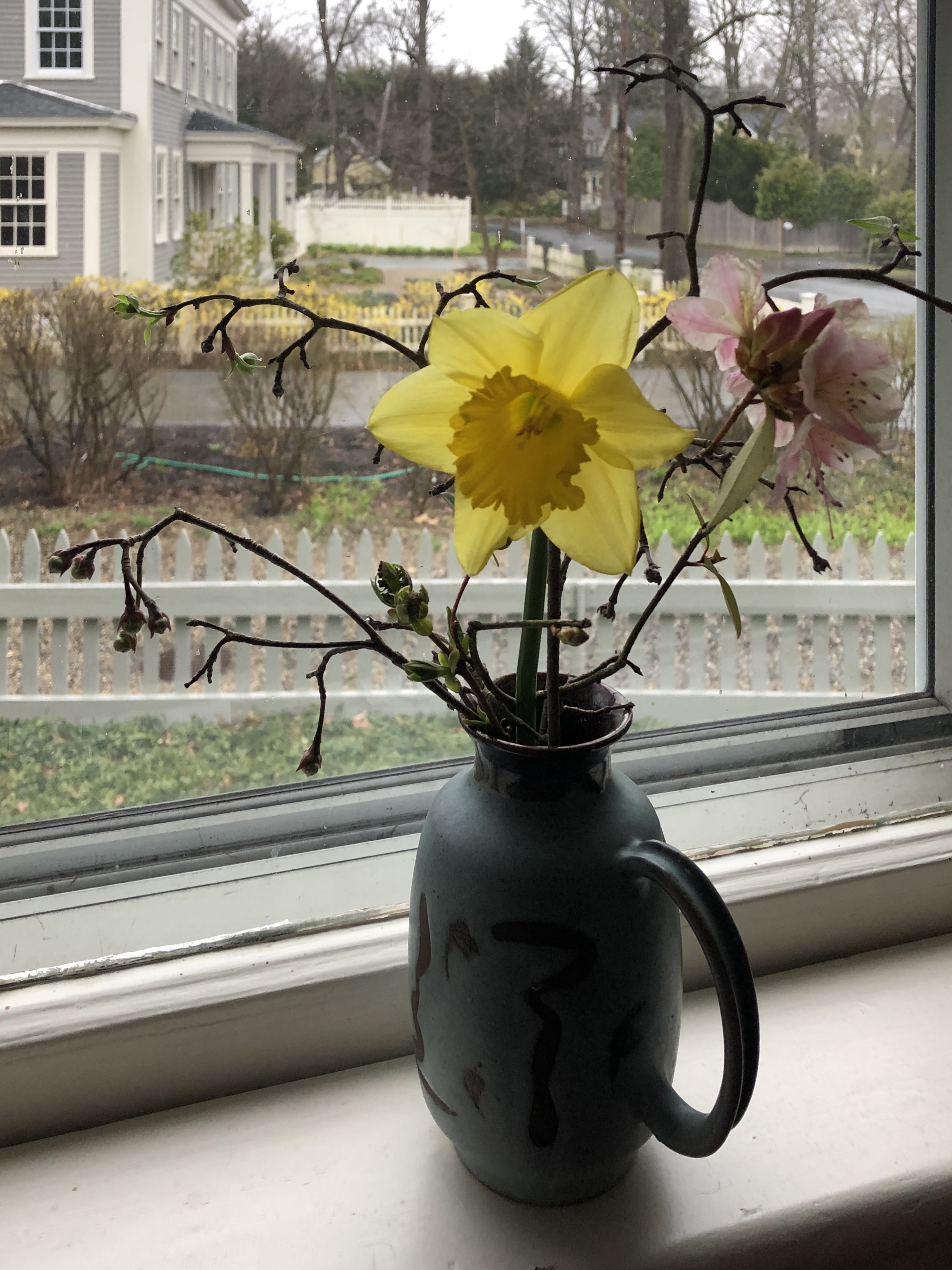
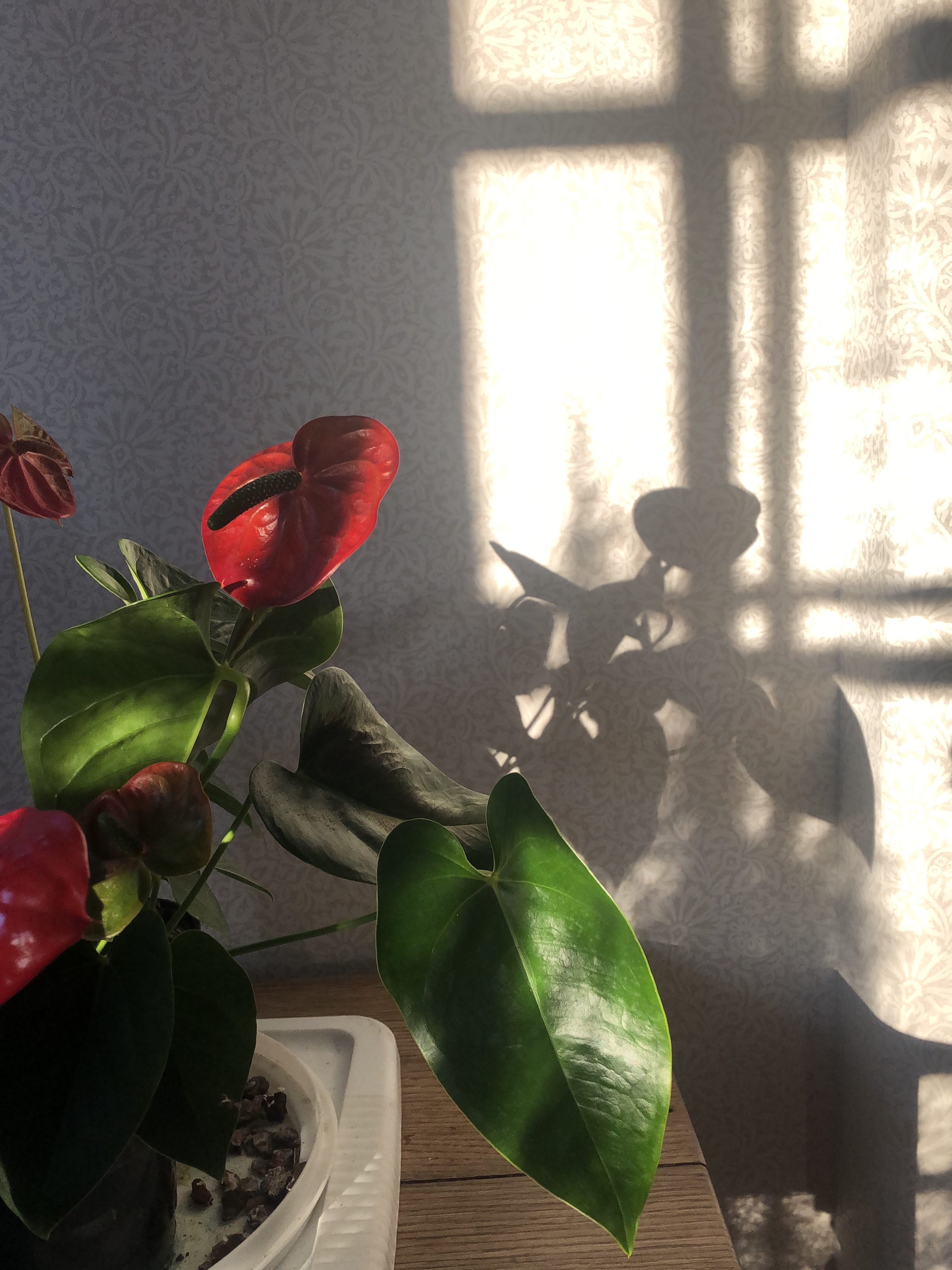
The concluding set of photos embraces art and nature back home in Massachusetts, where a long-life sympathy plant from my niece and nephew holds pride of place in the living room.

092519-Murphy-bed-at-Nancy's

092519-morning-shadows-NYC

092519-Peter-Stuyvesant

092619-vine-on-tree-NYC

092719-Met-Museum-NYC

092719-three-bears-NYC

092819-Peter-Pan-bus

100819-Ellie-rooster-Providence

093019-painting-the-church

100119-blue-painting

100119-window-box-at-jeweler

100919-sit-here-town-forest-art

100919-some-endangered-some-not-1

100919-some-endangered-some-not-2

100919-Hapgood-Wright-Forest-pond-2

100919-Hapgood-Wright-Forest-pond

100619-sympathy-plant-from-niece-and-nephew


Read Full Post »

natlpark_landscape

Photo: Woody Hibbard, Flickr
Petrified Forest National Park reaches into the Painted Desert in Arizona, which boasts a colorful badlands ecosystem.

A former colleague of mine, a naturalized citizen originally from northern China, has a goal to visit all the national parks. He puts me to shame. I have visited so few. But after listening to this story from the environmental radio show Living on Earth, I know I would really like to see one national park — Arizona’s Petrified Forest.

“BOBBY BASCOMB: We continue our series on US public lands now with a trip to one of our more unusual National Parks. Arizona’s Petrified Forest National Park is full of wildlife, and the beautiful hiking trails that we’ve come to expect in our public lands.

“But what really sets it apart are the trees that died there. … The fossilized remains of those trees, logs more than 6 feet in diameter, are still there today, cast in stone. Here to explain more about the unique geological process that preserved the ancient trees is Sarah Herve, the acting chief of interpretation for the park. …

“SARAH HERVE: Petrified wood is a fossil. A lot of times people think that it’s something different than you know, any other kind of fossil … the remains of gigantic forests that were here during the Late Triassic. The logs … have been turned to stone by rapid burial.

“There’s silica in the materials that the trees were buried in and the cellular structure has been replaced by silica. There’s other minerals present, but the glassy mineral silica is really, really good at exchanging places with cellular material. …

“BASCOMB: The end result then, is you have these logs lying around that look exactly like trees, you can see the rings in them, the bark, the whole thing, but it’s stone. …

“HERVE: That wood is oftentimes what we call rainbow wood, because it’s very, very colorful. [When] you look on the inside, there’s all kinds of pinks and purples and blue colors, blacks, and it’s really just amazing. … If you can picture these logs when they were trees, they would be comparable to like the giant sequoias of California. …

“BASCOMB: What are scientists able to learn about the geology of the area and the trees themselves from studying this petrified wood? …

“HERVE: This part of northern Arizona was a much more tropical kind of environment. We were closer to the equator at that time, the continents were together to form Pangaea, there was quite a bit more water through this region. [That’s] based on looking at the different fossils that are found within these rocks and the rocks themselves. It’s thought that there was a tremendous river system that was running through this area. … Something on the same magnitude as like the Mississippi or the Amazon River. …

“It’s really hard to imagine [a] place so full of trees and crocodile-like animals running around and lots of amphibians, right. Those are some of the different fossils that we find. … Then we have, you know, incredible badland topography. So that’s what a lot of people, you know, call the Painted Desert. And it is very, very colorful, that’s why it gets that name. But those deposits are the remains of those ancient rivers. … The dinosaurs that we find at Petrified Forest, they’re generally pretty small. So we’re at a time way before all the big dinosaurs happened. …

“BASCOMB: I understand that you also have petroglyphs there, left over from early inhabitants of the area. …

“HERVE:  There’s a lot of petroglyphs or what we call rock art in the park. There’s [sometimes] animistic forms. So you’ll see things that look like different kinds of birds or things that look really obviously like deer, you know, or elk or pronghorn antelope, which are animals that still live in the park today. And then some of the forms are very, very strange, and really hard to interpret. Some of the petroglyphs are also considered what we call solstice markers, or solar calendars. And so they have light interactions with the sun during different times of the year. …

“BASCOMB: We have a lot of national parks in our country; we’re very lucky that way. Why should somebody visit this park as opposed to any other?

“HERVE: You know, what I hear from a lot of park visitors is, ‘Wow, we’re so glad we came here, we like this better than Grand Canyon!’ And that’s not a dig on Grand Canyon. But it’s always interesting to me to hear that because I think a lot of times people don’t realize right when they get off the interstate what they’re in for.”

More at Living on Earth, here.

Thinking about my friend who is visiting all the parks, I realize it’s not unusual for naturalized citizens to appreciate the wonder and variety of this great land more than some of us who are native born. Another former colleague, also originally from China, has been expressing his delight in America by running half-marathons around the country. He has already covered more than half the states and won’t stop until he has run in all 50.

Read Full Post »
wizdom-1

Photo: Stephen Gosling/NBAE
The Wizdom is a dance team made up of exuberant and talented woman, no longer kids, who are good enough to dance at pro-basketball games.

I have listened to WBUR’s sports show Only a Game for years and was worried when host Bill Littlefield left. There was no need to worry. The program still excels at human-interest sports stories that draw in people like me as well as genuine sports fanatics.

Gary Waleik filed this one on some high-energy, over-50, pro-basketball dancers.

“Last year, Anna Cruse began to experience dread,” he writes. It was around the time her youngest was leaving for college, and she wondered what she would do with an empty nest. What was she good at? …

“To answer those questions, Anna Cruse had to look back at something she was good at four decades ago. In 1978, Anna Cruse was 21 years old. …

” ‘I was driving home from work one day and heard an ad on the radio for tryouts,’ Anna says. The NBA champion Washington Bullets were holding auditions for their dance team. ‘And I thought, “Hmmm … I’m gonna do it. I’m gonna go and try out.” ‘ …

“She made the 1978–1979 Washington Bullettes dance team.

” ‘All of it — the friendships and the performances, even the practice — it was all exciting,’ Anna says.

” ‘[But] in the fall of ’79, I was diagnosed with thyroid cancer.’ After a year of fighting, Anna beat the cancer and returned to her job as a word processing specialist, but not to the Bullettes. … Sometimes, when Anna watched dancers at an event or on TV, she’d remember how much she loved being one. …

“The years flew by, and Anna’s two oldest kids left their home in Greenville, South Carolina. Then, in March of 2018, the Washington Wizards held a 40th-anniversary celebration of the franchise’s only NBA title — from back in the days when they were still the Bullets.

” ‘And so they invited all the players back, and the coaches,’ Anna says. ‘And then any of the dancers through the years — I think there were about 60 of us — and we got to perform at this event. It sure reminded me of how enjoyable it was.’ …

“In early September, about a month after her daughter left home, Anna got an email. The Wizards were holding tryouts for a new dance team — or perhaps a new older dance team. It was for dancers 50 and older and was sponsored by the AARP. It would be called ‘The Wizdom.’ …

“In late September of 2018, undeterred by the eight-hour drive from her home in Greenville, she tried out for The Wizdom. … Anna had hardly danced over the previous 40 years. She says there were more than 80 dancers at the tryout, ranging in age from 50 to 76.

‘Absolute characters,’ Anna says. ‘Totally uninhibited. Comfortable in their own skin, and just entertaining folks.’ …

“Late one night, she got an email. … Anna Cruse had been chosen as one of the 20 members of the Wizdom over-50 dance team. …

“The Wizdom got just four practices in before their debut on Nov. 24, 2018.

” ‘The fans … so gracious. And the affirmation from them, and the excitement of the fans to this over-50, like, “What are these women out there doing?” Anna remembers. ‘When we came off the court that first game, I mean, these ladies were screaming and hugging.’ ”

More at Only a Game, here.

Read Full Post »
3971

Photo: John Sturrock
“A modern mania for canal developments is reshaping cities by offering oases of calm in fast-moving town centres,” says the
Guardian.

When our kids were small, the Barge Canal (otherwise known as the Erie Canal) was as familiar to them as their friends’ backyard, as the elementary school, as the Hicks and McCarthy luncheonette. It ran right through town. I remember taking a canal-boat ride up and down (vertically) through the locks with a visiting grandmother and a picnic lunch.

In today’s story, John Vidal writes at the Guardian about a new focus on canals in England.

“Every second Monday of the month, a small group of volunteers meets in the training room of a Birmingham supermarket. They discuss what has long seemed to many of their friends a crazy and probably doomed idea: how to excavate a contaminated 40-year-old waste dump, create an urban marina, restore three miles of derelict canal and build several new bridges and locks.

“Last month, however, the meeting of the 18-strong Lapal Canal Trust committee was joyous. After 20 years of trying to restore this short stretch of the 200-year-old Dudley No 2 canal, permission had finally been granted, they were told.

“What’s more, a feasibility study showed that the plan – which would link the suburbs of California and Selly Oak by water – could be a catalyst for nothing short of the economic and ecological renaissance of a large area of south Birmingham.

“The new canal will generate jobs but also provide space for new houses, as well as pollution-free walking, boating and cycling routes. The marina for 60-100 boats will stimulate businesses and bring in tourists. The wildlife corridor created along the canal will attract herons, otters, fish and waterfowl. And although the whole project will cost about £5m, the study said it would pay for itself in six years.

“ ‘It will improve life in the city. It will complete an old canal loop around the city – we owe it to the future to restore it. … No one is objecting and we have nearly raised the first £250,000 – enough to start work,’ says the Lapal trust CEO, Hugh Humphreys.The Lapal plan is one of at least 80 canal renaissance projects currently making British towns and cities suitable for populations seeking tranquility, leisure space and new ways to move around. …

“It’s not just happening in Britain. … But few countries have as many urban canals as the UK, a legacy of British industrial might – and now a golden opportunity for transformation. Some, such as the Aldcliffe yard development in Lancaster, will see just a few expensive houses built on old industrial canal works; but many seek to create large new ‘liveable’ urban communities in what were some of the Britain’s polluted places, such as Wolverhampton, Leeds, Manchester, Lancaster, Glasgow, Liverpool and Birmingham. …

“Three things unexpectedly changed everything. A postwar infant canal leisure industry emerged; dozens of passionate heritage charities like the Lapal trust voluntarily restored many of the old waterways; and water proved to be the vital ingredient to kickstart a new, property-based canal mania.

“ ‘The restoration of the canals in the 1950s and 60s was thanks to a remarkable act of defiance by unpaid volunteers against the authorities,’ says canal historian Mike Clarke.

“ ‘Volunteers were vital. It’s unlikely there would be many canals today without them. The government, many influential people, and the British Waterways board, were all happy to see the majority filled in. … They told the government, “if you want to complain, take us to court.” …

” ‘They formed isolated stretches of peaceful country within the urban environment. Planners eventually saw them as an asset, and government at last understood their potential for leisure.’ …

” ‘The job is only half done in Britain,’ says Alison Smedley, policy officer of the Inland Waterways Association. ‘The restoration of Britain’s canal system is in full flow but there is so much left to do. … There are still about 1,800 miles left to be restored, although many [canals] have been filled in and are unlikely ever to be reclaimed,’ she says. …

“Canal and River Trust (CRT), the government-part-funded charity set up in 2012 to take over and manage the 2,000 miles of state-owned canal formerly run by British Waterways, [calculates] that about 10 million people a year visit the canals to fish, walk, cycle, observe wildlife or go boating. …

“In addition, canals have become a real alternative for people unable or unwilling to buy city property. .. Ten years ago 10% of the boats on British waterways were used as primary residences. It is now 26%, says the CRT. …

“ ‘Almost unnoticed, the canals have become important sanctuaries for urban and rural wildlife,’ says Simon Atkinson, head of conservation at the Birmingham and Black Country Wildlife Trust. … Otters, water voles, kingfishers, ducks, herons, fish, dragon- and damsel flies, even rabbits, are seen on the 100-odd miles of Birmingham canals, some of which are classed as local nature reserves. …

“ ‘If development is done well, it can enhance nature. The canals have never been more important, but it could go the other way. There is a real opportunity for high quality inner-city development and nature to flourish together.’ ”

For me as a lover of Dickens (the novels, not the man), I can’t think of English canals without thinking of the dark spirit of Bradley Headstone in Our Mutual Friend. In fact, maybe I’m ready to read that one again.

Learn more about the benefits and challenges of canal popularity here.

Read Full Post »
offset_forest

Photo: Loren Kerns, Flickr
Many carbon offset projects reduce carbon in the atmosphere by protecting forests. Cool Effect offers other, carefully vetted offsets. The average American creates 17 tons of carbon pollution every year, so at $5 t0 $13 a ton, offsetting your footprint is a real deal.

When an arborist came to our house to remove a dangling limb on our big old tree, I was so sad to learn that the whole tree was diseased and had to come down. Not only was it beautiful, it was removing carbon from the atmosphere, which helps reduce global warming. I made a donation to the the Arbor Day Foundation, as an offset, but that’s not as good as keeping an ancient tree.

Here is what a recent episode of the radio show Living on Earth had to say about some good carbon offsets.

“Carbon-intensive activities, including global air travel, have been growing for decades. For individuals and companies interested in reducing their carbon footprints, carbon offsets promise to mitigate the damage caused by flying and other emissions sources through the investment in projects that either sequester carbon, like reforestation or forest conservation, or develop alternative energy infrastructure that reduce future emissions. Cool Effect CEO Marisa de Belloy discusses her non-profit crowdfunding platform that sells these offsets with host Bobby Bascomb.

“BASCOMB: [What] do people choose to offset with your carbon emissions offset program? …

“DE BELLOY: They’ll offset a flight, they’ll offset their trips to work; some will offset their entire year. The average American emits about 17 tons of carbon pollution every year. And so some people like to wipe that clean by offsetting that at Cool Effect. These are people who are committed environmentalists who are already doing what they can do in their daily lives, to reduce their impact. And that might be eating less meat, it might be traveling less often, it might be having an electric car or solar panels. …

“BASCOMB: [Give] me some examples of projects that participate.

“DE BELLOY: [Each] of these projects will have met the requirements of an independent standard, they’ll have been verified independently of us, and then we do our own very deep due diligence that lasts a couple of months on each project, to make sure that they’re doing exactly what they say they’re doing. …

“We have a project, for example, in Vietnam that installs biogas digesters, which is a very simple technology that takes animal waste, and turns it into clean cooking fuel for homes. We have a project in the United States that’s protecting the forest, or another one protecting grasslands; a project in Honduras that is providing clean cookstoves for families down there who were basically dying from air pollution from cooking over open fires. …

“They all are truly additional, meaning they’re truly having an impact on the planet and then they also all have their own set of co-benefits. [For] the cookstove project, it’s the health of the families. In some cases, it’s local jobs. In some cases, it’s protecting wildlife or a whole forest ecosystem and the people who live there. [The] key thing that underlies all the projects is that we have made sure that they’re actually doing the work of verifiably reducing carbon emissions.

“BASCOMB: And how do you actually verify that? I mean, how do you know that this project wouldn’t have been done anyway without this money? …

“DE BELLOY: [A] couple of different ways, but one is you have to understand what their financial model is, both when they started the business and currently. Is there a profitable way to do what they’re doing without the revenue from carbon offsets? And if the answer is yes, then the project is likely not additional. Another way to look for additionality is regulatory additionality. So, is there a law in place that’s requiring this business or this nonprofit to do what it’s doing? …

“BASCOMB: And then once you’ve identified a good project to work with, how do you guarantee the longevity of that? I mean, I saw that you have one in Brazil, protecting the Amazon, and Brazil is a famously lawless area, especially with the new president that really doesn’t encourage conservation. How can you be sure that those trees will still be standing 10 years from now, or that the landowner won’t take that money and then clear cut in a different area?

“DE BELLOY: [On] the trees still standing portion, that’s built into the methodology, so they will no longer be able to offer credits if those trees start disappearing. And each of the methodologies includes a certain buffer amount of trees, you know, because trees do die, and you can have natural fires and that sort of thing. And we take a particularly conservative approach to these projects, if there’s any doubt that, you know, the cook stove was in use, or the tree was still standing, or, you know, the animals were still having access to these grasslands, then a credit is not issued for that amount. So wherever there’s doubt, the credit is not issued. …

“[The cost for an offset] goes from about $5 to about $13 a ton. So if you think about the average American having 17 tons of carbon pollution every year, it’s a really reasonable amount of money to spend to wipe away that impact that we’re all having.” More from Living on Earth, here.

The best example I know of someone practicing what they preach is young Swedish climate activist Greta Thunberg, who is traveling from Canada to Chile without using fossil fuels. Read this.

Photo: New York Times
So as not to use any airplane’s fossil fuels, Swedish climate activist Greta Thunberg crossed the Atlantic Ocean aboard the Malizia II, a zero-emissions racing yacht.
merlin_159839643_94176435-b622-4a9d-a118-aa89da8c425c-articlelarge

Read Full Post »

070120alaska_women_farmers

Photo: Thomas Newman
Jennifer Sharrock, left, is a beginning farmer in Palmer, Alaska. When she needed land to expand, she was matched with land owner Jan Newman through the Alaska Farmland Trust.

I’ve posted a few times about beginning farmers and, in particular, Letterbox Farm in rural Hudson, New York (here). Sandra’s niece and her partners at Letterbox Farm are perfect examples of a hopeful trend in farming: young people getting serious about agriculture and bringing in new and sustainable approaches. It’s incredibly hard work, but they love it.

Today’s post is also about young people getting into farming and is part of a Christian Science Monitor series on the topic. Reporter Sarah Matusek addresses young farmers’ need for land and creative ways older farmers can provide it.

“Jan Newman became an accidental alpaca farmer. She took up knitting in the 1990s at home in Palmer, Alaska, to supply her first child with natural-fiber clothing, and one thing led to another. She innovated again in 2013 when she founded Grow Palmer, a public food program that plants edible gardens around town. These days, Ms. Newman is pondering retirement. …

“Jennifer T. Sharrock is just starting out. She left an insurance career this year to pursue market farming and permaculture full time through her Seeds and Soil Farm. The beginning farmer began teaching permaculture design three years ago, but her popular classes quickly outgrew her space. Buying more land wasn’t financially feasible.

“So she placed an ad in Alaska Farmland Trust’s FarmLink program, a kind of ‘dating service’ for land seekers and owners. When Ms. Sharrock received an answer to her ad, her heart skipped a beat. She saw it was from Ms. Newman, whom she’d met through Grow Palmer. They also turned out to be neighbors.

“ ‘It’s a match made in heaven,’ said Ms. Sharrock, who has started on four acres of Ms. Newman’s property.”

The two women’s agreement is unlike other FarmLink arrangements.

” ‘There’s actually no money changing hands,’ says Ms. Newman, who calls the younger farmer’s regenerative agriculture plan ‘the best stewardship possible.’ …

“Land-link pairings like the one in Palmer represent one possible step toward solving a nationwide puzzle – how to help experienced farmers exit out of agriculture while building an on-ramp for new producers.

” ‘I get a sense there are more young people who don’t necessarily have farm backgrounds, who are taking agriculture entrepreneur courses, and they are starting to jump into farming,’ says Jim MacDonald, an economist at the U.S. Department of Agriculture.

“Along with access to capital, access to land is one of the greatest hurdles faced by beginning producers in the United States. One sign of the barriers to entry: The average U.S. farmer’s age has taken a long-term climb over the past several decades, now reaching 57.5, according to the USDA’s latest census figures. While there has been some increase in the number of producers under age 35 – partly due to how the census now defines them – this group remains vastly outnumbered. …

” ‘As someone retires, that’s an opportunity for two or three other young people. There’s no shortage of people that want to farm,’ says Michael Langemeier, an agricultural economics professor at Purdue University in Indiana. …

“In Alaska, 46% of the state’s producers are beginners – the largest share of any state. Amy Pettit, executive director of Alaska Farmland Trust, says the demand for more locally grown food is one of the factors pulling new farmers north. …

“But buying land for many new farmers remains out of reach. … Land availability is another concern. ..

“ ‘There is a sense of urgency,’ says Tim Biello, who coordinates the Hudson Valley Farmlink Network in New York. ‘The history of our use of agricultural lands suggests that we’re not getting more.’ …

“Launched by the American Farmland Trust, Hudson Valley Farmlink Network is among the most active, with 175 matches since 2014. Mr. Biello, the network’s coordinator, attributes the success to individual attention and relying on the localized expertise of 17 partner organizations. …

“Mr. Biello says that matches shouldn’t be the only metric for measuring a land-link program’s impact. He points instead to the trainings, events, and one-on-one assistance that have reached more than 10,000 farmers and farmland owners. …

“Ms. Newman hopes the new farmer will remain on the land long term.

“ ‘I just can’t wait to see this evolve,’ says Ms. Newman. ‘It’s the most exciting thing that’s happened on the property since our alpacas left.’ ”

More here.

Read Full Post »
0705-polyglot-3

Photo: Ann Hermes/Christian Science Monitor
Daniel Kaufman, founder of the Endangered Language Alliance, is recording and preserving the many endangered languages of New York.

A number of people who follow this blog are interested in endangered languages and what is being done to save them. Recently, I saw this article on the treasure trove of rare languages that is found in — of all places — Queens, New York. Here it is.

Harry Bruninius writes at the Christian Science Monitor, “Like many immigrants who live near the busy subway hub in Jackson Heights, Tenzin Namdol usually talks to her family and friends with a shape-shifting array of tongues.

“She’ll jump from colloquial Tibetan to standard English in the middle of a conversation almost without a thought, and then start speaking what she says has become a third hybrid of slang, combining the phonetics of both. She also speaks fluent Hindi. ….

“Despite this easy fluency in a number of very different languages, Ms. Namdol becomes wistful when it comes to one she hasn’t quite mastered – the native tongue of her mother, whose people speak a rare Himalayan dialect called Mustangi.

“There are only about 3,000 people left in the world who still speak Mustangi, and most live in a remote Himalayan region in western Nepal. But a few hundred or so of these speakers, including Ms. Namdol’s mother, now reside in the New York borough of Queens.

This also happens to be the most linguistically diverse neighborhood on earth, scholars say.

“With as many as 800 distinct languages, Queens has a diversity of tongues and dialects unprecedented in human history – and its epicenter is here amid the concentrated din of Jackson Heights. …

” ‘Sadly, my mother didn’t pass down her language to me,’ says Ms. Namdol, whose family lived among the Tibetan diaspora in Dharamshala, India, before emigrating to New York. …

“Part of this classic story, too, has been the well-intended reactions of immigrant parents like her mother, who raised her daughter to speak the lingua franca of their wider community, the standard Tibetan used for commerce, government institutions, and the traditions of Buddhism. What use could a language like Mustangi offer her daughter?

“ ‘Now if I go to a gathering of my mother’s people, I’m not able to understand their words, so they don’t really identify me as one of their own because I don’t know their language,’ says Ms. Namdol. …

“For the past year, she has begun to learn the words of Mustangi, volunteering with the Endangered Language Alliance, a nonprofit in Manhattan that works with immigrant communities to preserve their dying languages.

“Collecting the stories of local Tibetans in their native tongues, she’s been recording them for the alliance’s project ‘Voices of the Himalayas,’ learning more about some of the other seven languages spoken in Jackson Heights’ Tibetan diaspora, including her father’s native tongue, Kyirong, a three-tone Tibetic language spoken mostly in Nepal. …

” ‘This  neighborhood in particular is like, I would say, the Noah’s Ark of languages,” says Daniel Kaufman, a professor of linguistics at Queens College and the executive director of the Endangered Language Alliance. … And it’s really just a coincidence, Dr. Kaufman says, that Jackson Heights happens to be at the crossroads of language diversity. The immigrant communities clustered here happen to be from countries that already have the most spoken languages in the world. …

“Alex Paz, however, may be one of only a handful of people living in New York who speaks P’urhépecha, an indigenous pre-Columbian language spoken in southern Mexico.

Considered an ‘isolate’ among human tongues, P’urhépecha is not only rare, but also one of a kind, linguistically unrelated to any other known language in the world.

“ ‘There are things that can only be said in my language,’ says Mr. Paz, an immigrant from the small mountain town of Ocumícho in the Michoacán region of southern Mexico. ‘Even at home, I can see how my language is disappearing, and this means a lot of cultural aspects, too, because language – once we lose our language, I think that’s the essence of who we are.’ …

“Mr. Paz, too, has been volunteering for the Endangered Language Alliance, trying to locate and collect everything that’s been written in P’urhépecha over the past few decades. And while he hasn’t found anyone else in New York who speaks his language, Mr. Paz has been immersed in it as he never has before, putting what he finds into a database and then providing word-by-word translations into English and Spanish – a complex and complicated task, he says, since many of his language’s words contain concepts nearly impossible to translate. …

“ ‘It’s like the language is the only thing that we have left, and its concepts,’ Mr. Paz says. ‘I don’t want to read somewhere, or have to say, “Back in the day in Michoacán we used to speak this language, P’urhépecha.” It’s sad, and I want to at least try to keep it alive.’ ”

More here.

Photo: Mark Lenihan/AP
The No. 7 subway train arrives at the 82 Street Jackson Heights station in Queens. Jackson Heights is one of the more diverse neighborhoods in New York City. 

0705-polyglot-2

Read Full Post »
2gxhvxhxpndc3cv6ftxdqmleue

Photo: Heather Khalifa / Philadelphia Inquirer
Pianist Tianxu An lived through every performer’s worst nightmare when he suddenly had to play the wrong piece.

I don’t know about you, but I have often had what might be called the Performer’s Nightmare. Sometimes it takes the form of the Teacher’s Nightmare (a classroom full of utterly uncontrollable kids) or the Actor’s Nightmare (onstage in a big role with no idea of my lines). Maybe you have had it for a PowerPoint presentation at work. I don’t even want to imagine what a Surgeon’s Nightmare might be like, but I believe we’ve all had one of these scary dreams.

For the pianist in this story, nightmare became reality.

As Peter Dobrin reported at the Philadelphia Inquirer, “It sounds like the musical version of a classic anxiety nightmare. You walk out on stage, sit down at the piano for a concerto, and the orchestra starts playing a different piece than the one you were prepared to perform.

“And yet a few weeks ago it was all very real to Tianxu An, who lived through the strange episode in the finals of one of the most prestigious competitions anywhere.

“The Curtis Institute of Music student, just 20, was ready to play the Tchaikovsky Piano Concerto No. 1 at the International Tchaikovsky Competition in Moscow in June. When conductor Vasily Petrenko brought in the orchestra for its brief introduction, the sound that came at An was that of Rachmaninoff’s ‘Rhapsody on a Theme of Paganini.’

‘I was really surprised,’ said An. ‘The problem was I needed to react in that kind of fast way, so there was no time for me to begin with some kind of emotion.’

“Rather, it was pure muscle memory, he said.

“Now [that is, in July 2019] the Philadelphia-based pianist is getting ready to play the same Rachmaninoff piece with considerably more intentionality. He is soloist in the work Tuesday at the Mann Center with the Philadelphia Orchestra in an all-Rachmaninoff program led by conductor Elim Chan.

“In Moscow, An was a full beat late in his entrance, but caught on fast and says he soon felt at ease in the Rachmaninoff, which he had prepared but did not expect to come until after the Tchaikovsky, in the final round of the competition. …

“Competition officials apologized for the mix-up, which they called a ‘gross error’ on the part of an employee. In the end, An was awarded fourth place plus a special prize for ‘courage and self-possession.’ …

“ ‘I really feel thankful for this competition,’ says An, ‘because for me to be in the round of the 25 people going to Moscow, that for me has already been luck.’ …

“Competitions, he says, can challenge him to ‘play better and in a more complete way. I think the nature of human beings is we tend to relax, we don’t want to challenge ourselves. Competition is a way to objectively push, to force us to play better. …

” ‘I think I projected and played the emotions I wanted. That’s the good part. But for maybe the bad part, because the order was switched, my physical strength was not equally distributed. Because maybe I put too much strength in the first piece.’

“Next time, at the Mann, when the conductor begins with a gust of four 16th notes, both the character and piece may come across differently. For one thing, the pianist will be expecting it.”

This is what my husband calls Type Two Fun: fun to talk about later, not so much fun at the time. More at the Inquirer, here.

Note the pianist’s astonishment when the conductor started the wrong music at the International Tchaikovsky Competition in Moscow.

Read Full Post »
« Newer Posts - Older Posts »