Feeds:
Posts
Comments

Archive for the ‘Uncategorized’ Category

Today’s mild weather reminds me that May Day and Mother’s Day aren’t far off. Mother’s Day is a highlight of the year at Luna & Stella, Suzanne’s lovely birthstone jewelry company, for which Suzanne’s Mom blogs.

I hope you know about May Day, too. I’d like to see it revived, the ancient custom of leaving flowers at people’s doors in honor of spring. (I don’t begrudge the workers of the world their version of May Day, but they shouldn’t hog the whole thing.)

Why don’t Girl Scout troops do May Day? Why don’t florists? It mystifies me.

I still remember a May basket I made as a kid from a punch-out book. I thought it was a thing of beauty and kept asking my mother to get me another book like that. But they stopped making them.

Now I work from scratch if I have time. Last year I blogged about one kind of a homemade basket, here.

It’s always a surprise to see what flowers are available on May 1 any given year. Since these are in my yard now, I suspect there will be different ones by  May.

small rhodadendron

blue scylla

andromeda

forsythia

Read Full Post »

In addition to poetry, art often brings comfort. (Artists don’t usually want to make anyone “comfortable,” which has a different connotation.)

One reason art brings comfort is that creativity generates surprises, and surprises may bring delight.

So although I’m still preoccupied with Boston, I’ll leave Boston for today and write about Cleveland.

Thank you, Mary Ann, for pointing to the Gwarlingo blog, which recently said of the art scene in Cleveland,”prepare to be surprised.”

Blogger Michelle Aldredge writes in part, “It is possible to experience the best of Cleveland culture entirely on foot. …

“According to Ann Craddock Albano, the director of The Sculpture Center in Cleveland, the 550-acre area that encompasses the Cleveland Museum of Art, the Cleveland Botanical Garden, the Museum of Contemporary Art, the Cleveland Symphony, the Cleveland Institute of Art, the Cleveland Cinematheque, Cleveland Institute of Music, and numerous university and medical facilities is the most concentrated neighborhood of world-class cultural institutions in the country. …

“The latest jewel in the Circle’s crown is Farshid Moussavi’s new building for the Museum of Contemporary Art. MOCA is Moussavi’s first museum design, and also the first American project by the Iranian architect, whose firm, Farshid Moussavi Architecture, is based in London.

“A few blocks away from MOCA, at Case Western Reserve University’s Weatherhead School of Management building, silver planes slice through red brick like paper in a windstorm. While Frank Gehry opted for flamboyance, Moussavi wisely chose a simpler, less ostentatious design for MOCA—one that is unique and engages the surrounding neighborhood.” More.

BTW, I wouldn’t mind hearing what other folks do for comfort.

Photo: Michelle Aldredge
The zigzagging stairwell is the most eye-catching feature inside the new MOCA Cleveland

Read Full Post »
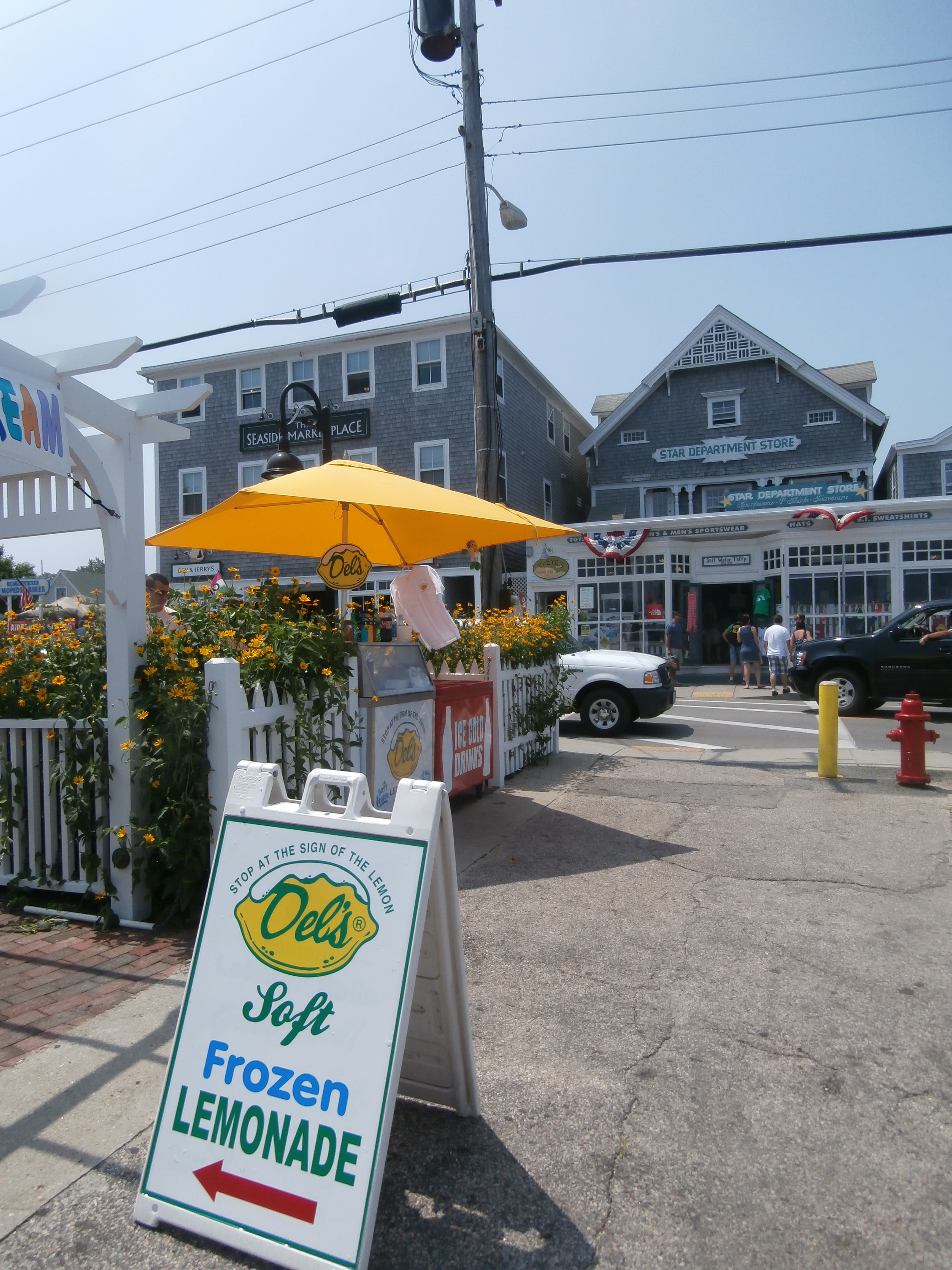
I love this poem.

For me, the poet is saying that darkness can never completely win; focus on what it can’t touch.

Try to Praise the Mutilated World
Adam Zagajewski

Try to praise the mutilated world.
Remember June’s long days,
and wild strawberries, drops of wine, the dew.
The nettles that methodically overgrow
the abandoned homesteads of exiles.
You must praise the mutilated world.
You watched the stylish yachts and ships;
one of them had a long trip ahead of it,
while salty oblivion awaited others.
You’ve seen the refugees heading nowhere,
you’ve heard the executioners sing joyfully.
You should praise the mutilated world.
Remember the moments when we were together
in a white room and the curtain fluttered.
Return in thought to the concert where music flared.
You gathered acorns in the park in autumn
and leaves eddied over the earth’s scars.
Praise the mutilated world
and the gray feather a thrush lost,
and the gentle light that strays and vanishes
and returns.

cloud-study

Read Full Post »

I saw these fiddlers a couple times while waiting for the evening train to Porter Square. For weeks there were tweets: “Who are those guys?”

Steve Annear at Boston magazine got the scoop. “Two former Berklee College of Music students have made a full-time job out of playing contemporary music on their violins for the swarms of passengers that crowd the platforms of the MBTA each day.

“After meeting in 2009 outside of the school, violinists Rhett Price and Josh Knowles got together and decided to form a two-piece ensemble and perform songs while standing on the Boston Common. But when winter got too cold and their fingers ‘started to get stiff,’ Price says the pair turned to the T for a busker’s permit so they could share their songs with riders traveling on the underground transit system.

“ ‘It’s been amazing. I was really nervous at first—we were nervous about playing on the T in general, and we didn’t think any one would give us any money. But there are people who come up and [request songs],’ says Price. ‘This is what we do right now to pay bills.’ …

“Price says he and Knowles play at three stops throughout the week, including North and South Stations, and at the Harvard Square stop. In a few weeks, they’re kicking the public transportation appearance up a notch, and will travel to New York City to play for riders there.”

Um. Forget about New York. Spend more time at South Station, please.

More.

Read Full Post »

These recent photographs show the changing seasons — from a March storm at a T station to driving with the top down.

The weather changes fast around here — today on my walk I kept zipping and unzipping my coat because the sun kept going in and out of clouds and the temperature kept zooming up and down. As the saying goes, “If you don’t like New England weather, stick around for a few minutes — it will change.”

March-storm-MBTA

bare-branches-in-april

rogue-dog-in-convertible

dandelions-in-april

concordma-cheese-shop-flowers

Read Full Post »

As I mentioned the other day in the post about the Latin newscast on Finnish radio, I am interested in endangered languages.

Now a composer who is also interested has melded voices of  threatened languages with his music.

Corinna da Fonseca-Wollheim writes at the NY Times that the “Vanishing Languages” project by Kevin James, “a New York-based trombonist and composer, is a rare hybrid of conservation effort and memorial, new music and ancient languages.

“Prodded by Unesco statistics that predict that by the end of the century half of the world’s 6,000 languages will be extinct, Mr. James spent months in the field tracking down and recording the last remaining speakers of four critically endangered tongues: Hokkaido Ainu, an aboriginal language from northern Japan, the American Indian Quileute from western Washington, and Dalabon and Jawoyn, aboriginal languages from Arnhem Land in Australia.”

Reviewing a concert James gave at a New York venue, da Fonseca-Wollheim says, “ ‘Counting in Quileute,’ which opens with bells struck and bowed and swung in the air and ends with the ring of a Buddhist prayer bowl, had a strong ritualistic feel to it.

“The often puzzling actions of the players — flutists whispering into mouthpieces, a cellist tapping with both hands on the fingerboard as if playing a recorder — appeared like a secret choreography designed to bring forth the voices of the dead filtered through the crackle of old phonographs.

“The imperfections of these old recordings, which Mr. James used alongside those he made recently in the field, show how heavily smudged the window is that we have on these vanishing cultures. And yet at times it seemed as if it were these voices who were willing the performance into existence.” (Isn’t da Fonseca-Wollheim a lovely writer?) More.

For a couple other blog discussions of endangered language, click here or here.

Photo: Ruby Washington/The New York Times
Leah Scholes of Speak Percussion using a double bass bow to play a bowl as part of “Vanishing Languages.”

Read Full Post »
Anna%20Ancher.%20%22Breakfast%20before%20the%20hunt%2C%22%201903.%20On%20view%20at%20the%20%22A%20World%20Apart%3A%20Anna%20Ancher%20and%20the%20Skagen%20Art%20Colony%22%20exhibit%20at%20the%20National%20Museum%20of%20Women%20in%20the%20Arts.%20%28Courtesy%20Skagens%20Museum/%29

Anna Ancher painting from the Skagens Museum: “Breakfast before the hunt,” 1903.

Kristina often gives me her Women in the Arts magazine after she’s done with it. This time I was particularly taken with a story on a show in Washington called “A World Apart: Anna Ancher and the Skagen Art Colony.”

DeNeen L. Brown writes that among the 64 paintings and oil sketches, the depiction of light is breathtaking.

She says, “At its height in the 1880s and ’90s, Denmark’s Skagen Art Colony attracted dozens of artists who were drawn to the isolated fishing village by the light and the unspoiled land- and seascapes.

“While the exhibition focuses on Ancher, the most prominent woman, it also includes works by her husband, Michael Ancher, as well as Laurits Tuxen, Viggo Johansen, Christian Krohg, Oscar Bjorck, Holger Drachmann, Carl Locher and P.S. Kroyer, whose large-scale oil paintings capture the ‘heroic’ life of fishermen in Skagen. …

“Ancher, who was the only native of Skagen among the artists in the colony, became an icon in Denmark not only for her art but for breaking social boundaries. She was a wife and mother who painted at a time when most women abandoned work after they married and had children. She also painted during an era when women were prohibited from studying at the Royal Danish Academy of Fine Arts. …

“The Skagen colony artists became known as part of the modern breakthrough movement, shrugging off the academic tradition of neoclassical painting styles preferred at the Academy of Fine Arts in Copenhagen and building on realist, naturalist and impressionist movements to depict everyday life and everyday people in an unidealized way.” More.

In case you should be in Washington in the next few weeks, the show runs through May 12 at the National Museum of Women in the Arts.

Read Full Post »

Photo from FBI site: An empty frame in the Dutch Room of the Gardner Museum, where Rembrandt’s The Storm on the Sea of Galilee and A Lady and Gentleman in Black once hung.

The agent overseeing the FBI investigation into the 1990 Isabella Stewart Gardner Museum heist spoke at my workplace today (a real perk of my job).

I learned a lot. Did you know, for example, that because Mrs. Gardner’s will specified that no art was to be moved, sold, or replaced, the paintings had no insurance? They were not be replaced. The agent said that the usual scenario is that stolen art is held for ransom from the insurance company. The thieves probably didn’t dream that there was no insurance on Rembrandts and Vermeers.

Our speaker was quite entertaining (for example, showing a slide from the Simpsons cartoon in which Vermeer’s The Concert is found in Montgomery Burns’s mansion ). He answered many questions and punted others as the investigation is ongoing.

As you may have seen recently, the FBI announced that they knew who had stolen the art and at least two of the places it had been seen. They have not announced the names of the thieves but may do so once they work through all the leads the latest announcement has brought. The statute of limitations ran out on the theft after five years (Mass. Senator Ted Kennedy subsequently pushed through a federal law extending the limit to 20 years), but possession of stolen art is a crime not subject to time limits.

I learned that the museum had good security. As most locals know, the guards let the thieves in believing they were cops. When you have a Trojan Horse inside, security doesn’t help, the agent said. Nowadays guards in different museums call each other every 20 minutes just to check.

Extensive research has shown there has never been a museum theft like this, where the thieves stole so much of value and also so much of little value and took a leisurely 81 minutes to do so.

And perhaps there has never been a crime at a major museum where the paintings were not insured.

The agent believes the art will be recovered one day. Read the FBI dedicated site, here.

Photo: Simpsons

Read Full Post »
When you consider all the minority languages that are endangered today — many of which I’ve blogged about (for example, here) — it seems a bit perverse to be bringing back Latin on the radio. But as one more way to interest people in languages, how bad can it be?

For the Finns, who have to speak many languages because hardly anyone speaks theirs, it’s just one more.

As John Tagliabue wrote in yesterday’s New York Times, the Internet has given a boost to “a weekly summary of world events and news broadcast by Finnish state radio — not in Finnish, but in classical Latin. …

“In recent weeks, the subjects have included the financial crisis in Cyprus, an unusually brilliant aurora borealis and the election of Pope Francis. …

“It may be no coincidence that the broadcast began in 1989, the year Communism collapsed in Eastern Europe and the Finns turned toward Western Europe. For educated Finns, Latin had long been the country’s link to Western culture, and they were required to study the language in school. …

“While the broadcasts once went out over the airwaves, with shortwave reception for listeners outside Finland, more and more listeners tune in to the program’s Web site, through podcasts and MP3 downloads.” More.

Image: Wikipedia
Cicero Denounces Catiline, fresco by Cesare Maccari, 1882–1888. It’s what Suzanne’s Mom thinks of when she thinks “Latin.”

Read Full Post »

On Saturday we watched the documentary Urbanized, about urban planning.

Although there were many discouraging notes (Mumbai slums, Beijing smog, destructive construction in Stuttgart), there were enough positive ones to give hope.

I liked the grassroots gardening efforts in Detroit, pedestrian/bike paths in Bogota (while cars were relegated to mud), miraculous transformations of aging infrastructure (the High Line in Manhattan), lighted paths in Cape Town, and bicycle commuting in Copenhagen.

The point was made that walkability (one of my favorite topics, as readers know) and similar quality-of-life improvements in cities can be hugely beneficial to the planet just because cities are so big and changes there affect so many people.

Doug Foy, who helped get Boston Harbor cleaned up and now consults with New York City’s Mayor Bloomberg, has spoken at my workplace a few times. He likes to talk about how New York avoided buying a whole new water supply simply by partnering with plumbers unions to get standard toilets gradually replaced with low-flush toilets.

Read Full Post »

I went online to find information about a Vermont bird book mentioned briefly in the Boston Globe this week. I found more at Seattle pi, of all places (the pi comes from Post-Intelligencer, the newspaper’s name before becoming completely virtual).

Seattle pi writes, “Some bird species that depended on open farmland have seen their populations drop over the last three decades while the land has grown up into forests, but during that time some other bird species have become more common than they were, according to the new book, the ‘Second Atlas of Breeding Birds of Vermont.’ …

“The book was produced by the Norwich based Center for Eco-studies and the Department of Fish and Wildlife and is described as the most complete assessment of birds ever assembled for Vermont.

“The book took 10 years to produce with input from 350 volunteers who spent 30,000 hours working on the project. … [It] includes 208 photographs, 415 maps, 591 tables and 215 graphs.

“We cannot know the nature of Vermont, the health of the woodlands, wetlands and other wild places, without knowing the status of our birds,” said Rosalind Renfrew, a biologist with the Center who edited the book.” More.

I like the image of 350 volunteers. Birds rely on volunteer bird lovers in so many ways. John has helped with the Christmas bird count in the Boston area. And his son already identifies a few birds, with additional support from John’s  bird-loving wife. Imagine how many birds my grandson will recognize by the time he is three!

Read Full Post »

I enjoy blogging about my cousin the tree artist (here, for example). I’m a longtime fan.

Today I learned that one of Sally Frank’s miniprints has been accepted into the International Mini Print Exhibition at the Center for Contemporary Printmaking in Norwalk, Connecticut.

According to its website, “the Center for Contemporary Printmaking is the only nonprofit organization between New York City and Boston solely dedicated to the art of the print, including printmaking, papermaking, book arts, digital processes, and related disciplines.”

Sally Frank does many different kinds of prints and drawings. You can see how varied are the media she works in at her site, here.

Monotype: Sally Frank

trees-by-sally-frank

Read Full Post »
“If you want to go into business during tough economic times, you might want to do it with family,” writes Lisa Rathke, Associated Press, at the Boston Globe.

“According to the Family Business Institute,” she says, “90 percent of US businesses are family owned. Some giants got their start as family businesses, including retailer Walmart and automaker Ford.

Maple Landmark, a wooden-toy company in Vermont started by Michael Rainville, now employs his sister, his wife, his mother, and his grandmother, as well as his sons.

“Rainville is willing to work long hours and do whatever it takes to keep the business going. When business softened after 2001, they bought a similar Vermont company so they could offer a broader array of toys. But between 2002 and 2007 they were lucky if they grew at all and ended up smaller by about 15 percent.

“Rainville said he didn’t have any more tricks to pull out his bag so they focused on being more efficient. …

“Brothers Charles and Arthur Anton also grew up in the family business, Anton Cleaners, based in Tewksbury, Mass. Their grandfather started the business nearly 100 years ago.

“When the economy soured, people were dry cleaning their clothes less often. But like the Rainvilles and [others] they didn’t resort to laying off employees. They cut back hours.” They were determined to make it work because it was family. More.

The infighting at some family businesses I’ve heard of make them seem like a bad idea most of the time, but I haven’t previously considered that in a recession, blood may really be thicker than water.

Photo: Toby Talbot/Associated Press
Michael Rainville employs his sister, wife, mother, and grandmother at Maple Landmark, a wooden toy company based in Vermont.

Read Full Post »

As long as no one is hurt and there is not too much damage, hail is a rather wondrous phenomenon.

I was in Central Falls a few years ago to interview someone, and suddenly the whole world changed. I pulled my car over and just submitted to the racket as hail stones clattered against the roof. Nothing to do but wait.

There is something leveling about hail. People’s differences fade in the face of Nature showing who’s boss.

Dale Lezon had a hail story in the Houston Chronicle this week: “Residents in Hitchcock and Santa Fe woke up to broken roofs, shattered windows and dented cars after softball-sized hail battered the communities late Tuesday night.”

I especially liked the picture.

Photo: Brett Coomer / Houston Chronicle via AP
Christine Hubbard shows off hail stones she collected Wednesday, April 3, 2013, in Hitchcock, Texas.

Read Full Post »

My mother took in renters, and the last guy who rented my brother’s old room was a serious tinkerer.

There was no space to move around among all the gadgets and spare parts, but he did manage to squeeze us in when we were around and show us a particularly cool invention.

It was a colorful display on a computer screen that responded to sound, loudness, and rhythm of music.

I was thinking about that guy as I read the story that James Sullivan wrote for the Boston Globe about Bill Sebastian, inventor of “a kind of optical synthesizer called the Outerspace Visual Communicator, or OVC.

“Designed to let the user ‘play’ with images as part of a musical composition, the original OVC was a custom-built keyboard featuring an array of sensors to be brushed with fingertips (‘like fingerpainting’). It created dynamic color changes in the lights on a structure overhead, such as a dome over a concert stage.

“Sebastian performed with the OVC in a few extended runs with Sun Ra and his big band, the Arkestra.”

Now Sebastian has built “a new visual synthesizer — this one in 3-D…

“For the past several months, two fellow engineers and computer programmers have been working …  on proprietary computer programs and prototypes of the new OVC, which, in place of the keyboard and buttons, is operated by hand controllers that look a bit like robotic arms fitted with valves (like those of a trumpet) and sliders (roughly analogous to the frets on a guitar). Sebastian envisions applications for the 3-D OVC ranging from planetariums to virtual reality headsets.” More.

Whatever happened to that guy at my mother’s house? What was his name again?

Photograph of Bill Sebastian, Visual Music Systems, by Dina Rudick, Globe staff

Read Full Post »

« Newer Posts - Older Posts »