Feeds:
Posts
Comments

Archive for the ‘Uncategorized’ Category

Photo: Sander Korvemaker.
Despite no known historical connection with Charles Dickens, this Dutch town plays host to an annual Dickens festival, the world’s largest.

Today’s story about a town that loves Charles Dickens drew me in because I also love Dickens. That is, I love his novels. With the exception of The Old Curiosity Shop and Barnaby Rudge — neither of which I liked — I have read them all multiple times. But I have also read about the man himself and am pretty sure he was not a very nice guy.

The surprising Dickens festival that Senay Boztas writes about at the Guardian focuses on both the novels and the guy.

Boztas reports, “Soon after limited Sunday trading started in the Netherlands, an anglophile shopkeeper in the small city of Deventer decided it could all be a bit more fun.

“ ‘My 82-year-old mother, Emmy Strik, is England-minded because my grandfather always went to England and read a lot of Dickens,’ said her daughter, Liesbeth Velders, who now runs the Dille & Kamille homeware store. ‘So when we were going to open on Sunday, she decided to make it a fancy-dress party – except the fancy-dress party got a bit out of hand.’

“Decades later, Strik’s experiment in literary frivolity has gone further than she could have imagined. The event she began in 1991 to commemorate Charles Dickens has run for 33 years, with a two-year break during the Covid pandemic.

“Despite no known historical connection with the author, Deventer, in the eastern province of Overijssel, now plays host to what is believed to be the world’s largest Dickens festival. This weekend [in December 2023], 950 volunteers will fill the streets of the ancient Bergkwartier, performing street theatre and selling hot punch and Victorian treats. There are strict rules for actors and traders: no [sneakers], modern watches or mobile phones.

“Among the expected 125,000 visitors will be Ebenezer Scrooge, Tiny Tim, Queen Victoria, Miss Havisham, beggars, thieves and, for the first time, Dickens himself.

“Ojon van Strijland, a bookseller and volunteer at the Dickens Kabinet museum, said he and Strik had learned while on a trip to Kent, where Dickens spent much of his childhood, that authenticity was essential.

“ ‘Years ago, Emmy and I went to [the city of] Rochester’s Dickensian Christmas festival to seek inspiration but there were things there we would not want,’ he said. ‘There were people walking around with Christmas lights on, Santa hats and polyester costumes.’ …

“Strik amassed almost 1,000 authentic costumes, collected enough Dickensian items to fill a museum and grew the Dickens Festijn with commercial sponsorship and support from Events dEVENTer. She has now – largely – handed over the reins to her daughter.

“ ‘We can’t roast chestnuts in big drums any more; there’s a fist-thick book of rules from the fire brigade and the police, but it’s still a real festival,’ said Velders.

“The festival has huge local status. One couple’s 50th wedding anniversary is being incorporated into this year’s edition, while 62-year-old system administrator Wessel Lindeboom is polishing insults in multiple languages for his dream role of Scrooge. …

“At a time when Dutch children’s reading skills are declining, some hope the festival will encourage a wider love of literature. ‘A lot of the visitors have never read a Dickens book but everyone recognizes Scrooge, who walks around calling “humbug!” and insulting people,’ said Velders. ‘There are also storytellers who recount the story of the books.’ …

“The mayor of Deventer, Ron König, hopes visitors will have an enormous amount of fun but also take home a more profound message. ‘The festival beautifully portrays the differences between rich and poor, an issue we are still trying to tackle.’ …

“Peter Jan Margry, professor of European ethnology at Amsterdam University, believes this kind of event provides a welcome break, particularly in dark days. …

“ ‘The festival of Christmas is also about stepping out of your own time into an atmosphere of carols and Christmas trees and a flight from reality,’ he said. ‘But it’s also a form of occupying yourself, a type of tourism, stepping out of your daily life, that you see in all fantasy and live action role-playing. … It’s about stepping into another world.’ “

I hope my blogging friends at Cook and Drink will weigh in on this aspect of life in their beautiful and surprising country.

More at the Guardian, here. No firewall. Subscriptions encouraged.
Read Full Post »

Photo: BBC News.
Said Anthony’s mother, “People were telling me that this type of dance is not for boys. But it’s what he loves doing, so I let him go for it.”

The other day, my husband and I were talking about the discovery of the very young Judy Garland (scroll down here) and how the pressures of being a child star really messed her up. Fortunately, many parents of child stars since then have learned to keep a steady hand on the tiller.

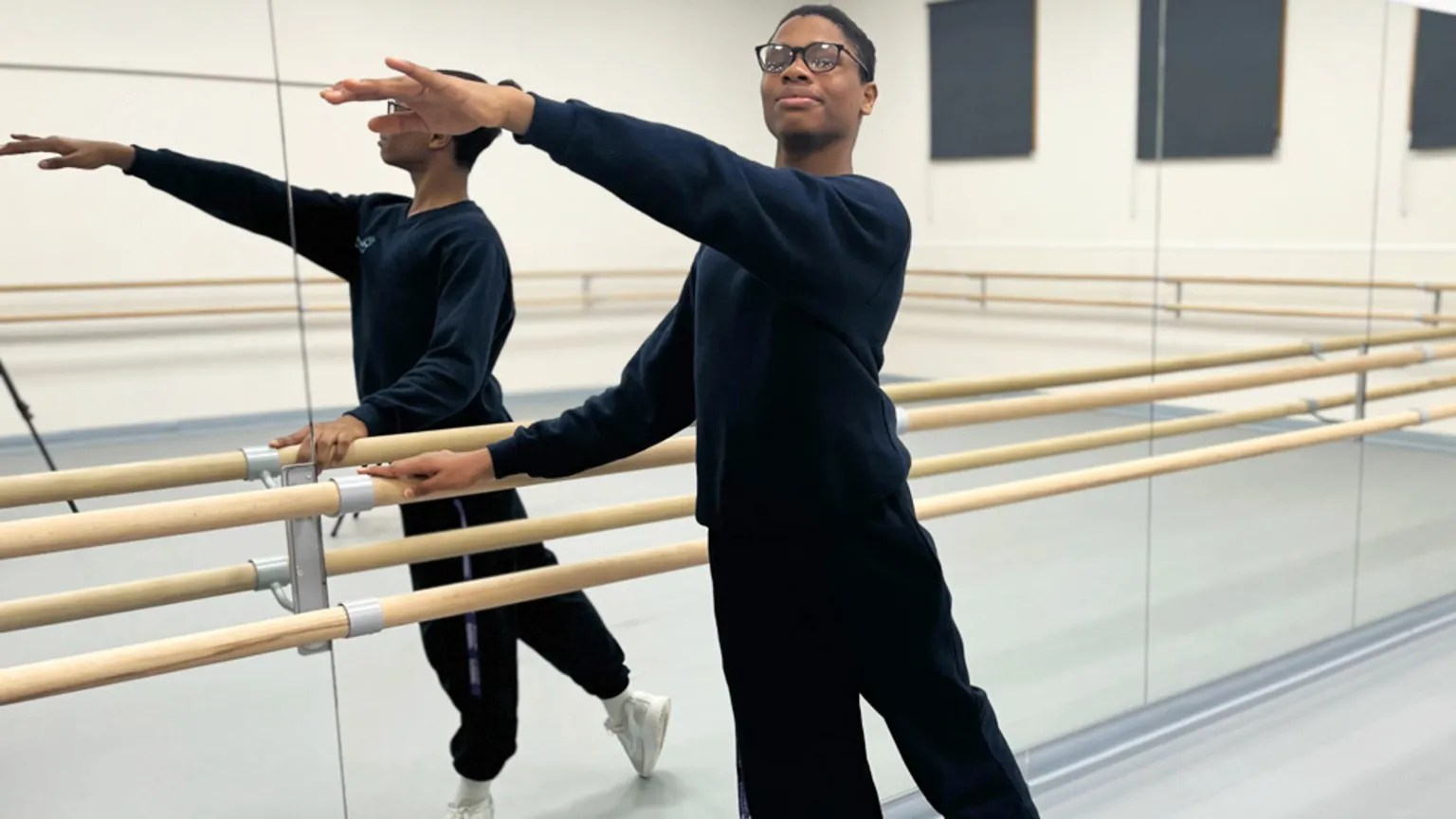
Consider the story of the young Nigerian dancer that Jenna Abaakouk writes about at BBC News.

“Dubbed Nigeria’s viral ballet dancer, 13-year-old Anthony Madu’s life has changed beyond recognition over the last three years after his dance moves and internet fame catapulted him from his modest home in Lagos to one of the UK’s most prestigious ballet schools.

“It was his dance teacher who filmed the young boy in June 2020 as he practiced pirouettes barefoot in the rain.

“Afterwards, he uploaded the video to social media where it caught the eye of Hollywood actress Viola Davis who shared it to her huge following on Twitter. … It led to Anthony being offered a scholarship at the Jacqueline Kennedy Onassis School at the American Ballet Theatre. However, Covid-19 restrictions at the time meant the training had to take place online.

“It was then that Anthony was given a chance to study at Elmhurst Ballet School in Birmingham — which had seemed to him an unattainable dream. …

“Sitting in one of the school’s practice studios, he shyly admits it has not been an easy transition. ‘For the first year, it felt really, really hard trying to adjust to like the weather compared to Nigeria and also missing home as well,’ he says.

“However he has how settled down and enjoys the strictures of his new dance regime. ‘I video call my mum every day and hang out with my friends. Here, we do more classical ballet. It has to be precise, like having the arms right.’ …

Without the chance for formal training, he taught himself through watching videos and copying moves that fascinated him.

“It was a hobby that surprised his family. ‘When he was five years, I saw him dancing. I thought: “What is wrong with you?” ‘ Ifeoma Madu, Anthony’s mother, who still lives in Lagos, tells the BBC. ‘People were telling me that this type of dance is not for boys. But it’s what he loves doing, so I let him go for it,’ she says.

“As Anthony’s interest developed, his family moved to a different neighborhood of the city so he could attend the Lagos Leap of Dance Academy. …

“Mike Wamaya, a ballet teacher in Kibera — Africa’s largest informal urban settlement — in Kenya’s capital, Nairobi, is impressed by Anthony’s story.

” ‘It is very rare to see young boys getting scholarships from Africa to go outside to dance,’ the 48-year-old, who has more than 250 children taking his classes, tells the BBC. … Mr Wamaya admits too that many young boys on the continent do not pursue ballet because of the social stigma associated with it. ‘People are very homophobic and as a male dancer you are called gay. … This built a lot of resilience in us. We got teased a lot but I’m very happy that my students used the teasing to prove those people wrong.’ …

“Anthony has already inspired other young people in Nigeria and the rest of Africa to pursue their dancing ambitions. His journey is also to be shown to a much wider audience as Disney is making a documentary about it. Called Madu, it is currently in post-production. …

“Life in Birmingham is also broadening Anthony’s horizons, as there is more on offer academically at Elmhurst. ‘When I was in Nigeria, I didn’t do things like art. But now I love drawing. And learning other dances too. Aside from ballet, contemporary is my favorite,’ he says. …

” ‘There might be struggles along the way but remember it’s just temporary and it will be worth it in the end.’ “

More at the BBC, here. No paywall.

Read Full Post »

Photo: Marissa Leshnov via the Guardian.
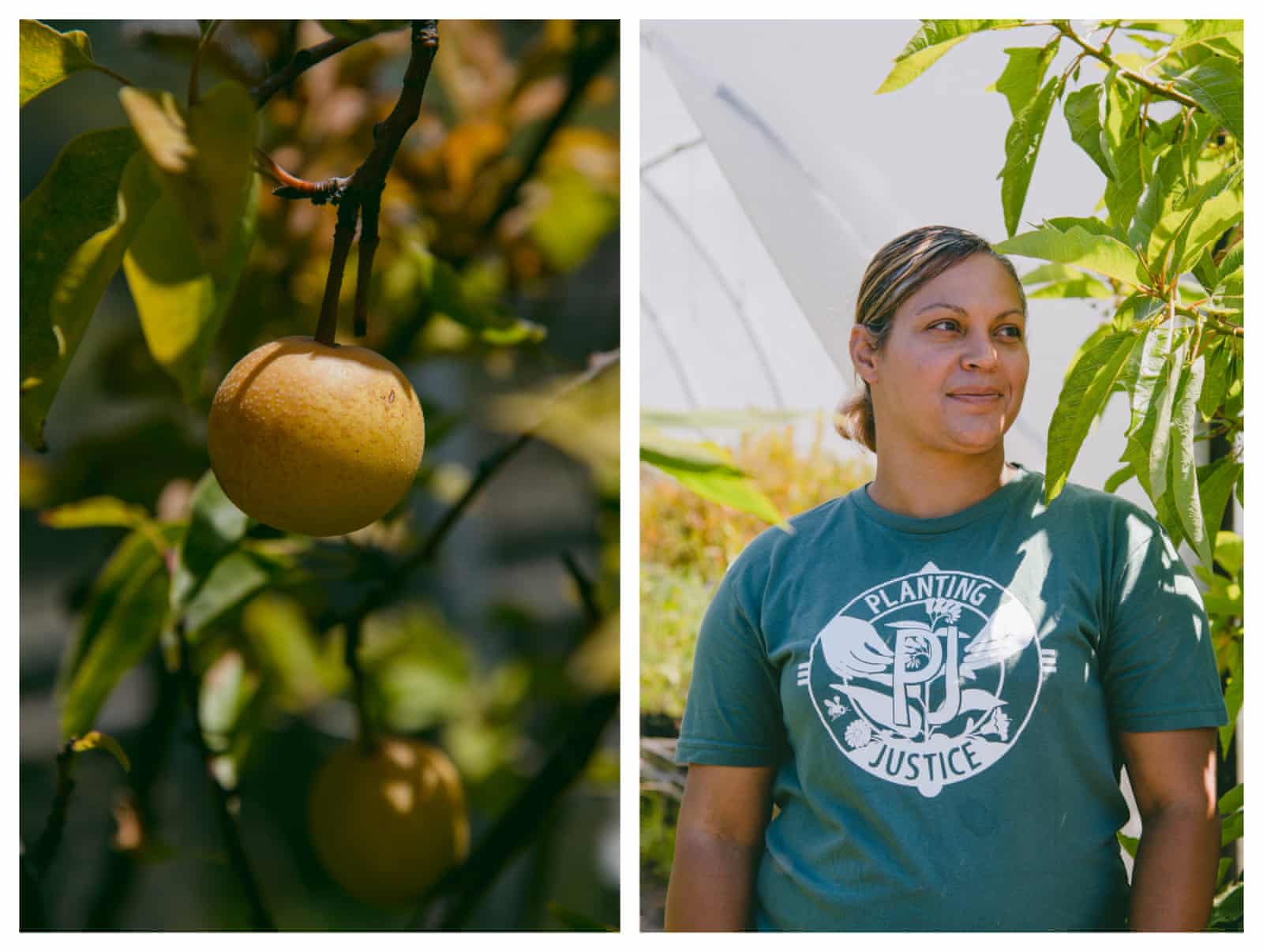
From the Guardian: Sol Mercado says her work as a gardener has brought her comfort and helped to reconnect with her roots.

Can Nature turn a life around? We’ve had a number of articles suggesting the answer is yes. Among others, our 2023 story about a traumatized Iraq veteran who discovered hiking in the wilderness.

Now Caitlin Yoshiko Kandil, of the Guardian, describes the role that an urban garden can play in life after prison.

“When Sol Mercado was incarcerated, one of her few sources of comfort was to dig her hands into dirt. Coming from a family of sugarcane and coffee farm workers in Puerto Rico, a love of gardening was in her roots. But it wasn’t until she was in prison and started participating in a gardening program that she truly connected with this part of her heritage. …

“Mercado – who was released a year and a half ago – now works for Planting Justice, a food justice organization based in Oakland, California, that tackles inequalities in the industrialized food system, from the underpayment of food workers to the lack of fresh produce in low-income neighborhoods.

“Planting Justice addresses food sovereignty with marginalized communities – in particular people who have been affected by the criminal justice system – through gardening workshops in prisons and jails, such as San Quentin state prison, and jobs for those formerly incarcerated.

“For Mercado, 36, the organization helped turn her life around. …

“ ‘What I learned in prison is that if I want to change, if I want to blossom, I need to work on myself and remove unhealthy things from my life,’ she said. ‘It’s the same as a plant. A plant, if you don’t weed it, if you don’t prune it, if you don’t water it, it’s not going to grow and give fruit.’

“Planting Justice’s two-acre (nearly 1 hectare) nursery – which grows more than 1,200 varieties of plants – is tucked between a busy highway and a railroad line in Sobrante Park, a low-income, predominantly Black and Latino neighborhood that’s long been a food desert with no grocery stores within walking distance. The land the nursery sits on once belonged to the Indigenous Ohlone people, so Planting Justice is working with the Sogorea Te’ Land Trust, a local organization that helps facilitate the return of Indigenous land to Indigenous people; once the transfer is complete, Planting Justice will lease the land from them.

“Founded in 2009, Planting Justice has installed 550 edible gardens at schools, community centers and homes; hosts education programs for local youth; distributes produce to local residents; gives away free fruit smoothies at Bay Area Rapid Transit stations; and sources produce for the Good Table, a nearby cafe where diners pay what they can afford.

“As part of a new initiative that started this year, Planting Justice is also planting 1,000 fruit trees – apple, pear, pomegranate, peach, olive and fig trees – in East Oakland homes for free.

“Like Mercado, many Planting Justice employees were formerly incarcerated. Some came to the organization through re-entry programs and partnerships in jails and prisons, while others found their way after their release.

Planting Justice says its recidivism rate is 2%, far lower than California’s rate of nearly 50%. …

“Bilal Coleman said he first heard about Planting Justice while incarcerated at San Quentin state prison, north of San Francisco. He was coming to the end of his 20-year sentence and was participating in a partner program called Insight Garden – and Planting Justice was advertising that it was hiring people returning home to the San Francisco Bay Area.

“Coleman said that gardening is in his roots. “Ever since I can remember, there’s been a garden in my family,” he said. But that wasn’t the immediate draw to Planting Justice; it was the security of having a job lined up after his parole, benefits and good pay – salaries start at $19 an hour. ‘It was a chance to get on my feet before I actually paroled,’ he said. …

“Planting Justice’s presence can be felt throughout Sobrante Park, revitalizing a neighborhood that’s long been in decline. Sobrante Park has been ‘underresourced and overpenalized for generations, where there aren’t the same food options,’ said Julia Toro, nursery office manager.

“Covonne Page, Planting Justice’s land team lead, was born and raised here, and recalls a time when things were different. The 33-year-old said that he and his friends would ride inflatable rafts on the San Leandro Creek, which was lined with wild blackberry bushes and filled with lizards and turtles. Most houses had fruit trees and vegetable gardens in the back yard, and families would trade their harvest so that everyone had their fill of oranges, loquats, lemons and plums. This bounty meant the community ate well; Page remembers his grandmother’s blackberry cobbler and his grandfather’s plum jam. …

“But years of disinvestment, longtime residents leaving – often for prison – and environmental degradation have decimated this landscape, Page said. … By bringing fruit trees back to people’s yards and teaching them how to garden, Planting Justice is not only offering much-needed jobs to the community; it’s revitalizing its food culture and sovereignty.”

More at the Guardian, here. No paywall. Great photographs by Marissa Leshnov.

Read Full Post »

Photo: Stefano Giovannini for N.Y.Post.
Reading Rhythms is ‘not a book club’ but ‘a reading party,’ says the NY Post, ‘where about 60 to 80 bookworms gather to read” in company — not all the same book, just whatever they happen to be reading.

Here’s an idea whose time has come: gatherings where people who love reading read whatever they like in the same place at the same time and maybe take a few breaks to socialize. It’s called a “reading party,” and the foursome behind the concept calls themselves Reading Rhythms.

Molly Young writes at the New York Times, “On a cold Monday in December, 65 people were gathered for Reading Rhythms, an event that bills itself as ‘not a book club’ but ‘a reading party.’ The parties, which began in May, take place on rooftops, in parks and at bars. The premise is simple: Show up with a book, commit to vanquishing a chapter or two and chat with strangers about what you’ve just read.

“The attendees that night, each of whom had paid a $10 entry fee, were the lucky ones: 270 people were on the wait-list to get in. …

“The idea for Reading Rhythms emerged when four friends in their 20s — Ben Bradbury, Charlotte Jackson, John Lifrieri and Tom Worcester — discovered a shared sense of alarm over the deterioration of their book consumption. The causes were what you’d expect: annihilated attention spans, too much socializing, the treacherous enchantments of the iPhone.

“Bradbury and Worcester, who are roommates, hosted the first event on their rooftop. A playlist was compiled, 10 friends showed up with books, everyone read for a bit and talked about what they’d read, and then … went home.

” ‘I got an hour of reading done and I hung out with some of my best friends, which I’d wanted to do anyway,’ [Bradbury] said. ‘That doesn’t usually happen.’ …

“The four solidified a format, gave the series a name, planned additional parties, opened up the invite list and started an Instagram account. Since May there have been parties in New York, Los Angeles and (of all places) Croatia. …

“At the event this month, none of the guests seemed to operate under the illusion that they’d reinvented any wheels. And ‘glorified library’ actually described the ambience well: Seating included antique armchairs, deep sofas and velvety settees; flickering votive candles emitted an amber glow; hot toddies and beer were available. …

“As the founders continued to host parties, they settled upon a structure. Attendees are given a name tag and half an hour to find a seat and settle in. A host then gets up before the crowd and explains the night’s schedule: 30 minutes of reading, a break, 30 more minutes of reading and then a set of discussions organized around loose prompts. Parties are held early in the week to capture gentle, non-weekend energy.

“Lifrieri, one of the founders, suggested everyone pluck an idea from what we’d just read and ‘turn to a stranger’ to discuss. An icy dart of trepidation shot through my body at the command, but to a stranger I turned: Dilvan, 29, who was reading Michael A. Singer’s The Untethered Soul.

“Dilvan shared a paragraph that she’d highlighted and we discussed its implications, which turned out to be mutually troubling. Conversation turned to other topics: Dilvan had moved to the United States from Turkey for college, specifically to study in ‘a cold location’ featuring snow. The idea of weather-based school selection was fascinating to me. Dilvan landed in Minnesota, which satisfied her temperature requirements and also prompted her to learn English rapidly thanks to the absence of other Turks in the area. …

“Reading postures varied. Some attendees sat cross-legged with a book resting lapwise. Others were curled up on a sofa. Many adopted a modified ‘The Thinker’ position. One man read his book standing ramrod straight, like a marsh bird. Not once did a cellphone chime.

More at the Times, here, and at Reading Rhythms, here.

Read Full Post »

Photo: Sarah Matusek/The Christian Science Monitor.
Nixon Garcia, a teaching artist at El Sistema Colorado, conducts students at the music school in Denver.

People sometimes forget that we need more immigrants, not fewer. Their contributions to the economy are well documented. In 2021, for example, they contributed more than $500 billion just in taxes (see Forbes here). Not to mention that they willingly apply for necessary jobs that go begging, sometimes for years.

And there are other contributions getting less attention. Consider what this one musician is doing. Sarah Matusek wrote about his work recently at the Christian Science Monitor.

“A few dozen children in Denver settle into seats, violins and violas in hand. With short cropped hair and a focused gaze, Nixon Garcia observes from off to one side. …

“This is a fall show-and-tell for parents at El Sistema Colorado, a free music school that prioritizes kids from low-income families. The Denver program was inspired by the original El Sistema in Venezuela, which since its founding in 1975 has sparked similar projects around the world. …

“With flutters of his hands and flicks of his wrists, the 22-year-old conjures up simple songs that he learned as a boy in the Venezuelan program. He’s brought that same sheet music to students in the United States, along with hopes for asylum. Working as a teaching artist at the Colorado program, he’s come full circle.

“ ‘El Sistema has been my second home throughout my whole life,’ says Mr. Garcia, who teaches in Spanish and English. 

“The original program’s catchphrase, ‘tocar y luchar‘ – or ‘play and fight’ in English – has evolved into a personal mantra of perseverance for the young conductor who can’t imagine returning home.  By the time he left Venezuela, in 2022, says Mr. Garcia, he’d been kidnapped three times. 

“Backdropped by mountains in northwest Venezuela, the town of La Fría sits near the Colombian border. Mr. Garcia’s family, who ran a poultry farm there, enrolled their son in the popular music program at a young age. …

“At age 5, he began learning the Venezuelan cuatro, which has four strings. Later on came the clarinet. As a teenager, Mr. Garcia began teaching other El Sistema students – a key mentorship feature of the program – and developed a love of conducting. But basic needs were stark; some students he taught sat on the floor, because there weren’t enough chairs. And beyond the solace of class, violence lurked.

“When he was a young teenager, in 2015, a criminal group, called a colectivo, kidnapped him and his family at a gas station. The group held them for several hours, his family says, and demanded thousands of dollars for their release. 

“Venezuela, meanwhile, devolved into further economic, political, and human rights crises under President Nicolás Maduro, causing millions to flee. Mr. Garcia began attending pro-democracy protests. …

‘You can see how everything is terrible. But in the end, you still love your country,’ he says. ‘You don’t want to leave.’ …

“Mr. Garcia was captured again by an insurgent group on his family farm in La Fría. Yet neither was he safe at college in another city, Mérida, where he studied engineering. … Although his family had arranged private security for him in La Fría, they decided that he had to leave. …

“A tourist visa that his family had secured some years prior still hadn’t expired. That became his ticket to the U.S. last year. Yet even as he moved into his cousin’s home in Monument, Colorado, an hour south of Denver, the adjustment was isolating. … A family member suggested he retreat to nature, take a moment to breathe. A prayerful hike in the nearby mountains, Mr. Garcia says, helped right his course. 

“Inspiration struck, tuning-fork clear: Why not return to music?  A Google search for nearby orchestras yielded a name he knew. The young conductor, in awe, reached out to El Sistema Colorado. …

“Mr. Garcia started out as a volunteer at El Sistema Colorado before the federal government issued the asylum-seeker his work authorization. That allows him to work legally while his asylum case moves forward. Now paid, he teaches groups of strings-learning students in an orchestra group called Allegro.

“The teaching artist is a ‘positive light’ at the music school, says Ingrid Larragoity-Martin, executive director of El Sistema Colorado. ‘He’s passionate about kids, and he knows how to work with them.’ …

“Meanwhile, he awaits the outcome of his asylum application, which may take years. Mr. Garcia says he wants to ‘work, make a life, and try to share as many things as we can from our country.’ ” 

More at the Monitor, here.

Read Full Post »

Photo: Melanie Stetson Freeman
The
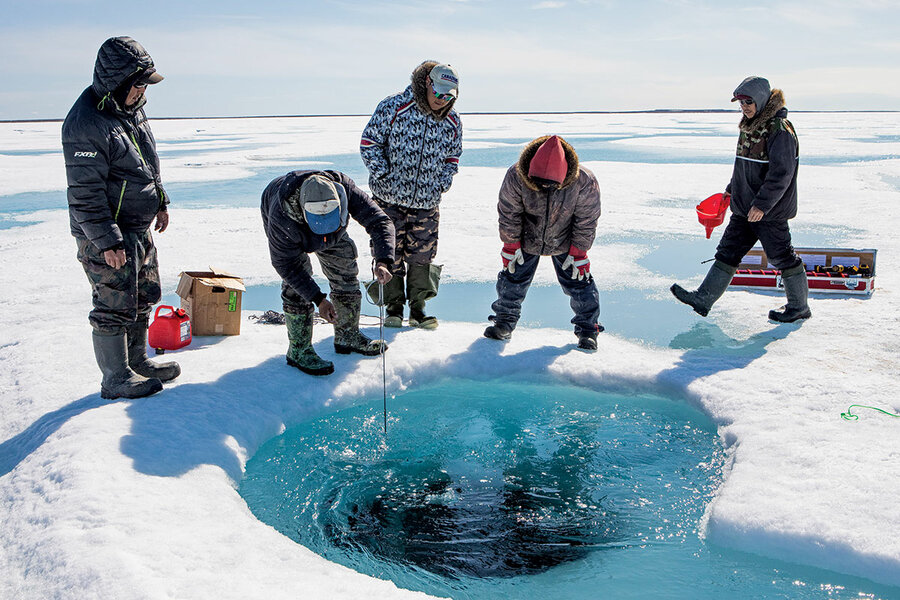
Christian Science Monitor highlights indigenous “Guardians” who made a “hole in Arctic Ocean ice – a window on climate-related changes – where they monitor water quality and measure ice thickness.

Cold parts of the world are threatened. The cold-loving people who live there are deeply concerned and are monitoring the losses for climate scientists.

Sara Miller Llana writes for the Christian Science Monitor, “Masked against the Arctic glare in orange-tinted sunglasses, Tad Tulurialik is a modern conservation ‘Guardian’ of his fast-melting homeland.

“At the start of an early summer workday that never sees the sun set, he kicks his all-terrain vehicle into gear. Safe in his ancestors’ knowledge of sea currents and ice fissures, he navigates a course right off the edge of the Canadian shore onto the aqua iridescence of the frozen Arctic Ocean. He’s following older Guardians to a manmade hole in the ice shelf, a window toward understanding climate-related changes in the sea.

“Even out on the ocean surface, his rifle is always swung over his shoulder. Wherever he sees a caribou or musk ox, it’s an existential given that he’ll take it. Food security isn’t found in a grocery aisle in this northernmost Canadian mainland settlement, tellingly named with the Inuktitut word for a caribou hunting blind.

“In some ways, as a government-paid conservation Guardian in training, the 24-year-old Mr. Tulurialik is doing what he’s done his whole life. Like most Inuit boys, he was ‘on the land’ as soon as he could walk. His childhood was spent on tundra and on sea and lake ice to hunt and fish with his grandparents, who raised him. His life was marked not by school grades but by first fox trapped, first polar bear shot. These were such priorities that he dropped out of high school.

“That could have made him part of Canada’s persistent social inequality – Indigenous youth in some of the remotest parts of the country, undereducated, underqualified, and often losing touch with rich traditions and fleeing homelands for economic opportunity. Except today, he’s part of a solution, as a member of Canada’s Indigenous Guardians, a conservation corps working in 170 far-flung Indigenous communities.

“Guided and taught by elders, he and other young Inuit born since 1989, when warming of the Arctic turned precipitous, are part of an effort to safeguard their homelands and their cultural ‘right to be cold.’ They’re also helping Canada achieve international conservation commitments made last year, when it led a global pledge at the United Nations Biodiversity Conference in Montreal to protect 30% of its land and oceans by 2030.

“For Mr. Tulurialik, who worked in construction and sewer maintenance after leaving school, a paid job as a conservationist is a dream: ‘I never thought I would work and get paid for what I grew up doing.’ 

“Together, he and his Guardian colleagues are tasked with creating a sustainable future, transforming Western-style conservation work into something that more closely resembles a traditional Indigenous environmental ethos. Guardians blend science with Indigenous knowledge in a budding conservation economy dependent on the transfer of knowledge from elders to youth. 

“The ultimate aim of the Guardians’ work in Taloyoak is to use their sustainable Inuit practices – learned orally over millennia – to support the creation and maintenance of an Indigenous Protected and Conserved Area. The size of Maine, it is one of more than 90 in development across Indigenous Canada. Here in northern Nunavut territory, the IPCA conservation plan is led by the local hunter and trapper association.

It’s nurturing an economy of land-based jobs and markets as an alternative to a future in extractive industries in a territory long eyed by mining and oil interests.

“The land will be protected from development, conserving both biodiversity and a way of life based on sustainable hunting and fishing – while sequestering huge amounts of carbon, the culprit in global warming.

“ ‘This is a win-win situation’ … says Paul Okalik, the first premier of Nunavut who now works with Canada’s World Wildlife Fund (WWF), which is supporting Taloyoak’s efforts. …

“Indigenous lands, from the Brazilian Amazon to Hawaii coastlines to Canada’s high-latitude forests, represent 20% of the globe but hold 80% of the world’s biodiversity. Inhabitants have stewarded the land for centuries. Yet in a warming climate, their homelands are in some of the most at-risk environments. 

“The Arctic is this nation’s – and arguably the world’s – crisis point. Here, warming is happening at up to four times the rate of the rest of the world, leading to melting permafrost, retreating glaciers, and receding sea ice. This has broad implications for the global ecosystem. Arctic ice melt slows ocean currents and makes the oceans more acidic – changes that have global implications for both climate patterns and sea habitats. Increased melting also creates what scientists call a ‘positive feedback loop’: As dark water replaces white snow on ice, the surfaces of the ocean and Earth absorb more sunlight rather than reflecting it. This causes even more warming. …

“Taloyoak locals have already worried about warming changing their ways. Last summer was the Northern Hemisphere’s hottest on record. The year prior, Taloyoak recorded its all-time hottest temperature of 78.8 F. Locals stayed home rather than go outside in, for them, the unbearable temperature.”

Imagine the high 70s being unbearable! The rest of North America will be learning about “unbearable” soon — if it hasn’t already.

The Monitor‘s long and intriguing feature on the work in the far north is here. No firewall.

Read Full Post »

Photo: ReelShort App/Crazy Maple Studio.
Want a short soap opera for Valentine’s Day?

Has there ever been a soap opera that wasn’t about romance? Even hospital dramas are mostly about jealousy and staff affairs. But given that typical plots take years to come to a resolution, entrepreneurial geniuses have popped up to meet a need.

Learn about the 60-second soap-opera episodes that are gaining a contemporary audience.

Claire Moses reports at the New York Times, “When Albee Zhang received an offer to produce cheesy short-form features made for phones last spring, she was skeptical, and so, she declined. But the offers kept coming. Finally, Ms. Zhang, who has been a producer for 12 years, realized it could be a profitable new way of storytelling and said yes.

“Since last summer, she has produced two short-form features and is working on four more for several apps that are creating cookie-cutter content aimed at women. Think: Lifetime movie cut up into TikTok videos. Think: soap opera, but for the short attention span of the internet age.

“The biggest player in this new genre is ReelShort, an app that offers melodramatic content in minute-long, vertically shot episodes and is hoping to bring a successful formula established abroad to the United States by hooking millions of people on its short-form content.

“ReelShort is owned by Crazy Maple Studio, a company in Northern California that is backed by the Beijing-based digital publisher COL Group.

“ReelShort’s titles include ‘The Double Life of My Billionaire Husband,’ ‘I Got Married Without You’ and ‘Bound by Vendetta: Sleeping With the Enemy.’ The shows are formulaic: The plotlines include romance and revenge, the characters are archetypical and the dialogues are simple.

“The extremely short genre became popular in the Asia-Pacific region during the pandemic, and Joey Jia, the chief executive of Crazy Maple Studio, took notice.

“ReelShort aims to get people hooked as quickly as possible, with much of the action happening in the first few super short episodes. ‘This is a pay-as-you-go model,’ Mr. Jia said. ‘If people are confused by the story, they leave.’

“The cost of making these features is relatively low, $300,000 or less, according to Crazy Maple Studios. The crews are small and partly made up of recent film graduates in Los Angeles, according to actors who worked on the productions.

“Viewers can watch dozens of minute-long episodes on ReelShort for free via multiple platforms, including YouTube and TikTok. But at some point, they must either pay or watch ads to unlock subsequent episodes. Sometimes people pay as much as $10 or $20 to keep watching, Ms. Zhang, the producer, said. …

“In the United States, ReelShort is trying to succeed where the short-form content company Quibi failed. … While Quibi focused on more highbrow content with A-list stars, ReelShort is doing the opposite: It’s giving people juicy plot points, from werewolves to evil step mothers to secret billionaire husbands to more werewolves.

“ ‘We learned a lot from Quibi,’ said Mr. Jia. … ‘To build a successful mobile app, you need to find out your core audience,’ he said. And that audience is women who love soap operas. …

“In total, more than seven million people downloaded ReelShort in the United States in 2023, on Apple and Android phones combined, according to data.ai. …

“Kasey Esser, a Los Angeles-based actor who has worked on short-form shows for ReelShort and other apps, described the format as this generation’s soap opera. He drew a comparison to channels with made-for-TV content, such as Hallmark.

“ ‘People know exactly the story they’re going to be getting, but they will still watch it,’ Mr. Esser, 34, said. ‘They will still love it.’

“For the actress Samantha Drews, ReelShort was a chance to play different types of characters. ‘I can say now that I’ve been cast in 15 to 16 features in the last few years,’ Ms. Drews, 25, said. ‘That’s not something every actor can say.’ “

More at the Times, here.

Read Full Post »

Photo: Suzanne and John’s Mom.
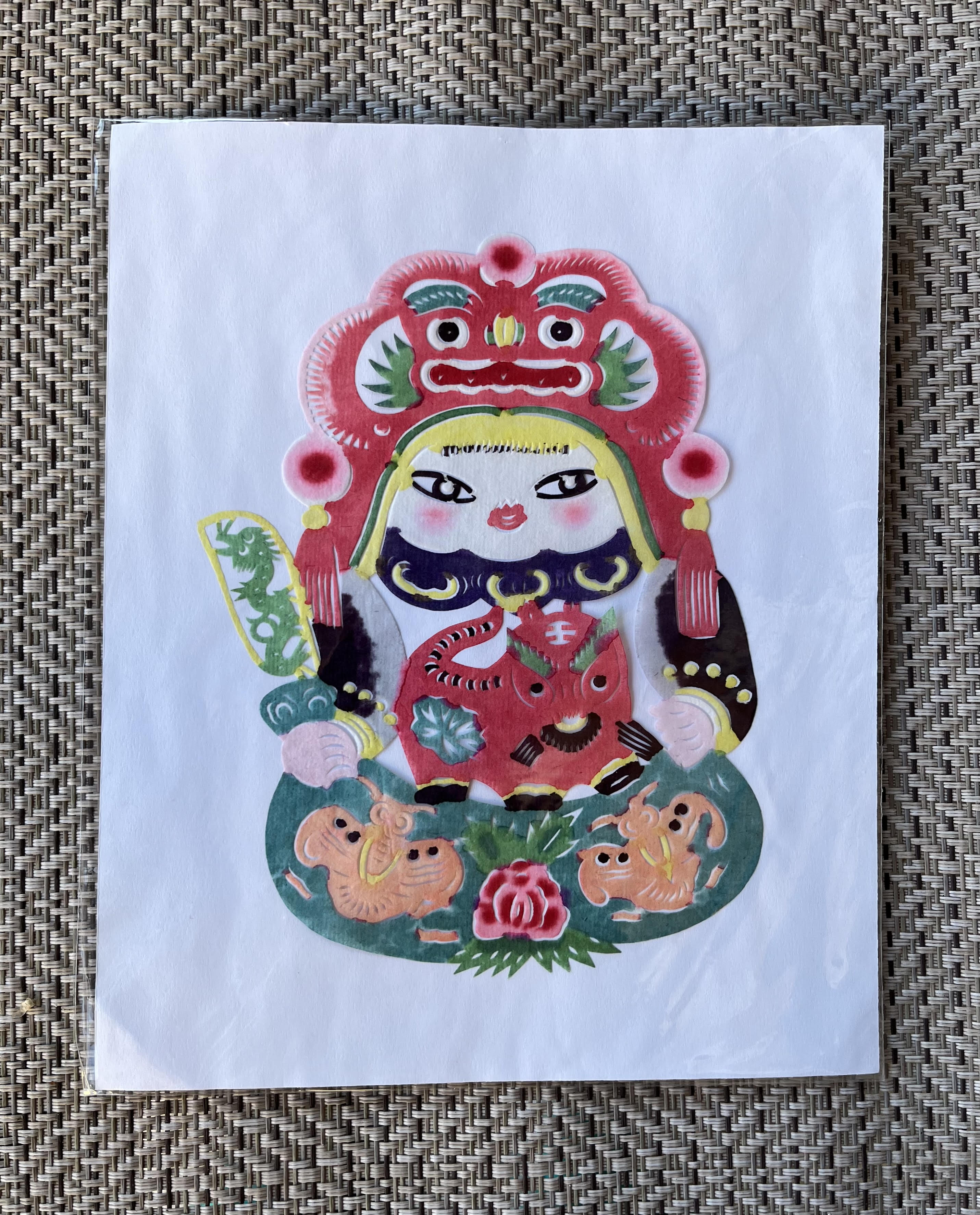
I’ve had this Chinese paper cut-out for years. I no longer remember where it came from.

Happy Year of the Dragon! The Wood Dragon to be specific. (In case you’re wondering, the other Chinese zodiac dragons are Water, Metal, Earth, and Fire.)

As China and much of the world celebrate the traditions of Lunar New Year, I want to share an article about a woman in China who is keeping another ancient tradition alive — paper cutting.

Ann Scott Tyson reports at the Christian Science Monitor, “With uncanny precision and attention to form, Yu Zeling snips away at the thin red paper. Her scissors seem to glide magically into place. After several minutes, she unfolds her creation: a bold and smiling Chinese zodiac pig.

“An award-winning master of the ancient Chinese folk art of paper cutting, Ms. Yu fills her studio with cutouts of animals, people, and scenes so vivid that they seem to leap from the walls. Rich with symbolism, her art embodies village life in Ansai, a rural district in Shaanxi province on China’s rugged Loess Plateau. Ansai is a center of paper cutting – recognized in 2009 by UNESCO as an Intangible Cultural Heritage of Humanity. …

“Ms. Yu and others are working to keep the folk art alive, even as it evolves away from its roots as adornment for farmhouses and local celebrations. Indeed, the Ansai native is serving as a rare bridge between the most skilled paper-cut artists of the 1980s – a golden era in paper cutting – and a new generation of heirs. …

“Growing up in a hamlet deep in an Ansai valley, surrounded by terraced fields, Ms. Yu came to paper cutting in the late 1970s as naturally as she breathed the earthy air. ‘We were very poor, and when it was time to celebrate the [Lunar] New Year, we all put paper-cuts in the windows,’ she says, recalling the holiday at her childhood home – a cave dug from a hillside – where her family of 10 eked out a living growing corn, beans, and sorghum. …

“The art originated in China in the centuries after paper was invented in A.D. 105. … Full of auspicious symbols from peasant life, the decorations heralded good weather, many offspring, long life, wealth, and happiness. …

“Just as Ms. Yu was beginning to learn paper cutting, after she left elementary school in 1978 at the age of 12, China’s shift toward market economics and social opening began allowing for a revival of traditional culture. Using discarded newspaper, Ms. Yu first practiced cutting the image of a Chinese national flag that she saw in a school textbook. She says she ‘cut it 100 times’ before she was satisfied. Then her aunt took over, introducing her to increasingly complicated traditional motifs. …

“Meanwhile, a research scholar named Chen Shanqiao began trekking from Ansai’s county seat into the hills and valleys to rural villages, rediscovering the true meanings embedded in the paper-cuts. Their power astonished him. In the mid-1980s, he recruited a few older village women who were masters in the craft to come teach at Ansai’s Cultural Center.

“Ms. Yu married farmer Jiang Zhicheng, who admired her passion and skill. Inspired, Mr. Jiang took a few of his wife’s works to the local market in 1987, but he couldn’t sell them. So he went farther, riding his bicycle more than 25 miles to Ansai’s Cultural Center. Seeing the fine pieces, Mr. Chen immediately bought the paper-cuts and invited Ms. Yu to come train with the master artists. …

“After years of training, Ms. Yu became a master in her own right, winning one award after another. Her works are on display in museums. But she’s humble about her achievements. ‘I was, and still am, a farmer,’ she says with a smile. … ‘I make paper-cuts based on life,’ she says. ‘Here in northern Shaanxi, we feed the pigs and till the land and care for the children.’

“Hoping to carry on and grow the folk art, Ms. Yu volunteers to teach at free community training sessions. Paper cutting is also taught in Ansai’s public schools. … As Chinese villages empty out and rural rituals fade, Ms. Yu is aware of the need to go beyond perpetuating traditions and embrace new paper-cut experiments. …

“The most elaborate paper-cut in her studio is a large and ornate circular design that weaves together layer upon layer of significance: In the center, a snake (man) encircles a rabbit (woman), symbolizing marriage. Surrounding them is a ring of pomegranates (the seeds of which represent many children), peaches (the Chinese name for ‘peach’ is also the word for ‘longevity’), and Buddha’s hands (a kind of citrus fruit representing bliss). A final outer rim, resembling a woven flower basket, also signifies longevity.”

More at the Monitor, here. Check out photos of the cutting process. No firewall.

Read Full Post »

Photo: John and Suzanne’s Mom.

As everyone knows, it’s hard to avoid plastic. The other day I found on the floor tiny pieces of one of those mesh bags that oranges often come in. I may be overthinking everything, but I was stumped about how to dispose of it. If I flush it, it goes into our water system. If I put it out for the landfill, the result is ultimately the same. And now we’re hearing that plastic particles are even getting into the clouds.

Nicola Jones writes at YaleEnvironment360, “Plastic has become an obvious pollutant over recent decades, choking turtles and seabirds, clogging up our landfills and waterways. But in just the past few years, a less-obvious problem has emerged. Researchers are starting to get concerned about how tiny bits of plastic in the air, lofted into the skies from seafoam bubbles or spinning tires on the highway, might potentially change our future climate.

“ ‘Here’s something that people just didn’t think about — another aspect of plastic pollution,’ says environmental analytical chemist Denise Mitrano of ETH Zürich University, in Switzerland, who co-wrote an article last November highlighting what researchers know — and don’t yet know — about how plastics can change clouds, potentially altering temperature and rainfall patterns.

“Clouds form when water or ice condenses on ‘seeds’ in the air: usually tiny particles of dust, salt, sand, soot, or other material thrown up by burning fossil fuels, forest fires, cooking, or volcanoes. There are plenty of these fine particles, or aerosols, in the skies. …

“Until recently, when chemists thought of the gunk in our air, plastics did not leap to mind. Concentrations were low, they thought, and plastic is often designed to be water repellent for applications like bags or clothing, which presumably made them unlikely to seed cloud droplets. But in recent years, studies have confirmed not only that microscopic pieces of plastic can seed clouds — sometimes powerfully — but they also travel thousands of miles from their source. And there are a lot more particles in the air than scientists originally thought. …

“ ‘The people who invented plastics all those decades ago, who were very proud of inventions that transformed society in many ways — I doubt they envisaged that plastics were going to end up floating around in the atmosphere and potentially influencing the global climate system,’ says Laura Revell, an atmospheric scientist at the University of Canterbury in New Zealand. …

“Global annual production of plastics has skyrocketed from 2 million tons in 1950 to more than 450 million tons today. And despite growing concerns about this waste accumulating in the environment, production is ramping up rather than slowing down — some oil companies are building up their plastic production capacity as the demand for fossil fuel declines. To date, more than 9 billion tons of plastic has been produced, and about half of it has gone to landfills or been otherwise discarded. Some project that by 2025, 11 billion tons of plastic will have accumulated in the environment. …

“In recent years, several studies have suggested that microplastics (pieces less than 5 millimeters in length) and nanoplastics (smaller than approximately 1,000 nanometers) were being transported long distances through the air. In 2019, for example, researchers found microplastics in the Pyrenees that had arrived via rain or snowfall. In 2020, Janice Brahney of Utah State University and four coauthors published a high-profile Science paper revealing high amounts of plastic in federally protected areas of the United States. …

“Brahney’s extensive U.S. dataset also opened the door for modelers to figure out where, exactly, all this plastic was coming from. ‘It’s a really beautiful data set,’ says Cornell University’s Natalie Mahowald, who did the modeling work.

“Mahowald took the plastic concentrations Brahney had cataloged and mapped them against atmospheric patterns and known sources of plastics, including roads, agricultural dust, and oceans. On roadways, tires and brakes hurl microplastics into the air. Plastic winds up in agricultural dust, notes Mahowald, in part from plastics used on farm fields and in part because people toss fleece clothing into washing machines: the wastewater flows to treatment plants that separate solids from liquids, and about half the resulting biosolids get sent to farms for use as fertilizer. As for the ocean, Mahowald says, big globs of plastic in places like the Pacific Gyre degrade into microscopic pieces, which then float to the surface and are whipped up into the air by chopping waters and bursting air bubbles. …

“Exactly how aerosols affect climate has been a critical sticking point in climate models, and many of the details are still unknown. Different aerosols can change the climate by either reflecting or absorbing sunlight, which can depend, in part, on their color. Black soot, for example, tends to have a warming effect, while salt reflects and cools. Aerosols can land on the ground and change the albedo, or reflectivity, of ice and snow.

“Aerosols also affect cloud formation: different bits and pieces can seed more and smaller droplets of water or ice, making for different types of clouds at different elevations that last for different amounts of time. High-altitude, thin, icy clouds tend to warm the Earth’s surface like a blanket, while low-altitude, bright and fluffy clouds tend to reflect sunlight and cool the Earth.”

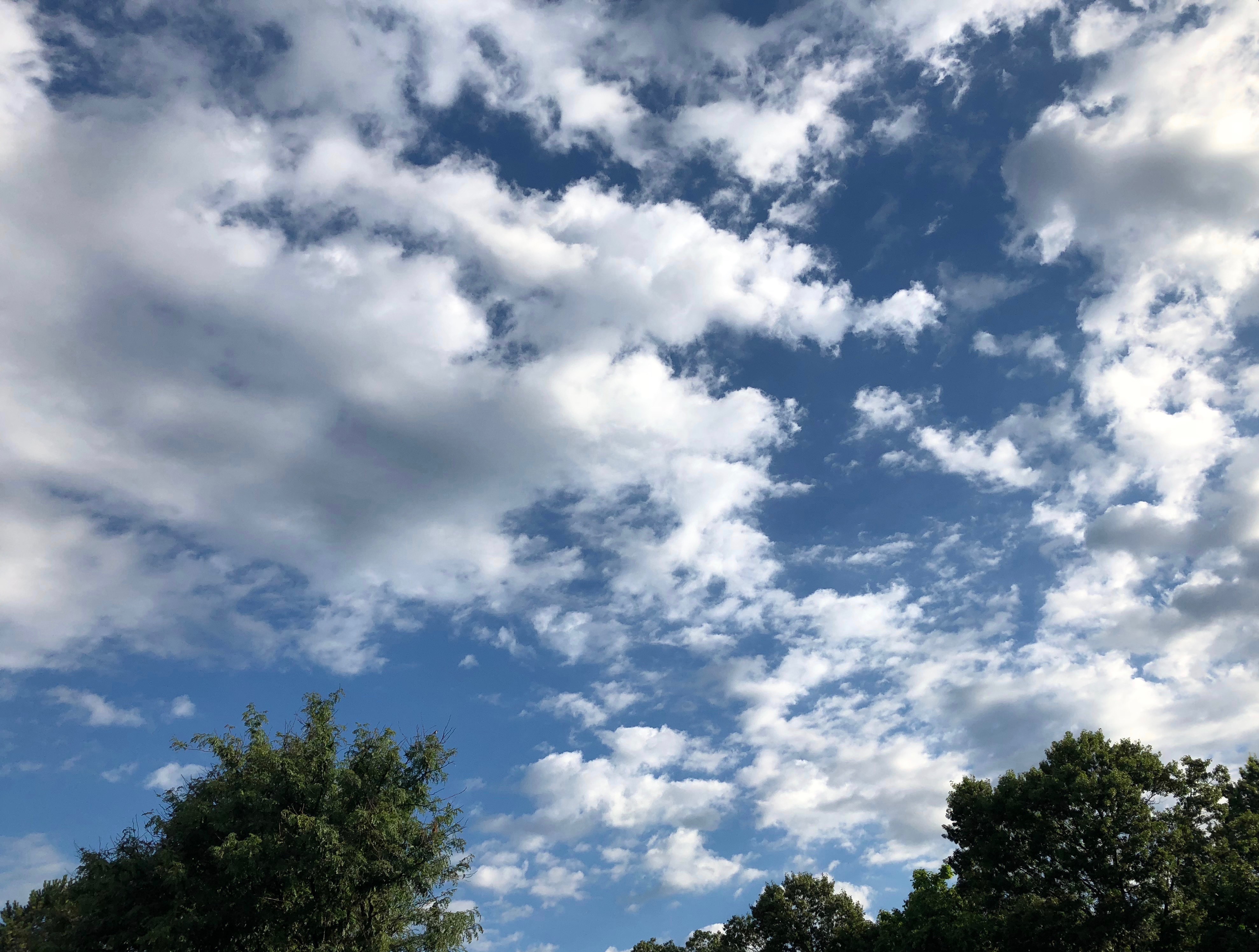
More at YaleEnvironment360, here. Rebecca of Fake Flamenco was speculating not long ago about clouds and whether they have started looking different. Do 20th century cloud photos from your region look different from those taken recently?

Read Full Post »

Photo: Alfredo Sosa/CSM Staff.
Rute Gabriel and her 3-year-old son, Isaac, pick tomatoes on their regenerative farming homestead, Projeto Liberta-te, in Porto de Mós, Portugal.

I’m impressed with the many young couples in today’s story who have chosen a life that is more friendly to the earth. My only question: how do people who are not 30 incorporate some of these principles into their daily lives?

Stephanie Hanes writes at the Christian Science Monitor, “For Rute Gabriel and Pipo Vieira, it was the tomato plant on their 25th-floor balcony in Toronto that convinced them to return home. 

“The couple, sweethearts ever since high school in this Portuguese region of stone-fenced fields and olive groves, were sharing an apartment with Ms. Gabriel’s grandmother. Their friends back home thought they had hit the jackpot. They had managed to move from the country to the city. They had immigrated to a higher-income country. And in the middle of the 2010s, they had jobs at a time when the global financial crisis – known here simply as ‘the austerity’ – was still hitting Portugal hard. 

“But the couple had a sense that something was wrong. They were in their 20s and working constantly in jobs they did not love. They missed the bright sunlight and rosemary-fresh scent of home, and had a growing unease about what felt like an unsustainable lifestyle – not only in their balance of life and work, but also in their lives and the environment. …

“Then one day, browsing the internet, Ms. Gabriel came across a YouTube video about ‘permaculture’ … a philosophy that focuses on re-integrating humans into their habitats in a way that’s mutually beneficial for people, the land, and animals.

“Ms. Gabriel was fascinated, she recalls. This was the sort of lifestyle she and Mr. Vieira were craving.  They tried to implement bits and pieces of permaculture at their high-rise apartment, putting a little tomato plant on their balcony, and then trying out ‘companion planting,’ in which they added peppers and carrots to the same container. …

“In 2016, they did what generations of young Europeans have avoided: They moved back not only to their homeland, but also to the countryside and an agrarian life. Their plan was to build a homestead and run Portuguese-language permaculture classes – to support themselves, to regenerate the land, and to help others create sustainable lifestyles. …

“Many of their friends thought they were crazy. … Over the past decades, some rural villages have dwindled to five, eight, or 20 people; schools have closed, and health clinics have shuttered. Portuguese farmers are the oldest in the European Union, with 51.9% above age 65, according to government data. Only about 6.4% are under the age of 40.

“But some in the Climate Generation – as we’re calling the cohort that was born since 1989 and into a world of accelerating impacts from a heating atmosphere – are bucking this trend. Government data shows a small but clear uptick in young people entering the agricultural sector over the past few years. And some are coming back to rural areas in Portugal to intentionally step onto the front lines of their country’s climate struggle, trying out new methods of climate-friendly food production. 

“The full size of this movement is hard to quantify because many of these young people hold other jobs and may not identify themselves as farmers for government statistical purposes. But it is recognizable. … The Climate Generation knows that what we eat, and how we grow it, has huge climate implications. Everything from shipping feed to making fertilizer to throwing wasted food in a landfill contributes to greenhouse gas emissions. But by focusing on rebuilding soil’s natural fertility, ‘regenerative’ farming practices can sequester carbon – a potential climate solution. …

“But food systems reflect something even more for the Climate Generation. Food is a tangible, everyday doorway into larger questions about how we relate to the earth and how we consume and share resources. Look at food closely, and it illuminates questions about how and why we work. It brings a tangible practicality to philosophical theories – about whether we keep demanding more by expanding and growing, about modern consumption and lifestyles, about what it means to continue extracting from a planet showing its limits in the form of wildfires, droughts, storms, and heat waves. …

“ ‘This is the future of humanity,’ says João Rodrigues, a 34-year-old artist-turned-farmer, standing by his tomato plants in the interior of Portugal. ‘To go small.’ ”

More at the Monitor, here. No firewall. The article has a lot of interesting detail.

Read Full Post »

We’re saying good-bye to our home of 42 years.

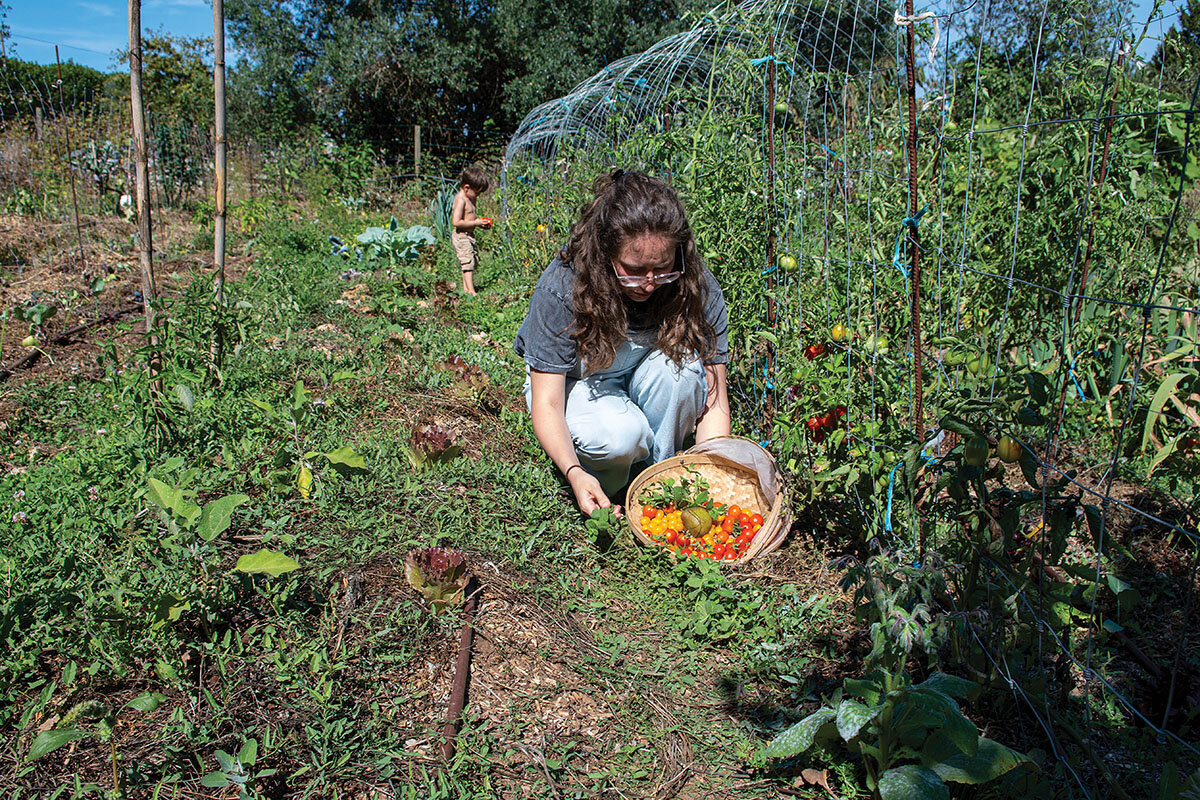
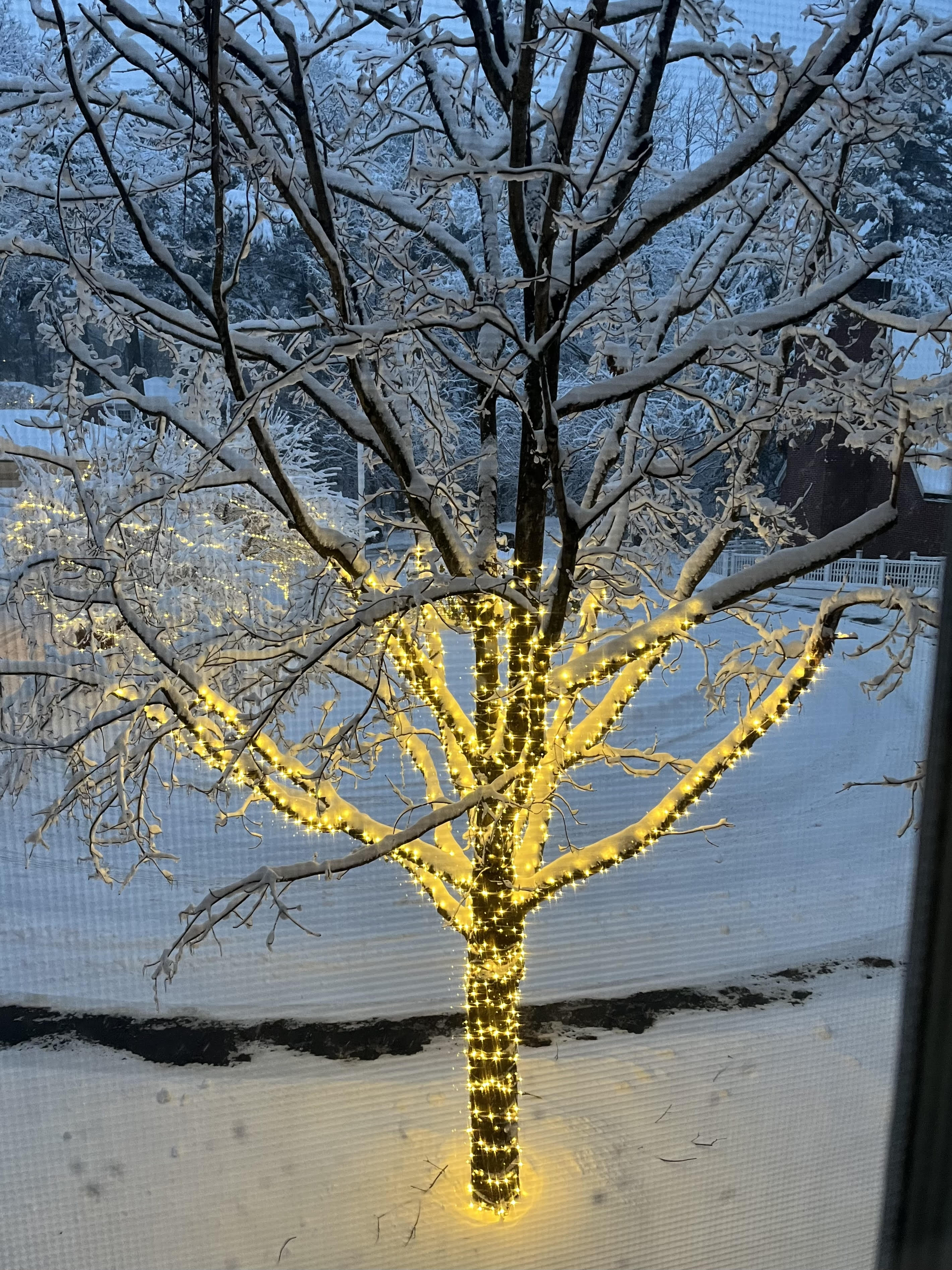
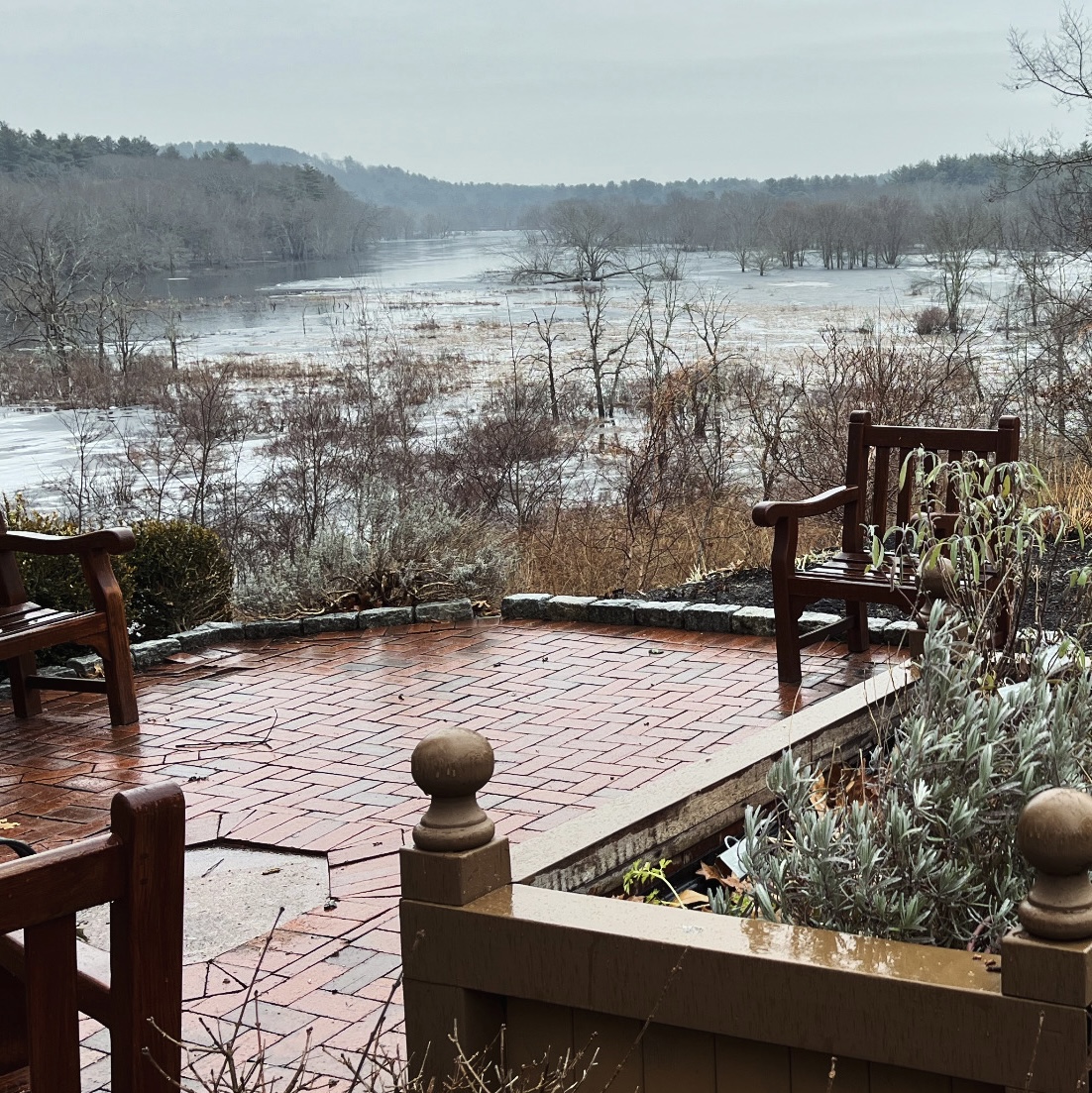
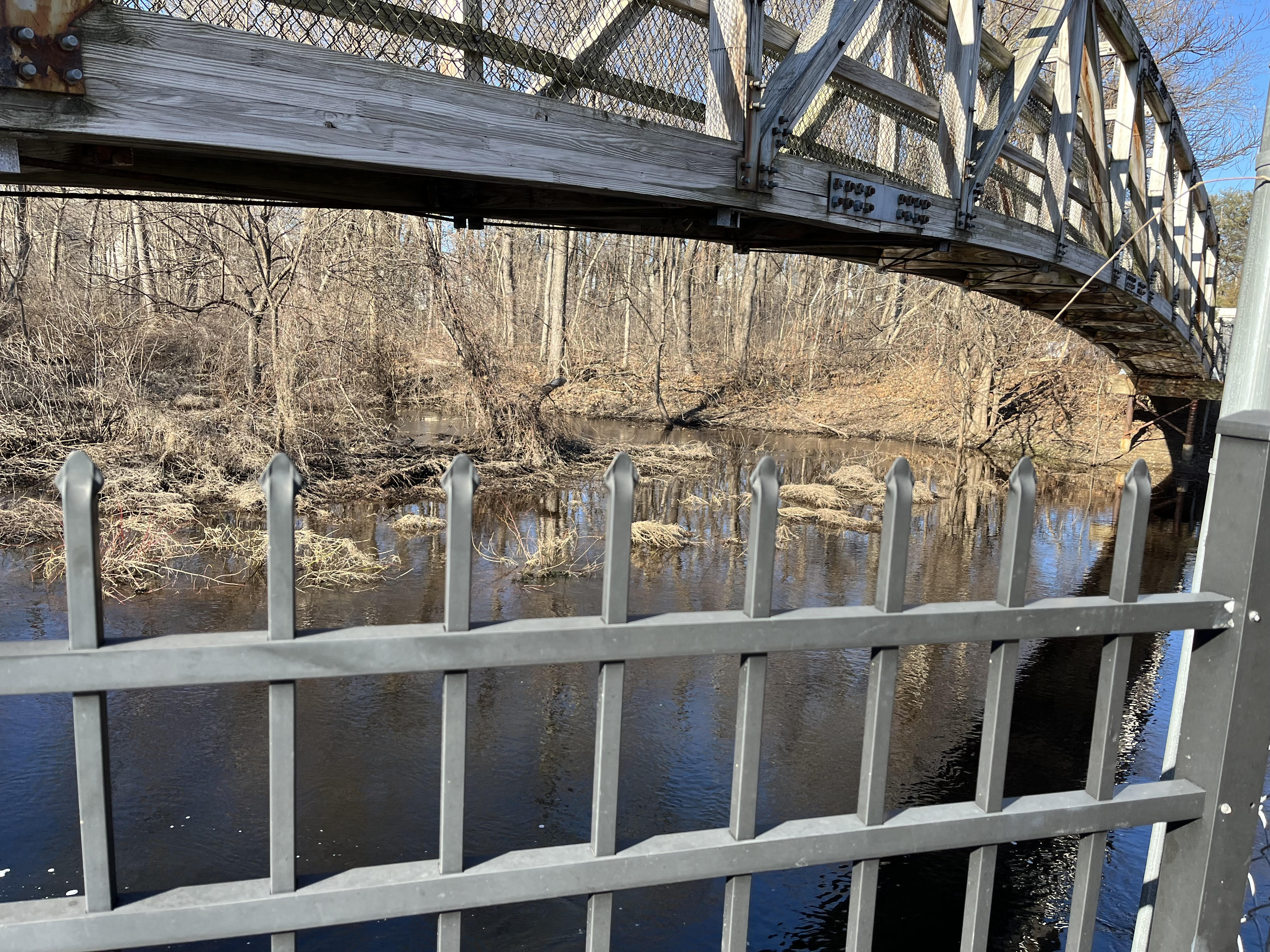
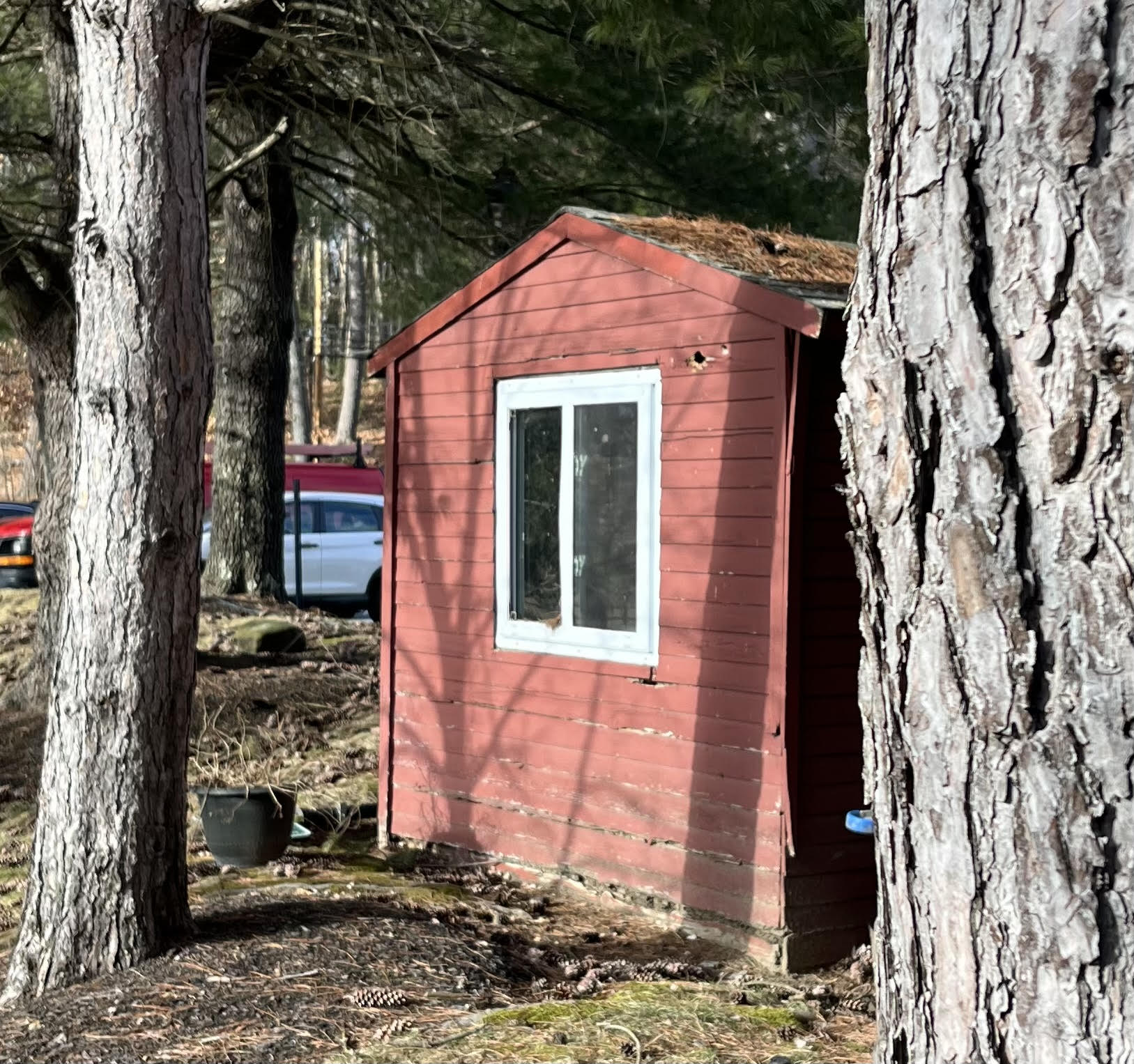
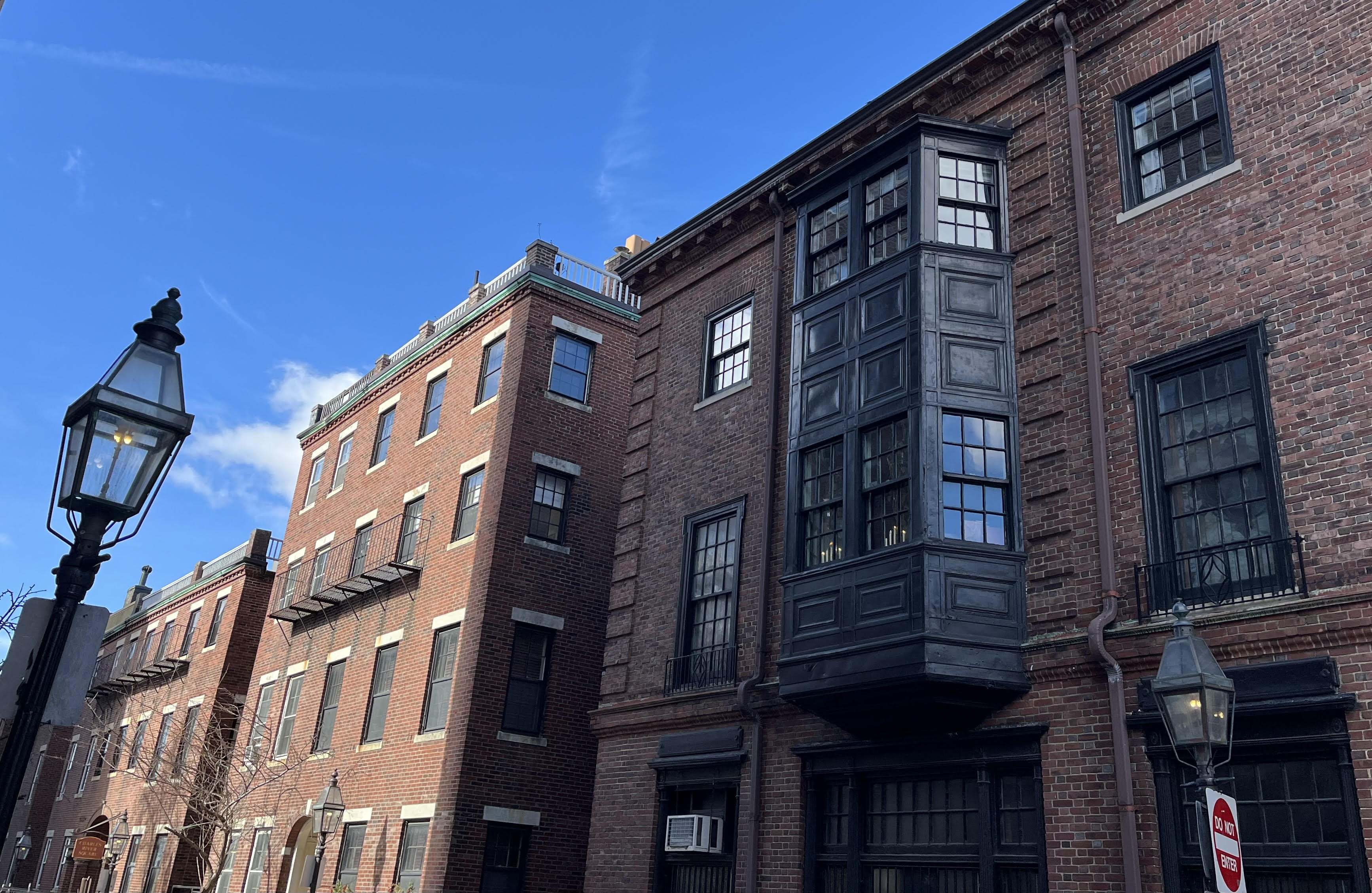
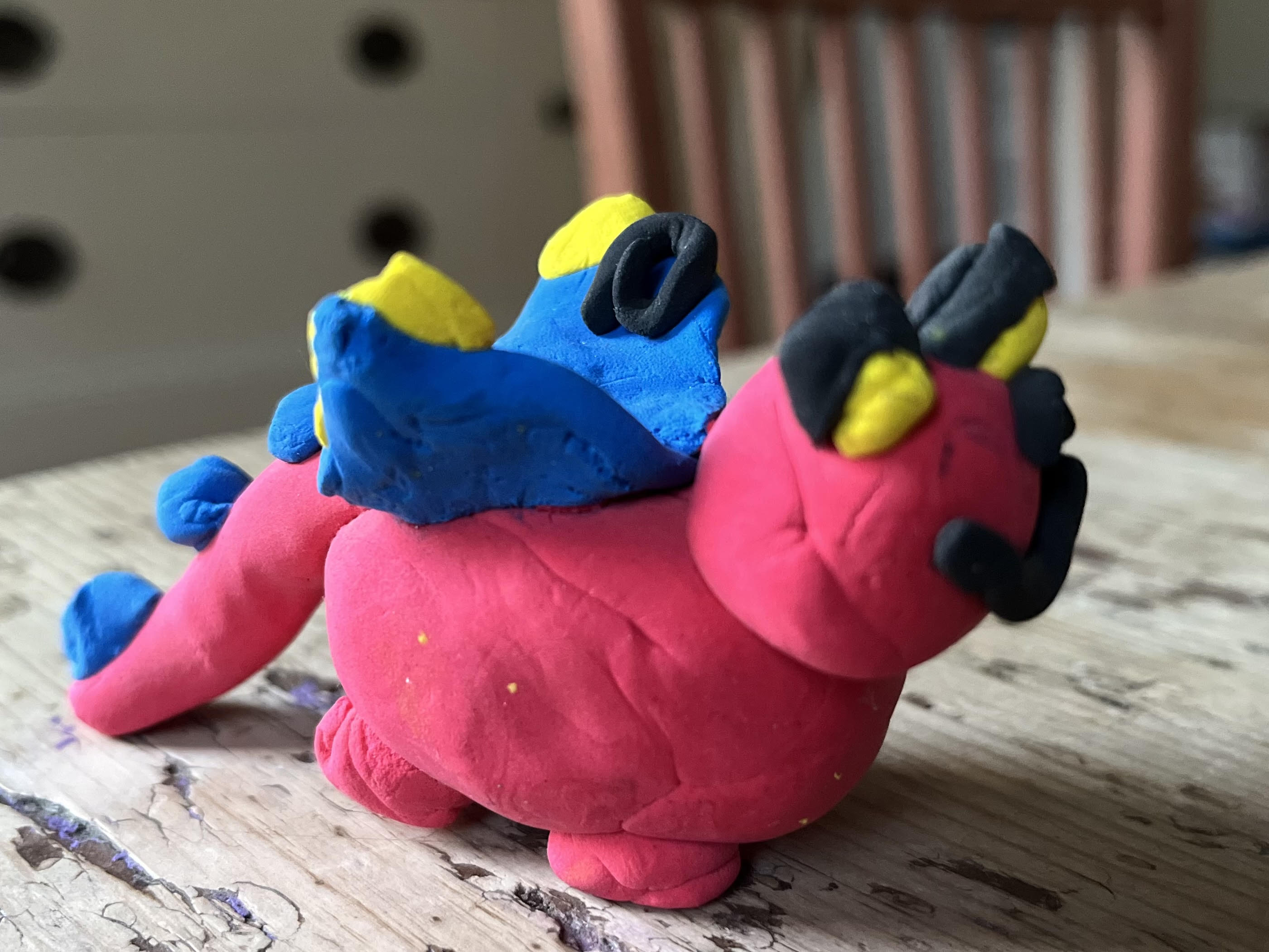
I haven’t posted photos for a while. Increasingly, I feel uninspired on cloudy, overcast days, and we have had a lot of those this winter. But here are the photos I did shoot. They were all all taken in Massachusetts, with the exception of the last one, my Providence granddaughter’s Model Magic dragon.

Happy Year of the Dragon!

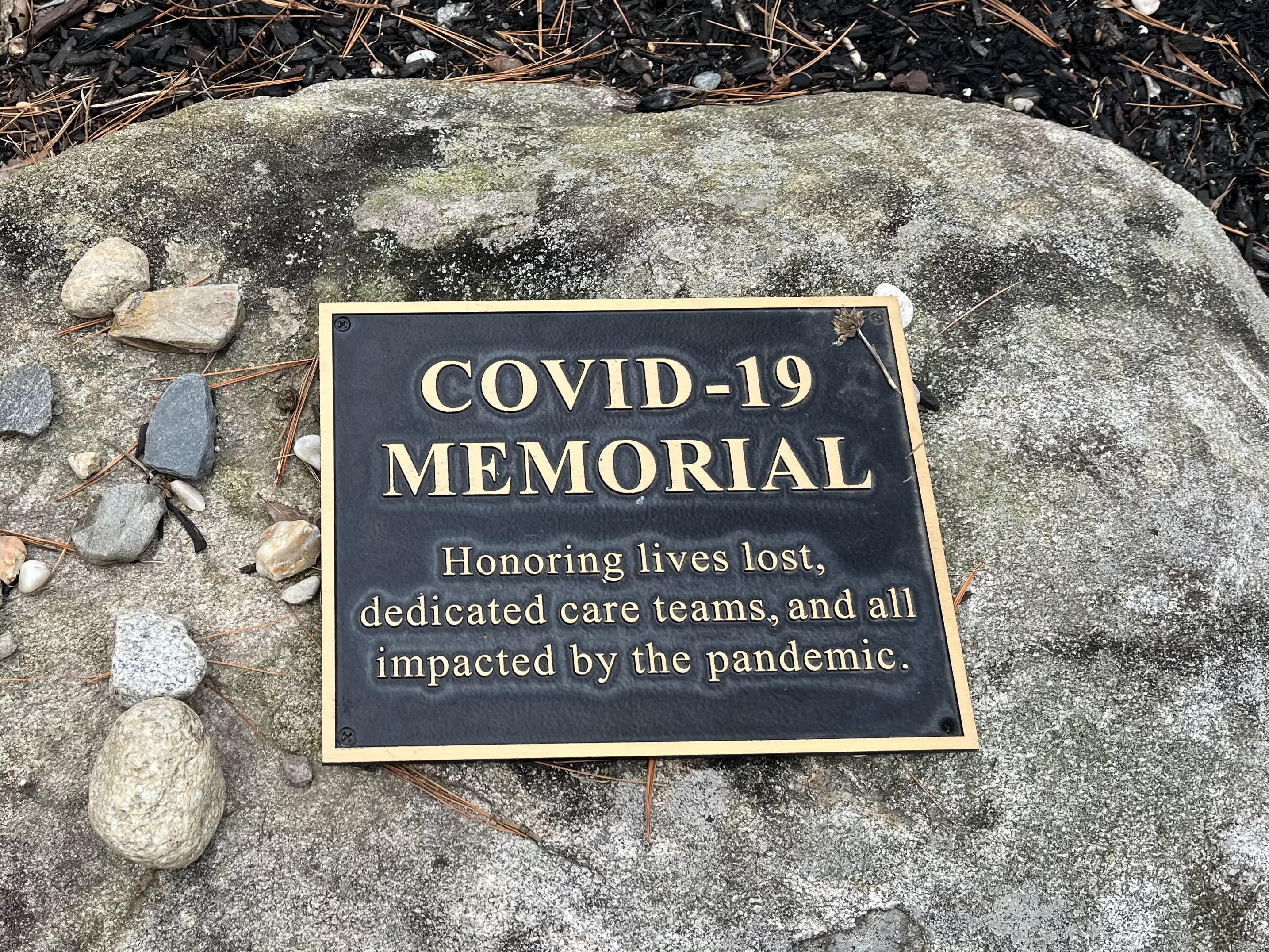
First comes the big snowfall we had in early January, then the bleak, rainy days that came after the snow melted. The river is the Sudbury. The river photo is followed by a memorial at the neighboring hospital, where everyone from our community goes, at least initially, when they have an emergency.

I think it’s good to be reminded what it was like in the early days of the pandemic.

Finally the sun came out. I took photos of the footbridge over Nashoba Brook, which was hurrying along as if it were spring already. Also in sunshine, a mossy-roofed shed caught my eye.

Do you see balconies next? After the balconies, is the train depot. I was there in the early morning to catch the train to Boston for annual checkups at MGH. While in town, I also took a shot of the Beacon Hill area off Charles Street.

PS All dragons smile, if we know how to look at them.

Read Full Post »

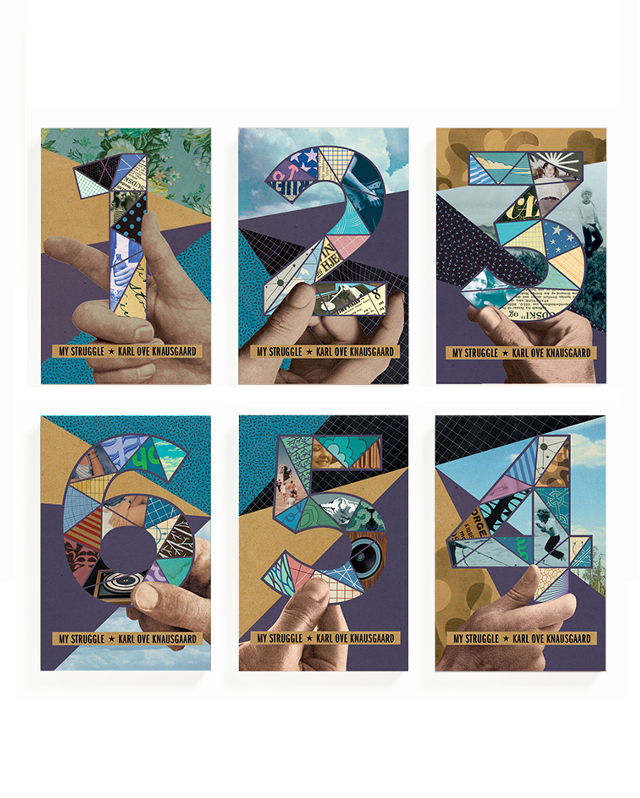
Art: Charlotte Strick.
All the decision-makers loved Strick’s cover for Karl Ove Knausgaard’s famed series. Until they didn’t. Read the story of “killed covers.”

Beginning authors often fantasize about the illustration they want for their cover, learning quickly the choice isn’t up to them. Meanwhile, illustrators may think they got the cover job — only to find out how a sales mentality can overrule good design.

Zachary Petit at Fast Company begins today’s story with one illustrator’s experience with a book series I have read.

Charlotte Strick was on a high,” he writes.  “She’d been tasked with designing the book covers for the English translations of Karl Ove Knausgaard’s six-part autobiographical novel, My Struggle — and she’d landed on a concept to tie the volumes together. Perhaps surprisingly, everyone else had, too. The collaged, Easter egg–laden set was an immediate hit in cover meetings at Farrar, Straus and Giroux, and the first book had hit shelves, but then Strick says a literary agent intervened. The books looked too artsy, and he wanted something more straightforward to reach the masses. So with only one installment on the market, the line got scrapped for a more traditional look — author photo with big, clean type, and a solid blurb.

“ ‘There’s nothing scarier than [someone saying], “this book is not going to sell with that cover,” ‘ Strick says. …

“Strick says that in general, the process begins with a designer receiving the manuscript and a jacket brief outlining the mandatory elements (e.g., title, author name, maybe a blurb), and comparison titles for reference. The timeline is usually tight, and when it comes down to it, the creative stakes are high: You’re essentially tasked with creating a single image to brand thousands of words that could have been years in the making. …

“From there, designers create comps, or a series of proposed designs for the team to weigh. The reasons why some comps meet untimely ends are many, from an editor or marketing lead’s personal preferences to genre conventions to performance metrics of similar approaches to the author’s best friend’s opinion or, maybe, the sheer fact that an exec has a cold that day. Of course, this isn’t to say that what hits the market is bad — in fact, I’d contend we’re in a golden age of book cover design, with each publishing season bringing a deluge of insanely great jackets. But at the end of the day, a lot of fantastic and fascinating work hits the cutting room floor.

“So as ‘Best Book Covers of the Year’ lists pop off this month, let’s celebrate the work that didn’t win the day. Here are some of the best book covers of 2023 that you did not see — with insight directly from the designers who created them. 

The version that ended up being scrapped is on left, the final version is on the right.

“ ‘I love the cover that was chosen so much (the big dark waves backdropping the brittle lines of sheet music evoke the sweeping story and emotional impact), but there is one outtake that is stuck in my head when I think of the book. There is one scene at the end that I can’t let go of: Music tying two people together is played, and images of people lost appear in redacted colors of light. Whether real or illustrative, this is the image that held everything that happened in the story in a suspended moment before the exhale of finishing the book. I wanted to create that scene but without any visual clutter of a setting, other objects in the room, or even people. In this outtake everything but the crucial information fades to black. It is the simplicity and starkness that I find so appealing.’ Math Monahan, illustrator of the Refugee Ocean’s first cover.

I’ll Be Seein’ Ya by Jon Robin Baitz is a play set in turbulent COVID times, examining the relationship between nostalgia and the ever-looming anxieties surrounding mortality and old age. I began with this painting by artist Perry Vásquez. The spontaneously combusted palm tree captured the sudden, disorienting, and solitary atmosphere of living alone in pandemic times, while also alluding to the LA forest fires. I enjoyed how this symmetrical, two-paneled composition suggests a ‘before and after’ sequence marking the initial spark and the gradual expansion into forest-fire-orange California sunset. —Cecilia Zhang.’ ”

I like Zhang’s concept more than the one that prevailed, but then, I would. I haven’t forgotten a negative experience I had with Jon Robin Baitz the time I was assigned to interview him for TheaterMania. He was really full of himself and rude because a stringer such as I was (who gets $70 for working hard on the writing) may not have had a chance to see the play.

But back to book covers. What are your reactions to book covers? Laurie Graves does get to pick hers and Asakiyume has done that, too. But when any of us put on our reader hats, we often get indignant about a cover we think was very misleading. Let me know if you can think of an example.

See more Befores and Afters at Fast Company, here.

Read Full Post »

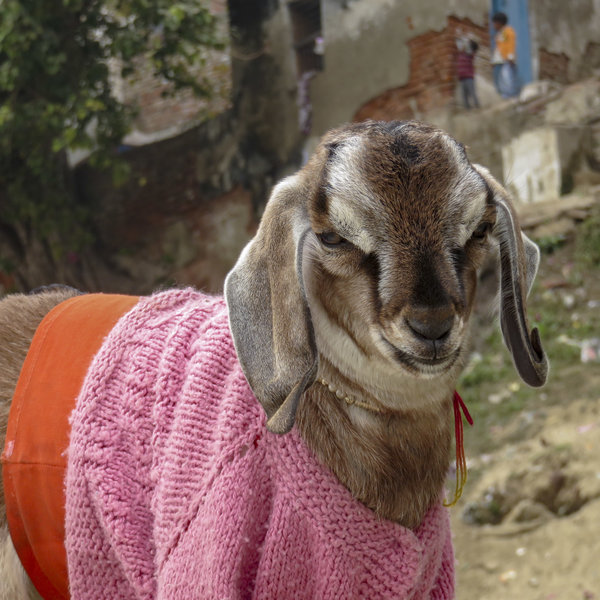
Photo: Goats in Sweaters.
New research suggests there is more to livestock than meets the eye.

Many pet owners would swear that their dogs are always thinking. Maybe it’s not only dogs. What farmyard animals do when responding to the circumstances around them also looks a lot like thinking.

David Grimm reports at Science about new research into what goes on in animals’ minds.

“You’d never mistake a goat for a dog,” he writes, “but on an unseasonably warm afternoon in early September, I almost do. I’m in a red-brick barn in northern Germany, trying to keep my sanity amid some of the most unholy noises I’ve ever heard. Sixty Nigerian dwarf goats are taking turns crashing their horns against wooden stalls while unleashing a cacophony of bleats, groans, and retching wails that make it nearly impossible to hold a conversation. Then, amid the chaos, something remarkable happens. One of the animals raises her head over her enclosure and gazes pensively at me, her widely spaced eyes and odd, rectangular pupils seeking to make contact — and perhaps even connection.

“It’s a look we see in other humans, in our pets, and in our primate relatives. But not in animals raised for food. Or maybe we just haven’t been looking hard enough.

“That’s the core idea here at the Research Institute for Farm Animal Biology (FBN), one of the world’s leading centers for investigating the minds of goats, pigs, and other livestock. … Scientists are probing the mental and emotional lives of animals we’ve lived with for thousands of years, yet, from a cognitive perspective, know almost nothing about.

“The work is part of a small, but growing field that’s beginning to overturn the idea that livestock are dumb and unworthy of scientific attention. Over the past decade, researchers at FBN and elsewhere have shown that pigs show signs of empathy, goats rival dogs in some tests of social intelligence, and … cows can be potty trained, suggesting a self-awareness behind the blank stares and cud chewing that has shocked even some experts. …

“The field faces challenges, however. …. Farm animals can be huge, many are hard to train, and traditional funders and high-profile journals have generally spurned such studies. But as scientists push past these obstacles. … What they learn could even change the way we house and treat these creatures. …

“In an enclosed L-shaped barn at FBN that houses more than 700 pigs … researchers are herding hulking hogs — just 6 months old but already 120 kilograms [265 pounds] — one by one into a run with a treadmill. Instead of a conventional treadmill’s control panel, there’s a grapefruit-size glowing blue button at snout height that the animals can press to run the machine for a few seconds. Today, however, no one seems very interested in working out.

“Like a person having second thoughts about their gym membership, most of the pigs step briefly onto the treadmill, then walk off, emitting squeals and deep, belchlike grunts as they exit through a door on the other side of the run.

“ ‘We have sports pigs, but also couch potato pigs,’ [Birger Puppe, director of FBN’s Institute of Behavioural Physiology] laughs. Katharina Metzger and Annika Krause, the postdoc and technician, respectively, running the study, tell me I may be making the animals nervous. Last week, they say, one pushed the button seven times and kept coming back for more.

“The goal is to train the pigs for an experiment that will test whether they’ll exercise just because it makes them feel good, a window into their emotions. ‘The idea comes from human sports physiology,’ Puppe says. ‘That exercise can improve mood.’

“A couple of decades ago, work like this would have been laughed out of the barn. There are an estimated 78 billion farm animals on Earth — a number that dwarfs monkeys, rodents, and humans combined — and we have lived with them longer than any other creature save dogs. Yet in an era where researchers are modeling rat brains on computers and showing that our canine pals may be able to intuit our thoughts, livestock remain a black box.

“That’s because, until recently, scientists didn’t take their cognition seriously. ‘When I went to my first research conferences, people didn’t understand why I was studying the minds of farm animals,’ says Christian Nawroth, a behavioral biologist at FBN. Why waste your time if it’s not going to improve milk or meat production, he recalls them asking.’ …

“After abandoning his early work with pigs because he found the animals too hard to train, he switched to goats, which seemed just as interested in him as he was in them. ‘They pay a lot of visual attention to what you’re doing,’ he says. ‘It may not seem like there’s a lot going on in their head, but they are processing information all the time, even if they’re just standing there looking at you.’ …

“In early work, he explored how goats measure up to dogs in a battery of cognitive tests. In an experiment known as the ‘impossible task,’ dogs confronted with a food bowl they can’t access turn to humans for help, a behavior that’s been chalked up to their intensive coevolution with us. But Nawroth showed that goats did the same. …

“Further experiments showed that goats, like dogs, could distinguish between pictures of happy and angry people, suggesting they are tuned into our emotional states; that they could locate food behind an obstacle more quickly if they watched humans move the food there first, a rare example of cross-species learning; and, in Nawroth’s most significant finding, that goats seem to understand what we mean when we point at something, a complex reading of our social cues that eludes even chimpanzees.”

Lots more at Science, here. I must say, this article is making me think more seriously about becoming a vegetarian! I think blogger Laurie Graves already is. Are you?

Read Full Post »

Image:Alan Fan Pei via Wikimedia Commons.
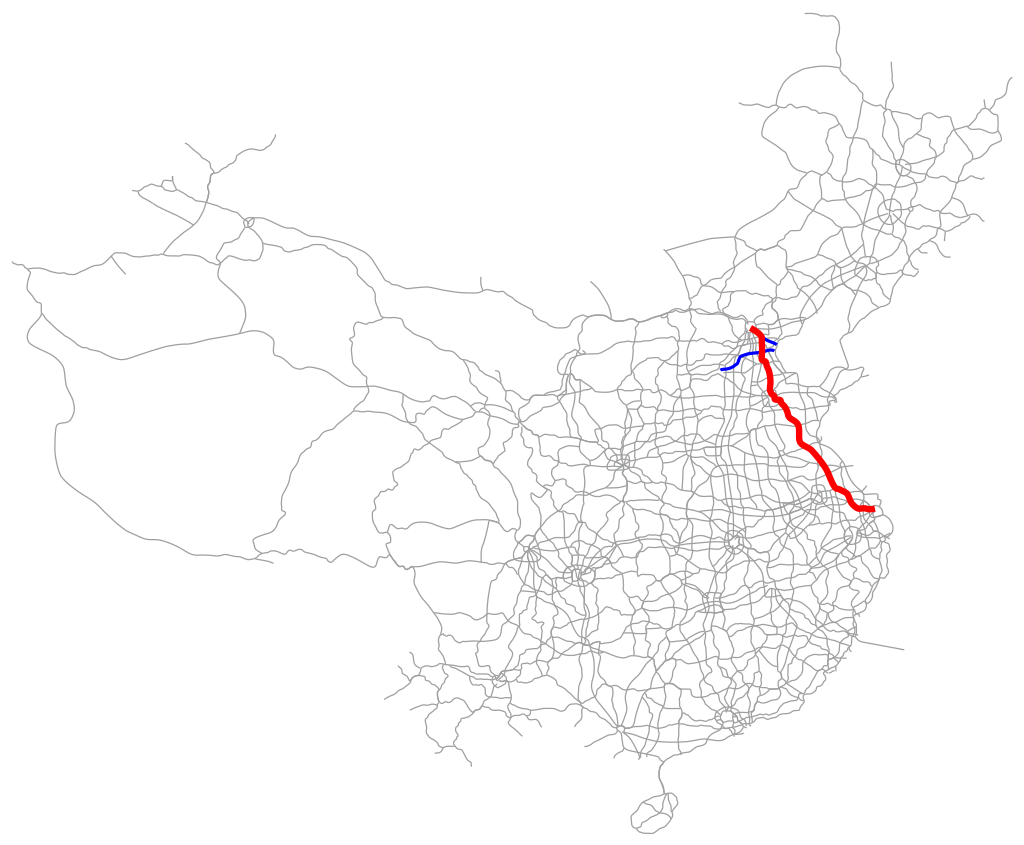
China National Expressway G2, Beijing to Shanghai. Who can you trust?

Back when I got my first full-time copyediting job, Wikipedia was new. We were not allowed to reference it for a citation. At the same time, Wikipedia required its own references to be to books and other long-accepted documents — nothing online.

Those days are gone, but the encyclopedia we can’t live without is still evolving, and differing constituencies struggle behind the scenes.

Consider the passionate world of roadmaps.

Stephen Harrison reports at Slate, “When Ben, also known as bmacs001, posted a TikTok video promising to ‘spill the tea’ on how the site treats road and highway articles, the Wikipedia contributor suspected that people would find the topic intriguing: ‘Forty of Wikipedia’s most prolific editors have seceded and made their own wiki, and I’m among them.’

“Ben was part of the contingent of Wikipedia editors who contributed to the site’s pages covering road and highway infrastructure — everything from Interstate 80 and Route 66 to tinier highways on the side of the Jersey Shore. ‘We’ve been chugging along doing our own thing on the ’pedia for the past two decades now, [but] our little corner of the site has come under attack,’ Ben said. … Wikipedia’s highway enthusiasts felt they had no choice but to break away and form a separate project: AARoads Wiki.

“With over 800,000 views and counting, the nearly four-minute TikTok video is a testament to how even extremely niche topics gain visibility on the platform. As the post’s top comment put it, ‘I’m so here for interstate Wikipedia drama.’ But behind this seemingly amusing clash of nerds is a far more pressing issue: how to reconcile 20 years of Wikipedia’s core principles and values with the practical demands of present circumstances. …

“Roadgeeks are drawn toward the immediacy of the subject matter — since many users drive on roads every day — while railfans gravitate toward the historical aspect, since locomotives aren’t nearly as common as they once were. …

One flashpoint that inspired the recent revolt was a strict interpretation of the site’s reliable sourcing policy. …

“Take the example of an article about West Virginia Route 891, a short east–west highway that ends on the Pennsylvania state line. A volunteer editor seeking to contribute content to the page might use information found on the West Virginia Department of Transportation’s website as a reference source. However, policy sticklers are likely to deny this usage because DOT is a primary source for highways (directly involved in the subject matter). According to the site’s policies, Wikipedia should be based mainly on reliable secondary sources, such as newspapers.

“Angry road editors like Ben are up in arms, claiming that this hard-line interpretation of the guideline does not reflect the realities of the situation. With local newspapers going out of business left and right, there are rarely any other sources to draw from for these kinds of articles. Why not allow Wikipedians to cite from DOT, which is responsible for publishing highway routes?

“Then again, it’s worth remembering that most of the time Wikipedia has good reasons for the prohibition against primary sources, especially with government entities. A state’s DOT content might generally be reliable — but allowing Wikipedians to cite from other primary sources, such as China’s Central Propaganda Department, is not a risk worth taking. The question is whether there is some way to recognize an exemption, granting that some types of primary sources may be reliable while still protecting the integrity of the rule.

“Wikipedia’s road editors have also struggled with the site’s prohibition against original research. … The policy has helped stop users from adding pseudoscience about Bigfoot excursions to the site, for example. But road editors are understandably frustrated when ‘no original research’ is applied to exclude maps. Why should someone have to search out a second source to confirm in words what the map communicates in visual form? …

“Finally, there’s the issue of Wikipedia’s notability guideline — the principle that only topics that are truly ‘worthy of notice’ should be included on the encyclopedia. Lack of notability is the reason why the proposed articles about many aspiring influencers get deleted every day. Roadgeeks tend to argue that highways are generally notable. …

“ ‘The people who want to destroy, the only work that they need to do is destroy. Creating involves a lot more work, so we’re trying to fight back against people who have more time for deleting stuff,’ Ben told me.”

More at Slate, here. You’re allowed a few articles for free there.

Read Full Post »

Photo: Philippe Ruault.
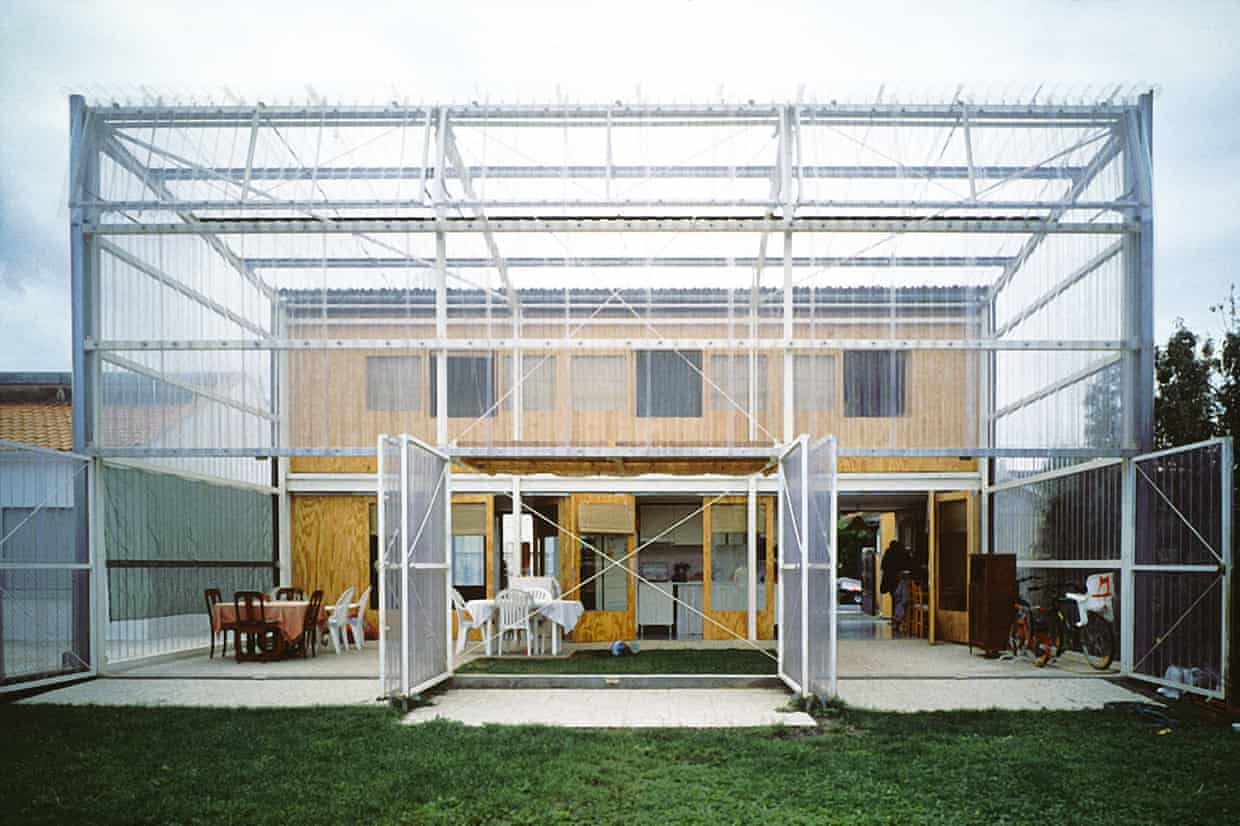
By adding a double-height conservatory at a family home in Floirac, Bordeaux, the architects “doubled the floor area their clients expected, while staying within a very limited budget,” the Guardian reports.

It’s generally considered cheaper and more efficient to tear down a building and build new than to renovate or reuse. Two acclaimed French architects have found the opposite, and their insights are timely. More people are realizing that standard construction practices are unnecessarily wasteful — and damaging to the planet.

Rowan Moore describes the architects’ approach at the Guardian. “The French architects Anne Lacaton and Jean-Philippe Vassal are famous for their belief in keeping existing buildings whenever possible, no matter how unpromising or unloved they may be. They follow, in effect, an architectural version of the Hippocratic oath – ‘first, don’t demolish.’ It’s a message that has never been more pertinent, as it dawns on the construction industry that constant demolition and rebuilding is an environmentally devastating activity.

“The husband-and-wife team have been putting this idea into practice for decades. … Keeping the already-there is not, though, their only concern, nor is it to do with sustainability alone. They like to use words such as ‘generosity,’ ‘kindness’ and, above all, ‘freedom,’ which means that they are always looking to find and create spaces additional to those asked for in a brief, ‘with no utility, no function,’ as Vassal puts it, ‘in which the user will feel the possibility to be inventive for themselves.’ …

“ ‘We really feel enclosed in a brief,’ says Lacaton, ‘that has so many rules, so many recommendations and impositions.’ … They strive against an attitude that ‘in architecture everything must be quantified… everything should be uniform.’ …

“In the early 1990s, they designed a new family house in their home city of Bordeaux, where they doubled the floor area their clients expected, while staying within a very limited budget. Their secret was to erect a double-height conservatory built like a simple greenhouse, which gave a sense of generosity and freedom to the rest of the house, a two-story structure with also basic construction. …

“[They have] a fondness for adapting humble and disregarded ways of building. ‘We found we were conditioned by our education as architects,’ says Lacaton, ‘to say that one way of constructing is the right one and the other one is not good. We discovered that we could use any tool, any material, anything if it’s used in an intelligent way.’ They also developed the idea of reusing the already-there, as with a seaside house in Gironde, south-west France. which was built among 46 pine trees, along with arbutuses and mimosas, without cutting any down. With the Palais de Tokyo in Paris, a 1930s building remodeled as a centre of contemporary art in two phases, in 2001 and 2012, they took pleasure in making only minimal alterations to its damaged interior. …

“Where they differ from other architects is in their attitude to control. In the John Soane museum, every detail and experience is minutely managed and directed. Contemporary practitioners often photograph their works unpopulated, at the precise moment between completion and inhabitation, where the perfection of their idea is most immaculate. For Lacaton and Vassal, it’s important to know when to stop, when to leave it to residents to occupy and embellish their homes. They enjoy and photograph the different things that people do to their spaces.

“Their way is humane and intelligent. It’s also invaluable. In Britain and elsewhere, there’s a desperate need to create more homes without incurring unacceptable bills for carbon emissions and energy consumption. Reuse is an obvious answer.”

More at the Guardian, here.

Read Full Post »

« Newer Posts - Older Posts »