Feeds:
Posts
Comments

Archive for the ‘Uncategorized’ Category

Photo: Elayna Yussen — Bloomberg/Getty Images.
It’s not just hospitals that have critically low staffing levels. Our aging population is retiring, and most industries are hurting for labor. We need more immigrants.

Happy Fourth!

We think of ourselves as a nation of immigrants, but only for the past. We have turned against immigration at a time we badly need more applicants for every kind of job. The effects of labor shortages can be dangerous if we are talking about hospitals or aviation, for example. But it’s bad all over. I’ve read that even the military is having trouble finding recruits.

Today’s article is about nurses, but you can substitute almost any job category and think about whether better immigration policies, with a good route to citizenship, would help.

Alex M. Azar and Kathleen Sebelius wrote in Time magazine’s Ideas section, “The United States is about to learn the hard way what happens when an entire generation of nurses retires without enough new clinicians to fill their shoes at the bedside.

“As a result, hospitals in the same country that performed the first successful kidney transplant and pioneered anesthesia and heart rhythm restoration will have no choice but to ration care.

“That’s the only way to describe what happened to an Alabama man who was turned away from 43 different hospitals across three different states before ultimately dying of a cardiac emergency 200 miles from home because no nearby system had an available intensive care bed it could staff. …

“And it’s what happened to expecting mothers in Idaho earlier this year when the only hospital in the 8,000-person city of Emmett said it had become ‘unsustainably expensive to recruit and retain a full team of high-quality, broad-spectrum nurses to work.’ That followed an earlier decision by an upstate New York facility to pause its maternity services after struggling to recruit enough replacements to offset staff resignations and retirements. …

“A nurse old enough to retire today has only known the U.S. health care system in a nursing shortage, but they’ll tell you it’s never been more challenging. It’s a crisis in five parts, including increased demand for care by an aging population and workforce, restraints that hinder nurses from practicing at the top of their licenses, lingering burnout from the pandemic, an inability to educate enough new nurses, and a recently throttled pipeline of qualified international talent.

To fill the gap in care left by retirements and burnout, federal economists calculate that the U.S. health care system will need to add at least 200,000 new nurses every year through 2026.

Nursing schools reject tens of thousands of applicants every school year. It’s not because these would-be nurses failed to meet admission criteria — it’s largely because the schools don’t have enough nurse educators to train them. As limited instruction capacity squeezes the number of new matriculating nurses, hospitals have increasingly relied on foreign-educated nurses, who’ve grown to represent roughly 15% of the U.S. nursing workforce.

Employment-based health care immigration is a complex labyrinth of rules and regulations that doesn’t make it easy or fast for an international nurse to emigrate and begin treating American patients. Under current law, international nurses compete for the same limited number of employment-based green cards within an enormous pool of applicants that include IT workers, lawyers, engineers, and architects. Unlike those other workers, nurses do not qualify for temporary visas. So, while many computer engineers from other countries apply for green cards after moving to the U.S. and working under an H1-B visa, nurses must complete the immigration process entirely overseas.

“Under the best conditions, that’s a multi-year process in which the nurse has passed English language and licensure exams, established a sterling overseas clinical record, and secured a job offer that has been demonstrated not to harm U.S. workers. Now, that timeline will grow significantly, thanks to a recent visa freeze instituted by the U.S. State Department.

“The State Department tightly monitors the number of employment-based green cards issued against the remaining number for the fiscal year, which is set by Congress and has been untouched since 1990. Post-pandemic resurgent demand for this category recently forced State to issue a notice of visa retrogression, an immigration term of art that refers to eligibility backdating when demand exceeds equilibrium. As a result, any nurse who became eligible for their green card after June 1, 2022 — which amounts to thousands of nurses who have been winding through the system for upwards of two years — is ineligible to enter the country until the backlog has cleared. In practical terms, American hospitals won’t be get the nurses they’ve been counting on any time soon.

“Despite the urgency to get more nurses to the bedside, the State Department and the White House have zero discretion. The responsibility falls to Congress, which reserves the authority to issue visas and allocate them for specific immigrant preference categories. Each year, processing issues and other inefficiencies across various government agencies involved result in thousands of issued visas going unused. Health care advocates have begun pressing Congress to recapture some of these allocated-but-untouched green cards for the express use of immigrant nurses. There’s precedent: Congress did just that in 2000 and 2005.

“More recently, one bipartisan proposal introduced last Congress, the Healthcare Workforce Resilience Act, would have set aside tens of thousands of these mothballing visas for nurses and doctors. But it didn’t pass, and a new version has yet to be reintroduced. According to the nonpartisan Congressional Research Service, there are roughly 220,000 employment-based visas that were available for recapture as of 2021. …

“The nursing shortage isn’t a red-vs-blue, rural-vs-urban issue. It’s not about the southern U.S. border or the gridlock that defines D.C. It’s about a pregnant mother getting the care she and her baby deserve. It’s about the heart attack patient not being turned away because the emergency room doesn’t have the nurses to treat him. This is a whole-of-America crisis and we need a whole-of-government response, including a sensible loosening of licensing requirements, prioritize positive patient outcomes by modernizing the responsibilities and standards of nursing, supporting expanded educational opportunities, and enabling lawful employment-based immigration.”

More at Time, here.

Read Full Post »

Photo: Hasan Ali.
Brothers Tuqeer Ali Khan and Khurram Ali Khan perform a qawwali, a style of Sufi Muslim devotional music. The Christian Science Monitor writes, “The duo rose to prominence after being featured on The Dream Journey’s YouTube channel.”

Everyone loves the music of their youth. But what if it starts to disappear from the the radio and the other places it used to be played? Fortunately, a few enthusiasts have the power to turn things around if they care enough.

Hasan Ali reports at the Christian Science Monitor, “In the short interlude between musical pieces, Tuqeer Ali Khan looks suspiciously at his harmonium.

“ ‘Has someone tried to tune this?’ he asks, his eyes squinting in disapproval.

“ ‘No one has touched it but you,’ replies his brother and musical partner, Khurram.

“ ‘Are you sure?’ says Mr. Khan, raising an eyebrow. ‘It sounds a little off to me.’

“If it is, no one in the small audience seems to have noticed. Though he is only 10 minutes into the mehfil-e-samaa – a concert given in an intimate setting – he has created a mood of rapture. He resumes the performance with one of the numbers that made him famous. ‘Spring has come but my beloved has not,’ he sings. ‘My heart cries in anguish.’

“Though he comes from a family of musicians and is now considered one of Pakistan’s most promising classical vocalists, up until a couple of years ago Mr. Khan was virtually unknown outside of Dipalpur. Then he and his brother were featured on The Dream Journey

“Now in its ninth year, the audio-visual project is helmed by a small group of friends who record Pakistani musicians and publish their material on a dedicated YouTube page. The Dream Journey aims to promote traditional, Sufi-style music, the popularity of which has declined in recent decades due to geopolitical pressures. Their channel has amassed over 36 million views and 169,000 followers, and has launched several careers. But above all else, it serves as a source of joy not just for international audiences, but also for the project’s music-loving founders and featured musicians.

“ ‘My brother and I used to go around begging music producers to give us a chance,’ Mr. Khan says. ‘It was only when we were featured on The Dream Journey‘s YouTube channel that our careers began to flourish.’

“ ‘I pray for them every day,’ adds Khurram, who is himself an accomplished singer and tabla player. ‘All of our success is due to them.’

The Dream Journey project was started by eight music enthusiasts.

“ ‘We basically got to know each other online,’ says Musab bin Noor, a medical doctor. ‘It was always a desire to someday get together and listen to music as a group and that finally happened in 2014 when everybody’s schedules aligned.’

“They decided to visit musicians in their homes – the place where they practiced and felt most comfortable. ‘There’s nothing made up about it,’ explains Arif Ali Khan, a founding member who lives in Canada but regularly travels to Pakistan to work on The Dream Journey Project. ‘The focus is only on the music.’

After the group’s first trip to Karachi, team member Mahera Omar, a documentary filmmaker by profession, published her concert recordings online.  

“ ‘YouTube was becoming quite big in Pakistan at that time,’ she remembers. ‘The response we would get and people’s comments would just blow us all away.’

“Asif Hasnain, another founding member, describes the success of the YouTube channel as ‘miraculous.’ 

“ ‘When you put up a video and it gets 10,000 hits, you say, “Oh my God, it’s huge!” … And then suddenly you find that something has hit 3 million,’ he says. ‘I think the beauty of it is the surprise.’

“And for listeners, discovering the sounds of traditional Pakistani music – including new twists on familiar qawwalis, or Sufi devotional songs – brought its own kind of joy.

“ ‘So heartening to see a young qawwal party deliver a performance that would make the old maestros proud,’ writes one YouTube commenter by the name of Talha Khan. …

“The launch of The Dream Journey channel came at a time when Pakistan’s classical music scene was stagnant, leaving many performers struggling to make a living. 

“ ‘The job of the artist is not to go around begging people to listen to them. We are supposed to practice and perform,’ says Akbar Ali, a classical vocalist based in Lahore. ‘Musicians who were millions of times more talented than I am have left this world in a state of destitution.’ …

“Veteran performer Babar Niazi credits The Dream Journey with helping to revive the genre, saying ‘they’re basically filling the gap left by state institutions who have stopped doing their jobs.’ ”

More at the Monitor, here. No firewall. Reasonable subscription rates.

Read Full Post »

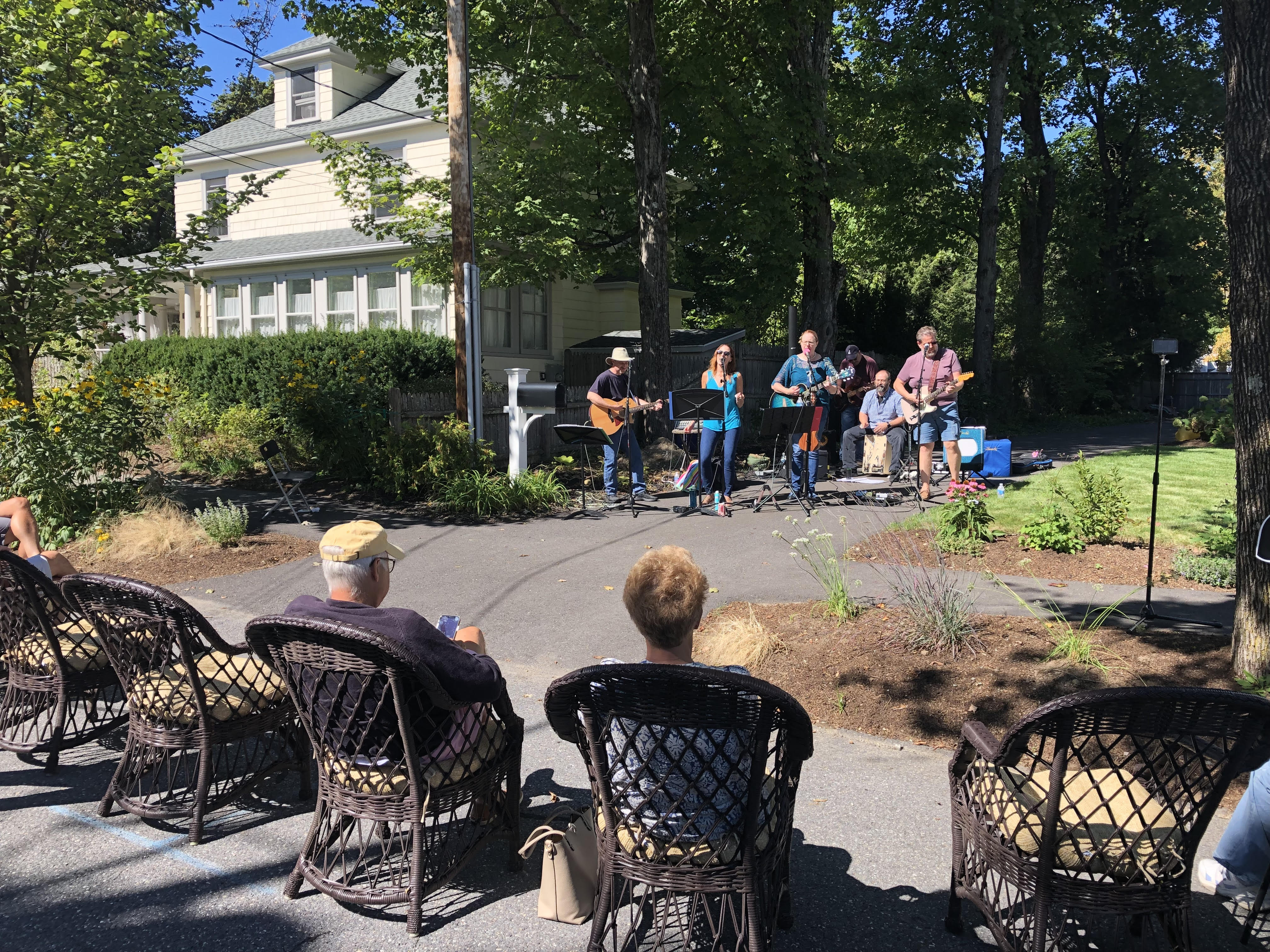
Photo: Suzanne and John’s Mom.
Porchfest events in Massachusetts towns promote neighborliness.

When Sara and I traveled together at age 16, one of the many things I learned from her was that it was perfectly fine to be friendly to strangers under some circumstances. You know, for example, how women who don’t know each other may strike up a conversation in a restaurant ladies room? That’s the kind of thing that was a revelation to me.

Nowadays, some folks have gotten more wary. Too wary. It is one factor in an epidemic of loneliness.

Sophie Hills  writes at the Christian Science Monitor, “Lida and Mark Simpson sit on the steps of their porch with friends while the blues rock band Red Medicine plays in a yard across the street. People crowd all four corners of the intersection, dancing and chatting. It’s PorchFest in Petworth, a neighborhood of Washington, D.C. Some 100 performers will play on porches and yards throughout the day. A new group of people walks up, searching for space with a view of the band. ‘Sit, sit,’ says Ms. Simpson with a big smile, gesturing toward the wall at the edge of the yard.

“The Simpsons, who have a 4-year-old and a 6-year-old, chose Petworth because it’s walkable, close to restaurants and playgrounds and public transit, and still has a neighborhood feeling. When they first moved in eight years ago, Ms. Simpson says she hoped for an active front porch culture. But it didn’t quite coalesce until people began socializing from their yards in 2020. Happily, says Ms. Simpson, ‘porch and stoop culture restarted during the pandemic, and it’s stayed around.’

“[This spring], the U.S. surgeon general declared an epidemic of loneliness and isolation, saying that 1 in 2 adults reported experiencing loneliness even before the pandemic. At a time when neighborliness is decreasing and Americans are growing further apart, some, like the Simpsons, are intentionally building relationships within their communities. And events like porch fests are growing in popularity. Central to a culture of neighborliness, many say, are front porches. …

“ ‘As it has built for decades, the epidemic of loneliness and isolation has fueled other problems that are killing us and threaten to rip our country apart,’ wrote Surgeon General Vivek Murthy in the New York Times on April 30, announcing a framework to rebuild community. …

“A front porch is a liminal space, says Michael Dolan, a writer and editor in Washington. ‘It’s the outside of the inside and the inside of the outside. … When people who have [porches and stoops] don’t use them, they’re missing out on the opportunity to interact with the environment. [And] the environment includes humans and includes passersby, includes somebody coming up to ask directions, includes somebody coming by to say hello.’

“The type of neighborliness embodied by Mister Rogers is no longer the norm. Over half of Americans say they only know some of their neighbors. … Over half of Americans who say they know some of their neighbors say they never get together socially, according to a Pew study from 2019.

“It takes curious and open people to build the kind of community that has block parties, borrows ingredients, and watches each other’s kids, but social spaces like front yards and porches are important too, says [Campbell McCool, founder of a Mississippi development that centers community life]. ‘A front porch is central to the whole personality of a neighborhood,’ he says. …

“Historically, Mr. McCool says, three things sped the decline of the front porch in suburbia in the 1950s: air conditioning, television, and the car. Air conditioning and TV coaxed people indoors. Cars meant more people lived further apart from each other.

“When sociologists began studying differences between residents in neighborhoods with and without porches, they found that in the latter there was little to no interaction. People drove straight into their garages, and private backyard decks grew in popularity. …

“Today, polls show that older Americans are more likely to have neighborly connections. Just 4% of Americans over 65 say they don’t know any of their neighbors, compared with 23% of adults under 30. …

“Karen Goddard, who prefers porches to private decks, calls herself a ‘professional porch sitter’ in her attempt to make neighborliness popular again. …

“The point, Ms. Goddard says, is to meet on front porches without agendas, minutes, or formality – ‘just meeting and conversation.’

“It resonated with Ms. Goddard as something she was already doing. ‘My friends in my neighborhood in New Hampshire knew that they could come to my house any Friday night and hang out on the porch,’ she says. …

“ ‘I like to smile and make eye contact and say “hello” if possible, because I just think that’s important for human connection and for neighbors.’

“The porch has always been a place of social interaction, says Mr. Dolan. That’s been his experience for the four decades he’s lived in the Palisades neighborhood of Washington, where he says neighborliness shines. …

” ‘I like to answer my door and say hello to the people who come to my house,’ he says. ‘[One gains] the feeling of trust in the neighborly compact, the ability to rely on one’s neighbors and call one’s neighbors. … Or even if your neighbors bother you, … you tolerate them because they’re neighbors. So it’s a sense of place that reinforces your feeling of being part of something.’ ”

More at the Monitor, here. No firewall. Subscriptions welcome.

Read Full Post »

Photo: Erika Page.
The Christian Science Monitor says, “An Afro-Uruguayan rhythm may be traced back to slavery, but it’s transcending present-day divisions and differences to spark joy across Uruguay.” This group performed in Barrio Sur, Montevideo, in March.

There is a kind of street music in Uruguay that is wildly joyful and welcoming to all kinds of people. It’s called candombe.

Erika Page reports at the Christian Science Monitor, “One by one, the drums unite from every direction. Slung over shoulders, cradled by old-timers, and clasped on either side by children, they meet on a corner in the Montevideo neighborhood of Barrio Sur.

“The pulse begins sporadically, an unorchestrated call to gather. Those perched on curbs and leaning against cars perk up and wander over. By the time the Uruguayan flag takes to the air, waving from one side of the street to the other in the hands of a proud bearer, the drums are thumping in perfect unison. Dancers give life to the beat as they lead the parade down the block.

“This is candombe, a distinctly Uruguayan rhythm brought into being by the descendants of enslaved Africans who arrived at the port of Montevideo in the 18th century. Today that lineage is celebrated loudly and triumphantly, with this event marking the end of the Carnaval season. Wherever candombe goes, it makes visible a culture long left out of mainstream Uruguayan society.

“In the past few years, interest in candombe has boomed both within Uruguay and abroad. While some worry popularity could water down the tradition’s richness, those in the community say this beat belongs to everyone, and all are invited to make it their own.

“ ‘For us, it doesn’t matter your ethnicity, your skin tone, your age, your gender, if you have three university degrees, or if you never finished high school,’ says Wellington Silva, who has led this troop, one of the city’s most revered, alongside his brother since their father passed away. ‘The drums bring joy, they open channels of communication, they turn us into brothers and sisters.’

“As the sun dips out of sight, the division between procession and observers fades. Dancers, shy at the start, now twist their hips and kick out their feet as children weave in and out of the crowd making its way down the iconic Isla de Flores street. …

“ ‘Anyone who happens to pass by is bound to hear and to want to know more,’ says Álvaro Salas, the director of culture at the nonprofit Mundo Afro, which focuses on the visibility and rights of the Afro-Uruguayan population. ‘That’s the most natural part of being human. We have to love joy.’

“There are three main styles of candombe in Montevideo. … Cuareim 1080, was born on this very block, named after the historic address of the building where the parade convenes. [It] used to be a tenement where the city’s poor lived, including Mr. Silva’s father. 

“The practice of candombe had faded in the late 19th and early 20th centuries but found a new home in these communal living spaces. In the late 1970s, this and other conventillos, as the tenements were known, were cleared by the military dictatorship in an effort to make the center of Montevideo more attractive.

“ ‘They pick you up and throw you out, and what happens? You expand,’ says Dr. Salas. ‘Today, there is candombe in every neighborhood in Uruguay.’ …

“Afro-Uruguayans make up around 10% of the Uruguayan population and are three times as likely to live in poverty as white Uruguayans. But members of the candombe community say their music is a celebration rather than a protest.

“Fernanda Rossana was a kid when her family’s home in the Ansina conventillo was razed. She spent the rest of her childhood on the outskirts of town. These days she is a proud participant of the Ansina candombe troop and is here dancing in support of her husband, a member of Cuareim 1080.

“ ‘That’s candombe – not losing our essence or our roots,’ she says, dressed in bright orange. ‘It’s demonstrating that we are free.’ …

“For Mr. Silva, the leader of Cuareim 1080, candombe is a way of life open to anyone, whether they are of Afro-Uruguayan descendence or not. Everyone is welcome, he says, ‘as long as you understand that your freedom ends where another’s freedom begins, you always extend a hand, and you always greet your neighbor. When you have something someone needs, you offer it, and when you need something, come, because someone will provide it.’ ” 

More at the Monitor, here. No firewall. Subscriptions are encouraged.

Read Full Post »

Photo: Jay Thakkar.
A worker examines a wooden beam in a traditional Indian kath kuni building. These earthquake-resistant structures lack metal and mortar, allowing them to flex as needed during a tremor.

I keep learning about ancient construction techniques that beat modern ones. Remember the post about self-healing concrete, here? That was in Rome. Today’s story explains why some buildings in Turkey and Syria withstood the earthquakes in February and points to ancient buildings in northern India.

Shoma Abhyankar writes at Nautilus, “The powerful 7.8 magnitude earthquake that struck Turkey and Syria on February 6 killed almost 50,000 people, most of whom died under rubble.

“The tragedy falls in a decades-long history of outsized death and destruction from recent earthquakes: The 1999 İzmit earthquake near Istanbul killed at least 17,000 people. … The immediate cause of the human tragedies was not the shaking ground itself, but the buildings people were in, most of which were constructed of reinforced cement concrete, a relatively quick and cheap building method.

“Earthquakes don’t have to be so deadly, say scholars who study this issue. Many traditional buildings have stood the test of time in regions that have endured high seismic activity for centuries.

“In Japan, people had long built earthquake-resistant structures mostly from wood. But a different tradition shows that even stone buildings can withstand vigorous shaking — if they are built with clever physics and architectural adaptations, honed over the centuries.

“In the mountainous region of Himachal Pradesh in India, near where the Indian Plate is colliding with the Eurasian Plate, many structures built in the kath kuni style have survived at least a century of earthquakes. In this traditional building method, the name, which translates to ‘wood corner,’ in part explains the method: Wood is laced with layers of stone, resulting in improbably sturdy multi-story buildings.

“It is one of several ancient techniques that trace fault lines across Asia. The foundations for the timber lacing system of architecture may have originally been laid in Istanbul around the fifth century. … Despite their ancient origins, this model of construction has mostly fared better over centuries than much of the contemporary building across the continent’s many active seismic zones.

“Built along the natural contours of the hills, kath kuni buildings typically get their signature corners from giant deodar cedars, which grow upward of 150 feet tall and 9 feet across in the Himalayas. These wooden beams layer between dry stones, which create walls. A single wooden ‘nail’ joins the beams where they come together.

“As the ponderous-looking structures rise vertically, usually up to two to three stories, the heavy stone masonry reduces, giving way to more wood. The overhanging roof typically has slate shingles resting on wooden beams. ‘The structure is like a body with heavy base, the projecting wooden balconies are limbs, and the heavy slate roof is like a head adding stability to the structure,’ says Jay Thakkar, a faculty member at the Centre for Environmental Planning and Technology University in Ahmedabad, India, who co-authored the book Prathaa: Kath-kuni Architecture of Himachal Pradesh

“The buildings stand free of any mortar or metal, which makes them more capable of shifting and flexing along with torques in the ground. This brilliance of mobility even continues underground. They are built over a trench at least a few feet deep filled with loose stone pieces that works as a flexible plinth. While a building constructed out of what seems almost like rubble to begin with might seem a strange defense against earthquake damage, it works. The gravitational force of the structure itself holds the stones in place.

“ ‘Unlike the cement brick wall, which becomes a single solid mass, the dry stone masonry is flexible,’ Thakkar says. ‘Staggered joints allow the external forces like tremors of earthquakes to be dispersed through the masonry thus preventing cracks in walls.’ He adds, ‘The wooden pin at the corner joint of two beams also allows movement. So when an earthquake hits, the structure sways and shakes but doesn’t collapse.’ ”

More at Nautilus, here. No firewall.

Read Full Post »

Photo: Emre Çaylak/The Guardian.
A customer reading in Sens bookshop and cafe in Pechersk, Kyiv. Books
are a lifeline at all times, but perhaps especially in wartime.

Ordinary Ukrainians soldier on more than a year after Russia’s full-scale invasion. (We say “full-scale” because there have been other invasions.) In Rivne, a former editing colleague of mine converts donations promptly to the needs of the displaced — most recently, those displace by the destroyed reservoir.

Meanwhile in Ukraine’s capital, Kviv, new bookshops are arriving to serve the hunger of readers.

Charlotte Higgins wrote about that at the Guardian in late April. 

” ‘They have popped up like mushrooms after rain,’ says Maria Glazunova, who works at the Dovzhenko Centre, Kyiv’s film archive. ‘They are lovely places where you can drink coffee, read, and just sniff the books.’

“After the terrifying early months of 2022, and a brutal winter of drone attacks and blackouts, a crop of new independent bookshops is hardly what one would expect to find in the Ukrainian capital. But, in defiance of Russia’s ongoing invasion, they are springing up all around Kyiv.

“In the central Pechersk district, Misto, meaning ‘city,’ opened in December. At the time, Russian missile attacks were regularly casting Kyiv into darkness. Everyone told Diana Slonchenko, its owner, that she was mad. But war, she says, ‘changed my mindset.’ Her desire to open a bookshop had switched from ‘something I’ll do one day, to something I need to do now.’

“Previously, she worked as a flight attendant and kept her job through the Covid-19 pandemic, but lost it when the Russian invasion stopped civilian flights. Her bookshop is airy, with pale wood fittings, large windows, and a selection of vinyl neatly displayed above a record player. ‘I wanted it to be light and warm – like a library from the past, maybe a school library but in a good way. No Soviet stuff. I want people to come in here and feel safe,’ she says.

“The most common question shoppers ask her is: ‘Can you recommend a book that is not about Ukrainian suffering?’ That can be tough, she confesses. Nevertheless, she always suggests a novel she adores, Ask Miechka, by Eugenia Kuznetsova, about four generations of Ukrainian women.

“Over in the city’s cafe- and bar-filled Podil district, the Book Lion bookshop opened in August. Comfortable chairs and tables are dotted around; Dolly Parton is on the stereo; coffee and wine is on hand.

“ ‘It’s really hard to plan during a war, and we were thinking: how can we do this when we just don’t know what’s going to happen? But step by step we did it,’ says Oleksandr Riabchuk, the bookshop’s co-founder.

“The shelves are crammed with Ukrainian classics, contemporary fiction and poetry, as well as foreign literature in translation – the Nobel laureate Olga Tokarczuk and George Orwell feature strongly. … 

“There are no books in Russian or by Russian authors. This is a complete reversal: before the Russian incursions into Crimea, Donetsk and Luhansk in 2014, the book market was dominated by Russian-language titles, according to the Ukrainian author Oksana Zabuzhko, whose works are displayed prominently in the shop.

“But war has left no corner of life in this country untouched, even its reading culture – especially since the start of the full-scale invasion last year. ‘People began to understand that the Russians came here to kill people simply because they were Ukrainian,’ says Bohdana Neborak, a manager of cultural projects and editor at the Ukrainians magazine. …

“Readers are turning to Ukrainian classics they might first have encountered
at school, says Neborak. Also sought after are exquisite new clothbound
editions of Ukrainian verse. …

“ ‘Ironically the winter of blackouts was very good for reading,’ says Zabuzhko. During a winter of electricity and internet outages, reading a physical book by candlelight was possible when scrolling through a phone was not.

“ ‘People were reading all the time – rediscovering the pleasures of one’s
teenage years, as if they were reading under the covers.’ “

More at the Guardian, here. No firewall. (The quotation marks below are a mistake. Couldn’t find out how to delete them.)

Read Full Post »

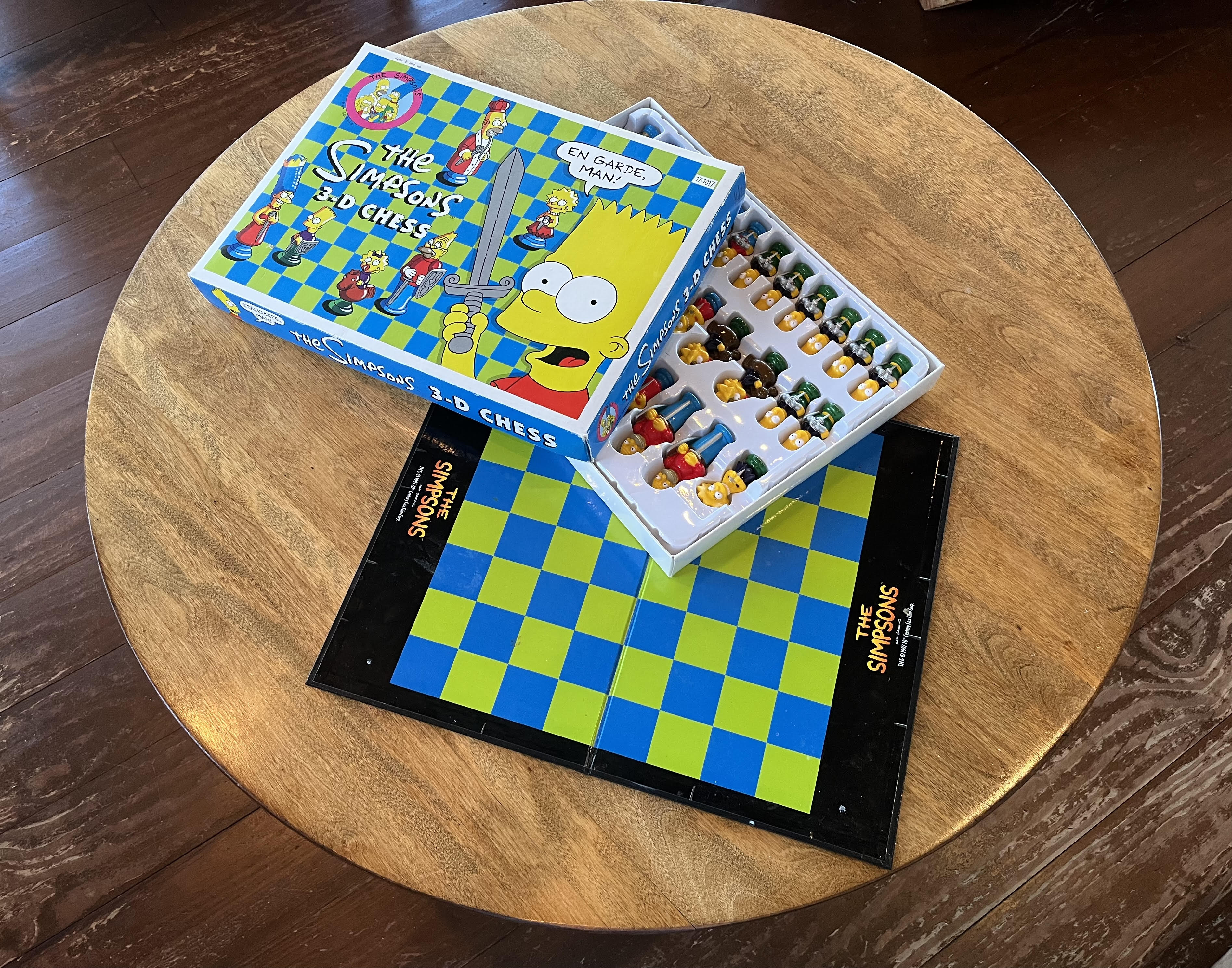
Photo: John and Suzanne’s Mom.
The Simpsons play chess, too.

One of my grandsons lives and breathes chess. He will represent his state and age group in a national competition in Grand Rapids this July. I told him his idea of beach reading is Ten Thousand Tried and True Pawn Structures to Terrify Your Opponent, and he couldn’t disagree.

Turns out, he is not alone.

Hannah Natanson writes at the Washington Post, “Jeffrey Otterby, a middle school teacher in Illinois, is facing an epidemic of student distraction. When his seventh-graders are supposed to be learning social studies, they are glued to their school-issued Chromebooks. He has taken to standing in the back of the room to monitor their screens, where he can see the online game they’re all playing:

“Chess.

“ ‘I guess I’m happier they are playing chess rather than some shoot-’em-up game. Actually, I love it,’ said Otterby, a chess enthusiast. ‘I just need them to do it at a better time.’ …

“Across the country, students from second grade to senior year have stumbled across a new obsession, which is, in fact, a centuries-old game. Interviews with teachers and students in eight states paint a picture of captivated students squeezing games in wherever and whenever they can: at lunch, at recess and illicitly during lessons, a phenomenon that is at once bemusing, frustrating and delighting teachers.

“Data from Chess.com, whose usership is the highest it’s ever been, and anecdotal evidence nationwide suggest a fervid, growing base of young users. This month’s U.S. Chess Federation National High School Championships in D.C. had to add overflow rooms to accommodate a record 1,750 attendees — spurring fears of a shortage of participation medals.

“A California school librarian this year set aside a portion of her library for chess-playing students to indulge their habit during lunchtime. An Illinois teacher bought 24 chess sets to meet surging student demand. And in Hawaii, passion for chess is messing up the morning routine. …

“It’s unclear what is driving the sudden adoration of chess among tweens and teens. Students and chess spectators point to the influence of chess stars and social media personalities such as Levy Rozman, whose YouTube channel GothamChess has more than 3.5 million subscribers; Hikaru Nakamura, an American grandmaster with 1.9 million YouTube subscribers; and the Botez sisters, elite American Canadian players who boast a combined following of close to 2 million on YouTube and Twitch.

“Max Magidin, a 15-year-old attending California’s Burlingame High School, said chess content began showing up on his and his friends’ TikTok feeds early this year. Almost immediately, it seemed everyone in the Bay Area’s San Mateo Union High School District was playing the game — including Magidin, who nowadays fits in between two and four hours of chess daily. …

“Chess has always been something of a faddish sport, said David Mehler, president of the U.S. Chess Center. He recalled a big jump in interest in the early 1990s after the release of the movie Searching for Bobby Fischer, which tells the story of a 7-year-old chess prodigy and is based on the life of Joshua Waitzkin.

“More recently, chess experienced a spike in popularity among adults at the start of the coronavirus pandemic, and again when many people confined to their homes streamed The Queen’s Gambit, a Netflix series, said Erik Allebest, the chief executive and a founder of Chess.com. After the virus arrived, Chess.com’s average daily user count of 1.5 million rose to between 5 million and 7 million, he said. …

“As of April, Chess.com is averaging 12 million users a day, Allebest said. Chess.com does not track users’ ages, Allebest said, but as best he and Chess.com staffers can tell, the latest wave of fandom is dominated by middle and high school students. …

“He sent links to viral Reddit posts in which K-12 teachers lament an outbreak of chess enthusiasm and grade school students share tales of administrative crackdowns limiting access to Chess.com. (The Washington Post found no examples of the latter.) Allebest also noted that his own son, 15, has become a chess convert — not because of his father’s job but through watching GothamChess on YouTube.

“Some teachers have mixed feelings about the clandestine playing of chess in their classes.

“Justine Wewers, a high school geography teacher in Minnesota’s Anoka-Hennepin district, said she has seen a wearying number of student infatuations over the years, including video games, ‘Uno’ and fidget spinners. By comparison, the chess craze strikes her as a healthy activity for young minds. …

“James Brown, a teacher in New York’s South Colonie Central School District, sees nothing but positives. Brown, who teaches computer science and programming at Sand Creek Middle School, has long set Fridays aside as a free period for children to pursue activities of their choice. Since January, many students have chosen chess, leading Brown to buy three more chess sets to augment the 10 he already owned. …

” ‘It’s all things we want to instill in the student,’ Brown said. ‘If they’re doing that on their own, in a format that is fun for them, it ties right into what I’m trying to do. I don’t see it as a distraction; I see it as a benefit.’

“Another benefit of playing chess is its transcendence of social groups, said Maurine Seto, a librarian at California’s Burlingame High School. In early 2023, she said, students started stampeding into her library before school, during lunch and in snatches between classes to play chess at a handful of tables.

“ ‘It pairs different sets of kids together that you don’t normally see,’ Seto said. ‘They come up and say, “Hey, do you wanna play chess?” and I normally would never see those two kids interact.’ ”

More at the Post, here.

Read Full Post »

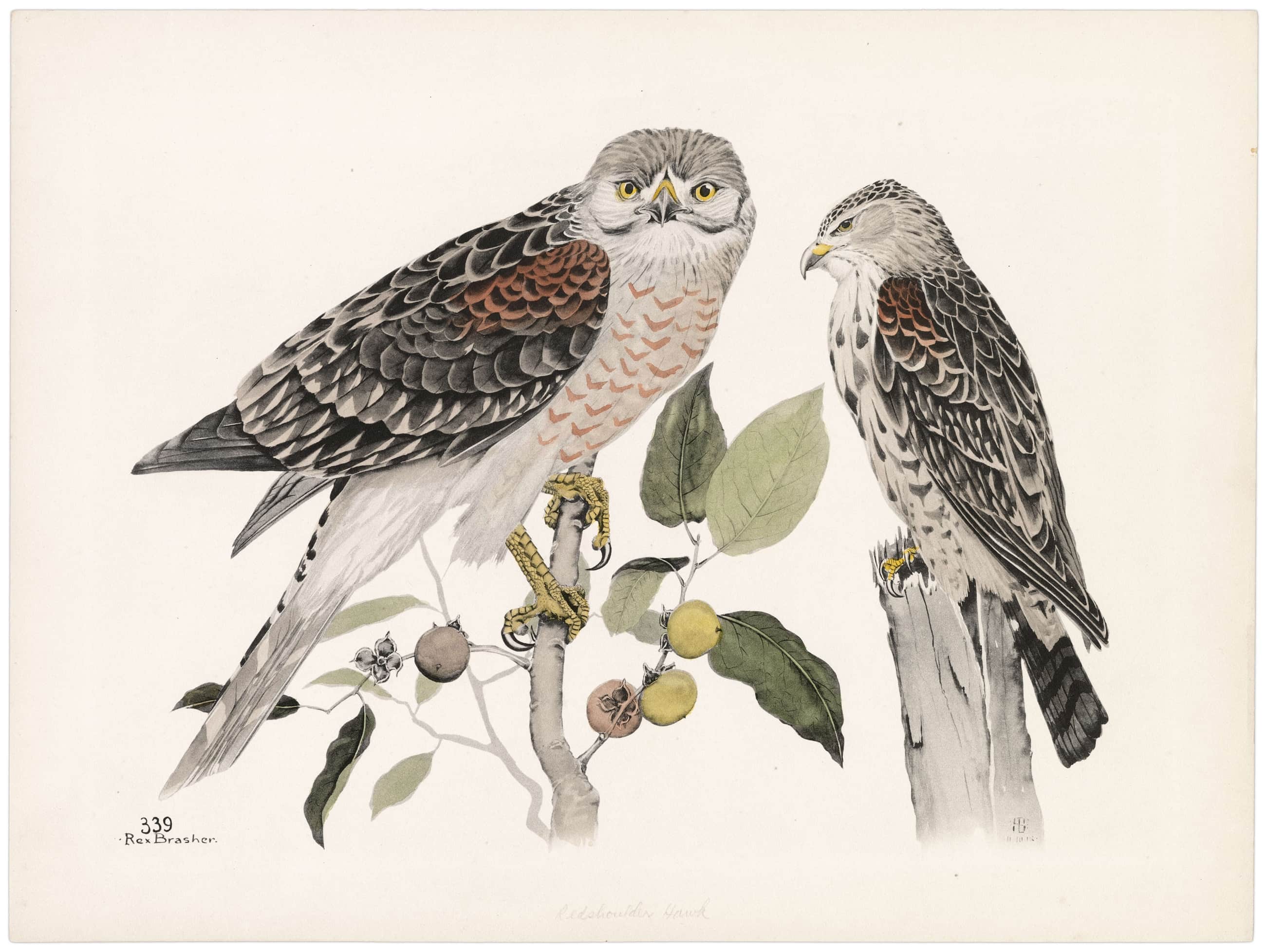
Art: Rex Brasher.
Rex Brasher painted more birds than Audubon — and never owned slaves.

With the more widespread understanding that bird painter John James Audubon owned slaves, controversy about honoring his name has erupted. Although for now the National Audubon Society is still the National Audubon Society, carrying on its otherwise great work, a small group called the Rex Brasher Association is advocating for more attention to another prolific bird painter of roughly the same period, Rex Brasher.

Philip Kennicott writes at the Washington Post, “On a gray day in March, Rex Brasher’s place looks a bit forlorn. The farmhouse is empty and the little shop made of cinder blocks feels derelict. But the leaders of the Rex Brasher Association who have gathered to show off the place see only possibilities for the 116-acre property.

“They want to place this wooded patch of the Taconic Range into conservancy, add modern studios for artist and naturalist residencies, refurbish the main house and cottage, and build a small museum inside the old shop. Two years after the death of the last Brasher relative to live on-site, they hope to resurrect the legacy and reputation of a man many people feel painted birds as well as or better than John James Audubon.

“Born in 1869, Brasher left an enormous body of paintings, almost 900 large-scale watercolors documenting American bird life and habitat, that became the source material for a monumental 12-volume compendium of hand-colored reproductions published as Birds & Trees of North America. He also made an unknown number of miscellaneous paintings and drawings, wrote a delightfully eccentric volume of philosophical reflections called Secrets of the Friendly Woods, and penned a hand-illustrated autobiographical account of his early forays, by sailboat, to document waterfowl from New England to Florida.

“Brasher was a retiring artist — a modest man who lived much of his life off the grid — which may be one reason he isn’t more famous. But his life’s project to document American birds, an effort to outdo Audubon that began in the 1890s and continued into the 1920s, was celebrated in its day, with an exhibition at the Explorers Hall of the National Geographic Society in 1938. Later, when he began hand-coloring more than 87,000 individual plates for publication, the project attracted subscriptions from collectors and patrons, as well as universities and libraries. Today, a complete set of his printed work can fetch more than $40,000. 

“He was praised by naturalists including John Burroughs (‘he is the greatest bird painter of all time’) and T. Gilbert Pearson, who helped found the organization that would ultimately become the National Audubon Society.

‘When you see a Brasher bird, you have seen the bird itself, lifelike and in a natural attitude.’

“But Brasher was very much a man of the 19th century, and despite periodic efforts to revive his work, his legacy — closely observed, naturalistic renderings of animal life — still suffers from having been out of step with the avant-garde and experimental art of the 20th century.

“That could change, however. The Connecticut State Museum of Natural History, which owns some 800 of the original watercolors, is planning to make them more accessible to the public with exhibitions in a new building, for which they will shortly begin fundraising. The efforts of the Rex Brasher Association, which has taken stewardship of the Upstate New York property near Kent, Conn., where Brasher lived until the mid 1940s, include digitizing and publicizing his work. And cultural changes, including a broader sense of what qualifies as fine art and a new urgency about the fragility of the natural world, may make people today more sympathetic to rediscovering his legacy.

“Brasher may also benefit from growing awareness that Audubon, to whom he was often compared, was a complicated, often odious figure, whose interest in birds grew out of a raw will to power more than any particular love of the species. Audubon was a formidable artist but also a ferocious antagonist within what Audubon scholar Gregory Nobles calls the ‘ornithological wars of the 1830s.’ He was also an enslaver and deeply contemptuous of the abolitionist movement in both the United States and the United Kingdom, where he spent considerable time preparing his landmark publication, The Birds of America, published between 1827 and 1838. The National Audubon Society is in turmoil today as local chapters drop the Audubon name and board members resign because the national leadership refuses to do so.

“Audubon studied birds in the wild before shooting them and then staging their carcasses in lifelike poses, a work process that has also aroused criticism even though it was standard practice for naturalists to kill animals they sought to collect and preserve. Those collections remain scientifically invaluable. …

“Audubon’s original paintings are a marvel, especially when seen up close. They are marvelously detailed and dramatic, and Audubon was particularly alert to the iridescent quality of feathers, which he reproduced with layers of silvery graphite over the pigments. But these images are also stagy and contrived, as if his birds are players on a stage, dramatically illuminated in the glow of gaslight. …

“Brasher sought a more naturalistic treatment, without Audubon’s operatic drama. Although he hunted and collected birds as a young man, he gave up that approach later, preferring close observation to specimen hunting. His paintings have a lightness and transparency wholly different from Audubon’s heightened atmosphere. He also had access to museums with extensive specimen collections and the published work of predecessors. He painted over 1,200 species of birds, far more than Audubon’s 497, but he was also building on the legacy of Audubon and others. …

“Between the early days of the artist-woodsman ornithologists and the death of Brasher a century and a half later, the science of ornithology spun off a vital and flourishing adjunct: birdwatching. Brasher might be considered the patron saint of that project. He was keenly interested in making accurate images of birds, but he was also interested in learning from birds. In Secrets of the Friendly Woods, he wrote about nature with a mix of genial animism and psychological insight. Nature was inexhaustible for him: ‘Forty years have not diminished the hope that each time afield I shall see something new, learn a novel habit of a bird or animal, and that expectation is seldom disappointed.’ …

“The difference between the artists’ work is like the difference between a grand aristocratic portrait and a psychologically nuanced character sketch. Audubon gets the dress and regalia right, and his birds project a powerful, self-fashioning sense of their own presence and importance. Brasher’s birds live contentedly in their own world and don’t need to perform or impress the viewer. If Brasher sometimes tends to moralize when he writes about birds, it isn’t Aesopian. The moral is almost always the same: We could learn a lot from birds.”

More at the Post, here.

Read Full Post »

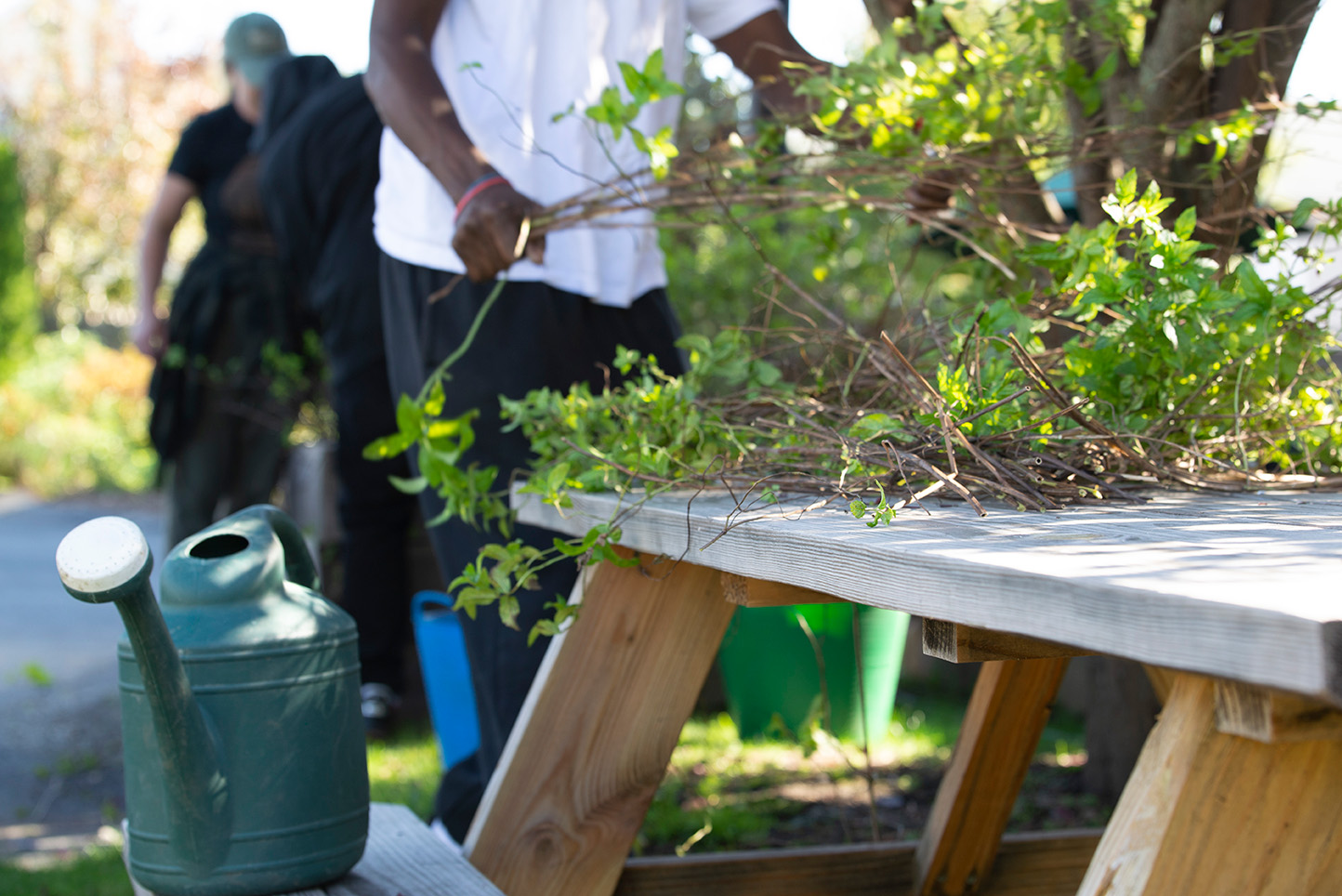
Photo: Joanna Detz/ecoRI News.
The Garden Time program in Rhode Island gives formerly incarcerated people a chance to prepare for reentry into society.

Today’s article about a program to help incarcerated people find work on the outside notes successes and failures. One of the featured participants, Anderson, ended up back in trouble with the law. Others have stuck with the hard work needed to move on.

Colleen Cronin wrote about the initiative at ecoRI News.

“The Green Jobs Reentry Training program run by Garden Time, a Providence-based nonprofit [is] an offshoot of a gardening program run by Garden Time at the Rhode Island Adult Correctional Institutions (ACI) since 2011, according to Kate Lacouture, founder and executive director. In addition to teaching incarcerated people about gardening, the ACI program also helps participants on an individual level with reentry needs when their sentences end.

“Lacouture called the ACI training a ‘pre-employment program,’ because Garden Time teaches gardening, horticulture, and other green industries and brings in employers from those fields to teach and get to know program participants. …

“When the pandemic hit, Garden Time started expanding its work outside the prison. Lacouture said the organization started a garden at Open Doors, a nonprofit focused on reentry in the city’s Silver Lake neighborhood. Working in that garden regularly planted the idea of a formal reentry and job training program for individuals who were out of prison and trying to integrate into the community, Lacouture said.

“Garden Time ran a shorter reentry training pilot program in fall 2021, and thanks to its success, it was funded by the state Department of Labor and Training as a Real Jobs Rhode Island program. This allowed Garden Time to expand the program from six to eight weeks, offer larger weekly stipends to participants ($400 a week), and provide lunch Monday through Thursday.

“For participants of the program who have just left prison, ‘it’s really nice to have a nice landing spot,’ Lacouture said.

“The program also provides students with Chromebook laptops, work boots, and other tools that participants might need on a job. They attend classes in a Manton Avenue classroom on topics such as arboriculture and nutrition, or receive hands-on training at various locations Monday through Friday. Friday mornings are spent at the Open Doors garden.

“During the last week of the program, the students participate in an internship, for which Garden Time pays.

“The internship ‘becomes like an extended job interview, like a chance for the person to prove themselves, a chance for the employer to be comfortable with it,’ Lacouture said. ‘Because a lot of times, you know, you ask an employer if they would hire formerly incarcerated people, and they don’t really know what that means. It sounds scary. They don’t know what that entails.’

“By the end of the program, those who graduate become official Providence tree keepers, receive an Occupational Safety and Health Administration (OSHA) certification for completing a 40-hour training, and hopefully find full-time positions in a green industry job, Lacouture said.

“Participants must attend most of the classes to complete the program, but on the first Friday of the 2022 session, one of Lacouture’s star students was missing.

“Attending classes can be difficult for anyone who has recently been released from prison or has a police record. Suspended or revoked licenses, little funds for car insurance or a car itself, and sporadic and mandatory parole meetings and other legal hearings can all complicate attendance.

“But Ace, who … met Lacouture inside the ACI, missed the first Friday class because of a cat.

“Ace had been working for Groundwork Rhode Island earlier that week, when he saw a stray cat and couldn’t help picking it up, Lacouture said, despite his allergy to cats. The contact caused Ace’s asthma to flare up, keeping him from Friday’s class. …

“Since Ace was released from the ACI, before COVID, he has accumulated cats, dogs, and tons of pepper plants, gotten married, and started his own landscaping business.

“He knows some of the other participants in the reentry program, living in temporary housing and lacking satisfying work, struggling to maintain their connections in the world outside prison walls, looked up to him.

“Even though his success might look easy and the way he speaks and presents himself might seem completely controlled, his journey has been long, he said. He speaks mostly light-heartedly about the past and his hijinks while also admitting to deep pain and trauma. …

“ ‘I’m always getting in trouble,’ Ace said.

“He can talk about growing up in Liberia and sneaking into a neighbor’s garden to snatch fruit in the same easy tone as he discusses the trials of his addiction. And he readily speaks about the therapist he sees regularly to help him with his addiction, as well as attending Alcoholics Anonymous meetings.

“To overcome some of his challenges, Ace said he has had to make adjustments. The green jobs program starts at 9 a.m., but Ace regularly gets there hours early. If he picks his wife up from work, often at 2, 3, or 4 o’clock in the morning, sometimes he chooses to stay up, so he knows he’ll be ready for the class, he said. …

“On an unusually cold Friday morning, John Kenny, owner of Big Train Farm in Cranston, visited Open Doors to talk to the reentry program participants about green farming practices and how they could start their own farms.

“The Farm Service Agency (FSA) within the U.S. Department of Agriculture offers several different loan programs and has targeted incentives for women and people of color.

“ ‘I’m not going to kid you,’ Kenny said, going on to explain that even with help, obtaining a loan and starting a farm isn’t easy. …

“Ace has tried to let a lot go. He knows he’s made mistakes, and he tries to make up for them. He knows his life has been unfair, but he tries not to think about it. On the other hand, injustice boils under Anderson’s skin when [the  57-year-old military veteran and former oil-platform builder] talks about the environmental hazards Black and brown Americans face and their connection to the cyclical criminal justice he and others have experienced.

“Two million people are currently incarcerated in the United States. Out of the 11 participants that arrived at the first day of the reentry program, most were men of color. Two people were white. There was only one woman in the class. The group reflects the larger pool of Americans who are or have been incarcerated. …

“Like many of the people who have been incarcerated around the country, several of the participants in Garden Time’s green jobs program were in prison for long periods or repeatedly throughout their lives.

“A 2021 study of people incarcerated in Rhode Island showed that by the 3-year post-release mark, 47% had been sentenced again to prison. Many of them had been charged again within the first six months of their release date. Education programs inside a prison, like Garden Time, can do a lot to prevent this.”

Read the rest of the long article at ecoRI News, here. No firewall at this nonprofit, but donations are welcome.

Read Full Post »

Photos: John and Suzanne’s Mom.
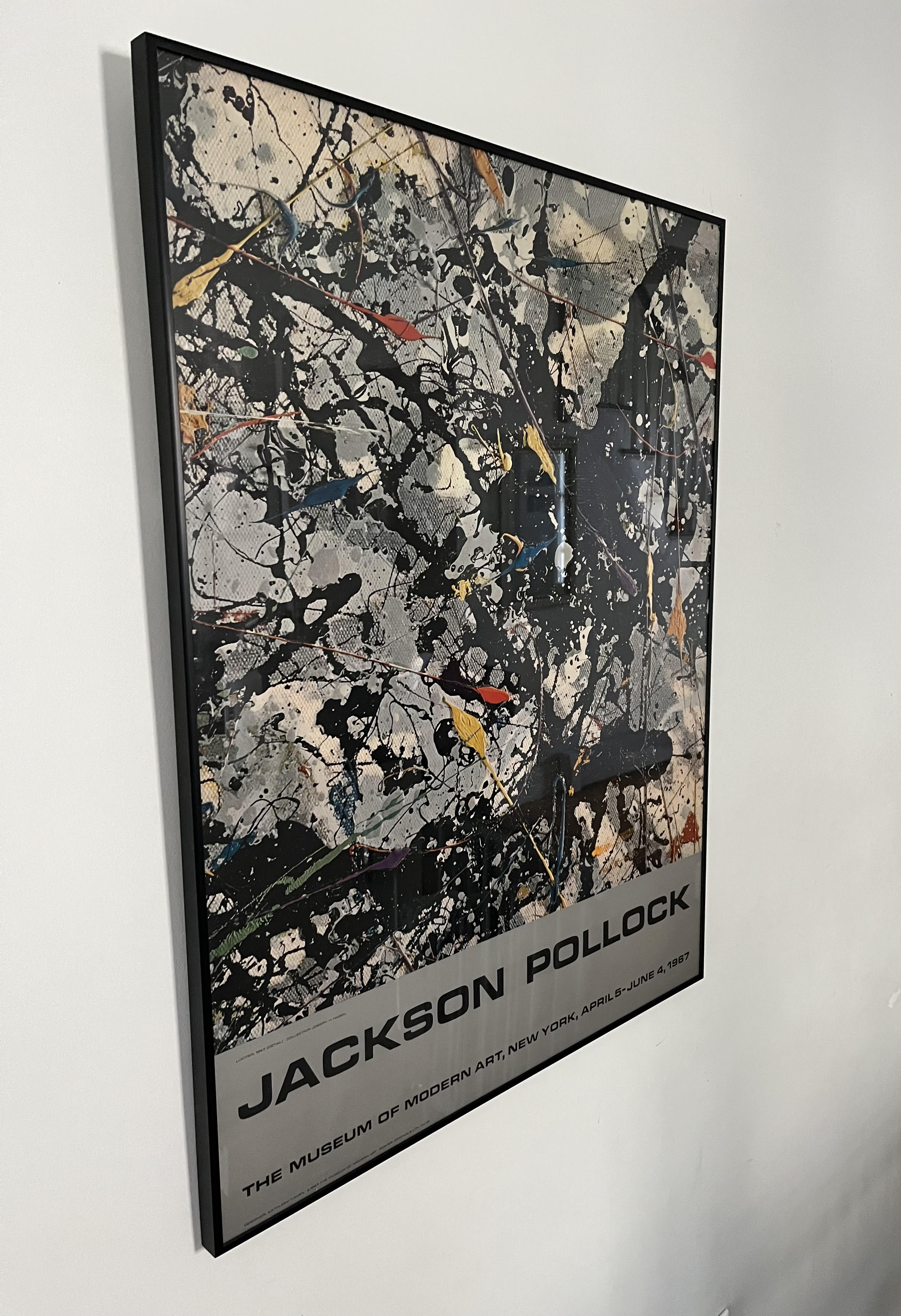
John rescued a worn poster collecting dust in storage. One of Suzanne’s choices was a fruit bowl she saw in our house since she was a baby.

I ran into Mary Louise one day this spring taking her constitutional in the park. She asked what was new. I told her we were downsizing prior to moving to a retirement place in town. She said she didn’t think she’d ever be able to do that because there were certain things she could never part with. For example, she said, neither of her kids wanted her grandmother’s table linens, and she couldn’t imagine passing them to anyone outside the family.

I do think being unable to separate from possessions is a deal breaker for moving to a smaller space, although linens would fit.

I admit that downsizing is no fun at all. It’s a ton of work finding where every item in your house should go and then following through. Take pictures for the kids. Remind them to get back to you with a yes or no. If they don’t want something, does it go to consignment? Will consigners pick up? Do you transport 20 bags of books to the library for its June sale? Donate unwanted treasures to charity? Or post them on a local Buy Nothing Facebook group? (I am here to tell you that even if free, no one wants an old, heavy ironing board or a rocker that needs recaning.)

Do you even have time for this mishegoss?

It takes forever, but I think it has to be done. I still remember how upset one of Suzanne’s Girl Scout moms was back in the 1980s when her parents cleaned out their house without giving the kids a chance to take what they wanted. You have to make a good-faith effort to get that right, knowing that sometimes you’ll mess up. It certainly helps to have kids who can negotiate if they both like the same item.

And if my husband and I have learned one thing from the process, it’s that you cannot possibly guess what the kids will want. Over and over again, we were surprised. That beat-up, old steamer trunk? Suzanne wants it if it has a flat top. Huh? OK, it’s hers.

Anyway, I want to mention that an unexpected plus of downsizing is how satisfying it is to see your items incorporated into your children’s homes.

Read Full Post »

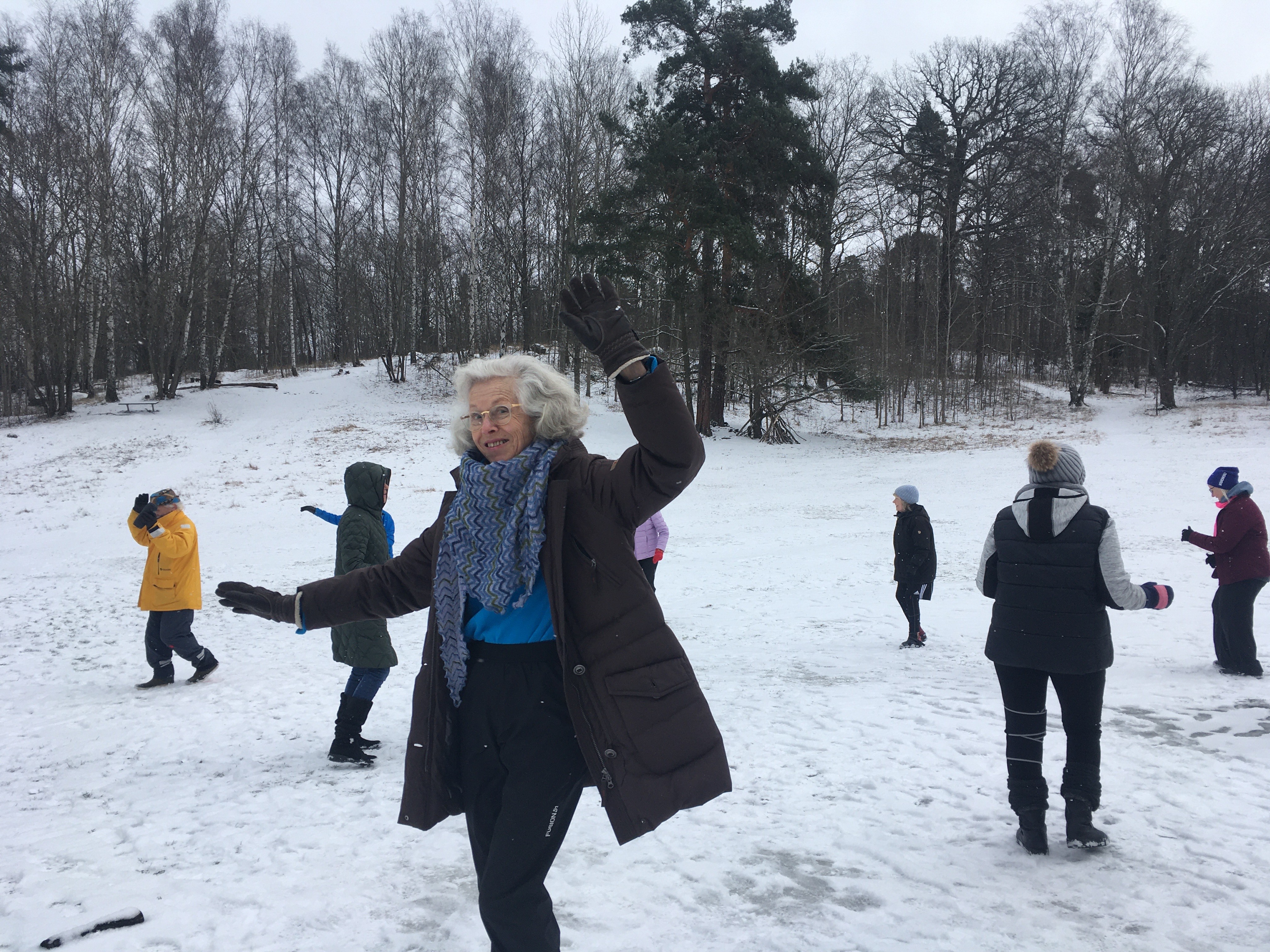
Photo: Stuga40 leading outdoor exercise during the pandemic in Stockholm.

I’ve been looking into the fitness offerings now available to me. There is quite a variety, including an exercise class specifically designed to boost brain health. I hope to try everything, as I keep reading that exercise does a lot more than build muscles.

For example, Gretchen Reynolds wrote at the Washington Post, “New findings from a 350,000-person study make the strongest case yet that exercise improves cognition. 

“To build a better brain, just exercise. That’s the message of two important new studies of how physical activity changes our minds. In one, scientists delved into the lives, DNA and cognition of thousands of people to show that regular exercise leads to much sharper thinking.

“Another study helps explain why exercise is good for the brain. Researchers found that just six minutes of strenuous exertion quintupled production of a neurochemical known to be essential for lifelong brain health. …

“These studies reinforce the idea that ‘absolutely, exercise is one of the best things you can do’ for your brain, said Matthieu Boisgontier, an associate professor at the University of Ottawa, who oversaw one of the studies.

“The first inklings that exercise remodels brains and minds came decades ago in mouse studies. Active, running animals in these experiments scored much higher on rodent intelligence tests than sedentary mice, and their brain tissues teemed with elevated levels of a substance known as brain-derived neurotrophic factor or BDNF, often referred to as ‘Miracle-Gro’ for the brain. BDNF prompts the creation and maturation of new brain cells and synapses. It bulks up brains.

“Studies in people have since established that exercise also raises BDNF levels in our bloodstreams, although it’s harder to look inside our brains and see if it rises there. Multiple, large-scale epidemiological studies, meanwhile, have linked more exercise to better memories and thinking skills and less risk for neurodegenerative diseases, such as Alzheimer’s.

“Qualms have lingered, though, about just how potent exercise really is for our brains. … Many human studies of exercise and cognition have been too small or otherwise limited to show persuasive benefits for brain health from working out.

“The study from Boisgontier and his colleagues, published [in March] in Scientific Reports, uses a novel and complex type of statistical analysis to go beyond traditional observational research and firmly establish that exercise does improve your brain skills.

“They turned to DNA and Mendelian randomization, a recently popularized method of using genetic variations to characterize and sort people. We each are born with or without certain snippets of DNA, some of which are known to contribute to a likelihood of being physically active. From before birth, we are, in effect, randomized by nature to be someone who is or isn’t prone to move. Other gene snippets play a similar role in cognition.

“By cross-checking the cognitive scores of people who have or lack the exercise-promoting snippets against those of people with the gene variants related to cognition, scientists can discern the extent to which exercise contributes to thinking skills. … People with a genetic predisposition to exercise typically did exercise, they found, and scored better on tests of thinking, if their exercise was at least moderate, comparable to jogging.

“And, yes, you can get brain benefits from exercise even if you don’t have the gene snippets. …

“The other new study, although comparatively small, may help explain how exercise keeps your brain healthy.

“In this experiment, 12 healthy, young people rode an exercise bike at a very leisurely pace for 90 minutes, followed by six minutes of intervals consisting of 40 seconds of all-out pedaling interspersed with 20 seconds of rest. Before, during and after each session, researchers tracked BDNF in people’s blood.

“They also measured levels of lactate. Muscles release lactate, often called lactic acid, during exercise, especially if it’s strenuous. It can travel to and be sucked up by the brain as fuel. … During easy riding, lactate levels rose slightly in people’s blood after about 30 minutes, as did the amounts of BDNF in their blood. But during and after the six minutes of hard, fast pedaling, lactate soared and so did BDNF.”

More at the Post, here.

Read Full Post »

Photo: Suzanne and John’s Mom.
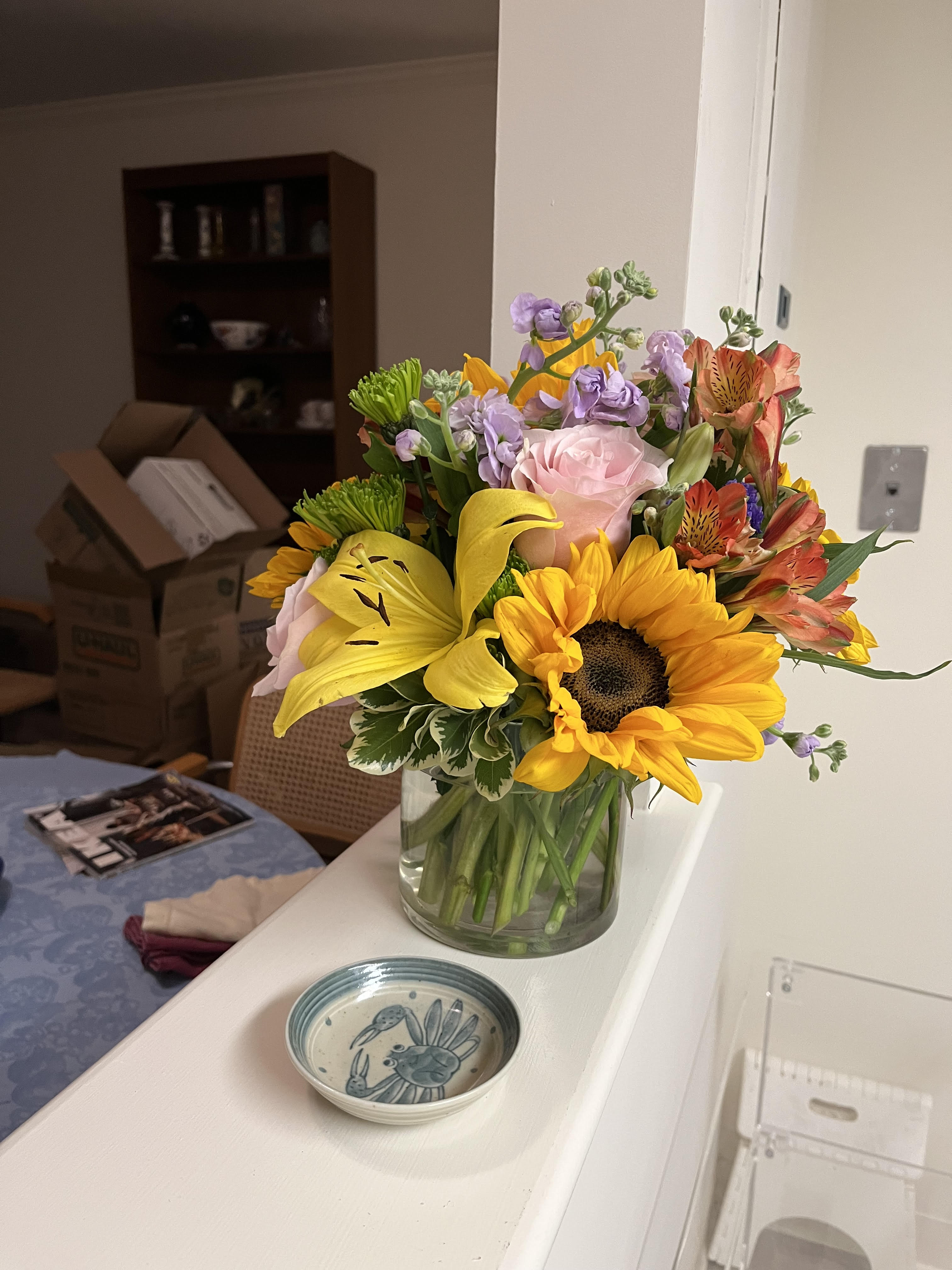
Flowers from some staff to inaugurate our move. Note the packing boxes in the background.

A story could be written about the move to a retirement community. But what kind of story? Richard Osman of Thursday Murder Club fame saw the possibilities of all the aging expertise in such places for solving crimes, so he launched a mystery series.

Maybe something more literary would be in order, along the lines of Katherine Mansfield or the late Edith Pearlman, who sometimes wrote stories about aging.

Some folks might see the Twilight Zone aspect — but in a good way.

I better explain. When you go to a Place, you pretty much know it’s your last stop. It’s the place where you will decline, get more hard of hearing, have trouble walking, break a bone, get it fixed, and eventually die. The look of new people arriving there is invariably both anxious and relieved. The relieved end is more prominent for me right now.

You get introduced at a new-resident party, and longtime residents need no encouragement to step up and welcome you, talking about cool events (and committees), and helping you figure out how things work. I was delighted to find someone who maintains a garden plot and told me where I could compost my vegetable scraps.

These folks have already gotten used to the idea that it’s the last stop, and they are really happy to be in a place with lots of friends, interesting things to be part of, and — when trouble arises — all kinds of help. I observed an impressive level of comfort with infirmities. No one blinks if you have to ask a couple times for someone to repeat, and I saw folks with fairly severe infirmities who are still in charge of various things.

I knew one person here, only slightly, and she was very welcoming. I did see lots of familiar faces as we have lived in the town more than 40 years. Blogger/singer Will McMillan performs at this place several times a year with pianist Joe Reid, and he paved the way for me to make another friend.

Although boxes still aren’t unpacked and lots of things still feel kind of up in the air, we are doing OK. The dinners are very good. I don’t think I will be having to use our new kitchen much, and that is welcome.

PS. I am awkward with using Google photos but want you to see a funny video of our young movers. Can you figure out how this works?

https://photos.app.goo.gl/641cpVKfebMa8TzK7

My move manager took it, so in case it is locked or something, I will tell you that the three moving guys admired a big gong in the house and I told them each to take a turn with the mallet. It was pretty cute.

Read Full Post »

Photo: The Foundation for Documentation of Rock Carvings in Bohuslän.
One of the petroglyphs recently discovered on a farm in western Sweden.

Erik is from Sweden, so he takes Suzanne and the kids there every summer for about a month, where they connect with his sister’s lively family and his mother (Stuga40 on WordPress).

My husband and I paid Stuga40 a visit back in 2017, and one of the many fun things we did with her was visit a UNESCO World Heritage Site featuring ancient petroglyphs. (See a post on that here.)

It turns out that ancient civilizations in Sweden are not done revealing their secrets. Recently, researchers found more petroglyphs, startling the farmer who lives on the land and adding to the world’s pool of knowledge.

Richard Whiddington reports at Artnet, “In early May, a group of researchers scouring the western Swedish province of Bohuslän spotted irregular markings on a moss-covered rock face. They seemed man-made and so the team carefully removed the vegetation and uncovered scores of rock carvings, around 40 in total, depicting ships, animals, and people.

“The rock carvings, or petroglyphs, date back around 2,700 years and are the latest find in Bohuslän, an area known for its rock art, most notably the Bronze Age images at Tanum, a UNESCO site. …

“The recently discovered petroglyphs were found on a steep rock face that once formed the edge of an island before sea levels gradually dropped an estimated 40 feet over the course of several hundred years. This has led researchers to speculate the artists used boats, or a form of scaffolding laid on ice, to reach the rock surface. …

“The designs were made through a laborious process of smacking stones against the granite rock that exposed an underlayer of white. This color, in addition to their size, made them highly visible from both the mainland and passing ships.

“ ‘What makes the petroglyphs completely unique is that they are located three meters above today’s ground surface,’ Foundation for Documentation of Bohuslän’s Rock Carvings wrote in a statement. ‘The motifs lie on an even line that follows the height of the sea surface from approximately 700 to 800 BCE. The motifs are also stylistically consistent with this time period.’

“The latest group of petroglyphs found includes a 13-foot-long ship, as well as carvings of people, chariots, carts, and horses. Their meaning remains unknown. Sometimes petroglyphs were used to mark out territory, though researchers believe the repeated motifs carved into rocks outside the town of Kville may suggest they were used to tell a narrative.

“Lennart Larsson, on whose farm the rock carvings were found, was pleased by the discovery. ‘I haven’t actively been looking for petroglyphs, but it’s a lot of fun,’ he told SVT, the country’s national broadcaster in interview. ‘I can sit at home on the balcony and watch the stick figures and the ships outside.’ ” More at Artnet, here.

Also, at Live Science, Martin Östholm, a project manager with the foundation, noted that he petroglyphs include depictions of ships, people and animal figures, “including four-legged creatures that may be horses. … It’s not certain why people created the carvings, he said, but they may have served to mark ownership. …

James Dodd, a researcher at Aarhus University in Denmark and the Tanums Hällristningsmuseum’s Rock Art Research Centre Underslös in Sweden [said that] some of the motifs — including chariots, carts and animal figures — were depicted multiple times. … ‘On the basis of the repetition of the motifs, it is possible that this collection of figures forms a narrative,’ Dodd told Live Science in an email. Studies of other petroglyphs in the region have suggested that, in some cases, they may have been used in this way, but the exact meaning in this case is uncertain, he added.”

Artnet and Live Science have good pictures — and no firewalls.

Read Full Post »

Photo: Luke Waddington.
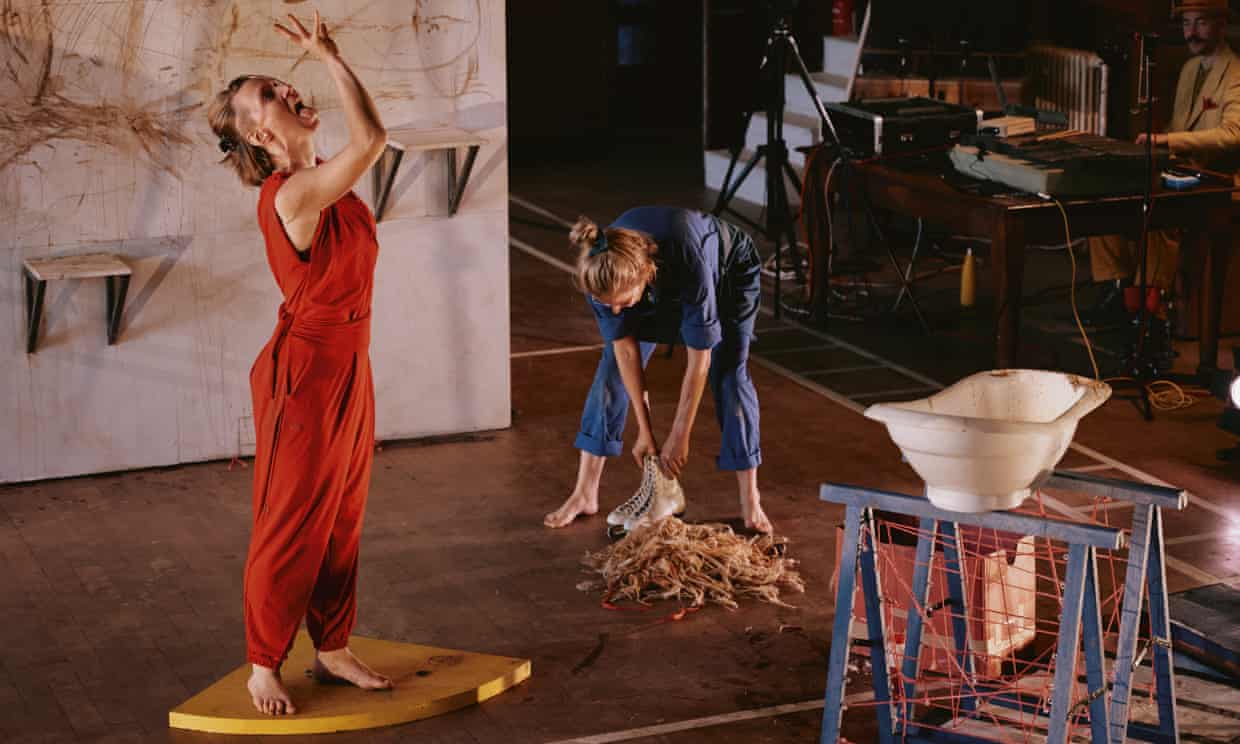
At Cambois Miners Welfare Institute, Esther Huss’s avant garde dance group involved local residents in performing Stairwall. Another choreographer in the north of England tapped local low-income children for a production and realized that it would be practical to make costumes that the kids could keep.

When the arts engage local people, they learn fast that fantasy tied to the practical concerns of daily life works best.

Lyndsey Winship reports at the Guardian on dance groups in the UK that are serious about involving the community.

“On the beach, the sand is black-flecked with coal. The pit closed in 1968, houses condemned and residents pushed to move out. But people stayed. ‘There’s not much in the way of anything really,’ says one local resident, Becca Sproat, except for a strong sense of community.

“This isolated patch of Northumberland seems an unlikely place for the German choreographer Esther Huss to have set up shop, after 20 years in London. But her husband, the playwright Alex Oates, who grew up down the coast in Whitley Bay, brought her here. ‘I fell in love with the oddness of this place, this meeting of the industrial and nature and being slightly outside mainstream society. It’s creatively interesting,’ she says. …

“In the middle of a row of brightly painted houses stands the Cambois Miners Welfare Institute, built in 1929. It had been unused for more than a decade until Huss asked to have a look inside. … Huss and Oates took on the lease, shared with the local boxing club. So there is a boxing ring on the hall’s stage and leather punchbags along one wall. As well as Huss making her own work here, she runs a dance group, and Oates runs a writing group, shivering through the winter with no heating and scraping together funding to keep everything free. Some artists pay lip service to reaching new audiences, Huss and Oates are actually living it. Next is a two-year project Cambois Creates, to make a memorable event for the whole community.

“Huss’s choreography is inspired by dadaism, German expressionism and the Japanese dance-theatre form butoh, and in the Cambois dance group, she encourages novice dancers to create their own movement.

‘My family howl at me,’ laughs 61-year-old Alison Johnson, ‘ “Oh mam, show us your latest interpretive dance!” But it’s nice to do something different,’ she says.

“ ‘It’s become such a safe environment where we all get out of our comfort zone, because we trust each other, because of Esther. It’s special.’

“Sproat, 33, had been stuck at home for 16 months during the pandemic when she got a leaflet through the door. ‘Something about a dance group, and I just laughed and binned it, because there’s no way I was going to do that. Or so I thought!’ she says. Desperate to get out of the house, she agreed to volunteer at the Institute, ‘And somehow Esther’s enthusiasm rubbed off on me. I’m not a dancer,’ says Sproat, who has some mobility issues, ‘but I’ve learned how to express myself through movement. I’m a lot more confident than I was.’ …

“You’re a long way from the London bubble and for artists working here that can be part of the appeal. ‘Moving up here, it changed everything,’ says Huss. ‘I always felt like, does London need another dance piece?’ Liv Lorent, who moved to Newcastle 30 years ago, tells me the same: ‘London didn’t need another choreographer.’ Lorent only planned to stay a few months, but fell in love with the people, the light, the beauty, the audiences. [They’re] no-nonsense, there’s no woolliness, she says, but there’s always a sense of humor. …

“Lorent describes herself as ‘all heart and idealism’ and being in the north-east has allowed that. Like Huss, she’s long been committed to community involvement. Her company, balletLORENT, recently moved into a 1930s former school building in Newcastle’s deprived West End. Lorent frequently works with local adults and children in performances. She tells me about one project where there was a costume budget, but knowing some of those children were in need of every day clothes, she made the costumes something they could take home and wear after the show. It’s about creating fantasy, while living in the real world.

“Huss likes to take her fantasies into the real world. Her last piece, Stairwall, toured in unconventional venues including a timber merchants in North Shields. She heard that some of the male staff were expecting the dancers to arrive in heels and sexy outfits – ‘It’s quite blokey up here sometimes’ – so they must have been surprised by Huss’s multidisciplinary dance-theatre. But some of the men were game to be part of the performance, one telling Huss: ‘When I die, this is going to be one of the proudest days of my life.’ She loves seeing how people respond to her work. ‘I’m not pretending everyone liked it, but generally people were really open to it,’ says Huss.

“ ‘I was surprised how immersed I became in it,’ says Johnson. ‘I found myself becoming quite emotionally charged. The fact that she’s showcased these within Cambois, I remember feeling very privileged that something you would see on a stage in a major town or city was on in Cambois Institute!’

“ ‘I didn’t think I would actually like it,’ says Sproat, ‘But it was just so inspiring. Esther and Alex lived in London and there’s millions of opportunities down there. So for them to come here is amazing.’ ”

More at the Guardian, here.

Read Full Post »

People from the Maasai community, one of the oldest tribes in East Africa, live in a semi-nomadic state and have had to go to the UN to try to preserve a pastoral way of life.

I love reading about other cultures. Today’s article is about Maasai people living in Tanzania. It is unfortunately a worrisome story, the only upbeat aspect being that forums exist where indigenous people can fight for rights and that they are starting to use those resources.

Joseph Lee’s Grist article was reprinted at Salon.

“In Tanzania, the Indigenous Maasai face an ongoing, violent campaign to evict them from their lands and make way for protected conservation areas and hunting reserves. [In April, several were] in New York to ask the U.N. Permanent Forum on Indigenous Issues, or UNPFII, to tell Tanzania to stop taking their cattle, remove its security forces, establish a commission to investigate disputed lands and displaced people, and allow international human rights monitors to visit without restrictions. 

” ‘We, the Maasai people of Loliondo and Ngorongoro in Tanzania, are fighting against the Tanzanian government and wildlife trophy hunters who are threatening our livelihood, culture, ancestral wisdom, legacy, and basic human rights,’ Edward Porokwa, executive director of the Pastoralists Indigenous Non Governmental Organization’s Forum, said. …

“The Maasai land conflict in Tanzania is focused on two main areas: the Ngorongoro Conservation Area and Loliondo. The Ngorongoro Conservation Area is a UNESCO World Heritage Site that attracts over half a million visitors every year for safaris to see the park’s ‘Big 5’ game — elephants, lions, leopards, buffalo, and rhinoceros. Around 80,000 Indigenous Maasai call the park home, but have faced decades of government efforts to push them off their land.

“In a statement delivered at the Permanent Forum, Porokwa said that, since June 2022, the government has closed four nursery schools, nine water sources, and six mobile health clinics. The government says that Maasai are voluntarily leaving the area for resettlement sites, but the Maasai say that they are essentially being forced out. ‘It is a forceful relocation by ensuring that people don’t get the basics,’ Porokwa said. ‘They are there to die.’ 

“And in Loliondo, which is legally demarcated Maasai village land, state security forces shot at Maasai in a violent campaign to drive them from their lands [in June 2022]. In the attack, dozens of Maasai were injured and many fled across the nearby border to Kenya for medical attention. At least two dozen others were arrested, while some were not permitted to leave their homes. 

“[Nine] United Nations experts raised concern about forced evictions and resettlement plans, but the Maasai representatives at the United Nations say that the government has not changed its approach. … Tanzania has taken or killed over 600,000 of their cows and demanded over $2.5 million in fines for grazing. This is all part of what Maasai say is a massive campaign to destroy their pastoralist way of life. 

“At the Permanent Forum, a representative from the Tanzanian government pushed back on the Maasai’s claims, pointing to the East African Court of Justice’s 2022 dismissal of an eviction case brought by the Maasai, stating that the Maasai could not prove their claims about violent evictions. …

“In January, the African Commission on Human and Peoples’ Rights conducted a monitoring visit to investigate the situation. But Maasai community organizations say that at every step, the visit was controlled by the government. Commission representatives were shepherded around by state security forces who intimidated Maasai and excluded them from some meetings. Some Maasai waited for hours to speak with the Commission, only for them to never show up. While the Commission’s final report on the visit did express concern about the situation, it also commended Tanzania’s commitment to protecting human rights. The Commission also recommended starting new consultations with the Maasai, as well as addressing their concerns about the resettlement program. 

“In December, José Francisco Calí Tzay, the United Nations Special Rapporteur on the rights of indigenous peoples was scheduled for a week-long visit to Tanzania, but the visit was indefinitely postponed. Maasai leaders believe that the visit was scuttled out of concern that the Special Rapporteur would not be given full access to investigate. …

“With few options remaining, the Maasai have turned to the Permanent Forum to raise their concerns. Briane Keane is the director of Land is Life, an international organization that works with Indigenous peoples, including providing travel funding, medical assistance, and security assessments to the Maasai. Keane says that the United Nations is an important platform for the Maasai. ‘It’s a place where they can be heard. The government of Tanzania is not listening,’ he said. 

“The Maasai hope that international pressure may convince the government to finally listen to their concerns. But speaking out on the international level also comes with risks for the Maasai. Several leaders who spoke out against government abuses were forced to flee the country for their safety

” ‘Indigenous peoples are the most among the most criminalized peoples of the world,’ said Keane. ‘There’s people being thrown in jail. There are threats. So it’s very dangerous work sticking up for your rights when you’re as marginalized as the Maasai are in Tanzania.’ “

Man, if your gripe is against the government, you really don’t want the government’s security forces leading the tour for the human rights inspectors! That should be a given. More at Grist, here. No firewall.

Read Full Post »

« Newer Posts - Older Posts »