For the first time in years, I’m at home for Halloween. I’ve been alternating between Suzanne and John’s homes, which has been a lot of fun. Besides, all the children in my neighborhood grew up and moved away, so there have been no trick-or-treaters on my street for a long time.
Now some young families have moved in. I want to see the little ones in their costumes — and avoid driving on such a night. I’ll let you know if I get any takers for the candy, Goldfish cracker bags, or juice boxes.
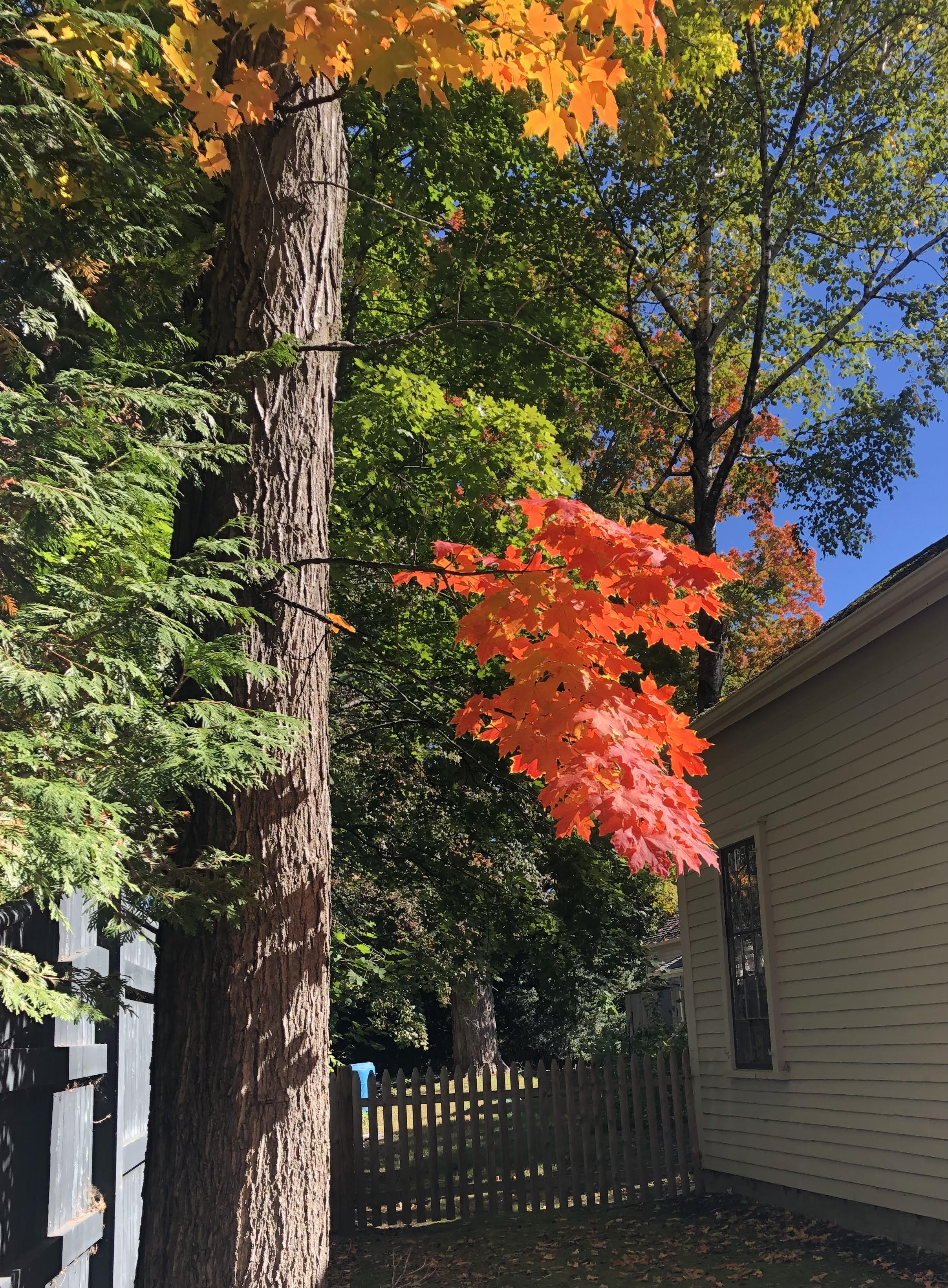
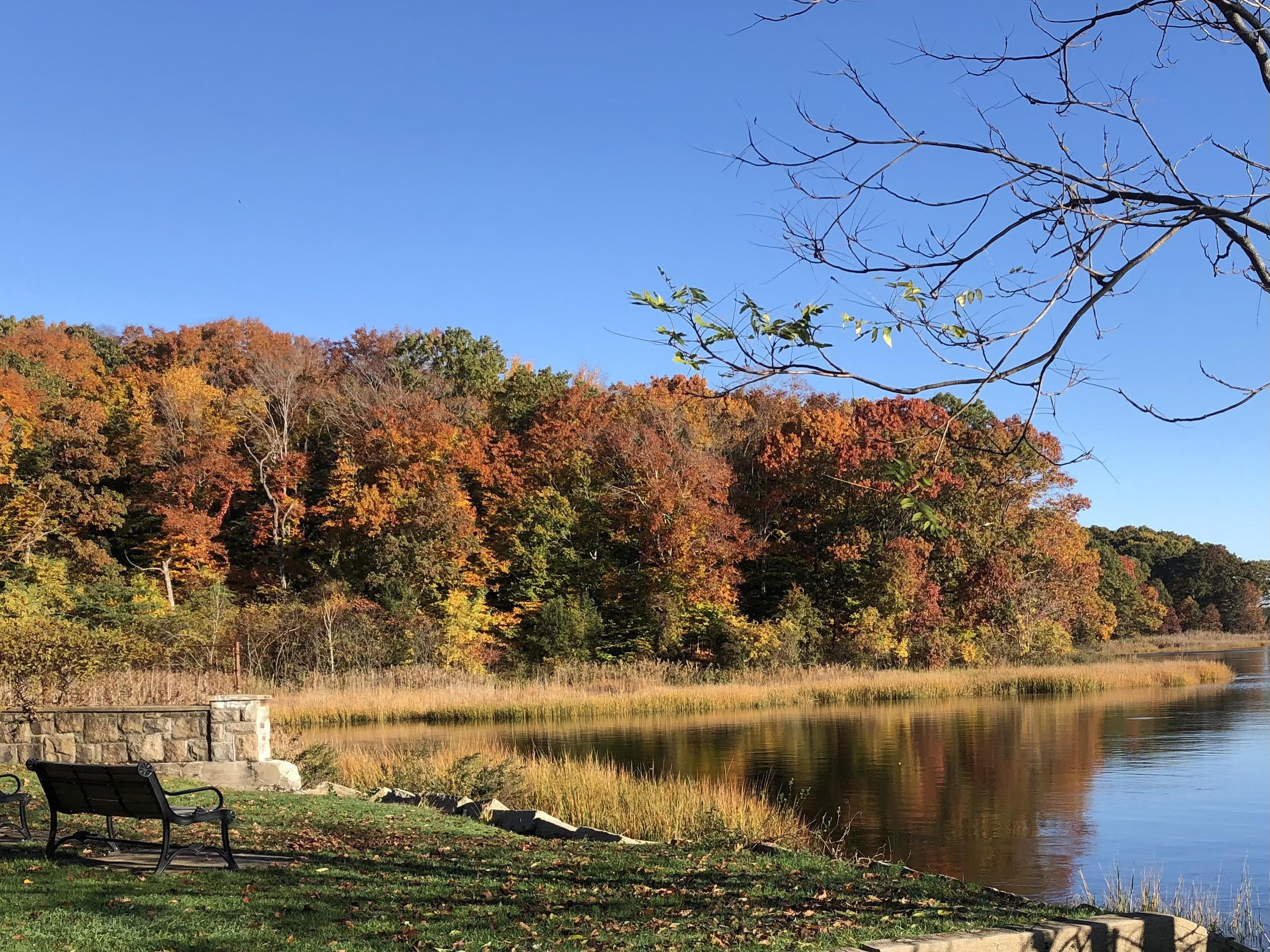
Meanwhile, I want to share a few photos of the season and hope you like some even if you don’t like Halloween.
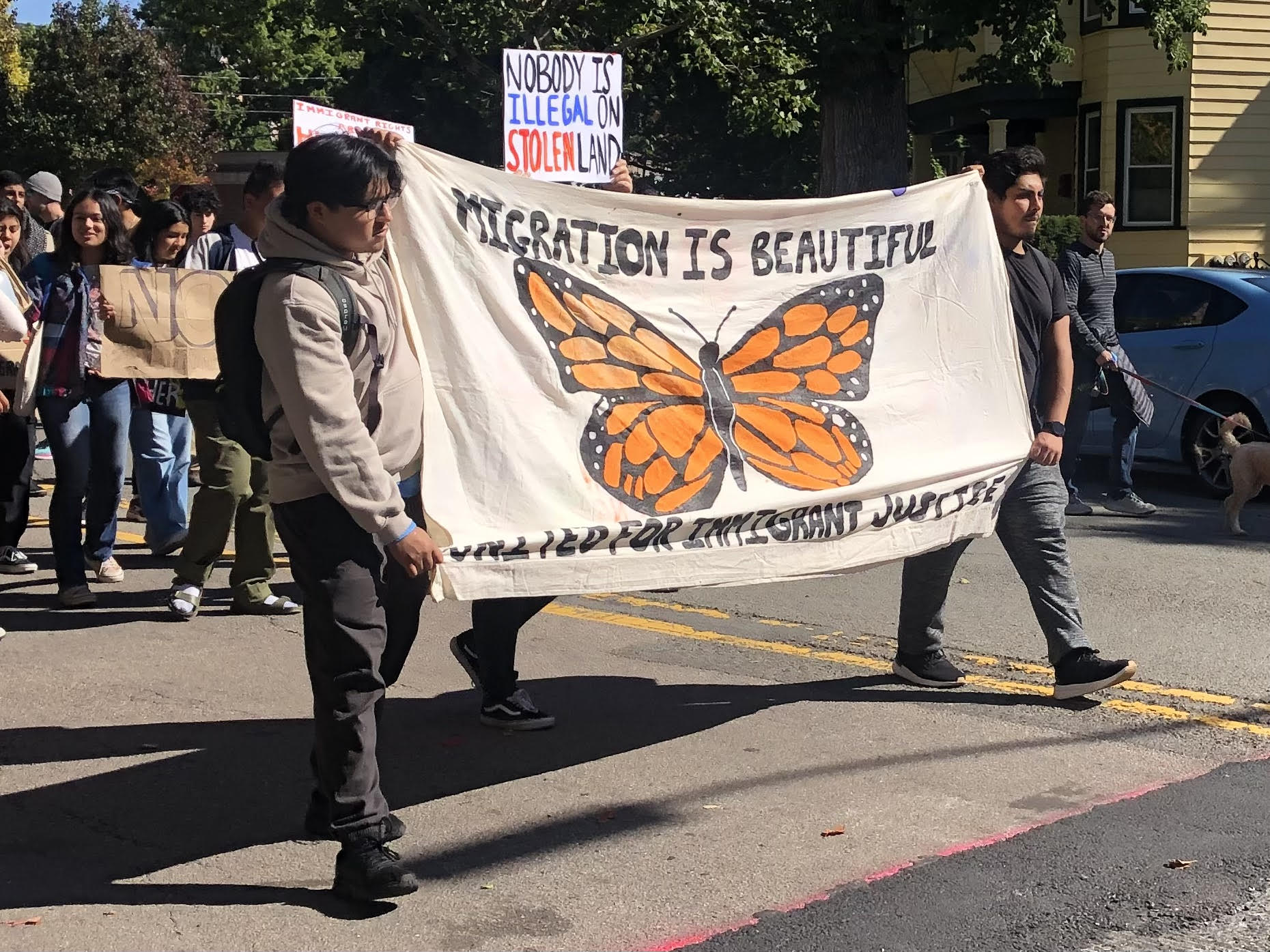
I’m starting with the Honk Parade in Somerville. It is on the Columbus/ Indigenous People’s Weekend every non-Covid year.
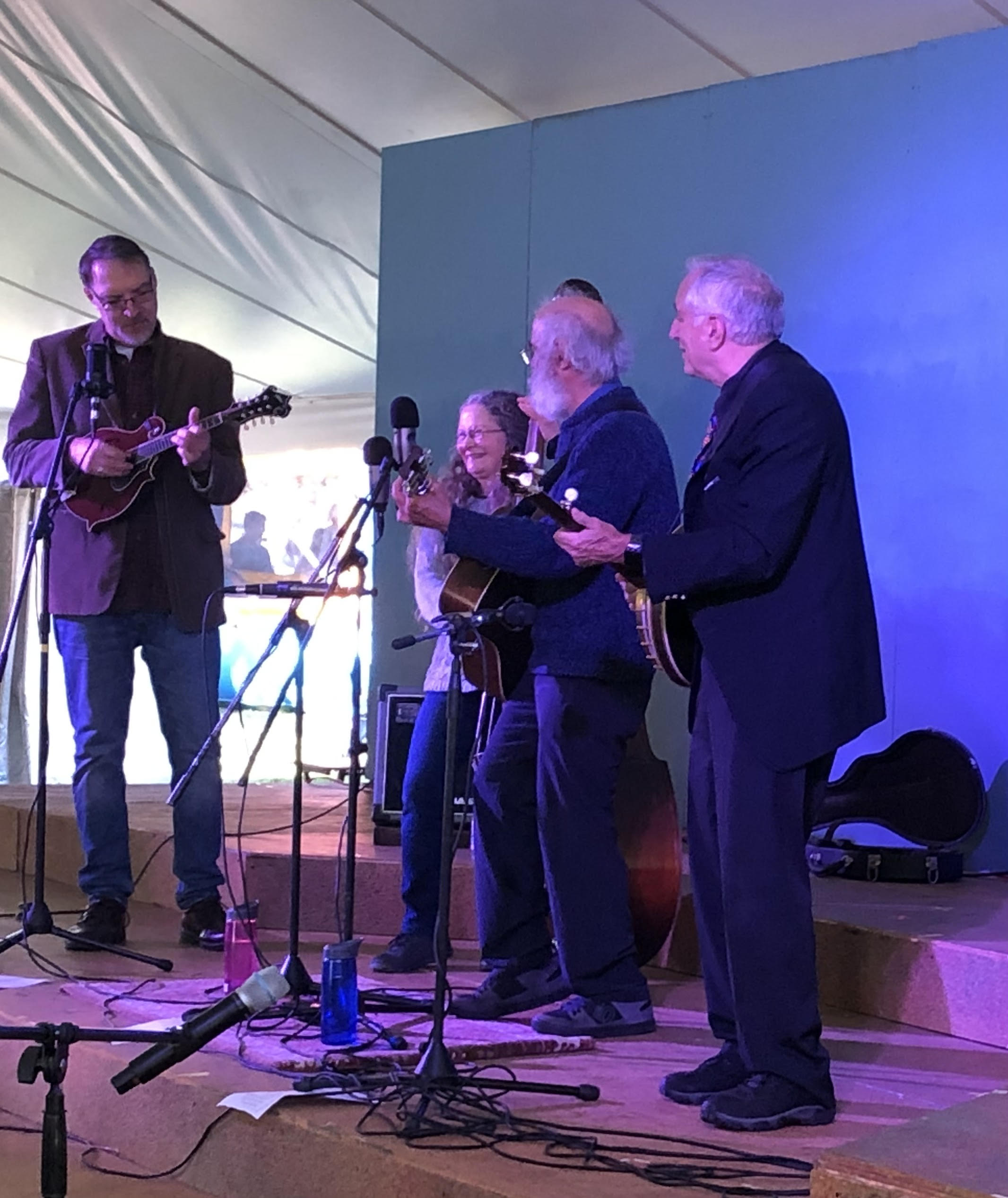
The band playing at a local church’s fall festival is the wonderful bluegrass group Southern Rail. I can’t resist putting one of their videos at the end of this post.
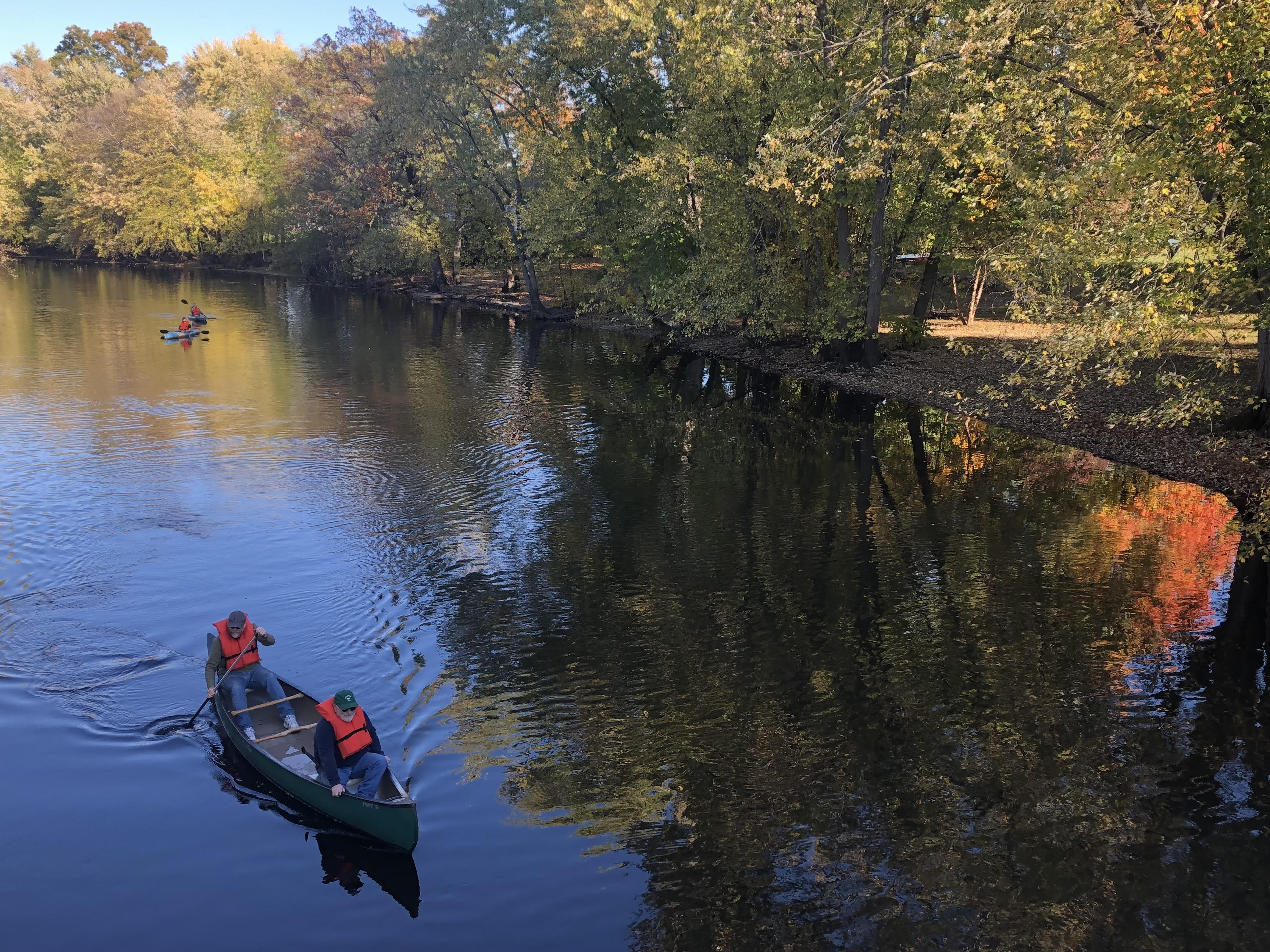
The boaters are enjoying the Sudbury River in Massachusetts. The meditative bench is on the Seekonk River in Rhode Island.
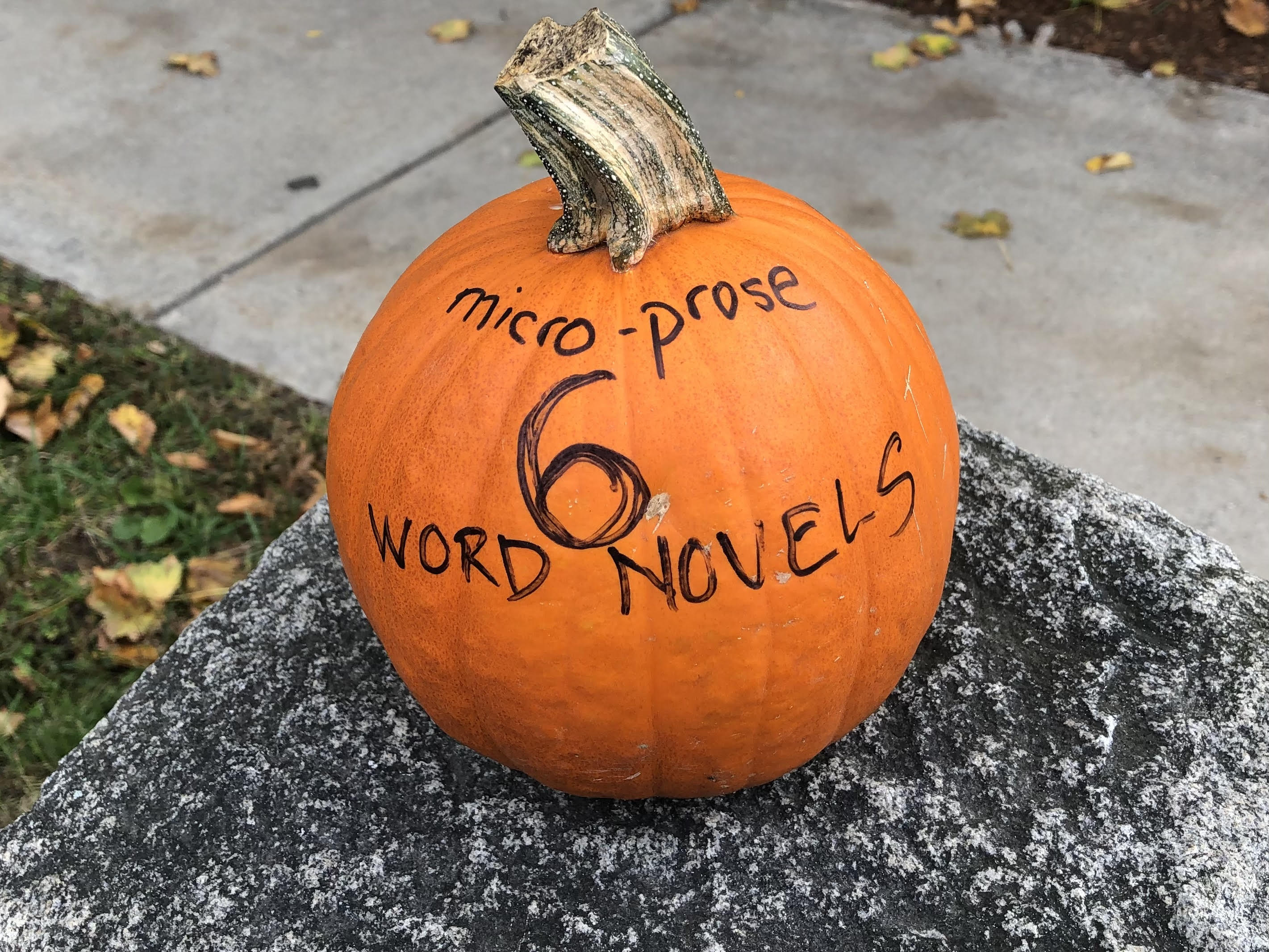
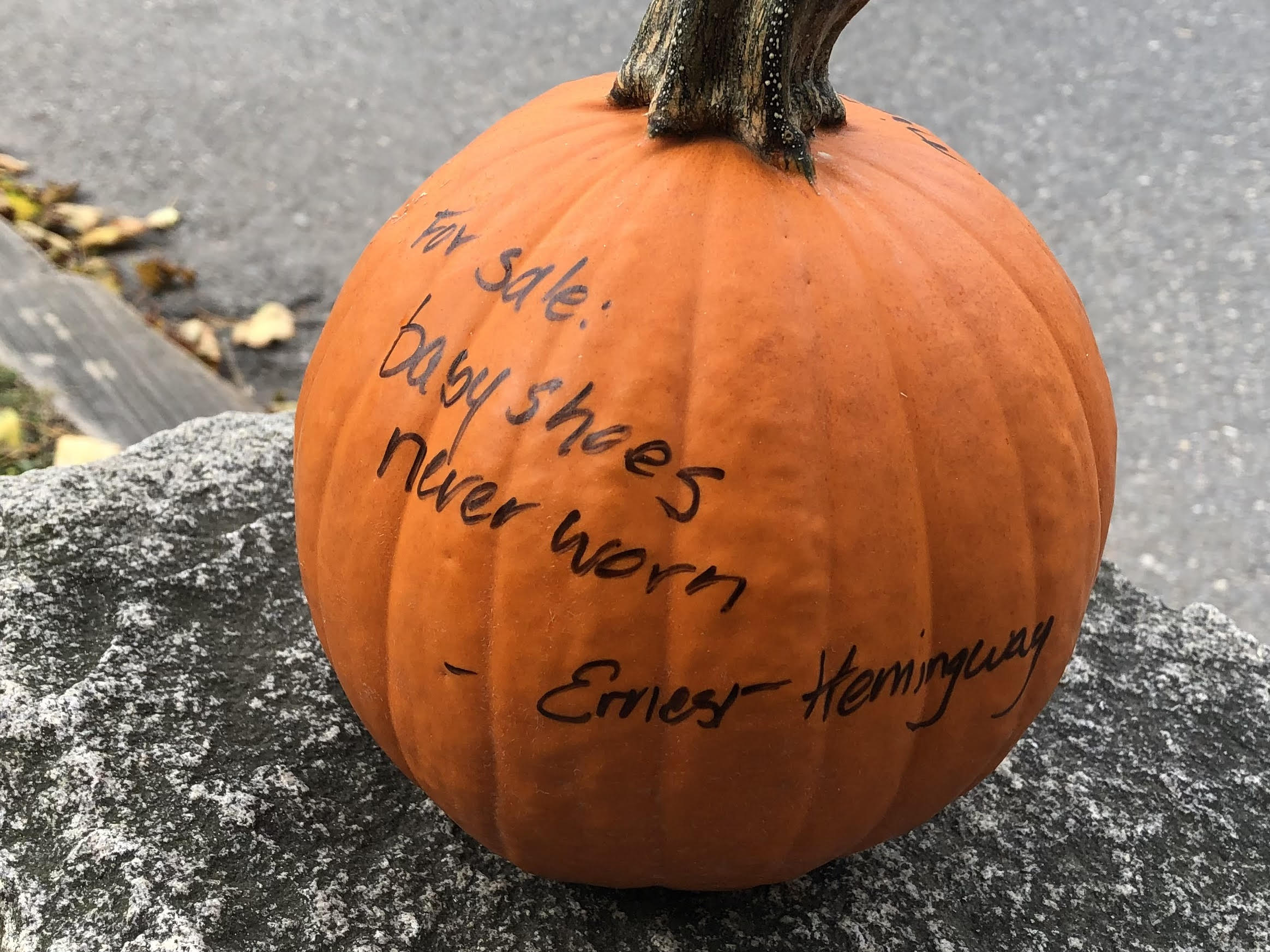
I love the idea of six-word novels. The creative woman on Sudbury Road had numerous “novels” on pumpkins this year.
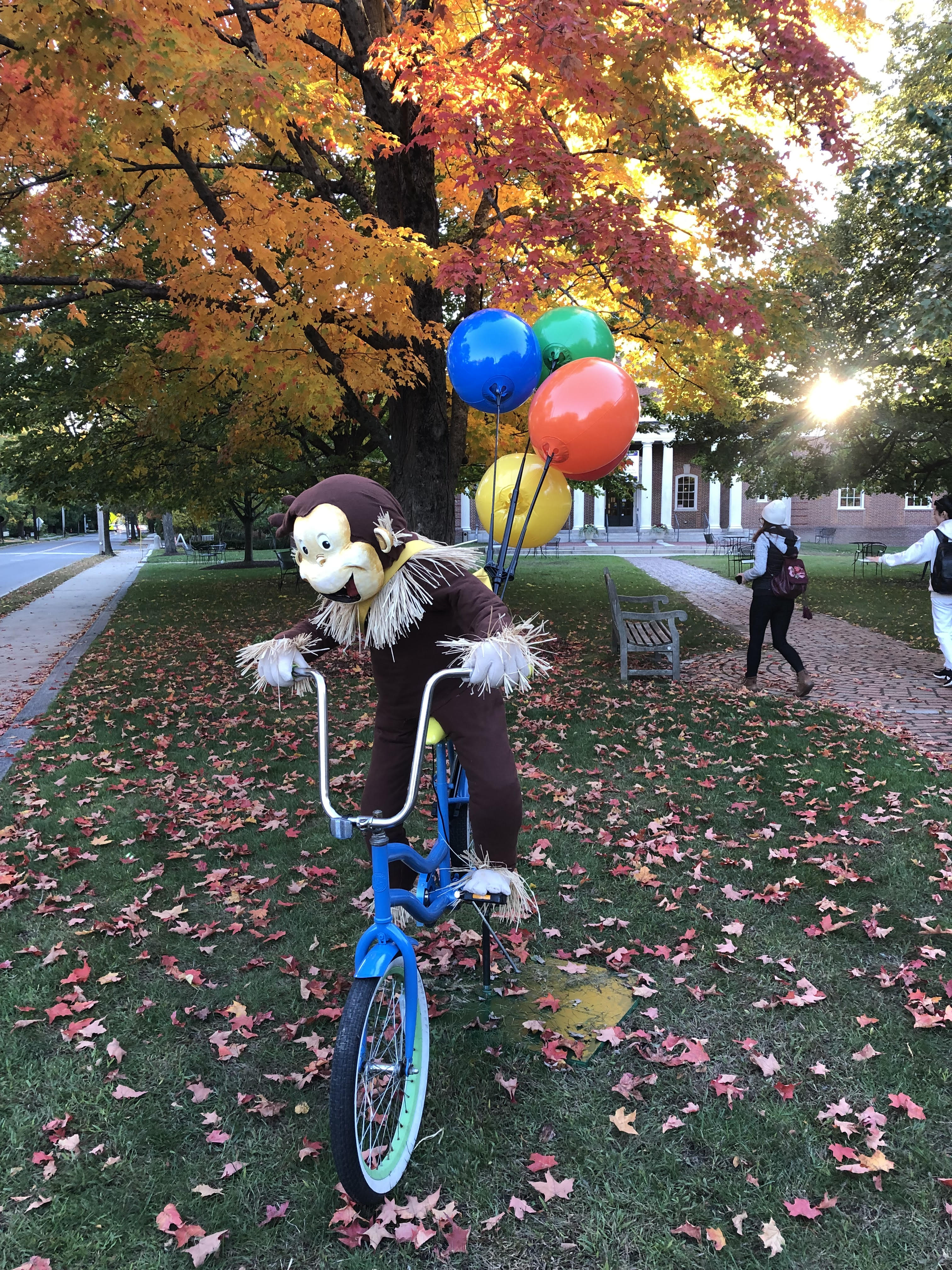
Across the street from her yard, the public library featured children’s story books. I’m sure you recognize Curious George.
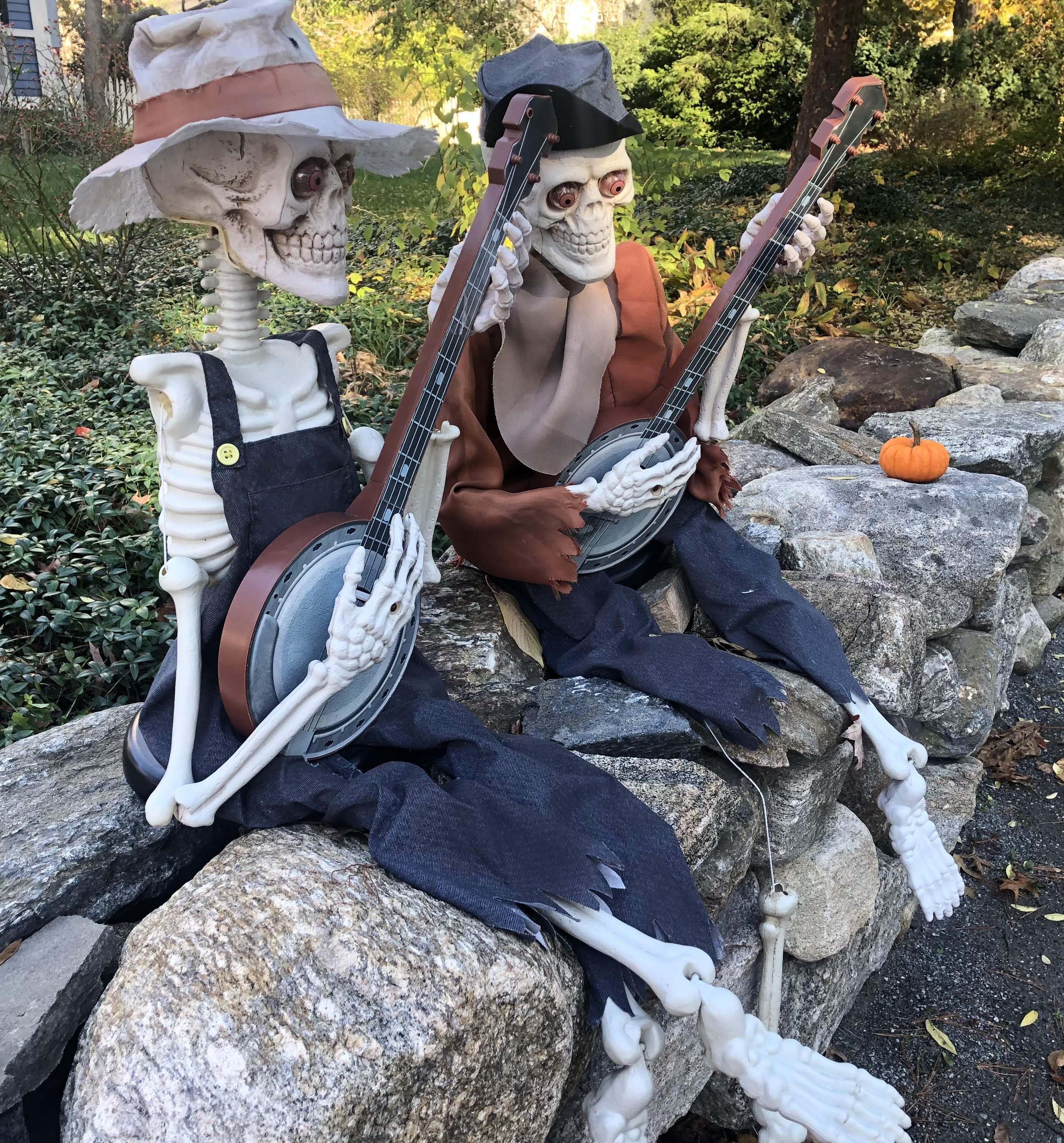
Don’t know who the banjo players are, given they lack any features, but one seems to be a Union soldier.
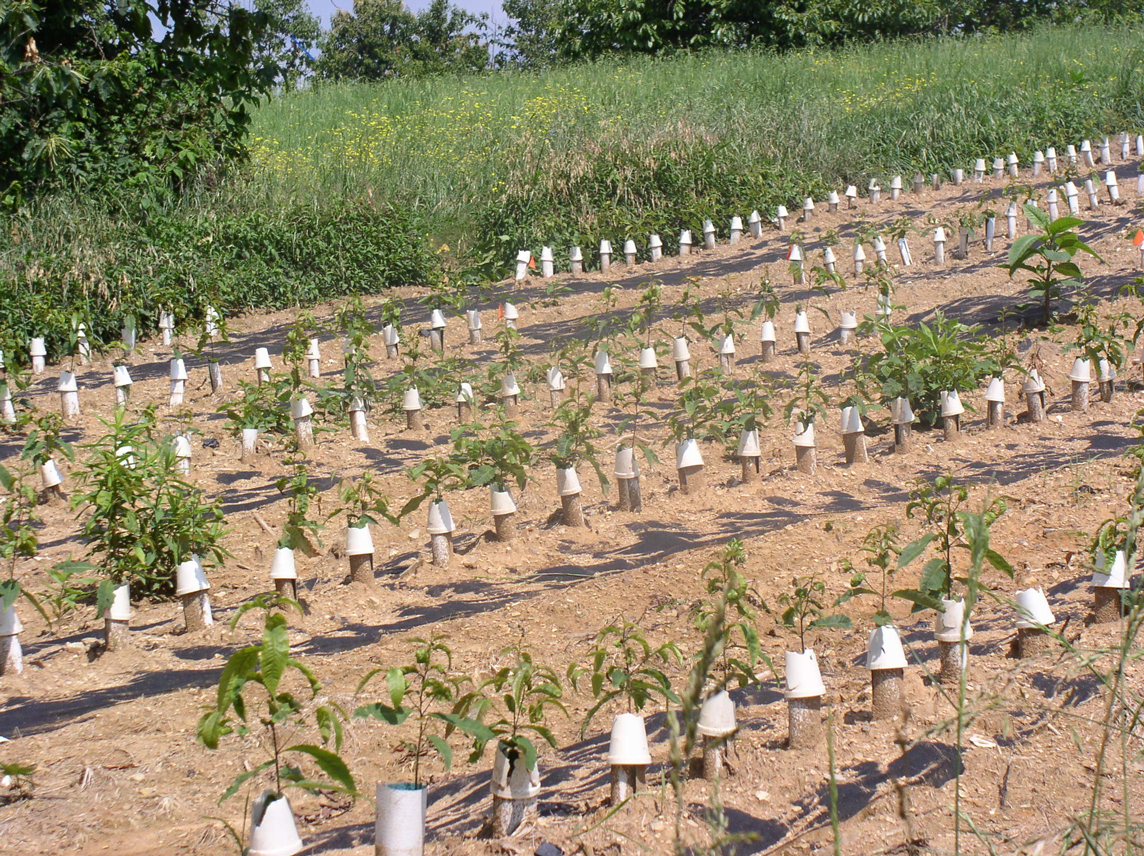
Photo: The American Chestnut FoundationviaLiving on Earth. Towering American Chestnuts were once a staple of life for people across Appalachia and elsewhere in the Eastern United States. An initiative in mining country aims to bring them back.
Growing up, I heard from my father about how sad he was as a kid when American Chestnuts began to die off. Children really do not like loss. Thomas Brannon in today’s article was a kid who loved chestnuts, too. He is one of the people working to restore the trees that covered his grandparents’ land before they sold the mining rights.
Elena Shao starts the New York Times story with the director of operations at a tree-planting nonprofit.
“Michael French trudged through a thicket of prickly bramble, unfazed by the branches he had to swat away on occasion in order to arrive at a quiet spot of hilly land that was once mined for coal. Now, however, it is patched with flowering goldenrods and long yellow-green grasses and dotted with tree saplings.
“The sight, he acknowledged, would seem unimpressive to most. Yet it might be Mr. French’s most prized accomplishment. To him, the young trees symbolize what could be a critical comeback for some of the country’s vanishing forests, and for one tree in particular, the American chestnut.
‘I don’t see it how most people see it,’ he said. ‘I look at this and I see how it’s going to be in 80 to 100 years.’
“By then, Mr. French envisions that the chestnut, a beloved tree nearly wiped out a century ago by a blight-causing fungus, will be among those that make up an expansive forest of native trees and plants.
“Billions of chestnuts once dominated Appalachia, with Americans over many generations relying on their hardy trunks for log cabins, floor panels and telephone poles. Families would store the trees’ small, brown nuts in attics to eat during the holiday season.
“Now, Mr. French and his colleagues at Green Forests Work, a nonprofit group, hope to aid the decades-long effort to revive the American chestnut by bringing the trees back onto Appalachia’s former coal mines. Decades of mining, which have contributed to global warming, also left behind dry, acidic and hardened earth that made it difficult to grow much beyond nonnative herbaceous plants and grasses.
“As coal continues to decline and many of the remaining mines shut down for good, foresters say that restoring mining sites is an opportunity to prove that something productive can be made of lands that have been degraded by decades of extractive activity, particularly at a moment when trees are increasingly valued for their climate benefits. Forests can capture planet-warming emissions, create safe harbor for endangered wildlife species and make ecosystems more resilient to extreme weather events like flooding.
“The chestnut is a good fit for this effort, researchers say, because the tree’s historical range overlaps ‘almost perfectly’ with the terrain covered by former coal mines that stretched across parts of eastern Kentucky and Ohio, West Virginia and western Pennsylvania.
“Another advantage of restoring mining sites this way is that chestnut trees prefer slightly acidic growth material, and they grow best in sandy and well-drained soil that isn’t too wet, conditions that are mostly consistent with previously mined land, said Carolyn Keiffer, a plant ecologist at Miami University in Ohio. …
“ ‘We humans brought in the nonnative fungus that killed the tree,’ Dr. Keiffer said, referring to the parasitic fungus that was accidentally introduced to North America in the late 1800s on imported Japanese chestnuts. … ‘Maybe we can be the ones to bring the trees back.’
“That calling has always motivated Thomas Brannon, even as a third grader in the 1940s planting trees with his siblings on his family’s land in eastern Ohio, the property that Mr. French visited in August.
“ ‘If I can make that 230 acres look better, then that’s enough for me,’ Mr. Brannon said.
“His grandparents sold mining rights to parts of the property in 1952, and nearly four decades of coal mining followed. In 1977, the federal government passed the Surface Mining Control and Reclamation Act, requiring mining companies to return land to the general shape it had before the mining activity.
“As a result, mining companies would backfill excavated land, packing rock material tightly against the hillside so it wouldn’t cause landslides, said Scott Eggerud, a forester with the Office of Surface Mining Reclamation and Enforcement, the agency that enforces the mining law. To prevent erosion, mining companies would plant aggressive, mostly nonnative grasses that could tolerate the heavily compacted soil. …
“In theory, compacting land and greening it up quickly was a good idea, in terms of preventing erosion and water contamination, said Sara Fitzsimmons, chief conservation officer at The American Chestnut Foundation. But it made re-establishing forests difficult. …
“When Green Forests Work arrived on the Brannon property in 2013, they focused on undoing some of the damage done to the land, bringing in bulldozers with giant ripping shanks that dig three to four feet deep into the soil, loosening up the dirt and pulling up rocks.
“By springtime, the group had planted upward of 20,000 seedlings, a mix of 20 different native tree species including the American chestnut, the Virginia pine and a variety of oaks.
“They also planted 625 chestnuts in a one-acre space they called a progeny test to evaluate the health of hybridized chestnut trees — fifteen-sixteenths American chestnut and one-sixteenth Chinese chestnut — that were crossbred by scientists at the American Chestnut Foundation, a nonprofit group formed in the 1980s.”
More at the Times, here. Still more at the environmental radio show Living on Earth. No firewall.
Photo: Matthew Healey/Boston Globe. Jeremy Garcia, 22, of Providence takes a break from working on a mural at “The Avenue Concept” in Providence, Rhode Island.
Kids love contributing to community murals. I know because Suzanne and John helped paint one in our town years ago. But that mural — about local history — was bland compared with the passionate work of self-expression and healing by urban youth in Providence.
Alexa Gagosz writes at the Boston Globe, “After setting down her paint brush, Deborah Ndayisaba gazed up at the purple-colored protestors who spread across a section of a new large-scale mural on the exterior of The Avenue Concept’s headquarters.
“A senior at La Salle Academy in Providence, Ndayisaba, 17, said she had her own ‘advocacy awakening’ when the Black Lives Matter movement took off in 2020. She joined the diversity club at school, became involved in PVD World Music, which looks to celebrate and enrich traditional African music and arts, and researched how many of the racial injustices of the Civil Rights era are now still relevant today.
“The protestors, for her, are symbolic. ‘It’s unfair how racial discrimination can touch everything. And activism isn’t just marching on the streets,’ said Ndayisaba, who is applying to colleges to eventually go into the medical field where she hopes to help women of color.
“It’s those kind of personal elements that scatter this newly finished collage mural by local youth who are involved with the Nonviolence Institute, Rhode Island Latino Arts, Haus of Codec, and PVD World Music — all Providence-based organizations. The effort was led by The Avenue Concept, a public arts organization, and international community-based public art organization Artolution. …
“The Avenue Concept, which is the state’s leading public art program, was founded in Providence in 2012. Since then, artists from around the world have been commissioned to paint mammoth-sized murals across downtown that are part of the city’s skyline today. …
“A few of the Concept’s most notable works address longstanding community issues, such as ‘Still Here‘ by muralist Gaia, which depicts Lynsea Montanari, a member of the Narragansett tribe and an educator at the Tomaquag Museum, as they hold a picture of Princess Red Wing, a Narragansett elder who founded the museum. In September, Boston-based artists Josie Morway painted a new mural in Warren that addresses sea level rise.
“This new project, which was completed after 10 painting days on Sept. 30, is a pilot for a larger community participation program that was identified in The Avenue Concept’s latest strategic plan. The goal of the program, Thorne explained, was to address representation, neighborhood voice, unique cultural perspectives, and community needs in their upcoming projects.
“ ‘Over the last year, we’ve really tried to listen and better understand the stories that are intersecting in our own neighborhood,’ [Yarrow Thorne, executive director and founder of The Avenue Concept] said. ‘We are looking to do more than just the giant pieces of beautiful art in downtown, but to serve the community that surrounds us.’
“Thorne said the Concept, which is based in the Upper South neighborhood of Providence, selected the four local organizations because of how their work makes an impact across a diverse set of communities. Each organization brought four to five members of their youth communities to learn, connect, co-create themes, and eventually execute the mural with the help of Artolution’s co-founder Dr. Max Frieder.
“Frieder, a Rhode Island School of Design graduate and former classmate of Thorne’s, brings public art projects around the world — including in refugee camps. Frieder said he trains refugee-artists on how they can work with kids who have been through trauma and teach them to express what’s most important to them through art.
“ ‘With this project, we brought four very different community groups together and it has been remarkable to see them come together and reflect on their similarities,’ said Frieder, who has participated in public art installations on all seven continents. …
“Each participant painted a scene in a ‘memory ball,’ which looked like a golden orb with a scene of their choice inside. Some painted themselves playing basketball, another read ‘stop drug abuse,’ and one painted themselves playing a trumpet.
“One memory ball said, ‘You only get one life. It’s your duty to live it as fully as possible.’ It’s a quote inspired by Jojo Moyes, an English journalist and novelist.
“Each participant talked about the issues they and their families face in South Providence today: their communities getting priced out as the cost of living increases. Others have faced racism and homophobia in school. Some say their family’s generational trauma has prevented their own parents from healing.
“For example, Jeremy Garcia, 22, a self-described ‘proud, Black-Latino,’ described the stereotypes of South Providence being considered an ‘urban hood’ where residents are predominantly people of color. Garcia said many of their neighbors have watched cases of police brutality, such as the killing of George Floyd, and are afraid to call the police.
“ ‘These are the people who are supposed to save us and who we should be able to turn to when we are in danger,’ Garcia said. ‘If you can’t turn to the police, where do you turn?’
“Expressing themselves ‘and letting go of their past is the only way we can can heal and move forward,’ said Cedric Huntley, the executive director of the Nonviolence Institute. ‘We need more of this — in Providence and around the world. We all focus so much on the negative, which certainly impacts all of us, but there’s more to it in these young people’s lives.’ ”
More at the Globe, here. Nice photos. For a no-firewall article on the mural “Still Here,” check the Brown University newspaper.
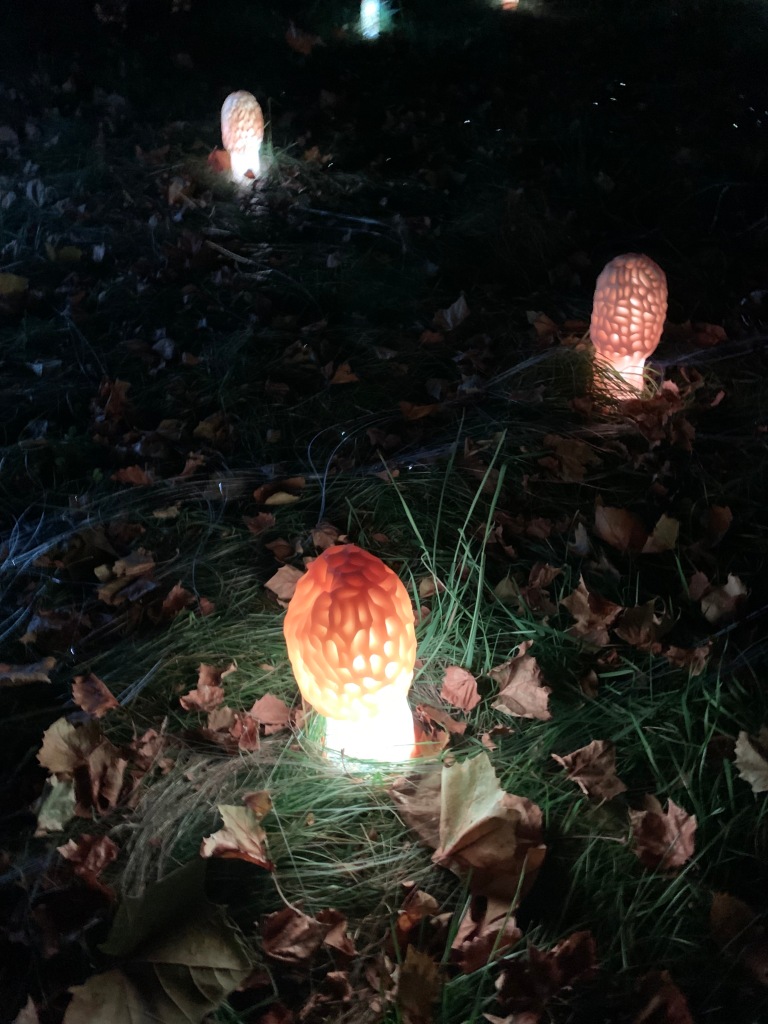
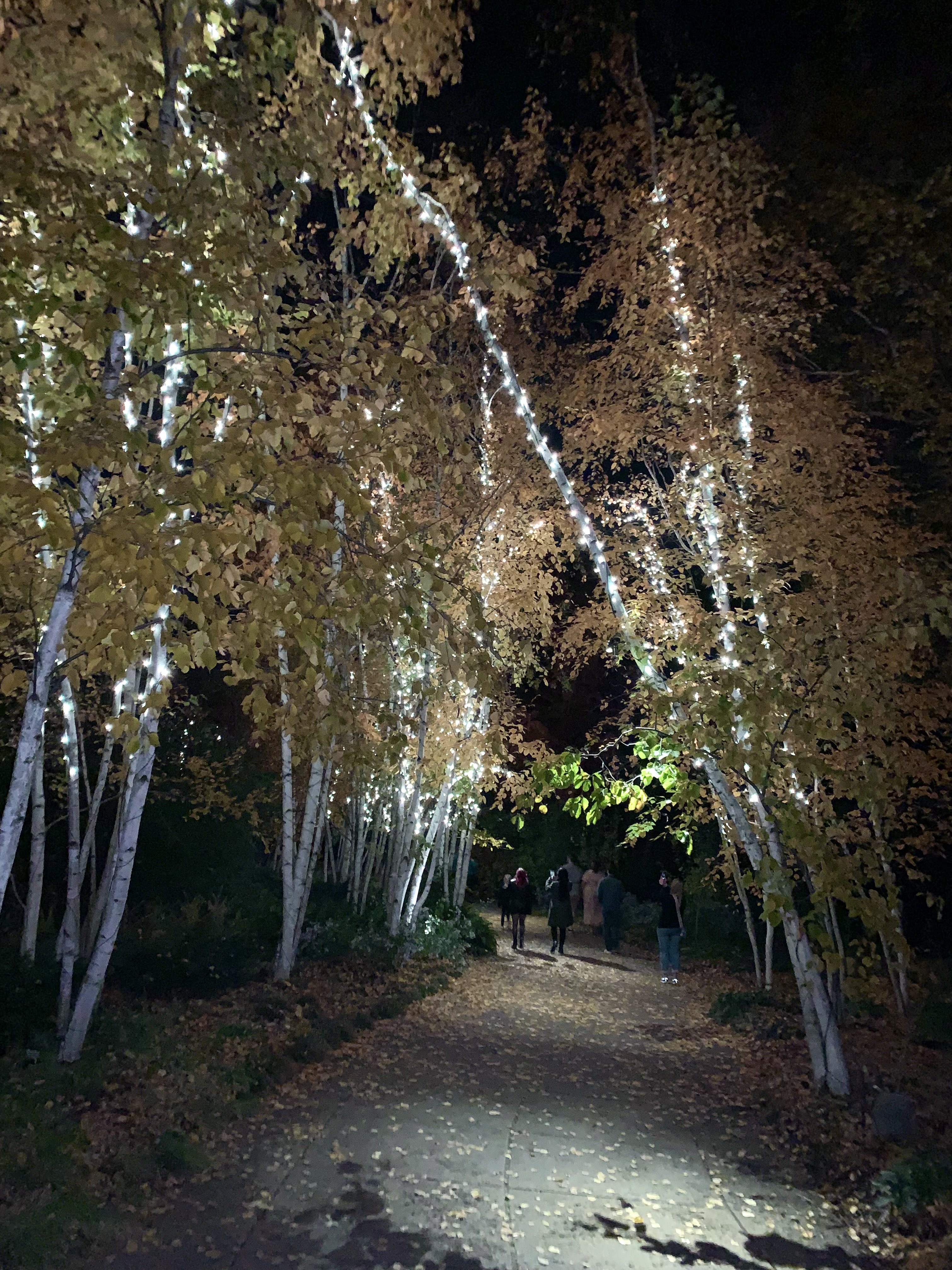
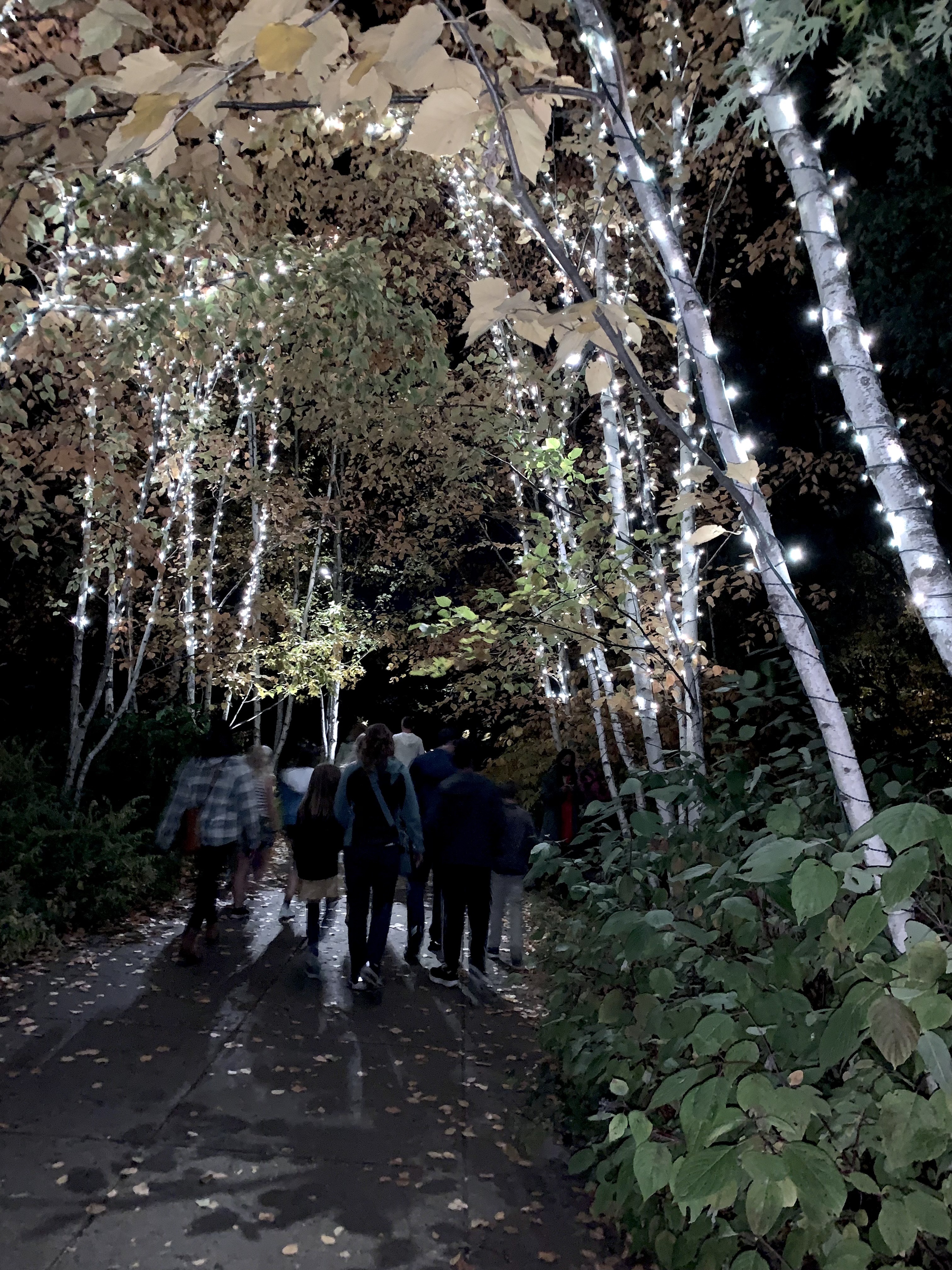
Lights in the night that bring delight. Going to the glimmering evening garden show has become a tradition for us. This year, we started in the mushroom grove. Delicate mushrooms that look like morels are made from beeswax and glow.
Mushroom Grove Artists: James Ream & Benjamin Smith
Next we went through an astral entrance. It felt like a rite of passage to a new world.
Astral Entrance Artist: Ash Armenta
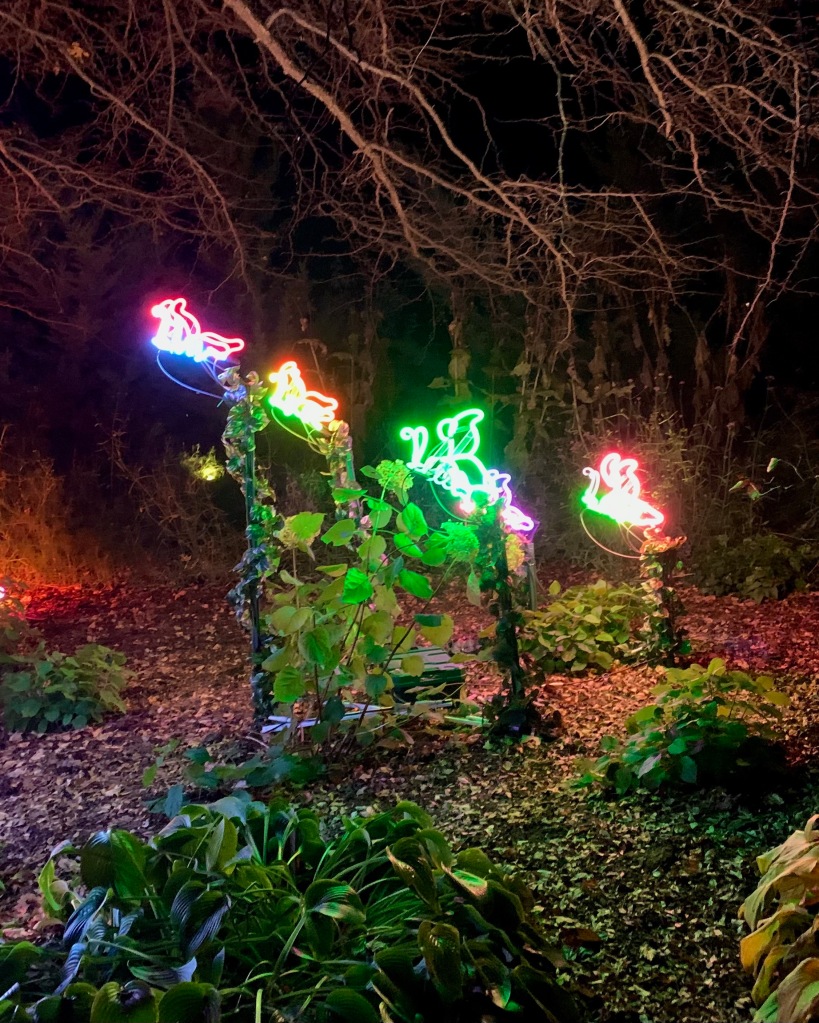
In Firefly Forest, we felt the presence of fairies and wood spirits.
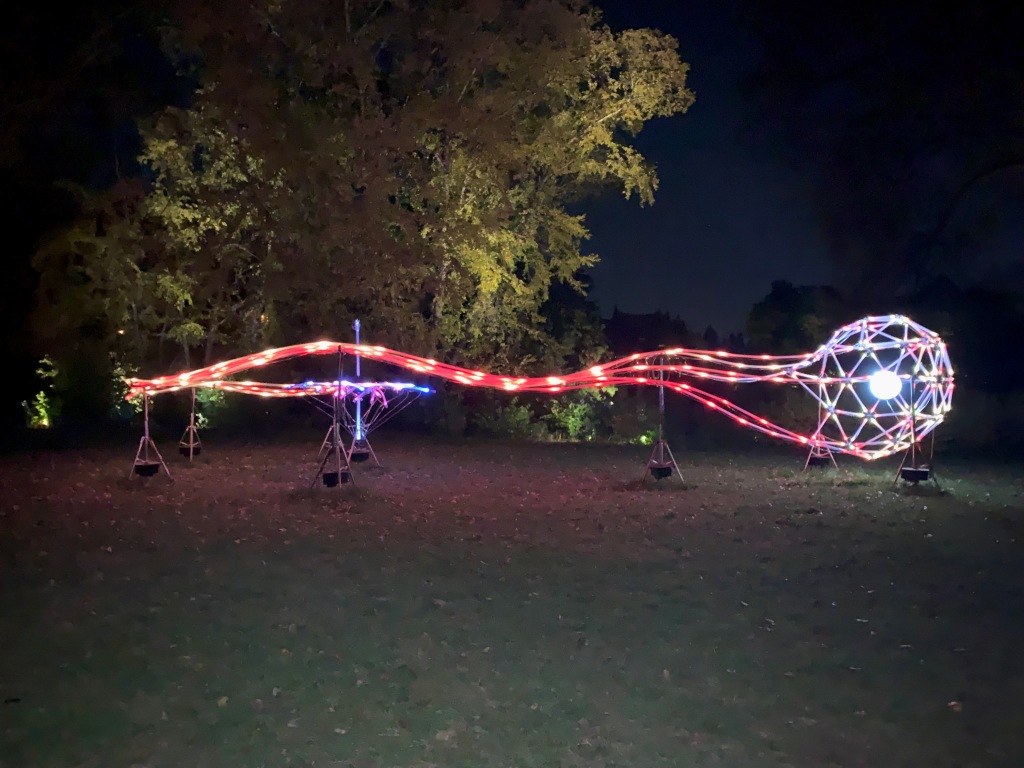
We were drawn into a part of the galaxy with a black hole. We watched as it pulled a star into itself.
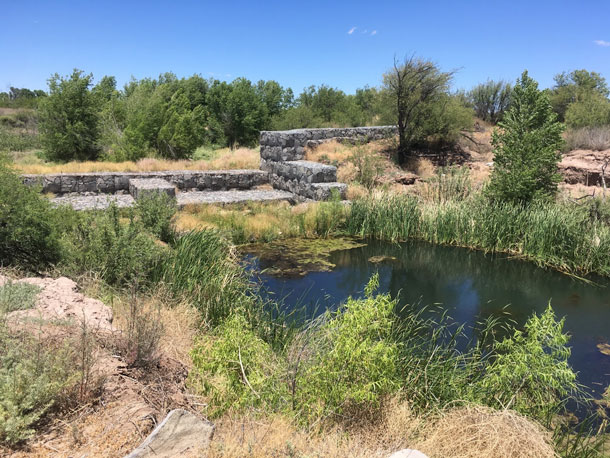
Photo: Bobby Bascomb. Gabions are baskets of rocks that Valer Clark places in stream beds to hold onto infrequent and precious rainfall at her ranch in Agua Prieta, Mexico.
Today I’m passing along some ideas for conserving water in dry areas. They come from a rancher in Mexico but could work elsewhere.
At the environmental radio show Living on Earth, “Bobby Bascomb visits acclaimed land preservationist Valer Clark at her ranch, Cahone Bonito, in Agua Prieta, Mexico. Valer has been a steward of dried-up lands in Mexico and the southwestern US since she purchased this property in the 1970’s, and she’s dedicated herself to finding ways to restore and maintain it. …
“BOBBY BASCOMB: For a couple months each year the region is awash with water from the seasonal monsoons. The normally dry river beds fill with flood water and swell to create habitat for all manner of water birds and amphibians. The watery paradise is short-lived though, and most of those streams dry up in a matter of weeks. But that wasn’t always the case. A network of streams, rivers and wetlands once crisscrossed the landscape. In fact, more than 150 years ago, around the time of the Civil War, people in the region struggled with malaria, a mosquito-born illness typically associated with tropical wet climates. Last year, I went to Mexico and I found a ranch owner that’s working on ways to keep some of that water on the land longer.
“My journey starts at the Gadsden Hotel in Douglas, Arizona. … The opulence of the hotel hints at an earlier time of prosperity and wealth. Valer says the whole region, north and south of the border, was made rich more than 100 years ago by the same things.
“VALER CLARK: This was copper, cotton, and cattle. The three Cs, you know, all in the early 1900s.
“BASCOMB: Those three Cs made a lot of money but heavily degraded the land. Before the arrival of settlers the region didn’t have much water but there were some dense grasslands. Forests grew alongside rivers that meandered across the open landscape. And wetlands popped up every 20 or 30 miles along those rivers. But when Valer first visited back in the 70s, decades of mining and agriculture left the arid soil dry and cracked, few trees remained and the river beds were deeply eroded.
“Valer [and] her husband at the time were traveling in Mexico and fell in love with the austere land. The wildness of the open parched landscape drew them in.
“CLARK: We just came across this ranch, by accident. And he said, Well, why don’t we bid on it, and I bid so low, I didn’t think we’d ever get it. … When I got here and started seeing the lack of water and seeing the situation, what it looked like, and the hills were bare, and there was no grass. And I thought I wonder if you could make a change. …
“BASCOMB: Valer eventually bought and rehabilitated some 150,000 acres of land in northern Mexico and the Southwest US. [Her] work here has been transformative, says Ron Pulliam.
“RON PULLIUM: There are four great geological forces: there’s volcanism, plate tectonics, there’s erosion. And there’s Valer. …
“BASCOMB: Ron is an ecologist, formerly with the US Department of Interior, and founder of the nonprofit Borderlands Restoration Network. … I pile into a pickup truck with Ron. Valer, in her own truck, leads the way out of Douglas, Arizona and across the border to Agua Prieta, … We leave behind the maquiladora factories in the duty-free trade zone of Agua Prieta and drive an hour southeast to Valer’s ranch. Pavement and two-story buildings give way to dusty soil and brittle pale green grass. To me, as a New Englander, the landscape looks rather inhospitable, but Ron says this is prime cattle grazing territory.
“PULLIAM: Generally speaking now, the stocking ratios are on the order of one cow to one hundred or two hundred acres in this area. And then think of around the turn of the century, 100 times that number of cows. … If you put hundreds of cows out on a small area here you basically reduce all the ground cover. So, when the rain comes it just runs off the land rather than being caught up in the vegetation.
“BASCOMB: And keeping that rainwater on the land is the fundamental key to what Valer is doing to rehabilitate her property. More water will mean more grass and trees, habitat for the wildlife that was once common here. … She takes me on a walk around her property. …
“CLARK: This is what we call a gabion, which is a wire basket that is filled with rocks. …
“BASCOMB: They’re about 3 feet tall, some just 5 or 6 feet wide, others more than a hundred feet across. Valer and her crew have built more than 20,000 of them on her property. They all sit in riverbeds which are dry most of the year until the monsoon rains come. That’s when the gabions get to work. They slow down the water rushing through the river bed so silt can accumulate behind them, like a sponge.
“CLARK: And that sponge holds the water. And so the water, instead of just whipping through fast, when it rains, 30% of it’s held back and goes into the ground. And so it filters down very slowly. …
“BASCOMB: Those pools of water are home to insects, birds, rare frogs, and endangered fish species.
“CLARK: And trees, all these trees coming up, they’re a result of having water here. … Some of them grow 10 feet a year. … We’ve seen ocelot, we’ve seen bobcats and lions and bears and coatimundis and javelinas, ring tailed cats.”
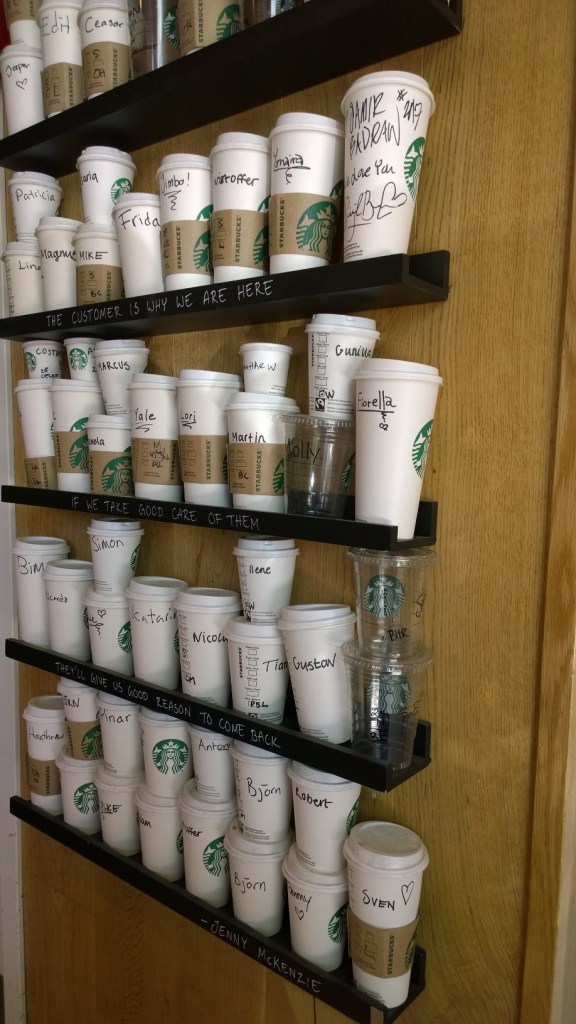
When I was in Sweden in 2017, I noticed that waste-conscious Starbucks customers could leave their cups in the shop for the next time.A Massachusetts startup carries the concept a step farther.
The party guest told Dustin Hoffman in The Graduate that “there’s a great future in plastics,” but today there’s a better future in non-plastic packaging.
At Debra’s Natural Gourmet, there’s demand for shampoo and conditioner in cardboard, skin cream in tins, water bottles in glass. I have also seen lip balm in cardboard at Earthling, here, and at Booda Butter, here. Imagine! Thoughtful people out there are noticing how often we throw plastic ChapSticks into landfills!
Joanna Detz writes at ecoRI News about a company called Usefull that is tackling our wastefulness with takeout coffee cups.
“What if your coffee shop had reusable mugs on demand that you could carry out with you and return to any other participating coffee shop when you were done? Alison Rogers Cove, founder and CEO of Cambridge, Mass.-based Usefull, envisions just such a circular foodware solution that would spell the end of disposable takeout products, most of which are not recyclable and wind up in a landfill or as litter.
“Usefull, an app-based foodware service that provides silicone-lidded stainless-steel containers for customers to check out and return (like a library book), recently wrapped up a pilot program on Block Island.
“ ‘The pilot was very successful in testing out a lot,’ Rogers Cove said. However, she admitted there were challenges in running the program in a largely transient community of day-trippers, where not all food-service providers opted into the system, and where single-use takeout containers were still an option. …
“Her data show a closed-loop returnable program such as Usefull’s has a better success rate in places where there is an outright ban on single-use takeout containers.
“ ‘From a business perspective, we can’t take the risk of going into a community without a ban. That’s part of our lesson learned,’ she said.
“Marin County in California is one of the few municipalities that has passed such a ban, which will take effect Nov. 10, 2023.
“As a result, Usefull has decided to focus its business efforts on serving colleges and universities invested in eliminating single-use takeout products on campus. … ‘College campuses are able to fully commit to their zero-waste goals and eliminate the option of single-use packaging.’
“On participating campuses, students download the Usefull app, place their takeout order, and scan a tracking code on their takeout container. After they are used, the containers — bowls and cups — can be dropped off at any of Usefull’s return locations on campus, regardless of where the container was checked out. Once the containers are returned, they are run through commercial-grade dishwashers and put back in circulation.
“Users are only charged if they return the container late — schedules vary by location — or if they lose the container.
“The idea for Usefull was born in 2013, when Rogers Cove was working in management consulting. … But it wasn’t until 2018 that she shared her idea outside her social circle, when she presented at a Boston Globe pitch event with angel investors. …
” ‘[The pandemic] was when we pivoted to colleges,’ Rogers Cove said, because it wasn’t clear when downtown Boston was going to reopen. She and her team figured college revenue was tied to having bodies on campus and bet that colleges would be first to reopen.
“The first college to partner with Usefull was Mount Holyoke, followed by other Bay State colleges and universities.”
Photo: K. Linnea Backe. Leonardo Sandoval of Music From The Sole uses body percussion in dance.
Music is everywhere. You just have to listen for it. Children know. Most of them make music out of pots and pans before they can walk. I have pictures of my children and grandchildren sitting on the kitchen floor surrounded by everything they pulled out of the lower cupboards and getting ready to drum a joyful noise. You may have pictures like that, too.
Brenda Dixon-Gottschild at Dance Magazine writes about a kind of percussion that’s even more accessible than your pots and pans.
“Crash. Bump. Thump. Thwack. Whack. Knock. These are a few of the many synonyms of the word ‘percussion.’ All of them are appropriate when we look at the ways world cultures use the body as an instrument. …
“Clapping, stomping and striking body parts from head to feet in rhythmic or repetitive ways is a timeless means of human interchange, whether for pleasure, protest, entertainment, ritual, healing or survival. Hand- and body-clapping children’s games accompanied by sung or spoken rhymes are common around the world. … Enslaved Africans used body percussion as furtive communication — fearful of its messaging potential, plantation owners prohibited the use of drums, and to sabotage this taboo, the Black body became the drum.
“The juba dance, brought to the Americas in Middle Passage — the grueling sea journey of Africans captured from their homelands to live enslaved on foreign territories — was performed during plantation gatherings. In this dance of prowess, one person entered a circle of movers to exhibit their extraordinary variations on jig, hop and jump steps and was joined by a second dancer as the outer circle alternated rotating and remaining stationary. Pattin’ juba, the juba dance accompanied by clapping hands, chest and thighs, and the juba song — composed of short, rhymed verses that seemed like nonsense but carried double meanings — were ingenious later adjustments made to accompany the dance and send messages when drums were banned. Pattin’ juba further morphed into the hambone, a variation that centers on body percussion and is performed standing in place or seated, while retaining the original rhythm of the dance. …
“For Rennie Harris, legendary hip-hop concert dance choreographer and artistic director of Rennie Harris Puremovement and RHAW (Rennie Harris Awe-Inspiring Works), hambone was second-nature: ‘I don’t remember exactly when I learned or who taught me. In fact, I don’t even remember seeing it or being introduced to it — I just remember doing it,’ he says. ‘I was 7 or 8 years old; this was on Master Street in North Philadelphia. We used to sit on the stoops and challenge each other, doing the hambone, seeing who could do it the fastest, cleanest. It was a summer pastime. We sang the song, as well. Being older, I’d run into people who still do it, so it’s kind of interesting and cool. We’d add parts of it to dance steps. I didn’t learn the history of it, pattin’ juba, until later in life.’ …
“The basic hambone beat got a second life in the world of popular music. The 1950s R&B legend Bo Diddley made the five-accent hambone rhythm famous as the Bo Diddley Beat, a recurrent riff that has been appropriated by many white rock musicians.
“Tap dance, another style of body percussion, has impacted almost every culture. Using toes, heels and the full foot in rhythmic fashion goes beyond any one era or continent and includes traditions as diverse as African American buck dancing, Irish step dancing, English clogging and South Indian bharatanatyam.
“Beyond those traditional examples, the complex, polyrhythmic fusion of tap, combined with hambone-inspired body percussion, has proliferated with present-day artists across continents. The South African gumboot dance was transformed into a performance mode from its goldmine workforce origins, where it was created by Black miners as a sly replacement for conversation, since the white mine owners exacted harsh punishments for verbal communication among the workers.
“Other spinoffs include ensembles like Colombia’s Tekeyé; The Percussion Show, from Egypt; and the U.S.-based Music From The Sole, which draws on Afro-Brazilian influences. These artists transform a combination of tap and hambone to a glorious, millennial sensibility through the lens of hip hop and jazz.
“The art of flamenco includes a special kind of tapping — zapateado — as well as body-percussion elements that resonate with hambone.
” ‘Flamenco was being born in the mid-19th century. Certainly, by the 1902 arrival of the cakewalk in Spain, Black dance cultural motifs were transmitted, and flamenco artists expressly emulated Black American dance,’ says Dr. K. Meira Goldberg, author of Sonidos Negros: On the Blackness of Flamenco. “New forms that were created in explicit response to competition from Black artists in Spain emphasized percussive footwork, and over the past 30 or so years flamenco footwork techniques are increasingly influenced by tap and hip hop. It is fair to say that other modes of body percussion (hambone, or making percussion by snapping fingers, clapping hands or hitting hands on various parts of the body mixed with footwork) are also increasingly emphasized. Flamenco is always ready to absorb new performative ideas, and these ideas are reinterpreted and reinvented: In Spanish, the saying is “Llevarlo a tu terreno,” or “Make it your own.” ‘ …
“Indonesia has its share of corporeal clapping traditions as well. The Saman (‘dance of a thousand hands’) of the Gayo ethnic group of Aceh, Sumatra, is known across the island and performed by large groups to celebrate special occasions. Dancers sit on the ground with their legs crossed or folded beneath them, torsos upright. Though there are also mixed-gender performances today, ensembles had traditionally been separated by gender: Women do gentle tapping or patting on chest and thighs accompanied by hand-clapping, singing and rhythmically moving the torso and head, while the men move vigorously and their taps become slaps. …
“Exploring body percussion reinforces the understanding that everything we humans create has roots in something that went before. Even the most sublime innovations have a precedent. … The concealed riches of ‘the before time’ have become available on a global basis, thanks to social media, YouTube, streaming platforms and international touring by artists of every origin.
“Interestingly, hip-hop movements and music act as a unifying factor crossing cultural, class, racial and economic divides, transgressing differences, blurring boundaries and allowing a current generation of artists to travel beyond the assumed limitations of their genres, to try new things and experience other realms.”
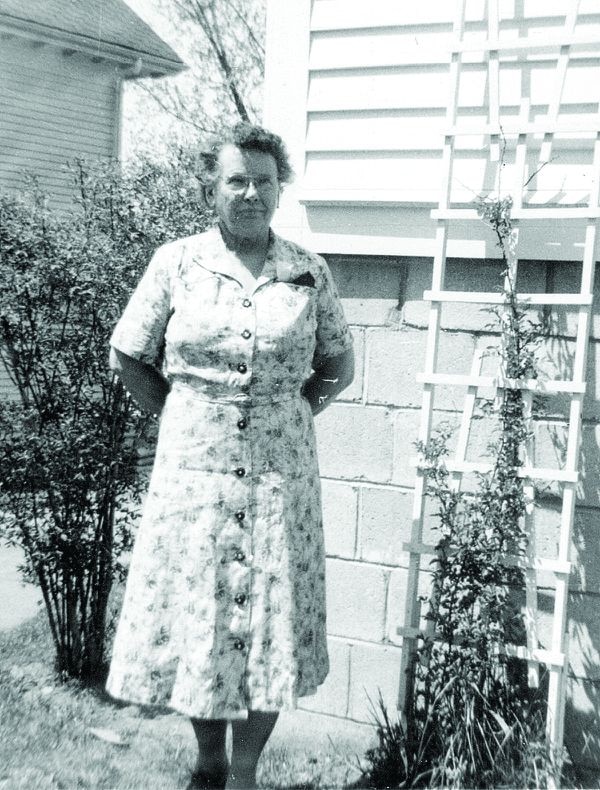
Writer Phil Primack’s baby sitter, Miss Anderson, in 1957.
How important were “other adults” in your life? Adults besides the ones who raised you. I once heard about a little boy whose home life would have marked him for a very troubled future if not for a kind neighbor doing yard work across the fence and engaging in friendly chats.
In another example, at the Boston Globe, Phil Primack gives credit for his love of the natural world to a baby sitter.
“In the late 1950s, back when Republicans liked Ike and I was a third-grader in Haverhill, my parents introduced my older brother and me to Jennie Anderson, our new baby sitter. Her approach today might be considered borderline neglect — but it influenced my life.
“I was short, chubby, and unathletic, always the last kid picked for any team. Happily, Miss Anderson had no interest in bouncing balls. Rather, her plan for productive after-school time was to go over pictures in the nature magazines she would bring, and then to send me off into the nearby woods to find this butterfly or that tadpole. Accompanied only by my dog Caesar (no leash or poop bags then), I’d wander the pine forest and wetlands by Round Pond for hours. Maybe I couldn’t catch a fly ball, but I became a whiz with a butterfly net. At summer camp, bunkmates began to call on me when they needed someone to trap a chipmunk for the scavenger hunt.
“Miss Anderson steered me to bigger things than bugs and critters; in the woods, I also found identity and self-confidence. I still have some of the butterflies she and I framed more than 60 years ago, as well as the brass magnifying glass we used to study markings on beetles and other bugs. …
“Thinking about her recently, I dove into Ancestry.com and found that Jennie F. Anderson was born in 1885 in Kent, Connecticut, to a Swedish father and American mother. I’ve been unable to learn much more. She never married and apparently had few relatives. Through high school and into college, she welcomed my visits to her in the single-room apartment she rented in Haverhill until I left Massachusetts for a newspaper job in eastern Kentucky.
“When I went to visit her on a trip home sometime around 1973, the room was empty. A neighbor told me that Miss Anderson had been committed to Danvers State Hospital, a psychiatric institution built, fittingly, where a Salem Witch Trials judge once lived. I made the trek there. ‘She doesn’t know who you are,’ an aide cautioned me. Still, Miss Anderson beamed when I pulled out some of our framed butterflies.
“Miss Anderson died in 1975 at the age of 89. … My brother and I remember her, but I worry no one else does. Too often, people who quietly imprint our futures just as quietly become anonymous and forgotten. That was Miss Anderson’s likely fate. And that bothered me.
“In almost the same year that she died, the destiny seed she planted in me matured as I bought some mainly wooded land in Epping, New Hampshire, and built a little house deep in the woods. I still maintain the land but I’ve transferred its ownership to the nonprofit Southeast Land Trust of New Hampshire (SELT), thus assuring its undeveloped future for young and old nature wanderers. Recently, SELT asked if I wanted my name on something to acknowledge my donation. Thanks, but no need, I said.
“Then I had an idea. …
“SELT plans to place a kiosk at the entrance to the Pawtuckaway River Reservation, nearly 700 acres of land, including mine, that SELT owns or otherwise controls along that river. The kiosk is supported by Phil Primack, a sign will say, ‘in honor of Jennie Anderson, who sent him out to hunt for tadpoles.’ “
More at the Globe, here. I love that Primack is remembering Anderson in that way. By coincidence on Twitter yesterday, journalist @tednesi remarked on how sad it is when someone dies unnoticed. He wrote, “I always find these death notices placed by the state so sad – the thought of someone dying and nobody around to notice. Who was Geraldine Boucher? What was her story? (via today’s @Projo).” He shared a photo of the state’s request for information.
If you could honor some adult in your life with a marker, where would you put it and what would it say? We had Frieda living with us for a while in my childhood, and I think what I am most grateful for is that her opinions were not the same as my parents’. She never tried to undermine my parents, but sometimes an exasperated huff would burst out and I could tell she thought something was really “off.” It has been important in my life to know that there were many ways to see things.
I would put the marker for Frieda someplace lovely in Switzerland, her homeland, and it would say, “Frieda Plüss. Thank you for the window on common sense.”
Photo: Fabio Nascimento/Outlaw Ocean Project. Investigative reporter Ian Urbina on an Indonesian patrol ship chasing Vietnamese fishing boats suspected of illegal activity.
Because we face so many monumental problems around the world, it’s easy to get discouraged and say, What can one person do? But as Pete Seeger once sang, “One and two and 50 make a million.” In other words, individual efforts add up.
Mark Trumball at the Christian Science Monitor interviews a journalist who covers the work to protect the environment and human rights on the high seas — and shares how the informed consumer can help.
“Ian Urbina is what you might call a globe-trotting journalist, except he focuses his reporting on the oceans, not the land.
“Earlier this year he was honored for his investigative writing by the Society of Professional Journalists, for stories tied to the treatment of migrants in Libya (and off its Mediterranean coast) and disruption in Gambia’s fisheries, published during 2021 in the New Yorker and the Atlantic. Another story from his Libya reporting – about Europe’s treatment of African migrants – ran here in the Monitor.
‘Now Mr. Urbina’s Outlaw Ocean Project is launching a podcast series based on his work, in partnership with the Los Angeles Times and CBC Podcasts. …
“Trumball: You explore what you call the ‘outlaw ocean.’ Why are oceans so different from land – and so difficult to police?
“From the perspective of governance, you have this situation where the high seas belong to everyone and no one, and therefore jurisdictionally it’s an unusually complicated, murky space. … The second issue is geography. The reality of the high seas is it’s so incredibly sprawling, two-thirds of the planet.
“And then when it comes specifically to the category of abuses of crimes that pertain to people – murder on camera and slavery and abuse of stowaways and wage theft and abandonment of crew, you know, all these human rights and labor abuses – a contributing factor to that subcategory of crimes is who’s getting harmed. Most often the victims of those sorts of crimes are poor, are folks from developing nations. … A lot of them are not literate. A lot of them have signed contracts in languages they don’t even speak. …
“And the boss of the [floating workplace] is from one country. The flag of the factory is to another. The guys working in there, getting abused, are from a third. The catch is being all loaded on a fourth. …
“Many of us might feel like, well, my connection with the ocean is when I buy some fish for dinner. But is it much more than that?
“If you think of the planet Earth as a living organism, maybe metaphorically, it has inherent systems. It’s got lungs. The lungs of the planet – 50% of the air we breathe – are cleaned by the oceans. So the lungs of the planet are at stake. If you think of it as the commercial circulatory system, 80% of our [global] commerce gets to us cheaply and efficiently … by ship. So not just fish, but iPhones and, you know, tennis shoes and grain and oil. … The oceans are also a temperature stabilizer of our body, you know, of the body planet. … They take off a lot of the heat. …
“You have a seven-part podcast with the goal of shedding light on these varied challenges. … Does the stress on the oceans amount to a disaster in the making?
“Yes, it is a disaster. But that doesn’t mean we have the luxury of being demoralized. … Do I think it’s unsolvable? No, I think there are lots of ways in which things can be done to mitigate the disaster and better govern.
A lot of people are doing lots of things in different places, in individual fights, in individual battles.
“One episode features the nonprofit group Sea Shepherd chasing down a ship on Interpol’s wanted list for illegal fishing. …
“Sea Shepherd [said] We’re going to go after these guys and we’re going to find them wherever they are, and we’re going to chase them and harangue them and draw a lot of media attention on them. …
“And they succeeded. You know, they found the Thunder, which was at that time ranked the top worst illegal fishing vessel on the planet, $67 million worth of illicit catch. And they found these guys – nets in the water – and proceeded to chase them for 110 days all across the planet. And all sorts of dramatic stuff happened in the interim. And ultimately the Thunder – spoiler alert here – sunk itself and all the crew were rescued … by Sea Shepherd, handed over to law enforcement, and the officers were prosecuted and served time. So I think there are cases like that where you see various actors make savvy use of the media and the law to try to make a difference. ….
“There’s more wind in the sails of the advocates and the academics who were in the trenches already fighting this fight. Now they’ve got more media behind them. I think you also see more market side players having an awareness that, you know, this issue isn’t going away.
“Whether it’s the issue of slavery and the use of captive labor as a cost-saving tactic on fishing vessels, or intentional dumping of oil as a cost-saving tactic, or illegal fishing – meaning going places you’re not supposed to or using gear you’re not supposed to – all these things are cost-saving tactics. And who benefits from that but the companies? And the companies writ large, you know, the ship-owning companies, the insurers, the fish sellers, wholesalers, grocery stores, restaurants, all these market players are the ones who turn a blind eye. … The decentralization of the supply chain has allowed them to say, ‘Well, we don’t know what’s happening.’ You know, ‘we outsource’ … and so they can’t be held accountable. Well, I think there’s a reckoning coming on that. …
“We’re catching wild caught fish in places like Gambia that historically was eaten by the locals and was free at the market, often, because it was so plentiful. Now the locals can’t touch the stuff because they’re priced out, because it’s all going to the factory to get ground up and exported. That’s the crazy economy we have.
“What can the average person do in their own actions? What would you recommend?
“First, I’d say, don’t get demoralized and don’t think that you should or can solve the war. Just think about battles, and choose which of the many battles interest you most, whether it’s sea slavery or plastic pollution or whaling or illegal fishing or murder and violence at sea or whatever. Just narrow it down, choose a bite-size thing, and then focus on that.”
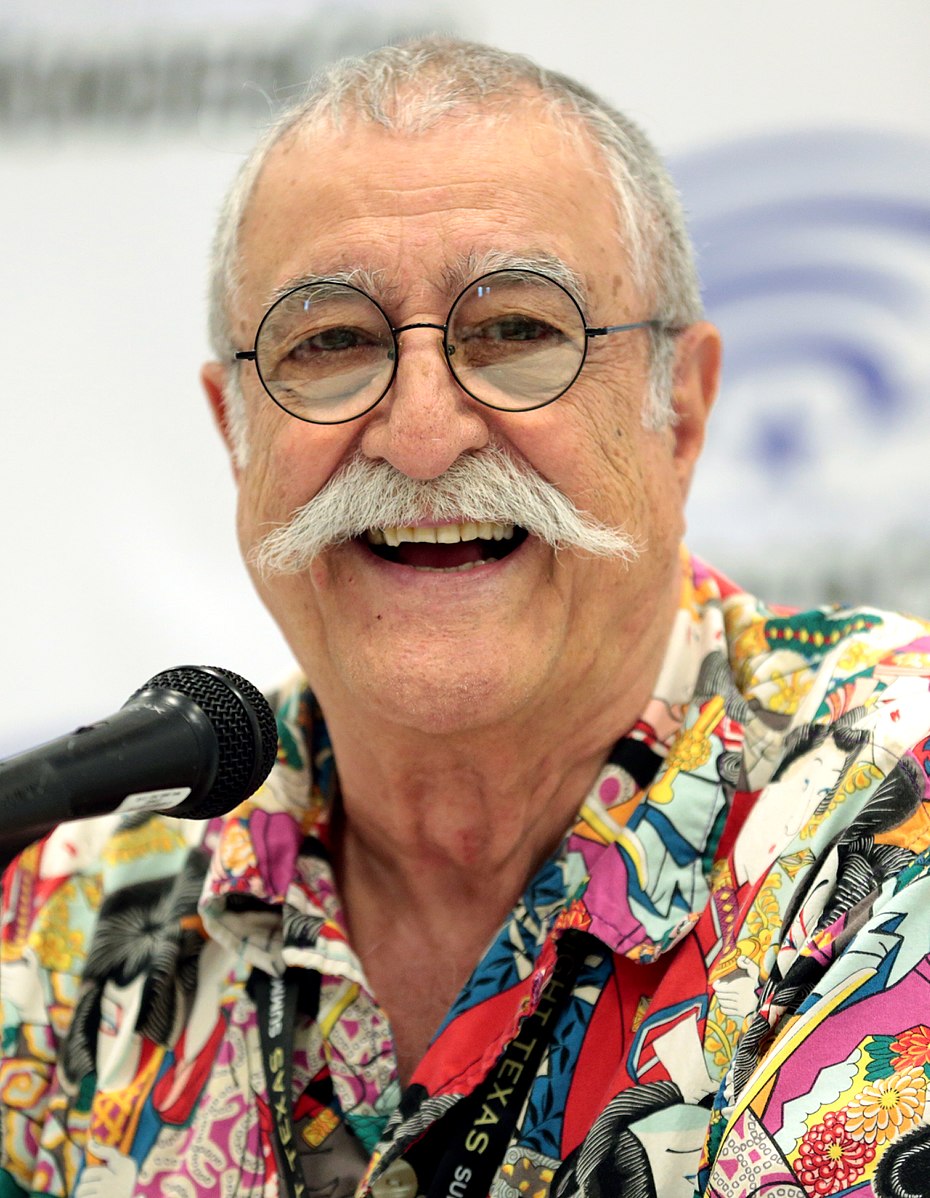
Photo: Gage Skidmore. Cartoonist Sergio Aragonés speaking at the 2017 WonderCon in Anaheim, California.
I always feel admiration for people who love their work so much that they keep doing it well into their advanced years.
In today’s post, Michael Cavna of the Washington Post writes about the staying power of Mad Magazine’s oldest active artist.
“Sergio Aragonés had long read Mad magazine back in Mexico by the time he first landed in New York, toting fresh artwork and hope. He stepped through the humor outlet’s front doors 60 years ago, expecting to find the place as wild in spirit as the publication’s satirically hip pages. This was, after all, the home of the staff’s self-anointed ‘Usual Gang of Idiots.’
“Instead, the recent college student was introduced to a relatively staid Madison Avenue office. Where was the whimsy? The Mad-cap frivolity? This was no clubhouse of high jinks.
“ ‘I thought it was going to be a lot of jokes on the walls,’ Aragonés says by Zoom from his home in Ojai, Calif., where he celebrated his 85th birthday last month. After he was hired that day he walked in to sell his work, he suggested to publisher William Gaines, ‘Why don’t we paint one of the doors to make it look like an elevator, putting fake numbers at the top?’ and befuddling visitors attempting to exit. Or perhaps better yet: ‘Why don’t we put a bomb in the roof with the sound effect “tick-tock-tick-tock”?’
“ ‘Bill looked at me like: “Sergio, this is an office of working people.” He wanted the office to be very functional.’
“What cartoonists cannot create in life, however, they are armed to imagine on the canvas. So for a new comic, Aragonés has drawn busy Mad office workers momentarily donning character masks … to entertain kid visitors taking phone photos.
“That strip is among a selection that Aragonés contributed to a special edition of Mad [that] marks the magazine’s 70th anniversary. Although the outlet has predominantly reprinted past material since it ceased regular publication in 2019, most of this special edition will be original content, including a Johnny Sampson back-page ‘fold-in,’ a film parody of Robert Pattinson as ‘The Batman,’ and a mini-essay by fanJordan Peele, whose film Nope features a fictional Mad cover.
“The special edition also spotlights Aragonés’s status as the oldest artist currently drawing for Mad. … He says he has been blessed with six fruitful decades at the iconic magazine, which reached millions of monthly readers at its 1970s peak and influenced writers at such shows as The Daily Show and The Simpsons, as well as Judd Apatow and ‘Weird Al’ Yankovic.
“Aragonés’s high standard for consistent creativity is legendary. For decades, he only missed contributing to a single issue, and that was because the mail from Europe was slow in the 1960s. The cartoonist, who also produces the fantasy comic book series ‘Groo the Wanderer,’ attributes his mental fertility to mixing things up creatively, from narrative stories to the wordless art for the Mad margins, his signature domain. ‘The variety of my field,’ he says with gusto, ‘allows me to never get tired of it.’ …
“ ‘I suspect if Sergio were to go and donate blood, ink would come out of him,’ says John Ficarra, former Mad editor in chief. ‘He is incapable of not drawing.’
“Aragonés acknowledges that he does not suffer writer’s block because cartooning is second nature: ‘Drawing has become like walking.’ …
“Aragonés was born in the Spanish province of Castellón, in Sant Mateu, but within six months, his mother fled the Spanish Civil War — Sergio in tow — while his father fought for the Republic. The family reunited a few years later, but by 1942 they were World War II refugees in Nazi-occupied France. They headed to the North American nation that would take them in: ‘I have a debt with Mexico I will never be able to repay.’ …
“In high school, Aragonés drew his own cartoons (a creative ‘form of escape,’ he says), which a classmate submitted to a humor periodical unbeknown to him. They were purchased and published, sparking his self-belief. …
“ ‘The humor that I do wasn’t popular in the United States because American humor is always based on words, the British inheritance of the punchline,’ he says. Pantomime humor lacked such respect in the States. …
“Mad editors, though, valued Aragonés’s work immediately. They bought his cartoons featuring astronauts and asked for a piece on motorcycle cops. …
“ ‘When Mad accepted me, that was a change of life, a change of mind, a change of everything. Somebody liked what I did.’ ”
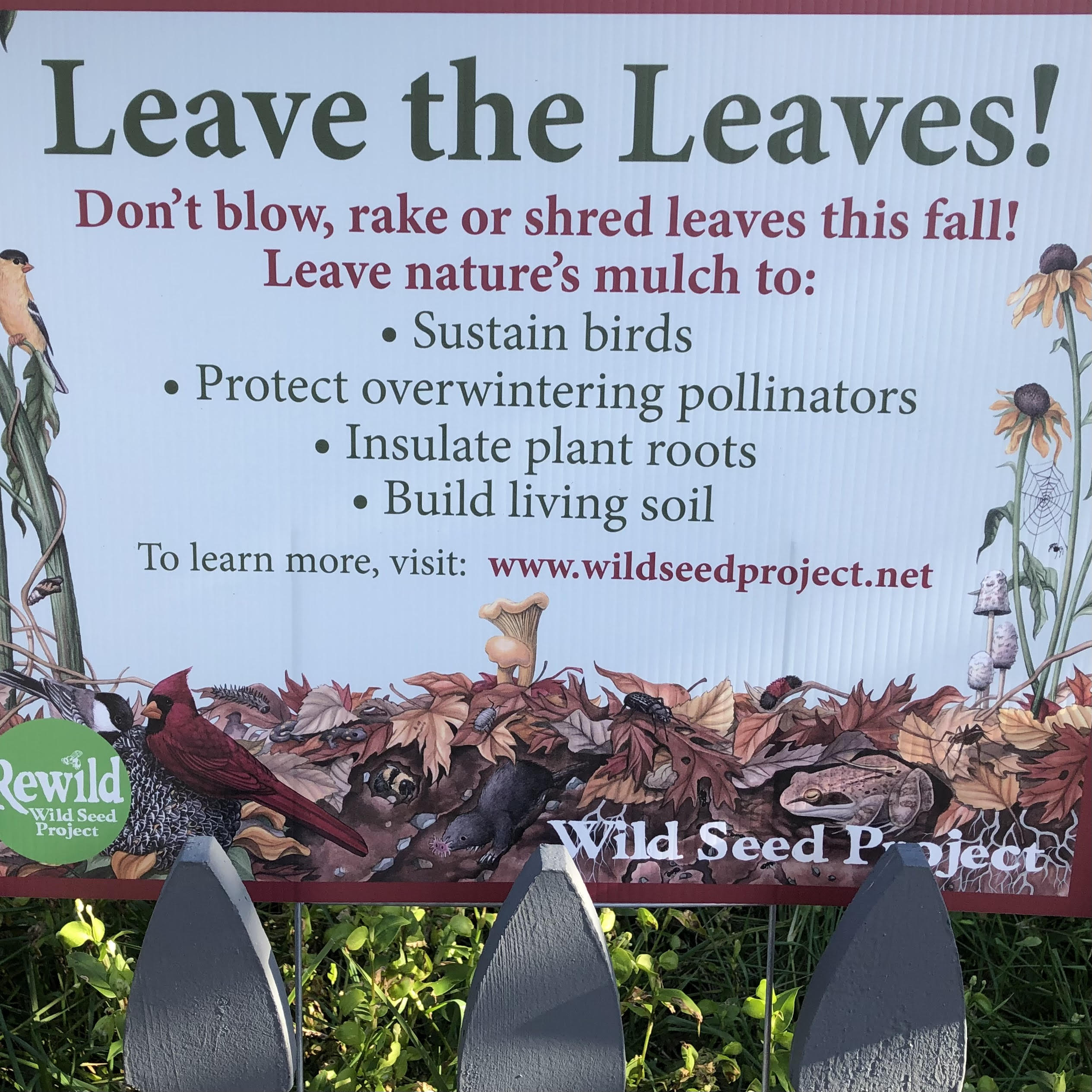
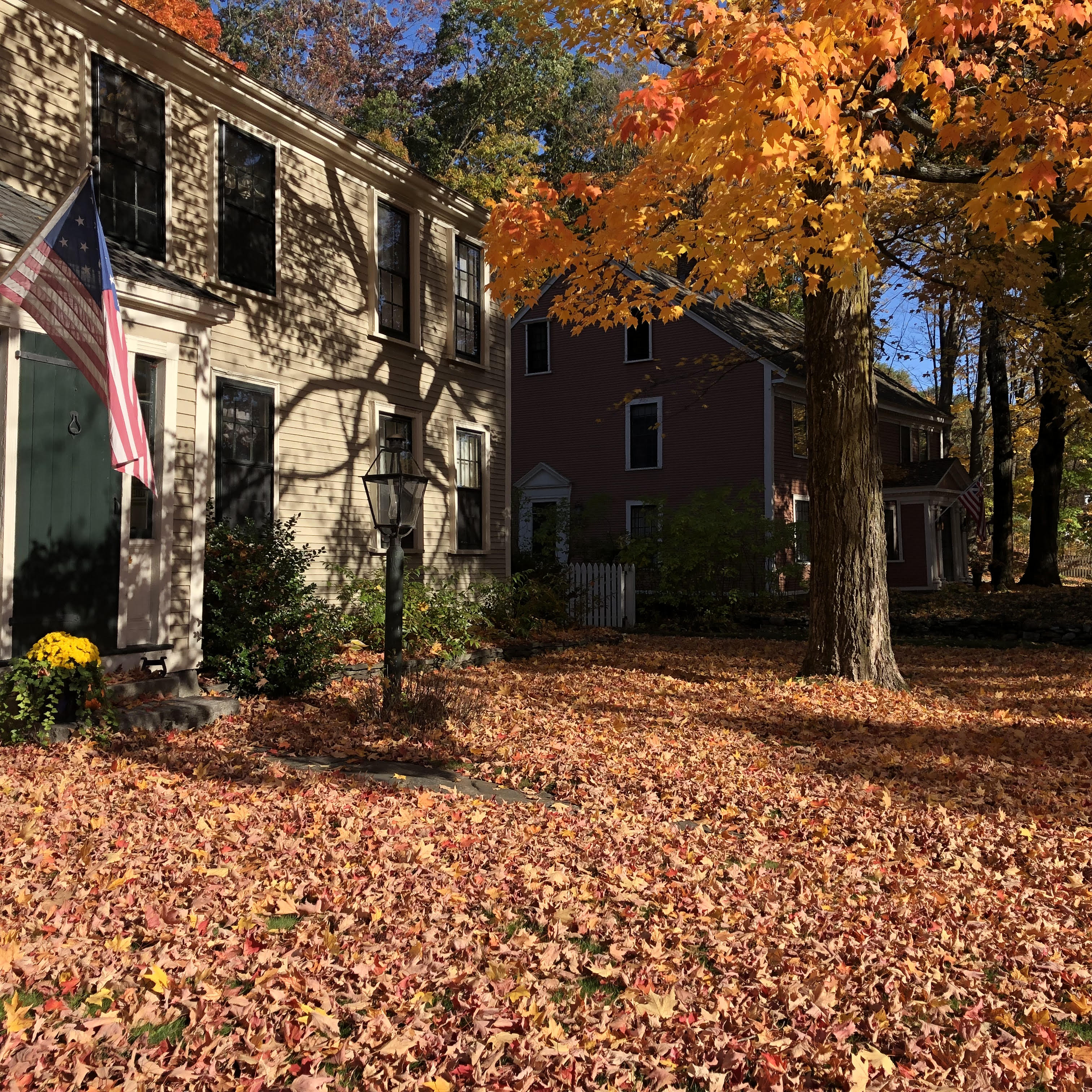
Photos: Suzanne and John’s Mom. The movement to promote native species as protectors of the environment is gaining steam. Native species love your discarded leaves.
I haven’t had any luck yet persuading my own family and friends about the advantages of unraked yards, but after all, it took a few years for my friend Jean, the native-plant evangelist, to get through to me.
In recent years, a range of stories on the topic have appeared as the national media has caught on. I will list a few articles at the end. But perhaps the best explanation of the thinking behind unraked yards — and the best how-to — can be found at the Wild Seed Project.
Anna Fialkoff talks about rethinking garden clean-up. “While planting native plants is an essential step toward creating habitat, how we manage our plantings will determine whether we can sustain and support the life-cycles and successful reproduction of many other organisms including birds, butterflies, moths, bees, salamanders, and frogs.
“Autumn is when many of us think to put our gardens to bed by removing leaves and cutting back perennials. Yet to truly support living creatures year round, it’s much better to leave fallen leaves, branches, stems, and seed heads where they are rather than raking, blowing, shredding, or cutting them away. Leaves and other organic matter insulate plant roots through the cold winter months and then decompose to build up living soil critical to healthy vegetation.
This organic matter also stores large amounts of carbon, which is crucial to supporting a climate-resilient planet. …
“Many species of butterflies and moths, including our beloved luna moth, pupate and overwinter in leaves before emerging as stunning winged adults the following spring. Raking away the leaves is very disruptive to that life in the leaf litter. Leaf blowers are even more damaging, and also create noise pollution and use large amounts of fossil fuels – please discontinue this practice.
“Undisturbed leaf litter is also essential to the Baltimore checkerspot butterfly, which requires two seasons to complete its life cycle. After a first season of foraging on its host plant (white turtlehead) the caterpillars crawl down and overwinter in the leaf litter. This once common butterfly is in decline due to loss of habitat and poor gardening practices. [See pictures here.]
“Other small creatures like the eastern newt, as well as many species of salamanders and frogs, spend the frigid winter months hibernating under the protection of leaves, rocks, and logs.
“For many, leaf management can feel like a never-ending burden in the fall. Even if we want to leave the leaves, we can’t let them accumulate everywhere or they will smother the grass, clog sewer heads, and leave a slippery layer to get mushed into the ground by cars, snowblowers and pedestrians.
The problem is not that deciduous trees shed ‘too many’ leaves, but that we have developed our landscapes and removed natural areas. Too much space is now taken up by driveways, streets, sidewalks, and lawn.
“Leaves are an exceptionally valuable resource! They contain nutrients and organic matter that we should keep on site, instead of raking or blowing them from off our lawns and driveways and into the woods, or stuffing them into leaf collection bags to be taken off site. We can find more places for the leaves to go by shrinking our lawns, creating more planting space, and consolidating the excess leaves that fall outside our planting beds.
“Using leaves as mulch for a planting bed is a free alternative to buying bark mulch or other expensive and harmful inputs such as fertilizers and dyed mulches. The space under a tree is an especially critical place to keep leaves since many butterfly and moth caterpillars drop down from trees into the leaf litter to pupate and overwinter. …
“Still too many leaves? Rake the leaves that fall outside the planting beds into a pile. Yes, in this case raking is okay (and leaf piles are necessary for jumping in!). Our goal is to not remove them from within our planting beds, which benefit from the organic matter and insulation for the cold winter months, limiting disturbance to the leaf litter and any overwintering creatures.
“Move your leaf pile somewhere it can compost in place over the next growing season. You will be surprised by how quickly it shrinks down. Or, make a leaf fence! Coil up chicken wire into columns and arrange them side by side. Fill them with leaves. You’ll find that you can’t use the leaves up fast enough since they break down so quickly. Before you know it you’ll be stealing the curbside leaf collection bags from your neighbors to keep your leaf fence full. Suddenly one person’s yard waste is another’s treasure. …
“Inevitably, leaves will blow around and pile up in various corners of the yard. Rather than repeatedly removing leaves from the same spots, pause and pay attention to where they tend to accumulate or blow away, and plant accordingly.
“Plant strong stemmed plants like ferns, baneberries and bugbanes, coneflowers, or milkweeds in the areas where leaves accumulate. Leaves often form a deeper layer in low, concave spaces of the landscape, like at the bottom of a slope or a valley.
“There are a few ground covers like sedges, creeping and rock phlox, pussytoes, bearberry, and groundsels, that can get smothered by leaves. Plant them in spots where the wind strips leaves away. Leaves don’t tend to stay put on elevated, convex landforms, so don’t fight it and work with what you have.
“Wait until spring, just as you begin to notice sprouting and emergence, to remove leaves that get stuck in the crevices between rocks, against fences, and within shrubs.
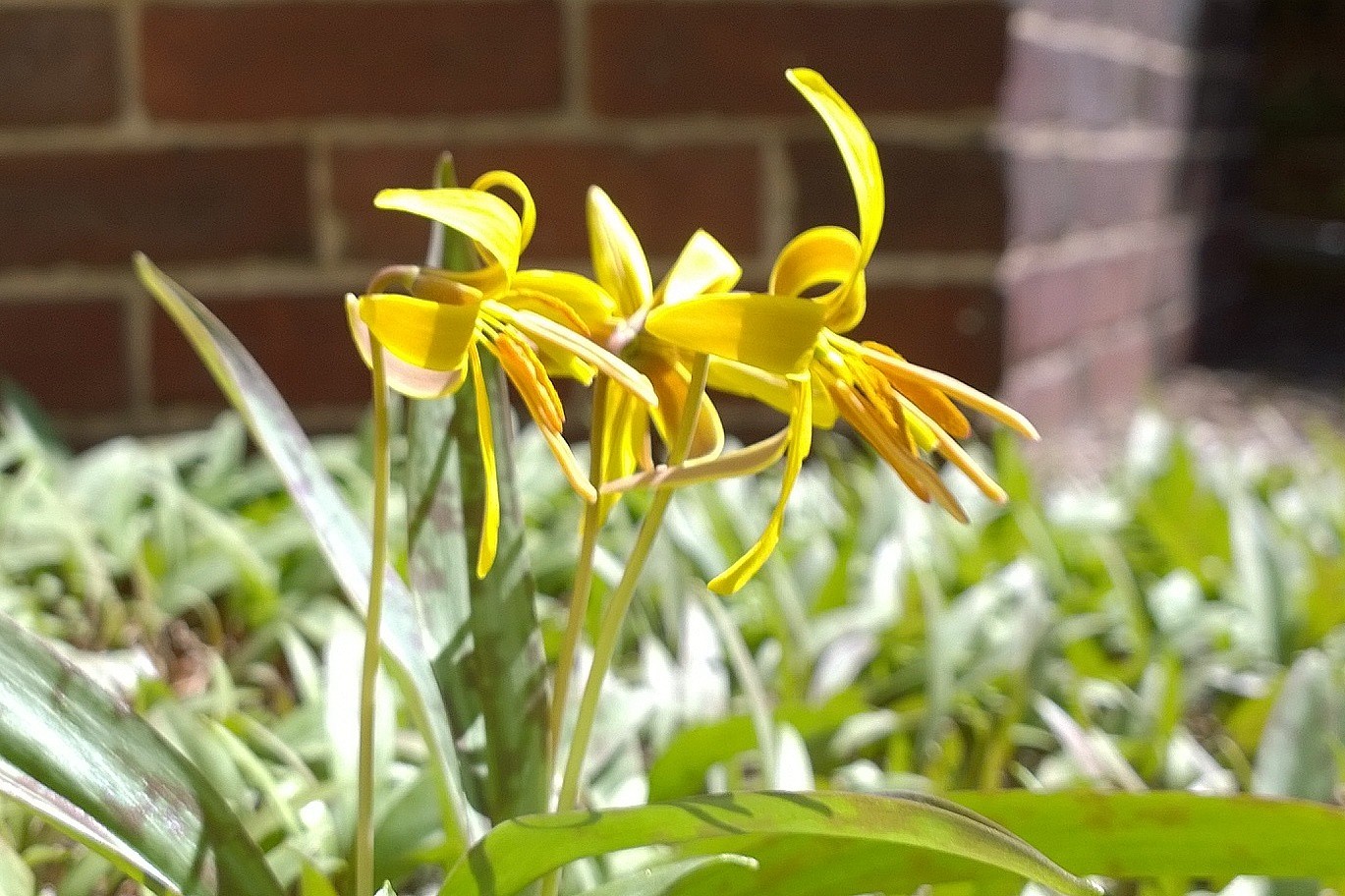
The native trout lily has no problem pushing through 2″ to 6″ of leaf litter.
“A common worry of gardeners is that plants cannot push through whole leaves or thick layers of leaves. Many woodland natives, even ephemerals like trout lily and squirrel corn, that are adapted to soils rich in organic matter created by decomposing leaves, have no trouble emerging through a good 2-6” of leaves.”
Fialkoff even gets into leaving the sticks and making outdoor art if you are so inclined, but I will stop now and let you read the rest at the Wild Seed Project, here. More at the Nature Conservancy, here, Audubon, here, and USA Today, here. No firewalls.
Photo: Avi Werde on Unsplash. “Rental properties,”notes Living on Earth, “comprise more than a third of U.S. housing stock, [and] 40% of the U.S.’s rental housing stock faces risk of damage from climate disasters.”
When I was first visiting retirement communities, I noticed that the heat was turned up high. I asked in one place if residents could control the temperature in their rooms, and the answer was no. I thought about that when I heard today’s story. Renters have little control over the temperature in buildings and no say at all about efficiency steps to counter global warming.
Host Steve Curwood at the radio show Living on Earth introduced a recent show on the topic.
“CURWOOD: There will soon be funds and programs for homeowners to take climate action by installing solar panels and energy efficient heat pumps. But renters typically use a third more energy per square foot than homeowners because landlords often don’t get a financial return on installing expensive upgrades to improve insulation and HVAC efficiency. …
“But there are ways for people living in rental housing to go greener, save energy costs and guard against heat waves and other climate related risks, says Todd Nedwick the Senior Director of Sustainability Policy at the National Housing Trust. He spoke with Jenni Doering.
“DOERING: We want everyone to be able to play a role in mitigating the climate crisis. [Landlords] don’t always have that clear incentive to do so. So what kinds of carrots, or sticks for that matter, can help prod building owners to reduce their energy consumption?
“NEDWICK: [There] are incentive programs out there, utility energy efficiency programs, for example, that will help to offset the cost of making building upgrades. Those are really important resources for building owners, especially owners of affordable housing, where there really is very limited cash flow to actually pay for the upfront cost of some of these upgrades. And we’re also seeing policies like building energy performance standards, which basically require building owners of poor performing buildings to make upgrades to reduce energy use of the buildings. So we are seeing both carrots and sticks. I think what works most effectively is when you combine the two. So, if you’re going to have a building energy performance standard and require building owners to make upgrades, especially in affordable housing, providing resources to the owner to actually pay for some of those costs is pretty important.
“DOERING: And how do those incentives and standards work? Are they at the local level, the state level, the federal level?
“NEDWICK: [Standards] are typically at the local or state level. … There are several cities that have implemented building performance standards, and Maryland just became the third state that adopted a building performance standard statewide. And then for the incentive programs, typically those programs are at the utility level. So it’s utilities that are providing those incentives to their customers. However, state public service commissions really make decisions that impact the utilities’ motivation to provide those energy efficiency programs. Input from residents, from affordable housing providers, is really key to designing these programs in a way that’s truly equitable. …
“One opportunity for renters is community solar. We know that renters can’t control the installation of solar panels on their building, but they can access community solar, which allows residents to basically purchase solar generation from a solar community.
“Renters can have control over, for example, improving the lighting in their unit, using more efficient lighting like LED, as well as talk to their landlord and encourage their landlord to participate in some of these energy efficiency incentive programs. …
“DOERING: A lot of sustainable changes like weatherization, even some energy efficiency measures, may come with a significant upfront price tag. What resources are available to help landlords make these upgrades?
“NEDWICK: [Many] utilities offer energy efficiency rebate programs, which helps to defray some of the costs of the building upgrades. There’s also financing that can be available, a lot of green banks develop targeted financing programs for affordable housing, which provides the upfront resources that building owners will need. …
“Some programs [require] as a condition of receiving funding to make building upgrades, landlords have to keep rents affordable, they have to agree not to raise rents as a result of the upgrades that are being made to the building. … If 100% of the cost of the upgrades are being provided through these programs, then there should be very little increase, if any. …
“DOERING: Given that 40% of the US’s rental housing stock faces risk of damage from climate disasters, that’s according to Harvard University’s Joint Center for Housing Studies, how is this set to impact renters? …
“NEDWICK: In this country, we spend so much more funding on disaster recovery than we do disaster preparedness. And we’ve found that particularly rental housing, the disaster recovery funding often doesn’t reach renters and owners of rental housing. Typically, disaster recovery programs allocate funding based on the extent of the economic disruption from a climate event. And so that often correlates with higher property values. As a result, a lot of the disaster recovery funding, especially through some of the FEMA programs, really don’t reach affordable housing residents and owners in an equitable way. …
“The Inflation Reduction Act included a $1 billion program specifically targeted to the HUD housing stock that will allow building owners to invest both in the energy efficiency of the building as well as improve resilience. So we are really happy to see that level of investment and that targeted approach to addressing affordable housing.
“There are also programs in the Inflation Reduction Act that will provide rebates to both single family owners as well as multifamily building owners to encourage building owners to invest in energy efficiency, as well as converting existing fossil fuel burning equipment to all electric. [In] Washington, DC, where I’m from, buildings account for 75% of greenhouse gas emissions. So we’re not going to address climate change if we’re not addressing the existing housing stock. You know, climate policy is housing policy.”
More at Living on Earth, here, where you can listen to the show if you’d rather. No firewall.
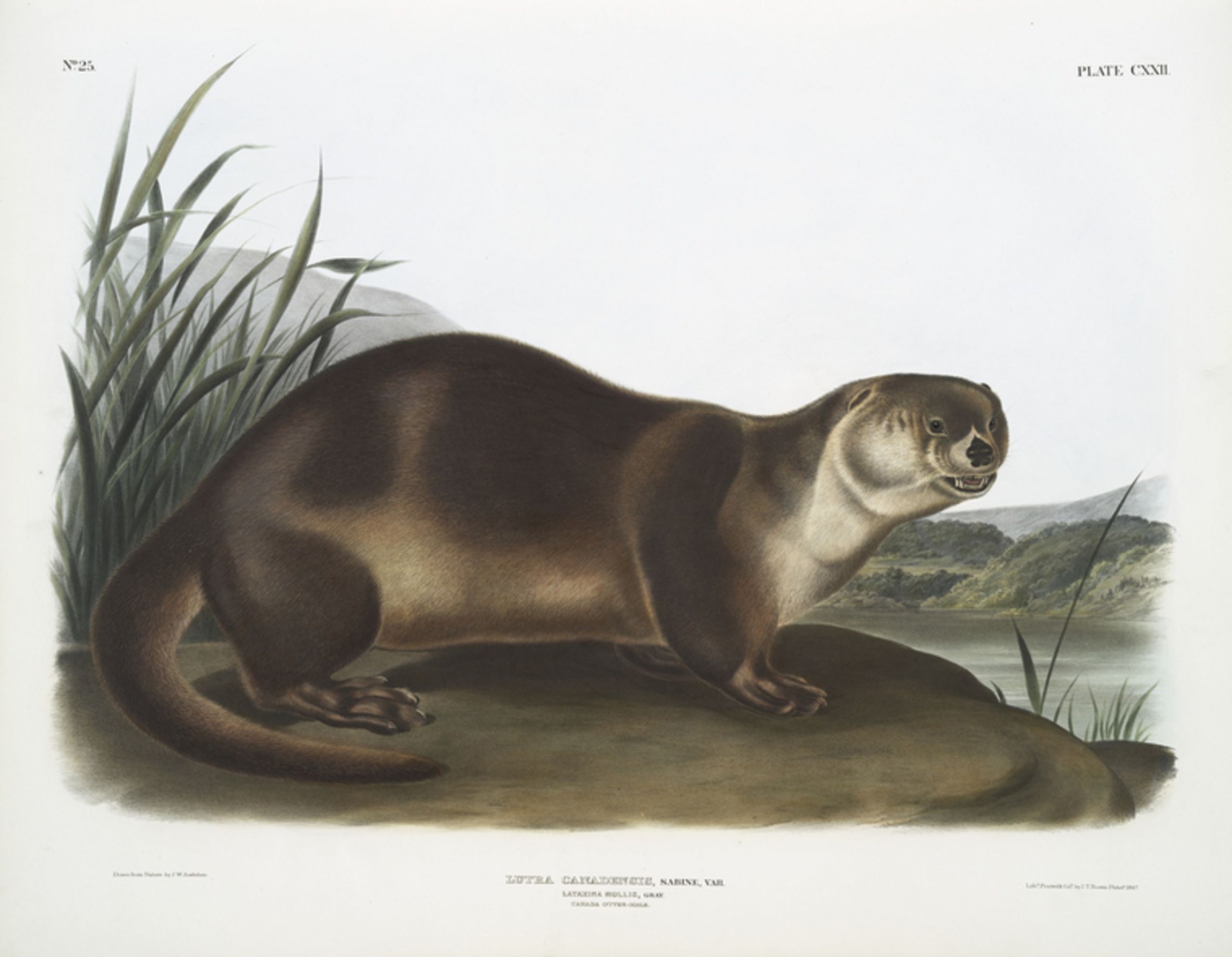
Art: John James Audubon. “Lutra Canadensis, Canada Otter” (New York Public Library).
Hyperallergic is an online art magazine with a wide variety of stories that you just want to share. You can read it without paying, but of course, they need contributors as well as readers.
Today’s inspiration from Hyperallergic is about otters.
Sarah Rose Sharp writes, “Though seals are probably the gateway to aquatic mammal fandom, connoisseurs of the genre all agree that otters are best in class. These furry powerhouses are not only capable of tender intimacy and novel tool usage, they often just seem to be having the besttimeever. So it’s no wonder that they have been a recurring motif throughout art history. …
“Though better known for his bird illustrations, John James Audubon’s last major work was The Viviparous Quadrupeds of North America, produced in collaboration with his friend, the Reverend John Bachman, who wrote the text that accompanies his illustrations. On his final drawing expedition in 1843, Audubon traveled with his son up the Missouri River to document and depict the four-legged mammals of North America — including, of course, otters.
“But the love of these little water scamps goes back much further than a couple of centuries. On view at the Metropolitan Museum of Art is just one example of otters as a common motif during the Late Period and Ptolemaic times.
“ ‘The pose of raised paws signifies the otter’s adoration of the sun god when he rises in the morning,’ reads the label on this Ancient Egyptianbronze statuette, dating to between 664 and 30 BCE.
‘In myth otters were attached to the goddess Wadjet of Lower Egypt, whose cult was centered in Buto, in the northern Delta.’ …
“For high otter drama, you can hardly do better than the standoff in Pieter Boel’s painting ‘Otter Harassed by Dogs‘ (c. 1600) currently in the collection of El Museo del Prado in Madrid, Spain. … Otters could messyou up at any time, so try to stay on their good side.
“Obviously, otters are a common motif in ancient and contemporary animal fetish carvings, such as [one] example of an ‘otter toy‘ from Cape Prince Of Wales, Alaska, part of the Smithsonian’s Museum of Natural History collection. According to the Toh-Atin Gallery, otters as a fetish animal represent ‘balanced femininity.’ …
“For the painfully literal seeking out otters in museum collections, nothing can hold a candle to the American Museum of Natural History (AMNH) in New York, whose permanent River Otter installation and background mural in the Hall of North American Mammals was captured by AMNH photographer Denis Finnin. ‘As morning mist veils a lake in Algonquin Provincial Park, a young female river otter comes ashore and inspects a spider web,’ reads the AMNH image description. …
“Speaking of meditative otters, a beautiful painting on silk from the Meiji period, the work of Japanese artist Seki Shūkō, is sure to meet all your needs for minimalist marine mammals. You can practically hear the noise of the rushing river. …
“But otters need not only be social animals, they can also be voices for animal welfare, as a woodcut by South Korean artist Shumu demonstrates.
“ ‘Animals are different from humans in language and appearance,’ the artist said in a message to Hyperallergic. ‘But animals feel the same or similar pain as humans, and they have emotions. Species discrimination against animals must stop. I hope that by continuing to work and share the life of veganism, it can become a small but resonant message.’ “
Nice examples of otter art through the ages at Hyperallergic, here. No firewall. Do you have favorite otter stories or images? Please share them.
The book My Cat Likes to Hide in Boxes was a hit with John and Suzanne — and later, their children.
Animal behavior can be fascinating. Some readers may recall my posts about foxes stealing shoes. You may also know the popular author Sy Montgomery, who interprets for the rest of us the mysterious activities of critters from the octopus to the tarantula. Meanwhile at the Washington Post, Marlene Cimons has an interesting look at household pets.
“Bella the beagle loves boxes from Amazon. She tears into them, while ignoring other deliveries. … Little Bit, a recently departed tortoiseshell cat, was similarly obsessed — but with socks. She would raid the laundry basket in the middle of the night and paw through the open suitcases of houseguests, who invariably found themselves one sock short in the morning.
“Pets do quirky things. At least it may seem that way to their humans. But these traits often make perfect sense to the pets, say scientists who study animal behavior. …
“ ‘These behaviors are not invented on the spot,’ says Carlo Siracusa, associate professor of clinical behavior medicine at the University of Pennsylvania School of Veterinary Medicine. ‘[Their ancestors’ behavior has been] adapted to their new lives as domesticated animals now that they are living with humans.’ …
“Dogs, for example, often ‘make their beds’ — as humans describe it — by scrabbling on blankets, sheets or doggy beds, then turning a few times before settling down, a habit that probably comes from an age-old instinct to create a safe, warm place to sleep.
” ‘Think about where animals sleep in nature,’ says Evan MacLean, director of the Arizona Canine Cognition Center at the University of Arizona. ‘They mat down an area before they lay in it.’ …
“Sometimes dogs will paw the ground after pooping. (Advice: Wait a few seconds before bending down to pick up their waste to avoid being hit by flying debris.) They are not burying their feces.
“ ‘They are depositing scent in those areas,’ MacLean says, which may explain their pickiness about a pooping spot. ‘They’re looking for the best part of town to put up a billboard. They want a good place to advertise. Scratching creates a ground disturbance, to catch attention. It’s almost like drawing a picture with a big red marker around it.’
“The signpost is meant for other dogs, another quirk they inherited from wolves, he says. ‘Territory marking is very likely one function of this communication, but there is a lot of other information that might be encoded in odors that we don’t understand well as humans,’ he says. …
“Cats, on the other hand, almost always bury their waste. ‘They are covering their tracks,’ says Monique Udell, director of the Oregon State University Human-Animal Interaction Lab. …
“Mikel Delgado, founder of Feline Minds, a Sacramento cat behavior consulting service, says that some of these traits derive from cats’ wild origins.
“ ‘Cats are highly predatory, they are naturally active at dawn and dusk, they are in the middle of the food chain — both hunters and hunted — with some behaviors that are natural, like scratching, and we can’t train that out of them,’ she says.
“Experts also insist that the reputation of cats as socially aloof is undeserved. They have facial scent glands, and when head-butting their human, they are probably depositing secretions to mark their social partners, says Kristyn Vitale, assistant professor of animal health and behavior at Unity College.
“ ‘Kneading’ is what kittens do to their mothers when nursing to stimulate milk production. Adult cats may ‘knead’ humans when they are feeling relaxed or are trying to calm themselves. … ‘It’s like thumb-sucking in toddlers,’ Udell says.
“While dogs share many behaviors inherited from wolves, they’ve also developed a few of their own, for example, ‘puppy dog eyes,’ the innocent look that humans are helpless to resist.
“ ‘They want to be connected to us,’ says Jeffrey Stevens, director of the Canine Cognition and Human Interaction Lab at the University of Nebraska-Lincoln. … ‘They look at us this way, and it changes our behavior.’
“Like wolves, dogs also like to lick faces. Humans think their pet is kissing them. Sorry, they are not.
“ ‘It’s how wolf puppies get food from their parents’ mouths,’ MacLean says. ‘It also can be a sign of submission. When a lower-ranking individual approaches a higher-ranking one, it gets down real low and licks the dominant one to say: “I’m not a threat to you.” ‘
“There are some behaviors researchers can’t explain, such as ‘Zoomies,’ the term often used to describe frenetic and seemingly random movement by a dog, likely an energy release.
“ ‘My dog runs around in crazy manic circles with her mouth open, her tongue out, ears back and butt tucked in, and if I mess with her while she’s doing it, she gets even more hyper,” [Sarah-Elizabeth Byosiere, director of the Thinking Dog Center at CUNY Hunter College] says. ‘She’s getting something out of her system and can’t focus until she does this. But we have zero science on this.’ “
Angie Johnston, director of the Canine Cognition Center and Social Learning Laboratory at Boston College, says that one of her dogs tap dances. ” ‘When he gets excited, he taps with his front paws, then he jumps up on all four feet and spins around in a circle in midair,’ she says. ‘He does this when he is excited or happy. I don’t know where it comes from.’
“As for Bella, the dog who preferred Amazon boxes over all others, the explanation seems to be her great success in sniffing out the snacks they contained: She smelled protein bars in the Amazon packages. After ripping her way in, she ate almost all of them, except for the few she stuffed behind the sofa cushions for emergencies.
“ ‘She was very fastidious about it,’ says Jeffrey Levi, professor of health management and policy at the Milken Institute School of Public Health at George Washington University, one of Bella’s people. ‘She never eats the wrappers.’
“Little Bit, the sock-addicted cat, was also apparently motivated by smell.
“ ‘Many animals carry around socks and shoes,’ Udell says. ‘Humans produce smells on the bottoms of their feet, so if you want to get closer to your human, there’s nothing like a good smelly sock.’ “
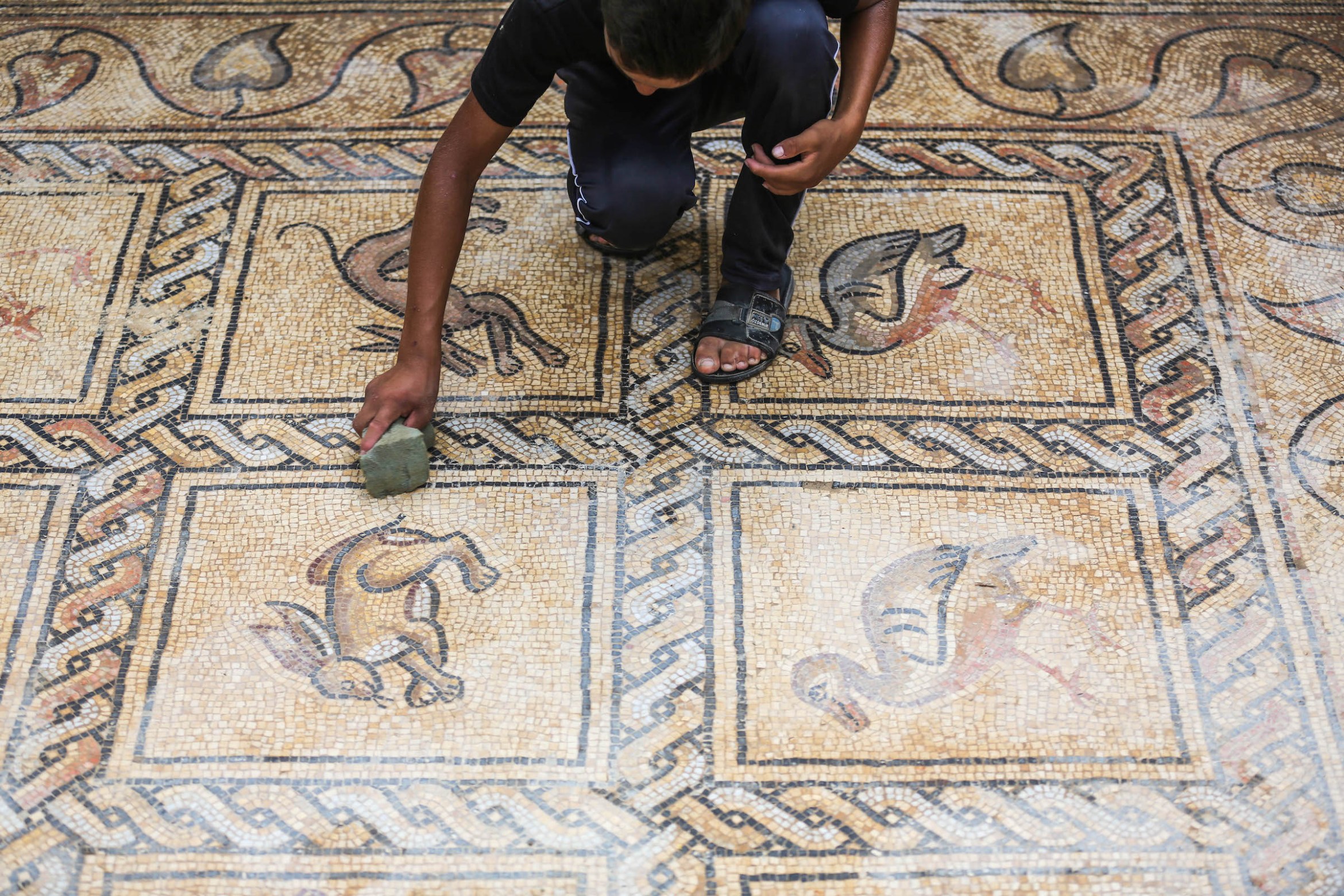
Photo: Ahmed Zakot. A Palestinian farmer unearthed a Byzantine floor mosaic beneath his olive grove.
We keep learning that beautiful discoveries can still be made, even in mundane settings. Perhaps you have discovered yellowed letters your parents wrote to each other when courting. Perhaps there was an antique bottle inside a wall when you renovated.
Such items can be exciting, but it’s hard to beat the discovery a farmer in today’s stumbled upon.
Elaine Velie reports at Hyperallergic, “Salman al-Nabahin, a farmer from Gaza’s Bureij refugee camp, was trying to plant new olive trees in his orchard but something underneath the soil was standing in his way. He investigated for three months, digging out the soil with his son until they unearthed a stunningly well-preserved Byzantine floor mosaic.
“Al-Nabahin told Reuters that he searched the internet to asses the mosaic’s origins. An archaeologist from the French Biblical and Archaeological School of Jerusalem, René Elter, later confirmed the work as a Byzantine mosaic, placing the mosaic between the fifth and seventh centuries CE. …
“ ‘Never have mosaic floors of this finesse, this precision in the graphics and richness of the colors been discovered in the Gaza Strip,’ Elter [told the Associated Press], adding that more research is needed to determine the work’s intended function.
“The Palestinian Ministry of Culture stated that investigation into the mosaic was still in its early stages and a team of national experts would partner with experts at the French Biblical and Archaeological School of Jerusalem to research the work.
“Gaza is situated on a thriving ancient trade route, and dozens of important archaeological discoveries have been uncovered there in the last few years. The recently revealed mosaic, however, sits less than a mile away from the Gaza-Israel barrier, which Elten said puts the discovery in ‘grave danger.’ …
“ ‘I see it as a treasure, dearer than a treasure,’ al-Nabahin told Reuters. ‘It isn’t personal, it belongs to every Palestinian.’ “
Sarah Kuta at the Smithsonianadds, “Now, archaeologists with the Palestinian Ministry of Tourism and Antiquities and the French Archaeology School are hard at work studying the flooring to learn more about its ‘secrets and civilization values,’ says the ministry in a press statement.
“The mosaic features 17 iconographies of birds and other animals depicted in bright colors. Archaeologists … don’t know whether the mosaic had religious or secular origins.
“The farmer has been covering the unearthed areas of the mosaic floor with tin sheets to protect them; so far, he’s dug up three separate sections, the widest measuring 6 feet by 9 feet, according to Fares Akram of the Associated Press. In total, the land covering the entire mosaic is about 5,400 square feet, and the mosaic itself measures about 250 square feet. Some parts of the mosaic appear to be damaged, likely from the roots of an old olive tree.
“ ‘These are the most beautiful mosaic floors discovered in Gaza, both in terms of the quality of the graphic representation and the complexity of the geometry,’ [Elter] tells the AP. …
“The Bureij refugee camp [is] located about half a mile from the border with Israel. Archaeologists and other experts are concerned about the mosaic’s future because of the ongoing Israeli-Palestinian conflict, as well as looting and a lack of funding for historical preservation.
“ ‘It is a spectacular find, especially as our knowledge of archaeology is sadly so spotty given circumstances there,’ Asa Eger, an archaeologist at the University of North Carolina at Greensboro, tells the Art Newspaper’s Hadani Ditmars. ‘Gaza was very important during the period of this mosaic and known for its burgeoning wine production exported across the Mediterranean.’ “
You’ll love the photos at Hyperallergic, here, and at Smithsonian, here. No firewalls.







 Suzanne's Mom's Blog