Feeds:
Posts
Comments

500-year-old-rock-art-may-have-been-made-with-beeswax

Photo: Archaeologists Liam M. Brady, John J. Bradley, Amanda Kearney, Daryl Wesley
Was this ancient rock art created using beeswax stencils?

Here’s a tip for making detailed art that lasts. I’m talking about 500 years and counting. A team of archaeologists now believes the secret of certain cave paintings is beeswax.

Sarah Cascone writes at Artnet News, “Archaeologists in Australia believe they have identified a previously undocumented beeswax stenciling technique used by ancient artists to create cave paintings.

“Most rock art stencils are large in scale. Artists would place their hand or other objects on the wall and spray liquid pigment, creating a full-size negative image. But the artworks at a Limmen National Park site called Yilbilinji, in the Gulf of Carpentaria region of northern Australia, are much smaller. There are 17 tiny stenciled paintings at the site, some depicting human figures and animals, such as kangaroos and turtles, others of boomerangs and geometric designs.

“Studying the 500-year-old rock art there, a team from Australia’s Flinders University and Monash University, have come up with a new theory about how Aboriginal artists created the miniature and small-scale stenciled motifs.

“The team was able to replicate the mysterious miniature art using tiny models sculpted from beeswax, publishing their findings last month in the journal Antiquity. Representatives of the local Indigenous Marra people assisted with the experiment, which only used materials that are native to the region.

“The researchers believe that the Yilbilinji artwork may have served a spiritual purpose in religious rituals. On the other hand, the artwork is placed low to the ground, suggesting it may have been made by children.” More at Artnet, here.

Don’t you wonder how future archaeologists will interpret artifacts dug up from our own culture? Will their theories be as far apart as “It’s for a solemn religious ceremony,” “No, it’s for a child’s game”?

91176756_112802980363679_5284517-2

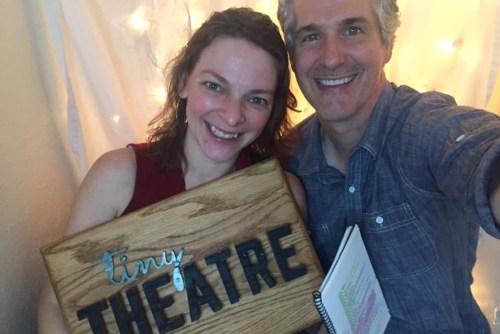
Photo: Tiny Theatre
Rachel Burttram Powers and Brendan Powers, actors married to each other, created a theater in their closet for these self-distancing times.

Sandra’s dear departed mother had the best recipe for boredom: Go clean out a closet. Sandra cleaned out a lot of closets as a kid, and now as an adult, she is never bored because she knows how to find something more interesting to do.

When I was a kid, I was one to play in the closet rather than clean it and had many tea parties with Carole, accompanied by flashlights, cinnamon toast, and dolls.

Today’s story is about two actors, married and stuck at home in the pandemic, who did both: They cleaned out a closet and then played in it.

Sarah Tietje-Mietz reports at American Theatre, “The stage lights glow like dozens of small stars while the countdown to curtain plays over the intercom. … The actors come together, separated by mere inches, so close that their knees bump and their shoulders touch, so close that they have to lean back to even look at each other.

“The stage is a 4-by-4 closet, lit by a string of Christmas lights. … The audience is all online. Welcome to Tiny_Theatre.

‘I think there’s a need for humans to connect, maybe more than ever,’ said actor and Tiny_Theatre co-founder Rachel Burttram Powers. ‘Toni Morrison says that it’s the artist’s job to create in a time of crisis, you know? We created this out of necessity.’

“Tiny_Theatre is the passion project of Rachel and her husband/co-founder, Brendan Powers, as a response to the shuttering of all theatres in the wake of COVID-19. The couple perform from the guest room of their Fort Myers, Fla., home three times a week — Mondays, Wednesdays, and Fridays — on Facebook Live. …

“Rachel and Brendan have established a network of playwrights to tap into for their newest project. Some writers have even reached out directly with suggestions of work. Rights for the plays have all been granted gratis to the couple. …

“In early March, Rachel and Brendan were in the final dress rehearsal for Florida Rep’s production of Lucas Hnath’s A Doll’s House, Part 2. The theatre closed its door the next day. Though the couple’s turn as Nora and Torvald was recorded and streamed online, the two found themselves suddenly faced with an abundance of time and artistic energy.

“ ‘We were sort of in that mindset as performers,’ Rachel said. ‘We were ready to go eight shows a week. Suddenly it was like a needle pulled off the record.’

“Added Brendan, ‘A couple days in, once we knew we were canceling the show, I could see Rachel — I can tell when she’s thinking of something.’ …

“Back to Rachel: ‘I started cleaning out a back closet because I thought, “What would happen if you made a theatre at home?” We knew everyone was self-isolating. We both have a passion for new plays, and we have a lot of playwright friends who are very well established, and I just thought, “Let me just send an email to see if people would be game to play with us.” ‘ …

“There is evident respect in the way they communicate, not just as a married couple but as professionals in their field. Playwright Arlene Hutton acknowledges this interplay as creating an environment akin to a mini-repertory company in Tiny_Theatre. Hutton was already familiar with the couple, having worked with Brendan when he starred in her work, Running, and seen Rachel in Florida Rep’s production of Audrey Cefaly’s Alabaster. … ‘They’re not trying to make it more than it is, you know?’ …

“On March 21, Tiny_Theatre debuted with scenes from Cefaly’s Maytag Virgin. This inaugural performance was also the couple’s first Facebook Live experience. (Brendan did not even have a Facebook account at the time.) Their setup was a smartphone, a broken tripod, and a paint stirrer, all literally held together with duct tape. …

“The technical system has since been upgraded, which they credit to the community that has bloomed around Tiny_Theatre. Friends, family, followers, and even strangers have sent gift cards (resulting in a new iPad) as well as printer paper and toner (for printing and notating scripts). …

“There’s a goofiness and levity to these two, a palpable happiness for the work they are doing. Silliness aside, the two have dedicated years to honing their craft onstage. In such close proximity, their acting is distilled to their voices, the acuity in their facial expressions, the gentle placement of a hand, through which they transport their viewers beyond the confines of their closet.

“ ‘That’s been tricky,’ Brendan said of the lack of mobility. ‘As we read a scene — you’re an actor, you start to feel it, and then you get put in that situation where you can’t storytell physically or only very, very minimally.’ …

“It was this challenge that attracted Nathan Christopher, who found out about Tiny_Theatre through the Playwright Submission Binge online community and became enamored with the project after just one viewing. The Powerses accepted Christopher’s submission of his recent play A Man Walks Into a Bar, performing it on April 6, as well as Clairvoyant, which came from an open call they put out that asked writers to create short works inspired by a single photo they provided as a prompt.”

Read more here.

060620-Covid-graduation

Nobody needs me to spell out the “worst of times” side of 2020. As for the “best of times,” if we learn a lot and change things that need changing, then OK, maybe. But that is something we won’t know for years.

Meanwhile, there are things like this: people getting in touch who usually only send holiday cards, learning which technologies are useful, rediscovering pleasure in nature, being forced to reconsider priorities. Thinking more deeply.

This photo round-up doesn’t cover the whole range. (I’d ordinarily have pictures from protests but am too afraid of Covid-19 to go out.) I do have photos that reflect self-distancing and nature.

At the top, we have some parents’ tribute to their high school senior who, according to another message on the Toyota van, was embarrassed by the effort — especially because they “used that car”!

Next you see that self-distancing in a crowded antiques co-op was too difficult for one vendor, who decided on an honor system and even left items outside overnight!

The painted duck is enlisted every year to promote a nursery school’s rubber-duck race. This year the duck is thoughtfully wearing a mask.

I wanted to include the sign poking fun at my hyper-preservationist town and also a picture of some calligraphy I almost stepped on. The collaborative calligraphy artists are called Pollen, Wind, and Rain.

The yellow iris is Kristina’s, and the purple ones under the yew are at my house. Next up, the iris and peony gardens at Minuteman National Park — really worth the walk.

The next two photos suggest that one homeowner is into purple. Me, too. I love that clematis! The deep pink peonies made for my favorite peony shot. (I don’t find the typical round clumps anchoring lawns very photogenic. )

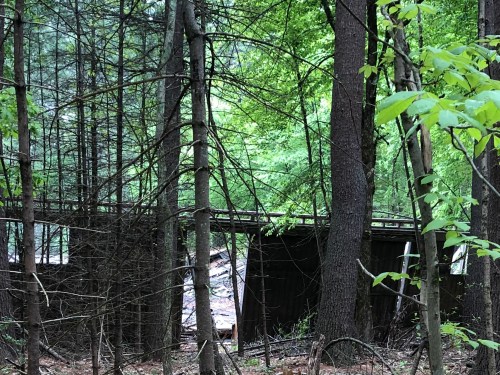
The Pink Lady Slipper next to the Starflower requires very special conditions in the wild, and I always feel honored when a Lady Slipper on protected conservation land lets me see her. The next three shots are from the same woodland walk, the last a total mystery. It’s a collapsed building that appears to have been left to rot in the forest years ago. I wrote to my 10-year-old grandson about it. Perhaps he will come up with a theory.

060120-self-service-antiques

060720-ducky-wears-a-mask

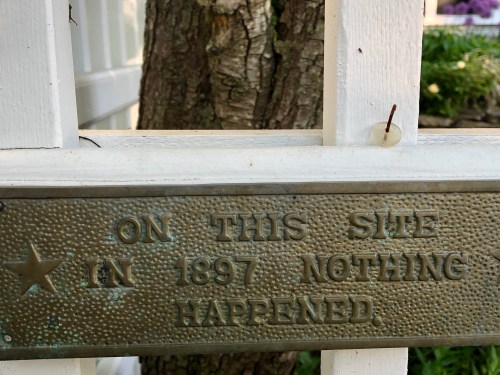
060420-nothing-happened-here

060720-pollen-art

20200530-iris-by-Kris-Joyce

060520-iris-and-yew

60520-Buttrick-House-iris-garden

060220-purple-clematis

060220-flowers-along-a-fence

060420-dark-pink-rhodies

052520-.Pink-Lady-Slipper-and-stars

052520-.tree-amputee-keeps-going

052520-looking-up-in-branches

052520-.woodland-mystery


When I worked at the Fed magazine, I attended a couple conferences on housing for seniors and learned about a thing called universal design. Universal design espouses the notion of making all architecture accessible so expensive alterations aren’t needed later. Someday, you might be using a wheelchair or crutch in the home you love, and wouldn’t it be nice if you didn’t have to reconfigure it for a ramp, flat thresholds, wider doors, handrails, higher toilet seats, etc.?

Similarly during the coronavirus pandemic, architects have been rethinking design so we don’t need too many adjustments in pandemics. Think of all the light switches, doorknobs, and elevator buttons you’re careful not to touch these days! Think of the store ventilation systems you wonder about! What if you didn’t have to worry?

Recently, Carolina A. Miranda addressed this topic in a long feature at the Los Angeles Times.

“In another time, not long ago, an elevator was a conveyance to reach a higher floor, an open office was a spot to clock eight hours while hoping your boss didn’t catch you checking Facebook and a doorknob was one of those banalities of architecture that seemed to warrant attention only when it needed replacing.

“What a difference a virus makes. …

“ ‘If you take the great architectural inventions of the 20th century: the airport, the high-rise, the freeway — those are the things that are challenged the most right now,’ says Brett Steele, dean of UCLA’s School of the Arts and Architecture. ‘They have great density or they promise movement at high speeds. Those are exactly the things that sit at the crux of the crisis we are going through.’

‘It’s a reset button for the entire world,” says Mark Lee, co-founder of the Los Angeles firm Johnston Marklee and chair of the architecture department at Harvard’s Graduate School of Design. …

“ ‘I’m working on a synagogue, and that is a crazy problem,’ says Barbara Bestor, founder of Bestor Architecture, a 25-person firm based in Silver Lake. ‘How do you do High Holidays after COVID with 2,000 or 3,000 people?’ …

“The solution may involve segmenting larger spaces and segregating the most vulnerable in a separately ventilated environment. … Or it may involve designing a physical space that, Bestor says, features ‘a robust video component so that people can watch remotely.’

“Gatherings via videoconference could become a way of life. Architects could find themselves designing spaces just for that purpose. …

“First, architecture firms, like all other businesses, must weather the pandemic. … The economics are dire. And yet there is a determination to not waste the moment.

“ ‘Every crisis is an opportunity,’ says Hernán Díaz Alonso, director of the Southern California Institute of Architecture (SCI-Arc). ‘The optimist in me believes that this will force us to reevaluate everything that we do.’

“This is a time, he says, to ask ‘the big metaphysical questions’ about architecture and its purpose. It’s also about considering the nuts and bolts. ‘If we don’t get a vaccine, what does that mean? What does that mean in terms of physical space? What do you do with a doorknob?’ …

“ ‘Densities of offices will change,’ [says Bob Hale is partner and creative director at L.A.-based RCH Studios].

“This raises questions about one of the most popular — and widely reviled — workplace designs: the open-plan office, in which rows of workers are jammed around long bench desks.

“These are settings that have a poor track record when it comes to producing actual work. They also, according to a Danish study from 2011, account for significantly higher rates of sick leave — a phenomenon that played out in a study published by the Korea Centers for Disease Control and Prevention in April, which showed the ways coronavirus hopscotched around an open-plan call center in Seoul. …

“Instead, many of the architects I spoke with visualize once-cavernous spaces segmented into more intimately scaled settings with small clusters of desks. ‘We work in teams, so it’s easy to think of people in groups,’ says Paul Danna, a design partner in the L.A. office of Skidmore Owings & Merrill, a global firm at work on an office development in Pasadena. ‘It’s a matter of putting barriers between groups as opposed to every individual.’ ”

The future of airports, affordable housing, and density of cities are among the many other design challenges addressed in the article, here. Enjoy.

Photo: Tara Wujcik
“Is there anyone out there who does not like fresh air and cross-ventilation or views?” asks Lawrence Scarpa in an article at the
Los Angles Times. The photo below is from a Brooks + Scarpa housing development for disabled vets that maximizes light and air.

bfnstr9bxputejec7ij9

yrrmu5caqxytzoquciacur-650-80

Image: Sepúlveda et al/ Project INCA, OPUS Programme/ Sorbonne Université
The Pachacamac idol, long thought to be destroyed by the Spanish conquistadors in 1533, was discovered in 1938.

There are those who think they can destroy whatever it is they don’t like if they have powerful weapons, and the brutal 16th century conquistador Hernando Pizarro was no exception. In this story, it was the Incan culture that supposedly needed to be destroyed. Now archaeologists are reaffirming that subjugation can never completely succeed.

Laura Geggel writes at Live Science, “A basketball-player-size wooden idol that allegedly escaped destruction by the Spanish conquistadors is real — but it may not be quite what people suspected. The statue is even older than thought, and may have been worshipped by the people who came before the Inca.

“And belying the grisly lore that surrounds it, the so-called Pachacamac idol was painted with cinnabar, not drenched in blood, the researchers found. …

“The Western world became aware of the Pachacamac idol when conquistador Hernando Pizarro ordered his followers to destroy it in 1533, asking them to ‘undo the vault where the idol was and break him in front of everyone,’ according to historical sources, the researchers wrote in the study.

“The Inca revered the idol, which was thought to possess the powers of an oracle. The Inca housed it in what is now known as the Painted Temple, located in the Pachacamac archaeological complex near Lima, Peru. In the 15th and 16th centuries, Pachacamac was an Inca sanctuary and a pilgrimage destination.

“However, it now appears that the idol survived the conquistadors. In 1938, an archaeologist found the 7.6-foot-long (2.34 meters) idol, which has a diameter of 5.1 inches (13 centimeters), at the Painted Temple. However, no one knew whether this carved wooden artifact was the idol, or something else.

“To investigate, [Marcela Sepúlveda, a research associate at Sorbonne Université in Paris,] and her colleagues did a carbon-14 analysis and found that the idol dated to about A.D. 760 to 876. … This date suggests that the Wari culture made the idol and that the Pachacamac site was important even before the Inca took over, the researchers said.

“In addition, the researchers wondered if the idol had been painted, like other artifacts from antiquity such as Greek temples and statues. One rumor from the conquistadors suggested that the idol was red, possibly from the blood of sacrifices.

“With the permission of the Pachacamac Site Museum, the researchers took the idol out of its showcase at the museum and analyzed it. …

” ‘We were excited to observe that traces of colors were preserved,’ Sepúlveda said. The idol’s teeth had once been painted white while parts of its headdress had yellow pigment, they found. The researchers also identified red, not from blood but from cinnabar, a mercury mineral. …

“Given that cinnabar isn’t found locally, it’s likely that the idol was painted red intentionally, possibly to show the culture’s economic might and political power, Sepúlveda said. …

“[Patrick Ryan Williams, a curator, professor and head of anthropology at The Field Museum in Chicago, said] ‘further analyses could help clarify the sources of these materials, but this is an excellent starting point for understanding the origins of this important idol, which was worshipped for hundreds of years before the Spanish Conquest at one of Peru’s most important early oracle sites.’ ”

The study was published online January 15 in the journal PLOS ONE. More at Live Science, here.

spiritofthewoods_yew_s6

This yew watercolor is one of many lovely illustrations by 19th century poet Rebecca Hey for an encyclopedia of trees. The rare book is reviewed by Maria Popova at Brainpickings. More images from Sylvan Musings, or, The Spirit of the Woods, here.

If you are not already following the blog or Twitter feed of Maria Popova at Brainpickings, you’re missing some very thoughtful commentary on the arts and sciences.

One of the many things I appreciate about her is the way she ties in related topics. For example, at the end of her post about 19th century poet/artist Rebecca Hey’s illustrations for an encyclopedia of trees, she suggests complementing the book with “Art Young’s imaginative Rorschach silhouettes of trees from the 1920s, Walt Whitman on the wisdom of trees, modern-day poetic naturalist Robert Macfarlane on what trees teach us about healthy relationships, and the inspiring illustrated story of Wangari Maathai’s tree-planting as resistance and empowerment, which made her the first African woman to win the Nobel Peace Prize, then revisit the stunning celestial art of the self-taught 17th-century German astronomer and artist Maria Clara Eimmart.” (Wow, talk about someone with a “catholic” taste!)

In her review, Popova quotes William Blake: ” ‘The tree which moves some to tears of joy is in the eyes of others only a green thing which stands in the way. … As a man is, so he sees.’…

“Perched partway in time between Blake’s time and ours, and partway in sensibility between the poetic and the scientific, Sylvan Musings, or, The Spirit of the Woods (public library | public domain) is, as far as I am aware, the world’s first encyclopedia of wild trees.

“Having resolved to face the new year like a tree, I came upon this forgotten treasure through the joyous gateway of serendipitous discovery — a bygone pleasure of atomic literature rarely accessible in our search-governed digital culture, always corralling us toward what we already know we are looking for.

“In the midst of a research project involving Mary Shelley, I acquired a rare surviving copy of the pioneering 1849 encyclopedia to which Shelley spent five years contributing short biographies of eminent scientists; one advertisement in the front matter of this fragile pocket-sized time travel device caught my eye. …

“Of the very few female authors published in the nineteenth century, many appeared under male pseudonyms or ungendered initials. (This tradition would carry well into the twentieth century, leading the young Rachel Carson to publish her revolutionary marine masterpiece under the byline ‘R.L. Carson.’) …

“ ‘Mrs. William Hey’ is Rebecca Hey — a poet, painter, and amateur naturalist. (Lest we forget, all women of scientific bent had to be ‘amateurs’ by virtue of being excluded from both formal higher education and the scientific societies of the time. …

“Each chapter opens with one of Hey’s handsomely hand-colored engravings of the tree’s leaves at the tip of a branch and closes with one of her original poems celebrating the species. Nestled between is the natural history of the tree, punctuated by thoughtfully chosen quotations from literary classics, both poetry and prose. …

“I have endeavored to restore and digitize a number of them, making them available as prints, with proceeds benefiting the Arbor Day Foundation, whose noble reforestation work and sylvan stewardship are more and more needed as we watch fires consume the ancient forests that have long been the lungs of this irreplaceable planet.”

Don’t you love the way the character of this writer shines through in her review? She does request donations at her site, and I think I have borrowed enough from her today to spur me to go there now and do my duty.

Do check out the wonderful array of tree watercolors at Brainpickings, here.

183726-emmanuel-sogbadji-sur-les-traces-de-paul-ahyi_ng_image_full

Photo: Cité Internationale des Arts
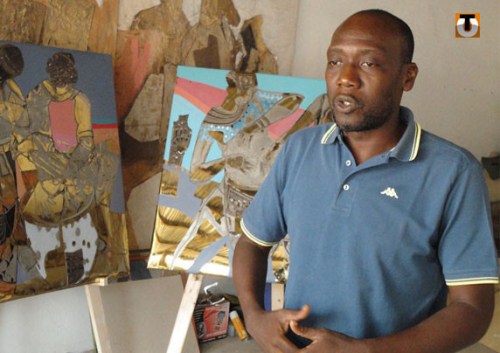
Emmanuel Sogbadji is one of the African artists whose work is shown at the new Togo museum, Palais de Lomé.        

Sometimes when I’ve been volunteering in ESL classes, I’ve caught the echo of African colonialism from languages that students try out on me because I don’t understand their native tongue. Somali and Eritrean students may know a little Italian, countries like Uganda and Zimbabwe speak English, people from such countries as Mali, Togo, and Congo know French.

Although multilingualism can be helpful in refugee language classes, I can’t help thinking the students wouldn’t have had to be refugees in the first place if the colonial powers hadn’t plundered Africa. I suppose that down the road, when the US starts welcoming refugees again, we’ll be getting people from Burkina Faso who know a little Chinese.

Anyway, because I had an English student from Togo who spoke French, I was not surprised to learn from today’s feature that Togo’s new national museum has French connections and a French name, Palais de Lomé.

Rebecca Anne Proctor writes at Frieze, “Festive scenes unfolded in Lomé’s botanical park in late November [2019], as drummers and colourfully clad moko jumbies, or stilt walkers, entertained guests – including President Faure Essozimna Gnassingbé and artist Kehinde Wiley – at the inauguration of the Palais de Lomé, Togo’s first major contemporary art museum and the only entirely state-funded arts institution in Africa.

“This is a remarkable achievement for one of the world’s poorest countries, where almost 70 percent of the rural population lives below the global poverty line, according to a 2015 World Bank report. The new museum is also an unexpected signal of cultural openness by the historically repressive Togolese government. …

“The museum is housed in the colonial Governor’s Palace, constructed in 1905, which served as a base for the Togolese state after the country gained its independence from France in 1960. For the past 20 years, however, it sat empty, until an extensive restoration project – costing [$3.6 million] – was completed in November 2019.

“Occupying the palace’s stately banquet halls and residential quarters, the new institution is large enough to accommodate five simultaneous exhibitions and abuts an 11-hectare garden, displaying works by Togolese sculptors such as Amouzou Amouzou-Glikpa and Sadikou Oukpedjo – another first in West Africa.

” ‘Three Borders’, the most contemporary of these shows, delves openly into the turbulent history of the region. In Togolese artist Emmanuel Sogbadji’s painting ‘The Intercessor’ (2006), a tall, semi-abstract figure holds a long knife. Flanked by two men, he appears defiant in the face of an interrogation. …

“As Claude Grunitzky, a New York-based Togolese editor, told me: ‘Many creatives and artists have begun to return to Togo as “repats”, […] leading interesting projects and ventures in the creative industries.’

” ‘The Palais de Lomé is a newborn child, one we have been awaiting in Togo for so long,’ added Clay Apenouvon, one of the country’s most prominent artists, who protested against the junta in his youth before relocating to Paris in 1992. Apenouvon is setting up a second studio in Lomé, where he now spends several months of the year. Not all are so optimistic, however: a Togolese artist, who wished to remain anonymous out of fear for his safety, told me that the Palais ‘will just be for the state. It won’t help the people.’ …

“The museum’s current comprehensive public funding model distinguishes it from comparable institutions on the continent. … Half of the Palais de Lomé’s government funding is set to expire at the end of its first year, however, so [Sonia Lawson, the Palais de Lomé’s inaugural director, a former luxury goods executive for L’Oréal and LVMH,] intends to form a board of donors of African descent, who she hopes will acquire new works from the continent and its diaspora for the museum’s collection.

“As a state-backed initiative, the Palais de Lomé resembles public arts institutions in the Gulf region – such as the National Museum of Qatar, opened in 2019, and the soon-to-be-completed Zayed National Museum in Abu Dhabi – which aim to boost cultural capital and foster local arts communities while improving the public image of governments viewed as repressive.

“It remains to be seen whether Lomé’s newest museum will spur substantive change or merely serve a propagandistic function, but the signs thus far seem promising. With ‘Three Borders’, Togo is not only looking outwards – to its neighbours and the international art world – but reflecting inwards on its own difficult history. ”

More here.

Congress provided $25 million in aid to the Kennedy Center in Washington, DC, and that institution turned right around and coldbloodedly furloughed people on its staff.

Meanwhile, the compassionate director of a different arts organization just wanted to figure out how to save her employees’ jobs.

Sarah Cascone reports at Artnet News that “by redeploying her staff in some ingenious new ways, the director of Texas’s Blanton Museum has managed to avoid job cuts. …

“As museums shuttered throughout the US, many were forced to cut staff through layoffs and furloughs … But thanks to some creative strategizing, the Blanton Museum of Art at the University of Texas at Austin has managed to keep its entire staff on the payroll since the school shut down operations on March 13.

“Museum director Simone Wicha, who recently published an op-ed about her approach in the Wall Street Journal, began thinking about ways to redeploy staffers who were unable to work during a prolonged shutdown. …

“ ‘From the beginning, I realized my team would likely be idle for at least four to six months and we needed to reinvent,’ Wicha told Artnet News in an email. ‘What also was clear was that social distancing would be needed for a much longer time frame, so budgeting would be different for a very long time.

‘I was distraught about what [the shutdown] might mean for our team, and started realigning the budget immediately to prevent layoffs,’ she added. ‘Beyond the financial challenges, I was especially mindful that losing our sense of purpose as a team or having individuals whose job was suddenly obsolete would create tremendous anxiety — and that’s not healthy.’

“With that in mind, Wicha asked the museum’s department heads to identify potential projects to work on during the lockdown — things that normally would be pushed to the bottom of the to-do list by more pressing day-to-day needs. Then she drafted a questionnaire for staffers, asking them to evaluate their skills in areas not necessarily related to their regular job responsibilities — were they a Photoshop whiz? A great writer?

“Wicha then matched the 32 employees whose jobs were most at risk to 30 new lockdown projects. …

The maintenance man stopped worrying about paint touchups and HVAC repair and started assisting the development department by drafting thank you notes for donors, making use of his beautiful handwriting.

“Security guards were redeployed to add ‘alt text,’ or descriptions for the visually impaired, to images on the museum website. Art handlers and event planners have been doing collection research about the museum’s lesser-known artists.

“More than just busy work, these tasks will help the museum long-term as it looks to bounce back from the extended closure. And not only are they keeping staff on the payroll, these new responsibilities have been good for morale.

“ ‘I’ve heard directly from various staff members about how they’ve enjoyed interacting with others not usually involved in their workday routine, and how they’re proud of advancing the museum’s mission for our community,’ said Wicha. …

“Although these measures have been a success, the Blanton’s finances are still shaky, and will likely remain so even after reopening.

“The Blanton’s annual operating budget is an average of $7.7 million, and the university provides about 18 percent of that, making admissions from visitors and fundraising its primary sources of income. With the doors closed, that money would no longer be coming in, but some 40 percent of the museum’s expenses went toward programming and departmental needs — installation costs, advertising, summer programming — which Wicha could cut. The rest represented salaries and benefits for the staff of 70. …

“Wicha said. ‘We’ll have to continue to be thoughtful and creative about our program in order to avoid layoffs in the future.’ The Blanton will remained closed through at least the end of June, when the University of Texas plans to announce its reopening plans.

“ ‘We won’t be going back to the same museum we left on March 13,’ said Wicha. ‘It will be a whole new experience for us and for our visitors. But I believe that sharing beautiful experiences around works of art will bring us — and keep us — together.’ More.

Photo: Kate Russell/ Blanton Museum of Art
Says Artnet News,Museum director Simone Wicha has found new projects for staff most at risk of losing their jobs during the shutdown.”

Blanton Museum's Simone Wicha inside the Ellsworth Kelly installation, Austin.


920x920Photo: Bill Hanisch
A Johnson & Wales alumnus and his bakery lift spirits during the pandemic.

An upbeat kind of story comes from Red Wing today, a small Minnesota town I visited when we were living in Minneapolis in the ’90s.

Cathy Free reports at the Washington Post, “When bakery owner Bill Hanisch heard traditional high school graduation ceremonies would be canceled this year, he figured he could help sweeten the day for the disappointed teens. He made a free personalized cake for each of the 220 graduating senior at his alma mater, Red Wing High School. …

“As soon as the owner of Hanisch Bakery and Coffee Shop posted his intentions on Facebook, he was surprised at the response. Business owners, school administrators and parents in surrounding towns like Cannon Falls, Minn., and Plum City, Wis., reached out asking if they could send him donations to make cakes for graduating seniors at their schools.

Now, he has 800 orders to fill — one cake for every senior graduating in a dozen small towns along the upper Mississippi River in Minnesota and Wisconsin.

“ ‘It’s a crazy idea, but it’s really taken off and we’re all loving it,’ said Hanisch, 40, who is using the donations he has received, a total of about $10,000, for labor and ingredients only.

“The ovens at his downtown bakery are going full-time, and his ex-wife, Robin Hanisch, an ace cake decorator who works at the shop, has helped to answer the call to complete 800 graduation cakes by June 4. …

“Hanisch has already delivered about 400 cakes to six high schools. Students pick out their choice of flavors in advance (vanilla, chocolate or a mixture of both), then the cakes are decorated in their school’s colors and inscribed with their names, a mini diploma and ‘Congrats.’

“With local farmers and businesses hurting, ‘there are people who might not be able to afford a graduation cake right now,’ Hanisch said.

“Principals and teachers arrange for seniors to pick up their cakes with the caps and gowns they ordered months ago but now have to be worn at home during virtual ceremonies.

“Hanisch arrives at his shop — the only bakery in Red Wing — each morning by 2 a.m. to coordinate the day’s baking of dozens of two-layer, 7-inch cakes. Each cake costs him about $28 to make.

“ ‘It’s not a huge cake — but it’s something simple and sweet that they can have all to themselves, or they can have dinner with their family and they can all enjoy a nice slice of cake afterwards,’ he said.

” ‘These cakes are a way to let the kids know that we’re proud they made it through 12 years of school,’ he added. ‘Even though they can’t all graduate together, they deserve to be recognized. High school graduation is a big deal.’

“Hanisch, who mopped floors and rang up sales as a teenager in the bakery (then named Braschler’s), has fond memories of the cake his co-workers made for him when he graduated from Red Wing High School in 1998.

” ‘They gave me a sponge cake, and I do mean that literally,’ he said. ‘They found a giant sponge and decorated it with characters from the South Park cartoon because I lived on South Park Street and loved that show.’

“After he discovered he’d been pranked, his friends brought out an authentic graduation cake with his name on it, decorated in Red Wing’s purple and white school colors.

Hanisch enjoyed his first bakery job so much that he went on to earn a degree in baking and pastry arts at Johnson & Wales University in Providence, R.I., in 2000, before returning to Red Wing. …

“He bought the bakery from the previous owners, Bob and Nancy Braschler, in 2007 and now has more than 30 employees, including Robin and their two sons, ages 12 and 15. Thanks to all the graduation cake orders, he’s been able to keep 21 full-time employees on the payroll, he said, and the bakery has sold takeout orders as an essential business in the community since the start of the pandemic. …

“Hanisch’s efforts have led others in Red Wing to chip in for the 2020 graduates, said Tracy Hardyman, 50, whose son, Jacob, received a cake from Hanisch. As a volunteer with Red Wing’s nonprofit Downtown Main Street group, Hardyman said she knew that closing small businesses in the town, even temporarily, would be devastating.

“ ‘But then the “bunman” [Hanisch] stepped up and became our community bright spot with his free decorated cakes,’ she said. …

“Many of this year’s graduates started coming to his bakery for treats in grade school, said Hanisch, and more than a few have worked a mop or ran the cash register like he used to. …

“Among those who are graduating this year is Mya Benway, 17, who worked at the bakery for a year while attending Red Wing High School. …

“ ‘It’s just such a super nice thing for him to bake so many cakes for us.’

“Hanisch said the spring of 2020 will forever be etched in his memory not only as the time of the pandemic, but also as the time of 800 gift cakes with mini diplomas.”

More at the Washington Post, here.

I think if I were graduating in this time of turmoil, I’d be very grateful for a cake with my favorite flavors and my name on top, baked by a kind stranger.

Photo: CNN
Bill Hanisch, right, with a customer of the the Red Wing, Minnesota, bakery.

200513163107-01-iyw-cakes-for-graduates-exlarge-169

1158

Photo: Duolingo
Duolingo’s popular Scottish Gaelic course launched just before St Andrew’s Day.

There’s an asylum seeker from Afghanistan I’ve been working with on English. Virtually, of course. She was already very good when we started in March, and she’s now applying to grad schools in the US. An English proficiency test is part of that process.

Imagine my surprise when I heard that the free online language program Duolingo — the one that I used for a while so as to understand Erik when he speaks to my half-Swedish grandchildren — is the designated online exam for two of the universities where my young friend is sending applications!

In the same way that the previously maligned Wikipedia gradually became a trusted source, Duolingo has risen to language program of choice.

And every year, it adds options. Scottish Gaelic, anyone?

Libby Brooks writes at the Guardian, “Almost double the number of people in Scotland who already speak Scottish Gaelic have signed up to learn the language on the popular free platform Duolingo in over a month, concluding a proliferation in courses, prizes and performance in Gaelic and Scots during 2019, as younger people in particular shrug off the cultural cringe’ associated with speaking indigenous languages.

“The Duolingo course, which was launched just before St Andrew’s Day on 30 November and looks likely to be the company’s fastest-growing course ever, has garnered more than 127,000 sign-ups – 80% from Scotland itself, compared with just over 58,000 people who reported themselves as Gaelic speakers in the 2011 Scottish census. …

“Says Sylvia Warnecke, a senior lecturer in languages at OU Scotland, … ‘In the academic world, the recognition of Scots as an important part of our linguistic and cultural landscape has existed for quite a while, but that’s not the case in other areas, like education, where Scots has always been considered “bad English,” or in popular culture, where it’s used to add humour.’

“Warnecke identifies a growing momentum, bolstered by the official recognition of the Scots language by the Scottish government and awareness of Scots as a language in its own right.

“Last year also featured the first Scots language awards, held in Glasgow in September, where the winner of the lifetime achievement award was the writer Sheena Blackhall, who was recently also named as the first Doric makar, or poet laureate.

“Doric, or north-east Scots, was forbidden in schools and dismissed as slang for decades, but is now a key part of Aberdeenshire council’s language strategy. The first language of the Sunset Song author Lewis Grassic Gibbon, Doric is taught in schools across the north-east. …

“Blackhall and Warnecke point to the impact of social media: at last year’s Edinburgh fringe, Twitter curated an exhibition celebrating the best of the #ScottishTwitter hashtag, which has become an online institution for those experimenting with the Scots language. …

“The range of written Scots has been transformed, says [Dr Michael Dempster, the director of the Scots Language Centre and Scots scriever at the National Library of Scotland], since the 70s and 80s, when writers would employ the language to portray a particular type of character. ‘That was an act of stereotype, while the narrative voice remained in standard English. Now people are writing in Scots throughout. They started picking it up from Irvine Welsh, although his writing was not in standard Scots, but now you have younger writers like Chris McQueer, who is consciously working in Scots and readers are really appreciative of that.’ …

“A team of Glasgow University researchers have been charting the richness and diversity of Scotland’s local dialects, launching their initial findings in the Scots Syntax Atlas last month.

“Encompassing ‘fit like’ of north-east Scotland, ‘gonnae no’ in Glasgow, and ‘I might can do’ from the Borders, the atlas offers a means of tracing the development of local speech patterns. For example, the influence of Irish immigration can be heard in Glaswegian Scots phrases such as ‘She’s after locking us out.’ ”

I have to say I love this sort of thing. And reading the article reminds me: I need Ian Rankin to come out with a new Scottish mystery soon. I want to know what ex-detective John Rebus is up to in retirement. And I need to hear those intriguing “Borders” phrases and the accent in my head.

Check out the Guardian article here.

img_4528-800x600-1

Photo: Filip Noubel
Tiles representing Uzbekistan’s huge cotton industry at the Paxtakor metro station. The  ornamentation of various subway stops portrays the accepted history of the moment.

As we struggle today with our nation’s history and painful, long-suppressed facts come to the fore, let’s turn off the television and think about Uzbekistan.

Back in the day, the Uzbeks thought it would be a beautiful thing to build something Stalin really wanted. They eventually completed a mighty subway system full of the kind of history their now discredited leader would have liked.

Filip Noubel reports at Global Voices, “For many years, it was strictly prohibited to photograph the ornate stations of the Tashkent metro in the Uzbek capital. The Soviet-era system had also been constructed with nuclear attack in mind, and could serve as a fallout shelter in wartime. But ever since that ban was lifted in early 2018, visitors from abroad have started to show heightened interest in Central Asia’s oldest subway system. And with good reason.

“Tashkent’s metro system is so much more than just a means of transportation. Over the decades of its existence, the design and names of the metro’s 29 ornate stations have changed to reflect the turbulent trends of Uzbekistan’s history. …

“Back in November 1920, electricity was a taste of the bold promises of progress to come; it embodied the new innovations now made accessible to the masses. Just 12 years later, the Soviet leadership pronounced yet another strategic and futuristic priority: the construction of the metropolitan, as Europe’s subway systems had come to be known in the second half of the 19th century. On May 25, 1932, the Sovnarkom, the then executive body of the Soviet government issued a decree …

‘The construction of the metropolitan must be considered a project of the utmost importance to the state, with its provision of timber, metal, cement, transportation, etc, and as a key priority in matters of superproductivity at the national level.’ …

“The development of the metro also marked a key turning point in the development of the Soviet economy: while the first five-year plan (1928–1932) emphasised heavy industrialisation, the second five-year plan focused on urbanisation. As a result, the metro became a major cultural symbol, present in films, children’s books, poetry and songs. It was hailed as testament to the success of Stalinism in official songs, such as this one from 1936:

” ‘We believed, we knew, That by digging a pit,
” ‘We would, Comrade Stalin, Make your plan come true.

” ‘They will describe it for centuries on, And not with just one pen
” ‘And they will tell the children, How they fought for the metro!’ …

“The people of Tashkent had to wait several decades for their metro, which was the first in remote and comparatively underdeveloped Soviet Central Asia. Planners faced several challenges: the Uzbek capital had experienced a crushing earthquake in 1966, which destroyed half the city. The city lacked trained engineers and metro workers. Uzbekistan’s long and scorching summers posed problems for ventilation. Which was precisely why the Soviet authorities had to demonstrate that they were up to the task.

“Mobilising human resources and special construction material from all across the Soviet Union, the first metro pits in Tashkent were dug in 1973. Just four years later, in a Stakhanovite spirit which set a record, the metro’s first line was opened in November 1977. The date was chosen to coincide with the 60th anniversary of the Russian revolution. Accordingly, as news footage from that day shows, all local politicians were present at the opening, where a message of congratulations from Soviet leader Leonid Brezhnev was read out before the crowd. …

“As in other Soviet metro systems, each station of the Tashkent metro was assigned a particular political and cultural message to illustrate key messages of Soviet ideology.  …

“Of the 29 stations operating today (a third line was opened in 2001), five metro stations are particularly revealing in what they tell us about Uzbekistan’s changing narratives around national identity.

“[One] station is an emblematic example. Known as Friendship of the Peoples during the Soviet period, its previous name reflected Soviet ideology’s extensive attempts to emphasise its supposedly peaceful international role during the Cold War, in opposition to western imperialism. …

“[The Cotton Grower] station’s name symbolises the Uzbek economy’s everlasting dependency on cotton production. During the Soviet period, Moscow assigned each of the 15 Soviet republics a particular crop to produce en masse. This focus on cotton monoculture has been continued by all subsequent Uzbek governments at a high price for the country’s population. The cotton sector has used forced labor, including that of children.”

Forced child labor, huh? Bet they’re not proud of that now. Read more about the stations and (how the accepted history keeps changing) here.

Hat tip: Arts Journal.

0217-exoneration-lede

Photo: Ann Hermes/ Christian Science Monitor
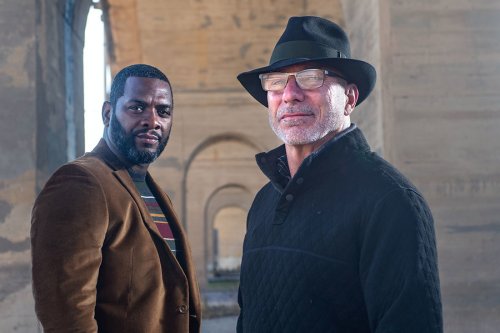
Christopher Scott, left, and Steven Phillips, who spent a combined 37 years in prison for crimes they didn’t commit, were finally exonerated and are determined to pay it forward.

When I worked at the Fed magazine, I solicited a couple articles from the Innocence Project, which has a branch in New England. I continue to be impressed with the complicated, difficult work they do to exonerate men and women who’ve been wrongly convicted and sent to prison.

Today’s article is about two unjustly imprisoned men who got eventually got exonerated and decided to help others.

Henry Gass writes at the Christian Science Monitor, “The busiest P.O. box in North Texas may be in a drab, beige hallway in the post office of this Dallas suburb. [It’s] full of letters, mostly handwritten and postmarked from prisons across the country, addressed to what may be the most unusual detective agency in America. …

“The man who empties the box is Christopher Scott. Broad-shouldered and barrel-chested, he dresses sharp, talks in the gritty patois of the South Dallas neighborhood he grew up in, and uses his bright smile sparingly.

“Under normal circumstances, he probably wouldn’t know Steven Phillips, and they most likely wouldn’t be best friends or partners in a detective agency. They’re from different backgrounds and different generations. While Mr. Scott navigated urban streets as a youth, Mr. Phillips grew up in the country, in the Ozarks. …

“Yet for all their differences, these two men – one white and one African American – have forged a common bond around a common purpose: trying to get people out of prison who should never have been there in the first place. Their Dallas-based nonprofit, House of Renewed Hope, also campaigns for criminal justice reforms and raises public awareness about how the system often fails.

“But it is the tantalizing prospect of uncovering new information that might, just might, free other innocent men that drives Mr. Scott and Mr. Phillips the most. They spend their days meeting clients in prison, tracking down and interviewing family members, friends, and potential eyewitnesses. They meet with prosecutors and activists, lawyers and experts. …

“The two men spent a combined 37 years in prison for crimes they didn’t commit, crimes for which they were eventually exonerated. That’s why they read every letter they receive. They know there are others like them behind bars. …

“ ‘We was wronged,’ [Scott] says. ‘If you don’t want to see this happen to a lot of other people, there’s things that we can do, because we’ve been a part of that system before.’ …

“One April night in 1997 he was riding around his neighborhood with a friend, Claude Simmons. On their way home, he noticed a heavy police presence in the area and a helicopter flying overhead. A familiar nervousness crept in. …

‘So I’m scared, but I’m not too scared,’ he recalls. ‘In my head I’m thinking the law, the justice system, is going to get it together and figure it out.’

“Instead, he was identified by the wife of the slain man as one of the attackers. She had been sexually assaulted and her husband shot dead during a home invasion. No physical evidence linked him to the crime, and her testimony was crucial in convicting Mr. Scott in a trial that lasted only four hours. An all-white jury sentenced him to life.

“In prison. … he read three books a week, including law tomes, looking for ways to prove his innocence. He compared notes and exchanged tips with other guys in Coffield filing innocence claims in courts.

“His break came when a group of law students at the University of Texas at Arlington discovered that two other men, one of whom was in prison for aggravated robbery, had committed the murder for which Mr. Scott had been convicted. The prisoner confessed, and in 2009 his accomplice was arrested in Houston.

“After Mr. Scott passed a six-hour polygraph test, he was exonerated; Mr. Simmons was also exonerated. The two men were brought before a judge in Dallas and declared innocent. …

“ ‘I was like, “Dude, I asked for this 13 years ago, and they didn’t give it to me.” But I was happy. I knew I was going free. It was over.’

“When Mr. Scott got out, Mr. Phillips was waiting for him. He was in the courtroom for the exoneration hearing. Afterward he introduced himself and told him to call if he ever needed anything. Mr. Scott was wary at first – with everything he’d been through, he says, he didn’t trust white people – but after a few days living with his mother he did call.

“Mr. Phillips let him stay at an apartment he owned, lent him some money, and even bought him a cheap car.

“A year later, after going to regular meetings with other exonerees, Mr. Scott set up the House of Renewed Hope using some of his compensation money from the state. … He asked Mr. Phillips and Johnnie Lindsey, another exoneree, to be co-founders. …

“He’s getting close with one case. House of Renewed Hope has teamed up with the Innocence Project of Texas to try to exonerate Leslie Davis, a man who served 28 years in prison for aggravated robbery. His conviction was based largely off testimony from a Dallas police officer who claimed he’d eavesdropped on Mr. Davis confessing to the crime while hiding in some bushes.

“Some other Dallas officers gave similar testimony around that time in the early- and mid-90s, earning the nickname the ‘Bushmen’ with some county prosecutors, and it later came to light that several of them had been disciplined internally for dishonesty.

“ ‘That’s something that should have been disclosed to the defense and was not,’ says Mr. Ware of the Innocence Project of Texas.

“Mr. Davis was released on parole several months ago, but he is still trying to clear his name. ‘It’s close,’ says Mr. Scott. ‘We just need a little more information.’ ” More here.


042920ddp20countrystore

Photo: Gareth Henderson
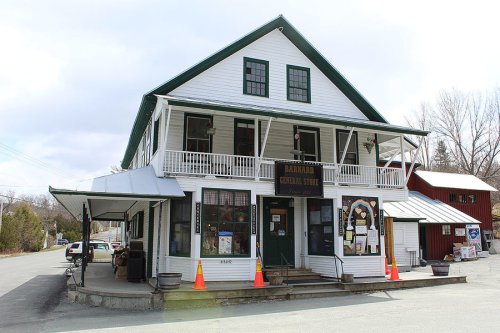
Messages of hope fill a window at the Bernard General Store in Barnard, Vermont.

When you’re feeling down, it’s a sign of health to look for comfort, which actually can be found in many places. Some people find it in phone calls to distant friends. Others find it in reading, music, exercise, or nature; in donating to people worse off or in watching children playing and laughing.

Gareth Henderson writes for the Christian Science Monitor that in Small Town America, some people are finding comfort at the general store.

“As COVID-19 restrictions were tightening in mid-March,” Henderson writes, “Jillian Bradley and Joe Minerva made a big decision: They pledged to keep the doors of the Barnard General Store open, no matter what.

“Now the Barnard store has a grocery home-delivery system supported by volunteers, and they also offer curbside pickup. But it’s been a long haul for the store, in this remote Vermont town of about 900 people, located a half-hour from the nearest grocery establishment.

‘Most days we are working 10 to 12 hours a day, but we are happy to do it for our community,’ Ms. Bradley says. …

“Country stores across the U.S., from New England to the South and the Midwest, are the heartbeat of their communities, often standing in the same spot for generations, growing up with the town.

“Eight years ago, the Barnard store closed for about a year but came roaring back after a community trust with hundreds of local members raised the funds to save the business. It reopened in 2013, with Ms. Bradley and Mr. Minerva as the new owners. The community simply would not let the store fail. …

“These Vermont stores have become essential food hubs. With most country store buildings closed during Vermont’s state of emergency – which was extended beyond May 15 – online ordering and curbside pickup has become the trend. Such is the case a 40-minute drive south at the South Woodstock Country Store, which has been running its curbside operation since early April. Around noon each Friday, co-owner Simi Johnston, donning her mask, puts out brown paper bags with grocery orders, each labeled with the customer’s name for pickup.

“For Ms. Johnston, the main focus is continuing to serve the community while keeping everyone safe. The store closed to the public in late March, two days before the state required restaurants to shut down.

“The entire operation is sanitized, and the store tries not to touch deliveries for 24 hours. The first week of curbside, the store saw 20 orders – which is nothing like being fully open.

“ ‘It’s a huge hit, for sure, but we’re definitely hoping there’ll be a lot of understanding from everyone around that,’ Ms. Johnston says. …

“ ‘The reason we run the country store is because we care about our community,’ she says. ‘Without it, South Woodstock is very different. Closing the doors of the country store, for myself and my staff, was surprisingly emotional.’

“With Vermont’s unemployment rate soaring to more than 20% during the pandemic, many stores are also finding a way to give back, even while they themselves struggle. In Craftsbury, which sits an hour south of the Canadian border in Vermont’s Northeast Kingdom, businesses have joined forces to set up a pop-up food pantry. The Craftsbury General Store put out a call for donations, and they came in fast.

“ ‘There’s been a lot of generosity in that realm,’ says co-owner Kit Basom.

“At the store, the doors are closed to the public, but they’re doing business seven days a week, filling online and phone orders for curbside pickup. The store’s owners have added a third person to help with phones, and everyone is on deck to be a ‘personal shopper.’ …

“The Craftsbury store has also added a ‘virtual tour’ on its website, so customers can browse the shelves digitally. The staff regularly updates an online list of items people can order in bulk – think flour, rice, or pasta.

“ ‘We’re moving a lot more product from our grocery section than we ever did before,’ Ms. Basom says.

“For many here, these stores are a lifeline holding the fabric of the community together. There is growing concern about the warmer months, from May to October, when these small village stores usually make the majority of their annual income. Though it’s been on their minds, Ms. Bradley from the Barnard store says she is confident they will find a way to make it.

“ ‘It’s sink or swim time and there is no way we will let ourselves sink,’ she says.”

More at the Christian Science Monitor, here.

merlin_172735011_9aa26fba-ff92-4896-827c-9acb6bb9db2c-jumbo

Still image from video: BBC Hindi
This is Jyoti Kumari, a 15-year-old who cycled more than 700 miles from New Delhi to her village, transporting her injured father, a migrant laborer, on her bike.

Some kids take on a lot of responsibility really fast. That was the case of a girl from a poor family in India who told her mother she would bring her injured father home even if she had to bike halfway across India. There are many such children who never get a media spotlight, but for those that do, good things may follow.

As Jeffrey Gettleman and Suhasini Raj reported at the New York Times, “She was a 15-year-old with a simple mission: bring papa home. Jyoti Kumari and her dad had nearly no money, no transport, and their village was halfway across India. And her dad, an out-of-work migrant laborer, was injured and could barely walk.

“So Jyoti told her dad: Let me take you home. He thought the idea was crazy but went along with it. She then jumped on a $20 purple bike bought with the last of their savings. With her dad perched on the rear, she pedaled from the outskirts of New Delhi to their home village, 700 miles away.

‘Don’t worry, mummy,’ she reassured her mother along the way, using borrowed cellphones. ‘I will get Papa home good.’

“During the past two months under India’s coronavirus lockdown, millions of migrant laborers and their families have poured out of India’s cities, desperate and penniless, as they try to get back to their native villages where they can rely on family networks to survive. Many haven’t made it. …

“But amid all this pain and sadness now emerges a tale of devotion and straight-up grit. The Indian press has seized upon this feel-good story. … And a few days ago, the story got even better.

“While resting up in her village, Jyoti received a call from the Cycling Federation of India. Convinced she had the right stuff, Onkar Singh, the federation’s chairman, invited her to New Delhi for a tryout with the national team. …

“Reached by phone on Friday in her village of Sirhulli, in Bihar, one of India’s poorest states, Jyoti said in a scratchy voice barely above a whisper, because she still sounded exhausted: ‘I’m elated, I really want to go.’ …

“Her father, Mohan Paswan, a rickshaw driver from a lower rung of India’s caste system, was injured in a traffic accident in January and was running out of money even before the lockdown. … Jyoti came out from their village in Bihar to care for Mr. Paswan. She had dropped out of school a year ago because the family didn’t have enough money. Things got even worse after the lockdown, with their landlord threatening to kick them out and then cutting off their electricity.

“When Jyoti came up with the escape plan, her father shook his head.

“ ‘I said, “Look, daughter, it’s not four or five kilometers that you will drag me from here. It’s 12-, 13-hundred kilometers. How will we go?’’ ‘ he said in a video broadcast by the BBC’s Hindi service.

“The two bought a simple girl’s bike for the equivalent of about $20. On May 8, they set off, Jyoti at the handlebars, dad sitting pillion on back. Jyoti was pretty confident on a bike, having ridden a lot in her village.

“Many days they had little food. They slept at gas stations. They lived off the generosity of strangers. Jyoti said that except for one short lift on a truck, she pedaled nearly 100 miles a day. It wasn’t easy. Her father is big, and he was carrying a bag. …

“After they arrived in their village last weekend, her father went into a quarantine center. … Jyoti’s mother convinced village elders to let her quarantine at home. .. Then, a few days later, on Thursday morning, she got The Call.”

Read more at the New York Timeshere.


960x0

Photo: Walter McBride/ Getty Images
Using drones to clean theaters could have long-lasting effects. Here’s Broadway’s Richard Rodgers Theatre with no people.

The other day, in my friend’s yard (six feet apart), we were discussing whether there were any positive things that would come out of the coronavirus — you know, like people washing their hands more and coughing into their elbows more and hence fewer colds. On this blog, we’ve seen lots of ideas from the arts community that could also continue in some form.  And what about more widespread appreciation of nature and healthy family relationships?

Changes in the way some companies do business may survive, too, but whether they will be positive remains to be seen. I’d be sorry to think the drone in today’s story would put anyone out of work. But as a curiosity, it’s something to talk about.

Marc Hershberg writes at Forbes, “As Broadway executives debate different strategies for reopening theaters following the COVID-19 pandemic, a Buffalo-based start-up company named EagleHawk has developed drones to spray disinfectants in Broadway theaters. …

“The disinfectant is stored on the ground, and pumped through a hose to the hovering drone, which then spreads it throughout the theater. Meanwhile, another drone drifts underneath it to make sure that the hose does not get tangled in any of the seats. …

“ ‘A Broadway theater could be disinfected by a drone in less than an hour, and without putting people on the front line,’ [Will Schulmeister, EagleHawk’s chief operating officer] said.

“While Broadway theater owners might be afraid of allowing the machines to flutter around their landmarked venues, the executives at EagleHawk insist that it is safe to operate inside. … The technology has been tested in several large venues, including KeyBank Center, the arena of the Buffalo Sabres professional hockey team. …

“While following the government guidelines for cleaning surfaces to get rid of pathogens like SARS-CoV-2, ‘we can control the liquid spray enough to not over-saturate the seats and still meet disinfection requirements,’ Schulmeister stated. …

“ ‘I could see the new drone technology being a good choice for arenas, stadiums, and large performing arts centers with thousands of seats,’ commented Susquehanna University theatre professor Erik Viker.

“While the leading Broadway theater owners declined to discuss their plans for cleaning seats after the pandemic, some facilities folks do not think that using the drones would fly.

“ ‘Actors are super hyper-sensitive to anything sprayed in the air,’ recognized a former theater executive. It is possible that the chemicals used to sanitize the seats might irritate some performers and affect their vocal abilities, much like dust and mildew. …

“Some smaller theaters have been experimenting with other possible alternatives, such as wands that emit ultraviolet light and machines that make antibacterial fogs. ‘We’re spending money on things to make the audience feel more comfortable,’ commented one small theater owner in Florida.” More at Forbes, here.

What coronovirus effects do you believe will last, if not cleaning by drone? More sense of community? More individualism and self-sufficiency? Sourcing food locally?