• Home
  • About

Suzanne's Mom's Blog

Arts, Nature, Good Works, Luna & Stella Lockets & Birthstones

Feeds:
Posts
Comments

The Poor Spread a Little Money Around

December 9, 2019 by suzannesmom

ns_ke_20170418_givedirectly17-69_custom-786e5ac5bc5d1399b39a1e3335cc377aff73ff1a-s600-c85

Photo: Nichole Sobecki for NPR
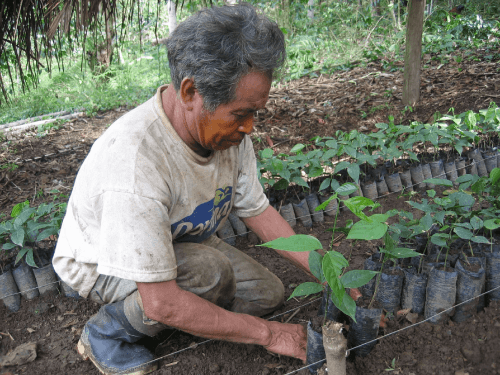
The cypress sapling above was purchased with money received from the charity GiveDirectly in 2017. More recently, the charity teamed up with researchers to study the impact of cash grants on a wider Kenyan community.

Here’s a new way to look at “trickle down.” Unlike the wealthy, who are more likely to put extra cash into savings, poor people who receive cash actually spread the wealth around. Read about the results of a new study in Kenya.

Nurith Aizenman reports at National Public Radio [NPR], “Over the past decade there has been a surge of interest in a novel approach to helping the world’s poor: Instead of giving them goods like food or services like job training, just hand out cash — with no strings attached. Now a major new study suggests that people who get the aid aren’t the only ones who benefit.

“Edward Miguel, an economist at the University of California, Berkeley, and a co-author of the study, says that until now, research on cash aid has almost exclusively focused on the impact on those receiving the aid. And a wealth of research suggests that when families are given the power to decide how to spend it, they manage the money in ways that improve their overall well-being: Kids get more schooling; the family’s nutrition and health improves.

“But Miguel says that ‘as nonprofits and governments are ramping up cash aid, it becomes more and more important to understand the broader economy-wide consequences.’

“In particular, there has been rising concern about the potential impact on the wider community — the people who are not getting the aid. …

“Miguel and his collaborators teamed up to conduct an experiment with one of the biggest advocates of cash aid. It’s a charity called GiveDirectly that, since 2009, has given out more than $140 million to impoverished families in various African countries.

“The researchers identified about 65,000 households across an impoverished, rural area of Kenya and then randomly assigned them to various groups: those who got no help from GiveDirectly and a ‘treatment group’ of about 10,500 families who got a one-time cash grant of about $1,000. …

“Eighteen months on, the researchers found that, as expected, the families who got the money used it to buy lots more food and other essentials. But that was just the beginning.

” ‘That money goes to local businesses,’ says Miguel. ‘They sell more. They generate more revenue. And then eventually that gets passed on into labor earnings for their workers.’

The net effect: Every dollar in cash aid increased total economic activity in the area by $2.60.

“But were those income gains simply washed out by a corresponding rise in inflation?

” ‘We actually find there’s a little bit of price inflation, but it’s really small,’ says Miguel. ‘It’s much less than 1%.’

“The study — recently released through the website of the National Bureau of Economic Research — also uncovered some evidence for why prices didn’t go up: A lot of local businesses reported that before the cash infusion they weren’t that busy.

“So when they suddenly get more customers, they don’t have to take extra steps like hiring more workers that would drive up their costs — and their prices. In economic parlance, there was enough ‘slack’ in the local economy to absorb the injection of cash.

“Eeshani Kandpal is an economist with the World Bank who has done research of her own on cash transfers — including a study that found that a cash aid program in the Philippines did drive up the cost of certain perishable food items. …

“The new study has a far broader scope, says Kandpal — encompassing not just a much larger number of participants but a vast range of goods and businesses whose pricing practices the researchers meticulously monitored.

” ‘It’s a super credible, interesting study,’ says Kandpal. ‘And very carefully done. … I’d be curious to see if they persist in the longer run,’ she says. ‘Eighteen months is certainly not short. But it’s not terribly long either.’ …

“Michael Faye, co-founder and president of GiveDirectly, says even if it turns out that a one-time cash infusion provides only a temporary boost, ‘I don’t think that’s necessarily a bad thing.’ ”

And wouldn’t you rather see poor folks getting more money than wealthy people and corporations? I myself am doing OK and would really like to experience a more equitable world in my lifetime. More here.

Share this:

  • Share on X (Opens in new window) X
  • Share on Facebook (Opens in new window) Facebook
  • Share on LinkedIn (Opens in new window) LinkedIn
  • Share on Pinterest (Opens in new window) Pinterest
  • Share on Tumblr (Opens in new window) Tumblr
  • Share on Mastodon (Opens in new window) Mastodon
  • Share on WhatsApp (Opens in new window) WhatsApp
  • Share on Bluesky (Opens in new window) Bluesky
Like Loading...

Posted in Uncategorized | Tagged cash, kenya, poor, spread the wealth, trickle down | 2 Comments »

Helping a Neighbor at Christmas

December 8, 2019 by suzannesmom

arztsdawv4i6vgpa6lmbt2fbcu

Photo: Suzanne Kreiter/Globe staff
Craig and Bobby Giurleo carried wreaths out of their shop for customers. Millbrook Farm, family run for generations, was badly wounded this year by a construction road closure. Then some caring neighbors organized a
cash mob.

Six years ago I participated in a cash mob to help a longtime family-run five and dime threatened with bankruptcy. (My post on that.) I was only one of many who bought a lot of great stuff that day, and I’m happy to say the shop is still going.

Recently, another group of local well-wishers did something similar for a family-run farm, where summer and fall sales had gone down 90 percent thanks to an unconscionable road closure.

Deanna Pan wrote at The Boston Globe, “To reach Millbrook Farm from Boston, you must go out of your way. Take Route 2 west into historic Concord, past thickets of snow-drenched woods and picturesque Colonials. If you know where you’re going, you’ll find it, after a series of right turns, tucked back on the Cambridge Turnpike before the road abruptly closes to anyone passing through.

“The family-run nursery — which specializes in flowers and hanging plants in the spring, pumpkins and mums in the fall, and Christmas trees and wreaths in the winter — has survived its share of troubles.

“Sal Giurleo, 80, the brusque family patriarch, started the business 31 years ago, following in the footsteps of his father, an Italian immigrant who grew vegetables for First National grocery stores in the 1940s and ’50s. …

“When construction began on the Cambridge Turnpike this spring, sales at Millbrook Farm plummeted. Although part of the turnpike remained open, roadwork made it virtually impassable. Construction vehicles and machinery frequently blocked both lanes. Until recently, the road was dug up and unpaved. …

Shaun Giurleo, 50, Sal’s youngest son, estimates that by midsummer and fall, sales had plunged 90 percent.

“At their lowest point, they saw no more than one customer a day. Sal had to take out two loans, totaling $52,000, to keep the business afloat. They had no choice but to sell their flowers and plants wholesale at a fraction of the price they would normally charge their customers. …

“The Giurleos prepared for a tight Christmas. Sal worried he would have to take out another loan and sink deeper into debt. He was determined to stay open, no matter the cost. In late November, news of the Giurleo family’s plight proliferated across Facebook, Nextdoor, and e-mail as residents of Concord and beyond urged their friends and neighbors to patronize the struggling Millbrook Farm. …

“The Giurleos’ Christmas miracle arrived early, on the Wednesday before Thanksgiving. Millbrook Farm was unusually busy for a weekday, which Shaun thought was odd. But nothing could have prepared the Giurleos for what happened on the Friday after the holiday. From 9 a.m. until sundown, cars parked up and down the turnpike, as many as 20 at time. The crowds were unlike anything they’d ever seen, driving from as far as Natick and Saugus.

“It was the busiest day in Millbrook Farm’s history. Shaun guesses they sold between 350 and 400 Christmas trees, about half their lot. Saturday was even busier. … At least 10 customers paid for two trees when they only took home one. Another customer asked the Giurleos to charge him $500 for a single tree. …

“ ‘We had a million people here. We weren’t ready. We didn’t know,’ Sal said later, chuckling, …

“Millbrook Farm is now replenishing its inventory with help from other garden centers and wholesalers in the region.

“Inside the storefront [in December], an ebullient Shaun worked the cash register. Despite the weather, the nursery was humming with customers, picking up vibrant wreaths that Shaun had carefully decorated with handmade bows and other baubles, and whatever trees were left until Sal’s shipment arrived.

“The Giurleos won’t recoup all of their losses from the past year, but their business will survive until the next season. Thanks to the influx of sales, Sal immediately paid off his debts.” More here.

Share this:

  • Share on X (Opens in new window) X
  • Share on Facebook (Opens in new window) Facebook
  • Share on LinkedIn (Opens in new window) LinkedIn
  • Share on Pinterest (Opens in new window) Pinterest
  • Share on Tumblr (Opens in new window) Tumblr
  • Share on Mastodon (Opens in new window) Mastodon
  • Share on WhatsApp (Opens in new window) WhatsApp
  • Share on Bluesky (Opens in new window) Bluesky
Like Loading...

Posted in Uncategorized | Tagged cash mob, farm, Millbrook, neighbors, road construction | 6 Comments »

Art in Time of War

December 7, 2019 by suzannesmom

m.d.0018-1024x683

Photo: Dalloul Foundation
Installation view of the Ramzi and Saeda Dalloul Art Foundation in Beirut, Lebanon. The private museum is not expected to open to the public for a few years.

Today’s article brings up the dilemma I mentioned recently about trying to share something interesting when the situation on the ground is changing fast and the thing described could disappear overnight. (My version of the Greek philosopher Heraclitus: “You can’t step in the same river twice.”)

In September,  Rebecca Anne Proctor of artnet News attempted to capture the fluid art scene in Beirut, Lebanon, amid daily antigovernment protests.

“Hanging in the booth of Saleh Barakat Gallery during the 10th edition of the Beirut Art Fair last week was the latest work by Lebanese painter Ayman Baalbaki: a large-scale depiction of Beirut’s Piccadilly Theatre in its present, ruined state, priced at $250,000. Painted in fleshy red and black brushstrokes, the empty, ghostly theatre in Hamra serves as a potent reminder of both the city’s rich cultural history and its present economic predicament.

“Bordered by Syria to the north and east and Israel to the south, the little Levant country of Lebanon is used to continuous states of economic and political woe. Yet after its parliament approved a 2019 austerity budget in late July in an attempt to rescue the economy from spiraling debt and unlock billions of dollars in international aid, many believe the country is now experiencing some of its darkest days yet. …

“The country has also been deeply affected by the Syrian refugee crisis. Lebanon, home to a population of six million, is currently hosting more than 950,000 Syrian refugees, according to the UNHCR. There are also mounting tensions with Israel—in late August, Israeli drones struck an Iranian-backed Palestinian militia in the Eastern Bekaa Valley. …

“ ‘The crisis is very present and things are very tough, but what do you do in such a moment?’ asks the prominent Beirut art dealer Saleh Barakat. … ‘It’s either you close or you make a decision to continue. We took the latter decision. We want to resist by moving on in a positive way.’

“One small silver lining, he says, is that artists feel less pressure to churn out commercial material, freeing them up to experiment. … Often, that results in art that reflects the world around them.

“Most recently, Barakat mounted ‘Interminable Seasons of Migration,’ an exhibition of sculptures made out of bits of car metal by Lebanese artist Ginane Makki Bacho that portrayed the millions of refugees escaping conflict in Syria.

‘I wanted to show the tremendous exodus of people fleeing the war with or without expectation or hope of a secured destination,’ the 71-year-old artist says. …

“Even in times of crisis, however, the art market manages to chug along, and Beirut is home to a number of deep-pocketed collectors who can ride out the storm … ‘It was a really good week,’ [Barakat] says. ‘I was very surprised.’

“The fair remains under the leadership of its founder, French-born Laure d’Hauteville, who has worked to raise the profile of the event. … She claims that ‘the fair has not at all been affected by the economic crisis — we had more museum groups and collectors than ever.’ …

“ ‘I remain an optimist,’ says Mazen Soueid, an economist and advisor to Lebanon’s prime minister, of Lebanon’s future. ‘Resilience is part of the country’s DNA; a lot of the downside is due to the regional rather than the local factors. Let us be frank: the region is at war; and for a country in the middle of a region at war, we are actually still holding up.’ …

“Indeed, the new austerity measures seem not to have dramatically affected Beirut’s rising crop of new museums. … Among them is the Beirut Museum of Art (BeMA), dedicated to Lebanese art and slated to open in 2023. …

“There’s also the Dalloul family collection, known as the Ramzi and Saeda Dalloul Art Foundation (DAF), comprising more than 4,000 Modern and contemporary Middle Eastern artworks. Their private museum is scheduled to open within the next three years. …

“[Some dealers are] facing challenges they never could have anticipated. ‘We are going through a huge crisis,’ says Joumana Asseily, owner of Marfa’ Gallery, … They new austerity measures have affected Asseily’s ability to transport artworks abroad. … Recently, she tried to reclaim three works that were lent to a traveling exhibition in Europe, only to be asked at customs to pay for the objects as if she had purchased them.

“ ‘It’s a nightmare. … I still have artworks stuck in customs — it’s been around eight weeks. [But] even if it is a struggle, I want to stay and work. There are great artists, a great scene, and amazing energy in Beirut.’ ”

More here.

Share this:

  • Share on X (Opens in new window) X
  • Share on Facebook (Opens in new window) Facebook
  • Share on LinkedIn (Opens in new window) LinkedIn
  • Share on Pinterest (Opens in new window) Pinterest
  • Share on Tumblr (Opens in new window) Tumblr
  • Share on Mastodon (Opens in new window) Mastodon
  • Share on WhatsApp (Opens in new window) WhatsApp
  • Share on Bluesky (Opens in new window) Bluesky
Like Loading...

Posted in Uncategorized | Tagged art, beirut, lebanon, protests, war | 2 Comments »

Photos from the Fall

December 6, 2019 by suzannesmom

102719-Middlesex-Volunteers

I was hurrying along Walden Street on a cold and rainy Sunday, awkwardly carrying parcels and a heavy umbrella, when whom should I see but a couple of historical reenactors. So of course I had to put everything down in the damp and find my phone to take a picture. I still don’t know what the occasion was for the guys above or who they were supposed to be, but this sort of thing happens all the time where I live.

Here are a few more photos, going back to October.

First, I wanted to show you the finished mural by Shepard Fairey in Providence. I posted the work in progress here. The sign by RISD Coworks is just one example of the welcome that Providence and the Rhode Island School of Design give to artists in general.

And speaking of RISD, my husband and I took my sister’s husband to the RISD art museum at Thanksgiving, and he loved it. I took pictures of some art I liked below, but I also want to tell you about an auditory installation that meant a lot to us.

In one room, a museum guard pointed out a circle of chairs on a dais and an old-fashioned microphone. You could vaguely hear a tape of voices looping softly in the background. The guard said that one could speak into the microphone and in a few seconds, one could hear the words projected and amplified. I stepped up and said to my sister, who died in September, “Hey, Nell, wherever you are. We’re thinking of you.”

The effect of hearing those words resonate around the room a moment later was spectral, indescribable. We felt we were communicating.

I close with the ruined wall in Providence that features a constantly changing array of artworks. And then one of my shadow pictures, this one taken in late afternoon in the local cemetery.

102919-finished-Fairey-mural-RI

102919-Fairey-fan-club

112919-Esther-and-Modecai-at-RISD

112919-Esther-and-Mordecai

112919-Hand-of-God

112919-Rodin-at-RISD

102919-strong-woman-mural-on-Weybosset

102919-glowing-haunted-windows

102919-blood-moon-mural

112119-late--afternoon-cemetery-2


Share this:

  • Share on X (Opens in new window) X
  • Share on Facebook (Opens in new window) Facebook
  • Share on LinkedIn (Opens in new window) LinkedIn
  • Share on Pinterest (Opens in new window) Pinterest
  • Share on Tumblr (Opens in new window) Tumblr
  • Share on Mastodon (Opens in new window) Mastodon
  • Share on WhatsApp (Opens in new window) WhatsApp
  • Share on Bluesky (Opens in new window) Bluesky
Like Loading...

Posted in Uncategorized | Tagged art, auditory installation, providence, risd, shepard fairey | 7 Comments »

That Elusive Viral Video Ad

December 5, 2019 by suzannesmom

img-1251_orig

Photo: Thomas Jones
Hafod Hardware in Rhayader, Powys, Wales, has a story to tell about generations working in a family business. Its low-budget, Christmas advertising video has gone viral.

The Holy Grail of many small businesses is a video ad that touches people in such a meaningful way that it goes viral. I am not sure if going viral necessarily generates a lot of business, but it definitely generates attention.

Consider, for example, this hardware store in Wales. Unless you lived nearby, you would not actually be able to shop there regularly. But I think that after seeing this video, you might go out of your way to buy something one day and take a selfie.

Copied more or less from the style of a department store giant with a huge ad budget, the ad has managed, on a shoestring, to draw a large following. According to the Guardian, that’s because the small family business has a real story to tell.

Stuart Heritage’s report starts with the department store. “This year’s John Lewis Christmas advert, in which a dragon tries to kill several people then holds up a pudding, reportedly cost £7m [$9,190,300] to make. And that’s fine. It’s a good advert, and John Lewis has a reputation to uphold, and you can’t really put a price on the half a morning of vaguely duty-bound Twitter buzz it generated.

“However, by no means is it the best Christmas ad this year. That plaudit now goes to Hafod Hardware, a tiny independent family-run hardware store in Rhayader, Powys, whose ad cost just £100 [$131.35] to make. …

“A little boy wakes up. He brushes his teeth, eats his breakfast and goes to work. He opens the shop, fixes a broom; he cleans the counter and restocks the shelves. He serves a customer, does a bit of accounting, serves another customer. At the end of the day he switches off the light, bends down to pick up a Christmas tree and – PLOT TWIST! – he’s actually a 30-year-old man. The strapline comes up: ‘Be a kid this Christmas’. …

“The advert is being hailed as a celebration of traditional Christmas spirit, the strength of the independent, and the importance of community. … [But] while it’s impressive that the shop has only spent £100 on the ad – and that was to pay for an engineer to record the song on the soundtrack – it still manages to crib pretty heavily from the John Lewis playbook. There’s a kid. There’s a tree. There’s a slowed-down cover version of a well-loved song. …

“But let’s not be too mean-spirited. The fact is that the Hafod Hardware advert packs an almighty punch, because of the history of the shop itself. It has been open since 1895, fending off competition from bigger companies with every step; and it’s a true family shop, passed down through the generations.

“The grandfather in the advert is the nephew of the founder, the man at the end (his son) runs the shop with him and the little boy could feasibly grow up to run the shop after him. Any old idiot can get a kid to sweep up a shop, but the magic of the ad is that it shows the real flesh and blood lineage of Hafod Hardware. It’s the beating heart of the community, and has been for years. No amount of money can buy that.”

If you were making a video for your business that you hoped would click with a large audience, what would you put in it?

More at the Guardian, here.

Share this:

  • Share on X (Opens in new window) X
  • Share on Facebook (Opens in new window) Facebook
  • Share on LinkedIn (Opens in new window) LinkedIn
  • Share on Pinterest (Opens in new window) Pinterest
  • Share on Tumblr (Opens in new window) Tumblr
  • Share on Mastodon (Opens in new window) Mastodon
  • Share on WhatsApp (Opens in new window) WhatsApp
  • Share on Bluesky (Opens in new window) Bluesky
Like Loading...

Posted in Uncategorized | Tagged christmas, hardware, video, viral, wales | 4 Comments »

When Snow Melting Machines Aren’t Enough

December 4, 2019 by suzannesmom

5a02fc547cf894b93111471106b232fbbae99b276aa2fe181f1a978c62c0ad35

Photo: Vidar Ruud / NTB scanpix
Snow being cleared in Oslo, Noway, in 2018.

As I write to you from a New England village where snow piles are removed by heavy equipment in the middle of the night, I’m remembering that even the “melting machines” of Norway cannot keep up with the challenge.

Here’s a 2018 report from the Norwegian version of The Local.

“According to the Norwegian Meteorological Institute, 2018 has seen twice as much snow as expected, compared to normal levels, and up to 10,000 people are reported to have complained to the city’s Urban Environment Agency (Bymiljøetaten) about the hazardous nature of [Oslo’s] roads and paths, writes broadcaster NRK. …

” ‘In the last few weeks it has been difficult to get around our city, especially for those who aren’t so good on their feet. The plowing budget is almost used up and the Urban Environment Agency has therefore requested more money,’ Lan Marie Berg, head of Oslo Municipality’s environment and traffic department, told NRK.

“The municipality has therefore agreed to allocate an extra 53 million kroner (5.4 million euros) for clearing snow this year. … The Urban Environment Agency will also be given funding to remove ice and snow from paths and roads in residential areas.

“According to the agency, 750 cars have been towed in the capital this winter to allow ploughing vehicles to access necessary areas. 25,500 tonnes of grit had already been spread by the end of January, a significant increase on the 15,000 tonnes spread throughout the entirety of last winter, writes NRK.

“In Oslo, an ice melting machine located at the city’s harbour — nicknamed ‘Terje’ — takes care of much of the snow removed from streets. But with the machine having reached capacity, other solutions must be found by the municipality, including piling snow in streets and parking lots.

” ‘We cannot continue to transport all snow from Oslo at the moment, because deposit sites are closed. In some places, snow must therefore be placed at the side of the road,’ said Urban Environment Agency director Gerd Robsahm Kjørven to NRK. …

” ‘It is snowing now and the snow must be removed. That’s why we’re making the money available, and we’ll have to find space for it before we produce a revised budget for the municipality,’ Robert Steen, a councillor on Oslo Municipality’s finance committee, told NRK.” More here.

Ya gotta do, what ya gotta do. Monday night I was in Providence and, going to bed early, had no idea that a street-parking ban went into effect at midnight. I moved my car into Suzanne and Erik’s driveway at 5 a.m. and, fortunately, hadn’t gotten a ticket by then. I had to walk extra carefully as I had not brought along my lovely Nordic boots with the studs on the bottom. I can definitely relate to the environment and traffic department head’s comment about “those who aren’t so good on their feet”!

Share this:

  • Share on X (Opens in new window) X
  • Share on Facebook (Opens in new window) Facebook
  • Share on LinkedIn (Opens in new window) LinkedIn
  • Share on Pinterest (Opens in new window) Pinterest
  • Share on Tumblr (Opens in new window) Tumblr
  • Share on Mastodon (Opens in new window) Mastodon
  • Share on WhatsApp (Opens in new window) WhatsApp
  • Share on Bluesky (Opens in new window) Bluesky
Like Loading...

Posted in Uncategorized | Tagged melting machine, norway, piles, snow removal, streets | 3 Comments »

Technology to Probe Ancient Scrolls

December 3, 2019 by suzannesmom

4196

Photo: Diamond Light Source Ltd
Here’s the team taking on the challenge of reading scrolls charred by the eruption of Vesuvius in AD 79. Recent technology is making the impossible possible.

In the always-new-angles-in-archaeology department, here’s a recent story about using advanced technology to read ancient scrolls once thought beyond deciphering.

Nicola Davis writes at the Guardian, “When Mount Vesuvius erupted in AD79 it destroyed the towns of Pompeii and Herculaneum, their inhabitants and their prized possessions – among them a fine library of scrolls that were carbonised by the searing heat of ash and gas.

‘But scientists say there may still be hope that the fragile documents can once more be read thanks to an innovative approach involving high-energy x-rays and artificial intelligence.

“ ‘Although you can see on every flake of papyrus that there is writing, to open it up would require that papyrus to be really limber and flexible – and it is not any more,’ said Prof Brent Seales, chair of computer science at the University of Kentucky, who is leading the research.

“The two unopened scrolls that will be probed belong to the Institut de France in Paris and are part of an astonishing collection of about 1,800 scrolls that was first discovered in 1752 during excavations of Herculaneum. Together they make up the only known intact library from antiquity, with the majority of the collection now preserved in a museum in Naples.

The villa in which they were found is thought to have been owned by the father-in-law of Julius Caesar, the Roman dictator who was assassinated in 44BC.

“Experts have attempted to unroll about half of the scrolls through various methods over the years, although some have been destroyed in the process and experts say unrolling and exposing the writing to the air results in the ink fading.

“Seales and his team have previously used high-energy x-rays to ‘virtually unravel’ a 1,700 year old Hebrew parchment found in the holy ark of a synagogue in En-Gedi in Israel, revealing it to contain text from the biblical book of Leviticus.

“However, while the En-Gedi scroll contained a metal-based ink which shows up in x-ray data, the inks used on the Herculaneum scrolls are thought to be carbon-based, made using charcoal or soot, meaning there is no obvious contrast between the writing and the papyrus in x-ray scans. …

“As a result the team have come up with a new approach that uses high-energy x-rays together with a type of artificial intelligence known as machine learning. The method uses photographs of scroll fragments with writing visible to the naked eye. These are used to teach machine learning algorithms where ink is expected to be in x-ray scans of the same fragments, collected using a number of techniques.

“The idea is that the system will pick out and learn subtle differences between inked and blank areas in the x-ray scans, such as differences in the structure of papyrus fibres. Once trained on the fragments, it is hoped the system can be used with data from the intact scrolls to reveal the text within. …

“As for what the scrolls contain, the researchers say they are excited.

“ ‘For the most part the writings [in opened scrolls] are Greek philosophy around Epicureanism, which was a prevailing philosophy of the day,’ said Seales. Another possibility is that the scrolls might contain Latin text. While classical libraries are believed to have had a Greek section and a Latin section, only a small proportion of scrolls from Herculaneum have so far been found to be in Latin, with the possibility there is a Latin section within the villa yet to be excavated.

“Dr Dirk Obbink, a papyrologist and classicist at the University of Oxford who has been involved in training the team’s algorithms, … is hoping the scrolls might even contain lost works, such as poems by Sappho or the treatise Mark Antony wrote on his own drunkenness. ‘I would very much like to be able to read that one,’ he said.”

More here.

Hmmm, the scrolls are from the home of Caesar’s father-in-law? I never heard mention of him, and now all I can think about is he must not have raised his daughter to be “above suspicion.” Or was she falsely accused?

Share this:

  • Share on X (Opens in new window) X
  • Share on Facebook (Opens in new window) Facebook
  • Share on LinkedIn (Opens in new window) LinkedIn
  • Share on Pinterest (Opens in new window) Pinterest
  • Share on Tumblr (Opens in new window) Tumblr
  • Share on Mastodon (Opens in new window) Mastodon
  • Share on WhatsApp (Opens in new window) WhatsApp
  • Share on Bluesky (Opens in new window) Bluesky
Like Loading...

Posted in Uncategorized | Tagged archaeology, charred scrolls, technology, Vesuvius, volcano | 3 Comments »

A News Outlet Designed for Teens

December 2, 2019 by suzannesmom

screen-shot-2019-04-21-at-2-01-03-pm_orig

Photo: theCramm
Olivia Seltzer is the 15-year-old founder and sole writer of
theCramm. She started theCramm after the 2016 presidential election to help young people keep abreast of news they care about. 

I am dazzled by the young people who are making themselves heard above the din of these trying times: environmentalists such as Greta Thunberg and ThisIsZeroHour, gun-safety-advocates such as David Hogg and Emma González, who both survived the February 2018 Stoneman Douglas High School shooting in Parkland, Florida — and many others. Now from TeenVogue, a remarkably mature truth-telling magazine, comes this story about a teen who saw a void and started her own news outlet. And she’s not the only one.

Rainesford Stauffer writes at Teen Vogue, “In the aftermath of the 2016 presidential election, Olivia Seltzer, now 15, noticed a shift at school.

” ‘Basically overnight, all we could talk about was politics and what was going on in the world,’ she tells Teen Vogue. Many of her peers in Santa Barbara, California, had parents who were undocumented immigrants, so the issues in the news hit close to home. Suddenly the personal felt very much political. ‘This massive interest in the news and politics came with an equally massive gap in the media,’ Seltzer continues. ‘Traditional news sources are primarily written by and geared toward an older demographic, and unfortunately, they don’t always connect to my generation.’

“That’s a problem, and an urgent one. Though a free press is crucial to democracy, more than one in four local newspapers have closed since 2004, and more Americans are getting their news from social media than traditional print media. Keeping young people engaged is necessary to foster civic engagement, and Seltzer wants to help close the gap.

“In February 2017, she launched theCramm, which offers a daily look at major stories from around the world, distilled into a newsletter that lands in email and text inboxes each weekday. Every day, she rises at 5 AM to read the news before school, poring over outlets, including the BBC, CBS, NBC, The New York Times, Politico, and Reuters, among others, to ensure readers are receiving an ‘unbiased point of view with the news.’

“Seltzer works with an editorial team that helps research stories and finds inspiring individuals to interview for the newsletter, an advisory board comprised of ‘trusted adults,’ and ‘theCramm Fam,’ ambassadors from around the world who promote theCramm. …

“A recent survey by Common Sense Media found that 78% of American teens ages 13 to 17 say it’s important to them to follow current events. Young adults are more likely to consume news through social media sites than they are traditional news organizations, online or in print, but that isn’t necessarily a negative when it comes to news. Teens who use social media are more likely to be civically engaged, and smartphone users who engage with social media report they’re more regularly exposed to people who have different backgrounds, and feel like they have more diverse networks. …

“Instead of staring at cable news, they’re pioneering new ways to engage with the stories that meet them where they are. This isn’t just a matter of style, like how theCramm breaks down big stories into witty, need-to-know facts; it’s medium too. Seltzer … decided to create an option for people to receive theCramm via text. ‘I don’t think other news sources or a lot of people are aware that young people don’t really use email addresses,’ she says. …

“Sofia Frazer, a 16-year-old activist, runs the account @dailydoseofwokeness, which has over 30,000 followers and features story highlights on Sudan, mental health, and the 2020 presidential candidates, among others. After reading about the murder of Virginia teen Nabra Hassanen and the livestreamed police killing of Philando Castile, Frazer realized important stories weren’t being discussed with the depth they deserved. ‘In this day and age, the news is more inflammatory than it is informative,’ she tells Teen Vogue. …

“Frazer feels that Instagram makes it possible to get young people thinking about current issues. … She says, ‘If we want to continue the global conversation about young people taking the lead, people need to know how to access these kids and how to grab their attention.’…

“Within Instagram, there are different ways of reaching audiences and starting conversations. [Sixteen-year-old Anjali Kanda, an admin for the Instagram account @brown.politics,] engages followers via polls on Instagram stories and records videos, like the one she recently posted explaining the scandal surrounding financier and accused pedophile Jeffrey Epstein. ‘People also tend to reply back to stories with questions or actually wanting to start an open discussion,’ she says. ‘I’ve gotten some really thoughtful insights from people replying to stories.’ …

“Seltzer points out that textbooks exist for math, science, English, and history — areas of study and focus from kindergarten onward. Media literacy doesn’t receive the same kind of attention in school. ‘We don’t have any source to learn about politics and what’s going on in the world,’ she says. ‘We’re just expected, when we turn 18, to all of a sudden be able to vote and know who we’re going to vote for. It takes time to actually cultivate a political knowledge and standing.’ ”

More here.


Share this:

  • Share on X (Opens in new window) X
  • Share on Facebook (Opens in new window) Facebook
  • Share on LinkedIn (Opens in new window) LinkedIn
  • Share on Pinterest (Opens in new window) Pinterest
  • Share on Tumblr (Opens in new window) Tumblr
  • Share on Mastodon (Opens in new window) Mastodon
  • Share on WhatsApp (Opens in new window) WhatsApp
  • Share on Bluesky (Opens in new window) Bluesky
Like Loading...

Posted in Uncategorized | Tagged engage, news, teen vogue, teens, theCramm | 3 Comments »

Syria’s Secret Library Was Run by Teens

December 1, 2019 by suzannesmom

13mikhail01-jumbo-v2

Photos: Local Council of Daraya City
This image from 2014 shows young people who rescued books for a secret library in besieged Daraya, Syria.

As much as I love stories about good things happening in bad times, I always wonder when I post them whether the oasis in Kabul or the library in Syria is still going. Was it there in July when a news outlet’s article was written? Was it there yesterday? Sometimes I search the internet to find a follow-up on, say, the multireligion soccer team that was never expected to win. Sometimes I leave it to you.

Despite the ambiguity of this July 2019 comment from VOA, a book on the heroic library started by Syrian teens is still worth talking about:

[Abdul] Basit and his team of volunteers were among those who had to flee Daraya to northern Syria, leaving the library behind. Unable to take the books, the members tried to conceal the library by blocking its entrance with pieces of shattered concrete. Despite their efforts, Syrian government forces were able to find the makeshift library. The fate of thousands of books remains unclear, according to Basit, who has been unable to return home.

At The New York Times, Dunya Mikhail reviews Mike Thomson’s book Syria’s Secret Library: Reading and Redemption in a Town Under Siege.

“In a region that sways ‘on the palm of a genie,’ as the Arabic saying goes, where bullets and explosions are more familiar than bread, you would not expect people to read, let alone to risk their lives for the sake of books.

“Yet in 2013 a group of enthusiastic readers in Daraya, five miles southwest of Damascus, salvaged thousands of books from ruined homes, wrapping them in blankets just as they would victims of the war raging around them. They brought the books into the basement of a building whose upper floors had been wrecked by bombs and set up a library. As Mike Thomson recounts this unlikely story in Syria’s Secret Library, this underground book collection surrounded by sandbags functioned, as one user put it, as an ‘oasis of normality in this sea of destruction.’

“There, the self-appointed chief librarian, a 14-year-old named Amjad, would write down in a large file the names of people who borrowed the books, and then return to his seat to continue reading. He had all the books he could ever want, apart from ones on high shelves that he couldn’t reach. He told his friends: ‘You don’t have TV now anyway, so why not come here and educate yourself? It’s fun.’ The library hosted a weekly book club, as well as classes on English, math and world history, and debates over literature and religion.

“Advertising the library’s activities without compromising its security was a dilemma; patrons relied on word of mouth for fear that it would be targeted by the Syrian Army. By the time the library was founded, Daraya, a site of anti-government uprising and calls for reforms, had been under siege by the army for more than a year. Its 8,000 remaining residents — from a prewar population of about 80,000 — faced near-constant bombardment and shortages of food, water and power….

“Thomson, a radio and television reporter who covered the war in Syria for the BBC, dedicated months to interviewing the library’s founders and their friends via Skype and social media. When the internet went down in Daraya, his sources recorded comments on their phones as audio diaries they could send on to Thomson when the connection was restored. His book is a compassionate and inspiring portrait of a town where, one of the founders tells him, ‘fuel for our souls’ was an essential need.

“The books ‘help us understand the outside world better,’ another founder, a local dental student, said. Likewise, Thomson’s book may help the outside world better understand Syrians. …

“In the same spirit of piling books under Daraya’s shattered streets, local artists painted graffiti art on the walls of ruined buildings. In a moving image drawn by Abu Malik, a local artist nicknamed Banksy, a little girl stands on a pile of skulls writing the word ‘hope’ high above her head.” More.

Are you good at research? Maybe you could help me find out what has since happened to the library. I volunteer with displaced Syrians and others at a resettlement agency in Providence, and I feel a personal interest in this war-torn country.

The artist Abu Malik next to his mural amid the ruins of Daraya in 2014.

merlin_159489402_df23a867-e7d6-4b71-81a6-dd1128e961d6-jumbo

Share this:

  • Share on X (Opens in new window) X
  • Share on Facebook (Opens in new window) Facebook
  • Share on LinkedIn (Opens in new window) LinkedIn
  • Share on Pinterest (Opens in new window) Pinterest
  • Share on Tumblr (Opens in new window) Tumblr
  • Share on Mastodon (Opens in new window) Mastodon
  • Share on WhatsApp (Opens in new window) WhatsApp
  • Share on Bluesky (Opens in new window) Bluesky
Like Loading...

Posted in Uncategorized | Tagged library, secret, siege, syria, teens | 2 Comments »

More Doctors Prescribe Woodland Walks

November 30, 2019 by suzannesmom

You have undoubtedly discovered on your own the healing qualities of a walk in the woods, but it seems that increasing numbers of doctors are actually prescribing it.

Sarah Barker writes for the Minneapolis Star Tribune, “Your blood pressure is a little high. You could stand to lose some weight, and, yeah, you’re stressed. You leave the doctor’s office with directions to a park near your house and a prescription for 30 minutes a day out there breathing fresh air among the trees and the birds.

“Until recently, doctors encouraged patients to get more outdoor exercise but stopped short of writing a prescription. Soon, in collaboration with parks and trails organizations, community and athletic associations, some Minnesota doctors will be handing patients prescriptions for that dose of nature.

“ ‘The data is there. We’re wired to be connected to nature,’ said Dr. Brent Bauer of the Mayo Clinic in Rochester. ‘Cool things happen when you’re exposed to nature for two hours a week — inflammation is reduced, stress, anxiety, heart rate.’ …

“Bauer founded Mayo’s complementary and integrative medicine program 20 years ago grounded in the theory of biophilia — that humans have an innate need to connect with nature. That people spend 90% of their time indoors, most of it sitting, has resulted in negative consequences: obesity, diabetes, anxiety, depression, to name a few. The last 10 years have seen a ‘scientification,’ as Bauer called it, of our need for nature. It’s been studied, measured.

“At the same time, there’s been a shift toward preventive medicine — lifestyle choices like food, exercise, spirituality — and efforts to make health care more efficient. There has been collaboration between communities that haven’t overlapped — parks and the Department of Natural Resources with public health; health insurance with health clubs; sports events with hospitals. Since 2010, doctors have worked with a nonprofit called Wholesome Wave to prescribe patients fruits and vegetables.

“Bauer signed on with one of those collaborations, Park Rx America, a national nonprofit established by Washington, D.C., pediatrician Dr. Robert Zarr in 2017. … According to Zarr, there are 22 registered Park Rx health care providers in Minnesota and 96 parks listed. …

“Receiving a nature prescription from your doctor here in Minnesota is still maybe a year away. Unless you’re a child. In which case, this is old news.

“Some Twin Cities children have been leaving the pediatrician’s office with a Sweat Rx since 2014. Sweat Rx was the first formal outdoor prescription program in the country, its creators say. … Betsy Grams and Tony Schiller co-founded CycleHealth as a way to improve kids’ health through training programs, activity challenges and fun adventure races. The events were outdoors, a little bit nontraditional (the triathlon is swim-bike-run with obstacles thrown in), and noncompetitive. …

“Focusing on health rather than competition was a natural tie-in to the medical community. Through a connection with one of the doctors, Grams and Schiller met with at Central + Priority Pediatrics in Woodbury in 2014 to talk about their upcoming kids’ triathlon. …

“ ‘We were really surprised when they said they would actually prescribe the triathlon to their patients that summer. We didn’t know how hungry doctors were for a concrete tool for encouraging kids to get outdoors, to live the lifestyle they’d been talking about,’ Grams said.

“The two quickly printed a prescription-ish pad of paper with a space for the patient’s name and a link to training materials and race registration. That was the start of Sweat Rx. CycleHealth now works with 52 pediatric clinics in the Twin Cities area. …

“Cheap, readily accessible, and side-effect free, Minnesota’s 10,000 lakes and vaunted parks and trails are shaping up to be, quite literally, what the doctor ordered.”

More here.

My husband and I are lucky with where we live because if you go in one direction out of the house, you come quickly to a busy village with a library and attractive shops. If you go the other way, you are in conservation land in no time. Best of both worlds.

. 062618-John-walks-in-woods


Share this:

  • Share on X (Opens in new window) X
  • Share on Facebook (Opens in new window) Facebook
  • Share on LinkedIn (Opens in new window) LinkedIn
  • Share on Pinterest (Opens in new window) Pinterest
  • Share on Tumblr (Opens in new window) Tumblr
  • Share on Mastodon (Opens in new window) Mastodon
  • Share on WhatsApp (Opens in new window) WhatsApp
  • Share on Bluesky (Opens in new window) Bluesky
Like Loading...

Posted in Uncategorized | Tagged health, minnesota, prescription, walks, woods | Leave a Comment »

The Joke’s on Them

November 29, 2019 by suzannesmom

Folks, I can’t stop listening to this amazing song and watching the video. My thanks to college station WUMB for playing it on my drive home from Providence Tuesday — and telling me who the artist is.

The Joke
by Brandi Carlile

You’re feeling nervous, aren’t you, boy?
With your quiet voice and impeccable style
Don’t ever let them steal your joy
And your gentle ways, to keep ’em from running wild
They can kick dirt in your face
Dress you down, and tell you that your place
Is in the middle, when they hate the way you shine
I see you tugging on your shirt
Trying to hide inside of it and hide how much it hurts
Let ’em laugh while they can
Let ’em spin, let ’em scatter in the wind
I have been to the movies, I’ve seen how it ends
And the joke’s on them
You get discouraged, don’t you, girl?
It’s your brother’s world for a while longer
We gotta dance with the devil on a river
To beat the stream
Call it living the dream, call it kicking the ladder
They come to kick dirt in your face
To call you weak and then displace you
After carrying your baby on your back across the desert
I saw your eyes behind your hair
And you’re looking tired, but you don’t look scared
Let ’em laugh while they can
Let ’em spin, let ’em scatter in the wind
I have been to the movies, I’ve seen how it ends
And the joke’s on them
Let ’em laugh while they can
Let ’em spin, let ’em scatter in the wind
I have been to the movies, I’ve seen how it ends
And the joke’s on them

Source: LyricFind

image
Photo: Suzanne Cordeiro/AFP/Getty Images
Brandi Carlile

Share this:

  • Share on X (Opens in new window) X
  • Share on Facebook (Opens in new window) Facebook
  • Share on LinkedIn (Opens in new window) LinkedIn
  • Share on Pinterest (Opens in new window) Pinterest
  • Share on Tumblr (Opens in new window) Tumblr
  • Share on Mastodon (Opens in new window) Mastodon
  • Share on WhatsApp (Opens in new window) WhatsApp
  • Share on Bluesky (Opens in new window) Bluesky
Like Loading...

Posted in Uncategorized | Tagged acceptance, Brandi Carlile, joke, song, video | 10 Comments »

Indigenous People Speak Out

November 28, 2019 by suzannesmom

wampanoag_nation_singers_and_dancers

Photo: Wampanoag Nation Singers and Dancers
Many indigenous people refuse to celebrate Thanksgiving. Others use it as a chance to raise consciousness about American mythologies or just to be with extended family and give thanks.

The other day, I was asking my British neighbors if they celebrate Thanksgiving. After all, the traditional story of the First Thanksgiving is about being grateful for freedom from Britain. Why would they? They said they love the holiday and always invite a lot of expat Brits living in the area to eat turkey with them.

Just as language evolves and individuals use words in their own ways, so do customs. At Smithsonian magazine I recently learned that among indigenous Americans there are as many attitudes toward Thanksgiving as there are unique individuals.

Read Dennis Zotigh’s great piece “Do American Indians celebrate Thanksgiving?”

“In thinking about my earliest memories of elementary school, I remember being asked to bring a brown paper sack to class so that it could be decorated and worn as part of the Indian costume used to celebrate Thanksgiving. I was also instructed to make a less-than-authentic headband with Indian designs and feathers to complete this outfit. Looking back, I now know this was wrong.

“The Thanksgiving Indian costume that all the other children and I made in my elementary classroom trivialized and degraded the descendants of the proud Wampanoags, whose ancestors attended the first Thanksgiving popularized in American culture. The costumes we wore bore no resemblance to Wampanoag clothing of that time period. Among the Wampanoag, and other American Indians, the wearing of feathers has significance. The feathers we wore were simply mockery, an educator’s interpretation of what an American Indian is supposed to look like. …

“When children are young, they are often exposed to antiquated images of American Indians through cartoons, books, and movies. But Thanksgiving re-enactments may be their most active personal encounter with Indian America, however poorly imagined, and many American children associate Thanksgiving actions and images with Indian culture for the rest of their lives. … While I agree that elementary-school children who celebrate the first Thanksgiving in their classrooms are too young to hear the truth, educators need to share Thanksgiving facts in all American schools sometime before high school graduation.”

Here, for adult readers, Zotigh goes into the tragedy, which I hope you’ll make time to read. Next, he quotes an array of opinions of actual Native Americans, noting, for example, that “the United American Indians of New England meet each year at Plymouth Rock on Cole’s Hill for a Day of Mourning. …

“I turn to the Internet to find out what Native people think of Thanksgiving. A few of the responses I have received over the years, beginning with the most recent: …

“Exeter, California: ‘Being the only Native American classroom teacher at a public school, raised mostly in an urban setting steeped heavy in traditional American holidays, and around many other native people on weekends while traveling to dance, this has always been a challenging question for me that I cannot claim to know the answer for. I see many other teachers I work with who are not native struggle with knowing how to address the issue comfortably. I have to say, I have fear that if we avoid the issue altogether, Native people will be forgotten about.

” ‘I have seen some teachers decide to stop teaching about Native Americans for fear of offending. I personally get sad when I see that happen. I know Thanksgiving is a controversial subject, and there are so many viewpoints. I share the modern theme of Thanksgiving, which I think has good intentions — family and community. I have also chosen to teach about Native American culture, even more heavily in November because of Thanksgiving, even though it is no longer a part of the curriculum. I have found ways to integrate it while teaching something that I think is important. I do an assembly for the students in which we dance, and I emphasize how it is not possible to teach everything there is to know about Native Americans in just one assembly. I emphasize the diversity among native people.’

“Sevierville, Tennessee: ‘Regardless of all the political views of Thanksgiving, we can all find something to be thankful for!’

“San Antonio, Texas: ‘Except for the last four years, the twenty years before that I spent 95 percent of my Thanksgivings at the table of my brother-in-law. Our gatherings were about giving thanks for what we had. As for Native American history being left out of teaching, it is an outrage. Educate our fellow educators on how to teach it. …

“Edmonton, Alberta: ‘We have family members with addiction issues. The kids get to eat, which my mom loves. And we are thankful not only to survive colonization, but also grateful to feed family.

Norman, Oklahoma: ‘We celebrate and give thanks for our loved ones’ being able to be together again. But when my daughter was young and the realization hit, as it does all young American Indians, she said to me , “Do you think we should have helped them?” There will be extra prayers for Standing Rock at our table.

“Hydro, Oklahoma: ‘Could we just start over and go forward? We can’t change the past, but we can work for peace and unity in the future. History needs to be taught correctly in our schools—that is what needs to happen. My daughter had to write a paper about Big Tree, Satank, and Satanta. She interviewed Satanta’s great-grandson, who was in his 90s, and told the story as he told it to her, including their transport from Fort Sill and how the feather was turned into a knife as they passed the giant tree, causing the soldiers to shoot and kill Satank. She got an AAA+ from her teacher.’ …

“Santa Fe, New Mexico: ‘My family and I celebrate Thanksgiving, not so much in the way that the “Pilgrims” may have done with the Indians. We give pause, and acknowledge all of the blessings that we received in the past year. We think of family and friends; of the homeless; of those away from family in hospitals, elders in nursing homes, those incarcerated, the soldier men and women overseas, around the world, standing watch and guarding our freedom. We think of those in mourning, whose family have gone ahead of them. We also think of those in school, no matter what age. And, finally, we pray for traveling mercies said for folks traveling home. We are thankful each day for Creator’s gifts but on Thanksgiving, it seems we focus and are concentrated in our thoughts about these blessings.’ …

“For more on Thanksgiving, see the 2017 post Everyone’s history matters. The Wampanoag Indian Thanksgiving story deserves to be known.”

Read more of the fascinating comments at Smithsonian, here. It’s a real lesson in not painting any community with one brush. When we say, “Native Americans think [fill in the blank],” we need to remind ourselves that any group of people is full of unique individuals with individual thoughts.

Share this:

  • Share on X (Opens in new window) X
  • Share on Facebook (Opens in new window) Facebook
  • Share on LinkedIn (Opens in new window) LinkedIn
  • Share on Pinterest (Opens in new window) Pinterest
  • Share on Tumblr (Opens in new window) Tumblr
  • Share on Mastodon (Opens in new window) Mastodon
  • Share on WhatsApp (Opens in new window) WhatsApp
  • Share on Bluesky (Opens in new window) Bluesky
Like Loading...

Posted in Uncategorized | Tagged genocide, history, indigenous, Thanksgivng, tragedy | 4 Comments »

Dorm Repurposed for Refugees

November 27, 2019 by suzannesmom

ws_edits_11_of_15

Photo: Victoria Bouloubasis/The World
The Al-Khasrachi family lived on the Guilford College campus in North Carolina for months after arriving in the US as refugees. The father had received threats while working for a US military contractor in Iraq.

I know from my own experience as a volunteer in a refugee resettlement agency that there are few refugees coming through today although the need is greater than ever. Some agencies, like the amazing Alight (formerly the American Refugee Committee) have chosen to “do the doable” at refugee camps abroad. Other agencies and individuals give extra love to the few families still arriving — at the same time reaching out to other immigrants who live here. Today I have a story about people who welcome others with open hearts.

Victoria Bouloubasis reports for The World at at Public Radio International [PRI], “Growing up in Burundi, Blaise Pascal was fascinated with R&B music from the United States. … According to Pascal, studying those lyrics helped him become fluent in English with no formal training.

“Pascal, 31, never forgot this teen pastime. When he arrived in Greensboro, North Carolina, in February 2019, music helped him ease into his new life. It also helped that he was part of the Every Campus a Refuge (ECAR) program, an organization that provides housing and utilities for refugee families and individuals like Pascal. The organization was founded in 2015 at Guilford College and later spread to six other college campuses across the country. …

“Pascal also took advantage of the resources at his disposal at Guilford College, like the music room and soccer field. He met fellow musical minds, professors and students with whom he hosts regular jam sessions. He would also send videos of himself singing and playing guitar with his new friends to his older sister in Burundi over WhatsApp. …

“His sister raised him after their Congolese parents died when Pascal was still a young child. The siblings survived the civil war that their parents did not. Both have applied for refugee status; Pascal was resettled to the US while his sister waits. … Pascal [says] without his sister, it has left a ‘big, big darkness before me.’ …

“ ‘To go to zero is an enormous blow to the refugee resettlement program,’ says Diya Abdo, the English professor at Guilford College who created ECAR. …

“It’s also forcing resettlement agencies and supporting organizations like ECAR to rethink the future. Further cuts would be devastating to these organization, but there would be opportunities too, says Abdo — to re-focus efforts on refugee communities already in the US and finding ways to support them. …

“On a global level, the number of people seeking refuge and asylum is at 70.8 million — an all-time high — according to the UN Refugee Agency. But a mere 7% of those seeking refuge have been resettled. …

“ ‘This is about supporting human beings who are seeking security,’ [Abdo] says. ‘This should be framed always as hospitality and empathy, and it’s a way to diversify and enrich our communities.’ …

“In 2015, she asked Guilford’s president Jane Fernandes for permission to use a house on campus, framing the project against the backdrop of the college’s Quaker history.

The campus historically served much like a parish in supporting one another and the college was a site of refuge during the Underground Railroad. …

“Marwa Al-Khasrachi, her husband Ali and their three boys arrived in Greensboro from Baghdad on March 8, 2017. … The Al-Khasrachis were placed in the Guilford College house and given more than the allotted three months, since no one else was arriving. …

“The kids found immediate playmates within the community (which includes nearby housing for students who are also parents) that helped ease them into life in the US. …

“Marwa Al-Khasrachi and Abdo developed a friendship that has now withstood almost two years, one ECAR house and two apartments. Sharing an Arab heritage and rambunctious children close to the same age — Marwa is mom to three and Abdo to two — the mothers quickly became friends. … Marwa says she didn’t have continuity in friendships in Iraq, and they felt more circumstantial than cultivated.

” ‘I didn’t believe in friendship, but now I do,’ says Marwa, with Abdo translating for her. …

“The relationships built and shared experiences with Abdo give the Al-Khasrachis a sense of normalcy as they overcome the hurdle of survival and learning to flourish in a new place. Both Church World Service [CWS} Greensboro and ECAR will continue their work despite what the government may decide — by focusing on supporting communities already here.

“ ‘We have so many community members who support our work,’ says [Megan Shepard, director of Church World Service Greensboro]. ‘It couldn’t seem further than what that rhetoric is on a national level.’ ”

More at PRI, here.

Share this:

  • Share on X (Opens in new window) X
  • Share on Facebook (Opens in new window) Facebook
  • Share on LinkedIn (Opens in new window) LinkedIn
  • Share on Pinterest (Opens in new window) Pinterest
  • Share on Tumblr (Opens in new window) Tumblr
  • Share on Mastodon (Opens in new window) Mastodon
  • Share on WhatsApp (Opens in new window) WhatsApp
  • Share on Bluesky (Opens in new window) Bluesky
Like Loading...

Posted in Uncategorized | Tagged Church World Service, college dorm, north carolina, refugee, welcoming | Leave a Comment »

The Heart of Nashville

November 26, 2019 by suzannesmom

Travel Trip 5 Free Things Nashville

Photo: Mark Humphrey/AP
“More than 15 million visitors came to Nashville last year, and country music is a big reason why,” says
CityLab.

I have never been to Nashville, but when John visited, he was impressed. He told us that music and signs of music were on very street corner. A recent article added other angles to Nashville’s music story.

Lee Gardner at CityLab writes, “Thanks to a surging economy and an onrushing hot-city rep, the Music City has been gaining about 100 new residents a day. … But as the skyscrapers and rents have risen, many of the hallowed offices and studios of Music Row, the industrial heart of the country, have come under threat from the wrecking ball.

“Country music has survived a lot worse, according to Don Cusic. He’s is a Nashville-based historian of the genre who served as a consultant for Country Music, the massive new 16-hour PBS documentary series from filmmaker Ken Burns that charts the genre’s trans-Atlantic influences and tracks its nearly 100-year rise from disrespected ‘hillbilly music’ to the vox populi of the white working class, and a multi-billion-dollar business in the streaming age.

“Cusic spoke with CityLab about why Nashville became synonymous with country [and about] what’s next for the city. …

“Gardner: Why do you think Nashville became synonymous with country?

“Cusic: Actually it was Chicago and country music that were synonymous until about World War II, and after that Nashville. It starts becoming synonymous because of the radio stations. In Chicago it was WLS, in Nashville WSM — the National Barn Dance in Chicago, the Grand Ole Opry in Nashville. But the Chicago show lost its sponsor, which was Alka-Seltzer, and the Grand Ole Opry didn’t. It was sponsored by Prince Albert Tobacco.

“The other basis for the Opry’s stability was that it was owned by the National Life and Accident Insurance Company. The company used the Grand Ole Opry as a ‘door opener.’ Salesman would knock on doors with a brochure about the Opry, and that would lead into sales of insurance policies. When rock ‘n’ roll hit in the late 1950s, a number of radio stations switched to rock, [but] the Grand Ole Opry kept going because it could sell insurance. …

“Gardner: What is it about Nashville other than the Opry that allowed things like Music Row to take root?

“Cusic: It’s the people behind the scenes that made a difference. … You had a lot of these key figures who were executives who said, ‘If we’re going to have a show, it’s going to be top-notch show.’ I think that’s a lot to do with it right there.

“Gardner: People now talk about Music Row … as a forerunner of the ‘innovation district’ concept. Do you think that having this tight concentration of companies and creatives had an effect on the rise of country, and of Nashville?

“Cusic: Absolutely. Nashville attracted … a creative community, and that creative community feeds off of itself. I teach at Belmont College, and my students are always saying, ‘Where I come from, I’m the only person that writes songs; I’m the only person that plays the guitar. I get here and everybody writes songs and everybody plays the guitar.’ …

The other thing was the Nashville musicians’ union. Here, musicians could make a living playing, and when the studios developed, you had top-notch musicians here.

“Gardner: Country music — and perhaps Nashville, too — get stereotyped as being extremely white. … I gather the series explores some of those stereotypes. …

“Cusic: They did a survey not long ago, where about a third of the people in this country didn’t like country music, and not because of the music, not because of the artists, not because of the songs, but because of the image they had of it. They didn’t want that to be their self-image, and the image they had was we were backwards, we were hicks and hillbillies, we were racist. … I think this documentary takes that down quite a bit. …

“Gardner: Nashville has seen a lot of economic changes. … How is that affecting the city’s country music identity?

“Cusic: I wrote a book called Nashville Sound, and it really should have been Nashville Sounds. The public perception of Nashville is not accurate, totally, with music, because there’s a thriving jazz scene here. Contemporary Christian music has a huge presence here. You’ve got pop and rock acts here. …

“Gardner: I imagine, though, that many of the people now moving to Nashville don’t really care much about music. Do you think that the city’s musical identity has been watered down?

“Cusic: One of the things that comes through in Ken’s documentary — you can’t kill it. You can hold it underwater, but you just can’t kill it. It’s like a rubber ball that keeps bouncing back. That’s kind of frustrated the Chamber of Commerce at times, because they still want Nashville to be the Athens of the South. [But] it comes back to country music over and over again. That’s what stuck in people’s minds. Believe me, the business establishment and social establishment have tried to change that. They can’t do it.”

More at CityLab, here.

Share this:

  • Share on X (Opens in new window) X
  • Share on Facebook (Opens in new window) Facebook
  • Share on LinkedIn (Opens in new window) LinkedIn
  • Share on Pinterest (Opens in new window) Pinterest
  • Share on Tumblr (Opens in new window) Tumblr
  • Share on Mastodon (Opens in new window) Mastodon
  • Share on WhatsApp (Opens in new window) WhatsApp
  • Share on Bluesky (Opens in new window) Bluesky
Like Loading...

Posted in Uncategorized | Tagged country music, Ken Burns, Music City, nashville, stereotype | 2 Comments »

Fish-Scale Substitute for Plastic

November 25, 2019 by suzannesmom

1280

Photo: Dyson
Lucy Hughes, 23, a recent graduate in product design from the University of Sussex, is a James Dyson award winner for her biodegradable plastic made of fish scales.

Today’s story is a good example of how inventions can flow from recognition of a problem. For example, most of us now recognize that plastics are a problem. A recent design graduate took things a step further and did something about it.

Rebecca Smithers writes at the Guardian, “A bio-plastic made of organic fish waste that would otherwise end up in landfill, with the potential to replace plastic in everyday packaging, has landed its UK graduate designer a James Dyson award.

“Lucy Hughes, 23, a recent graduate in product design from the University of Sussex, sought to tackle the dual problems of environmentally harmful single-use plastics and inefficient waste streams by harnessing fish offcuts to create an eco-friendly plastic alternative.

“Her solution, a biodegradable and compostable material called MarinaTex, can break down in a soil environment in four to six weeks and be disposed of through home food waste collections.

“Hughes, from Twickenham, in south-west London, used red algae to bind proteins extracted from fish skins and scales, creating strong overlapping bonds in a translucent and flexible sheet material. Although it looks and feels like plastic, initial testing suggests it is stronger, safer and much more sustainable than its oil-based counterpart. …

“An estimated 492,020 tonnes of fish waste are produced by the fish processing industry every year in the UK and it is considered a huge and inefficient waste stream with low commercial value. …

“Through research carried out on the Sussex coast, Hughes found fish skins and scales were the most promising sources for the plastic alternative, due to their flexibility and strength-enabling proteins. A single Atlantic cod could generate the organic waste needed for 1,400 bags of MarinaTex, she found. …

“Hughes said, ‘It makes no sense to me that we’re using plastic, an incredibly durable material, for products that have a life cycle of less than a day. …

‘As creators, we should not limit ourselves to designing to just form and function, but rather form, function and footprint.’ …

“The award operates in 27 countries, and is open to university students and recent graduates studying product design, industrial design and engineering. It recognises and rewards imaginative design solutions to global problems.

“This year’s runners-up are an AI-enabled wearable device to help monitor asthmatic symptoms and predict triggers, designed by Anna Bernbaum, of the Dyson School of Engineering, in London, and solar panels which can be draped over backpacks or tents, invented by Bradley Brister, of Brunel University London.”

More here.

Share this:

  • Share on X (Opens in new window) X
  • Share on Facebook (Opens in new window) Facebook
  • Share on LinkedIn (Opens in new window) LinkedIn
  • Share on Pinterest (Opens in new window) Pinterest
  • Share on Tumblr (Opens in new window) Tumblr
  • Share on Mastodon (Opens in new window) Mastodon
  • Share on WhatsApp (Opens in new window) WhatsApp
  • Share on Bluesky (Opens in new window) Bluesky
Like Loading...

Posted in Uncategorized | Tagged award, fish scales, plastic, sustainable, waste | 3 Comments »

« Newer Posts - Older Posts »

  • Enter your email address to subscribe to this blog and receive notifications of new posts by email.

    Join 3,189 other subscribers
  • Archives

  • Blogroll

    • * Luna & Stella
    • ArtsJournal
    • Asakiyume mita
    • Gwarlingo
    • Julian Peters
    • The Marginalian
    • This Is Colossal

Blog at WordPress.com.

WPThemes.


Suzanne's Mom's Blog
Blog at WordPress.com.
  • Subscribe Subscribed
    • Suzanne's Mom's Blog
    • Join 3,189 other subscribers
    • Already have a WordPress.com account? Log in now.
    • Suzanne's Mom's Blog
    • Subscribe Subscribed
    • Sign up
    • Log in
    • Report this content
    • View site in Reader
    • Manage subscriptions
    • Collapse this bar
 

Loading Comments...
 

    %d