Feeds:
Posts
Comments

image-1

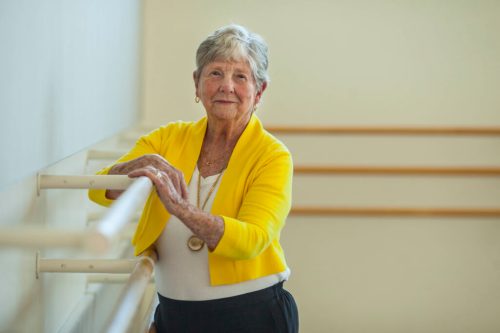
Photo: Thomas Armour Youth Ballet
An unusual ballet company in Miami provides ballet, reading, math and etiquette classes along with access to mental health professionals as needed.

In the fall, my younger granddaughter will start ballet lessons in Rhode Island. “I’m going to be on the stage,” she announced to my neighbor. I’m not sure what, at age 4, ballet classes mean to her, but they have a mighty big aura.

In Miami, an unusual ballet company has been growing an even bigger aura. Thomas Armour Youth Ballet offers dance lessons, yes, but as I learned from this Miami Herald article by Rodolfo Roman, its goals extend well beyond dance.

“When sports journalist Claudia Chang Trejos faced a difficult period in her life, an after-school ballet program helped her overcome obstacles.

“Now, her daughter, Glades Middle School student Sophia Chang Trejos, 14, is following her mother, attending the after-school program at the Thomas Armour Youth Ballet in South Miami.

“The program provides ballet, reading, math and etiquette classes along with access to mental health professionals [and] delivers professionally taught dance classes in multiple genres, at little or no cost to 500 students ages 5-11.

” ‘When she started, I was going through a nasty divorce,’ Claudia said. ‘We were broke. I had no one to help me out with Sophia, so this was a place she could go to, and go with her peers. I went to work and I had a peace of mind.’ …

“ ‘Ballet is not for everybody,’ said Sophia, who credits the program with her getting into the New World School of Arts, the Miami-Dade arts magnet high school, where she will start in the fall.

“ ‘You can start when you are 4 and love it, but when you grow, the technique gets harder and that’s when people quit. What I like about ballet is it’s a different way to train a person. I like the music and the way people are when you are dancing. It is like a movie.’ …

“Director Ruth Wiesen said the program’s goal is to be a vehicle of success.

“ ‘Every now and then, I step back and I am shocked we are able to see these kids succeed and coming back to Miami,’ she said. ‘That is the biggest thrill. They come back, settle down and act like role models.’ …

“No matter what her future holds, Sophia said the program will always have a place in her heart.

“ ‘I plan on coming back when I am older, and teach classes to give back,’ she said.”

More at the Miami Herald, here.

2982

Photo: Universo Santi
This haute cuisine restaurant in Spain makes a point of hiring workers with disabilities.

I have posted a few stories about successful operations that hire workers with disabilities, but this is the first I remember seeing about a high-class restaurant set up for the purpose of creating jobs that don’t differ from jobs in establishments that don’t use workers with disabilities.

Stephen Burgen writes at the Guardian, “The first thing that strikes you is the calm, the light, the modern art on the walls – and then of course the food. It’s only later that you realise there is something different, and a little special, about Universo Santi, a restaurant in the southern Spanish city of Jerez.

“ ‘People don’t come here because the staff are disabled but because it’s the best restaurant in the area. Whatever reason they came for, the talking is about the food,’ says Antonio Vila.

“Vila is the president of the Fundación Universo Accesible, a not-for-profit organisation dedicated to helping people with disabilities join the mainstream workforce. He has also been the driving force behind Universo Santi, the haute cuisine restaurant whose 20 employees all have some form of disability.

“ ‘I always wanted to show what people with disabilities, given the right training, were capable of,’ says Vila, who is a senior manager at DKV insurance. ‘They were not represented in the world of haute cuisine. Universo Santi has broken through that barrier.’

“The 20 staff, whose ages range from 22 to 62, were recruited from an original list of 1,500. To qualify, applicants had to be unemployed and have more than 35% disability.

“ ‘I feel really lucky to be part of this,’ says Gloria Bazán, head of human resources, who has cerebral palsy. ‘It’s difficult to work when society just sees you as someone with a handicap. This has given me the opportunity to be independent and to participate like any other human being.’

“Alejandro Giménez, 23, has Down’s syndrome and is a commis chef. ‘It’s given me the chance to become independent doing something I’ve loved since I was a kid,’ says Giménez, who lived with his mother until he was recruited.

“ ‘Working here has transformed my life. So many things I used to ask my mother to do, I do myself. I didn’t even know how to take a train by myself because I’d just miss my stop.’ …

“Universo Santi may soon have a star in the Michelin firmament as the Michelin Guide people have already sampled the menu which, at €60 (£53), is less than half the price of a typical menú de degustación.

“ ‘Of course they didn’t introduce themselves but we knew who they were,’ says Almudena Merlo, the maître d’. …

“The Jerez restaurant takes its name from Santi Santamaria, chef at the Michelin three-star Can Fabes in Catalonia until his sudden death in 2011. Can Fabes closed shortly afterwards but his family wanted to carry on his name and culinary tradition and were keen to support the Jerez project. …

“The family’s enthusiasm attracted the attention of Spain’s top chefs, among them Martín Berasategui, [Joan Roca of El Celler de Can Roca, twice voted the best restaurant in the world] and Ángel León, all of whom have contributed recipes and their time as guest chefs at the restaurant.”

More at the Guardian, here. The article also mentions other European enterprises that employ people with disabilities.

Photo: Universo Santi
Says Alejandro Giménez, a junior chef with Down Syndrome who works at Universo Santi in Jerez, “Working here has transformed my life.”

768

Humans Gotta Dance

idea_kate-holt-10706364576_463ab61e34_b

Photo: Kate Holt/Flickr
The joy on the faces of these performers in Kenya illustrates a universal truth: people love to dance. And it turns out, dancing informs our development in significant ways.

There’s something about being human that inclines one to dancing. Not necessarily ballet or hip hop or ballroom dancing, but dancelike movement that is part of everyday lives. The research on this may surprise you.

Kimerer LaMothe writes at Aeon, “Dancing is a human universal, but why? … What if humans are the primates whose capacity to dance (shared by some birds and mammals) was the signature strategy enabling the evolution of a distinctively large and interconnected brain, empathic heart and ecological adaptability? And what if dancing plays this role for humans not just in prehistoric times, but continuing into the present? …

“Researchers are discovering the vital role played by bodily movement not only in the evolution of the human species, but in the present-day social and psychological development of healthy individuals. Moreover, it is not just bodily movement itself that registers as vital in these cases, but a threefold capacity: to notice and recreate movement patterns; to remember and share movement patterns; and to mobilise these movement patterns as a means for sensing and responding to whatever appears. This threefold capacity is what every dance technique or tradition exercises and educates.

“According to the New York University neuroscientist Rodolfo Llinás, writing in the book I of the Vortex (2001), bodily movement builds brains. A brain takes shape as it records patterns of neuromuscular coordination, and then remembers the outcomes in terms of pain or pleasure, emotional tags that help it assess whether to mobilise that movement again, and if so, how.

“In so far as bodily movements build the brain, every movement a human makes matters. Each repetition of a movement deepens and strengthens the pattern of mind-body coordination that making that movement requires; and the repetition also defines avenues along which future attention and energy flow. Every movement made and remembered shapes how an organism grows – what it senses and how it responds. …

“Humans have a unique capacity to notice, recreate and remember patterns of movement. More abundant in the human brain than any other mammalian brain, mirror neurons fire when a person notices a movement, recreating the pattern of neuromuscular coordination needed to make that movement. In this way, humans can learn to recreate the movement of others – not only other humans, but also trees and giraffes, predators and prey, fire, rivers and the Sun. As the neuroscientist V S Ramachandran writes in his book The Tell-Tale Brain (2011), mirror neurons ‘appear to be the evolutionary key to our attainment of full-fledged culture’ by allowing humans ‘to adopt each other’s point of view and empathise with one another.’

“Nevertheless, the term ‘mirror’ is misleading; it hides the agency of bodily movement. A brain does not provide a passive reflection. As eyes register movement, what a person sees is informed by the sensory awareness that his previous movements have helped him develop. He responds along the trajectories of attention that these previous movements have created. From this perspective, dance is a human capacity, not just one possible activity among others. …

“In this light, every dance technique or tradition appears as a stream of knowledge – an ever-evolving collection of movement patterns discovered and remembered for how well they hone the human capacity for movement-making. Most of all, dancing provides humans with the opportunity to learn how their movements matter. They can become aware of how the movements they make are training them – or not – to cultivate the sensory awareness required to empathise across species and with the Earth itself. In this regard, dance remains a vital art. From the perspective of bodily becoming, humans cannot not dance.”

This Aeon article came from the website Arts Journal, which brings together arts stories from around the world. Read more at Aeon, here.

fe3196d4677e1f7438618fa78f777e18

buffalo-stitch-buffalo-ny-4-730x485

Photo: Stitch Buffalo
Stitch Buffalo says it’s “advancing social justice for refugee women in Buffalo, NY, by creating opportunities for cross-cultural exchange and economic empowerment through the textile arts.”

Every individual and every community has its own way of responding to newcomers from other countries.

You would never know it from the headlines, but there are a lot of people who, being curious about foreign cultures or perhaps knowing what it was like for their forebears to be immigrants, feel friendly toward the latest arrivals. Maybe they just smile. Or maybe they work on some integrating initiative, like this charming one in Buffalo, New York.

Maura Christie reports at Spectrum News, “At first glance, it may not seem like much, ‘Embroidery floss, beads, scissors, fabrics, solid colored fabrics,’ said Dawne Hoeg, Stitch Buffalo’s executive director. But these common household items have quite literally bonded refugee women to [the city of Buffalo].

“Stitch Buffalo started as a project back in 2014 as a way to give those women a space of their own to learn and share ideas at different textile workshops.

“Now, five years and a storefront later, workshops are open to anyone in the community and many of the refugees have gone from being students to standing in front of workshops as teachers.

” ‘It’s an exciting opportunity for Buffalo people to come and have an authentic experience learning from a woman from Thailand or a woman from Burma, where she has learned this skill and is willing to share it with us,’ Hoeg said.

‘Some of their stitches are very different from the ones we do and it’s just a beautiful opportunity for a cross-cultural exchange.’

“Women also sell their one-of-a-kind, handmade items in the retail space, anything from pins to bracelets and ornaments. But every two months, that space gets transformed for Second Stitch. The nonprofit uses mainly donated materials, and anything they’re not able to use is sold to the community.

” ‘What we decided to do is to take those materials, sort them, measure them, organize them and turn them back over to the community at a reduced rate,’ Hoeg said. …

“No matter what project the women make next, or how much they sell it for, the love and support they receive from their adopted hometown is priceless.

” ‘It’s the making, but it’s also the selling,’ Hoeg said. ‘When you create something and you see that somebody else finds value in it enough to purchase it, that empowers you, that builds a confidence. That’s what I see happening with the women here is that they are empowered through the skill and the support they receive from the community.’ ”

Find some wonderful pictures at the Stitch Buffalo website, here, and at Spectrum, here.

Hat tip: Beautiful Day. Beautiful Day is a Providence-based welcoming initiative that teaches refugees and other immigrants basic job skills in the process of making a range of fantastic granola products. If you follow them, you will be alerted to new varieties you can buy, and you can read stories from around the country like the Stitch Buffalo story. I like to send their beautiful gift baskets to family members at holidays.

400x450-towidth-90-finneas_avery_rocls_400x595

Art: Finneas Avery Roels, high school student
The theme for the Arlington, Mass., banner competition this spring was Trees.

One day back in June, when I happened to be in Arlington, Mass., I was struck by some delightful banners hanging from lamp posts. I decided to see what I could discover about them. Turns out, the designs were created by kids.

From the website Your Arlington, I learned that the “youth banner initiative aims to promote and encourage development in the visual arts and to provide an opportunity for youth to participate in temporary public art projects in Arlington. The effort is geared to young people in grades 6 through 12 (and the equivalent home-school level).

“Funding is provided by the Gracie James Foundation in memory of James, who was a beloved, artistically talented Arlington High School student. The program invites teens to submit designs relating to a specific theme to be digitally reproduced on vinyl banners which are then hung on light poles along Mass. Ave. in Arlington Center.”

This year’s theme was Trees, and three designs were chosen to hang in town. The one above is by Finneas Avery Roels of Arlington High School.

But, oh, dear, I thought. What happened to Gracie, whose foundation provided the support? Alas, those answers were in an obit.

“Gracie Christine James, beloved daughter of Chris Bobel, James Lundy and Thomas Hartl, all of Arlington, Massachusetts, died on October 20, 2010, of injuries sustained in a car accident in the Wasatch Mountains of Utah three days earlier. She had just turned 17 years old.

“Gracie Christine James was born on September 29, 1993, in Whitewater, Wisconsin where she lived until moving to New Orleans just before her fourth birthday. After her father and mother separated in 1998, Chris and Gracie moved to Cincinnati, Ohio, where they lived until relocating to Arlington, Massachusetts, with Thomas in 2001.

“Gracie’s father, James, moved to Arlington in 2006. Until this fall, Gracie had been a student at Arlington High School. In mid-August, Gracie began attending a boarding school in Hurricane, Utah. On the morning of Sunday, October 20th, Gracie and fifteen other girls and school staff were enroute to a full day excursion in Arches Natural Park when the staff driver of their SUV lost control and the vehicle rolled over outside of Sevier, Utah. …

“Gracie was an unusually creative, intuitive, affectionate and sensitive young woman with a shy smile, beautiful eyes and a deep, feeling soul. She was an accomplished figure skater, an avid reader and a budding artist who created evocative and vibrant abstract works in soft pastels. But her main passion was writing. A brilliant and imaginative writer of both short and longer fiction and poetry, she aspired to a career in professional writing.

“Gracie’s gifts for caring, compassion and emotional connection touched everyone she met as shown by the outpouring of grief and support expressed by her peers at both her current and former schools. The day after her death, grieving students at Arlington High School wore green, symbolizing peace and honoring her memory. …

“The family invites donations in lieu of flowers to the newly established ‘Gracie James Foundation,’ which will focus on closing the gaps in systems of support for local teens. Donations can be sent to 76 Paul Revere Road, Arlington, MA 02476.”

Life is precious, Guys. I do like to think that at least people are reminded of the life of this young girl as they make art for the competition or, like me, drive by during the months that the banners are displayed.

Pinkeye Goby / Bryaninops natans

Photo: Christian Gloor
By living fast and dying young, red eye gobies fuel reef fish biomass production, which helps explain why reefs can flourish in nutrient-poor waters.

You don’t have to be big to be important. Consider the tiny red-eyed goby, a fish that is vital to coral reefs. For years, scientists couldn’t figure out how there could be such lush biodiversity on coral reefs in clear, low-nutrient waters.

Turns out the answer was hiding under their noses.

Leila Miller writes at the Los Angeles Times, “It’s one of the enduring mysteries of marine biology: How can coral reefs sustain such diverse ecosystems when they are surrounded by clear, low-nutrient waters? Now scientists think they’ve found the answer, and it’s been hiding in plain sight all along.

“The coral reef food chain is powered by some of the ocean’s smallest vertebrates — tiny fish that are gobbled up so quickly they’ve been easy to overlook.

“These fish are small enough to fit in the palm of your hand, but they play an almost heroic role in sustaining coral reefs, according to a study published this month in the journal Science. In fact, these little swimmers account for almost 60% of the fish flesh eaten on reefs, researchers found.

“ ‘They’re really like high-octane fuel for larger fish,’ said study leader Simon Brandl, a marine ecologist at Simon Fraser University in Burnaby, Canada. …

“Coral reefs are like underwater rain forests — they’re incredibly diverse and are home to more than 6,000 species of fish, Brandl said. Yet the nutrients needed to maintain this abundance of life seemed to be lacking. …

“Brandl and his colleagues make a strong case that high turnover of tiny fish is an important part of the story, said Douglas McCauley, a marine biologist at UC Santa Barbara who did not work on the study. …

“The tiny fish hatch from eggs, and within a day or so, the larvae are old enough to find their own food. Then they have to grow up and reproduce within a month or two — before they get eaten. …

“The females have another problem to contend with: low egg counts. Their small bodies can produce only about 100 eggs at a time, on average, while larger fish may lay tens or hundreds of thousands.

“ ‘It didn’t seem to add up,’ said senior author David Bellwood, a marine biologist at James Cook University in Townsville, Australia. ‘How on Earth did they survive?’

“In a word: larvae. … While the larvae of most coral reef fish wander out into the open ocean to escape predators on reefs, the larvae of cryptobenthic fish hang out near the reef as they mature. This seems to dramatically enhance their survival and return rates, Brandl said. …

“It may seem surprising that scientists didn’t know where more than half of the fish food supply was coming from, but at any given moment, the tiny fish make up only a minuscule percentage of the total fish flesh on a reef. The key was to see that the population replenished itself so quickly, [Luke Tornabene, a fish biologist at the University of Washington in Seattle who worked on the study] said.”

Read more at the Times, here.

Hat tip: Matt Stiles‏ on Twitter.

5942b901caac9e5b368b456c-640-480

Photo: Associated Press
Under the streets of Paris, you can get lost in a whole other world.

I have a friend whose dream is to go to Paris. It has been her goal for decades, and she was all signed up for a trip when she fell and landed in the hospital. But she hasn’t given up, and I expect by this time next year she will have met her goal.

Paris has an irresistible lure for people around the world. If you have already been there, consider discovering the underground version of that city next time you go.

Robert Macfarlane writes at the New Yorker, “The map runs to sixteen laminated foolscap pages, or about ten square feet, when I tile the pages together. I have been given it on the condition that I do not pass it on. It is not like any map I have ever seen, and I have seen some strange maps in my time. The plan of the above-ground city is traced carefully in pale silver-gray ink, such that, if you read only for the gray, you can discern the faint footprints of apartment blocks and embassies, parks and ornamental gardens, boulevards and streets, the churches, the railway lines and the train stations, all hovering there, intricate and immaterial.

“The map’s real content — the topography it inks in black and blue and orange and red — is the invisible city, the realm out of which, over centuries, the upper city has been hewn and drawn, block by block. This invisible city follows different laws of planning to its surface counterpart. …

“The map’s place names traverse a range of cultural registers, from the classical to the surreal to the military-industrial. … Affordance is specified on the map in handwritten cursive words: ‘Low,’ ‘Quite low,’ ‘Very low,’ ‘Tight,’ ‘Flooded,’ ‘Impracticable,’ ‘Impassable.’ More detail is occasionally given: ‘Humid and unstable region (sometimes flooded)’; ‘Beautiful gallery, vaulted and corbelled.’ …

“I have come to the catacombs with two friends — let us call them Lina and Jay. Jay is a caver keen to extend his explorations into city systems. He is droll, unflappable, and strong. Lina is the leader of our group, and she has been here many times. She is passionate about the catacombs, especially about preserving and documenting their swiftly changing features through photography and record-keeping. …

“ ‘We’ll plan to exit by a manhole, whenever we come out.’ She gestures back up the tunnel with a smile, then eases herself feet first into the ragged hole, raises her arms above her head, and disappears.

“All cities are additions to a landscape that require subtraction from elsewhere. Much of Paris was built from its own underland, hewn block by block from the bedrock and hauled up for dressing and placing. Underground stone quarrying began in the thirteenth century, and Lutetian limestone was used in the construction of such iconic buildings as Notre-Dame Cathedral, the Louvre, and Saint-Eustache Church.

“The result of more than six hundred years of quarrying is that beneath the southern portion of the upper city exists its negative image: a network of more than two hundred miles of galleries, rooms and chambers, extending beneath several arrondissements. …

“For centuries, quarrying was ill-regulated and largely unmapped. Then, in the mid-eighteenth century, the extensive undermining began to have consequences for the upper city, causing subsidence sinkholes, known as fontis, that were reputed to be of diabolic origin. The quarry voids had begun to migrate to the surface; the under city had begun to consume its twin. …

“Louis XVI responded, shortly after his accession, by creating an inspection unit for the ‘Quarries Below Paris and Surrounding Plains,’ headed by a general inspector named Charles-Axel Guillaumot, and tasked with regulating the quarries for the purposes of public safety.

“It was Guillaumot who initiated the first mapping of the void network, with a view to consolidating existing spaces and regulating further quarrying activities. A subterranean town-planning system was established whereby chambers and tunnels were named in relation to the streets above them, thus creating a mirror city, with the ground serving as the line of symmetry.”

There’s a long read at the New Yorker, here.

Photo: Scott Hess/Flickr
Guinea fowl, which like to forage for ticks, mosquitoes, fleas, beetles, spiders, and more, can help protect your family from Lyme Disease.

In our family we have had reason to worry about deer ticks. Nearly everyone has had Lyme Disease at some point or at least found a tick attached and taken Doxycycline just in case. We’re always on the alert for stories about the latest vaccine research or new preventive sprays. I myself wear long pants and socks all summer.

What is the long-term solution? Some people promote expanded deer hunting or experimenting with ways to keep deer from reproducing. I like this idea from New Hampshire: guinea fowl.

A great radio show called Living on Earth has the story.

“Some homeowners in the thick of tick country are turning to guinea fowl to control ticks. Living on Earth’s Jenni Doering reports from Exeter, New Hampshire, about one family’s experience with these tick-eating machines. …

“More than 40,000 new cases of Lyme were reported in 2017, and climate change could make it even more common. A recent study found that a temperature increase of just 2 degrees Celsius could result in a 20 percent increase in Lyme disease cases in the U.S. Luckily, there are proven ways to reduce your risk of getting Lyme disease: wear long sleeved clothing, use repellents, and do a thorough tick check after you’ve been in the woods. …

“JENNI DOERING: Suzy and Hazel Koff live an enchanted childhood.
On a warm July day the 6 and 3 year olds run through the sun-dappled forest in their New Hampshire backyard. … Their mother, Sarah, says this is how they spend their summer.

“KOFF: We love going outside playing in the woods. We have this great big yard that they play in and we have a sandbox out here and slack line and all sorts of things; we like to make fairy houses, and we like to garden together. …

“DOERING: But in the Northeast, where there are woods, there are ticks. A lot of them.

“KOFF: I was so, just, overwhelmed by the ticks in our yard. … I’m such a big gardener, there’s no way I was willing to spray anything on the lawn or use any sort of chemicals at all, so I thought I would try this biological control. …

“DOERING:  Enter the guinea fowl. Native to Africa, guineas are rather awkward, football-shaped birds with a tiny head, and a voracious appetite for ticks. And unlike chickens, guinea fowl won’t peck at your garden greens. So Sarah decided to give them a try.

“KOFF: Yeah, I just went on Craigslist. … As soon as we started letting them out they were immediately interested in pecking, pecking and pecking. So yeah, they were just sort of tearing up all the bugs! … They’re not pets. They’re sort of wild animals that you just have. … I haven’t seen any ticks on the kids since we’ve let the guineas go roam around. …

“DOERING: A small 1992 study on Long Island backs up Sarah’s observation.
Researchers placed guinea fowl into tick-infested areas and found that they significantly reduced the adult tick population within the enclosures. But Howard Ginsberg, a research ecologist with the Department of Interior, points out a problem with timing.

“GINSBERG: Most people get Lyme disease during June and July when the nymphs are out, and the nymphs are in the woods. The adults, which are the stage that’s targeted by these birds, [are] out in the fall and spring, out in open areas like people’s lawn. …

“DOERING: A single female deer tick can lay as many as 2,000 eggs, so removing adult ticks does appear to reduce local Lyme disease risk overall. Fortunately, even if a tick latches on to you, Ginsberg says time is on your side.

“GINSBERG: Lyme disease, that bacterium requires something like 24 to 48 hours with tick attachment before it’s transmitted. So if you do a check every day when you get back from the woods and remove ticks, you have eliminated the possibility of Lyme disease fairly substantially. … The best way to remove a tick is to just take fine tweezers, just grab as close to the skin line as possible, and slowly pull it straight out.

“DOERING: Then, take some rubbing alcohol and clean the bite thoroughly.
And get that tick safely out of your life by flushing it down the toilet.”

Meanwhile, the search goes on for long-lasting solutions to the Lyme Disease problem.

More at Living on Earth, here., where you can also listen to the audio version.

Photo: Henry Gass/Christian Science Monitor
Volunteers like Luis Guerrero, pictured above, reach out to migrants — after they are released from federal custody and their cases are proceeding — and help them to reunite with families around the country and get legal assistance.

At the end of 7th grade, after we had had a half year each of Spanish and French to get a taste, the Spanish teacher took me aside and begged me to take Spanish in 8th grade and not French. I spouted what my parents told me about French having more great literature, and the teacher was shocked at my ignorance. Still, I wasn’t one to go against my mother.

Today I think if only I could speak Spanish, maybe I could actually be some help as a volunteer at the border — like the people in this story.

The Christian Science Monitor writes, “At the U.S.-Mexico border, our reporter found an army of everyday citizens compelled to offer help where officials cannot.”

Henry Gass, the reporter, writes, “Luis Guerrero has been going to the central bus station here for six years now. He still hasn’t bought himself a ticket.

“It started when he saw a nun trying to help newly arrived migrants passing through the station and offered to translate for her. The migrants have kept coming, so he has kept making the ride to the station.

“Of course, migrants are crossing into this part of Texas in numbers not seen in over a decade. U.S. Customs and Border Protection (CBP) has already apprehended more migrants in the Rio Grande Valley sector this fiscal year than any other year this century besides 2014. Mr. Guerrero has responded to this latest surge with the calm enthusiasm of a retired firefighter who rescued children from a submerged school bus three decades ago. …

“The zero tolerance policy is no more, but the flow of migrants – primarily families from the Northern Triangle of Central America – has only increased. News and government reports of migrant deaths, as well as ‘dangerous’ and ‘squalid’ conditions in government holding centers, have thrust the issues back into the national spotlight in recent weeks. …

“Immigration lawyers, local officials, and volunteers across the border [have] been feeling the strain.

“Bus stations have been a consistent area of need, and that is where Juanita Salazar Lamb found herself this week after driving down to McAllen from Benton County in northwest Arkansas. She had been following the news coverage of the border crisis, unsure of whom to believe – people who say the migrants need asylum, or people who say they’re exploiting loopholes in immigration law; people who say they’re being treated horribly, or people who say they’re being treated well. …

“Thirteen months ago [Joyce Hamilton] and four friends formed a group, Angry Tias and Abuelas, focused on helping migrants on international bridges and reuniting separated families. The group expanded to a core of eight regular volunteers, and six months ago got a fiscal sponsorship from an Austin-based nonprofit (so it can attract donors even though it’s not yet recognized as a tax-exempt organization).

“ ‘By August [2018] I just really, I didn’t feel like I had a center. I was just shaky a lot,’ she says of the toll her work has taken over the past year.

“As government policies have changed, the group has had to shift where it devotes resources. … In January the administration began implementing Migrant Protection Protocols, a policy also being challenged in court in which migrants may be returned to Mexico while their immigration case is proceeding.

“International bridges are now mostly empty, while shelters in Mexican border cities are overwhelmed with migrants. Ms. Hamilton’s group is now focused on helping at the bus stations and sending money and supplies to shelters in Mexico. …

“Things have slowed down recently in her hometown of Harlingen, Texas. When she arrived at the local bus station on Monday morning – a station so busy on some days this summer she couldn’t hear herself talk – there was only one Guatemalan girl. It was her 18th birthday, so she had been released from the Norma Linda child detention center nearby and dropped off there.

“The girl’s bus ticket – to Georgia, where she says her uncle lives – was for the next day, so Ms. Hamilton arranged for her to spend the night at Loaves & Fishes, a homeless shelter in Harlingen. The 18-year-old says she hopes to work in the U.S. and send back money to support her parents still living in rural Guatemala. After she had crossed the border into Arizona, she spent eight months in Norma Linda, an experience she had only a few complaints about.

“ ‘There were lots of rules,’ she said in Spanish, fidgeting with a bracelet she had made at Norma Linda bearing the names of her grandparents.

“ ‘I made a couple of friends,’ she added. ‘I’m going to miss them.’ ”

As a colleague at my last job used to say about migrants who had made the trek, “People who go through all that sound like the kind of people I would like to know.”

More at the Christian Science Monitor, here.

073119-bathroom-window-with-tree

In July I took pictures in Rhode Island, Massachusetts, and New York and will be sharing them bit by bit. These are from New Shoreham, Rhode Island.

The first one is a view that caught my eye through a bathroom window. You have to grab these shots when you see them.

Next is the endangered wildflower Blazing Star, which is doing very well in the protected Land Trust area. Then we have an offbeat signpost. People seem to get especially creative in summer. There’s a feeling of “Well, why not?”

In the backyard of the tiny Three Sisters restaurant, you see some of the goodies that go into the delicious sandwiches. In the front yard, Queen Anne’s Lace. By the way, today I helped chef extraordinaire and walking partner Sandra pick Queen Anne’s Lace so she could make a jelly that the late taxi maven Thelma used to make. Here is a recipe we found from the Edible Wild Food site. If you make it, be sure you know what you are picking. As my husband reminds me, there are plants that look like Queen Anne’s Lace that are not safe to eat.

At John E’s tughole, I loved the shadows beneath the still water. And at the beach I saw dragons in the driftwood. (Do you see them? I admit, the photo would benefit from sharper contrast between the sleepy dragons and the background.)

As the tide came in, it drenched my favorite Tom’s shoes, given to me by my daughter-in-law some years ago. I may have to get new beach shoes soon.

No New Shoreham post would be complete without a photo of the Painted Rock. This one features a Ninja Turtle. Read how the rock first came to be painted for a Halloween prank in the 1960s, here. (And for some of the better Painted Rock art, check out Tumblr, here.)

The final picture shows the excellent job the state is doing to plant beach grass and protect the island’s west side from erosion. (Can you see the burlap-like covering holding the plants in place as they establish themselves? It’s a tried and true conservation technique at the shore.)

080119-Blazing-Star-wildflower

072219-intriguing-signpost

080119-Three-Sisters-for-sandwiches

080119-.Queen-Anne's-Lace

072219-John-E-tughole

080119-driftwood-might-be-dragons

080119-the-tide-rushes-in

080219-Ninja-Turtle-Painted-Rock-B!

073019-beach-grasses-protect-dunes


Photo: Christian Chavez/AP
Children on the Mexican side play on a cross-border seesaw that two professors designed to highlight human connection.

The language of illegality has for many decades gotten in the way of our communal understanding that seeking asylum is a basic human right. Seeking asylum doesn’t necessarily mean being granted asylum — efficient processes have to be put in place to weigh individual circumstances — but it is not illegal to ask.

I get very discouraged about the way our country has long been treating human beings who have run for their lives. Then I see that not everyone is on board with the policies.

Lanre Bakare writes at the Guardian, “A set of fluorescent pink seesaws has been built across the US-Mexico border by a pair of professors seeking to bring a playful concept of unity to the two sides of the divide.

“Installed along the steel border fence on the outskirts of El Paso in Texas and Ciudad Juárez in Mexico, the seesaws are the invention of Ronald Rael, a professor of architecture at the University of California, Berkeley, and Virginia San Fratello, an associate professor of design at San José State University, who first came up with the concept 10 years ago.

“In an Instagram post that has received tens of thousands of likes [see @rrael ], children and adults can be seen playing and interacting on both sides of the fence using the seesaws, which provide ‘a literal fulcrum’ between the countries, according to Rael. He said the event was about bringing ‘joy, excitement and togetherness at the border wall.’

“He added that it was also about finding ‘meaningful ways on both sides with the recognition that the actions that take place on one side have a direct consequence on the other side.’ …

Photo: Carolina Miranda/ LA Times
Japanese art collective Chim↑Pom is one of many groups to build art projects along the U.S.-Mexico border. This one is a tree house called USA Visitor Center.

“Other art projects have been planned for the border. Estudio 3.14, an architectural practice in Mexico, designed a pink interpretation … inspired by the 20th-century Mexican architect Luis Barragán, employing the pink pastel colour he often used in his designs.

“Dozens of artists have used the wall as a setting for projects, including the Japanese art collective Chim Pom, which created a treehouse in Tijuana with ‘USA Visitor Center’ written on the side.” More at the Guardian, here. And for the Carolina A. Miranda Los Angeles Times report on the treehouse, click here.

072519-love-Central-Park-rock-formations

I can’t stop talking about how much I love New York’s Central Park in the morning, especially as I remember being 14 and told not to walk my aunt’s Corgi anywhere near there in the morning.

In those days, the park had fallen on hard times and wasn’t being loved and protected. Nowadays in the mornings, half the word is there — bikers, walkers, runners, dog exercisers, tennis players, baseball teams, New Yorkers doing tai chi or push-ups or taking a detour to the office surrounded by birdsong and beauty. It’s a welcoming place for people of every background and income, who mingle there unselfconsciously, often with friendly smiles.

The experience is the genius of 19th century landscape architect Frederick Law Olmstead and the ordinary people who supported his vision. Perhaps you have an Olmstead park near you. You do if you live near Buffalo, Niagara Falls, New York City, or Rochester in New York State, or Boston in Massachusetts, Trenton in New Jersey, Riverside in Illinois, Detroit in Michigan, Louisville in Kentucky, Milwaukee in Wisconsin, Asheville in North Carolina … the list goes on.

I took a few highlights from the Wikipedia entry on Olmstead, here.

“The design of Central Park embodies Olmsted’s social consciousness and commitment to egalitarian ideals. Influenced by [landscape architect Andrew Jackson] Downing and his own observations regarding social class in England, China, and the American South, Olmsted believed that the common green space must always be equally accessible to all citizens, and was to be defended against private encroachment. This principle is now fundamental to the idea of a ‘public park,’ but was not assumed as necessary then. Olmsted’s tenure as park commissioner in New York was a long struggle to preserve that idea. …

“Olmsted’s principles of design, generally speaking, encourage the full utilization of the naturally occurring features of a given space, its ‘genius’; the subordination of individual details to the whole so that decorative elements do not take precedence, but rather the whole space; concealment of design, design that does not call attention to itself; design which works on the unconscious to produce relaxation; and utility or purpose over ornamentation. …

“The pastoral style featured vast expanses of green with small lakes, trees and groves and produced a soothing, restorative effect on the viewer. The picturesque style covered rocky, broken terrain with teeming shrubs and creepers and struck the viewer with a sense of nature’s richness. The picturesque style played with light and shade to lend the landscape a sense of mystery.”

Above you see his characteristic use of the elephantine rocks that jut out of the Manhattan landscape. I can’t tell you how mysteriously happy these sleeping giants make me, having grown up in Rockland County, where rocks are king.

Below are my photos of one of Central Park’s fairylike bridges over a babbling brook, a musical waterfall, and a beckoning path under an arched bridge.

072419-Central-Park-stream

072619-babbling-brook-Central-Park

072419-Central-Park-NYC

072619-.NYC-rooftop-garden

For the princely sum of $10 a year, a New York senior — my sister, for example — can visit a serene rooftop flower garden any day in the week. And the public can come for free on Sundays.

We made a pilgrimage to the Lotus Garden last Thursday, and it was delightful. The only people who were there at the time were two nannies and two toddlers.

Here is some history from the website. “Once upon a time back in the 1960s, two grand old movie theaters (the Riverside and Riviera) stood on the west side of Broadway, north of 96th Street. Eventually the theaters closed, the building fell into disrepair and was demolished — leaving an empty lot. Would-be gardeners in the neighborhood took over, planting a riot of flowers in the ‘Broadway Gardens,’ while the local politicians, realtors and bankers squabbled over the future of the lot. (Would an Alexanders department store serve the community better than an apartment house?) In the face of fierce community opposition a number of development projects fizzled.

“Determined Upper West Siders organized; local block associations joined the gardeners, along with the City Planning Commission, Community Board 7, and the Trust for Public Land, among others. Out of this emerged a committee, spearheaded by community activists Carrie Maher, a horticulturist, and Mark Greenwald, an architect, which worked with would-be real estate developer William Zeckendorf Jr. on the project for more than a year, persuading him to translate this neighborhood green space into an amenity that would enhance his building’s charm and value.

“Zeckendorf built stairs to the roof from a gate on the street; a cherry picker lofted 3-1/2 feet of topsoil onto the garage roof. Then Carrie and Mark, who headed the garden, laid out winding paths, installed two fish ponds and planted fruit trees and flowering shrubs. At last in the spring of 1983, a group of local residents, including new residents of the Columbia, began to plant flowers and herbs beneath the north facing windows of the Columbia’s tower.  Today 28 families tend garden plots there.  Thus the Lotus Garden, a community garden, came to be built on the roof of the garage of the Columbia condominium, on West 97th Street in Manhattan.” See pictures of the development stages here.

The only drawback I can think of is that the space is not wheelchair accessible. But if you can climb stairs, you are in for a treat. Here are the pictures I took. The peaches on the tree had just started to ripen.

072619-.stairs-to-roof-garden

072619-.Lotus-Garden

072619-peach-tree-Lotus-Garden

072719-Jae-has-healing-plants

When in New York, I like to walk from the Upper West Side to Central Park in the morning. I often walk east on the West 101 Street path that goes past the Frederick Douglass Houses. On the right is a playground and a popular little swimming pool (three feet deep, lifeguards provided), and on the left is a big field for sports and an empty lot converted to a garden.

When the garden fence was open recently, I stopped in and talked to Jae the gardener, whose passion for growing and feeding people is an inspiration.

Jae says she used to overthink food shopping, experiencing a kind of paralysis in the market as she asked herself, Where was this fruit grown? Who grew this vegetable? Were they paid a fair wage? Were pesticides used?

But she found her calling when she started growing her own food. First she helped gardeners by learning to compost, and she is still crazy about the whole idea of composting. “That’s where I come from as a gardener. I love worms!”

A full-time volunteer, Jae is eager to show visitors around the converted tennis-court farm. The garden has been built on top of the court, starting with piles of compost. Although her partner organization, Project EATS, notes the garden is not an official production farm this year, Jae sells some produce in hopes of saving up to hire a Haitian neighbor as a full-time gardener at some point. (“I don’t speak Haitian, he doesn’t speak English, but we both speak Farm.”) She gives half to the partner organization.

Jae has a completely organic approach (no pesticides or herbicides), and she expresses a feeling of awe at how nature works without such interventions. She shows how Mother Nature has let her plants flourish despite the views of “schooled farmers” that there was inadequate sun in that space.

When I told Jae I come to the city to visit my sister, who has cancer, she said my sister should come enjoy the garden’s healing aura and should bless the plants by breathing out carbon dioxide to help them grow.

I left Jae hand-removing squash borer eggs. (“Look how symmetrically they are laid! Isn’t it beautiful?) As beautifully as those eggs are laid, she knows she has to destroy them to protect the squash plants. Follow Jae on Instagram, @growwithjae .

Jae’s partner organization describes its own mission thus: “Social inequalities lead to health inequalities and ill-being in our communities. They affect our access to fresh food, life expectancy, physical and mental well-being, quality of education, employment opportunities. income, and share of public resources. They shape our behavior and expectations, and what we perceive and believe is possible for our communities, our society, and us.

“To achieve its mission of a fair society, Project EATS is a neighborhood-based project that uses art, urban agriculture, partnerships, and social enterprise to sustainably produce and equitably distribute essential resources within and between our communities. Especially those where people live on working class and low-incomes.

“To do this, we bring diverse neighbors together to take agency over the use of land in their neighborhood, provide the infrastructures and support for a community to develop their resources into productive spaces. We share knowledge and skills that support the ability of people to turn these relationships and resources into sustainable social enterprises employing community residents and stimulating local economies.”

Note the happy sunflower, one of several that Jae rejoices in, especially as she was told there was not enough sun to make gardening worthwhile in that space.

072719-squash-west-101-st-NYC

072719-Jae-in-organic-garden

072719-checking-squash-for-borers

072719-Jae-loves-her-sunflowers

Photo: The Providence Journal / David DelPoio
Refugee campers line up for lunch beneath a portrait of George Washington at Camp RYSE in Providence. The camp is specifically targeted to cater to refugee children.

I work with refugees and other immigrants as a volunteer in Providence, and I thought I knew about most of the refugee initiatives there. Then along came a Providence Journal article about a summer camp for refugee kids that reminded me I am still learning.

Kevin G Andrade reports, “If you sit down with Jetu Neema in the Highland Charter School cafeteria this summer, you are likely to get a quick and enthusiastic Swahili lesson.

” ‘Jena laka nani? [What is your name?]’ she asked the Journal reporter at Camp RYSE Tuesday afternoon, before teaching him how to respond. ‘Jena langu nina etwa … [My name is…]’

“Though energetic and friendly, as children tend to be, those at RYSE — an acronym for Refugee Youth Solidarity through Education — all have one thing in common. They are refugees from war, disaster or dictatorship all over the world. …

“Tanzania — which has had a relatively stable government compared with those of its neighbors such as Mozambique, Burundi, Uganda, Rwanda and the Democratic Republic of the Congo — has hosted many refugees over the years according to Bienfait Jaigado, a 14-year-old junior camp counselor whose family came to the U.S. after escaping unrest in Burundi about 5 years ago.

” ‘I was little, I did not know why we were coming,’ Jaigado said, a common story among campers who knew only that they and their parents had to leave their homes. … ‘I was getting bullied a lot in school [when I immigrated] because of my skin color and … basically because I was new and did not know the language.’ …

“Jaigado said that when he came to the camp as a camper, it was a cathartic experience that made him want to give other refugee children the same opportunity.

‘All I know from my first days in camp is that I felt welcome,’ he said. ‘In camp, people were respectful of my race and my traditions.’ …

“Beginning in 2011 as the Brown Refugee Youth Tutoring Initiative, the RYSE program’s mission is two-fold, to provide a safe space for refugee children and to catch them up on education they may have missed out on due to the chaos of life. …

“The camp includes classes in the mornings that focus on improving literacy and mathematics skills to prepare the students for entering the next grade level. Yet the courses also make sure to incorporate folklore and history from the dozens of languages, cultures, and nations represented there. …

“RYSE also concentrated on hiring support staff from the communities where the children live to offer additional support to the campers and their families.

” ‘We work with translators from the community,’ said Donia Torabian, the camp’s director of family and community outreach. ‘We try to hire drivers from the community … It is exhausting, but it is work that fills your soul.’ ”

More here.