Feeds:
Posts
Comments

072619-unicorn-tapestry-Cloisters

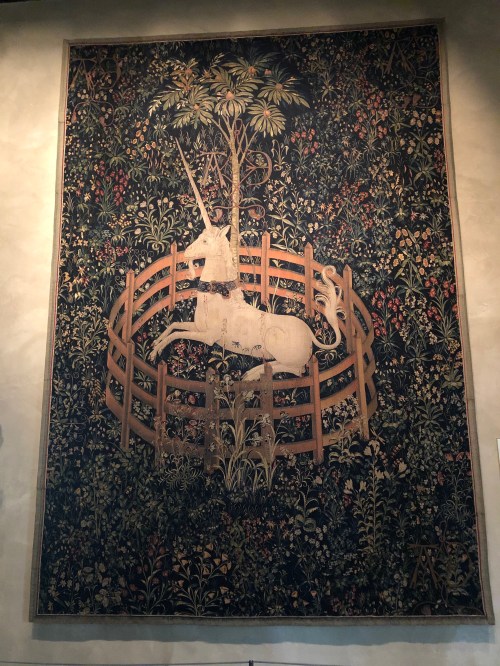
I’m in New York for a few days to spend some time with my sister and brother-in-law. They indulged me in a trip to the Cloisters, an amazing castle that is part of the Metropolitan Museum. I hadn’t been there since childhood, when my family went to see the Medieval tapestries, especially the unicorn tapestries.

The Cloisters are way up north in the Washington Heights part of Manhattan, and it was a little challenging to get there. We decided not to take public transportation as my sister’s cancer has slowed her down somewhat. The taxi driver said that in his 35 years of driving a cab, he had never been to the Cloisters. But he seemed pleased to learn about it.

Here’s what Wikipedia has to say. “The Cloisters museum in Fort Tryon Park in Washington Heights, Manhattan, New York City, specializes in European medieval architecture, sculpture and decorative arts, with a focus on the Romanesque and Gothic periods. Governed by the Metropolitan Museum of Art, it contains a large collection of medieval artworks shown in the architectural settings of French monasteries and abbeys. Its buildings are centered around four cloisters—the Cuxa, Saint-Guilhem, Bonnefont and Trie—which were purchased by American sculptor and art dealer George Grey Barnard, dismantled in Europe between 1934 and 1939, and moved to New York. They were acquired for the museum by financier and philanthropist John D. Rockefeller, Jr. …

“The museum’s building was designed by the architect Charles Collens, on a site on a steep hill, with upper and lower levels. It contains medieval gardens and a series of chapels and themed galleries. …

“It holds about 5,000 works of art and architecture, all European and mostly dating from the Byzantine to the early Renaissance periods, mainly during the 12th through 15th centuries. The varied objects include stone and wood sculptures, tapestries, illuminated manuscripts and panel paintings. … Rockefeller purchased the museum site in Washington Heights in 1930, and donated it and the Bayard collection to the Metropolitan in 1931.”

We had a beautiful day and enjoyed walking around indoors and outdoors, listening in on guided tours and taking pictures. More here.

Update: I just added my brother-in-law’s photo of a beautiful Madonna, carved in wood. He was drawn to her because she looked so contemporary and because the weight of the world seemed to be on her shoulders. (The carved Baby Jesus didn’t survive intact through the centuries.)

072619-Cloisters-Met

072619-Cloisters-garden

072619-weight-of-the-world-Madonna-Cloisters

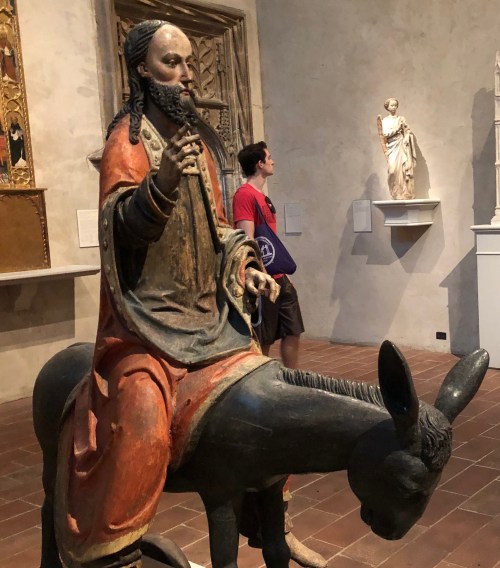
072619-Jesus-on-donkey-Cloisters

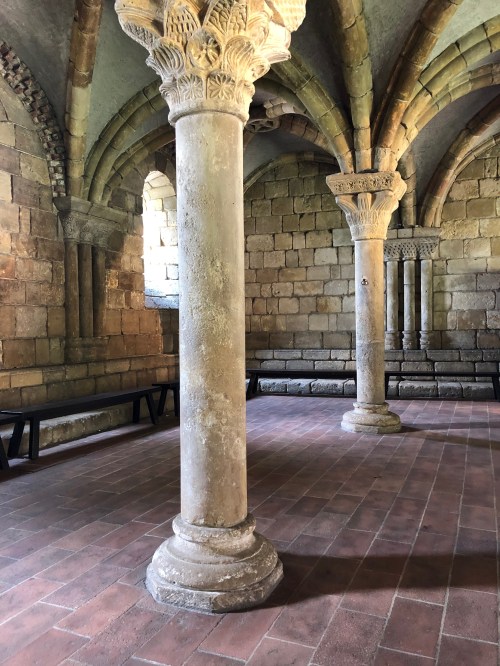
072619-Benedictine-chapel-Cloisters-NYC

Photo: George Chernilevsky
A basket of wild mushrooms in Ukraine. Hunting mushrooms is a popular activity in Eastern Europe. And it’s good for the environment.

Danger, wild mushrooms! That’s what I was taught and that’s what I taught my kids and grandkids. But it’s only because the only way I know if mushrooms are edible is if they are in a supermarket bin. In places like Eastern Europe, however, identification skills are learned young.

A story from UN Environment explains why using forest products like mushrooms is important both for subsistence living and environmentally sound forest management. (Boy, how I wish I’d known all this about Bulgaria when I was in sixth grade and had to write a fancy report: there was no information anywhere.)

“Wild mushroom picking in Eastern Europe is more than a tradition. It is a social event. Every year, in late summer and early fall, thousands of people roam the woods for the biggest, most perfect specimens. They take their children along to teach them which mushrooms are edible and which are poisonous, which are ripe and which should be left for another week or so, passing on generations-old teachings and care for the woods. In the evenings, families share their harvest around a plateful of tasty, butter-fried delicacies. Together, they celebrate their love for the forests, sharing the best spots they found and recalling the animals or birds they sighted along the way.

“Forests are among the most valuable treasures on earth: they supply energy from timber, help with water regulation, soil protection and biodiversity conservation. Yet in traditional forest management, trees are still primarily viewed as a source of wood. All other products derived from wooded lands — such as honey, mushrooms, lichens, berries, medicinal and aromatic plants, as well as any other products extracted from forests for human use — are considered of secondary importance.

“Non-timber forest resources, however, have far-reaching benefits for millions of households, both in terms of subsistence and income. These by-products go into food and everyday items like cosmetics or medicines. The protection of their environment is therefore a vital need.

“Bulgaria, whose forests cover more than a third of its land area, is one of Europe’s richest biodiversity hotspots. Brown bears, lynxes and wolves can be found in its woods, which also harbour hundreds of bird species as well as a great variety of tree types, including beeches, firs, spruces and oaks.

“The country has a long tradition of forest management practices. Large-scale monitoring programmes are in place, and local communities are known to keep a close eye on the natural environment. Together, these factors have allowed national authorities to make the most of their biodiversity.

“Over 90 per cent of the annual yields of wild and cultivated herbs are sold as raw material to Germany, Italy, France and the United States, making Bulgaria one of the world’s leading suppliers in this sector. By gaining expertise in the protection and sustainable use of non-wood forest products, they have become a model for other Balkan countries. …

“Around 80 per cent of the developing world’s population use these products for health and nutritional needs, notes Anela Stavrevska-Panajotova, Project Coordinator at the Connecting Natural Values and People Foundation. The practices and skills learned from Bulgarian experts are crucial to work on identifying non-wood forest products and pilot testing in [places that have not protected their resources].

“Educating local office managers and the business sector on the sustainable use of forest resources is a cost-effective solution to address climate change. Sustainable resource use helps to improve the state of forests and habitats and, by extension, ensure economic and food security for local communities.

“In addition, forests act as carbon sinks and can remove pollutants from the atmosphere, making them a highly versatile tool to fight air pollution and mitigate climate change. Every year, they absorb one third of the carbon dioxide released from burning fossil fuels worldwide.” More here.

By the way, an amazing book about subsistence living, Ramp Hollow, permanently changed everything I thought I knew about history. Recommended.

Photo: Lucas Jackson/Reuters
More than just a tourist attraction, Manhattan’s High Line is a development destination, says author Richard Florida.

Have you walked on Manhattan’s High Line when it’s not too crowded? It is a magical linear garden high above the dusty streets of the city.

And what about the magnificent parks in New York?

I’m in the city now and, having had beautiful walks in the extraordinary Central Park, am determined do a post soon on the genius of designer Frederick Law Olmsted and the supporters who made his urban landscapes possible.

Today’s post, however, is on the economic value of beauty in cities — not that beauty ever needs to be justified in terms of dollars and cents. But it’s worth noting.

Richard Florida asks at CityLab whether cities “benefit from a beauty premium? According to a new study by two urban economists, it seems that they do.

“The study by Gerald A. Carlino of the Federal Reserve Bank of Philadelphia and Albert Saiz of Massachusetts Institute of Technology, examines the connection between a city’s beauty and key growth indicators. A raft of previous studies have found a connection between economic and population growth and urban amenities (a broad category ranging from parks to restaurants, art galleries, and museums). But this study takes a much closer look at the effects of beauty itself.

“To get at this, the researchers measure attractiveness in a unique way: through tourist visits and photos of picturesque locations. … The study compares its own measure of urban beauty to more established measures of urban amenities such as parks, historic spaces, proximity to coastlines, bodies of waters or mountains, the size of the tourism industry, and more. ..

“The study finds evidence of a significant beauty premium for cities and neighborhoods. A city with twice as many picturesque locations as another city saw 10 percent growth or greater in population and jobs from 1990 to 2010. In fact, urban beauty ties with lower taxes as the most important predictor of overall population growth in cities. Plus, these cities disproportionately attract greater numbers of college graduates. Cities in the top 25 percent of picturesqueness saw nearly 3 percent higher growth in the number of college grads than those in the bottom 25 percent. …

“City beauty is not an effect of size, the study finds: Smaller and medium-sized places with more parks, historic buildings, proximity to water and mountains, and clearer skies and less rain are perceived as beautiful as well.

“It’s not just metros broadly that benefit from an urban beauty premium, it’s specific neighborhoods within them. A large number of studies have documented the back-to-the-city movement of younger, more educated, and more affluent people to the urban center. These studies typically document the urban influx into neighborhoods near the Central Business District (CBD), the downtown commercial core of a city. …

“Urban beauty is a powerful tool for economic growth and urban resurgence, but with it comes gentrification and displacement. As the authors of the study put it: ‘Rents, incomes, and educational attainment increased faster in urban beautiful neighborhoods but at the cost of minority displacement.’

“Urban policy makers have to take in the full costs, as well as the benefits, of urban beautification into account. They could mandate that developers who create new condominiums adjacent to publicly created and valued amenities pay more in taxes, provide some affordable housing, or employ local residents in their projects. Cities can devote the increased revenues from beautification projects to affordable housing, workforce development, and the reduction of concentrated poverty.”

Read more here.

Photo: Jeff J Mitchell/Getty Images
North Sea fishing crews have discovered archaeological artifacts in their nets.

I was saying to my husband the other day that I don’t know why scammers think older people are such a good target. Don’t we know more to watch out for after a lifetime of testing reality? But then I find myself susceptible to stories that for one reason or another I want to believe. So maybe it’s true about old folks.

Those of us who want to believe in things like the Lost City of Atlantis will have fun with this story about human settlements that may be submerged under the North Sea.

Nazia Parveen writes at the Guardian, “Lost at the bottom of the North Sea almost eight millennia ago, a vast land area between England and southern Scandinavia which was home to thousands of stone age settlers is about to be rediscovered.

“Marine experts, scientists and archaeologists have spent the past 15 years meticulously mapping thousands of kilometres under water in the hope of unearthing lost prehistoric tribes.

“[In May] a crew of British and Belgian scientists set off on their voyage across the North Sea to reconstruct the ancient Mesolithic landscape hidden beneath the waves for 7,500 years.

The area was submerged when thousands of cubic miles of sub-Arctic ice started to melt and sea levels began to rise.

“The ancient country, known as Doggerland, which could once have had great plains with rich soils, formed an important land bridge between Britain and northern Europe. It was long believed to have been hit by catastrophic flooding.

“Using seabed mapping data the team plans to produce a 3D chart revealing the rivers, lakes, hills and coastlines of the country. Specialist survey ships will take core sediment samples from selected areas to extract millions of fragments of DNA from the buried plants and animals.

“Prof Vincent Gaffney, from the University of Bradford’s school of archaeological and forensic sciences, said: ‘If this is successful it … would be new knowledge of what is really a lost continent.’ …

” ‘We can’t walk those fields looking for pottery or stone fragments, we can’t dig. We’re going to drop “grabs,” or do very small-scale dredges, to see if we can find these stones or tools, to give us a clue as to what is there. We are talking about an area that is the size of a modern European country. And we know almost nothing about it.’ …

“In previous studies funded by the European Research Council, the Lost Frontiers team mapped the Doggerland region, which is about the size of the Netherlands. The team could identify the location of river valleys, marshlands, hills and even white cliffs, but was unable to find evidence of human activity.

“Gaffney said … ‘Vast areas of the North Sea were dry land and inhabited. Then sea levels rose, and pretty much everything about the world changed in this period. The most pleasant places to live would have been on the great plains – which are now out at sea. This is where they would have wanted to be, not in the hills. But it’s all been lost.’ …

“It is understood the ancient civilisation originally covered about 260,000 sq km (100,000 sq miles). However, after the ice age ended, coastal zones became increasingly vulnerable to catastrophic flooding and entire civilisations would have been lost.”

More at the Guardian, here.

Art: Egon Schiele, 1913
“Gustav Klimt in a Light Blue Smock.” UniCredit in Milan will sell most of its collection of works by Klimt, Giorgio de Chirico, Fernand Léger, Gerhard Richter, and others to fund good works.

When I worked at a Federal Reserve bank, I was astonished by the beauty of the bank’s art collection — and shocked that the public didn’t get to see it. A few works were in public hallways, but most were in private bank offices, in storage, or in the offices of wealthy tenant companies. I think the collection was a lure for some corporate tenants.

So I was intrigued to read what the Italian bank UniCredit had decided to do with its own valuable collection: sell off pieces to fund social initiatives across Europe.

As Anny Shaw wrote in May at the Art Newspaper, “The Italian bank UniCredit has announced plans to sell off its art collection — one of the largest corporate holdings in the world — to help finance social initiatives across Europe.

The impetus has come from the firm’s chief executive Jean Pierre Mustier, who publicly sold the bank’s private jet, opting to drive a Fiat 500 instead.

“Earlier today, the Milan-based bank announced a €1.4bn profit for the first quarter of 2019, up nearly 25% from the same period last year, and Mustier stated he intended to sell of non-core assets.

“The collection of 60,000 works includes those by Gustav Klimt, Giorgio de Chirico, Fernand Léger and Gerhard Richter. A spokeswoman says the bank has not yet decided exactly how many works will be sold, and when, but sales are expected to begin later this year. Pieces are currently displayed in the bank’s premises in Italy, Germany and Austria. …

“The decision to sell the collection comes after UniCredit extended its Social Impact Banking (SIB) initiative beyond Italy to countries including Germany, Austria, Croatia, Bulgaria, Romania, and Bosnia and Herzegovina.

Education, gender equality and job creation are among the bank’s goals, which last year approved €73m in financing to social entrepreneurs and startups in Italy.

“According to the spokeswoman, some of the art will also be donated to local museums ‘and the rest of the proceeds will be dedicated to other relevant projects, including the support of young artists locally.’ ” More here.

Federal Reserve folks would probably never be able to agree on doing something like that with their art collection, but I hold out hope that someday they will decide to make it available for viewing by the public. (Question for art critics: How about reporting on corporate collections, especially government ones that technically belong to the public?)

I have often noticed how absorbed and peaceful an ordinarily boisterous child can be when doing artwork. I myself feel happy when I have accomplished something creative —  even a little bit creative.

It’s nice to know but will surprise no one that research supports the idea that being creative makes people feel good.

Here’s a report from the BBC.

“Whatever gets your creative juices flowing will boost your mood, according to new research.

“Almost 50,000 people took part in the BBC Arts Great British Creativity Test. It suggested that being creative can help avoid stress, free up mind space and improve self-development, which helps build self-esteem.

“The findings also said there are emotional benefits from taking part in even a single session of creativity. But there are cumulative benefits from regular engagement in arts activities and trying new pursuits is particularly good for our emotions and well-being. …

“76% of participants used creative activities as a ‘distraction tool’ to block out stress and anxiety; 69% used them as a ‘self-development tool’ to build up self-esteem and inner strength; 53% used them as a ‘contemplation tool’ to get the headspace to reflect on problems and emotions.

“The survey also revealed that the most benefit comes from taking part in live creative activities that involve face-to-face social interaction, like singing in a choir or taking part in a group painting class. …

“Dr Daisy Fancourt, a senior research fellow at UCL [said], ‘You don’t actually have to take part for a long time for it to have benefits. … Also, we find that for somebody who’s been doing the same activity for more than 10 years, it actually starts to have less of an effect. So there’s a definite benefit to novelty.

” ‘And we also found that talent doesn’t affect this relationship. It’s not about being good at it — it’s genuinely the taking part that counts.’ ”

Of the top ten creative choices reported, singing comes in first. Read the others at the BBC, here.

I loved the part about getting headspace. That makes so much sense to me. If you are going around in circles with a problem, do something creative for a while. When you come back to the problem, you will be able to see new possibilities.

Photo: The Guardian
Mashed Mahjor says she started Book Cottage in Afghanistan because there children don’t have a lot of opportunities to talk freely and ask questions.

Today’s post is another in a series about what books mean to people. At least since the age of 10, I myself have found that getting lost in a book is about the most consistently comforting thing I do, and it seems that many other people feel the same.

Stefanie Glinski writes for the Guardian, “In a dimly lit room in west Kabul, stacked with shelves full of books, a small crowd gathers around the warmth of a gas heater. Books clamped under their arms, they are eager to share the stories they’ve read over the course of the week.

“Members of Afghanistan’s youngest reading club, the Book Cottage, range in age from four to 13. The club is just one of many reading circles that are springing up across the capital and reviving a book culture that, once lost, is now vibrant, liberal and expanding once again.

” ‘You have to start them young,’ explains the initiative’s founder, 25-year-old Mashed Mahjor. ‘The country is still at war, so children don’t have a lot of opportunities to talk freely and ask questions, especially girls. We have to bring our book culture back to life.’

“After starting the reading club six years ago, she now has up to 20 regular members – and hundreds of book donations from all over the world.

“But trends are shifting. In west Kabul, a neighbourhood with laid-back coffee shops, small startup businesses, a quick-growing dating scene and – at its heart – Kabul University, reading circles for all ages are expanding. They have started to provide a platform for Afghans to discuss, in a mixed-gender environment, issues not on the public agenda of a conservative society. …

“One such space is found in a basement room of one of the city’s universities, where a group of up to 20 book lovers meets weekly. Some travel the length of the city to participate.

“ ‘It’s worth it,’ says Attash Mashal, a civil engineer and government employee. ‘Most of the books we read can’t be accessed in Afghanistan, so we search for them online and print out copies. We read novels, poetry and philosophy.

“ ‘This one is censored though,’ he adds, holding a copy of Albert Camus’ The Fall. ‘We just found out.’ …

“It’s the translations that most people are after, as it can be difficult to read books in English or other languages. At Aksos, the city’s biggest and most diverse book store, people squeeze into the tight space, examining new titles, reading in corners, or taking selfies against a backdrop of bookshelves. Books are the new cool.

“Aksos holds anything from The Kite Runner – another book previously banned in the country – to The Daydreams of Ashraf Ghani, the country’s president.

“ ‘Once again, the city is boasting poets, writers and creatives pushing against the recent norm,’ says [Syeda Quratulain Masood, who has been researching Kabul’s book culture for her PhD at Brown University in the US].

“ ‘I think it’s because in book clubs, or when writing poetry, we can share our ideas and beliefs without restrictions,’ says Yalda Heideri, a student in her twenties who attends a university book club.

“ ‘Afghanistan has restricted us a lot, especially us women, so we found a way to have discussions that would be embarrassing or even impossible outside.’ But for Heideri, literature has also become an escape from daily life in a wartorn country where there were 3,804 civilian deaths last year, according to the UN assistance mission in Afghanistan.

‘When I get tired of it all, I escape into poetry. It’s a whole different world.

” ‘Kabul is improving and becoming more open, which makes me hopeful. But regardless of where peace negotiations are going, we have to find our own way to cope, and books are just that for me.’ ”

More at the Guardian, here.

Photo: Jen Siska
Shreya Ramachandran holds workshops on how to install graywater systems.

I know we shouldn’t be leaving up to kids the solutions to our intractable problems, but sometimes it seems that they’re the only ones showing leadership. At least, they’re the ones who focus their leadership on a single issue. Thanks to their focus, energy, and not knowing what’s impossible, they them seem more likely to succeed than political leaders who must address a million issues at once. I think of David Hogg on the issue of gun violence and Greta Thunberg on climate change.

Here is a Sierra Club story on Shreya Ramachandran, who started very young with big, practical ideas on water conservation.

Wendy Becktold writes at Sierra, the Sierra Club magazine, “When Shreya Ramachandran was in sixth grade, she became obsessed with water scarcity. It was an unusual preoccupation for an 11-year-old, but when visiting California’s Central Valley for an archery competition, she had learned about the historic drought then underway that was devastating the area’s farmers. Not long afterward, she visited her grandparents in India and encountered taxi drivers who’d been forced to abandon their farms when the annual monsoon had failed to arrive.

“Ramachandran began researching water conservation online. She grew fascinated with graywater systems–plumbing designed to reuse household water by redirecting water from washing machines into lawns and yards, for example. ‘It’s water conservation on a whole different level,’ she says.

“But Ramachandran also learned that toxic chemicals in some laundry detergents can render water unsuitable for reuse. She started to experiment with soap nuts – the berry shells of Sapindus mukorossi (a tree in the lychee family), which release a natural cleaning agent and are traditionally used for shampoo in India – and determined that they were safe to use in graywater systems. She presented her findings at various science fairs, and people were intrigued.

“By the time she was in eighth grade, Ramachandran had built her own graywater system; her parents let her drill a hole in the side of their house to install the PVC piping that channels water to the plants and trees in their yard. Shortly after, she started the Grey Water Project (thegreywaterproject.org) to teach others how to install their own systems.” More at Sierra, here.

And in case you want to learn more about soap nuts, the Australia-based environmental group 1 Million Women has a post about them, here.

“They’re really simple to use, you just pop them in a small fabric bag, chuck them in with your load of washing, the berries contain saponin which is a surfactant that can be used like soap. …

“[But] here is one little point that planet friendly women have pointed out and that is that they only work in hot water.

“Most of us self-proclaimed eco-warriors have never washed a load of clothing in hot water in our life, or for at least a very long time. The amount of energy that is takes to heat up a load of washing seems pretty wasteful and pointless, but for without hot water soap nuts don’t turn soapy.

“Some have figured out that by adding the soap nuts to a cup of boiling water and then pouring the water into the wash eliminated the need to waste … However a few have expressed that this step was inconsistent and made switching to soap nuts from their current homemade, planet-friendly laundry detergent not worthwhile.

“While the warm water and make-your-soap-nuts-into-tea step may be a deterrent for some, others have made another valid point, soap nuts are better for your skin. They’re all natural and non-toxic, which makes them especially good for sensitive skin and those prone to allergies. Also, due to the very gentle, mild detergent they produce they’re safe for your delicates. (Excluding dry-clean only items.) Read next: 9 Ways to lower the carbon impact of laundry day.

No perfect answers, I guess.

Photo: Dezeen magazine
Note the Nebraska storefront lowering itself to become a movie theater.

I don’t know much about Nebraska other than that some friends who grew up there said that New England’s trees and mountains made them feel too closed in, but now I have a reason to think about going there. That’s because I just love the idea behind a new cinema and would like to see how it works.

Sebastian Jordahn writes at Dezeen magazine, “Artist Matthew Mazzotta says the success of The Storefront Theater, which won him Architecture Project of the Year at the inaugural Dezeen Awards, comes down to the way the local community has made use of it.

“The Storefront Theater is a retractable theatre disguised as a shop. It was built to re-invigorate the main street in the town of Lyons, Nebraska, and create a community space for its residents.

“Mazzotta told Dezeen that local community has embraced the structure, using it for a variety of activities. …

“Using two hydraulic cylinders, a false storefront folds over the sidewalk of Lyons’ Main Street and rolls out seating for 100 people. A rollable screen can then be paired with the structure in order to create a public theatre.

” ‘Basically it’s a facade that bends down over main street, bleachers come out, a screen comes in and turns main street into a movie theatre,’ Mazzotta said. … ‘They’ve had events that are anti-bullying, they’ve had movies and concerts. Recently I went to one where a very prominent Egyptian musician came and played. …

” ‘Once I learned that one of the buildings downtown was just a storefront, it had no building behind it, [that’s] when we started taking that as the site.’ …

“The architect’s motivation was to reinvigorate Lyons Main Street, which according to Mazzotta has seen a decline in community life due to economic pressures and globalisation.

” ‘This project came about through investigation with the people. They told me how downtown was the centre of the community life and how that has been destroyed over time by globalisation that has pulled all these businesses away,’ Mazzotta said. …

” ‘Architecture has an enormous power over how we feel about ourselves and how we relate to each other. I think architecture is expanding beyond the envelope and I think it starts to think about who feels welcome in these spaces,’ he added.

“Mazotta’s theatre was also named for Rebirth Project of the Year at the inaugural Dezeen Awards ceremony last year.”

More here.

Video: Dezeen
Note the tractor pulling in the movie screen.

Photo: TV Tropes

You know about the imaginative world of hobby-horse competitions in Finland, but did you also know Finland is a leader in air guitar? And what is air guitar, you ask?

You would know the answer to that if you had seen the goofy 1989 film Bill and Ted’s Excellent Adventure, in which the heroes frequently launch into pretend guitar riffs.

Byrd McDaniel explains it all at the Conversation.

“Advertised as the ‘greatest thing you’ve never seen,’ the 2019 U.S. Air Guitar Championships will take place this summer. Competitors from around the country will don elaborate costumes, construct fantastical personas and perform comedic pantomimes of famous rock solos. Impaling themselves with their air guitars, swallowing them and smashing them to smithereens, they’ll elevate guitar playing to heights only imagined by real guitarists.

“The winner will go on to represent the U.S. in the Air Guitar World Championships, which will take place in Oulu, Finland, in late August.

“As an ethnomusicologist, I’ve studied air guitar competitions as a scholar, audience member and competitor. In fact, I was named the third best air guitarist in Boston in 2017 – truly one of my proudest moments.

“Beyond the humorous, ironic façade of these performances is a sincere craft that has exploded in popularity over the past couple of decades.

“The phonograph, which became a common household item in the the first decade of the 20th century, inspired some of the earliest known instances of solo air playing. The Minneapolis Phonograph Society described how some of its members, from the privacy of their homes, had ‘taken to “shadow conducting,” that most exhilarating phonographic indoor sport.’ …

“One journalist for the Washington, D.C., Evening Star wrote an article about patients at an asylum, including ‘one young girl [who] appeared to be fingering an imaginary guitar.’ And a 1909 article in The Seattle Star described a pantomiming prisoner who ‘spends his time in jail playing on an imaginary piano, hoping thus to give the impression that he is insane and so escape a more severe punishment.” ‘ …

“Some of the first known instances of live musicians breaking out the air guitar occurred during the 1950s and 1960s. Notable examples included Bill Reed and the Diamonds air guitaring on the Steve Allen Show in 1957, and Joe Cocker famously shredding an air guitar during his performance at Woodstock in 1969.

“But rock fans didn’t really start taking up air instruments of their own until the 1970s, when they found themselves unable to resist mimicking their favorite performers, who had become more and more inventive with their guitar playing. …

“Fans soon began copying the wild gestures of their favorite guitarists to mirror their onstage energy. As journalist Chris Willman wrote, Eddie Van Halen possessed ‘the fingers that launched a hundred-thousand air-guitar solos.’ And in the late 1970s, fans famously started bringing cardboard cutouts of guitars to Iron Maiden shows at The Bandwagon Heavy Metal Soundhouse in London. …

“By the early 1980s, air guitar had gone mainstream. Beer companies, radio stations and colleges staged lip sync battles and air guitar competitions all over the United States. John McKenna and Michael Moffitt published ‘The Complete Air Guitar Handbook‘ in 1983, a how-to guide and psuedo-history of air guitar playing. …

“In 1996, the Oulu Music Video Festival in Finland arranged to have an air guitar competition. … This year marks the 17th annual contest, and air guitarist Georgia Lunch will be competing as the reigning champion.

“In 2018, her routine included carrying a lunchbox onstage, sipping Jägermeister out of a hamburger flask and a spastic strumming style.

“Her challengers include a group of well-known names from the air guitar circuit: Airistotle, Cindairella, Shred Nugent, Lieutenant Facemelter, Kingslayer and the Rockness Monster. She’ll also face some first-time competitors, who hope to unseat the air apparent.”

Come up with a cool name of your own and join the fun. More here.

Photo: Minot Daily News
Norma Baker-Flying Horse is owner of Red Berry Woman, a fashion designing business that was accepted into Paris Fashion Week.

Yesterday I mentioned that APiermanSister was a blogger whose writing I admired. She says she is shy, but as far as I can tell, one of her personal characteristics is fearlessness.

As a regular visitor to and connoisseur of Paris, she had always wanted to attend Fashion Week. In a recent post, she describes how she wrangled an invitation — finding a publication back in the US that would take an article and help to justify her admission to the show as a writer.

This is from Alison’s February Minot Daily News report on designer Red Berry Woman, an enrolled member of the Mandan Hidatsa Arikara (MHA) Nation and member of the Dakota Sioux and Assiniboine tribes.

“Norma Baker-Flying Horse has been having a whirlwind of fashion success.

“ ‘I recently had a dress walk the red carpet at the Grammy’s earlier this month and I’m also preparing to show in France,’ said Baker-Flying Horse of Mandaree, Oklahoma.

“Baker-Flying Horse said she will be the only Native American who will be showing in a show for the opening of Paris Fashion Week. …

“Baker-Flying Horse’s fashion line, Red Berry Woman, incorporates Native American traditional garment styles into contemporary couture garments for both men and women. She also creates different types of Native American traditional-style garments,’ according to her Red Berry Woman website at redberrywoman.com. …

“Baker-Flying Horse also was an invited designer for the international fashion showing in Vancouver, British Columbia, during Vancouver Fashion Week this past September.

“Another event in past months includes being the designer for a fashion show in Cornwall, Ontario, where actor Adam Beach was a guest. His wife, Summer, was Baker-Flying Horse’s guest runway model. One of Baker-Flying Horse’s creations also was worn by Alice Brownotter, an activist from the Standing Rock Reservation, for an event held by actress Jane Fonda who invited young people to participate who have had leadership rolls in their community. …

“Last March Baker-Flying Horse had the special honor of having one of her fashion designs worn at the Academy Awards show, the Oscars. She was the first contemporary Native American fashion designer to have a gown worn at the Oscars.”

More on Red Berry Woman at the Minot Daily News, here, and at the Smithsonian, here. But the most fun piece to read is Alison’s blog post about crashing Paris Fashion Week, here.

Photo: kfyrtv.com
The 2018 Native American Cultural Celebration closed with a Red Berry Woman Fashion Show.

Friends Who Write

I’ve been meaning for some time to post about writer friends, and I’ve hesitated only out of fear I’m leaving someone out.

Laurie Graves is someone I met through this blog. I’ve ordered one of her books and although think I’ll like it as much as I like her blog, I haven’t read it yet.

Speaking of bloggers, there are a couple others whose style I admire. In addition to the inimitable KerryCan, I find the writing of APiermanSister and ABereavedDad frequently amazing.

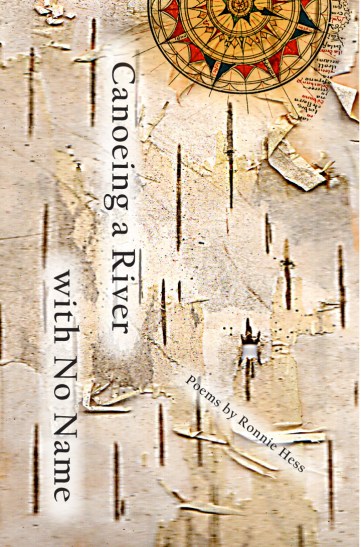
I also want to highlight writers I know personally. You can read about poet Kate Colby, here; about poet Nancy Greenaway, here; and poet Ronnie Hess, here. And check out the gifted interstitial storyteller Francesca Forrest here, at GoodReads.

Providence-based Colby has numerous books to her credit, often about New England. She has taught in Gloucester, Mass., and co-led art-and-poetry tours at the deCordova Museum in Lincoln. She and her husband were enormously helpful in providing a pied-à-terre to Suzanne and Erik when those sneaky characters were looking at houses in Providence without telling family members they were leaving New York. (We were over the moon when we finally heard.)

Nancy Greenaway is the muse of New Shoreham, R.I. She only just retired from a long and inspired career of teaching English at the island school and engaging students in poetry. I visited her classroom for her recent going-away party and was impressed with all the sources of imagination activation on her walls and tables. A happy place.

Ronnie Hess is someone I met in childhood on a different island. When I think of her, I think of so many shared experiences — the way we wrote and directed our first Ocean Beach teenage play, for example, and the way I envied her dancing the Slop with Stuey Shaw. Her poems about her Fire Island childhood are wonderfully evocative, as are those about about her husband’s family escaping the Holocaust and about Wisconsin, where she lives. She has a special gift for describing nature.

Francesca is a cherished friend I first met when we were copy editors at the Harvard Business Review in 1995. We have continued to work together off and on and to share a wide range of interests. She taught me a lot about blogging. I once created a haiku for Francesca about a dream she’d described one lunchtime. I wrote that in her dream “the moon was trending downward,” adopting some of the business jargon from our workplace. We still chuckle about that.

I apologize if I’ve left out any good friends. I blame age. In fact, lately I’ve startled myself with weird forgetfulness. Like sending graduation checks twice to the Anderson sisters or wondering why the world was blurry that day I forgot I still wear glasses despite cataract surgery. I don’t think it’s going to get better.

canoeingcoversmall

Photo: BioCarbon Engineering
Drones can have a peaceful purpose. These are fighting climate change by “bombing” seeds into places that need trees. Trees are essential for decreasing carbon dioxide in the atmosphere.

Drones can have peaceful purposes. Some folks use them for photography or research on birds. Others have tapped drones to plant the trees our planet needs to reduce carbon dioxide and combat global warming.

Leo Shvedsky writes at Good, “Technology is the single greatest contributor to climate change but it may also soon be used to offset the damage we’ve done to our planet since the Industrial Age began.

“In September 2018, a project in Myanmar used drones to fire ‘seed missiles’ into remote areas of the country where trees were not growing. Less than a year later, thousands of those seed missiles have sprouted into 20-inch mangrove saplings that could literally be a case study in how technology can be used to innovate our way out of the climate change crisis.

“ ‘We now have a case confirmed of what species we can plant and in what conditions,’ Irina Fedorenko, co-founder of Biocarbon Engineering, told Fast Company. …

“According to Fedoranko, just two operators could send out a mini-fleet of seed missile planting drones that could plant 400,000 trees a day — a number that quite possibly could make massive headway in combating the effects of manmade climate change.

“The drones were designed by an ex-NASA engineer. And with a pressing need to reseed an area in Myanmar equal to the size of Rhode Island, the challenge is massive but suddenly within reach. Bremley Lyngdoh, founder and CEO of World Impact, says reseeding that area could theoretically house as many as 1 billion new trees. …

“For context, it took the Worldview Foundation 7 years to plant 6 million trees in Myanmar. Now, with the help of the drones, they hope to plant another 4 million before the end of 2019.

“Myanmar is a great case study for the project. In addition to the available land for the drone project, the nation has been particularly hit by the early effects of climate change in recent years. Rising sea levels are having a measurable impact on the population. In addition to their ability to clear CO2 from the atmosphere, healthy trees can also help solidify the soil, which can reduce the kind of soil erosion that has been affecting local populations in Myanmar.”

Adele Peters at Fast Company explains, “The drones first fly over an area to map it, collecting data about the topography and soil condition that can be combined with satellite data and analyzed to determine the best locations to plant each seed. Then the drone fires biodegradable pods — filled with a germinated seed and nutrients — into the ground. For the process to succeed in a mangrove forest, several conditions need to be right; if the tide comes in unexpectedly, for example, the seeds could wash away. In tests, Biocarbon Engineering has looked at which species and environmental conditions perform best.

“If drones do begin to replant entire forests, humans will still play a critical role. That’s in part because some seeds don’t fit inside the pods. But people living nearby also need a reason to leave the trees standing. ‘The project in Myanmar is all about community development and enabling people to care for trees, providing them with jobs, and making environmental restoration in a way that it’s profitable for people,’ says Fedorenko. ‘The forest didn’t vanish by itself—the forest was cut down by local people.’ ”

More at Good and Fast Company.

Hat tip: Maria Popova on Twitter.

Summer Photos

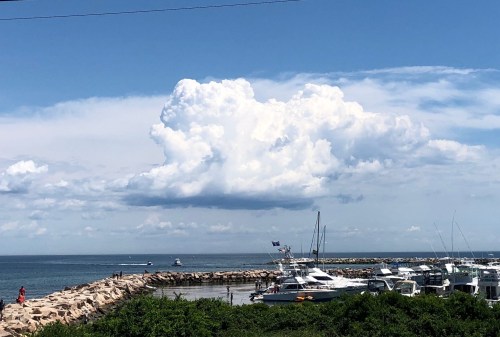
063019-cloud-New-Shoreham-Old-Harbor

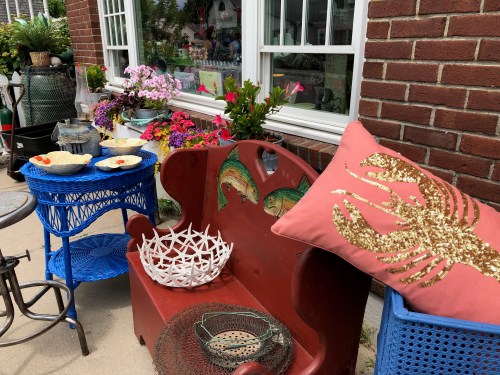
These photos are mostly mine, taken over the last month in Massachusetts and Rhode Island. But the adorable baby owls were captured by one of my brothers in his Wisconsin backyard. All the bird lovers in my family were envious of his owls.

In Massachusetts, I was especially drawn to flowers against fences, including my own Black-eyed Susans. Success at last! I’ve been trying to grown more native species for some time now.

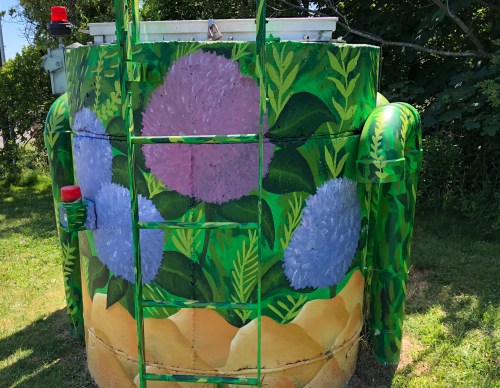
In Rhode Island, I enjoyed looking at second-hand shops, art galleries, and unexpected decorations like this hydrangea-covered tank.

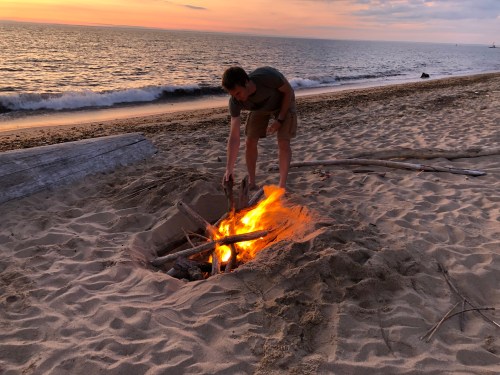
John got a permit for a fire on the beach so the kids could make s’mores, and Erik broke up logs for it by jumping on them.

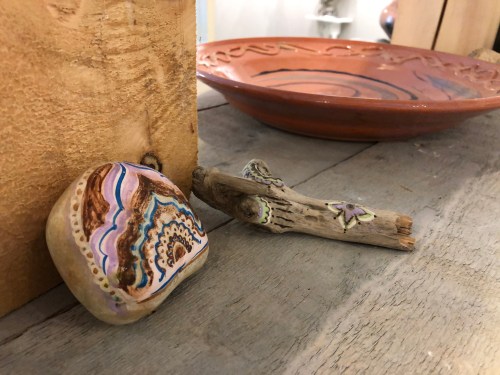
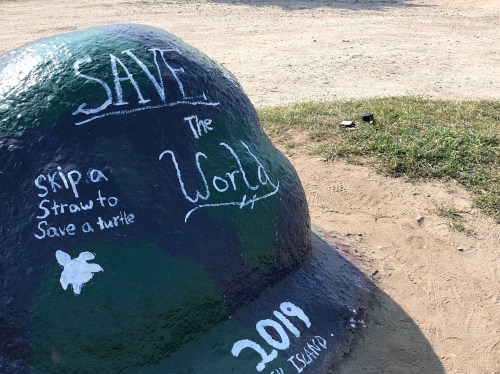
The painted rock offered words of wisdom for protecting the environment, including turtles.

061719-owl-babies-.Wisconsin

061019-more-peonies-ConcordMA

061219-roses-at-end-of-day-Thoreau-Street

062419-Black-Eyed-Susan

061719-antiques-New-Shoreham

061719-island-art-RI

061719-Spring-St-Gallery-quilt

070919-hydrangeas-on-tank

070919-colorful-tank-New-Shoreham

071219-beach-fire-for-marshmallows

071019-painted-rock-says-save-a-turtle

Photo: Jahi Chikwendiu/The Washington Post
Eddie Adams rehearses on a cello at George Mason University.

This summer I have been reading installments about the early life of someone I thought I knew well when she was a child. I thought I knew how difficult life was for her and her younger brother after her parents divorced. Wrong. Without getting into details, I’ll just say I didn’t have the slightest idea. Reading her story, I feel like crying. I feel like going back in time and trying to fix things.

Fortunately, I know this girl as an adult and can see that somehow she was saved, with the violin playing an important role in saving her. I’m telling you this because I want to share a story about a boy who was saved by a cello.

Allison Klein reported the cello story in April at the Washington Post.

“Eddie Adams didn’t have the money to buy college textbooks this semester, so he had to rely on his classmates at George Mason University to loan him theirs. He is the principal cellist in the school orchestra, but he couldn’t afford to buy or even rent a cello. That, too, he had to borrow.

“That was two weeks ago.

“After a story ran in The Washington Post about Adams’s tormented, impoverished childhood and how the cello has become his lifeline, people started donating money — more than Adams ever imagined was possible.

“The day the story ran, April 13, Adams looked at a GoFundMe page that had been set up for him and saw it had reached $25,000. It was so much money, he was sure there was a technical problem with the fundraising site.

“ ‘I legitimately thought it was a glitch in the system,’ said Adams, 20, who as a child moved around Northern Virginia with his mother and five siblings about seven times, including to a homeless shelter in Alexandria.

“The next day when the fundraiser reached $70,000 — and hundreds of people had left comments telling him he was worth every penny — he texted his strings professor and mentor, June Huang: ‘I’ve been crying all day … happy tears.’ …

“As of late Wednesday evening, the GoFundMe donations had reached $141,120.

“ ‘I still don’t want to believe it happened because it’s too much money for me to even think about,’ said Adams, who is estranged from his family and whose only home is his dorm room.

“On top of that, people donated other large and personal gifts. Two people are buying him cellos, one valued at up to $20,000 and another that will be specially made for him, valued at more than $30,000. A couple in Delaware bought him a $700 custom-fitted tuxedo he will wear during performances. Gift cards and checks started arriving at the university, totaling close to $5,000.

“The City of Alexandria invited him to play at a homeless shelter, Huang said. He plans to do it. …

“Adams’s first move was to pay a $250 deposit for an educational music festival he will be attending this summer. Then he went to the dentist for the first time since he was a child. And he paid off $15,000 in student loans that were accruing interest and had been weighing heavily on him.

“ ‘That was a very big moment for me,’ he said. …

“Huang, whose support of Adams was described in the Post story, said she has been deluged by calls and emails from people who want to help Adams.

Huang first heard Adams play at an audition for the school’s orchestra. She dropped her pencil, forgetting to score his performance because she found it so soulful and beautiful. …

“It was Huang’s private violin student Noah Pan Stier who at age 12 set up the GoFundMe page last year after Huang told him about Adams’s difficult childhood. Noah recently turned 13 and had a bar mitzvah, asking for donations for Adams instead of gifts. By early April, Noah had reached his goal of raising $10,000. That is the same GoFundMe that is now at more than $141,000. …

“Now, Huang is the point person coordinating Adams’s donations and talking with people around the country and in places such as Germany, England and Singapore who contacted her in recent days wanting to help. She has been getting pro bono guidance from various estate planners, tax lawyers and accountants to figure out how to keep the money safe for Adams and make it last. She said she’s been in nonstop motion the past 10 days, but she’s thrilled with all the support. …

“Huang said she includes one of Adams’s close friends, Adam Rothenberg, and his former middle school teacher, Gerald Fowkes, in financial discussions she has with Adams for transparency’s sake. She keeps all his financial information in a binder the four of them can look at. And she’s trying to teach Adams how to manage his newfound money at the same time she’s trying to figure it out herself. …

“Adams said he is now getting a lot of attention on campus, as people approach him and say they had no idea that his past was so difficult, that he faces so many challenges. He’s shy so the attention is not always easy for him.

“ ‘I have anxiety about these types of things, but I should get used it because it’s all really good,’ he said. ‘I’m trying not to think about it because finals are coming up and I’m trying not to let that take up all my head space. I still need to study and practice as much as I was before. I need to focus on my schoolwork because that’s the whole purpose of it all.’ ”

Read more at the Washington Post, here.