Feeds:
Posts
Comments

I hope you’ll enjoy these photos and some explanations. The only one I didn’t take myself is the photograph of a dime.

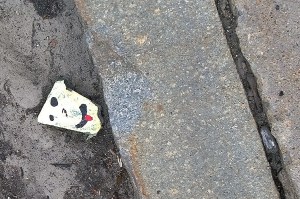
Here’s the story of that. A couple days after the temporary ban on travelers from seven countries was announced, the teacher in a refugee ESL class where I volunteer was teaching about money — what different coins and bills are worth, whose picture is on them, what the words say, and so on. On her big video screen, she pointed out the phrase gracing the dime, “E Pluribus Unum,” and since I’d had Latin, I translated it as “Out of Many, One.” Sure did seem timely.

The sign from the January Women’s March was on a neighbor’s fence. The unprepossessing gray house, we recently discovered, was a Norwegian church in the 1800s. My husband had been telling his coffee group that he saw a sign by the Concord Post Office that said “Parking for Norwegians Only,” and someone told him, “Probably has something to do with the Norwegian church that used to be on Lang Street.” A Norwegian church was on Lang Street? That was a surprise!

The angry sky and the pictures of lichen need no explanation. The frosted window was taken last Friday, after our big storm.

The Frida Kahlo portrait was painted on a wall in the parking lot of Dorcas International, a refugee resettlement center in Providence.

US_dime_e_pluribus_unum

012217-sign-from-womens-march


020517-former-norwegian-church-concord-ma

012717-angry-sky


020817-lichen-and-euonymous-in-providence

012517-lichen-nature-trees-winter


021017-frosty-window

020717-frida-kahlo-in-dorcas-international-parking-lot

The New York Times headline about snowboarders in Rhode Island said the state was “powder poor.” Not this weekend! Rhode Island is snowed in.

Everything else about the article is probably true since the Times is known for pretty good fact checking.

Matt Ruby reports, “Five miles from the beaches of Narragansett, somewhere between Vail and Zermatt, there are 28 skiable acres. They don’t cover a mountain, just a modest hill that gets about 34 inches of snow a year. That slope is the unlikely canvas for a collection of snowboarders whose wild imaginations have earned them more cachet than many of the sport’s most accomplished athletes.

“The place is the Yawgoo Valley ski area, and the snowboarders call themselves the Yawgoons. They’re the equivalent of a world-beating beach volleyball team based in Saskatoon.

“In a sport where bigger, higher, longer, and more spinning and flipping define the boundaries, the Yawgoons get creative. They use the natural terrain (rocks, trees, grass) as well as the unnatural (buildings, snowcats, pipes) to construct landscapes with one I’ve-never-seen-that-before feature after another. Then they shoot video of their runs and let the snowboarding world watch in awe. …

“Everyone has seen video of snowboarders roaring down the steepest, snowiest descents in Alaska and Switzerland. Somehow, watching a Yawgoon land a backside 180 to switch 50/50 while gliding down six corrugated tubes is even more impressive. …

“I had seen their videos and wanted to see the terrain for myself and meet the Yawgoons — Brendan Gouin, Marcus Rand, Dylan Gamache and Brian Skorupski. … The ski area — the only one in the state — had been open for only a few days this season, but the group was eager to produce its next video. …

“ ‘We are just mad lucky to have that little place there,’ Rand [said]. ‘It’s so random, this far south in Rhode Island.’ Rand, a 29-year-old from Narragansett, has been coming here since he was 2. He works as a mason.”

Read more about him and the other Yawgoons at the New York Times, where you can also see some nice action videos.

Photo: Snowboarding

Photo: AP
Young ballerinas practice under the instruction of Kenyan ballet dancer Joel Kioko, 16, left, in a room at a school in the Kibera slum of Nairobi, Kenya.

The other day, someone clicked on all my ballet and dance posts without leaving a comment. I can tell from looking at my site stats.

I hope whoever it was is still checking as I have another great dance story today. It was reported by AP staff in Australia on December 26, 2016.

“Joel Kioko is arguably Kenya’s most promising young ballet dancer. Currently training in the United States, he has come home for Christmas — and is dancing a solo in a Nairobi production of The Nutcracker while he’s here. …

“Kioko grew up in Nairobi’s Kuwinda slum and took his first dance class five years ago in a public school classroom, with bare walls, no barre and no mirror, the desks and chairs pushed outside. …

“ ‘I don’t know what I could have done without ballet, without dancing,’ Kioko said. …

“He was discovered by a fellow dance student who at age 14 was teaching a class at his school and told her teacher, [Dance Centre Kenya’s artistic director, Cooper] Rust, about him.

“ ‘From the beginning, when he joined the ballet, there was nothing else he could talk about,’ said Kioko’s mother, Angela Kamene, who raised him and his sister in a one-bedroom shack shared with an aunt and a grandmother. …

“Now others are pursuing dance as a way out of poverty. … Michael Wamaya, a finalist for the 2017 Global Teacher Prize, teaches dance to around 100 kids a week in Nairobi’s Kibera and Mathare slums.

“At the end of the day, we’re not just training them to have dance for fun, we’re doing it in a serious level,” Wamaya said. …

“ ‘People say sometimes, why are you not teaching them, for instance, African dance or hip hop?’ he said. ‘Yes, it’s a Western thing coming in, but it’s dance, and dance is diverse, you know? To me, it’s not about ballet as a dance style, but it’s about the discipline that ballet has in itself as a dance technique.’

“As the only son in a family growing up without a father, Kioko laughed at the notion that some people might consider a man in tights, dancing classical ballet, to be unmanly. He was teased by some in his neighbourhood about the dancing, he said, but he never had to fight.

“ ‘Where I came from there is poverty, there is stealing, there is drugs,’ Kioko said. ‘You have to be a man to live in where we live. … It’s like a lion in the jungle, you have to show that you are the male there, you are the one who roars and everyone follows.’ ”

More here.

Image: Brittani Sensabaugh
Billboard at 66th and International, East Oakland, California.

The billboards that photographer Brittani Sensabaugh has been putting up in East Oakland, California, are specifically intended for people in the neighborhood, generally people of color. But they are such positive images, I think they speak to us all.

Sarah Medina writes at 7×7, ” ‘Loving yourself unconditionally and eating healthy is a revolutionary act — especially where I come from.’

“That’s the message behind a host of new billboards that have been popping up around the West and East Oakland neighborhoods. Brittani Sensabaugh, 27, an East Oakland photographer, has made it her mission to document America’s most dangerous neighborhoods. The project began when Sensabaugh noticed the prolific negativity behind the advertising in the East Bay’s poorest districts, where signs sell cigarettes, HIV testing and ‘ugly homes for cheap.

” ‘Not only do we not have access to healthy habits in these communities, but there’s no advertising telling us how to access a healthier lifestyle. We need to see uplifting, positive imagery in our communities,’ explains the young photographer. …

“Rather than be associated with a large name brand, Sensabaugh decided to pay for all the billboards herself and reach out to minority-owned businesses to help her spread her uplifting message.

“Mandela Marketplace, a non-profit organization that works to build health and wealth in low-income communities of color, was her first ally, and a collaboration with Yoga Love, an African American-owned yoga studio in North Oakland, is in the works [as of November 2016]. ‘That way the money stays within the community,’ Sensabaugh explains.

“The results are inspirational billboards that stretch from the corner of 73rd and International in East Oakland to the West Oakland BART station. And while the missives are different on each board, their meaning is constant: Love yourself. Heal yourself. Love is greater than fear.

” ‘The reaction has been powerful,’ says Sensabaugh. ‘I’ve had women cry when I show them the billboards. They’ve never seen our people looking so wonderful.’ …

“See more of Sensabaugh’s work and contribute to her billboard campaign at brittsense.com.”

More at 7×7, here.

Sustainable Shipping

Image: Wallenius Wilhelmsen Logistics
Wallenius Wilhelmsen Logistics scooped two Singapore Environmental Achievement Awards for sustainability.

In The Sea Around Us, Rachel Carson suggested that Earth’s oceans might be too vast for humans to completely ruin. At least that’s what I remember, but I was only 14 when I tried to tackle the grown-up books on my new school’s summer reading list.

I wonder what Carson would say now, given that increased carbon dioxide is damaging reefs and many sea creatures.

She might also be concerned about shipping, but as Hannah Koh reports at Eco-Business, sustainable practices are starting to appear.

“Despite being in an industry that is predisposed towards environmental degradation, Swedish-Norwegian shipping company Wallenius Wilhelmsen Logistics (WWL) has not let the circumstances define it.

“The company has been proactively putting in place measures to reduce sea and airborne pollutant emissions and set up an international coalition to champion the enforcement of sulphur emission regulations – critical to minimising the impact of the shipping industry.

“Its initiatives impressed the judges of the Singapore Environmental Achievement Awards – which aims to increase the level of awareness and adoption of good environmental approaches within organisations, held by the non-profit Singapore Environment Council – that WWL won the SEC-CDL Outstanding Singapore Environmental Achievement Award and the SEC-MPA Singapore Environmental Achievement Award (Maritime).

“Speaking to Future Ready Singapore in a phone interview, WWL’s head of sustainability Anna Larsson shares that the company’s award-winning approach to sustainability is guided by a combination of its long-term vision as well as immediate-term targets.

“Having and acting on a sustainable vision for the future has reaped rewards for WWL, from saving costs to staff retention, and prepares WWL for the future of the shipping industry today, which challenges companies to balance their bottom lines against their environmental impacts. …

“Ship operators today are under pressure to clean up their act, especially after the United Nations shipping agency ruled in October 2016 to implement a global sulphur cap of 0.5 per cent by 2020. …

“Experts have estimated that this will cost the industry some US$35 to $40 billion alone for the container shipping industry, at a time when the shipping industry is suffering its worst downturn ever.” More here.

Gotta love those Swedes for biting the bullet!

4000182-0001

Image: Collection of Stephen J. Hornsby/Osher Map Library and Smith Center for Cartographic Education
America—A Nation of One People From Many Countries,” by Emma Bourne, published in 1940 by the Council Against Intolerance in America.

At Atlas Obscura, Lauren Young writes about a powerful 1940 map showing America as a nation of immigrants.

“In the years leading up to the Second World War,” says Young, “isolationist sentiment coursed pretty strongly throughout the United States. Some Americans feared that immigrants were a threat to the country. …

“ ‘With the exception of the Indian, all Americans or their forefathers came here from other countries,’ the illustrator Emma Bourne inscribed on the map. The Council Against Intolerance commissioned Bourne’s work in an effort to remind Americans that the U.S. had always defined itself as a country of varied national origins and religious backgrounds.

“Bourne illustrates America’s unique ethnic and religious diversity by erasing state borderlines and showing the nation as one unit. Long red ribbons weave through the landscape to show clusters of immigrant groups and where they settled, from Japanese in the West to Italians in the East. At the bottom left is an inset scroll listing famous Americans in literature, science, industry, and the arts alongside their ethnic backgrounds, including George Gershwin and Albert Einstein, who became a U.S. citizen the year the map was published. …

“Bourne also emphasizes the range of religions present during this era, along with staple industries in each state, including a giant potato in Idaho, a huge fish in Washington, and large lobster in Maine. Detailed figures of people at work are meant to show how immigrants are active in creating a prosperous America.” Read more here.

(Thank you for the lead, Bob!)

Superheroes are coming in all shapes and sizes these days. Here’s an Afghan wheelchair-bound superhero created by a teen born in Afghanistan. Once an admirer of anti-Taliban warlords, he found Gandhi and Mandela a revelation and wants kids to know about nonviolent superpower.

Cristina Quinn reports at Public Radio International, “Mohammad Sayed is unstoppable. At the age of 19, he is already an inventor and entrepreneur. One half of his business, called RimPower, is providing assistive technologies. The other half is a comic book series centered around the hero Wheelchair Man.

” ‘My goal is to help people in wheelchair[s] both psychologically and physically,’ he says. ‘A world where every wheelchair user is empowered rather than disabled.’

“Sayed, who goes by ‘Mo,’ knows firsthand what that’s all about. At age 5, he suffered a traumatic spinal cord injury when his home in Afghanistan was bombed. …

“He spent seven years in a trauma hospital because he had nowhere else to go. To survive, he became a hustler, wheeling around the ward working odd jobs — repairing staffers’ cellphones and taking pictures for photo IDs. He even taught himself English by listening to the BBC — and charged for translation. …

“He never gave up. Even when the hospital staff eventually had to evacuate, leaving him alone with just a few guards. …

“His luck would change six months later, when Maria Pia-Sanchez, an American nurse working in Afghanistan, came looking for him. A doctor who knew Sayed asked her to check on him.

“ ‘So we stopped by the hospital where he had been living to see if anyone was there and if they knew where he was,’ Pia-Sanchez says. … Even though Sayed was so young, Pia-Sanchez says he was entrusted with many things in the hospital that the older staff were not. …

“ ‘Even though that life has ended for me, you know, you will never feel certain,’ the teenager says. ‘These are the kinds of things that stay with you. But what defines us as humans is that some of us don’t give in.’

“His idea of not giving in started to shift when he learned about Mahatma Gandhi. That was his introduction to using non-violence as a weapon, and the whole concept blew his mind.

“ ‘Before learning about Gandhi, my role models were warlords,’ Sayed says. …

“Those warlords were replaced with Gandhi, Martin Luther King, Jr., and Nelson Mandela. But in the pantheon of heroes, there was still a piece missing. And it wasn’t until Sayed attended Comic-Con in Boston a couple years ago that everything came into full focus. …

“ ‘At Boston Comic-Con, I was like, why is there nobody representing the wheelchair community? Why isn’t there a wheelchair superhero wheeling around here?”

“So he set out to make Wheelchair Man, an Afghan-American superhero who, upon making eye contact, shows a would-be criminal the consequences of his actions before he commits them. That’s his power.”

More here.

Illustration: Mohammad Sayed
Afghan wheelchair-bound superhero created by Mohammad Sayed.

In Massachusetts, large facilities are complying with a food-waste ban, creating many green jobs and boosting economic activity.

EcoRi News reports, “The Massachusetts Department of Environmental Protection (DEP) recently issued a report which found that the state’s commercial food waste ban has created more than 900 jobs and stimulated $175 million in economic activity during its first two years.

“Implemented in 2014, the nation’s first food scrap and organics ban requires any commercial organization that disposes of a ton or more of food scrap a week to pull it out of the waste stream and reuse it, send it for composting or animal feed operations, or use it in an anaerobic digestion facility that produces renewable energy.

“The report, conducted by ICF International Inc. of Cambridge, assessed the economic development benefits of food-waste-reduction initiatives. The 25-page report compared jobs and economic activity among food-waste haulers; composting, anaerobic digestion and animal feed operations; and food-rescue organizations before and after the Oct. 1, 2014 implementation of the ban. The ban creates jobs by driving a market for alternatives to disposing of food waste in Dumpsters, according to the report.

“The report also shows that food-waste haulers and processors, as well as food-rescue organizations, employ 500 people directly, while supporting more than 900 jobs when accounting for indirect and induced effects. These sectors generate more than $46 million of labor income and $175 million in economic activity. …

“About 1,700 facilities, including restaurants, hotels and conference centers, universities, supermarkets and food processors, are covered under the ban.” More here.

Meanwhile, the more of us who convert our own food scraps to compost for our yards, our friends’ yards, or community gardens, the better for the envionment. “One and one and 50 make a million,” after all.

Photo: Green Fingers
Converting food scraps to compost instead of putting them in the trash. In Massachusetts, large facilities are complying with a food-waste ban. Individual efforts add up, too.

Photo: Señor Codo/Flickr
Mariachi singer in Chicago, 2006.

Oh, the Internet! Last night, my husband was able to track down a ton of information on a 19th Century Norwegian church in the town where we have lived for 35 years that no one ever mentioned to us. For all the scary things the Internet is responsible for, who could do without it today? There are so many great links we share with one another.

How else would I have learned, for example, that Mariachi bands were extremely popular in the former Yugoslavia. Mexican Mariachi? Crazy.

Jonny Wrate at the website Roads and Kingdoms has a report.

“Marina de Ita had dreamed of travelling Europe for years. Her band, Polka Madre, was heavily influenced by Balkan and Roma folk music and, back in the late nineties in Mexico City, she’d fallen in love with the music of Goran Bregović.

‘ ‘I used to have parties in a clandestine bar in my house in 1998 and people went crazy for those tunes,’ she says. ‘It came as a relief for many of us who were tired of rock and the music offered by Western countries.’

“In 2015, her band was invited to play at the International Circus Festival in Mardin, Turkey, and de Ita seized the chance for a quick trip to the region she’d long wished to visit.

“Once she arrived in Belgrade, she decided to make some money busking. ‘At first, I played some Finnish polkas and some from our Balkan-influenced repertoire, but nobody paid much attention,’ she says. ‘They just threw a few coins.’

“Yet when she played ‘Bésame Mucho,’ a seventy-year-old Mexican bolero, a small crowd gathered around her. Some sang along. ‘An old man became very emotional and even shed a few tears,’ de Ita says.

“The warm reception took her by surprise, but half a century ago, such songs dominated Yugoslav airwaves. As a Croatian friend’s mother recalls, ‘It was always Mexican songs and Bollywood films.’ …

“Explore the many shelves in Belgrade’s Yugovinyl store today and you can quickly amass a pile of ‘Yu-Mex’ records. The faded photographs on their sleeves depict men with names like Ljubomir Milić and Đorđe Masalović, proudly wearing sombreros and glittering charro suits. On the turntable, these records sound straight out of Guadalajara, except that the lyrics are in Serbo-Croat. For the Mexicans that ruled the radios here were, in fact, Yugoslav.”

More at Roads and Kingdoms.

I do love this kind of unexpected cultural cross-fertilization. Who knew?


Here’s a story from Total Croatia News, which I am not quite sure how I found. Probably a link on ArtsJournal or Facebook or Twitter. I can’t claim to read it regularly.

Daniela Rogulj wrote back in December that with its open digital library, Croatia is the first Free Reading Zone. The top 100,000 digital books from around the world — both bestsellers and academic books — are available without any cost, card, or code.

You do need to be within Croatia’s borders, and you have to download the free “Croatia Reads” app on Android or IOS smartphones and tablets.

The concept was tested early last autumn at Zagreb’s Velvet Café, and it worked. The generous support of sponsors enables publishers and authors to be paid when books are read.

More at Total Croatia News, here, and at Publishing Perspectives, here.

Now I’m wondering what’s on the book list. (Asakiyume: Offer your book?)

Photo: Digital Media Diet
The digitizing of books has enabled Croatia to become the world’s first Free Reading Zone. If you are in Croatia, download the “Croatia Reads” app for access to 100,000 bestselling and academic books.


Jerry and Priscilla’s granddaughter, recently accepted at Stanford, founded a club at her Vancouver high school to collect and distribute food for residents experiencing homelessness.

She feels pretty strongly that, in modern society, the distribution of resources is out of whack, and she wanted to reach out to those who have little. She started with donations from one bakery willing to give her fresh leftover bread at the end of the day.

CBC caught up with Kristen Anderson in the giving season, last Christmas.

“Grade 12 student Kristen Anderson founded ‘Kitchen on a Mission’ in July of 2015.

” ‘I tried at first to go down and hand out sandwiches but realized I couldn’t afford to buy the bread every day for this, so I had to rethink my idea.’

“Anderson was then inspired by an article she read about New York teens collecting leftover restaurant food and feeding the homeless. …

“Anderson and other volunteers from Winston Churchill Secondary set out collecting, not only bread, but Danishes and other baked goods and dropping them off at shelters under the umbrella of the Atira Women’s Resource Society.

“She knocked on more bakery doors and soon enlisted [four more]. Since its early days, the club has grown to five schools and 100 students who collect goods for 10 different shelters. …

“The club members say their volunteer work is satisfying and eye opening.

” ‘I didn’t realize what a community the Downtown Eastside was before going down there each day with my friends. They are such kindhearted people down there. They were giving me advice on my life, to stay in school and listen to my parents. I even had one man play guitar for me, which was really touching because I love to sing.’ ”

Pretty amazing young lady.

Video of the interview here.

img_1960_

Wouldn’t it be strange if China, the smog capital of the world, started assuming leadership on environmental causes like global warming, clean air, and … sustainable fish farming.

The PRI radio show Living on Earth recently explained how China was tackling the latter challenge.

“Consumer demand in both the U.S. and China for safe and healthy farmed fish is shaping aquaculture practices in the world’s most populous country. And fish farmers are using traditional Chinese medicine as well as high-tech monitoring systems as they strive to keep their fish healthy and their farming practices transparent. Jocelyn Ford reports from the Hainan Province. …

“HAN HAN: With such a huge population in China, if we didn’t have aquaculture, if we totally relied on the wild fishery. I guess we would already running out of all these wild fish, maybe 10 or 20 years ago.

“FORD: That’s Han Han, the founder of the China Blue Sustainability Institute, China’s first non-governmental, environmental organization focused on sustainable fishing and aquaculture. Today, aquaculture accounts for one of every two fish that land on the dinner table worldwide, and it’s growing faster than other sources of animal protein. China is the global aquaculture leader, and because of its expertise here, it wants to help other countries. …

“Aquaculture is expanding globally at about five percent a year, and that’s a plus for some of the Earth’s most pressing environmental issues. For example, compared to a pound of beef, a pound of fish has only about one-seventh of the carbon footprint. But large-scale aquaculture has created new problems. Naturally, farmed fish need to eat. And gone are the days when Chinese fish farms were all organic. Qi Genliu is a professor at Shanghai Ocean University.

“QI: Traditionally we used grass to culture grass carp.

“FORD: That changed with the growth of the fish feed industry and the need to feed carnivorous marine fish [and keep them disease free with antibiotics]. …

“The founder and president of The Fishin’ Company, Manish Kumar, started coming to Hainan to build a coalition for a safer, more environmentally sound and sustainable tilapia industry [using traditional herbal medicine instead of antibiotics]. His company is sponsoring trainings, and offering financial incentives to a few model farms that invest in improvements. The idea is, others will follow suit if they see it makes financial sense. …

“FORD: His ideas include increasing omega-3 levels in the tilapia, the fish oil that may help lower risk of heart disease, cancer and arthritis. To help reassure customers who are nervous about what their fish are eating, next year he’s planning a state of the art oversight system that involves cameras, QR codes, and consumer monitoring.

“KUMAR: We will now proceed to do something no one in the industry has done before. Put a camera system into the farm area. A customer buys a bag of fish. You have a QR code on the bag. Run your smartphone through our QR code on the bag, and you will have a chance to see the actual farm that raised this fish in your bag. And how it’s being raised.

“FORD: Customers can see the type of feed, and the plant where the feed was made, and the insomniacs can watch the fish grow 24/7. Manish Kumar says the extra cost will be negligible. As the largest supplier of tilapia, he expects to be able to take advantage of economies of scale.”

More at Living on Earth, here, where you can learn more about the use of Chinese herbal medicine to ensure the fish stay healthy.

Photo: Jocelyn Ford
Harvesting tilapia for export on an internationally certified farm in China.

Photo: Jessica Hinchliffe/ABC Brisbane
The women of Queensland’s Spice Exchange create different spice blends to sell. 

This happy refugee story is from Australia, another country where refugees make valuable contributions, in this case sharing their beautiful foods and recipes with the broader population.

Jessica Hinchliffe writes at ABC Brisbane, “A social enterprise in Queensland is helping refugee and migrant women gain employment and foster community spirit through cooking.

“The Spice Exchange sees these enterprising women come together to create spice blends, condiments and gingerbread. They use recipes and spices well known in their home countries.

“Backed by Access Community Services, the social enterprise in Logan, south of Brisbane, also helps the women practise their English-speaking skills.

“Many of those involved are single women with dependent children, with limited education and literacy skills.

“Organiser Tianna Dencher said the Spice Exchange was helping these women, who sometimes felt isolated, find their voice. …

” ‘We saw that these women were comfortable with food and we decided to create something that would engage women around food.

” ‘Many of the women had such great cultural diversity, had beautiful cuisines that had spices … that’s how we started.’

“The program also teaches the women about workplace culture, marketing and how to price products. …

“Adhel Mawien Ukong began with the Spice Exchange in September and said the program provided her with opportunities for her and her children.

” ‘I’ve learnt so much,’ she said. ‘I start at 9:00 am and finish at 2.30 pm, and it’s given me a job four days a week and it’s helped us.

I love it so much so I come here every day of the week sometimes, and I’ve invited other women to join me.’ “

More here.

Hat Tip to @VictoriaLynden on twitter.

How many times lately have I read “in these uncertain times” and “now more than ever”? Crises bring these phrases out.

So how do we inject the words with extra special urgency? I find myself thinking like Charlie Brown (or was it Lucy?) trying to fill up a book report: Now more than ever ever ever really and truly and I’m not kidding, programs about the environment such as Living on Earth are important.

Some of the Living on Earth shows — about melting ice and rising seas, for example — are crucial to our understanding of what we face. Others, like the one about a certain pig in Haiti, underline the interconnectedness of the environment and local economies. You can’t wipe out an animal people rely on and expect everything to be fine.

From Living on Earth: “In Haiti, the creole pig was a staple of the peasant economy, bringing families economic stability, devouring food waste and occasionally becoming an religious sacrifice. But as Allison Griner reports, disease killed many creole pigs and American efforts to control the swine flu took the rest. Efforts to replace the pig failed, but now peasant farmers are slowly rebuilding the creole pig herd.

“GRINER: To reverse the trend, [2015 presidential candidate Jean-Baptiste] Chavannes and his colleagues in the peasant movement decided to reintroduce the creole pig — or at least a hybrid that could fill its place.

“CHAVANNES: We want the return of the creole pig. So we led a fight, and over the years, the minister of agriculture finally started a program for the repopulation of the pigs. …

“GRINER: But just as the new pig herd was starting to grow, once again disease intervened. This time, the culprit was teschen, a virus that can kill a pig within days. Six years ago, it started to spread. And decades of work were lost. …

“Still, the fight is not yet over for the creole pig. Vaccines for teschen are already being tested in Haiti, and Chavannes hopes partnerships with international NGOs will help fight this latest disease. Part of Chavannes’ mission is to rebuild the peasant economy. But to reach that goal, bringing back the creole pig is a necessity, he says.

“CHAVANNES: We must. [Laughs] We must, and like I said, pig farming is indispensable for reestablishing the peasant economy. …

“GRINER: Already, the race to save Haiti’s pigs is well underway. This past spring, an official from the ministry of agriculture announced that the 500,000 doses of the teschen vaccine had been produced. The official says they are currently available for farmers to use.”

At Living on Earth, you can read what the pigs meant to the farmers, why they got killed off, why American pigs were a terrible replacement, and what kind of livestock peasants decided to raise while they are waiting for the creole pigs to come back.

Photo: Allison Griner
Pig in Delmas, Port au Prince, Haiti

Recently, Kara Baskin wrote for the Boston Globe about a couple of young environmental philanthropists.

Arlington (Mass.) siblings Will Gladstone (age 12) and Matthew (age 9) “run the Blue Feet Foundation, which manufactures bright blue socks with bird logos to support the endangered blue-footed booby, a threatened species found in the Galapagos Islands.

“Proceeds benefit the Galapagos Conservancy, and the brothers have raised $18,000 since launching a few months ago.

“The idea began in science class at the Fessenden School in West Newton last year. …

“The brothers started a logo contest among pals. Dad Peter Gladstone helped the pair create a final design on logo site 99designs.com and located a manufacturer to to produce the cotton footwear. …

” ‘We put a thank you card in each package, write out the label, and talk about what this will go to. We ask for photos of them wearing the socks,’ Will says. …

“Will also plans to expand his business a bit, perhaps shifting to red socks for Valentine’s Day. (Yes, there is also a red-footed booby.) …

” ‘My brother says, “If we go out of business, I hope it’s because we save the birds.” ‘ ”

Read more at the Blue Feet Foundation, here. There’s a cute photo of three generations of one family wearing the blue socks in memory of their trip to the Galapagos Islands.

6/21/17. I have to add this this heavenly surreal animation I just saw, Mr Blue-Footed Booby: https://slipperyedge.com/2017/06/08/mr-blue-footed-booby/.

Photo: chutupandtakemykarma
The Galapagos bird the blue-footed booby is endangered