There’s been a lot in the news lately about water shortages in the West. In the search for any help they can get, some concerned citizens are turning to the oft-maligned beaver.
Living on Earth‘s Steve Curwood gets to the bottom of the story with Sarah Koenigsberg, the filmmaker behind The Beaver Believers.
“In the drought-ridden West, some people are partnering with beavers to restore watersheds, where, before trappers arrived, the large rodents once numbered in the millions. Filmmaker Sarah Koenigsberg captures various efforts to reintroduce beavers to their former habitat in her documentary The Beaver Believers and tells host Steve Curwood why beavers are essential for a healthy ecosystem. …
“Koenigsberg: We feature the stories of a biologist, a hydrologist, a botanist, an activist, a psychologist and a hairdresser. So these are all very different people who share the common passion of restoring beaver to the west. Some work within the federal agencies, the forest service, others are just average citizens who stumbled upon to the cause accidentally …
“What struck me with all of these beaver believers is that they are working on the problem of water, which is one of the biggest problems of climate change, but is very tangible. They’re working at the level of their own watershed. And while they do work very hard, they’re finding great joy and satisfaction in this work. …
“Curwood: There’s a finite supply of water in the drought-ridden American west. Beaver can’t increase that water supply. What can beaver do to help the water situation? …
“Koenigsberg: What they do is they redistribute the water that does fall down onto the landscape, so if you picture spring floods — all that water that comes rushing down in March or April just goes straight through the channels and out to the ocean — what beavers do is they almost act like another snowpack reserve, whether it’s rain or snow runoff, all of that water can slow way down behind a beaver pond and then it slowly starts to sink into the ground. It stretches outward making a big recharge of the aquifer and then that water ever so slowly seeps back into the stream throughout the rest of the spring and summer as it’s needed so that we end up with water in our stream systems in July and August when there is no longer rainfall in much of the west.” More here.
Photo: Sarah Koenigsberg
The Beaver Believers live-trapped a beaver family including this kit in Aurora, CO, and relocated them into the forest on a private ranch.
I saw another recommendation at Brain Pickings for an intriguing-sounding book and bought it to have around for my grandchildren. It doesn’t have words, and when I tried to talk through the pictures to my second grandson, he said, “Read it.” He could tell I wasn’t using the read-a-story-book-voice.
But it’s a thoroughly charming book, and I’m sure he’ll catch on.
Maria Popova writes, “Half a century after Ruth Krauss wrote, and Maurice Sendak illustrated, one of the loveliest lines in the history of children’s books — “Everybody should be quiet near a little stream and listen.” — poet JonArno Lawson and illustrator Sydney Smith team up on a magnificent modern manifesto for the everyday art of noticing in a culture that rips the soul asunder with the dual demands of distraction and efficiency.
“Sidewalk Flowers (public library) tells the wordless story of a little girl on her way home with her device-distracted father, a contemporary Little Red Riding Hood walking through the urban forest. Along the way, she collects wildflowers and leaves them as silent gifts for her fellow participants in this pulsating mystery we call life — the homeless man sleeping on a park bench, the sparrow having completed its earthly hours, the neighbor’s dog and, finally, her mother’s and brothers’ hair. …
“Sidewalk Flowers, which is immeasurably wonderful in its analog totality, comes from Canadian independent children’s-book publisher Groundwood Books.” More thoughtful description and more of the pictures may be found here.
I think Popova’s Brain Pickings blog is amazing, even if her prose is sometimes a little purple. I myself wouldn’t say that the demands of our always-on-the-job culture “rips the soul asunder.” Those demands are mostly pointless and should be ignored.
We all have ambitions, and it seems that there are people in Providence whose ambition it is to hold the tree-hugging record. If you can help, the date is April 25.
According to Tim Faulkner at EcoRi, the goal is to be greener than Portland, Oregon.
“In an effort to establish its green cred and presumably give a big thanks to the environment, the city will attempt to wrest a unique world record from the undisputed champion of green cities: Portland, Ore.
“What’s the record? The largest tree hug. Portland set the benchmark in 2013, with 936 people hugging trees at one time.
“Providence and the Rhode Island Tree Council will host the group hug during its Earth Day Spring Cleaning on April 25. The record attempt will take place at Roger Williams Park, after some 40 neighborhood cleanups across the city. Last year’s cleanups drew about 2,200 volunteers, and organizers hope the Portland record will fall if at least half of them join the after party in the park.
“Registration for the after-cleanup party at Roger Williams Park will be held from 1-2:30 p.m. All tree huggers must register, and early registration is recommended. To register, click here. The event begins at 3 p.m., and all participants must hug a tree for a minute.”
More here on solar power, composting, bike sharing, Providence Mayor Jorge Elorza’s sustainability proposals, and plans for energy-saving streetlights.
Art: Van Gogh
Moulin d’Alphonse, painted in Arles in southern France.
Once again, a master’s work has been rediscovered. This time the master is Van Gogh, and the work’s identification is all thanks to a sister-in-law who knew a great artist when she saw one.
Dalya Alberge at the Guardian has the story. “A landscape by Vincent van Gogh is to be exhibited for the first time in more than 100 years following the discovery of crucial evidence that firmly traces back its history directly to the artist.
“The significance of two handwritten numbers scribbled almost imperceptibly on the back had been overlooked until now. They have been found to correspond precisely with those on two separate lists of Van Gogh’s works drawn up by Johanna, wife of the artist’s brother, Theo.
“Johanna, who was widowed in 1891 – months after Vincent’s death – singlehandedly generated interest in his art. She brought it to the attention of critics and dealers, organising exhibitions, although she obviously could never have envisaged the millions that his works would fetch today.
“Le Moulin d’Alphonse Daudet à Fontvieille, which depicts vivid green grapevines leading up to a windmill with broken wings in the distance, is a work on paper that he created with graphite, reed pen and ink and watercolour shortly after he reached Arles, in the south of France. It dates from 1888, two years before his untimely death.” More here.
When I was sixteen, I passed through Arles on a kind of tour. I am sorry to say the only thing I remember clearly is that the teacher said you had to translate “to Arles” as “en Arles” instead of “à Arles,” as you would say for other cities. Only guess what! A quick Google search informs me “en Arles” is only for people stuck in the 19th century.
On me pose très souvent la question de savoir si je me suis trompé en disant à Arles (vs. en Arles). Et bien non, à part si vous êtes resté au IXème siècle …
David Larlet is the source, and I have no idea if he is an expert. I assure you I wasn’t 16 in the 19th century, but my teacher was rather old fashioned.
Getting everyone together at a holiday doesn’t always work out the way you think, but whoever shows up makes for a fun time.
My youngest granddaughter, four months old, can’t handle the car seat or a long drive these days, so she and Erik bowed out a week ago. My older granddaughter got a stomach bug at the last minute, so she and her mom stayed home the night before instead of staying over with us. In spite of my daughter-in-law’s unexpected sickroom duty, she sent along a beautiful fruit salad and muffins.
John and my oldest grandson spent the night at our house. My husband and I had dug up a few of our bunny storybooks. The one that my brother wore out 60 years ago — and that has a pop-up illustration with my replacement bunny head on it — was a hit. Funny Bunny, by Alice and Martin Provensen, is about a solution-oriented little guy who was called “funny” because he had no tail. After admiring everyone else’s tail, he agrees he is not quite complete and sets off for a distant cotton patch in a great hurry, not stopping to say good morning to any of his woodland friends. “Funny Bunny had a plan. And he was in a hurry to see if it would work.” Hoping to avoid spoilers, I’ll just say that Funny Bunny’s solution involves sticky pine pitch.
Another hit was Suzanne’s all-time favorite Easter book, The Country Bunny and the Little Gold Shoes, written by Dubose Heyward, with illustrations by Marjorie Flack. It’s quite a long story, and I was impressed that my grandson followed it all the way through. It is full of wisdom about what it takes to be a true star. (Super heroes, listen up!)
Suzanne and my younger grandson arrived with latkes and tulips for the egg-and-candy hunt and lunch. More gatherings are on the horizon, with both grandsons celebrating birthdays within the next few weeks. Whoever turns up, it will be fun.
Suzanne and Erik’s little boy (soon to turn 3) has one friend who, like him, can speak both Swedish and English. It’s a special bond. The other day they had a bowling date. With parents.
I wondered where they went bowling and was very surprised to learn that it was upstairs in the winter farmers market building, a rabbit warren for food vendors and artisans in one of the old mills so common in small postindustrial cities like Pawtucket.
Ethan Shorey had an article about it at the Breeze Online.
“They thought a throwback bowling alley would be a popular spot, but nothing like this. Breaktime Bowl & Bar has been a magnet for those seeking an old-fashioned good time since it opened just after Christmas, says Manager Jay Santos …
“Perhaps it’s the novelty of having workers manually setting up your pins, or perhaps it’s the raw, uncluttered interior free of dancing turkeys or black lights, but people seem to love Pawtucket’s newest — and oldest — bowling alley, said Santos.
“Michael Gazdacko, director of development and operations at the Hope Artiste Village, where Breaktime Bowl & Bar is located … said it was the intention from the time Urban Smart Growth bought the old mill in 2005 to restore the six-lane duckpin bowling alley on the third floor. …
“The restoration of an alley first built back in the 1920s for the workers of the Hope Webbing Mill has been everything he and others thought it would be, he said.
“The entire facility is full of reclaimed lumber, original exposed brick, and painting in the same color scheme that the bowlers of the 1920s would have seen. The bar top was made of reclaimed flooring from another mill. The original lanes were sanded smooth and stained to play much like modern lanes. Balls and pins meant to be as much like the original ones as possible were purchased from Paramount Industries in Medway, Mass.” Read more at the Breeze Online, here.
Photo: Ethan Shorey/Valley Breeze Cecily Russo, of Cranston, prepares to let loose on her duckpin lane at the new Breaktime Bowl & Bar. For more information, visit www.breaktimebowlandbar.com.
Fred Pearce of Yale Environment 360 (a publication of the Yale School of Forestry & Environmental Studies) had a post on some positive change in Kenya recently. It came to me by way of the Christian Science Monitor Change Agent e-mail.
“In Kenya, local farmers are replacing state officials and forest wardens …
“Kenya’s five main ‘water towers’ — the Aberdare Mountains, the Mau forest complex, Mount Kenya, Mount Elgon, and the Cherangani Hills — cover just 2 percent of the country. But their elevation means that they intercept clouds blowing off the Indian Ocean, capturing most of the country’s rains. These places are the sources of all but one of Kenya’s major rivers. …
“Emilio Mugo, the acting director of the Kenya Forest Service (KFS) … says an important factor in [the process of reclamation] was the popularizing of the phrase ‘water towers.’ It unlocked a recognition about the nation’s precarious ecosystems and water supplies, and their link to forests.
“ ‘The new terminology galvanized public attention,’ he says. Calls to revive the towers became a national priority, culminating in the creation in 2012 of the Kenya Water Towers Agency to coordinate government activity.
“We are now looking at the towers as national assets,” says Francis Nkako, the CEO of the new agency. In the past five years, 81 square miles of the Mau forest system have been repossessed from illegal settlers for ecological rehabilitation …
“Control of the forests is being systematically given to democratically elected community forest associations (CFAs) that manage the forests under agreements with the KFS. …
“Under the agreements, CFAs are tasked with ensuring sustainable use of the forests, preventing illegal activity in them, managing and raising fees for grazing of livestock and firewood cutting in the forests, and starting new economic activities based on forest resources. No members of the community are allowed to live in the protected forests, but they can use them.” More here.
Photo: Fred Pearce
Sarah Karungari shows beehives set up by the community forest association (CFA) in Kimunye village in Kenya. Management of mountain forests is being systematically given over to democratically elected CFAs.
Over at TreeHugger, Kimberley Mok has a post on an Italian filmmaker’s study of breathtakingly beautiful marine life.
“The ocean is a mysterious place,” she writes, “full of wondrous creatures and hidden delights, waiting to be discovered. The very nature of this massive body of fluid is primordial and seen as a symbol of the subconscious in many cultures. Italian filmmaker Sandro Bocci, also known as Bolidesottomarino, recently released a sneak peak at a ‘non-verbal’ film he’s working on, titled ‘Porgrave.’ Showing captivating scenes of vibrantly coloured underwater organisms, it’s a close-up look at a ‘microworld’ that many of us never get to see — or may never get to see, if ocean acidification, pollution and habitat loss continues at today’s alarming rate.
“According to Bocci’s website, Julia Set Collection, the film is influenced by thinkers like Alan Moore, Jan Hanlo, Don DeLillo, Kurt Vonnegut, Alfred Van Vogt, and is
an experimental film orbiting scientific and philosophical reflections on time and space, and that through various shooting techniques, fields of magnification, and an exciting soundtrack, weaves a web between science and magic.”
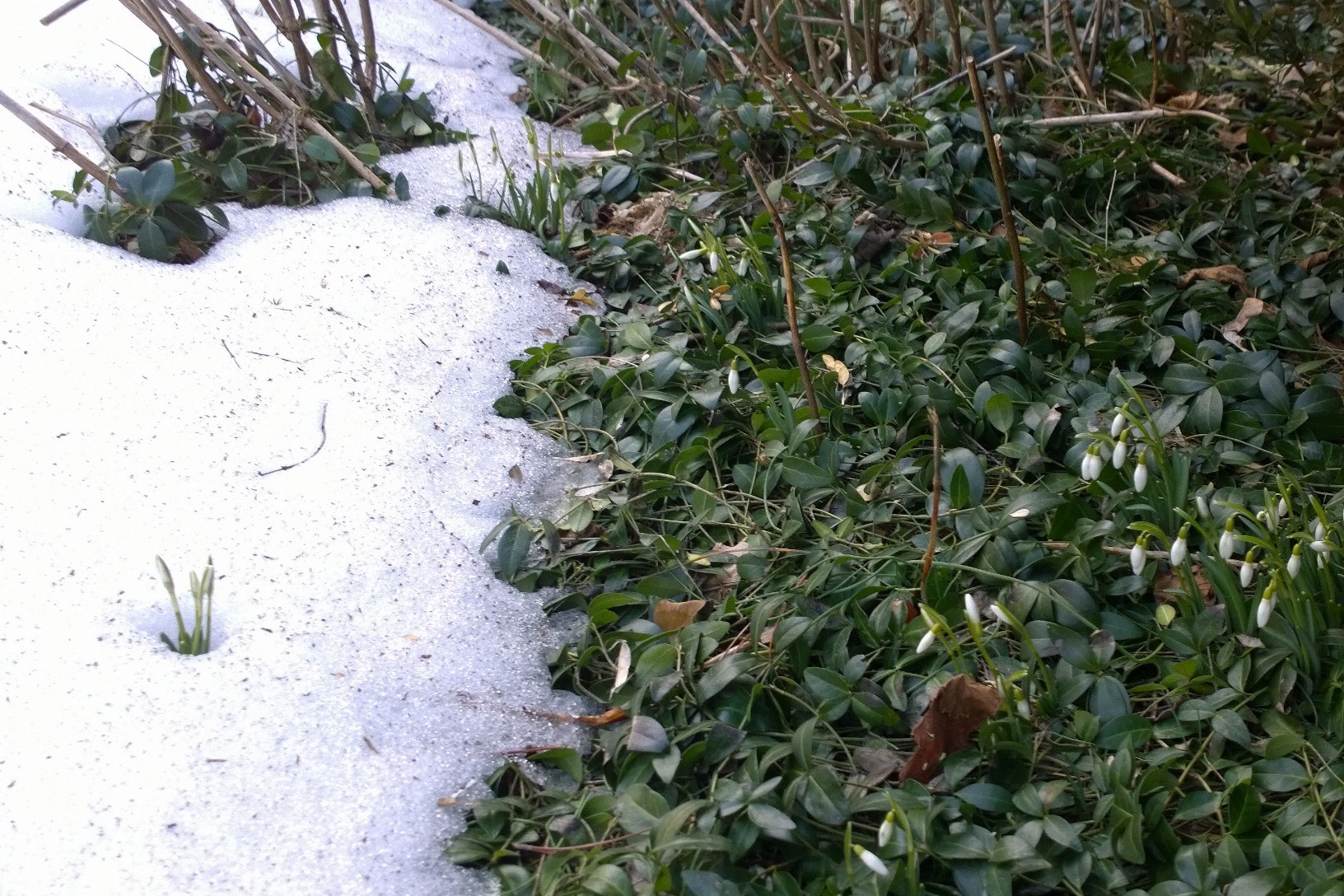
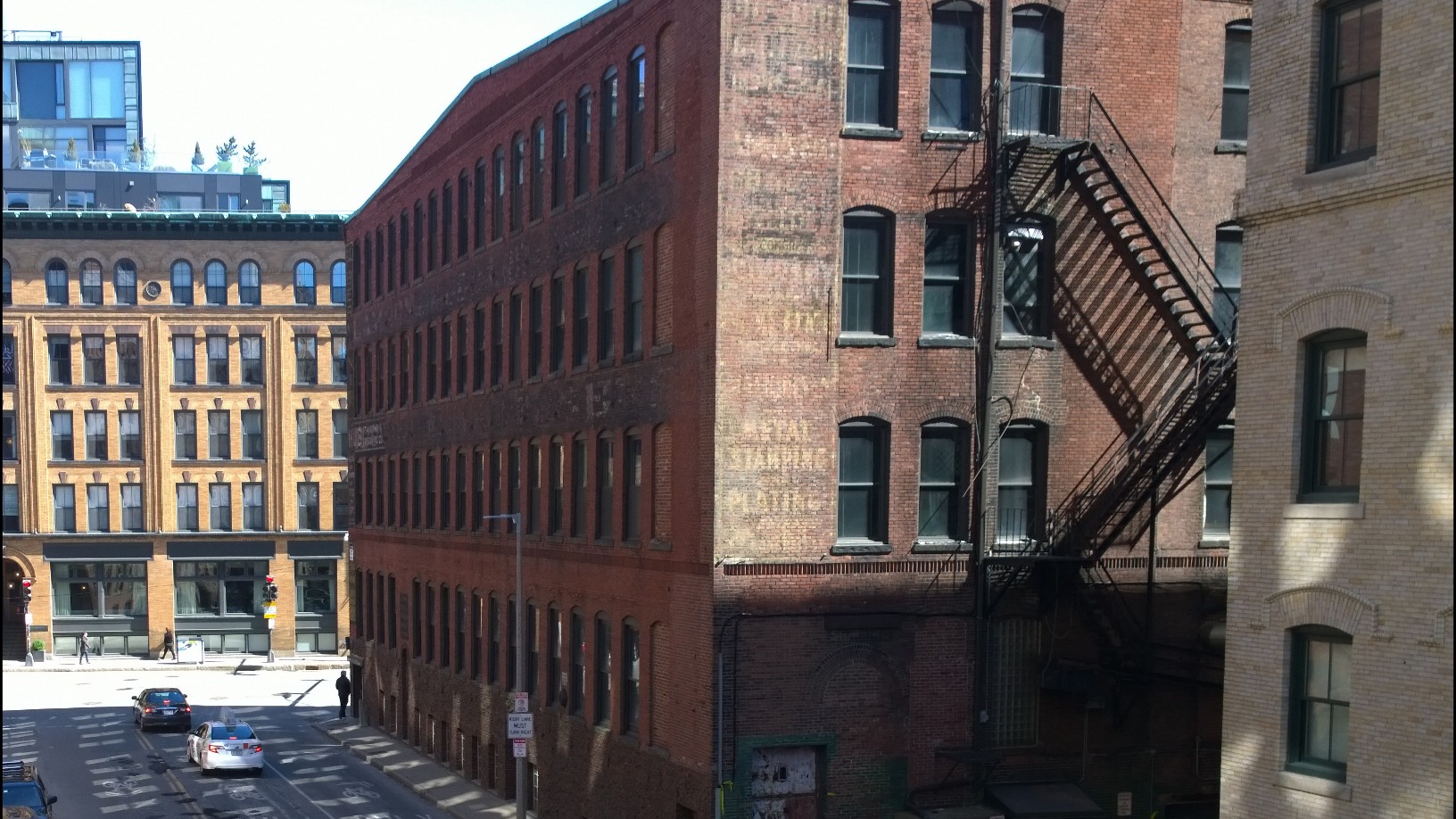
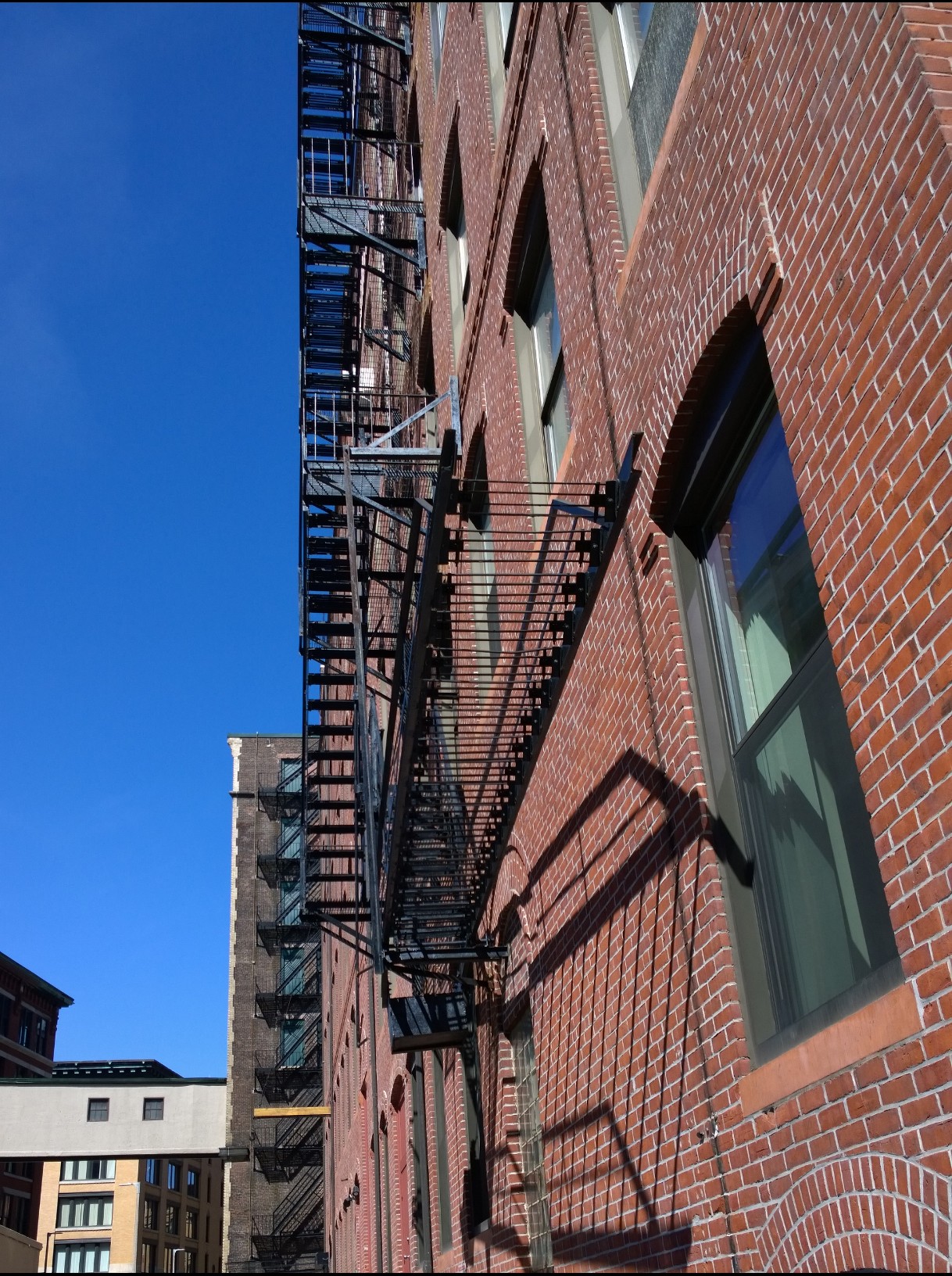
It’s April 1st, and I have been looking for spring. There was a nice little surprise in my front yard — snowdrops next to the snow (still not melted). But when I went looking for spring in Fort Point at lunch, there were no flowers or even leaf buds. I’m happy with the blue sky, anyway, and the angle of light. Here are a few photos.
“We can see the ground! All of a sudden, our fields and beds have emerged. We’re checking the soil daily to see if it’s thawed enough to get started. In the meantime, we’re wrapping up a very full winter of projects, events, and olympic-level planning, and taking a deep breath before the neverending days of the growing season begin. Its time to start seeds, take soil tests, and take stock.
“Six months ago, through lots of work, lots of luck, and the incredible support of our community, our team of farmers and land partners were able to purchase the land underneath our farm. Farming with land security is entirely different than farming with a one-year lease …
“We’ve long been inspired by the Community Supported Agriculture model and have spent many years planning the CSA of our dreams. We’re so proud to finally introduce our 2015 Meal Share, a ‘Full-Plate’ CSA designed to bring you a whole, compelling, and meal-based experience of eating from the ground. …
“Pigs. Now that we have land security and access to more outbuildings, we can finally bring on the larger livestock. …
“While sometimes farming seems like a poor career choice, there are a couple things that make us feel luckier than everybody else. The USDA Farm Service Agency’s Microloan program is one of them. FSA Microloans are nifty little loans for up to 50k at generous interest rates, just for farmers to start or expand their operation. …
“Inspired by the success of our September farm dinner with Momofuku Ko (the pictures are in!), we’ve officially opened up our land for weddings, parties and celebrations. … All proceeds from events go directly toward land renewal and restoration projects (this year’s projects are all about planting trees). …
“Our very own Nichki received a Farmer Grant from Northeast Sustainable Agriculture Research and Education (NESARE) to develop a comprehensive enterprise guide on raising rabbits humanely on pasture. Watch out for ‘Pastured Rabbit for Profit’ hitting your PDF libraries and farming conferences this fall.”
It’s quite an inspiration to see these young people take on the hard work farming — learning and innovating as they go.
On a related note, New Englanders too far away to take advantage of a CSA in New York may want to check out some local community-supported-agriculture opportunities, here. The list is from EcoRI.
In a delightful post at BookRiot.com, blogger David Attig offers some of his research on bookmobiles and libraries in out-of-the-way places.
In one example, he writes about “a delightful twist on the Pack Horse Library. Since 1990, teacher-turned-mobile-librarian Luis Soriano has brought books to thousands of children in rural Colombia, all from the back of a donkey. The biblioburro, as Soriano calls it, helps poor children have access to more books and thus a chance at a better education. ‘That’s how a community changes and the child becomes a good citizen and a useful person,’ Soriano told CNN. ‘Literature is how we connect them with the world.’ Soriano and his biblioburro are the subject of a children’s book by Monica Brown and John Parra, proceeds from the sale of which go to support Soriano’s work.”
“Derek Attig writes and teaches about book culture, technology, and history,” says BookRiot. “In addition to writing a book about bookmobiles in American life, he blogs at Bookmobility.org.”
Read the whole post at BookRiot, where you will find a Works Progress Administration bookmobile visiting Bayou De Large, Louisiana, pack horse librarians posing in Hindman, Kentucky, a booketeria in a Nashville supermarket, a vending machine library at a Bay Area school, a library at Amsterdam Schiphol Airport, and more.
In the words of Maria Popova at BrainPickings.org, “Writer Jean E. Pendziwol and illustrator Isabelle Arsenault weave a beautiful lullaby in Once Upon a Northern Night (public library | IndieBound) — a loving homage to winter’s soft-coated whimsy, composed with touches of Thoreau’s deep reverence for nature and Whitman’s gift for exalting ‘the nature around and within us.’ …
” ‘Once upon a northern night
a great gray owl gazed down
with his great yellow eyes
on the milky-white bowl of your yard.
Without a sound
not even the quietest whisper,
his great silent wings lifted and
down,
down,
down,
he drifted,
leaving a feathery sketch
of his passing
in the snow.’ “
My local indie bookstore is getting a lot of extra business because of Popova’s reviews of children’s books. In fact, I told the shop manager yesterday he should follow Brain Pickings, but there was a long line at the register, and I don’t think he wrote it down.
Art: Isabelle Arsenault/Groundwood Books Once Upon a Northern Night
When the Swedish poet Tomas Tranströmer won the Nobel Prize for Literature, I wrote a post about it. Several Swedes, including Erik and his mother, had told me about Tranströmer, and I have a couple books of his poems in translation.
An obit by Bruce Weber in yesterday’s New York Times gave me a lot more information about “a body of work known for shrewd metaphors couched in deceptively spare language, crystalline descriptions of natural beauty and explorations of the mysteries of identity and creativity. …
“Though he was not especially well known among American readers, he was widely admired by English-speaking poets, including his friends Robert Bly, who translated many of his poems, and Seamus Heaney, himself a Nobel laureate in 1995.”
It seems Tranströmer also was a trained psychologist, who “worked in state institutions with juvenile offenders, parole violators and the disabled. …
“Mr. Tranströmer’s poetry production slowed after his stroke, but he took refuge in music, playing the piano with just his left hand. As a testament to his prominence in Sweden, several composers there wrote pieces for the left hand specifically for him.
“He was also an amateur entomologist. The Swedish National Museum presented an exhibition of his childhood insect collection, and a Swedish scientist who discovered a new species of beetle named it for him.”
Here is an excerpt from a poem the New York Times printed in the obit:
Photo: Jonathan Nackstrand/Agence France-Presse — Getty Images Tomas Tranströmer with his wife, Monica, after winning the Nobel Prize in Literature in 2011.
There are a few websites that are always reliable for blog topics: Brain Pickings, Studio 360, Only a Game, On the Media, Eco RI News, Arts Journal, and until recently, AndrewSullivan.com (Andrew retired).
Another website I like a lot is the one for the radio show Living on Earth. Here Living on Earth‘s Steve Curwood touches base with writer Mark Seth Lender to learn about lambs that teach themselves to climb (kind of like the kids in the wild playgrounds we’ve noted).
“Rocky Mountain bighorn sheep are born with all the climbing gear they need: feet evolved to grab and hold on near-vertical rock, and an uncanny sense of balance. Writer Mark Seth Lender came across a herd of the sheep near Alberta’s Jasper National Park late last summer and discovered that for the lambs, having the equipment is not enough. They still have to learn how to use it.”
Lender explains, “They are working it out. The lambs, by themselves. Where the mountain tapers smooth and hard off the ridgeline. The rest of the herd, already picking their way among the crags and cracks is heading down. But the lambs upon this unfamiliar terrain, hold back. The ewe by her stance and where she looks has led them here. To the edge. But will not show them how. Down they will learn on their own.
“She stands aside, and waits. …
“They are not full of play. They stand on the high point and look, long, toward the river and the sweet grass far … far … below. They look. And look: To left to right slowly turning their heads. They plan: each move, each angle polished into an extended curve. A calculus: For every way point, every stopping place, the risk of a dead end. …
“Sometimes the only down is up: they scramble against the vertical, grappling with their cloven feet, the ledge where the gamble led too narrow for a bird. Sometimes, what looks easy is impossible: the gradual slope, which ends in a sheer and impassible cliff. Sometimes the granite cleaved along the head grain is the only path and the only safety a headlong run, the living rock inclined too steep for caution.
“The hooves of rocky mountain bighorn sheep are broad as a puck, gray as the living rock (as if the color gives them grip). They hold, like India rubber pads, where purchase seems untenable, a magician’s trick, inertia where there should be none. Up where the trees are far and few and the dead wood outnumbers the living.” More here.
Photo: Mark Seth Lender
The ewe leads them to the edge, but will not show them how to climb down.
John reads Business Insider pretty regularly, and I must say it alerts him to some great ideas for this blog. Here is a story about innovative beekeepers by Simon Thomsen at Business Insider Australia.
“Two Australian inventors are changing the way honey is harvested and the world can’t get enough of it. Father and son Stuart and Cedar Anderson spent a decade creating a revolutionary system that allows beekeepers to harvest honey on tap, without disturbing the hive.
“After a decade of research and development, the Andersons launched their idea on the crowdfunding platform Indiegogo [Feb. 23]. Within two hours, they’d sold $830,000 (£420,000) worth of beehives. Their initial target was $70,000 (£35,500). Within three hours they’d sold more than $1 million (£507,000) of products.
“The first 500 top-of-the-line beehives, costing $600 (£390), sold out within an hour. They’ve now released a further 1000 hives, along with a range of cheaper options.
“The Andersons has some idea how how intense interest was when they posted a video of their invention on YouTube and it attracted nearly 1 million viewers within two days. This morning they had interest from 80,000 people before the launch, and were forced to switch from Kickstarter to Indiegogo as the crowdfunding platform at the last minute realising that they needed to cater for the US market, find an American manufacturer and charge in USD (which Kickstarter doesn’t allow) to overcome exchange rate fluctuations.” More here.
What a great story: build a better beehive and the world will beat a path to your door. Now if someone would just donate a few to the beekeepers in Sudan we wrote about recently …
Photo: Facebook Beekepers Cedar and Stuart Anderson





 Suzanne's Mom's Blog