July 10, 2013 by suzannesmom
Public Radio International’s “The World” had a delightful story today on a young Egyptian who looks like he might be a real “contenda” for a sumo wrestling title.
Clark Boyd reports, “His real name is Abdel Rahman Ahmed Shaalan. But in Japan, they call him Osunaarashi, or ‘Great Sandstorm.’
“Shaalan is 21-year-old professional sumo wrestler who hails from Giza in Egypt. After a few years of training at the club level in Egypt, Shaalan left Egypt to try to break into the Japanese professional ranks. …
“Osunaarashi is currently fighting in a tournament in Tokyo, but here’s the thing: He is also a devout Muslim, and this is the holy month of Ramadan. And that means Osunaarashi is fasting.”
The radio report goes on to say that although sumo has always been an intensely tradition-bound sport, the people at the residence where Osunaarashi is living with other wrestlers have made accommodations in deference to his religion. For example, a typical stew that sumo wrestlers are served to bulk them up is chock full of pork, but the chefs now make it with chicken and fish.
More.
Photo: Phlyz/Wiki Commons
Osunaarashi, the Egyptian sumo wrestler, after a Tokyo tournament in May

Posted in Uncategorized | Tagged Abdel Rahman Ahmed Shaalan, egypt, giza, great sandstorm, japan, muslim, osunaarashi, postaday, ramadan, sumo, wrestler | Leave a Comment »
July 9, 2013 by suzannesmom
When Erik and Suzanne were living in California, Erik says, he often wondered how it happened that the state had such a glorious, unspoiled coastline, where one could drive for miles and miles and see only the beauty of nature.
Now he knows. It’s been a long, hard fight, one that probably will never end. Steve Blank talks about the fight at his website, here.
“California has some of the most expensive land in the country,” Blank writes, “and as we all know, our economy is organized to extract the maximum revenue and profits from any asset. Visitors are amazed that there aren’t condos, hotels, houses, shopping centers and freeways, wall-to-wall, for most of the length of our state’s coast.
“It was the Coastal Act that saved California from looking like the coast of New Jersey.
“In 1976 the voters of California wisely supported the Coastal Act and the creation of a California Coastal Commission with 2 goals.
“First, to maximize public access and public recreational opportunities in the coastal zone while preserving the rights of private property owners, and
“Second, to assure priority for coastal-dependent and coastal-related development over other development on the coast. …
“The Commission has been able to stave off the tragedy of the commons for the California coast. Upholding the Coastal Act meant the Commission took unpopular positions upsetting developers who have fought with the agency over seaside projects, homeowners who strongly feel that private property rights unconditionally trump public access, and local governments who believe they should have the final say in what’s right for their community, regardless of its impact on the rest of the state.”
Good for California! There’s more at Blank’s website.
Photo: http://steveblank.com

Posted in Uncategorized | Tagged beauty, california, coast, coastline, nature, postaday, steve blank | Leave a Comment »
July 8, 2013 by suzannesmom
There’s nothing like good weather in Rhode Island in July. Good for walks and going to the beach. Good for a hardworking fishing industry, too.
Here are a few recent photos.





Posted in Uncategorized | Tagged beach, fishing boats, postaday, rhode island, roses, sand, summer, water lilies | 4 Comments »
July 7, 2013 by suzannesmom
A high-minded concert may be a drop in the bucket when it comes to fighting global poverty, but as you know, I’m a believer in the power of “One and one and 50 make a million.”
In May, James C.McKinley Jr. wrote for the NY Times, “When the Global Poverty Project staged a benefit concert with Neil Young, the Black Keys and Foo Fighters in Central Park last fall, skeptics wondered if that nonprofit’s attempt to generate pressure on world leaders to help the poor would fade as soon as the amplifiers and guitars were put away.
“But this week the charity proved it had won converts, at least within the music industry. More than 70 artists, among them Jay-Z, Beyoncé, Bruce Springsteen, Pearl Jam and Bruno Mars, have pledged to give the project two tickets from each of their concerts over the next year, creating a pool of more than 20,000 tickets.
“The tickets will be used as prizes to encourage people to become involved in causes like fighting poverty in the third world, eradicating polio, building schools and ending famine. To win the tickets, fans are asked to earn points by taking action through a related Web site, globalcitizen.org. They can sign petitions, pledge to volunteer their time as aid workers, write elected leaders or donate money to aid organizations.
“‘It provides us with an opportunity to get really powerful activism worldwide,’ said Hugh Evans, the chief executive of the Global Poverty Project.” More.
Do check out a related post from 2011 on a countertenor who runs Artists for a Cause, a collaboration that provides talent for fundraising events — here.
Photo: Julie Glassberg for The New York Times
Neil Young with Crazy Horse performing in Central Park in September 2012 in a benefit concert for the Global Poverty Project.

Posted in Uncategorized | Tagged artists for a cause, benefit, black keys, concert, countertenor, crazy horse, foo fighters, global poverty project, globalcitizen.org, hugh evans, james c. mckinley, julie glassberg, music, neil young, postaday, poverty | Leave a Comment »
July 6, 2013 by suzannesmom
I was reminded of a recent science article this morning. Erik was speaking Swedish to my one-year-old grandson, and John said he shows the three-year-old foreign-language cartoons because it’s a great age to get an ear for them.
I recalled something interesting in the NY Times. Tim Requarth and Meehan Crist wrote, “Babies learn to speak months after they begin to understand language. As they are learning to talk, they babble …
“But when babies babble, what are they actually doing? And why does it take them so long to begin speaking?
“Insights into these mysteries of human language acquisition are now coming from a surprising source: songbirds.
“Researchers who focus on infant language and those who specialize in birdsong have teamed up in a new study suggesting that learning the transitions between syllables — from “da” to “do” and “do” to “da” — is the crucial bottleneck between babbling and speaking. …
“The lead author, Dina Lipkind, a psychology researcher at Hunter College in Manhattan [said], “What we’re showing is that babbling is not only to learn sounds, but also to learn transitions between sounds.” …
“At first, however, the scientists behind these findings weren’t studying human infants at all. They were studying birds.
“ ‘When I got into this, I never believed we were going to learn about human speech,’ said Ofer Tchernichovski, a birdsong researcher at Hunter and the senior author of the study, published [in] the journal Nature. …
“Dr. Tchernichovski and Gary Marcus, who studies infant language learning at New York University and who helped design the study, discussed the results. Could the difficulty learning transitions in songbirds hold true for human infants?
“By analyzing an existing data set of recordings of infant babbling, they found that as babies introduce a new syllable into their repertory, they first tend to repeat it (‘do-do-do’). Then, like the birds, they begin appending it to the beginning or end of syllable strings (‘do-da-da’ or ‘da-da-do’), eventually inserting it between other syllables (‘da-do–da’).” More.
Photo: Iva Ljubicic
A juvenile zebra finch, right, perched next to a plastic model, which helps the bird learn to sing. Researchers have discovered that babies learn to babble much as birds learn to sing.

Posted in Uncategorized | Tagged babbling, Dina Lipkind, Gary Marcus, hunter college, infant, language, Meehan Crist, nyu, Ofer Tchernichovski, postaday, Tim Requarth, transition | 2 Comments »
July 5, 2013 by suzannesmom
Joe Palca, at National Public Radio, recently had a nice report about astronomy and optics.
I thought of John and his OpticsForHire team.
“It used to be that if astronomers wanted to get rid of the blurring effects of the atmosphere,” says Palca, “they had to put their telescopes in space. But a technology called adaptive optics has changed all that.
“Adaptive optics systems use computers to analyze the light coming from a star, and then compensate for changes wrought by the atmosphere, using mirrors that can change their shapes up to 1,000 times per second. The result: To anyone on Earth peering through the telescope, the star looks like the single point of light it really is.
“The reason the atmosphere blurs light is that there are tiny changes in temperature as you go from the Earth’s surface up into space. The degree to which air bends light depends on the air’s temperature.
“With adaptive optics systems, telescopes on Earth can see nearly as clearly as those in space.” More at NPR.
Photo: Heidi B. Hammel and Imke de Pater
The near-infrared images of Uranus show the planet as seen without adaptive optics (left) and with the technology turned on (right).

Posted in Uncategorized | Tagged adaptive optics, astronomy, atmosphere, bend light, joe palca, npr, optics, planets, postaday, space, stars, telescopes | Leave a Comment »
July 4, 2013 by suzannesmom

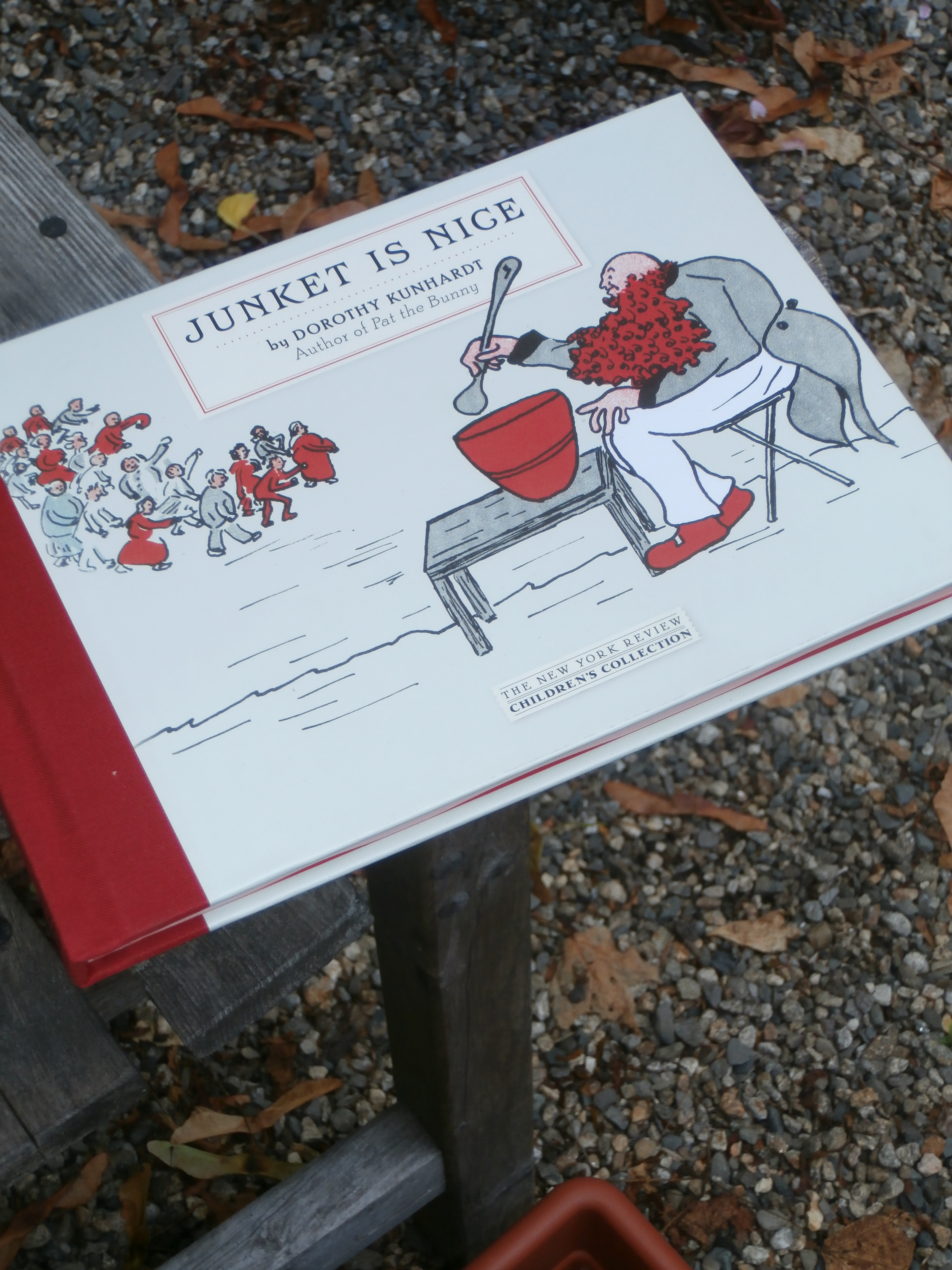
Everybody knows the baby book Pat the Bunny. But that is not the only book Dorothy Kunhardt wrote. She published 50, including some for grownups.
When we were kids, we loved her book Junket Is Nice, about an old man with a red beard eating a rennet custard called junket while crowds of people try to guess what he is thinking.
We children used to eat a lot of junket, a dessert that is not around much anymore. It’s tricky to make because the milk has to be at a very precise temperature.
One day my friend and I got it in our heads to bury some treasure that we could dig up later, and we included in the cache Junket Is Nice. Needless to say, by the time we followed our map to “X marks the spot” several months later, Junket Is Nice was mildewed.
Which is why, when I saw it was reissued, I jumped to get a copy.
Read a bit more about Dorothy Kunhardt here.
Posted in Uncategorized | Tagged books, children's literature, custard, dorothy kunhardt, junket, Junket is Nice, pat the bunny, postaday, rennet | Leave a Comment »
July 3, 2013 by suzannesmom
Here’s a tip for anyone planning to be in London in late fall. A cabaret festival, said to be the first ever, will take place in locales around the city.
Matthew Hemley writes at The Stage, “Comedian Alexander Armstrong and US singer Michael Feinstein are among the performers lined up to appear as part of the first London Festival of Cabaret.
“The festival will run from October 22 until November 15 with events taking place in a variety of venues across London.”Other acts taking part include Elaine Paige, Maria Friedman and Barb Jungr.
“Armstrong will appear in Alexander Armstrong and his Band Celebrate the Great British Songbook from October 28 to 31 at the St James Theatre, where Friedman will give a master class in performing cabaret on October 25.
“Friedman said: ‘Cabaret is a unique way for an artist to hone their communication skills, allowing the audience an up-close, concentrated, in-the-moment experience.’ ”
More.
My husband and I enjoy cabaret music. We like to catch Will McMillan when he performs, whether it’s in Jeff Flaster’s original musical Tortoise or on the terrace in front of Cambridge Adult Ed.
Are you going to London, Will? These London guys need to see the show you put on with Bobbi and Doug, don’t you think?
Photo: Willsings.com

Posted in Uncategorized | Tagged cabaret, cabaret festival, london, music, postaday, singer, singing, song, will mcmillan | 2 Comments »
July 2, 2013 by suzannesmom
Around this time last year, I alerted you (here) to a treasure hunt for hand-blown glass floats. I never ran into anyone who found one, but they must have done, as the tourism council is back at it again this year.
Glassblower Eben Horton has once more hidden floats off the beaten path, including a special float with gold leaf.
The tourism council explains it all for you.
“WHAT: 400 Glass Floats (glass orbs about the size of a grapefruit) will be hidden on Block Island. Floats will be dated, numbered and stamped with the shape of Block Island. All floats are clear glass except for 13 (because it is 2013), which are special colored orbs. One super special float is made entirely out of gold leaf.
“WHERE: Floats will be hidden on the beaches and on the Greenway Trails. They will be above the high tide mark but NEVER in the dunes or up the side of the bluffs. They will be within one foot of either side of any Greenway trail they are placed on.” More.
3/5/14 Update: Suzanne e-mailed me about a Kickstarter campaign for the glass float project. Check it out here.
Photo of glassblower Eben Horton: The Tourism Council

Posted in Uncategorized | Tagged block island, eben horton, glass floats, glassblower, kickstarter, new shoreham, orbs, postaday, treasure hunt | 2 Comments »
July 1, 2013 by suzannesmom
Asakiyume is a wonderful writer. I have read many of her stories for adults and her three main young adult books. The latest is perhaps the most marketable so far. Kids, teachers, librarians — all sorts of people — will be as riveted as I was. (Perhaps she will comment below with a few words on the theme.)
While waiting for an agent, Asakiyume asked Kelsey Michele Soderstrom to paint the main characters, below, and began to plan a website about the book and its exotic settings.
I thought of Asakiyume when I read an article in the Concord Journal the other day about high schoolers who weigh in on galley proofs of young adult books.
The Journal says, “Just two years after the group’s inception, the Concord Carlisle High School Young Adult Galley has been selected as one of 16 Young Adult Library Services Association Teen Top 10 review groups.
“Members of the group will read galleys, or uncorrected proofs of books, before they are sent off to be published, and select 10 they like best. This information will be used to select YALSA’s top 10 galleys this year.
“Jennifer Barnes, ex-teen library services consultant at Concord Carlisle High School, was the head of YALSA’s teen fiction division and used to bring galleys into the high school’s libraries for interested students to read. The galley group formed …
“When Barnes left the school, students still wanted to review galleys but had a harder time procuring them. …
“Using Kindles, group members would download galleys off of NetGalley, available to bloggers, educators and members of the media. The CC Group members would also send letters to publishers requesting galleys.
“Then, still looking for more galleys to review, the group decided to apply to be a YALSA Teen Top 10 Review group. …
“ ‘Sometimes authors will respond [to reviews],’ [recent grad Clare] Bannon said. … ‘It was so cool when an author would respond to something you wrote. It would encourage you to keep reading and keep reviewing stuff.’
“The group will continue to get together and meet up to discuss books throughout the YALSA Teen Top 10 process.” More at WickedLocal.com.
Art for Asakiyume’s latest story: Kelsey Michele Soderstrom


Posted in Uncategorized | Tagged author, books, concord carlisle, galley proof, Jennifer Barnes, Kelsey Michele Soderstrom, netgalley, postaday, students, Teen Top 10, yalsa, Young Adult Library Services Association, young adult literature | 2 Comments »
June 30, 2013 by suzannesmom
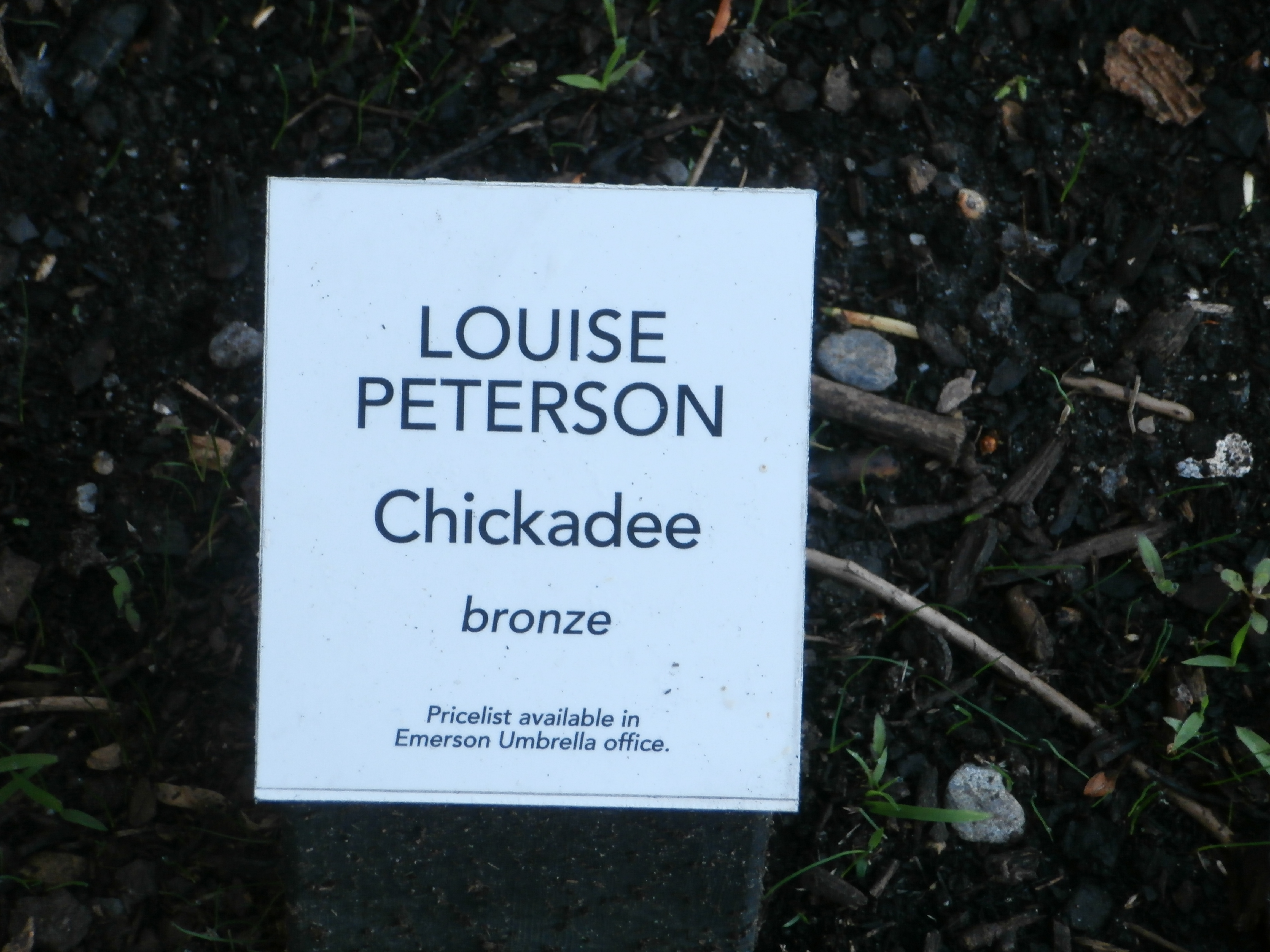
Fearless little bird on the back of a dog.

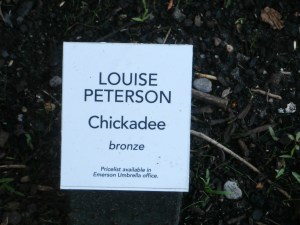
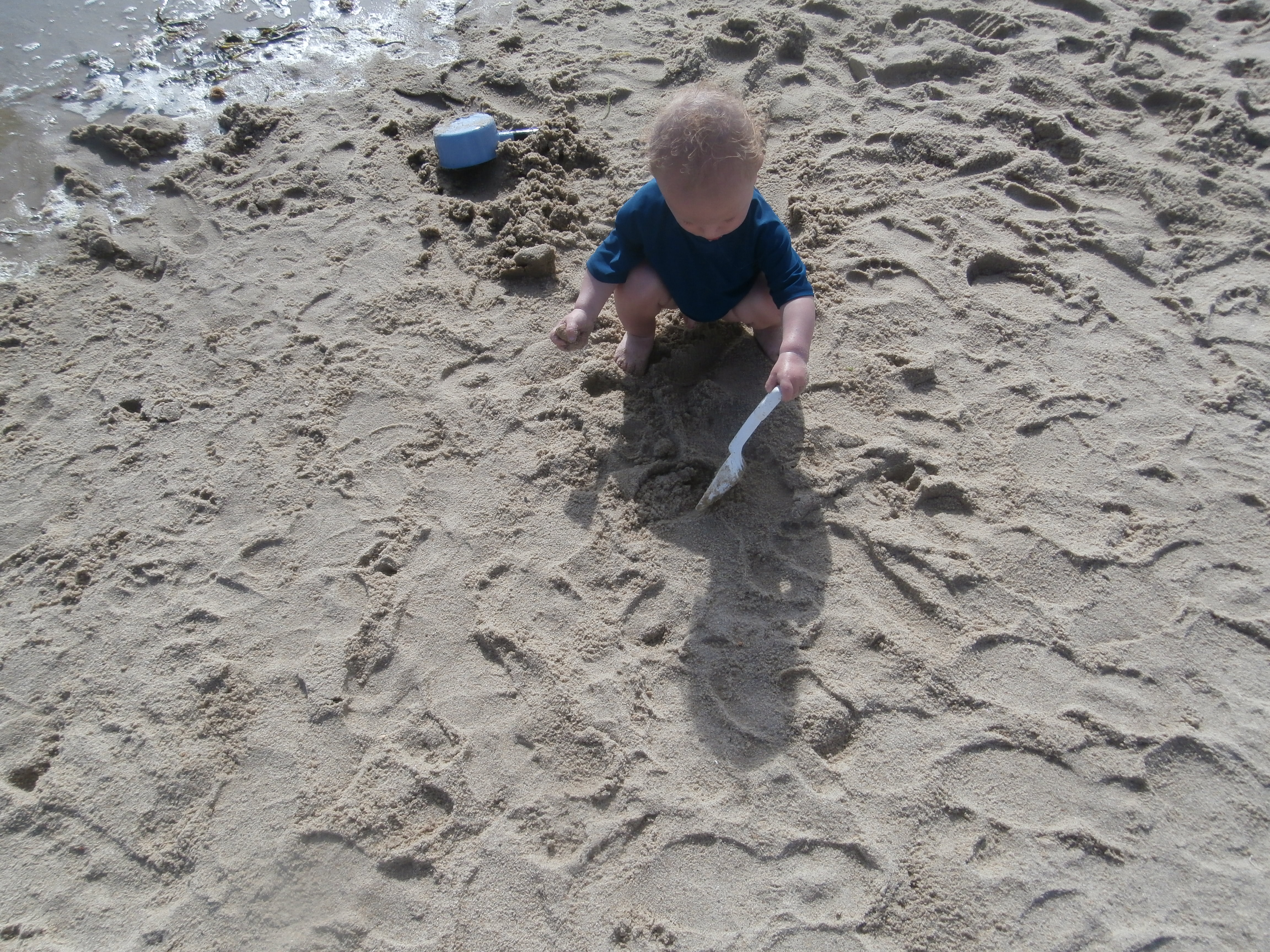
Grandson checking out playground, turtle deciding not to cross the road after all, Suzanne’s Mom taking pictures in Concord and around Boston Harbor.




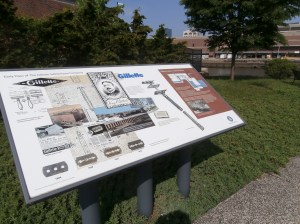
Posted in Uncategorized | Tagged Boston Harbor, dog and chickadee, gillette, louise peterson, photo, photography, postaday, sculptor, turtle picture | Leave a Comment »
June 29, 2013 by suzannesmom
If you can’t photograph the ivory-billed woodpecker in Louisiana or Cuba or wherever it is rumored to have survived, the next best thing is to find a brand new species. That’s what Simon Mahood did in Cambodia.
Thomas Fuller writes about it in the NY Times. “The discovery of new fauna conjures up images of Livingstone-like explorers trekking through malaria-infested jungles. But scientists working in Cambodia have reported a new species of bird in a decidedly less remote environment: the outskirts of Phnom Penh.
“Simon Mahood, the lead author of an article released Wednesday in the Oriental Bird Club’s journal Forktail, says the bird’s primary habitat is about a 30 minutes’ drive from his home in Phnom Penh, ‘allowing for traffic.’
“ ‘I’ve always wanted to discover a bird species, but I never expected it would happen like this,’ Mr. Mahood, who works for the Wildlife Conservation Society in Cambodia, said by telephone from Phnom Penh. ‘I certainly didn’t expect to be standing in flip-flops and shorts a half an hour from home.’
“Roughly the same size as a wren, with white cheeks and a cinnamon cap, the bird was named the Cambodian tailorbird by the team that documented the discovery. Tailorbirds get their name from the way they build their nests, by threading spider silk or other fibers through a leaf, creating a sort of cradle.” More.
Photo: Ashish John/Wildlife Conservation Society
The Cambodian tailorbird was found near Phnom Penh.

Posted in Uncategorized | Tagged Ashish John, birder, birding, birds, cambodia, ecology, environment, forktail, nature, new species, oriental bird club, postaday, simon mahood, tailorbird, Thomas fuller, Wildlife Conservation Society | Leave a Comment »
June 28, 2013 by suzannesmom
Erik sent along this lead, and John sent it to him. Both are guys who started tech companies, and I’m learning that requires a certain kind of attire.
To signal you are a laid-back but savvy entrepreneur, wear cool socks.
Claire Cain Miller and Nick Bilton write at the NY Times, “For barristers in 18th-century London, it was shoulder-grazing wigs. For the Mad men of 1950s New York, it was briefcases and fedoras. For the glass-ceiling-shattering women of the 1980s, it was shoulder pads.
“And for today’s tech entrepreneurs in high-flying Silicon Valley, it is flamboyantly colored, audaciously patterned socks.
“In a land where the uniform — jeans, hoodies and flip-flops — is purposefully nonchalant, and where no one would be caught dead in a tie, wearing flashy socks is more than an expression of your personality. It signals that you are part of the in crowd. It’s like a secret handshake for those who have arrived, and for those who want to. …
“Some say the craze took hold because socks are an acceptable shot of flair in a dressed-down, male-dominated culture — and peek out when entrepreneurs present their latest apps onstage at the tech world’s frequent conferences. Others offer a perhaps more universal explanation. ‘Girls notice,’ said Matt Graves, 37 …
“Travis Kalanick, 35, co-founder and chief executive of Uber, the on-demand taxi service, began wearing statement socks at his previous company, which sold software to businesses.
“ ‘I started having to suit up for meetings with Fortune 500 companies,’ said Mr. Kalanick (his favorite: hot pink). ‘I wanted to keep a little of my geeky computer engineering flair without people thinking I was nuts.’ …
“Sometimes I will even browse the women’s section and get the XXL, because they have all the fun colors,” said Andrew Trader, 42, an investor at Maveron who helped found Zynga. (He is partial to wool socks with bright stripes as well as a pair with an American flag pattern.)”
Read more at the NY Times, here, and check out their slide show.
Erik adds, “And here is a Swedish retail start-up (featured in article) that apparently designs and sells them.”
I can’t tell you how happy I am to know about socks. Father’s Day gifts for the men in the family are settled for the foreseeable future.
Now, can I give Suzanne, the Luna & Stella entrepreneur, socks as gifts, too?
Photo: Peter DaSilva for The New York Times

Posted in Uncategorized | Tagged Andrew Trader, Claire Cain Miller, fashion, Luna & Stella, matt graves, Nick Bilton, Peter DaSilva, postaday, silicon valley, socks, start-up, tech entrepreneur, Travis Kalanick | Leave a Comment »
June 27, 2013 by suzannesmom
The concrete that the ancient Romans created is so durable that it may hold lessons for those who want to reduce carbon emissions.
Paul Preuss, from the Lawrence Berkeley National Laboratory, explains.
“The chemical secrets of a concrete Roman breakwater that has spent the last 2,000 years submerged in the Mediterranean Sea have been uncovered by an international team of researchers led by Paulo Monteiro of the U.S. Department of Energy’s Lawrence Berkeley National Laboratory (Berkeley Lab), a professor of civil and environmental engineering at the University of California, Berkeley.
“Analysis of samples provided by team member Marie Jackson pinpointed why the best Roman concrete was superior to most modern concrete in durability, why its manufacture was less environmentally damaging – and how these improvements could be adopted in the modern world.
“ ‘It’s not that modern concrete isn’t good – it’s so good we use 19 billion tons of it a year,’ says Monteiro. ‘The problem is that manufacturing Portland cement accounts for seven percent of the carbon dioxide that industry puts into the air.’ …
“The Romans made concrete by mixing lime and volcanic rock. For underwater structures, lime and volcanic ash were mixed to form mortar, and this mortar and volcanic tuff were packed into wooden forms. The seawater instantly triggered a hot chemical reaction. The lime was hydrated – incorporating water molecules into its structure – and reacted with the ash to cement the whole mixture together.”
Apparently the key ingredients are found all over the world, enough to make a big difference in construction — and carbon emissions.
There’s more at the Berkeley Lab site for readers who can follow a technical explanation.
Photo: Berkeley Lab

Posted in Uncategorized | Tagged archaeology, berkeley lab, carbon emissions, concrete, doe, energy, manufacturing, Marie Jackson, Paulo Monteiro, postaday, roman, science | 3 Comments »
June 26, 2013 by suzannesmom
I moved from Rochester, New York, more than 30 years ago, so it was only when I went back for a visit that I got to see the storied collections of Margaret Woodbury Strong in a museum built to house them.
When one recovers from the enormity of her obsession, one feels deeply grateful for all the toys and dolls of one’s childhood so beautifully preserved.
The offerings and outreach of the museum have grown like topsy in 30 years. And today another new partnership was announced.
“The great minds of the toy industry will be honored alongside their famous creations when the Toy Industry Hall of Fame combines with the National Toy Hall of Fame under a partnership announced Tuesday.
“The 5,000-square-foot National Toy Hall of Fame gallery at the Strong museum in Rochester will undergo $4 million in renovations, with the goal of opening the combined hall in the fall of 2015.
“The Toy Industry Hall of Fame, whose inductees have included Milton Bradley, Frederick August Otto Schwarz, Walt Disney and George Lucas, has been without a physical presence for about eight years following the closure of the International Toy Center in New York City.
“Leaders of both halls have been talking for some time about combining the two as a way to raise their visibility and exposure and to promote their educational missions. …
” ‘The Strong is an ideal home for this homage to both the toys that have influenced generations of children and the innovative minds that brought them to life,’ Carter Keithley, president of the Toy Industry Association, said at a news conference at the Strong museum, where items like alphabet blocks, roller skates, the Frisbee, Lincoln Logs and the stick occupy places of honor.”
Read more at Yahoo, here. Click “like” if you believe in toys.
Photo: The Strong Museum
“The Strong’s founder, Margaret Woodbury Strong, had a particular interest in dolls and amassed one of the largest collections in the world. The National Museum of Play® at The Strong continues to refine and develop her collection, making it increasingly comprehensive and inclusive. It now includes more than 12,000 dolls and 2,800 paper dolls.”
Posted in Uncategorized | Tagged child, children, dolls, Frederick August Otto Schwarz, George Lucas, imagination, Milton Bradley, National Toy Hall of Fame, play, postaday, rochester, strong museum, Toy Industry Hall of Fame, toys, Walt Disney | Leave a Comment »
« Newer Posts - Older Posts »












 Suzanne's Mom's Blog