July 25, 2013 by suzannesmom
Most street artists don’t think in terms of permanent museum collections. They don’t expect their work to be admired forever. Still, it must be a little sad to see it torn down.
Meghan alerted me, by way of twitter, to the demise of Boston’s only graffiti park, Bartlett Yard, about to be demolished. Dig has the story.
“Rosa Parks, Mr. Miyagi, and the Incredible Hulk gaze down from the wall, their faces nearly big enough to drive a bus through. A giraffe in a space helmet floats carelessly through the light purple cosmos,” writes Dan Schneider at Dig.
“This barely begins to cover the intricate murals found at the Bartlett Yard, an 8.6-acre parcel of land just blocks away from Dudley Square in Roxbury, formerly used as a bus garage by the MBTA. Since the beginning of the year, the property’s owners have allowed an event planning group called Bartlett Events to turn half of the property into a community art space.
“In May, Bartlett Events held Mural Fest, an open call for graffiti muralists, which drew an estimated 1,000 artists and community members together in a frenzy of aerosol, transforming the Yard from a 125-year-old dilapidated bus garage into the massive public art installation.
“If you want to take in the art at Bartlett Yard, however, you’d better do it soon.
“Come this November it’ll all be torn down to begin construction of Bartlett Place, a mixed-use development of housing with—in all likelihood—no graffiti. …
“The Bartlett Bus Yard has been out of commission since the late nineties, following a community-led effort to shut it down due to concerns about bus exhaust contributing to high rates of childhood asthma in the area. Since then the Yard has been abandoned …
“With a few weekends’ worth of hard work, however, several dozen volunteers were able to clean out most of the Yard’s two main buildings and surrounding blacktop prior to opening day.”
Residents express mixed feelings about the redevelopment, which some fear could lead to the dreaded gentrification and push out lower-income people. Others think it will be good to have more variety.
In any case, it sounds like the artists want to stay around even if the art is ephemeral.
For Jason Turgeon, an environmental scientist and one of the founders of Bartlett Events, “the notion of trying to create a permanent graffiti museum would simply miss the point.
“ ‘I come from the Burning Man world, so I know that art doesn’t have to be here forever. Some people say, “You have to save this!” And I say “No, it’s okay. There will be more art after this.” ‘ ”
Read more at Dig.
Photo: DigBoston.com

Posted in Uncategorized | Tagged art, artists, bartlett yard, boston, burning man, bus garage, dan schneider, dudley square, gentrification, jason turgeon, mbta, mixed-use development, Nuestra Comunidad, postaday, street art | 5 Comments »
July 24, 2013 by suzannesmom
I’ve blogged before about programs that use theater for healing purposes and programs that use the arts specifically to help veterans.
Now Dana Ferguson writes at The Los Angeles Times about Shakespeare getting into the act and easing vets into the job world.
“Fifteen years ago former Pfc. and military police officer Jerry Whiteside had two masks tattooed on his left bicep, one smiling, one frowning. …
“Little did he know that more than a decade later, he would be symbolically reunited with the images imprinted on his skin.
“His journey began at the end of a 30-year struggle with drugs and alcohol, he said. Whiteside, a Chicago native turned Angeleno who had served in the Marine Corps from 1972 to ’76, sought help from the Veterans Administration in Los Angeles. He completed a detoxification program in 2011 and for this summer was referred to the Shakespeare Center of Los Angeles to do various jobs on the set of A Midsummer Night’s Dream.
“Whiteside, 61, and some 30 other veterans of the Afghanistan, Iraq, Vietnam and the Gulf wars assisted in building the set and working odd jobs with the production, which continues through July 28.
“Shakespeare Center artistic director Ben Donenberg said employing veterans stemmed from another of the company’s outreach programs, Will Power to Youth, which hires young Angelenos to study and perform Shakespeare plays. After seeing alumni of the program serving in the armed services and later seeking jobs at home, Donenberg said, the company decided to extend its employment program opportunity to veterans, starting last year. …
“One of the things we want to do as a company is to ease the transition to civilian life, and part of that is on the civilians; there’s only so much the veterans can do,” [Chris Anthony, associate artistic director at the Shakespeare Center] said. “The rest of us have to see them in a different light. It’s something we need to work on as civilians.” More.
Photo: Ricardo DeAratanha / Los Angeles Times
Military veteran Jerry Whiteside passes out programs before each Shakespeare Center performance.

Posted in Uncategorized | Tagged ben donenberg, chris anthony, dana ferguson, healing, Jerry Whiteside, military, postaday, ptsd, Ricardo DeAratanha, shakespeare, theater, veteran, vets, will power to youth | 2 Comments »
July 23, 2013 by suzannesmom
Wish I could have captured the transformation of the sky over Boston about 4:30 this afternoon. It was like a sci-fi flic of a force from outer space taking over the world in one fell swoop. One minute the sky outside my window was all blue sunshine and puffy white clouds — the next, an ominous dark front was racing out of the northeast and eating everything in its path.
I would have liked a picture to contribute to Sharon Silverman’s art installation. She is building one in December and needs sky photos in a 4″x6″ print form (only sky, no buildings or trees or anything else in the picture): Sharon Silverman, P.O. Box 1212, Haverhill, MA 01831, silvermanarts@comcast.net.
Sharon says, “Remember to put your name and address on a separate piece of paper so that you can be added to the list of artists who are contributing their work to this project.” It sounded like a rare chance to be an “artist.”
I have quite a few sky pictures, but could round up only two for Sharon that didn’t have anything else in them. (Maybe only one, since a bird showed up in a print.)
Here are a few recent sky photos — two that are just sky.
And check my previous post on ForSpaciousSkies.com.






Posted in Uncategorized | Tagged artist, clouds, haverhill, photography, photos, postaday, rainbow, sharon silverman arts, sky | 6 Comments »
July 22, 2013 by suzannesmom
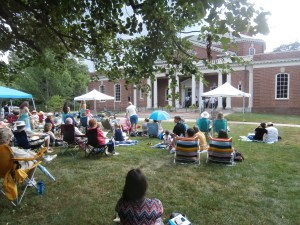
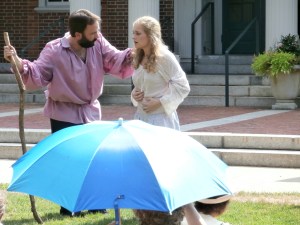
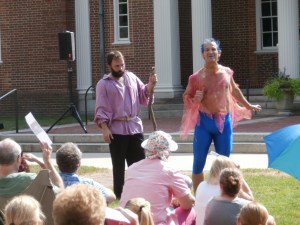
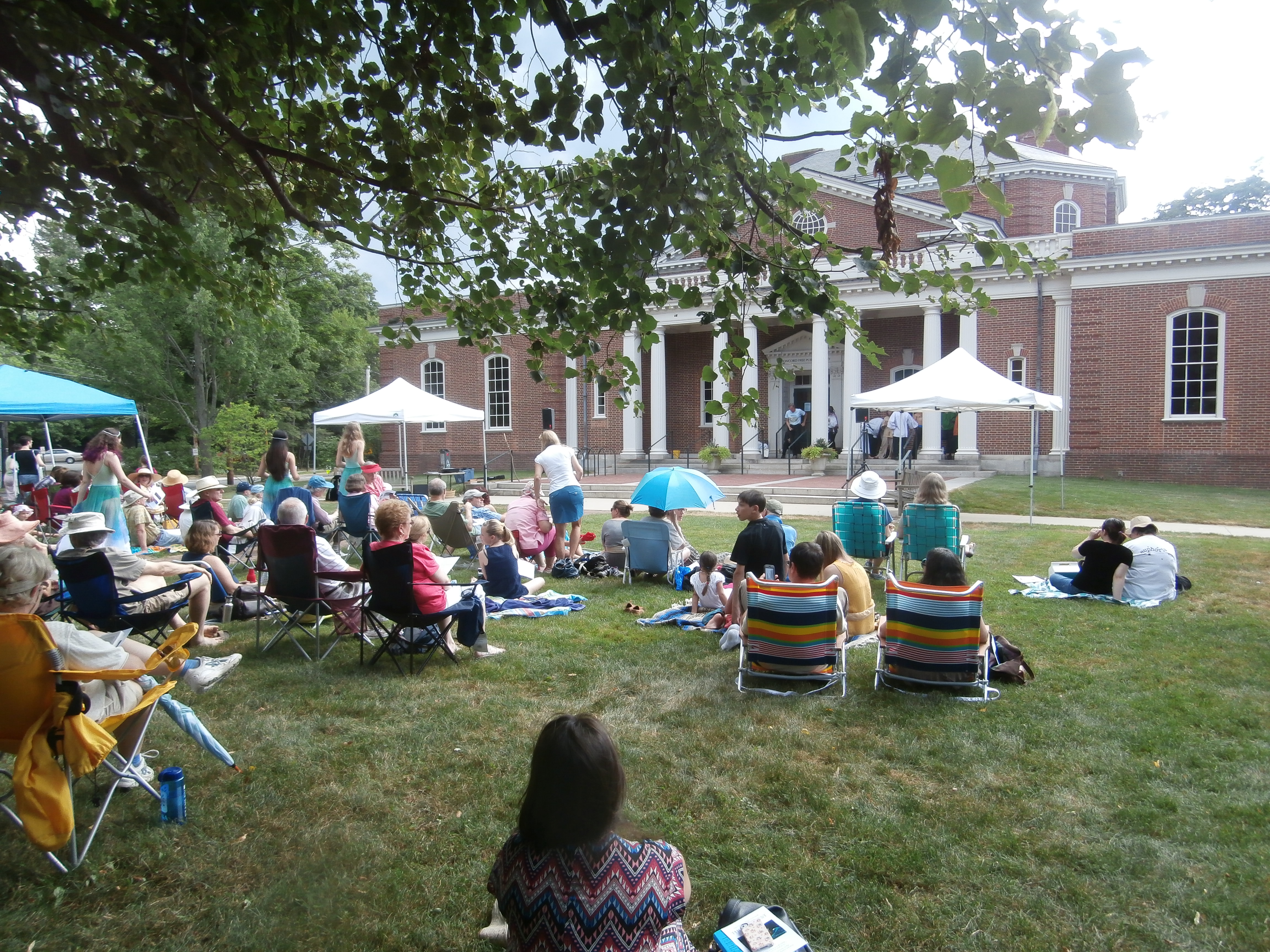
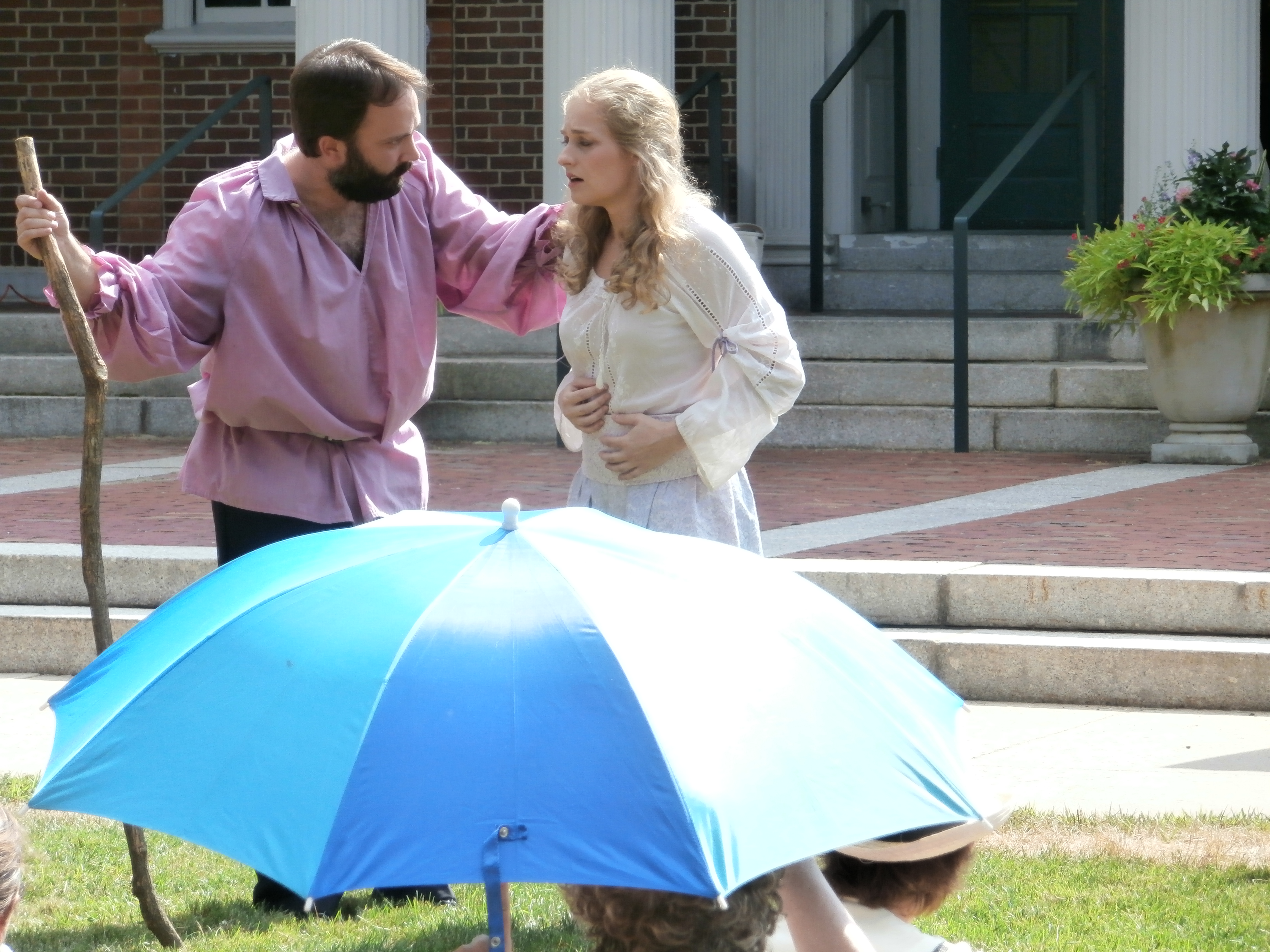
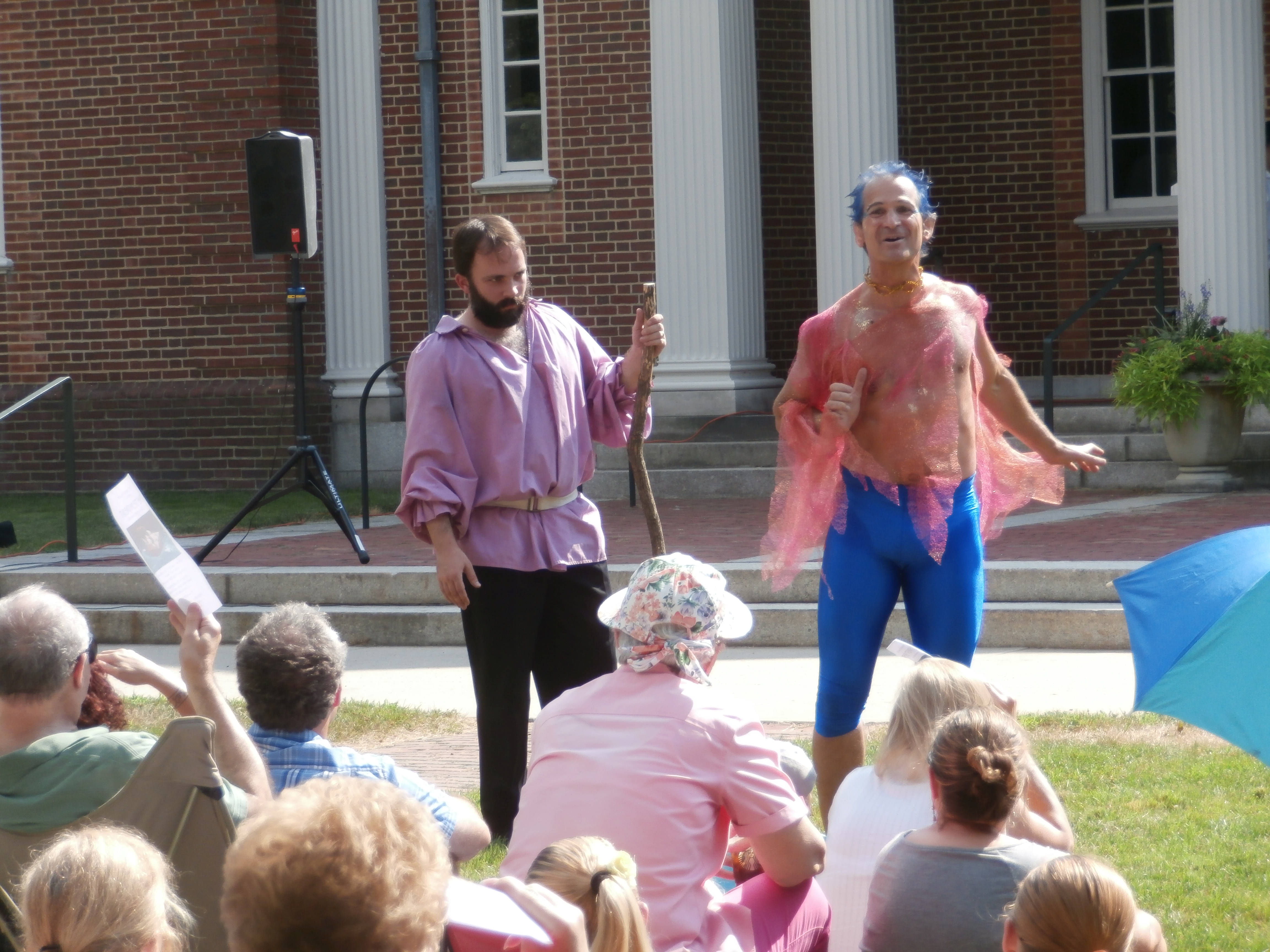
The Concord Players brought a one-hour version of Shakespeare’s “The Tempest” to the lawn of the library yesterday.
The Prospero was perhaps too young, considering that “The Tempest” is an aging Shakespeare’s valedictory, and there was some awkward overacting, but gee whiz, they had to shout to be heard outdoors. So, good for them to work so hard to give the public free theater in summer!
Several sea nymphs doubled as ushers and were lovely to behold.

Posted in Uncategorized | Tagged concord library, concord players, drama, free, play, postaday, prospero, public entertainment, shakespeare, tempest, theatre | 3 Comments »
July 21, 2013 by suzannesmom
Some recent grads seem more serious than their predecessors, perhaps the result of having to face tough realities in the Great Recession.
Martha Irvine writes for the Associated Press, “The full effect won’t be known for a while, of course. But a new analysis of a long-term survey of high school students provides an early glimpse at ways their attitudes shifted in the first years of this most recent economic downturn.
“Among the findings: Young people showed signs of being more interested in conserving resources and a bit more concerned about their fellow human beings.
“Compared with youths who were surveyed a few years before the recession hit, more of the Great Recession group also was less interested in big-ticket items such as vacation homes and new cars — though they still placed more importance on them than young people who were surveyed in the latter half of the 1970s, an era with its own economic challenges.
“Either way, it appears this latest recession ‘’has caused a lot of young people to stop in their tracks and think about what’s important in life,’’ says Jean Twenge, a psychology professor at San Diego State University who co-authored the study with researchers from UCLA.
“The analysis, released Thursday, is published in the online edition of the journal Social Psychological and Personality Science.” More.
One would never say that the Great Recession was a good thing. And it may be that some young people are too serious at too early an age. But it never hurts to start thinking early about what matters in life.
Photo: AP/Alex Brandon
Drew Miller at a building under construction in Silver Spring, Md. Miller quit a steady government contract job to take a chance on a company that’s using “smart technologies” to help big corporations cut lighting costs. Though it meant taking a small pay cut, he says having a job that helps the environment was a ‘‘huge’’ motivator.

Posted in Uncategorized | Tagged alex brandon, drew miller, environment, green jobs, jean twenge, jobs, martha irvine, patricia greenfield, postaday, psychologist, recent grads, recession, San Diego State University, Social Psychological and Personality Science, ucla, unemployment | Leave a Comment »
July 20, 2013 by suzannesmom
One thing to do in a heat wave is to find someplace air conditioned.
So this morning my husband and I took our three-year-old grandson to the Boston Children’s Museum, a magical and air-conditioned place that is celebrating its 100th year.
It was packed. Many other families had had the same idea.
We liked playing with the waterfall and pulling a rope that caused a tennis ball to shoot high in the air and cutting out leaves for an art collage and engaging in countless other playtime learning experiences.
Probably the only problem from the 3-year-old’s point of view was that grandparents have such short attention spans.
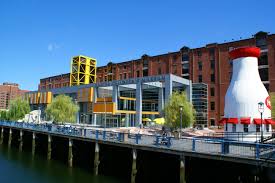
We were also able to take in the Boston Fire Museum, which is close by. And before we left the area, we watched the tour boat White Pearl out of New Bedford spray hoses on a ghostly pirate ship in Fort Point Channel.


Posted in Uncategorized | Tagged boston children's museum, boston fire museum, fort point channel, photographs, postaday | 4 Comments »
July 19, 2013 by suzannesmom
In the current heat wave, I want to blog about something cool. I thought about using today’s Globe story on the Boston bar that will be made entirely of ice, but I am not into bars and the entry fee is $19.
So here is one about a tiny kingdom in the Himalayas that is cut off from the world until the river freezes. The only problem is — the river isn’t freezing as much as it used to.
“About 1,000 years ago, the Buddhists there broke away from the Tibetan Empire [and founded a kingdom] in the very north of India, in the state of Jammu and Kashmir.
“The Kingdom is isolated other than two months a year when the river freezes over and people can cross over to India.” It’s called Zanskar.
Hear more at the Public Radio International show “The World,” where guest Daniel Grushkin describes a lucky escape he had near Zanskar when a piece of ice he was stepping on broke off.
And be sure to check out the adventurer’s other excursions at his blog “Roads and Kingdoms, here.
Photo: Sumit Dayal
Trekking over the frozen Zanskar River.
Posted in Uncategorized | Tagged adventure, boston, Daniel Grushkin, ice, ice bar, postaday, pri's the world, radio, Sumit Dayal, Zanskar | Leave a Comment »
July 18, 2013 by suzannesmom
The Internet is proof of the idea that “one and one and 50 make a million.” A handful of people can see something cool, and before you know it, that something has gone viral.
The Boston Globe had a story last month about a 14-year-old boy who likes to photograph imaginative miniature scenarios, just for fun. Now he has fans from all over.
Ethan Gilsdorf writes about “Zev Hoover’s fanciful photographic take on reality. His arresting images evoke a wonderland of imaginary environments, built from f-stops and pixels, and hinting at characters with secret stories to tell.
“Hoover’s work, which he posts on the photo sharing site Flickr using the handle ‘Fiddle Oak’ (a play on ‘Little Folk’), has caught fire across the Internet. He has been profiled in the media and on design and photography blogs. …
“One post touting his ‘surreal photo manipulations’ has received 108,000 Facebook likes. …
“His series of ‘Little Folk/Fiddle Oak’ images began during a walk in the woods with sister, Aliza. He remembers thinking, ‘Oh, wouldn’t little people be cool?’ Crouching near the ground, he imagined seeing the world from their perspective. He felt the miniature genre had never been done in photography — ‘at least not very well.’
“ ‘There’s a fine line to walk between having it be too abstract and having it be too cheesy-obvious,’ he said. …
” ‘Fiddle Oak’ is not his first photography endeavor. When he was 10, Hoover embarked on ‘The Snugg Project,’ taking a photo of his teddy bear in unique, whimsical settings for 365 consecutive days. ‘It became a little like work,’ his father said, ‘but made him be creative every single day.’ Some of the pictures were displayed at J.P. Licks ice cream shops.”
More.
Photo: Zev Hoover
One of the “Fiddle Oak” pictures.

Posted in Uncategorized | Tagged ethan gilsdorf, fiddle oak, little folk, photography, postaday, snugg project, zev hoover | 5 Comments »
July 17, 2013 by suzannesmom
How delightful! Suzanne told me that Georgia’s childhood friend Jules calls his Rhode Island oyster business Walrus and Carpenter.
Lewis Carroll’s poem “The Walrus and the Carpenter” was the first poem I memorized in school. I was 11. It was a long poem but not too hard after memorizing the script of Alice in Wonderland at 10 (I was Alice’s understudy).
Here’s where oysters come in:
“O Oysters, come and walk with us!”
The Walrus did beseech.
“A pleasant walk, a pleasant talk,
Along the briny beach:
We cannot do with more than four,
To give a hand to each.”
The oldest oyster is wary and has no intention of leaving his oyster bed. But a slew of young oysters jump up, ready for a pleasant walk and talk. After many verses:
“O Oysters,” said the Carpenter,
“You’ve had a pleasant run!
Shall we be trotting home again?’
But answer came there none–
And this was scarcely odd, because
They’d eaten every one.
Read the whole poem, here.
And if you are in Rhode Island, please check out Walrus and Carpenter Oysters. On their website, you will find bios about the oyster cultivators on the team and information on where to show up for their current dinner series.
Suzanne particularly recommends reading some of the links on the company’s press page, especially the one to the New Yorker article (here) about how a dismantled bamboo art installation from the roof of the Metropolitan Museum of Art called Big Bambú ended up making oysters happy in Rhode Island.
Photo of the original John Tenniel art: wikimedia.org

Posted in Uncategorized | Tagged aquaculture, artist, bamboo, big bambu, john tenniel, lewis carroll, metropolitan museum, oysters, poem, poetry, postaday, walrus and carpenter oysters | 2 Comments »
July 16, 2013 by suzannesmom
For a while there, my 3-year-old grandson was really into elephants. That was the result of a bedtime story John invented about a lost elephant in the cemetery at the end of his street.
Even though he is more into lions at the moment, I have been taking random elephant-related pictures for him, like the one on the Chinatown mural I posted a couple weeks back.
I hope he gets to see the elephant in front of the school in Rhode Island. It’s made from wood that Hurricane Sandy threw on the shore. I took a picture.
On the same morning I took a picture of an elephant spirit trapped in a tree. He had probably been unhappy foraging on a small island but seems to be doing well in his current metamorphosis. He is quite serene, watching cars and walkers pass by on Payne Road, keeping his eye on things. Asakiyume may be able to provide more details of his backstory. She has a better imagination for menageries in the wild.


Posted in Uncategorized | Tagged imaginary animals, photography, postaday | Leave a Comment »
July 15, 2013 by suzannesmom
I continue to be a fan of street art and the way it allows informal artists to express themselves while also letting passersby enjoy both homespun and professional achievements as they go about their errands.
In Rhode Island, there’s a painted rock. Everyone paints it, and no painting lasts for long. In the summer, paintings wishing someone happy birthday may last only a few hours, as mine did one Birthday Week when Suzanne turned 16 and John turned 21. (They didn’t wake up in time to see it.)
There has also been some amazing work by experts on that rock, too, but it gets respect for only a couple days. It’s essential to capture it with a camera.
Yesterday I passed along an idea to a gallery owner that she liked. How about painting the painted rock to look like a rock!? Crazy, huh? She may do it, too. She has a painting of rocks in the current show that she could replicate. She knows she’d have to take a photograph, though, or the rock might be painted over before anyone sees it.
Meanwhile, here’s a nice story about street art in the Bushwick section of Brooklyn.
Amy O’Leary writes at the NY Times, “Growing up, Joseph Ficalora would sit on the roof of his family’s steel fabrication business. In Bushwick, Brooklyn, in the 1980s, it was one of the few safe places outdoors. The view was grim. The streets were dirty. Graffiti was endless. …
“Most people want to hold onto their past as it was, but Mr. Ficalora has found greater comfort in obliterating it, bathing the neighborhood in paint.
“Today the rooftop of [his] family business, GCM Steel, offers an eye-popping panorama of street art. More than 50 multicolored murals have transformed a swath of nearby buildings into a vast outdoor gallery called the Bushwick Collective, anchored at the intersection of Troutman Street and St. Nicholas Avenue.” More.
Photo: Victor J. Blue for The New York Times
Gaia, well-known among street artists, paints — legally — on a building in Bushwick, Brooklyn.

Posted in Uncategorized | Tagged Amy O'Leary, art, brooklyn, bushwick, gaia, gallery, Joseph Ficalora, painted rock, painting, postaday, street art, Victor J. Blue | Leave a Comment »
July 14, 2013 by suzannesmom
Here’s a good one from The Atlantic for all you linguists out there.
Richard Solash reports, “A new study claims that mountains may have influenced a special class of sounds occurring in almost all of the languages of the Caucasus.
“In the 10th century, an Arab geographer described the Caucasus region as a ‘mountain of tongues.’ The nickname has stuck to this day, likely because of how well it captures two of the area’s main features: its dramatic cliffs and its array of languages.
“But new and controversial research by a U.S. linguist suggests that the ‘mountains’ may have more to do with the ‘tongues’ than anyone has guessed.
“In a study published last month in the journal Plos One, Caleb Everett, an anthropological linguist at the University of Miami, claims that a special class of sounds occurring in almost all of the languages of the Caucasus may be due to ‘the direct influence’ of the region’s high altitude.
“Everett’s conclusion applies beyond the Caucasus as well. He offers apparent proof that the rare sounds, known as ‘ejectives,’ are far more likely to occur in regions of high elevation worldwide.”
More at The Atlantic, where you will also find a great map of languages in the Caucasus..
Photo: Wikimedia Commons
Greater Caucasus Mountain Range

Posted in Uncategorized | Tagged altitude, caleb everett, caucasus, language, linguistics, PLoS One, postaday, richard solash, university of miami | Leave a Comment »
July 13, 2013 by suzannesmom
I heard something fun at the radio show “On the Media” this morning.
“The Norwegian Broadcasting Corporation has been creating some of the world’s slowest TV — shows like a 7 hour train ride or 18 hours of salmon fishing. Norwegian audiences are loving it. Brooke [Gladstone] speaks with Rune Moklebust of the Norwegian Broadcasting Corporation about why he thinks so-called ‘boring TV’ is actually quite exciting.” Listen to the show here.
In case you want more detail, the Wall Street Journal covers the story, too.
WSJ reporter Ellen Emmerentze Jervell writes, “Executives at Norway’s biggest television company, the NRK national broadcasting service, have work on their hands trying to figure out how to extend a recent string of broadcast hits that have drawn millions of viewers in this small Scandinavian nation to their TVs for many hours at a time.
“One idea currently on the table is to launch a live show in which experts knit while spectators sit in their living rooms eagerly awaiting the next stitch.
“Another scheme is to produce a 24-hour-long program following construction workers building a digital-style clock out of wood, shuffling planks to match each passing minute.
“When the time changes from 09:45 to 09:46, the crew turns the ‘5’ into a ‘6.’ When the clock strikes 10:00, the job is tougher as each digit needs to be reconfigured.
” ‘That part of the show will actually be really exciting,’ says Rune Moklebust.” More at the WSJ, here.
Erik, someone needs to ask Svein if he (or the baby) has been watching. Apparently slow TV is soothing and meditative. I guess Norwegians need that as much as anyone else.
Nov. 9, 2013 update: Watching knitting.
Photo: Norwegian Broadcasting Corporation

Posted in Uncategorized | Tagged boring tv, brooke gladstone, Ellen Emmerentze Jervell, entertainment, meditative, norway, on the media, postaday, rune moklebust, salmon fishing, slow tv, soothing, television | 2 Comments »
July 12, 2013 by suzannesmom
I’m hoping someone from my deep past will remember the name of the man who used to travel to my growing-up neighborhood in a blue-painted school bus to sell fruits and vegetables. The name “Mr. Mackey” is clawing itself to the surface, but I may have that wrong.
I had flashbacks about the huckster today when I read about the Fresh
Truck, an old idea made new in a time of urban food deserts and locavore sensibilities.
Christina Reinwald wrote the story for the Boston Globe.
“A food bus began to roll down the city’s streets Thursday. The retrofitted school bus, the brainchild of a Boston start-up called Fresh Truck, is expected to visit Boston communities that don’t have nearby grocery stores, selling fruits and vegetables.
“Fresh Truck founders Josh Trautwein and Daniel Clarke, recent Northeastern University graduates, came up with the idea last year and work full time now to serve neighborhoods in need of more healthful food options. …
“Fresh Truck raised more than $32,000 from over 300 contributors to its Kickstarter crowdfunding campaign earlier this year. It also received private donations to get started.
“Starting Monday outside the New England Baptist Hospital in Roxbury, Fresh Truck will sell its produce for about 20 percent less than average grocery prices, Trautwein said.
“Avoiding the traditional brick-and-mortar shop eliminates many operating costs for Fresh Truck.” More.
Photo: Yoon S. Byun/ Globe Staff
A food bus run by Fresh Truck, a Boston start-up, aims to serve neighborhoods in need of more healthful food options.

Posted in Uncategorized | Tagged christina reinwald, daniel clarke, food, food desert, fresh truck, fruits, health, huckster, josh trautwein, locavore, New England Baptist Hospital, nourishing, postaday, produce, urban, vegetables | Leave a Comment »
July 11, 2013 by suzannesmom
If you need more hours in the day, be sure to read “How to trick your brain into thinking your day is longer,” an article John found. (But if time is dragging and you want fewer hours waiting in line or being stalled on the subway, I suggest you try reciting poetry.)
Belle Beth Cooper writes at LifeHacker that intense concentration can make you feel like you have added on all the time you need to do whatever you are doing.
“Can you remember a period in your life when, if you look back on it now, time seemed to stretch on forever? … Chances are, you were probably doing something—or a whole bunch of somethings—that was brand new to you and demanded your attention.
“The funny thing is, by focusing on what you were doing, you actually slowed down time (or how your brain perceived that time, anyway). Neuroscientist David Eagleman” explains how it works here. …
“As we age, this process comes into play even more, making time seem to fly by much faster. This is because the more we age, the more often we come into contact with information our brains have already processed. This familiar information takes a shortcut through our brains, giving us the feeling that time is speeding up and passing us by.
“For young children, it’s easy to see how this would work in reverse, since the majority of information their brains are processing would be brand new, and require more time to process. …
“According to the research, if we feed our brains more new information, the extra processing time required will make us feel like time is moving more slowly.” Try it out. More of the science at LifeHacker.
Photo: Andrada Misca, lovingphotography.wordpress.com
The very image of concentration.

Posted in Uncategorized | Tagged Andrada Misca, belle beth cooper, brain, buffer, david eagleman, lifehacker, lovingphotography.wordpress.com, perception of time, postaday, pyschology | 2 Comments »
« Newer Posts - Older Posts »












 Suzanne's Mom's Blog