This is the story of how a song saved a cultural center in the Catskills.
Dennis Gaffney writes for the NY Times that at a recent celebration of success, “Jay Ungar, a fiddler wearing a black vest and hiking boots, and his wife, Molly Mason, playing guitar, stood on a stage in a barnlike performance hall that did not exist a year ago. ‘Can you stand to hear this tune one more time?’ he asked the audience. …
“The tune is ‘Ashokan Farewell,’ the bittersweet lament familiar to millions as the theme song that the filmmaker Ken Burns used for the emotional crescendos of his Civil War series. But most do not know that Mr. Ungar’s moving hymn helped save the Catskill place that inspired the song, resulting in the Ashokan Center, a $7.25 million campus here dedicated to traditional music, Catskill history, environmental education, and local arts and crafts. …
“Many still assume that Mr. Ungar wrote ‘Ashokan Farewell’ with the Civil War in mind. But he wrote it on a September morning in 1982, after the end of his third Ashokan summer music and dance camp on this property, which the State University of New York at New Paltz owned and had used since 1967 as a field campus for environmental education.
“ ‘I left on a cloud of utopian euphoria,’ Mr. Ungar said of that summer. ‘You try to keep it alive, but it evaporates.’ ”
The song went on to have a life of its own, and Ungar even performed it at the White House. NY Gov. Pataki had heard it, too, and when a dismayed Unger contacted him about the pending sale of the Ashokan Center in Olivebridge, the governor took action.
Soon a lot of people were on board, with the wistful song always at the heart of their efforts.
Writes Gaffney, “Mr. Ungar has come to believe that his song, like a traditional hymn, evokes much more than loss. In the mid-1990s, he got an e-mail from a man in Africa who said he was driving in his car when he heard ‘Ashokan Farewell’ on the radio. ‘He started crying uncontrollably and he had to pull off the road,’ Mr. Ungar recalled. ‘He said that in his culture, after the age of 10, men don’t cry, but he needed to cry.’ ”
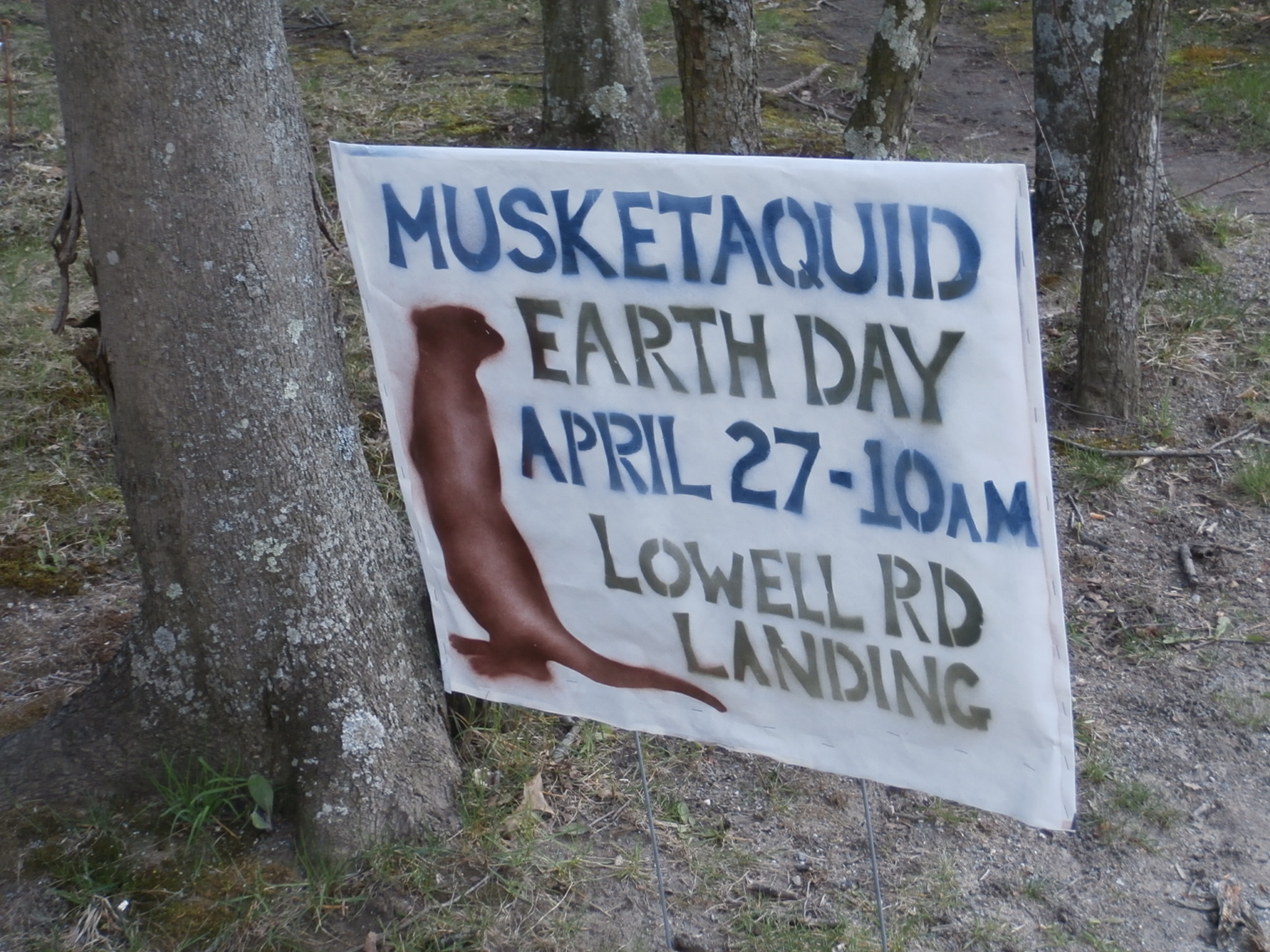
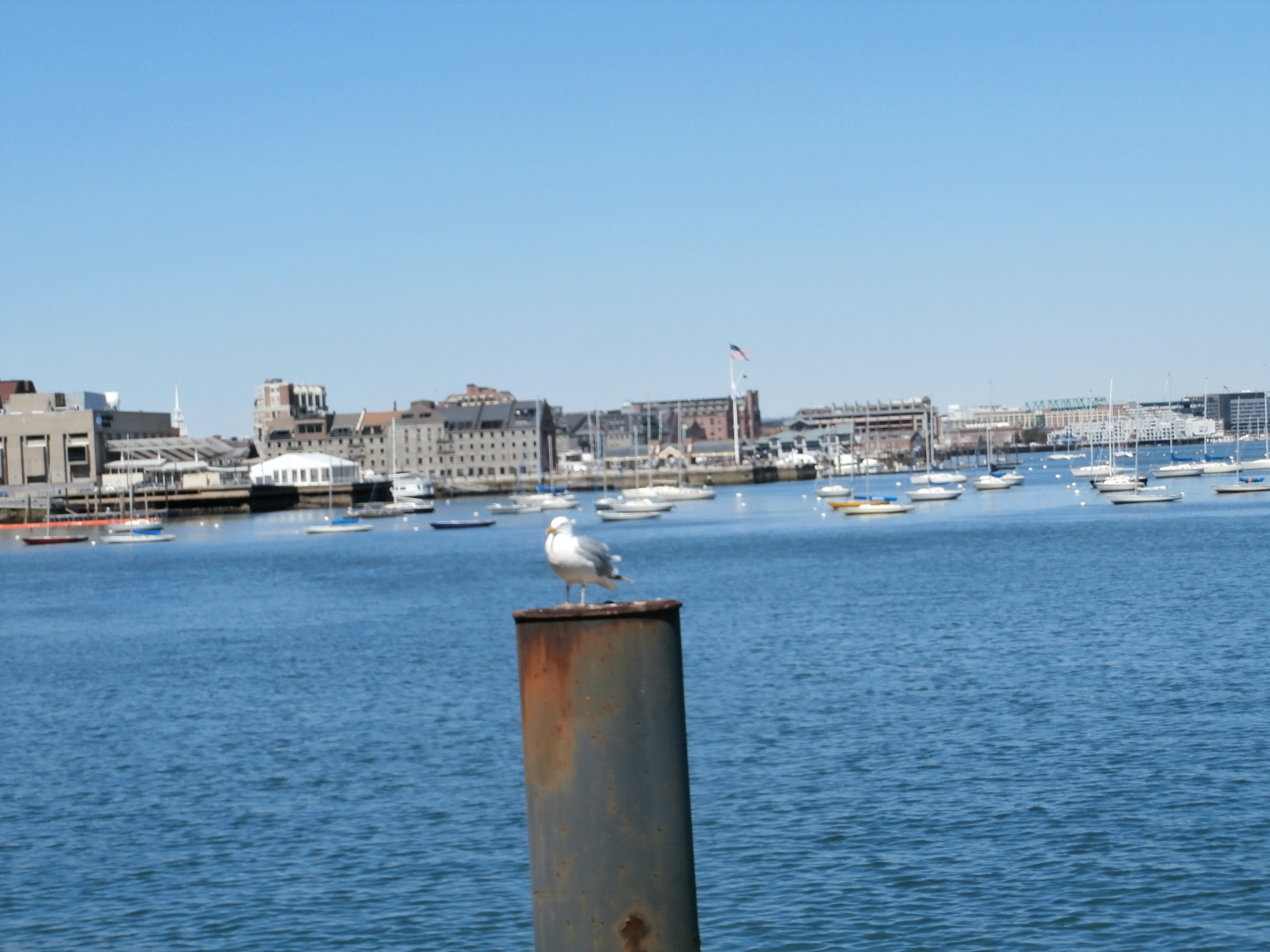
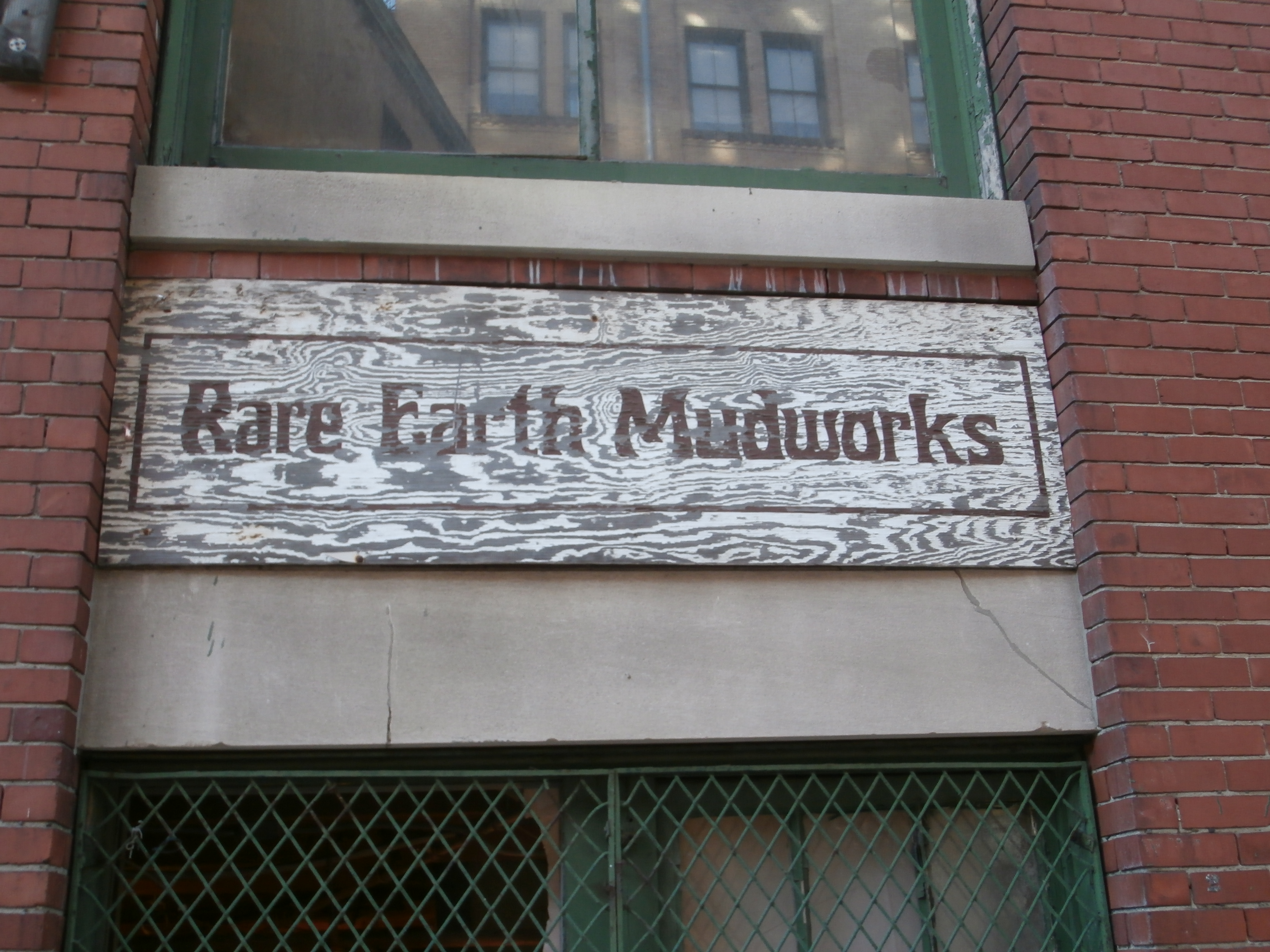
Heavy rain Friday night stunned our dogwood. I include before and after, plus a gaggle of other photos from my springtime meanderings.
The elephant mural is at the entrance to Boston’s Chinatown. The fancy light fixture is outside Trade restaurant. The fence with crocheted wheels is at the Davis Square subway stop. The fountain is next to a rose garden honoring the mother of President Kennedy, Rose. The urban birdhouse is in the Greenway. The herring gull is at Boston Harbor. The Canada Geese are too prolific. The Mudworks sign is in Fort Point. And the flowers are at Verrill Farm.
A WordPress blogger who clicked on one of my posts has a nifty site, here. The blogger is Razvan, from Romania. Razvan apologizes for a lack of fluency in English, but I am grateful for any amount. Wish I could speak other languages.
You will like Razvan’s origami. Here’s a description of the fruit basket below.
“I want to introduce another model Origami: 3d origami fruit basket, this 3d origami model consists of about 3,000 pieces. Origami 3d basket is 25 cm diameter and 9 cm tall and is made of around 1,100 pieces.Pieces are made from rectangles of paper with dimensions of 5.2-3.6 cm and took me about 16 hours to finish. 3D Origami fruit are made of around 170-500 pieces . Pieces are made from rectangles of paper with dimensions of 3.8-2.7cm and took me about 24 hours all.”
I hope Razvan checks out a couple of my past posts on paper art. This one is from Tokyo Bling. This one involves a stealth project in English libraries. And Peter Gentenaar’s Flying Paper Jellyfish and other paper artworks are gorgeous.
Speaking of forebears, I interrupt this program to ask, Do you have something for your grandfather or father on June 16? Luna & Stella has unusual locket cufflinks into which you can put tiny mementos or birthstones of family members.
You have heard of Let Us Now Praise Famous Men, the Depression era book on poverty in the South by James Agee and photographer Walker Evans. The forerunner was an article assigned by Fortune magazine to a young Agee but never published. This past Tuesday it was published as a book.
There are a couple aspacts to Christine Haughney’s NY Times story on the new book that intrigue me. One is the image of a young Agee moved by the plight of the sharecroppers and indignant at the magazine’s apparent exploitation of them.
The other is how the original subjects, and later, their children, were embarrassed and didn’t want names used, but the grandchildren are able to see the beauty in their forebears.
Writes Haughney, “In 1936 Fortune magazine’s editors assigned a relatively unknown and disgruntled staff writer named James Agee to travel to Alabama for the summer and chronicle the lives of sharecroppers. When Agee returned, he was inspired by the subjects he had met and lived with, but frustrated by the limitations of the magazine format. His subjects, he argued, warranted far more than an article.
“What readers have known for decades is that Agee used his reporting material to create his 1941 book, Let Us Now Praise Famous Men, a literary description of abject poverty in the South, accompanied by starkly haunting Walker Evans photographs.
“The original magazine article was never published, as Agee squabbled with his editors over what he felt was the exploitation and trivialization of destitute American families. In the early pages of Famous Men, he wrote that it was obscene for a commercial enterprise to ‘pry intimately into the lives of an undefended and appallingly damaged group of human beings.’ What readers are about to discover now is what all the fighting was about.
“Melville House [is publishing] Agee’s original, unprinted 30,000-word article in book form, under the title Cotton Tenants: Three Families. The publication gives Agee fans a glimpse of an early draft of what became a seminal work of American literature.
” ‘With the book, we have a much better map of him writing Let Us Now Praise Famous Men,’ said John Summers, who edited Cotton Tenants and printed an excerpt from the article in a literary journal he edits, The Baffler. …
“Irvin Fields, whose grandfather Bud Fields was featured in the book, said he didn’t mind that the names were now being published.
“ ‘It makes me appreciate my relatives for bearing up under those circumstances and making me appreciate what I’ve got today.’ ” More.
A photo by Walker Evans, from “Cotton Tenants: Three Families,” via Library of Congress
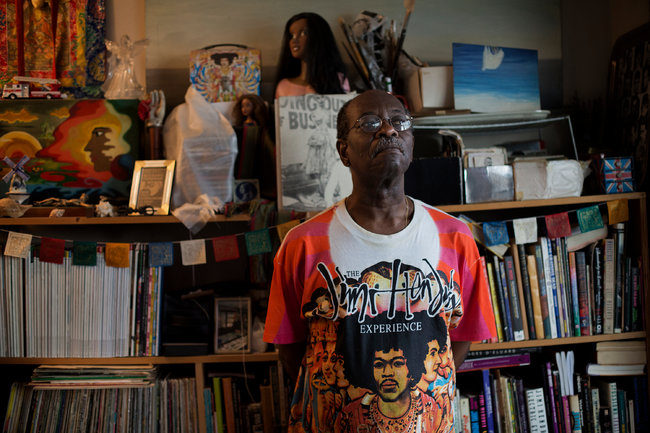
An artist discovered at 64 has a gallery show in New York.
Jim Dwyer writes at the NY Times, “For more than three decades, [Rafael Leonardo] Black, 64, has made a portal to the world in dense, miniature renderings of ancient myth and modern figures: Frank Wills, the security guard who discovered the Watergate break-in; Shirley Temple as a sphinx; the head of the surrealist André Breton as the head of John the Baptist; Marianne Faithfull in multiple incarnations.
“Until recently, few people ever saw his work because he had almost no visitors. He held paying jobs as a typist in a law firm, a salesman at Gimbels and then Macy’s, and as a secretary in a school. Most recently, he has worked mornings as a part-time receptionist in a hospital. …
“ ‘I just never made the effort to sell it,’ Mr. Black said. ‘I never expected to be able to make a living at it, but I’ve always done it since — well, I guess, since I’ve known my self.’
“ ‘People liked them, people who know art,’ Mr. Black said. ‘It makes me very happy.’ …
“Late last year, [his friend John] Taylor passed along Mr. Black’s number to [another] friend, Tej Hazarika, who publishes in the art world. Mr. Hazarika urged Tom Shannon, an artist and inventor, to look at the work. In turn, he brought it to Mr. Naumann’s attention. …
“ ‘If you are going to make a picture, you have to make something that’s in concert with the way the world operates,’ Black said. ‘There’s a line from the Lovin’ Spoonful: “You came upon a quiet day, and simply seemed to take your place.” ‘ ” More.
Photo: Victor J. Blue for the NY Times “There’s a saying: ‘Everybody writes poems at 15; real poets write them at 50,’ ” said Rafael Leonardo Black, who draws miniature figures.
After seeing a beautifully composed NY Times photo of people walking by bluish and rose-colored buildings in a nearly empty North Korea street, I began following the photographer on twitter, @dguttenfelder.
David Guttenfelder is one of the few Western photographers in North Korea. He was there when former Secretary of State Madeline Albright met with the previous ruler, Kim Jung Il. He takes pictures for media outlets and for his own amusement. His Instagram pictures of “artifacts” like a frilly computer screen cover and visitor handbooks can be hilarious or creepy.
Nina Porzucki had a lovely piece about Guttenfelder at Public Radio International’s “The World,” here. If you go to the PRI site, you have your choice of reading the transcript or listening to the report via SoundCloud.
The photographer tells Porzucki, “Over the years, every time I’ve gone back I’ve had more access, I’ve seen more. I’ve actually met people, I’ve seen real things.
“And I had this transformation. I kind of feel like that’s what I’m trying to do with my photography, is to take people who see my pictures through the same process. When they opened up the 3G local network and suddenly I could post pictures or tweet from the streets, from North Korea, that was more revolutionary than it would be anywhere else in the world, for sure. It’s sort of anything goes. I can just stop and take pictures of all these little mundane things in life that aren’t really so-called ‘newsworthy.’
“These are the things you run past on your way to covering the news. You know, a picture of bar snacks or a little yellow computer cover over a computer terminal, and none of them are great pictures the way photographers describe great pictures, ‘Oh, that’s a great picture.’ …
“It has as big of an impact probably as my professional daily newspaper work does. … I know that I’m not photographing anywhere near everything that’s going on in the country, especially the darkest things. But this is a long-term project, and we’re pushing to do as much as we can. If I’m not there, the only pictures that we’re getting out of Korea are distributed by Korean Central News Agency, where propagandist is not a dirty word.” More.
Nearly every morning when I was four or so, my mother would send me upstairs to wake my father, and he would sing in a hungover gravelly voice “Minnie the Moocher.”
Last weekend I sang a few lines to my Swedish son-in-law, including “She had a ro-mance with the King Sweden/ Who gave her things that she was needin’.” I won’t repeat what he said about another King of Sweden.
Anyway, I was pondering the phrase “she was the roughest, toughest frail” when I happened upon a radio talk show on how we date ourselves if we use older terms: if we say “blouse” instead of “shirt” or “slacks” instead of “pants.” The radio host made a big deal of young people who don’t know that a “churchkey” opens bottles, for example.
Photo of a “churchkey”: Wikipedia.com
Churchkey is a fun term, but older terms from my father are even more fun. Do you know “infradig,” for example? Other words he used will come to me later, and I’ll update.
Meanwhile, what is a “frail,” rough and tough or otherwise? The Slang Dictionary provides the usage in a sentence:
“n. a girl; a woman. (Underworld. frail frame = dame. Detective novels and movies): ‘I’ll shoot the frail if you don’t hand it over!’ Dictionary of American Slang and Colloquial Expressions, by Richard A. Spears. Fourth Edition.
Copyright 2007. Published by McGraw Hill.
By the way, almost any song from the musical Guys and Dolls will give you a flavor of the period I’m talking about.
The Globe has a good story today on Whole Foods, which hired an urban farming company to grow an anticipated 10,000 pounds of food per year on the roof of its Lynnfield, Massachusetts, store.
Erin Ailworth writes, “The soon-to-open Whole Foods Market in Lynnfield will offer its customers something the company says no other major grocery chain has offered before: ‘rooftop produce,’ picked from a field atop the store. …
“Whole Foods and its contractors say the commercial roof garden is an experiment that, if it succeeds, could encourage other grocers to do the same, boosting efforts to expand rooftop gardening. Such gardens not only insulate buildings, lowering heating and cooling costs, but also decrease storm-water runoff, which can overwhelm sewer systems and carry pollutants into waterways.
“And they yield fruits and vegetables that do not need to be trucked or flown, cutting transportation costs and emissions, including of greenhouse gases. The rooftop produce — a tiny fraction of Whole Foods’ inventory — will be sold in the Lynnfield store or used in its prepared foods.
“A green roof, however, is not cheap. It can cost up to 60 percent more than a traditional roof, according to the Sustainable Cities Institute, a program of the National League of Cities. …
“Whole Foods began thinking about the project three or four years ago, [Robert Donnelly of Whole Foods] said, and at first planned to build a basic green roof — essentially, a lawn atop the store. Then the company came across Green City Growers and Recover Green Roofs, two Somerville companies that partnered on a 4,000-square-foot garden above the Ledge Kitchen & Drinks restaurant in Dorchester. (That garden provides about 75 percent of the veggies and herbs served at the Ledge.)
“Whole Foods’ plans quickly became more ambitious as company officials realized the 45,000-square-foot roof (nearly an acre) provided plenty of space for farming.” More. There’s also a fun video at the Globe site showing the construction of the roof farm.
Suzanne’s Mom’s Blog had another roof garden post here; a post about Glide Memorial’s roof garden here; and a related entry about the Guardian Environment Network, here.
Photo: David L. Ryan/Globe Staff Workers dumped soil into containers on the Lynnfield Whole Foods roof, which was reinforced to bear the extra weight.
I love stories like this in any field, even a field as foreign to me as mathematics.
A mathematical puzzle that most experts didn’t expect to see solved in their lifetime has been quietly mastered by a professor in New Hampshire. He just got an idea and worked it out.
Carolyn Y. Johnson covers the story for the Boston Globe:
“A soft-spoken, virtually unknown mathematician from the University of New Hampshire has found himself overnight a minor celebrity, flooded with requests to give talks at top universities.
“On May 9, mathematician Yitang Zhang, who goes by Tom, received word that the editors of a prestigious journal, Annals of Mathematics, had accepted a paper in which he took an important step toward proving a very old problem in mathematics.”
He showed that there are “an infinite number of primes separated by less than 70 million. [It] excites mathematicians because it is the first time anyone has proved there are an infinite number of primes separated by an actual number. … News of the feat rippled across the math world.
“ ‘This is certainly one of the most spectacular results of the last decade,’ Alex Kontorovich, a mathematician at Yale University, wrote in an e-mail. ‘Many people expected not to see this result proved in their lifetime.’
“Zhang said that he began to think seriously about solving the problem four years ago. … The epiphany did not come to him until July 3 of last year, when he realized he could modify existing techniques, building on what others had tried.
“ ‘It is hard to answer “how,” ‘ Zhang wrote in an e-mail. ‘I can only say that it came to my mind very suddenly.’
“The mathematician lives a simple life that he says gives him the ability to concentrate on his work. … Zhang’s achievement shows what can be accomplished by the elegant instrument of the human mind, working alone.
“ ‘Keep thinking, think of it everyday,’ Zhang said he would tell himself. ..
“ ‘The old adage is that mathematics is a young person’s game, and moreover most of the top results come from people or groups of people known to produce them,’ Kontorovich wrote. “Professor Zhang has demonstrated not only that one can continue to be creative and inventive well into middle-age [he’s in his 50s], but that someone working hard enough, even (or especially) in isolation, can make astounding breakthroughs.’ ”
I love the reminder about the importance of time to think. Everyone needs time to think. Even people who are not solving math puzzles for the ages.
Every day I look at the statistics that WordPress supplies to its bloggers.
On May 31, for example, I had 25 visitors (other than the folks who subscribe) and 35 views of different entries. There were a bunch of visitors from the United States, three from Germany, and one each from Japan, Poland, Haiti, Canada, Denmark, Switzerland, and Indonesia. No clicks on any of my links that day.
I would love to know more than just bare bones about these visitors. If I knew more, I’d try to post about things that might interest them.
Words have double meanings, which is why I eventually had to elide the two-word name of a certain white whale. And there is apparently a bus company called R*d Bus (guess the missing letter) that finally forced me to remove my picture of a r*d bus. It was just too lame to be getting all those hits from folks wanting tours of Australia.
Here are the search terms that brought folks to me on Friday: “corinna da fonseca-wolheim,” “inflatable flood tubes flooding house,” “swidish [sic] mom blog rose,” “coffee planting business model,” “mom storytelling to child, reuters,” “christy maclear,” “naomi shihab nye ghazal,” “mom blog income.”
Sometimes I have no idea why a search engine sent a particular query here. Sometimes I can guess. Corinna writes for the NY Times, and I have featured her articles several times. And I did have a post on inflatable flood tubes.
Unless they are in the archives, WordPress shows me which entries got viewed by the visitors on a given day. So I can assume that my post on a coffee business in Haiti was the draw for the search term “coffee planting business model.”
No one should come to me for “mom blog income.” But I am amply paid in technology and the great satisfaction of mastering a daily challenge and helping out.
On Saturday I took a miserable walk in the wind and rain, temperature in the 40s. Today the temperature is in the 90s. Well, you know New England.
In the nicer weather I’ve been walking around and clicking. Would love to have you weigh in on any of these pictures, especially the ones that make you say, “What the heck?”
When I got my current job, I went through the human resources “onboarding” with a young man from Mali. Even though he went back to Africa a couple years ago, we keep in touch. Naturally, I was worried when radicals took over Timbuktu, Mali, for a while. Fortunately, Mamoudou wasn’t living in Mali at the time, although he says Guinea is not that much safer.
Because of Mamoudou, I continue to follow the Mali news, and was especially interested in a link at the Arts Journal blog today: “Mali’s Underground Railroad: How Timbuktu’s Ancient Manuscripts Were Smuggled To Safety.”
Writes Sudarsan Raghavan of the Washington Post, “It was 7 o’clock on a hot night in August, and Hassine Traore was nervous. Behind him were 10 donkeys, each strapped with two large rice bags filled with ancient manuscripts. The bags were covered in plastic to shield them from a light rain.”
Radicals had taken over Timbuktu four months earlier and “had demolished the tombs of Sufi saints. They had beaten up women for not covering their faces and flogged men for smoking or drinking. They most certainly would have burned the manuscripts — nearly 300,000 pages on a variety of subjects, including the teachings of Islam, law, medicine, mathematics and astronomy — housed in public and private libraries across the city.”The scholarly documents depicted Islam as a historically moderate and intellectual religion and were considered cultural treasures …
“A secret operation had been set in motion … It included donkeys, safe houses and smugglers, all deployed to protect the manuscripts by sneaking them out of town.
“This is the story of how nearly all the documents were saved, based on interviews with an unlikely cast of characters who detailed their roles for the first time. They included Traore, a 30-year-old part-time janitor, and his grandfather, a guard. …
“The New York-based Ford Foundation, the German and Dutch governments, and an Islamic center in Dubai provided most of the funds for the operation, which cost about $1 million.
“ ‘We took a big risk to save our heritage,’ said Abdel Kader Haidara, a prominent preservationist who once loaned 16th- and 18th-century manuscripts from his family’s private collection to the Library of Congress. ‘This is not only the city’s heritage, it is the heritage of all humanity.’ ”
There are heroes everywhere, keeping a low profile. And I am also pretty impressed with the funders, springing into action like that.
No one needs to be told that art is healing. I find it can cheer me up when I’m just having a bad day. I even tell coworkers who are stressed out, “Go over to Fort Point and look at some art.”
But for those who care more about data than folk wisdom, there is research.
Genevra Pittman writes at Pacific Standard, “Music, art, and dance therapy may relieve anxiety and similar symptoms among people with cancer, according to a new analysis of past studies.
“Researchers who analyzed results from trials conducted between 1989 and 2011 said the benefits tied to creative arts therapies were small, but similar to those of other complementary techniques such as yoga and acupuncture. …
“The analysis included 27 studies of close to 1,600 people who were randomly assigned to receive some form of creative arts therapy or not, during or after cancer treatment. Patients with breast cancer or blood cancers—such as leukemia and lymphoma—made up the majority of study participants. Music, art, and dance therapy programs varied in how often sessions were conducted and over what time span. …
“On the whole, people with cancer who were assigned to creative arts treatments reported less depression, anxiety, and pain and a better quality of life during the programs than those who were put on a wait list or continued receiving usual care.” More.
I didn’t get into art therapy when I had cancer, but I’m sure I would have liked it. I did have a booklet created by past patients that contained daily readings, and more often than not the choices hit the spot. The patients named the booklet “No Other Way but Through.”
An April NY Times article by Joseph Berger focused on the egalitarian, colorblind brotherhood of pigeon breeders.
“When New Yorkers consider the subculture of people who raise pigeons on rooftops, many are likely to think of Terry Malloy, the longshoreman in the 1954 film ‘On the Waterfront’ played by Marlon Brando. He was a classic rooftop breeder, rough-hewed, working-class and white ethnic to his toes.
“But that image has long needed some alteration because in the dwindling world of rooftop fliers, as they are known, the men are as likely to be working-class blacks or Hispanics. Many were introduced to the hobby by Irish, Italian and other fliers of European descent …
“Ike Jones, an African-American who manages one of the last pigeon supply stores for its Italian-Jewish owner, Joey Scott, said he learned much of the craft when he was about 12. He then became a helper to George Coppola, an Italian rooftop breeder in Bedford-Stuyvesant. …
“A new book, ‘The Global Pigeon,’ by Colin Jerolmack, an assistant professor of sociology at New York University who spent three years hanging out with pigeon fliers, makes the point that pigeon breeding brought Italian-Americans and other ethnic whites ‘into contact with people of a different ethnic and age cohort with whom they were not voluntarily associating before.’ ” More.
For another take on the rarefied world of pigeon lovers, read A Pigeon and a Boy, which I blogged about here. A wonderful book in many ways, I thought the ending bizarre and so can’t give it five stars. But I liked how it wove the world of pigeon raising and message sending into the whole modern history of Israel. (If you should happen to read it, please explain the ending to me.)
Photo: Todd Heisler/The New York Times Delroy Sampson breeds his own birds.























 Suzanne's Mom's Blog