I tend to think that our creativity comes from our memories, because no one who has ever been or ever will be has exactly the same collection of memories bouncing off one another in exactly the same way.
A recent NY Times science story on a successful artist who got viral encephalitis — and suffered damage to the part of the brain where memories form — doesn’t exactly contradict that view, but it sure raises a lot of questions.
“She is still able to make art, though it is simpler and more childlike than her professional work. Her case is rare, experts say, because few accomplished artists continue to create after sustaining severe brain damage.
“Now scientists at Johns Hopkins University hope Ms. Johnson can help them answer longstanding questions: What parts of the brain are needed for creativity? With little access to one’s life experience, how does an artist create?
“And as Michael McCloskey, a professor of cognitive science at Hopkins, put it, Ms. Johnson’s case ‘raises interesting questions about identity: Here you’ve lost an awful lot of what makes you who you are — what’s left for art?’ ” Read about her.
Although the artist doesn’t seem sad, I think it’s sad to lose memories. I want to keep mine — the bad with the good.
Enjoy this amazing Moray McLaren video about memory, called with irony “We Got Time.”
“Time is a memory
“And memories can make you sad
“With time still in front of me
“Oh we can get it back”
I like to think I know something about the nonwork interests of my colleagues, interests that may be — in spite of their workday professionalism — at least as much a part of who they are as their jobs. There’s the woman employed as a customer service rep who gets her kicks out of Tough Mudder competitions (extreme sports in mud). Or the editor who bakes bread every day. Or the economist who composes choral music and creates arrangements for flute choir.
Everyone has at least one other life.
But I guess if you’re not physically in the same office, if don’t have lunch together or chat in the ladies room or on the subway, you never find out about people’s other lives.
That’s why I was utterly floored this week when a hard-driving, business-oriented colleague in the Washington office sent around an e-mail saying she would be away from her desk for a month at an artist retreat in Korea. Huh?
Oh, my gosh. This is who she really is: a sculptor and installation artist with a record of shows and a gorgeous portfolio. How does she even find time to be hard-driving and business-oriented in the day job?
It makes me wonder what else I’m missing, whose real life is right in front of me and I’m not noticing.
A woman from the public works department placed flags of all nations in special sidewalk holes in Concord at 5:30 this morning and will take them down tomorrow. I told her I always liked seeing them, and she agreed they are “festive.”
According to the International Day of Peace website, Peace Day “provides an opportunity for individuals, organizations and nations to create practical acts of peace on a shared date. It was established by a United Nations resolution in 1981 to coincide with the opening of the General Assembly. The first Peace Day was celebrated in September 1982.”
There is also a United Nations Day, in October, and Concord’s collection of flags will come back for that.
During her years heading up a local group of U.N. supporters, Charmaine’s mother made sure that Concord had flags. But the town seems to have fully embraced the idea of displaying them, so up they go and down they come two times a year. I often wonder if they get updated, given that nations reinvent themselves so often these days.
Here’s a word from Ban Ki-moon, secretary general of the United Nations.
Just a quick post to say that there are some lovely blogs on WordPress, where Suzanne’s Mom’s blog is housed. I recently noticed two in particular I wanted to share.
Years ago, when we were living near Rochester, New York, it was pointed out to me that poverty in rural areas was often worse than in cities because people were more isolated and there were fewer services. That winter I contacted an outreach coordinator who had put out a call for warm clothing. I offered to drop off some clothes we no longer needed.
The coordinator, an African American, believed deeply that dropping off clothes was not the same as understanding what the need was. She herself had grown up in a family of migrant farm workers and was acquainted with grief. When she was small, I later learned, her family had even been assigned to a chicken coop for their housing.
The coordinator knew a family who needed my clothes, and she thought I should go with her to make the delivery. Somewhat reluctantly, I agreed.
I will never forget the wary, beaten-down look in the eyes of a young woman living with family members in a tumble-down old house. After handing over the donation, the coordinator and I hung around for a brief, awkward chat. I could see that my contribution could not scratch the surface of the family’s need and was mostly for my conscience (which is not a reason to give up on donations, of course).
The main thing that has changed in the America in 30-plus years is that greater percentages of Americans are poor.
That is why some photojournalists, outraged at the lack of serious coverage in the mainstream media and recognizing that a picture is worth a thousand words, have founded an organization to fight poverty called American Poverty. See their recent photos here.
Perhaps you know the work of Walker Evans and James Agee in the Great Depression. The photographers’ new antipoverty site may, like Walker and Agee’s “Let Us Now Praise Famous Men,” provoke the question, “Is this America?”
Check out this story in the Boston Globe. It seems especially timely given the increasing numbers of people growing their own food and the concerns about many others who are struggling.
“Every summer, 40 million backyard farmers produce more food than they can use, while people in their communities go hungry. If only they could link up. Enter Gary Oppenheimer, 59, of West Milford, N.J. He was directing a community garden a couple of years ago when inspiration struck. In May 2009, AmpleHarvest.org hit the Internet, connecting food pantries and gardeners. In just 150 days, Rosie’s Place in Boston became the 1,000th pantry on the site, and the growth has continued. As of Labor Day, 4,188 pantries were listed, in all states. Oppenheimer says the nonprofit organization is actively seeking grant funding to sustain what has sprung up.” Read more here.
If you have extra produce from your garden, you can go to AmpleHarvest to find a food pantry near you.
Gene Sharp (founder of the Albert Einstein Institution and the go-to guy on nonviolent revolution) is proof that one and one and 50 make a million. Sharp is one man, but his writings have had a powerful influence on many of the players in the 2011 Arab Spring and democracy movements elsewhere.
Today I went with Jane’s family to see a movie about Sharp at the Boston Film Festival. (Jane’s cousin, Ruaridh Arrow, directed it.) It’s a remarkable film. There were interviews with organizers of nonviolent change in Serbia, Ukraine, Egypt, Syria, and beyond. The documentary was interspersed with news footage and video from recent uprisings around the world. A key message is that change takes strategic planning (you can’t wing it) and is a kind of armed resistance, only people are armed with ideas for undermining the pillars that support an oppressive regime. In addition to conducting research on the subject of nonviolence, Sharp has offered a list of 198 techniques that effect change.
After a standing ovation, a frail Gene Sharp, 83, his assistant, Jamila Raqib, and nonviolent-change trainer Col. Robert Helvey, retired, came up on the stage with the director and took audience questions. Raqib was asked about the funding for the Albert Einstein Institution, which operates out of a small space in East Boston. She said that likely funders back off because the ideas do relate to overthrowing a government. The institution is struggling.
I wish you could have been there to hear a young woman stand up and say that she is Egyptian and took part in the January uprising. She said the overthrow of the government was easy but the rebuilding is hard. She wanted to know if any studies had been done comparing the transitions to democracy of other uprisings. When Sharp said that studies had yet to be done, I couldn’t help thinking what a good use of new funding such research might be. The film itself was funded by large and small donations from around the world through Kickstarter, which I blogged about here. Perhaps it can kickstart nonviolent change elsewhere.
Update: Gene Sharp died at his home in East Boston on January 28, 2018. He was 90.
Do you remember seeing a René Magritte painting called “Ceci n’est pas une pipe”? It took me a while to get what he meant. It was a picture of a pipe, after all. Why would he call it “This is not a pipe.”
(Oh, right. It’s not a real pipe. You can’t fill it with tobacco. You can’t smoke it.)
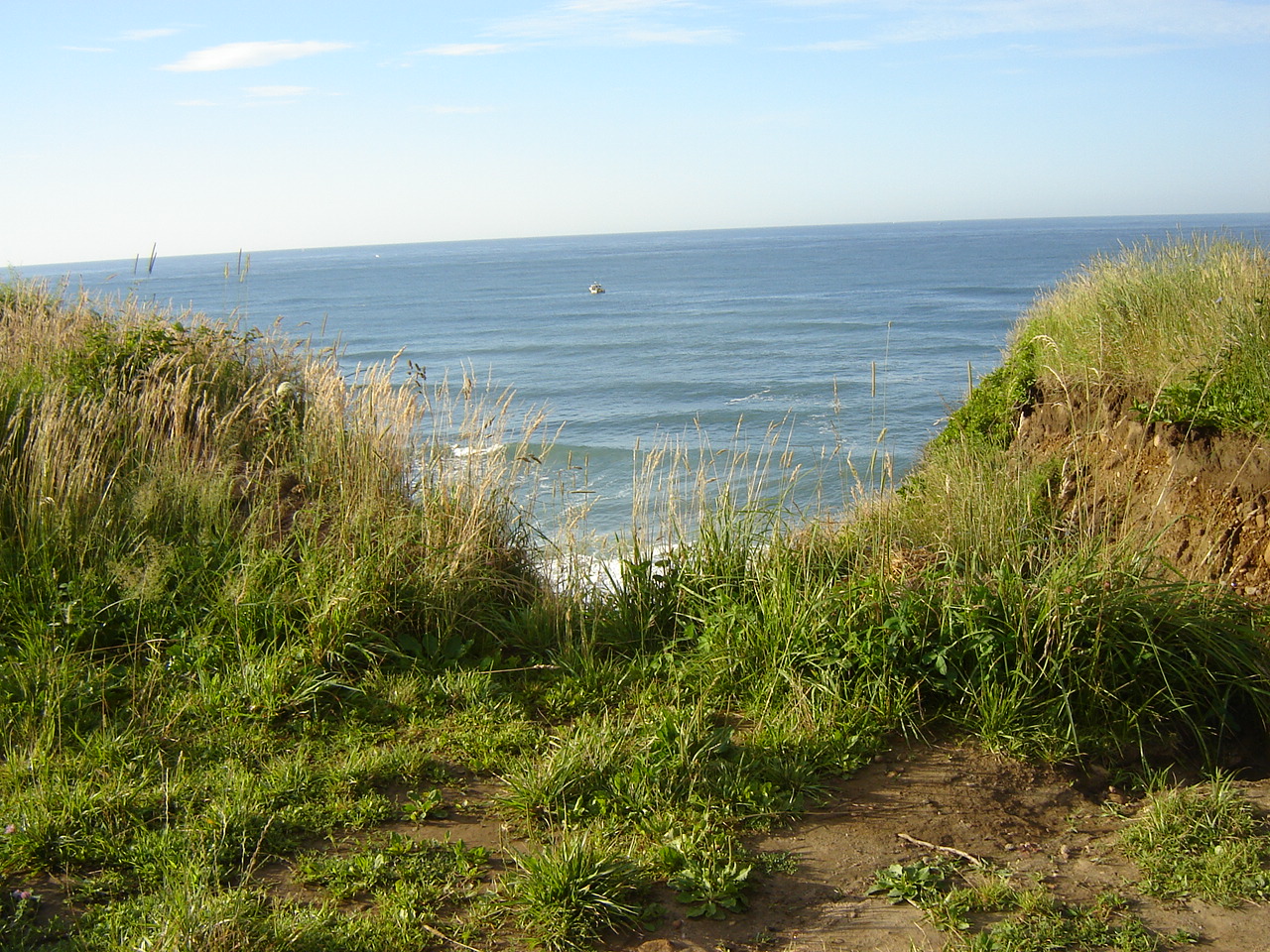
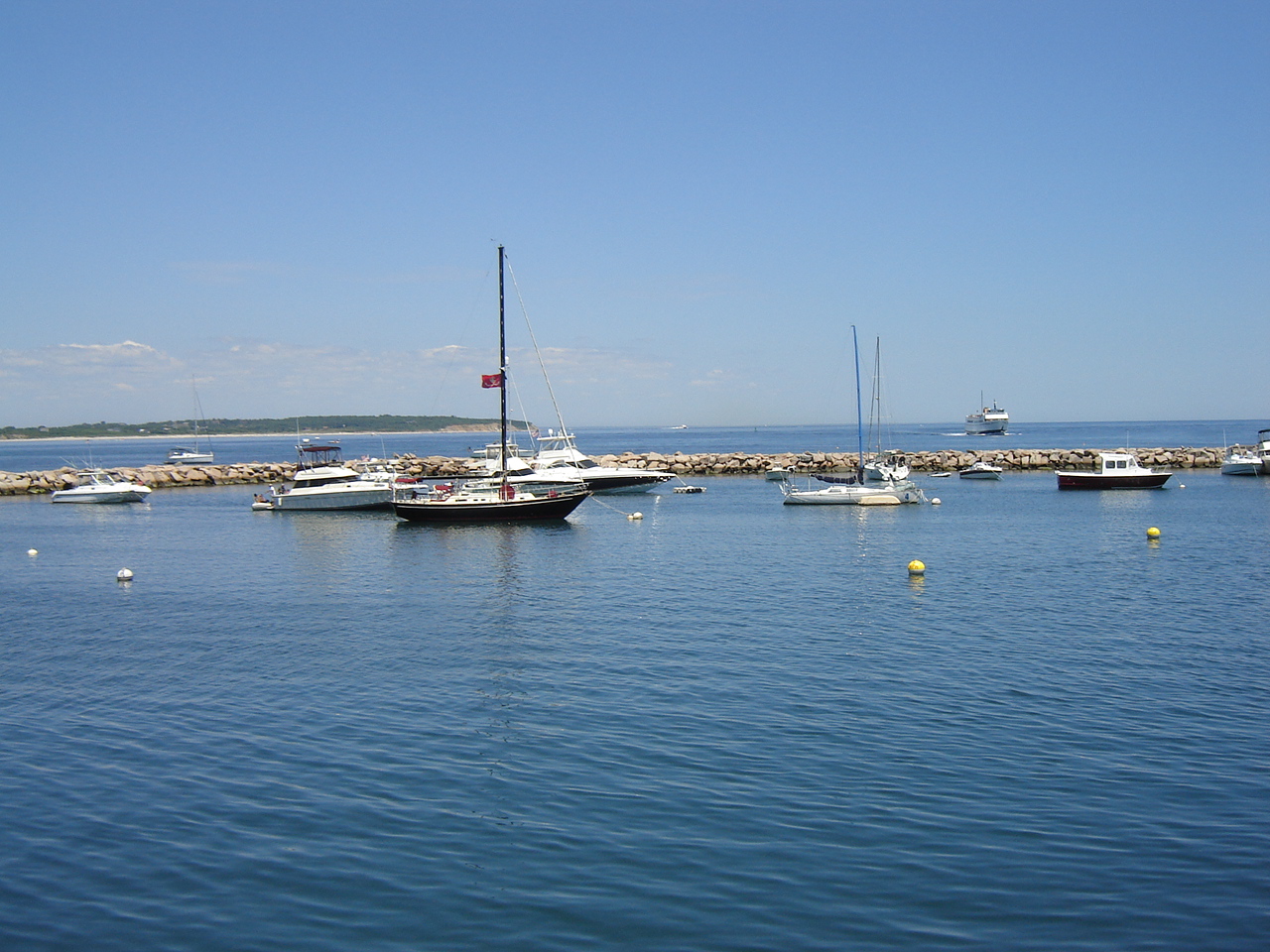
In the same spirit, I am posting pictures of not-summer.
On a warm July day, I took my photos of blue skies, beach paths, and small boats, and the next thing I knew we were having a Labor Day clambake. Within two days, summer was over, and a curtain of cold, windy rain descended. Along with the September mindset, my husband says.
Summer is over, and at 5:30 a.m. the morning walk starts out dark.
I think of the song that gambler Sky Masterson sings in Guys and Dolls: “My time of day is the dark time,/ A couple of deals before dawn./ When the street belongs to the cop/ And the janitor with the mop,/ And the grocery clerks are all gone./ When the smell from the rain-washed pavement/ Comes up clean and fresh and cold/ And the streetlamp light fills the gutter with gold …”
Of course, the song is about going to bed late, not getting up early, but as Sir Andrew Aguecheek says in Twelfth Night, “to be abed late is to be up betimes.” In other words, what’s the difference? (Sir Andrew was a role I played with distinction in my all-girls high school. My mother’s comment was she hoped never again to see me in that awful shade of pink.)
In the early morning, I don’t necessarily see streetlamp lights filling the gutter with gold, but they do make shifting oak-leaf shadows on the sidewalk. A porch light shining behind vines trained up ropes is pretty in the dark, too. Window-shopping can be peaceful with no crowds on the sidewalk, and there’s always at least one shop with something in the window I plan to check out on Saturday.
And should I suddenly feel a tune from Guys and Dolls coming on — well, there’s no one around to care if I go a bit flat.
Please send me a haiku of yours to post. You may use the e-mail suzannesmom@lunaandstella.com or put your haiku in Comments. Let me know if you want me to use your first and last name or not.
I’ll start with one of mine.
Struck by lightning bug
Years ago, I know to look
For veiled messages.
Jane is letting me share this one of hers
Dandelions
A child’s crayon suns, Galaxies strewn on green skies; The leaves are bitter.
Here is one Asakiyume wrote on a Halloween in the 1990s. She has probably forgotten.
Leaves salute the sun Then fade away; the planet Tilts toward dark, and night.
You can subscribe to A Poem A Day from the Academy of American Poets. I signed up after a tip from Ronnie, and I like the daily fix. It reminds me of book my friend Pam gave me when I moved to Minneapolis for a few years. It, too, was called A Poem A Day, and I liked getting into the habit of a daily read. Later, during a year of cancer ups and downs, a photocopied book of daily readings selected by patients was soothing. It’s out of print, and I’ve yet to find one I like as much for friends going through the same business. If you know a good one, I’m all ears.
Asakiyume has alerted me to a great story about an anonymous library patron in Scotland who creates sculpture from old books and deposits them in libraries by stealth. The artist makes reference in his (her?) sculptures to Scottish mystery writer Ian Rankin and dragons and all sorts of literary things. You will flip over the pictures here.
Asakiyume says she likes the quotations that the mystery artist leaves with the sculptures: “I liked ‘Libraries are expensive,’ corrected to ‘Libraries are expansive,’ and also the quote from Robert Owen … (founder of some utopian communities) … ‘No infant has the power of deciding … by what circumstances (they) shall be surrounded.’ ”
The messages remind me of the mysterious tea cups of Anne Kraus, which I described here.
Now although Asakiyume knew I would love the book art, she may not have known that I have a family reputation for stealth projects, like secretly leaving a small Zimbabwean soapstone sculpture of parents and baby in John’s house after Meran gave birth.
Recently, I was telling Erik about a few of my escapades, and he got a look on his face suggesting that he was a little worried about the family he had married into.
When I was on the publicity committee for a local theater producing a musical about George Seurat, I purchased Seurat greeting cards and left them in stores’ card racks around town. They got sold, but the sales staff would have had to wing the price as there was no price on them.
Then there was the year that I sent a series of postcards from different cities under different names to an ice cream shop and in each card suggested a type of frozen dessert the shop should carry. Every card had a different reason why customers might want that dessert.
It worked, and the shop must have made money off the dessert as they stocked it for years afterward.
Remember all the talk-show ridicule of the woman who sued McDonald’s and won big bucks for coffee that was too hot? Well, it turns out she was sitting still, she was badly burned, and McDonald’s had failed to correct the scalding temperature in spite of 700 complaints.
Now attorney Susan Saladoff, who believes that the tort-reform posse was defining the tone of the discussion, has made a movie countering the frivolous-lawsuits-run-amok mantra. She argues persuasively that lawsuits like the one in Hot Coffee protect the little guy from corporations run amok.
A review at American Prospect says, “no matter how many times the suit was used in Jay Leno monologues there was nothing funny about it. Liebeck [the complainant] was not careless, but spilled the coffee when she, as a passenger in a parked car, took the lid off the cup. The spill did not cause a trivial injury, but severe burns that required multiple operations and skin grafts to treat. McDonald’s, which served its coffee at 180 degrees [your home coffee maker is at 135 degrees], had received more than 700 complaints from customers, constituting a clear warning, but it nonetheless required its franchises to serve it at that temperature without warning customers.”
Stella Liebeck sued only after the medical bills overwhelmed her. Little of the settlement was left her after costs, and she didn’t live long to enjoy it.
We had already bought tickets for the new version of Porgy and Bessat the American Repertory Theater when Stephen Sondheim weighed in with an angry letter to the NY Times. He had not seen the show, but he apparently resented the tone of an article’s quotes from A.R.T. He may have thought director Diane Paulus and writer Suzan-Lori Parks were implying that they were better than the show’s original creators.
After the opening, Ben Brantley of the NY Times raved about Audra McDonald’s Bess while giving a mostly lukewarm review to everything else. Meanwhile, the student D.J. at Emerson College’s radio station kept reading promos for the show and pronouncing Porgy as “Porjy.” (He will always be Porjy to me now).
By the time our matinee rolled around, the day was almost too beautiful to be in a dark theater for three hours, and our initial anticipation had been reduced to mild curiosity.
So I’m happy to say we really liked A.R.T.’s Porgy — pretty much everything about it.
I admit that I am not intimate with the whole score and therefore was not always able to tell when new material had been inserted. (One line, about saving to send the baby to college, did come across with a loud, anachronistic clunk — but now a blog reader tells me it was in the original!) But the beauty of the songs, the dancing, the characters making the best of no-options, the love story! I cried pretty much the whole way through. And I’m still singing.
The only other Porgy and Bess I’d seen was directed by Bobby McFerrin in Minneapolis. It was long and kind of confusing, but I accepted that that’s the way opera often is. The A.R.T. may have presented a rejiggered story that was not true to the original, but it was a story that I could follow.
As I said to my husband on the way out, “Well, it worked for me.”
Remember June’s long days,
and wild strawberries, drops of wine, the dew.
The nettles that methodically overgrow
the abandoned homesteads of exiles.
You must praise the mutilated world.
You watched the stylish yachts and ships;
one of them had a long trip ahead of it,
while salty oblivion awaited others.
You’ve seen the refugees heading nowhere,
you’ve heard the executioners sing joyfully.
You should praise the mutilated world.
Remember the moments when we were together
in a white room and the curtain fluttered.
Return in thought to the concert where music flared.
You gathered acorns in the park in autumn
and leaves eddied over the earth’s scars.
Praise the mutilated world
and the gray feather a thrush lost,
and the gentle light that strays and vanishes
and returns.
—Adam Zagajewski (Translated, from the Polish, by Clare Cavanagh.)
Published in the New Yorker, September 24, 2011
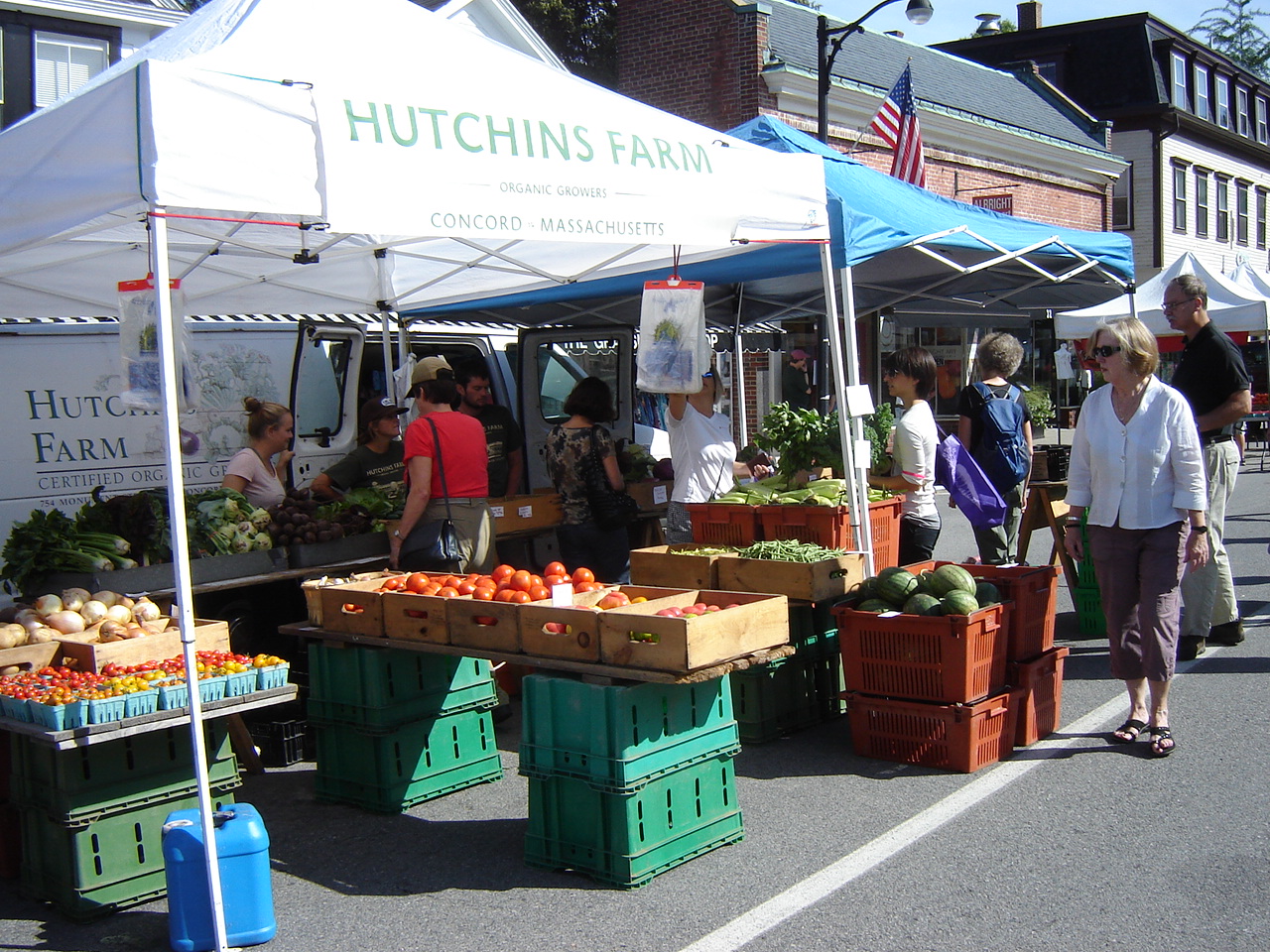
Concord’s main business street, sometimes called the Milldam because it was built over a dam, got blocked to traffic this morning, and farmers set up booths. Concord doesn’t do this often because most farmers around town have their own stands. I bought a small yellow watermelon, corn, lettuce, green beans, and a tomato. Because I was on foot I resisted buying more, but the raspberries looked wonderful as did some seasoned salt, pots of flowers, dried hydrangeas, and homemade soaps.
Among the farms represented were Verrill Farm (where we went for Mothers Day brunch this year), Pete & Jen’s Backyard Birds, Frank Scimone Farm, and Hutchins Farm (pictured).
Last year we attended the Concord farms’ annual Stone Soup dinner, a benefit organized by the town’s Agricultural Committee — quite elaborate and delicious. A scholarship was awarded that night to a young local farmer as part of the campaign to encourage the next generation to pursue or stay in agriculture. I was surprised to learn that there are 18 farms in Concord. Read more here.





 Suzanne's Mom's Blog