Central Falls, Rhode Island, may be best known today for going bankrupt and forcing its police and fire unions to accept cuts to pension benefits, but it has more going for it than angst.
It has people who care, like Mike Ritz and chocolatier Andrew Shotts, who are selling Chocolateville chocolate bars to help children at risk.
It also has a charter school that has quietly improved children’s reading skills, spreading its success to public schools in the city.
Joe Nocera writes in the NY Times that before starting The Learning Community in Central Falls, Meg O’Leary and Sarah Friedman “spent three years working with the Providence school system on a pilot program designed to come up with ways to ‘transform teaching practices and improve outcomes.’ ”
In 2007, when Frances Gallo became the Central Falls Schools superintendent, she began to investigate why families were so excited about getting into The Learning Community.
“The school drew from the same population as the public schools. It had the same relatively large class sizes. It did not screen out students with learning disabilities. Yet the percentage of students who read at or above their grade level was significantly higher than the public school students. When Gallo asked O’Leary and Friedman if they would apply their methods to the public schools, they jumped at it.
“ ‘At first it was, “Oh, here comes another initiative,” ‘ recalls Friedman. There were plenty of venting sessions at the beginning, along with both resentment and resistance. But The Learning Community invited the teachers to visit its classrooms, where the public school teachers saw the same thing Gallo had seen. And very quickly they also began to see results.”
I heard the singer Harry Belafonte give a speech today. Boy, is he ever “in the fray” at 85!
He covered his life story: the journey from New York to his mother’s Jamaican relatives to be raised by a poor but big-hearted village; service in WW II; involvement in black theater in Harlem; acting training at the New School with classmates such as Marlon Brando; and social justice activism with people like Eleanor Roosevelt, JFK, Martin Luther King Jr., and Nelson Mandela.
His “monologue” was loaded with intriguing and amusing anecdotes, and his face lit up in that wonderful youthful smile that many will recall.
I was interested to see where the talk would wind up, because it was clear that helping the poor and combating injustice still make him tick. He moved on from his own story to honoring the youthfulness and nonviolence of the Occupy movement and then zeroed in on his current concern, our prison system.
He asked why the country has more people in prison than any other country and why we spend more to build prisons than schools. He acknowledged that states like California and New York are beginning to find better ways to deal with underlying social ills. Belafonte himself volunteers at SingSing to help inmates get a college education.
Bruce Springsteen, he said, once asked him how to deal with some of the issues the country faces, and Belafonte answered that when someone knocks on his door, he opens it. He thinks it is important to hear whatever the knocker has to say.
I can attest to that. As a young teen I myself knocked on his door, and he opened it. I wish I could say I was knocking about social justice, but it was something mundane. That summer people were circulating petitions to keep a road from being built on Fire Island, which we loved partly because there were no roads. Harry Belafonte signed the petition.
When my cousin Claire is not in Arizona, she is in Nova Scotia. Recently, she got involved in efforts to save the worn-out seawall that the little town of Gabarus depends on. No one seems to know who has the responsibility to mend it.
“A group says their tiny community in eastern Nova Scotia and its livelihood are being placed at risk because a 70-year-old seawall that wards off the Atlantic Ocean is on the verge of collapse,” writes the Huffington Post.
“Local resident Tim Menk said finding the money to repair the structure that protects the 300-year-old village of Gabarus in Cape Breton has become a four-year battle that’s mired in the murky details of who owns the seawall.
“At stake for Gabarus is its fishing industry, road access to the village and several private homes, said Menk, an organizer with Friends of Gabarus.
” ‘We believe … it could be, as we say, one wave away from failure.’ ” Read more.
It’s the sort of thing that worries everyone who lives or works near the sea. When I was a child, storms that ripped neighbors’ Fire Island houses out to sea made a big impression on me. You learn respect for waves.
Today I went to the last performance of Red, a drama about Abstract Expressionist painter Mark Rothko at the SpeakEasy Stage. It starred the inimitable Thomas Derrah with a young actor who was new to me, Karl Baker Olson.
It’s always interesting to read reviews of shows that touch different creative realms. For example, an opera critic who reviews Porgy and Bess might have a different take from a theater critic.
In the case of Red, theater critics were full of praise, but an art critic I read found the story thin.
Not being either kind of critic, at least not at the moment, I thought it moving, well acted, and well directed. The set by Cristina Todesco and featuring Rothko’s studio was amazing, dim, with the chapel-like quality Rothko found necessary for communing with a painting and seeing it vibrate.
Even people who think they know all about Thoreau, Emerson, Hawthorne, Alcott and other Concord worthies often seem not to know Margaret Fuller. She was a key member of the “genius cluster” that author Susan Cheever has called the “American Bloomsbury.”
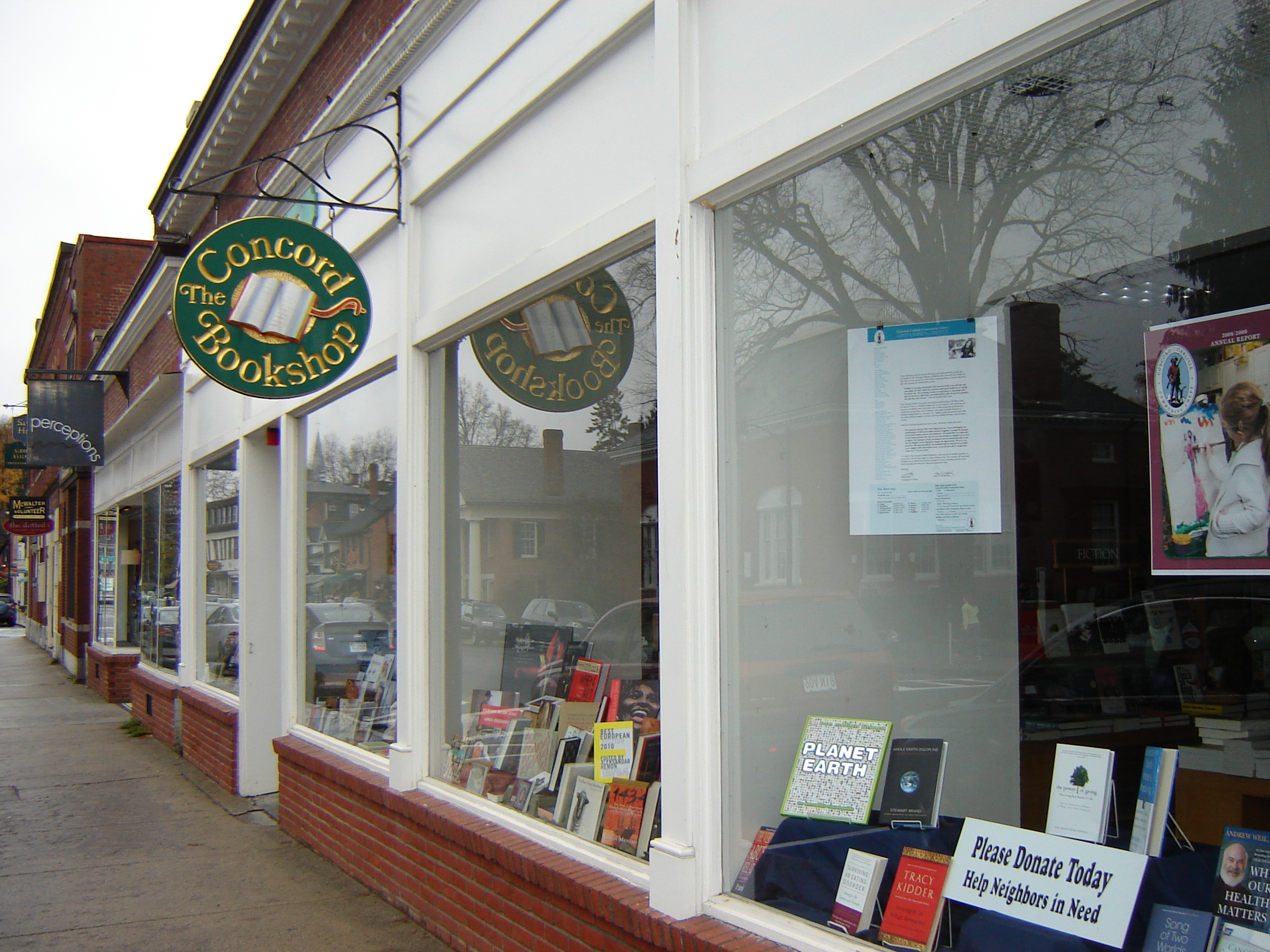
Although Fuller has passed from public awareness, in Concord it is different. Which is why a reading at the Concord Bookshop on January 29 was standing room only. Fuller’s latest biographer, John Matteson, was there to read about her “many lives” and engage in discussion about such abstruse topics as what Fuller thought of Emerson’s second wife. (Answer: Not much.)
It’s always amusing to attend a reading of a book about one of the Concord greats, as participants have such passionate feelings. Especially the Bronson Alcott fan base, who cannot bear to hear a word said against Louisa May
Alcott’s innovative but impractical father. I have been to a couple readings of books in which Louisa appears, and you can see Bronson’s partisans stiffening their spines, baring their fangs, and rising to the bait.
But who was Margaret Fuller? She was a first in many realms, including first female editor of the highly regarded 19th century literary magazine The Dial and the first overseas war correspondent. Matteson bemoaned the fact that she was probably best known, however, for the way she died, having perished in 1850 at age 40 in a shipwreck off Point o’ Woods, Fire Island.
That fact touches a nerve in me, I admit, since I spent all my childhood summers on Fire Island, and it is still a mystery why many of the ship’s passengers were saved while Margaret Fuller, her husband, and her baby drowned. Fortunately, interest in her life has been renewed, with Matteson’s book only one of several in which she plays a significant role.
John sent me this heavenly video from a Public Broadcasting show called “The Human Spark.” Do watch it. It isn’t long.
It highlights research with both chimps and toddlers, showing what is apparently an innate impulse to help others. Interestingly, whereas the chimp will pass you something you are reaching for and stop at that, a toddler will go above and beyond — and seem to enjoy it.
All of which suggests to me that if you want to be around people who are truly human, hang out with the ones who like to help others.
Margareta sent me a poem in Swedish by Karin Boye. She said it was apt for Erik and Suzanne, who are embarking on several new “voyages” simultaneously.
Erik sent a follow-up: “That poem is very well known in Sweden; everyone will know the sentence ‘Nog finns det mål och mening i vår färd-Men det är vägen, som är mödan värd,’ which roughly means that it is the act of voyage, and not the end goal, which is the purpose of acts, and life.”
Erik also sent me a poem by his childhood friend Jonathan. “The poem is written with the Lake District in mind, where he traveled frequently with his family as a child.”
FALLS, by Jonathan Wallis
Waterfalls,
silently,
crystal clear to frozen ground
Snowdrifts from currents, lightly
muted all disturbing sound
Colours bound, in touch of frost
Summer’s splendour lost,
and found
Touched now, mirth is drained
Laughter caught, angels choir stained
No whisper above, but below,
Scurrying
feet
Hair twisting,
body rushing, twisting
Here I cannot see only feel
In dark,
colours shift too rapidly
Body heat, maddeningly
Why did I laugh at the beauty of such curiosity?
Run, silently
beneath covering snow
and in time
warm life shall grow
Waterfalls
lightly now,
Crystal clear to spring warm ground
Naked body laughs
All is sound
Colours unbound,
in touch of waters tossed
Dreams are lost,
and found
In case anyone thought that this blog wasn’t eclectic enough, I’m linking today to a story about garbage collection in Taiwan.
“For several years, Taiwan’s garbage trucks have played classical music as they travel through crowded residential areas, drawing forth residents with their garbage. Conceived by Taiwan’s Environmental Protection Administration as a way to decrease pests and odors in outdoor public trash disposal areas, the trucks musically notify residents that they are to bring their garbage directly to the trucks, ensuring that the garbage never sits on the curb attracting vermin and releasing odors.”
I wonder how two-career families who aren’t home to respond to the music deal with this. Read more on Taiwan’s approach at New York’s classical music station, WQXR.
Meanwhile, at Los Alamos, Americans show they can innovate in garbage collection, too. I think my grandson will like this truck.
A week ago two lovely owl poems on this blog generated praise and suggestions for the poet.
So when I saw this article about the sensitive role of a poetry editor, I thought you would be interested.
Sameer Rahim, assistant books editor of the Telegraph in the UK, begins his essay by saying that Dante acknowledged Virgil as his literary guide.
“Every poet needs a Virgil. Wordsworth had Coleridge; Tennyson had Arthur Hallam; and Edward Thomas had Robert Frost. However, the best-preserved example of one poet editing another is Ezra Pound’s work on TS Eliot’s ‘The Waste Land.’
“The poem’s manuscript, first published in 1971 and now available on a snazzy iPad app, shows Pound’s boldness. On the first page of the second part, ‘A Game of Chess,’ he wrote disapprovingly: ‘Too tum-pum at a stretch’; further down he complains a line is ‘too penty’ – too regular a pentameter. Eliot redrafted the lines until he got an ‘OK’ in the margin. Eliot acknowledged his friend’s role when he dedicated the 1925 edition to Pound, calling him Il miglior fabbro or ‘the better craftsman’ – a phrase from Dante. …
“One of Eliot’s successors … is Matthew Hollis, a poet-editor and biographer whose account of the literary friendship between Edward Thomas and Robert Frost, Now All Roads Lead to France, [just won the] Costa Prize.
“ ‘There is sometimes a feeling that to edit poetry you have to be a poet,’ he says, going on to cite Pound. ‘If you think you may have broken your leg, you don’t take a straw poll of your friends to find out, you visit a doctor for an expert opinion.’ ”
That expert is probably another poet, but not necessarily.
“Most important is that ‘an editor listens to an author tuning into their poems.’ ” Read more here.
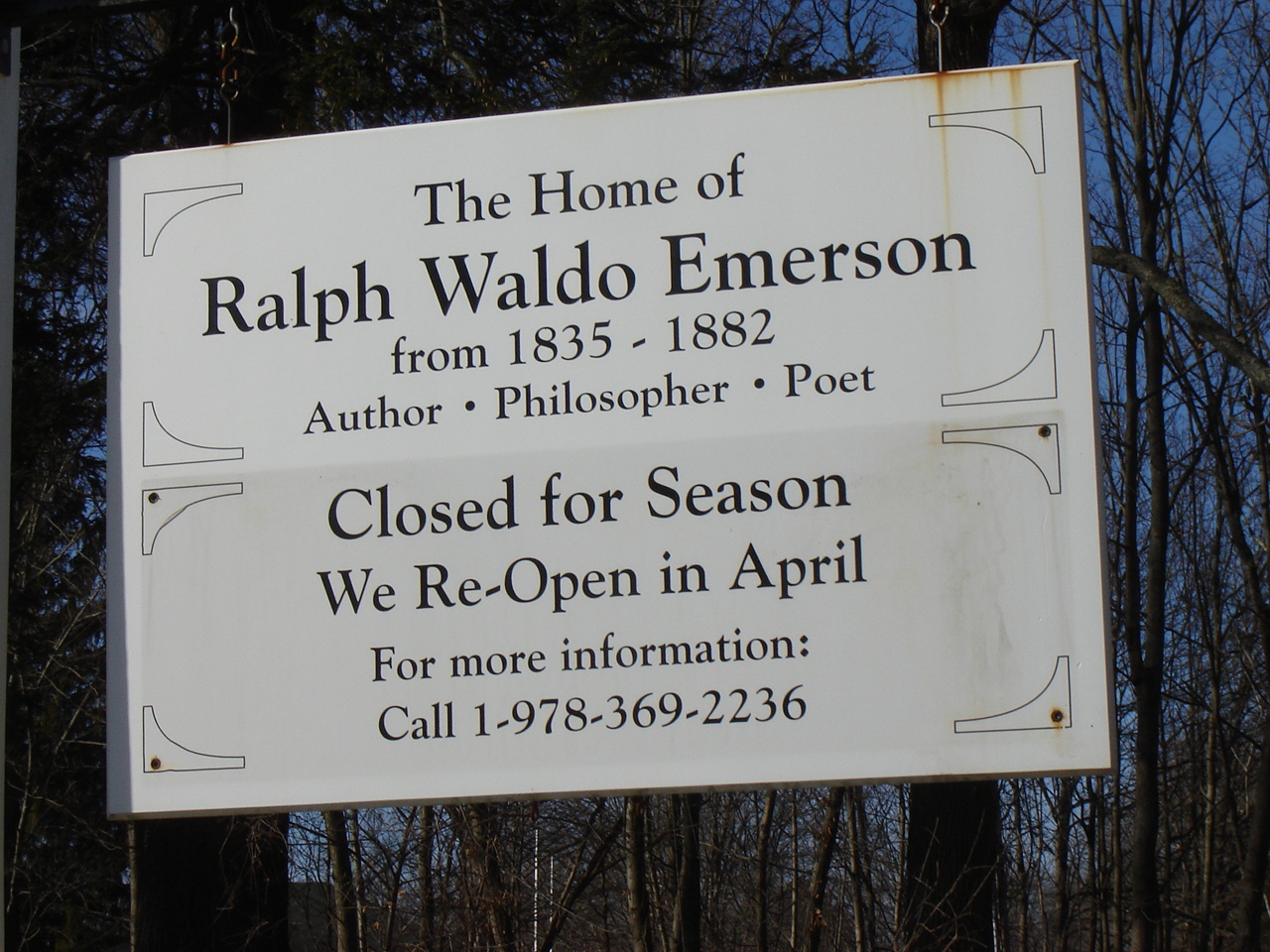
I know Emerson isn’t one of the greats in the poet department, but he was the only one available on short notice.
Back when my sister was teaching tai chi and before she decided to go to medical school, I was skeptical of Eastern health practices.
I should have taken lessons then, but I’ve learned the error of my ways and am more open to trying new things. I told John I’d been trying to find a weekend tai chi class that might be good for back pain.
Last week, he called about a sign he saw in Arlington: Zhen Ren Chuan, a martial arts studio, had begun to offer tai chi.
Saturday I went.
Tai chi is not as easy as I thought watching ladies in San Francisco and Boston parks. So many things to think about at once! In that sense alone it is a great way to clear your mind of everything else. I will go again.
I met Mary Driscoll in playwriting class last summer.
Mary has had a lifetime focus on social justice for marginalized people. She has traveled to foreign countries to work with refugees. For people with HIV, she has taught pilates and the healing art of telling one’s stories. She has performed with mission-oriented theater troupes. And she is the founder of OWLL, On with Living and Learning, which helps ex-offenders build new lives after prison.
At Mary’s invitation, my husband and I found our way last night to what is a virtual artist colony in the long-abandoned but reemerging warehouse district of South Boston. In Mary’s loft apartment, one of the artists she has drawn into her orbit presented a wonderful cabaret show to raise money for OWLL’s production of Generational Legacy about mothers and children after prison.
Michael Ricca interpreted songs by Michel Legrand with great humor and feeling (including the theme song of our wedding, “What Are You Doing for the Rest of Your Life?”). Ricca is performing the songs and others by Legrand at Scullers in March.
My husband and I enjoyed talking to Mary’s guests — artists, actors, musicians, social activists, old friends. We’re especially keen to keep an eye on the doings of the Fort Point Theatre Channel in the Midway Studios building, where Mary lives and works. The collaborative productions in the Black Box Theatre sound intriguing and offbeat. We like offbeat.
People where I work have been volunteering in an inner-city school for years. It started with reading picture books to first graders and expanded to second grade reading, fourth grade math, and fifth grade “Book Club,” the one I do. I once taught fifth grade, and I would still read the books written for that age even if I weren’t volunteering in the school.
This past week, the NY Times had an interesting article on using technology to enable tutors to work with elementary school kids remotely.
“Edward’s tutor was not in the classroom. His school, a 20-minute walk from the nearest subway stop in a crime-plagued neighborhood, has long had trouble finding tutors willing to visit. ‘It is hard to get anyone to volunteer,’ said the school’s principal, Luis Torres, who sometimes cancels fire drills because of the gunfire he hears outside.
“Now, newly designed software for the tutoring of beginning readers has bridged the gap, allowing volunteers to meet students online from a distance. P.S. 55 is testing the program with students in its four first-grade classes.
“Edward’s tutor, Jenny Chan, was an hour away in Midtown, on a bustling trading floor at JPMorgan Chase, where she provides technology support. She was talking to Edward by phone and seeing the story he was reading with screen-sharing software on her desktop computer.
“JPMorgan Chase is sponsoring the remote tutoring program and encouraging its employees to get involved from their desks during the school day.” Read more.
There’s nothing like face-to-face contact, but if people can’t take work time for the commute, perhaps more people will tutor.
A couple weeks ago, a friend told Suzanne that not only is 2012 the lucky Year of the Dragon, it’s the Year of the Golden Dragon — in her view the luckiest year of all.
But a little web research suggests that something was lost in the translation. The Year of the Golden Dragon was Y2K, 2000.
Not to worry. All dragons are lucky. This is the year of the Water Dragon.
The Chinese Fortune Calendar site says, “2012 is Year of the Dragon and it will arrive on February 4, 2012. (Note: Chinese New Year Day is on January 23, 2012. The first day of 2012 Chinese Astrology Year is on February 4, 2012.) Many people must be eager to know if they will have better luck in the coming year than previous years. Here, we want to use Chinese Astrology Five Elements (Metal, Water, Wood, Fire and Earth) theory to explain people’s fortune in 2012 and foresee what will be happening to them in the year of the Dragon.” Read more to learn how metal is the element associated with the Golden Dragon.
Moving right along, the 2012 Dragon site observes, “The fact that 2012 is a Water year is extremely important and demands consideration. That’s because Water nourishes the Dragon’s fixed element, Wood, giving this Dragon a big advantage over the rest of the breed when it comes to bringing good luck. The same holds true for accomplishment. This Dragon is actually going to realize some of those big dreams!” So that site maintains that the Water Dragon is the luckiest dragon.
Wikipedia: “In Chinese Taoist thought, water is representative of intelligence and wisdom, flexibility, softness and pliancy; however, an over-abundance of the element is said to cause difficulty in choosing something and sticking to it. In the same way, Water can be fluid and weak, but can also wield great power when it floods and overwhelms the land.” In our family, the attribute of not being able to choose something is called “The I-do-and-I-don’t problem.”
The Manila Bulletin Publishing Corporation weighs in: “The dragon sign is associated with spring and the dragon water sign is likely to become a flowing river rather than a stagnant lake, which means that you need to begin 2012 off to a fast start as things are expected to happen early in the year. Hopefully we used some of the quiet time in the past year to plan your moves for 2012.” Uh-oh.
But given that Suzanne is in the jewelry business (Luna & Stella), she might be most interested to know that in China, jewelry buying is going berserk for the Year of the Dragon.
The museum commemorating the real Boston Tea Party burned down a few years ago. Now a travel company has rebuilt it bigger and stronger in its Fort Point Channel location.
I like the history lesson at the museum, but the thing I am getting the biggest kick from is the weathervane: a teapot and steaming tea cups. If this isn’t the best weathervane ever, please send me your contenders. Click https://suzannesmomsblog.wordpress.com/wp-admin/post.php?post=2126&action=editto make the photos bigger.
031/31/12
Oh, wow! Just learned the weathervane is by Lizanne Jensen. Read about her at Fort Point Arts Community, here.
I am psyched. I blogged a while back about UBS banker Geoff Hargadon, who is also a conceptual artist with a crazy sense of humor.
After Brandeis University’s then president made noises about selling the art collection of the Rose Museum, Hargadon put a sign outside on the grass: “Cash For Your Warhol.” It looked like the signs on telephones poles or in abandoned lots that lure the unwary into deals too good to be true.
Hargadon has put his signs up hither and yon, like the street artist Banksy in a way, or Shepard Fairey.
Yesterday I noticed one in the Boston financial district as I waited for the light to change. It’s at the corner of Congress and Franklin streets. I came back today and took a picture. Anyone want to call the number?










 Suzanne's Mom's Blog