Feeds:
Posts
Comments

Posts Tagged ‘art’

Art: Tomihiro Hoshino

For more than 30 years, a woman from Hokkaido, Japan, who stayed at our house while studying the local PTA has been sending me magnificent calendars.

The calendars are from a talented artist and former athlete whose paralysis led him to master holding a brush in his mouth. His name is Tomihiro Hoshino.

An article at AccessibleJapan reports, “Tomihiro Hoshino was an experienced 24-year-old gymnastics teacher with a real passion for the sport. An active mountain climber and gymnastics instructor, his life changed completely as he was demonstrating a double somersault technique to a group of junior high school students. Hoshino unfortunately injured his neck during the maneuver and since that day he has been completely paralyzed from the neck down.

“The accident was a serious blow to this extremely active person who was forced to lay motionless for nine years in a Gunma orthopedic Hospital where he was kept under heavy surveillance for respiratory problems and complications as a result of the injury. He and his family never gave up hope that his physical condition would stabilize and improve. Although it took nine years, and he came close to death many times, there was always hope for the future.

“Many say that this hope came two years after his accident. In 1972 one of the patients that had stayed in the same room as Tomihiro Hoshino was being transferred into a different hospital. He asked that the staff, as well as all of the people that stayed with him, to sign a card as a memento of his time in the hospital. Tomihiro couldn’t come up with a solution as to how he would be able to sign his name for the man but with the help of his mother he was able to hold a pen in his mouth and eventually sign Tomo. This would be the beginning of how Tomihiro would begin his career in writing and painting.

“The second event that produced real inspiration for Tomihiro Hoshino was a time that a friend brought him flowers and left them in the window. …

“He was moved to start expressing what they meant to him. He began to gradually draw flowers and eventually became an adept painter with his mouth. …

“Tomihiro Hoshino has successfully produced hundreds of pieces of artwork, many of his essays and poems have been published and his work is displayed in permanent exhibitions at the Tomihiro Hoshino Museum. …

“If you are interested in Tomihiro Hoshino’s works, you can purchase them on Amazon or visit his art gallery in Gunma, Japan.”

More at AccessibleJapan, here. Read about his museum here. Those who read Japanese may click here.

I feel lucky to have had this decades-long friendship with a woman in Hokkaido. Although we haven’t seen each other since the 1980s, her daughter, Mika, came to visit while living in New York. Mika helped decorate our Christmas tree that year. Nowadays, I never do the tree without thinking of her.

Image: Tomihiro Art Museum

Read Full Post »

o8haafk

Photo: Imgur
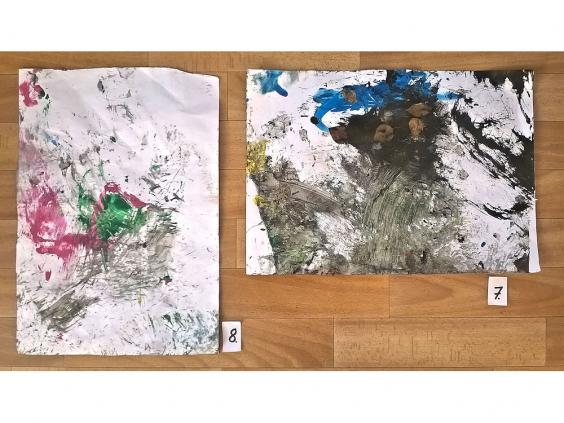
Juuso makes art by rolling in paint. Sales of his paintings help animals who, like him, have been orphaned.

This orphaned brown bear is helping to raise money for the Finnish center that rescued him. And he’s not riding a unicycle like a circus bear. He’s doing something he apparently really likes: Art.

Jussi Rosendahl and Attila Cser report at Reuters, “The artist behind the exhibition entitled ‘Strong and soft touches’ is a 423-kilogram (930 pound) brown bear named Juuso who uses his body, especially his paws, as paintbrushes.

” ‘We just leave paint for him, some plywood and paper … If we ask him to do it, he doesn’t do anything. He does all the work in his own time, when he’s alone, sitting and moving his legs on the paper,’ said Pasi Jantti, one of his keepers.

“Juuso, who is 17 years old, favors blue and red, the keeper said, adding that the paints used posed no health risk to the bear.

“His keepers discovered Juuso’s artistic bent one day while painting some facilities at Kuusamo animal center in northern Finland where he has been living since being orphaned as a cub.

” ‘Juuso got some paint in his paws and started to make marks with them. We noticed that he liked it,’ Jantti said.”

Read more at Reuters, here.

I have to hand it to keepers who noticed what the bear enjoyed, let him do it, and thought up a way it could help other animals in their care.

Photo: The Independent
Two Juuso originals that have already sold.

Read Full Post »

The children’s holiday show at the American Repertory Theater (A.R.T.) this year was a musical version of Roald Dahl’s James and the Giant Peach. My husband and I went to see it with our older grandson and granddaughter.

Last year, invited by our grandson’s friend and her grandmother, we attended A.R.T.’s musical about a pirate princess. Unfortunately, we didn’t have a good view. Somehow or other I had failed to complete my ticket purchase, and we ended up standing in the back much of the time.

This year we were right up front. Our six-year-old grandson was thoroughly engaged with the performance this year. His three-year-old sister, dressed up like a princess, was riveted but felt safest watching the show from my lap.

“What happened to James’s mother and father?” was her first question as the lights went up at the end. I reluctantly reported that they were eaten by a rhinoceros but added that, of course, “That’s pretend. Rhinoceroses don’t eat people.” She took it in stride and later told the theater-going neighbor from down the street that she loved the show.

One thing A.R.T. likes to do with children’s shows is provide some interactivity. For the Pirate Princess, there were actors in costumes before the performance wandering around the lobby and posing for pictures with the children. For Giant Peach, children could make origami fortune tellers (once called “cootie catchers”) that looked either like herring gulls or sharks. When sharks and gulls appeared in the production, children were encouraged to activate their own small versions. Our grandchildren both made sharks.

An adult played James in a childlike way. After James’s parents vanish, he’s sent sent to live with two nasty aunts, played by men. He is rescued when magic beans turn a peach into something big enough to crush the aunts.

As the peach grows, the critters inside the peach become giant-sized themselves (earthworm, spider, ladybug, centipede) and soon join forces with James as they all float skyward in the peach.

Each bug contributes special skills to extricating the team from dangers. I especially liked the blind earthworm, whose special skill turned out to be posing as bait for fearsome gulls so his friends could harness them with Miss Spider’s silk to get the peach away from sharks.

You can read more about the production here. Last chance to see the show is January 8, 2017.

Read Full Post »

Chalk up another one for art and culture. According to Lisa Contag at the website Blouin Art Info, a UNESCO study has found evidence that art and culture improve safety in cities, in part by building social cohesion.

She writes, “UNESCO makes a strong case for systematically fostering culture in city planning in its new ‘Global Report, Culture: Urban Future.’ …

“In more than 100 case studies, the survey analyzes the situations, risks, and potentials for cities in a number of regional contexts, with a particular interest also in Africa and Asia, where urbanization is expected to continue increasing rapidly in the next decades.

“ ‘Culture lies at the heart of urban renewal and innovation. This report provides a wealth of insights and concrete evidence showing the power of culture as a strategic asset for creating cities that are more inclusive, creative and sustainable,’ Irina Bokova, Director-General of UNESCO noted in a statement, stressing that ‘culture gives cities social and economic power,’ especially with the help of the creative industries.

“As an example, the report refers to Shanghai, China, which has held the status of a UNESCO Creative City of Design since 2010, and is considered ‘one of the world’s major creative centers, with more than 7.4% of residents employed in the creative industries.’

“Cities in conflict and post-conflict situations, such as Samarra, Iraq, which was confronted with the destruction of a number of invaluable sites such as the Al-Askari Shrine in 2006, are also taken into consideration and seem to benefit similarly. ‘Reconstruction and rehabilitation efforts have demonstrated the ability of culture to restore social cohesion between communities and improve livelihoods, paving the way for dialogue and reconciliation,’ the authors explain.”

The authors observe that culturally diverse, safe, and thriving cities are people-centered and culture-centered and feature policy-making that builds on culture.

More here.

Photo: UNESCO
Screenshot from Reza’s UNESCO video “Culture – the Soul of Cities”

Read Full Post »

The Royal Frog Ballet recently staged an outdoor event to welcome fall, but according to the lead players, it wasn’t so much a performance for strangers as a gift to new friends. The effect was surreal and entertaining.

Amelia Mason reports at WBUR, “A masked woman in an apron and kerchief jumps up on a picnic table and addresses a crowd.

“ ‘I’m your grandmother, and I’m here to help you throughout this show …  The first thing to know is that when I ring this bell it means we’re all going to move to the next thing and you’re going to have to follow my directions, OK?’

“It is the opening night of the Royal Frog Ballet’s ninth-annual ‘Surrealist Cabaret.’ Our guide — Shea Witzo, in the role of the Granny — gives us some more instructions: Watch out for holes. Stick close together. But first — wait. We pause for a moment, unsure of where to look.

“Then, 6-year-old Aiden Bairstow catches sight of something.

“ ‘Oh, I know what’s happening,’ he says. ‘I see it right behind you.’ We turn to see a band — fiddle, accordion and drums — approaching from across the field.

“The farm, it turns out, has many secrets in store. No matter where we look, something strange and surprising is bound to appear: a tall, swaying monster on stilts, for instance, or the pair of scientists who inform us that we are part of their experiment. At one point, our guide delights us with a salty parody of Bruce Springsteen’s ‘Dancing in the Dark.’ The pieces are linked loosely around a theme. …

“ ‘A lot of us are trying to make work that is like a gift, rather than a performance for [the audience],’ says Sophie Wood, one of the founders of the ‘Surrealist Cabaret.’ The project started in 2007, when Wood and a group of artist friends decided to perform some of their works-in-progress at a farm in Amherst. They mounted the production in a big barn and served the audience dinner. …

“The collective goes by the name the Royal Frog Ballet, and it has mounted weird and whimsical performances every year since its founding. … This fall, the theme is ‘hope and joy.’ …

“ ‘It feels like an old tradition,’ says Leah Sakala. … ‘It feels like we’re partaking in something, the kind of art that’s been made for a very long time, but at the same time it manages to be very relevant.’ ”

More here.

Photo: Sarah Ledbetter for WBUR
A performance of the “Surrealist Cabaret” in Essex, Mass., in October.

Read Full Post »
I tend to follow environmentalists, artists, and community development nonprofits on twitter, sometimes finding ideas I want to share here. Smaller Cities Unite! (@SmallerCitiesU) is a source for all three topics. Recently it linked to this Live Science article by Tia Ghose.

Ghose writes, “Artist Sigalit Landau submerged a 1920s-style long, black dress in Israel’s Dead Sea for two months in 2014. When the dress was lifted from the salty waters, it was a sparkling, crystalline sculpture formed from salt. …

“Landau has been inspired by the Dead Sea’s unique environment for past artwork, including salt-crystal-encrusted lamps, a salty hangman’s noose and a crystalline island made of shoes, according to the artist’s website.

“The current exhibit uses a dress that is a replica of the long, black one worn by a character in the classic Hasidic Jewish ghost-story called ‘The Dybbuk.’ In that story, the bride, Leah, is possessed by the evil spirit of her dead suitor, who died before they could marry. The dress was worn during the 1920s production of the play. …

“The Dead Sea is one of the saltiest bodies of water on Earth. At 34 percent salnity, it is several times saltier than the open ocean. … The hypersalinity is also what’s behind the alchemy that transforms the black dress into a shining white dress. Salt tends to crystallize out of very salty solutions, and it typically nucleates, or seeds, at places that have saltier concentrations than the surrounding water …

“As the dress initially caught bits of extra salt, that led to a locally higher concentration of salt, spurring the salt molecules to line up into crystals that eventually grew and transformed this deathly dress into a sparkly saline jewel.”

Read more.

Photo: Matanya Tausig
Sigalit Landau’s sparkly salt sculpture was originally a black dress that was submerged in the Dead Sea for two months.

Read Full Post »

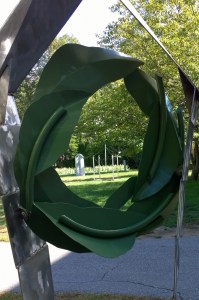
Among the sights I’ve wanted to photograph in the last few weeks is a sculpture outside the Umbrella Community Arts Center. It invites you to look through and focus on an aspect of the view.

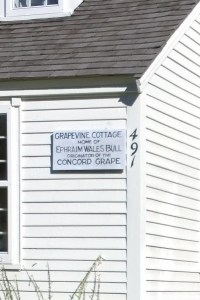
Next up, the old house where Ephraim Bull developed the Concord Grape. Another sign there told me that there was a “Sale Pending.”

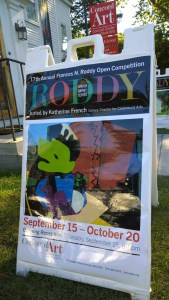
My friend Meredith is a featured artist at Concord Art’s new juried show. She has done several treatments of her fica plant, but the one in the show is a lovely collage of painted paper.

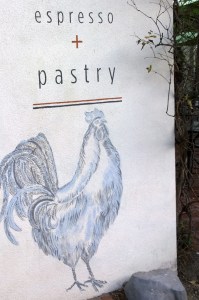
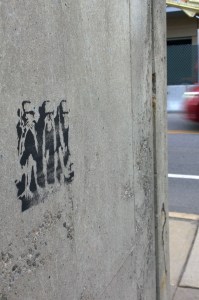
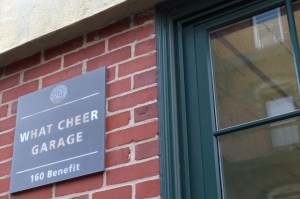
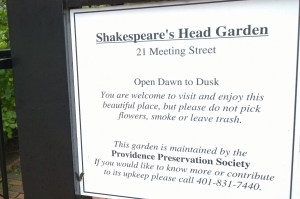
I recently discovered on a morning walk that the Providence Preservation Society has generously opened its multilevel garden to the public during certain hours of the day. What a peaceful place to just sit and think! Not far away is the What Cheer Garage (I like the name). Across Providence, you can discover a fine-looking hen on the wall of Olga’s Cup and Saucer, and a street art stencil recommending Speak no evil, See no evil, Hear no evil.

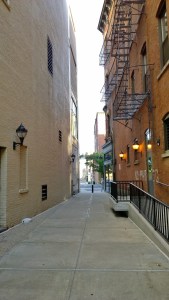
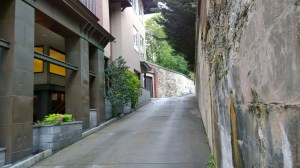
I also like the alley alongside the Providence Performing Arts Center and a hilly street that looks more like Europe than New England.

092416-sculpture-at-umbrella-center

092416-looking-thru-sculpture


092516-concord-grape-origins

092516-meredith-fife-day-at-juried-show


092016-please-enjoy-our-garden

092016-preservationists-share-garden


092116-hen-at-olga

092116-3-no-evils


092016-what-cheer

092116-providence-alley


092016-providence-street

Read Full Post »

Photographic Themes

I’m starting to notice that my photos (all taken on my mobile phone) have recurrent themes. Today’s nine pictures reflect a few of those interests: words on signs, shadows, plants, nature, art. Either I’m in a rut, or I’m going to get really good at a few themes.

090716-float-like-butterfly

090216-worms-and-crawlers-concord


090716-outcasts-outlast

091716-umbrella-center-concord


090516-volunteer-flowers-concord-ma

091116-growing-thru-wall


091516-danish-window-ornament-shadow

091616-clouds-over-supermarket


090216-rr-reflection-concord-ma

Read Full Post »

Because I lived there for a few years, I can never resist a story about Minnesota, land of 10,000 surprises. Here’s one story from a Wall Street Journal reporter.

“Winona, MN, is home to just 27,500 people,” writes  at Real Clear Arts, a blog at ArtsJournal, “but it has an art museum worthy of a much bigger city.

“The Minnesota Marine Art Museum … was the brainchild of a local collecting couple named Bob Kierlin and Mary Burritcher. They knew nothing about art when they started collecting …

“But today they, with the help of others, have created something very worthy. For them, marine art includes any work with enough water to ‘float a boat.’ And so the museum – which has beautiful, spacious galleries, is filled with works by many great artists.

“It has been expanded twice, and most of it is filled with works on loan from the couple. They include Turner’s 1841 watercolor Heidelberg With a Rainbow, Gauguin’s Still Life with Onions, Heade’s The Great Florida Sunset and View From Fern-Tree Walk, Jamaica, Beckmann’s “Dutch Landscape with Bathers” plus paintings by Monet, van Gogh, Picasso, O’Keeffe, Hartley, Cole, Bierstadt and Homer.”

Read more here. Just scroll down.

Photo: Minnesota Marine Art Museum
A Winona treasure chest.

Read Full Post »

I confess that although I can see why children adore books by certain illustrators, sometimes I don’t like reading the artists’ words.

Richard Scarry, for example, with his delightful animals and five-seater pencil cars, writes text that can get boring pretty fast. And Beatrix Potter, whom I admire for a multitude of reasons, employs very big words and potentially scary themes.

Christian Blauvelt recently covered that angle at the BBC. He begins with Potter’s first line in a storybook.

“ ‘Your father had an accident there; he was put in a pie by Mrs McGregor.’

“Old Mrs Rabbit’s frightful warning to her children Flopsy, Mopsy, Cotton-tail and Peter appears on the opening page of Beatrix Potter’s first book, The Tale of Peter Rabbit. Aside from featuring perhaps the most dramatic use of a semicolon in children’s literature, it sets the tone for her work from the start: that horrors abound in a world of Darwinian struggle, but that these must be faced calmly.

“Your parents, and perhaps your children, may be devoured by a vengeful property owner, or sold for tobacco; you may have your tail ripped off by an angry owl; an invading rat might tie you up in string and include you as the key ingredient in a pudding. But life goes on – disappointments must be faced and tragedies overcome. …

“Potter’s tales have been consistently popular with adults, as well as children, since The Tale of Peter Rabbit was published in 1902 when she was 36 years old. This is not just because they feature adorable creatures in harrowing situations; her talking-animal stories also comment on the era’s class politics, gender roles, economics and domestic life.

“Did she examine British society through animals because she spent more time with animals than children, aside from her brother Bertram, when she was young? Because she wanted to rebel against the bourgeois values and morals of her wealthy middle class family – which had made its money in the textile industry – but only dared do so through furry surrogates? Because she could only publish children’s stories since her true passion, science, was a career field closed to women in the late 19th Century? Because she had a German tutor who introduced her to the back-to-nature ethos of the Romantics?” More.

Hmm. Maybe I’m being too anti-intellectual here, but I’d say Beatrix Potter just got a kick out of telling stories like that.

And maybe she was right that small children could handle the scary parts. My three-year-old grand-daughter for example, has always loved Peter Rabbit and could recite the fancy phrases by heart when she was only two. Reciting fancy phrases is great for language development.

Photo of Beatrix Potter’s art: Penguin
Beatrix Potter, an amateur scientist, was meticulous about representing nature accurately, even if the animals did wear clothes. Here Peter Rabbit gorges on Mr. McGregor’s carrots.

Read Full Post »
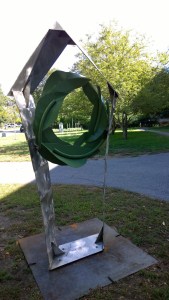
Photo: Wally Skalij / Los Angeles Times

So, actually, he was an artist first and only did gardening to support himself as immigrant with no connections.

Los Angeles Times reporter Carolina A. Miranda wrote about him in July, around the time of the “Made in L.A.” biennial at the Hammer Museum.

She says, “When artist Kenzi Shiokava received a telephone call from a pair of curators organizing [the biennial], he says he had little clue of the meteoric effect it would have on his life.

“ ‘I’d never seen “Made in L.A.,” ‘ says the 78-year-old sculptor. ‘I’ve always been off the art establishment.’

“But as he does with anyone who is interested in seeing his work, he invited the curators — Hamza Walker and Aram Moshayedi — to his studio so that they could have a look at his totemic wood sculptures, junk-art assemblages and curiosity boxes featuring orderly, patterned displays of old toys, plastic fruit and discarded religious ephemera.

“Shiokava says he was buoyed by the visit but subdued in his expectations. ‘Lots of shows come and go,’ he says. …

” ‘I didn’t know it’d be like this,’ he says with a resplendent grin. ‘The response has been amazing.’…

“[Walker] says that from the moment he and Moshayedi stepped into Shiokava’s studio, early in 2015, they were sure that this was an artist they wanted to include in the show.

“ ‘It was pretty immediate,’ he says. ‘We were both speechless within 10 paces of the entrance. There were all of these totems right up front and we were like, woooowwww.’ …

“ ‘What’s always kept me going is people coming to my studio and enjoying the work,’ [Shiokava] says in his deeply accented English. ‘But now I know my work will have a legacy. My work will live.’ ”

Read about the artist’s early life as a Japanese immigrant in Brazil, how he ended up in LA, and how he began to develop his art while working as a gardener for Marlon Brando and others (here).

Photo: Wally Skalij / Los Angeles Times
Kenzi Shiokava in his studio.

Read Full Post »
 

Art: Susan Jaworski-Stranc
Neighbors

I’m on the email list of 13 Forest Gallery in Arlington, Mass. The first time I went there, the owner enlivened his art opening with guest opera singers.

This time, he had a printmaker demonstrate a type of linoleum printing that Picasso dubbed “suicide” printmaking. Others use the word “reduction” instead of “suicide.”

When I tell you how the work is done, you will understand why Picasso felt as he did.

Instead of carving, say, four different blocks for a four-color print, the artist uses only one block. A mistake at one stage can end the whole project.

Lowell resident Susan Jaworski-Stranc has been doing reduction linoleum printmaking for more than 30 years. As the website for 13 Forest explains, “with each layer, you carve more of the block away — so once a layer has been printed and you start carving for the next layer, there’s no going back.”

The artist herself says, “After each successive printing of a color, the surface of the block is reduced while at the same time the printing surface is built up with multi-layered colors. Born from one block of linoleum, my relief prints have the nuance and rich textural surfaces of an oil painting.

“Although Picasso coined this method of working a ‘suicide print,’ I rather think of this printmaking process as emulating the journey of life. While creating my prints, I am never able to re-visit past stages. I can only proceed forward with the acceptance of all good and not so good choices which were mediated and acted upon with the hope and joy of completion.”

On August 13, the gallery was packed as Jaworski-Stranc demonstrated. Many in the audience were experienced printmakers who asked intelligent questions that showed the rest of us what sorts of issues matter to artists.

One person asked if Jaworski-Stranc knew what the picture was supposed to look like in advance, and she explained that she started with a detailed drawing. Another artist wanted to know if the colors of Jaworski-Stranc’s very first reduction print (which she showed us) were what she anticipated.

The artist laughed, holding up that print. “Are you kidding? How would I ever think up a color like this!?”

Clearly, despite all the careful planning that goes into a print, Jaworski-Stranc relishes the beauty of randomness.

More here.

Art: Susan Jaworski-Stranc
Coastal Forces at Sunset

Read Full Post »

I had an awfully nice lunch yesterday, and I’d like to tell you about it. It involved two nonprofits — the mostly Caucasian conservation group Trustees of Reservations and the mostly African American community-outreach enterprise called Haley House.

The trustees had a really great idea recently to do meaningful art installations on a couple of their properties and chose one next to the Old Manse in Concord. The Old Manse is most often associated with 19th Century novelist Nathaniel Hawthorne, but the grandfather of Ralph Waldo Emerson was also a resident and saw the historic events unfold at the North Bridge on April 19, 1775.

Artist Sam Durant wanted to draw attention to the presence of slaves in the early days of Concord and launch a discussion, so he constructed a kind of big-tent meeting house, with a floor made of the kinds of materials that might have been in slave buildings.

The Trustees conferred with him on a series of “lyceums” that might bring races together at the site. They decided that at the first one, they would encourage races to break bread together and talk about food traditions.

From Haley House in Roxbury, they brought in a chef, a beautiful meal, and singer/educator/retired-nurse Fulani Haynes.

I ate a vegan burger, sweet-potato mash, very spicey collard greens and wonderful corn muffins. Also available were salad and chicken.

Haynes sang a bit and talked about the origins of Haley House, how it helps low-income people and ex-offenders and local children, teaching cooking and nutrition and gardening, among other things. She invited attendees to tell food stories from their early years, and several brave spirits stood up.

That participatory aspect of the activities helped to reduce the impression that African Americans were making entertainments for a mostly white audience (art, food, music entertainments).

I loved the whole thing and learned a lot. (For example, Grandpa Emerson had slaves living upstairs, and “the embattled farmers” who “fired the shot heard ’round the world” were able to go marching off because slaves were working the farms. I really didn’t know.)

African American artifacts are on display next door at the Old Manse. The art installation will be up until the end of October 2016.

More here.

Photos: Artist Sam Durant offers the crowd a new lens on history. The chef from Haley House keeps an eye on the African American cuisine. Fulani Haynes demonstrates how a food can become an instrument.

081316-artist-Sam-Durant-at-installation-picnic

081316-Fulani-Haynes-sings-in-Old-Manse-field


081316-Haley-House-chef-and-corn-muffins

Read Full Post »
I’m so glad Cousin Claire shared this New York Times story on Facebook. It’s about a school custodian with an artistic bent whose talent is raising everyone’s spirits.

Corey Kilgannon writes writes that Israel Reyes, “senior handyman and longtime boiler operator at Public School 69X Journey Prep in the Soundview section of the Bronx,” finds the lonely summer months to be a good time “to concentrate on the colorful wall murals he has become known for painting inside the 93-year-old building. …

“For years, the 15-foot walls were faded and drab, Mr. Reyes said.

“ ‘There were no colors — it was like walking into a prison,’ recalled Mr. Reyes, who said that 12 years ago he grew tired of watching students entering the building each morning with their heads down.

“ ‘A lot of these kids come from broken homes, just like I did, and I’d see them walking in, all stressed out and looking down, because the school looked even worse than their homes,’ he said. ‘I wanted to do something to make them look up.’

“So he persuaded the principal to let him use leftover paint from other jobs in the building to start creating an educational wonderland. He worked for years, during his down time, his lunch hour and on his personal time, even late into the night.

“ ‘The kids come in now in the morning and they smile,’ Mr. Reyes said. ‘They come in and ask me, “What’s next?” and I show them what I worked on overnight.’ ” …

“Mr. Reyes, whom everyone calls Carlos, said he and his five brothers were raised by his father in the Bronx and on a farm in Puerto Rico.

“ ‘We had to make our own toys from garbage, from whatever we found,’ said Mr. Reyes, who as an adult has made sculptures out of trash-picked objects, especially the wooden legs off discarded furniture, to entertain his four children and 14 grandchildren.

“He calls it ‘table leg art,’ and has made a panorama representation of Manhattan that is on display in the school library, a cityscape with wooden legs as skyscrapers. …

“Until recently, said Mr. Reyes, a widower, his apartment was decorated in an over-the-top theme — a botanical garden with a pond, a lamppost and a park bench — recalling his Puerto Rican upbringing.

“ ‘When my son moved back home, I had to sleep on the bench,’ he said. ‘I’d tell people, “I’m not homeless, but I sleep on a park bench.” ‘ ” More.

I’ve read that no matter what kind of job you have, there should be some aspect that is yours alone, where you can express your creativity. I couldn’t agree more.

Photo: Santiago Mejia/The New York Times  
Israel Reyes, at Public School 69X in the Bronx, wanted to brighten the building for students. 

Read Full Post »
After a father’s death, the family tries to find homes for his perfect metal miniatures.

Isaac Feldberg writes at the Boston Globe, “On any gift-giving occasion in the Megerdichian household, the most exciting presents to unwrap were always both the smallest and, funnily enough, the heaviest.

“Some boxes held metal miniature re-creations — a brass violin with horse-hair strings and a latched case; an aluminum piano music box that played ‘Raindrops Keep Falling on My Head.’ Others concealed stainless-steel jewelry, intricately detailed, immaculately formed. And others still contained children’s toys, like steel tractor-trailer sets to be nudged along the wooden floors of their Cambridge home.

“ ‘They were 14 ounces of love, 1 ounce of metal,’ says Robert Megerdichian, 63, of the tiniest pieces his late father, Abraham, bestowed upon the family throughout his lengthy career as a machinist. ‘He started off with a solid block of metal, brass, aluminum, copper, or stainless steel, and he gouged away, like a sculptor would, like an artist would, to create all of these objects.’

“Megerdichian’s description of his father as an artist has recently earned official validation, with museums across New England displaying an array of Abraham’s pieces. The Attleboro Area Museum of Industry, the Lynn Museum, and Boston’s Museum of Science all currently house some of his metal miniatures. Additional museum exhibits are set to open in the fall, including at Connecticut’s New Britain Industrial Museum. For more than half a century, however, Abraham’s creations were reserved for his loved ones. …

” ‘It was important to him to make things that made the people he cared for happy,’ ” said his son.

Read about Abraham’s history here. A great example of what the intersection of love and skill can give the world.

Photo: David L. Ryan/Globe Staff
Robert Megerdichian looks over a miniature Hoover vacuum cleaner crafted by his father.

Read Full Post »
« Newer Posts - Older Posts »