Feeds:
Posts
Comments

Posts Tagged ‘art’

I blogged a while back about a prison arts program that seemed to help some offenders discover a more positive, less antisocial side of themselves. Today I have a similar story, this one from England.

“Allowing prisoners to take part in art [projects] can help cut reoffending rates in half, according to a report commissioned by the Arts Alliance. The group of charities has voiced concern that in tough economic times such projects may be cut.” Nick Higham of the BBC reports in a video clip here.

I admire people who have the faith in human nature to try to reach society’s lost souls with arts or yoga or meditation or any other enrichment.

My second cousin, Alex, went to college in Cambridge, Mass., and did an internship teaching meditation techniques to some serious cases at the Suffolk County jail. She loved it and was inspired to go to graduate school and work with others in trouble.

Her mother tells me her latest internship is with a social services agency an hour and 20 minutes away. “She is managing several extremely challenging cases and spends a lot of time making home visits in dismal housing projects. Her days include fighting for housing for her clients, calling the police when bruised and beaten women answer the door, mediating confrontations between single moms who are managing 3-9 children and school officials who won’t let a child ride the bus due to behavioral issues. Her clients have been victims of domestic and other forms of violence and most have substance abuse issues. Her job is to find resources to rehabilitate troubled families. She is learning fast how to be the ultimate problem solver, confidante and counselor.  Most of all, she is extremely happy and energized by the challenge.”

I am in awe that this tough work makes Alex happy and energized. We are lucky to have people like that on the front lines.
 

Read Full Post »

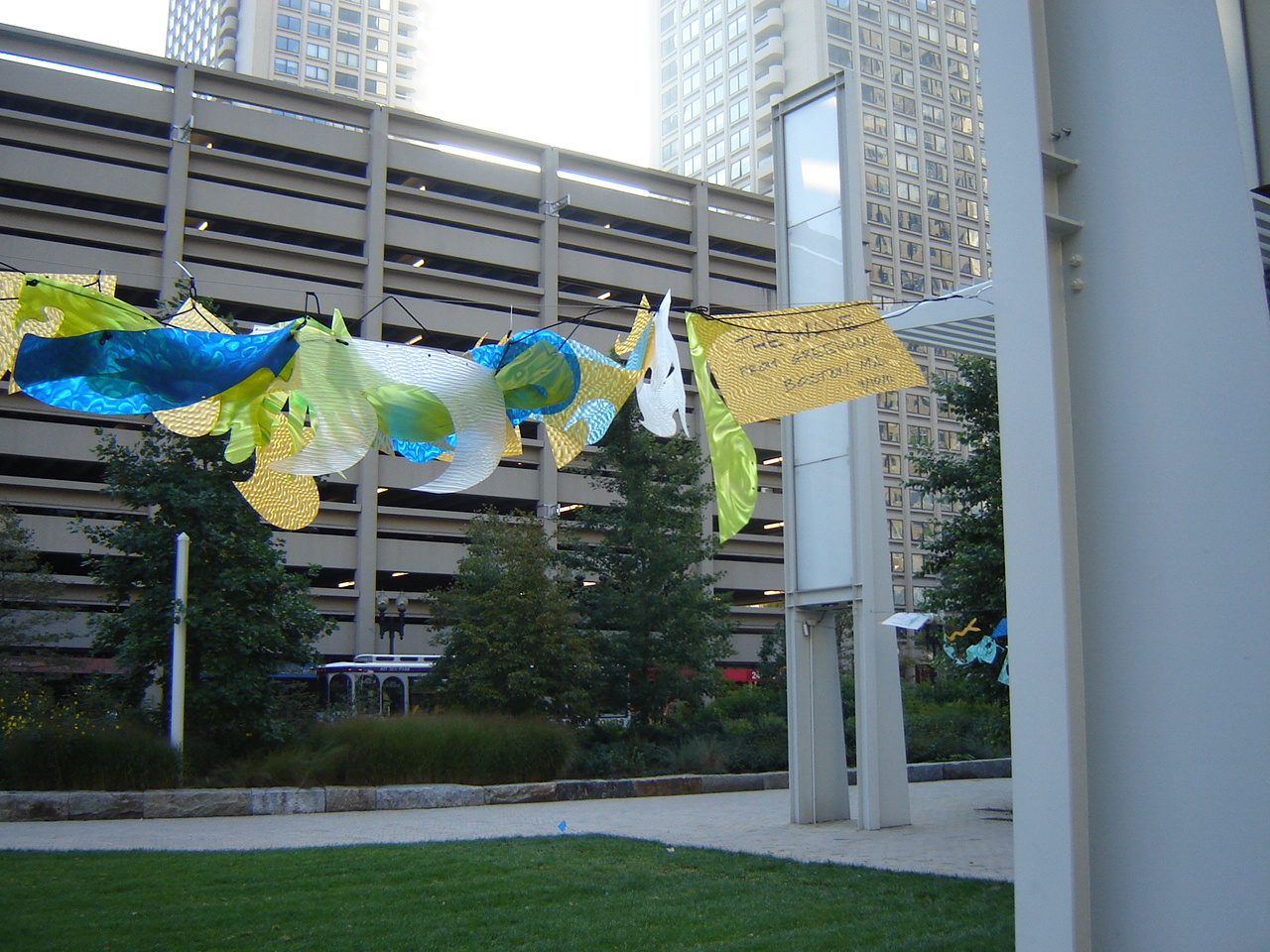
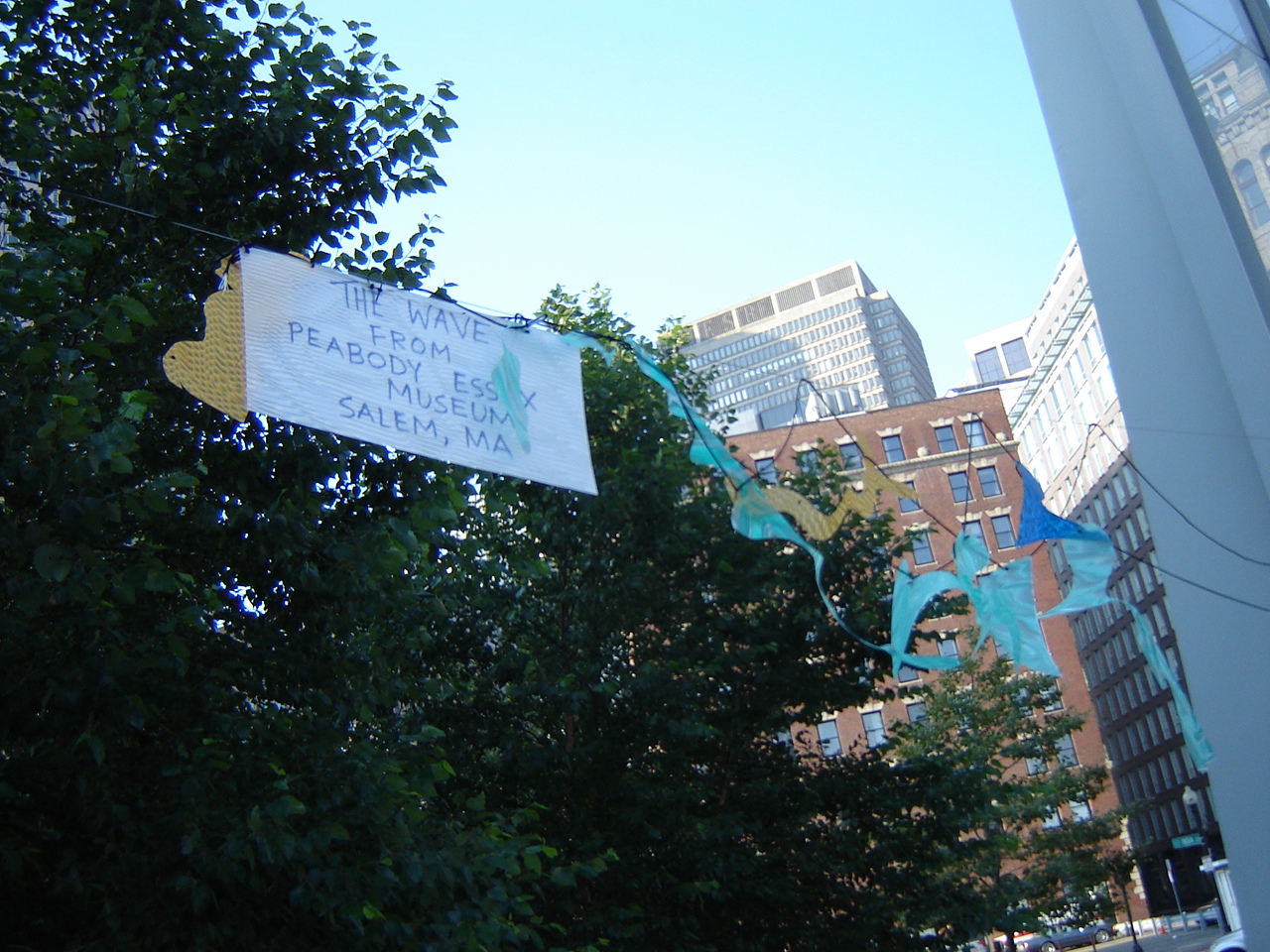
More curiosities seen on the Rose Kennedy Greenway in Boston: Waves. The first wave pictured below has a sign saying, “From the Greenway.” The second says, “From the Peabody Essex Museum, Salem, MA.”

This website helps to explain that an urban collaboration led by artists Susan Hoffman Fishman and Elena Kalman is behind this project, “The Wave: An Interactive Public Art Installation Fostering Global H20 Awareness.” I love it, but it didn’t raise my water awareness immediately because I had trouble figuring out what it was. Thank goodness for Google.

A couple weeks ago, I wrote to the Greenway people (and to the city of Boston) about bikers who were using the Greenway paths despite signs saying not to use “bicycles, skateboards, personal transportation, i.e. Segway.” I like that people bike instead of use cars, but not on footpaths. The signs cause walkers to lower their guard. I’ve seen near misses.

The city wrote me: “Thank you so much for your email. It is illegal to ride on the Greenway. We at the City of Boston are aware of this issue. We will be installing a bike lane on the road for the cyclists this season. Research shows that that bike lanes dramatically reduce sidewalk riding.”

The Greenway people wrote: ” For the safety and enjoyment of all Greenway visitors, biking is not permitted anywhere in the parks. When our horticultural and maintenance staffs witness a cyclist, they will ask them to dismount; City of Boston Police Department handles enforcement.  … The City of Boston installed five new Hubway stations along the Greenway.  This fall, the City will be installing painted bike lanes onto the street which will help alleviate the problem in the parks.”

(At the moment the Boston police are more preoccupied with Occupy Boston. They arrested 141 Occupiers early Tuesday because they had spread into the Greenway from Dewey Square. Funny how a few days can change one’s perspective. Today the concerns of the Occupiers and the concerns of the police both seem more serious than bikes on footpaths.)


Read Full Post »

I have not been blogging that long for Luna & Stella, but already interesting things have happened. For example, one customer who found the blog decided Suzanne’s Mom was OK and probably Suzanne’s business was, too. She became a Luna & Stella customer.

Another interesting thing occurred after I blogged about an artist I once knew, Lucille Corcos. I had written her up with the goal of creating an entry for her on Wikipedia. (The entry is still to come. I need a good block of time to make the changes Wikipedia asked for.)

Soon I began to notice in my WordPress site statistics that someone was doing Internet searches on “Lucille Corcos.” I wondered if it might be one of her sons. Sure enough, I eventually received an e-mail from artist Joel Corcos Levy, saying, “Who are you and when were you in our house?” So I e-mailed him, and we had a nice back-and-forth. He generously sent me a piece of his mother’s art, an illustration for a children’s book.

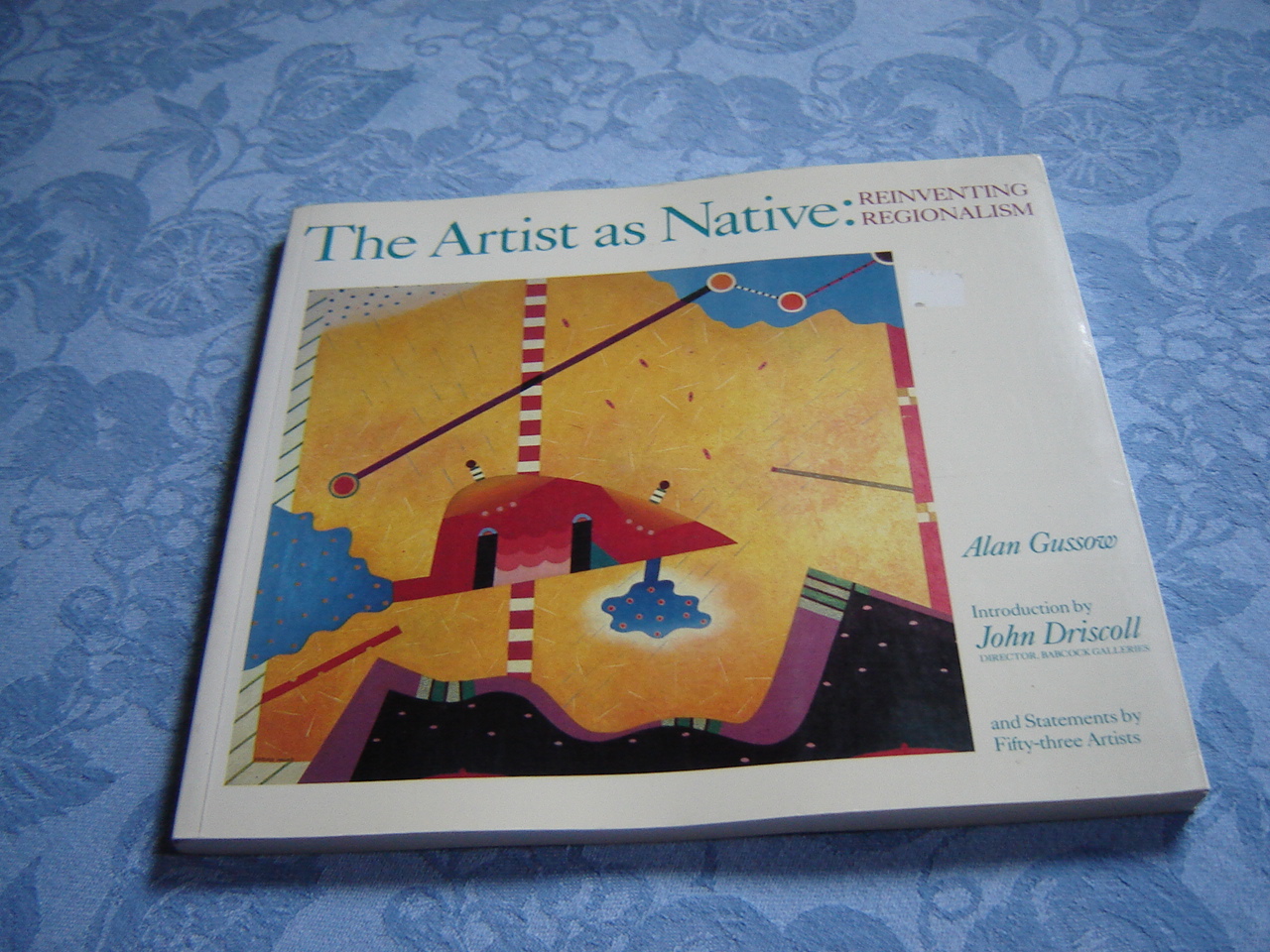
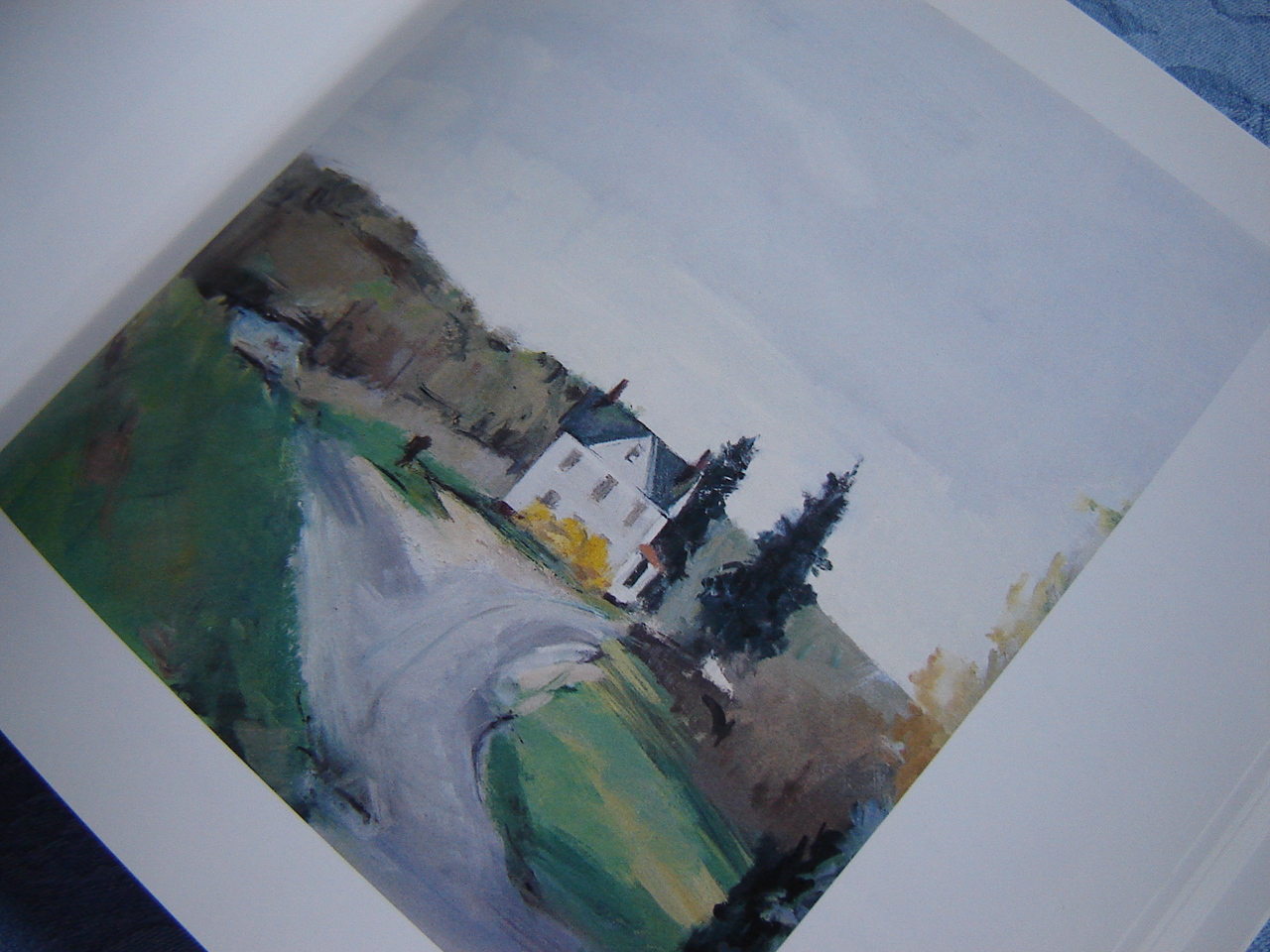
Joel himself appears in an art book called The Artist as Native: Reinventing Regionalism, by Alan Gussow. The book features Joel’s painting of the Davies farmhouse and pine trees. Nice, huh? The other selections are great, too.

Not sure if Joel is OK with having this on the web. I’ll take it down if asked.

Read Full Post »

I tend to think that our creativity comes from our memories, because no one who has ever been or ever will be has exactly the same collection of memories bouncing off one another in exactly the same way.

A recent NY Times science story on a successful artist who got viral encephalitis — and suffered damage to the part of the brain where memories form — doesn’t exactly contradict that view, but it sure raises a lot of questions.

“She is still able to make art, though it is simpler and more childlike than her professional work. Her case is rare, experts say, because few accomplished artists continue to create after sustaining severe brain damage.

“Now scientists at Johns Hopkins University hope Ms. Johnson can help them answer longstanding questions: What parts of the brain are needed for creativity? With little access to one’s life experience, how does an artist create?

“And as Michael McCloskey, a professor of cognitive science at Hopkins, put it, Ms. Johnson’s case ‘raises interesting questions about identity: Here you’ve lost an awful lot of what makes you who you are — what’s left for art?’ ” Read about her.

Although the artist doesn’t seem sad, I think it’s sad to lose memories. I want to keep mine — the bad with the good.

Enjoy this amazing Moray McLaren video about memory, called with irony “We Got Time.”

“Time is a memory
“And memories can make you sad
“With time still in front of me
“Oh we can get it back”

Read Full Post »

I like to think I know something about the nonwork interests of my colleagues, interests that may be — in spite of their workday professionalism — at least as much a part of who they are as their jobs. There’s the woman employed as a customer service rep who gets her kicks out of Tough Mudder competitions (extreme sports in mud). Or the editor who bakes bread every day. Or the economist who composes choral music and creates arrangements for flute choir.

Everyone has at least one other life.

But I guess if you’re not physically in the same office, if don’t have lunch together or chat in the ladies room or on the subway, you never find out about people’s other lives.

That’s why I was utterly floored this week when a hard-driving, business-oriented colleague in the Washington office sent around an e-mail saying she would be away from her desk for a month at an artist retreat in Korea. Huh?

Says I, “Oh! Are you an artist?”

Says she: “Yes” and sends me her website.

Oh, my gosh. This is who she really is: a sculptor and installation artist with a record of shows and a gorgeous portfolio. How does she even find time to be hard-driving and business-oriented in the day job?

It makes me wonder what else I’m missing, whose real life is right in front of me and I’m not noticing.

Read Full Post »

Just a quick post to say that there are some lovely blogs on WordPress, where Suzanne’s Mom’s blog is housed. I recently noticed two in particular I wanted to share.

The first features the Modern Museum of Glass Art in Copenhagen.

The second has photos of cool cut-paper art. Enjoy.


Read Full Post »

Do you remember seeing a René Magritte painting called “Ceci n’est pas une pipe”? It took me a while to get what he meant. It was a picture of a pipe, after all. Why would he call it “This is not a pipe.”

(Oh, right. It’s not a real pipe. You can’t fill it with tobacco. You can’t smoke it.)

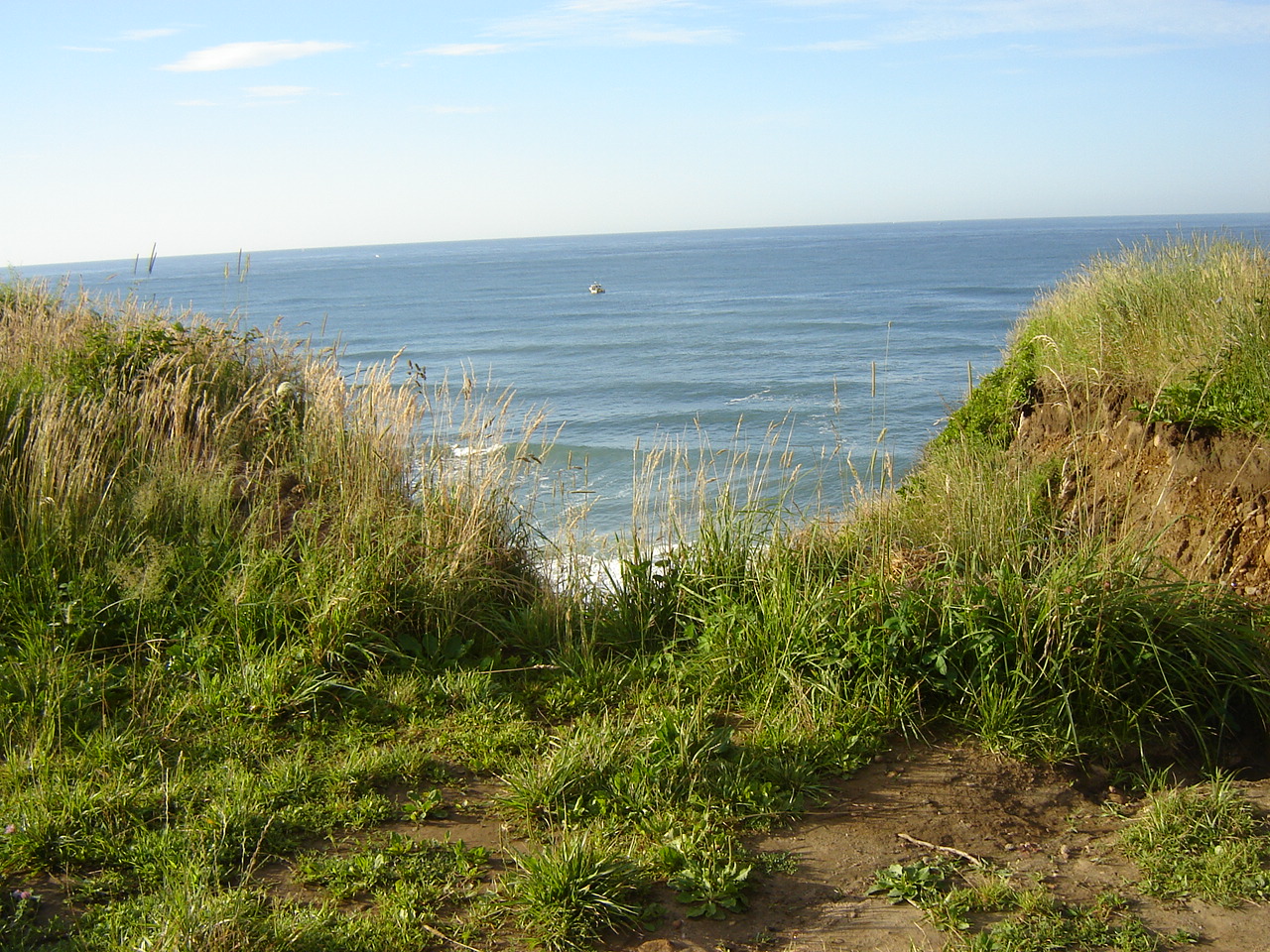
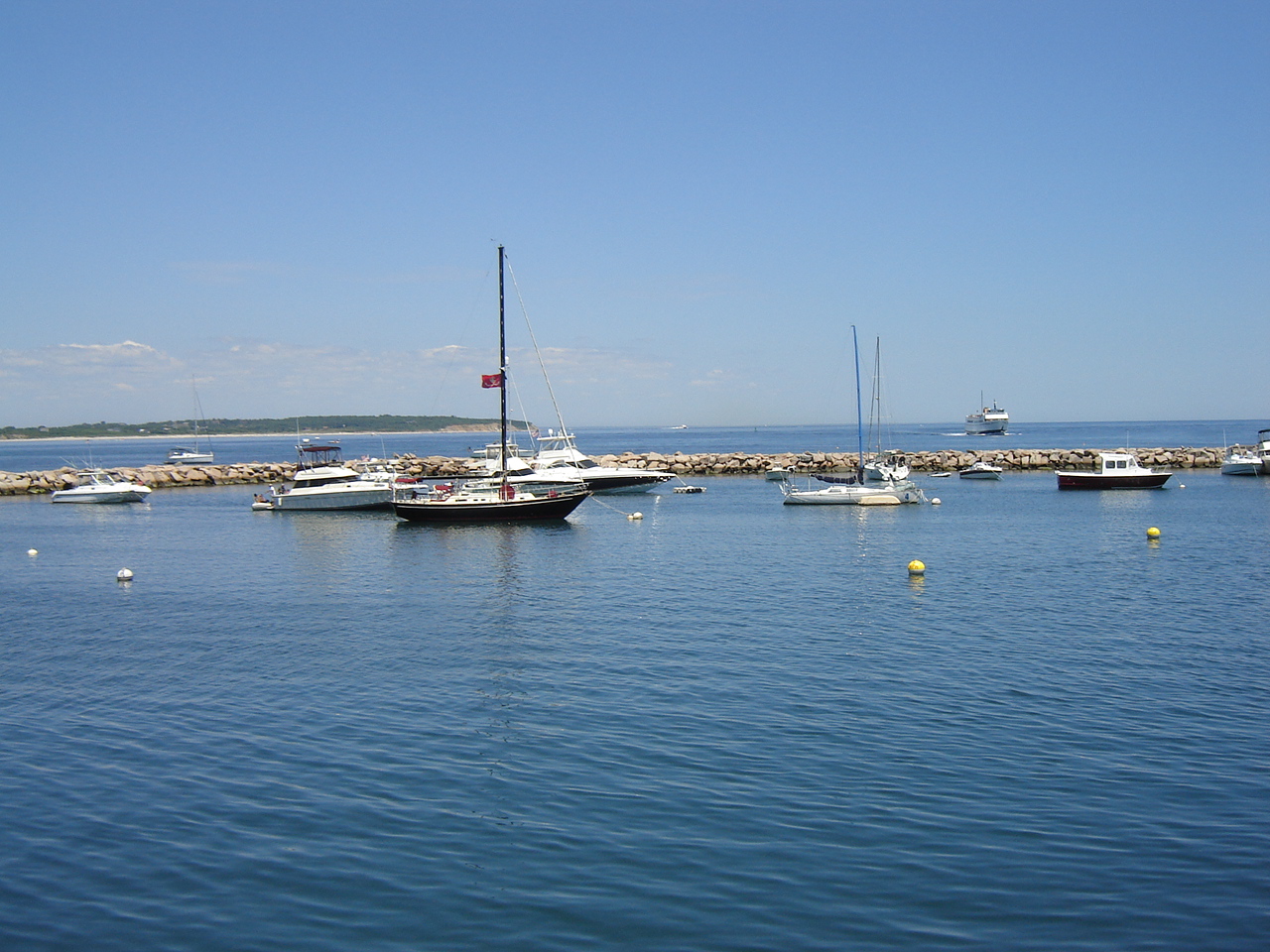
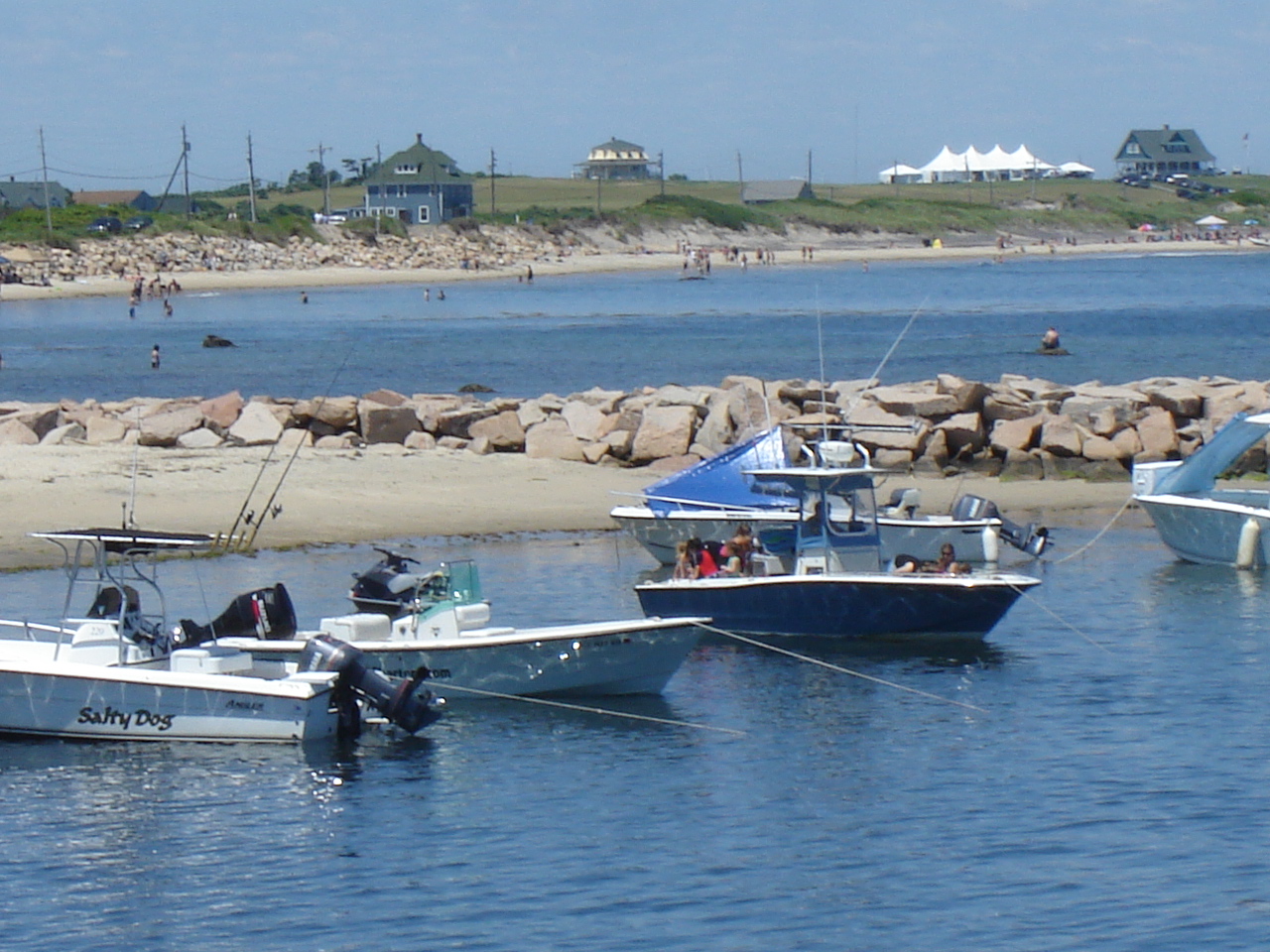
In the same spirit, I am posting pictures of not-summer.

On a warm July day, I took my photos of blue skies, beach paths, and small boats, and the next thing I knew we were having a Labor Day clambake. Within two days, summer was over, and a curtain of cold, windy rain descended. Along with the September mindset, my husband says.

Ceci ne’est pas l’été. Au revoir.

Read Full Post »

Asakiyume has alerted me to a great story about an anonymous library patron in Scotland who creates sculpture from old books and deposits them in libraries by stealth. The artist makes reference in his (her?) sculptures to Scottish mystery writer Ian Rankin and dragons and all sorts of literary things. You will flip over the pictures here.

Asakiyume says she likes the quotations that the mystery artist leaves with the sculptures: “I liked ‘Libraries are expensive,’ corrected to ‘Libraries are expansive,’ and also the quote from Robert Owen … (founder of some utopian communities) … ‘No infant has the power of deciding … by what circumstances (they) shall be surrounded.’ ”

The messages remind me of the mysterious tea cups of Anne Kraus, which I described here.

Now although Asakiyume knew I would love the book art, she may not have known that I have a family reputation for stealth projects, like secretly leaving a small Zimbabwean soapstone sculpture of parents and baby in John’s house after Meran gave birth.

Recently, I was telling Erik about a few of my escapades, and he got a look on his face suggesting that he was a little worried about the family he had married into.

When I was on the publicity committee for a local theater producing a musical about George Seurat, I purchased Seurat greeting cards and left them in stores’ card racks around town. They got sold, but the sales staff would have had to wing the price as there was no price on them.

Then there was the year that I sent a series of postcards from different cities under different names to an ice cream shop and in each card suggested a type of frozen dessert the shop should carry. Every card had a different reason why customers might want that dessert.

It worked, and the shop must have made money off the dessert as they stocked it for years afterward.

Photo: ThisCentralStation.com

Read Full Post »

We had already bought tickets for the new version of Porgy and Bess at the American Repertory Theater when Stephen Sondheim weighed in with an angry letter to the NY Times. He had not seen the show, but he apparently resented the tone of an article’s quotes from A.R.T. He may have thought director Diane Paulus and writer Suzan-Lori Parks were implying that they were better than the show’s original creators.

After the opening, Ben Brantley of the NY Times raved about Audra McDonald’s Bess while giving a mostly lukewarm review to everything else. Meanwhile, the student D.J. at Emerson College’s radio station kept reading promos for the show and pronouncing Porgy as “Porjy.” (He will always be Porjy to me now).

By the time our matinee rolled around, the day was almost too beautiful to be in a dark theater for three hours, and our initial anticipation had been reduced to mild curiosity.

So I’m happy to say we really liked A.R.T.’s Porgy — pretty much everything about it.

I admit that I am not intimate with the whole score and therefore was not always able to tell when new material had been inserted. (One line, about saving to send the baby to college, did come across with a loud, anachronistic clunk — but now a blog reader tells me it was in the original!) But the beauty of the songs, the dancing, the characters making the best of no-options, the love story! I cried pretty much the whole way through. And I’m still singing.

The only other Porgy and Bess I’d seen was directed by Bobby McFerrin in Minneapolis. It was long and kind of confusing, but I accepted that that’s the way opera often is. The A.R.T. may have presented a rejiggered story that was not true to the original, but it was a story that I could follow.

As I said to my husband on the way out, “Well, it worked for me.”

He said, “Sondheim should rethink his position.”

P.S. Audra McDonald was breathtaking.

Read Full Post »

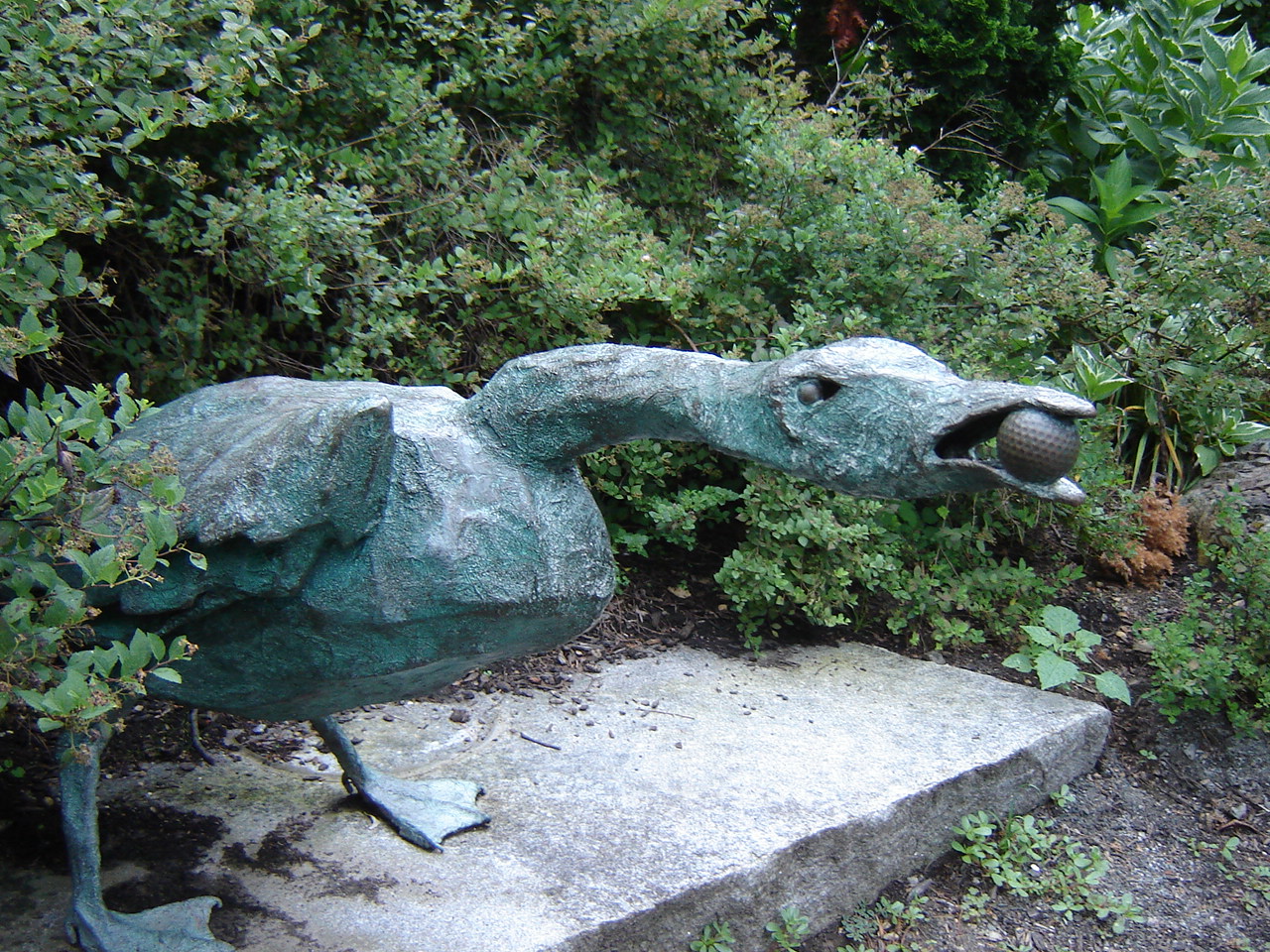
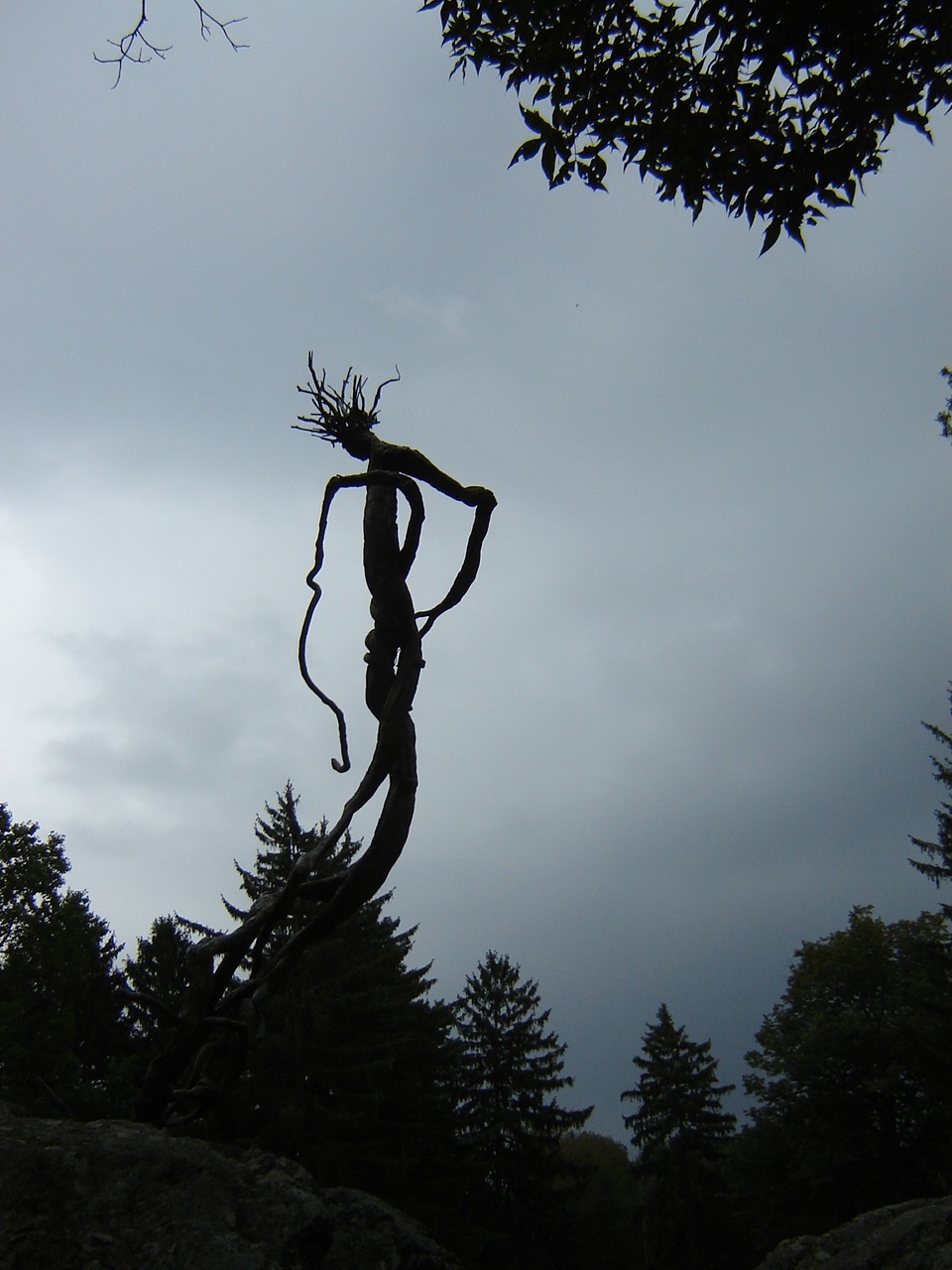
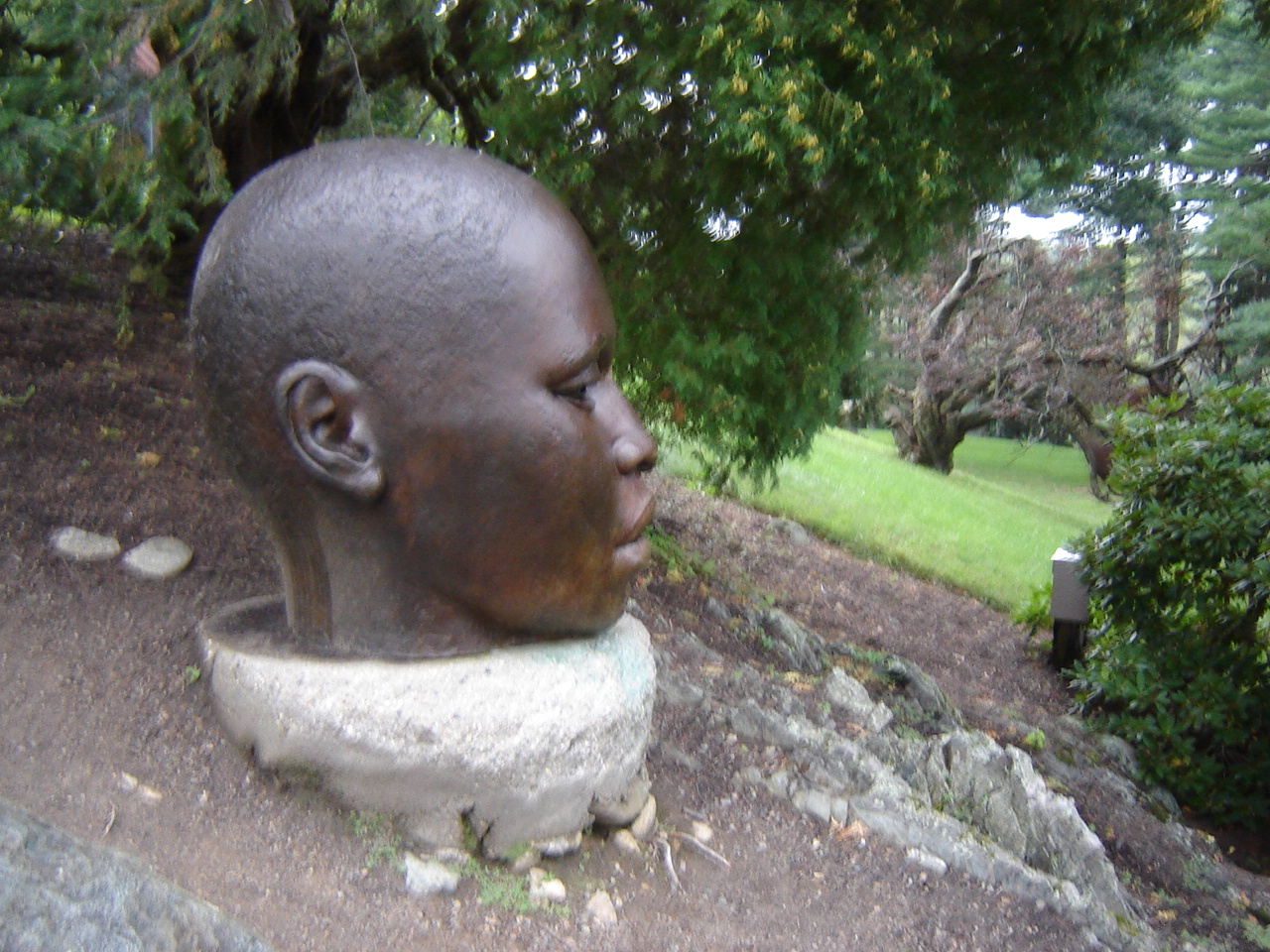
A few favorites from a rainy day at the DeCordova Museum and Sculpture Park.

We also liked the Andy Goldsworthy and the Caleb Neelon artwork.

Read Full Post »

I wrote before about a program using the arts to help people in prisons get beyond the prisoner mindset. Here’s a similar story.

Michelle “Bankston, who has short, blond hair and a muscular build, has spent almost 20 years behind bars. She was incarcerated first at a medium-security facility here in Alabama, and then at a private prison in Louisiana (to relieve overcrowding, Alabama sends some inmates out of state), and finally here, at the Montgomery Women’s Facility, a sun-soused cluster of buildings on the outskirts of the capital city.

” ‘A while back I decided that I could either spend decades in the bunks, watching TV or playing cards,’ Bankston says, ‘or I could get out here and take the opportunity to write poetry and draw.’

“That she’s been given this opportunity to do her art is testament to the work of Kyes Stevens, an avuncular and outspoken educator, poet, and Alabama native. Since 2002, Ms. Stevens has headed The Alabama Prison Arts + Education Project (APAEP), which offers literature and art classes in a range of prisons across the state. The program is funded by Auburn University and an array of grants. The teaching staff consists of five Auburn-based instructors and a rotating cast of teaching fellows from the graduate creative-writing program at the University of Alabama in Tuscaloosa. Classes run for 14 weeks and are rigorously structured, like college courses, demanding a full commitment from students.”

Read the article in the Christian Science Monitor.

On a related note, I met a woman in my playwriting class who founded a nonprofit called On With Living and Learning, Inc. Mary Driscoll lives in the Fort Point Channel area of Boston and works with people who have been through the prison system. She uses theater to generate the catharsis that can result from their telling their stories and also to help them develop “job skills for the 21st century.” Read about her here. A script that Mary was working on in my playwriting class is now going to be made into an opera, with all sorts of helpers, like the Harvard-trained opera composer, the cabaret singer, and the reggae performer.

I can’t help thinking that when these creative people use their talents to help others, they are getting something special in return.

Read Full Post »

I’ve been thinking of Lucille Corcos the last couple weeks. I have no idea why, but I hope eventually to reconstruct the train of thought that led to her. She was an artist I knew when I was a child. I rediscovered her art in the 1990s in a Minnesota museum. That was when I realized I love it.

Since Corcos wasn’t in Wikipedia, in spite of having works in museums, I taught myself how to write a Wikipedia contribution and am just waiting for the Wiki experts to let me post it.

As Cipe Pineles Golden and Martha Scotford write in Cipe Pineles: A Life in Design (New York: W.W. Norton & Co., 1999), Corcos and her artist husband, Edgar Levy, moved from New York City to the artsy South Mountain Road in Rockland County, New York, in 1941.

“Corcos was a successful painter and illustrator by this time. In the 1930s, fashion, culture and home magazines published her work and her popularity continued into the 1960s. Cipe Pineles’s close friendship with Corcos had begun when Pineles commissioned Corcos’s work for Seventeen and Charm. Her humor in personal interactions and in her art made her an engaging collaborator. Corcos’s paintings were densely packed with many small stories and commentary. The compositions had detailed multiple subjects; perspective and scale were distorted for practical and expressive purposes. This new modern primitivism was considered part of a native tradition in American art and its ‘unacademic’ nature was celebrated. Corcos’s subjects included rural landscapes and urban scenes, ranging from Christmas Eve, Rockfeller Center to The Oyster Party  to Everybody Meets the Boat. In addition  to doing commissioned illustration, Lucille Corcos built her career as a fine artist and was a steady participant in New York gallery shows from 1936 to 1954. During the same time, she was a part of major exhibitions in Chicago, Pittsburgh, Philadelphia, Washington, D.C., and other institutions in New York.”

I found a few other tidbits about her by Googling around. For example,  I found an article in the July 12, 1954, issue of Life magazine that shows two Corcos paintings, one of her life in winter in Rockland County, another of activities around her Fire Island house in summer. And here is a 1950 painting of her Fire Island house. I remember the house well.

Levy was often spoken of as the great artist in the family, with his numerous Picasso-esque paintings of his wife as mostly feet and eyes, but my mother pointed out that Corcos herself had an art career. Levy is not in Wikipedia either, but I leave it to an admirer of his art to fix that lapse.


Read Full Post »

I met Dedalus Wainwright when he was collaborating with a colleague of mine on an exhibit about carbon fiber. He is an artist, a sculptor.

Dedalus is having an open house this weekend at the Allston studio he rents from Harvard University.

In the studio, three tables full of models trace the origin of the full-sized painted aluminum sculptures you see here. He created the canes, or strips, in his models by cutting up drawings he had done in the past. Then he painted the blank sides with bright colors. I was intrigued by that multilayered approach and by what I could see by bending down and looking through the strips. I liked one model with especially intricate and colorful drawings and another that from the back reminded me of an Edvard Munch forest of ominous skinny trees.

I learned that a bird planted the seed that grew into the sculpture project.

Dedalus had been listening to a bird singing outside all day long. It may have been a mockingbird because it had so many different songs. At night, counting 47 different calls without one repeat, he dozed off, and when he awoke he had an idea for a sculpture with upright pieces such as you see here. If you look behind him, you also can see his studies of his pillars. Some are rising from what might be destruction, others from something more luminous.

There is a short bio of Dedalus at the Kinodance site. Read it here.

Read Full Post »

A week or so ago, I wrote about CSA, community-supported arts, a concept that borrows from the community-supported agriculture movement. In case you missed it, here’s the post.

Another creative idea for supporting the arts is crowd funding. I learned about it from the Backstage blog by way of ArtsJournal.com.

” ‘I saw people believing in themselves enough to try and make money for their projects,’ said Monica Mirabile, a co-founder of the Copycat Theatre. Earlier this year, Mirabile was applying for grants for her Baltimore-based theater troupe when a friend suggested she look into Kickstarter, a ‘crowd-funding’ website that promotes artistic projects through social media and allows donors to
support fundraising campaigns with any amount of money they desire. Crowd-funding sites have grown in popularity over the last few years and continue to attract artists and benefactors. …

” ‘This is not the newest idea on the block. It’s very traditional. But we’ve become very used to the idea of someone in a boardroom giving us a check and we hand them a piece of art and cross our fingers. The longer history of art is actually one of patronage that involves the artist’s audience. …

” Users of crowd funding must summarize their projects and goals for potential donors, a process that can help artists sharpen the skills needed to pitch or develop those projects in the future. ‘I learned how to better articulate why I’m doing the project and my artwork and what we’re trying to gain,’ said Mirabile. ‘I made friends because, by promoting, I got to talk to different
people in my community and made connections.’ ”

Read more here. And if you try an approach like Kickstarter, would you let me know how it worked for you? Leave a comment.

Read Full Post »

An island neighbor has just published Criminal Ingenuity: Moore, Cornell, Ashbery, and the Struggle Between the Arts (Modernist Literature and Culture). Ellen has been studying poets Marianne Moore and John Ashbery, and artist Joseph Cornell for some years — first as a member of the faculty at Vanderbilt and now at Pratt. I don’t know much about Joseph Cornell, but I did hear novelist Jonathan Safran Foer give a lecture about how Cornell’s work inspired him to cut up Bruno Schulz’s “Street of Crocodiles” every which way from Sunday and make a kind of art book out of it.

A few poets read this blog from time to time, so you might want to take a look at Ellen’s book. If you read it, could you send me a short review to post?

Read Full Post »

« Newer Posts - Older Posts »