First there were ghost leaves embedded in the sidewalks. And then … mystery messages.



Posted in Uncategorized, tagged art, concord, massachusetts, rainbow on July 3, 2012| 2 Comments »
First there were ghost leaves embedded in the sidewalks. And then … mystery messages.
Posted in Uncategorized, tagged art, artist, block island, craft, eben horton, fishing net, glass float project, glass station, glassblowing, lincoln city, new shoreham, oregon, treasure hunt on June 29, 2012| 2 Comments »
Eben Horton, a glassblower with a studio in Wakefield, Rhode Island, loved hearing how glassblowers in Lincoln City, Oregon, had hidden special creations on a local beach for a community treasure hunt.
Inspired to do something similar, he settled on the idea of glass floats, the kind traditionally used on fishing nets.
The Block Island Tourism Council helped Horton launch the Glass Float Project. The council’s site has details.
“WHEN: The hunt begins June 2nd, 2012, and continues indefinitely. It only ends when all the floats have been found!
“WHAT: 200 Glass Floats (glass orbs about the size of a grapefruit) will be hidden on Block Island. Floats will be dated, numbered and stamped with the shape of Block Island. All floats are clear glass except for 12 (because it is 2012), which are special colored orbs. One super special float is made entirely out of gold leaf.
“WHERE: 100 floats on beaches and 100 floats on Greenway trails. Floats will be hidden above the high tide mark but NEVER in the dunes or up the bluffs.”

Understandably, they don’t want people walking on the dunes, which protect the island in storms.
Check the council website for the bio on the artist, too: “Eben creates custom one of a kind pieces on an individual basis out of his studio that he calls ‘The Glass Station’- a converted 1920’s gas station.” More.
Posted in Uncategorized, tagged art, boston, flash forward, greenway, magenta foundation, north end, photo, photographer, phototography, rose kennedy on June 28, 2012| Leave a Comment »
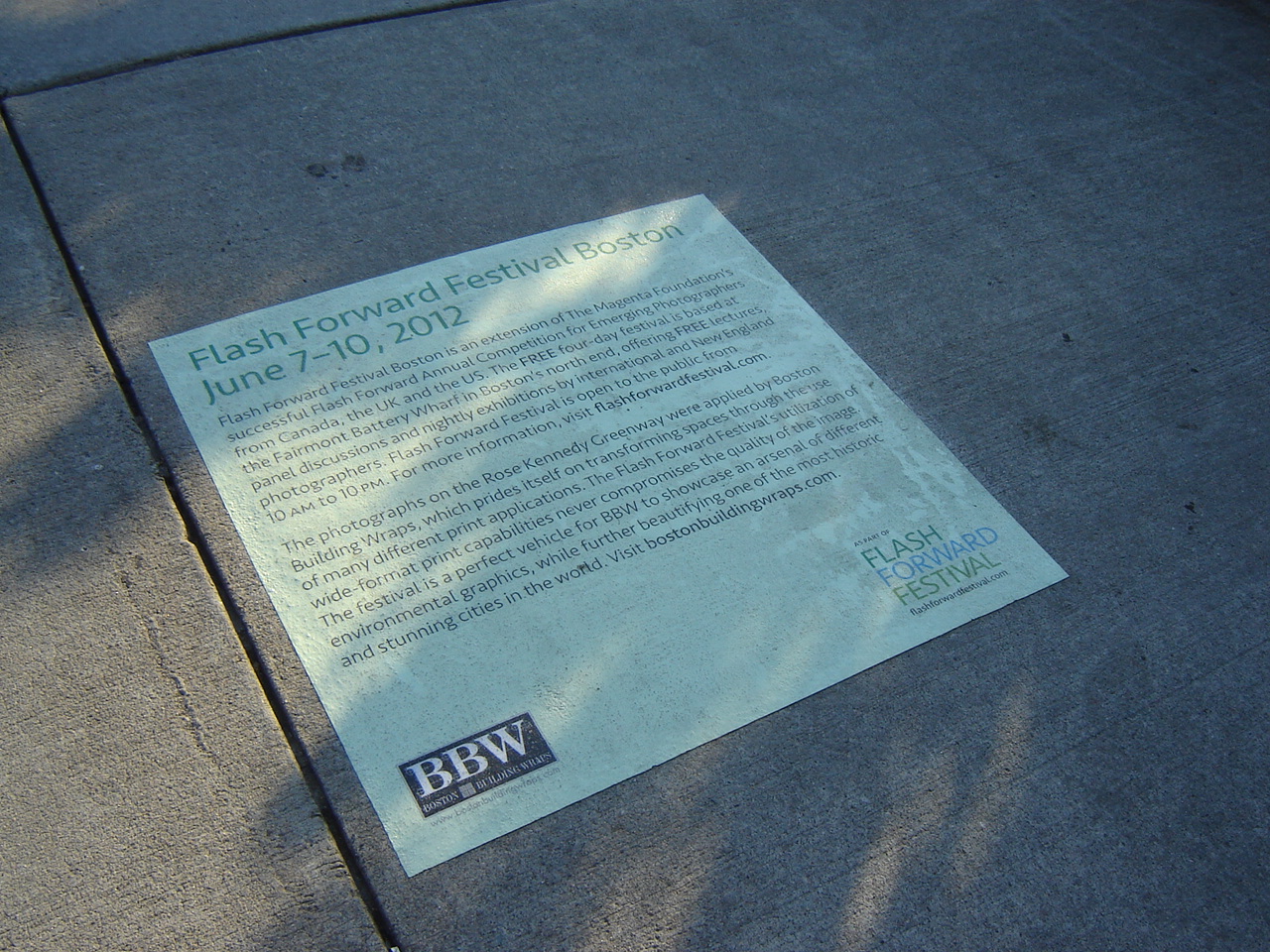
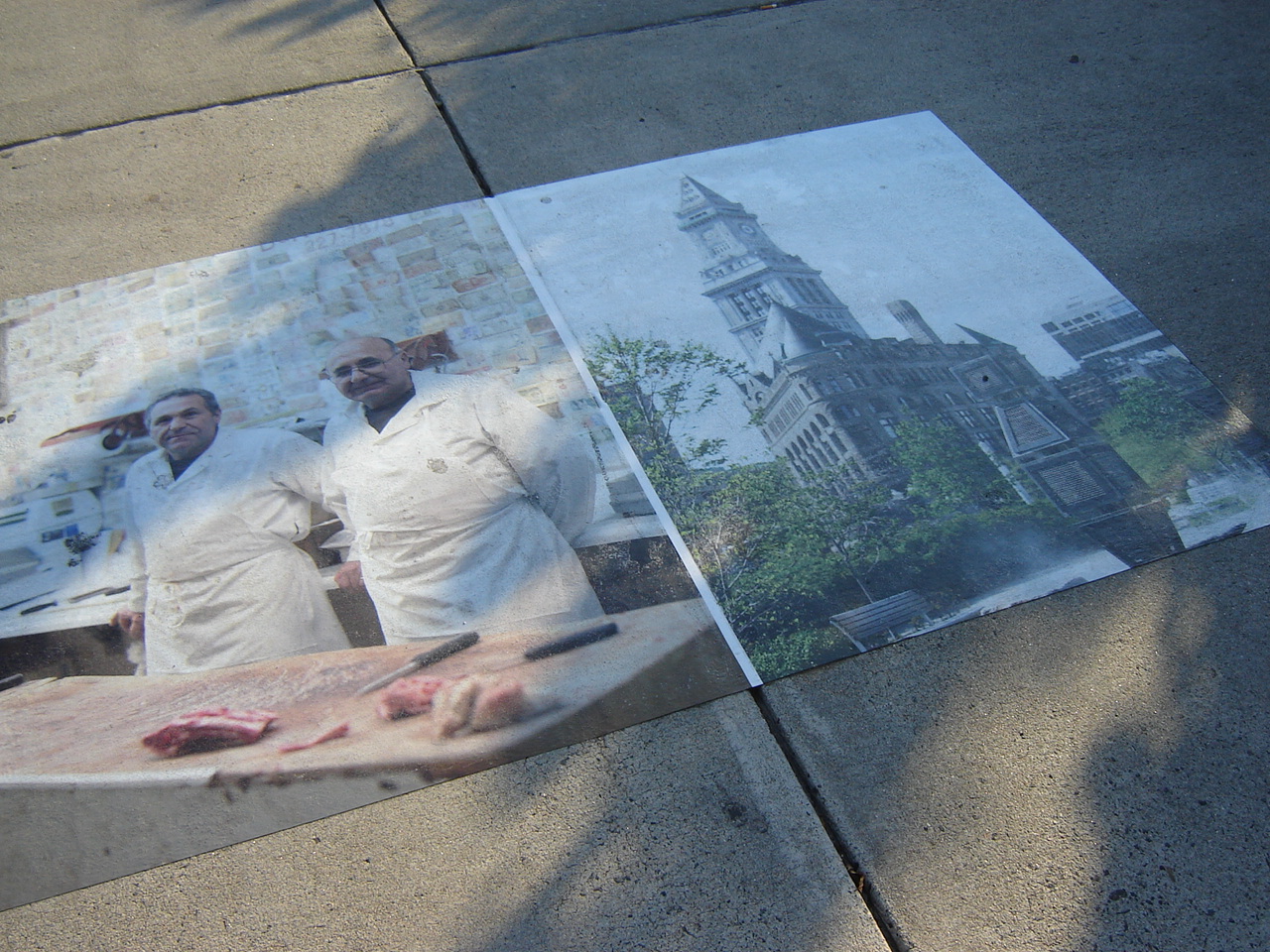
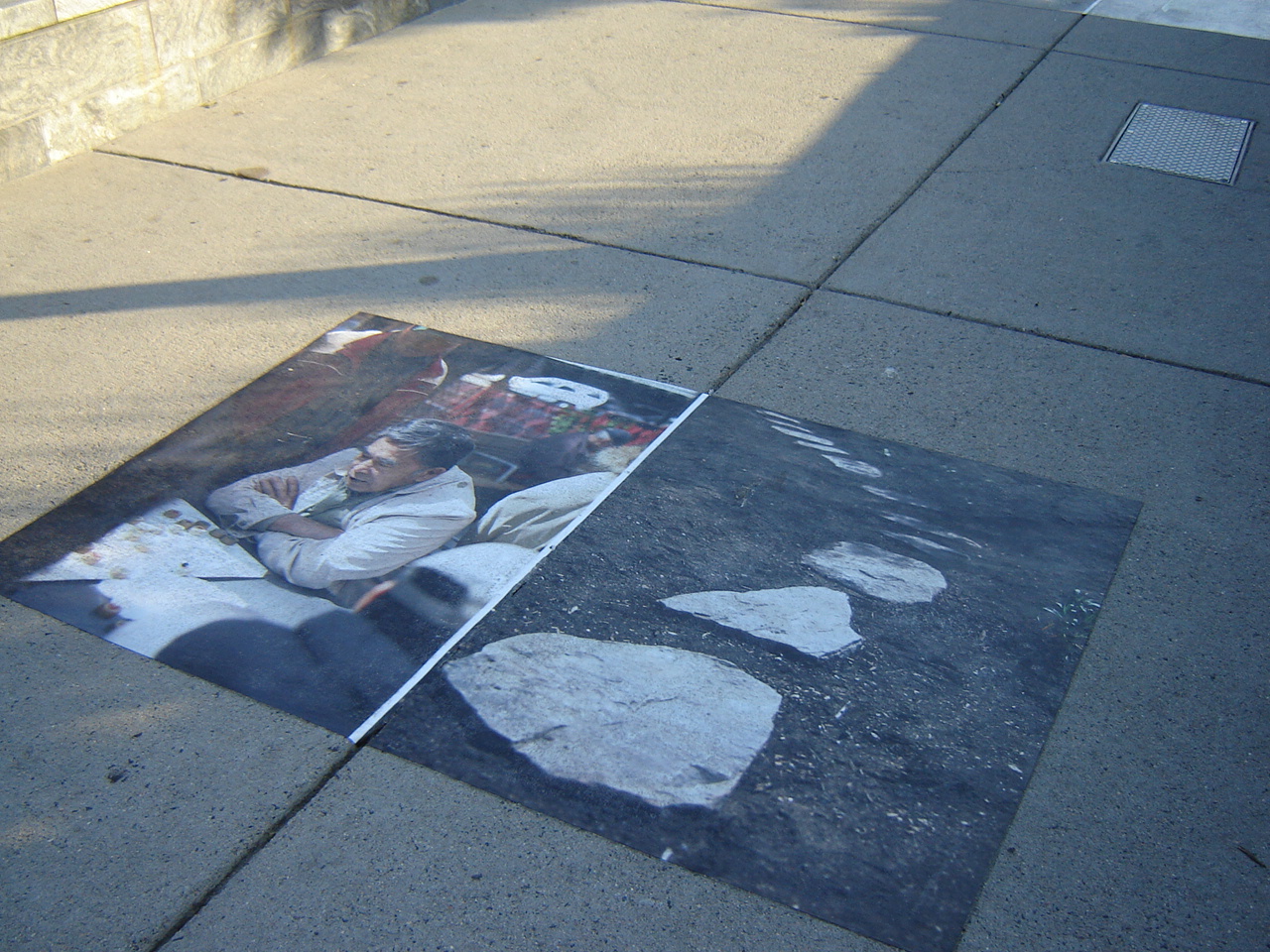
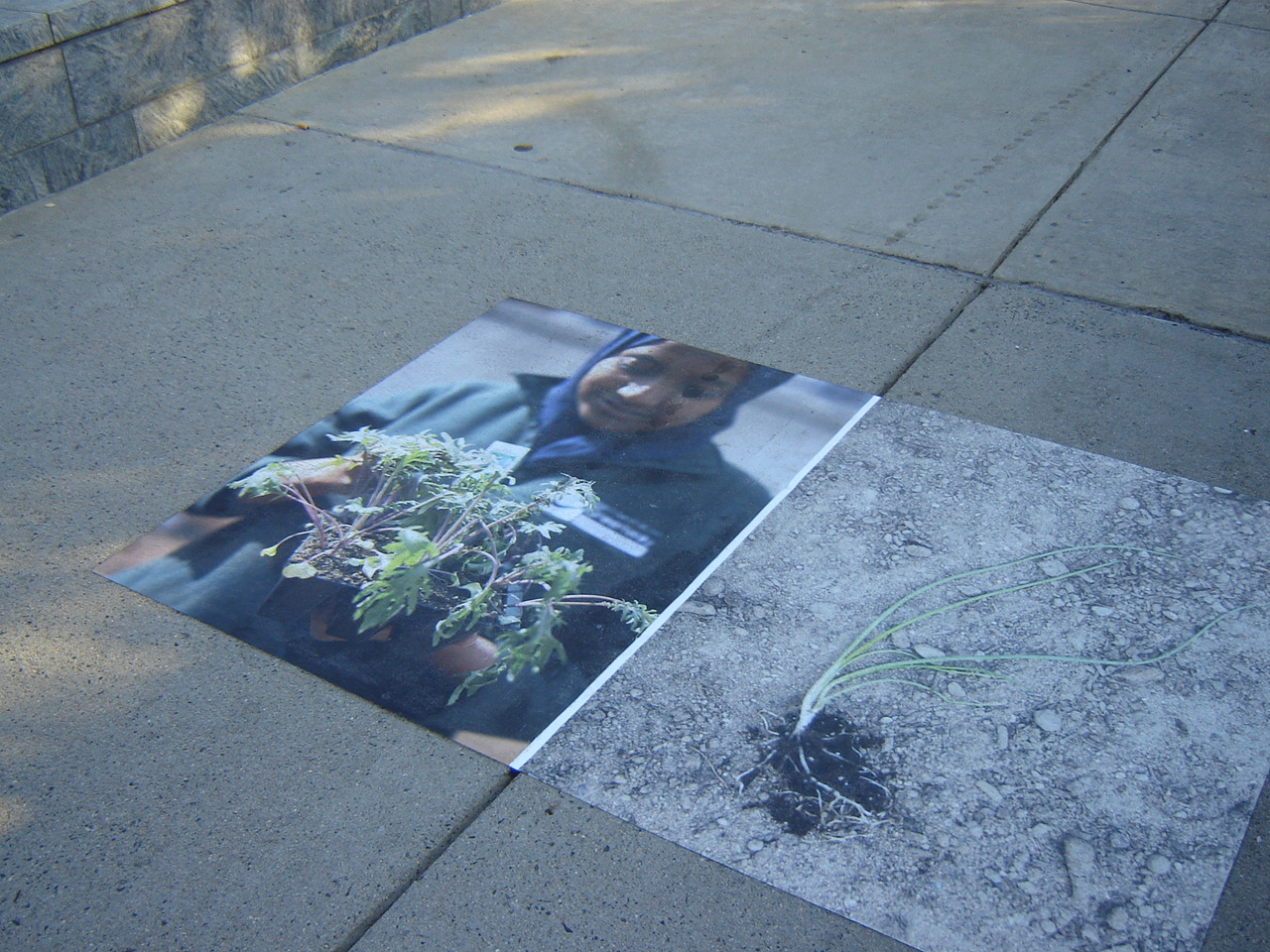
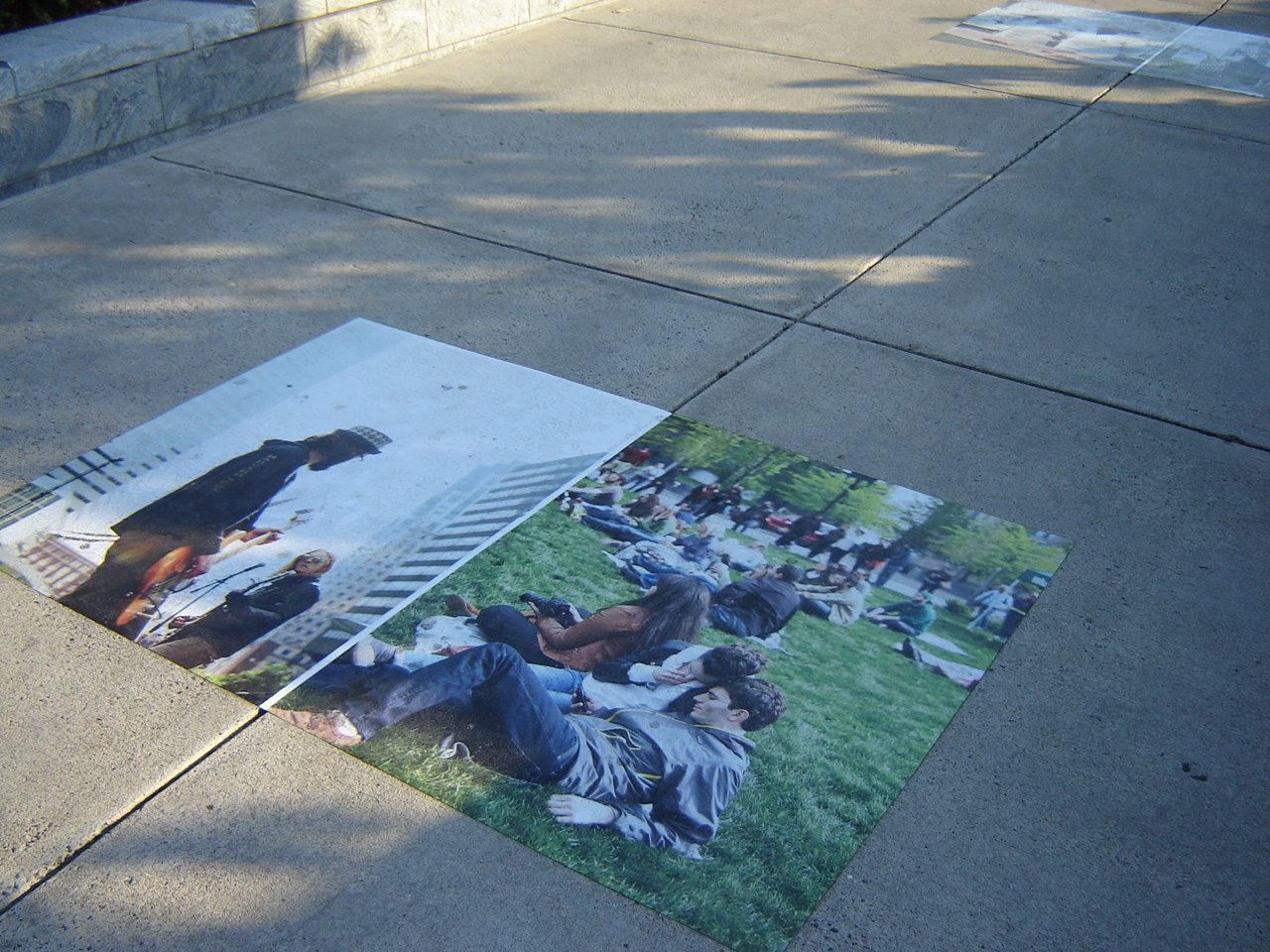
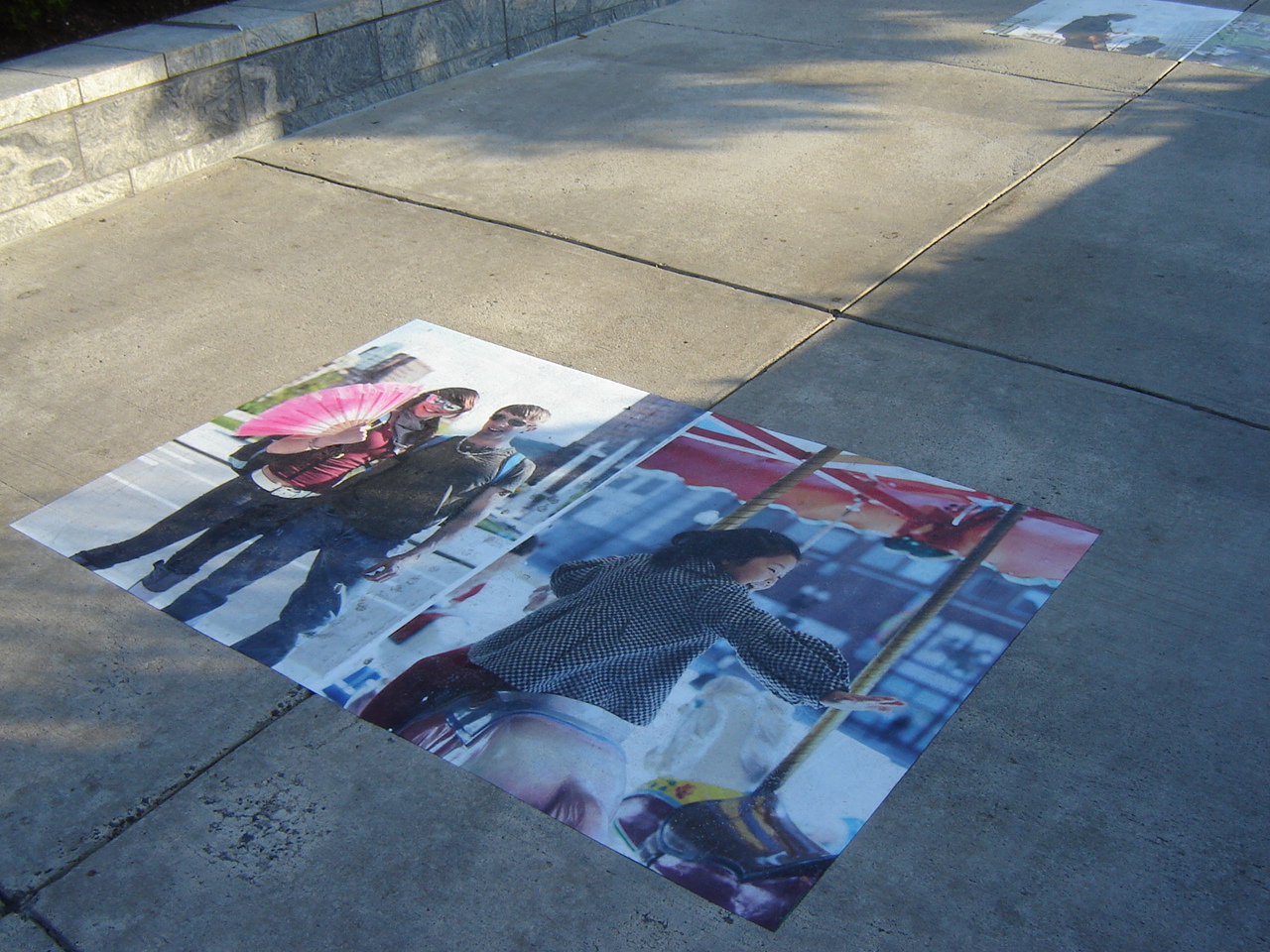
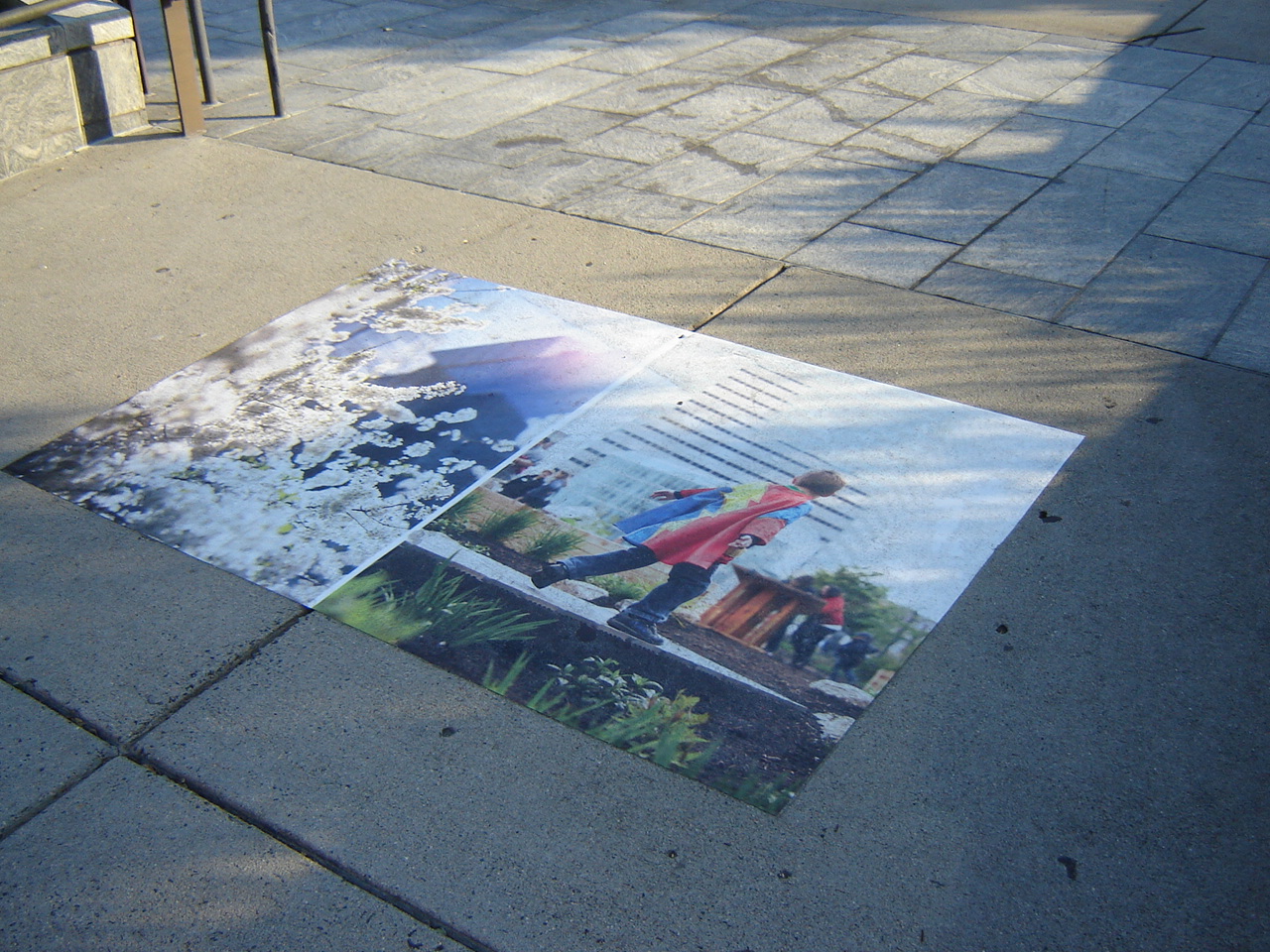
These photos were placed on the Greenway sidewalk near Boston’s North End. They are the result of the Flash Forward Festival for emerging photographers, which took place earlier this month. The event is sponsored by the Magenta Foundation of Magenta magazine (“publishing for the arts”).
“Set within the Boston cityscape, the five-day festival is based out of the Fairmont Battery Wharf, offering an in-depth experience through organized networking events and educational programming that brings internationally respected industry professionals together to share their knowledge with the next generation of photographers. Programming includes curated indoor and outdoor exhibitions, a Harborwalk exhibition series featuring work from local galleries, along with lectures, panel discussions, and nightly events.” Read more about it here.
Posted in Uncategorized, tagged art, artist, heidi luerra, joa stenning, Matthew Klahorst, raw on June 27, 2012| Leave a Comment »
I am trying too figure out what the acronym RAW stands for. It’s an organization to promote young artists in many media.
“RAW:natural born artists is an independent arts organization, for artists, by artists. We’re a community made up of creative individuals across the nation. Our mission is to provide independent artists within the first 10 years of their career with the tools, resources and exposure needed to inspire and cultivate creativity.”
The website says that in 2003, Heidi Luerra moved from a small town to Los Angeles to become a fashion designer. But being a small fish in a big pond was a struggle. She met young people in other fields who were also struggling, and she had an idea for bringing them together.
“In 2005, Heidi Luerra threw her first multi-faceted showcase in Los Angeles. After much interest from the over 750 attendees that came to the event, she found her calling — to create a platform for the many people who are talented, yet go unnoticed.
“In 2009, equipped with a mission of bringing tools and resources to artists who were fighting the good fight on their own, RAW was born. After the first RAW event, a local web developer, Matthew Klahorst, approached Heidi about combining these art events with an online showcase for artists. From this collaboration came the next evolution of RAW — promoting artists both online and offline.
“In 2011, they decided to take the concept beyond Southern California. RAW now hosts monthly showcases that spotlight indie talent in film, fashion, music, art, hair & makeup artistry, performing art and photography in 54 cities across the U.S and counting. By July 2012, RAW will be in 54 U.S. cities and Australia. RAW will launch in China and Europe in 2013.”
Read more. And if you are an artist in the first ten years of your career, consider joining the showcase.
Art: Joa Stenning

Posted in Uncategorized, tagged art, artist, chalk, dewey square, mp architects, octopi boston, street art on June 21, 2012| 2 Comments »
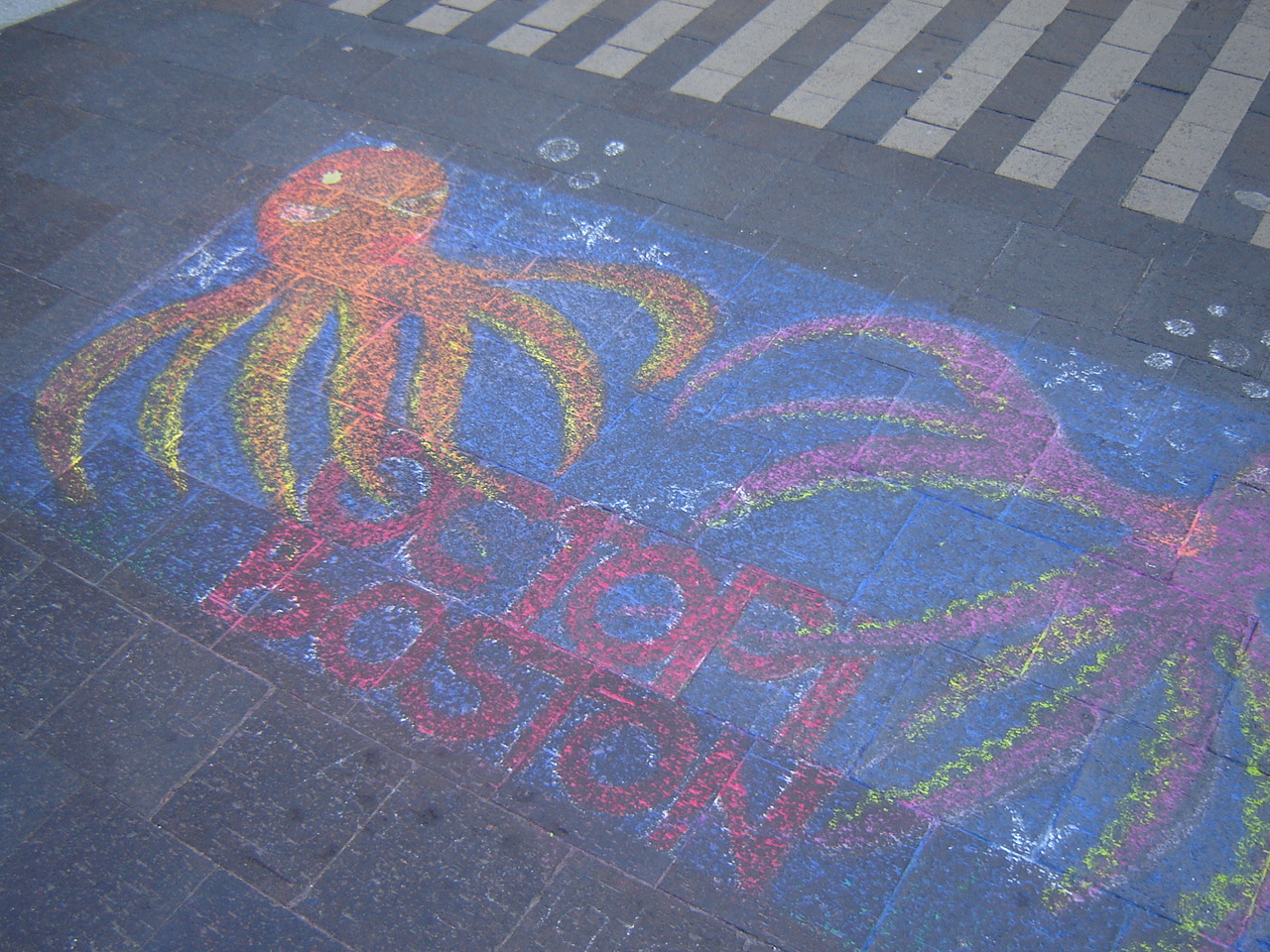
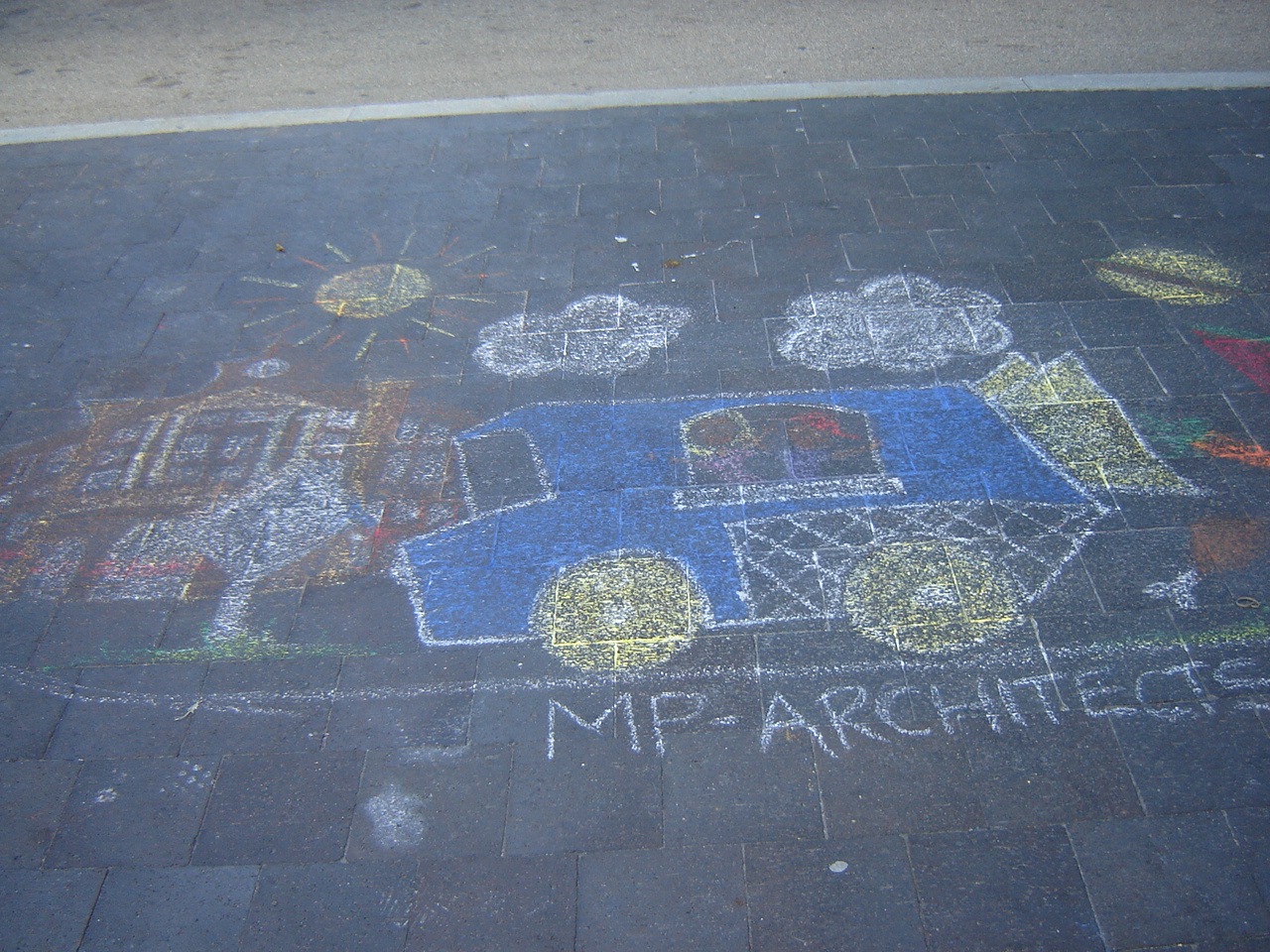
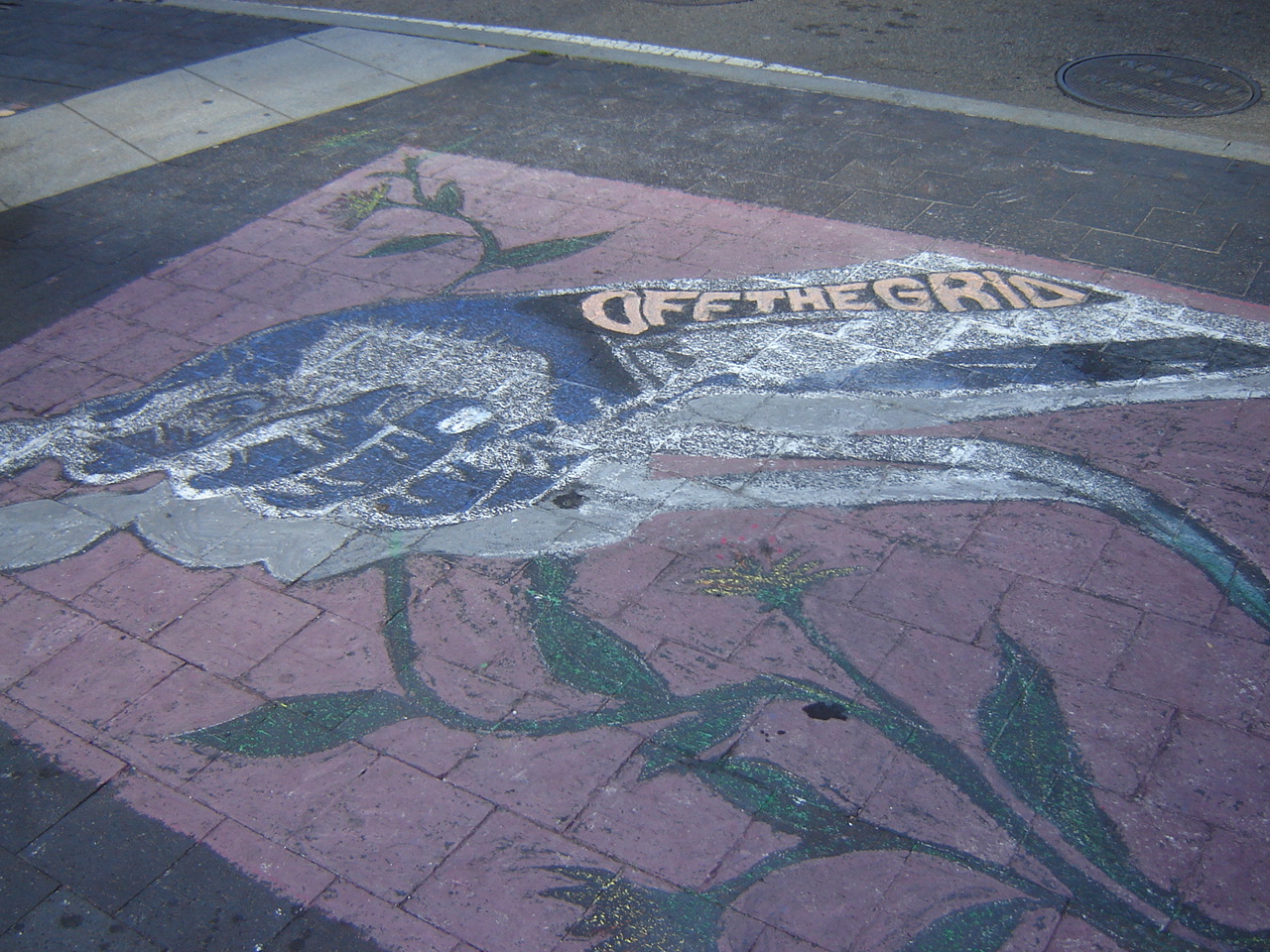
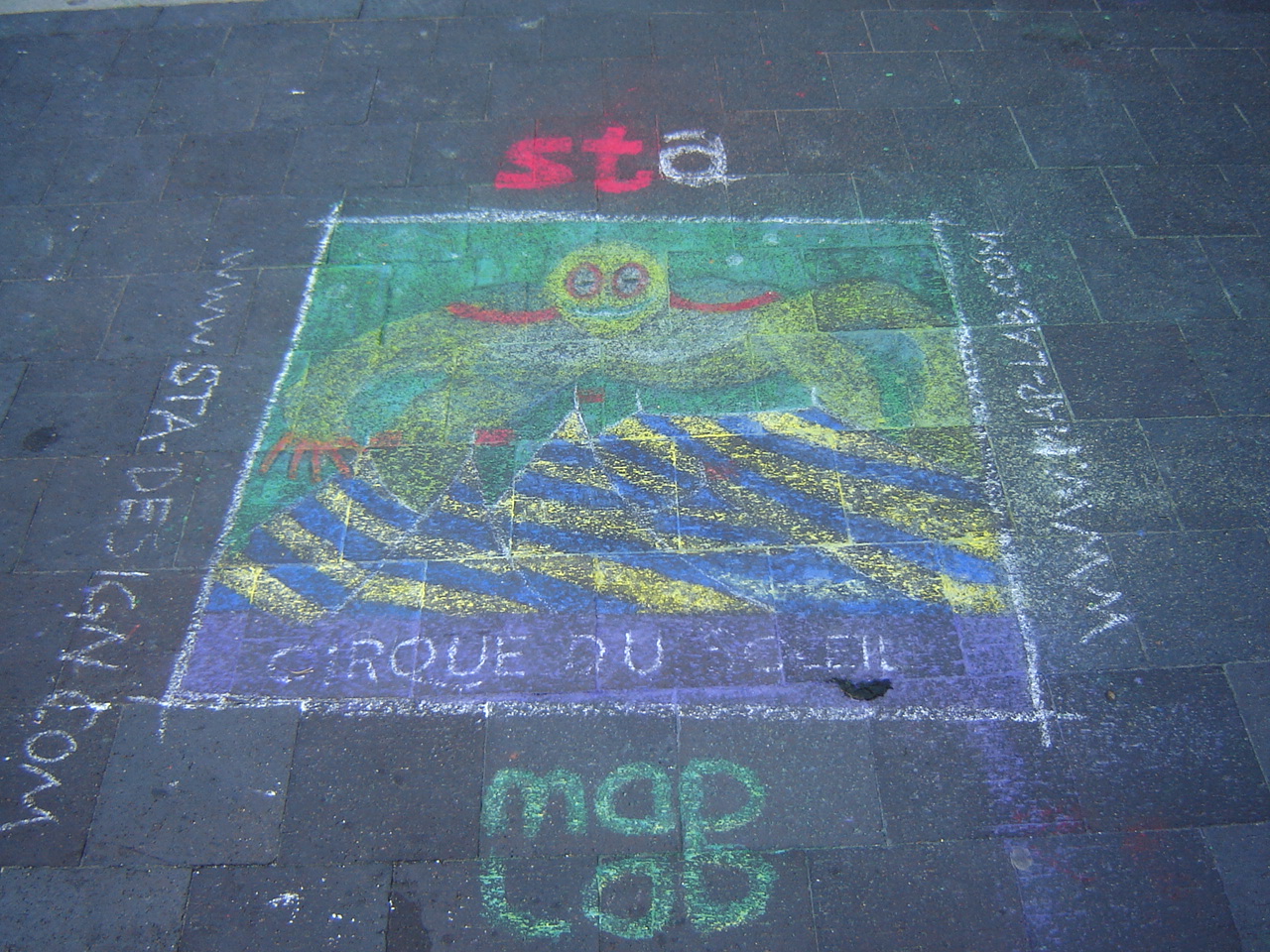
As you may recall, Occupy Boston camped out in Dewey Square. Today the new sod and the demonstration garden are flourishing alongside gourmet food trucks — and on farmers market days, alongside vendor tents.
But it’s still a place for the public voice to express itself. I hope you can see these chalk drawings, captured Tuesday. Already gone, they were a rather fleeting public voice, as street art often is. One is called “Octopi Boston.” There’s another featuring Cirque du Soleil and one on the Red Sox. Icon Architecture stealth is apparently behind that one.

Posted in Uncategorized, tagged art, boston, dolphin sculpture, downtown crossing, labor, murals, sculpture, seiu, social justice, street art, union, walks on June 20, 2012| Leave a Comment »
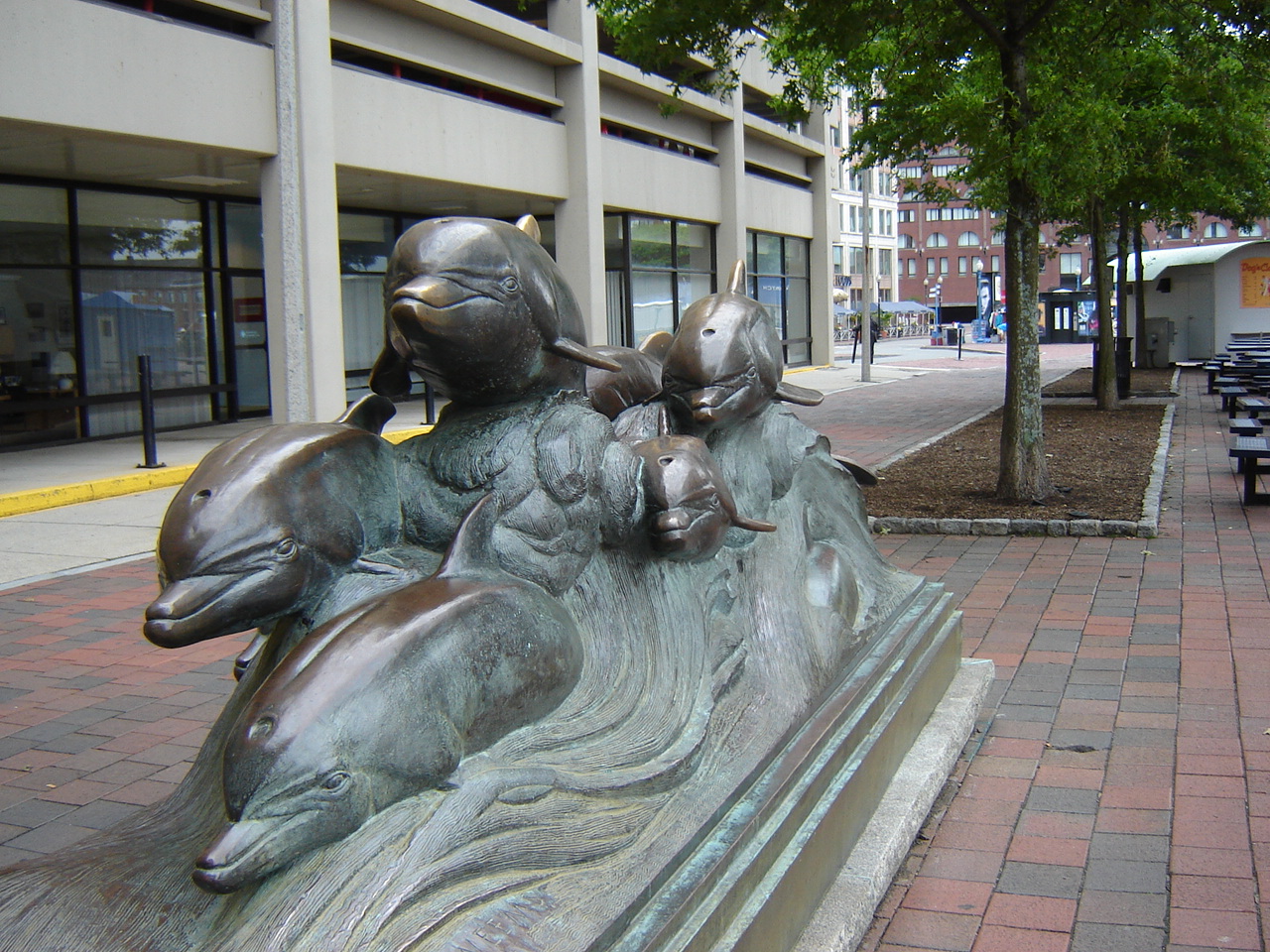
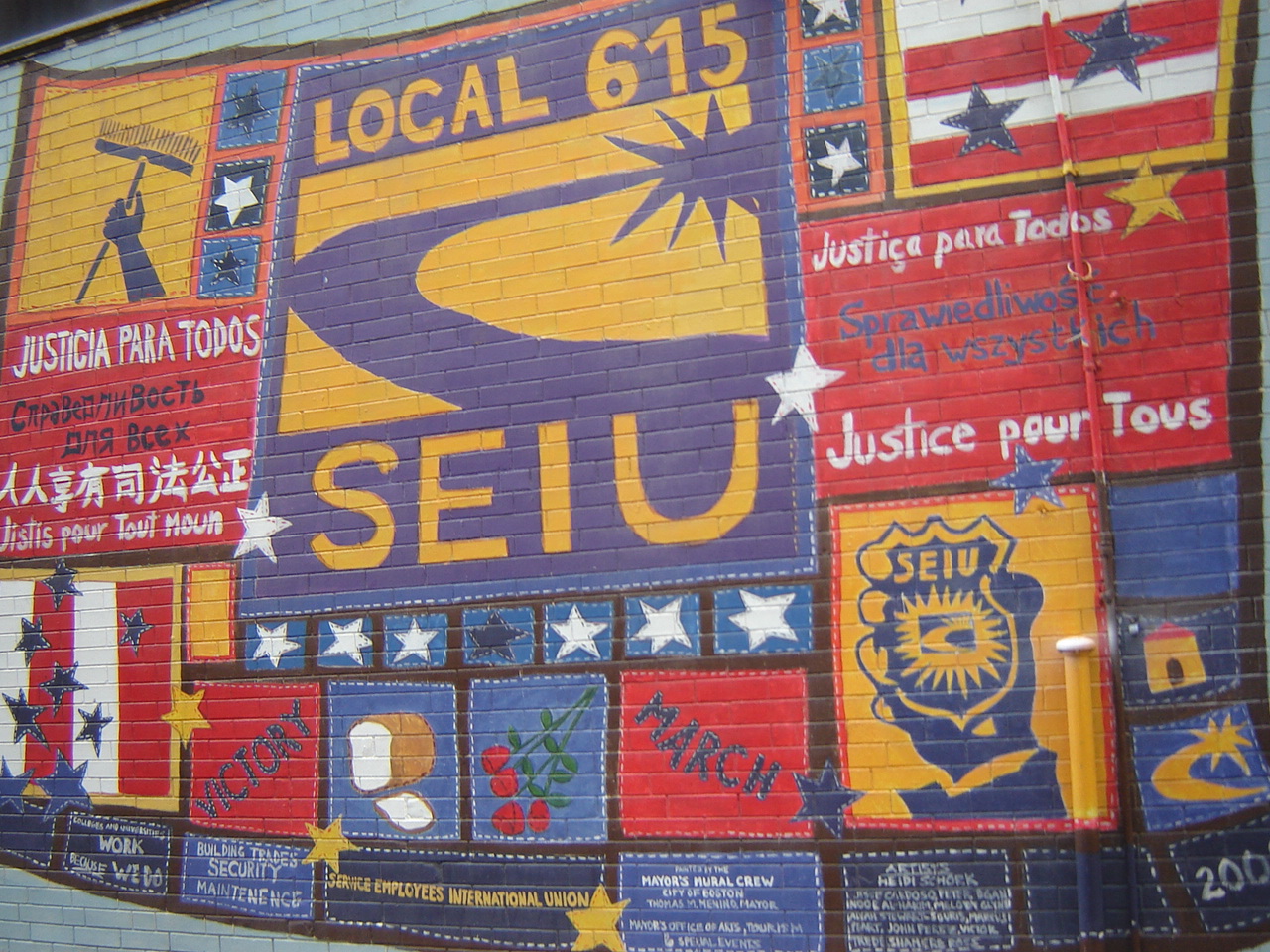
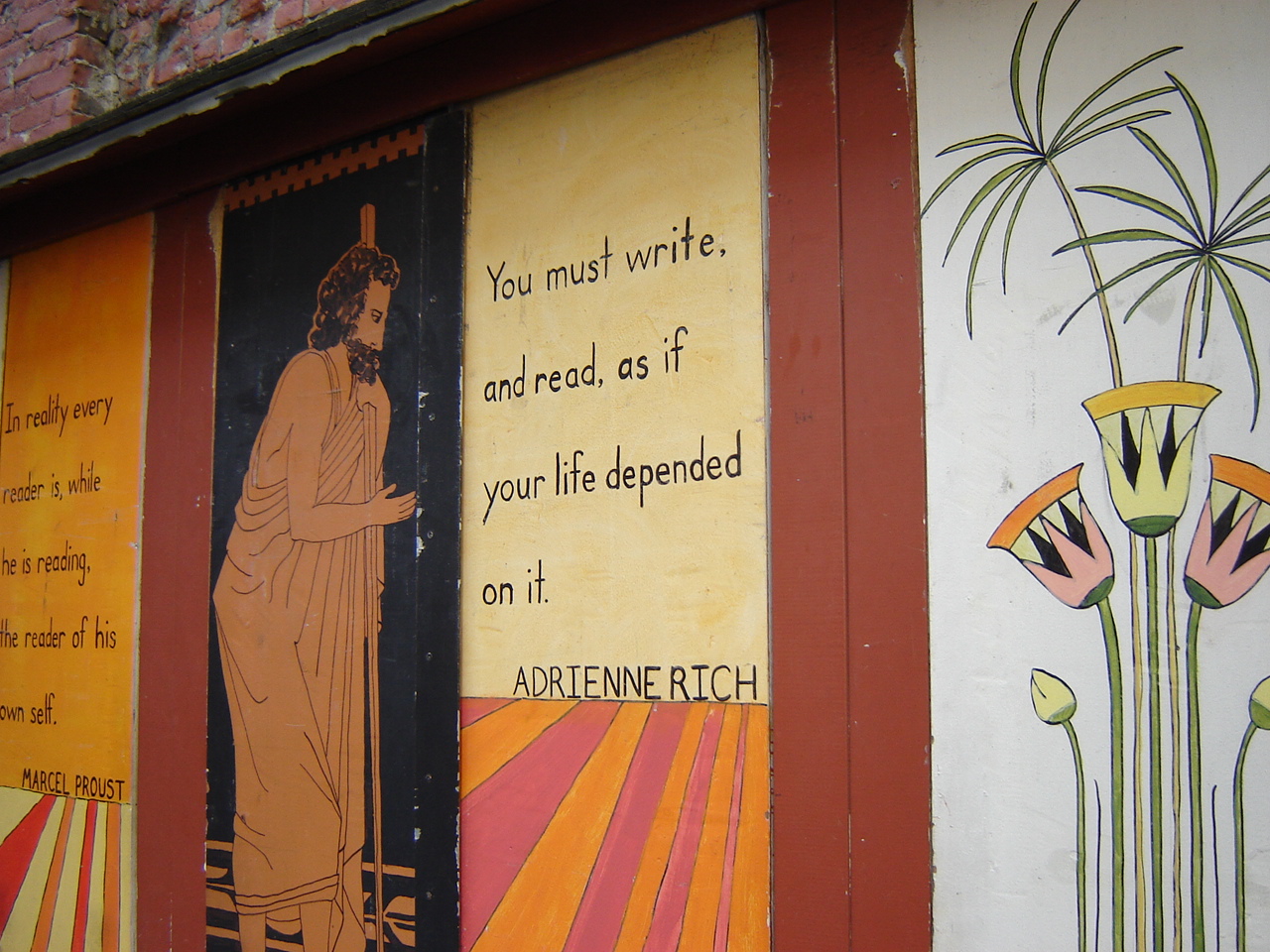
Some days I walk in Boston and snap the sights down side streets. The first photo was taken near the harbor. The others were taken near Downtown Crossing.
I like the Adrienne Rich line painted on a bookstore wall: “You must write, and read, as if your life depended on it.”

Posted in Uncategorized, tagged art, artist, arts and military, combat paper, drew cameron, drew matott, healing, papermaking, veteran on June 16, 2012| Leave a Comment »
I have blogged before on the use of the arts to help veterans readjust to civilian life. Today I’d like to highlight an initiative started by veteran Drew Cameron and Drew Matott. It focuses on the art that interests them most — papermaking — and is their way of giving back and moving on.
“The Combat Paper Project utilizes art making workshops to assist veterans in reconciling and sharing their personal experiences as well as broadening the traditional narrative surrounding service and the military culture.
“Through papermaking workshops, veterans use their uniforms worn in combat to create cathartic works of art. The uniforms are cut up, beaten into a pulp and formed into sheets of paper. Veterans use the transformative process of papermaking to reclaim their uniform as art and begin to embrace their experiences in the military.
“The Combat Paper Project is based out of art studios throughout the United States and has traveled to Canada and the United Kingdom, providing veterans workshops, exhibitions, performances and artists’ talks.” More here.
Photograph: Combat Paper

Posted in Uncategorized, tagged Alex Vadukul, art, artist, Joshua Bright, Ming Liang Lu, paper cutting, porrtrait, subway on May 19, 2012| 3 Comments »
Some outstanding musicians have performed in the Cambridge and Boston subways over the years. I never know quite what to expect.
New Yorkers also get some nice surprises in the subway. Alex Vadukul of the NY Times writes about a paper-cutting portraitist who works fast:
“In the congested world of subway performers, where dance troupes, conga circles and violin players blur, Ming Liang Lu, 57, is an alluring presence. A self-described ‘master paper portrait cutter,’ he has the ability to trim facial portraits out of frail paper within minutes, compelling some riders to willingly miss their trains.
“Mr. Lu practices several ancient Chinese art forms, and says he hails from a noted Shanghai teaching lineage. On weekends, he teaches calligraphy, painting and cutting at the New York Chinese Cultural Center. He said that in Shanghai, his birth city, he was renowned for stone sculpture and stamp seal carving. He credits the facial portraits to his formative training in a three-dimensional form.” 3-D before 3-D. Read all about it.
Photograph: Joshua Bright for the NY Times
Posted in Uncategorized, tagged art, artist, boston, camera, experimental, fort point arts, fort point channel, heidi kayser, innovator, mass college of art, media, multimedia, photography, sarah rushford, smith college on May 11, 2012| 2 Comments »
I learned about an unusual artist today because I was following @FortPointArts on twitter. Her name is Heidi Kayser, and just when I no longer have an office with a view of Fort Point Channel, she has launched an art project on the water. Sigh.
Anyway, I went to her website and poked around. This blog entry from 2011 is a typically amusing one, and I think one of my readers may want to try the experiment:
“Sarah Rushford arrived today and we got right to work … The mission, as we chose to accept it, was to construct some sort of wearable platforms to hold the cameras on the back of my legs. Wonderful engineers that we are, Sarah and I ingeniously came up with [contraptions] made of CD cases, zip ties, rubber bands, twine and alligator clips. …
“Sarah filmed me tramping across the beach. I filmed my ankles tramping across the beach. It was very surprisingly difficult to walk wearing the cameras — I couldn’t extend my knees very much, so finding balance in soft sand proved challenging but oddly meditative. My attention had to be focused on every step, otherwise I’d fall and damage the cameras.
“When we were nearly finished, the curious beach-goers who had been pretending to ignore me as I walked steadily and weirdly by them, came up to us and asked what we were doing.” Read more.

Photograph: Sarah Rushford
Posted in Uncategorized, tagged András Szántó, art, artist, calder, Christy MacLear, endowment, foundation, gareth harris, joel wachs, miro, rauschenberg, warhol on May 9, 2012| Leave a Comment »
Gareth Harris of the Financial Times writes that foundations set up by successful artists or their estates are becoming a force to be reckoned with in the art world.
“ ‘Artist-endowed foundations are the sleeping giants of philanthropy,’ says András Szántó, a New York-based analyst and cultural consultant. Indeed, these charitable foundations, endowed by an artist with assets (archives, property and art among them) used for the public good, are quietly but dramatically changing the US art landscape through their grant-making programmes, scholarship, research activities and contributions to museum collections. …
“The greatest challenge, for a start-up private operating foundation, [according to Christy MacLear, the Rauschenberg Foundation’s executive director], is making the transition from an unregulated art industry player to a highly regulated non-profit entity.
“Such sticky issues aside,” Harris continues, “artists’ foundations could, one day, match or even top government funding for the visual arts in America.
“Szántó stresses that their full impact is yet to be felt. ‘With an unprecedented cohort of well-to-do painters and sculptors among the older generation,’ he says, ‘the golden age of artist foundations may yet be ahead.'”
The Andy Warhol Foundation’s Joel “Wachs, meanwhile, is evangelical, declaring: ‘Successful artists have a unique opportunity to support those artists that come after them.’ ”
Read more in the Financial Times.

Posted in Uncategorized, tagged art, artist, barter, bronx, doctor, exchange, health care, insurance, lincoln hospital, medical care on May 4, 2012| 2 Comments »
As long as health insurance is out of reach for so many, creative approaches to coverage are likely to keep sprouting up.
I knew a doctor 30 years ago who took care of elderly single people for life — and inherited their houses. He ended up with a lot of houses.
More recently, CBSNewYork/AP reported that “a new program lets uninsured New York City artists exchange their art for medical services.
“Tony-Award winning actor Lin-Manuel Miranda and rapper and radio personality Roxanne Shante helped launch the ‘Lincoln Art Exchange’ at Lincoln Hospital in the Bronx” early this year.
“Under the program, artists will earn ‘health credits’ for every creative service they perform. In exchange they’ll be able to obtain doctor’s visits, laboratory tests, hospitalization, emergency care, dental care and prescriptions at Lincoln.” Read more at CBS Local.
I would be interested in other unusual examples of how people are accessing care today.
Photograph: nyc.gov

Posted in Uncategorized, tagged anne spalter, art, artist, DeCordova, lincoln, providence, rhode island school of design, risd, roger mandle, video on April 18, 2012| Leave a Comment »
Nancy L. urged me to take a look at the work of Providence-based artist Anne Spalter. I found fascinating, kaleidoscopic videos and stills at various online locations.
From her artist statement: “Anne Morgan Spalter creates art works that explore her concept of the ‘modern landscape.’ The works depict modern landscape elements or ways of viewing our surroundings and use traditional materials as well as digital imaging, printing, and video.
“Spalter takes hundreds of digital photos and videos each year, often from the windows of moving cars and planes, that capture both technologically advanced ways of moving through the landscape and the modern structures that are in it …”
She is the author of The Computer in the Visual Arts, which former RI School of Design president Roger Mandle described as, “a seductively articulate and illuminating introduction to the rapidly expanding world of the computer and art, design, and animation.”
She and her husband are collectors of early computer art. “In early 2011, the DeCordova Museum in Lincoln, MA, exhibited works curated from the collection,” notes Spalter’s c.v. MoMA has shown pieces from the collection, too.
This video, called I95, will amaze anyone who has driven that daunting thoroughfare.
Find some stills from videos by Anne Spalter here.

Posted in Uncategorized, tagged art, artist, boston, easter bonnet, first friday, Galvinized couture hats, haberdasher, hat, Marie Galvin, milliner, millinery, open studio, south of washington, sowa on April 6, 2012| 4 Comments »
There’s this one doctor who is generally quite late, so I always plan to take half a vacation day when I have an appointment with her. On Thursday, however, she was on time, so after I saw her, I got on a bus and went to SoWa (“South of Washington,” known for art galleries). Ferris Bueller’s Day Off.
I had got it in my head that I would like to buy an Easter hat this year. No one does Easter bonnets anymore. It used to be fun, if a little ridiculous.
After I left some of Suzanne’s Luna & Stella cards in the SoWa building where there are open studios on first Fridays, I went over to the hat shop.
The hats were pretty gorgeous, but pricey. (It’s art, after all.) The smallest little saucer with a couple feathers was $150. The more magnificent hats were close to $400. So I just looked. You should look, too. Amazing, huh?
Marie Galvin, the artist, writes on her site: “Galvin-ized Couture Hats and Headpieces are handcrafted with innovative design & techniques. These fabulous creations are perfect for Weddings, Ascot, the Kentucky Derby and Cocktail Parties.”
Nothing about Easter.
Can’t you picture me in a back pew of the U-U church in this little number? Sigh.

Posted in Uncategorized, tagged art, arts, arts education, miller-mccune, national endowment, nea, pacific standard, test scores, tom jacobs on April 2, 2012| Leave a Comment »
Thank you ArtsJournal.com for another good link!
Tom Jacobs at Pacific Standard offers new evidence from the National Endowment for the Arts that arts education is associated with better overall student performance.
“Students from the lower end of the socioeconomic ladder,” he writes, “tend to do less well in school than those from more upscale families. But newly published research identifies one sub-group of these youngsters who tend to exceed expectations: those who participate heavily in the arts.
“ ‘At-risk teenagers or young adults with a history of intensive arts experiences show achievement levels closer to, and in some cases exceeding, the levels shown by the general population studied,’ a team of scholars writes in a new National Endowment for the Arts Research Report. ‘These findings suggest that in-school or extracurricular programs offering deep arts involvement may help to narrow the gap in achievement levels among youth.’ ” Read more.
Doesn’t surprise me that the arts can do that. But I think the key word here may be intensive. What do you think?
Photograph: Richard Thornton/Shutterstock

Posted in Uncategorized, tagged art, artist, George Washington Bridge, graphic novel, illustrator, Little Red Lighthouse, Lynn Ward, woodblock, woodcut on March 26, 2012| 6 Comments »
Back in December, Asakiyume and her daughter and I went to see a graphic art exhibit in Fitchburg. We were all quite taken with a dark, wordless story that Lynd Ward carved nearly a century ago. So I thought I would mention that, according to the New York Times, a documentary about Ward will be shown in Maine next Saturday.
Scroll down in a column by Eve Kahn, here, to the subhead “An Illustrator’s Life.”
“The prolific illustrator Lynd Ward had fans as diverse as superhero-comic-book collectors, the poet Allen Ginsberg and the graphic novelist Art Spiegelman. In the 1920s and ’30s Ward carved woodblocks for wordless books about capitalism’s oppressive side effects. …
” In later years Ward mainly illustrated stories by other authors, but his compassion for the underdog still came through, especially in his 1942 watercolors for Hildegarde H. Swift’s ‘Little Red Lighthouse and the Great Gray Bridge.’ ”
The Times reporter interviews filmmaker Michael Maglaras, who “has devoted much of the past two years to a new movie, ‘O Brother Man: The Art and Life of Lynd Ward,’ which will have its premiere on March 31 at the Maine Festival of the Book in Portland.
“Mr. Maglaras and the producer Terri Templeton based the film partly on archives that the family preserved after Ward’s death in 1985, and they extensively interviewed Ward’s younger daughter, Robin Ward Savage.”
Now, that is a movie I would like to see. Here’s a clip.


 Suzanne's Mom's Blog