Feeds:
Posts
Comments

Posts Tagged ‘artist’

A few photos.

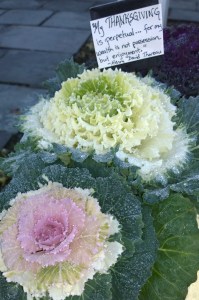
The Barrow Bookstore featured a Thoreau quote on its kale-decorated book barrow at Thanksgiving: “My Thanksgiving is perpetual … for my wealth is not possession but enjoyment.” This shop off Main Street is the place to go for gently used and out-of-print books.

A yellow rose was blooming on Beacon Hill as late as November 19.

Fort Point Arts has a new show by six contemporary mosaic artists using a variety of techniques and materials. One favorite example: Aesop’s wisdom about the fox, the grapes, and the crow, rendered as a mirror.

Finally, no matter how many times I have walked up and down School Street in Boston, I have failed until now to zero in on the reason it is called School Street. A Latin school was established there in 1635, before the founding of Harvard even, and many notables attended over the years. You should be able to read these names on the plaque in the sidewalk: Benjamin Franklin, Samuel Adams, John Hancock, Charles Bullfinch, and Ralph Waldo Emerson. Boston Latin is still going strong, but in a new location.

I love that the original Boston Lain was teaching Latin and Greek, languages I once knew a bit. I am also reminded that those languages were taught at outdoor hedge schools in 18th Century Ireland, when the English were blocking education by Catholics.

112915-thoreau-quote-barrow-bookstore

111915-rose-on-Beacon-Hill


112015-fort-point-art-gallery

112015-Aesop-fox-and-crow-mosiac


112515-Boston-School-Street

11-25-15-who-went-to-early-Latin-school


Read Full Post »

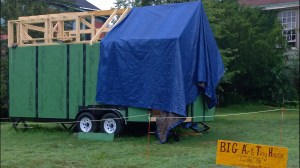
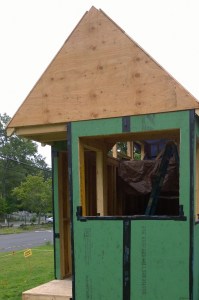
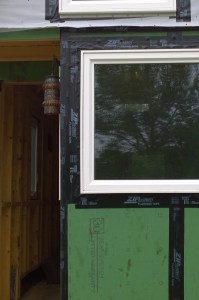
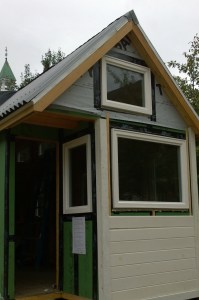
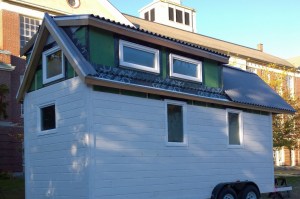
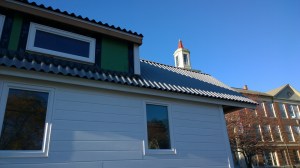
I’ve been watching a tiny house go up in front of the Umbrella Community Arts Center. It’s an art project that started in June and is supposed to wrap up next June.

The Umbrella said “Artist Miranda Aisling will be building a tiny house on the front lawn of The Umbrella and filling it with handmade items.”

I am now going to post the photos I have taken periodically, and I hope I get them in the right order. Even though the project is only half way, when I saw the new color today I said to myself, “Time to report.”

concord-tiny-house-1

072515-tiny-house-grows


070815-tiny-house-2

070815-tiny-house


072515-tiny-house-moving-along

082615-tiny-house-lantern


090415-tiny-house-growing

100315-Concord-tiny-house


100315-explains-tiny-house-art-project

101815-tiny-house-new-siding


110815-tiny-house-gets-roof

2115-tiny-house-at-half-way

Read Full Post »

Greg Cook has a lovely story at WBUR’s “The Artery” on Boston artist Nate Swain’s Zen garden.

Swain tells the reporter, ” ‘I worked driving a tour trolley in Charlestown, and I drove over that bridge every day to go to work, and looked down … I went down there not even knowing what I wanted to do.’

“At the edge of the Charles River, near the North Washington Street Bridge, by the dock in front of the Residence Inn by Marriott on the east end of the park, he’s been assembling ‘Low Tide City’ or ‘Barnacle City.’ It’s ‘a little city’ of bricks and stones that disappears under the river and appears when the tide goes out. ‘I realized it could be an art piece about sea level change,’ he says. ‘People could watch it flood and imagine Boston could do that if sea level rises.’

“And right under the Zakim Bridge, Swain realized he could rake the existing expanse of gravel he found there into patterns, much like a traditional Zen rock garden, to create ‘Zen Under the Zakim.’ He says, ‘If you really sit there and you listen to all the noise, some of the traffic, even though it’s really noisy, it does sound like ocean waves.’ …

” ‘I try to find places where I can do art without asking permission. In Boston, there’s so much bureaucracy. There’s no room for spontaneity. … With all the bureaucracy and the permission-asking, it sucks all the energy and all the inspiration out of the art piece itself.’ …

” ‘I have this theory,’ he adds, ‘if you put something up beautiful and colorful and fun, in good taste, uplifting, it will stay and everyone will love it and no one will bat an eye.’ ”

More here.

Photo: Greg Cook
Nate Swain’s “Zen Under the Zakim” in 2015.

Read Full Post »

Artists love a challenge. Tell them it’s impossible and they’ll find a way to do it.

As Ralph Gardner Jr. writes for the Wall Street Journal, a good example may be found at one to the most polluted waterways in America, Brooklyn’s Gowanus Canal.

“What is it about the Gowanus Canal,” Gardner asks, “that attracts art and artists? I visited a bit more than a year ago and spotted some sort of homemade art project floating in the middle of the canal. It was as if the anonymous artist was saying, ‘Take that, Superfund site!’

“A far more ambitious project alighted [in late September], when Diana Balmori, a celebrated landscape architect and urban designer, oversaw the launch of a floating landscape at the foot of the Whole Foods parking lot that overlooks the canal.

“ ‘The reason we picked the Gowanus Canal is the attempt to show that plant material can clean water,’ Ms. Balmori explained. At the same time, she acknowledged, ‘We picked the hardest.’ …

“The floating island was to be filled with multiple tubes. In a poetic twist, the tubes were to be made of the same culvert pipe used to dump pollution and sewage into the canal.

“Perhaps even more poetically, the goal of the experiment was to test the viability of creating large-scale ‘edible’ islands in polluted urban rivers to serve as a food source. Some plants were to be irrigated with distilled water, others with captured rainwater, and a hearty few even with water directly from the canal. …

“I was told that a duck had laid an egg on some earlier iteration of the project. And indeed, we stood there admiring the island’s three monarch butterflies, a beleaguered species in recent years, flitting about the plants.”

More at the Wall Street Journal, here, but there may be a firewall. The author is highly skeptical about anyone ever eating plants from this island, but you can tell he has a grudging admiration for an optimistic artistic vision that insists on a better future.

Photo: Cassandra Giraldo for The Wall Street Journal

Read Full Post »

It took a little poking around on the web as neither the Rhode Island State Arts Council nor the Block Island Airport seem to have published any information on the airport’s new exhibit, but I can finally share some tidings of artist Neal Personeus.

From Cape Scapes: “Neal began his interest in driftwood sculptures as a young boy on the beaches of North Truro in Cape Cod, Massachusetts. His original works were typically pirate ships in the sand made from the various flotsam and jetsam that Cape Cod Bay and the Atlantic Ocean would return to the land. By the time he was in his early teens, his works began to change towards wharf scenes and typical seaside shops perched upon interesting driftwood base pieces.

“When Neal was in his early twenties, he became an architectural and engineering draftsman. He rented a beachside cottage with some friends during the summer of 1984, and spent the entire vacation working beachside on his sculptures while watching the Olympics. It was during this time that he honed in on the type of works he would ultimately settle upon. Utilizing his interest in architecture, he would scour the beaches and dunes for beautifully bleached and unusually shaped base pieces, and then picture the style of house that would blend into and compliment the environment of the base piece.” More here.

You can find lots of Neal’s work on Pinterest if you search on Neal Personeus. And check out this Warwick Museum of Art poster featuring the piece called “Yeah … but the view” here.

Art: Neal Personeus
This humorous piece, currently in an exhibit of Personeus sculptures at the Block Island Airport, is called “Yeah … but the view.”

Read Full Post »

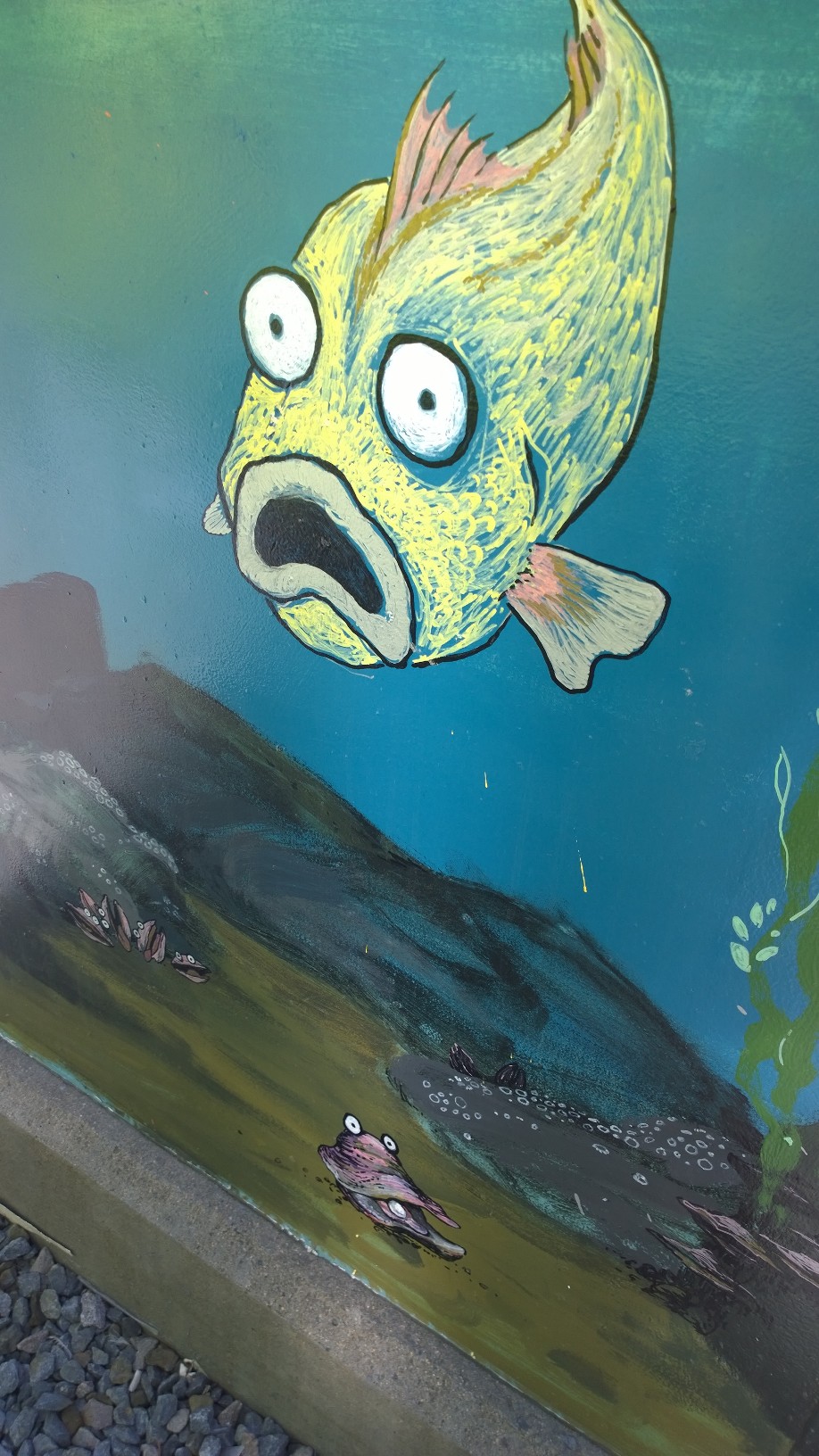
Adding appeal to a neighborhood by having local artists decorate utility boxes has become a thing. The adorable utility-box sea creatures below, however, have their work cut out for them as the only agreeable aspect of a heavily trafficked truck route between parking lots in South Boston.

I’ve taken photos of quite a few decorated utility boxes in the last couple years, and I think they work best in places where they support other amenities — trees, flowers, attractive storefronts. Otherwise they seem to be fish out of water.

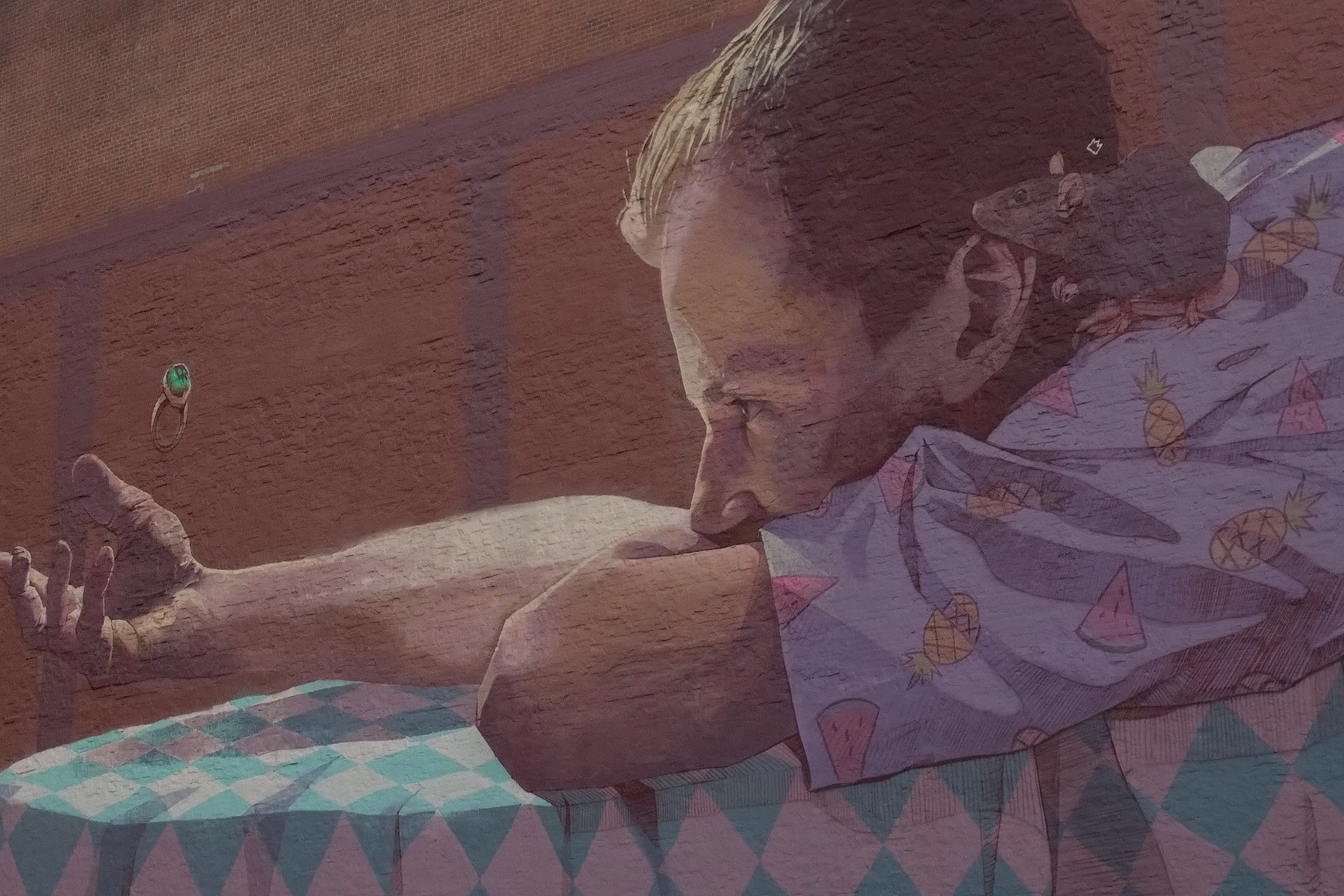
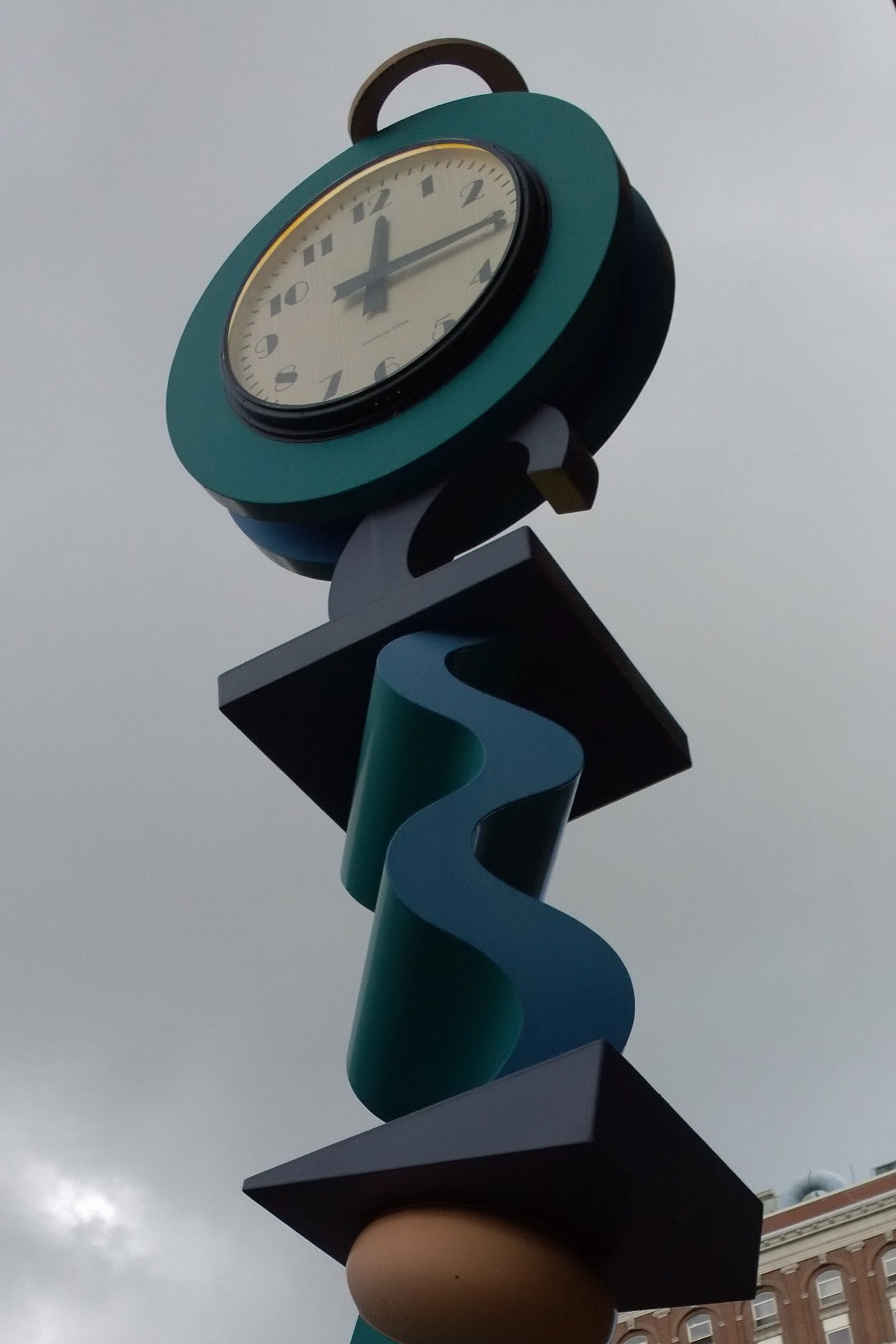
The unusual mural in downtown Providence is an example of street art with companions. The crazy Alice in Wonderland-type clock, for example, is nearby.

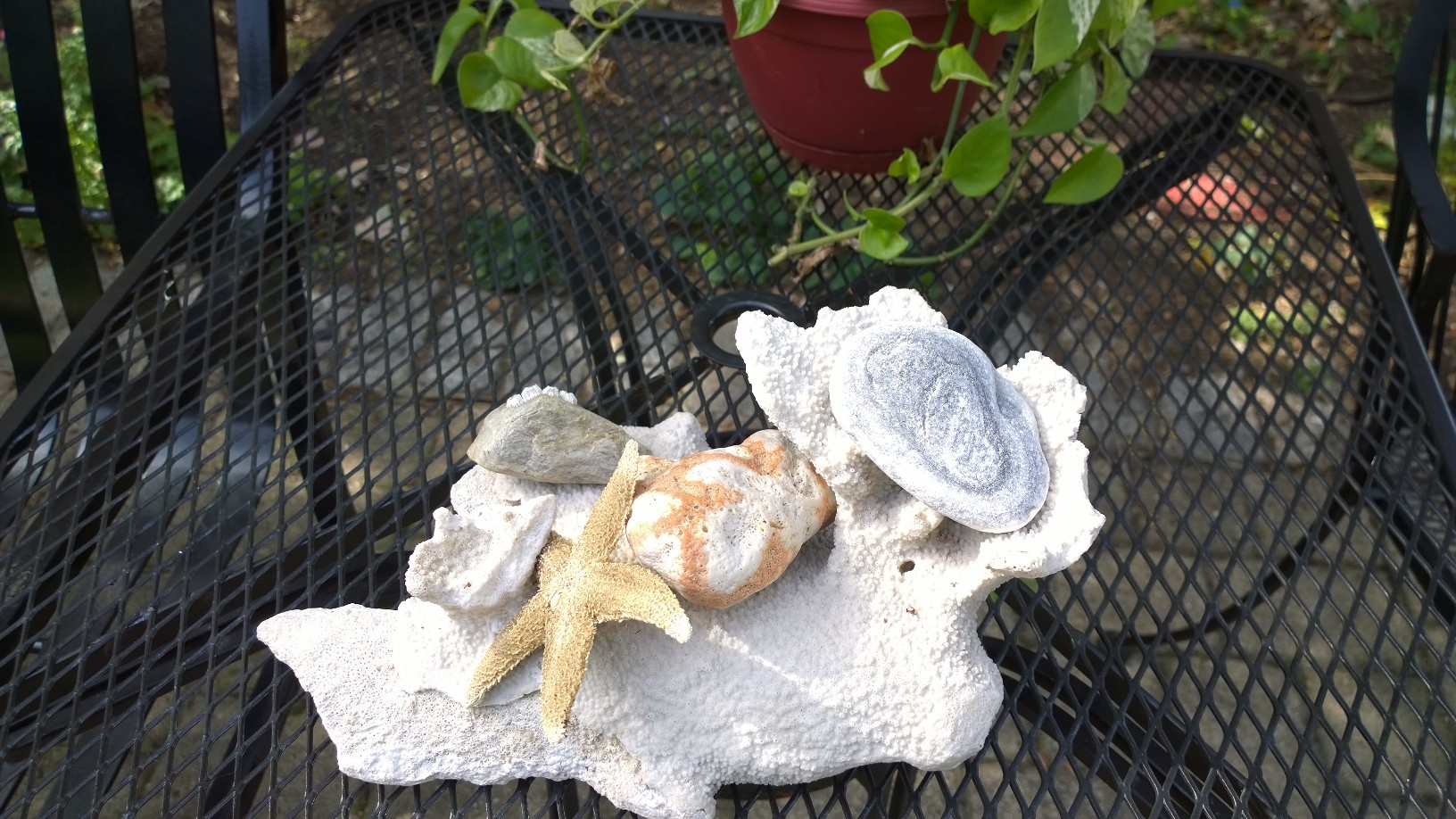
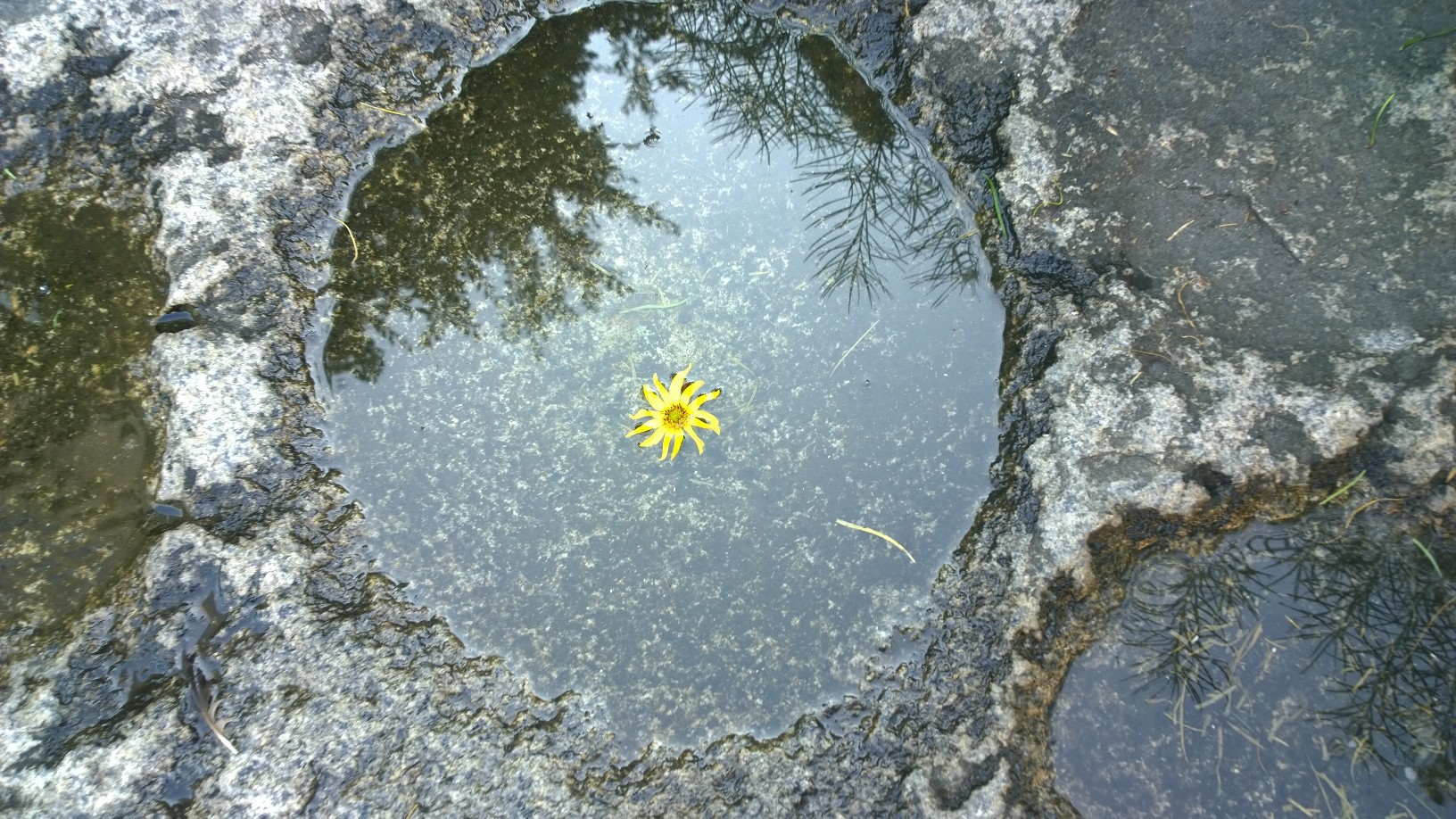
From other recent photographic undertakings comes shell art in Wormwood Park, sun-drenched crab apples, and a floating flower in the Greenway.

092515-utility-box-lobster

092515-fish-on-utility-box

092915-Providence-mural

092915-crazy-clock-in-Prov

092515-wormwood-park-display

092715-crabapples

082015-flower-in-Greenway-for-DS

Read Full Post »

Treehugger recently featured some rather magical lamps in the shape of mushrooms.

Kimberley Mok writes, “Whether they glow in the dark or are uncommonly rare, mushrooms are the incredible, unsung heroes of the natural world. They can bio-remediate oil spills, potentially cure diseases, and when used in your garden, can lessen its need for watering. Now, thanks to Japanese artist Yukio Takano, you can even have a LED version of them on your desk, transforming any mundane workspace into one of glowing, fungal wonder.

“Made with glass, salvaged driftwood and outfitted with energy-efficient LEDs and unique little light switches, Takano — who creates under the name The Great Mushrooming — seems to get the little details right enough to make these lamps look like the real thing (they come with hidden battery packs, to up the authentic-look factor, apparently). …

“Takano’s mushroom lights are one-of-a-kind, and while he sells at design fairs like Tokyo’s Design Festa, according to blogger tokyobling he doesn’t ship them abroad, due to the fragility of these glassworks. You can always feast your eyes over at Yukio Takano’s site The Great Mushrooming and visit the portfolio.”

More styles at Treehugger, here.

 Photo: Yukio Takano

Read Full Post »

Art: Thomas Hart Benton
One of my favorites: Spring on the Missouri, 1945, oil and tempera on Masonite panel. On loan to the PEM from the North Carolina Museum of Art.


When I was moonlighting as a theater reviewer, I always liked to “sleep on it” before writing anything, just in case my unconscious had anything useful to add.

Well, I slept on the big Thomas Hart Benton exhibition I saw yesterday, and sleep confirmed that certain lesser-known aspects of his work are troubling. I still adore the wavy energy of his landscapes, people, horses, trains, clouds, smoke, even fence posts. I still love the way Benton honors ordinary people and ordinary jobs and the way his paintings comment on social injustice.

But I really did not like the gruesome murals of invading armies that Benton created to jolt overly complacent Americans after Pearl Harbor. There was something cheap about them.

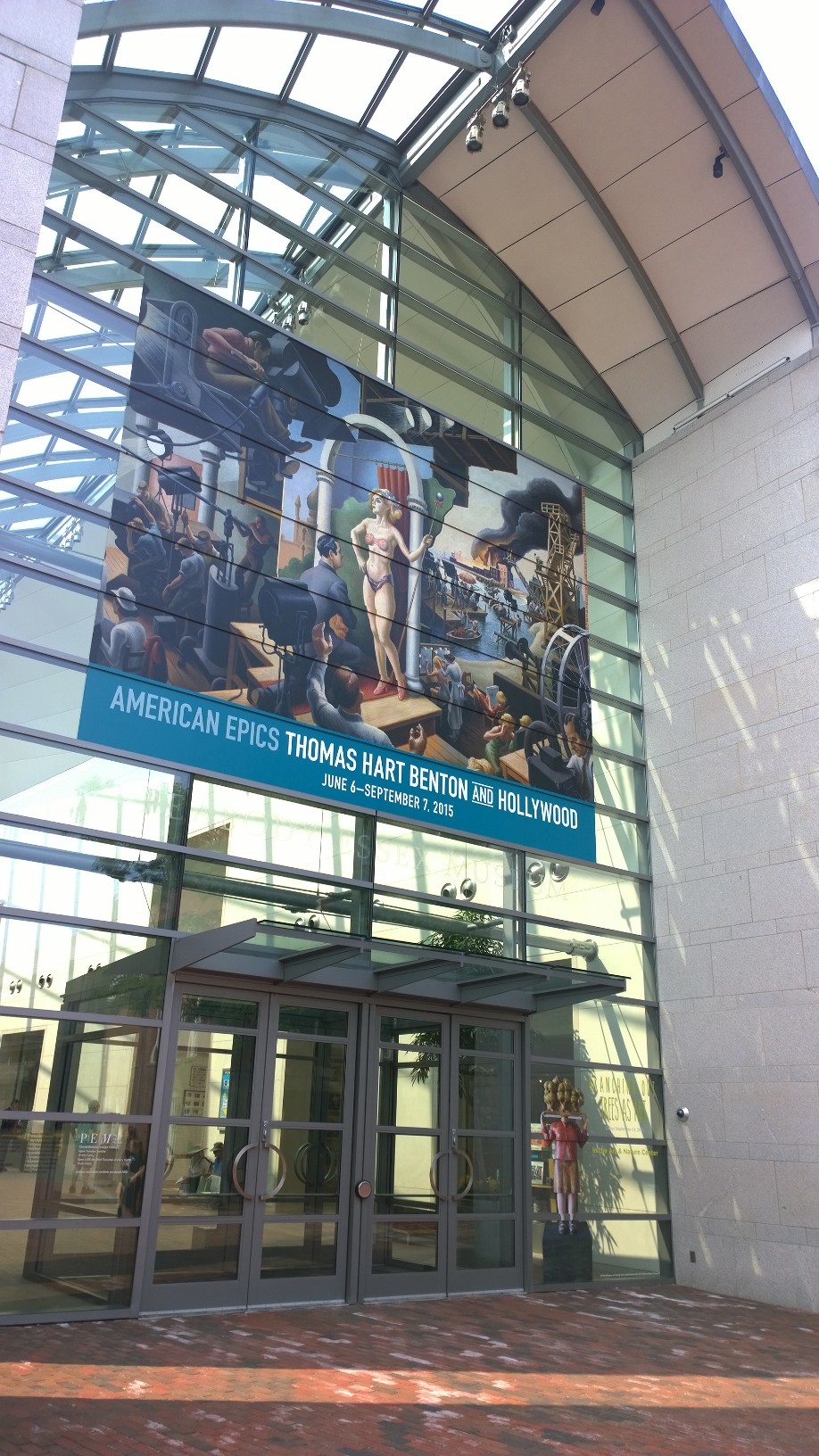
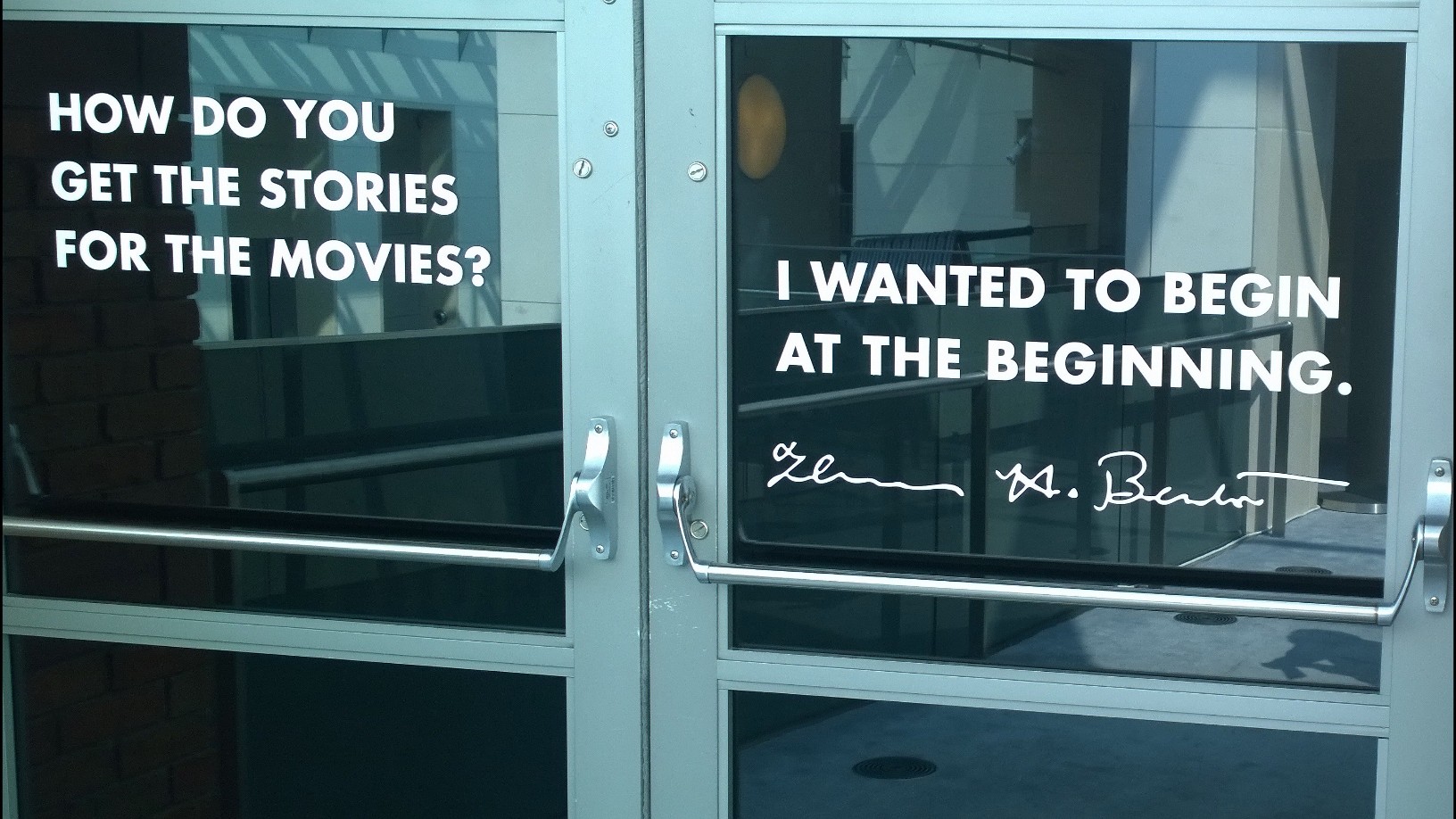
Of course, there was a lot more than that to the exhibition “American Epics: Thomas Hart Benton and Hollywood,” a sweeping retrospective of most of the artist’s work: murals showing Indians or slaves being mistreated, paintings of the the vibrant life of the West and Midwest, detailed depictions of the inner workings of Hollywood sets, designs for the Henry Fonda version of The Grapes of Wrath, illustrations for an edition of Huckleberry Finn, posters touting the contributions of African Americans to the war effort.

The day before, I had been hearing about Irving Berlin’s dedication to the war effort, and I think these two different artists conveyed, more viscerally than I had previously experienced, the underlying fear prevalent at that time. Since I grew up after it was all over, I probably unconsciously assumed that everyone always knew the Allies would win.

Do go to the show at the Peabody Essex Museum in Salem. You have until September 7. An enormous array of Benton’s work has been gathered from near and far — and there are some intriguing movie clips. (I was moved by a character’s tears to put The Grapes of Wrath on my Netflix list.)

Details of the exhibition here, at the PEM website.

071215-Thos-Hart-Benton-show

071215-Thos-Hart-Benton-at-PEM

Read Full Post »

Kate Colby (for whose offer of a room to Suzanne and Erik when they were house hunting there can never be enough gratitude) is a poet.

She came to the rescue when Suzanne was starting Luna & Stella and was having trouble finding a writer to capture the more ethereal qualities of the birthstones.

“What you need,” I said, “is a poet.”

“I know a poet!” she cried. She remembered Kate used to write copy for a catalog.

Beyond such marketing endeavors, Kate publishes poetry, choreographs offbeat theater, and co-leads art/poetry walks. An example of the latter will occur soon.

As Eryn Carlson writes at the Boston Globe, Kate is collaborating with artist Todd Shalom to offer “Duly Noted,” a participatory walk incorporating techniques from poetry, sound, and performance, at deCordova Sculpture Park and Museum in Lincoln, Massachusetts, July 18, at 2 p.m. and 5 p.m.

Carlson comments, “Shalom and Colby know that the very nature of tours makes it easy to overlook the ways in which artworks and their settings inform one another. … The pair created the collaborative walk ‘Duly Noted,’ a poetic exchange between participants and the Lincoln museum’s site and surroundings.

“ ‘Reading the art is apt because it’s so framed by woods and walls and water, and all this history,’ said Colby, who grew up in Wayland and lives in Providence. …

“ ‘It’s all about reframing the site,’ said Shalom, a Brooklyn, N.Y.-based artist who founded Elastic City.”

At a performance in May, “participants evolved from visitors to artists and performers. Individuals gave one-word soliloquies atop a stump, announcing their visual discoveries, and, guided by a partner, wandered the grounds with eyes closed to pay special attention to the surrounding cacophony. …

“Shalom and Colby, who met while working on their master’s degrees in fine arts at California College of the Arts, planned ‘Duly Noted’ meticulously over the course of a year, visiting the deCordova several times to perfect the route, pacing, and segues. But a degree of uncertainty and room for spontaneity remained.”

This could be a fun activity on July 18 if you live in the area. The grounds of the museum offer breathtaking views and sculptures everywhere you turn. Add to that a participatory happening like this, and you have the ingredients for a memorable day.

Read more here.

Photo: Barry Chin/Globe staff
Visitors at the deCordova Sculpture Park and Museum on a participatory walk titled “Duly Noted.’’

Read Full Post »

Teny Gross tweeted this nice story from the Brown University alumni magazine.

Courtney Coelho wrote, “On a snowy December evening, lights were visible through the second-floor windows of List Art Center as the visual arts department’s Critique Intensive held its last session. Mixed with the students in the large studio space were four working artists—Elise Ansel ’84, Chitra Ganesh ’96, Keith Mayerson ’88, and Rob Reynolds ’90—who’d spent sixteen weeks with the class, teaching, critiquing, and discussing art.

“The class was the brainchild of Chair of Visual Art Wendy Edwards, who hopes it will serve as a model for future classes. ‘Alumni bring a generosity to their approach to the Brown students,’ Edwards said. ‘They love coming back here, they love giving, and they’re very professional and committed to helping our students.’ ” More here.

Speaking of art education in Providence, RISD just got a new president, an artisan herself. Meredith Goldstein at the Boston Globe writes, “The Rhode Island School of Design has chosen its 17th president. Rosanne Somerson takes the title effective immediately, the Board of Trustees announced [in February]. Somerson, a RISD grad and furniture designer, has been serving as the school’s interim president since January 2014. The board says it chose to keep Somerson in the job after a nine-month international search.”

The Globe article is here. Disegno magazine has an interview with Somerson, here.

Photo: Mike Cohea
Rose Congdon ’15, left, and her classmates critique work created for the visual art department’s Critique Intensive, a class taught by four alumni artists last semester. 

Read Full Post »

Looking for an affordable venue for your chamber music group, your living-room theatrical production, your poetry group’s public readings? Need a performance space with a cat to give your book promotion that certain je ne sais quoi?

Nidhi Subbaraman has a nice piece at the Boston Globe‘s betaboston site on a tool that can help you find the perfect space.

“Gregorian Oriental Rugs opens at 10 a.m. every weekday, and with wood floors and high ceilings, this converted paper mill in Newton is an airy showroom for antique Turkish flat-weaves, Ikats from India, and countless other intricate, handmade imports from the Far East and Middle East. Some evenings, however, the expensive carpets and rugs are folded, stacked, and put aside, and the store is transformed into an intimate performance venue for local artists. …

“Most people hear about this unusual event space from friends. But to reach community art groups, Gregorian recently listed his venue on SpaceFinder Mass, a kind of Airbnb for the performance world that came to Massachusetts in January. The service connects artists hunting for budget performance or rehearsal space with unusual, informal, and affordable venues.

“ ‘We talk about SpaceFinder being a discovery tool,’ said Lisa Niedermeyer, its program director. Venues can share their calendar for availability, and artists can search by square footage, rates, and timing. The website also handles payments for the bookings.

“Started in New York three years ago, SpaceFinder was developed by Fractured Atlas, a nonprofit group that supports artists. SpaceFinder lists more than 6,600 spaces in 11 cities in the United States, plus Toronto, where you can rent a pirate ship. In Philadelphia, artists can rent a mosaic sculpture garden. …

“SpaceFinder was launched in Massachusetts in partnership with the Arts and Business Council of Boston, and more than 200 venues in the state are listed, most of which are themselves in the arts business — small museums and theaters, for example, dance studios and art galleries.

“In addition to Gregorian, other outliers include a fitness club in Dorchester and a winery in Southampton. …

“To connect with active art communities in far-flung corners of the state, Fractured Atlas reached out to Seth Lepore, an independent artist in Easthampton, to spread the word about the service among artists and to enlist venues.

“ ‘Space is a huge issue here in Western Massachusetts,’ said Lepore, who helped connect SpaceFinder with local studios.” More here.

Photo: Jessica Renaldi/Globe staff
Gregorian Oriental Rugs on a regular work day.

Read Full Post »

I do like stories about people who love their work so much that they never want to stop.

Perhaps it helps to have a talent like muralist Eric Bransby, who got to study with one of my favorite artists, Thomas Hart Benton. (Suzanne says I have a personal aesthetic, which is a polite way of saying I’m crazy about anything wavy, like Benton’s energetic American landscapes.)

Chloe Veltman writes at National Public Radio, “Eric Bransby is one of the last living links to the great age of American mural painting. He studied with one of this country’s most famous muralists — Thomas Hart Benton — and went on to create his own murals in prominent buildings across the west. The artist is now 98 and still painting.

“At his Colorado Springs studio, Bransby attacks a drawing with tight, sharp strokes, a pastel pencil grasped between gnarled fingers. His studio is unheated, but he doesn’t seem to notice the cold. He’s completely engrossed in the image taking shape on his easel. It’s a study for a new mural that he hopes to install at nearby Colorado College. He says he draws between two and eight hours every day.

” ‘Drawing has been a continuous thing for me, like exercises for a musician,’ he says. ‘It’s refreshing. I draw better. I paint better.’ …

“His parents didn’t encourage his artistic pursuits. It was during the Depression, and when he demanded that he get sent to art school, he remembers his parents said: ‘Well, he’ll do one year and he’ll come back so discouraged that we’ll make something else out of him.’

” ‘But that didn’t happen,’ Bransby says. ‘I found heaven.’ ” Read more here.

Photo: Nathaniel Minor/Colorado Public Radio
Eric Bransby, pictured above in his home in Colorado Springs, is still creating art at 98. “I try to make each mural a project that will somehow expand my abilities a little bit more,” he says.

Read Full Post »

Ever hear of a living thing that has been growing for 3,000 years? Check the picture below. Or how about a 13,000-year-old eucalyptus tree?

At Brain Pickings. Maria Popova writes, “For nearly a decade, Brooklyn-based artist, photographer, and Guggenheim Fellow Rachel Sussman has been traveling the globe to discover and document its oldest organisms — living things over 2,000 years of age.

“Her breathtaking photographs and illuminating essays are now collected in The Oldest Living Things in the World … beautiful and powerful work at the intersection of fine art, science, and philosophy, spanning seven continents and exploring issues of deep time, permanence and impermanence, and the interconnectedness of life.”

Sussman tells Popova in an interview, “I’ve always considered myself an environmentalist, for whatever that term means, and it’s something that I think, as an artist, was an interesting thing — because for a long time, I don’t think it was particularly acceptable in the fine art world to be doing work about nature. …

“The problem of climate change is so pressing and actually is something of a moral imperative for us all, and I think artists do a tremendous job of engaging the public on different levels … . That’s one of the beauties of being able, as a creative person, to create the parameters of what you want to talk about. The science and the climate science are a very important component of the overall project. …

“The question has been this idea of making portraits of these organisms and thinking of them as individuals. I think one of the most important things to do when dealing with climate science and climate change is to create a personal connection, and to create some relationship. That was my way of trying to forge a relationship to these organisms.” More here.

Llareta, 3,000 years old, Atacam desert, Chile

Read Full Post »

I was all set to blog about Providence PuttPutt, an artist-inspired, Kickstarter-supported pop-up entertainment for kids when I found out it was scheduled to last only for the summer and has just closed. Sigh.

So, sticking to a small-pleasures, quality-of-life theme, we turn once more to Denmark, where biking made a big jump in one year.

 at StreetsBlog Network writes, “For years the bike commuting rate has remained roughly steady at just over a third of trips. Then last year the city’s bike commute mode share increased from 36 percent to 41 percent. Meanwhile, driving declined 3 percent as a share of commuting trips.

“The unexpected increase had a lot of people baffled. But Mikael Colville-Andersen at Copenhagenize thinks he knows what happened …

What has happened is that 17 huge construction sites fell out of the sky all at once. Not something that happens every day. In addition, most of central Copenhagen — between 2012 and 2013 — was under further construction because of the upgrading of district heating pipes under many streets that had to be ripped up. …

Driving was rendered incredibly difficult. Copenhageners, being rational homo sapiens, chose other transport forms. Public transport has increased, too, but the bicycle is clearly the chariot of choice. It’s no surprise at all why cycling is booming.

“There you have it,” Schmitt adds. “If you want to improve cycling in your city, make it an awesome place to bike, sure, but don’t forget make it a terrible place to drive. ”

More here.

Photo: Mikael Colville-Andersen 
Biking in Copenhagen

Read Full Post »

Years ago, when I was expecting, I learned the baby would be a girl. My husband and I went right out and bought a beautiful dollhouse built by a teenage boy we read about in the local paper.

Recently, Nancy Shohet West wrote in the Boston Globe about a new dollhouse show. My husband said, “If you go, see if you can find someone who can repair dollhouses.” (Suzanne’s needs a face lift.)

But we didn’t read the article carefully. The show featured art works from artists contemplating the resonance of “dollhouse.”

Note the foreclosed house with a Banksy on an exterior wall (above it, the only entry by a male artist, with tiny soldiers), the Japanese-inspired house, and the 1950s domestic fantasy house, below. It was a fine show, but I didn’t find anyone to repair Suzanne’s dollhouse.

The exhibit was in a renovated warehouse where artists have studios and where there also is shared space for entrepreneurs. The business space is called the Wheelhouse, and it features a common area for eating and relaxing, small offices with names on glass doors, small conference rooms — and lots of art.

I was surprised. The last time my husband and I were in that building we were taking a stretch class with a classmate of Suzanne’s, and the Bradford Mill was so rickety one expected the staircase to collapse at any moment. Times change.

The dollhouse show is up until August 28. Read more about it here.

dollhouse-with-a-Banksy


Japanese-dollhouse


1950s-domestic-fantasy

Read Full Post »

« Newer Posts - Older Posts »