Feeds:
Posts
Comments

Posts Tagged ‘arts’

moore_geograph-418511-by-elliott-simpson

Photo: Elliott Simpson
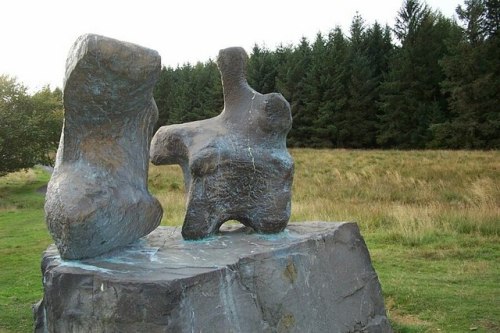
“Two Piece Reclining Figure No.1,” by Henry Moore, Glenkiln Sculpture Park in southwest Scotland. Scotland’s government has proposed a policy that, among other things, would give ordinary Scots a greater say in shaping the cultural life of their communities.

What I remember about a trip to Scotland decades ago is Loch Ness, the glowing quality of sunlight in Inverness, how Edinburgh’s castle looms over the city, sheep on the hills, sheep crossing narrow highland roads.

But there is more to Scotland, and now the government is working to give communities a greater say in how the country’s culture is presented to the world.

Christy Romer writes at Arts Professional, “Ensuring culture is fundamental to Scotland’s social and economic prosperity is a core aim of the country’s first culture strategy in over ten years. …

“The draft document outlines plans for a new Government cultural adviser and new funding models for the sector. In addition, it aims to give people a ‘greater say’ in shaping the cultural life of their communities through participatory models of decision-making and community ownership.

“ [The draft strategy says Scotland] ‘places culture as of equal importance alongside other areas such as the economy, education, environment, health and tackling inequality, and values culture for the unique perspectives it can bring.’ …

“One of the major initiatives announced is a new cultural leadership post within Scottish Government, which would be supported by strategic thinkers from the culture sector and beyond.

“This figure would be responsible for joining up thinking across Government and with major stakeholders. They would aim to respond to big societal issues and make culture central to progress in areas such as health, the economy and education.

“Other initiatives include developing a national partnership for culture, which would see the sector work with academics to develop new approaches to measuring and articulating the value of culture.

“Partnership working with businesses, schools and care homes is also seen as key to creating opportunities for more people to take part in culture. The document …  suggests using Scottish Government powers to generate a collective responsibility to support culture in the long term.’ This could involve the National Investment Bank or devolved tax and legislative powers.”

Oh, dear. Already I see trouble ahead. The intentions are good, but that wonky document suggests to me that artists were not involved in the writing and may not be helping much to carry out the policy. Hmmm. I’m wondering if government’s role in a country’s culture should be limited to funding it.

For example, consider what Claire Selvin reported in October at ArtNews about New York City: “With largest-ever allotment for department of cultural affairs, New York City Grants $43.9 million to arts programs.” That’s putting your money where your mouth is. I realize some of the funds may get lost in the bureaucracies of the various recipient arts organizations, but I think I’d rather have them working on the ultimate allocations than a government entity.

More on Scotland at Arts Professional, here.

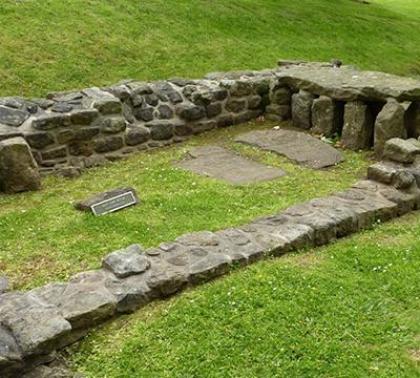
One of Scotland’s historical highlights is the Antonine Wall, built by the Romans across what is now the Central Belt of Scotland. These ruins mark the northernmost frontier barrier of the Roman Empire.
materials

Read Full Post »

p06hrbyj

Photo: PjrTravel/Alamy
The act of building puppets has long been a form of protest for the Czech people.

Never underestimate the power of the arts to affect the course of nations. In this story, puppets kept the Czech language alive during a period of repression by German speakers.

Jacklyn Janeksela writes at the BBC, “It was thanks to the humble puppet that the Czech nation – and its language – was inadvertently saved.

“In the 17th Century, when the kingdom of Bohemia was under Habsburg rule, the Czech language almost disappeared. …

“When the Protestant court left Prague in the early 1600s, the city fell into decline for almost two centuries. The new ruler, Ferdinand II, did not tolerate non-Catholics, viewing Protestants as a threat to his faith. Czech locals, mostly peasants and working class people, were forced to speak the German language of their invaders. Soon after, intellectuals, who had initially resisted the German language, followed suit. Even Czech actors began to perform in German as an official mandate. Czech became a mere dialect, and would have slipped into oblivion had it not been for some unassuming pieces of wood.

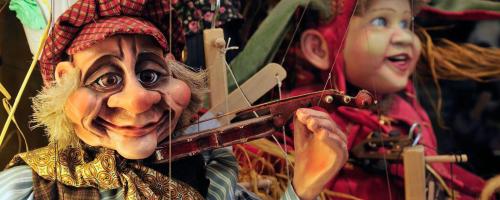
“The act of building puppets has long been a form of protest for the Czech people. Seventeenth-Century wood-carvers, who were more versed in sculpting Baroque seats for churches than human facsimiles, started making puppets for the actors of Bohemia soon after Ferdinand II came to power, as puppets were the only remaining entities that had the right to speak Czech in public places. While the rest of the country and its people adhered to the newly imposed German language, wandering actors and puppet-masters spoke through the puppets in their native Slavic tongue.

“It might seem unlikely that a few hundred puppets and puppet-masters could safeguard a language, especially through a loophole, but the people’s last remaining legacy to their past was tied to the puppet’s strings.

“It’s easy to see why these marionettes have found a home in Czech hearts, and why the magic of puppets continues to permeate the city. …

“In the streets, puppeteers make magic happen. I watched a puppet show in a charming cobblestoned square, where the puppet-master wore the velvety cap of a pageboy, pierced by a single plume that swayed along with the puppet’s movements. He used his puppets to beckon bystanders. Melodic medieval music accompanied the dance of a peasant male and young princess, a Czech love story with a plot twist that favours the underdog, the peasant who wins the heart of a far-fetched royal love.” Read more at the BBC, here.

With minority languages threatened around the world today, it’s worth remembering that a culture and way of life can be preserved through arts like puppet-making. See also my blog post on the historically important role of shadow puppets in Armenia, here.

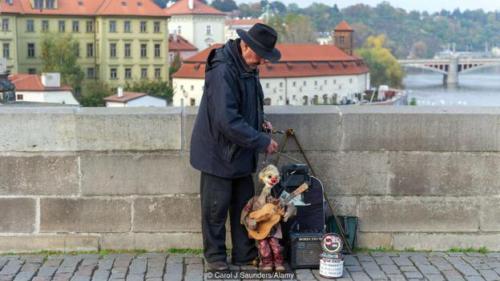
Photo: Carol J Saunders/Alamy
Puppets have a special place in the hearts of the Czech people. For one thing, they saved the language in the early 1600s when German-speaking rulers prevented everyone but puppets from speaking Czech in public.

p06hrc3s

Read Full Post »

05lenape2-superjumbo

Photo: Dolly Faibyshev for The New York Times
In a ceremony at the Abrons Arts Center in New York, Emily Johnson acknowledges the Lenape tribe, which inhabited Manhattan before Europeans arrived. The bonfire event is part of an initiative by artists called “land acknowledgment.”

It’s interesting to me that at the same time that nationalism and harsh attitudes about migration are sweeping the Western world, some very different movements are gaining traction. One is the increased acknowledgment in some English-speaking countries that Europeans were once interlopers, too.

Siobhan Burke writes at the New York Times about arts groups starting to pay attention to first residents.

“On an evening in early June, before the sun had gone down, a bonfire blazed outside Abrons Arts Center on the Lower East Side. Handmade quilts lined the steps of the outdoor amphitheater. Anyone walking down Grand Street could come in and take a seat. As a group of singers arranged themselves around a large cylindrical drum, the choreographer Emily Johnson stood up to speak a few careful, welcoming words.

“ ‘I’d like to acknowledge and pay my deep respect to Lenape people and elders and ancestors — past, present and future,’ she said. She gestured toward the ground and in the direction of the East River. ‘I acknowledge and offer deep gratitude to this Lenape land and water that supports us, as we’re gathered here right now together, and I invite you to join me in that acknowledgment, that respect and that gratitude.’

“In recognizing Manhattan’s original inhabitants — the Lenape (pronounced len-AH-pay) — and their ancestral homeland, Lenapehoking, Ms. Johnson was taking part in a ritual that, with her guidance, has become increasingly common at New York performing arts spaces in the past year.

“Routine at public gatherings in Australia, New Zealand and Canada, the custom of Indigenous land acknowledgment, or acknowledgment of country, has only recently started to gain traction in the United States outside of tribal nations. In New York City the practice is sporadic but growing, occasionally heard at high-profile cultural and educational institutions like the Whitney Museum of American Art and New York University. …

“Ms. Johnson, 42, a Native Alaskan artist of Yupik descent, has been the catalyst for much of that progress in the city’s dance scene. … Wherever she tours, she publicly honors — and engages with — the Indigenous people of that place.

“And behind the scenes she has been working to strengthen relationships between predominantly white institutions and Indigenous communities, to ensure that more Indigenous voices are heard at all organizational levels, from the artists onstage to the board of directors. That process, she said, begins with institutions recognizing where they are: on land taken from Indigenous peoples. …

“For the inexperienced, speaking an acknowledgment can be awkward at first. Hadrien Coumans, a co-founder of the Lenape Center, said false starts were to be expected. …

“While land acknowledgment might be a mere formality in some contexts, Mr. Coumans emphasized that he sees it as something much greater, an invitation to consider and appreciate where, really, you are standing.

“ ‘We’re part of a living being,’ he said. ‘Earth is a living entity, so in acknowledging land, what we’re really doing is acknowledging life. Not nationalism, not patriotism. Life.’ ”

More at the New York Times, here.

Read Full Post »

winnipeg-indigenous-accord-signing

Photo: Walther Bernal/CBC
Sandy Bay Ojibway First Nation Chief Lance Roulette signed Winnipeg’s Indigenous Accord in June. The new treaty addresses tribal representation in numerous aspects of life.

The “truth and reconciliation” initiatives in South Africa after Nelson Mandela was released from jail set a kind of standard for healing old wounds — or at least for moving on. The idea was that nations must bring to the light of day all the bad things that were done and give everyone a chance to express their pain. After that, acceptance and reconciliation can begin.

A similar process is happening in Canada to heal the injustices done to tribes. One example is in Winnipeg, where the lung association, an arts organization, and many others are working to make amends for the past and create a better future.

Aidan Geary writes at CBC News, “A Manitoba association created by the agency that once ran segregated ‘Indian hospitals’ in the province is among more than 40 new signatories to Winnipeg’s Indigenous accord. …

“The Lung Association was among dozens of Winnipeg-based groups that added their names to the city’s year-old Indigenous Accord [in June]. Other groups include the Royal Winnipeg Ballet, CentrePort Canada, Investors Group, the Manitoba Museum and the Manitoba College of Social Workers.

“The accord was first signed by more than 80 groups [in March 2017]. Signing on means committing to an ongoing responsibility to reconciliation, the city says. Signatories are required to report yearly on the success of their efforts and their future goals.

“For the Lung Association, it also means addressing a legacy of segregation, substandard care and allegations of mistreatment at the hands of tuberculosis doctors from Indigenous patients, [Neil Johnston, president of the Manitoba Lung Association] said.

” ‘We want to make sure that that … never happens again, and we want to help in the healing of people who have survived that care but also the families and make up for the intergenerational trauma that occurred,’ he said. …

“So far, Johnston said its goals include examining and establishing the association’s own history, and speaking to people who experienced the hospitals themselves. From there, the association will work with Indigenous community members to form a plan for reconciliation and improved health outcomes. …

“Winnipeg Mayor Brian Bowman urged more organizations to sign on, calling the accord an ‘aspirational document’ and an ongoing effort. … ‘We have created a website in which organizations can submit their outcomes on an annual basis and report on what they’re going to work on, and that’s shared publicly so there can be that learning within the community.’ …

“Carol Phillips, executive director of the Winnipeg Arts Council — which signed on in the first year of the accord — said her organization will launch a new Indigenous arts leadership fellowship program this fall, placing two Indigenous fellows into arts organizations to develop management and governance skills.

“She said Indigenous people are underrepresented in leadership positions in arts groups across the country, with the exception of Indigenous-focused arts organizations. She said she’s seen improvement on that front, but not enough.

” ‘There’s no reason why there shouldn’t be Indigenous arts leaders in any arts organization, and that’s ultimately what we want to see happen,’ she said.

“The WAC will also place an Indigenous artist-in-residence in the city’s Indigenous Relations department, she said.

“Values around reconciliation have long been a part of the arts council’s work, she said. But she said it’s important to demonstrate those values and make them clear to the community.

” ‘The city obviously wants an overt demonstration of commitment, and I don’t think there’s anything wrong with that, so we participated,’ she said.

” ‘The thing is, here we are still talking about the sort of exceptionalism of this situation. Our goal is that this is just how things are, and it’s not an exception — it’s how the arts community functions.’ ”

More at CBC, here.

Read Full Post »

Photo: Jerry Holt, Star Tribune
Bill Gossman is mayor of New London, Minnesota, and a potter who knows firsthand how arts can build community. Legacy funding from a law updated in 2009 has helped spur the town’s revival. 

The arts are often good for business, and the experience of towns in rural Minnesota provides a good example.

Jenna Ross reports at the Star Tribune, “One by one, they took the stage and told their stories. A man in his 80s, leaning on a cane. A teenage girl. A retired farmer.

“ ‘Times were good for farmers in west-central Minnesota in the 1940s,’ Ed Huseby began his tale about a tractor that went rogue.

“In the audience, residents laughed, cheered and, after one man described how lung cancer cut short his wife’s life, cried. They were gathered for a Sunday afternoon ‘story show,’ organized by the owner of the Flyleaf Book Shop. The one-page program didn’t mention funding from the Legacy Amendment. But like all shows onstage at the Little Theatre — and most arts events in this small but growing city two hours west of Minneapolis — that money played a key role.

“Legacy funding cuts the cost of renting the theater to $100. It pays the part-time salary of the manager who greeted audience members and pulled closed the curtains. Soon, it’ll fund a new projector and screen. …

“New London, like small cities across Minnesota, has felt the influx of dollars from the Legacy Amendment, passed a decade ago. …

“ ‘In the Twin Cities, there’s a pretty established arts infrastructure,’ said Sue Gens, executive director of the Minnesota State Arts Board. Now Legacy grants are helping build that in communities across the state, she said. …

“In New London, pop. 1,355, such grants have funded a summer music festival. A 10-foot-tall sculpture that stands near the Middle Fork Crow River. And a wood-fired kiln in Bill Gossman’s backyard.

“Gossman is a potter, one who whistles while he digs his thumbs into a piece of porcelain clay. He’s also the mayor. …

“In 2010, Gossman won a $7,000 Legacy grant to add a large new chamber onto his kiln, which is fueled by firewood, giving his pots, vases and vessels an earthy glow. Last month, as they do each year, potters from across the state trekked to Gossman’s place. They drank coffee, chopped wood and packed the massive chamber with hundreds of their pieces. …

“When Gossman took office in 2008, [the] recession had weakened a local economy in flux with the consolidation of family farms. The grocery store had closed, and the hardware store was about to. For-sale signs hung in Main Street windows.

“Today, not a single empty storefront remains. Galleries and gift stores line the compact downtown. …

“A Star Tribune analysis of Legacy dollars shows that from fiscal 2010 to 2017, the biggest recipients of funds via the state and regional arts boards was the Guthrie Theater. …

“Outstate Minnesota has received its fair share of Legacy dollars [largely] because of the 11 regional arts councils, established in the 1970s, that broadened the reach of public arts funding. …

“Speaking at rural conferences across the country, [John Davis, executive director of Lanesboro Arts,] always mentions Minnesota’s Legacy Amendment, which other places regard as a model. …

“But the amendment isn’t perfect, Davis said. He believes that some arts funds should be set aside for rural capital projects, as many small cities struggle with infrastructure challenges in the wake of waning tax revenue and cuts to Local Government Aid.

“ ‘Right now an organization could get money to host a ballet, but if their roof is caving in … they can’t access it,’ Davis said. ‘I think that was something that just out of the gate was a structural flaw.’ ”

More here.

Read Full Post »

Photo: Helen H. Richardson/Denver Post
Denver Performing Arts Complex in 2017. The creative economy in Colorado accounted for 4.3 percent of the state’s gross domestic product in 2015, the most recent year for which data are available.

It can’t be stated too many times that the arts are often an important driver of local economies — and a reason for states and municipalities to help artists be successful. Rhode Island, for example, aims to help artists by not taxing art sales, but the lack of affordable housing in the state remains a big problem.

Joe Rubino writes at the Denver Post about Colorado’s creative economy, noting that anyone who saw a show at the local opera house in 2015, bought a painting or book by a Coloradan, or visited a local museum “contributed to the $13.7 billion arts and culture brought to the state’s economy that year, a figure that outdid both the mining and transportation sectors. …

“The U.S. Bureau of Economic Analysis and the National Endowment for the Arts on [March 7] unveiled their most recent analysis of the economic impact of arts and culture in the U.S. In 2015, the year with the most recent reporting data, goods and services generated by museums, architecture firms, artists and other artistically inclined businesses and agencies accounted for 4.3 percent of the Colorado’s GDP. …

“[Nationwide,] creative industries accounted for a $20 billion trade surplus that year, according to the analysis. Work in arts and culture accounted for 4.9 million U.S. jobs in 2015. Of those, 100,631 were in Colorado. …

“The analysis, collectively known as the Arts and Cultural Production Satellite Account, or ACPSA, looked at 36 industries that contributed to America’s arts and cultural economy. Some of them are considered core contributors — like museums and graphic design firms — and others are viewed as support industries [including] broadcasting. …

“When it comes to comparing states in the American West, arts and culture in Colorado ranked only behind California and Washington in terms of money made.”

More at the Denver Post, here.

Read Full Post »

56876a3cc5470-imagePhoto: Richmond Register
When artist Ken Gastineau moved to Berea, Kentucky, in 1987, there were few artists working in Old Town. Today, with taxpayer support, artists have become Berea’s economic engine.

Residents of Berea, Kentucky, have long known that their arts college was internationally admired. But it wasn’t until the loss of local mining jobs, that people began to see the arts as their most promising economic engine.

Ivy Brashear writes at NextCity, “One of the things people notice after spending any amount of time in Berea’s historic downtown is the density of galleries. For a small city in the foothills of the Appalachian Mountains, there are a lot of them.

“The state-designated ‘Folk Arts and Crafts Capital of Kentucky’ attracts visual artists, ceramicists and traditional craftspeople just like Nashville lures country musicians, albeit on a smaller scale. …

“City officials count 40 galleries in total, and three new restaurants and a gallery-cafe have opened in the past two years — not a bad showing of entrepreneurship in a city of fewer than 20,000 people.

“ ‘I believe we can legitimately claim we’re a town where art’s alive because any visitor, almost any time of the year, will be able to encounter active arts in motion,’ says Mayor Steve Connelly. …

“The little town that sprung up around Berea College [is] a rare growing, thriving city in a region that’s confronting steep population decline and rising rates of joblessness due in large part to the collapse of the coal industry. Eastern Kentucky alone has lost nearly 7,500 coal jobs since 2012. … The hope is for something place-based that can keep the economy humming while encouraging businesses to invest locally. In Berea, that thing is art and culture.

“Since 2010, the population of the city has grown by nearly 12 percent, making it one of the fastest growing places in the state. … With new people and businesses moving in, the city’s unemployment rate is four percent, compared to a statewide rate of five percent and a rate of seven percent in nearby communities, 2016 Census Bureau data shows.

“It’s difficult to make a direct connection between any one economic strategy and growth, but local officials say that their investment in building an arts economy has paid off because it gives people a reason to stay. …

“The [arts] culture was largely unsupported by any local government entity until about a decade ago. It was at this time that the city began to recognize what Connelly refers to as its ‘artistic infrastructure,’ and the need to invest in it. …

“It didn’t take long for local officials to recognize that Berea’s greatest local asset was its arts community, something that had been woven into the fabric of the town since the very beginning.

“Local artists were investing in Berea in big ways: by opening galleries and weaving shops, making and selling art, and starting local festivals that continue today.

“They were doing it largely on their own with little to no help from the government or Berea College. They were doing it because there was energy and synergy behind their efforts — a confluence of creativity and economy that city commissioners saw as an investment worth making.

“In 1982, the City Commission passed a hotel/motel tax and started a tourism commission. The World’s Fair was in Knoxville that year, and Berea wanted to catch I-75 travelers on their way south. The commission passed a 3 percent tax, and from 1982 to 2007, the all-volunteer tourism commission received about $125,000 a year from the tax.

“Further tax reform was made in 2007 during the Great Recession when Berea raised its property tax rate from the lowest in the state at .03 percent, to 10 percent. Soon after, they instituted a 3 percent restaurant tax, and the tourism budget quickly shot up to nearly one million dollars a year. …

“Berea Economic Development Director Danny Isaacs describes the decision to move away from traditional industries and look to the arts as a economic engine as one of sheer logic. …

“ ‘[Economic growth] goes back to building on what you have and what you’re known for,’ Isaacs says. ‘For Berea, the natural choice was arts and crafts.’ ”

More at NextCity, here.

Read Full Post »

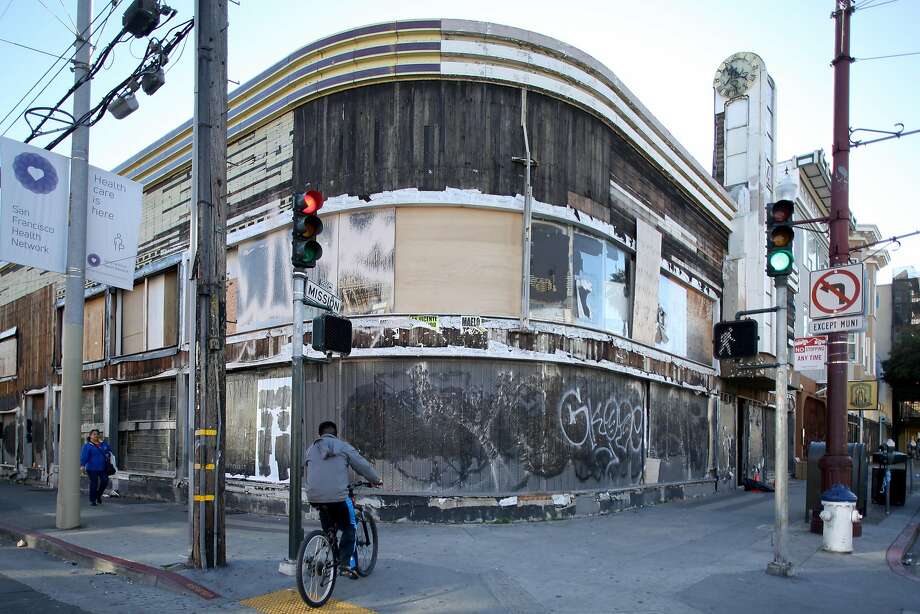
Photo: Elizabeth Hafalia, The Chronicle
Facing a need for affordable housing and arts space, San Francisco’s Mission Economic Development Agency is joining with Dance Mission Theater and the Mission Neighborhood Centers to repurpose this neglected 1919 building.

Have you ever visited San Francisco’s Mission District? A poor, immigrant neighborhood, it is nevertheless a vibrant experiment in people-oriented housing and support for food entrepreneurs and the arts. The creative energy there is tangible.

Moreover, the neighborhood’s community-development folks never stop turning dreams into reality. J.K. Dineen has an update at the San Francisco Chronicle.

“A historic but long-neglected commercial building at Mission and 18th streets in San Francisco is poised to be rejuvenated with a mix of affordable housing, child care and dance.

“The dilapidated 1919 structure, a former furniture store that was remodeled with an Art Deco flair in the late 1930s, has been on and off the market for more than a decade. …

“Finally the Mission Economic Development Agency, a politically powerful group that often opposes market-rate housing, reached a deal to buy it by collaborating with Dance Mission Theater and the Mission Neighborhood Centers, which will open a child care facility there.

“ ‘We are all going in together to do a new model of cooperative living and dancing and taking care of our children,’ said Krissy Keefer, executive director of Dance Mission Theater. ‘It’s going to be very communal.’ …

“Brokers with the San Francisco office of the realty firm Marcus & Millichap … said market-rate developers were scared off by the Mission’s anti-gentrification political environment and that ‘MEDA was very good to work with.’ …

“The building will be the group’s first home ownership project — the others are rentals — and the first targeting middle-income families rather than low-income folks. Mission Neighborhood Centers is providing some of the project funding, along with two nonprofits: Low Income Investment Fund, a financial intermediary that provides capital for community developments, and the Neighbor to Neighbor fund.”

I’m sure everyone has read about the housing crunch in San Francisco, with tech employees pushing prices up. It’s good to hear of anything designed to ease the shortage. More here.

Read Full Post »

Photo: fractalx via VisualHunt.com
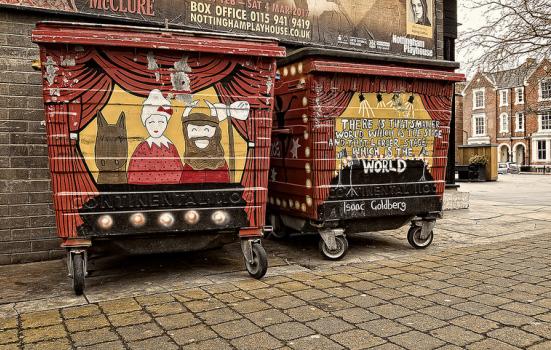
Street art outside Nottingham Playhouse. The city has a plan to integrate arts and culture into all aspects of life.

What do we know about the city of Nottingham? We know about the sheriff, I guess, and his adversarial relationship with Robin Hood. But did we know that modern-day Nottingham is really into the arts? A website called Arts Professional wants to enlighten us.

Christy Romer writes, “Nottingham has committed to embedding culture in education and healthcare as part of an ambitious ten-year vision for the city.

“By 2027, the city aims to make ‘culturally-inspired lifelong learning’ available for every person in Nottingham, and establish cultural programmes, research and partnerships that enhance health and wellbeing.

“The vision … aims to achieve national and international acclaim for the quality and diversity of locally-produced artistic work.

“ ‘Culture will unlock potential in our city. The next ten years will continue to see a transition that takes the city from its industrial, manufacturing past, paving the way to reimagine the city for generations to come,’ the [Cultural Statement’s] foreword reads. …

“Plans include supporting schools to develop a world-class cultural learning offer and giving every person opportunities to access creative skills and careers. …

“The City Council also aims to work in partnership with public health professionals and local commissioning groups to understand and enhance the health and wellbeing of the city’s residents. …

“The city announced its bid for the European Capital of Culture 2023 title in August.” More.

Alas, the Brexit vote to leave the European Union means that UK cities will not be eligible. Here’s hoping that Nottingham’s worthy ambitions are not derailed by Brexit and that the UK government will help the city find the resources to carry out its plans. (One has to wonder if the ramifications of leaving the EU was ever fully thought out.)

AmeliainHull, it sounds like Nottingham wants to give Hull a run for its money!

Art: Louis Rhead, “Bold Robin Hood and His Outlaw Band,” New York: Blue Ribbon Books, 1912.

Read Full Post »

modern-world-caricature-illustrations-steve-cutts-5

Art: Steve Cutts
A short animation about the rat race you are sure to recognize.

Slippery Edge has the most amazing blog. It’s full of original works by artists, photographers, animators, musicians. I have long wondered how s/he gets permission, but the posts do send readers to the originators’ websites.

I’m especially enamored of the short animations Slippery Edge posts and just had to share this one by Steve Cutts about the rat race. I thought it was so on-the-money, having squeezed myself into subways like that for many years. All that’s missing are treadmills, which always look to me like something you put in a rat’s cage.

The poor rat in the video thinks he’s on the track of happiness and keeps pursuing whatever contemporary voices — media, advertising, the world at large — suggest is the road to happiness. The message I take away is that I better figure that out for myself and not get distracted by unknown entities’ self-serving promises.

Watch the short animation and see what Slippery Edge has to say about the artist, here.

See also:
http://www.stevecutts.com/
https://stevecutts.wordpress.com/
https://www.facebook.com/SteveCuttsArt

Read Full Post »

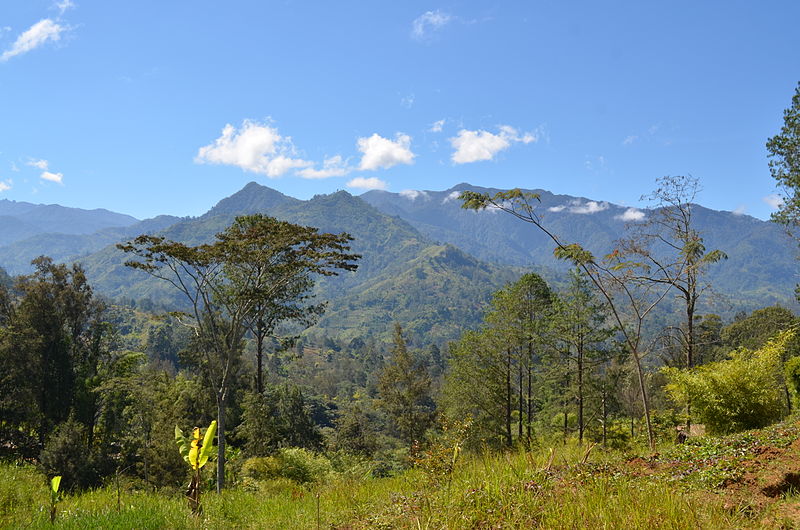
Photo: eGuide Travel
The highlands of Papua, New Guinea, are among the isolated places that linguists search for speakers of dying languages.

I’ve blogged before about linguists and others who are trying to preserve languages spoken by only a few people. The belief is that there is intrinsic value in such endangered languages and that they are key to understanding cultures. Recently I saw that one group is focusing on a particular manifestation of rare languages — their poems.

Fiona Macdonald writes at the BBC about the Endangered Poetry Project.

” ‘They fly to Port Moresby in Papua New Guinea and there they take a bus for three days and then they hike over a mountain and then they take a canoe and then they get to this little bay with 300 people,’ ” she reports, quoting Mandana Seyfeddinipur, head of the Endangered Languages Archive at London’s SOAS [School of Oriental and African Studies]. …

” They are ‘PhD students of 25 with a digital camera, a digital audio recorder and solar panels.’ …

“ ‘They live with the communities for months at a time, and develop social relationships, and talk to them and record them, and then they come back and they give me this SD card. … ‘The only record that we have of this language is in this tiny SD card.’ …

“The newly launched Endangered Poetry Project aims to tackle [language] loss at another level. ‘Languages are dying out at an astonishing rate: a language is being lost every two weeks,’ says the National Poetry Librarian Chris McCabe. ‘And each of those languages has a poetic tradition of some sort.’ …

“The project has issued a call-out to members of the public, asking for poems written in an endangered or vulnerable language. ‘In the first week, we’ve had over a dozen submissions in about 10 languages,’ says McCabe. ‘That includes poems in Breton, and poems in a dialect of Breton called Vannes. We’ve had a poem in Alsatian, and the Sardinian dialect Logudorese. We’re interested in these variations in language in different places as well, which can often be markedly different from the established language. …

” ‘You get a focus on place – in poems we’ve received from Sardinia, for example, there’s a focus on the mountain range there,’ says McCabe. ‘It shows you where people felt drawn to for inspiration in the landscape. Also, the style of a lot of Gaelic poems is very lyrical, and often uses repetition, a lot like a song. In that poetic tradition, you see how the division between poetry and music is quite slight – they often cross over between one and the other. The poetry tells us a lot about what kind of artistic experience people like, as well as what’s important in their geography.’ ”

Lots more here. Very interesting stuff.

Read Full Post »


Photo: Jonathan Wilson
ArtistYear Fellow Aqil Rogers explains to Harrity School students in West Philadelphia how to assemble a contact microphone from component parts.

Many people worry about the drastic cutbacks in arts programs in schools. Not that many people do something about it. Pat Zacks of Camera Werks, Providence, is one person who does, as you may recall from this post.

In Philadelphia, another great idea is moving beyond the piloting phase — a kind of AmeriCorps for arts in education.

Peter Dobrin writes at the Philadelphia Inquirer, “With major new funding from a federal agency in hand, a Philadelphia service group in the arts is going national.

“ArtistYear has been operating since 2014, placing a few recent college graduates into Philadelphia schools each year as teaching fellows. This year, the program will expand to 25 full-time fellows who will teach music, art, dance, creative writing, and media arts in low-income schools in Queens, N.Y., and Colorado’s Roaring Fork Valley, as well as Philadelphia.

“A big boost to the program comes through AmeriCorps, part of the Corporation for National and Community Service, which has awarded ArtistYear a three-year, $1.45 million grant and extended certain benefits to the teaching fellows. …

“The grant is a first for AmeriCorps. ‘This is the first time there’s been a program that allows artists to dedicate a year of service to their country,’ said AmeriCorps spokeswoman Samantha Jo Warfield, citing the innovative model as one criterion for the award.

“Service-year programs for college graduates are common — to build English-language curriculum in Tonga, or to work on food-justice issues in Milwaukee. But ArtistYear may be unique. Its leaders call it the ‘first organization dedicated to national service through the arts.’

“This school year in the Rego Park neighborhood of Queens, storyteller and improviser Jill M. Pullara will put to use skills she learned earning an MFA in writing from the Royal Central School of Speech and Drama in London. Will Brobston, a guitarist and composer armed with a master’s degree from the University of Denver, goes west to the Colorado towns of Glenwood Springs, Carbondale, and Basalt.

“In Philadelphia, Aqil Rogers, a metal sculptor and designer who grew up in Lansdowne, is teaching at Mastery Charter Harrity Upper School at 56th and Christian Streets.

“ ‘What I’ll be doing is helping them create a maker space,’ said Rogers, 22, a Drexel University graduate whose senior thesis was Empowering Underserved High-Schoolers to Engage in Design/Maker Education through Hip-Hop and DIY Electronics. ‘We’ll work our way to electronics, robotics, lots of different sewing techniques — anything that can be done with hands, I suppose, will be learned at some point. And a lot of design-thinking work, which I think is critical.’ …

“In choosing fellows, the group wants artists who see teaching not merely as a space filler, but as a calling. ‘What we’re looking for is what kind of work experience they have that makes them think they are ready for a year of service, and that they want this as a piece of their career,’ says ArtistYear chief program officer Christine Witkowski.”

Learn more about the program and how it aims to supplement (not replace) arts in schools that still have them, here.

Read Full Post »


Photo: Catskill Mountain Foundation
Catskill Mountain Foundation’s Doctorow Center for the Arts provides cultural opportunities in a rural area.

The arts are important everywhere, not just in cities. But sometimes it’s a challenge to attract to rural areas the kind of philanthropy that keeps urban cultural institutions alive.

Through the lens of a rural New York foundation, Mike Scutari of Inside Philanthropy considers the issue.

“In 1998, [Peter and Sarah Finn] founded the Hunter, New York-based Catskill Mountain Foundation, an organization committed to transforming rural communities through the arts. …

“The genesis of the CMF dates back to the early 1990s, when the Finns took over a family property in the town of Hunter. ‘The community had gone through a long decline,’ Peter said, and ‘many buildings on Main Street were for sale, and some buildings were in a serious state of disrepair and collapsing.’ …

“Peter and Sarah grew up in families that were very involved with the arts and had read stories about communities that were transformed through arts-based economic revitalization. …

“In 2018, the CMF will celebrate its 20th anniversary. Its program offerings include over 20 performances and 200 films a year, artist residencies, education programs, a piano performance museum, gallery and bookstore, and, for good measure, an operating farm.

“Its success is all the more startling when you realize that Hunter, New York has 2,732 residents.

“The problems facing rural communities are deep and complex. Yet we generally don’t see rural areas receive a proportionate amount of support from large institutional funders. … Funders, quite understandably, want the most bang for their buck, and more people live in urban areas. …

“Finn’s smaller-is-more-impactful approach flips conventional wisdom on its head: Funders can move the dial more effectively by operating in more concentrated communities. …

“[One] important form of engagement is ‘attracting others to invest in the community. Others who have invested significant amounts into the community have stated outright that they were inspired to do so by the work of the Catskill Mountain Foundation.’ …

” ‘Historically,’ Finn said, ‘the Town of Hunter was once known as a bar town. Today, it is known as a family arts community.’ ”

Read more at Inside Philanthropy, here.

Read Full Post »


Photo: Shelly Davidov/Miami New Times
In Miami’s Wynwood neighborhood, street art transformed Jose de Diego Middle School.

It’s interesting to see how street art can be a route to gallery representation for painters, especially if they apply their tagging to public projects.

Ahmed Fakhr writes at Rolling Stone about how painting the walls in a Florida neighborhood helped some artists gain wider recognition.

“Miami is becoming a destination for global collectors looking for a multimillion-dollar Jeff Koons sculpture or one-off by Gerhard Richter. While some opt for the hallowed white-walled galleries to sip white wine, other local artists continue to gain notoriety when by taking to the streets to paint huge murals on bare walls with cans of spray paint. This graffiti explosion was the creation of the street art scene in Wynwood.

“In 2007, Wynwood was a rundown textile and manufacturing area. Then a cohort of street artists decided to bring attention to their neighborhood, but as a way to establish their own art.

“Slowly the area transformed into a haven for creative people looking for a way to express themselves. Soon enough, a developer purchased the properties and capitalized on the growing art culture in the gentrifying area now known as the Wynwood Arts District. …

“Native Robert de los Rios, founder of the RAW project, has been entrenched in street art scene in Miami for years, so he used this opportunity as a way bring art to underfunded schools in the area. ‘Art budgets for schools in the Wynwood area were slashed to zero,’ Rios says.

“So he decided to approach the area school district and street artists from around the world to paint murals on the indoor and outdoor walls of the school. By doing so, Rios hoped this would jumpstart the issue of funding art in schools again and to inspire kids’ creativity. ‘They felt like they were coming to a prison before,’ he says. ‘But now they come to school excited and happy.’ …

“While Rios prides himself in being able to bring an international graffiti scene together to transform the aesthetic of the school, he also collaborated with multiple Miami artists – Ahol Sniffs Glue, Typoe, Santiago Rubino and FL.Mingo – to bring challenging concepts to the school’s campus.

“Typoe, one third of an art collective known as Primary Flight, along with Cristina Gonzalez and Books Bischof, started in Wynwood when Art Basel launched in 2007. Having no luck at the fair, the trio decided street art was more lucrative. … Now they have a gallery space in the Design District.”

Read about more of the artists at Rolling Stone, here, including the one who prefers to stick to illegal tagging of trains and remain anonymous.

I’d be very curious to know how all this has affected the students at the middle school. Perhaps some are aiming to become artists now or are just feeling more special.

Read Full Post »


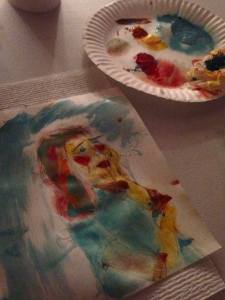
Photo: Lisa Nolan
A child called Melissa painted artist Lisa Nolan’s portrait of her at Lowell’s Making Art with Artists program in 2015. When artists work with children, freedom to create is the name of the game.

Did you catch the National Public Radio story about a free art camp in Michigan? I read about it at ArtsJournal, one of my favorite sources.

My friend and former boss Meredith Fife Day led a similar program in Lowell, Massachusetts, called Making Art with Artists. It was amazing.

Zak Rosen at NPR’s Weekend Edition Saturday interviewed one of artists behind the Michigan arts camp.

“In Hamtramck, Mich., a working class city almost surrounded by Detroit, camp is not affordable for many kids. An artist has started a camp inspired by adventure playgrounds and neighborhood artists. …

“Hamtramck is formerly a working-class Polish city. But in recent years, there’s been a huge surge of other immigrants, many from Bangladesh and Yemen. Accompanying that surge have been lots of artists who work to put community at the center of their practice, people like Faina Lerman. [Lerman and her husband have] eight open lots.

“They garden on a few of them, but that still leaves plenty of space for other stuff. And in this part of the city, there aren’t any playgrounds. So this summer, Lerman and some neighborhood artists started a free, week-long day camp. …

“Camp Carpenter does not have a stated mission. If it did, it might be, let’s just do this and see what happens. And adults are here to help, not to lead.

“LERMAN: I feel like everything is just very over structured for kids. Like, they don’t have even the space to make their own decisions or to let their minds expand to different ways of learning or gathering information.

“ROSEN: So here, the structure is intentionally loose. But by the end of the week, there is the start of an adventure playground, built in part by the campers. …

“ROSEN: One young camper, Jimmy Engalan, is learning how to use a hammer. A less patient adult may have allowed him a few whacks of the nail and then taken over — but not teaching artist Liza Bielby. …

“She watches Jimmy until he drives the nail all the way down into a wood pallet. It takes 258 knocks. I counted — 258. But he does it. …

“ANGILENA OMOLARA-FOX: I’m Angilena Omolara-Fox, and I am 11 years old. I made a pillow. I made a dress. I helped with the little fort thing over there.

“ROSEN: So would you come back to camp?

“ANGILENA: Yes, because I don’t really get a lot of chances to use tools and to make, like, things that I would like to make.”

More at NPR, here.

Read Full Post »

« Newer Posts - Older Posts »