Feeds:
Posts
Comments

Posts Tagged ‘contest’

Photo: Christian Jungeblodt/The Guardian.
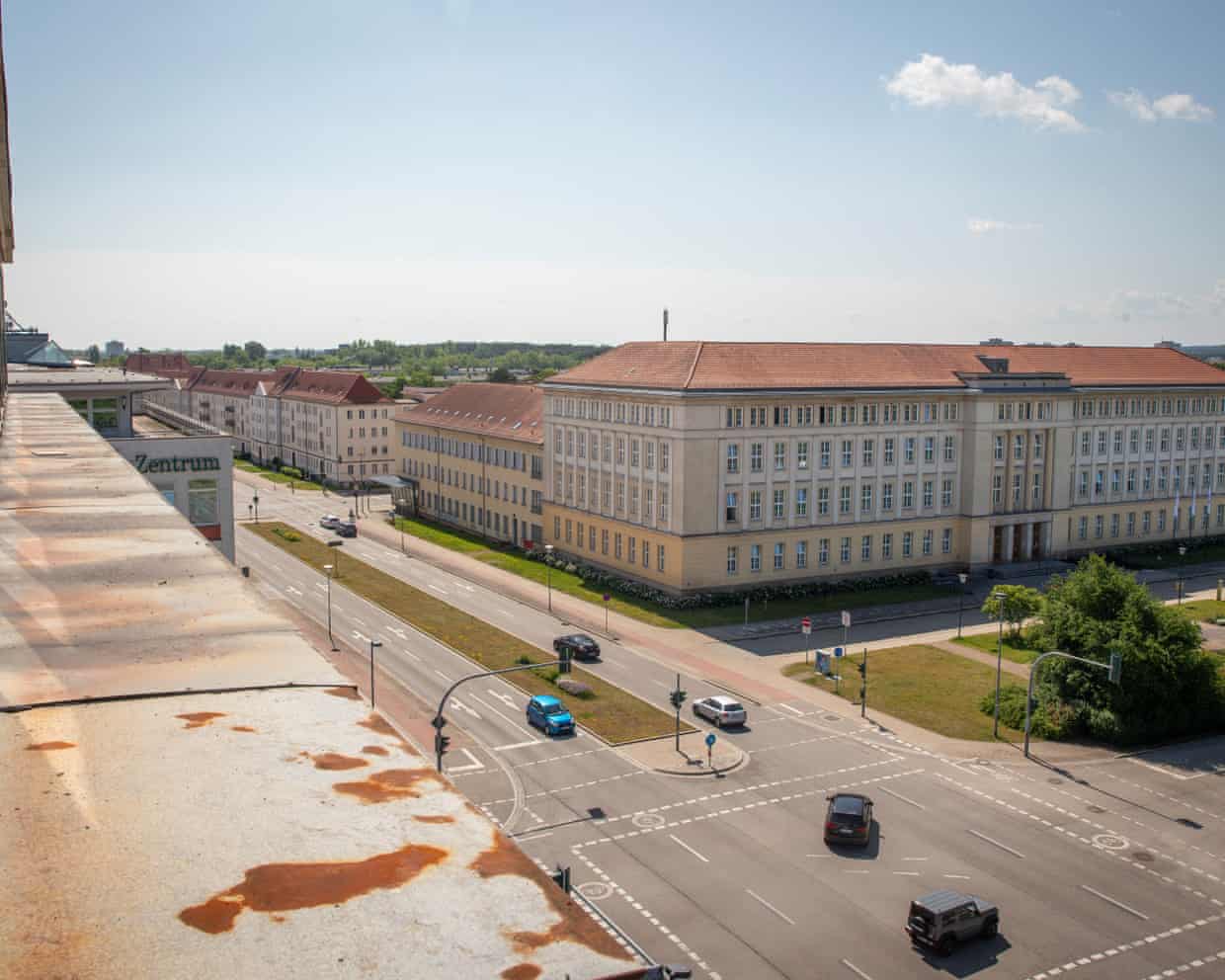
Eisenhüttenstadt, Germany, was built in Soviet-controlled east Germany shortly after the second world war. It has not been considered a desirable place to live in recent years, but it is not giving up.  

This idea to bring more residents to a city that has lost population was new to me. There are probably lots of other places that could try the same approach.

Deborah Cole writes at the Guardian, “An innovative contest by a city in formerly communist east Germany to curb depopulation by offering a fortnight of free housing has stunned local officials with its success.

The competition drew more than 1,700 applications from around the world to try living in Eisenhüttenstadt, a Soviet-style planned city on the Polish border, near Berlin, which was built around a steel plant in the aftermath of the second world war.

“ ‘We ourselves were very surprised by the reach our Probewohnen (trial living) project has had,’ Julia Basan, the municipal economic development officer spearheading the campaign, told reporters on Thursday.

“She said those who had thrown their hat into the ring since May had ‘the most wide-ranging motives’ including one foreign man who simply said he ‘wanted to marry a German woman.’ But the majority were ‘very realistic applications,’ Basan said.

“The two winners, both German professionals, will move into spacious furnished flats in the city centre in September and be treated to a red-carpet orientation program.

“Melanie Henniger, a 49-year-old IT consultant and self-described ’empty nester’ living in the north-western city of Bremen, said she had grown up in nearby Frankfurt an der Oder and was interested in returning to her eastern roots.

” ‘This is a great chance to get to know the region again, because otherwise I wouldn’t have any opportunities at all as I don’t know anyone there any more,’ she said. ‘In the best case scenario, I can put down new roots there again.’

“The other successful applicant, 39-year-old Jonas Brander, is a Berlin-based film-maker working on a documentary about Eisenhüttenstadt.

“ ‘I’m very interested in the city and its people and I want to get very close to life in my work,’ Brander said, adding that he was drawn to its ‘living history.’

“Eisenhüttenstadt, which is celebrating its 75th anniversary, was the first city to be founded – in east or west Germany – after the Nazi period. It was built according to a socialist model designed to blend work and family life for the good of all.

“But the years since national reunification in 1990 have been hard on the town, which has fewer than half the 53,000 residents it counted before the fall of the Berlin Wall.

“The shrinking and aging population has compounded a skilled labor shortage for local industry, in what economists say can easily turn into a death spiral. …

“Basan said the program had allowed Eisenhüttenstadt to put its best foot forward, touting its renovated and affordable neoclassical housing, verdant surroundings perfect for swimming and cycling, and plentiful childcare and work opportunities.

“ ‘We even had one family, from another European country, who heard about us via the Probewohnen program and are moving here on their own steam. They’ve already signed a work contract with a local company,’ she said.

“ ‘They did it all themselves and we’re just thrilled.’ ”

More at the Guardian, here.

Read Full Post »

Photo: Trinity Church.

One of the churches most affected by the collapse of the Twin Towers at Ground Zero was Trinity, a 300-year-old church that, after a recent upgrade, is still going strong. Today’s story is about Trinity and its hosting of a bell-ringing competition.

Rose Adams writes at the Gothamist, “Bells reverberated across the Financial District on [a Saturday in October], producing thunderous clangs and glissandos.

“Bands had traveled as far as hundreds of miles to climb into the landmark Trinity Church tower and strike eight bells in a complex, intricate order for the national Trinity Striking Competition, a demonstration of skill in the 17th-century art of change ringing. …

“Down in the churchyard, only band members and unsuspecting tourists milled about. Trinity didn’t advertise the contest, which had participants from Washington, Boston, Smith College and the church itself. A world-renowned expert in the art form, Simon Linford of England, judged how evenly the teams rang — no jumbled notes or overlapping gongs.

“Change ringing requires strength and focus. Participants each tug a rope attached to a bell weighing between 500 and 2,700 pounds, working together to chime all the bells in unique sequences, known as ‘changes.’

“For Saturday’s contest, each team arrived having memorized a ‘touch,’ or 238 permutations of eight bells, which takes about 15 minutes to ring. A full peal — the gold standard of change ringing — involves more than 5,000 permutations and lasts more than three hours.

“ ‘It’s a meditation of sorts,’ said Austin Paul, 30, a software engineer who led the Boston team. Paul learned about change ringing eight years ago from a friend who studied bells. ‘I love the sound of it. I love the mathematical problems in it. And I love the social aspect of it, too,’ Paul said.

“Ringing remains popular in its native England, which holds a national, 12-bell striking competition. But in North America, which houses only about 50 bell towers, compared to Britain’s 5,000, the art form has been kept alive by a small group of enthusiasts, mostly along the East Coast.

“The Trinity contest was the first U.S. competition in six years, and the mood was friendly.

“ ‘Competition is not the main thing,’ said Micah Walter, 31, from the Smith College team. ‘It’s more for the social aspect of getting together with the other ringers.’

“Trinity Church’s band, an eclectic group of all ages, practices weekly and performs about twice a month for church service. Although the ringing is unpaid and takes years to master, the group has found a steady stream of members through word of mouth.

“ ‘If you really get hooked by change ringing, you tend to do it for your entire lifetime,’ said the band’s leader Tim Barnes, who has been ringing for 46 years.

Despite Trinity’s hometown advantage, Saturday’s win went to the Boston band, which rings in Old North Church, where Paul Revere was a change ringer.

“The Washington team, the 2018 defending champions, came in close second, followed by New York and Smith College.

“The third-place finish didn’t faze New York, though. The team has been rebuilding since Trinity tower’s yearslong closure.

“ ‘From a band development perspective, we feel great,’ Barnes said. …

“Future competitions may enlist younger members in training. Seraphim Ericsson, a 10-year-old bell enthusiast who knows the hertz and specifications of each Trinity bell, hopes to compete one day.

“The hardest part of change ringing, Ericsson said, is ringing ‘the tenor’ — the 2,700-pound bell, which is the church’s biggest.”

More at the Gothamist, here.

Read Full Post »

In Suriname, a country that borders Brazil on the south and the Atlantic Ocean on the north, there’s an unusual sport that only men engage in — from businessmen in suits to tough-guy boxers. It involves songbirds.

Anatoly Kurmanaev reports at the New York Times, “Every Sunday just after dawn, while much of the city sleeps, a group of men gather on the overgrown lawn of a public park in a quiet neighborhood in the capital of Suriname, South America’s smallest country. They huddle together, and hush.

“They have bird cages, each carrying a songbird — a picolet, a twa-twa or a rowti, as the species are known here. Over the next few hours, the men will lean in, silent and focused, and listen to the birds as referees note the duration of each burst of singing, and rate each songster’s performance on a chalk board.

“The audience is engrossed, but wins and losses are greeted by handlers with the same quiet collegiality that has marked the morning.

“Birdsong competitions, a sort of a Battle of the Bands between trained tropical birds, are a national obsession in Suriname. …

“ ‘Some people like football or basketball,’ said Derick Watson, a police officer who, on his days off, helps organize the competitions with a cigar in his mouth. ‘This is our sport. It’s a way of life.’ …

“The yearly bird song championship, which culminates in final rounds that are broadcast on national television in December, draws around a hundred competitors that square off for trophies and a moment of national glory. …

“The most accomplished birds, with renowned stamina, sell in Suriname for up to $15,000, a fortune in the poor former Dutch colony, which gained independence in 1975. But part of the sport’s appeal is that at entry level, it is accessible to anyone, with young untrained birds available for just a few dollars in pet shops.

‘It’s a tradition,’ said Arun Jalimsing, a Surinamese pet shop owner and one of champions of last year’s competition. ‘We grew up with it. When my father gave me money to buy a bicycle, I went and bought a bird.’ …

“Training a songbird requires expertise, but also immense patience and perseverance. To build the birds’ singing endurance, aficionados spend years stimulating them through interaction, regulating their diets and putting them in proximity with female or male partners, according to elaborate training strategies meant to elicit courtship or competitive behavior from each songbird. …

“Suriname is a diverse country, a legacy of the Dutch colonial system, which brought enslaved people and indentured laborers from around the world to work sugar, coffee and banana plantations. … The bird enthusiasts support different political parties and often live in separate, ethnically-defined neighborhoods.

“Suriname’s few decades since independence have been turbulent. … Yet politics, race, class and other differences that have bred confrontations in other arenas seem not to intrude on the collegiality of the songbird owners’ community.

“ ‘Everybody is friends when they come here,’ said Marcel Oostburg, a bird aficionado and a senior official at Suriname’s National Democratic Party, which dominated the country for decades before being ousted in a tense election last year. ‘We never talk politics here.’ ”

More at the New York Times, here.

Read Full Post »

5d27b9822400009d17935475

Photo: Associated Press
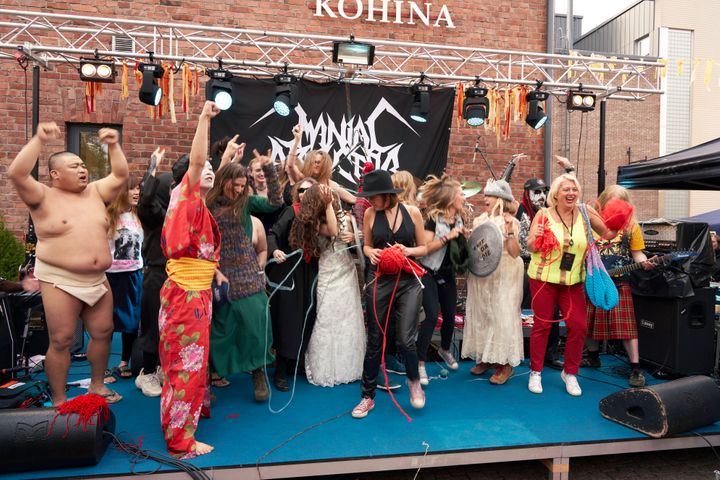
If it’s a heavy metal knitting competition, it has to be Finland. Finland has the world’s most unusual contests.

I love stories about the unique contests the Finns come up with. Remember cellphone tossing, swamp soccer, and wife throwing? So glad the Huffington Post shared this July report from the Associated Press.

“Armed with needles and a yarn of wool, teams of avid knitters danced Thursday to the deafening sounds of drums beating and guitars slashing at the first-ever Heavy Metal Knitting World Championship in eastern Finland.

“With stage names such as Woolfumes, Bunny Bandit and 9″ Needles, the participants shared a simple goal: to showcase their knitting skills while dancing to heavy metal music in the most outlandish way possible. …

“The competition took place in a packed square in the small town of Joensuu close to the Russian border. An eclectic group of around 200 people watched the performances, from families with young children and elderly to the less conspicuous heavy metal fans donning leather-jackets and swirling their long hair to the fast-paced rhythm of the music.

“A niche musical genre in many countries, heavy metal is more mainstream in Finland, with several bands household names frequently played on the radio. Its popularity grew further in 2006 when the Finnish band Lordi won the Eurovision Song Contest dressed as monsters. …

” ‘In Finland it’s very dark in the wintertime, so maybe it’s in our roots. We’re a bit melancholic, like the rhythm,’ said Mark Pyykkonen, one of three people judging the competition. …

“Said Mari Karjalainen, one of the founders of the event, ‘[Winter] really gives us lots of time to plan for our short summers and come up with silly ideas.’

“Thursday’s competition saw participants from nine countries, including the United States, Japan, and Russia, put on inspired performances full of theatrics, passion and drama and the jury struggled to agree upon a winner.

“Finally, it was a Japanese performance by the five-person Giga Body Metal team that clinched the title with a show featuring crazy sumo wrestlers and a man dressed in a traditional Japanese kimono.

“ ‘It’s a great release,’ said Elise Schut, a 35-year-old nurse from Michigan who performed with her 71-year-old mother and 64-year-old family friend, Beth Everson, who added that ‘knitting is such a meditative activity but now it’s energetic and heart pumping.’ ”

More.

Read Full Post »

884

Photo: Wycliffe College/PA
English school girl
Gracie Starkey wrote a winning haiku. Here she is at the prize-giving ceremony in Tokyo.

I’ve always liked the standard 17-syllable haiku poem and taught the form to fifth graders years ago. Asakiyume remembers one I wrote for her at a business magazine where we worked. It was about a dream she’d recounted, and it referred to the moon as “trending downward” (business jargon we heard a lot).

Of course, most experts are Japanese. Until now. Here is a story my husband emailed me about a young girl in England who won a haiku contest.

Steven Morris writes at the Guardian, “A British schoolgirl inspired by an autumnal stroll across a newly mown lawn has become the first non-Japanese person to win a prestigious haiku competition.

“Gracie Starkey, 14, from Gloucestershire, beat more than 18,000 entries to take the prize in the English-language section of the contest organised annually by a Japanese tea company. …

“As she and a friend took a walk after [her school’s haiku] workshop, grass cuttings stuck to her footwear and the haiku came to her:

“Freshly mown grass
“clinging to my shoes
“my muddled thoughts

“Her poem – a non-traditional form that does not follow the classic five-seven-five syllable pattern – was entered into the competition organised by the multinational Ito En, first held in 1989. For the first 27 years the English-language section was won by Japanese people. …

“Gracie said she was amazed when she heard she had won and had been invited to Tokyo.

“ ‘I could only tell my mum and dad and sister and my Japanese teacher at Wycliffe College,’ said Gracie. ‘I told my friends that I was going to Wales for a week and that I wouldn’t have any phone reception.’ …

“As well as winning the trip, Gracie’s poem was rendered by a famous calligrapher, and she received a cash prize. Most thrillingly, her poem is being reproduced on thousands of bottles of green tea. …

“Previously she had little interest in poetry. ‘This has certainly made me more interested in poetry and in Japanese culture.’ ”

More at the Guardianhere.

Read Full Post »

090716-blackstone-valley-visitor-center

Pat Zacks at the Camera Werks in Providence feels compassion for inner-city kids whose schools can’t offer many enrichment activities. That’s why she volunteers every year to mount and hang 500+ juried photos by Pawtucket, Rhode Island, fifth graders (and a few grownups).

On Wednesday I stopped off at the gallery where the “Calling All Cameras” photos are on display until the end of September. The theme this year,  submitted by Linda C. Dugas, is “Pawtucket’s Color Palette.” Winners of this, the 18th, annual photo contest also get their work featured in the city calendar.

An impressive slate of judges are responsible for choosing this year’s winning photos (Butch Adams, Richard Benjamin, Christy Christopoulos, Jesse Nemerofsky, and Aaron Usher). Winners will be announced September 25.

I wish my photo of a child’s box turtle entry had turned out well enough to post, but I’m sharing a couple other favorites here.

Stop by the Blackstone River Valley National Heritage Corridor visitor center, just off Interstate 95 in downtown Pawtucket, to find the box turtle. The visitor center is opposite the historic Slater Mill, birthplace of America’s Industrial Revolution.

And if you are ever in Providence, please check out the Camera Werks on Hope Street. Pat’s Facebook page, here, has more information on the photo exhibit.

090716-pawtucket-calling-all-cameras

090716-pawtucket-photo-show-1


090716-pawtucket-photo-show-2


Read Full Post »

Here’s a nice story by NY Times reporter Dan Bilefsky about a British Muslim bake-off contestant who is a winner on many levels.

Bilefsky writes, “Prime Minister David Cameron praised her coolness under pressure. Bookmakers monitored her performance as they do election candidates.

“Television watchers admired her raspberry mille-feuille and soda-flavored cheesecakes — along with her blue chocolate peacock, and a mountain of éclairs in the form of a nun.

“The victory of Nadiya Jamir Hussain, a petite 30-year-old, head-scarf-wearing mother of three from northern England, in a wildly popular reality show called ‘The Great British Bake Off’ on [Oct. 7] has been greeted by many in Britain as a symbol of immigration success …

“Ms. Hussain’s popularity, bolstered by her self-deprecating humor and telling facial expressions, helped the final episodes of the baking program, in which contestants vie with one another to make a variety of desserts, attracting well over 10 million viewers per show, according to news reports. She has also become a darling of social media, with more than 63,000 followers on Twitter as of [Oct. 8]. …

“Ms. Hussain’s triumphant final dessert, a ‘big fat British wedding cake,’ offered a multicultural message of sorts by fusing her Bangladeshi and British identities. The lemon drizzle cake was decorated with jewels from her own wedding day in Bangladesh and was perched on a stand covered with material from a sari in red, blue and white, the colors of the Union Jack.”

More here.

Photo: Mark Bourdillon/Love Productions, via BBC
Nadiya Jamir Hussain, the winner of “The Great British Bake Off.” 

Read Full Post »

If you like trompe l’oeil painting — that sleight of hand that makes you think you are seeing one thing when it’s really another — you will love “invisible” architecture.

Writes Mallika Rao at the Huffington Post, ” ‘Invisible’ architecture isn’t a novel concept … But it’s an evolving one. Given the pace of technological change, an architect is never done finding fresh ways to make a building disappear.”

Consider the picture below.

“The revelation is the technology the architects chose not to use,” says Rao. “No fancy LEDs or futuristic materials are needed to build “Invisible Barn,” as the parallelogram-shaped structure pictured in Socrates Sculpture Park is known. The brainchild of the New York-based architecture firm stpmj, it’s designed to be made of wood and sheeted with mirror film, at a cost of $5,000.

“The idea is to ‘blur the perceptual boundary’ between object and setting, according to a statement sent by the architects to The Huffington Post. Niches built into the structure mean the experience changes the closer you get — up close, you can see where true birch trees turn into reflected ones. …

“If it seems whimsical, that’s because the idea was hatched for the Folly contest, an annual event held by the Architectural League of New York. The name references the age-old concept of the ‘architectural folly,’ a fanciful, small building typically set in a garden as a conversation starter.” More here.

Photo: stpmj, an architecture firm

Read Full Post »

Here are a couple of Rhode Island sand castles from Crescent Beach (one made by inverting buckets, one made with the drip technique I favored as a kid) and an elaborate castle that Suzanne photographed when she was in Copenhagen earlier this month.

This website promises to teach you how to make the perfect sand castle. It involves keeping the sand moist at all times so the castle doesn’t crumble.

sand-castles

sand-castle-lef-overnight

copenhagen-sand-castle

Read Full Post »

Photo of Patricia McCarthy: Agenda

The editor of a small poetry journal in England was desperate for money to keep the magazine going, so she entered a poem of her own in a contest — and won.

The poem came straight from her mother’s memories of World War I. WW I poems — mostly written by young men in service who never came home — are some of the saddest ever composed.

At the Guardian, Alison Flood has the story on Agenda editor Patricia McCarthy’s win.

“McCarthy, who has published several poetry collections of her own, beat 13,040 other entries to win the anonymously-judged prize. Her winning poem, ‘Clothes that escaped the Great War,’ tells of the plodding carthorse who would take boys away to war, and then return, later, with just their clothes. ‘These were the most scary, my mother recalled: clothes / piled high on the wobbly cart, their wearers gone,’ writes McCarthy. …

“McCarthy said winning the £5,000 prize was ‘just extraordinary.’ “I’ve never even won a raffle. I don’t go in for competitions – the only other time I did was decades back, when I got runner-up,’ she said. ‘But I’m really down on my finances – I edit Agenda, and was really struggling, and thought this was probably better than a gamble on the horses.’ ”

More.

Read Full Post »

You may recall that six grandmothers from the former Soviet Union competed in Eurovision. We blogged about them here. Loreen from Sweden won first prize, but the babushki came in second.

In a follow-up story in the NY Times, Andrew Kramer writes that the grandmas’ fame is bringing a modicum of prosperity to their forgotten village. In particular, it is rebuilding the church that Stalin destroyed and that they loved in secret. They chose to spend their winnings on the church.

“For years, Buranovo was a dying village, one of many in the Russian countryside left behind by an oil-driven boom that revitalized drab Soviet cities and drew the young away from the farms that had sustained their parents. …

“Now, the women’s good fortune is transforming not only their lives, but also Buranovo. In appreciation of the group’s near victory, the local government is building a water pipeline, installing streetlights and high-speed Internet for the village’s sole school and laying new gravel on the main roads. …

“It all began with a miracle, said Olga N. Tuktareva, the leader of the singing group …. Ms. Tuktareva recalled strolling about the village with a friend in 2008 and lamenting a sad episode in local history: the destruction of the Church of the Trinity, taken down like countless other churches in Stalin’s Russia. …

“During that walk, Ms. Tuktareva recalled, her cellphone rang. It was a music producer in Moscow who had heard of the singing babushki …”

Read more.

Photograph: Oleg Nikishin

Read Full Post »