Feeds:
Posts
Comments

Posts Tagged ‘disability’

Photo: A nonprofit called Don’t Forget Us, Pet Us.
Kiki on her cart, which she moves around on her own.

Today’s article is from that section of the Washington Post that focuses on cheery stories, often about animals. We learn about a rescued sheep with a talent for learning new tricks.

Sydney Page writes at the Washington Post, “A sheep named Kiki zips around the yard of an animal sanctuary in a motorized wheelchair. She navigates on her own, tilting a joystick with her head to move forward and back, left and right.

“ ‘She’s like a crazy teenager; she wants to go very fast,’ said Deb Devlin, president of the Don’t Forget Us, Pet Us sanctuary in North Dartmouth, Massachusetts.

“Kiki was born with limited mobility and cannot walk. … At birth, Kiki’s mother rejected her and refused to feed her, which is not uncommon when a lamb is sick or disabled. The farm where Kiki was born didn’t have the resources to look after her and contacted Don’t Forget Us, Pet Us to see if they could help. Devlin went right away, in December 2021, to see the 11-day-old lamb.

“ ‘When I first saw her, I felt so sad for her,’ said Devlin, who co-founded the nonprofit sanctuary in 2016. ‘She was on this gentleman’s lap, she was wrapped in a blanket, and she was shivering.’

“Kiki can feel sensations from her neck down, though she is unable to move herself. During Kiki’s first months at the sanctuary, Devlin and other volunteers tried physical therapy, chiropractic treatments, laser therapy and even tendon release surgery. None of it worked.

“[So] Devlin began focusing on what Kiki could already do. She decided to experiment with toys as enrichment. … She got interactive, press-and-play children’s toys and quickly noticed that Kiki was able to operate them using her head.

“ ‘When she got the hang of the toy, she would press through the buttons until she got to her favorite song, “Twinkle, Twinkle,” ‘ Devlin said. ‘She would stop and put her head on it and gaze up, listening to the music.’

“Then Kiki began to dance. … Seeing how easily Kiki controlled the toys, Devlin suspected she might also be able to use a joystick to navigate. …

“Devlin and her team of five volunteers experimented with trying to adapt Kiki’s stroller into something she could maneuver herself, but they struggled to come up with a design. …

“After joining e-bike groups on social media for advice, Devlin tried a motorized wheelchair. She reached out to Mobility Equipment Recyclers of New England — a wheelchair store in North Kingston, Rhode Island — and secured a motorized chair for Kiki with the help of donations.

“Devlin then zip-tied a cargo stroller body to the wheelchair base and repositioned the joystick so Kiki could reach it with her head. The result was a cart Kiki could move on her own. …

“When Kiki took control of the wheelchair for the first time, everyone was stunned.

“ ‘It took seconds for her to start driving it,’ Devlin said [adding] it was clear Kiki knew what she was doing.

“ ‘She knows the cause and effect of that joy stick and that she is moving herself,’ she said. …

A video the sanctuary shared on social media of Kiki driving around the yard went viral, drawing thousands of comments.

“Everybody online finds her so inspirational,” Devlin said. “The only thing we were really lacking with Kiki was independent mobility, and now she has it.”

Of the more than 7,000 comments on a Facebook post of the video, Devlin said, the majority are positive. … Still, some commenters questioned her quality of life.

“ ‘For me, those reactions were very hard,’ Devlin said, explaining that Kiki gets regular wellness checks to ensure she isn’t in pain or discomfort. …

“Kiki eats and drinks, grazes, sunbathes, makes music with a chime set, watches Disney shows, listens to Taylor Swift and even kayaksShe dances and visits schools and meets with children who have disabilities, helping them feel less alone. …

“Now that Kiki can drive on her own, volunteers said she’s developed a sassy side.

“ ‘You tell her it’s time to stop and she’ll look at you and drive away,’ said volunteer Jess Bullock. … Bullock said despite her mobility challenges, Kiki seems like a very happy girl. …

“Devlin said Kiki’s story is one of resilience and hope. ‘She has had such an impact on so many,’ she said. ‘Everyone is just so taken by Kiki and her journey.’ ”

More at the Post, here. I guess I’m guilty of speciesism, but I admit that the thing I like best about Kiki is that her success cheers human children who have disabilities. What is your take?

Read Full Post »

Photo: Hannah Goeke/Christian Science Monitor.
One of the National Braille Press’s braille machines operating in Boston’s Fenway neighborhood.

As I read today’s article about braille services losing funding, I am struck particularly by an activist’s comment on the importance to blind children of meeting other blind children in the braille libraries. I remember my own insensitivity to disability as a child. Children sense difference sand sometimes they are not kind. Being with others who share an issue like blindness would be huge.

But opportunities like that are now threatened — at both federal and state levels.

Hannah Goeke writes at the Christian Science Monitor, “Marci Carpenter reconnected with her love of reading through her fingertips. When her vision became more limited, learning braille gave her a new way to experience the world. She still remembers how the words of Robert Frost’s poems came alive again through soft bumps embossed on thick paper.

“But it was the Washington Talking Book & Braille Library in Seattle that gave her a place to connect.

“ ‘That was the first time I had ever experienced being around shelves and shelves of braille books. It was this really liberating experience,’ recalls Ms. Carpenter. Over the next five decades, she returned again and again to browse through the Major League Baseball schedule, check out the Constitution – and science fiction – and discover new volumes.

“Today, Ms. Carpenter, who now serves as president of the National Federation of the Blind of Washington, is facing a new urgent need.

“On July 1, the doors to the Washington Talking Book & Braille Library swung shut to the public for in-person exploration and gathering due to a lack of state funding. As needs increase and revenue growth slows, the state of Washington is facing a budget deficit. Ms. Carpenter, who was among those working with legislators to secure funding for libraries, came up empty-handed. …

“The Seattle library is one of nearly 100 libraries and outreach centers nationwide that form the network of the National Library Service for the Blind and Print Disabled, which provides free braille and audio materials through the Library of Congress.

“A small staff is determined to keep the library running. Since July 1, it has offered services by appointment only. ‘We are getting about our normal number of calls,’ writes Danielle Miller, the library’s director, in an email. ‘We have had to turn away people who wanted to come in and use the library.’ …

“Patrons say they are most saddened by that loss. Through in-person workshops and programming, the library provides a sense of belonging and community. Preserving free access to braille materials and encouraging braille literacy – especially for children – is imperative, according to experts and educators. …

“The vast majority of the 26% of employed blind people are braille readers, according to the National Braille Press in Boston. However, despite reading’s link to higher education and employment in the United States, only 12% of school-age blind children in the U.S. can read braille, the NBP estimates.

“While tape recorders and synthesized speech are useful tools, they do not teach the ability to read, write, and spell, says Kim Charlson, the executive director of the Perkins Library in Watertown, Massachusetts. …

“Braille opens the door to independence, not only on a large scale but also in small ways. What is habitual to sighted people becomes a significant hindrance for blind people, says Ms. Charlson. For example, being able to jot down a telephone number, take a note, or create labels to find the warranty for your new stove.

“Ms. Charlson shares a lesson she learned about the everyday importance of using braille after adding an unconventional ingredient to her chili recipe.

“ ‘I just opened it and tossed it in. I added my tomato sauce,’ she says with a laugh. ‘My husband [who is also blind] took a bite and he said, “This is kind of interesting.” And I said, “What do you mean? It’s chili.” And he goes, “Well, it’s got fruit cocktail in it.” ‘ Ms. Charlson now adds braille labels to her kitchen jars and cans.

“While funding uncertainty has braille libraries on edge, at the National Braille Press, President Brian Mac Donald says the demand for braille books remains high. He expects that to continue. …

“Says Mr. Mac Donald, ‘We have parents that have written testimonials saying, “I wish you could have seen the excitement of my son when he read his first book with us … in braille.” ‘

“On a recent weekday, the NBP presses are humming, business as usual, in a brownstone building in Boston’s Fenway neighborhood. In the basement, Elizabeth Bouvier binds books together with practiced precision as the rhythmic clatter of machines pressing dots into thick paper echoes off concrete walls.

“Ms. Bouvier is blind. So are many of her colleagues at the NBP, where a small staff produces millions of braille pages each year, including children’s books.

“The closure of the Seattle library means the shuttering of its children’s room. It also means the end of introductory braille workshops and story times with children’s books featuring braille pages added that allow blind and sighted kids to read together. …

“Like many, Ms. Carpenter was the only blind child in her public school. The closing of the children’s room ‘is a loss of community,’ she says. ‘It is important for blind children to meet other blind children.’

“Ms. Miller’s and Ms. Carpenter’s inboxes have been flooded with inquiries about how people can help. Ms. Carpenter is telling them to wait for the right moment. When funding talks for the next state budget cycle start in 2026, she has no doubt that the blind community will turn up in big numbers to explain why access to the library’s services is essential to them.

“ ‘You know the most impactful action people have is their story,’ she says. ‘Anyone can request to speak with a legislator.’ ”

More at the Monitor, here.

Read Full Post »

Photo: John Lykowski.
Alex Gamino of the Chicago Comets takes a turn at bat at the 2024 Beep Baseball World Series in St. Charles, Missouri.

In an unusual story at the Christian Science Monitor, Jay Copp reports that “baseball for the blind” doesn’t mean listening to games on the radio but actually playing baseball in spite of a disability. The sport is called Beep Baseball. It has a ball that beeps, perhaps reminding Harry Potter fans of those airborne snitches with a mind of their own.

“Clad in a stylish red uniform with blue trim, Rich Schultz fiercely swings at the pitch and dashes toward the base. Mr. Schultz, a teacher, is one of more than 100 weekend warriors playing baseball on a recent Saturday morning at a sprawling park in a Chicago suburb. Eight teams from six states competed in the two-day tournament, in its 24th year.

“The Chicago Comets, Mr. Schultz’s team, won two and lost two. The camaraderie was more important than winning. ‘There’s a real sense of community – not only the guys on your team but the other teams,’ says Mr. Schultz. …

“The players are blind. The teams belong to the nationwide 24-team National Beep Baseball Association (NBBA), formed in 1976.

“Beep baseball is a modified version of the national pastime. The 16-inch ball has a noisemaker that beeps. A teammate, a sighted volunteer, serves as the pitcher. There are just two bases, 4-foot-tall padded cylinders. One of them will buzz when the batter strikes the ball. The batter is out if a fielder cleanly grabs the ball before the batter touches the base. Otherwise, a run is tallied.

“The games have the same varied pace of traditional baseball: stretches of inactivity, such as foul balls and swinging strikes, followed by frenetic action, with fielders scrambling and batters sprinting toward the bag. Most of the players grew up as avid baseball fans or played other sports as youths.

“ ‘He’s very competitive,’ says Christina Smerz of Mr. Schultz, her husband, who wrestled in high school, despite his lifelong blindness. ‘He gets a real sense of freedom playing sports.’ …

“Beep baseball has been on a steady upswing, according to Stephen Guerra, NBBA secretary. … The NBBA has 500 members, split about equally between players and volunteers. That’s double the number from two decades ago, according to Mr. Guerra, who is a player for the Minnesota Millers.

“Bob Costas, the Emmy-winning sports broadcaster, has promoted the World Series on both a baseball podcast and a video made for MindsEye, a nonprofit sponsoring the tournament. 

“Beep baseball dates from 1964 when Charles Fairbanks, an engineer at a telephone company, designed the first practical beeping baseball. Mirroring the general societal attitude toward those with disabilities, the sport evolved from a genteel, slow-moving one, in which players were basically coddled, into a highly competitive activity. Fielders dive after balls, and batters fling themselves into the padded bases. …

“Comet Dustin Youngren remembers his debut several years ago with vivid clarity. … ‘I was so nervous. But I hit it, got to the base, and scored a run – in my first at bat,’ says Mr. Youngren. … Beep baseball is a central part of his life. ‘I love my team. I get a lot of support,’ he says. ‘I want to play forever.’ …

“Begun in 1995, the Comets practice every Saturday during the season and play a 20-game schedule. The 12-member roster has fluctuated, but it often has included players as young as teenagers and women as well. Many on the team are either in school or gainfully employed. The current roster includes a rehabilitation therapist and an IT support system engineer.

“On hand at the recent Saturday game is David Smolka, a 60-something former league MVP. Cooper, his Labrador leader dog, lies at his feet. ‘I was pretty good,’ he says with a chuckle. ‘I’d get upset with myself if I didn’t do well. I learned to talk to myself and realize it’s OK to have a bad day, just like you might have a bad day at work.’

“Mr. Smolka coached the Comets when he retired from playing. His players learned much more than how to hit or field. ‘Some had to learn how to get to practice. They had to learn bus routes, how to get equipment,’ he says. ‘My mom never pampered me. I didn’t pamper them.’ …

“Beep players understand, all too well, that off the diamond it’s not an even playing field. ‘People look down on you. They think you should be flipping burgers,’ says Mr. Youngren. ‘I want to break that line of thinking, to show people what I can do.’

“Mr. Schultz teaches young people who are blind as part of his job as a special education teacher. He uses beep baseball to illustrate the possibilities for them. Often it’s their parents who need to be reached. ‘They can have such negative expectations,’ he says.”

At the Monitor, here, you can get more details, including how the play-by-play is narrated by someone who can’t see what’s happening.

Read Full Post »

Photo: BBC.
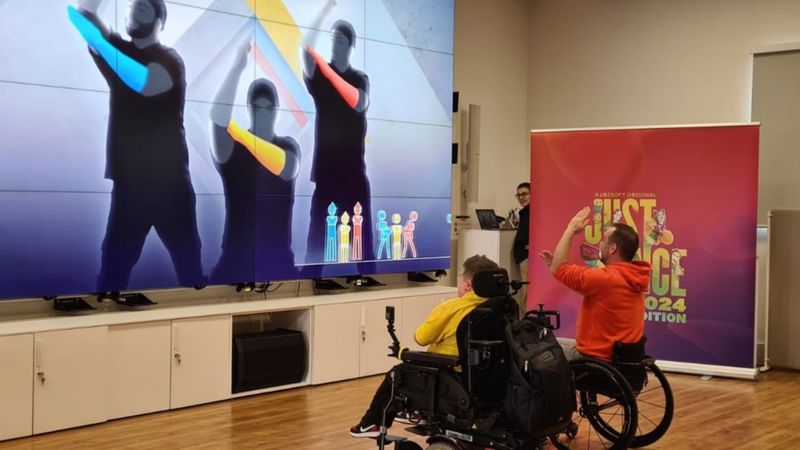
The 2023 version of the game Just Dance includes a routine suitable for people in wheelchairs. Gamer Seth Burke, who has Duchenne Muscular Dystrophy, learns the technique
.

When people talk about “gaming,” I don’t always know what they mean. That’s how far out of it I am. But when I saw a headline about gaming and wheelchairs, I wanted to learn more. It seems that some video-game companies are working to make their products accessible to all, especially games that ask the participants to move certain ways, even dance.

The BBC writes that more than 135 million people have played Just Dance. The network asked teenager Seth Burke to report on how accessible he thinks the game is for people who have a disability.

“Ubisoft’s video game has 500 unique choreographies that users from around the world follow. Seth, 14, from Vale of Glamorgan [in Wales], was invited to the company’s Paris studio to test out the latest version.

“He spoke to designers and choreographers and gave his input on a new routine for people in wheelchairs. This is his story.”

Seth: “Like most teenagers, I love gaming with my friends and brothers, but using a wheelchair means I’m not always able to join in with every video game. I have a disability that affects my muscles. If I play a game that involves me moving a lot, I’m not always very good at it and my arms ache easily.

“Gaming is important to me, so I wanted to know how tech companies are creating new games to suit people with disabilities. I was invited, with Children in Need, to meet the Paris-based team behind the hit game Just Dance.

“The latest version of the game features, for the first time, a routine performed by a dancer in a wheelchair. Players are invited to sit and follow the arm movements whilst holding their phone or console.

” ‘Everyone can get joy from dance,’ Stacey Jenkins, one of Ubisoft’s accessibility design specialists told me. ‘Game development is a really long process, but if you start to think about accessibility right at the beginning, we can make things accessible by design. …

“But is it possible to make all games accessible to all people?

” ‘I think it’s really difficult to make games completely 100% accessible to absolutely everybody at the same time,’ says Stacey. ‘Every game that we release, if it’s more accessible than the last, then we’re making good progress.’

“After chatting to Stacey, I tested Just Dance in the studio with Florent Devlesaver, a Belgian dancer in a wheelchair, who features in the game. He told me how he had to adapt the dance moves to work for him, as well as making sure they still worked in a video game.

“I loved meeting Florent and having a go at the dance routine in the studio. … It was nice to see that even though you have a disability, it doesn’t define you and you can do whatever you want with your life. I think people are making a huge effort to develop more accessible games, but it’s going to take some time. … I definitely think things are changing. I have confidence.”

More at the BBC, here. To learn more about the BBC Children in Need initiative, click here. According to the website, “BBC Children in Need is here to make sure that every child has the childhood they deserve – and the support they need to thrive.

“We are committed to funding the grassroots organizations and project workers across the UK that provide the vital positive relationships children need to help them navigate the challenges in their lives. Our project workers support, inspire and champion them to ensure they have opportunities and can reach their goals. And that will always be our approach.

“We fund thousands of charities and projects in every corner of the UK, that support children and young people to feel and be safer, have improved mental health and well-being, form better, more positive relationships and be given more equal opportunities to flourish.”

Read Full Post »


Photo: Lanna Apisukh for NPR.
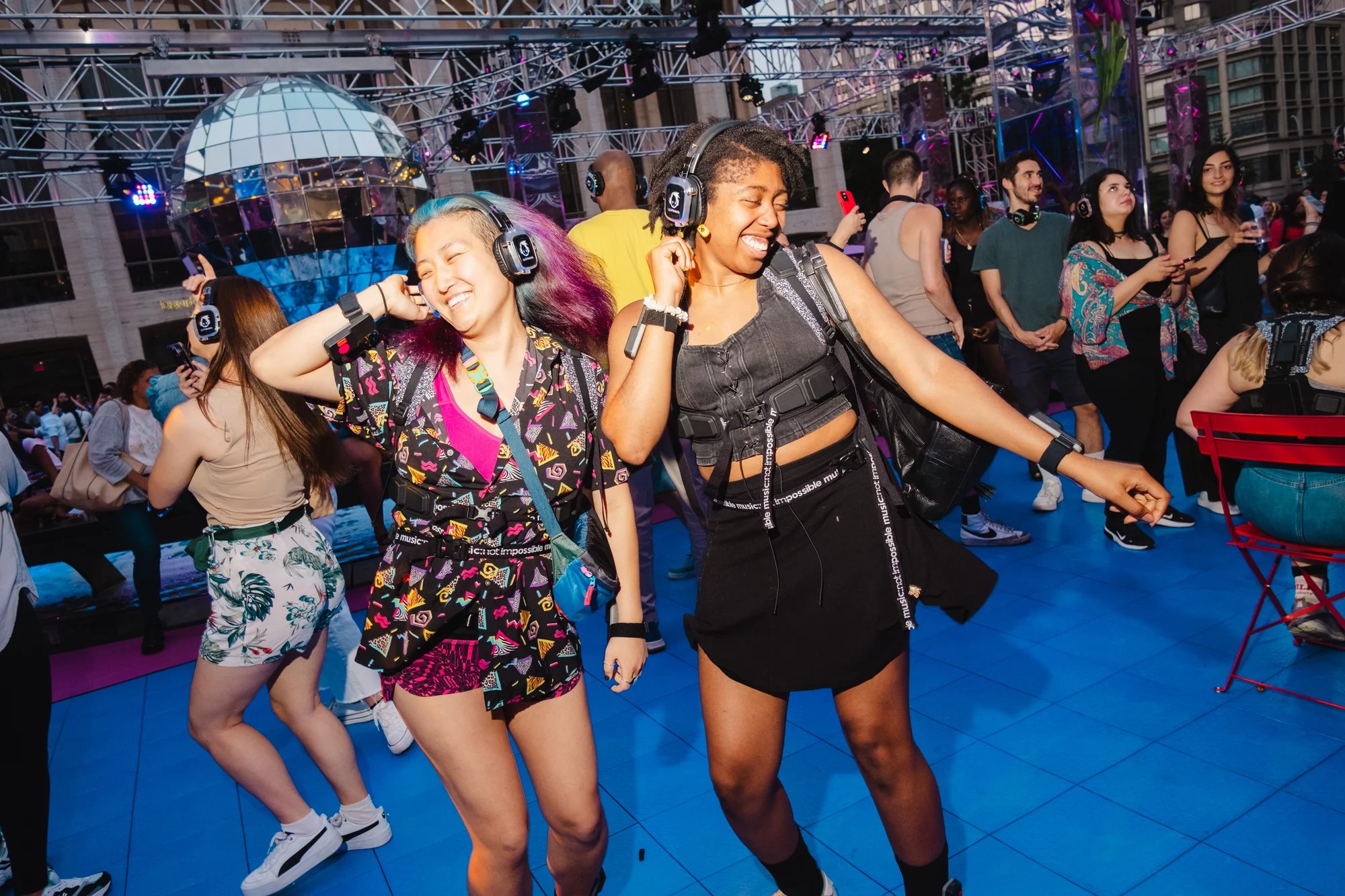
Concertgoers dancing at the Silent Disco dance party at Lincoln Center, New York City, on Saturday, July 1, 2023. “Haptic” suits designed for the deaf community were provided by Music: Not Impossible.

Of the many interesting kinds of jobs in the world, I bet you never heard of this one: “Chief Vibrational officer”! Jennifer Vanasco explains at National Public Radio (NPR).

“When Daniel Belquer was first asked to join a team to make a better live music experience for deaf and hard-of-hearing people, he was struck by how they had developed work-arounds to enjoy concerts.

” ‘What they were doing at the time was holding balloons to feel the vibrations through their fingers, or go barefoot and flip the speakers facing the floor,’ Belquer said.

“He thought the team could make something to help hard-of-hearing people enjoy live music even more with the technology now available. 

“Belquer, who is also a musician and theater artist, is now the ‘Chief Vibrational Officer’ of Music: Not Impossible, an off-shoot of Not Impossible Labs, which uses new technology to address social issues like poverty and disability access. …

“His team started by strapping vibrating cell phone motors to bodies, but that didn’t quite work. The vibrations were all the same. Eventually, they worked with engineers at the electronic components company Avnet to develop a light haptic [3D touch] suit with a total of 24 actuators, or vibrating plates. There’s 20 of them studded on a vest that fits tightly around the body like a hiking backpack, plus an actuator that straps onto each wrist and ankle.

“When you wear the suit, it’s surprising how much texture the sensations have. It can feel like raindrops on your shoulders, a tickle across the ribs, a thump against the lower back.

It doesn’t replicate the music — it’s not as simple as regular taps to the beat. It plays waves of sensation on your skin in a way that’s complementary to the music.

“The vibrations are mixed by a haptic DJ who controls the location, frequency and intensity of feeling across the suits, just as a music DJ mixes sounds in an artful way.

“The evening’s haptic DJ was Paddy Hanlon, co-founder of Music: Not Impossible. ‘What we’re doing is taking the feed from the DJ, and we can select and mix what we want and send it to different parts of the body,’ he said. ‘So, I’ll kind of hone in on, like, the bass element and I’ll send that out, and then the high hats and the snare.’

“The haptic suits were just one component of the event, which was celebrating Disability Pride Month as part of Lincoln Center’s annual Summer for the City festival. There were American Sign Language interpreters; the music was captioned on a screen on the stage; there was audio description for those who were blind, and there were chairs to sit in. There’s also a chill-out space with noise-reducing headphones, earplugs and fidgets for those who feel overstimulated. Because it’s a silent disco — meaning you can only hear the music through headphones — attendees could adjust the sound. …

“The suits are the star attraction. Lily Lipman, who has auditory processing disorder, glowed when asked about her experience.

” ‘It’s cool, because I’m never quite sure if I’m hearing what other people are hearing, so it’s amazing to get those subtleties in my body.’

“Said Kevin Gotkin, one of the evening’s DJs and the curator of disability artistry events at Lincoln Center, ‘This is a chance for us to be together and experience access that’s integrated into a party artistically and not as, like, a compliance thing. … Disability is the center of the party.’ “

More at NPR, here. No paywall.

Read Full Post »

Photo: Shanta Nepali.
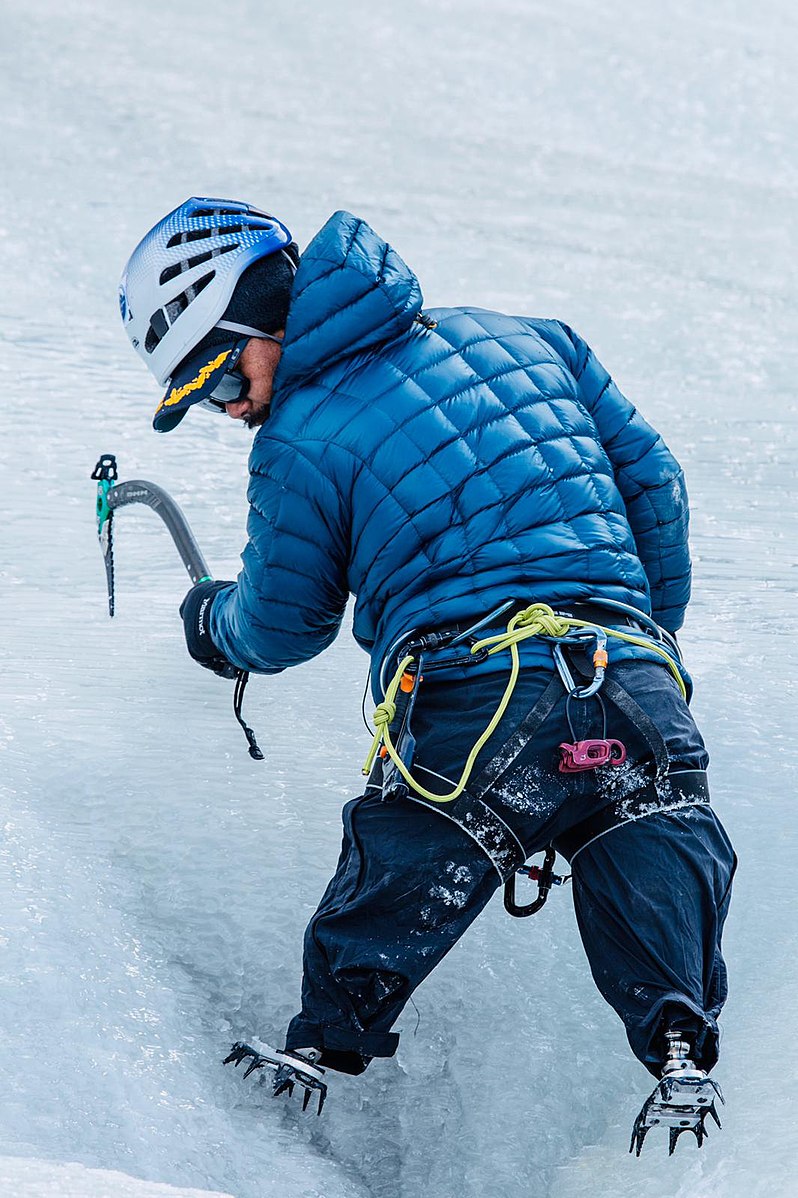
He lost his legs in Afghanistan, went on to summit Everest.

Today’s story reminds me that people can overcome almost anything if it’s important to them — and if they believe they can.

Bryan Pietsch has the story at the Washington Post.

“Hari Budha Magar was born in the foothills of the Himalayas. Growing up in Nepal, surrounded by the mountains and seeing Mount Everest constantly in textbooks and local media, he thought about climbing it someday.

“But school kept him busy, and then at 19, he left his country to join a Gurkha unit in the British army. He saw and skied through mountain ranges around the world on his missions and travels, but he was still ‘thinking about Everest all the time,’ he said in an interview.

“Those bucket-list plans to climb the world’s tallest peak were complicated by an explosion in Afghanistan in 2010 that left Budha Magar with above-the-knee amputations on both of his legs. But after years of preparation — and delays due to the coronavirus pandemic and a rule that sought to keep people with certain physical disabilities off the mountain — Budha Magar made history [in May] by becoming the first above-the-knee double amputee to summit the 29,000-foot peak. …

“Budha Magar was part of a 12-person team led by Krishna Thapa, another Gurkha veteran. The pair served together in the army for three years and were reunited in 2016 as Thapa was planning an Everest expedition.

“ ‘What do you think? I’ve got no legs,’ Thapa recalled Budha Magar asking him. ‘Do you think it is possible I could climb Everest?’

“ ‘We can only try,’ Thapa replied.

“After acclimating to the elevation and the snowy, windy environment at base camp, the team intended to start the journey to the summit on April 17 — exactly 13 years after the explosion in Afghanistan that took Budha Magar’s legs — but poor weather delayed them for weeks. This year’s conditions were especially difficult, Thapa said. …

“Unpredictable wind — despite access to three separate weather forecasting tools — and conditions such as slushy snow [proved] challenging. ‘The snow was soft,’ Budha Magar said, ‘and I didn’t have knees to lift up.’

“Budha Magar said there were times when he wanted to give up, and Thapa said there were a couple of moments when he thought they wouldn’t be able to move forward. But they persisted.

“ ‘Hari kept surprising me,’ Thapa said.

“They summited about 3:10 p.m. [May 19], spending only a few minutes at the peak due to harsh conditions. At the summit, Budha Magar said his tears — happy ones — froze on his cheek. Some on the team had to fetch more oxygen on the descent, and Budha Magar was so exhausted that he slid down on his rear end for part of it. …

“Budha Magar, who lives in Canterbury, England, said his 10-year-old son was especially worried about him attempting the climb. ‘I promised myself, “I’ll come back for you. I’m not going to go die up there,” ‘ he said. …

“Many Nepalese believe that people with disabilities were sinners in their past lives, Budha Magar said.

“ ‘I wanted to show that disabled people can have a happy, successful and meaningful life,’ he said. ‘Our disability might be our weakness, but we can do many other things.’ ”

More at the Post, here.

Read Full Post »

Photo: Baileigh Industrial.
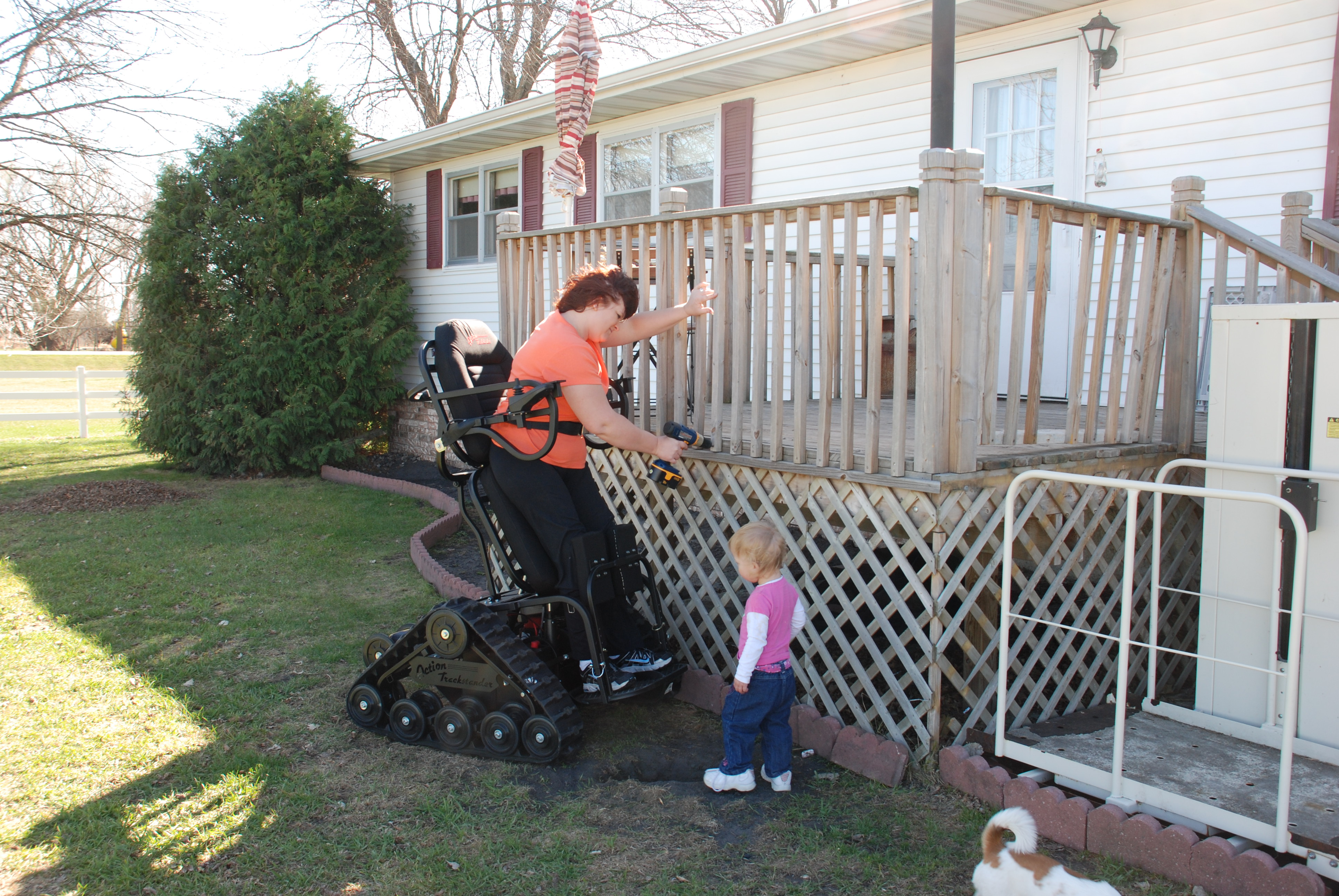
Above, using the Action Trackchair around the house. Wilderness adventurers love it, too.

Technology is erasing the barriers for people with disabilities who want to do everything other people do. At the Washington Post, Andrea Sachs and Natalie B. Compton wrote on Nov. 8 about a 500-pound miracle arriving in US parks: all-terrain wheelchairs.

“Cory Lee has visited 40 countries on seven continents,” they write, “and yet the Georgia native has never explored Cloudland Canyon State Park, about 20 minutes from his home. His wheelchair was tough enough for the trip to Antarctica but not for the rugged terrain in his backyard.

“Lee’s circumstances changed [recently], when Georgia’s Department of Natural Resources and the Aimee Copeland Foundation unveiled a fleet of all-terrain power wheelchairs for rent at 11 state parks and outdoorsy destinations, including Cloudland Canyon.

The Action Trackchair models are equipped with tank-like tracks capable of traversing rocks, roots, streams and sand; clearing fallen trees; plowing through tall grass; and tackling uphill climbs.

“ ‘I’ll finally be able to go on these trails for the first time in my life,’ said the 32-year-old travel blogger, who shares his adventures on Curb Free With Cory Lee. …

“In 2017, Colorado Parks and Wildlife launched its Staunton State Park Track-Chair Program, which provides free adaptive equipment, though guests must pay the $10 entrance fee. Michigan’s Department of Natural Resources has placed off-road track chairs in nearly a dozen parks, including Muskegon State Park. …

“South Dakota is [expanding] its squadron: On Tuesday, the South Dakota Parks and Wildlife Foundation unveils its second all-terrain chair. South Dakota resident Michael M. Samp is leading a fundraising campaign to purchase up to 30 chairs. Last year, Samp’s father packed up his fishing pole and piloted a track chair to Center Lake in Custer State Park. He reeled in trout, just as he had before he was diagnosed with spinal cerebral ataxia. …

“This month, the Minnesota Department of Natural Resources will wrap up its months-long pilot program that tested out the chairs in five parks. … Said Jamie McBride, a state parks and recreation area program consultant with the Parks and Trails division of the Minnesota DNR, ‘People have told us this is life-changing.’

“The Georgia initiative was spearheaded by Aimee Copeland Mercier, who suffered a zip-lining accident in 2012 and lost both hands, her right foot and her left leg to a flesh-eating bacterial infection. Copeland Mercier, a psychotherapist and licensed clinical social worker, tested several types of all-terrain chairs before committing to the Action Trackchair, which several other state programs also use.

“The Minnesota-based company was founded by Tim and Donna Swenson, whose son, Jeff, was paralyzed in a car accident. The original design resembled a Frankenstein of sporting goods parts, with snow bike tracks and a busted boat seat. Today’s model could be an opening act at a monster truck rally.

“ ‘I was floored by what it could do,’ said Copeland Mercier, whose foundation raised $200,000 to purchase the chairs at $12,500 each. ‘Oh my gosh! I can go over a whole tree trunk, up a steep incline and through snow, swamps and wetlands. If I took my regular wheelchair, I’d get stuck in five minutes.’

“Each program has its own reservations system and requirements. For Georgia’s service, visitors must provide proof of their disability and a photo ID, plus complete an online training course available through All Terrain Georgia. Once certified, the organization will forward the rental request to the park. Copeland Mercier urges visitors to plan ahead: The certification course takes about an hour, the foundation needs 72-hour advance notice and the park requires a 48-hour head’s up.

“ ‘These are 500-pound chairs,’ she said. ‘There are some risks involved.’

“The Minnesota DNR, which owns and maintains its five chairs, advises visitors to call the park to reserve a chair. …

“Track chairs can conquer a range of obstacles, but they do not work in all environments.

“ ‘You need the width. If two trees are too close together, the wheelchair can’t pass between them,’ Copeland Mercier said. ‘And some inclines are too steep. The chair also can’t go down staircases.’

“To steer visitors in the right direction, parks have created maps highlighting the trails designated for the track chairs, such as Staunton State Park’s trio of routes that range from roughly three to four miles. … McBride said one goal is to erect markers that would provide detailed information about the hike, such the extent of accessibility. ‘We want to let people know if they can get all the way to the waterfall or halfway,’ he said, using a hypothetical example.

“Copeland Mercier also has a wish list. She hopes to expand the network of chairs to other parts of Georgia, such as the coastal, southern and central regions. Once the foundation acquires several vans (another aspiration), the staff could move the 30 to 40 chairs (ditto) around the state to fill fluctuating demand. She is also eyeing other states.

“ ‘North Carolina is next,’ said Copeland Mercier, who divides her time between Atlanta and Asheville, N.C. But the grand plan is even bigger. ‘The goal is to alter the U.S.A.,’ she said.”

More at the Post, here.

Read Full Post »

Photo: DiverseAbility.
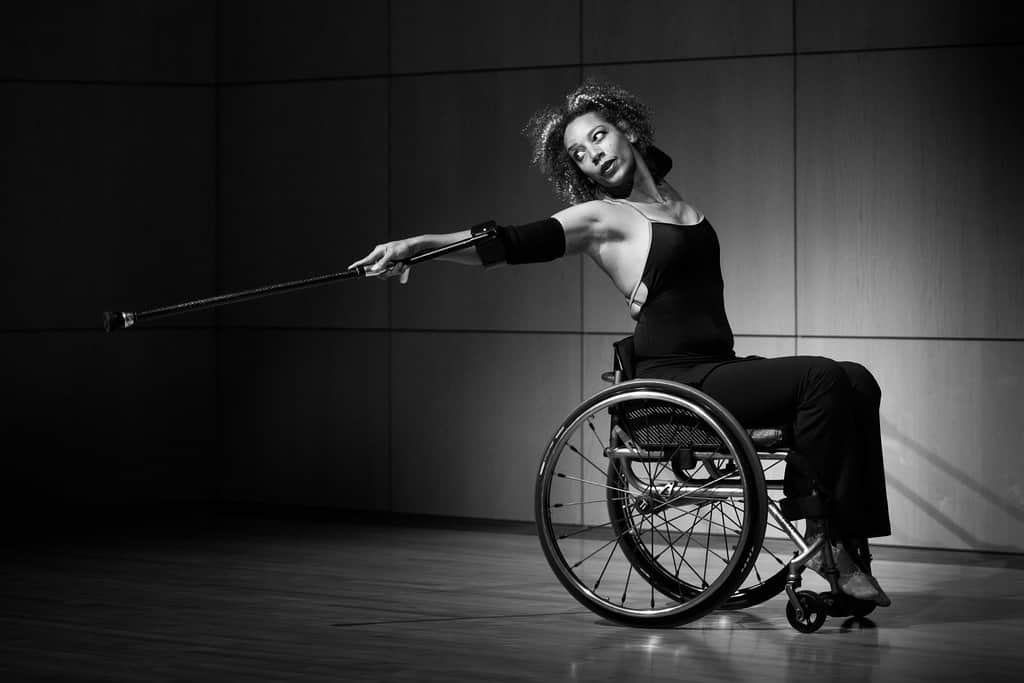
After leaving academia, Alice Sheppard “began exploring the techniques of dancing in a wheelchair and learning how disability can generate its own movement.” 

An unusual and dramatic entertainment took place in Chicago in May. It was the brainchild of Alice Sheppard, a fearless risk taker in a surprising sequence of careers. Today she is a choreographer, but as recently as 2004, she had never considered that dance could be compatible with her disability. According to DiverseAbility magazine, “she was a professor in medieval studies at Penn State.” Then a dancer with one leg dared her to try a dance class.

Lauren Warnecke says of Sheppard at the Chicago Tribune, “Alice Sheppard does not shy away from a challenge. In devising her latest dance, ‘Wired,’ she and her Bay Area disability arts company Kinetic Light had to first write the rule books for wheelchair aerial dance.

“Kinetic Light’s mission is to create art that centers disability. Sheppard and the rest of the company are disabled artists who make work for disabled performers. Key to that vision are questions and advocacy around access — who ‘gets’ to dance and who ‘gets’ to watch or experience art? Since the company’s founding in 2016, Sheppard’s work consistently explores the intersections of disability, race and gender. ‘Wired,’ premiering May 5-8 at the Museum of Contemporary Art in Chicago, is no exception, though it’s the first of Kinetic Light’s growing catalog to incorporate aerial dance.

“Actually, the first step for Sheppard was to read everything she could find about barbed wire. Sheppard, a dancer, choreographer and scholar with a doctorate in medieval studies from Cornell University, devoured the literature on this sharp-edged, steel wire’s fraught history.

“The initial spark for ‘Wired’ came from a visit to the Whitney Museum, where Sheppard viewed Melvin Edwards’ 1969 barbed wire sculpture, ‘Pyramid Up and Down Pyramid.’ …

“It led her down a barbed wire rabbit hole. Sheppard’s source material lends multiple metaphors to what has become her latest multimedia dance piece. Indeed, few pieces of steel are saddled with so much context. Barbed wire is primarily a strict form of forced separation, used in trench warfare and applied in the United States as a means of keeping incarcerated people in, for example, or livestock in and intruders out as ranchers in the American West increasingly claimed land as their personal property.

“Throughout the piece, the dancers wrestle with this unwieldy, unforgiving object, their bodies enclosed by a tangle of wires and barbs. As she continued to explore, Sheppard knew ‘Wired’ had to be an aerial dance. …

“Having never studied aerial dance before, Sheppard and Kinetic Light company members Laurel Lawson and Jerron Herman started from scratch. With support from some 30 artists and engineers with backgrounds in rigging, automation and flight, Sheppard, Lawson and Herman took to the air. …

“ ‘We are not the first disabled artists to fly, by any means,’ she said. ‘There is, of course, in circus arts, a deep and rooted history of disability and flight. That’s not random or new. And there’s a history of disabled dancers also doing aerial work in the UK, New Zealand and the U.S. Part of that history and legacy is to recognize that flight isn’t random. It is perfectly within the tradition and the culture for disabled dancers. What is new here is the construction of the show. It’s not a circus.’

“The process for ‘Wired’ started at Chicago Flyhouse in late 2019. Before the dance and other artistic elements could even begin to take shape, Kinetic Light was faced with huge technical considerations.

“ ‘Before we could even get to “here’s a pretty dance, here’s the choreography,” ‘ she said, ‘we had to get to, “how does this thing fly?” ‘ …

“Lawson, who is also an engineer, assisted in developing the chairs and harnesses needed for her and Sheppard safely ascend into the air. Company member and dancer Herman completes the cast of three and has yet another setup. Herman, who has cerebral palsy, dances sections of ‘Wired’ with a girdle-type harness used to suspend him above the stage. …

“Sheppard reiterated that she and Lawson are not the first disabled artists to fly ,,, but they are the first disabled dancers in the U.S. to explore a thorough compendium of techniques, which includes low flying on hard lines and bungees, as well as flight patterns suspended from joystick-operated, motorized cables. The pandemic enabled Kinetic Light to make connections with then-unemployed entertainment workers with expertise in automation who would not otherwise have been available.

“In a way, ‘Wired’ serves as a primer on wheelchair flight.

“ ‘Understand, this is not actually documented,’ Sheppard said. ‘There are no books. There are no teachers … All of these questions that are easily available to non-disabled aerial artists because there’s a history and tradition here — we just had to figure that out bit-by-bit.’ ”

More at the Chicago Tribune, here.

Read Full Post »

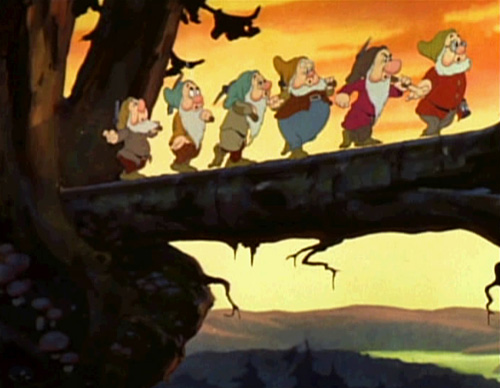
Photo: Walt Disney Productions via Wikipedia.
Having trouble finding workers? There are underused categories of potential employees who would love a job and will repay you with enthusiasm and dedication.

No one ever considers the Seven Dwarfs as having a disability or not being able to work. But they are in a category of potential employees that is sometimes overlooked today.

As Katie Johnston points out in this article from the Boston Globe, rather than complain about a labor shortage, companies could be more open-minded. In Massachusetts, the state is making that easier.

“Faced with too many job openings and not enough people to fill them,” writes Johnston, “employers are considering candidates they might not have even looked at in the past, a change that could have lasting implications for the labor market.

“Companies are reaching out to applicants with criminal records and disabilities. They’re dropping drug testing and welcoming those struggling with homelessness. In some cases, college degrees and related job experience are no longer required. …

“Tight labor markets often lead to the temporary loosening of hiring practices, but this time around there’s potential to bring more people into the workforce permanently, economists and employment specialists say. A cascade of baby boomers retiring early and workers abandoning low-wage professions has created a massive need at a time when companies are actively seeking to diversify their ranks. Armed with this mission, along with improved technologies and new-found remote work capabilities, employers are lowering barriers that have long left people on the sidelines.

“Kareem Berry, 33, had struggled to find a steady job for years before he was hired by Brigham and Women’s Hospital in the fall. Berry, who was born and raised in Dorchester, served 32 months in prison for selling drugs. After he got out in 2018, he took a job-readiness course at Strive Boston and bounced around at temporary and seasonal jobs. Often, however, when prospective employers found out about his record, he said, ‘a lot of people didn’t give me a call back.’

“Then Strive connected him with an apprenticeship program at the Brigham aimed at chronically unemployed Bostonians.

Berry started working in materials management, stocking supply rooms with syringes, gloves, and gowns, and is now a full-time employee making well above minimum wage with health insurance and a 401(k) match.

“The program started three years ago, but as the hospital seeks to provide more opportunities — and with nearly 10 percent of its jobs unfilled, double the amount before the pandemic — more workers are being brought in this way, said program founder Bernard Jones. Previously, the hospital had a practice of not hiring people with certain offenses on their records, Jones said, even though no official policy prevented it. Now, all applicants with a nonviolent background are considered.

“ ‘These are people who have gone through challenges and come out the other side,’ said Jones, who hopes to expand the program throughout the Mass General Brigham system. …

“Nationwide, there are more than 27 million ‘hidden workers’ who are unemployed or underemployed because they are routinely screened out during the hiring process, according to a 2021 Harvard Business School study. These are people with mental health or developmental challenges, physical disabilities, or prison records. They are immigrants, caregivers, veterans. They might come from disadvantaged backgrounds or lack a college degree.

” ‘Three-quarters of US employers in the study used some type of automated hiring system that rejects candidates whose resumes raise red flags, leaving “no room for any narrative,” ‘ said study coauthor Joseph Fuller, a Harvard management professor.

“But if employers took a more thoughtful approach to hiring, they’d likely be happy with the results, he said. …

“At a time when corporate awareness of racial inequities is at an all-time high, inviting in more people, especially those involved in the criminal justice system, which disproportionately affects people of color, would go a long way toward diversifying the workforce, Fuller said. …

“In Massachusetts, $1.4 million in grants is being offered to organizations helping formerly incarcerated residents and young people with disabilities find jobs. The US Labor Department recently launched an initiative to dismantle hiring roadblocks based on race, age, gender, sexual orientation, and ability. Congress is also considering legislation that would decriminalize marijuana use and expunge records for marijuana offenses. …

“The Bank Policy Institute, an advocacy group representing the country’s biggest banks, is pushing to loosen federal restrictions on people with criminal records working in banks. The Second Chance Business Coalition, made up of major companies including Walmart and AT&T, promotes expanding opportunities for people with criminal backgrounds.

“Kelly Services, a national staffing agency that works with 165 employers in New England, launched the Equity@Work initiative in the fall to improve access for job seekers, including those on the autism spectrum or without college degrees. In the runup to launching the program, Kelly placed 645 job seekers with criminal records at a Toyota plant in Kentucky and said the effort reduced monthly turnover to an all-time low and increased the diversity rate by 8 percent. …

“The Hampden County Sheriff’s Department in Ludlow, which has a long-running vocational program for inmates, said the number of employers reaching out for staffing assistance has tripled compared to before the pandemic.”

More at the Globe, here. Another option, of course, is for employers to raise pay. But using this period to integrate lots of new and worthy workers is also a good idea.

Read Full Post »

Photo: Hong Seo-yoon 
Hong Seo-yoon is a South Korean advocate for accessible tourism. In her book Europe: There’s No Reason Not to Go, she even has a section on paragliding.

International tourism may be in a Covid-19 slump, but there are lots of people aching to get back to it. At Public Radio International (PRI), Jason Strother reports on a South Korean world traveler who uses a wheelchair and has shown through her life and writing that sometimes it takes only small changes to enable everyone to travel.

“Hong Seo-yoon maneuvers through shifting clusters of picture-snapping tourists outside of Deoksugung, a palace in downtown Seoul. Before passing through the former royal residence’s wooden gate, she adjusts her motorized wheelchair’s speed ahead of a gradual incline in the stone walkway that leads into a tree-lined courtyard.

“The 32-year-old explains that even small modifications, such as replacing a step with a ramp, give people like her access to places that otherwise would have been difficult if not impossible to enter independently.

“Hong says that many people are often unaware that when it comes to tourism, sightseeing or even extreme sports, many people with disabilities, whether they are blind, deaf or use a wheelchair, ‘all want the same things.’

‘They want to travel, they want to visit places, I don’t think there’s a difference,’ Hong said. ‘Having a disability is not something special or weird.’

“Hong is the founder of Tourism for All Korea, a nonprofit that advocates for greater inclusion in the country’s tourism industry for people with disabilities and makes policy recommendations for improvements in this sector. She’s also the author of Europe, There’s No Reason Not to Go — the first travelogue written by a wheelchair user from her country.

“Her work has informed Seoul’s efforts to make its streets, transit and tourism locations more inclusive for citizens and visitors with disabilities. … A generation ago, a person with a physical or intellectual difference might have been ‘a  shame to their family,’ she said, theorizing this attitude was a consequence of South Korea’s postwar trauma that placed economic growth and competition paramount to other concerns.

“The Korean War in the early 1950s left the South in ruin and poverty. In 2007, South Korea passed the Disability Anti-Discrimination Act, but Hong believes some people still hold onto old biases. …

“Her own experience facing physical and social obstacles underlie her advocacy. When Hong was 10 years old, she suffered a spinal cord injury during a swimming pool accident that paralyzed her from the waist down. At that time, ‘Korea wasn’t accessible at all’ for wheelchair users, she said.

“She recalls her brother pushing her alongside cars in the street since there were no sidewalk curb cuts in her provincial hometown. Hong says she also faced discrimination when her parents were told to send her to a distant institution for people with disabilities because there wasn’t an elevator in the local, four-story grade school.

“Her family instead moved to the Philippines, where a nurturing teacher told Hong that ‘being disabled was not abnormal,’ she said.

“When she returned to South Korea to attend the university, Hong had learned to stand up for herself. She got a taste for activism when her school’s administration refused to relocate a class to the ground floor. Hong fought back and won. …

“Her book idea was rejected by two publishers that told her ‘no one would read about disability stories,’ she said. ‘It really hurt me.’

“After promising to buy any unsold copies, Hong convinced the company Saenggak Bi Haeng in 2016 to take a chance with her book. But, she did not have to live up to her end of the deal — all 3,000 copies sold out, and now, the title is in a second-print run. …

“She believes travel and tourism are ways people with disabilities and the nondisabled can connect with each other and help nondisabled people overcome their biases.

“ ‘Suddenly, they meet a disabled person in their life and they change,’ she said. ‘They change their mind about what [are] disabled people and how to live with disabled people.’ ”

More here.

Read Full Post »

kitty-photo-by-russell-haydn-for-sod

Photo: Russell Haydn
Kitty Lunn, New Orleans ballerina who refused to let paralysis stop her.

Lately, I’ve seen a number of articles about incorporating more artists with disabilities into the theater and dance worlds. Ballerina Kitty Lunn didn’t set out to be an advocate in that movement, but after a paralyzing accident, she took charge of her future in way that helps others.

As reporter Erika Ferrando says at 4WWL television in New Orleans, “A ballerina embodies grace, control, and beauty. It takes years of practice and few are ever able to dance as a profession. For dancers, that’s the dream.

“What if that dream was achieved, then stolen? What if it no longer seemed possible for a dancer to dance? That’s what happened to Kitty Lunn and it’s been her mission ever since to overcome.

‘Life is a choice. We can either live while we’re alive or wait to die,’ said Lunn, who is now almost 70-year-old.

“Life is full of choices. Lunn always chose to dance even when it seemed she had no choice but to give up her dream. …

“Lunn trained in her hometown of New Orleans until she was 15, when her work here led to a scholarship with the Washington Ballet. She was living her dream. …

“She was 36-years-old, preparing for her first Broadway show when it all changed. …

“Lunn slipped on ice and fell down a flight of stairs, breaking her neck and back. The accident put her in a wheelchair for the rest of her life.

” ‘I was very depressed because I had been a dancer since I was 8-years-old. I had to find a way,’ Lunn said.

“She had just started dating the man she would marry, Andrew. …

” ‘Andrew said, spoken like a true non dancer, said if you want to dance, who is stopping you? I was stopping me, fear was stopping me,’ Lunn said. …

 Photo: Dan Demetriad

kittylunn226-1

” ‘I went back to class I put my money on the table. They had to let me in, I had the ADA behind me,’ she said. …

“Surrounded by world class ballet dancers, she was forced to break down barriers.

” ‘They said ‘well you can come in, but you’re on probation. If anyone complains, you’ll have to leave. Many people have complained and I didn’t leave,’ Lunn said.

“In 1995, Lunn founded Infinity Dance Theater in New York. It’s a non-traditional dance company featuring dancers with and without disabilities. The company performs all over the world. …

“Kitty Lunn visited New Orleans this month to help launch a program that keeps veterans moving. The New Orleans VA partnered with the New Orleans Ballet Association for ‘Freedom of Movement’ classes. The program is for veterans, wheelchair-users or not, teaching them to keep moving and dancing.

” ‘It helps me move joints that are a little difficult to move,’ veteran Tina Boquet said. ‘Although I may not be able to do things like I did before my accident, I am still able to move.’

“Now Lunn travels the world teaching others to move, despite anything trying to hold them back.

” ‘I learned that the dancer inside me doesn’t care about this wheelchair. She just wanted to find a way to keep dancing,’ she said. “I think I’m living the life I was born to live. That was an accident, this is a choice.’ ”

More at 4WWL, here, and at Infinity Dance Theater, here.

Read Full Post »

2982

Photo: Universo Santi
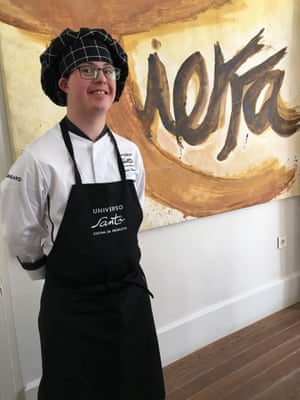
This haute cuisine restaurant in Spain makes a point of hiring workers with disabilities.

I have posted a few stories about successful operations that hire workers with disabilities, but this is the first I remember seeing about a high-class restaurant set up for the purpose of creating jobs that don’t differ from jobs in establishments that don’t use workers with disabilities.

Stephen Burgen writes at the Guardian, “The first thing that strikes you is the calm, the light, the modern art on the walls – and then of course the food. It’s only later that you realise there is something different, and a little special, about Universo Santi, a restaurant in the southern Spanish city of Jerez.

“ ‘People don’t come here because the staff are disabled but because it’s the best restaurant in the area. Whatever reason they came for, the talking is about the food,’ says Antonio Vila.

“Vila is the president of the Fundación Universo Accesible, a not-for-profit organisation dedicated to helping people with disabilities join the mainstream workforce. He has also been the driving force behind Universo Santi, the haute cuisine restaurant whose 20 employees all have some form of disability.

“ ‘I always wanted to show what people with disabilities, given the right training, were capable of,’ says Vila, who is a senior manager at DKV insurance. ‘They were not represented in the world of haute cuisine. Universo Santi has broken through that barrier.’

“The 20 staff, whose ages range from 22 to 62, were recruited from an original list of 1,500. To qualify, applicants had to be unemployed and have more than 35% disability.

“ ‘I feel really lucky to be part of this,’ says Gloria Bazán, head of human resources, who has cerebral palsy. ‘It’s difficult to work when society just sees you as someone with a handicap. This has given me the opportunity to be independent and to participate like any other human being.’

“Alejandro Giménez, 23, has Down’s syndrome and is a commis chef. ‘It’s given me the chance to become independent doing something I’ve loved since I was a kid,’ says Giménez, who lived with his mother until he was recruited.

“ ‘Working here has transformed my life. So many things I used to ask my mother to do, I do myself. I didn’t even know how to take a train by myself because I’d just miss my stop.’ …

“Universo Santi may soon have a star in the Michelin firmament as the Michelin Guide people have already sampled the menu which, at €60 (£53), is less than half the price of a typical menú de degustación.

“ ‘Of course they didn’t introduce themselves but we knew who they were,’ says Almudena Merlo, the maître d’. …

“The Jerez restaurant takes its name from Santi Santamaria, chef at the Michelin three-star Can Fabes in Catalonia until his sudden death in 2011. Can Fabes closed shortly afterwards but his family wanted to carry on his name and culinary tradition and were keen to support the Jerez project. …

“The family’s enthusiasm attracted the attention of Spain’s top chefs, among them Martín Berasategui, [Joan Roca of El Celler de Can Roca, twice voted the best restaurant in the world] and Ángel León, all of whom have contributed recipes and their time as guest chefs at the restaurant.”

More at the Guardian, here. The article also mentions other European enterprises that employ people with disabilities.

Photo: Universo Santi
Says Alejandro Giménez, a junior chef with Down Syndrome who works at Universo Santi in Jerez, “Working here has transformed my life.”

768

Read Full Post »

636631935695391365-janel-meindersee-photo-social-candy-2

Photo: Social Candy
Milwaukee Ballet dancer and teacher, Janel Meindersee, tries out a wheelchair herself as she teaches her students. Parents watch with pride.

Heartbreaking as it is to see anyone make fun of a person with a disability, which does happen in these harsh times, it’s important to remember the advice that the mother of Mister Rogers gave him long ago: “Look for the helpers. There are always helpers.”

In Milwaukee, some unusual helpers are found in a dance company.

Amy Schwabe writes at Milwaukee’s Journal Sentinel, “Nine-year-old Namine Eiche may be in a wheelchair, but that doesn’t stop her from being a ballet dancer. That’s thanks to Tour de Force, a partnership between Milwaukee Ballet and Children’s Hospital of Wisconsin that’s been providing ballet classes to children with disabilities since 2014.

“Just last year, the opportunity was opened up to children in wheelchairs through the ‘Glissade’ class, very appropriately named since ‘glissade’ is the French word for ‘glide.’

“Janel Meindersee, a Milwaukee Ballet dancer who teaches Glissade, explained how the children are able to dance.

” ‘We teach a lot of the same things as a normal ballet class — how to spot your head when you move, the quality of arm movements, how to count music and how to stay in line when dancing together,’ Meindersee said. …

“Meindersee said that seeing kids in wheelchairs in other Tour de Force classes was the impetus for Glissade.

” ‘There was a girl in a wheelchair coming to one of our other Tour de Force classes,’ Meindersee said. ‘She was able to get out of her wheelchair sometimes, but she was most comfortable in her chair. We thought there had to be other kids who can’t even get out of their chairs at all. …

“After having taught two sessions of Glissade, Meindersee is ‘blown away’ by the skill, talent and strength of her students — especially when she gets in a wheelchair herself to try out the dance moves. She laughs with her students, pointing out that she’s not as skilled in wheelchair maneuvers as her students are.”

More at the Journal Sentinel, here. Just imagine the joy and self-confidence of these young dancers take home with them after a class. Perhaps some will join one of the professional wheelchair ballets someday. Or start their own company.

Read Full Post »

Art: Tomihiro Hoshino

For more than 30 years, a woman from Hokkaido, Japan, who stayed at our house while studying the local PTA has been sending me magnificent calendars.

The calendars are from a talented artist and former athlete whose paralysis led him to master holding a brush in his mouth. His name is Tomihiro Hoshino.

An article at AccessibleJapan reports, “Tomihiro Hoshino was an experienced 24-year-old gymnastics teacher with a real passion for the sport. An active mountain climber and gymnastics instructor, his life changed completely as he was demonstrating a double somersault technique to a group of junior high school students. Hoshino unfortunately injured his neck during the maneuver and since that day he has been completely paralyzed from the neck down.

“The accident was a serious blow to this extremely active person who was forced to lay motionless for nine years in a Gunma orthopedic Hospital where he was kept under heavy surveillance for respiratory problems and complications as a result of the injury. He and his family never gave up hope that his physical condition would stabilize and improve. Although it took nine years, and he came close to death many times, there was always hope for the future.

“Many say that this hope came two years after his accident. In 1972 one of the patients that had stayed in the same room as Tomihiro Hoshino was being transferred into a different hospital. He asked that the staff, as well as all of the people that stayed with him, to sign a card as a memento of his time in the hospital. Tomihiro couldn’t come up with a solution as to how he would be able to sign his name for the man but with the help of his mother he was able to hold a pen in his mouth and eventually sign Tomo. This would be the beginning of how Tomihiro would begin his career in writing and painting.

“The second event that produced real inspiration for Tomihiro Hoshino was a time that a friend brought him flowers and left them in the window. …

“He was moved to start expressing what they meant to him. He began to gradually draw flowers and eventually became an adept painter with his mouth. …

“Tomihiro Hoshino has successfully produced hundreds of pieces of artwork, many of his essays and poems have been published and his work is displayed in permanent exhibitions at the Tomihiro Hoshino Museum. …

“If you are interested in Tomihiro Hoshino’s works, you can purchase them on Amazon or visit his art gallery in Gunma, Japan.”

More at AccessibleJapan, here. Read about his museum here. Those who read Japanese may click here.

I feel lucky to have had this decades-long friendship with a woman in Hokkaido. Although we haven’t seen each other since the 1980s, her daughter, Mika, came to visit while living in New York. Mika helped decorate our Christmas tree that year. Nowadays, I never do the tree without thinking of her.

Image: Tomihiro Art Museum

Read Full Post »

An ESPN sports producer set out to do a piece on two high school wrestlers with disabilities. Today they think of her as family. Karen Given reports the story at WBUR radio’s Only a Game.

“Dartanyon Crockett … is legally blind. ‘Being a black kid in the inner city with physical limitations, or what people call a disability, you’re already written off,’ Dartanyon says. ‘No one expects much from you. You’re basically useless. And I wasn’t in a position where I could fix that.’ …

“So he pretended he could see. He joined his high school wrestling team and didn’t even tell the coaches. … Dartanyon didn’t want the coaches to treat him any differently, so they didn’t. Then one day during senior year, Leroy Sutton joined the wrestling team at Lincoln-West High School in Cleveland. Dartanyon was one of the team captains, and he wasn’t the least bit worried that his team’s new recruit was missing something. Well, two somethings.

” ‘We were talking in the cafeteria, and I asked him what happened to his legs,’ Dartanyon says. ‘And he told me that, “Yeah, I was run over by a train.” And I laughed, one of those deep belly laughs. He had always heard the, “Oh, my god. Oh, I’m so sorry. Oh, how did that happen? Oh.” Just to see someone not feeling sorry for him, just kinda sparked a bond almost instantly.’ …

“Soon, Dartanyon was carrying Leroy on and off buses, up and down stairs and into the bleachers. …

” ‘I didn’t know he was blind,’ Leroy says. ‘I found out in class. I noticed he was, like, really close to the book we were reading. So I was like, all right, he has problems seeing. So I turned to a couple of the other students around me and I was, like, “Hey, man, let’s do this like a project style and read out loud.” ‘

“And that’s probably how things would have stayed, Dartanyon and Leroy helping each other out — both thinking it was no big deal — if not for an ESPN feature producer named Lisa Fenn.”

Fenn goes to interview them and is greeted by a coach who said that “he’d been praying really hard for Dartanyon and for Leroy because he felt, once they graduate, the world had nothing for kids like them.”

Turns out the world had quite a bit for them. But it took years. Read the whole story at “Only a Game,” here, because look:

Four years after they first met, Leroy “wrote Lisa a letter for Mother’s Day. … That letter is printed in Lisa’s new book, Carry On, A Story of Resilience, Redemption, and an Unlikely Family. …

When I first met you those were dark days,
In that time I was stuck in my dark way,
There was no light, so you set the world ablaze,
And you snapped me out of that phase,
Then you went further,
Showing me you cared,
Answering my calls now I know that you’ll be there,
Then you ask questions, so slowly I shared,
This world you showed me is simply more fair,
You pull me out of a world where it was not clear,
Glad you did, there was no more air,
But now these days I’m full of smile, and full of play,
Hope you feel loved today,
So I’d like to take this moment to say,
Thank you Mom.
I love you.

Photo: Brownie Harris
Leroy Sutton (left), Dartanyon Crockett (center) and Lisa Fenn, the ESPN producer who came to Cleveland to tell their story.

Read Full Post »

Older Posts »