Feeds:
Posts
Comments

Posts Tagged ‘medical’

Photo: John and Suzanne’s Mom.
Fungi and algae receive less than 0.2% of conservation funding, according to a new study. Small speices never seem as cool as rhinos and elephants.

Is it human nature to pay more attention to the large and aggressive than to the small and quiet? As a female, I think so.

At the Guardian, Mariam Amini writes about how that tendency, when applied to the study of the natural world, can be harmful to the planet.

“Most global conservation funds go to larger, charismatic animals,” she says, “leaving critically important but less fashionable species deprived, a 25-year study has revealed.

“Scientists have found that of the $1.963bn allocated to projects worldwide, 82.9% was assigned to vertebrates. Plants and invertebrates each accounted for 6.6% of the funding, while fungi and algae were barely represented at less than 0.2%.

“Disparities persisted among vertebrates, with 85% of all resources going to birds and mammals, while amphibians received less than 2.8% of funding.

“Further funding bias was found within specific groups such as large-bodied mammals towards elephants and rhinoceros. Although they represent only a third of that group, they were the focus of 84% of such conservation projects and received 86% of the funding. Meanwhile mammals such as rodents, bats, kangaroos and wallabies remained severely underfunded, despite being considered endangered.

“ ‘Nearly 94% of species identified as threatened, and thus at direct risk of extinction, received no support,’ said Benoit Guénard, the lead author of the study. ‘Protecting this neglected majority, which plays a myriad of roles in ecosystems and represents unique evolutionary strategies, is fundamental if our common goal is to preserve biodiversity.’

“Alice Hughes, a coordinating lead author of the research, said: ‘The sad reality is that our perception of “what is threatened” is often limited, and so a few large mammal species may receive more funding than the near-12,000 species of reptile combined.

“ ‘Not only does this limit our ability to implement protective measures, but it closes opportunities to researchers. I have lost count of the number of times collaborators have switched taxa [organism populations] purely because theirs was difficult to fund. This leads to a chicken and egg situation – some of the groups with the highest rates of recent extinction, like freshwater snails, have the most outdated assessments.’

“The study, led by Guénard and colleagues at the University of Hong Kong, analyzed 14,566 conservation projects spanning a 25-year period between 1992 and 2016. …

“ ‘We are in the midst of a global species extinction crisis,’ said research author Bayden Russell. … ‘We need to change how we think about conservation funding. The community needs to be educated about the value of biodiversity and protecting species that are under threat.’ …

“ ‘Governments, in particular those which represent the main pool of funding, need to follow a more rigorous and scientifically driven approach in conservation funding,’ said Guénard.”

More at the Guardian, here.

And be sure to check Anna Kuchment’s Boston Globe interview with Mandë Holford, here, about a poisonous snail with lifesaving properties. It reads in part: “Some of the most powerful drugs in our medical arsenal come from animal venom. Ozempic was derived from Gila monsters, a lizard native to the southwestern US; Prialt, used to treat chronic pain in HIV and cancer patients, comes from deadly cone snails; and captopril, the first ACE inhibitor, a class of drugs used to treat high blood pressure, came from Brazilian pit vipers.”
Read Full Post »

Photo: Sophie Neiman.
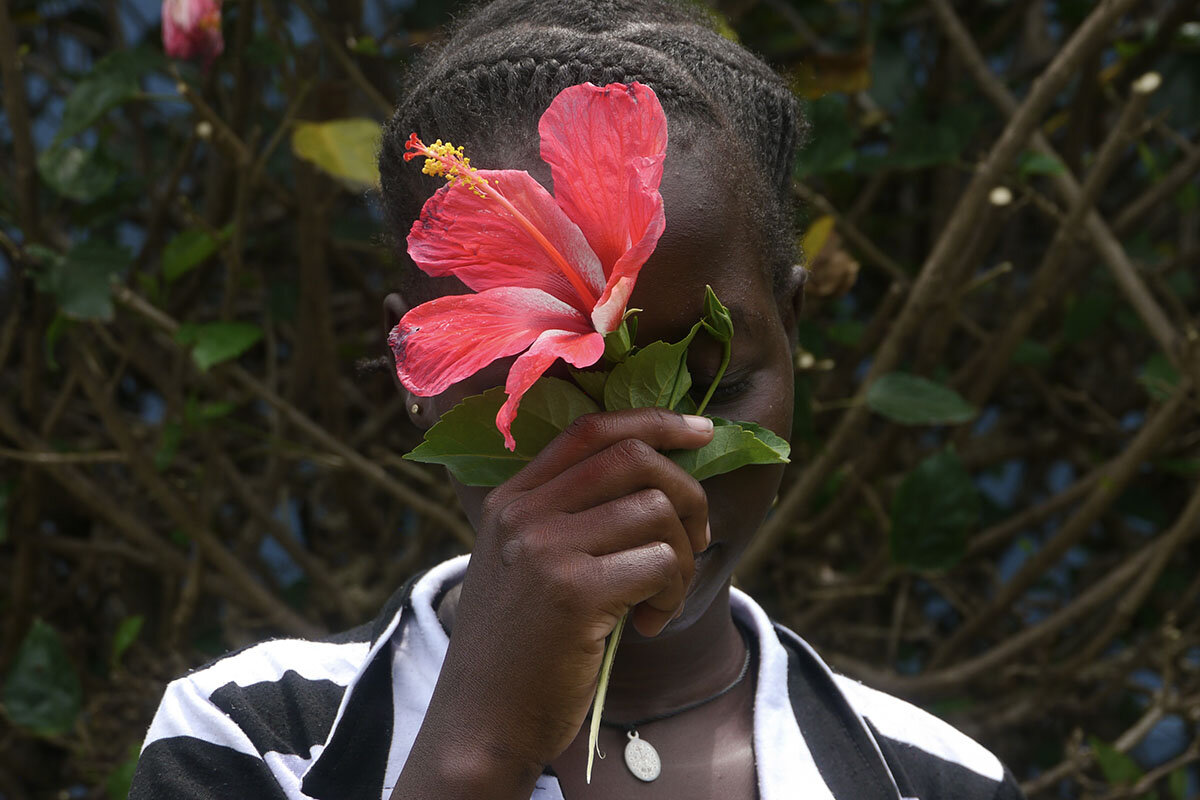
Ms. Acogo spent several years on the street before receiving vocational training as a tailor from Hashtag Gulu in Uganda.

Recently, PRI’s The World broadcast a valuable but scary series on orphanages in Uganda, nearly all of which are bad. For children from impoverished or abusive homes, the alternative may be life on the streets.

In an issue last December, the Christian Science Monitor‘s Sophie Neiman wrote about how one city’s concerned citizens began helping street children reach for a better life.

“In the sticky evening,” she begins, “two boys in torn clothes dart between shop verandas and wrestle in the dust, trading jokes that quickly turn to insults. Onlookers grunt disapprovingly, angry at the noise. More groups of rowdy children will soon stream into the back alleyways of [the small city of Gulu] in northern Uganda, eking out a life in its underbelly.

“By day, the children pick through discarded plastic bottles trying to gather enough of them to sell. At night, they hang out in the shadows of dance clubs or sleep under pieces of cardboard between shop shelves that normally hold fruit.

“Steven Onek strolls over to the squabbling boys. Speaking in a calm and quiet voice, he breaks up their argument. A few minutes later, around another street corner, he comforts a teenager sporting a deep cut on his head, providing the boy with some money to see a doctor. 

“Such situations are commonplace for Mr. Onek, who is a program officer at Hashtag Gulu, a small organization supporting the city’s homeless children. For him, it is not so much a job as a calling.

‘Helping a child, one child out of the street, I feel like I have helped the whole nation,’ he says, smiling.

“The name Hashtag Gulu points to its history. Friends sharing on social media the problems they saw in their city decided to do more than that. At first, their efforts were all volunteer-based. The friends bought food for homeless children and comforted them when they could.

“ ‘If you were in our network, you were free to do anything, for any young person or child. You didn’t have to report to anyone,’ co-founder and director Michael Ojok said of Hashtag Gulu’s early days.

“Eventually the group grew into a fully registered community organization, as activists attempted to address the added problems caused by the coronavirus pandemic. Now, Hashtag Gulu reunites homeless children with their family members [if possible] and provides them with vocational skills. It is also a rare safe haven, running a free clinic as well as counseling and arts programs.

“Some of the children Hashtag Gulu works with are as young as seven, but its beneficiaries can be as old as 25. Most have nowhere else to go. Others have dropped out of school to make a living on the street, returning to their homes and families only rarely. 

“Gulu is a place accustomed to hardship. For some three decades, between the late 1980s and early 2000s, the city was the epicenter of an uprising against the government mounted by the Lord’s Resistance Army, notorious for forcibly recruiting some 20,000 child soldiers. A grim parade of boys and girls would flood into the city each night and sleep under its market stalls and in church yards, hoping to avoid capture by the rebels, before returning to their villages at dawn.

“Today, the children are often escaping family abuse or neglect, hoping to make it on their own. Mr. Dong, who asked to use a pseudonym, fled to the streets when he was six years old. His mother had died giving birth to him, and the women his father brought home with him were physically and emotionally abusive.

“Without parents to look out for him, he fell in with other children for safety. ‘I got a family outside of my family,’ he says. They helped each other find food; they also offered some protection in a community that viewed them as troublemakers, and from police officers quick to make arrests. …

“While collecting scrap metal a few years ago, a blade fell and cut Mr. Dong’s foot. He came to Hashtag Gulu for free medical treatment. After healing his injuries, workers provided him with piglets and agricultural training. Mr. Dong, now 16, lives with an aunt and continues to care for his pigs. …

“Hashtag Gulu also works with other local organizations to provide employment. At Taka Taka Plastics, which transforms waste into home goods, some 20 children who once lived on Gulu’s streets have been given jobs.

“Their Taka Taka earnings have enabled those young people to rent their own rooms, buy and cook their own food, and even start side businesses, says co-founder Paige Balcom, an American living in Gulu. 

“A municipal survey conducted two years ago estimated that there are some 2,000 children living rough in Gulu. So far, Hashtag Gulu has managed to reach about half of them with its programs. …

“Looking forward to the holiday is Ms. Acogo, also a pseudonym. Like Mr. Dong, she fled abuse at home, arriving on the streets in her early teens.

“ ‘We would go to night clubs, and there were men who would always support us. That is how we survived,’ she recalls quietly.

“Ms. Acogo became pregnant by one of those men. Hashtag Gulu helped her train as a tailor, and reconnected her with her grandmother. 

” ‘I didn’t know where to start from, how to raise this child,’ she recalls, holding her one-month-old baby. ‘Other women at home are now supporting me and guiding me into motherhood.’ “

More at the Monitor, here. No paywall. Subscriptions sought.

Read Full Post »

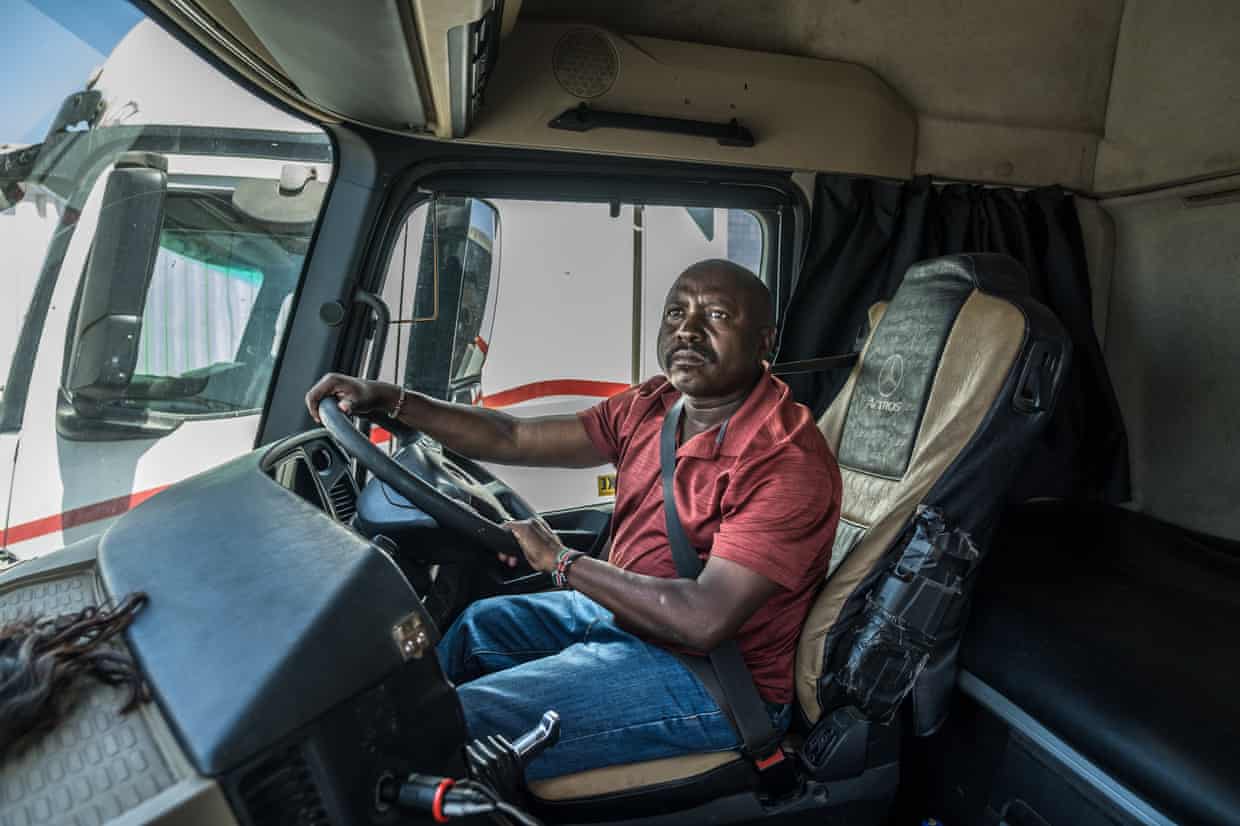
Photo: Brian Otieno/The Guardian.
Thanks to a roadside health service in Africa, Alphonse Wambua learned he had hypertension and also how to treat it. 

Every country has different ways of handling the challenges of providing health services to its people. We can learn from each other. In the US, the Covid pandemic showed us we had cut back too much on public health programs. Many people who needed help were not being reached, which caused the disease to spread more than it should have.

Today’s story suggests that you reach the hard-to-reach by meeting them wherever they are.

Caroline Kimeu writes for the Guardian from Kenya, “A life on the road had caught up with Alphonce Wambua. Twenty-five years of transporting cargo between the Kenyan capital, Nairobi, and the coastal city of Mombasa, nine hours’ drive away, had resulted in long days, a poor diet and an irregular sleep routine for the trucker. Still, it came as a shock when doctors told him he had hypertension a few years ago.

“ ‘I wasn’t expecting it – I thought I just had serious fatigue,’ says Wambua, who has stopped by the clinic where he was diagnosed to pick up his monthly prescription. ‘This job is high pressure. There’s not much rest.’ …

“The health facility, based in Mlolongo, on the busy Nairobi-Mombasa highway, attracts a steady flow of patients. As well as workers and residents from the area, it also treats drivers from the truckers’ rest stop across the road, as one of 19 roadside health facilities run by the nonprofit North Star Alliance, offering priority healthcare to mobile populations.

“The organization, which constructs clinics out of shipping containers, has set up facilities along major transport routes, transit towns, and border crossings across east and southern Africa to increase mobile workers’ access to medical services.

” ‘When governments do their health planning, they usually plan for communities, but no one plans for mobile workers,’ says Jacob Okoth, a [program] manager at North Star Alliance. ‘Their operating hours are different, so you can’t reach them with the traditional 8am-5pm healthcare service delivery model, and many can only afford to queue for short wait times.’

“North Star was founded in 2006 to tackle HIV and STD cases in the transport sector during the height of the Aids epidemic, when some transport companies were losing more than 50% of their drivers to the disease. It extended its services to cover broader health issues after identifying other recurring health concerns among mobile workers, including non-communicable diseases.

“NCDs such as hypertension and diabetes are responsible for more than half of hospital admissions and deaths in Kenya. Health practitioners warn that the growing burden demands new approaches for prevention, diagnosis and treatment. …

“Many of the NGO’s health centres are along the northern corridor, one of east Africa’s busiest transport routes, which connects several countries in the region. Truck drivers who transport cargo along the corridor can travel for 12-hour stretches with short breaks in between, sometimes for weeks or months at a time. In some areas, the distances between hospitals are long; drivers often delay seeking care due to time pressures or irregular work cycles. …

“Regular health checkups are essential for truckers. … Many rely on high-carbohydrate meals to keep them full on long drives, and they struggle to maintain a balanced diet due to time and cost pressures, says Wambua, whose go-to meal is the Kenyan staple ugali (boiled maize meal). …

“ ‘You’re not focused on eating healthy food – you eat what you find and continue with the journey,’ he says, while a clinician takes his blood pressure and writes him a new prescription. …

“Each health center tailors its opening hours to the needs of mobile workers in the area. Some, like the Mlolongo health center, have regular 9am-6pm opening hours, but run outreach programs in which clinicians and trained volunteers offer free health screenings to target groups, such as truckers, sex workers and informal traders.”

More at the Guardian, here.

Read Full Post »

Photo: Laura Chouette/Unsplash.
A study by McGill University in Montreal, Canada, asked participants to listen to different types of music and rate how it affected their pain levels.

The other day on the radio I heard a doctor talk about treating pain in the age of the opioid crisis. His ideas sounded risky and seemed based on a study of one — himself. Having been in recovery from opioid addiction for 15 years, he found he could handle a lot of opioids when he broke his leg. He didn’t get addicted again.

Can every recovering addict do that? Seems like there ought to be better ways. So far, opioids are the only thing that works for severe pain. Today’s story talks about a way to reduce suffering, but only a little.

Nicola Davis writes at the Guardian, “If you are heading to the dentist, you may want to turn up a rousing Adele ballad. Researchers say our preferred tunes can not only prove to be powerful painkillers, but that moving music may be particularly potent.

“Music has long been found to relieve pain, with recent research suggesting the effect may even occur in babies and other studies revealing that people’s preferred tunes could have a stronger painkilling effect than the relaxing music selected for them.

“Now, researchers say there is evidence that the emotional responses generated by the music also matter.

“ ‘We can approximate that favorite music reduced pain by about one point on a 10-point scale, which is at least as strong as an over-the-counter painkiller like Advil [ibuprofen] under the same conditions. Moving music may have an even stronger effect,’ said Darius Valevicius, the first author of the research from McGill University in Montreal, Canada.

Writing in the journal Frontiers in Pain Research, Valevicius and colleagues report how they asked 63 healthy participants to attend the Roy pain laboratory on the McGill campus, where researchers used a probe device to heat an area on their left arm – a sensation akin to a hot cup of coffee being held against the skin.

“While undergoing the process, the participants [listened] to two of their favorite tracks, relaxing music selected for them, scrambled music, or silence.

“As the music, sound or silence continued, the participants were asked to rate the intensity and unpleasantness of the pain. …

“When the auditory period ended, participants were asked to rate the music’s pleasantness, their emotional arousal, and the number of ‘chills’ they experienced – a phenomenon linked to sudden emotions or heightened attention, that can be felt as tingling, shivers or goosebumps.

“The results reveal participants rated the pain as less intense by about four points on a 100-point scale, and less unpleasant by about nine points, when listening to their favorite tracks compared with silence or scrambled sound. Relaxing music selected for them did not produce such an effect. …

“Further work revealed music that produced more chills was associated with lower pain intensity and pain unpleasantness, with lower scores for the latter also associated with music rated more pleasant.

“ ‘The difference in effect on pain intensity implies two mechanisms – chills may have a physiological sensory-gating effect, blocking ascending pain signals, while pleasantness may affect the emotional value of pain without affecting the sensation, so more at a cognitive-emotional level involving prefrontal brain areas,’ said Valevicius, although he cautioned more work is needed to test these ideas. …

“The researchers say it is not yet known if moving music would have a similar chill-creating effect in those who do not favor it, or if people who favor such music are simply more prone to musical chills.

“What’s more, they say the size of the study might mean some relationships cannot be detected, while the relaxing music may not have been played for long enough for an effect to have been seen.”

More at the Guardian, here. No paywall. Guardian readers voluntarily donate to support the news.

Read Full Post »

Photo: Deniz Altindas via Unsplash.
New approaches in health care include meditation exercises and hospital care at home.

A couple of my doctors are convinced that people who are good at daily meditation are building new brain cells. I’m not convinced that I can do it, but I’m giving it the old college try. I go to a weekly class where we just sit and breathe. And I listen to an online meditation I like because it seems to give me permission to be “off duty” in so many ways. Trying to be good at meditation, for example, is out.

In another new approach to improving health care, hospitals are responding to both costs and the understanding that many acute-care patients fare better if they get the care they need at home, in their familiar surroundings.

Paula Span pursues the insights at the New York Times.

“Late last month, Raymond Johnson, 83, began feeling short of breath. ‘It was difficult just getting around,’ he recently recalled by phone from his apartment in the Jamaica Plain neighborhood in Boston. ‘I could barely walk up and down the stairs without tiring.’

“Like many older adults, Mr. Johnson contends with a variety of chronic health problems: arthritis, diabetes, high blood pressure, asthma, heart failure and the heart arrhythmia known as atrial fibrillation.

“His doctor ordered a chest X-ray and, when it showed fluid accumulating in Mr. Johnson’s lungs, told him to head for the emergency room at Faulkner Hospital, which is part of the Mass General Brigham health system.

“Mr. Johnson spent four days as an inpatient being treated for heart failure and an asthma exacerbation: one day in a hospital room and three in his own apartment, receiving hospital-level care through an increasingly popular — but possibly endangered — alternative that Medicare calls Acute Hospital Care at Home.

“The eight-year-old Home Hospital program run by Brigham and Women’s Hospital [is] one of the country’s largest and provided care to 600 people last year; it will add more patients this year and is expanding to include several hospitals in and around Boston.

“ ‘Americans have been trained for 100 years to think that the hospital is the best place to be, the safest place,’ said the program’s medical director, Dr. David M. Levine.

‘But we have strong evidence that the outcomes are actually better at home.’

“A few such programs began 30 years ago, and the Veterans Health Administration adopted them more than a decade ago. But the hospital-at-home approach stalled, largely because Medicare would not reimburse hospitals for it. Then, in 2020, Covid-19 spurred significant changes.

“With hospitals suddenly overwhelmed, ‘they needed beds,’ said Ab Brody, a professor of geriatric nursing at New York University and an author of a recent editorial on hospital-at-home care in the Journal of the American Geriatrics Society. ‘And they needed a safe place for older adults, who were particularly at risk.’

“In November 2020, Medicare officials announced that, while the federally declared public health emergency continued, hospitals could apply for a waiver of certain reimbursement requirements — notably, for 24/7 on-site nursing care. Hospitals whose applications were approved would receive the same payment for hospital-at-home care as for in-hospital care.

“Since then, Medicare has granted waivers to 256 hospitals in 37 states. … But Medicare’s waivers are not permanent. The public health emergency remains in effect until January; although the Biden administration will likely extend it, state health officials are anticipating its end at some point next year, perhaps by spring.

“What will happen to hospital-at-home care then? Twenty-seven percent of programs that participated in a poll by the Hospital at Home Users Group said that they were unlikely to keep offering the option without a waiver, and 40 percent were unsure; 33 percent said that their programs were likely to continue. …

“Studies have repeatedly documented the risks of hospital stays to seniors, even when the conditions that made the stay necessary are adequately treated. Older adults are vulnerable to cognitive problems and infections; they lose physical strength from inadequate nutrition and days of inactivity, and they may not regain it. Many patients require another hospitalization within a month. One prominent cardiologist has called this debilitating pattern ‘post-hospital syndrome.’

“Had Mr. Johnson remained in the hospital, ‘he would have been lying in bed for four or five days,’ Dr. Levine said, adding: ‘He would have become very deconditioned. He could have caught C. diff or MRSA’ — two common hospital-acquired infections. ‘He could have caught Covid,’ Dr. Levine continued. ‘He could have fallen. Twenty percent of people over 65 become delirious during a hospital stay.’

“Patients must consent to hospital-at-home care. Almost one-third of Brigham and Women’s patients decline to participate because the hospital setting feels safer or is more convenient. But Mr. Johnson was delighted to leave, when an attending doctor told him that his conditions were treatable through hospital-at-home care. …

“At home, a doctor saw him three times, twice in person and once by video. A registered nurse or a specifically trained paramedic visited twice daily. They brought the drugs and the equipment Mr. Johnson needed: prednisone and a nebulizer for his asthma, and diuretics (including one administered intravenously) to reduce the excess fluid caused by heart failure. All the while, a small sensor attached to his chest transmitted his heart and respiratory rates, his temperature and his activity levels to the hospital.

“Had Mr. Johnson needed additional monitoring (to ensure that he was taking medications as scheduled, for instance), food deliveries or home health aides, the program could have provided those. If he needed scans or experienced an emergency, an ambulance could have returned him to the hospital.

“But he recovered well without any of those interventions. About a week after he was discharged, Mr. Johnson said he was ‘much better, much better,’ and that he would recommend hospital-at-home care to anyone. …

“ ‘Are there people who need to be in a hospital?’ Dr. Leff said. ‘Absolutely.’ Surgeries, complex testing and intensive care still require a building and its staff. Nonetheless, he added, hospital-at-home initiatives demonstrate that more care could be provided outside bricks-and-mortar facilities.

“ ‘Hospitals in the future will be big emergency rooms, operating rooms and intensive care units,’ [Dr. Bruce Leff, a geriatrician at Johns Hopkins University School of Medicine] said. ‘Almost everything else will move to the community — or should.’ ”

More at the Times, here.

Read Full Post »

This is such a great idea. It shouldn’t be necessary in a country rich enough for CEOs to earn billions of dollars, but that’s where we are. Today’s story is about churches that have taken it on themselves to relieve struggling patients of intolerable burdens by buying up medical debt for pennies on the dollar.

In an opinion piece in the New York Times, Elizabeth Bruenig writes, “Vanessa Matos couldn’t believe what she was reading. ‘I was like, OK, this is a scam,’ she recalled of the letter she received in February. …

“Ms. Matos’s medical debt — more than $900 owed because of complications from surgery at the Massachusetts hospital where she had worked as a nurse — had been forgiven by strangers at a church she had never been to.

“Adam Mabry, the lead pastor of that congregation, Aletheia Church, a multiethnic, 1,400-member Boston-area Christian community, doesn’t know Ms. Matos, and she doesn’t know him; the two have never spoken. …

“Aletheia worked through RIP Medical Debt, a charitable organization founded in 2014 by two former debt collection executives, Craig Antico and Jerry Ashton. It uses donations to buy portfolios of medical debt at a fraction of their value — and then forgives it.

“Debt is a particularly destructive consequence of an American health care system that treats medical care as a consumer good. A Kaiser Family Foundation survey in 2018 found that 67 percent of Americans worry about paying for unexpected medical bills. …

“In just societies, these debts do not exist. But in our society, charity must stand in for justice so long as the latter is in short supply.

“Partners of RIP Medical Debt need not raise the actual amount of money they intend to relieve in debt, because the price of debt reflects what collectors could recover — far less than is owed. That means a buyer can eliminate the debt for much less money than the debtor could.

RIP Medical Debt estimates that just one dollar can purchase, and relieve, $100 in medical debt.

“So with a series of relatively moderate fund-raising efforts and donations from corporations, nonprofit and religious groups, and individuals, RIP Medical Debt said, it has been able to eliminate almost $2.7 billion in medical debt.

“Some religious congregations … grasp what our legislators can’t: The cost of survival in this country is unconscionable, and we all share a moral obligation to do something about it. …

“Forgiving medical debt has managed to ally very different Christians behind the same cause.

“Mr. Mabry, for example, cheekily described his theological stance as ‘historically boring and orthodox,’ even evangelical. Most people ‘would associate social concern with progressivism and maybe theological liberalism,’ he said, but ‘the great majority of actual social programs are funded and executed by really frustratingly conservative, boring, historic, orthodox people.’

“The Rev. Traci Blackmon is associate general minister of justice and local church ministries for the United Church of Christ, a fairly liberal denomination. ‘The U.C.C. has no rigid formulation of doctrine or attachment to creeds or structures,’ the church’s website says. ‘Its overarching creed is love.’

“A recent campaign led by the church abolished more than $26 million in medical debt throughout New England, and the church plans to expand efforts to include the entire country. …

“ ‘We’re buying somewhere close to $100 worth of debt for a dollar,’ she told me, ‘and when you think about how many people’s credit is being ruined, how much access is being denied people because they can’t pay that bill, and I can come and pay your $5,000 bill with $12 — that’s not just.’ …

“The trouble with medical debt is that it is a consequence of the way our health care system is structured, with individuals owing, even in the best case, some out-of-pocket costs for their care. Debt may be eliminated today, but more will begin accumulating tomorrow unless drastic changes are made. …

“There is an apocryphal statement often attributed to Saint Augustine, who helped lay the foundations of modern Christian theology: ‘Charity is no substitute for justice withheld.’ “

More at the New York Times, here.

Read Full Post »

surgeons_perform_better_to_classical_music

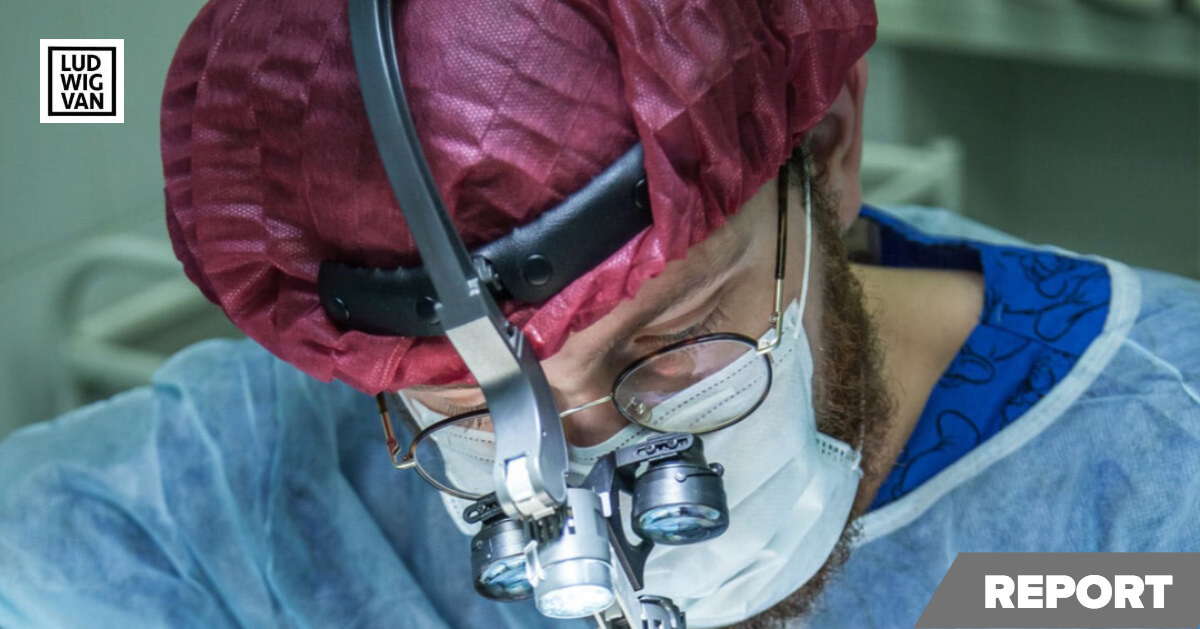
The website Ludwig van Toronto (as in Ludwig van Beethoven) often has interesting posts about classical music, and if you’re on twitter, you can easily keep track of them via @LudwigVanTO. Recently, Anya Wassenberg reported on a study showing how classical music, as long as it’s not too loud, can help surgeons doing surgery,

“Going for surgery anytime soon? It’s probably a good idea to suggest that your surgeon listen to a little Mozart or Bach during the operation — but not too loud. They’ll be faster and more accurate — that’s the recommendation distilled from a recent scientific research study.

“The study was recently published in the International Journal of Surgery, and involved researchers from Scotland, Sweden, and Finland. The new paper reviews existing research data. After evaluating 18 international studies, nine articles with a total of 212 participants were included in the review.

“As the study noted, music is already played in operating theatres as a matter of course by most doctors and nurses — about two-thirds, as it turns out. Participants said that listening to music reduced stress and made them feel more relaxed. Patients also reported that music played before their surgeries reduced stress levels.

“Almost all the respondents preferred classical music of some kind, with a slight preference for Mozart piano sonatas. Classical music was used in six of the studies, and music of choice in the others.

“The results of the study also seem to favour classical music played at medium to low volume levels, with hip hop coming in second in some key areas of the study. However, researchers also noted that music can have a mixed effect. At times, it can be distracting, and affect communication between members of the surgical team. …

“The paper notes the so-called ‘Mozart effect’ — that classical music reduces stress and helps the surgeons to focus — but it’s a difficult premise to prove. Specifically, surgical procedures were completed up to 10 percent quicker, and the quality of work such as skin repairs was higher.

Patients also seem to benefit. They need less anaesthetic and fewer painkillers.

“Turn the music too loud, however, and it can have the opposite effect. Loud or what is called ‘high-beat’ music can actually cause an increase in post-operative infections. It can also lead to miscommunications between members of the surgical team, which, as the researchers note, is one of the leading causes of mistakes. …

“The World Health Organization (WHO) recommends that music in operating theatres not exceed 30 decibels.

“Researchers cautioned that the settings used in the study were simulated rather than live surgery, and noted the relatively low number of participants. However, they were optimistic about the positive effects of music during surgery.

“The practice of listening to music during surgery is, according to the British Medical Journal, thousands of years old, dating as far back as 4000 BC to a time when priests and musicians played harp and other instruments during medical procedures.”

More at Ludwig van Toronto, here.

What music calms your nerves? I am surprised about hip hop mainly because I think words in music would be distracting for a surgeon, but everyone is different. One friend is actually peaceful in an MRI because she says she doesn’t have to worry about anything, just listen to her beloved Miles Davis.


Read Full Post »

netter20symposium2020172028c2920thomas20jefferson20university20photo20services2028129

Photo: Thomas Jefferson University Photo Services
Medical professionals develop their empathetic side at a 2017 Netter Symposium in Philadelphia.

I’m back to writing the usual posts that link to interesting articles. This one is especially appropriate, given my recent experience as a hospital visitor. The article is about techniques for “teaching” empathy to medical people, but I have to say I think every worker in that hospital was born empathetic. From the security personnel and cleaners to the brain surgeon and night nurses, it was amazing to experience how kind everyone was, and I wonder if it’s just the culture of that hospital.

Be that as it may, there are initiatives everywhere to help medical professionals develop their empathy “gene.” An article at a “platform for theatremakers” called HowlRound is about using drama for that purpose.

“As theatre folk know well, sometimes the most meaningful creations are borne out of the fruit of circumstance. To wit, the Lantern Theater Company in Center City, Philadelphia, happens to be located around the corner from the Sidney Kimmel Medical College (SKMC) of Thomas Jefferson University. In 2012, Charles McMahon, artistic director of the Lantern, and Dr. Salvatore Mangione, pulmonologist and director of physical diagnosis and history of medicine at SKMC, started discussing a way to make the most of that physical proximity — and potentially change the course of modern medicine while they were at it.

“Together, along with artistic colleagues Craig Getting and Kittson O’Neill, they developed a curriculum for what became the Empathy Project. [Mangione] and the team believed that ‘in addition to preventing burnout, and giving [students] more comfort with empathy and ambiguity, it might give them a different brain and help them become a better physician.’ …

“Part of the program focuses on playwriting. This section asks students to not only learn the technical tools of dramatic storytelling, but also to make a personal investment in the work they are creating. It helps break students out of their comfort zones by encouraging them to write about a truth that goes unsaid in their community. …

“Many of the project’s exercises have roots in Meisner work, including improv technique to facilitate open listening and taking stock of one’s ‘baseline self.’ This combination of listening and self-awareness supplies the building blocks of empathy, asking students to consider themselves and each other with perhaps more generosity and less competitiveness. …

“Plays written by students for the Empathy Project have dealt with wide-ranging topics such as immigrant experience, class issues, what it feels like to be a Muslim in America, the recent death of a parent, ethics of patient privacy, and doctors confronting cadavers. O’Neill avows she has learned more about the Muslim American experience in her class at Jefferson than she has anywhere else in her life.

“Getting believes some of the most fundamental questions playwrights ask during their writing process can easily be applied to doctors working with patients. These include: What are the given circumstances of this person? Who is supporting them or not supporting them? How do you get your audience to feel the emotions you want them to feel? How do you structure the telling of information that is at the right pace and is clear? As a result, students taking part in the Empathy Project reported seeing their patients in the hospital the way a playwright would see them.”

More here.

Read Full Post »


Photo: Josh Reynolds for The Boston Globe
IV Safe T developers Melinda Watman (left) and Maggie McLaughlin have spent about $5,000 to make a prototype to keep IVs from slipping out of newborns.

Nurses have been a largely overlooked source of innovative ideas although they are constantly jury-rigging improvements to keep patients comfortable. Fortunately, people in the medical-device field are beginning to recognize the possibilities.

Andy Rosen writes at the Boston Globe, “Maggie McLaughlin’s path from nurse to entrepreneur started last year when an IV tube became unhooked from an infant in the neonatal intensive care unit at Tufts Medical Center, where she works, causing the child to begin bleeding unexpectedly.

“A specialist in IV procedures, McLaughlin was asked to study ways of preventing such an incident from happening again, and she learned there is no universally accepted tool to safely lock the line onto an infant’s tiny body. …

“Since then McLaughlin has been working to develop an IV connection that lies flatter on an infant’s skin and holds more securely to the needle than the alternatives on the market today. She has teamed up with a former nurse she met at a Northeastern University event to form a company called IV Safe T to make and market the device.

“McLaughlin is among a number of nurses — with the help of programs from nursing schools and their own hospitals — who are using their bedside experience to develop new products and innovations in the medical industry.

“Rebecca Love, director of the year-old Nurse Innovation and Entrepreneurship program at NU, said research has shown that nurses spend a significant portion of each shift using workarounds and making impromptu fixes to ineffective processes or equipment. …

“The NU program, which connects nurses to resources and guidance to help them carry out their ideas, said it has attracted 1,600 people to events it has held, and it has connected at least 20 nurses to business mentors. …

“These programs strive to put nurses on equal footing with other professions, including doctors. … Some who follow innovation in health care say nurses represent a relatively untapped reservoir of expertise about improving patient care. …

“McLaughlin calls her device ‘Lang lock,’ after her maiden name. The rounded device connects tubing to an IV catheter with a single twist, and it has one flat side to make the needle approach the skin at a lower angle so it sits more securely.

“She has teamed up with Melinda J. Watman, a former nurse who later got an MBA and went into business. … NU has been helping them to protect their intellectual property and study the market.”

More at the Boston Globe, here.

Read Full Post »

Photo: Martina Bacigalupo for The New York Times
An American pediatric specialist during a radiology teaching session with pediatric residents in Kigali, Rwanda. In the past 15 years, Rwanda has worked to build a near-universal health care system.

We like to think that American medical care is top drawer, but in some developing countries, access, at least, is much better. Would you believe Rwanda, where Paul Farmer’s Partners in Health and others have offered help to local leaders?

Eduardo Porter has the story at the NY Times, “Rwanda’s economy adds up to some $700 per person, less than one-eightieth of the average economic output of an American. A little more than two decades ago it was shaken by genocidal interethnic conflict that killed hundreds of thousands. Still today, a newborn Rwandan can expect to live to 64, 15 years less than an American baby.

“But over the past 15 years or so, Rwanda has built a near-universal health care system that covers more than 90 percent of the population, financed by tax revenue, foreign aid and voluntary premiums scaled by income.

“It is not perfect. A comparative study of health reform in developing countries found that fewer than 60 percent of births there were attended by skilled health workers. Still, access to health care has improved substantially even as the financial burden it imposes on ordinary Rwandans has declined. On average, Rwandans see a doctor almost twice a year, compared with once every four years in 1999.

“Rwandan lives may be short, but they are 18 years longer than they were at the turn of the century — double the average increase of their peers in sub-Saharan Africa. …

“In some dimensions of health care, [Rwanda] gives the United States a run for its money.

“Its infant mortality rate, for one, dropped by almost three-quarters since 2000, to 31 per 1,000 births in 2015, vastly outpacing the decline in its region. In the United States, by contrast, infant mortality declined by about one-fifth over the period, to 5.6 per 1,000 births. …

“Critically, Rwanda may impress upon you an idea that has captured the imagination of policy makers in even the poorest corners of the world: Access to health care might be thought of as a human right.”

Read how poor countries, such as Ghana, Peru, Vietnam, and Thailand, are acting on that belief, here. At the rate they’re going with access, it is reasonable to suppose that more citizens will choose a medical profession and that quality improvements will follow.

Read Full Post »

Maybe I could be a clown. One of my brothers has clowned for years, mostly at his church in Wisconsin. He really enjoys it.

This story by Elianna Bar-El story at Good magazine makes me want to know the same satisfaction medical clowns get from helping sick children. But clearly, it takes lots of training.

“On a recent visit to Wolfson Medical Center on the outskirts of Tel Aviv, Israel, Yolana Zimmerman is met with audible sighs of relief.

“ ‘Great! You’re here! We need you,’ says a nurse.

“Zimmerman is not a medical doctor. In fact, she casts quite a contrast to the typical image of a doctor with her pink leggings, cupcake apron, and eyelet bloomers — not to mention the underwear on her head and the stuffed monkey in her hands.

“Yolana ‘Yoyo’ Zimmerman is part of a team of medical clowns called Dream Doctors. The pioneering organization started in 2002 with three medical clowns at one hospital and today facilitates the work of more than 110 clowns across 28 hospitals in a country increasingly recognized as the vanguard of medical clowning. After this past April’s devastating earthquake in Nepal, for instance, the Israeli government sent an envoy from Dream Doctors to Kathmandu to work with affected children. As you might expect, the medical community is taking notice of the tiny nation’s zany medical practitioners. …

“ ‘Medical clowning has developed in Israel in a different way than anywhere else in the world,’ says Professor Ati Citron, creator and director of University of Haifa’s Medical Clowning program. ‘Medical clowns were absorbed into the medical system as part of the staff.’ …

“Walking into [a] hospital room, without missing a beat, Yoyo directs her attention to a religious man sitting beside his daughter who is sleeping in a hospital bed. He is obviously reading from the Bible. ‘Is that a good book?’ Yoyo asks. ‘I think I’ve heard something about it. … Who wrote it again?’ The father looks up at her, grinning in surprise. In the same moment Yoyo doubles over with genuine laughter, igniting a cacophony of noises from a squeezable rooster in her apron. …

“In Israel, medical clowns are involved in over 40 medical procedures, including accompanying patients to CT scans, X-rays, MRIs, chemotherapy, radiation treatment, physiotherapy, and rehabilitation. Clowns in Israel also work solo to initiate a more interactive, one-on-one relationship with patients. … Dream Doctors, which works closely with Israel’s Ministry of Health and the University of Haifa … also hosts monthly workshops for the clowns where medical staff provide them with a range of medical knowledge and training on hygiene, vaccinations, before-and-after procedures for entering a room, role-playing, case studies, and more.”

Read all the details at Good.

Photo: Ziv Sade

Read Full Post »

Cities that want to encourage foot traffic, public transit, and getting around on bicycles are starting to remove parking spaces in favor of mini parks big enough for a couple planters and benches where passersby might read, chat, or eat a sandwich.

Eric Moskowitz writes in the Boston Globe: “The program, boston.PARKLETS, follows the lead of San Francisco, which boasts 30 parklets, and New York, which unveiled the first of what it calls ‘curbside seating platforms’ in 2010.

“They are part of the growing movement to reclaim urban space for pedestrians and bicyclists and promote public transit. Mayor Thomas M. Menino has proclaimed ‘the car is no longer king,’ citing the environmental, aesthetic, and health benefits.

“It remains to be seen how willingly Bostonians, known for fiercely coveting and protecting their parking spots, receive the parklets.

“Vineet Gupta, planning director for the Boston Transportation Department, said the city will work with merchants and neighbors to find appropriate spots, with the first parklets probably appearing next spring. They would scarcely put a dent in the city’s 8,000 metered spaces and untold thousands of unmetered and resident-permit spots, but they would enliven areas with heavy foot traffic otherwise lacking in public amenities, he said.” Read more.

If you have actually seen where this has been done, do send a photo.

These two parking spaces in Boston could become a parklet — a tiny patio with benches and planters. (Essdras M Suarez/ Globe Staff)

Read Full Post »

Dr. Paul Farmer, the subject of a great Tracy Kidder book called Mountains Beyond Mountains, has spent many years delivering medical care — and working to alleviate poverty — in remote areas of Haiti. His nonprofit organization, Partners in Health, takes the word “partners” seriously. The teams do not tell the locals what is good for them but makes a point of learning from them and helping them get what they need.

In recent years, Farmer has been in demand in other countries, too. One focus area has been Rwanda. I liked a recent Boston Globe article on the approach to building a Partners in Health hospital there.

“The designers quickly realized that the challenge was not simply to draw up plans, as they had first thought, but rather to understand the spread of airborne disease and design a building that would combat — and in some cases sidestep — the unhealthy conditions common to so many hospitals.

“Learning from health care workers that hospital hallways were known sites of contagion, poorly ventilated, and clogged with patients and visitors, MASS Design decided that the best solution would be to get rid of the hallways. Taking advantage of Rwanda’s temperate climate, they placed the circulation outdoors, designing open verandas running the lengths of the buildings. …

“When it came to building, MASS Design looked at the Partners in Health model of involving local poor communities in health care, and realized that they could apply the same ideas to the construction process. The hospital was built entirely using local labor, providing food and health care for the workers. Unskilled workers received training that would help them get more work; and skilled laborers, notably the Rwandan masons who built the hospital’s exterior from carefully fitted together local volcanic stone, refined their craft and found themselves in demand all over the country. The construction process also beefed up local infrastructure — new roads and a hydroelectric dam — creating more jobs and literally paving the way for future projects.”

To paraphrase what Farmer often says, the biggest challenge to health is poverty. Read more.

Update on the designers from the June 19, 2012, Boston Globe.

Read Full Post »