Feeds:
Posts
Comments

Posts Tagged ‘peaceful’

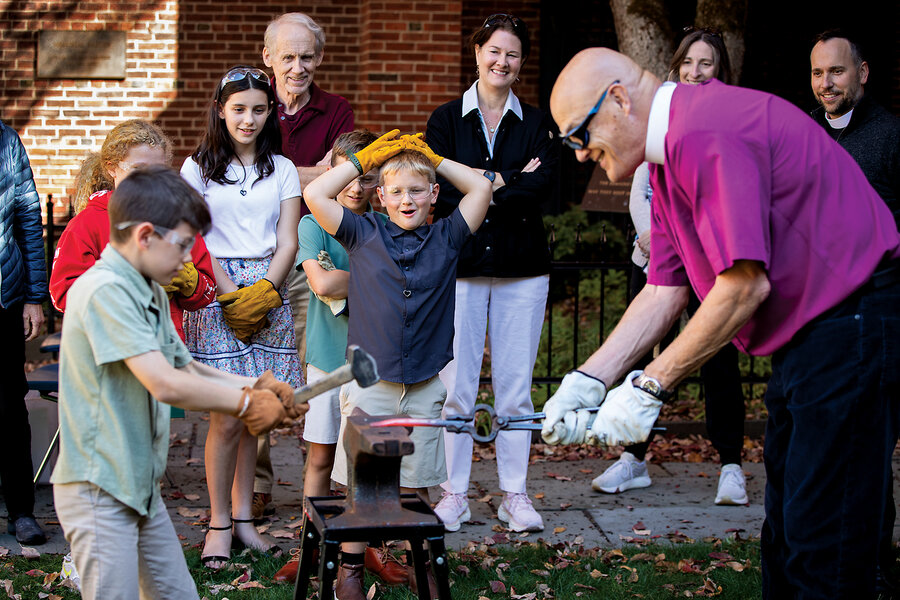
Photo: Melanie Stetson Freeman/Christian Science Monitor staff.
Retired Episcopal Suffragan Bishop Jim Curry, co-founder of the nonprofit Swords into Plowshares, gives a blacksmithing demonstration in Winchester, Mass. The nonprofit’s goal is to get guns off the streets and make young people enthusiastic about peaceful projects.

In a Providence park, there’s a sculpture made from illegal handguns. It’s kind of a depressing pillar to failure, unless you look at it as the removal of guns from circulation. It’s ambiguous, which I guess art is supposed to be.

Here’s a story about an effort to turn young people away from the gun culture of the streets.

Troy Aidan Sambajon writes at the Christian Science Monitor, “Retired Episcopal Suffragan Bishop Jim Curry ignites his propane forge in the courtyard of Parish of the Epiphany church. Slowly he heats the barrel of a dismantled rifle to 2,000 degrees Fahrenheit, and then starts hammering the red-hot metal on his anvil. In minutes, a piece of once-deadly weaponry transforms into a humble weeding tool. 

“Bishop Curry then invites onlookers to try their own hand at making garden tools from firearm parts, using the forge that he takes with him to various communities in the Northeast region. With each strike of the hammer, participants mold a hopeful vision of a future without gun violence.

“Before the demonstration, Bishop Curry gave a sermon explaining the mission of Swords to Plowshares (S2P) Northeast, a nonprofit that he co-founded a decade ago in New Haven, Connecticut. ‘At the forge, we hammer guns into gardening tools and art. We forge rings from shotgun barrels into hearts – symbolizing that the change we need begins in the transformation of our own hearts,’ he told parishioners.

“His work has inspired residents in Connecticut, New Hampshire, and Vermont to start their own independent S2P chapters, which host gun-surrender events in partnership with police departments. Law enforcement officials vet and dismantle the weapons, and then give the parts to the chapters for public blacksmithing demonstrations. Besides raising awareness about gun violence, the demonstrations help get young people interested in blacksmithing.

“Montrel Morrison, who runs a youth mentoring organization in Connecticut, calls S2P Northeast a ‘safe haven and beacon of hope.’ …

“Kam’eya Ingram, who spent the last two summers as a blacksmith with S2P Northeast, says that ‘when someone dies from gun violence, it’s like the world goes quiet.’ But for her, hammering on the anvil fills the silence with a resounding release of emotions. … ‘I feel like I’m bringing people peace – letting them know that one more gun is gone and that this [gun violence] might not happen to someone else.’

“Bishop Curry … studied religion at Amherst College. He graduated in 1970 and started his career working in public schools in Huntington, Massachusetts, as a middle and elementary schoolteacher for 10 years. Yet he longed to serve the spiritual needs of his community.

“That desire led him to the seminary in 1982, and, three years later, he was ordained as a deacon and priest in the Episcopal Diocese of Connecticut. He focused his ministry as a spiritual adviser, working in hospitals with families in Connecticut and addressing the devastating impacts of gun violence and suicide. By 2000, he was elected suffragan bishop of Connecticut. 

“His life ‘changed entirely,’ he says, in the wake of the December 2012 shooting at Sandy Hook Elementary School in Newtown, Connecticut. … Newtown was in his diocese. …

“In early 2013, he joined other Episcopal bishops in Washington, D.C., and helped found Bishops United Against Gun Violence. Through that group, he learned about the Guns to Gardens movement, a network of nonprofits that repurposes unwanted firearms into garden tools and artwork. …

“In 2014, he co-founded his chapter, S2P Northeast, with Pina Violano, a trauma nurse and nursing professor at Quinnipiac University. The group’s namesake peacebuilding mission comes from the Old Testament (Isaiah 2:4): ‘They shall beat their swords into plowshares, and their spears into pruning-hooks.’ …

“S2P Northeast has partnered with a Colorado organization called RAWtools on a nationwide gun-surrender program and, before the COVID-19 pandemic, taught blacksmithing skills to incarcerated people. …

“For Bishop Curry, ‘the real life of the forge’ has been to empower teens from New Haven through summer job opportunities. They are paid to transform guns through blacksmithing and help lead public demonstrations. …

“Jared Sanchez, age 18, takes pride in being a junior blacksmith instead of working a teenager’s typical mundane hustle. In a single day, he can make seven or eight garden tools out of shotgun barrels. He has also created a heart necklace for his younger sister and a cross to sit beside his grandfather’s urn. …

“After two summers serving as a blacksmith alongside Bishop Curry, Mr. Sanchez has come out of his shell and come into his own as a leader. Handling so many firearm parts has revealed to him the depth of the gun violence problem in his community and the work that must be done to combat it.”

More at the Monitor, here. No paywall. Nice pictures.

Read Full Post »

Photo: Alfredo Sosa/CSM.
Police officers at a headquarters briefing before departing on assignment in Columbus, Ohio, Nov. 24, 2024.
Columbus is learning to deal with protest marches differently. And with more success.

As a country, the US is not exactly on the cutting edge when it comes to handling large protests. As Clifford Stott, professor of social psychology at Keele University in England and visiting professor at Ohio State, says, “Policing of crowds in America is about 20 years behind what it is in Europe.”

This is in spite of the fact that an American, Gene Sharp, practically wrote the book on peaceful protests. (See my post, here.) We seem to have an issue of learning, unlearning, and relearning.

In January, Simon Montlake wrote at the Christian Science Monitor about how the police in Columbus, Ohio, have been handling pro-Palestinian protests.

“At a pro-Palestinian street protest in Columbus, Ohio, last fall, demonstrators march to the rhythm of liberation chants, punctuated by occasional horns from passing cars. ‘Free, free Palestine,’ they cry, waving flags and banners.

“But mingling among the demonstrators are four uniformed police officers wearing powder-blue police vests emblazoned with ‘Columbus Police Dialogue.’ One of them is Sgt. Steve Dyer, the team leader of a special unit that talks with protesters rather than confronting them with riot gear.

“ ‘Their goal is to have their voices heard,’ Sergeant Dyer says. ‘We will walk and work with those who are there to peacefully protest.’ By walking with and talking to protesters, police hope to build legitimacy – a bridge of communication that could deescalate potential conflicts.

“This kind of policing stems from a more nuanced understanding of crowd dynamics, researchers say. It seeks to measure how officers’ words and deeds can steer participants toward peaceful self-expression.

“It appears the approach is working. Since October 2023, there have been more than 50 pro-Palestinian demonstrations with a total of about 13,000 protesters in Columbus. During this time, police made only three arrests, despite ‘significant public order challenges.’ …

“[At a recent event] Jineen Musa, a student leader wearing round, tortoiseshell glasses and a black hoodie, is holding a bullhorn to her lips. ‘Don’t talk to any cops, even the dialogue cops!’ she says. …

” ‘Some have already talked with officers who have radioed the information to Sgt. Steve Dyer, the dialogue unit’s team leader at the steps of the Statehouse.

“He learns they plan to march north behind a black pickup truck as they protest on one of the city’s main roads. Now Sergeant Dyer can alert the nine-officer bicycle patrol that will help direct traffic during the demonstration. The cruisers will follow the protesters. At the same time, the dialogue team will continue to mingle among the crowd.

“There are only a few units in the United States specially trained for this type of policing. Columbus police try to ensure that marchers are able to exercise their rights to free speech and assembly. At the same time, they use engagement and dialogue with an aim to maintain peace and order. …

“ ‘It’s been more of a one-way conversation in the past,’ says Robert Sagle, a deputy chief of police in Columbus who oversees the dialogue team. … Police officers are now trying to do more than issue warnings. Staying on the ground and walking with and talking to protesters, police hope to build legitimacy – a bridge of communication that could de-escalate potential conflicts. …

“As word has spread of what Columbus is doing, the department has begun to train police officers from other cities in crowd management. Last July, its dialogue officers worked outside the Republican National Convention in Milwaukee to help facilitate order and defuse tensions during protests. …

“Columbus is a case study into these kinds of reforms. Still, the violent responses of its police department during the racial justice protests of 2020 still hover over it. …

“As in many U.S. cities, the Columbus police were unprepared for the intensity and duration of the protests that followed. It was a destabilizing experience to try to maintain peace and order, many say, in a crowd directing its anger precisely at them. …

“ ‘The intensity of what happened in 2020 was nothing like anything I experienced as a police officer before,’ says Sgt. Kolin Straub, a Black officer who worked the front lines.

“Still, police responded aggressively, using rubber bullets, pepper spray, tear gas, and other violent tactics against protesters. … In July 2020, over 30 people filed a federal lawsuit against Columbus police, seeking damages for unnecessary brutality and violations of their constitutional rights. In December 2021, Columbus settled the lawsuit, paying out $5.75 million in damages. …

“In June 2021, Mayor Andrew Ginther, a Democrat who had clashed publicly with police leadership over the need for reform, appointed Elaine Bryant, a Black deputy chief from Detroit, to head the department.”

Read what happened next at the Monitor, here.

Read Full Post »

Photo: John and Suzanne’s Mom.
Beautiful clouds and farm. How much is enough?

Although there are people in every country who strive for balance in their lives — people who are happy with having just enough — in Sweden, it’s a way of being that has its own name.

Erika Page reports at the Christian Science Monitor about the Swedish concept of lagom.

“The ladder she’s standing on rattles in the wind, but Havana Dadian’s paintbrush is steady. With freezing fingers, she lays color inch by inch onto the whitewashed wall. The street below is empty, as residents shelter from an approaching storm. 

“The muralist was hired to spruce up the working-class neighborhood of Södra Sofielund in Malmö, just blocks from where she grew up.  More than that, Ms. Dadian is painting for the future of her country. 

“ ‘I wanted to shine light on the beautiful soul of Sweden,’ she says, gesturing to the sketch on her phone. She is painting a scene from the 1940s, back when this building was home to a neighborhood laundry house. It was a time of community, frugality, and hard work – which she sees as the foundation of Sweden’s egalitarian prosperity.

“ ‘Something has happened, and it’s not so certain anymore – the safety, feeling that you have everything you need,’ says Ms. Dadian. 

At stake is a uniquely Swedish philosophy: lagom. It’s a difficult-to-translate word meaning not too much, not too little, but about right.

“The lagom amount is just enough. The lagom solution is reasonable, appropriate, and moderate. … To be lagom is to respect the rules of the group. 

“ ‘Lagom is one for all and all for one,’ says Ms. Dadian. ‘It was a way for everyone to come together, for everyone to get their share.’

“Yet Sweden appears to be reaching a turning point. The threads of lagom seem to be fraying, as social services come under increasing stress and politics reach unprecedented levels of polarization. Public discourse, dominated by talk of rising rates of violent crime and gang activity, is bringing to light fears about the erosion of social trust. Some wonder whether the economic pie is still big enough to go around. Others question the very foundation of a growth-based economy, pushing instead for a return to ‘just enough.’ …

“The country was a poor, agrarian society of low taxes and limited government until the mid-19th century. Without a feudal system, farmers in decentralized villages worked primarily for themselves, laying the foundation for a society with a relatively flat hierarchy that rewarded hard work. These farmers were of minor importance to the government as individuals but powerful as a collective, making cooperation key. …

“While socialists in other parts of the world sought complete control over the means of production in the early 20th century, the socialists who gained traction in Sweden took a more lagom tack. They believed in harnessing the power of the market through taxation and redistribution to achieve social goals. By the 1960s, Sweden had one of the most robust social support systems in the world and one of the most egalitarian income distributions.  

“ ‘A lagom economy is a pragmatic economy,’ says [Andreas Bergh, an economist at Lund University, near Malmö]. ‘At its best, Sweden has combined the benefits of a capitalist, well-functioning market economy with a relatively generous social welfare state.’

“Salaries may be lower than those for comparable job titles in the United States or United Kingdom. But for many people, that difference is compensated by free education from preschool through university, universal health care, generous pension and unemployment systems, housing allowances, and other social safety measures. …

“Social trust – including faith that people are not taking advantage of the system – is a key ingredient in the lagom mentality, ‘where people share similar interests and work together for the benefit of the group,’ says Dr. Bergh. … Recently, however, a new narrative has taken hold among some, suggesting that perhaps Sweden was once the land of lagom – but no longer. 

“A financial crisis in the early 1990s led to near political consensus that the welfare state had become too hefty. Over the past three decades, the government has slashed taxes and public spending. Sectors from education to health care and elder care have increasingly been privatized. 

“To some, this privatization is lagom, allowing for a healthy balance between the public and private spheres. … Others take the privatization as a sign that Sweden is losing its lagom-ness. 

“Tax cuts mean there is less funding today for social services. Wait times for health  services have grown notoriously long; during the pandemic, the weaknesses in Sweden’s elder care system became impossible to ignore. And since the 1980s, income inequality has increased more than in any of the other 37 countries in the Organization for Economic Cooperation and Development, though still low by international standards.

“Sweden has a reputation of being one of the most welcoming countries in the world for migrants and refugees. [But recently] neighborhoods have become more segregated, with unemployment rates higher among immigrant communities. …

“ ‘My Swedish friends have an innate safety feeling,’ says Ms. Dadian, the muralist, whose mother is Swedish and father is from Lebanon. ‘[For] my friends with mixed backgrounds … it’s starting to feel more like a movie sometimes: drugs, guns, no trust, and much involvement with the police. It can be like different worlds.’ …

“Jon-Mikko Länta, one in a long line of Sámi reindeer herders, has struggled to find that [lagom] balance in his own life as the cost of living has risen. 

“ ‘I was working a lot, all the time, working, working, working. All the money went to buying new stuff, buying new stuff, replacing old stuff,’ he says. 

“But then he began to simplify. He stopped buying the latest tools and took new pleasure in repairing old things. He bought a piece of land outside the town, where he is building a campsite for visitors – and for his reindeer. He’ll be able to continue herding while supplementing his income and spending more time with his wife and three young children.

“It’s a different kind of satisfaction, says Mr. Länta during a lunch break in his kitchen. Dishes are stacked waiting to be washed; half a bottle of milk has been left behind by their 2-year-old. Mr. Länta’s work pants are patched with tape.

“For him, [a controversial local] mine would bring ‘catastrophic’ changes to Jokkmokk, eroding respect for reindeer herding and the natural world. ‘It pinpoints exactly what’s sick with the Western society. … [It’s] built upon growth, and as much growth as possible. And that’s completely unsustainable.’  

“He wishes debates about the mine would take lagom into account, he says, helping residents ‘feel the contentness of enough.’ ” 

More at the Monitor, here. No paywall. Subscriptions encouraged.

I liked the pictures that went with this article. They had a peaceful feeling.

Read Full Post »

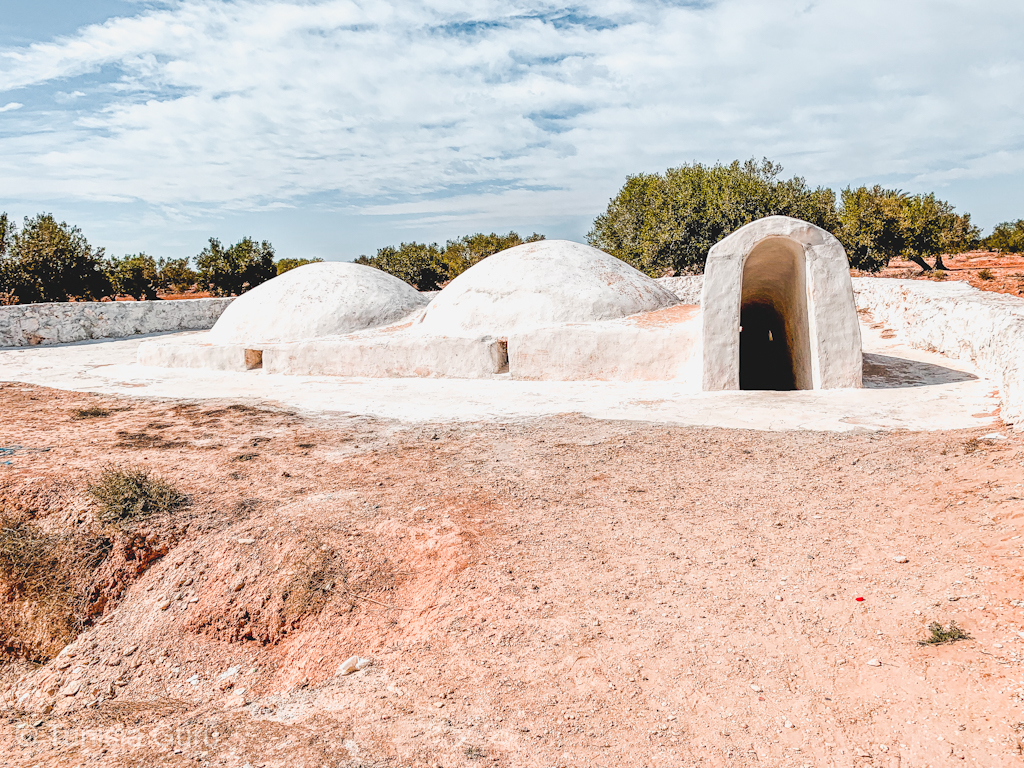
Photo: Tunisia Guru.
An underground mosque on the island of Djerba in Tunisia.

I got interested in finding out more about underground mosques after seeing a photo of one on the island of Djerba in Tunisia — an island thought to be the same that Homer had in mind when writing about the Lotus Eaters in the Odyssey.

An entry at Wikipedia says that underground mosques are “either erected beneath other buildings or lay freely in the ground with an inconspicuous appearance. The prayer rooms in underground mosques are usually very small, and they also have no minarets. Underground mosques are very rare. [The Djerba mosque] served as a hidden place of prayer for the Ibadis.”

From a different Wikipedia page, we learn that the mosque is near Sedouikech, Tunisia, and dates from the 12th or 13th century. “Surrounded by an olive grove, it opens to the outside by a very steep staircase that leads to the main room; next to it is a large underground tank fed by a well. Another of these underground mosques is located on the Ajim road. Not being used for worship, these mosques can be freely visited.”

An underground mosque in Turkey was built only recently, not because worshippers needed to hide like the Ibadis but because underground worship can feel peaceful.

Menekse Tokyay writes at Alarabiya, “The uniqueness of the Sancaklar mosque is that it departs from standard mosque design in a bid to break architectural taboos and encourage worshippers to focus on the essence of the religious space and on the Islamic faith. …

“Strolling around the mosque’s outdoor area, you will notice a long canopy running along one side where two olive trees and one linden tree are located. From this point, you have to descend natural stone stairs to reach the building.

“The cavernous prayer hall of the mosque is large enough to host more than 650 worshippers, while it aims to isolate believers from the outside world and invite them to delve deeper into their inner world.

“What strikes one about the Sancaklar mosque is that its design is humble and simple, perhaps to deepen worshippers’ relationship with their faith, and with this underground concept, visitors can leave behind all the challenges of the outside world. …

“Sancaklar mosque stands in Istanbul’s suburban Buyukcekmece district and is spread over an area of 1,200 square meters. The architecture combines Islamic and Ottoman designs with a modern touch, seemingly free from mainstream architectural typology.

“In 2013, out of 704 projects from 50 countries, the building won first prize in the World Architecture Festival competition for religious places. In 2015, the project was selected for the Design of the Year award, organized by the London Design Museum and it was also shortlisted among the 40 nominees for the Mies Van der Rohe Award.

“The mosque was designed by Turkish architect Emre Arolat for the Sancaklar Foundation. …

“The only decoration on the walls is the Arabic letter ‘waw’ and verse 41 of Surat al-Ahzab, a chapter in the Quran: ‘O you who have believed, remember Allah with much remembrance.’

“The main space is free of any decorative ornaments unlike many modern mosques built recently in Turkey. Daylight penetrates the prayer hall along the Qibla, or Mecca-facing, wall. …

“ Every time I come here for worship I feel an enormous [sense of] inner peace. It is also a place of meditation for me when praying under daylight infiltrating into the hall,’ Asli Karacan, a youngster living nearby, told Alarabiya.”

More at Wikipedia, here and here — also at Alarabiya, here.

Read Full Post »

afghan-peace-1_custom-2bf0e338cd1a8052480a2967558c666eaa9be5a8-s600-c85

Photo: Diaa Hadid/NPR
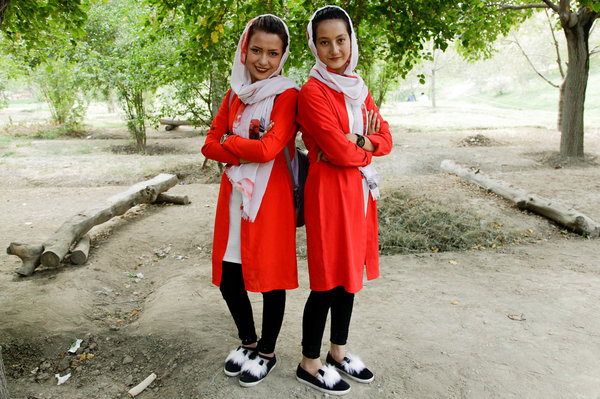
Farahnaz Mohammadi (left) and her cousin Fatima Almi, seen in a peaceful Kabul park, hope that the gains made by Afghan women in recent years will remain after a peace deal.

This story is about a peaceful garden in Kabul, Afghanistan, a city where peace is at a premium. Erik’s sister works for the UN in that city, helping women gain leadership skills, so of course, I want to believe in islands of peace like this taking over the danger zones.

Diaa Hadid and Khwaga Ghani reported on the Gardens of Babur at National Public Radio (NPR) in October.

“Farahnaz Mohammadi, 17, and her cousin Fatima Almi, 19, dress identically, from their patterned headscarves to their shoes with matching bunny ears. They also share the same opinions on Afghanistan’s future, which may be nearing a critical phase as a deal between the U.S. and Taliban insurgents appears to be reviving.

“That deal would likely see most American forces withdraw from Afghanistan, where they have been at war for 18 years. In exchange, the Taliban would not host global militant groups like al-Qaida and may adhere to some sort of ceasefire. It would also likely to allow the Taliban to reenter political life.

“The two young women don’t like it at all.

” ‘We will go back to what we were,’ says Mohammadi, referring to a time before she was born, when the Taliban ruled much of Afghanistan and imposed harsh rules against women. …

“Mohammadi’s view was echoed by other women interviewed by NPR in Kabul. The capital is more liberal than other quarters of Afghanistan, yet the uniformity of the opinions suggests a broadly held concern. …

“Mohammadi says she craves safety and security. But she has also benefited from the advances women have made with American forces helping to secure Afghan cities. Describing it as a ‘half-peace,’ she says even in those conditions, ‘girls can go out.’ She gestures around where she stands in Kabul’s Babur Garden, a centuries-old park where orchards and grassy lawns provide a shelter of sorts from the city’s dusty chaos.” More from NPR.

Wikipedia explains that the Garden of Babur “is the last resting-place of the first Mughal emperor Babur. The gardens are thought to have been developed around 1528 AD [when] Babur gave orders for the construction of an ‘avenue garden’ in Kabul …

“Since 2003, the focus of conservation has been on the white marble mosque built by Shah Jahan in 1675 to mark his conquest of Balkh; restoration of the Babur’s grave enclosure; repairs to the garden pavilion dating from the early 20th century; and reconstruction of the … Queen’s Palace. In addition, a new caravanserai was built on the footprint of an earlier building at the base of the garden …

“Significant investments have been made in the natural environment of the garden, taking account of the historic nature of the landscape and the needs of contemporary visitors. A system of partially piped irrigation was installed, and several thousand indigenous trees planted, including planes, cypresses, hawthorn, wild cherry (alubalu — allegedly introduced by Babur from the north of Kabul) and other fruit and shade trees. Based on the results of archaeological excavations, the relationships between the 13 terraces and the network of paths and stairs have been re-established.

“Since January 16, 2008, the garden has been managed by the independent Baghe Babur Trust and has seen a significant increase in visitor numbers. Nearly 300,000 people visited the site in 2008 and about 1,030,000 people visited the site in 2016.”

Read Full Post »

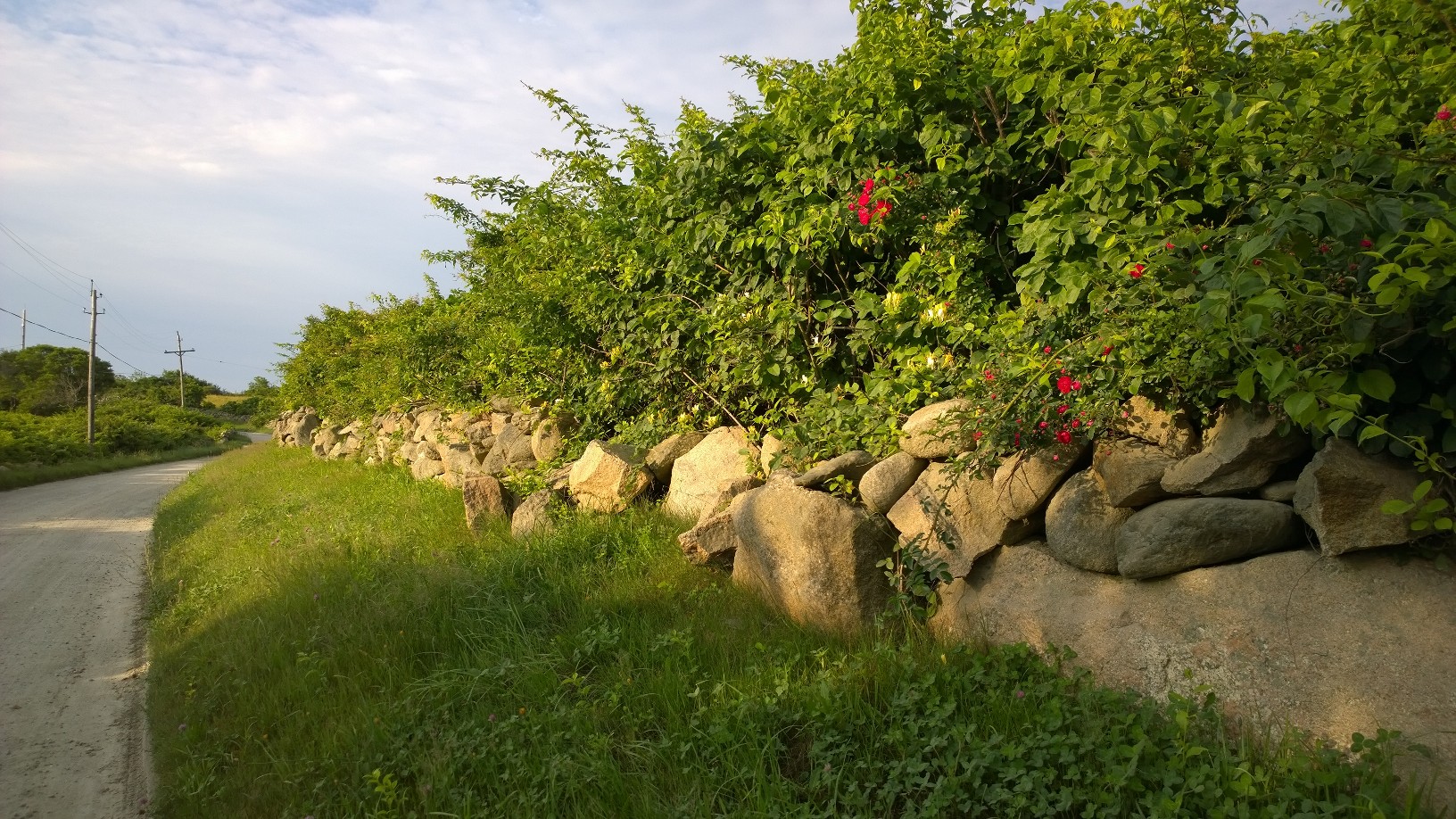
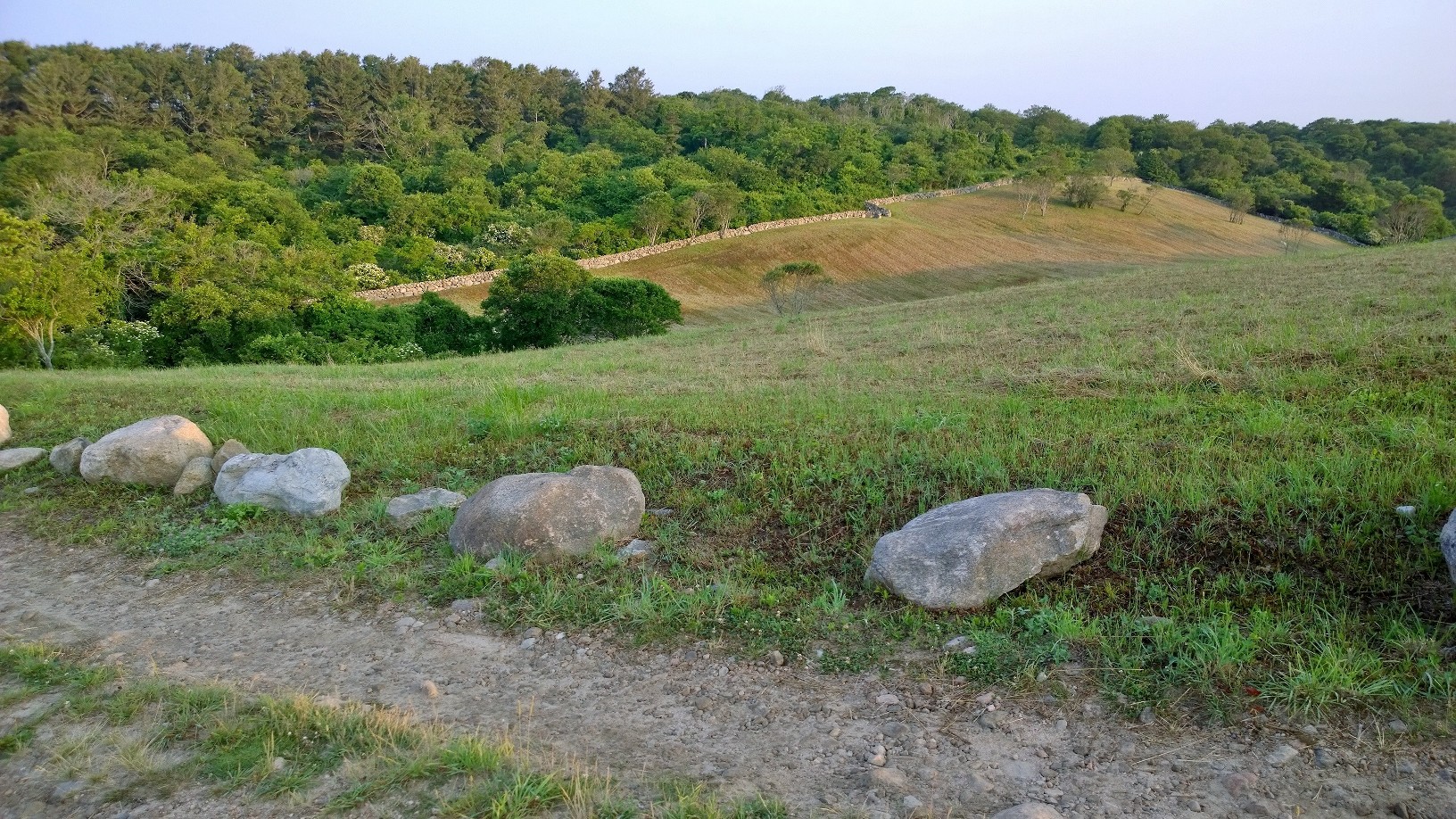
The little state with the big heart. Showing an intriguing old house in Providence, and island scenes in early morning and late afternoon.

This is the peaceful side of things, contrasting with the stories we just heard from an exhausted policeman we know who spent the last five days trying to control unruly 4th of July crowds, working from 5 a.m. to 11 p.m. “And we have only two cells to put them in,” he said in exasperation.

So hard to understand why, with all this beauty around them, people would do so much damage to themselves.

Providence-fixer-upper

stone-wall-morning

country-road-70515

fields-New_Shoreham

John-E-tughole

looking-down-the-bluffs

070515-beach-late-afternoon

Read Full Post »

Margarida Santos Lopes has a hopeful story at the Christian Science Monitor about an Israeli rabbi and a Palestinain who are friends.

“Shaul David Judelman is an Israeli rabbi who moved from Seattle to Bat Ayin, a religious community in the occupied West Bank.

“Ziad Abed Sabateen is a Palestinian farmer who endured imprisonment during the first intifada against the Israelis more than 20 years ago and whose family was dispossessed of most of its land to accommodate Jewish settlers.

“The two men are good neighbors, friends, and business partners – not enemies.

“Mr. Judelman and Mr. Sabateen are committed to ‘peaceful coexistence’ between Israelis and Palestinians, whether they live together in one state or two separate states.

“The majority of those in both their camps may find it hard to understand the two men’s close relationship. But neither side repudiates them as traitors or collaborators. …

“On a mountaintop with a view of the Mediterranean Sea … Judelman and Sabateen plan to create the Heavens Field Farm, which will put ’emphasis on belonging to the land, not ownership of it,’ according to their joint manifesto.

“Their idea is to run an organic farm that will sell vegetables in local markets, support families in need, and attract volunteers and tourists. Among their partners are a joint Israeli Palestinian journal, called Maktub, and other nonpolitical groups such as Eretz Shalom (Land of Peace).”

Read more to understand how each came to their worldview through different paths.

Photo: Udi Goren
Shaul David Judelman (l.) and Ziad Abed Sabateen, in Bethlehem. They want to create an organic farm in the West Bank as a project for peace.

Read Full Post »

As readers know, I really believe that “one and one and 50 make a million” (a concept articulated by folksinger Pete Seeger). That’s why I can’t resist a recent story from Moscow, where a few writers decided to have a “stroll,” and 10,000 individuals individually decided to follow.

Ellen Barry writes in the NY Times: “It was only four days ago when 12 prominent authors, disturbed by the crackdown on dissent that accompanied President Vladimir V. Putin’s inauguration, announced an experiment. They called it a ‘test stroll’ …

“No one knew quite what to expect on Sunday. But when the 12 writers left Pushkin Square at lunchtime, they were trailed by a crowd that swelled to an estimated 10,000 people, stopping traffic and filling boulevards for 1.2 miles. …  The police did not interfere, although the organizers had not received a permit to march.

“ ‘We see by the number of people that literature still has authority in our society because no one called these people — they came themselves,’ said Lev Rubinstein, 65, a poet and one of the organizers. ‘We thought this would be a modest stroll of several literary colleagues, and this is what happened. You can see it yourself. … I don’t know how this will all end, but I can say that no one will forget it.’ ” Read more.

I can’t help thinking that one and one and 50 have been growing for a long time in Russia and that the 10,000 who joined the march are just the tip of he iceberg.

Photograph: Dmitry Kostyukov for The New York Times

Read Full Post »

Not an appropriate quote, but I can’t keep it from coming into my head:
“Like the leaves of the forest when Summer is green,
“That host with their banners at sunset were seen:
“Like the leaves of the forest when Autumn hath blown,
“That host on the morrow lay withered and strown.”

Read Full Post »