Feeds:
Posts
Comments

Posts Tagged ‘postaday’

Photo: Julie Van Stappen, National Park Service
Apostle Islands sea caves

Winter seems to be hanging on, so it’s not too late to blog about the Apostle Islands and the sea caves in winter.

My husband and I visited the Apostle Islands 16 years ago, almost to the day. We stayed in a pleasant B&B that had a waitress who, my husband recalls, acted like one’s sojourn there “was the experience you had been waiting for your whole life.” We drove around and tried to keep warm. I’m looking at a pottery pitcher with an apple on it that we bought in a little shop.

At the New Yorker, Siobhan Bohnacker introduces a slide show on the sea caves, calling them “Cathedrals of Ice.”

“This past February, thanks to an unusually cold winter, the sea caves along the Apostle Islands National Lakeshore, in northern Wisconsin, were accessible by foot for the first time in five years. Visitors were able to walk two miles over the thick ice of Lake Superior to see the ice formations that run up the coastline. Erin Brethauer, a photographer living in North Carolina, visited …

“Describing the trek to the caves, Brethauer told me, ‘A steady stream of people cut a colorful line on the horizon. More than a hundred and thirty-eight thousand people visited the ice caves this winter, up from twelve thousand seven hundred in 2009.’ …

“The shorelines along the Apostle Islands have been slowly shaped by the movement of the water of Lake Superior, and by its annual freezing and thawing. Sea caves, which resemble honeycombs, are sculpted in the course of centuries by waves breaking onto cliffs. This impact creates what are called reëntrants, or angular cavities that tunnel into cliffs. When reëntrants join behind the cliff face, sea caves result. When water is trapped in the caves and cavities, and freezes, dramatic ice formations occur.

“Brethauer said, ‘We were struck by the size and coloring of the ice along the coastline. Some ice was a pale blue, while other formations were yellow or reddish, depending on the sediment the water collected when it was freezing. … I loved watching how people interacted with the caves and ice, climbing or taking pictures. They provided such scale and added to your feeling of wonder. And then, stepping inside one of the caves, looking up, and listening to the silence or the ricochet of sound, it felt like being in a cathedral.’ ”

Check out the slide show at the New Yorker, here.

Read Full Post »

It’s been surprisingly cold this April week, but at least we have had some sunshine. What if we lived in Norway, where people go for months without the sun? How would we manage? For that matter, how do Norwegians manage?

Suzanne Daley writes in the NY Times about one Norwegian town that got fed up with light deprivation and decided to try something new.

“Yearning for sunlight has been a part of life in [Rjukan, a] quaint old factory town in central Norway for as long as anyone can remember. Here, the sun disappears behind a mountain for six months of the year.

“It is worse for newcomers, of course, like Martin Andersen, a conceptual artist who arrived here 12 years ago and would find himself walking and walking, searching for any last puddle of sunshine to stand in. It was on one of these walks that he had the idea of slapping some huge mirrors up against the mountain to the north of town and bouncing some rays down on Rjukan.

“The town eventually agreed to try, and last fall, three solar- and wind-powered mirrors that move in concert with the sun started training a beam of sunlight into the town square. Thousands of people turned out for the opening event, wearing sunglasses and dragging out their beach chairs. And afterward, many residents say, life changed.

“The town became more social. Leaving church on Sundays, people would linger in the square, talking, laughing and drinking in the sun, trying not to look up directly into the mountain mirrors. On a recent morning, Anette Oien had taken a seat on newly installed benches in the square, her eyes closed, her face turned up. She was waiting for her partner to run an errand, and sitting in the light seemed much nicer than sitting in a car. ‘It’s been a great contribution to life here,’ she said.” More here.

Daley writes the article like a folk tale. You could imagine your own ending.

Photo: Kyrre Lien for The New York Times
In winter, the town square of Rjukan, Norway, is illuminated by sunlight reflected from three computer-controlled mirrors on a mountain overlooking the town.

Read Full Post »

I used to love finding little red salamanders when I was a child.

I didn’t know they played an important role in the ecosystem, even balancing out processes that contribute to climate change. Of course, when I was a child, nobody talked about ecosystems or climate change. But I’m glad to learn salamanders are important. Small things often are.

Writes Richard Conniff in the NY Times, “According to a new study in the journal Ecosphere, salamanders play a significant role in the global carbon cycle. …

“The study — by Hartwell H. Welsh Jr., a herpetologist at the United States Forest Service’s research station in Arcata, Calif., and Michael L. Best, now at the College of the Redwoods in Eureka, Calif. — notes that salamanders’ prey consists almost entirely of ‘shredding invertebrates,’ bugs that spend their lives ripping leaves to little bits and eating them.

“Leaf litter from deciduous trees is on average 47.5 percent carbon, which tends to be released into the atmosphere, along with methane, when the shredding invertebrates shred and eat them.

“If there aren’t as many shredders at work and the leaves remain in place, uneaten, they are covered by other leaves. … The anaerobic environment under those layers preserves the carbon until it can be captured by the soil, a process called humification.

“At least in theory, having more salamanders in a forest should mean fewer shredding invertebrates and more carbon safely locked underground.”

Read how they tested their theory, here.

 Photo: Todd W. Pierson/University of Georgia

Read Full Post »

I am utterly tickled with the updated website for Suzanne’s birthstone-jewelry company Luna & Stella, the company that is behind this blog.

I really hope you will take a look — both for new products like stacking rings and a star pendant and for the wonderful pictures customers submitted showing warm  family and friend relationships.

Suzanne says, “We had so much fun with this contest we decided to keep it going. Send black & white vintage or recent family photos to contest@lunaandstella.com and you could win a $100 gift certificate if we use your photo on the site!”

Suzanne has given me such a free rein with this blog that it’s possible some readers don’t realize it’s a Luna & Stella blog. So I’m thrilled that the new website is up today. It gives me the opportunity to remind everyone that Mother’s Day is the second Sunday in May.

(One of the many perks of being a grandma is that I get a new Luna & Stella charm or ring every Mother’s Day that there’s a new baby in the family.)


Read Full Post »

Even if, like me, you never got into the TV show “The Wire,” you may know that it was about a troubled section of Baltimore. You also may be interested in a new school there, intended to serve as a real community gathering place.

New York Times design critic Michael Kimmelman has the story.

“In many ways, public schools are gated communities, dead zones,” writes Kimmelman. “They’re shuttered after dark and during the summer, open to parents and students while in session but not to the larger community.

“A new public school in one of the poorest neighborhoods in East Baltimore wants to challenge the blueprint. Designed by Rob Rogers, of Rogers Partners in New York, Henderson-Hopkins, as it’s called, aspires to be a campus for the whole area — with a community center, library, auditorium and gym — as well as a hub for economic renewal.

“This is the neighborhood where parts of ‘The Wire’ were filmed. In 2000, when the city’s mayor convened local business leaders, the vacancy rate was 70 percent. Poverty was twice the city average. Crime, infant mortality and unemployment were all through the roof.

“The idea that emerged — of making the school the centerpiece of a major redevelopment project — is a grand urban experiment. Operated by Johns Hopkins University in collaboration with Morgan State University, the school, which opened in January, belongs to a $1.8 billion plan that also includes new science and technology buildings, a park, retail development and mixed-income housing. While gentrification might threaten to displace the poor, the school is to be the glue that helps bind the district together.” Read more here.

Photo: Matt Roth for The New York Times
Henderson-Hopkins, which shares its library, gym, auditorium, and other features with the surrounding area, is designed to catalyze change in a blighted section of Baltimore.
 

Read Full Post »

A lovely, warm day for walking, grandkids, and friends.

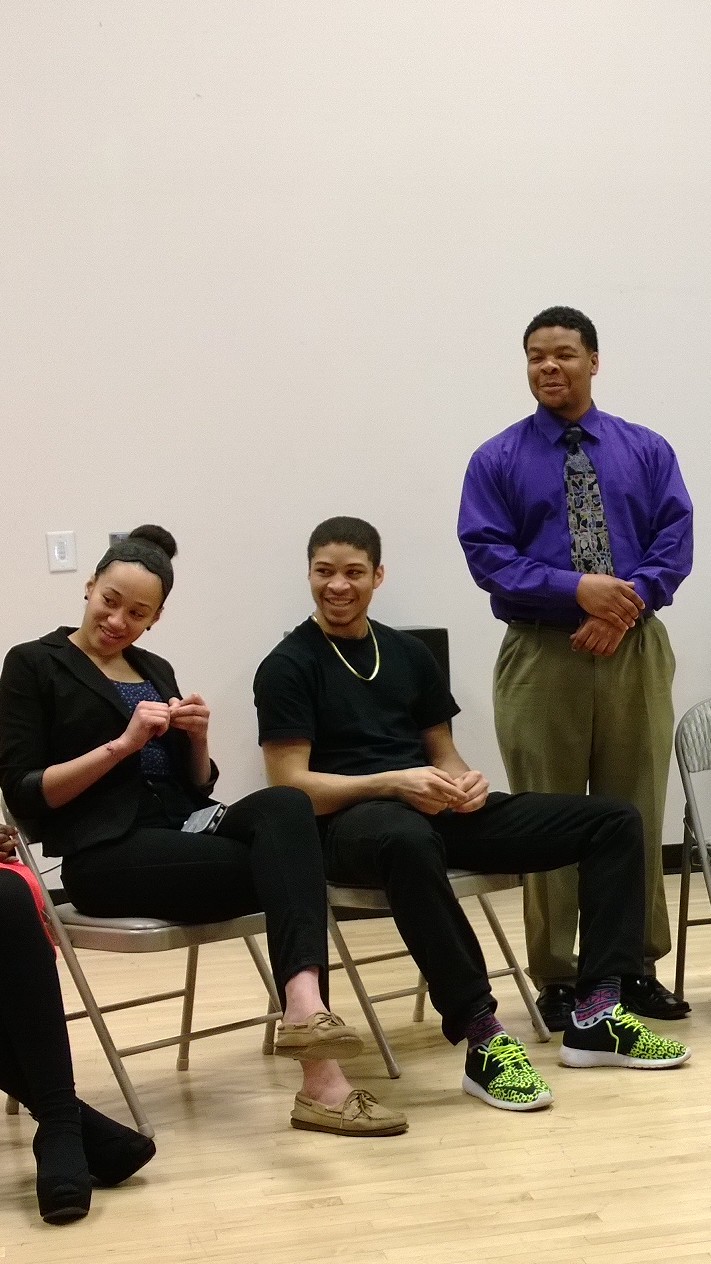
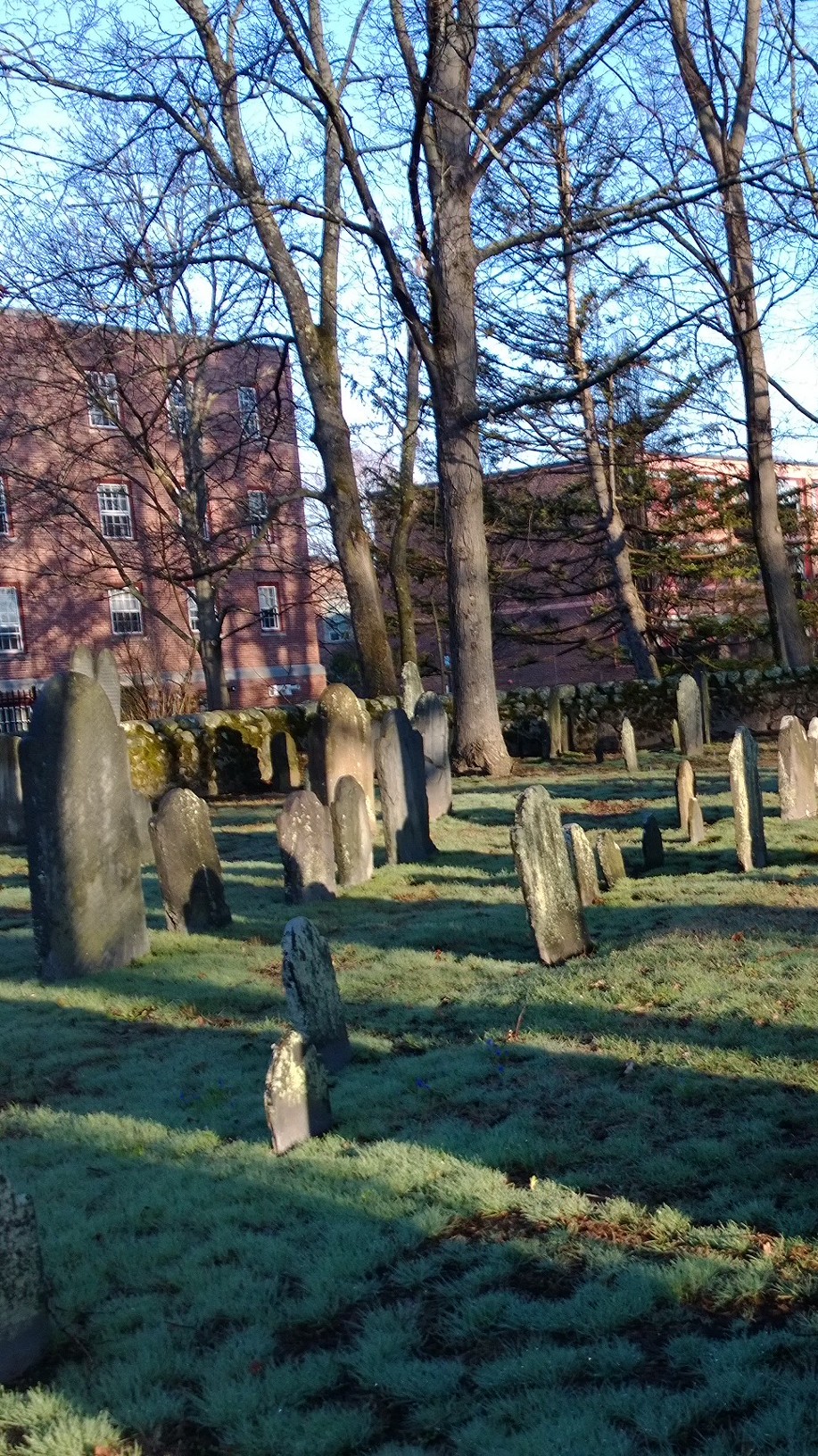
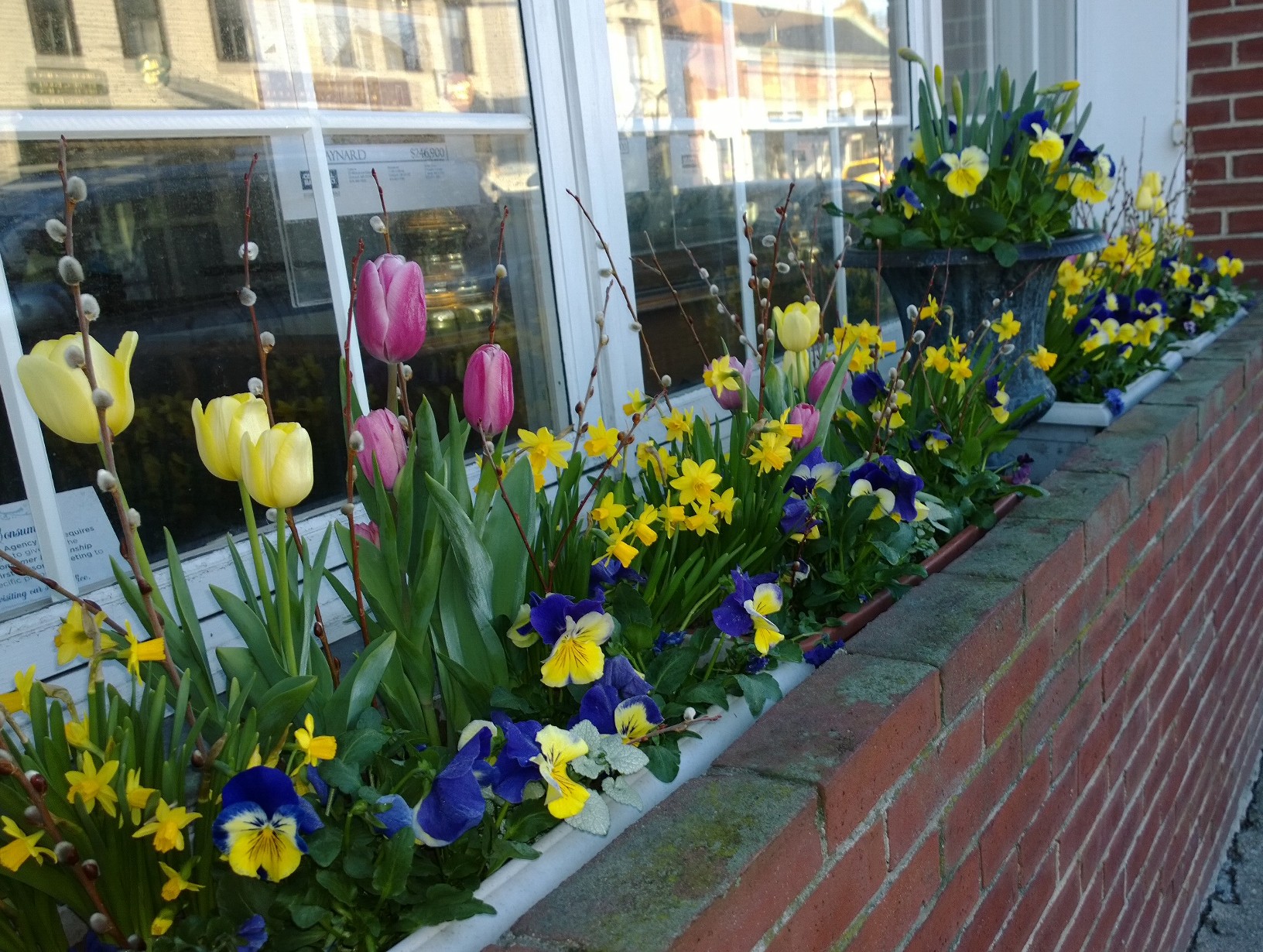
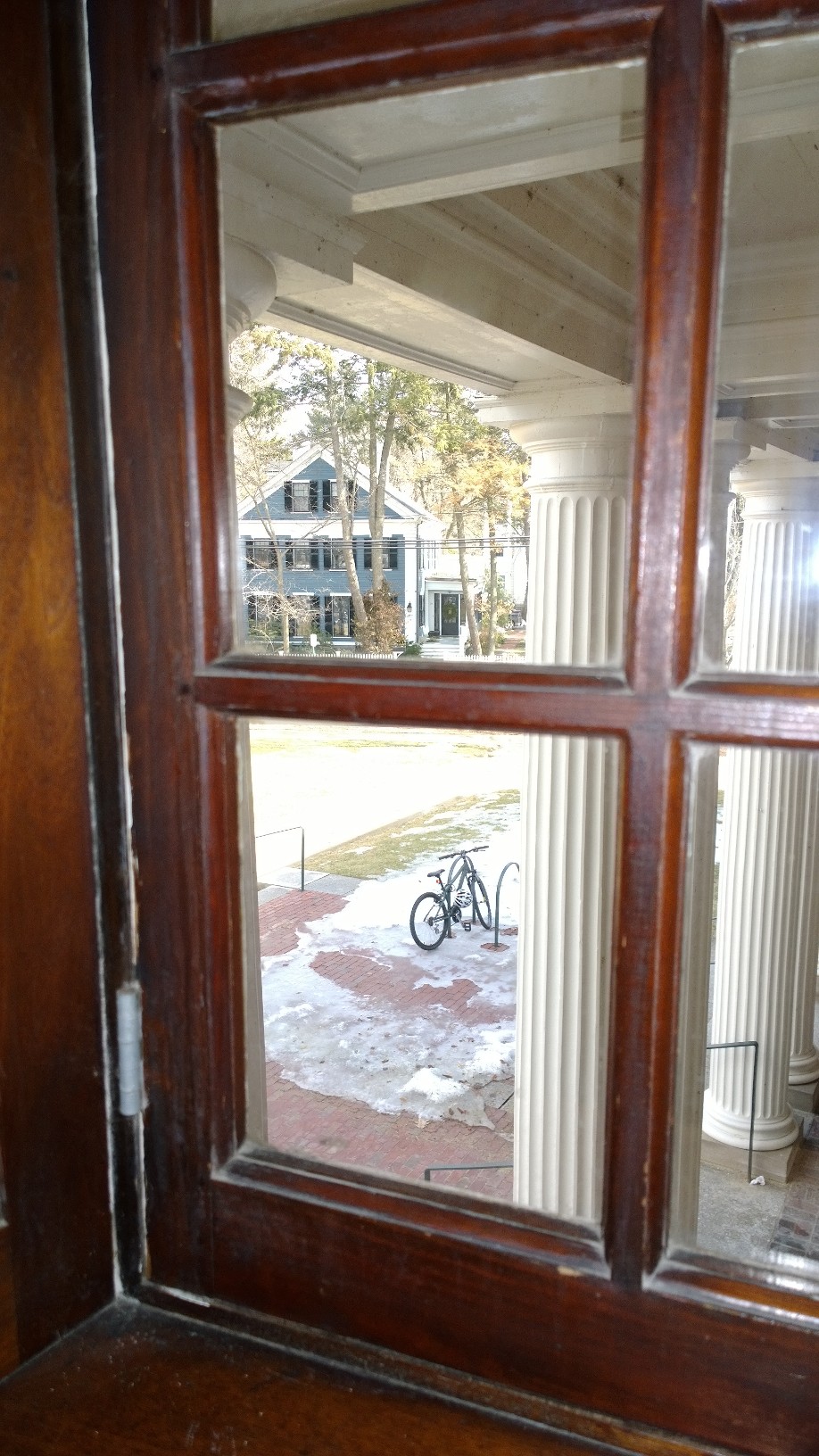
Here are a few photos, including one of director-playwright Jermaine Hamilton with cast members at Brandeis University.

I was so happy I managed to get to Jermaine’s senior-thesis play about inequality of U.S. high schools, Bridging the Gap. What a challenge to make it work for both his social sciences major and his theater minor! A great bunch of natural actors and Jermaine’s lighting and sound collaborators pushed it over the finish line, and judging from the audience comments in the talk-back, the issues that the play presented struck chords.

Jermaine has a teaching job lined up for next year, after graduation. The school is lucky to have him.

Jermaine, standing, joins his cast for a talk-back with the audience. The other pictures are walking-around shots.
Jermaine-Hamilton_with-cast

daffodils


gravestone-shadows

flower-box-april-12-14


032214-library-wndow

tree-face


Read Full Post »

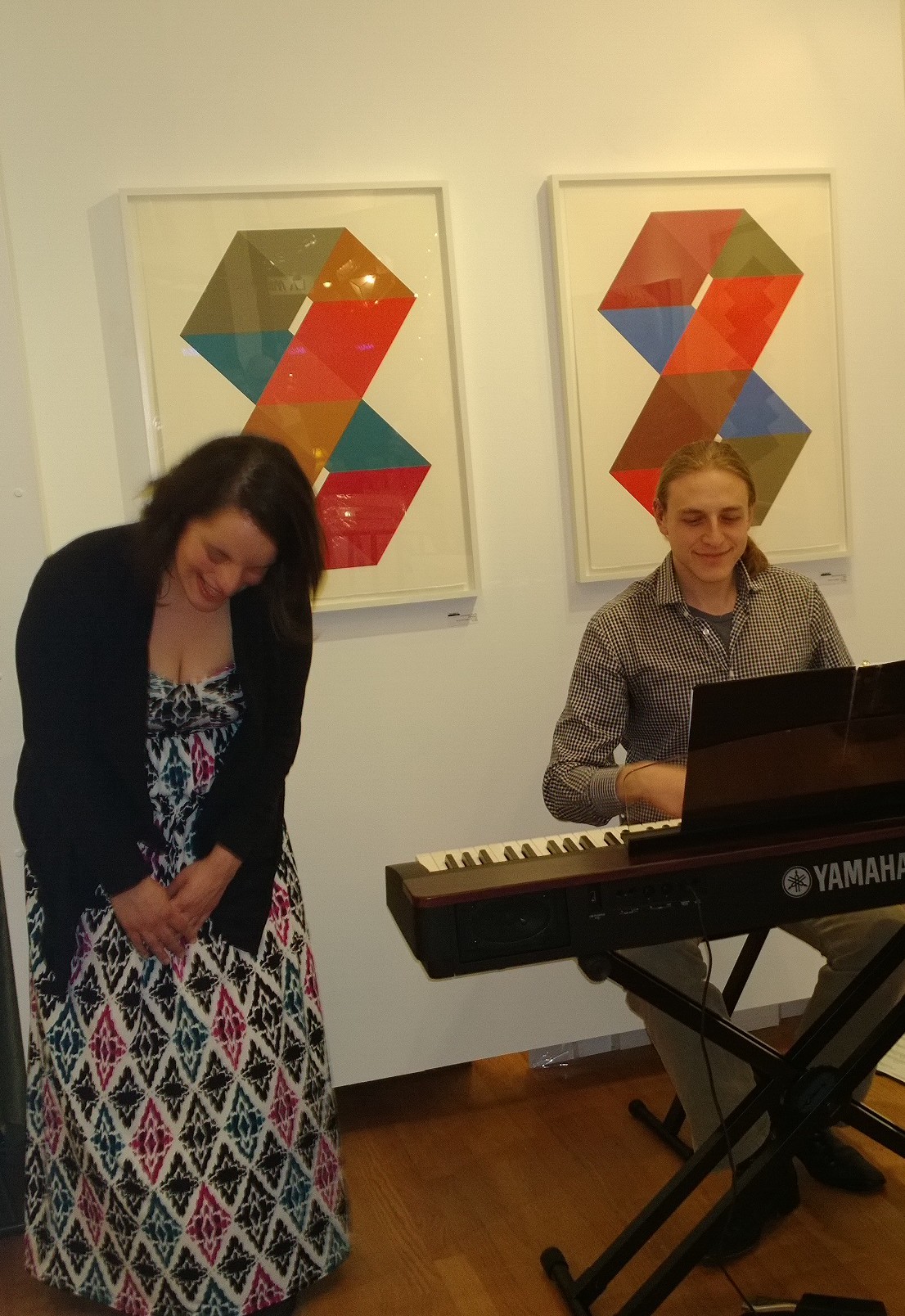
13Forest is an art and craft gallery in Arlington that invites Opera on Tap singers to perform at openings. Our daughter-in-law sent us an e-mail about this today, and we went. It was charming.

From Mark Adamo’s opera Little Women, the young performers sang Amy’s aria, Prof. Bhaer’s aria, and Beth’s, a gentle farewell. There was also a song based on a letter a soldier wrote to his wife before a battle in the Civil War.

A short and sweet event. Made us wonder why more galleries don’t do this.

Opera on Tap taking a bow at 13Forest Art Gallery. Read about the national organization bringing opera to the people here.

opera-on-tap-13-forest-gallery

Read Full Post »

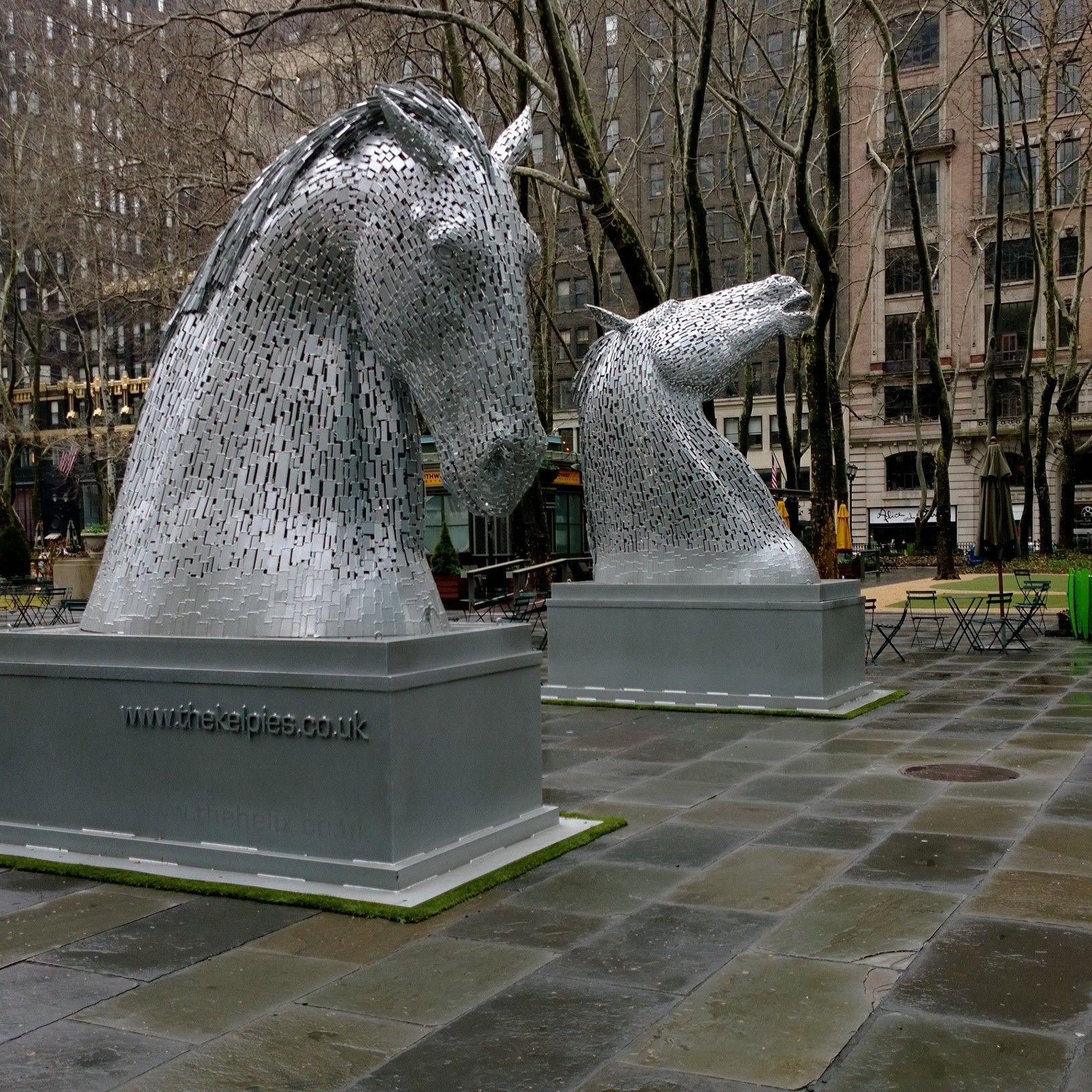
The last tidbit from my recent New York City trip is about the Kelpies on loan in Bryant Park, near the New York Public Library.

Kelpies are water spirits of Scottish folklore, typically taking the form of a horse. Artist Andy Scott was inspired by the legends to create giant ones for Helix Park in Falkirk, Scotland.

The ones in New York are smaller maquettes but still pretty huge.

The artist writes that he came up with an idea eight years ago about “mystical water-borne equine creatures. …

“Since then it has evolved dramatically and in the process the ethos and function has shifted from the original concept. Falkirk was my father’s home town and that inherited link to the town has been one of my driving inspirations. A sense of deep personal legacy has informed my thinking from the outset …

“The mythological associations behind the original brief have been absorbed by other sources of inspiration in the creative processes, and the ancient ethereal water spirits have been forged into engineered monuments. The Kelpies are modeled on heavy horses (two Clydesdales of Glasgow City Council actually served as models in the process), and it is this theme of working horses which captured my imagination and drove the project.”

The website adds that the Kelpies in New York City “were installed by Andy and his colleague Simon Chambers, with the assistance of the American Scottish Foundation, the Bryant Park Corporation, Mariano Brothers freight & cranes, Synlawn matting and the New York City Department of Parks & Recreation. Thanks to Creative Scotland for their funding assistance towards the costs of the transport and install.”

You really have to check out Scott’s website. The full-size sculptures are unbelievable. Click here.

Kelpies-Bryant-Park

Read Full Post »

As I mentioned a few posts back, we went to the Metropolitan Museum when we were in New York. We saw a show from the dawn of photography, pictures of a lost Paris by Charles Marville. I greatly admired the angles, the light and shadow, the crispness of the images. Someday I want to try imitating his use of doorways and windows.

Karen Rosenberg writes about Marville in the NY Times, “In the massive construction site that was late-19th-century Paris, the photographer Charles Marville was just a few steps ahead of the wrecking ball. As an official city photographer working under Napoleon III and his controversial urban planner, Baron Haussmann, Marville recorded some 425 views of narrow, picturesque streets that were to be replaced by Haussmann’s grand boulevards.” More here.

The Met’s site adds, “By the end of the 1850s, Marville had established a reputation as an accomplished and versatile photographer. … Marville photographed the city’s oldest quarters, and especially the narrow, winding streets slated for demolition. Even as he recorded the disappearance of Old Paris, Marville turned his camera on the new city that had begun to emerge.

“Many of his photographs celebrate its glamour and comforts, while other views of the city’s desolate outskirts attest to the unsettling social and physical changes wrought by rapid modernization.” More at the website, here.

Catch the show by May 4.

Photo: Charles Marville
Rue de Constantine in 1866, one of a hundred photos of a lost Paris are now on display at the Metropolitan Museum of Art in New York
.

Read Full Post »

Boston Medical Center is an inner-city hospital that takes a special interest in immigrants and the poor. It also treats patients holistically, offering a referral service for problems that get in the way of good health.

With the support of the City of Boston, Boston Medical Center has added a new item to its medicine cabinet: bike sharing.

Catalina Gaitan writes at the Boston Globe, “The City of Boston has announced a program to subsidize bike-sharing memberships for low-income residents, in partnership with Boston Medical Center.

“The program, ‘Prescribe-a-Bike,’ would allow doctors at Boston Medical Center to prescribe low-income patients with a yearlong membership to Hubway, a bike-share program, for only $5.

“Participants would be allowed unlimited number of trips on the bicycles, provided they use them for 30 minutes or less at a time. They will also be given a free helmet, the mayor’s office said in a joint statement with Boston Medical Center.

“ ‘Obesity is a significant and growing health concern for our city, particularly among low-income Boston residents,’ said Kate Walsh, chief executive of Boston Medical Center, in the statement. …

“Statistics show that 1 in 4 low-income residents in Boston is obese, almost twice the rate of higher-income residents, the statement said.

“To qualify for the prescription, participants must be 16 years or older and be enrolled in some form of public assistance, or have a household income of no more than four times the poverty level.”

More here.

bikes-in-boston

Read Full Post »

You don’t have to love everything that someone calls a poem to believe that it’s a great thing to encourage poetic expression and enjoyment of poetry in all walks of life.

One of the memorable aspects of Jason Elliot’s book on Iran, Mirrors of the Unseen, at least for me, was how many ordinary people in that country were interested in the great poets of their culture and could recite ancient verse.

Meanwhile, in Miami, there’s a poetry festival that aims to touch everyone.

William Grimes at the NY Times says, “If you live in Miami and you do not read, recite or listen to a poem in April, something has gone seriously wrong. For the third year, the O, Miami Poetry Festival will flood the city with words, using any pretext to accomplish its mission of putting all 2.6 million residents of Miami-Dade County in contact with at least one poem. …

“Poems will be pasted on the mirrors of public bathrooms and positioned at congested intersections, so drivers stuck in traffic jams can get some uplift while their engines idle. …

“One of last year’s most popular events, run with WLRN, the local public radio station, was a poetry contest in which citizen-poets were asked to contribute lines dedicated to the theme: ‘That’s so Miami.’ The winner in the ‘best ode to Miami Spanglish’ category was Lauren Fernandez: ‘Exciting and Extravagant/Guajiros in Bentleys./Tostones and Champagne. That’s so Miami.’

“This year contestants must pick a location between the Palm Beaches and the Keys and enshrine it in verse, incorporating the words “this is where.” Winners will see their work published in The Miami Herald. …

“Ivan Lopez, an actor, will dress as the poet and revolutionary José Martí, mount a white horse and ride down Calle Ocho handing out roses with poems attached. That’s so Miami.”

More  at the Times.

Photo: Ting-Li Wang/NY Times
Reading poetry. Can you identify the poet? Hint: He’s not so Miami.

Read Full Post »

Since I like to walk everyday, even going round and round indoors for much of this past winter, I was fascinated to hear about walking as a competitive sport in the 19th century.

At his WBUR radio show yesterday, Only a Game, Bill Littlefield talked to Matthew Algeo, author of Pedestrianism: When Watching People Walk Was America’s Favorite Sport.

Here’s Algeo: “Edward Payson Weston was a door-to-door books salesman from Providence, R.I. In the autumn of 1860, he made a bet with a friend on the outcome of that year’s presidential election. Weston bet that Lincoln would lose, and, of course, Weston lost the bet. The loser had to walk from Boston to Washington in 10 days and arrive in time to witness the inauguration of Lincoln on March 4, 1861.

“So Weston set out and made his way south. Of course, this was a very tense time in American history. Southern states began seceding. There wasn’t a lot of good, uplifting news. And the idea that this guy would walk from Boston to Washington in the middle of winter on terrible roads — it really did capture the imagination of the public, especially along the East Coast. Huge crowds would turn out to see him just walk through their town. Weston didn’t make it in time. He was four hours late to the inauguration. He did meet Lincoln a couple of days later and Lincoln offered to pay his rail fare home, but Weston said he would try to walk home. But the Civil War intervened.”

Littlefield then refers to Weston as one half of “the first great rivalry in the annals of American sports” and asks Algeo who the other half was.

“Daniel O’Leary, an Irish immigrant from Chicago,” says the author. “And what happened was Weston, to capitalize on his fame, decided to take his act indoors. He began walking inside roller rinks, and he would try to walk say 100 miles in 24 hours and charge people a dime for the pleasure of watching him walk in circles all day. This proved immensely popular — thousands of people would do it. Naturally competitors rose up and Daniel O’Leary actually walked 100 miles in 22 hours. And so he bested Weston’s record and so that set up the big showdown in 1875 that you mentioned. It was a 500-mile race over six days between Weston and O’Leary. …

“They would draw a dirt track on the floor of an arena. … The competitors would be sent off, and they would walk continuously day and night for six days right up until midnight the following Saturday night. And the rules were pretty simple: whoever walked the farthest was the winner.” Read more here, where you also can listen to the interview and read Littlefield’s book review.


Read Full Post »

Washington-Sq-is-where-I-came-inWashington Square, New York City

Random photos from my travels.

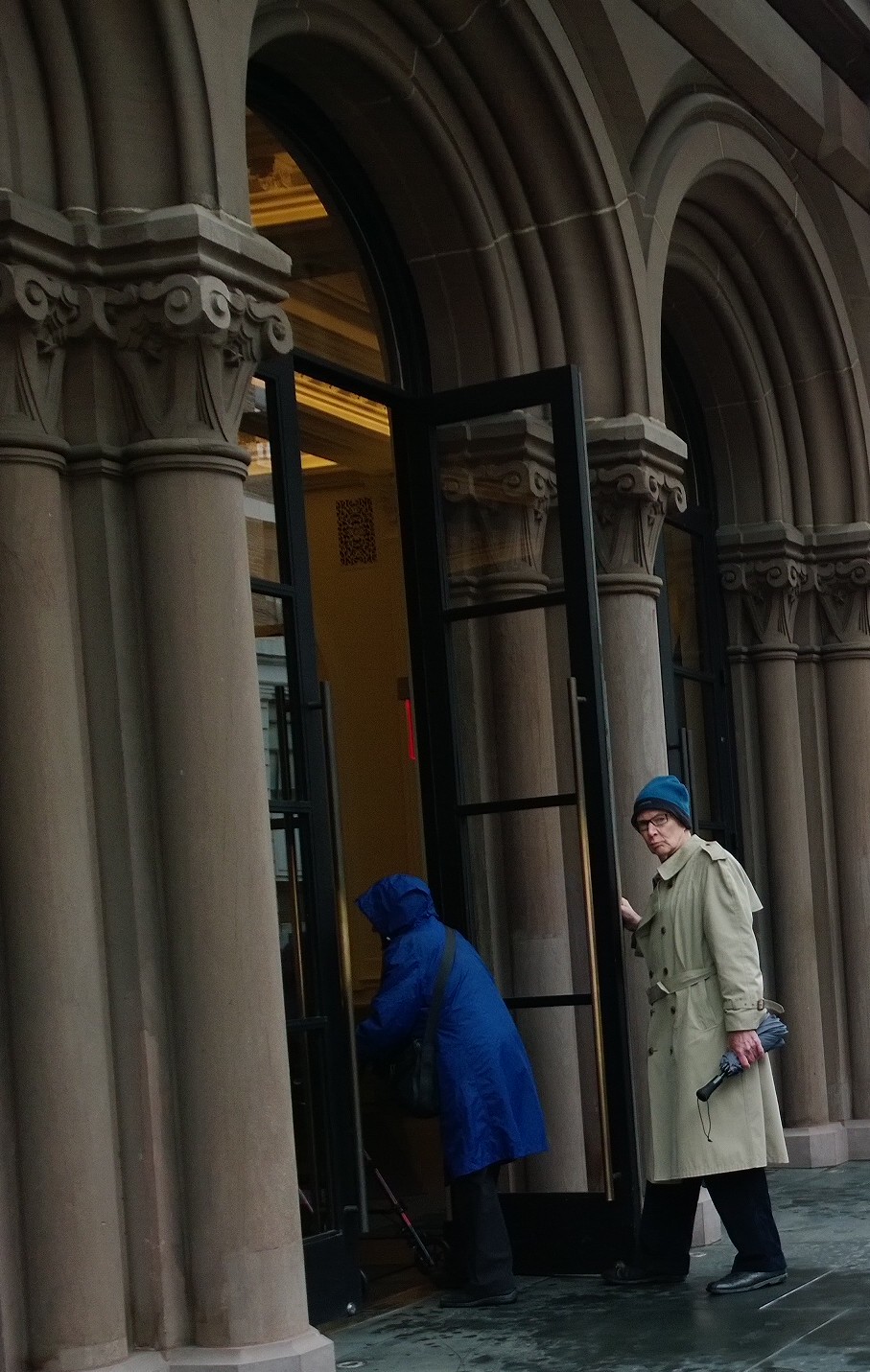
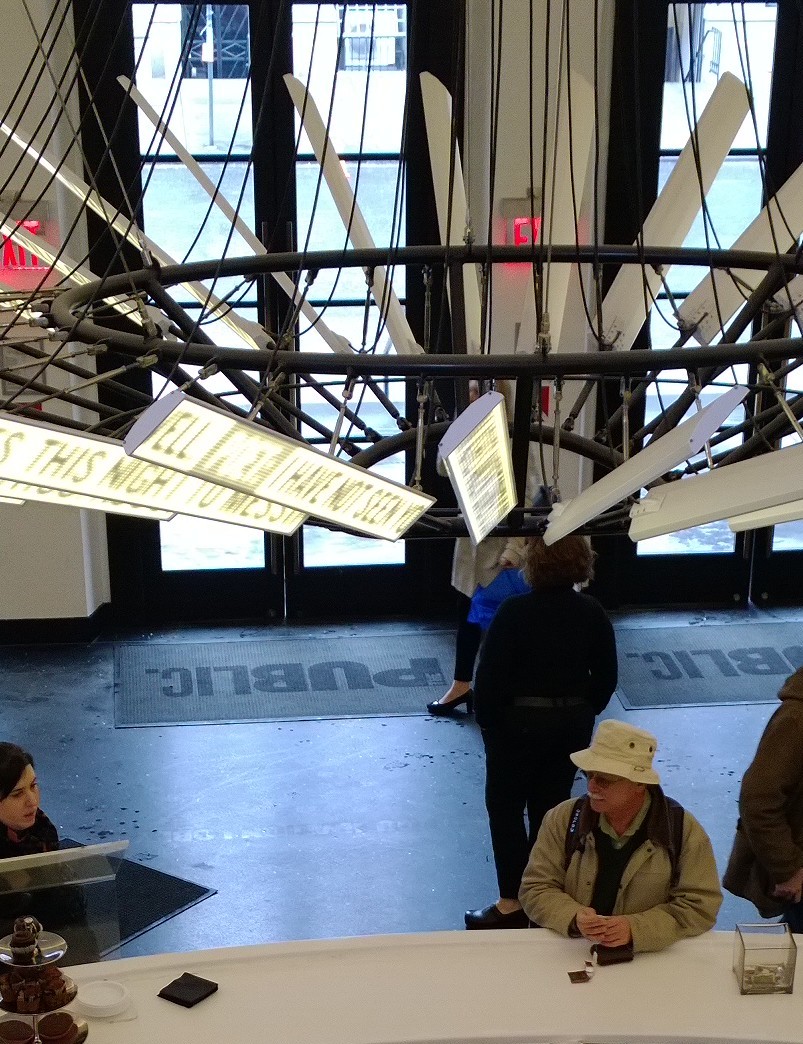
My husband going into the Public Theater to see classmate Ted Shen’s musical, A Second Chance. The Playbill for the show. A delightful chandelier at the Public, with paddles that illuminate changing phrases.

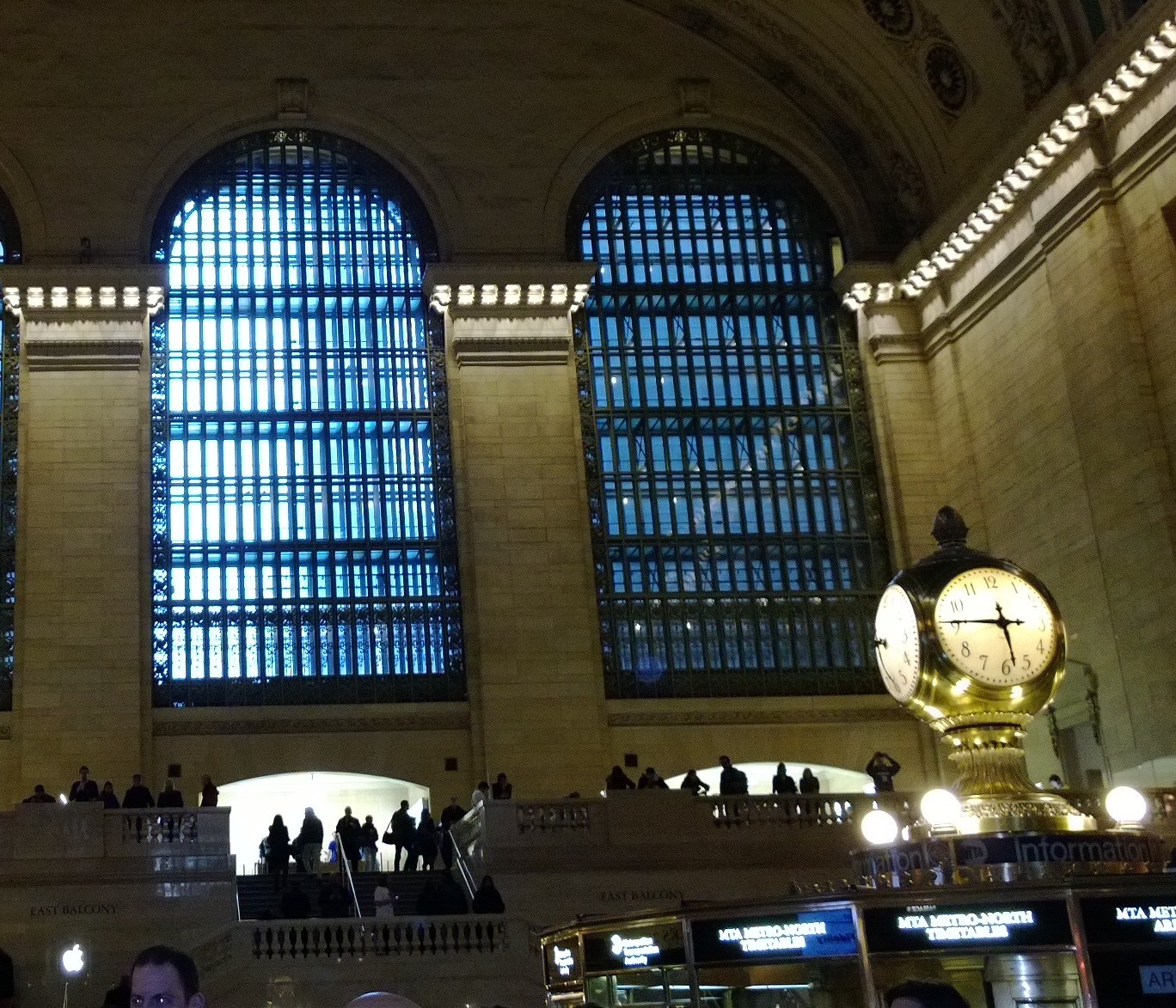
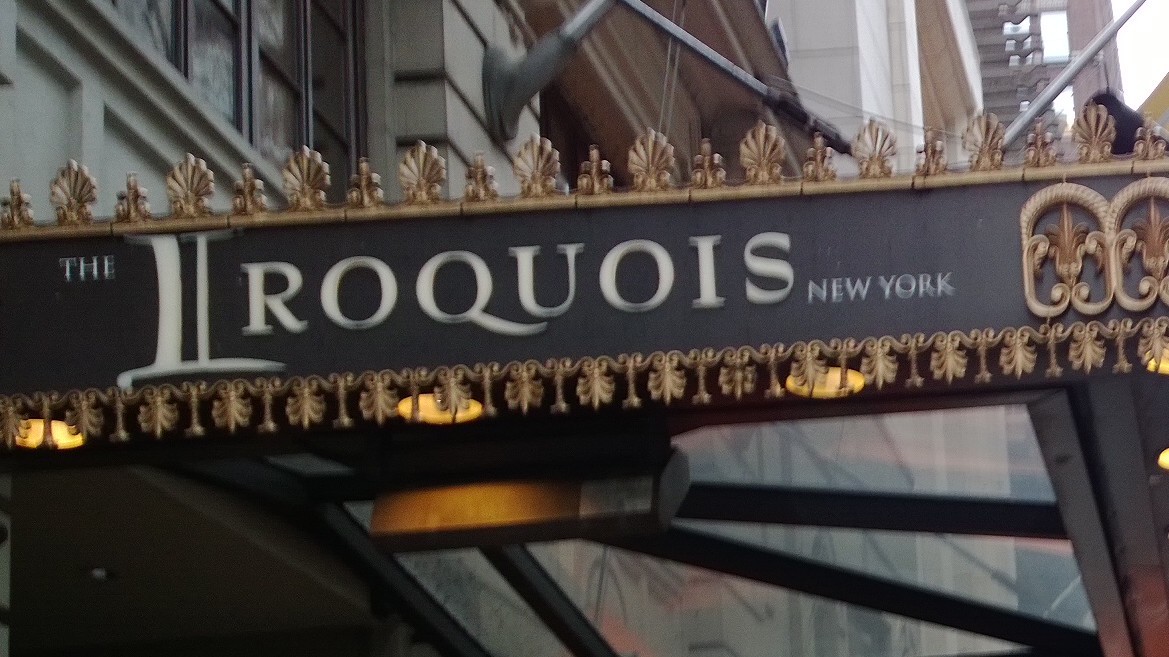
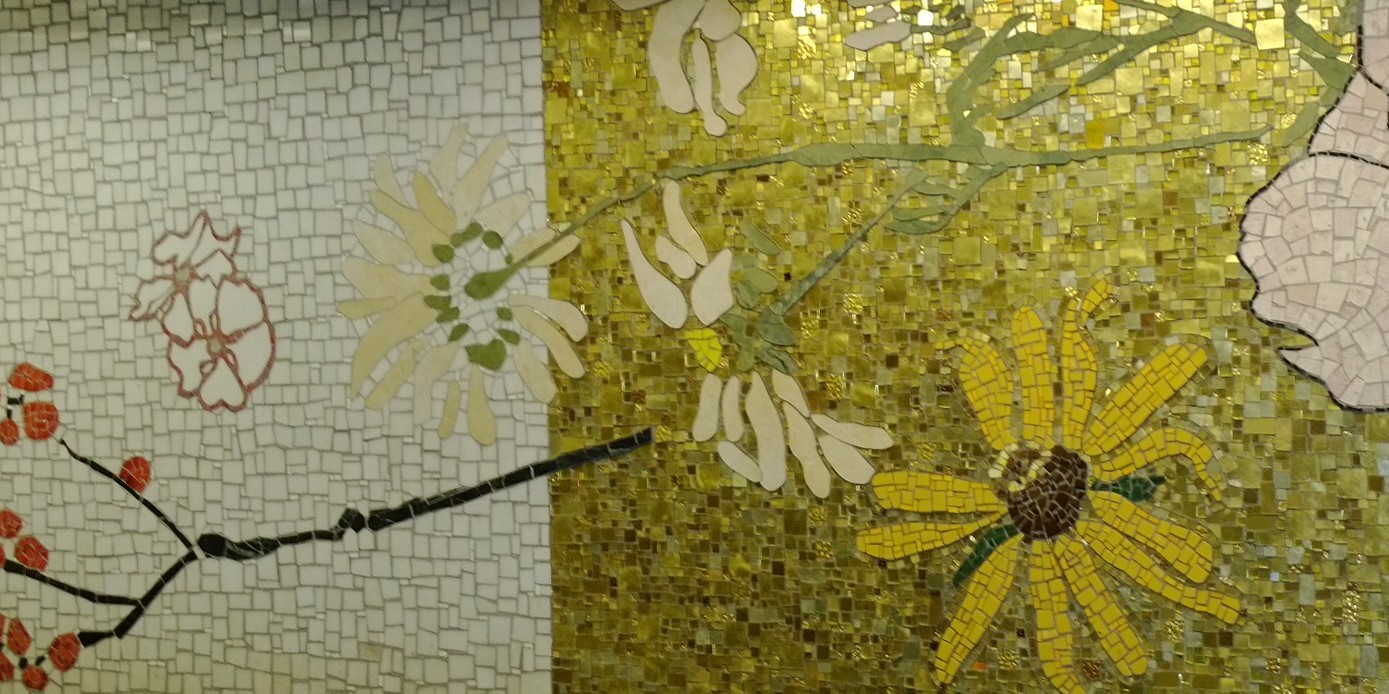
Subway buskers playing a grandson’s favorite song, “When the Saints Go Marchin’ In.” Grand Central Station. The charming Iroquois Hotel. A flower-themed mosaic in the Lexington Ave. subway.

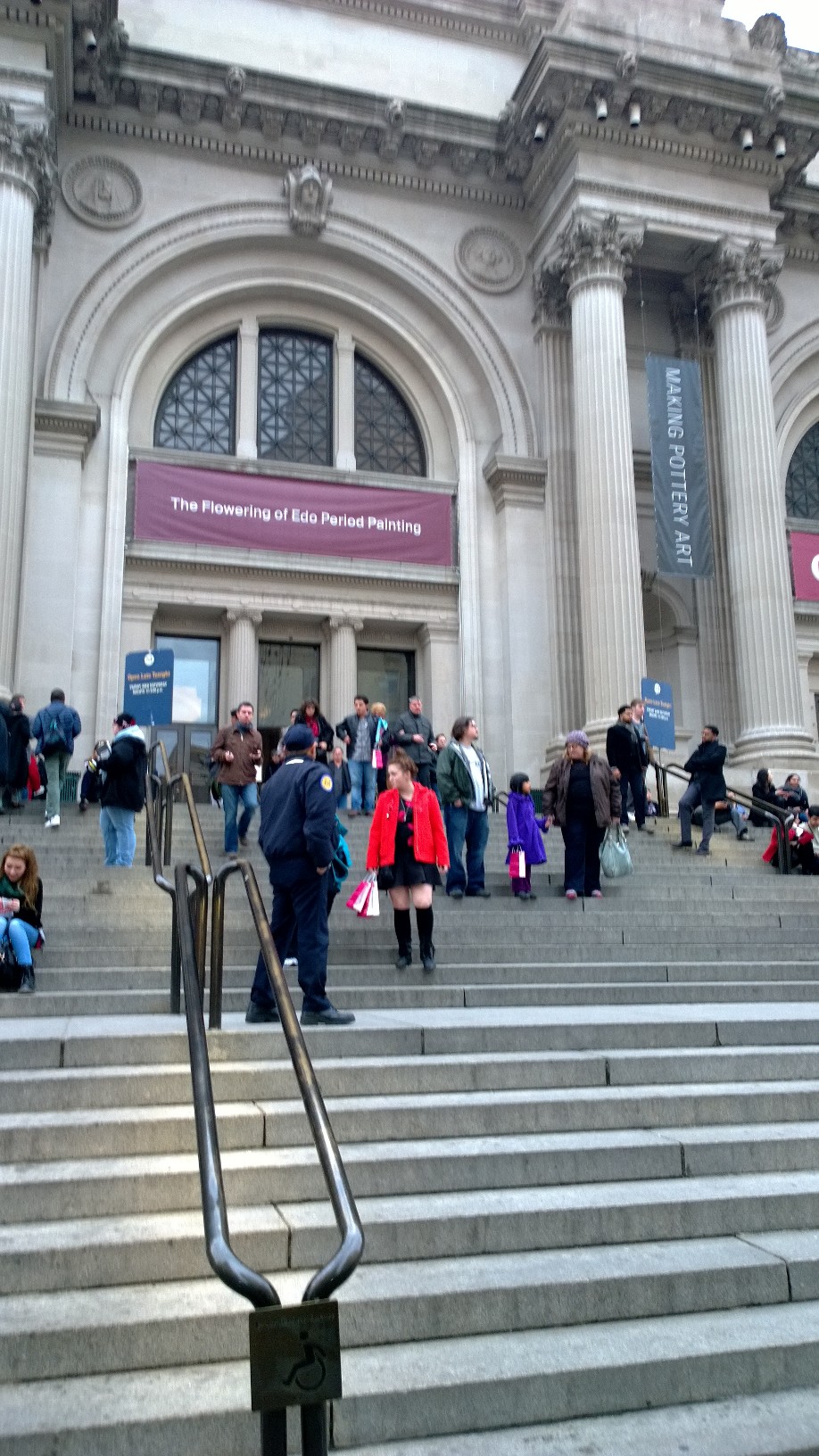
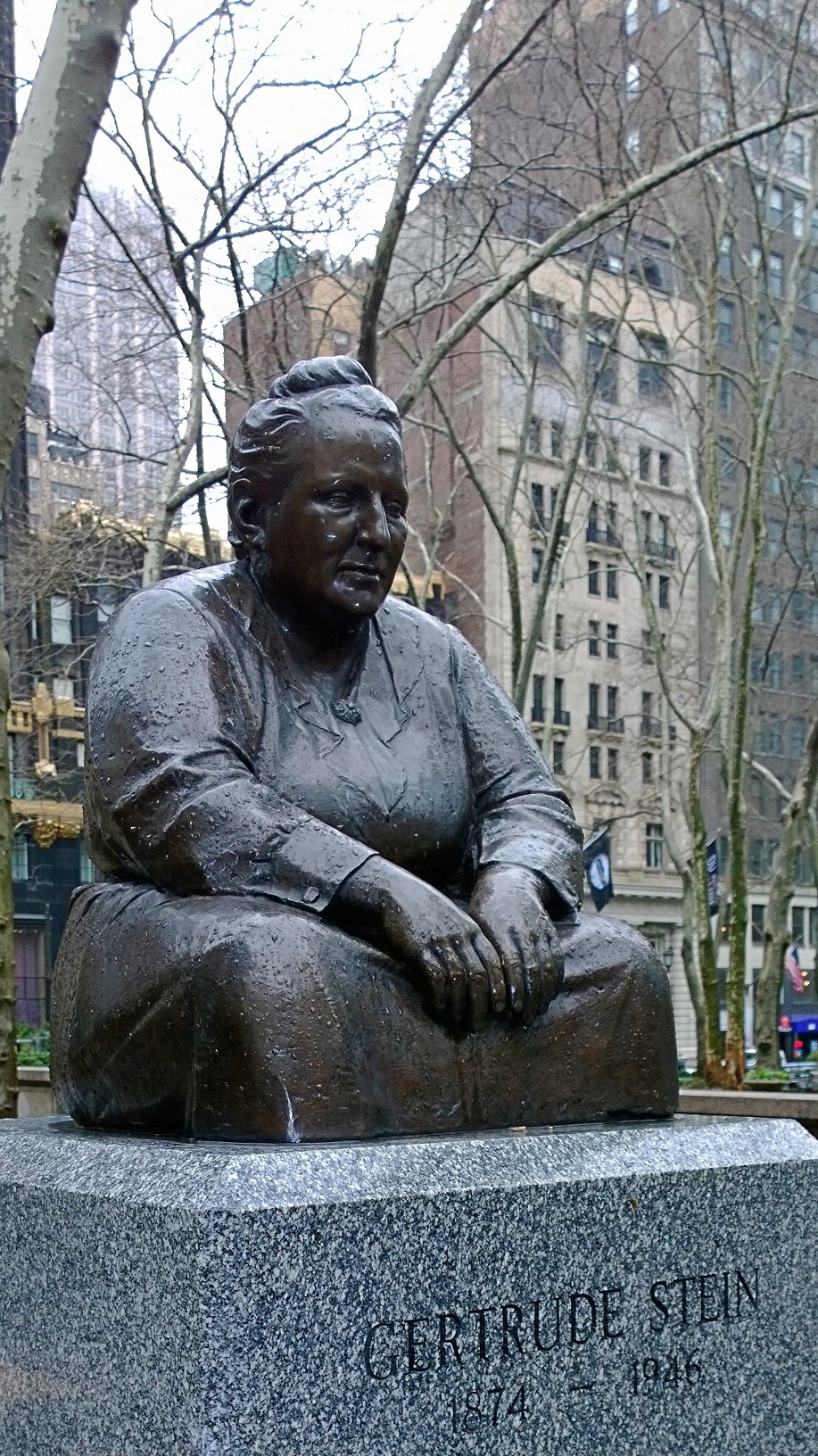
Gertrude Stein looking like herself in Bryant Park. And the Metropolitan Museum, where we saw a great photography show with my sister and brother-in-law. More on that later.

(Be watching for the relaunch of the Luna & Stella website, where one of the family pictures is of my sister at age 3, pictured with Suzanne’s maternal grandfather. … Did I mention this is a blog for Suzanne’s birthstone-jewelry company Luna & Stella?)

Public-Theater_NYC

Ted-Shen-Second-Chance-Playbill


The-Public_has-cool-chandelier

When-the-saints-go-marching-in


Grand-Central-NYC

Iroquois-hotel-treats-guests-right


Lex-Av-Subway-NYC

Met-Museum-NYC


Gertrude-Stein-Bryant-Park


Read Full Post »

Raise your hand if you were taught that one day centuries ago people in Siberia woke up and crossed a land bridge to North America and became the first Native Americans.

That’s OK as far as it goes, but history doesn’t stand still, and new discoveries suggest that before they got to North America, the Siberians stayed over on the bridge for a few thousand years. Who figured out the new chapters? Archaeologists and geneticists. And linguists.

Nicholas Wade writes in the NY Times, “Using a new method for exploring ancient relationships among languages, linguists have found evidence further illuminating the peopling of North America about 14,000 years ago. Their findings follow a recent proposal that the ancestors of Native Americans were marooned for some 15,000 years on a now sunken plain before they reached North America.

“This idea, known as the Beringian standstill hypothesis, has been developed by geneticists and archaeologists over the last seven years. …

“Though often referred to as a bridge, the now sunken region, known as Beringia, was in fact a broad plain. It was also relatively warm, and supported trees such as spruce and birch, as well as grazing animals.

Writing in the journal Science last month, John F. Hoffecker, an archaeologist at the University of Colorado, summarized the evidence for thinking the Beringian plain was the refuge for the ancestral Native American population identified by the geneticists. ‘The shrub tundra zone in central Beringia represents the most plausible home for the isolated standstill population,” he and colleagues wrote. …

“Linguists have until now been unable to contribute to this synthesis of genetic and archaeological data. The first migrations to North America occurred between 15,000 and 10,000 years ago, but most linguists have long believed that language trees cannot be reconstructed back further than 8,500 years. …

“But in 2008, Edward Vajda, a linguist at Western Washington University, said he had documented a relationship between Yeniseian, a group of mostly extinct languages spoken along the Yenisei River in central Siberia, and Na-Dene.

“The Na-Dene languages are spoken in Alaska and western Canada, with two outliers in the American Southwest, Navajo and Apache.” More here.

This is why it’s important for someone to be interested in studying mostly extinct languages spoken along the Yenisei River in central Siberia.

Map: Science, a journal, and the New York Times

Read Full Post »

Photo: Ken Shulman/OAG
Players for Naat’aanii, a team created for Navajo youth, practice in Farmington, New Mexico.

Now that Native Americans are playing major league baseball, it seemed like a good time for Bill Littlefield’s Only A Game radio show to do a story about Native American kids getting into the game. Ken Shulman traveled to New Mexico “to meet a Navajo team that uses tribal lore to train quality ballplayers.”

One of the people Shulman interviews is Dineh Benally, a youth baseball coach with teams in Farmington and Albuquerque.

“’Benally learned baseball as a kid on a reservation in Shiprock, where New Mexico borders with Colorado, Utah, and Arizona. The Four Corners was the Navajo ancestral home until 1864, when the tribe was forcibly marched to a desolate reservation 500 miles away.

“ ‘Baseball is about failure,’ Benally said. ‘And I think life is about failure. You’re gonna fail more than you succeed. …’

“Benally’s had his share of hardship. And failure. Growing up on the reservation was fun. But farm chores often kept him off the ball field. And when he did play, there wasn’t much in the way of coaching. Still, the tall right hander was MVP of his all-Navajo high school team. He pitched two years in junior college. Then he got a break: a chance to make the team at New Mexico State University — and to prove that a boy from the rez could play Division I ball. He threw well in tryouts but was cut on the final day. …

“It was tough not making the team. But Benally rallied. He thought about his ancestors on that long walk from Four Corners. And he thought about what he’d learned.

“A few years after graduation, in 1999, he started a youth team, to give Najavo kids the type of training he wishes he’d had growing up. He called the team ‘Naat’aanii,’ a word that … means leader. He scoured the state for native talent, boys born on and off the rez who he could shepherd toward college baseball and maybe even the pros. …

“Naat’aanii is no longer just for native players. Any kid can join if he has talent and desire. But the logo and rhythm and ethos are still Navajo. Dineh Benally wants his players to learn more than how to turn a double play. He wants them to tap into the tribal soul, to find the strength to stick it out when times get tough. Because they will get tough.

“ ‘That’s where they’ll show me if they’re really a true Naat’aanii,’ he said. …  They look at me. They know what I’m talking about.’ ”

More at Only a Game, here.

Read Full Post »

« Newer Posts - Older Posts »