Feeds:
Posts
Comments

Posts Tagged ‘providence’

Photo: Suzanne Kreiter/Globe Staff.
Lacey Kohler, Urban Greening Projects co-ordinator and Cristiane Caro, cofounder of Pearl Street Garden Collective, worked in the new microforest in Providence, Rhode Island.

I have posted a lot about Miyawaki urban forests in Massachusetts, thanks to my friend Jean (Biodiversity Builders), who showed me several she’s helped to create. I didn’t know that similar work was afoot in nearby Rhode Island.

These efforts are all about what a dense little forest can give to a city neighborhood where there’s very little nature left. It can remove dangerous carbon from the atmosphere while spreading biodiversity all around, making the city a healthier place for both humans and critters.

Ed Fitzpatrick reports on the Rhode Island venture at the Boston Globe, “The asphalt grid of South Providence is lined with multifamily homes and concrete sidewalks. But along Pearl Street, one lot stands out.

“It’s lush and green, with nearly 270 trees packed into a 1,000-square-foot lot. Officially called the Pearl Street Garden, it contains a tiny forest in the middle of the urban jungle.

“ ‘Microforests’ like this one are cropping up in places ranging from Elizabeth, N.J., to Cambridge, Mass., to Pakistan. South Providence has two, both along Pearl Street, created by Groundwork Rhode Island and the Pearl Street Garden Collective. …

“ ‘This isn’t habitat restoration on the scale that is needed in terms of the world,’ said Jacq Hall, director of special projects at Groundwork Rhode Island … but it is a really great way, especially in a city, for people to become very in close touch with biodiversity and why it’s important and why it’s also beautiful.’

“In May, more than 100 people came out to plant the microforest. …

“The pocket forests adhere to the ‘Miyawaki method’ devised in the 1970s by Japanese botanist Akira Miyawaki, which calls for planting a wide variety of local trees in large numbers and in very tight quarters. …

“Massachusetts now has at least 20 microforests, according to Alexandra Ionescu, a Providence resident who is associate director of regenerative projects at Biodiversity for a Livable Climate, a Cambridge-based nonprofit that promotes ecosystem restoration to address climate change. …

“Rhode Island is the smallest and second most densely populated state in the nation, and a 2022 study found it contains 139 square miles of asphalt, concrete, and other hard surfaces, amounting to 13 percent of its land area. Hall said the benefits of forests and tree-lined streets are not distributed evenly in Rhode Island. …

“[Hall said], ‘We’re trying really hard to go back into those places that have been aggressively paved over and try to work in little bits of nature to bring those benefits to more people.’ …

“Hall said microforests help combat climate change because they grow so quickly. With plants packed close together, they both collaborate and compete for resources, racing to reach the sun first. She said research shows forests grown using the Miyawaki method grow 10 times faster than a traditional landscape planting. …

“Hall said projects such as this received a big boost in funding from the federal Inflation Reduction Act of 2022. ‘It was a historic moment,’ she said. …

“Groundwork Rhode Island and the Pearl Street Garden Collective are now looking for other funding sources” because of federal curbacks.

More at the Globe, here. And if you want to know more, search this site for “Miyawaki.” Or just click here.

Read Full Post »

Photo: Alfredo Sosa/CSM.
Community MusicWorks, a program that allows students to use stringed instruments at no cost, is shown presenting its end-of-year gala in Providence, Rhode Island.

When I was visiting Nancy on Thursday, we talked about an amazing new music hall and school in our area and how it provides free noontime concerts to all comers. My husband and I had just attended one where some of the jazz teachers performed new compositions.

Looking at the huge crowd reminded me what music means to people, and how the word “free” in connection with “music” can make a real difference in people’s lives.

Troy Aidan Sambajon reports at the Christian Science Monitor about how it can make a difference for low-income children.

“The melodies drifting from Community MusicWorks’ spacious building are more than just the sounds of young musicians practicing. They are the heartbeat of the neighborhood.

“For 28 years, an after-school program run by the Providence, Rhode Island-based nonprofit has been reimagining what access to classical music education looks like. Community MusicWorks operates in areas of the state where K-12 students might not otherwise be able to afford to play stringed instruments. The program allows students to use instruments at no cost, offers mentorship, and hosts free concerts and workshops for the wider community to attend.

“Eli Arrecis, 10, is starting his fourth season in CMW this fall. On the last day of summer camp in late July, he and his fellow campers are performing original songs for their parents, using violins, violas, cellos – and shakers they crafted out of cardboard.

“Since joining the program, Eli listens to music with a newfound appreciation and even picks up sheet music at home to read for fun. His parents hope to enroll Eli’s siblings in the program. …

“In an era when many schools’ arts budgets are dwindling, CMW offers something increasingly rare: a space where young people find joy, purpose, and camaraderie through music.

“CMW’s beginnings were modest. In 1997, while he was a senior at Brown University, Sebastian Ruth launched the program with a $10,000 grant and a vision for what he termed ‘musicianship working for positive social change.’

“Mr. Ruth grew up in Ithaca, New York, and was first inspired by a high school violin teacher, who encouraged him to think about the social and spiritual impact of music on people. He and a small team rented a tiny storefront in Providence’s West End neighborhood – one of the city’s most diverse but also most economically disadvantaged areas – and began offering free violin lessons. …

“Within a few years, CMW expanded to the building next door to accommodate its growing after-school program. Hundreds of students later, CMW has cemented its place in the neighborhood with a new state-of-the-art facility, which opened in September 2024. …

“The three-story building has a performing arts center, group practice rooms, an instrument repair workshop, and plenty of space for lessons. Financing for the $15 million project came from state and local funds, as well as individual donations.

“AlexisMarie Nelson started her CMW journey in the sixth grade in 2006. It led her to study violin and viola and to eventually graduate from the Boston Conservatory at Berklee College of Music. Now a program coordinator at CMW, she says … ‘The connections that we’re making are so important.’

“Inside the building, teens such as Cesar Mendez shuffle in and out of lessons and jam sessions. They engage in soul-searching discussions about music and identity.

“ ‘This place feels like home,’ says Mr. Mendez, an 18-year-old violist who joined the program nearly a decade ago. ‘It’s just full of life.’

“But the real impact goes beyond mastering scales. ‘The arts aren’t just about skill-building or learning to play an instrument,’ Mr. Ruth says. ‘It’s a different way of being with other people. Many communities, particularly urban communities, are just doing a disservice to the children by not having adequate opportunities to learn the arts.’ …

“Notes Cecil Adderley, chair of music education at Berklee College of Music and president of the National Association for Music Education. ‘It’s a way to model how to excel at something artistic.’

“Even if students never go pro, he adds, they’re using their creativity as well as fostering collaboration and a sense of belonging. ‘You’re learning not just how to be a musician – but how to be a better neighbor.’ …

” ‘A lot of the time, we talk just so we don’t feel alone in the questions we have,’ says Mr. Mendez, who will study biomedical engineering at the University of Rhode Island this fall.”

More at the Monitor, here.
Read Full Post »

Photo: Brittany Schappach/Maine Forest Service.
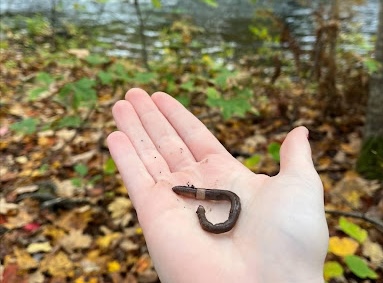
The dreaded jumping worm.

“Jumping worms” sounds like a circus act, but they are unwelcome garden visitors that have become a menace for parts of the Northeast. I’d be interested to know if you have them where you live and what you can add to today’s report.

Catherine Schneider writes at Providence Eye, “Earthworms are generally seen as improving the structure and fertility of garden soil as they tunnel through the soil, consuming organic matter and leaving behind castings (worm manure) that are rich in nutrients, humus, and microorganisms. 

“Unfortunately, there is a not-so-new worm in town that provides none of these benefits and can actually do great damage to soil structure and fertility:  the so-called Jumping Worm. These worms devour the top layer of soil, leaving behind crumbly soil that dries out quickly, is prone to erosion, and makes poor habitat for many plants and soil dwelling organisms — including bacteria, fungi, and other invertebrates.

“The name jumping worms refers to several similar-looking species of invasives (Amynthas spp.) that originated in East Asia. … They have been in the US since the late 1800s, but pretty much remained underground until recently when their numbers and range have increased dramatically. The reasons for the recent rapid spread are not completely understood, although it may be due to climate change, as well as human activities which unwittingly spread the worms (e.g., gardening, landscaping, fishing, hiking).  They are now found in more than half of US states, including many areas in Providence and Rhode Island.

“Unlike other earthworms that burrow deep into the soil, jumping worms tend to live in the top three to four inches of soil and in leaf litter and mulch. They are voracious eaters and can quickly deplete nutrients found in soil and organic matter. While other earthworms distribute their high nutrient-value castings throughout the soil, jumping worms excrete their castings on the soil surface, where the nutrients are unavailable to plants. The castings are fairly hard, and they frequently erode away in the rain.

“The combination of hard castings and aggressive churning of the soil results in a dry, crumbly soil structure, with large air pockets, which can impact the ability of plants to produce and anchor roots, absorb water, and extract nutrients

“Once jumping worms come to inhabit a garden, they rapidly increase in numbers, no mating required, as they reproduce asexually.  Adult worms can have many offspring, and while the adults will die off after the first few hard frosts, the tiny egg cocoons they leave behind (which are virtually impossible to see with the naked eye) will survive the winter, emerging in the spring to start the destructive cycle again.

“Jumping worms can have a profoundly negative effect on forests and woodlands, as well as gardens and crop lands. A thick layer of leaf litter and organic matter (sometimes called the ‘duff’ layer) is essential to healthy forest soil.  Native forest plants and trees have evolved to rely on this duff layer for the successful germination and growth of their seeds. After jumping worms have altered forest soil, native species may start to diminish while invasives move in and outcompete native species. This alteration of the forest floor and decline in forest health also harms wildlife that depend on native plants and trees, like ground nesting birds, amphibians and invertebrates.

“Jumping worms are most easily identified by their behavior.  They move across soil or pavement in a snake-like fashion and when you touch them or pick them up, these worms will thrash around wildly. This behavior has given rise to the names jumping worms, crazy worms and snake worms.

“Adult jumping worms can also be distinguished from other earth worms in Rhode Island by a milky white or pinkish band, called a clitellum, that fully encircles one end of their body (see photo above). … Jumping worms in Rhode Island do not attain adulthood until sometime in July or August. Before then, juvenile jumping worms, which lack the white clitellum, are difficult to identify. Young jumping worms can best be identified by their thrashing behavior when they are touched or handled. …

“If you suspect that you may have jumping worms, you can try this test:  Mix 1/3 cup of dry mustard in a gallon of water and slowly pour this over your soil (it will not harm your plants).  The mustard solution should drive any worms to the surface, where you can inspect and remove them if they appear to be jumping worms. …

“The main step in prevention is to take care with the plants, soil, compost and mulch that you bring on to your property. Purchase soil, compost and mulch from reputable dealers. If you are buying bulk compost or mulch, ask the dealer if the product has been heated to 131 degrees F for at least 15 days, which is the industry standard for killing weed seeds and pathogens and will certainly kill jumping worm cocoons which do not survive temperatures above 104°F.  

“Cocoons can also be present in bagged soil, compost and mulch.  To play it safe with bagged products, you may want to solarize them by placing the bags in the hot sun for three (3) days, with a piece of cardboard or other insulating material underneath them to prevent cooling from the ground below them. If you want to be extra careful, you can use a soil thermometer to ensure that the product has reached a temperature of 104 degrees F.

“When purchasing plants or accepting plants from friends, check for any signs of jumping worms.  Starting from seed or buying bare root plants is safest.  Alternatively, you can carefully wash off all of the soil around any new plants before planting in your garden.”

More advice at Providence Eye, here. No firewall.
Read Full Post »

Photo: @risdmuseum on Instagram.
Conservator Ingrid Neuman (left) with Rhode Island School of Design undergrad student Sophie Bugat, doing repair work on a statue of Pan.

When a new artwork is acquired by a museum, it doesn’t go right on display. At least one expert must look it over and make sure it’s in good shape.

At the Rhode Island School of Design [RISD ] in Providence that expert is often Ingrid Neuman.

Kristine Yang writes at the Providence Eye, “This past November, Ingrid Neuman, senior conservator at the RISD Museum, wheeled a twelfth-century Japanese wooden Bodhisattva Avalokiteshvara into Hasbro Children’s Hospital for a CAT scan. Conservators have repaired the ancient figure, a revered Buddhist symbol, over centuries — Neuman’s examination would reveal exactly where and how they had carried out those repairs. …

“Over time, sculptures accumulate dirt and often chip, show wear, or even break. Some arrive with broken parts or past repair attempts that complicate restoration. Preparing these pieces for public exhibition falls to the museum’s conservation team.

“Through a meticulous process that integrates chemistry, art history, and craftsmanship, conservators work to stabilize and restore each object. … Neuman’s background in organic chemistry is essential to her work. Sculptures are vulnerable to a host of natural forces over time such as ultraviolet radiation, pollution, humidity, and fluctuations in temperature – all of which can degrade original materials. Pieces with organic materials like wood and ivory, along with metals such as bronze or iron, are particularly prone to these ‘agents of deterioration’ and can experience accelerated degradation if not properly maintained, says Neuman.

‘An ancient bronze beaker from China wants to corrode. It wants to go back to its original copper ore,’ says Neuman. ‘We’re trying to keep it from doing that.’

“Corrosion is a natural chemical reaction that occurs when metals like bronze are exposed to oxygen, moisture, or pollutants over time. This reaction, called oxidation, causes the metal to slowly break down. Left unchecked, this chemical process can eat away at the surface of a sculpture. …

” ‘We borrow a lot of techniques from dentists and doctors,’ says Neuman. ‘There’s a lot of overlap with the medical field.’ With limited in-house instrumentation at the RISD Museum, Neuman often relies on nearby hospitals such as Hasbro’s and research institutions for specialized evaluations.

“Understanding a sculpture’s composition and preservation history is crucial, as it directly informs the selection of repair materials. … Conservators intentionally choose repair materials that are visually similar to the original but chemically distinct, ensuring that their work can be easily differentiated from the artist’s upon chemical evaluation.

“ ‘We don’t like to use the same materials as the artist,’ Neuman says. ‘We’re not trying to be the artist, or be better than the artist, or confuse people.’ 

“The ease with which any added materials can be removed is also a crucial consideration for conservators, as they must ensure that any restoration work can be undone without damaging the original piece. …

“For this reason, conservators use inpainting – a technique used to fill in missing parts of an artwork – with materials that can be easily distinguished and removed. For example, Neuman says conservators often use acrylic paint when filling in an oil painting. Acrylic is water-based and chemically different from oil paint, allowing it to be safely removed. …

“Neuman emphasizes the importance of reversibility and the chemical properties of adhesives. ‘There’s so many glues in the world. A zillion,’ she says. ‘Everyone uses epoxy or Gorilla Glue, but we never use them because they’re too strong.’

“If conservators use a glue that is stronger than the sculpture’s original material, any physical stress on the object could result in new fractures, rather than breaking along existing lines. … She prepares her own adhesives in the lab, including wheat starch paste and Funori, a traditional Japanese adhesive made from seaweed — both of which are gentle yet effective enough for conservation work.

“While conservators intentionally make their repairs distinguishable from the original through their selection of materials, their work must remain invisible to the viewer. … This means conservators must address each deformity with painstaking precision and care. Inpainting demands an especially detailed approach. … Neuman says, ‘You have to use a very tiny brush, with only a few hairs in it, and you have to be really good at color matching.’

“One of the challenges of inpainting is a color perception phenomenon called metamerism, where colors that match under one light source may look different under another. … To navigate this, she moves the piece back and forth on wheeled carts between her sunlit lab and the gallery space to ensure the colors match under different lighting conditions.

“Once the restoration is complete, detailed documentation is essential, Neuman says. Photographs of the piece before, during, and after the process, along with written records, are uploaded to the museum’s database for future conservators’ reference. ‘It’s important to leave a record,’ Neuman says.”

More at the Providence Eye, here. This story reminds me of the work that Sotheby’s did on one of my mother’s Pousette-Dart paintings, one that had been too close to a chimney fire!
Read Full Post »

Photo: Southside Community Land Trust.
Southside Community Land Trust high school interns making pizza. SCLT has numerous programs to ensure that locally grown produce gets to community members.  

Today’s story is about regular folks doing good things. It isn’t news. It’s common. As I scroll through all my feeds, I like to remind myself that it’s actually common.

Brooke Warner wrote at the Providence Eye about a neighborhood I know.

“The term ‘produce aggregation’ may not conjure up an image of healthy kids and families and farmers bringing good food to communities facing food insecurity. But Southside Community Land Trust’s Produce Aggregation Program is working to do just that. It’s a way to connect urban farmers to their neighbors with healthy food while at the same time connecting their small farms to new markets.

“It ‘gets fresh local food into the local community,’ said Amelia Lopez, food access associate at Southside Community Land Trust (SCLT), who works on the Produce Aggregation Program.

“Small-scale farmers typically face numerous challenges to access wholesale markets: they lack the capacity to grow large quantities; may not have access to processing facilities; and must manage the complexities of logistics and distribution required to fulfill wholesale orders.

“The Produce Aggregation Program addresses these challenges by acting as a wholesale buyer that combines the harvest of numerous urban farmers to distribute in larger quantities. The program has its own farm-to-market processing center to collect and process crops grown by the farmers and manages the logistics and distribution of the produce, making it possible for small farms to increase the scale of their businesses.

“Twenty-seven farmers regularly sell their produce through the program. Most of the farmers are refugees, immigrants, or part of other marginalized communities. More than half of the farmers who participate have plots at SCLT’s Urban Edge Farm or Good Earth Farm properties, where farmers are able to farm on larger plots of land.

“As their businesses expand and they run out of space, many farm on numerous plots in multiple community gardens and farms. Most of the farmers in the program also sell at farmers markets, but income from farmers markets can be unpredictable and unsteady, Lopez said. The aggregation program gives them another, more reliable, outlet to sell their produce. In addition, there are many years of experience among the farmers, and they are able to share this knowledge with the high school students who take part in the SCLT’s paid internship program. ..

“ ‘Sometimes there are moments when we have an abundance of some products and the program helps us to sell them,’ said Margarita Martinez, translating her husband’s comment from Spanish. Teo Martinez, a farmer from the Dominican Republic, and Margarita are commercial growers based at Urban Edge Farm. …

“Marcel De Los Santos, SCLT’s grants and communications manager, said, ‘The fight against food insecurity faces several significant obstacles that threaten its sustainability. Reducing crucial funding sources, such as the expiration of ARPA [American Rescue Plan Act] funds, has left many food assistance programs needing help to maintain their service levels. Land acquisition for food production and community gardens has become increasingly difficult as urban development drives up property costs and reduces available space.’

“Additionally, rising food and transportation costs and persistent supply chain disruptions strain food banks’ operational capacities. These challenges are compounded by the growing demand for food assistance services, climate change impacts on agricultural production, and the need for consistent volunteer engagement. …

“The [aggregation] program runs two distribution cycles each week during the growing season. SCLT orders different products in various quantities from different participating farmers and notifies them in advance of each cycle what they will be purchasing. Farmers deliver their produce to the food hub, where it is processed and packed into bags with other farmers’ produce. Each bag contains about $20 worth of fresh produce, sourced from different farmers, and is ready to be distributed … through numerous community partners that in turn give it out to their participants at no cost. Distribution partners include organizations such as health clinics, day care programs, and recreation centers. Health clinic partners … give out the produce through the VeggieRx program, where doctors give patients a ‘prescription’ of produce. …

“[As of this writing] the program us funded primarily by the USDA’s Local Food Purchase Assistance Cooperative Agreement program (LFPA), which began during the pandemic to expand access to local, healthy food and increase economic opportunities for underserved farmers. [The] program has a new home in the SCLT’s new Healthy Food Hub. …

“SCLT’s mission is to help local urban farmers by providing land access, agricultural resources, and agriculture and business training. The nonprofit supports the operation of 60 community gardens in Providence, Pawtucket, and Central Falls, including 20 land trust-owned properties.

“The Produce Aggregation Program is one of many that the SCLT runs or partners with to address food insecurity in the Providence area. Farmers markets, gardens, education programs, and internships are among further examples of the SCLT’s mission. All of these activities, like the Produce Aggregation Program, help increase access to fresh, healthy, and culturally relevant food for these urban communities and feed roughly 1,200 families annually.

“Although the growing season typically ends at Thanksgiving, the work of the SCLT continues year-round, along with its partner organizations and local businesses, farmers, volunteers, students, families, and the local community.”

Not being sure that USDA will still fund programs like those, I suspect this could be another worthy cause that will have to rely on private fund raising.

More from the Providence Eye via ecoRI News, here.

Read Full Post »

Photo: WJAR/file photo.
Traffic on Interstate 195 west builds up on the approach to the Washington Bridge in East Providence, where one lane had to be closed a year ago. Now you can have a Washington Bridge Christmas ornament.

I do get tired of “Jingle Bells” and “Deck the Halls” on the radio starting before Thanksgiving, but there are other seasonal songs I look forward to hearing again, some that are lovely (“Mary’s Boy Child”) and some that are playful (“Santa Baby”).

If you want to hear holiday music that’s a bit different, check out WICN, the Worcester jazz station, here. It’s a breath of fresh air. I love seeing the creativity that holidays bring out in jazz musicians.
The holidays bring out the creativity of ornament makers, too, delighting people who want a small, kooky gift to give or something different for their own tree.

Ed Fitzpatrick at the Boston Globe has written about a new Christmas tree decoration that makes hay out of an unwelcome event in Rhode Island: the sudden closure last year of the westbound lane of a critically important bridge. Rhode Islanders are still dealing with the chaos that ensued.

“Forget Christmas ornaments of snowmen, Santa, or even the Big Blue Bug,” says Fitzpatrick. “This year, Rhode Islanders are decorating their Christmas trees with a miniature replica of the Washington Bridge ― complete with orange traffic cones shifting drivers away from the westbound lanes, which have been closed for more than a year. …

“Facing the choice of laughing or crying, many of the Rhode Island motorists who’ve spent time idling in bridge traffic jams have added a sardonic touch to their fir trees.

“Duke Marcoccio, the design artist behind mylittetown.com, said the Washington Bridge is by far the best seller from among the dozens of ornaments he sells. …

“Marcoccio, a Narragansett resident, said he has been making Christmas ornaments for 25 years now. The first was a replica of The Towers in Narragansett. Since then, he has created about 300 ornaments, including a Del’s lemonade cup, the Haven Brothers mobile diner, the Benny’s sign, and the Big Blue Bug. …

“The biggest hit has been the Washington Bridge ornament, Marcoccio said. He said he considered placing tiny orange traffic cones on the bridge deck, but they probably would have broken. So he just painted the cones and shifting lanes on the span. ‘They get the idea,’ he said.”

Read more of the entertaining story at the Globe, here. And please share holiday songs you like, especially ones that don’t get much play. Beautiful or quirky.

Louis Armstrong and his song “‘Zat You, Santa Claus?”

Read Full Post »

Photos: Suzanne and John’s Mom.

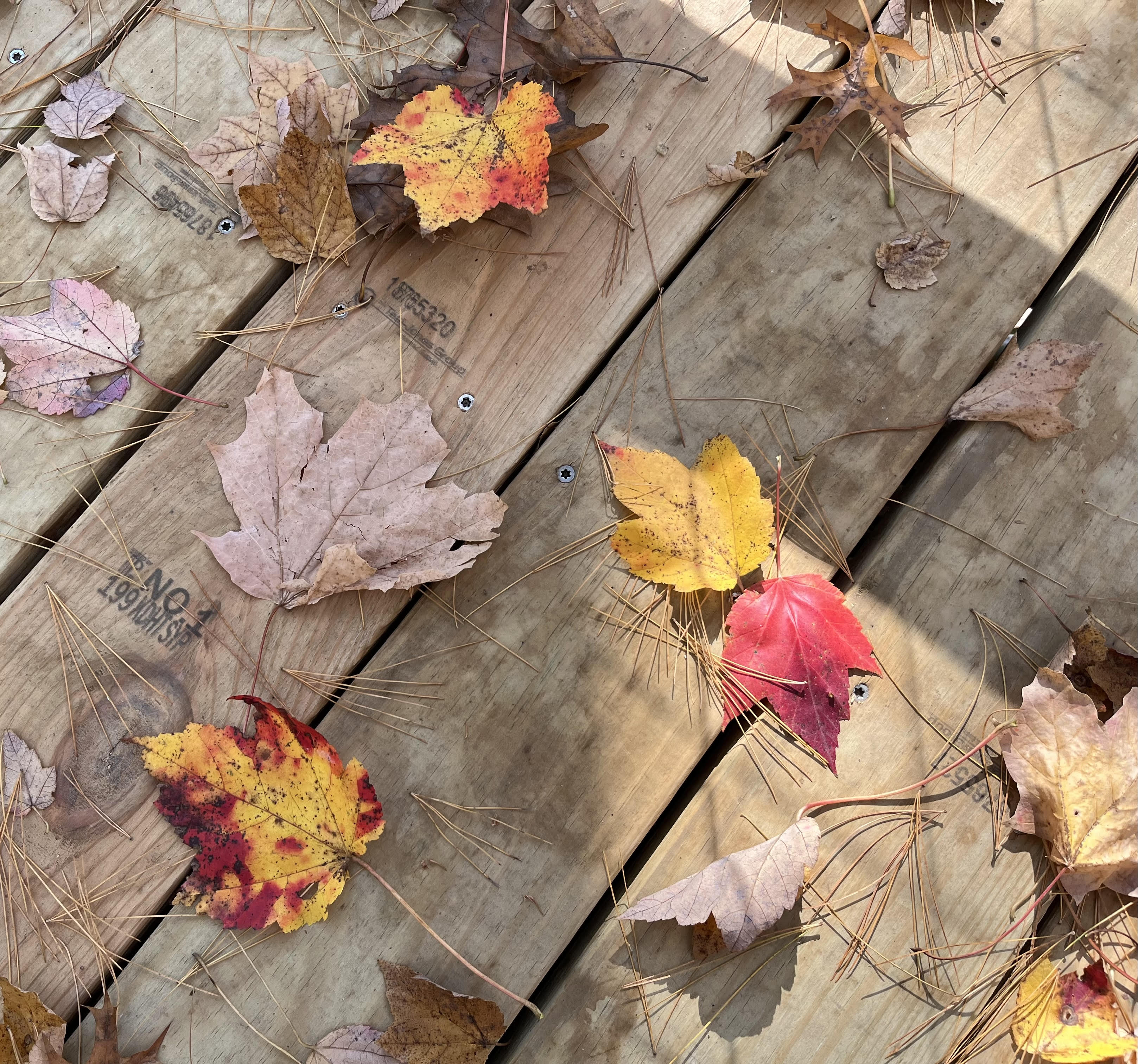
It’s starting to feel like winter is around the corner, so I’ll just post a few photos from my New England autumn before the snow falls.

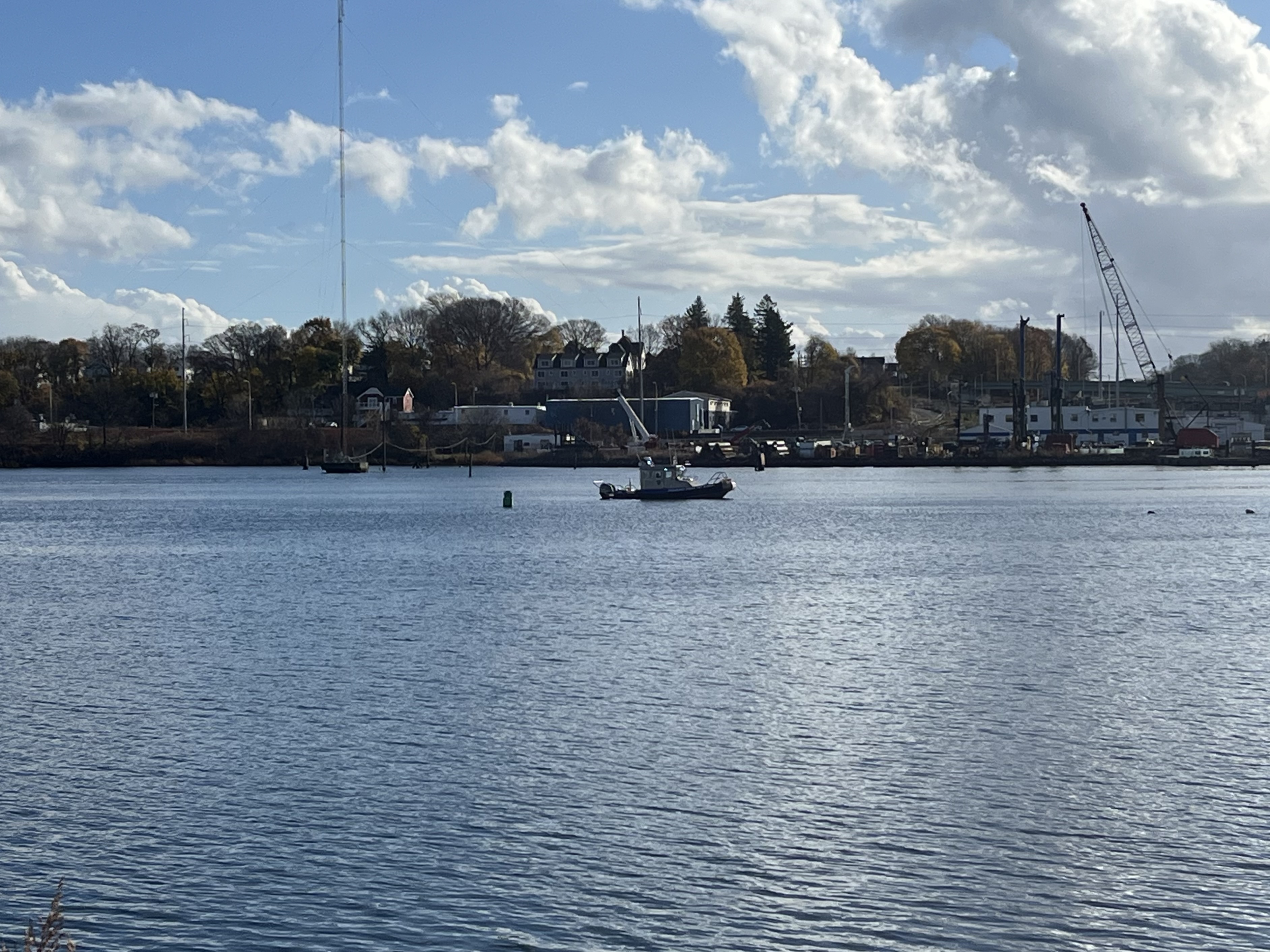
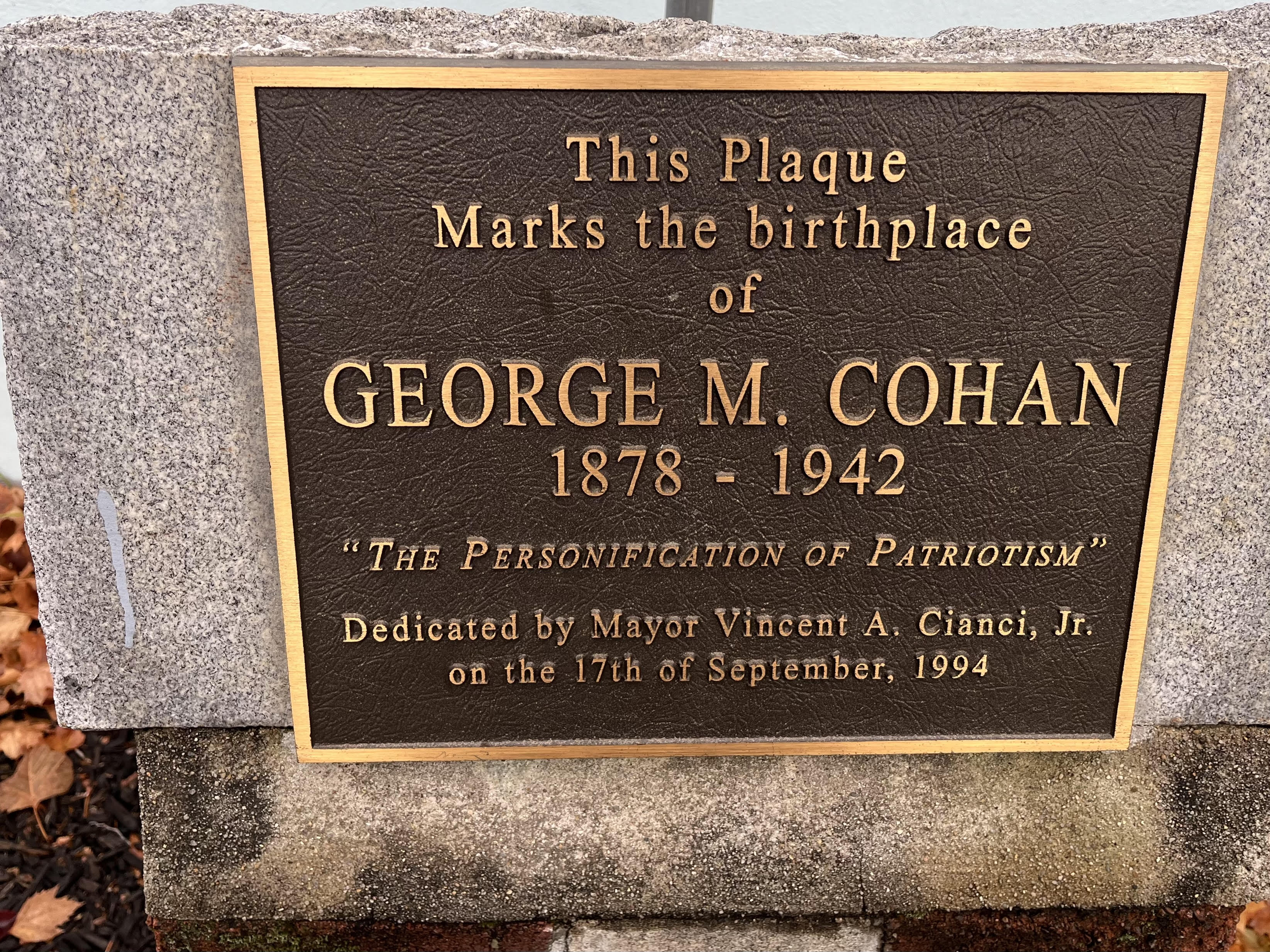
Below, clouds over the Seekonk River in Providence, Rhode Island, and chess-playing foxes in Fox Point. Also in Fox Point, the notorious Mayor Cianci’s plaque honoring both composer George M. Cohan — and Cianci himself.

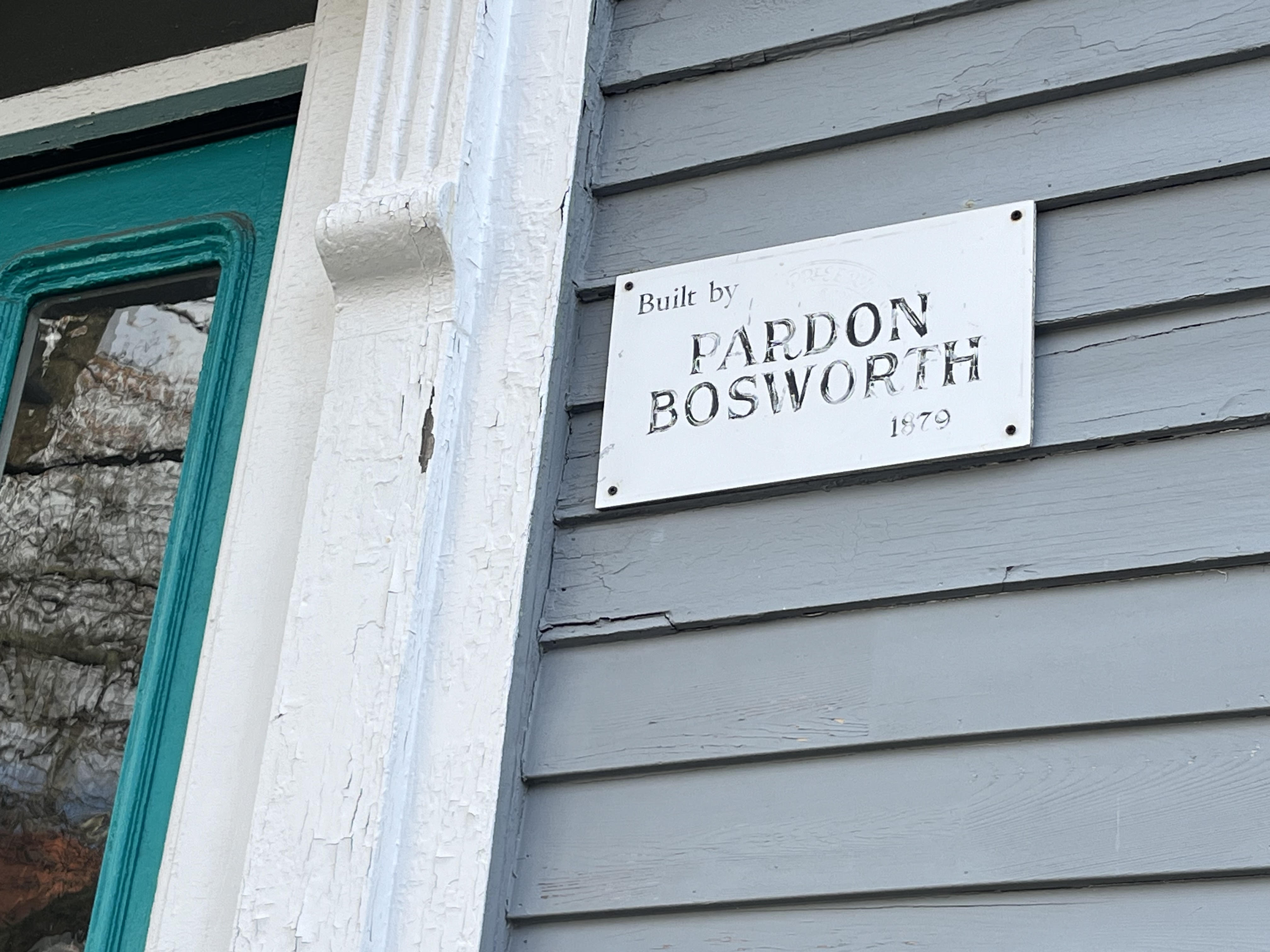
In the same neighborhood, I got a kick out of the name of a 19th century homeowner. And a jazzed-up staircase across the street.

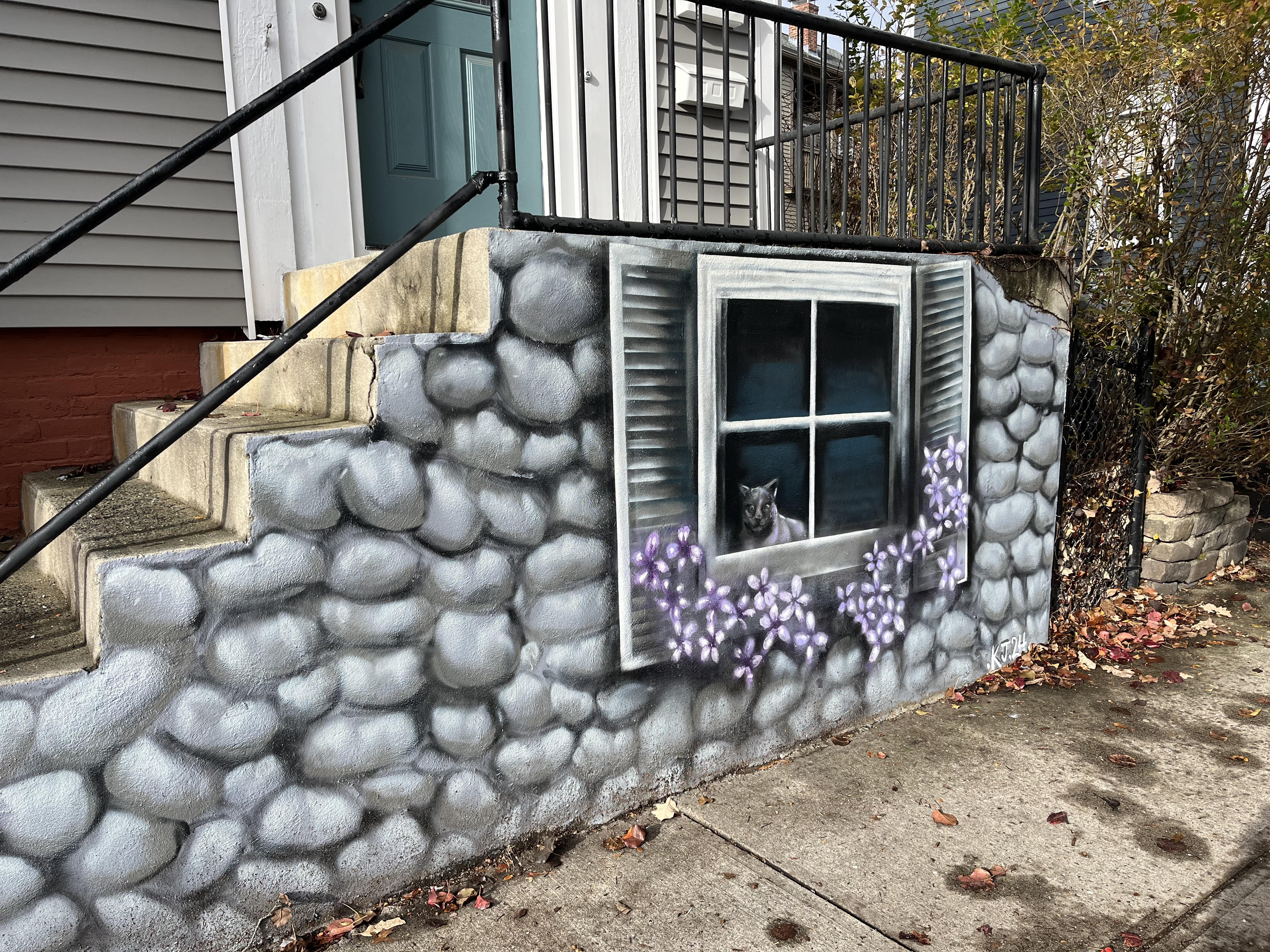
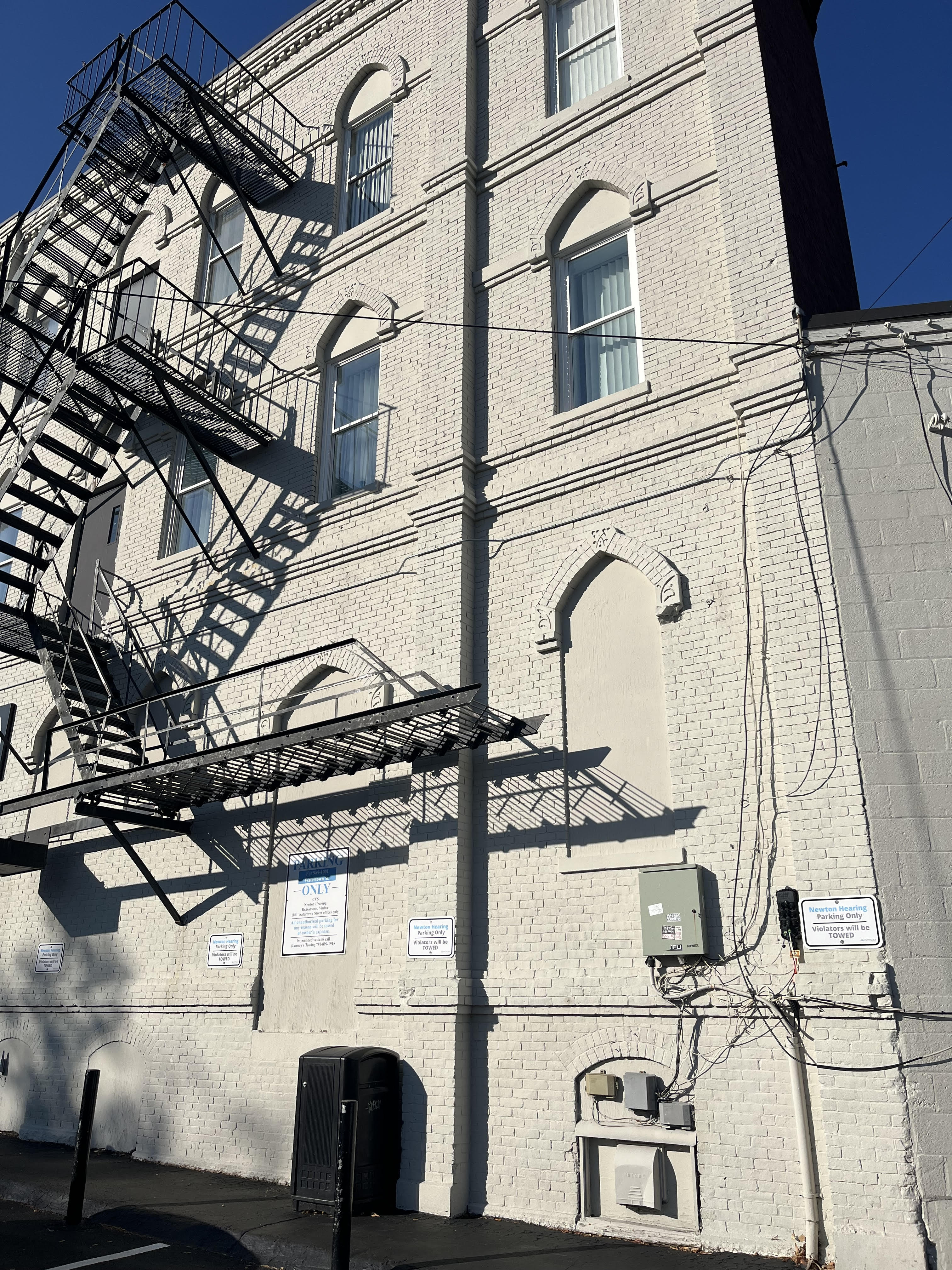
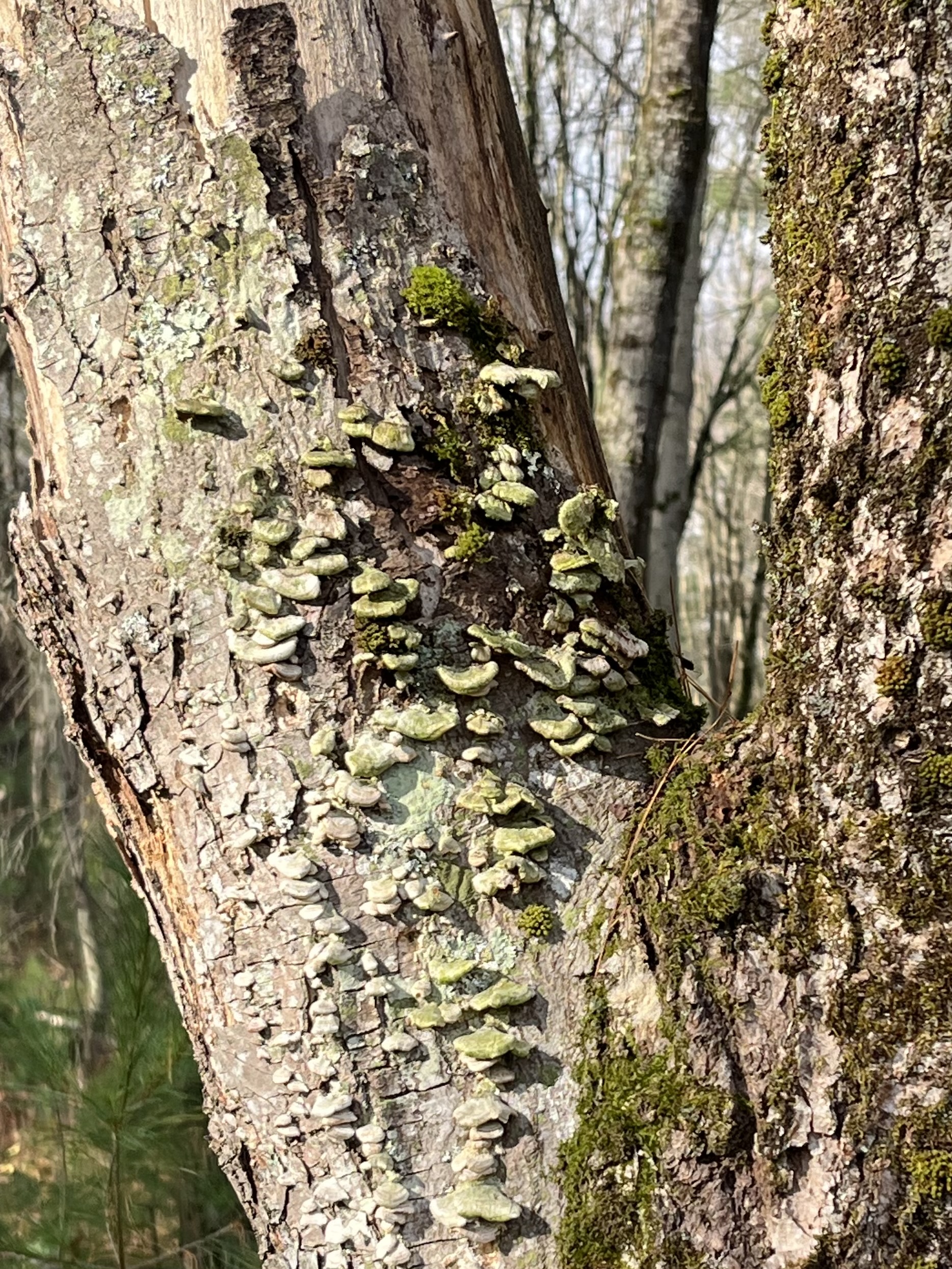
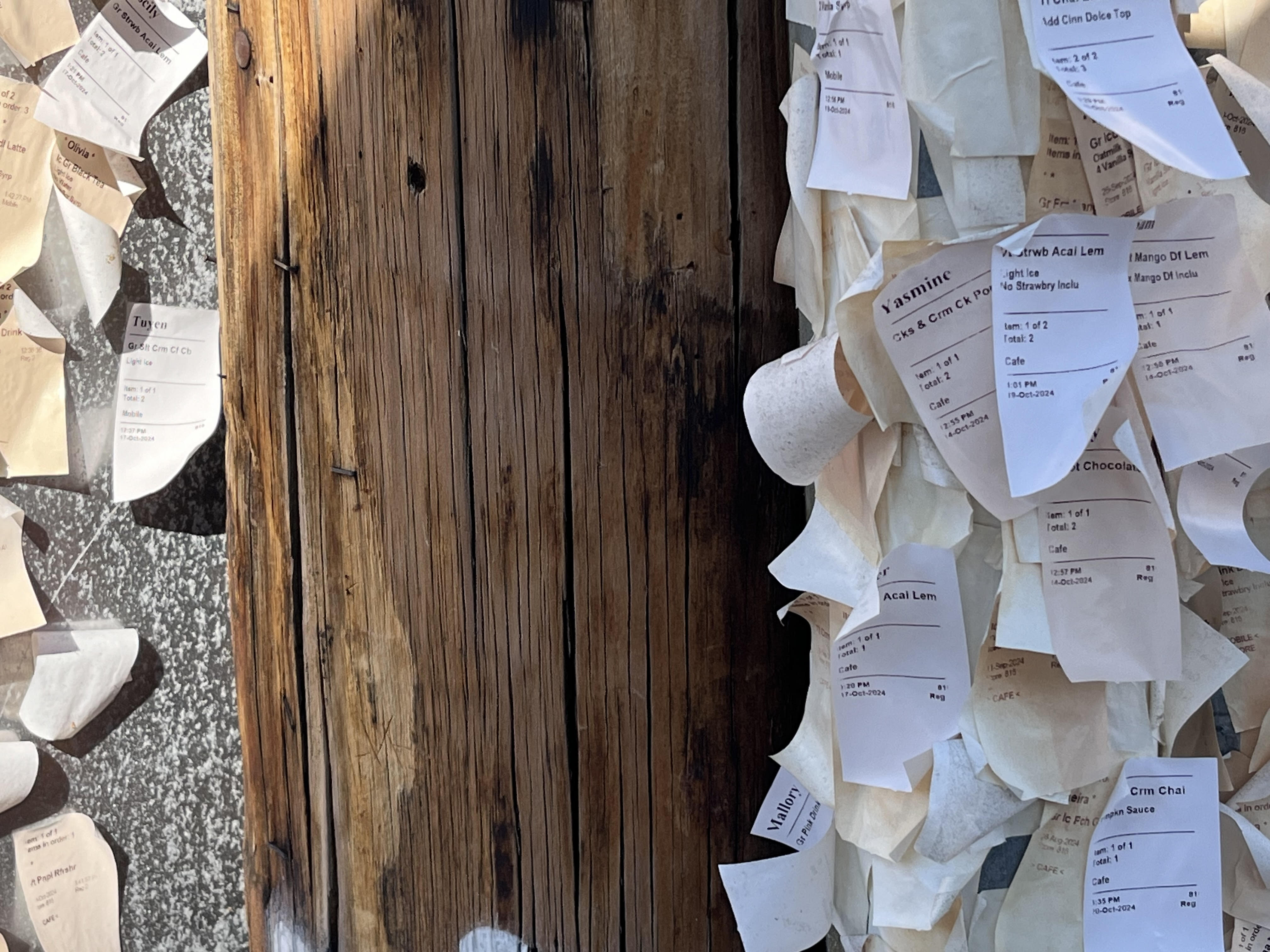
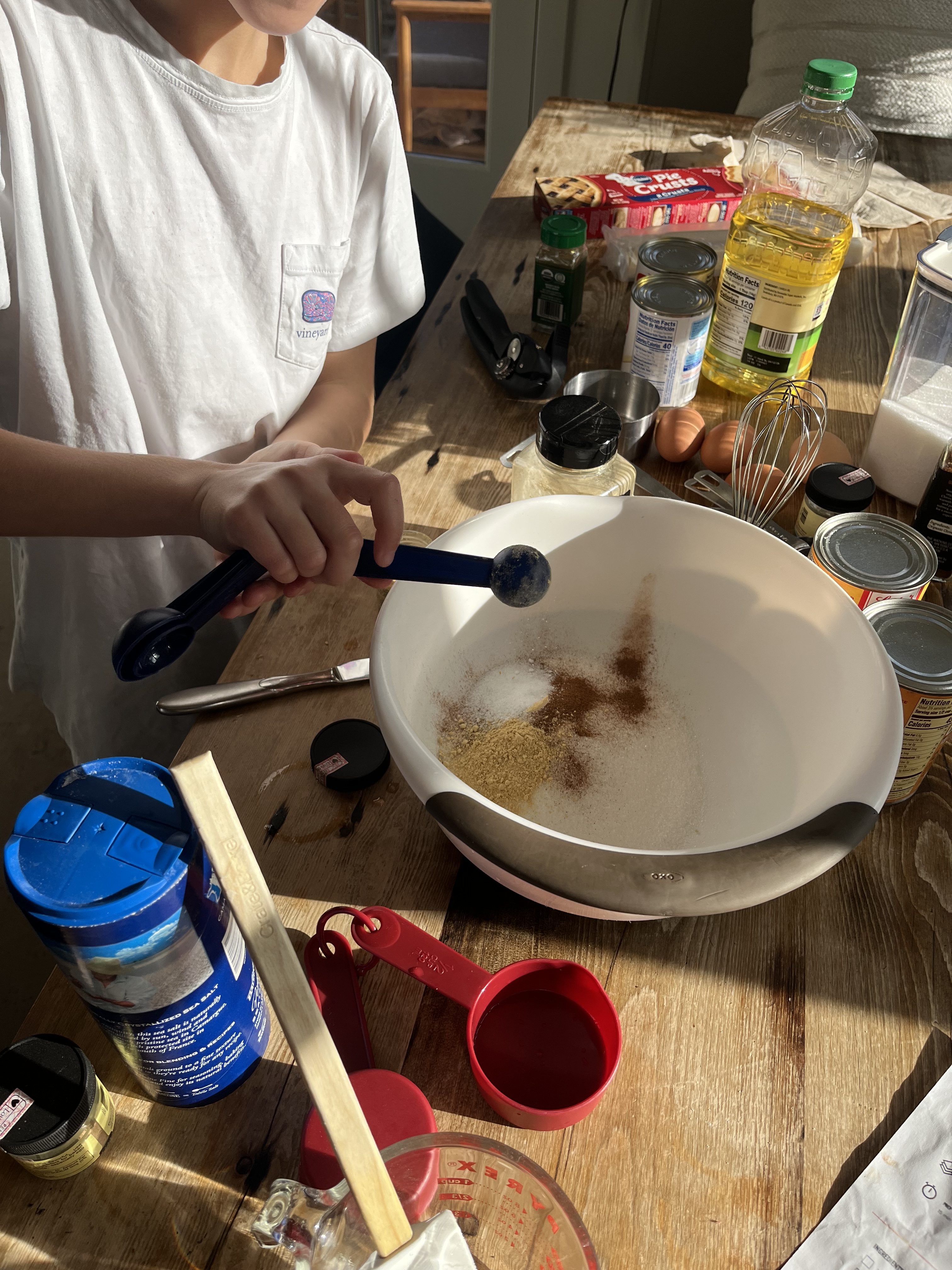
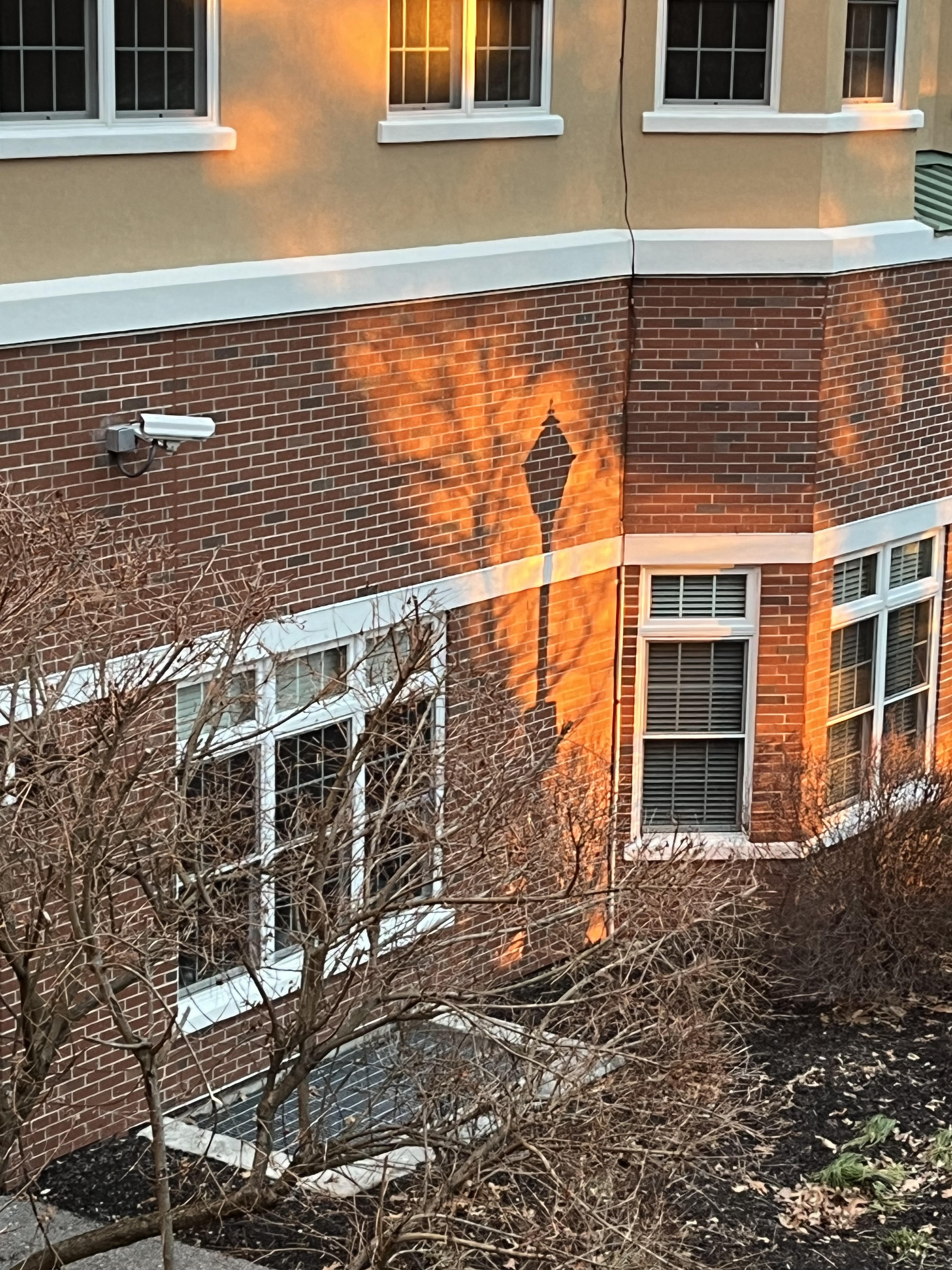
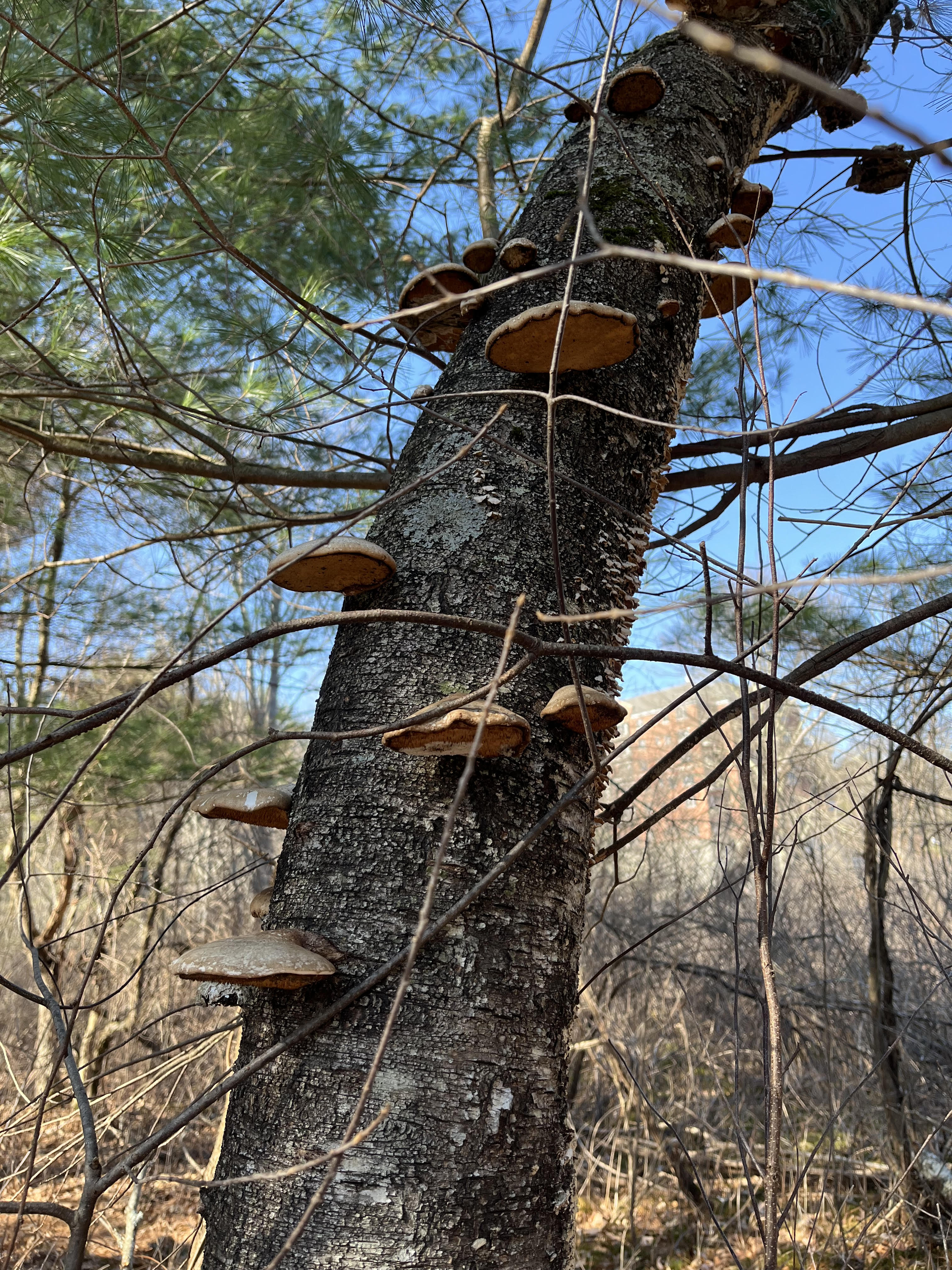
Back in Massachusetts, I found a nice shot of a different kind of staircase (jazzed up by light and shadow), then two fungus photos (one flower-like) and Starbucks receipts decorating a telephone pole. The pastry chef, age 11, has more baking experience than most adults.

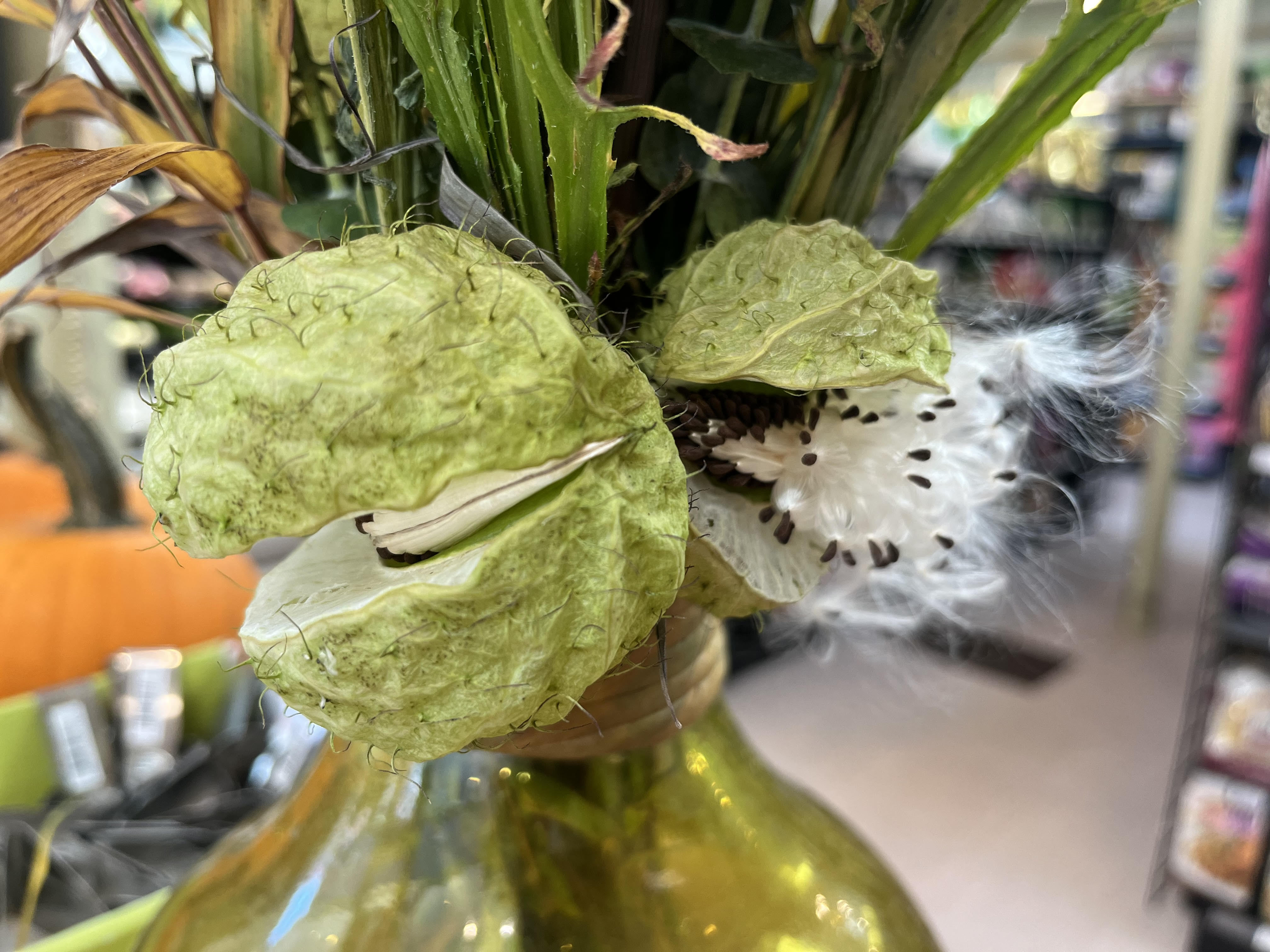
In the what-the-heck-is-it department, there’s a decorative plant at Debra’s Natural Gourmet that is not milkweed but looks sort of like it. Any ideas?

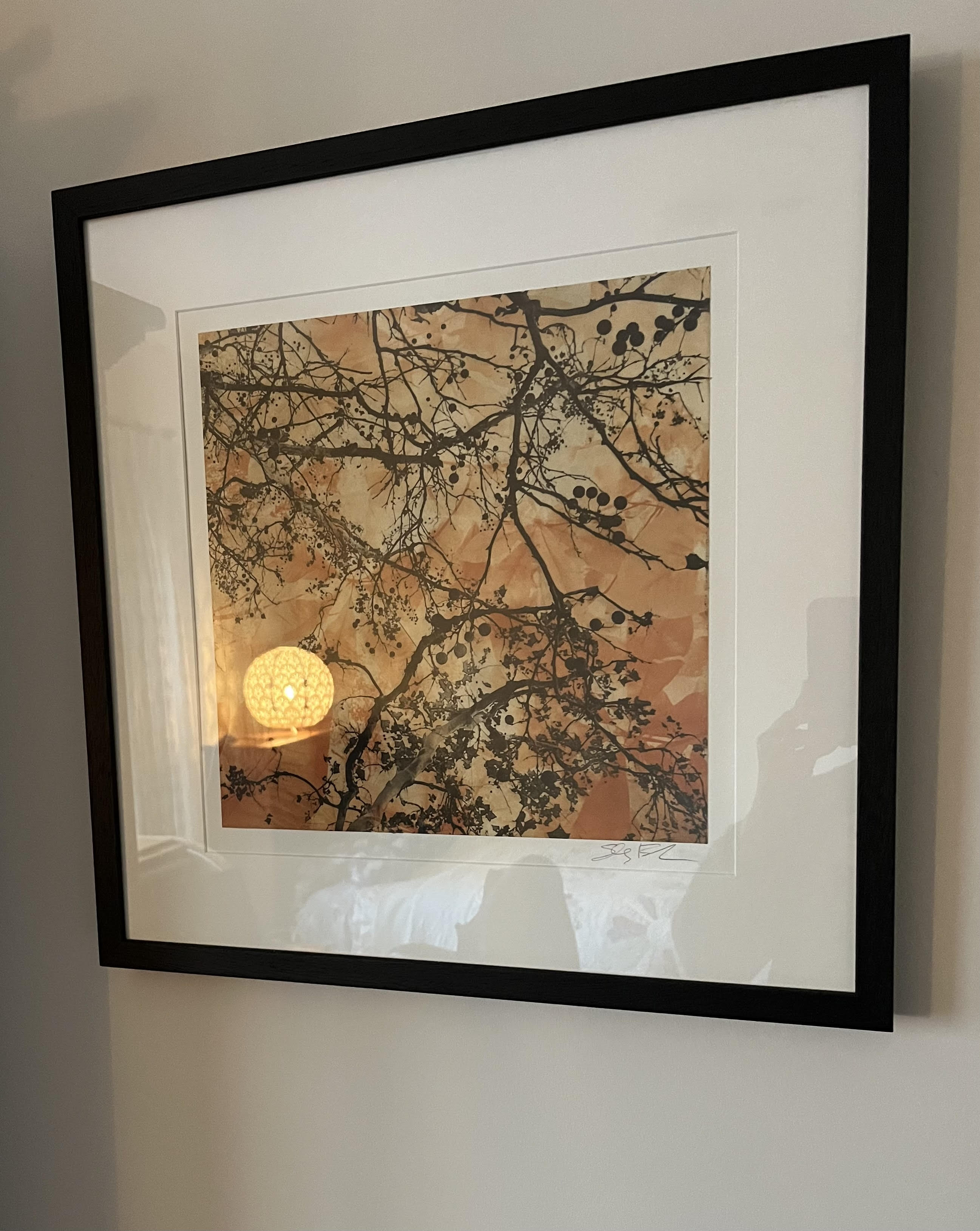
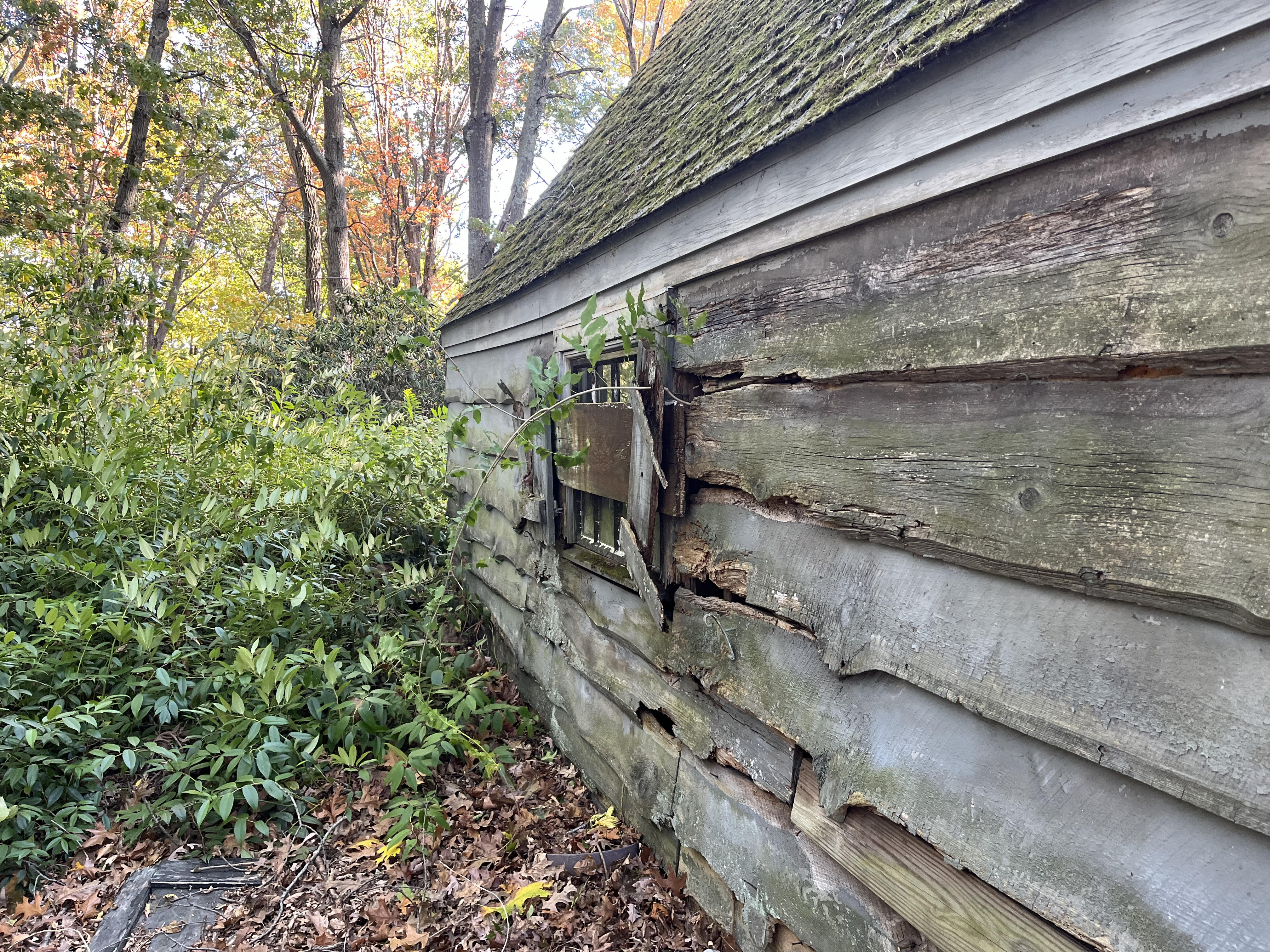
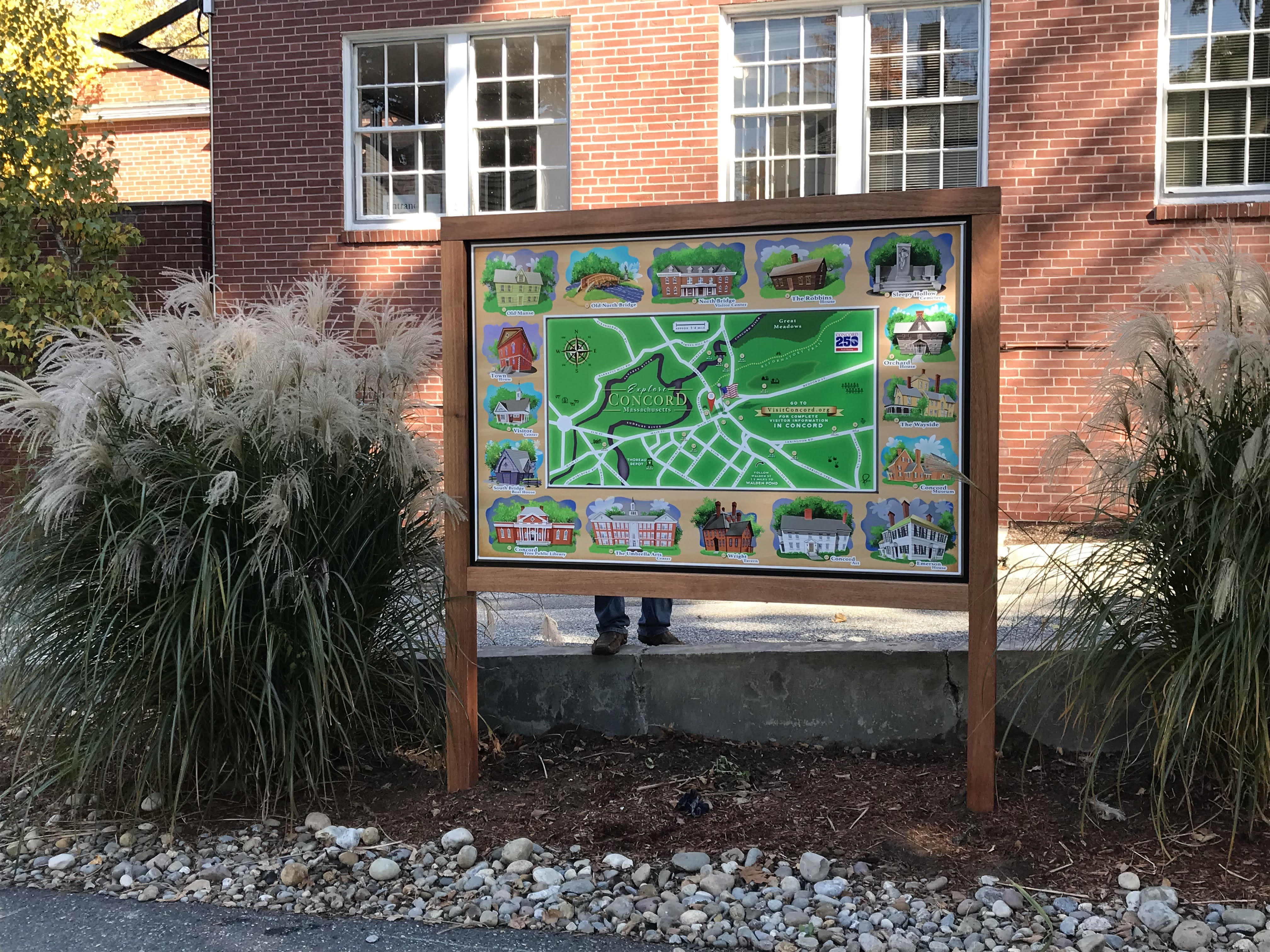
Next comes Sally Frank’s magnificent Black Sycamore print in a frame reflecting my table lamp. Then a derelict house waiting for the land developer’s bulldozer, and a special map for the town’s 250th anniversary in 2025. Did you know the Revolution started at the North Bridge? Not with the Declaration of Independence, as significant as that was.

Read Full Post »

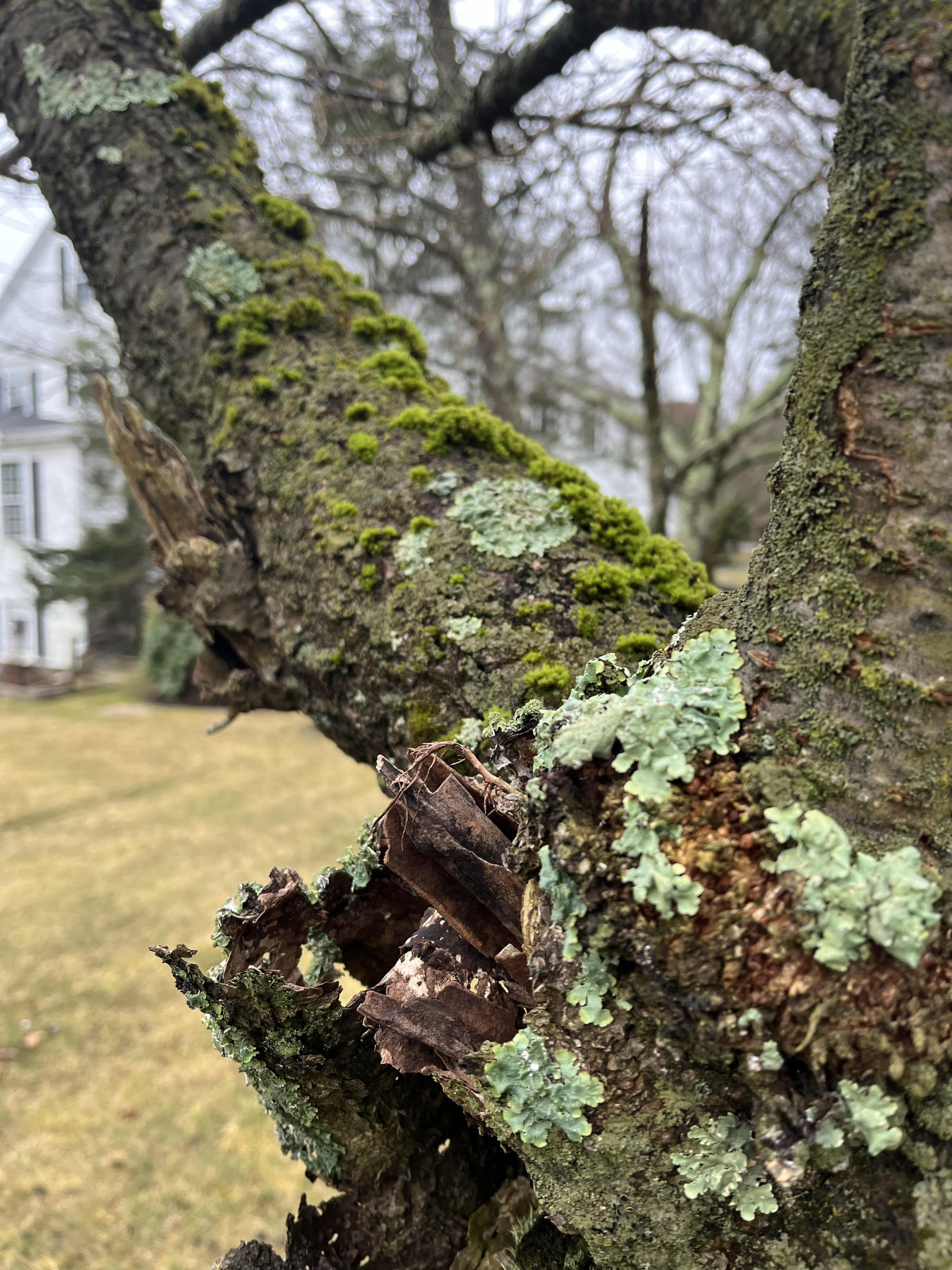
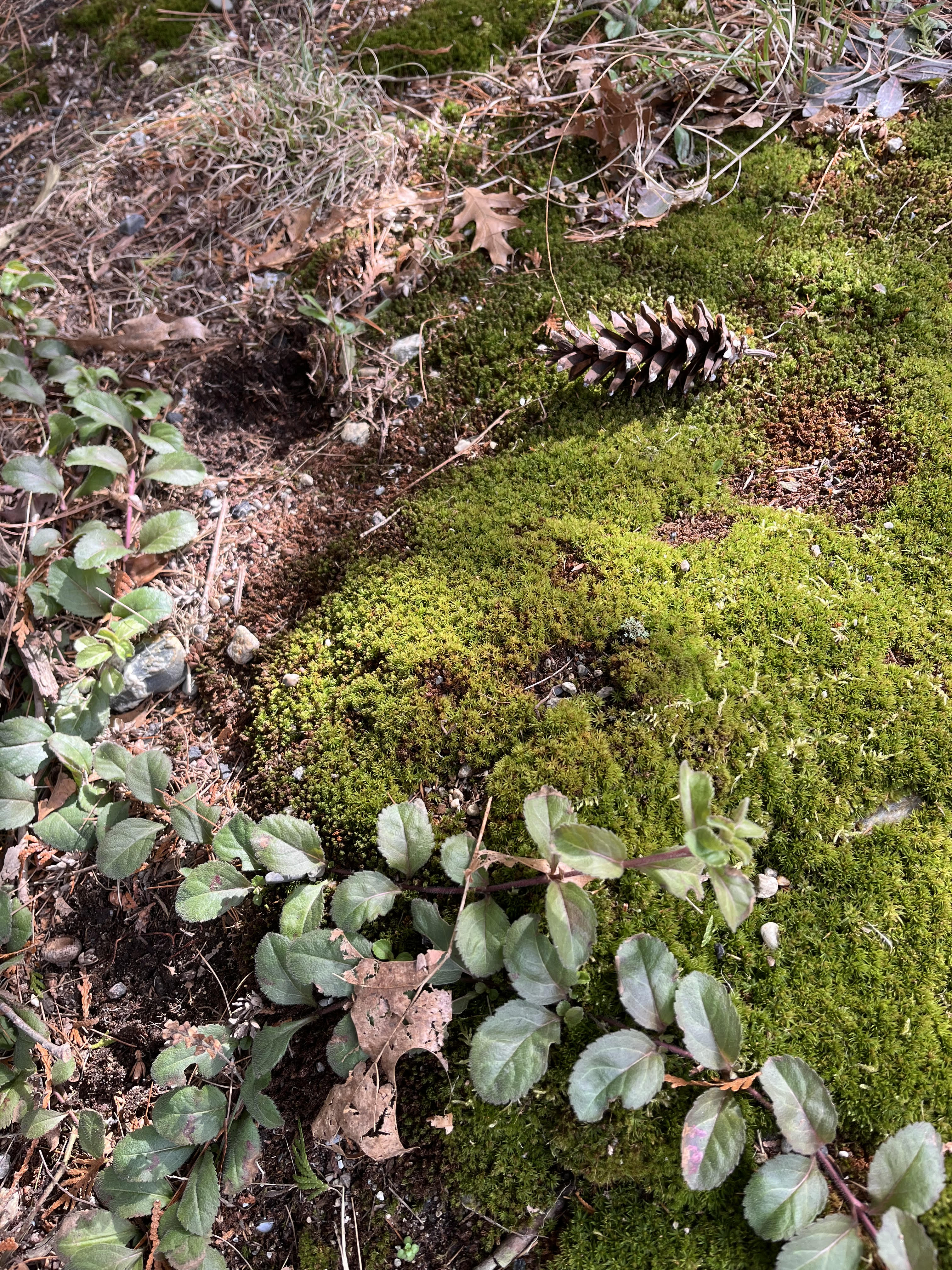
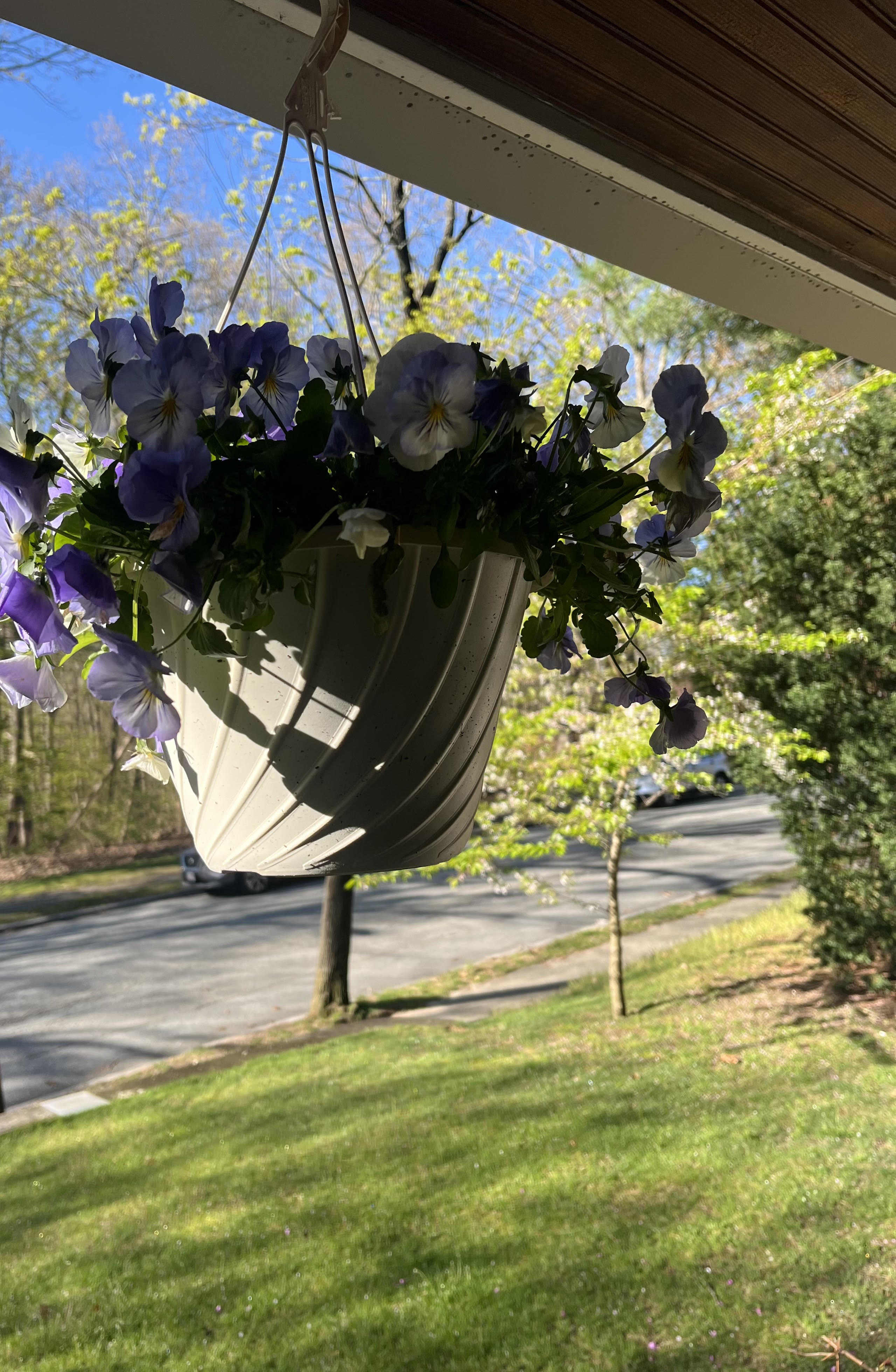
Partly, of course, spring is about the angle of sunlight, how early the sun comes up, how late it stays. I never thought I had seasonal affective disorder, wasn’t sure I believed there was such a thing. But I do find I’m cheered up by sunlight, discouraged by gray skies.

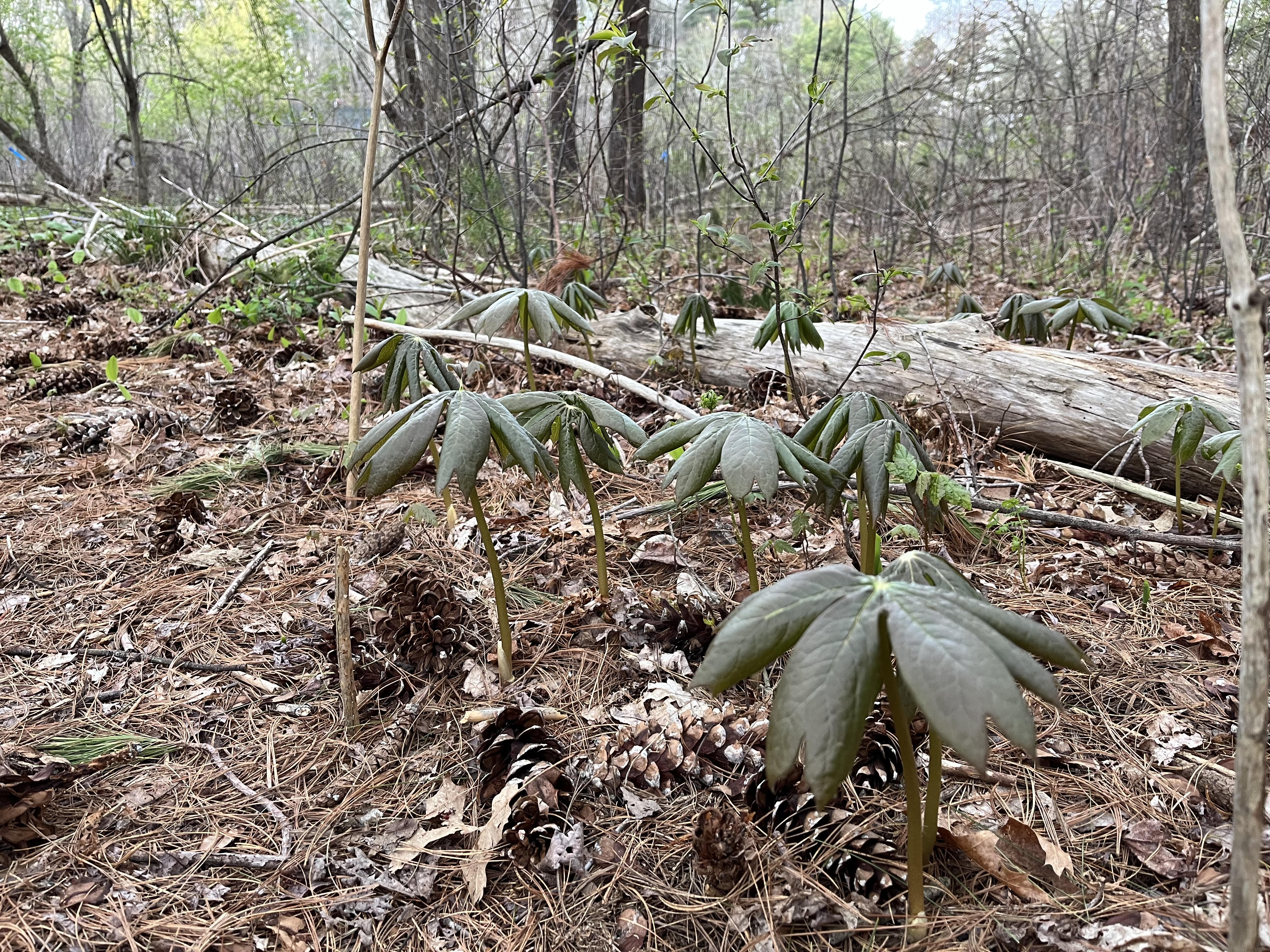
The photos today are mostly self-explanatory, but I want to point out how vibrant the moss looks in early spring. Also, the last photo is of a New England wildflower called Mayapple.

Read Full Post »

Photo: Lily St Angelo/Burlington Free Press.
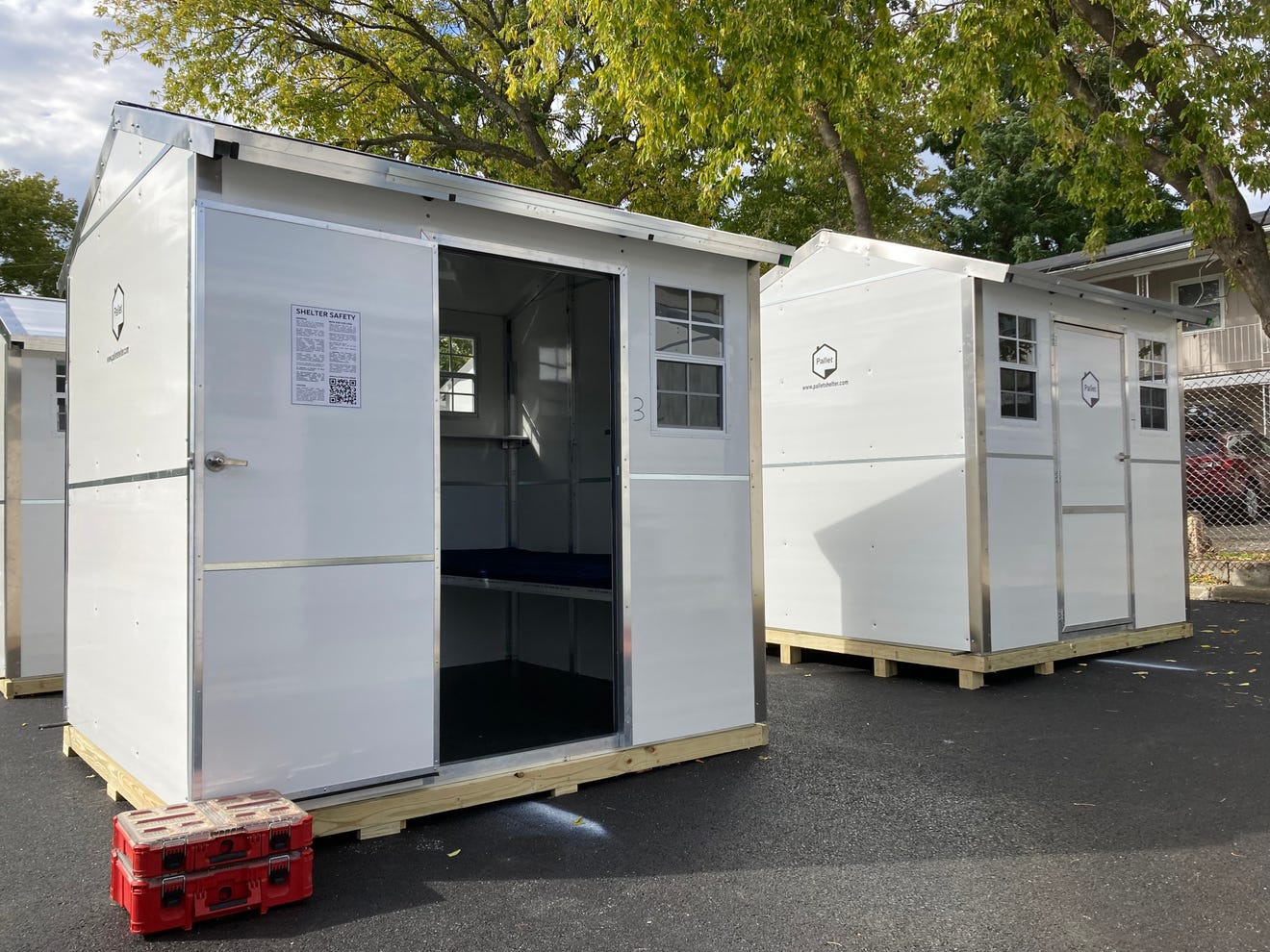
Pallet shelters opened in Burlington, Vermont, in November 2022.

Is this unfancy housing a good idea? It’s a reprieve from sleeping rough. It’s off the bare ground, it provides a roof and some heating and cooling, but … but …

In January, Wheeler Cowperthwaite wrote about “pallet shelters” (above picture) for the Providence Journal.

“Since the onset of the COVID-19 pandemic, when the limitations of congregate homeless shelters became clear as the world shut down against a new disease, House of Hope Executive Director Laura Jaworski has been thinking about pallet shelters.

“Three years later, as Burlington, Vermont and Boston have set up their own pallet shelters, Providence could be next in line with a plan for 45 individual tiny shelter buildings, 70 square feet, with screened windows, fire extinguishers, smoke and carbon-dioxide detectors, electrical outlets and their own heating and cooling systems.

“State officials are ‘pursuing’ a plan to open a 45-unit pallet-shelter village on state land off Victor Street in Providence, state Department of Housing spokeswoman Emily Marshall wrote in a news release.

“An additional four ‘office units’ are in the plan, as the site would be staffed at all times, as well as a ‘free-standing community room’ and a combination shower/bathroom and a laundry room. The shower and bathroom would be Americans with Disabilities Act compliant. …

“The proposed site is on 1 acre of a 4-acre half-moon-shaped lot on Victor Street that is bounded by the on-ramp for Route 146 from Douglas Avenue, as well as by Route 146. One street over, on Chalkstone Avenue, is the Foxy Lady strip club.

“It is unclear how long people will stay, but it’s meant to help them stabilize and move into permanent housing. … Rhode Island Homeless Advocacy Project Director Eric Hirsch said the pallet shelters are very needed and will make a difference to the state’s estimated population of 300 people sleeping outdoors.

” ‘These are a particularly good option, and I like the way they’ve set it up, with one person in each unit, so you don’t have to worry about roommate conflict,’ Hirsch said.

“The pallet shelters will take referrals from the state’s Coordinated Entry System, including those who have been chronically homeless.

“The pallet-shelter initiative is largely a result of outreach workers listening to people struggling with homelessness, and the reasons they would rather live outside than go to congregate shelters, where their lives and behavior are largely controlled by the operators, Jaworski said. …

“In congregate shelters, there is no privacy, people are often kicked out early in the morning and not allowed to come back until late in the afternoon and do not allow people to decompress and begin shifting from survival mode to secure residency. …

“Among the ways the pallet shelter would meet people where they are is allowing pets, including having a dog run, and allowing couples. … Pet ownership being banned and couples being separated were two of the major things that providers found were preventing people from taking offered shelter options, she said.

“Each shelter would also have electric service, which is especially important for people who need medication to be refrigerated, including anyone who needs insulin. …

“The city Board of Contract and Supply has scheduled a Jan. 16 hearing on a proposed $475,763 contract with House of Hope, paid for with American Rescue Plan Act funds, as well as a $475,394 outlay for Amos House to extend its program, or add shelter beds, at the Charlesgate shelter program. … In an email, Providence spokesman Josh Estrella wrote that, because the proposed shelter community would be built on state-owned ‘public right-of-way land,’ it is exempt from city zoning regulations.”

My only question is: Since temporary fixes so often become permanent, who is in charge of seeing this solution is truly transitional?

More at Projo, here. A February update from Sarah Doiron and Kayla Fish at WPRI notes that the shelters will open in early spring. See WPRI here.

Read Full Post »

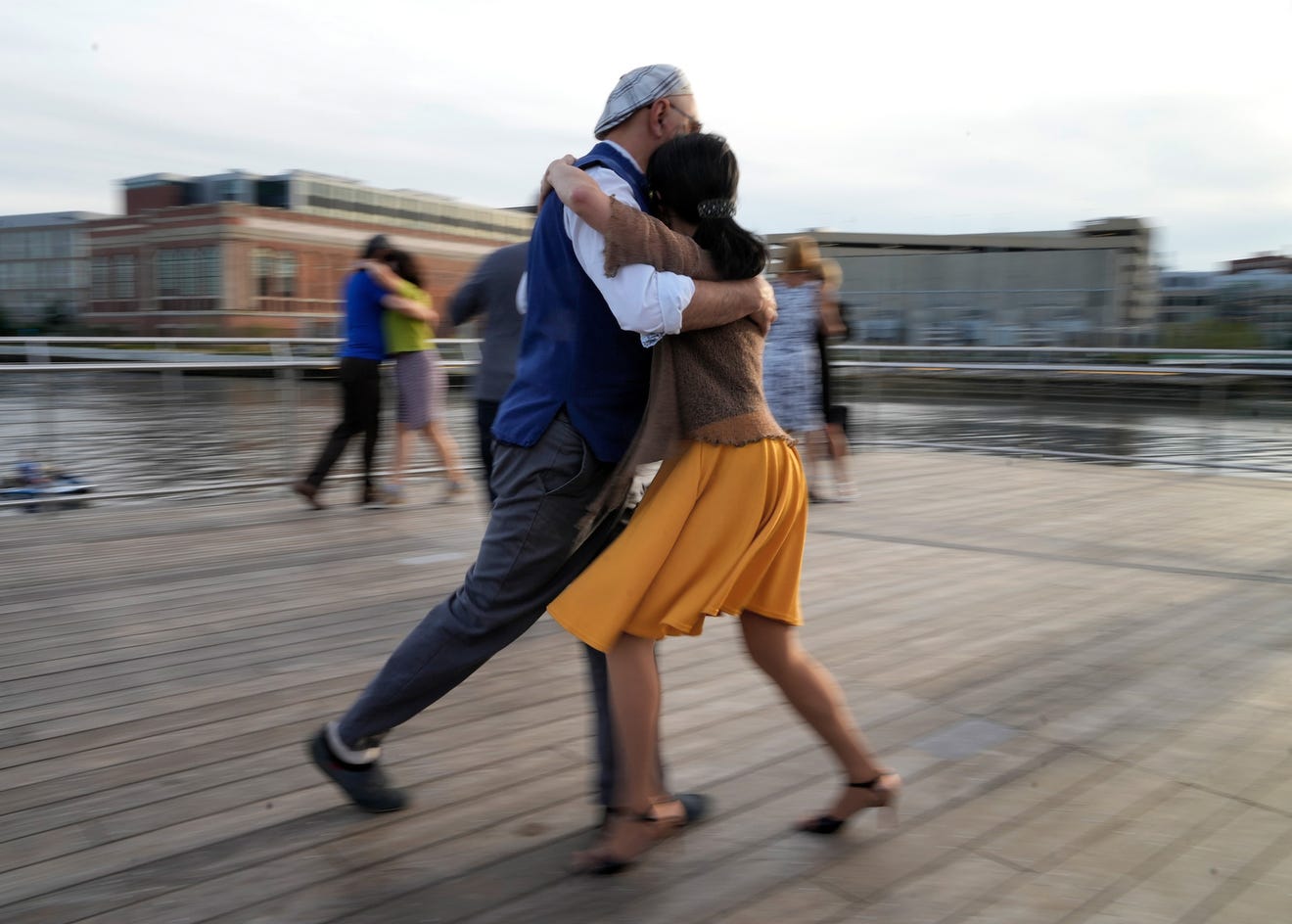
Photo: Kris Craig/The Providence Journal.
Guerrilla Tango on the Van Leeston Pedestrian Bridge over the Providence River in Rhode Island.

Do you love reading about new ways people find to have fun? You don’t always need to spend money for entertainment. Check out what Kris Craig wrote at the Providence Journal.

“In the last rays of a beautiful Sunday in September, Susan Davis of Providence Tango finds an open spot and wheels a small black speaker to a corner railing around a lower deck of the Michael Van Leesten Memorial pedestrian bridge. She starts the music, and with it begins an evening of Guerrilla Tango.

“Everything around the bridge ebbs and flows, with people enjoying the mild late-day weather. And then, like a mist coming off the Providence River, the music rises, a beacon to a small, selective population, drawing tango true believers onto the planks and into the evening. 

“This is Milonga, a tango dance party, social dancing that is all about connection and community.

“Davis, who organizes these summer-long monthly events, will tell you this tango is about feeling quiet and sensitive to your partner of the moment and the others around you.

“As dancers accumulate on the decks to the side of the bridge, faces beam. There are a few newcomers and out-of-towners, but these people are not strangers.

All are part of the small New England tango community, moved by digital bulletin boards and word-of-mouth to the Guerrilla Tango.

“On the wooden planks of the bridge, street shoes are swapped for shiny black patent leathers for men and ankle-strapped high heels or stilletos for women. Hints of piano, violin and the accordion-like bandoneon coax the arrivals to finish changing quickly.

“The dancers pair off on the fly with provisional partners and ease into the tempo, and the scene transforms. The smiles of greeting fall away and the couples become one, as if the closeness of torsos and the placement of hands – one near the middle of the back or shoulder, the other gripped lightly with their partner’s – complete a circuit and light a fire in a world unto itself, shared two by two but really by all.

“The impromptu embrace and collective grace of this fluid assembly speak of romance uncoupled, large and free, less amorous than artful. The love is of music and motion. Of life itself. …

“I move from spot to spot, photographing the dancers, making my way around a crowd of spectators on the walkway, and I catch the awe in their appreciative murmurs. 

“A pair of teenage girls laugh their way down the terraces of the bridge, placing hands to bodies, mimicking the dancers, and they move into the mix. I too feel the pull to join the magic, but there are no invites for dilettantes. Knowledge of tango is the price of admission, and unaware guests become meteors wreaking havoc in this synchronized universe. Among the group, some dancers may learn from this evening, but it’s not a dance class. 

“A series of three mostly traditional tangos ends, and the music shifts to a 30-second Cortina, a completely different style. The dancers seem to awaken from a meditative trance. The short respite affords them a glimpse of the banal world surrounding their own before each seeks yet another partner for the next series. Another chance to get lost in the tango.

More at ProJo, here. Catch it next year, tango lovers!

Read Full Post »

Happy Cobblers

Photo: Marcie Parker for the Boston Globe.
Leslie Bateman and Emily Watts are the founders of Coblrshop, a modern shoe repair company in Boston.

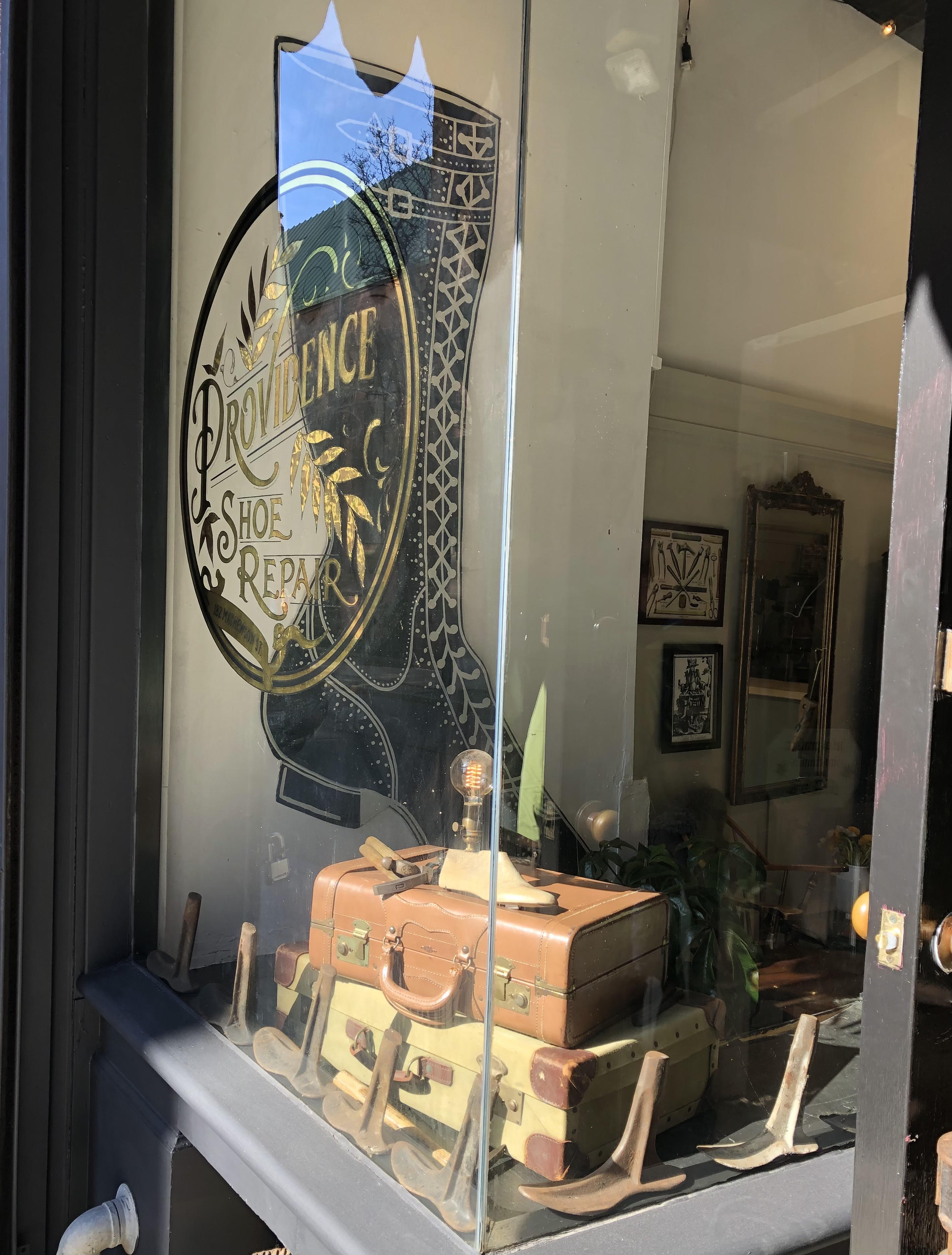
I don’t know if you would recall a photo blog post of mine that included a picture of a new-ish cobbler shop in Providence. I was surprised at the time to see that anyone new was eager to get into the shoe-repair business. Wasn’t it supposed to be a dying art?

It turns out that there are enough customers who want to keep their favorite shoes intact that cobbling services are actually increasing.

Marcie Parker reports at the Boston Globe, “Leslie Bateman always loved shoes. Since she was a little girl, she has walked with her eyes cast downward, checking out shoes as their owners stepped along sidewalks. She scoured shoe stores, department stores, and vintage clothes shops for the perfect shoes for school, work, exercise, formal occasions, and casual gatherings.

“And once she found the right shoes, she never wanted to toss them out. Thus began Bateman’s relationship with cobblers, the craftspeople who repair, customize, and sometimes make shoes. Whenever she moved to a new city — Montreal, New York, and now Boston — she searched for cobblers to keep her shoes in good condition, a task that became harder as the number of people practicing the trade dwindled.

“Now Bateman and her partner, Emily Watts, are launching a new service to make it easier for shoe lovers to get their shoes fixed. Their Boston-based startup, called Coblrshop, combines the latest in digital technology with a centuries-old craft, using its website and a mobile app coming next year to diagnose repairs for luxury shoes and handbags, estimate costs, and connect to cobblers.

“ ‘You bring technology in and it adds so much efficiency,’ Watts said. ‘[We’re] using technology to really improve a well-established and long-lasting industry.’

“Coblrshop is among the latest companies to use technology to connect customers with services, joining a host of websites and mobile apps that provide one-stop shopping for auto repair, dry cleaning, home maintenance, and food delivery.

“Bateman and Watts are betting if they make shoe repairs fast, convenient, and competitively priced, more people will fix rather than toss out worn shoes, not only helping to revive the art of shoe repair but also reducing the environmental impact of the footwear industry. …

“Coblrshop contracts with a downtown Boston shoe repair shop, David’s Instant Shoe Repair on Franklin Street, to make repairs. Ultimately, the company plans to find a larger, central location to host several cobblers and train new ones.

“Here’s how the service works: Customers go to the company’s website, where they can choose the type of shoe or handbag that needs repair. From there, they select from a drop down menu the condition of the shoes and the services needed.

“Customers can choose from broad repair categories, such as a clean and shine, wear and scuffing services, or a complete repair. They also have the option to add protective soles to reduce future wear and tear. … After ordering repairs and paying online, customers receive within three to five days a biodegradable and recyclable mailer bag to send their shoes to the company’s cobbler. The process, from estimate to delivery of just-like-new shoes, takes about two weeks.

“Eduard Harutyunyan, who works at David’s Instant Shoe Repair, is Coblrshop’s cobbler. After immigrating to Massachusetts from Armenia in 1997, he learned the craft from a cousin who owned a shoe repair shop in Natick.

“Bateman and Watts said they searched extensively to find a cobbler who they believed would do the highest quality work and be open to modernizing shoe repair. They chose Harutyunyan after speaking to more than 60 cobblers.

“Harutyunyan, 46, said … ‘The issue with the cobblers in general — they don’t get much respect,’ said Harutyunyan. ‘What I like is to be able to change that.’ …

“Few appreciate that as much as Bateman. She recalled becoming particularly attached to a pair of gold Chanel flats that her husband found at a vintage store in Manhattan in 2010 and gave to her for her birthday. She wore the flats every day for years, getting them resoled four times. …

“ ‘You’re not buying something and sending us something new or something via resale,’ Bateman said. ‘You are sending something in that has a story, and we need to take care of that and give you back that magical experience.’ ”

More at the Globe, here.

Photo: John and Suzanne’s Mom.
Providence cobbler shop.

Read Full Post »

Photo: What Cheer Flower Farm.

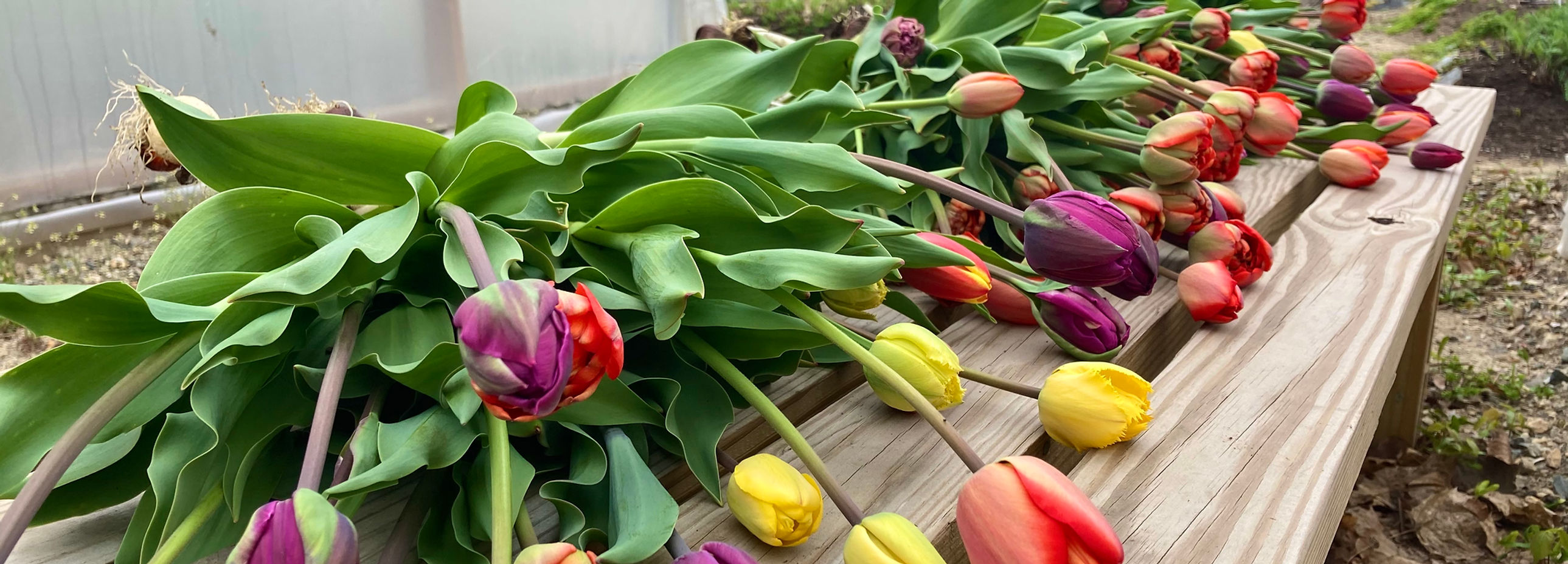
Today’s story shows, among other things, that if you pick a really good name, you’re halfway to your goal. Who wouldn’t be drawn to a charity with a name like What Cheer Flower Farm?

And wait till you hear what it does! Frank Carini’s ecoRI News story was originally reported in 2018.

“The place was a complete mess, but a trio of determined women was going to buy it anyway, as soon as the seller removed about 50 tattered mattresses from the dilapidated building.

“The 2.7-acre property was covered with wind-blown trash. More than a year later, the three women are still picking up broken glass. … They ripped up poison ivy by gloved hand, and brought in a tractor to help tear down the overgrowth. The empty factory with a brick facade, largely vacant since the 1990s, has no running water or electricity, is covered in graffiti, has been the victim of arson, and has been gutted of all scrap metal.

“ ‘The property was neglected for years,’ said Shelby Doggett, who, at 25, is the youngest of the three buyers.

“The women, Doggett, her mother, Marian Purviance, and Anne Holland, bought the derelict property for $525,000, so they could give away flowers.

What Cheer Flower Farm was incorporated [in October 2017] and it acquired the former site of the Colonial Knife Co., forgotten industrial land in the heart of the city’s Olneyville neighborhood, not far from Route 6, this spring.

“After the sale became final, the first two essential items the women had delivered were a port-a-potty and a truckload of compost.

“This new urban farm, at 46 Atwood St., only began its growing season two months ago. The seeds were planted late in the season because there was plenty of other work to do first. For one, the property was covered in pavement.

“Some 4,000 square feet of parking lot was torn up and transformed into an organic raised-bed ‘field’ of flowers, both perennial and annual. Purviance, the farm’s horticultural director, has years of garden cultivation and management experience.

“ ‘I worked in the fine-gardening business for a long time, and I worked for very high-end clients. A lot of them really didn’t even appreciate what it was to have a garden and how much a flower really means,’ said Purviance, 57, a 30-year resident of Providence.

‘I get so much more satisfaction out of working on this project than I did working for people who take that for granted.’

“The nonprofit flower farm with two full-time farmers — Purviance and Doggett, who as the program director also handles the administrative side of things; Holland is the communications manger — and with support from volunteers, grows organic flowers on a brownfield site.

“They give their product away to ‘people who deserve flowers but don’t have access,’ Purviance said.

“To supply those people who deserve flowers, What Cheer Flower Farm has partnered with Amos House, the Ronald McDonald House of Providence, and Meals on Wheels of Rhode Island. The women deliver bouquets and buckets of cut flowers to these institutions and other partners.

“About 90 percent of the flowers currently being grown at the farm were started from seed by Purviance in her kitchen and in a friend’s basement. The rest of the plants were donated by Green Animals Topiary Garden in Portsmouth. …

“Besides brightening people’s lives with free flowers — 1,000 have so far been donated — the nonprofit’s mission also includes reversing urban blight, creating a job training center for Rhode Island residents to help them enter the state’s $2.5 billion ‘green’ economy, and making Providence famous for urban flower farming.

“Chicken manure from Scratch Farm and horse manure from a gentleman farmer in Rehoboth, Mass., have been used to build soil. … The farm rents a meter from Providence Water, which allows it to use a fire hydrant for watering. The water is stored in donated tanks of various sizes.

“Where the dilapidated building now stands, the co-founders envision a barn, classroom space, an office, and space for lease. …

“What Cheer Flower Farm has applied for a brownfield remediation grant with the Rhode Island Department of Environmental Management. An ongoing inventory assessment didn’t find elevated levels of polychlorinated biphenyls (PCBs). The owners have worked with the National Resources Conservation Service and David Foss of Wilcox & Barton Inc., a Vermont-based environmental consulting firm.

“The property is in better toxic shape than the new owners predicted, but there’s still much work to be done. Much of that work will revolve around fundraising. As a 501(c)(3), the organization will rely on grants, donations, volunteers, and kindness. They also plan to host fee-based workshops for hobby gardeners and amateurs.”

From the farm’s website: “Our staff are busy working on growing, rescuing and giving away flowers. You can visit as a volunteer, or as an artist who wants to work outside en plain air or as a group seeking a tour. …

“What Cheer Flower Farm is a nonprofit dedicated to bringing solace, joy and healing to the people of Rhode Island via flowers as well as supporting our local floral economy via job training.

“We grow, rescue and give away 100,000 flowers per year and are on track to expand to giving away 300,000 flowers per year in the next five years. We never sell flowers – all are given away freely via our network of local nonprofits and organizations serving Rhode Islanders including hospitals, senior services, recovery centers, shelters, hospices and food pantries. …

  ” 2022 Achievements

  • “92,000 flowers grown, rescued and given away
  • “$50,000 grant won from United Way/Social Enterprise Greenhouse
  • “Relaunched Flower Festival named ‘The Best Thing to Do in RI’ by The Boston Globe.”

More at ecoRI News, here. No firewall.

Read Full Post »

Photo: Suzanne and John’s Mom.
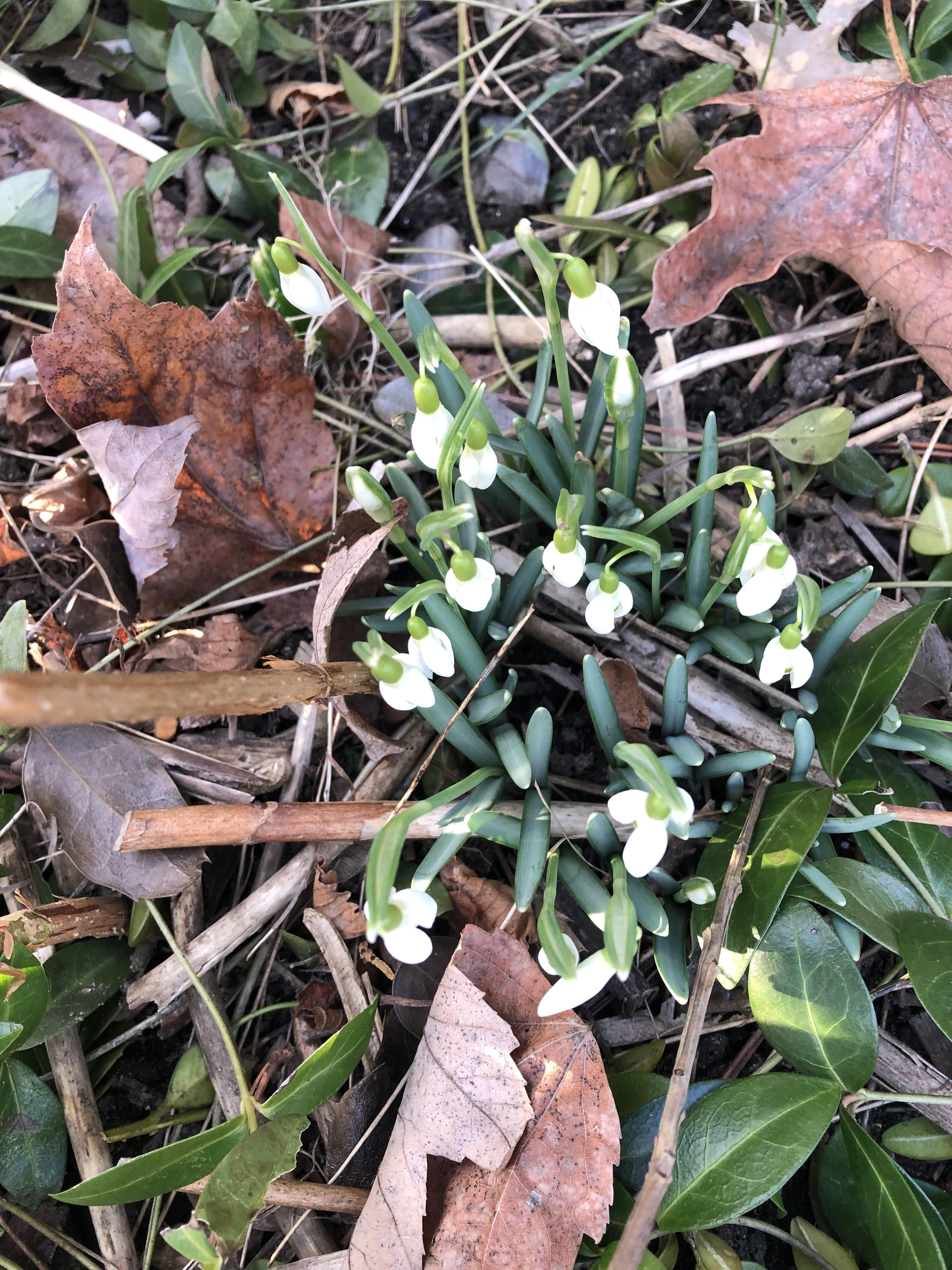
Snowdrops arrive in Massachusetts.

I haven’t posted photos for a while, and now I’m realizing that today’s selection goes way back to early January, when Erik’s mother was still visiting from Sweden. She showed me a garden-like cemetery in Providence where she loves to run — and where we were greeted by the largest gang of wild turkeys I have ever encountered!

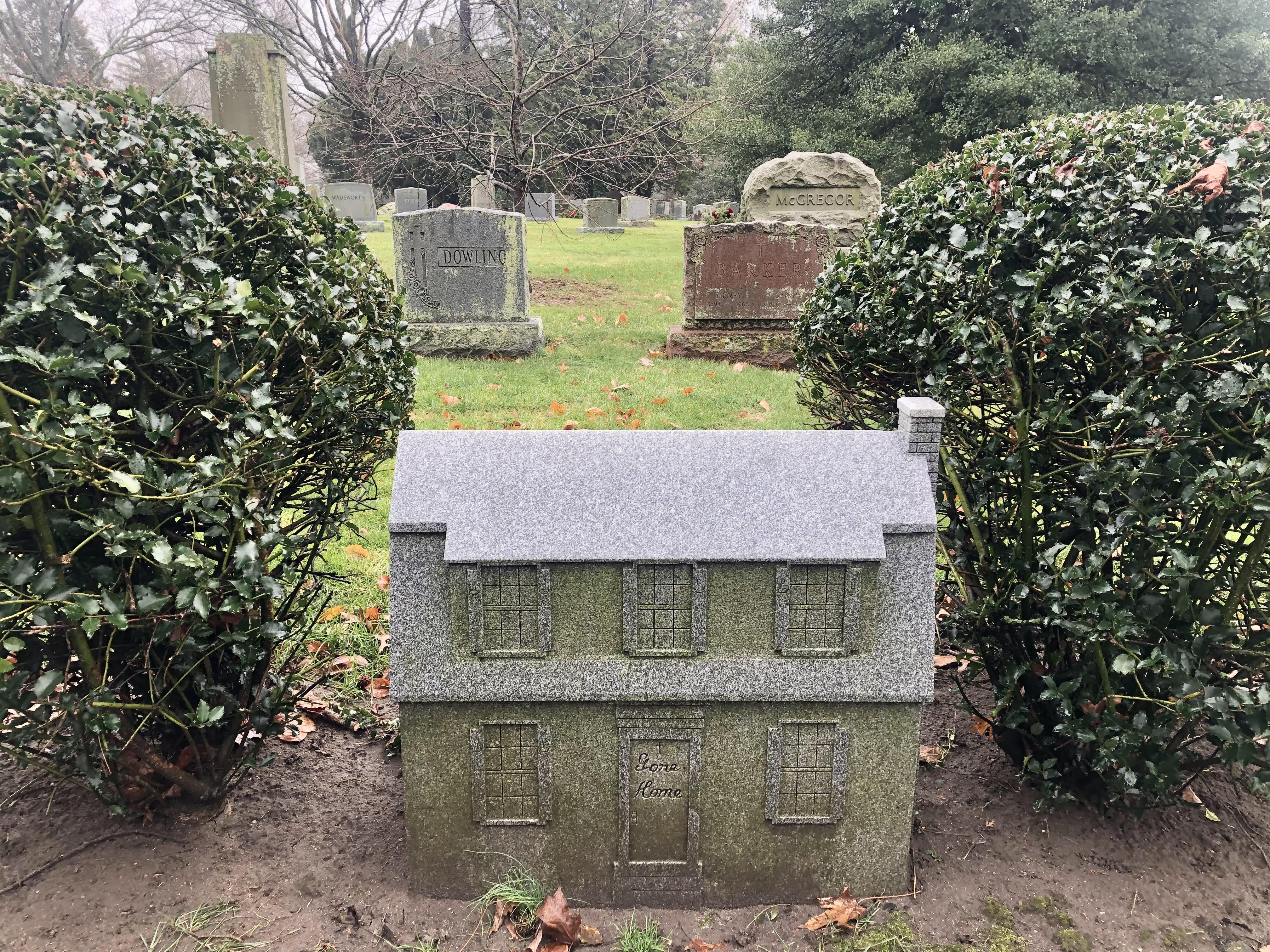
I particularly liked the unique headstone below: someone must have felt OK about having a final home in this park.

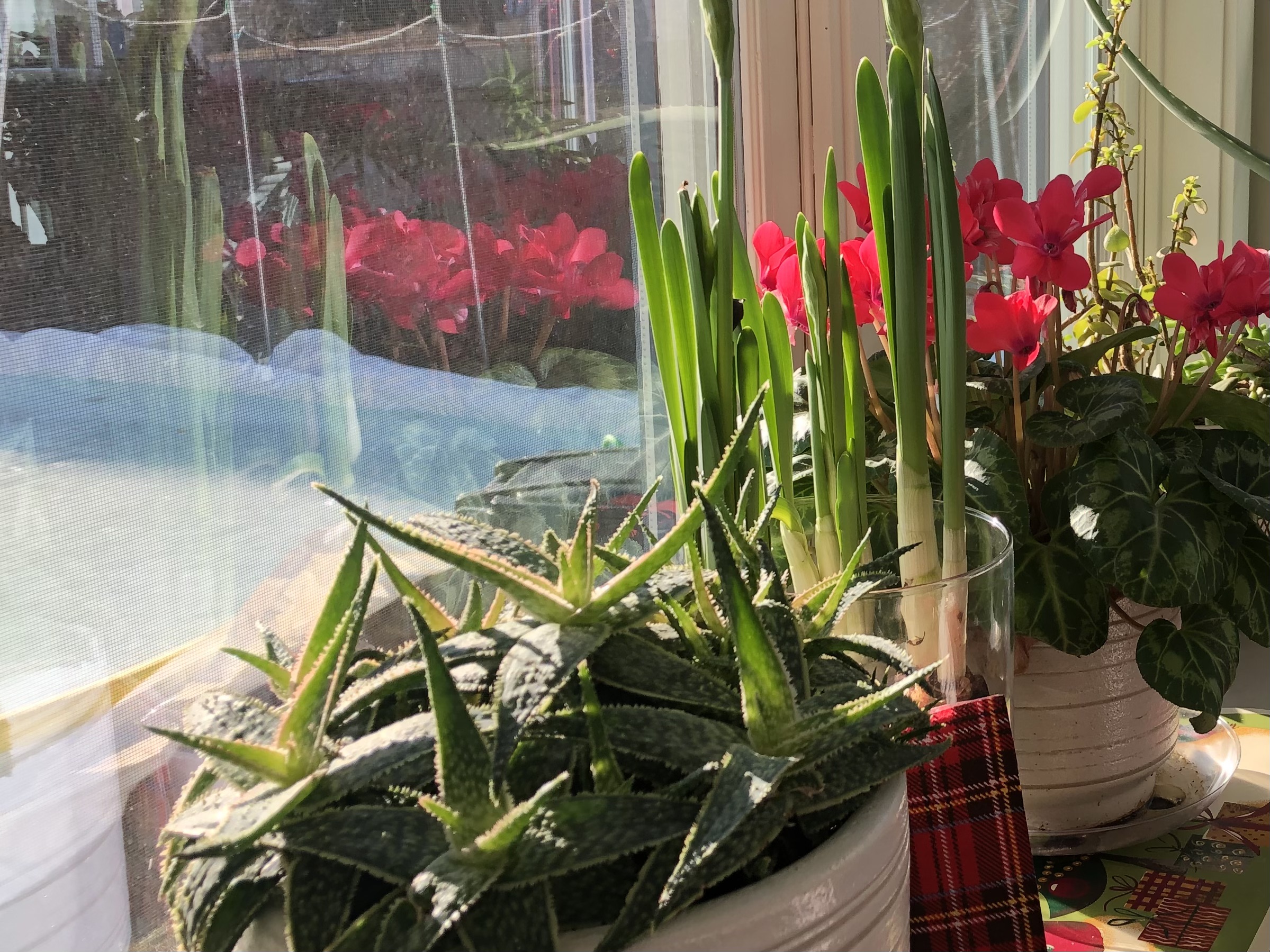
The next photo shows my frosty windshield in February. But indoors at John’s house, warm floral colors were defying the frost.

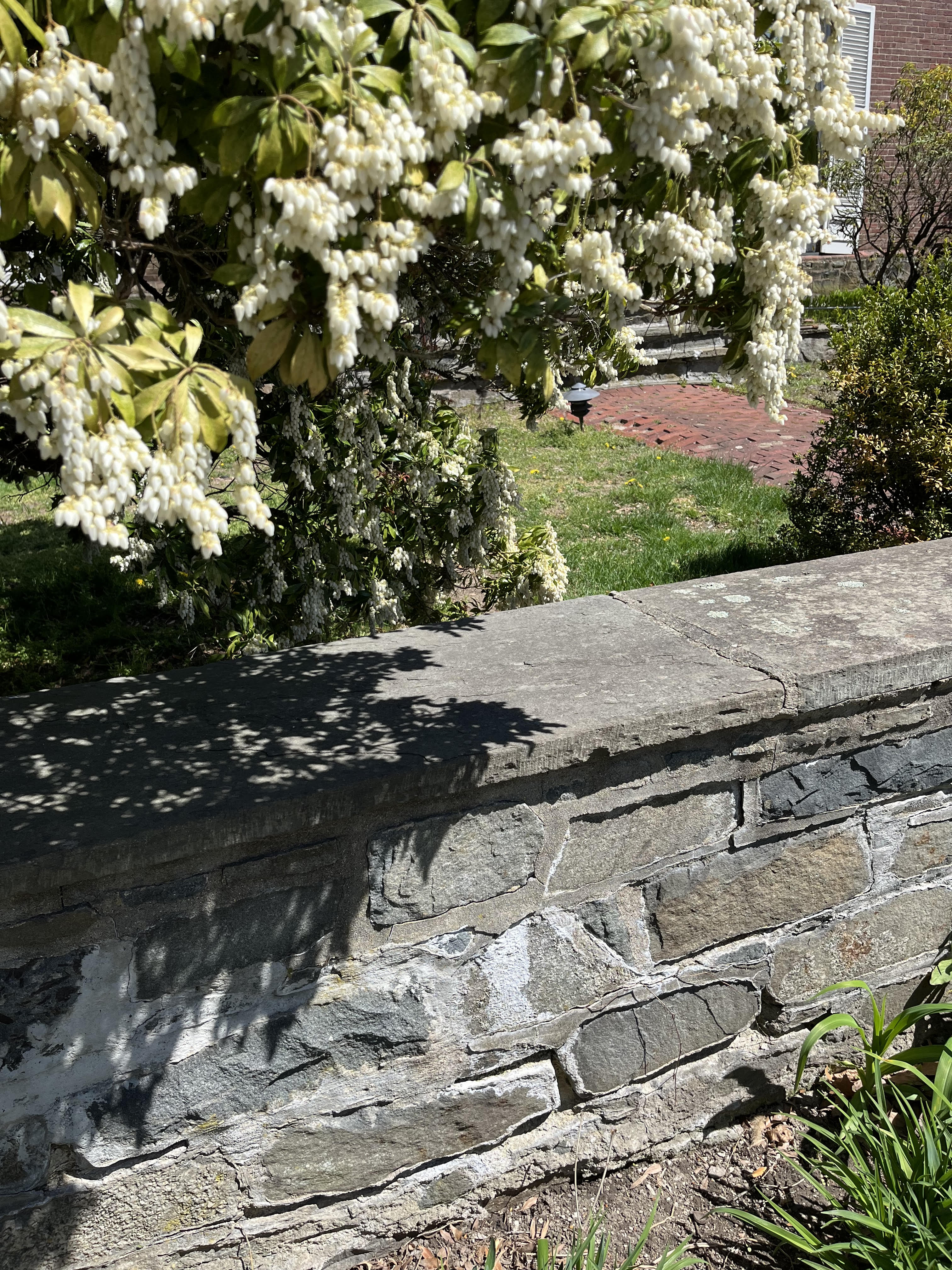
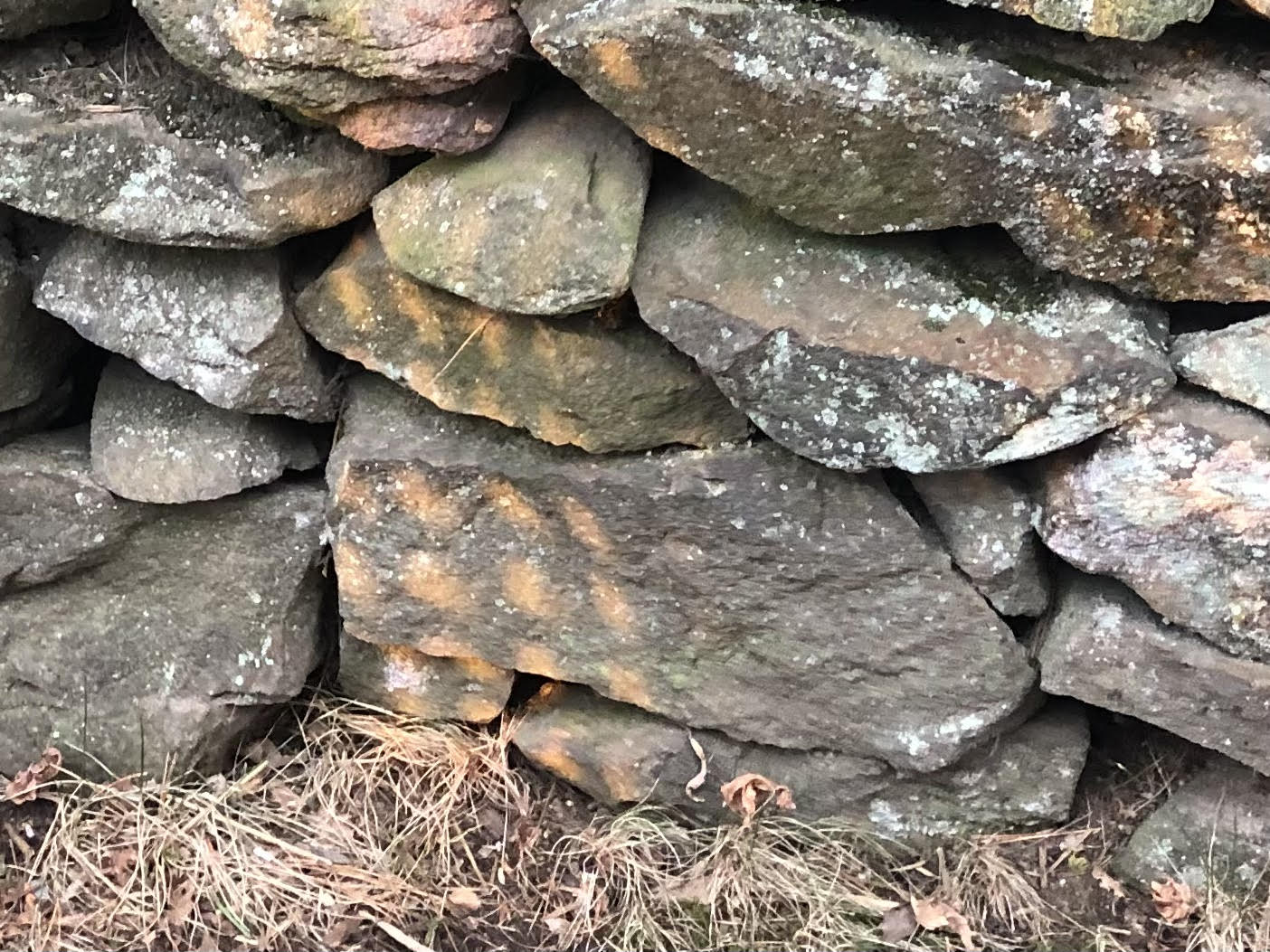
Note that Suzanne’s stone wall has a light pattern on it. It comes from the sunrise over the river in Providence and through her fence. I have to be quick with the camera as the pattern disappears fast.

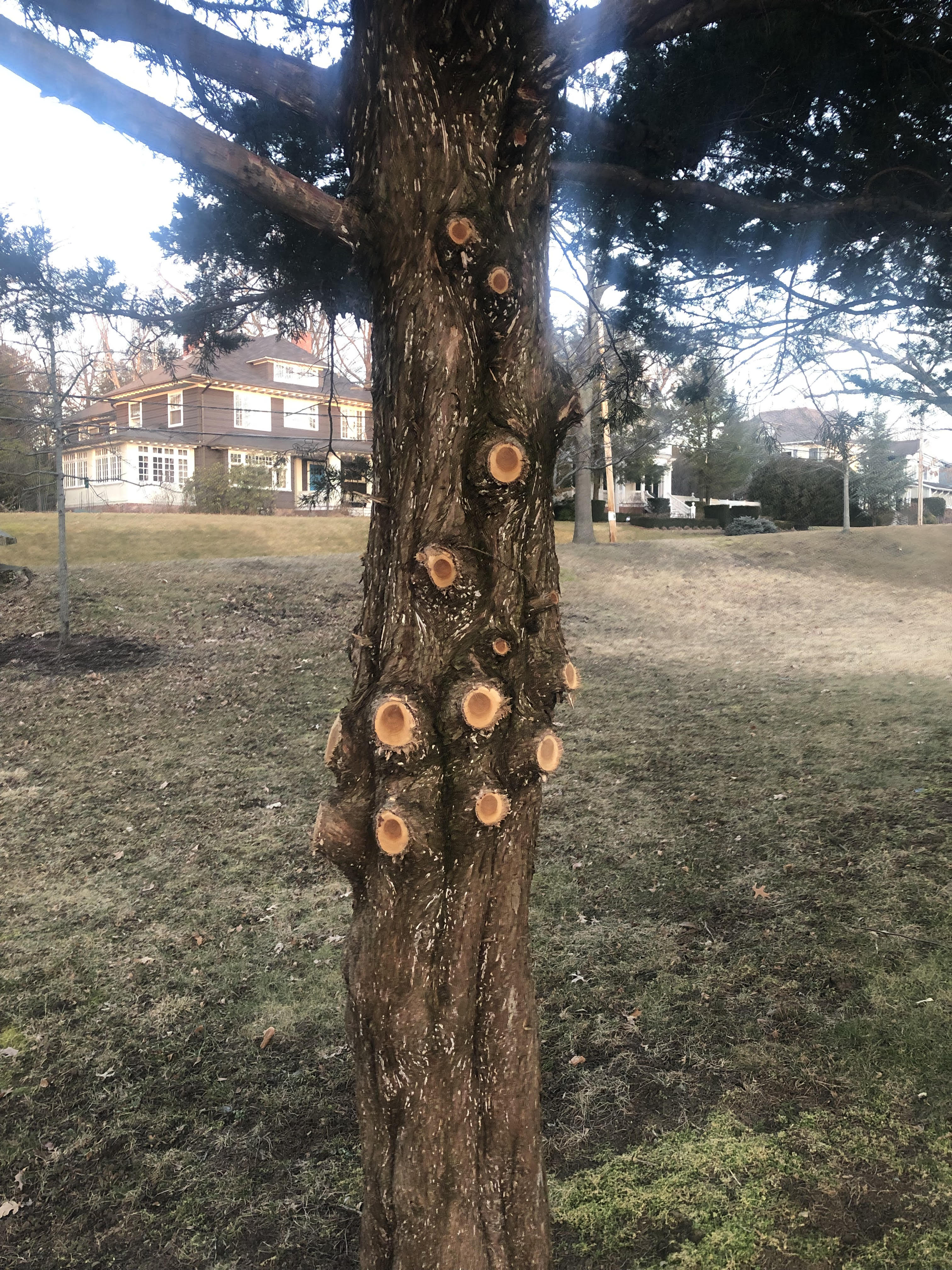
The tree of many eyes was also in Providence. Kind of weird and interesting.

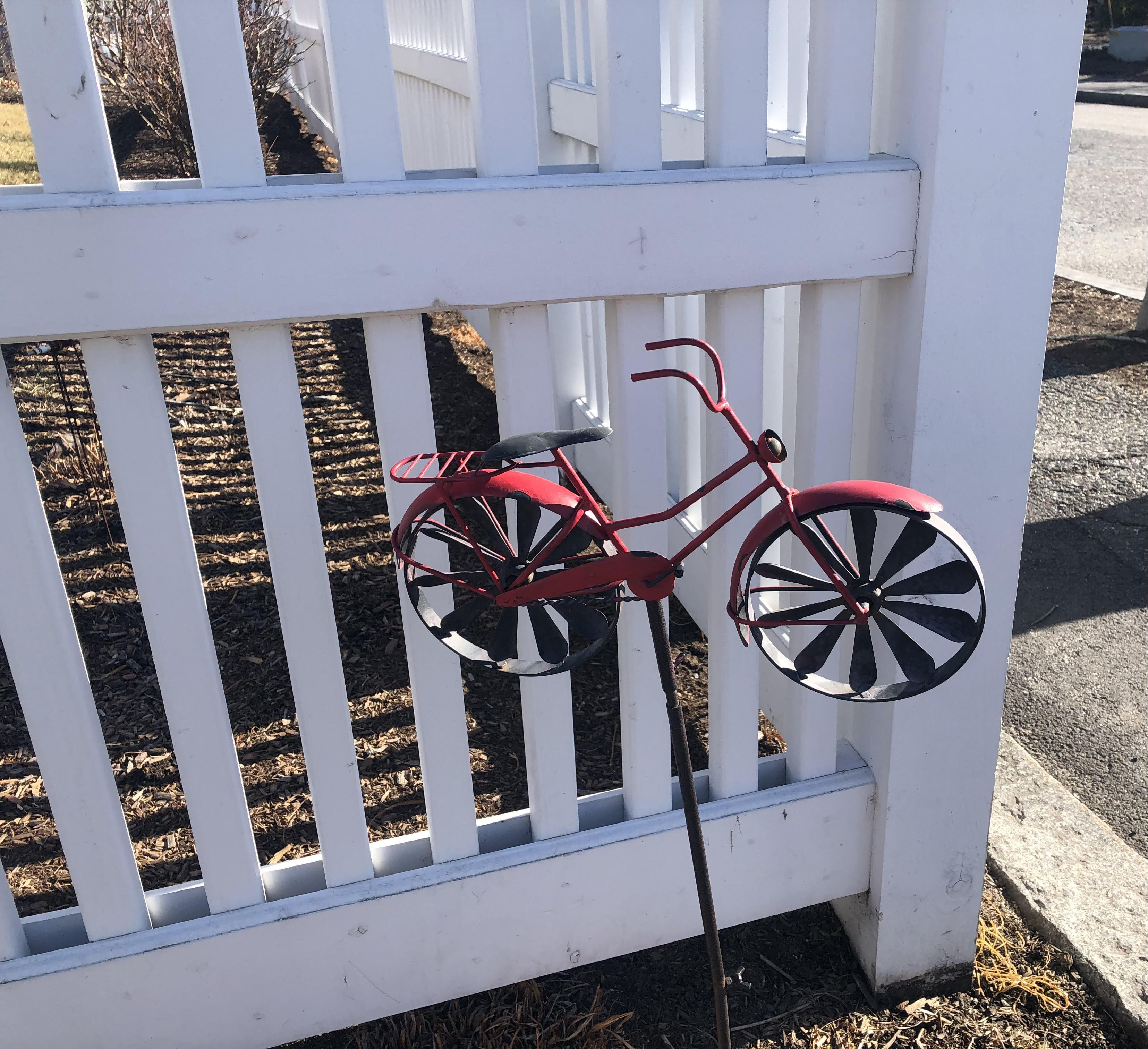
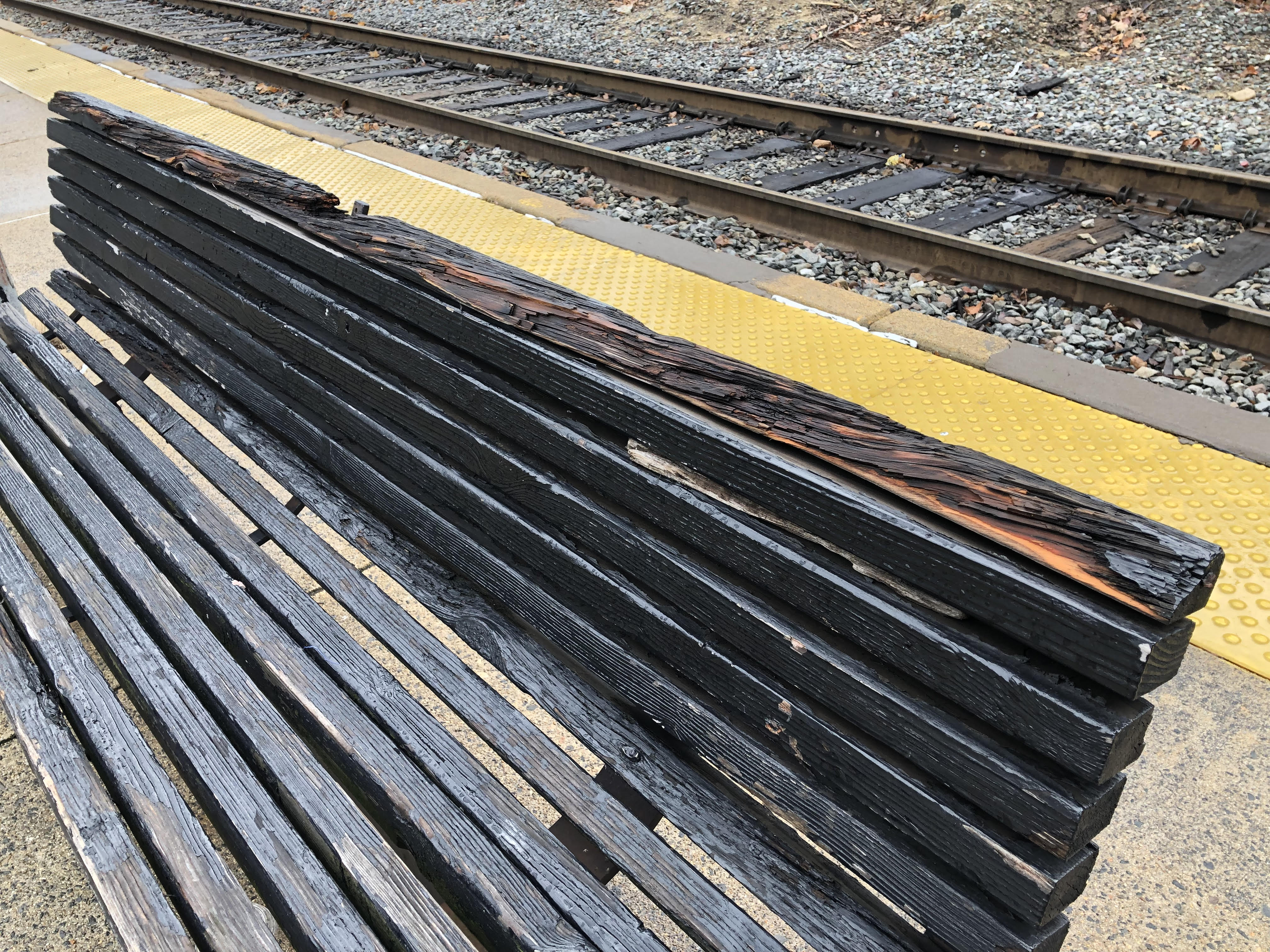
The tiny bicycle is ready for a windy ride. The chewed-up bench at the commuter rail station suggests to me that the train is often late.

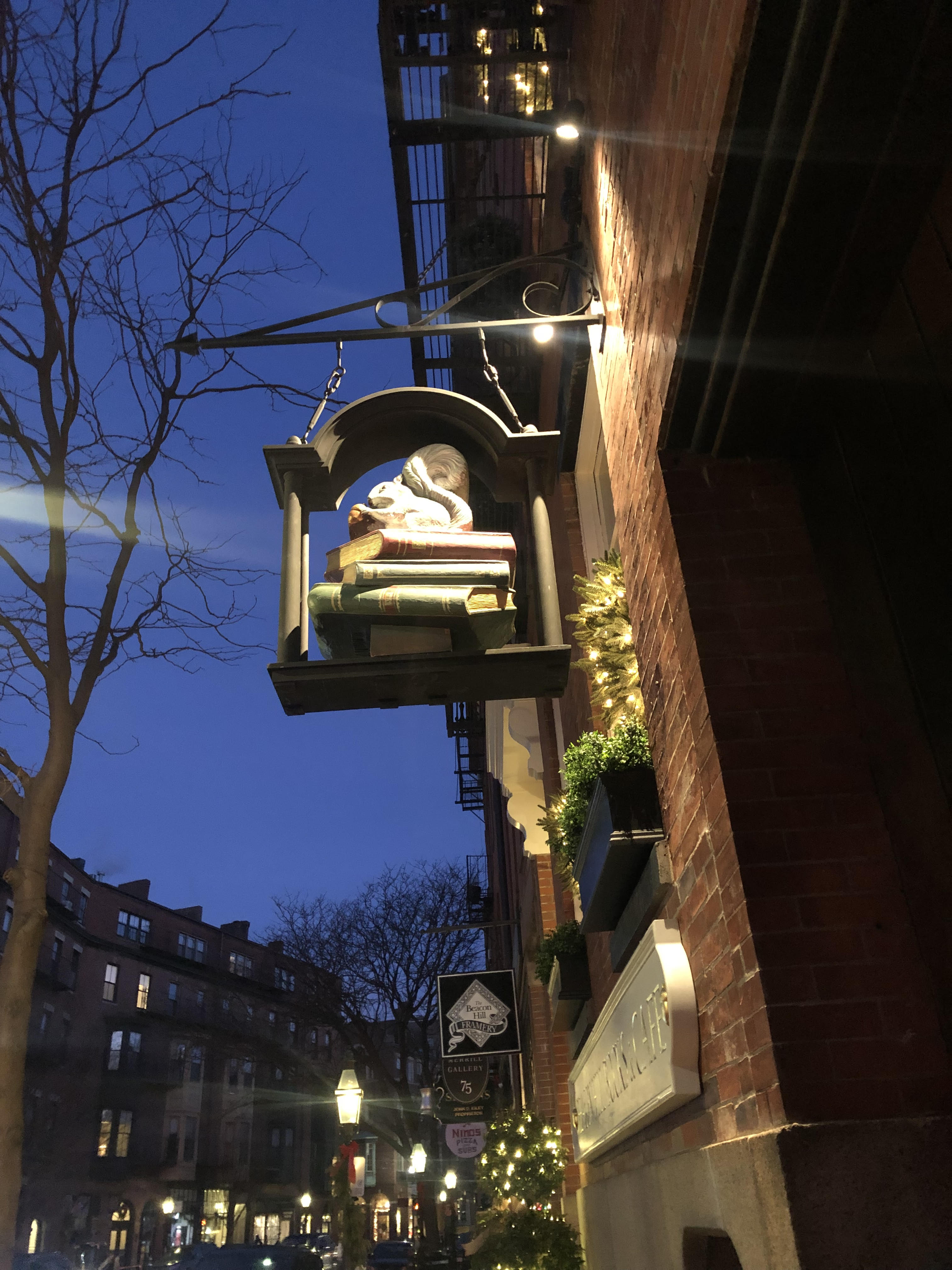
The book store with the literary squirrel in Boston is part of the indie book store resurgence I wrote about recently, here.

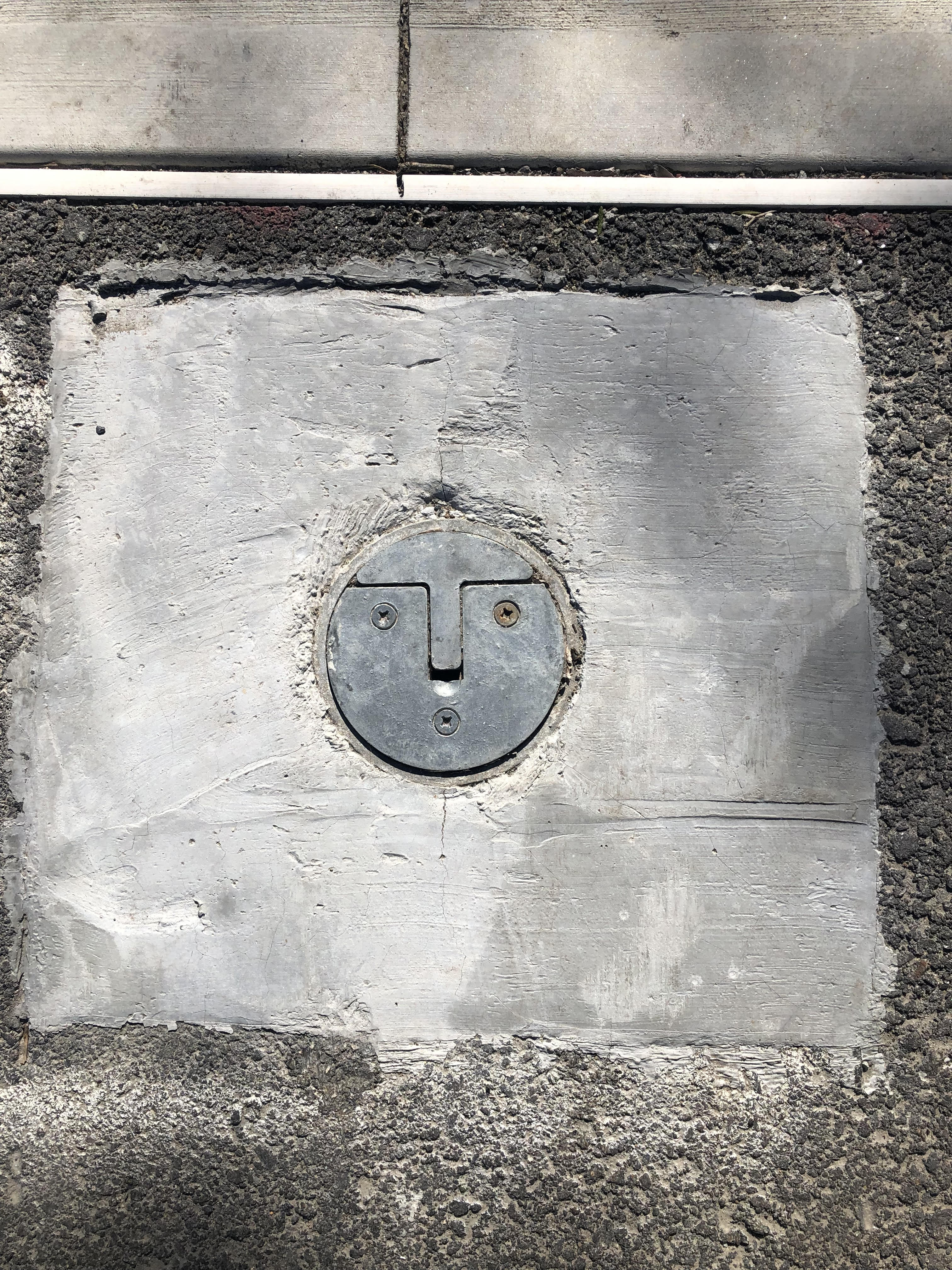
There was a mechanical face in the sidewalk near the park. Conducting surveillance, I suppose.

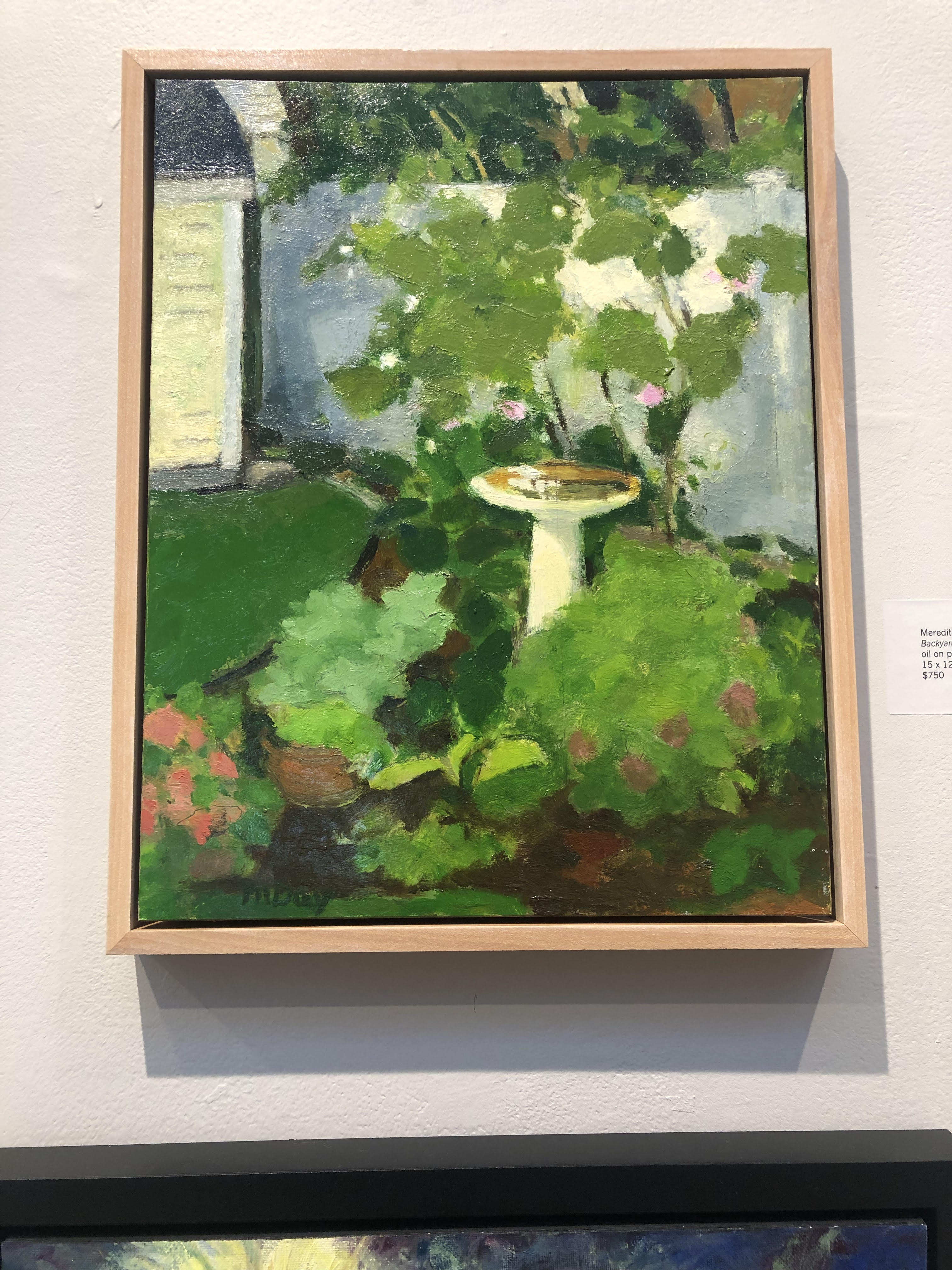
Finally, a spring treat: Meredith Fife Day’s lovely contribution to a recent exhibit at Concord Art.

Read Full Post »

Photo: Matthew Healey/Boston Globe.
Jeremy Garcia, 22, of Providence takes a break from working on a mural at “The Avenue Concept” in Providence, Rhode Island.

Kids love contributing to community murals. I know because Suzanne and John helped paint one in our town years ago. But that mural — about local history — was bland compared with the passionate work of self-expression and healing by urban youth in Providence.

Alexa Gagosz writes at the Boston Globe, “After setting down her paint brush, Deborah Ndayisaba gazed up at the purple-colored protestors who spread across a section of a new large-scale mural on the exterior of The Avenue Concept’s headquarters.

“A senior at La Salle Academy in Providence, Ndayisaba, 17, said she had her own ‘advocacy awakening’ when the Black Lives Matter movement took off in 2020. She joined the diversity club at school, became involved in PVD World Music, which looks to celebrate and enrich traditional African music and arts, and researched how many of the racial injustices of the Civil Rights era are now still relevant today.

“The protestors, for her, are symbolic. ‘It’s unfair how racial discrimination can touch everything. And activism isn’t just marching on the streets,’ said Ndayisaba, who is applying to colleges to eventually go into the medical field where she hopes to help women of color.

“It’s those kind of personal elements that scatter this newly finished collage mural by local youth who are involved with the Nonviolence InstituteRhode Island Latino ArtsHaus of Codec, and PVD World Music — all Providence-based organizations. The effort was led by The Avenue Concept, a public arts organization, and international community-based public art organization Artolution. …

“The Avenue Concept, which is the state’s leading public art program, was founded in Providence in 2012. Since then, artists from around the world have been commissioned to paint mammoth-sized murals across downtown that are part of the city’s skyline today. …

“A few of the Concept’s most notable works address longstanding community issues, such as ‘Still Here‘ by muralist Gaia, which depicts Lynsea Montanari, a member of the Narragansett tribe and an educator at the Tomaquag Museum, as they hold a picture of Princess Red Wing, a Narragansett elder who founded the museum. In September, Boston-based artists Josie Morway painted a new mural in Warren that addresses sea level rise.

“This new project, which was completed after 10 painting days on Sept. 30, is a pilot for a larger community participation program that was identified in The Avenue Concept’s latest strategic plan. The goal of the program, Thorne explained, was to address representation, neighborhood voice, unique cultural perspectives, and community needs in their upcoming projects.

“ ‘Over the last year, we’ve really tried to listen and better understand the stories that are intersecting in our own neighborhood,’ [Yarrow Thorne, executive director and founder of The Avenue Concept] said. ‘We are looking to do more than just the giant pieces of beautiful art in downtown, but to serve the community that surrounds us.’

“Thorne said the Concept, which is based in the Upper South neighborhood of Providence, selected the four local organizations because of how their work makes an impact across a diverse set of communities. Each organization brought four to five members of their youth communities to learn, connect, co-create themes, and eventually execute the mural with the help of Artolution’s co-founder Dr. Max Frieder.

“Frieder, a Rhode Island School of Design graduate and former classmate of Thorne’s, brings public art projects around the world — including in refugee camps. Frieder said he trains refugee-artists on how they can work with kids who have been through trauma and teach them to express what’s most important to them through art.

“ ‘With this project, we brought four very different community groups together and it has been remarkable to see them come together and reflect on their similarities,’ said Frieder, who has participated in public art installations on all seven continents. …

“Each participant painted a scene in a ‘memory ball,’ which looked like a golden orb with a scene of their choice inside. Some painted themselves playing basketball, another read ‘stop drug abuse,’ and one painted themselves playing a trumpet.

“One memory ball said, ‘You only get one life. It’s your duty to live it as fully as possible.’ It’s a quote inspired by Jojo Moyes, an English journalist and novelist.

“Each participant talked about the issues they and their families face in South Providence today: their communities getting priced out as the cost of living increases. Others have faced racism and homophobia in school. Some say their family’s generational trauma has prevented their own parents from healing.

“For example, Jeremy Garcia, 22, a self-described ‘proud, Black-Latino,’ described the stereotypes of South Providence being considered an ‘urban hood’ where residents are predominantly people of color. Garcia said many of their neighbors have watched cases of police brutality, such as the killing of George Floyd, and are afraid to call the police.

“ ‘These are the people who are supposed to save us and who we should be able to turn to when we are in danger,’ Garcia said. ‘If you can’t turn to the police, where do you turn?’

“Expressing themselves ‘and letting go of their past is the only way we can can heal and move forward,’ said Cedric Huntley, the executive director of the Nonviolence Institute. ‘We need more of this — in Providence and around the world. We all focus so much on the negative, which certainly impacts all of us, but there’s more to it in these young people’s lives.’ ”

More at the Globe, here. Nice photos. For a no-firewall article on the mural “Still Here,” check the Brown University newspaper.

Read Full Post »

Altruistic Granola

Photo: Maliss Coletta.
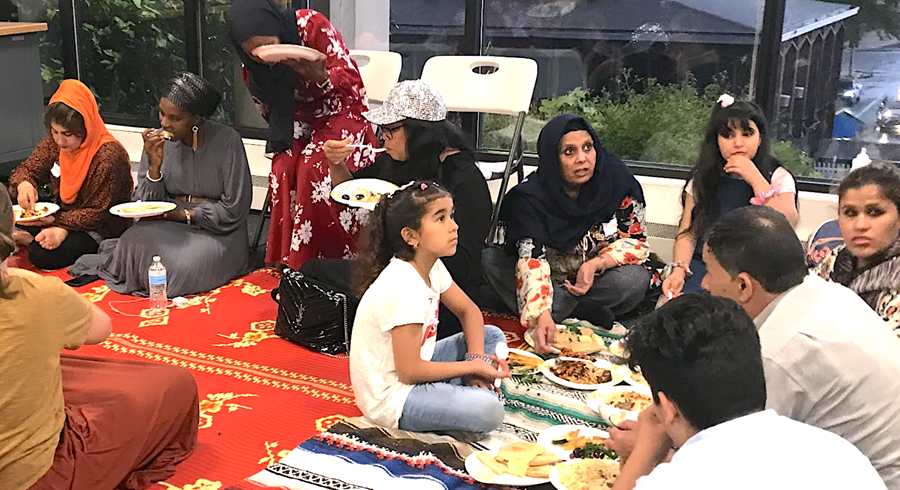
Afghan refugees enjoy a meal with the team at the granola nonprofit Beautiful Day RI in Providence.

In around 2015, I was writing blog posts for Anne Dombrokski at what was first called the Providence Granola Project and later Beautiful Day, a granola company with a mission to help acclimate refugees to American workplace norms and launch them into jobs. Anne died in a freak biking accident (despite a helmet) in 2016, but Beautiful Day remembers and honors her with the Granola for Good award.

Since Anne’s time, Beautiful Day has expanded its mission a little every year, and you can follow it by signing up for newsletters.

Here’s a recent example: “Since last fall when Afghans started arriving in Rhode Island, Beautiful Day has been reaching out in many ways. We contributed granola bars, hummus and messages of welcome to food baskets delivered weekly by the local food bank. We collected wool rugs to give to Afghan families to help them feel more at home. And we began welcoming Afghans into both our youth and adult job training programs. It’s critical to our mission to support the Afghan community, and we were always looking for chances to connect.

“A new opportunity arose two weeks ago when we partnered with the Refugee Dream Center (RDC) to host a group of Afghan women and their families at our kitchen. The Afghan women’s group had been meeting at RDC for several months and done a number of things together. But without access to a kitchen, they weren’t able to cook. And that’s where we could help. With our beautiful, newly renovated kitchen, we could offer the group the perfect place to cook up a storm! So we invited them to come and prepare a typical Afghan meal and share it with us in our space.

“People began arriving mid-afternoon and soon we had a crowd of over forty people, which included Afghan women, men and children as well as volunteers and staff from both Beautiful Day and RDC. The menu consisted of goat meat with vegetables over rice along with homemade Afghan bread. There was also a salad of fresh greens, picked straight from the overflowing garden boxes on our patio.

“Our time together might best be described as organized chaos. While we entertained the kids with games and puzzles on rugs spread out on our classroom floor, the adults took over the kitchen. The goat meat had to be marinated and tenderized, the dough kneaded and baked, and the rice boiled and seasoned. People broke into spontaneous groups and set to work.

“It took about three hours to prepare the meal and our space bustled with happy talk and laughter.

It’s amazing how well you can communicate even if you don’t share a common language! 

“And when the food was ready, everyone settled down on the rugs to enjoy the meal together. Afghans typically eat with their fingers sitting on rugs on the floor and we had prepared the space ahead of time. All the cooking and preparation led to hearty appetites and it was a happy, hungry crowd that enjoyed a delicious meal together. …

“As people were leaving, one Afghan woman said, ‘This felt just like home.’ It doesn’t get any better than that.”

Also in the latest Beautiful Day newsletter, we learn some good news on college scholarships.

“In July, we received a grant through the Beneficent Congregational Church Scholarship Endowments (specifically, the Lucinda Maxfield and Andrew Ferko Endowments) to provide college scholarships to our refugee youth. Three of our young people have been able to take advantage of this generous gift.

“Marvens, originally from Haiti, has a full-year scholarship to study at URI. This summer, he lived on campus as part of the Talent Development Program, an enrichment program designed to prepare first-generation college students for success. He’s now enrolled there as a freshman and will be studying computer science.

“Rama, originally from Syria, has a scholarship to Johnson & Wales University. For the fall semester, she will be enrolled in an English immersion program and next semester, she’ll attend regular classes. She hopes to complete the prerequisites needed to study neuroscience at URI.

“Our third scholarship recipient is Dahaba, originally from Eritrea and a member of a previous Refugee Youth Program cohort. She attended Holy Cross University last year and thanks to this endowment award, has started her sophomore year there debt-free. She’s majoring in mathematics.”

Other Beautiful Day news, here.

Read Full Post »

Older Posts »