Feeds:
Posts
Comments

Posts Tagged ‘refugee’

I thought you would like this story from the National Deseret News about refugees making a new life for themselves in Arizona.

Lourdes Medrano writes, “In a small field on the outskirts of [a] desert town near the Mexican border, close to 30 women and men stoop over rows of pumpkins, carefully picking the pulpy autumn fruit along with its flowers, stems and leaves.

“The volunteers are part of an innovative program that helps refugees from war-torn countries find work and food. Called the Iskashitaa Refugee Network, the Arizona-based organization consists of a diverse group that harvests donated crops from local farms and people’s backyards to feed displaced populations from Africa, Asia and the Middle East.

“On this recent fall afternoon, Adam Abubakar, a refugee in his early 30s who came to Arizona two years ago from the conflicted Darfur region of Sudan, quickly clips pumpkin leaves and drops them in a tote bag for later distribution to newcomers who eat them. For Abubakar, picking fruits and vegetables comes second nature. Back in his homeland, he grew most of the food his family consumed …

“The government provides refugees limited resettlement assistance and organizations such as Iskashitaa work to help the newcomers become self-sufficient as they adapt to American society. Refugees working in the pumpkin field not only harvest the fruits and vegetables they eat, but they also distribute crops to fellow newcomers, learn about urban gardening, market what they grow, and participate in cross-cultural food exchanges. …

“The number of incoming refugees has fluctuated over time and reflects shifting world conflicts and heightened security concerns. In 1980, for instance, 207,000 refugees — including many displaced by the Vietnam War — resettled within the country.

“Iskashitaa was founded in 2003 by Barbara Eiswerth, an environmental scientist, with help from Somali Bantu refugee students who began harvesting crops no one was picking to boost their diet. The refugees inspired the name of the fledgling group: ‘working cooperatively together.’ …

“By tapping into the agricultural roots of refugees, Iskashitaa aims not just to provide food, but also to empower those they’re helping.”

More here.

Photo: Lourdes Medrano/National Deseret News

Read Full Post »

Sweden has taken in a lot of refugees from troubled countries, but like the U.S., it sometimes struggles to find the best approach for absorbing the influx.

At the NY Times, Suzanne Daley writes about one Swede who may have found an important way to speed integration, a way that enriches the experience of Swedes and newcomers alike.

“Last year, when Ebba Akerman, 31, was teaching Swedish to immigrants in the suburbs of this city, she ran into one of her students on the train and asked him whether he enjoyed living in her country.

“She found the answer deeply disturbing. The man shrugged, saying his life here was not much different from the one he had left behind in Afghanistan. It became clear to her that most of her students, living in neighborhoods packed with immigrants, had virtually no contact with native Swedes.

“In the months that followed, Ms. Akerman decided to try to change that, calling herself the minister of dinners in charge of the Department of Invitations and using Facebook and Instagram to try to bring individual Swedes and immigrants together for a meal, something like a dating service.

“ ‘We let people into our country, but not into our society,’ Ms. Akerman said on a recent Friday night. … ‘I finally decided that I had to do something. I could be the connector.’ …

“On a recent evening, Ms. Akerman was feeding about a dozen people, including a middle-aged couple from Bangladesh who had brought a chicken dish, a recent arrival from Cameroon with her two children, a Swedish marketing expert, the mother of one of Ms. Akerman’s friends and a young Swedish doctor in training, all of whom had been early participants in her project. All told stories of good times and miscues.

“The marketing expert, Henrik Evrell, said he had served spaghetti Bolognese, the most Swedish dish he knew, to his guest from Ivory Coast. At first they had trouble communicating because his guest’s Swedish was so poor. But soon they discovered that they both spoke French and loved the same Ivory Coast musicians. After eating, they spent the rest of the evening in front of a computer, taking turns pulling up music on Spotify that each thought the other would like.” More here.

Photo: Casper Hedberg for The New York Times
Ebba Akerman set a table on her backyard for a meal that brought Swedes and immigrants together. 

Read Full Post »

A Syrian actor who visited a refugee camp, felt compassion for the children, and returned to help them put on a play decided to start at the top. Only the best playwright would do.

From the Zaatari refugee camp in Jordan, NY Times reporter Ben Hubbard describes the scene: “On a rocky patch of earth in this sprawling city of tents and prefab trailers, the king, dressed in dirty jeans and a homemade cape, raised his wooden scepter and announced his intention to divide his kingdom. His elder daughters, wearing paper crowns and plastic jewelry, showered him with false praise, while the youngest spoke truthfully and lost her inheritance.

“So began a recent adaptation here of King Lear. For the 100 children in the cast, it was their first brush with Shakespeare, although they were already deeply acquainted with tragedy. All were refugees who had fled the civil war in Syria. …

“ ‘The show is to bring back laughter, joy and humanity,’ said its director, Nawar Bulbul, a 40-year-old Syrian actor known at home for his role in ‘Bab al-Hara,’ an enormously popular historical drama that was broadcast throughout the Arab world.

“Last year, he and his French wife moved to Jordan, where friends invited him to help distribute aid in Zaatari. …

“Children he met in the camp made him promise to return, and he did — with a plan to show the world that the least fortunate Syrian refugees could produce the loftiest theater. …

“The mere fact that the play was performed was enough for the few hundred spectators. Families living in nearby tents brought their children, hoisting them on their shoulders so they could see. …

“The crowd burst into applause, and a number of the leading girls broke into tears. Mr. Bulbul said they were overwhelmed because it was the first time anyone had clapped for them.”

More here, at the NY Times, where you can also see a slide show and watch a video about the refugee-camp theater initiative.

Photo: Warrick Page for The New York Times

Read Full Post »

Once upon a time, mine workers were paid in paper chits that could be redeemed at the company store. (Remember the song “Sixteen Tons,” by Tennessee Ernie Ford and “I owe my soul to the company sto’ “?)

A while back I saw a story in the NY Times about refugee gardens, and there was a picture of someone using wooden coins to buy produce. It turned out that people were not being paid in wooden coins as miners were paid in paper. Instead, the City of San Diego was encouraging poor residents to pursue good nutrition by giving them wooden coins for shopping at farmers markets.

The coins were really just a footnote to Patricia Leigh Brown’s story, which focuses on a national movement to help immigrant farmers get back into the occupation they know best.

“Among the regular customers at [San Diego’s] New Roots farm stand are Congolese women in flowing dresses, Somali Muslims in headscarves, Latino men wearing broad-brimmed hats and Burundian mothers in brightly patterned textiles who walk home balancing boxes of produce on their heads.

“New Roots, with 85 growers from 12 countries, is one of more than 50 community farms dedicated to refugee agriculture, an entrepreneurial movement spreading across the country. American agriculture has historically been forged by newcomers, like the Scandinavians who helped settle the Great Plains; today’s growers are more likely to be rural subsistence farmers from Africa and Asia, resettled in and around cities from New York, Burlington, Vt., and Lowell, Mass., to Minneapolis, Phoenix and San Diego.”

Read how it works. (And click on the slide show to see the wooden coins. My eyes were drawn to them because my father’s favorite “good-bye” line to toddlers always was, “Don’t take any wooden nickels”!)

Photo: Sandy Huffaker for The New York Times
Khadija Musame, right, with a customer from Somalia at the New Roots Farm stand in San Diego.

Read Full Post »

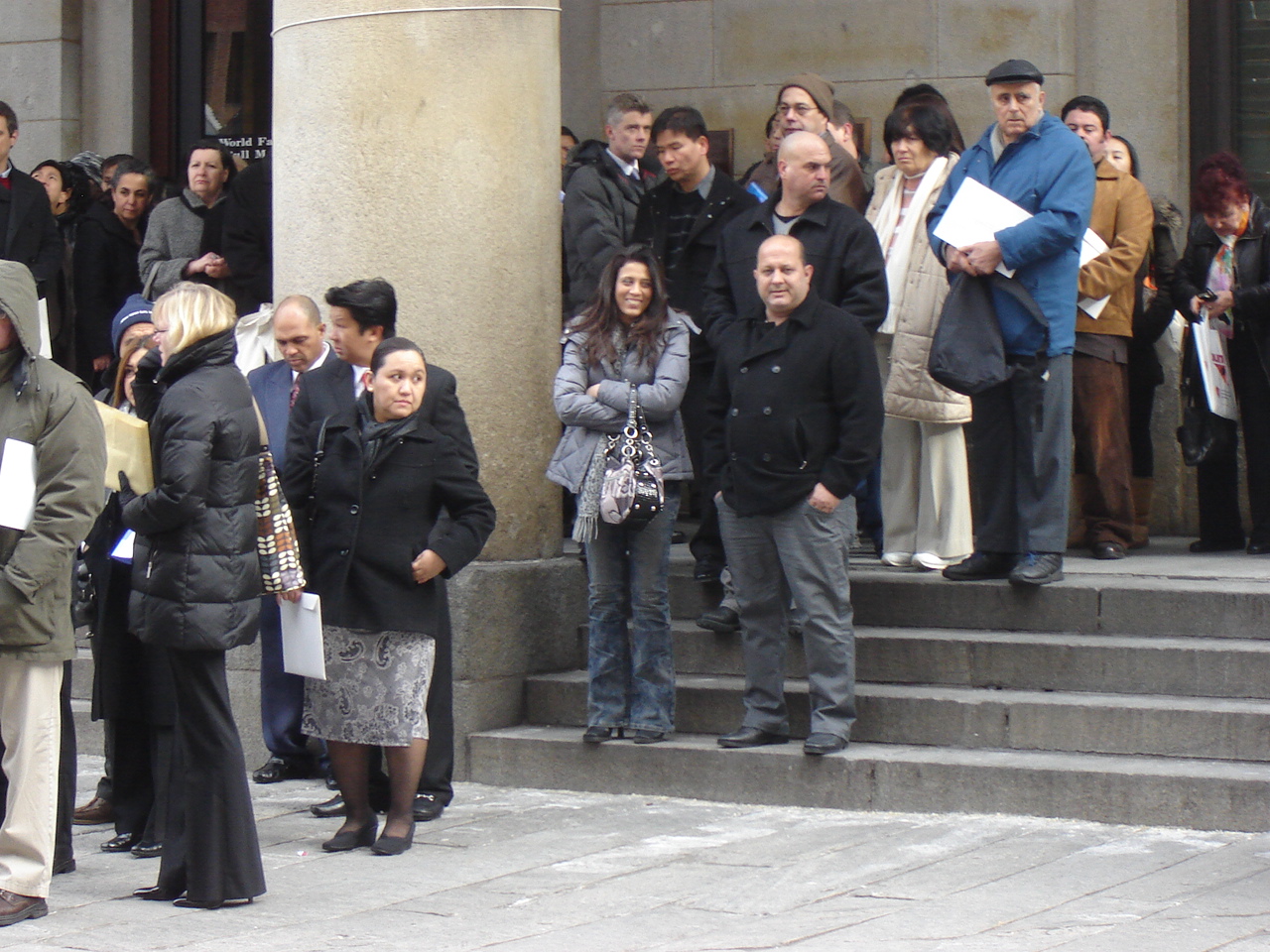
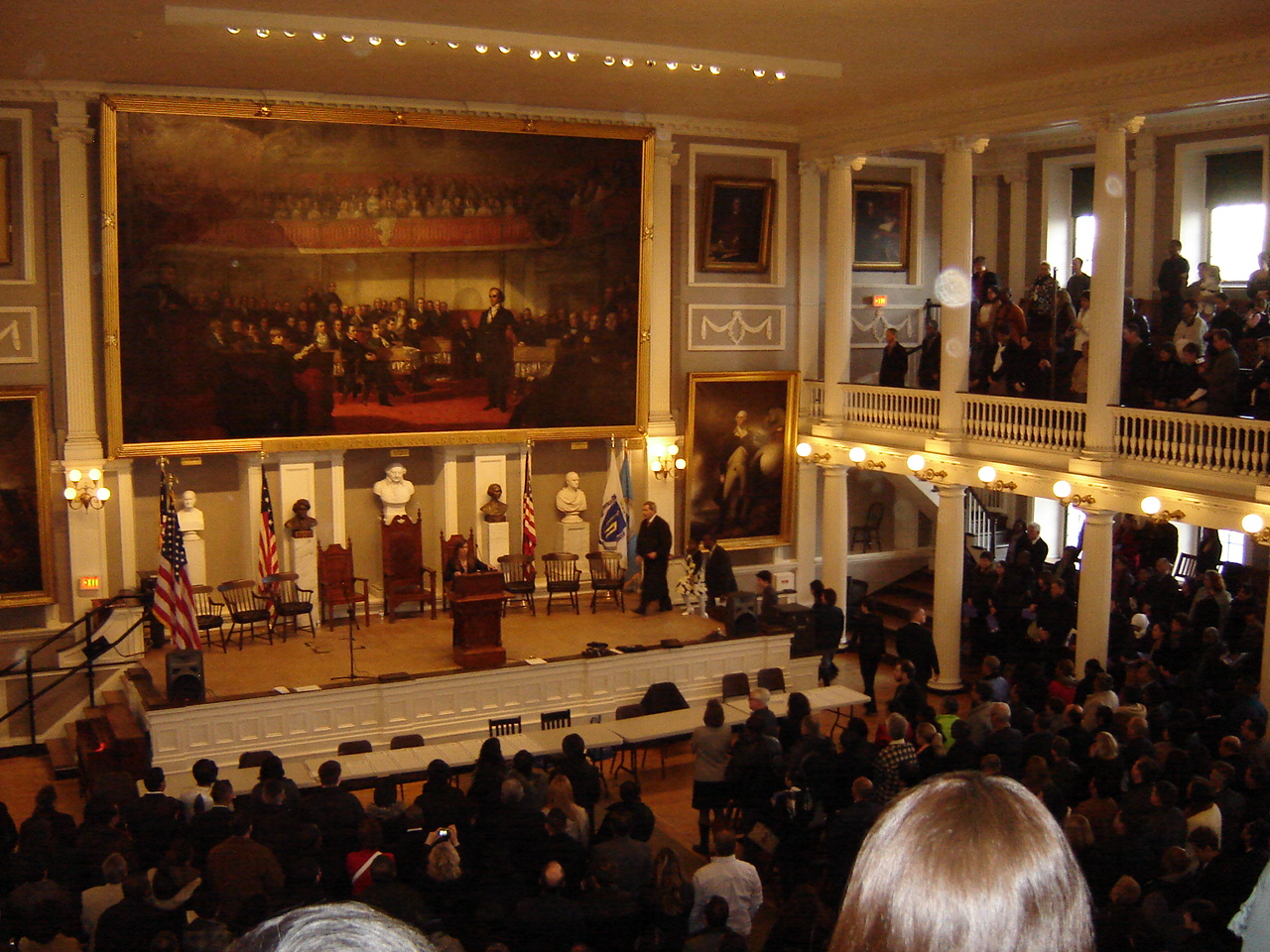
I have always wanted to attend a citizenship ceremony. It turns out the Boston branch of the U.S. Citizenship and Immigration Services performs them every week at historic Faneuil Hall, which was a witness to some of the first rumblings of the American Revolution. It’s an imposing place for a great event.

There were 376 immigrants from 79 countries today (Belarus, Egypt, Sweden, and 76 others). It was moving to think about those 376 people wanting to be citizens and also to think about the United States as a place that can mean hope and opportunity. I did find myself wondering whether some of the new Americans were feeling a little sad, especially refugees and the elderly, who might be thinking about the way their homeland used to be — or could have been.

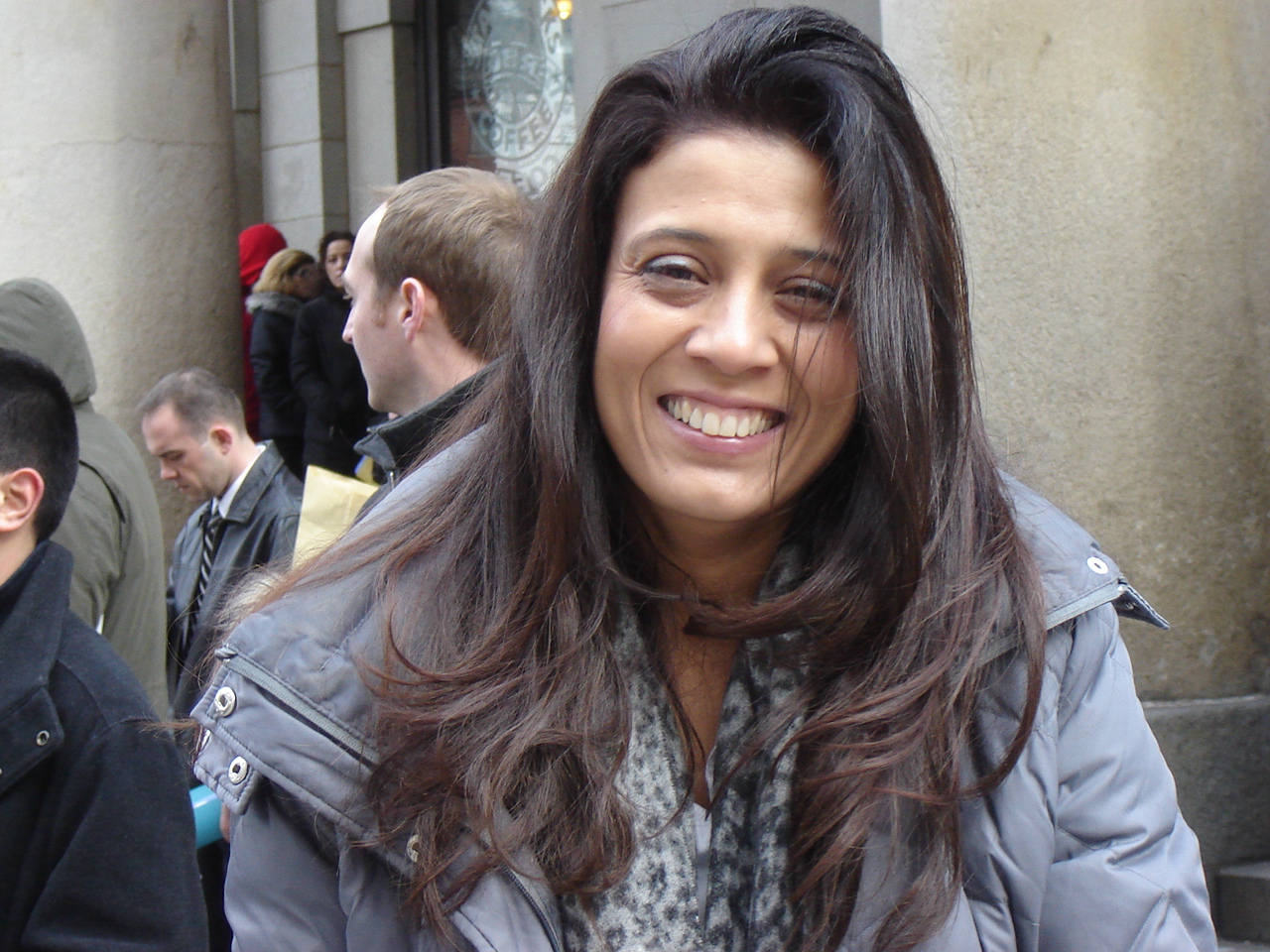
I saw Ione lining up outside. She looked happy and beautiful. Inside, I was surprised to observe a man I knew through my work also becoming a citizen.

The first announcement made me chuckle:”Is there anyone on the floor who speaks Russian?”

As things got underway, the supervisor from the Boston office of U.S. Citizenship and Immigration Services explained that the order of activities related to the different color packets given out to organize the applicants. (He referred to one kind of packet as “skin-colored,” which considering his experience and the broad spectrum of skin colors in the room, seemed odd.) Staff conducted people efficiently along tables where their papers got checked. Then the judge entered.

When the judge entered, the hall became a courtroom. Becoming a citizen is a judicial process, we were told. A young man sang the national anthem. The judge started out lightheartedly by reading the list of 79 countries, making comments about his visits to a particular country or about the country’s soccer status. (I guess “football” is an international language.)

In the solemn part, everyone took an oath of loyalty to the United States. As the complicated phrases were read aloud, the applicants held up their right hands and repeated the historical words about rejecting monarchs and potentates and serving in the military if required by law.

Finally, the judge asked the small citizen daughter of one new American to lead everyone in the Pledge of Allegiance. It was hard to speak. A wonderful moment.

Read Full Post »

Manchester (NH) is an official refugee resettlement city. The State Department determines how many refugees the United States will take in each year and works through agencies to ease the transition. A colleague of mine lives in Manchester and was upset to learn about growing hostility to refugee placements.

Kathryn Marchocki writes in The Union Leader, “Mayor Ted Gatsas wants a moratorium on new refugee arrivals in Manchester after learning the city will receive a projected 600 refugees over two years, even though it now is the second-largest refugee resettlement community in New England.”

An alternative paper, The Hippo, goes into more depth. Here it quotes refugee supporters.

“ ‘For us, it’s a double-edged sword,’ said New Hampshire Catholic Charities’ Chesley. ‘The conditions they’re leaving are abhorrent. … But when the refugees come to New Hampshire, we witness the difficulty, the challenge. We also witness the evolution of a refugee’s life. The first few months here, they’re struggling. But there are so many wonderful examples of success.’

“There are many who realize just how much these refugees are bringing to the city. … [Rwandan refugee] Ntabaganyimana is one example of refugees’ giving back. He serves on a variety of community boards and organizations.

“The focus is always on challenges facing refugees or how refugees are impacting services. Ntabaganyimana would like a little more emphasis on the benefits of refugees and their successes. Sure, he says, there is an upfront investment in the refugees. But once they’re settled and acclimated, they’re contributing to the fabric of a community just like everyone else.”

Chesley points out that people have been migrating around the world forever. ” ‘That’s not new to New Hampshire. It’s not new to Manchester. The faces just look different and the colors are darker than the French Canadians or the Irish or the Polish, but the issues are still pretty much the same.’

“Refugees are working, and they are paying taxes. Ntabaganyimana guesses the refugees who are working are probably outweighing any impact that comes from refugees who aren’t able to find work quickly.”

The Hippo article also mentions a student from Suzanne’s alma mater, who has made a documentary on the issue. “Brendan Gillett is a student at Pomona College in California. He spent a great deal of time immersed in the refugee community while he filmed his documentary, Our Community. Gillett …  suggested implementing a program that would spread responsibility and include not just resettlement organizations but also the general public. He suggested establishing a family sponsorship program in which a native New Hampshire family could work with and provide help (rides to appointments, the grocery store, etc.) to a newly arrived family.”

Read more here.

Read Full Post »

« Newer Posts