Feeds:
Posts
Comments

Posts Tagged ‘shelter’

Photo: Alan Devall/Reuters.
A drone view shows volunteers with people affected by the Palisades wildfires, at a donation center in Arcadia, California, Jan. 12, 2025.

If you ever feel like your world is run by people without hearts, do what Mister Rogers’ mother advised when he was a little boy: “Look for the helpers.” As long as there are a few willing helpers, all things are possible.

Consider the volunteers in the recent California wildfires. At the Christian Science Monitor, Ali Martin wrote in January about people stepping up, even those whose lives had also been damaged.

The story started with a family’s pet goat. “Coco the goat is nestled in a soft bed between two cars in the parking lot of El Camino Real Charter High School on the western edge of Los Angeles’ San Fernando Valley. Other wildfire evacuation shelters wouldn’t allow the 10-year-old house goat to stay with her family – the animal shelters board pets on their own, in kennels – but breaking up wasn’t an option for her owner, Maji Anir. …

“She is quietly out of the way, is no bother, and offers a drop of levity in a sea of stress – most people who take notice stop to pet her, spirits lifted. Workers are letting her stay.

“Mr. Anir and his family had just two hours to evacuate as the fire approached their home in Malibu – not enough time to get everything they needed. They pulled away Tuesday evening as the sun was setting. By morning the house was gone, along with all of their neighbors’. …

“Even in this besieged region, ruin is bending toward resilience. And from the staff to random visitors and those sheltering, a common theme is kindness. …

“El Camino is a well-appointed charter school. … Classes for the school’s 3,500 students were scheduled to start back up in mid-January. Now, with the Palisades Fire burning out of control on the other side of a mountain ridge, the campus is a gathering place for those needing refuge – and the people volunteering to help.

“Kate Delos Reyes was supposed to be in a residential program for mental health treatment. The program in Santa Monica was canceled as fires swept through the nearby Pacific Palisades.

“She’s seen fires before, when she worked at a rehab center in another Southern California mountain range. Remembering that stress, she drove to the evacuation center at El Camino to lend whatever help they might need. ‘Kindness is free, you know.’ …

“Eddie Včelíková is fielding a stream of texts from her friends while she scrolls through social media. She is taking in photos of her childhood home in Altadena; St. Mark’s Episcopal Church, which she attended every Sunday; her schools – all of it destroyed.

“Altadena, an unincorporated town in northern LA County, welcomed Black homebuyers in the mid-1900s, when redlining kept them out of other neighborhoods. As the area developed along the southwestern base of the San Gabriel Mountains, so did the diversity of its middle-class bedrock. Last week, the Eaton fire, which is still burning, swept through much of the small community and leveled entire blocks.

“When she saw video of the burned-out park where she played every weekend as a child, Ms. Včelíková says she broke. She found her way to the shelter. ‘I’m just out here volunteering to stay busy because it’s the only thing I think that’ll keep me from going insane.’ …

“She’s tried to get back into her old neighborhood, but National Guard troops are blocking every route – protecting vacant homes from looting. On Sunday, she attended a virtual church service hosted by St. Mark’s. The church may be gone, but its spirit is not. …

“[Soon] not even the shelter itself is safe. The Kenneth Fire has broken out in late afternoon on a ridge overlooking this edge of the San Fernando Valley. … This refuge is shutting down. Most of the evacuees are heading 20 miles east to another shelter at the Westwood Recreation Center.

“Leslie and Megan Walsh are making space in their packed trunk for a small suitcase. They’ve just met a young woman who needs a ride to Westwood, and they’ve offered to take her.

“They’re from San Diego; they know what LA is going through. In 2003, fires swept through parts of their city, and they had to flee. Their neighborhood lost 300 homes. Now, with Megan living in LA, the family wanted to help however they could.

“Leslie and her daughter drove to LA with a car full of animal supplies – pet food and beds, mostly – to donate. But their first stop, a shelter in Agoura Hills, was evacuated, so they came here. Now this one’s evacuating. …

“The Walshes headed back to San Diego with their supplies. Over the next couple of days, Megan ran a donation drive among their San Diego neighbors. She and her parents returned to LA Sunday with a U-Haul truck and two more cars filled with clothing, toiletries, pet food, sleeping bags, air mattresses, and more. …

“Back at El Camino high school on Thursday, in the hours before the Kenneth Fire erupted, first responders had pulled into a corner parking lot to take a break and grab a meal. The shelter was overflowing with food donations, so school administrators redirected the potluck to feed firefighters and police officers.

“Administrative Director Jason Camp says the support for first responders was driven by an outpouring in the community. … He notes the number of people – emergency responders, volunteers, local officials – who are managing their own fears and losses from the widespread devastation. Nobody is untouched.

“Some people who are displaced or lost their homes want to be part of the solution and ‘to help somebody through the pain and maybe together they can get through it,’ he says. ‘It’s refreshing to see that not everything’s in total chaos. The heart is still there.’ ”

More at the Monitor, here.

Read Full Post »

Photo: Girl Scout Troop 6000.
Girl Scouts of Greater New York’s Troop 6000 is a first-of-its-kind program designed to serve families living in temporary housing in the New York City shelter system.

Kindness and compassion are not dead. You just need to know where to find them.

Consider New York’s Girl Scout Troop 6000, which reaches out to migrant children.

Sara Herschander reports for the Chronicle of Philanthropy, “Once a week in a midtown Manhattan hotel, dozens of Girl Scouts gather in a spare room made homey by string lights and children’s drawings. They earn badges, go on field trips to the Statue of Liberty, and learn how to navigate the subway in a city most have just begun to call home.

“They are the newest members of New York City’s largest Girl Scout troop. And they live in an emergency shelter where 170,000 asylum seekers and migrants, including tens of thousands of children, have arrived from the southern border since the spring of 2022.

“As government officials debate how to handle the influx of new arrivals, the Girl Scouts — whose Troop 6000 has served kids who live in the shelter system since 2017 — are quietly welcoming hundreds of the city’s youngest new residents with the support of donations. Most of the girls have fled dire conditions in South and Central America and endured an arduous journey to the U.S.

“Not everybody is happy about the evolution of Troop 6000. With anti-immigrant rhetoric on the rise and a contentious election ahead, some donors see the Girl Scouts as wading too readily into politically controversial waters. That hasn’t fazed the group — or their small army of philanthropic supporters. Amid city budget cuts and a growing need for services, they are among dozens of charities that say their support for all New Yorkers, including newcomers, is more important than ever.

“ ‘If it has to do with young girls in New York City, then it’s not political,’ said Meridith Maskara, CEO of the Girl Scouts of Greater New York. ‘It’s our job.’ …

“Last year, Troop 6000 opened its newest branch at a hotel-turned-shelter in Midtown Manhattan, one of several city-funded relief centers for migrants. Though hundreds of families sleep at the shelter every night, the Girl Scouts is the only children’s program offered. …

“Last January, the group began recruiting at the shelter and rolled out a bilingual curriculum to help scouts learn more about New York City through its monuments, subway system, and political borders. …

“With few other after-school opportunities available, the girls are ‘so hungry for more’ ways to get involved, says Giselle Burgess, senior director of the Girl Scouts of New York’s Troop 6000.

“Seven years ago, Burgess, a single mother of six, built Troop 6000 from the ground up after losing her rental home to developers. While living in a hotel-turned-shelter, she got the idea of creating a troop for girls like her daughters. It was the height of ‘NIMBYism,’ she says, the not-in-my-backyard movement opposed to local homeless shelters.

“At the time, she asked: ‘Who’s gonna give us a chance?’

“As it turns out, ‘the donations started pouring in,’ she says. A New York Times profile lead to a groundswell of philanthropy. … So, when the mayor’s office floated the idea of starting a troop at the Midtown shelter, the Girl Scouts were ready. …

“Troop 6000 employs bilingual social workers and a transition specialist versed in supporting children who’ve experienced trauma. But otherwise, it operates much like any other Girl Scout troop. Most importantly, says Maskara, the troop offers a glimmer of consistency to children who often must pack up, move homes, and switch schools in the middle of the academic year. Scouts are encouraged to continue participating even when their families move. …

“ ‘Keeping the girls connected is what matters the most for us right now,’ says Burgess. ‘There’s a lot of emotion, frustration, and hurt.’ Around 50 scouts who have left the shelter participate in a virtual troop. ‘We want to be able to encourage the girls and let them know it’s not over,’ she says. ‘We’re still here.’ “

More here.

Read Full Post »

Photo: Lily St Angelo/Burlington Free Press.
Pallet shelters opened in Burlington, Vermont, in November 2022.

Is this unfancy housing a good idea? It’s a reprieve from sleeping rough. It’s off the bare ground, it provides a roof and some heating and cooling, but … but …

In January, Wheeler Cowperthwaite wrote about “pallet shelters” (above picture) for the Providence Journal.

“Since the onset of the COVID-19 pandemic, when the limitations of congregate homeless shelters became clear as the world shut down against a new disease, House of Hope Executive Director Laura Jaworski has been thinking about pallet shelters.

“Three years later, as Burlington, Vermont and Boston have set up their own pallet shelters, Providence could be next in line with a plan for 45 individual tiny shelter buildings, 70 square feet, with screened windows, fire extinguishers, smoke and carbon-dioxide detectors, electrical outlets and their own heating and cooling systems.

“State officials are ‘pursuing’ a plan to open a 45-unit pallet-shelter village on state land off Victor Street in Providence, state Department of Housing spokeswoman Emily Marshall wrote in a news release.

“An additional four ‘office units’ are in the plan, as the site would be staffed at all times, as well as a ‘free-standing community room’ and a combination shower/bathroom and a laundry room. The shower and bathroom would be Americans with Disabilities Act compliant. …

“The proposed site is on 1 acre of a 4-acre half-moon-shaped lot on Victor Street that is bounded by the on-ramp for Route 146 from Douglas Avenue, as well as by Route 146. One street over, on Chalkstone Avenue, is the Foxy Lady strip club.

“It is unclear how long people will stay, but it’s meant to help them stabilize and move into permanent housing. … Rhode Island Homeless Advocacy Project Director Eric Hirsch said the pallet shelters are very needed and will make a difference to the state’s estimated population of 300 people sleeping outdoors.

” ‘These are a particularly good option, and I like the way they’ve set it up, with one person in each unit, so you don’t have to worry about roommate conflict,’ Hirsch said.

“The pallet shelters will take referrals from the state’s Coordinated Entry System, including those who have been chronically homeless.

“The pallet-shelter initiative is largely a result of outreach workers listening to people struggling with homelessness, and the reasons they would rather live outside than go to congregate shelters, where their lives and behavior are largely controlled by the operators, Jaworski said. …

“In congregate shelters, there is no privacy, people are often kicked out early in the morning and not allowed to come back until late in the afternoon and do not allow people to decompress and begin shifting from survival mode to secure residency. …

“Among the ways the pallet shelter would meet people where they are is allowing pets, including having a dog run, and allowing couples. … Pet ownership being banned and couples being separated were two of the major things that providers found were preventing people from taking offered shelter options, she said.

“Each shelter would also have electric service, which is especially important for people who need medication to be refrigerated, including anyone who needs insulin. …

“The city Board of Contract and Supply has scheduled a Jan. 16 hearing on a proposed $475,763 contract with House of Hope, paid for with American Rescue Plan Act funds, as well as a $475,394 outlay for Amos House to extend its program, or add shelter beds, at the Charlesgate shelter program. … In an email, Providence spokesman Josh Estrella wrote that, because the proposed shelter community would be built on state-owned ‘public right-of-way land,’ it is exempt from city zoning regulations.”

My only question is: Since temporary fixes so often become permanent, who is in charge of seeing this solution is truly transitional?

More at Projo, here. A February update from Sarah Doiron and Kayla Fish at WPRI notes that the shelters will open in early spring. See WPRI here.

Read Full Post »

Photo: David Melancon.
For inventive builders today, origami is less about paper cranes and more about fitting useful structures into tiny spaces.

The uses of origami continue to amaze. There are so many variations on this ancient Japanese art! I have written posts on origami and engineering, origami ballet costumes, and origami microscopes, just to mention a few. Today we learn how the principles of origami could be used to create temporary emergency shelters.

Max G. Levy reports at Wired, “One bright April day on a Harvard University lawn, David Melancon stepped out of a white plastic tent carrying a table. Then another. Then he made a few trips to produce 14 chairs. Then a bike, followed by a yellow bike pump. Finally, he carried out a large orange Shop-Vac. Melancon, a PhD candidate in applied mathematics, then closed the tent’s makeshift door behind him. This was what his team dubbed their ‘clown car’ demonstration — proof that a huge number of objects could fit inside a tent which, only a few moments before, had been a flat stack of plastic about the size of a twin mattress, then inflated into an origami-inspired shelter. …

“ ‘There are a number of situations — emergency situations, for example — when you need a structure,’ says Katia Bertoldi, Melancon’s advisor and a professor of applied mechanics at Harvard. For example, people displaced by natural disasters need immediate shelters. ‘I can build a shed, and then it’s there. But then if I have to move, either I take it apart or I move this huge volume. It is very impractical,’ she continues. …

“A standalone origami needs to be bistable. The word is often used in electronics and computer science to describe a circuit with two stable states, but in mechanical design, it basically means the structure has to be sturdy both when it’s flat-packed and when it’s expanded. It would have to hold its shape while folded, and stay that way while unfolded without sealing in air. …

“Last Wednesday in the journal Nature, [Bertoldi’s team] presented an unprecedented collection of bistable inflatable origami. Folded from either cardboard or corrugated plastic sheets, the pieces snap into place with pressure from an air pump, and hold their own without it. … One stands out: an 8-foot-tall shelter with an 8-foot-wide octagonal floor and a door, unfolded from one single material. …

“ ‘It’s exciting work,’ says Joseph Choma, an associate professor of architecture and founder of the Design Topology Lab at Clemson University. Choma, an expert in foldable structures and materials who was not involved in Bertoldi’s project, says the world needs smarter disaster relief architecture, ‘especially ones that can be flat-packed, deployed, and then flat-packed again.’ …

“Bertoldi points out that we already have a well-known deployable shelter: camping tents. Light, tightly-packed tents make it easier to backpack through the wilderness. But assembling one into an enclosed space takes time. You have to link metal bars, thread them through narrow holes in fabric, and lock it all in place. Setting up bar-based structures en masse takes even more time and hands. An ideal emergency shelter gets set up quick when it’s needed, and comes down quick when it’s needed elsewhere. …

“The origami magic happens at the hinges. The faces won’t bend, so something’s got to give. The hinges were either two-sided tape connecting laser-cut cardboard, or lines mechanically scored into plastic sheets. That allows the structure to bend around itself for inflation and deflation. And in order to make all the hinges swing into place automatically, her team decided, maybe they could just inflate the folds all at once using air pressure.

“But blowing air into an inflatable object is more like compressing a spring then assembling a building. It’s not bistable. ‘You compress it and it deforms,’ Bertoldi says. ‘But as soon as you remove your load, it springs back.’ In other words, you can use force from air pressure to deform a folded bundle of cardboard and turn it into an inflatable tent, but then you’re stuck making sure the air stays in — which, of course, rules out having a door.

“Stability is all about minimizing excess energy: a ball parked in a valley is more stable than one halfway up a steep hill. Bistability means designing a structure so that its energy barrier, or the amount of energy needed to lock it into its inflated or deflated states, is just right. The barrier can’t be too high, or else it’s impossible to inflate. But the barrier also can’t be too low, because then a gust of wind could collapse it: ‘It’s gonna flip back and deflate,’ Bertoldi says. ‘You need to carefully design its energy barrier,’ she continues. ‘And that’s most of the engineering game.’ ”

At Wired, here, read how a lot of trial and error led to something that works.

Read Full Post »

Shelter

America, January 12, 2020

At a time of year that many communities around the world are telling the story of finding shelter in a stable, it feels ironic that even in a pandemic wealthy countries can’t find it in their hearts to protect people from being evicted.

In America, if the December rescue bill is signed, renters will be protected until the end of January 2021, about a month.

Coronavirus shut down businesses, and people lost jobs and couldn’t pay rent. Have we no collective will to protect the most vulnerable? Landlords, especially small landlords, need protection, too. It’s not just up to them.

The burden of pandemic losses must fall on us as a group. As a taxpayer, that would be my priority. I can do without more bombers and military aid to Saudi Arabia. As a people, many of us celebrating Christmas today, what are our priorities? What does Christmas mean?

At the Washington Post, Heather Long and Rachel Siegel interviewed Americans who are in danger at this season.

“Most told The Post they are ‘not political people’ and are struggling to understand why Congress and the president would be able to celebrate Christmas when 14 million Americans are slated to lose unemployment aid on Saturday, the government is set to shut down on Tuesday, and an eviction moratorium that has prevented millions from losing their homes during a pandemic ends on New Year’s Eve.

“Waitress Robyn Saban summed up the sentiment of many: ‘I’ve worked for 18 years at a diner under very hard conditions. I never called in sick except when my husband died. And now Congress is just leaving town. It makes me furious because they are leaving people hanging.’ …

“Tony Bowens, 31, spent nine days in a hospital in March fighting for his life against the deadly coronavirus. In many ways, he’s just grateful this Christmas to be home with his wife and two kids, even though very little is the same. As his family struggles to pay rent, he can’t believe [there’s no] agreement on aid. …

“Bowens has ongoing complications from covid: Headaches, temperatures that spike for a day, crippling leg pains and trouble breathing. He lost his IT job in March and has not been able to work since. He received $65 a week in unemployment through the Pandemic Unemployment Assistance program that Congress created this year to assist independent contractors and gig workers like him, but it will end the day after Christmas unless a relief bill gets enacted.

“His family is barely getting by on his wife’s job as a state government worker in Illinois. They are behind on rent and the electric bill, and they worry about more layoffs for state workers.

“Bowens said extending unemployment is ‘one of the most important things’ in the relief package because a $600 one-time check won’t last long, ‘but unemployment would go for 11 weeks. I was going to be able to get that again.’ ”

More on evictions at the News and Observer in Charlotte, North Carolina, here, at US News, here, at the Washington Post, here, and at CNBC, here. Eviction Lab is worth checking, too, here.

Read Full Post »

Photo: Low Income Housing Institute
Six tiny houses share a common deck in Lake Union Village, Seattle, Washington.

Believe it or not, there are lots of people who spend their time trying to make life better for everyone. I know how easy it is to get distracted by headlines featuring people doing the opposite, but I find that focusing on the helpers is better for my mental health. The following article shows how well things can work when a city tries to make life better for everyone by helping those most in need.

At the community development magazine Shelterforce, Sharon Lee, executive director of the Low Income Housing Institute (LIHI), reported on a hopeful Seattle initiative.

“In 2017, I wrote a piece for Shelterforce on Seattle’s then-emerging effort to build tiny houses to shelter homeless families, couples, and singles. Over the past three years, Seattle has led the country in piloting this response to the homelessness crisis. …

“Tiny house villages are an effective crisis response to homelessness and have proven to be a rapid, cost-effective response with better outcomes than traditional shelters. …

“When Mayor Jenny Durkan took office in January 2018, she authorized the first tiny house village exclusively for homeless women. The Whittier Heights Village is located on property owned by Seattle public utility City Light and shelters single women, same-sex couples, seniors, pregnant women, and women with pets. The mayor also funded two additional villages: True Hope Village, which is church-sponsored and focuses on people of color including families with children; and Lake Union Village (LUV), for singles and couples, located on a city-owned parking lot. All three villages were planned, constructed, and opened in 2018, and together shelter 155 homeless people.

“How did this happen so quickly? The mayor prioritized the need. … A village requires anywhere from 6,000 to 30,000 square feet of vacant land, depending on the number of tiny houses and common facilities to be placed there. There are suitable urban infill sites zoned for residential and mixed use, as well as larger commercial and industrial sites.

“It takes careful research and help from local government to identify good sites, and we were quite surprised to find a large inventory of publicly owned underutilized and surplus sites held by the city, county, state and even the Port of Seattle. We also found multiple nonprofit, private, and church-owned properties that could be used. Nonprofit housing organizations own land that they hope to develop in the future, and these can be used on an interim basis, from two to four years, for a tiny house village.

“Each village needed only four to six months’ lead time to be constructed. … There are 15 to 34 tiny houses at each village, plus shared community kitchens, community meeting space, counseling offices, storage, donation huts, security huts, and plumbed bathrooms, showers, and laundry facilities.

“An effective partnership between multiple departments in the city and LIHI was key in setting up the villages. … LIHI staff led the effort to raise funds to construct the tiny houses, reaching out to hundreds of donors and volunteers. We applied for permits, led work parties to build the houses, and developed the management and staffing plans.

“We undertook extensive community outreach to neighbors, businesses, and the public, working alongside city staff, including the Seattle Police Department and the Human Services Department, which funds LIHI for operations and services. While not everyone was supportive, they were all provided detailed information on the management plan and code of conduct, and were invited to submit their names to serve on a community advisory committee. Each village, staffed 24/7, has Village Organizers and dedicated case managers to assist people in obtaining long-term housing, employment and services.”

At Shelterforce, here, you can read more details, including Lee’s assessment of how the tiny house approach compares with other initiatives to address homelessness.

Photo: Andrew Constantino
A row of tiny houses in the Georgetown Village in Seattle. I like how residents show their love for their place.

Read Full Post »

Photo: Oluwatoyin Adewumi/BBC
Tanitoluwa Adewumi playing chess.

That today’s media has a downside needs no elaboration, but think about the good that sharing stories can do! In this case, a young asylum-seeker in a New York City shelter gained attention for chess playing and, when the word got out, ended up with a home for his family.

Here’s what I first learned from the BBC. “Tanitoluwa Adewumi left his home in northern Nigeria with his family in 2017 because of the ongoing attacks by the Islamist militant group Boko Haram. He moved with his family to the United States, but is currently living in a homeless shelter with his mother Oluwatoyin, father Kayode and older brother.

“Despite the challenges, when Tanitoluwa showed an interest in playing chess, his mother made sure that he could attend the local club. He has been playing for just over a year, but hours of practice and hard work have paid off – he has just won top prize in his age category at the New York State Chess Championship.” More at the BBC.

And here’s what happened after New York Times columnist Nicholas Kristof spread the word. This piece was published March 23. “Tanitoluwa Adewumi, age 8, skidded around the empty apartment, laughing excitedly, then leapt onto his dad’s back. ‘I have a home!’ he said in wonderment. ‘I have a home!’

“A week ago, the boy was homeless, studying chess moves while lying on the floor of a shelter in Manhattan. Now Tani, as he is known, has a home, a six-figure bank account, scholarship offers from three elite private schools and [more]. …

“I wrote in my column last weekend about Tani as a reminder of the principle that talent is universal, even if opportunity is not. A Nigerian refugee who had learned chess only a bit more than a year earlier, he had just defeated kids from elite private schools to win the New York state chess championship for his age group. …

“A GoFundMe drive raised more than $200,000 for Tani, his parents and his brother. A half-dozen readers offered housing — in a couple of cases, palatial quarters. Immigration lawyers offered pro bono assistance to the Adewumis, who are in the country legally and seeking asylum. …

“The family settled on one of the more modest and practical housing offers: An anonymous donor paid a year’s rent on a two-bedroom apartment near Tani’s current school. The apartment is clean, comfortable and freshly painted, without being luxurious, and the Adewumis gaze adoringly at their new kitchen.

“ ‘I want my mom’s cooking again!’ Tani mused as he explored the apartment. It was bare, but another donor had offered furniture, sheets and towels. Someone else was sending 100 chess books. …

“The Adewumis have decided that they will not spend a cent of the $200,000 GoFundMe money on themselves. They will take out a 10 percent tithe and donate it to their church, which helped them while they were homeless, and the rest will be channeled through a new Tanitoluwa Adewumi Foundation to help African immigrants who are struggling in the United States the way they were a week ago. …

“ ‘I’m a hardworking guy,’ Mr. Adewumi explained. He has two jobs: He drives for Uber with a rented car and sells real estate through Brick & Mortar. Someone has now offered him a free car so that he can keep more of the money he makes driving, and Tani’s mom was just offered a job as a health care aide at a hospital. …

“The family was tempted by the offers of full scholarships at top private schools. But Tani and his parents decided that while he might accept such a scholarship for middle school, he would be loyal and stick with the public elementary school, P.S. 116, that taught him chess and waived his fees for the chess club. …

“ ‘God has already blessed me,’ Mr. Adewumi told me. ‘I want to release my blessing to others.’ ”

More  at the Times.

Read Full Post »

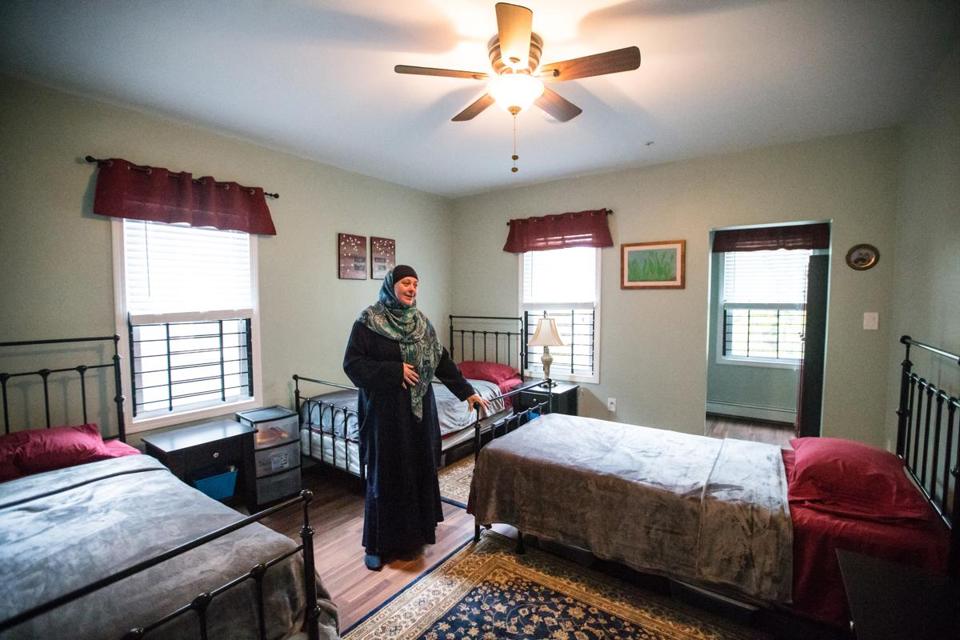
boghosian_27homeless6_met

Photo: Aram Boghosian for The Boston Globe
Malika MacDonald is director of the Amal Women’s Center, which provides shelter for Muslim women and children in need of temporary housing.

When I was working at the central bank, we had a Hubert Humphrey Fellow visit us from Bahrain. One aspect of America she was studying was homelessness. She said there was no homelessness in her country. She said families would never let it happen; they would take people in.

Having no way to know whether that was true in every case, I was nevertheless intrigued. Was it something about the culture in a Muslim country?

One thing I do know is that in this country, alas, Muslim women and children like other women and children, sometimes find themselves in need of temporary housing. That was the impetus for a new center in Boston, the brainchild of an Egyptian-American college student.

Lisa Wangsness wrote about the initiative at the Boston Globe. Here is the part of the article that touched me the most.

“The project began six years ago, when Mona Salem, then a 20-year-old Egyptian-American college student, was trying to help a young Muslim friend who wanted to escape a foster home where she felt unsafe.

“Salem thought her friend would feel most comfortable in a Muslim-run shelter for women, but soon discovered none existed in Boston. So she began raising money to start one, and teamed up with [Malika MacDonald, the national director of the Islamic Circle of North America Relief USA’s Transitional Housing Network.] …

“Donations poured in from every direction. Dishes and pots and pans for the kitchen arrived from families affiliated with the Framingham and Wayland mosques. A man offered his Home Depot credit card to pay for lighting. Various groups and individuals sponsored each of the bedrooms, furnishing them with bright-colored bedding and art for the walls.

“Salem said she was near tears when she saw the finished house the other day.

“ ‘That place was a dump when we first got there, and now it’s beautiful — absolutely beautiful,’ she said. ‘That says a lot about . . . how strong we are as a community to help one another.’

“Help arrived from beyond the local Muslim community as well. An artist in Texas sent an Arabesque Moroccan ceiling medallion for the living room. A board member of the interfaith group Kids4Peace Boston donated a lacquered dining table and banquette. The founder of a planned shelter for transgender people in Indiana sent along bathroom towels, MacDonald said.”

I suspect many of those donors know what it’s like to feel different and look for comfort.

More at the Boston Globe, here.

Read Full Post »

This story comes from Heather Dockray at Good magazine (by way of the Huffington Post). It’s about a life-affirming project in Atlanta.

“Good, local, nutritious food shouldn’t be expensive,” she writes, “and shouldn’t only be enjoyed by people who can afford it.  A homeless shelter in Atlanta decided that their residents desperately needed access to healthy food — but instead of sourcing out, encouraged residents to grow their own. Now, the shelter is home to a huge rooftop garden planted by the residents themselves, which is expected to yield hundreds of pounds of great quality greens. …

“While eating discounted snacks might give homeless residents short-term financial benefits, the long-term health consequences are substantial. The Metro Atlanta Task Force for the Homeless, who runs the gardening program, wanted to give homeless people access to food previously considered out-of-reach. Now, residents are responsible for 80 garden beds, producing kale, carrots, chard, and squash, among other vegetables.” More here.

Dockray doesn’t mention how gardening and donating to the shelter makes residents feel, but I am going to guess it builds their self image and confidence.

Photo: Metro Atlanta Task Force for the Homeless

Read Full Post »

Check out this story in the Boston Globe. It seems especially timely given the increasing numbers of people growing their own food and the concerns about many others who are struggling.

“Every summer, 40 million backyard farmers produce more food than they can use, while people in their communities go hungry. If only they could link up. Enter Gary Oppenheimer, 59, of West Milford, N.J. He was directing a community garden a couple of years ago when inspiration struck. In May 2009, AmpleHarvest.org hit the Internet, connecting food pantries and gardeners. In just 150 days, Rosie’s Place in Boston became the 1,000th pantry on the site, and the growth has continued. As of Labor Day, 4,188 pantries were listed, in all states. Oppenheimer says the nonprofit organization is actively seeking grant funding to sustain what has sprung up.” Read more here.

If you have extra produce from your garden, you can go to AmpleHarvest to find a food pantry near you.

Photographs: Sandra M. Kelly

Read Full Post »