Feeds:
Posts
Comments

Posts Tagged ‘uk’

Photo: Mirrorpix
In 1968, Hull fishermen’s wives and mothers successfully fought the dangerous conditions perpetuated by trawler owners. They refused to take no for an answer.

It’s good to be strong, but sometimes the tough guys don’t know when to complain, don’t know when complaining can prevent the premature deaths of family and friends that leave children fatherless and devastate communities.

That’s when women have to take charge. And as a group of women showed in Hull, UK, in 1968, angry wives and mothers can be tougher than men.

Lucy Beaumont writes at iNews, “In January 1968, several Hull trawlers set off to the icy, dangerous waters of the Arctic in their quest for the biggest catch.

“They headed straight into one of the worst storms in living memory. Within three weeks, three of the ships had sunk and 58 men had lost their lives. For their families back home in the Hessle Road area of Hull, the news was devastating. It was known as the Triple Trawler Tragedy. Out of this tragedy came something incredible. Hull women – wives, mums, sisters, daughters – rose up to protest against the dangerous working conditions.

“They wanted a safer fishing industry and they were prepared to do anything to get it. They marched, they spoke out and they went straight to the top demanding change. During their campaign they were verbally and physically attacked – one woman was even punched in the face. They made headlines around the world and managed to change British law after getting over 10,000 signatures in support and not giving up until the authorities listened to them. …

“The [so-called] headscarf heroes should always be remembered. The women of Hessle Road were so strong. They had to be because they could lose their husband, their father or their son at any time. They had to cope with it and carry on looking after the family – and that’s exactly what they did. The women’s campaign was one of the biggest and most successful civil action campaigns of the twentieth century and coming from Hull, I’m so proud of those women.”

Beaumont’s personal connection to the story sometimes overwhelmed her as she worked on a BBC documentary about the women. “My grandad is from a family of men and women born and bred in the fishing community on Hessle Road. His granny lost two sons at sea. John was only 19 when he was washed overboard and Herbert died from pneumonia. She had poppies on their photos and swore that she heard John calling for her at the time. It was later confirmed that he had perished.” More here.

The life of a fisherman continues to be one requiring toughness from all the women and men who go to sea. There are a few more protections today than there were in 1968, but no one controls the weather. With global warming reportedly causing more storms, the dangers are actually likely to increase.

Read Full Post »

sheku-kanneh-mason-2-credit-lars-borgesPhoto: Lars Borges
As of February 2, 18-year-old Sheku Kanneh-Mason was 2018’s best-selling British debut artist – across all genres.

Here’s another story celebrating a young person who thinks differently and opens a new path. He’s a musician in the United Kingdom who refuses to limit himself to one kind of music — and shows that one can excel in different genres.

Katy Wright at Rhinegold Publishing reports, “Sheku Kanneh-Mason has become this year’s best-selling British debut artist – across all genres – to enter the Top 20 in the Official UK Albums Chart with his album Inspiration.

“The release, which features repertoire ranging from Shostakovich to Bob Marley, has entered the main chart at No. 18, and is at No. 1 in the classical chart.

“The 18-year-old is the first BBC Young Musician to break into the pop chart with his debut album, as well as the youngest cellist ever to reach the Top 20 and the youngest classical artist to break into the Official UK Albums Chart in almost a decade. …

“The album … features Shostakovich’s first cello concerto – the piece which propelled Sheku to fame as the first black winner of BBC Young Musician in the competition’s 38-year history – and Kanneh-Mason’s own arrangement of Bob Marley’s ‘No Woman, No Cry’.

“Kanneh-Mason is the top streamed young classical artist, having received 2.5 million streams on Spotify alone.”

Wikipedia adds some biographical details. “Sheku Kanneh-Mason grew up in Nottingham, England. He is the third eldest of the seven children of Stuart Mason (a business manager) and Kadiatu Kanneh (a former university lecturer), and began playing the cello at the age of six, having briefly played the violin. At the age of nine, he passed the Grade 8 cello examination with the highest marks in the UK, and won the Marguerite Swan Memorial Prize. …

“In 2015, he and his siblings were competitors on Britain’s Got Talent as The Kanneh-Masons. He won the BBC’s Young Musician of the Year contest in May 2016, later telling The Observer that appearing on Britain’s Got Talent had been ‘a good experience for getting used to performing in front of lots of people, with cameras and interviews.’ …

“Kanneh-Mason is a member of the Chineke! Orchestra, which was founded by Chi-chi Nwanoku for black and minority ethnic classical musicians. …

“In 2016, Kanneh-Mason told The Guardian‘s Tom Service that ‘Chineke! is a really inspiring project. I rarely go to a concert and see that kind of diversity in the orchestra. Or in the audience. Having the orchestra will definitely change the culture.’ …

“In January 2018, it was reported that Kanneh-Mason had donated £3,000 to his former secondary school, enabling ten other pupils to continue their cello lessons.” More at Wikipedia, here.

Read Full Post »

Photo: fractalx via VisualHunt.com
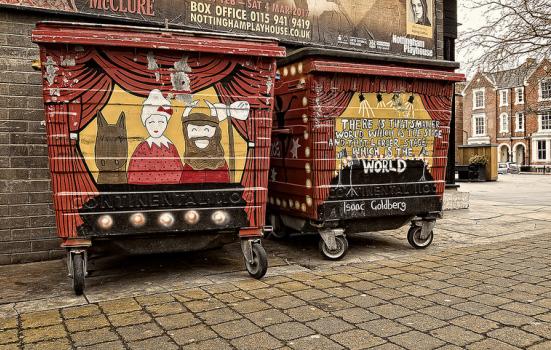
Street art outside Nottingham Playhouse. The city has a plan to integrate arts and culture into all aspects of life.

What do we know about the city of Nottingham? We know about the sheriff, I guess, and his adversarial relationship with Robin Hood. But did we know that modern-day Nottingham is really into the arts? A website called Arts Professional wants to enlighten us.

Christy Romer writes, “Nottingham has committed to embedding culture in education and healthcare as part of an ambitious ten-year vision for the city.

“By 2027, the city aims to make ‘culturally-inspired lifelong learning’ available for every person in Nottingham, and establish cultural programmes, research and partnerships that enhance health and wellbeing.

“The vision … aims to achieve national and international acclaim for the quality and diversity of locally-produced artistic work.

“ ‘Culture will unlock potential in our city. The next ten years will continue to see a transition that takes the city from its industrial, manufacturing past, paving the way to reimagine the city for generations to come,’ the [Cultural Statement’s] foreword reads. …

“Plans include supporting schools to develop a world-class cultural learning offer and giving every person opportunities to access creative skills and careers. …

“The City Council also aims to work in partnership with public health professionals and local commissioning groups to understand and enhance the health and wellbeing of the city’s residents. …

“The city announced its bid for the European Capital of Culture 2023 title in August.” More.

Alas, the Brexit vote to leave the European Union means that UK cities will not be eligible. Here’s hoping that Nottingham’s worthy ambitions are not derailed by Brexit and that the UK government will help the city find the resources to carry out its plans. (One has to wonder if the ramifications of leaving the EU was ever fully thought out.)

AmeliainHull, it sounds like Nottingham wants to give Hull a run for its money!

Art: Louis Rhead, “Bold Robin Hood and His Outlaw Band,” New York: Blue Ribbon Books, 1912.

Read Full Post »


Photo: Alicia Canter/The Guardian
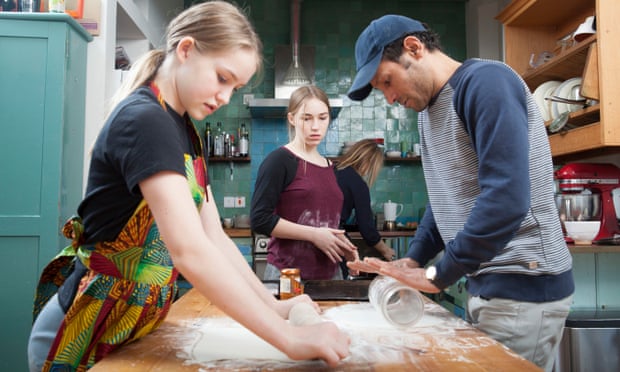
Mohammed, a Palestinian, bakes cheese twists with his host family in London.

Here’s another example of individuals in the UK stepping up to give refugees a welcome — while providing themselves with an experience that feels more meaningful than donating money or sending “thoughts and prayers.”

Alicia Canter, Kate Lyons and Matt Fidler write at the Guardian,
“It’s a simple premise: people with a spare room in their house are matched with a refugee or asylum seeker in need of somewhere to stay.

“And it’s a popular one: before 2015, Robina Qureshi’s organisation, called Positive Action in Housing (PAIH), used to provide about 600 nights of shelter a year to people with nowhere to go. In the 18 months since September 2015 this has risen to 29,000 nights.

“ ‘We were getting bombarded with people. … They said, “I want to do something.” ‘ …

“There are numerous points in the asylum process that asylum seekers and refugees can find themselves becoming destitute and homeless. Perhaps the most common is when they have their claim refused – at which point support payments stop and they are forced to leave their accommodation.

“People in this situation often find themselves homeless, without the right to work or receive benefits, unable to approach the local authority for help, and yet, in many cases, feeling unable to return to their home country. …

“ ‘The ones I feel really sorry for are the people who have been left destitute for years on end. People take them in and let them be human, and take them into a warm home where people care for them,’ says Qureshi.

‘What the hosts found out was that they were meeting a need in themselves – a need to give. Our society is so wealthy and our houses are stuffed full, but there’s that need to help others.’

“Mohammed, 35, from Palestine, [lives] with Joanne MacInnes, an actor and activist, in west London, and on weekends her daughters Malila, 12, and Eve, 14. …

“MacInnes has hosted six people in her house, but Mohammed is, she and her girls agree, their favourite. ‘He’s the nicest of them all,’ says Eve.

“Currently the family are trying to find Mohammed a wife. He uses his local mosque’s dating service, but says that because of his precarious immigration status he is not considered a desirable match. …

“Mohammed says he was shy when he moved in and nervous about how the family would respond to him.

“ ‘First time I come in here, I’ll never forget, Malila gave me a hug and speak with me,’ says Mohammed. ‘I was shy, Malila come in straight away, hug and speak with me and is not shy, you know. Eve is shy and Eve after two weeks spoke with me. And Joanne spoke with me. I feel family. Listen, I don’t speak English, but I hope you understand me. My dad is dead, my mother is dead [and] my sister. Joanne, Mali and Eve are my family.’ ”

More here.

Read Full Post »

4948

Photo: The Guardian
One recent immigrant from Pakistan was welcomed into the home of Jo Haythornthwaite of Maryhill Integration Network in Glasgow, an example of individuals stepping up to help refugees.

The hostility to immigrants that fueled the Brexit vote in Britain gets all the attention, but there are other voices. There are always other voices.

Gregory Maniatis writes for the Open Society Foundations about refugee outreach across the British Isles.

” ‘I can’t solve the whole Syrian crisis, but I can do something, for a few people.’ The words of Olwen Thomas, from the port of Fishguard in Pembrokeshire, southwest Wales, probably sum up the feelings of many people around the world, as we follow news reports about the terrible difficulties that have faced refugee families fleeing the conflict in Syria, as well as other crises around the world.

“Thomas, and other members of her community, are now doing something significant through their involvement in the Fishguard Refugee Sponsorship Group. The group was one of the first to respond to a UK scheme first announced last July by the British Home Affairs Minister Amber Rudd and the Archbishop of Canterbury Justin Welby — the leader of the Anglican Church.

“Under the Community Sponsorship program, local groups agree to sponsor refugee families and help them integrate into life in the UK by assisting with things such as finding housing, securing access to medical and social services, arranging English language tuition, and supporting them towards employment and self-sufficiency. …

“One Welsh group in the small town of Cardigan has raised £12,000 as part of its application to the scheme. Vicky Moller, a member of the group, told the BBC … ‘People are very, very keen to help.’

“The sponsorship model being launched in towns and cities across England and Wales is partly inspired by a hugely successful effort launched in Canada in 1979, when the mayor of Ottawa, Marion Dewar, mobilized an effort by community groups to settle 4,000 mostly Southeast Asian refugees. To date, Canadian communities and citizens have resettled almost 300,000 refugees through its private sponsorship program. …

“Chris Clements, a director of Social Finance UK, … has noted the shortcomings of ‘traditional’ refugee resettlement in the UK, which has left many refugee families isolated and struggling to adapt to their new surroundings. This in turn results in high rates of unemployment, depression, stress, and other problems.

“Community sponsorship, Clements says, ‘enables local people to take responsibility for resettling a refugee family, supporting and empowering them to rebuild their lives.’ ”

More here.

Read Full Post »

Photo: Getty
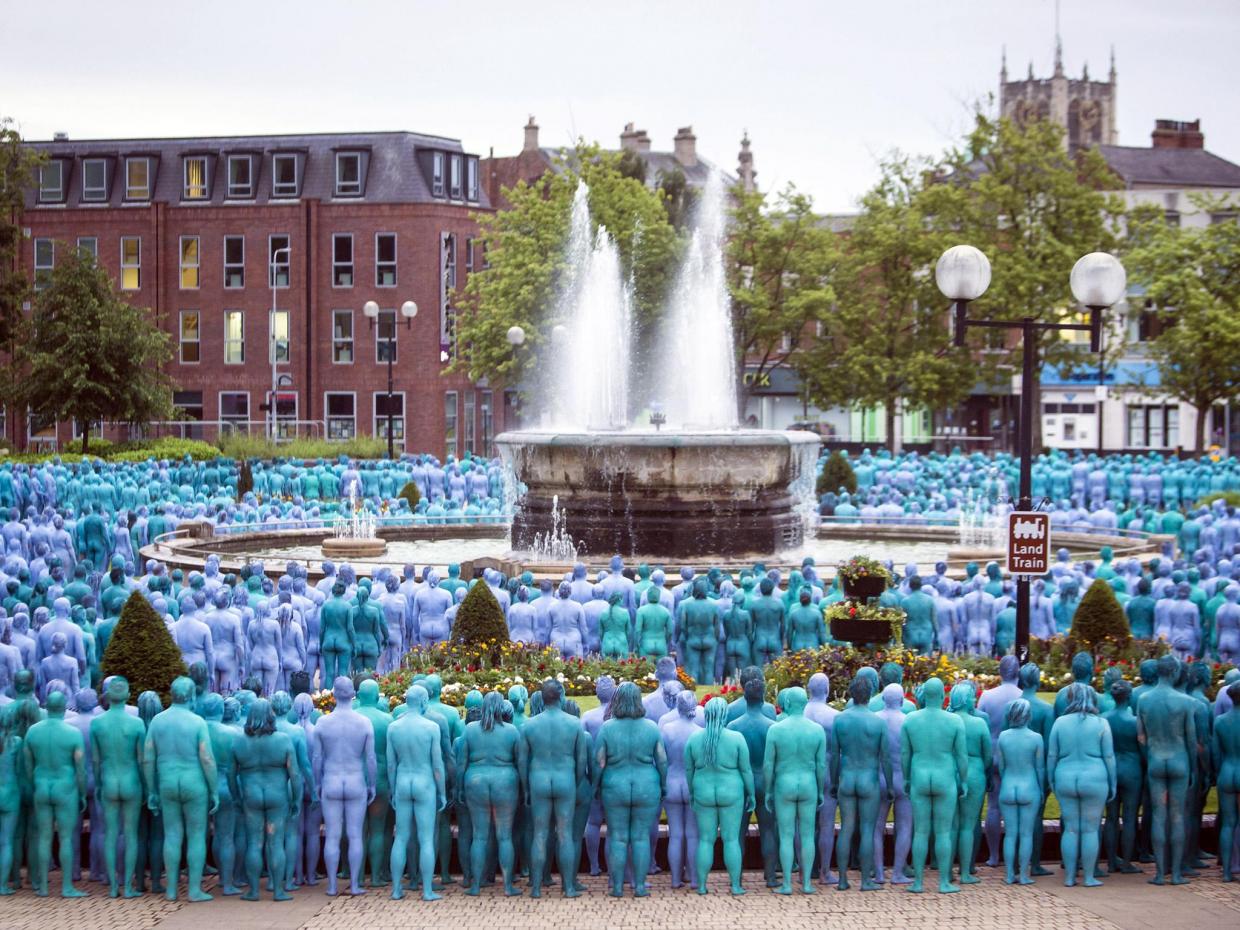
People take part in an installation entitled Sea of Hull, by artist Spencer Tunick.

The notion that the arts and related fields like graphic design can boost local economies has been an article of faith for decades, causing disappointment when it frequently fails to lift whole cities above poverty.

Nevertheless, done right and with other stars in alignment, it can be a piece of the economic puzzle in a changing world.

Here is a recent angle from Kingston upon Hull in the UK.

David Barnett reports at the Independent, “On New Year’s Day, a firework display heralded the beginning of Hull’s tenure as the Britain’s City of Culture. Multimedia stories from the city’s maritime and industrial heritage were projected on local buildings in front of a crowd of thousands.

“Over in the Hull City Museum they like a bit of culture and they know Hull’s had it for a long time; exhibits go back to the Paleolithic era. There’s also a recreation of a Roman bath house, featuring mosaics discovered in the 1940s in the Roman settlement of Petuaria, modern-day Brough in East Yorkshire.

“But never mind the Romans … what, the people of Hull might be asking, in true Monty Python’s Life of Brian style, has culture ever done for us? …

“It regularly tops the deprivation rankings for the UK’s 326 local authorities – according to the Kingston upon Hull Data Observatory’s latest figures, Hull ranks as the third most deprived local authority generally, and tops the lists of deprivation for education, skills and training. ..

“Perhaps a typical, post-industrial Northern city. Its traditional industries of whaling and sea-fishing have declined, as elsewhere; Hull still remains a large port, though, and there has been a successful drive to attract chemical and health companies to the area. …

“ ‘There might well be degrees of scepticism about what culture can mean to a place like Hull,’ says Robert Palmer, the director of the team that won and managed Glasgow’s successful bid to be named European City of Culture (as it was then known) in 1990. ‘But being designated a capital of culture can bring long-term effects in terms of the legacy it can offer.’ …

” ‘We employ a very broad definition of culture,’ says Palmer. ‘It’s not just what people might think of as “fine culture.” It’s not just opera. …’

“Which is why Hull’s City of Culture website lists events for the coming year that range from acrobatics to walking tours, by way of cabaret, jazz, literature, parkour and, yes, opera. Which is all very nice, but is it just a distraction from the problems facing Hull?

“ ‘There are tangible economic benefits,’ says Palmer. ‘We’ve seen it before in all cities that get a culture status, it’s well documented. Visitor numbers, job creation, the social impact through participation from social groups who are not normally involved in culture. The benefits are incontestable.’ ”

Lots more here.

Perhaps one year of intense focus on the arts and culture can energize enough residents to keep the momentum going. It certainly seems to have done so for Liverpool, another struggling postindustrial city that was a UK City of Culture in 2008.

One wonders if a designation as, say, a City of Math and Science might have the same kind of long-term ripples.

Read Full Post »

Photo: Prezi
Something Shakespeare didn’t have to worry about: expensive energy for productions and emissions that increase global warming.

Christy Romer over at the UK website Arts Professional recently posted on the money British arts groups are saving by cutting their energy emissions — a win for them and a win for the environment.

“Arts Council England’s National Portfolio Organisations (NPOs) have saved £8.7m by cutting greenhouse gas emissions since 2012/13, according to a major new report by environmental charity Julie’s Bicycle. …

“The report draws on data submitted via an online reporting tool, an evaluation survey and case studies, ultimately concluding environmental action is making the sector more financially resilient.

“Compared to doing nothing, the reduction in energy emissions has saved £8.7m since 2012/13. The report predicts that if the 4.5% annual decrease continues until 2019/20, emissions will be 46% lower than in 2012/13 and £54m will have been saved in energy costs.

“Alongside a fall in the overall emissions output, and a fall in the amount of electricity and gas used, there has been a 210% growth in the generation of on-site renewable energy since the project started in 2012/13. …

“Julie’s Bicycle pledges to develop Arts Council England’s (ACE) approach to environmental sustainability at the operational, planning and policy development levels. …

“Darren Henley, Chief Executive of ACE, added: ‘Our collaboration with Julie’s Bicycle is introducing us all to new ways of working. … We all believe that art and culture can make the world a better place; this programme shows how our actions can make a real difference.’ ”

More at Arts Professional, here.

Read Full Post »

I’ve been a fan of the English dormouse since performing in Alice in Wonderland at age 10. My friend Carole played the Dormouse.

Or maybe my first exposure was the A.A. Milne poem about the dormouse and the doctor. In any case, I greet news stories like this one as a matter of great interest.

Steven Morris writes, “The first black dormouse ever recorded in the UK has taken up residence in a nest box in the Blackdown Hills of Somerset. Britain has only one native species of dormouse, the hazel dormouse. The one discovered in Somerset is a hazel dormouse but instead of having the normal golden-brown fur it is black. …

“The discovery was made when staff, trainees and volunteers from the Blackdown Hills Natural Futures project were checking dormouse nest boxes as part of the national dormouse monitoring programme.

“This year, the project provided 300 nest boxes and more than 60 volunteers have installed and regularly checked them. One was found to have the black specimen inside.

“Conrad Barrowclough, the project officer, said: ‘Learning about and protecting our natural heritage is what we’re all about so finding such a rare dormouse on our doorstep is fantastic, especially at a time when Britain’s dormouse population is under threat.’

The People’s Trust for Endangered Species (PTES), which collates national dormouse monitoring programme findings, confirmed the rarity of the find.

“Ian White, the PTES dormouse officer said: ‘The national monitoring programme has been running for more than 25 years, with volunteers collecting data on thousands of dormice at nearly 400 sites. Not once has anyone come across a black dormouse.’ ”

Goodness, what delightful jobs these men have! Who wouldn’t want to be a “dormouse officer”? As the New Yorker used to say, “There’ll always be an England.”

More at the Guardian, here.

Photo: Natural Futures
The first black dormouse ever recorded in the United Kingdom. What a cutie!

Read Full Post »

One of the things I like about twitter is being exposed to stories I probably wouldn’t read about in the New York Times. This one is from a UK website called Foodism and highlights an effort to build businesses from food leftovers that might otherwise be wasted.

“It’s 4pm at Borough Market and the gaggle of children are elated, having spent the day growing, buying and selling market produce. Now trading time is over, and it’s time for their little stall to close, there’s only one question left.

” ‘What will you do with your leftover produce?’ asks development manager David Matchett, who runs the market’s Young Marketeers project for local schools. ‘We can make it into leftovers for tomorrow,’ pipes up one kid. ‘Or we can give it to people!’ ‘We give our food to my old auntie,’ shouts another.

” ‘I’ve been running this project five years,’ Matchett tells [Foodism reporter Clare Finney], ‘and not once in that time has a child ever suggested throwing the food away.’ ”

Other uses are found, Finney writes, giving a new heat source at home as an example.

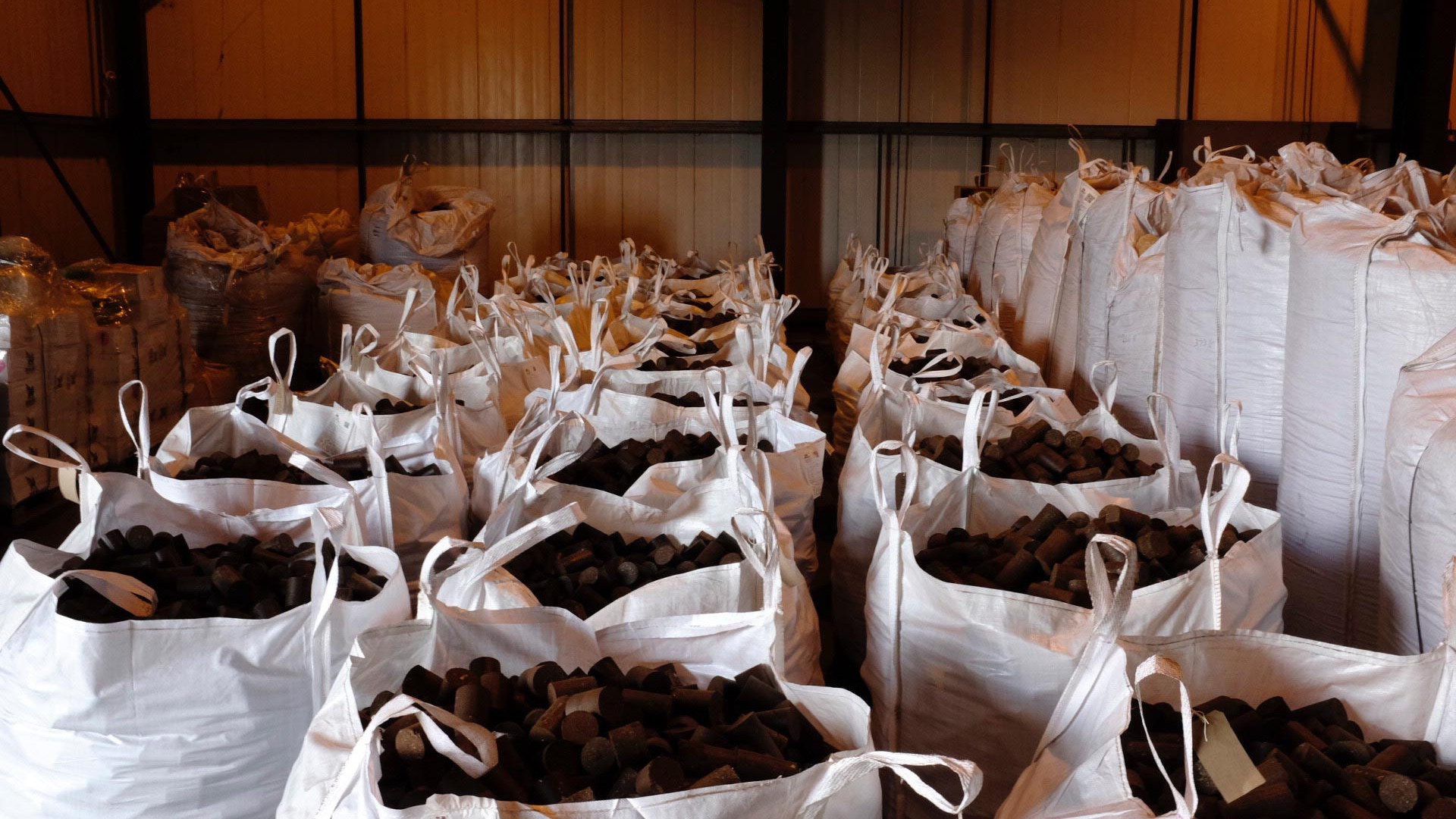
“The heat source is used coffee grounds, recycled by the innovative clean technology company Bio-bean into pellets for biomass boilers, biodiesel and briquettes for wood burners. …

“With its sharp branding, smart technology and simple but potentially revolutionary innovation, Bio-bean is irresistibly representative of the new generation of companies applying principles of modern business, as well as slick design, to an issue that can often appear stale and tasteless: wasted food. …

” ‘These are viable businesses,’ Kate Howell, director of development and communications at Borough Market, says of Bio-bean, and of those other companies turning food waste or surplus into consumables. Indeed, many of the biggest names in the world today actually started here with the market, which has provided a seedbed for sustainable businesses like Rubies in the Rubble, which makes a range of chutneys and sauces from supermarket rejects, Chegworth Valley of apple juice fame, and the street food stall selling meat from previously unwanted billy kids, Gourmet Goat.’ …

“A few months ago, [the grocery chain] Sainsbury’s launched a trial of banana breads made from bananas too bruised to sell in store, to enormous accolades. ‘Originally we estimated they would sell 1,000 loaves,’ says Paul Crew, director of sustainability at Sainsbury’s, with palpable excitement. ‘Customer feedback has been overwhelmingly positive and we’ve already sold 3,000, saving just as many bananas.’ ”

Hey, that’s what we all do with bruised bananas! Now you and I can claim to be trendy as well as thrifty.

Read the Foodism article here.

Photo: Foodism
Bio-bean turns used coffee grounds into pellets for biomass boilers, biodiesel and briquettes for wood burners.

Read Full Post »

Early last month, an unusual tribute took place at Waterloo Station, London. How I would have liked to be there and see return to life the soldiers who died in the devastating Battle of the Somme in World War I!

Charlotte Higgins at the Guardian describes what the event was like.

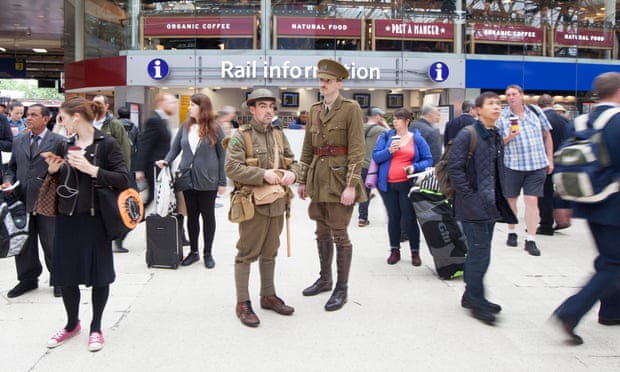
There “were about 20 young men, immediately conspicuous because they were dressed in the dull-green uniforms of the first world war. They were just there: not speaking, not even moving very much. Waiting, expressionless, for who knows what.

“A small crowd gathered, taking photographs. A woman caught the eye of one of the men. She tried to speak to him. Without speaking or dropping his gaze, he pulled a small card out of his pocket and handed it to her.


‘Lance Corporal John Arthur Green,’ it read. ‘1st/9th Battalion, London Regiment (Queen Victoria’s Rifles). Died at the Somme on 1 July 1916. Aged 24 years.’

“There were similar scenes across the UK. … They gathered on the steps of the Gallery of Modern Art in Glasgow. They smoked roll-ups outside Bristol Temple Meads and marched, metal-tipped boots ringing, through Manchester Piccadilly. They stood in clumps by the entrance to Queen’s University, Belfast, and sat on the market cross in Lerwick, Shetland. …

“The event, which unfolded without advance publicity, can now be revealed as a work by Jeremy Deller, the Turner prize-winning artist …

“The participants were a volunteer army of non-professional performers, including social workers, farmers, security guards, farmers, shop assistants, students, labourers, flight attendants and schoolboys. All were sworn to secrecy, and rehearsals took place across the country over the past months. Deller worked with Rufus Norris, the artistic director of the National Theatre in London, and theatres throughout the UK to train the volunteer army.” More.

Photo: Alicia Canter for the Guardian
Soldiers at Waterloo station, London. Each represents a real person who died in the Battle of the Somme.

Read Full Post »

Tim Jonze wrote a funny story at the Guardian about hiring a therapeutic opera singer to deal with his anxiety about becoming a father.

“The soprano reaches a dramatic climax, demonstrating impressive lung power as she sustains the dizzying peak note, before bringing Quando me’n’ vo’ to its close. It is a powerful, emotionally draining performance, and one that seems to resonate around the room for some time after she has finished. Which is why I get up off the sofa and ask her if she would like a cup of tea.

“This, as you might have guessed, is not your typical night at the opera – and not only because it’s only just gone 11 am. It is called Opera Helps, and is a project dreamed up by the artist Joshua Sofaer. The gist is this: contact the Opera Helps phoneline with a personal problem, and they will endeavour to send a singer to your house. Said singer will briefly discuss the issue with you, select a suitable aria that addresses it, then perform it for you while you relax in familiar surroundings: on a comfortable chair, for instance, or even in bed.

“It’s not therapy as such – in fact, they are very keen to stress that their singers are not trained therapists – but the project does aim to help you look at your problem from a new perspective and, hopefully, experience the healing power of music.

“ ‘It’s about giving someone the space for reflection, the same way having a chat with a friend might give you fortitude to carry on,’ says Sofaer, who found success running the project in Sweden before bringing it to the UK. …

“ ‘In my experience, you either respond to the music or you don’t – I don’t think it is based on your musical education or what class you’re from or how much money you’ve got, which is the common perception. The idea that opera needs an expert audience is a complete misnomer.’ ”

More at the Guardian, here.

Photo: David Bebber for the Guardian  
Opera singer Caroline Kennedy sings to Tim Jonze to relieve his stress.

Read Full Post »

In Ethiopia, you can eat the plate, in the UK the coffee cup.

Stephanie Strom writes at the NY Times, “Diners at KFC restaurants throughout Britain soon will be able to have their coffee — and eat the cup, too.

“KFC, one of the chains operated by Yum Brands, is going to test an edible cup made from a wafer coated in sugar paper and lined with a heat-resistant white chocolate. …

“The new cup addresses several of the trends bedeviling the food business today, including consumer concerns about the environmental impact of packaging, as well as their desire for simplicity.

“ ‘This type of edible packaging is definitely aligned with the global consumer mind-set in terms of sustainability and simplifying their life,’ said Shilpa Rosenberry, senior director of global consumer strategy at Daymon Worldwide, a consulting firm that works with many food companies. ….

“Ms. Rosenberry said she had even seen examples of retail packaging that could be turned into furniture, and boxes that could be repurposed for practical uses. …

“The new Scoff-ee Cup to be used at KFC, first reported by USA Today, was made in partnership with the Robin Collective, which calls itself a ‘purveyor of curious events and experimental food.’

“The chocolate lining will melt and soften the crisp wafer in the same way that a biscotti softens when dipped in coffee.” For those of us who drink our coffee fast, while it is still hot, that should work. The cup will soften but not too much. Family members who leave a half-filled cup around all morning would end up with a puddle, I suppose. It’s almost worth a trip to England to test it out.

More here.

Photo: KFC
KFC is introducing edible coffee cups at outlets in Britain, and will start serving Seattle’s Best.

Read Full Post »

Thanks for the nice comments yesterday. I’ll have more anon on hanging out with Suzanne’s family this week, but for now, I’m back to quirky stories from near and far. This one is about do-it-yourself theater in England.

Lyn Gardner covers at the topic at the Guardian theater blog.

“A great deal of the most interesting theatre being made at the moment might be called DIY. But what do we really mean by that term? It’s a question explored in a great little book DIY (Do.It.Yourself.) curated by Bootworks’ Robert Daniels and appropriately enough self-published by the University of Chichester. …

“DIY is often associated with an aesthetic that celebrates the imperfect and the make-do-and-mend mentality. But that’s not to mean that it is inexpertly crafted or just throwing a show together and plonking it down in front of an audience and hoping for the best. In times of financial hardship or when buildings and programmers act more like gatekeepers than midwives, DIY can be born of necessity. … DIY is not just about doing it yourself, but also about doing it together and in the process enabling other artists, audiences and institutions through the spirit of generosity.” More here.

Photo: Murdo Macleod
Squally Showers by Little Bulb at Zoo Southside in Edinburgh in 2013. 

Read Full Post »

Photo: PA/Owen Humphries
Murmuration of starlings over Gretna, Scotland

Starlings swarm in flash mobs over Scotland every November and February, and they don’t even need social media to remind them it’s time.

According to an article at the BBC, “Tens of thousands of the birds are regularly seen around this time of year near the Dumfries and Galloway town. It is one of the most famous locations for the natural spectacle, the reason for which is not definitively known.

“A survey of the birds across the UK is currently under way with members of the public urged to record sightings. The poll, conducted by the University of Gloucestershire and the Society of Biology, is the first of its kind and has already received more than 600 reports from Cornwall to John O’Groats.

“Dr Anne Goodenough, reader in applied ecology at Gloucestershire University, said: ‘One of the theories behind the murmurations is that it means they are safer from predators such as hawks and falcons.

” ‘Another theory could be they are signalling a large roost and it could be a way of attracting other birds to that area to build up a big flock as it would be warmer. It’s much warmer to roost as a big group rather than a smaller one and the murmurations can be as big as 100,000 birds.’ ”

More here. Don’t miss the other amazing photos at the BBC site.

YouTube video: DylanWinter@virgin.net

Read Full Post »

Following up on yesterday’s post, which highlighted simple pleasures like spending time in the library, I give you this report by Morgan Ribera at Bustle.

“Apparently, libraries provide patrons with a happiness that money can’t buy. Or at least nothing less than almost two grand in cash. According to a recent study commissioned by the U.K.’s Department for Culture, Media, and Sport, the act of going to the library induces joy equivalent to that brought on by a £1,359 ($1,878) pay raise.

“The study was conducted in an attempt to measure which activities have the most positive impact on an individual’s well-being. Visiting a library scored among the top joy-generating activities, alongside dancing and swimming, giving us yet another reason to hang-out at our local library. …

“And this U.K. study adds even more to the proof already stacking up on the value of libraries, a value that was evidenced extensively in a Pew Research Study released [in March]. The rather pleasing results of this eye-opening Pew study showed that habitual library goers maintain stronger community ties, are more likely to socialize with friends and neighbors, and exhibit higher levels of technological engagement.”

More at Bustle, here.
Photo: Bill Lapp

Read Full Post »

« Newer Posts - Older Posts »