Feeds:
Posts
Comments

Posts Tagged ‘washington’

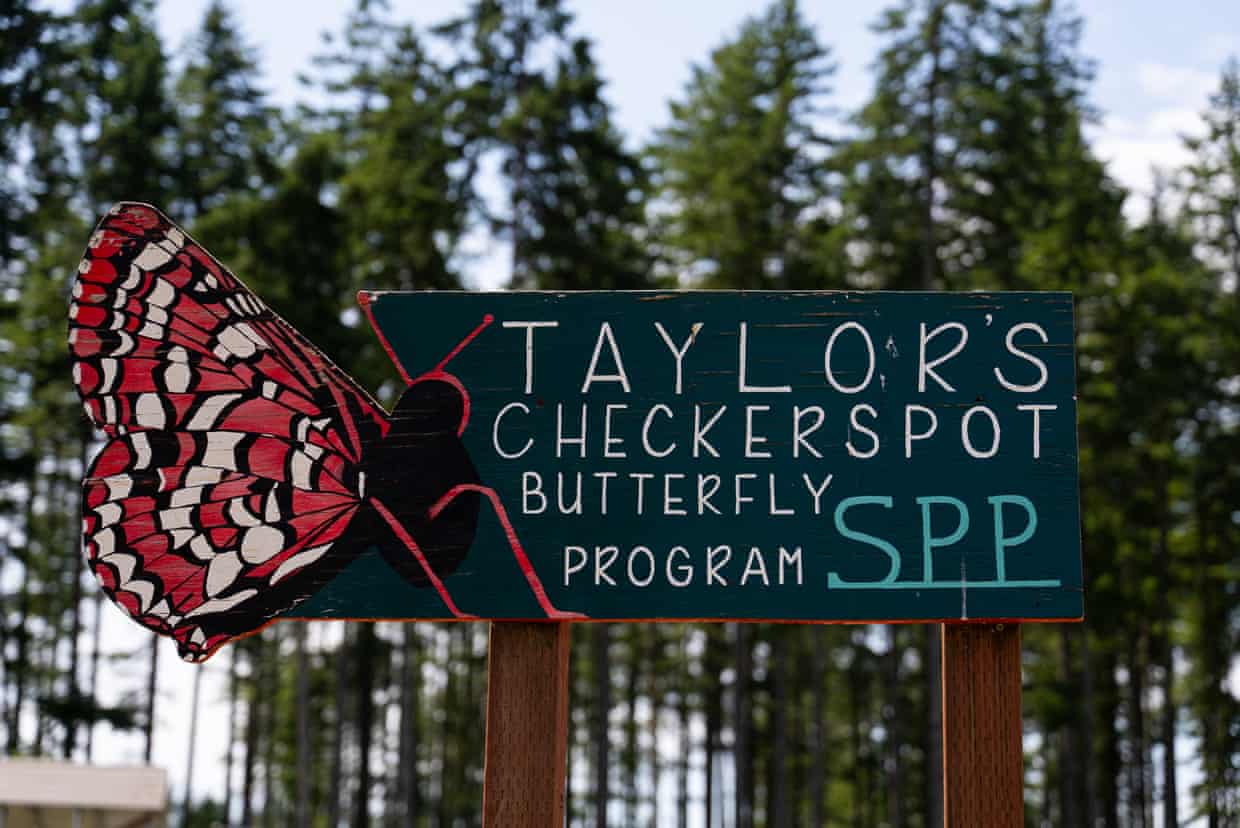
Photo: Washington State Department of Corrections.
Last year, scientists working with a team of incarcerated women released more than 67,000 larvae of a beautiful, endangered butterfly.

Today’s story about incarcerated women helping scientists reminds me that you don’t have to be in prison to get satisfaction from working for a cause. These women are gaining confidence, self-esteem, and hope for a better future.

Andrew Buncombe reports at the Guardian, “Trista Egli was standing in a greenhouse, tearing up strips of plantain and preparing to feed them to butterfly larvae.

“Of the many things the team here has tried to tempt larvae of the Taylor’s checkerspot [with], it is the invasive English plantain they seem to love the most.

‘The big thing for me is being part of an effort to save an endangered species,’ says Egli, 36. ‘It is a big thrill.’

“Egli is one of seven women incarcerated at the Mission Creek correctional facility, located a two-hour drive from Seattle, who are part of a year-long program that takes captured butterflies, harvests their eggs, and oversees the growth of the larvae before they are released into the wild where they will turn into adults.

“Last year, scientists working with the team released more than 10,000 larvae. The adult butterflies live for just a handful of fabulous, wing-fluttering days. …

“Many of the women speak of their pride working on a project that feels like it is making a positive contribution to the world.

“Lynn Cheroff, 42, said she had been thrilled to talk about it with her two young children when they come to visit. When she telephones her mother about the work, her mother tells her she is proud. Another woman, Jennifer Teitzel, appreciates the sense of order and discipline the program demands and instills.

“Every detail about the eggs and larvae has to be collated and recorded. It is the women’s responsibility, and nobody else’s, seven days a week.

“[While] the program run by Washington state department of corrections (DOC) is part of an effort to prepare the women for life once their sentences are over and to smooth the path to work or college, there is no sugar-coating their predicament.

“Egli, who has three young children, is serving a nine-year sentence for a 2020 drunken hit and run that left a woman with permanent brain damage.

“ ‘I am paying the price for that every day. I can never go back and undo what happened,’ she says. ‘But I can try to make sure the rest of my life is about making the world a better place.’

“The program at Mission Creek has been operating for 10 years. Kelli Bush, the co-director of Sustainability in Prisons Project, a partnership between the DOC and the Evergreen State College in Olympia, says a crucial component are graduate students who visit to offer educational support.

“Bush says in addition to providing the women something to feel proud about as many deal with shame and guilt, the program also gives them confidence about their own capabilities. …

“She says, ‘It’s routine to hear people say “I didn’t think I was smart and I’m realizing I’m doing science.” … Pretty soon people find themselves reading peer-reviewed scientific journals and saying, “I can do this too.” ‘

“The Taylor’s butterfly’s preferred habitat is open grasslands and prairie. For thousands of years, such landscapes were created and maintained by active burning by Indigenous communities. Without such native stewardship, and with ever-increasing threats from developers and town planners, the amount of grassland has drastically diminished. …

“A favored place is Joint Base Lewis-McChord (JBLM), operated by the US army and situated 10 miles from Tacoma. Training with heavy artillery has long kept the prairie free of unwanted vegetation. Yet when the Taylor’s was added to the US Endangered Species Act list in 2013, it presented military officials with a challenge; how could they continue to make use of the base without harming a species now protected by federal law?

“Dan Calvert, of the Sentinel Landscape Partnership, a coalition of federal and state groups that works with landowners to promote sustainable land use around military installations, says JBLM contains ‘90% of the prairie habitat in western Washington.’ …

“One of the efforts to boost the numbers of Taylor’s checkerspot in locations off-base – and thereby allow the military to work unimpeded at the base – led to funding for the Mission Creek project by the Department of Defense (DoD). …

“The collaboration has helped boost the Taylor’s checkerspot. This year could be a record year for releases of adults. In 2024, the program released about 10,900 larvae.

“However, there’s a dark cloud looming over the program. Mission Creek is set to close in October because of budget cuts. There is a plan to transfer the women and the program to a prison at Gig Harbor, located 25 miles away, but there is some concern among current participants it could simply be cut entirely.

“Egli, who is set to become eligible for a work-release program under which she would serve the last 18 months of her sentence working outside the jail and returning to do what’s known as a DOC re-entry facility every night, says the program changed the person she was.”

More at the Guardian, here. No firewall. Donations support his valued news outlet.

Read Full Post »

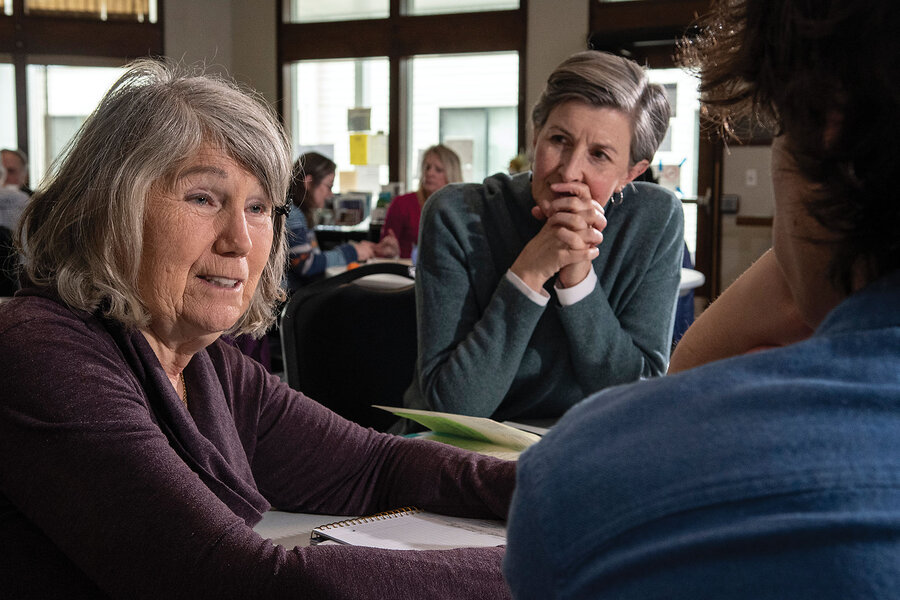
Photo: Alfredo Sosa/CSM Staff.
Virginia Frederick (left) and Sarah Duncan (center) participate in a conversation table training workshop hosted by the East County Citizens’ Alliance in Washougal, Washington.

Sometimes it seems we have nothing in common with other passengers on spaceship Earth, and it sure is anxiety making. But if we were invaded by aliens from deep space, you know, we’d suddenly all band together. We’d realize what we have in common.

What else do we have in common? What can we build on? Some people in the state of Washington reaiized they could start with trash.

Stephen Humphries has the story at the Christian Science Monitor. “Before the troubles started, Melanie Wilson believed she’d finally found paradise. 

“She and her husband had moved from Washington, D.C., to Washougal, Washington, in 2019. After the cacophonies of the U.S. capital, they immediately felt at home with tranquil views of the mountains, including the snowcapped peak of Mount Hood in the Oregon distance. … The pace of life here is as unhurried as the logging barges wending through its gorge.

“ ‘I’ve been looking for a home my whole life,’ Ms. Wilson says of the town of 17,000 people. ‘I want to make friends here. I want to put down roots here.’

“That was five years ago. Then the pandemic hit in March 2020. Two months after that, George Floyd was murdered by Minneapolis police. And the Wilsons’ paradise, it seemed, suddenly erupted into the kind of rancor they thought they had left in Washington, D.C. 

“Protests sprang up in the conjoined towns of Washougal and Camas that summer. By August, pro-police rallies were attracting hundreds of supporters waving American flags in support of law enforcement. On opposite sides of the street, half as many counterprotesters hoisted Black Lives Matter signs in a clash of highly charged remonstrations.

“The area has been called the ‘crossroads to discovery.’ Today both towns are at the crossroads of America’s deepening political and cultural divides. The bedroom communities are just a 30-minute drive west from progressive Portland, Oregon. A few miles to the east, however, horses, cows, and alpacas graze on gentle swells of verdant farmland, scattered with barns. …

“The protests in Washougal and Camas were mostly peaceful. Mostly. The police broke up a couple of push-and-shove scuffles. …

“Ms. Wilson was getting increasingly worried. Then, at a school board meeting in 2021, the vitriol she’d been witnessing reached a tipping point, jolting the sense of home that had become so important to her life.

“During the meeting, a man stood up and jabbed his finger at the elected officials sitting in front of them. ‘ “Civil war is almost here. We’re sharpening our bullets,” ‘ Ms. Wilson recalls the man saying. …

“She was startled once again by the crowd’s response. ‘People around the room clapped and stamped their feet on the floor,’ she says. ‘It seemed to me, that’s a flashing red warning in a community.’

“After the meeting, she began talking to others in the community about the violent rhetoric. She joined a group of citizens in Washougal and Camas to think about how to counter the civic vitriol that seemed to be tearing their community apart. Over time, she conceived a simple idea: People would gather to pick up trash, together.

“Today, Ms. Wilson is the co-founder and executive director of the East County Citizens’ Alliance. Its volunteers don’t chant and shout. They don’t tote signs and megaphones, let alone AR-15s. What they do carry, however, are seedlings, paintbrushes, and trash bags. One volunteer even brings his tractor. 

“The organization engages in other projects, too, from feeding the hungry to mentoring students. It’s all in service of an underlying mission: Getting people out of their news silos and partisan bubbles to gather together outside – their outside, their gorgeous, scenic, pastoral part of the world – and make an effort to work together and get to know each other. 

“This idea, too, is simple: To fix our politics, we must first mend our culture.

“There are groups like Ms. Wilson’s springing up all over America, in fact. From Wilkesboro, North Carolina, to Madison, Wisconsin, to Compton, California, small bands of volunteers are working to improve their quality of life, not only in their neighborhoods, but also in their hearts. 

“There’s little glory in it. Sometimes, volunteers may even wonder if they’re making any progress at all. But with each small act of kindness, they’re working to weave a social fabric of grace, stitch by stitch, and rooted in tolerance, respect, and faith in each other, as different as that other may be. …

“Ms. Wilson, riding shotgun, plays tour guide to Monitor journalists along for the ride [with Barbara Seaman]. A few days previously, the duo transported braised barbecue to ReFuel Washougal, a program that serves free meals to residents in need. The East County Citizens’ Alliance took a turn hosting a dinner in collaboration with Washougal High School’s culinary arts program. 

“ ‘If you were in my car, it’d be full of traffic cones and trash bags and trash,’ Ms. Wilson says. ‘This is what community-building looks like. It doesn’t look like fancy discussions about policy.’

“But the group’s members did get their start with discussions. About 90 residents, including Ms. Wilson and Ms. Seaman, held regular meetings in 2021 about the culture war issues roiling their schools. The topic of political extremism in the area started cropping up more and more. 

“The discussions soon grew into the organized alliance. People decided they were done focusing on politics as a community. ‘I’m so sick and tired of everybody labeling everybody,’ says Ms. Seaman, the group’s assistant executive director. ‘I just want to get people together to build relationships.’ …

“The emerging alliance needed a project that could both build community ties and be free of controversy. So it decided to start simply, getting people with opposing political views outside, working together for a common purpose in the offline world.

“ ‘Nobody likes trash,’ says Ms. Wilson. ‘They’re both picking up trash next to each other. They’re talking about, “Who would leave a tire on here? … And I’m sick of these beer cans out here. What are people doing?” ‘

“That could lead to conversations about drinking and driving, she continues. ‘We’re all against drinking and driving. They’re finding what they’re against and for, together, in the moment. And if you have to start out small because everybody hates trash, that’s where you start.’ ”

Lots more at the Monitor, here. No paywall.

Read Full Post »

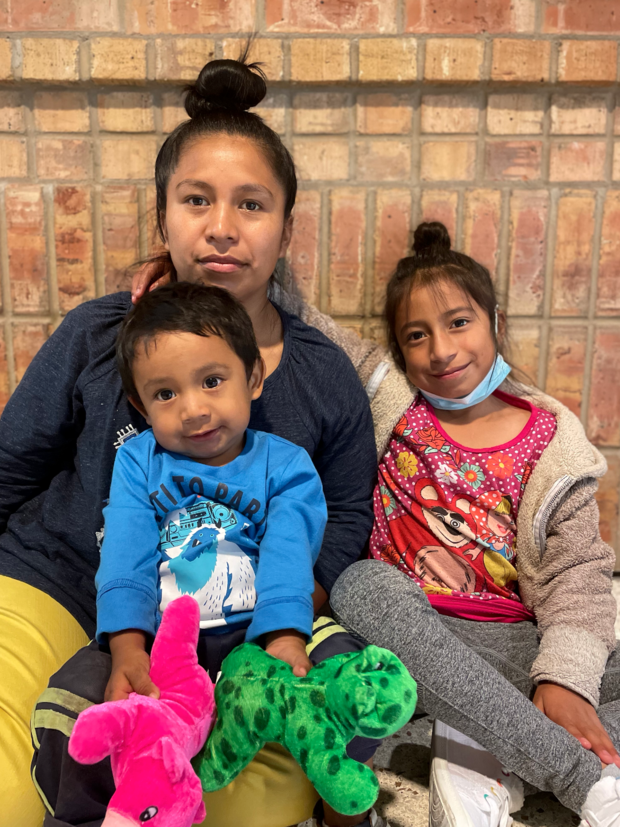
Photo: Natacha Larnaud for CBS News.
From CBS News: “Jacqueline and her two kids sit at a bus station in Brownsville, Texas, hours after being released from Border Patrol custody on April 30, 2021.”

This is the season of the couple who had no place to rest — and the baby who whose gifts were gold, frankincense, and myrrh. Will all the newly displaced children of 2023 have any gifts?

Theresa Vargas wrote at the Washington Post last year about a program for migrant children that made some little travelers very happy.

“The young boy in the red and black jacket didn’t need to look through the toys sitting on the blanket in front of him. As other children walked past stuffed animals, puzzles and building blocks, looking for items that called to them, he made his way straight to a dump truck almost half his size. If you had peeked in on that moment, which took place outside a Virginia church, you would have seen that boy holding the truck tightly. …

“Days before the volunteer collective Food Justice DMV planned to hold the giveaway event on Dec. 17, founder Denise Woods sent out an SOS, letting supporters know that volunteers didn’t have enough food or toys this year to give to the migrant families they serve in the Washington region. What makes the group’s toy collection different from the many others that take place at this time of year is volunteers gather secondhand items and get them to families who might fall beyond the reach of other organized efforts, because of language barriers and deportation fears.

“ ‘It pains me that people who have lost all coming here, may not celebrate Navidad the way they deserve and the way we want: a warm plate of food from home: beans, rice oil and maseca and a side of gifts,’ Woods wrote in an email at the time. …

“People in D.C., Maryland and Virginia started looking through their homes and gathering the toys their children and grandchildren no longer used. They then drove them to one of several places that were collecting items on behalf of Food Justice DMV.

“They brought puzzles and board games and art kits. They brought a toy stove, a toy shopping cart and a bike. They brought small stuffed animals and medium stuffed animals and jumbo stuffed animals. …

“Thousands of people throughout the Washington region responded. All it took was learning that children around them might go without to decide they wouldn’t let that happen. …

“By the time the giveaway event arrived, volunteers were carting truckloads of items to a church in Falls Church. There, migrant families found them spread across blankets and tables. Children who might not have received anything for Christmas left with their arms full and their parents left carrying bags of items. …

“[One teen] said her mom is from Guatemala and works hard at her cleaning job to pay the rent and keep the family fed, but that doesn’t leave much money for her to buy presents during the holidays. That day at the church, the teenager said, her mom and the whole family left smiling.

“ ‘We were so thankful,’ she said. ‘I just want to thank everyone so much.’ …

“ ‘For so long I think we felt, not accurately, that no one really cared, because we were existing on fumes and praying we would make our food costs,’ Woods said. ‘Now we know people do care and care deeply.’ …

“The strangers who came together to help the families recognized the system is broken, not people, she said.”

More at the Post, here.

Read Full Post »

Illustration: Paul Blow/The Guardian.

Summer is coming, and all over America, kids will be seeking out basketball hoops for pickup games or organized sports. Today we know that the recognized stars of the game are often Black, but apparently, that wasn’t always the case.

Frederic J. Frommer explains at the Washington Post why Edwin Bancroft Henderson is “known as the ‘father of Black basketball’ (or sometimes the ‘grandfather’). The first Black certified instructor of physical education in the United States, [he] brought the White-dominated sport to Black America. …

“ ‘Henderson and his contemporaries envisioned basketball — and sports in general — as providing a rare opportunity to combat Jim Crow,’ wrote Bob Kuska in Hot Potato: How Washington and New York Gave Birth to Black Basketball and Changed America’s Game Forever.

“[Henderson] learned basketball while studying physical education at Harvard University’s Dudley Sargent School of Physical Training. The school was affiliated with the International YMCA Training School in Springfield, Mass., where James Naismith had invented the sport just a decade earlier. When Henderson returned to Washington, he organized a basketball league for Black players, in a city where only Whites had access to basketball courts or clubs.

“ ‘What’s sad is that more people don’t know the story of E.B. Henderson, who was a pioneer, a trailblazer, someone who was a direct protégé of Dr. Naismith,’ said John Thompson III, the former head men’s basketball coach at Georgetown University, now vice president of player engagement at Monumental Basketball.

“Today, community leaders are taking steps to raise Henderson’s profile. In February, the University of the District of Columbia renamed its athletic complex the Dr. Edwin Bancroft Henderson Sports Complex. The school also launched the Dr. Edwin Bancroft Henderson Memorial Fund, which will help pay for the renaming, a scholarship endowment and the creation of a permanent Henderson memorial on campus. …

“On April 1, the Wizards named forward Anthony Gillthe inaugural winner of the team’s E.B. Henderson Award, which recognizes the Wizards player most philanthropically active in the D.C. community.

“And last year, Virginia honored Henderson with a state historical marker in Falls Church, where he lived from 1910 to 1965 and helped organize the NAACP’s first rural branch. Henderson also served as president of the Virginia NAACP.

After completing his studies at Harvard, Henderson tried to attend a basketball game at a Whites-only YMCA in D.C. in 1907 along with his future brother-in-law, but they were shown the door by the athletic director.

“Undeterred, Henderson started the D.C.-based Basket Ball League, where his 12th Street YMCA team went undefeated in 1909-10 in competition with local rivals and teams from other cities and won the unofficial title of Colored Basketball World Champions.

“His playing days came to an end in 1910 when he was 27 [but] Henderson’s work continued off the court, as he formed the Public Schools Athletic League, the country’s first public school sports league for Black students, which included basketball, track and field, soccer and baseball.

“In 1912, Henderson moved to Falls Church, and soon he was taking on racial discrimination there, helping to challenge a local ordinance that restricted where Black residents could live. After a court ruled the ordinance unconstitutional, the Town Council rescinded it.

“Henderson continued to challenge discriminatory treatment of African Americans, often through the many newspaper articles and letters to the editor he wrote over the years. In a September 1936 letter to the Post titled ‘The Negro in Sports,’ for example, he touted the success of Black athletes such as track star Jesse Owens, who won four gold medals at the 1936 Summer Olympics in Berlin.

“ ‘Right here in Washington, it ought to be possible for a Jesse Owens, or a city-wide marble champion, or a Joe Louis to come up through the lists and tournaments,’ he wrote. ‘When will the Capital of the Nation meet this challenge?’

“In 1939, he wrote a book with the same title, The Negro in Sports, which he updated in 1950. In the intervening decade, Jackie Robinson had broken baseball’s color barrier, and Black players had returned to the NFL after being shut out of the league for a dozen years.

“ ‘Henderson resists what might have been the high temptation to gloat at the sensational success of the Negro boys when finally they got their chance to play in the big leagues,’ Shirley Povich wrote in a Washington Post review of the revised edition. ‘Instead, he pays tribute to the American sportsmanship that sufficed, finally, to provide equal opportunity.’ …

“ ‘I never consciously did anything to be first. I just happened to be on the spot and lived in those days when few people were doing the things I was doing,’ Henderson said a few years before his death in 1977, at the age of 93. ‘But sports was my vehicle. I always claimed sports ranked with music and the theater as a medium for recognition of the colored people, as we termed ourselves in my day. I think the most encouraging thing, living down here in Alabama, is to see how the Black athlete has been integrated in the South.’

“Henderson was inducted into the Naismith Memorial Basketball Hall of Fame in 2013, following a campaign waged by his grandson, Edwin B. Henderson II, a retired educator and local historian.”

More at the Post, here.

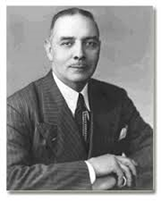
Photo: University of the District of Columbia.
Edwin Bancroft Henderson, the “Father of Black Basketball.”

Read Full Post »

Photo: NBC4 Washington.
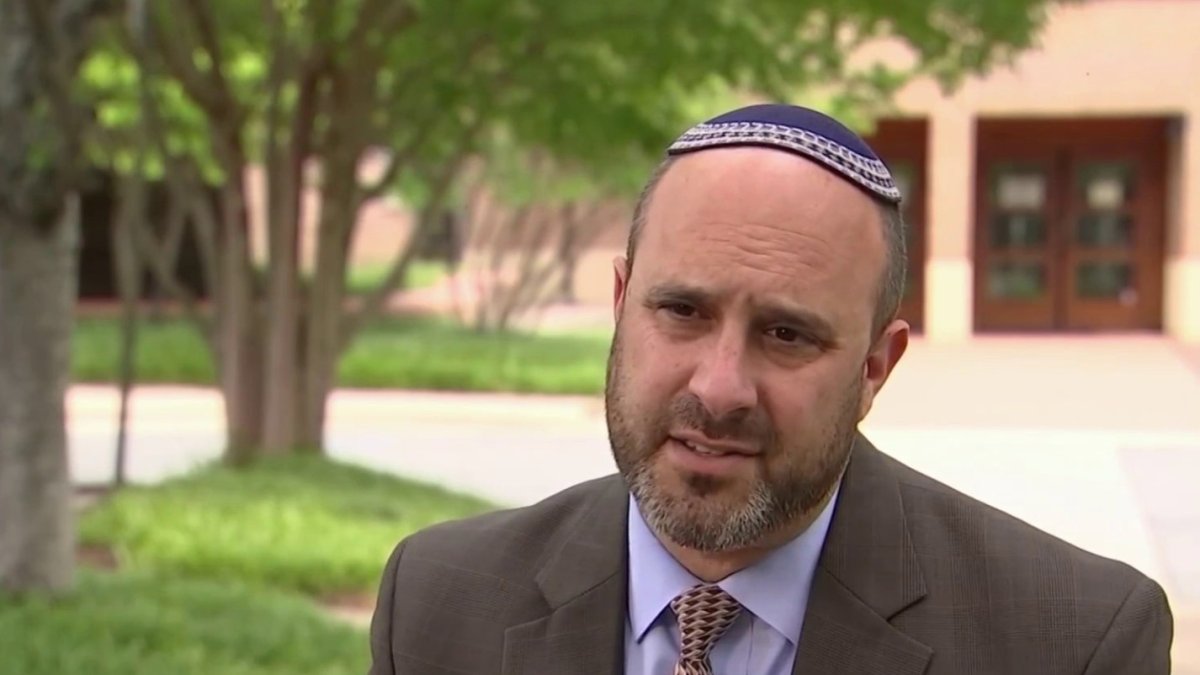
In Potomac, Maryland, Har Shalom rabbi Adam Raskin has pulled together faith leaders help support Afghan refugees.

When leaders of differing faiths recognize they are all called to do the same kinds of good works, great things can happen. Today’s example is from Potomac, Maryland.

Sydney Page writes at the Washington Post, “Adam Raskin, a rabbi at Congregation Har Shalom in Potomac, Md., knew how difficult the situation was for Afghan refugees in the Washington region.

“Since the historic airlift out of Kabul last year, more than 3,700 Afghan evacuees have been resettled in the District [of Columbia, DC], Maryland and Virginia, overwhelming social service agencies and leaving some refugee families waiting for housing and in limbo.

“Raskin and his congregants decided to help by sponsoring a refugee family.

‘We thought it was very much in line with our values,’ Raskin said. ‘For Jews, many of whom were refugees from places of persecution, there is a special sensitivity for this issue.’

“As members of the congregation began researching the resettlement process, they quickly learned how complicated it can be, and how many resources are required.

“ ‘We could do this on our own,’ Raskin recalled thinking to himself, ‘but wouldn’t it be amazing to collaborate with a Christian and Muslim congregation? … This is a country where religions don’t have to be at odds with each other, but actually where religious communities collaborate and find common ground,’ Raskin said.

“He contacted St. Francis Episcopal Church and the Islamic Community Center of Potomac to gauge their interest in an interfaith initiative, and both congregations were enthusiastically on board.

“ ‘We definitely wanted to get involved,’ said Sultan Chowdhury, who was one of the founding members of the Islamic center, and currently serves as its trustee. ‘God gave us an opportunity to truly learn about each other. It is wonderful to see how close we are.’

“Kathy Herrmann, the parish life coordinator at St. Francis, agreed.

“ ‘I have felt such a kinship with them and such a warmth and love emanating from the other two,’ she said. ‘We all have the same goal to help this family become acclimated and feel the love that we have for them.’ …

“The congregations have recruited volunteers to collaborate, including Stew Remer, who has been a member of Congregation Har Shalom since 1982 and has spearheaded the effort.

“ ‘We created an informal partnership where we are working together to provide support for the family,’ Remer said. ‘It’s amazing that we’re doing this with other organizations.’

“He started by contacting various resettlement agencies to learn more about how to sponsor an Afghan family. He got in touch with the Immigration and Refugee Outreach Center, which connected him with the [Wahdat family — a 36-year-old father, a 30-year-old mother and their 19-month-old daughter].

“For the past month, the congregations have divvied up responsibilities to support the newcomers. The church has taken on a health-care advocacy role, identifying doctors and dentists willing to provide pro bono services for the family. The mosque, meanwhile, has been helping with translation services and assisting with cultural needs, such as providing traditional Afghan clothing. The synagogue has been organizing transportation, legal and financial support, as well as helping the family to apply for food stamps and Medicaid. …

“Christianity, Islam and Judaism are all considered Abrahamic religions that view Abraham, a prophet, as the patriarch of their faith. The Bible highlights Abraham’s hospitality and his willingness to welcome strangers. …

“ ‘We have enjoyed the privilege of being together, trying to understand each other better and propagate peace,’ Chowdhury said. ‘It’s eye opening for all of us, and it’s a blessing.’

“ ‘This isn’t a short-term project. We are in it for the long haul,’ said Herrmann.”

Check out the Post, here. It has details on the State Department’s sponsor program, which guides those who want to help resettle the Afghan families. Americans owe them.

Read Full Post »

Photo: Embassy of Switzerland in the United States of America.
The Swiss embassy has created a bird sanctuary in the heart of Washington, DC.

When a Swiss bird lover became the ambassador to the United States, he was horrified that his embassy in Washington was maintained like a golf course. He decided to create grounds more welcoming to birds — and did a big favor to everyone who cares about biodiversity.

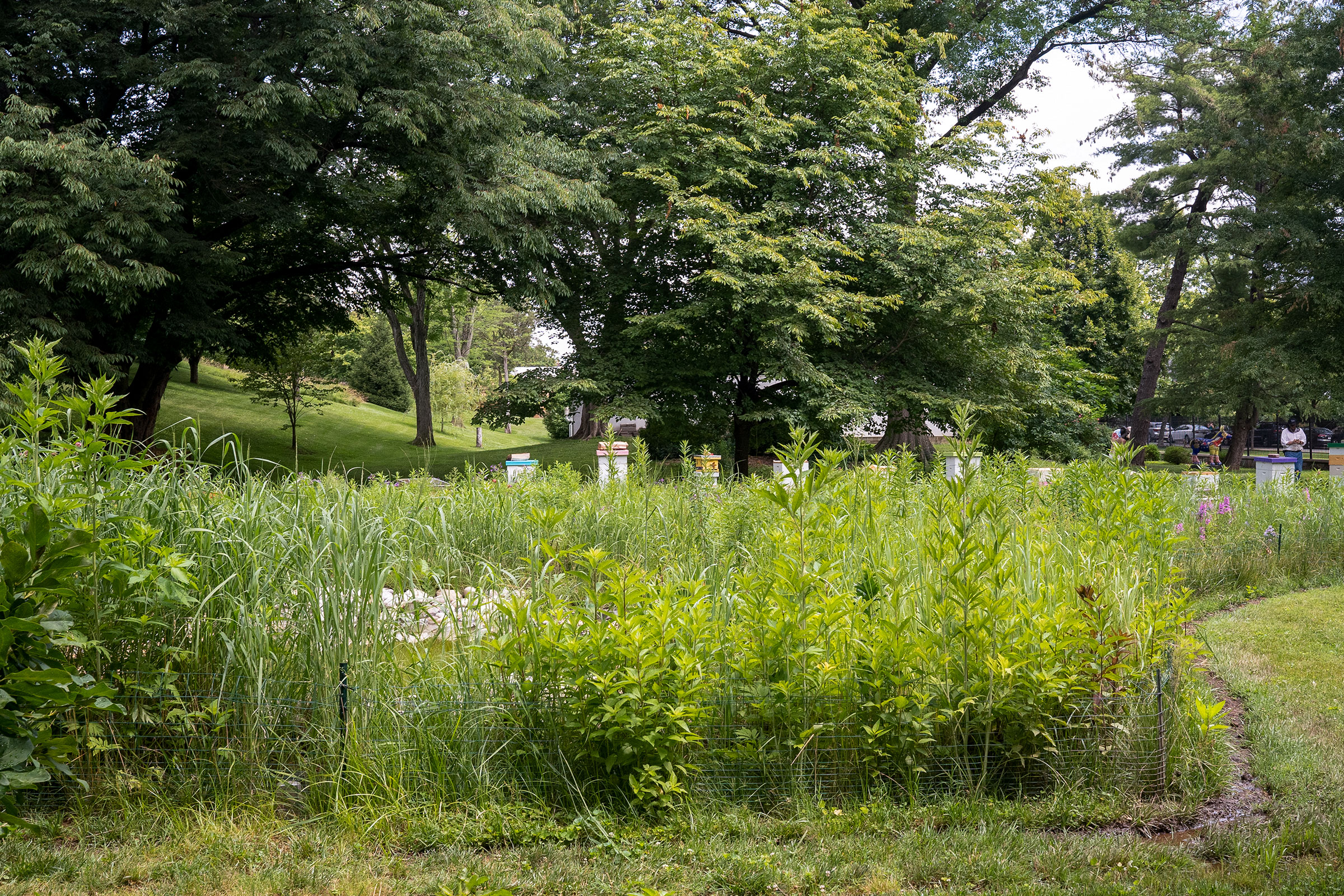
Molly McCluskey reports at Audubon magazine, “When Jacques Pitteloud arrived at his new home and office in the fall of 2019, he was dismayed to discover the state of the property. As Switzerland’s new ambassador to the United States, he had a piece of prime real estate in northwest Washington, D.C.,— a historic six-acre stretch of land that once was a farm called Single Oak. Now it hosted the country’s sleek, modern residence, and an embassy under renovation. But the grounds looked and were treated like a golf course.

‘I felt a tremendous amount of guilt and shame when I took over the residence,’ he says. ‘Golf courses are nice to look at, but they’re ecological disasters. … [Now] we have so many fireflies at night, it’s like fireworks.’

Normal diplomatic life was soon upended by the pandemic, and since then he’s been on a mission to rewild the expansive grounds, aiming to create a biodiversity reserve marked by the native plants of the region. He forbid the use of pesticides and allowed the lawn to grow out in spotty patches. Using resources such as Audubon’s native plants database and guide to birds, he worked closely with a local landscape designer, Aldertree Garden, that specializes in native plants. They uprooted all the non-native bushes and trees, such as ornamental burning bush and non-productive grass, and replaced them with meadows, bushes, and native trees, including white oak, scarlet oak, black oak, and others.

“Wildlife was also a part of his rewilding vision. Local beekeepers now manage the embassy’s colony of 50 hives, and he built a home for…

” ‘Within a short time, the results are amazing,’ Pitteloud tells me as he walks through the grounds, bending down from time to time to check on the plants or to take a closer view at the frogs in a newly installed pond. ‘We have so many more birds, butterflies. It’s incredible how quickly they returned. We have so many fireflies at night, it’s like fireworks.’ …

“Soon after his arrival in Washington, with the pandemic in full swing and diplomatic life thrown into disarray, Pitteloud immersed himself in local birding clubs and outings as a way of getting to know his new community and environment. His snapshot of an unusual Painted Bunting sighting on the Chesapeake & Ohio Canal National Historical Park — a bird more typically found in Florida than in southern Maryland — was featured in the Washington Post.

“Pitteloud’s efforts to rewild the embassy and residence are a part of a growing movement of local embassies adding more natural elements to their buildings and grounds. The Finnish embassy prides itself on being the first U.S. Green Building Council LEED-certified embassy in Washington. The Irish ambassador’s residence has a low-impact, xeriscaped garden. The Tunisian embassy and residence both have wild, untamed pollinator gardens, in addition to vegetable gardens. The Canadian residence on Pennsylvania Avenue has beehives, and a community-engaged program around beekeeping.

“But the Swiss are perhaps going the furthest on the land they tend. Pitteloud says the efforts are labor- and cost-intensive, but he sees no other option. And staff in D.C. and back in Switzerland at the foreign ministry, he says, have largely applauded the work — especially as the effects of climate change, and the dramatic loss of birdlife around the world, gain more attention. Around the time he took the helm at the embassy, in September 2019, a team of scientists concluded that North America has lost some 3 billion breeding adult birds since 1970, with every biome impacted.

“The news hit Pitteloud hard: ‘We’re five minutes to midnight on biodiversity loss,’ he says. ‘In 30 years, we’ll have empty skies, with no songbirds left. We’ll have to carry bees around because we won’t be able to pollinate our agriculture.’

“Though the Swiss embassy in Washington is only one property, Pitteloud hopes that by fostering favorable habitats for wildlife and inviting in beekeepers and other neighborhood groups, he is engaging in a form of ‘environmental diplomacy.’ Essentially his goal is to set an example for others, whether local neighbors or other embassies (or maybe even the White House, a property whose garden is notably lacking in native plants).

“Because ambassadors and their staff often cycle in and out of their posts every few years, Pitteloud may never see the full effects of the landscaping changes come to fruition, but he hopes the legacy lasts.”

More at Audubon, here.

Read Full Post »

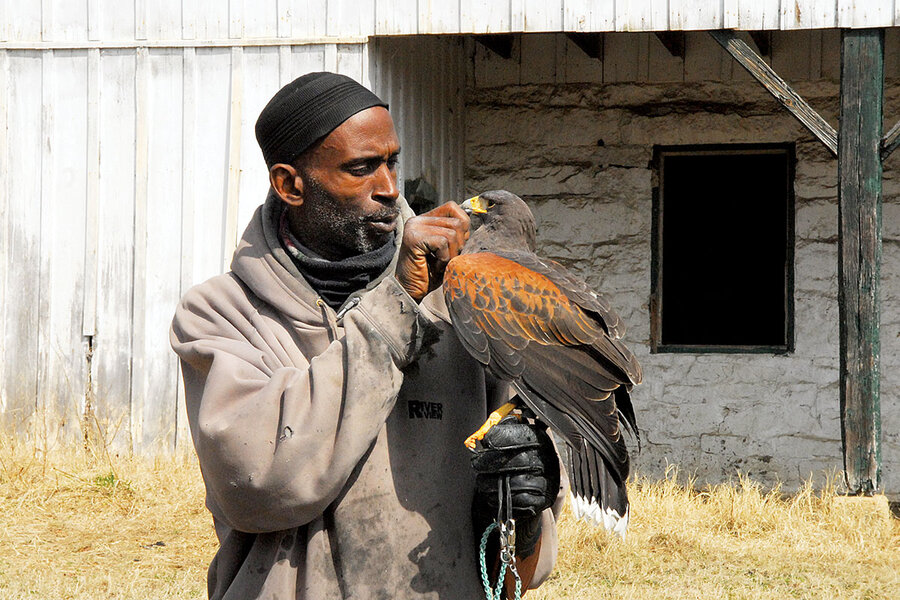
Photo: Noah Robertson/Christian Science Monitor.
Master falconer Rodney Stotts, founder of Rodney’s Raptors, holds a Harris hawk at the Earth Conservation Corps campus in Laurel, Maryland. At ECC, Stotts works with young people who may be at risk, just as he was once.

There’s more than one way to connect with troubled teens, but sharing an interest can be key. In today’s story, we learn how getting involved with birds of prey transformed the life of a young Rodney Stotts and how he later commmitted himself to helping other kids.

Noah Robertson writes at the Christian Science Monitor, “Before young Jamaal Hyatt met falconer Rodney Stotts, the youth had never seen a bird fly from a person’s finger, disappear out of sight, and return at the sound of a whistle. He’d never fed a bird of prey, or understood the trust it takes for one to calmly perch on a person’s arm. He’d never even seen a raptor up close.

“Mr. Hyatt grew up in downtown Washington, D.C., where birds rest on traffic lights as often as trees. Two years ago, when his family felt he wasn’t focused on school, they decided to send him to Capital Guardian Youth Challenge Academy, a military school for at-risk students in Washington high schools. It was in the woods here that he met Mr. Stotts – a master falconer, mentor, conservationist, and Dr. Dolittle of sorts. 

“Mr. Stotts, too, grew up in Washington, and, like Mr. Hyatt, once barely knew a pigeon from a peregrine falcon. But more than 30 years ago, working with animals transformed him from a man of the streets to a man of the woods. He’s since become a mentor for young people facing similar challenges. 

“That mission brought him to Laurel, where his office is sandwiched between Capital Guardian and New Beginnings Youth Development Center, a youth detention and rehabilitation facility. He works with young people in each facility, giving them an outlet, a role model, and a chance to learn to trust others by learning to trust animals. …

“In three decades Mr. Stotts has worked with thousands of people on the streets and in schools, parks, jails, barns, and Zoom calls. Along the way, he founded his own nonprofit, Rodney’s Raptors, and earned his falconry license. The work is low in pay and often poignant, forcing him to confront violence, substance misuse, and loss. 

“But for Mr. Stotts, whose life is profiled in a new documentary, ‘The Falconer,’ it’s highest in personal reward. If he could change, he tells the young people he works with, so can they. …

“With a mother who struggled with heavy substance use (before later quitting cold turkey), Mr. Stotts grew up in southeast Washington during the crack epidemic. In early adulthood, he reflected his circumstances; he dealt drugs and was likely to cross up with law enforcement, he says. Then, by accident, he found animals. 

“In the early 1990s, he needed a pay stub to sign on an apartment and took a position at Earth Conservation Corps (ECC), a nonprofit then focused on cleaning the notoriously polluted Anacostia River. Bob Nixon, the program’s de facto founder and a falconer himself, helped introduce Mr. Stotts to animals and eventually birds of prey. 

‘The first time I held a bird, period, it took me somewhere else, says Mr. Stotts. …

“After a year, he stayed with ECC and eventually took charge of its raptor program, based in Laurel. … ‘He’s been engaged since the get-go – that’s the impressive thing,’ says Mr. Nixon, of ECC. ‘He really feels the nature in his bones and gets a real reward in sharing that with people.’ … 

“ ‘There’s a lot of kids out here that don’t really have anything or don’t even believe in [themselves],’ says Mr. Hyatt. ‘Seeing somebody like that … can uplift them and give them a little bit more hope.’ ”

More here.

Read Full Post »

The more the media covers indigenous activities, the more we learn what we’ve been missing. There is so much wisdom embedded in tribal memory, especially wisdom about taking care of the natural world. First step: having the right attitude.

Jim Morrison writes at the Washington Post about a tribe in the Pacific Northwest that has a climate plan.

“For 10,000 years, the Swinomish tribe has fished the waters of northwestern Washington, relying on the bounty of salmon and shellfish not only as a staple of its diet but as a centerpiece of its culture. At the beginning of the fishing season, the tribe gathers on the beach for a First Salmon ceremony, a feast honoring the return of the migratory fish that binds the generations of a tribe that calls itself the People of the Salmon.

“At the ceremony’s conclusion, single salmon are ferried by boat in four directions — north to Padilla Bay, east to the Skagit River, south to Skagit Bay and west to Deception Pass — and eased into the water with a prayer that they will tell other salmon how well they were treated.

“In recent years, though, the tribe’s harvest, diminished by vanishing habitat and warming waters fueled by climate change, hasn’t been sufficient to feed the hundreds of people who come to pay homage to their ancestors and to the fish that sustained them.

“ ‘We don’t have that abundance anymore,’ said Lorraine Loomis, an elder who has managed the tribal fishery for 40 years. ‘To get ceremonial fish, we buy it and freeze it.’

“For the Swinomish, perched on a vulnerable, low-lying reservation on Fidalgo Island, the effects of a warming world have been a gut punch. The tribe has responded with an ambitious, multipronged strategy to battle climate change and improve the health of the land and the water and the plants, animals and people who thrived in harmony for generations.

“In 2010, the Swinomish became one of the first communities to assess the problems posed by a warming planet and enact a climate action plan. An additional 50 Native American tribes have followed, creating climate strategies to protect their lands and cultures, ahead of most U.S. communities.

“The Swinomish see the tasks beyond addressing shoreline risk and restoring habitats. They look at climate adaptation and resilience with the eyes of countless generations. They recognize that the endangered ‘first foods’ — clams, oysters, elk, traditional plants and salmon — are not mere resources to be consumed. They are central to their values, beliefs and practices and, therefore, to their spiritual, cultural and community well-being.

“Loomis is 80. Every member of her family, from her grandfather to her nine great-grandchildren, has fished the tribe’s ancestral waters. She has watched over the decades as the salmon disappeared and her family turned to crab, geoduck and sea cucumbers. She’s seen the salmon season drop to only a few days per species from the eight months — May through December — of decades past in order to protect populations. The Skagit River is the last waterway in the continental United States that’s home to all five species of Pacific salmon.

“Progress has been slow; some researchers say it could be 90 years before the salmon recover. Loomis is taking the long view. ‘If I didn’t believe we would recover [the fishery], I guess I wouldn’t still be working on this,’ she said.

“In recent years, the tribe has fostered salmon recovery through a variety of projects. It has restored tidelands and channels, planted trees along streambeds to cool warming waters, and collaborated with farmers to increase stream setbacks to improve water quality.

Restoring salmon populations is just part of an ambitious climate action plan to blunt the effects of increased flooding, ocean acidification, rising river temperatures, more-destructive storms and habitat loss.

“They’re planning the first modern clam garden in the United States on the reservation’s tidelands, reviving an ancient practice. They’re monitoring deer and elk populations through camera traps to understand the climate change pressures and to inform hunting limits. And they have ongoing wetland restoration projects to explore preserving native plants and to help naturally manage coastal flooding.

“ ‘They’re doing really innovative climate adaptation,’ said Meade Krosby, a senior scientist with the Climate Impacts Group at the University of Washington. ‘They were way ahead of the curve. And that really shouldn’t be surprising, because the tribes have shown tremendous leadership in climate adaptation and mitigation.’ “

More at the Washington Post, here.

Read Full Post »


The Swinomish community in Washington State has seen the future in rising waters. Much of the tribe’s 15-square-mile reservation is at or near sea level.

Today I have a story about how recognizing climate change can put a community one step ahead of the game. Indigenous people around the country are taking steps to deal with the inevitable before it’s too late.

Terri Hansen writes at Yes! magazine, “Chief Albert Naquin was astounded when emergency officials warned him in September 2005 that a second hurricane would soon hammer the southern Louisiana bayous where Hurricane Katrina had struck less than a month earlier. The leader of the Biloxi-Chitimacha-Choctaw tribe, Naquin took to the Isle de Jean Charles’ lone road to urge residents who had returned home after Katrina to leave their listing, moldy homes once again. …

“Hurricane Rita flooded the island for weeks, adding insult to injury that had already reduced the tribe’s homeland to a sliver of what it once was. Rising sea levels, hurricanes, erosion from oil production, and subsidence have since shriveled the Isle de Jean Charles peninsula from 15,000 acres to a tiny strip a quarter-mile wide by a half-mile long. There were once 63 houses flanking the town’s single street. Now only 25 homes and a couple fishing camps remain. …

“In January, Louisiana received a $48 million grant from the Department of Housing and Urban Development to move the Biloxi-Chitimacha-Choctaw and Houma Nation tribal members to more solid ground and reestablish their communities, making tribal members the first climate change refugees in the United States. …

“Across the country, 24 tribes have responded to climate change with plans for adaptation and mitigation, and more are in development. …

“As rising temperatures cause heatwaves, droughts, floods, wildfires, and increase the severity of weather events, tribes are on the forefront in respect to both degree of impact and in initial efforts to respond to adaptation, said Ed Knight, director of planning and community development for the Swinomish tribe in Washington state. …

“Using a unique model based on an indigenous worldview, the tribe updated its adaptation strategy in 2014 with environmental, cultural, and human health impact data. It now views health on a familial and community scale, and includes the natural environment and the spiritual realm, said Jamie Donatuto, Swinomish community and environmental health analyst.”

Will government support for tribes’ efforts continue? Read more here.

Read Full Post »

There is always so much to discover, sometimes right under our feet. That’s why I suspect that archaeology, despite the drudgery, is a happy career.

Washington Post reporter Patricia Sullivan found some happy archaeologists who discovered an ancient ship where a hotel is being built. (Of course, the hotel people are probably tearing their hair out right about now.)

Sullivan writes, “A large, heavy ship, scuttled between 1775 and 1798, is being dug out of its damp grave at the site of a new hotel construction project in Old Town Alexandria.

“Archaeologists found the partial hull of a ship at 220 S. Union Street, part of the city’s major redevelopment of the Potomac River waterfront. It’s on the same one-block site where workers two months ago discovered a 1755 foundation from a warehouse that is believed to have been the city’s first public building.

“ ‘It’s very rare. This almost never happens,’ said Dan Baicy, the hard-hatted field director for Thunderbird Archaeology, the firm watching for historic evidence during construction. ‘In 15 years that I’ve done this work, I’ve never run into this kind of preservation in an urban environment where there’s so much disturbance.’ …

“Digging by hand, archaeology crews uncovered a nearly 50-foot-long remnant of the keel, frame, stern and flooring, estimated to be about one-third of the original hull. The wood did not decay, Baicy said, because once it was buried, oxygen could not reach it. …

“The find has archaeologists surprised and ecstatic. Unlike the warehouse, which was noted in old city records, there was no known documentation of the buried ship’s existence.”

More at the Washington Post.

Photo: Kate Patterson/The Washington Post
Remnants of a late-18th-century vessel were discovered during excavations for a new hotel on the Old Town Alexandria waterfront.

Read Full Post »

Someone posted a chair by Jeffro Uitto on Facebook, and I had to know more.

Uitto’s About page says, “On the Washington coast there’s a place where nature’s leftovers get a second chance at stardom. The place is Knock on Wood, and Jeffro Uitto is the artist making the magic happen.

“Since high school Jeffro has been creating with wood, his favorite medium. This stuff isn’t from a lumber mill either. Each piece is found and rescued from the shores of Tokeland, the banks of Smith Creek, or the valleys between the Willapa Hills. In due time the varied sticks, slabs, and roots are cured and then found a fitting home. …

“Not everything is built right in the shop though. Clients have brought Jeffro on site to build one-off creations in places like Alaska and Hawaii.

“Jeffro’s shop is located near the historic Tokeland Hotel, a stone’s throw from Willapa Bay. … Visitors are surprised to see that many of Jeffro’s tools are hand made by the artist himself. After you get to know him, this isn’t surprising at all.”

Be sure to check out the amazing sculptures at Jeffro Uitto’s website, here.

Photos: Jeffro Uitto

Read Full Post »

Photo: Ashley Foughty, via Associated Press. Foughty spotted the renegade Rusty in Washington’s Adams Morgan neighborhood, and twitter did the rest.

Ashley Foughty uses social media.  And a good thing, too. If she hadn’t responded to the zoo’s call for help finding an escaped red panda, who knows what might have happened.

Trip Gabriel writes at the NY Times, “Rusty the red panda, who disappeared from the National Zoo, hijacked the news cycle on Monday.

“To help find Rusty, a raccoon-size mammal with a striped tail and moon-shaped face, the zoo turned to social media, and suddenly half of official Washington broke from Serious Events to tune in to the saga of the runaway panda.

“On Twitter and Facebook, the hunt for 11-month-old Rusty … exploded in a mix of concern, humor. …

“ ‘Rusty the Red Panda eats shoots and leaves,’ Jake Tapper, CNN’s chief Washington correspondent, filed to Twitter. …

“The zoo announced Rusty’s disappearance to its thousands of Twitter followers in a message at 11:51 a.m, which was retweeted nearly 3,000 times in an hour. …

“At midday, mentions of ‘Rusty’ on Twitter nearly equaled those of ‘Obama.’ ….

“ ‘Edward Snowden and Rusty the red panda relaxing on a Havana beach,’ wrote J. D. Ross, a communications director at Syracuse University, referring to the American security contractor wanted on spying charges. …

“Once again, social media proved to be a powerful dragnet. Around 1:15 p.m., a Washingtonian posted a picture on Twitter of Rusty in a patch of weeds in the Adams Morgan district, not far from the 163-acre zoo.”

Read what happened next. Note to all escaped zoo animals: Twitter will find you.

Read Full Post »

This weekend, having spent special time with both grandsons and a brand-new granddaughter, I have been pretty aware of how much promise children hold.

Not just my grandchildren. All children.

But sometimes children who live in poverty need a boost from the rest of us. Kind of like at christenings when everyone in the congregation says they will help the baby learn and grow even though they don’t know the baby’s family and may not see them again. It’s a symbol that people take all children seriously.

At the Chronicle of Philanthropy, Suzanne Perry writes about the Washington, DC, version of the federal Promise Neighborhoods initiative that takes the nation’s responsibility toward children very seriously.

“The D.C. Promise Neighborhood Initiative, one of the country’s premier efforts to lift children out of poverty by offering a comprehensive array of educational and social services, has won a five-year, $25-million federal grant to step up its work.

“The grant, one of just seven of its kind that the Education Department awarded last month, was an especially sweet victory for the Washington project, which is working to turn around the city’s Parkside-Kenilworth neighborhood. Last year, it failed to win a similar award because it missed the application deadline due to technical problems it faced when e-mailing its proposal.

“This time, the group’s leaders left no stone unturned to ensure the application met all of the federal agency’s specifications, says Ayris Scales, the executive director—who now calls the project ‘the comeback kid’ and says she feels like ‘Cinderella at the ball.’

“The Washington effort is among dozens across the country that are following an approach pioneered by Geoffrey Canada, founder of Harlem Children’s Zone, which involves marshaling schools, nonprofits, and other community organizations to help children in troubled neighborhoods from ‘cradle to college.’ ” More.

By the way, I blogged about Geoffrey Canada and the movie on Harlem Children’s Zone, Waiting for Superman, a couple years ago, here.

Photograph: Cliff Owen/AP/File
A three-year-old pre-kindergarten student practices drawing spirals during a class at Powell Elementary School in Washington, DC. The DC Promise Neighborhood Initiative offers ‘cradle to college’ help to children in the nation’s capital.

Read Full Post »