Feeds:
Posts
Comments

Posts Tagged ‘Washington DC’

Photo: Moriah Ratner for the Washington Post.
At the home of the Cosmetology & Barber apprenticeship program, four instructors teach incarcerated people on mannequins, No sharp blades allowed.

I’ve always been interested in prison programs that help the incarcerated learn skills that can help them find work on the outside and avoid recidivism. It seemed so stupid to lock people up for months or years and then dump them on the side of the road somewhere with not much more than a toothbrush to get on with life.

Today’s focus is on teaching cosmetology skills to people who might be interested in eventually pursuing a license. A license requires serious application, but sometimes the effort starts with a little encouragement.

Samantha Chery writes at the Washington Post, “When Chet Bennett accepted a job in 1998 to teach incarcerated people in D.C. how to style hair, he was ‘scared to death.’ A native Washingtonian and Howard University alum, Bennett had never even seen the inside of a jail before his first day of work. Now, the 56-year-old is glad he took the chance.

“He makes weekly visits to the jail’s hair-care room, a small salon on the fifth floor of the city’s Correctional Treatment Facility, complete with dryer chairs and four shampoo bowls. At the home of the Cosmetology & Barber apprenticeship program, four instructors teach incarcerated people on mannequins, and the student stylists comb, braid and loc the hair of fellow jail residents, relatives and other clients from outside the facility.

“Since Bennett founded the program, he’s won a Legacy of Service Award and graduated thousands of hairstylists, many of whom now work in salons or have their own studios. …

“Teaching jail residents comes with logistical challenges: They aren’t allowed to use shears or razor blades, paint nails, or dye hair due to the facility’s restrictions, and they don’t have enough time during their short sentences — which typically run a year or less — to finish their necessary training for licensing.

“People trying to complete the 1,500 training hours required to receive a cosmetology license have the option to transition from the jail salon to Bennett’s off-site beauty school, the Bennett Career Institute near Catholic University, after finishing their sentences.

“When Angelina Millner was jailed in 2005, in her mid-30s, the cosmetology program improved her styling technique and helped her find work after her release.

“Despite homelessness and other personal battles, she said, Millner was able to attend Bennett’s school in 2012 to get her license, and now does business as Mo’ Hair by Angelina. She recalled how gratifying it felt to return to the jail in 2020 — as a teacher instead of a resident: ‘I just had to stay on the straight and narrow ever since.’

“Bennett said he has learned it’s best to reserve judgment. He doesn’t look at his students’ records, hoping to give them a clean slate. … There’s ‘something that we’ve all done and have fallen short, but by grace and mercy, we were allowed to straighten our ways and continue to move on,’ he said. ‘It has meant so much for me to know that I can go into a facility and give people a second chance.’ ” More at the Post, here.

Some years ago, in one of the English as a Second Language classes where I volunteered, a student decided to go for a cosmetology license at a Rhode Island training school. It was a pretty serious commitment of time and money. It took her more than a year. Watching her, I learned it’s not something you can be casual about and still be successful.

Looking up Washington DC licensing, I found these details: you are required to be “at least 17 years old. Have a High School Diploma or GED. Have completed and been credited with 1,500 hours of fundamental training.”

One place describes its course thus: “The General Cosmetology Course at Bennett Career Institute is a comprehensive 1,500-clock-hour program designed to provide instruction in a wide range of cosmetology skills and techniques.

“Students will learn about sanitation and sterilization, decontamination, and infection control practices, as well as hair cutting, coloring, perms, and other chemical services. The curriculum also covers hair styling techniques and other occupational requirements such as manicures, pedicures, and facials. BCI’s General Cosmetology Curriculum is designed to meet the requirements of the District of Columbia Board of Barber and Cosmetology, preparing students for a cosmetology operator’s license. …

” Individuals who obtain a license can provide a variety of beauty services such as shampooing, cutting, coloring, styling hair, apply makeup, dress wigs, perform hair removal as well as provide nail and skin care services.” More here.

Once you have a license and keep it up-to-date, you may go into completely different kinds of jobs, but you always have that to fall back on.
Read Full Post »

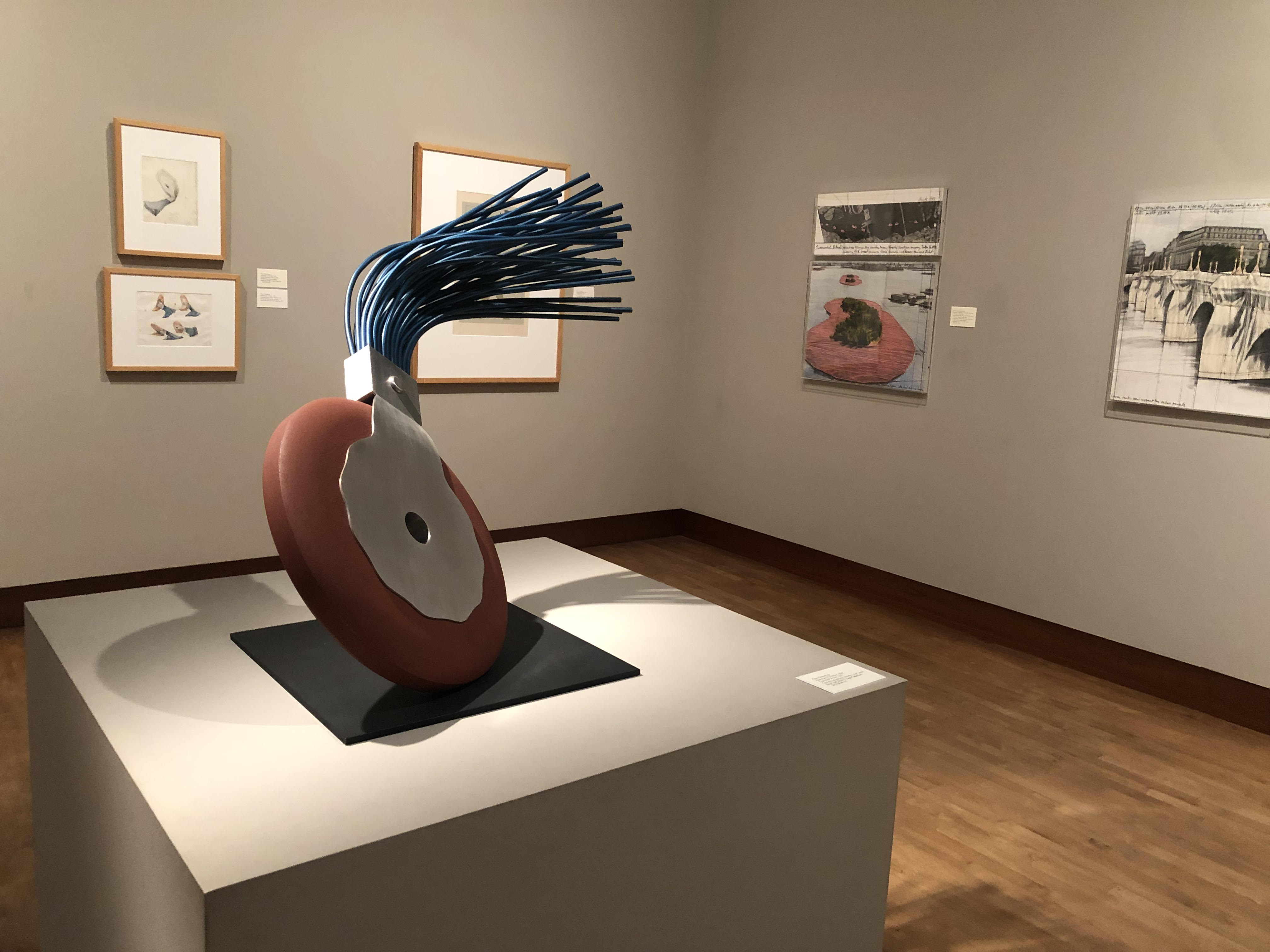
Photo: John and Suzanne’s Mom.
“Typewriter Eraser,” by Claes Oldenburg, at Chazen Museum of Art, Madison, Wisconsin, August 2022.

When I saw this a year and a half ago in Madison, I loved so much that Claes Oldenburg was drawn to the artistic possibilities of a typewriter eraser that I took a picture.

More recently, a larger, outdoor version of that eraser drew in an owl.

Alisa Tang has the story at the Washington Post.

“It was the morning of Friday the 13th, and staff members were tending the grounds of the National Gallery of Art Sculpture Garden when they spotted something amiss: feathers sticking out of the blue bristles of the gigantic typewriter eraser.

“As they stepped in for a closer look, they realized a barred owl was stuck in the brush of ‘Typewriter Eraser, Scale X‘ — the garden’s six-meter-tall steel-and-fiberglass sculpture of the once-common office relic.

“The bird was still. But as the gardeners approached, it turned its head and blinked. …

“Brett McNish, the garden’s supervisory horticulturist, wrote in an email, ‘Occasionally, we see hawks momentarily perched on other taller sculptures in the garden, but never on Eraser. This is the first Owl seen in the garden.’ …

“There is a lot of wildlife in the garden, including dozens of species of birds and small mammals, McNish wrote. Hawks mainly like to sit on ‘Graft,’ a stainless steel sculpture of a leafless tree, though they tend not to stay for long. …

“Then came Friday the 13th and the extraordinary owl in the eraser. It was unclear how the owl got into its predicament, but staff members sprang into action. ‘It clearly needed help,’ McNish wrote.

“Workers hauled out a ladder and steadied it under the eraser. McNish, feeling ‘slightly anxious’ because of the bird’s thrashing as staff members neared, put on goggles and heavy-duty rose-gardening gloves for protection. He climbed the rungs and extracted the bird.

“The gallery’s sculpture conservation department provided a quilted cotton blanket normally used to move artwork to swaddle the owl, and McNish said that within an hour of its rescue, the owl was delivered into the care of City Wildlife, an animal rescue center in D.C.

“ ‘It was extremely lethargic, and it looked really sad,’ said Jim Monsma, City Wildlife’s executive director. ‘An owl during the day should not just be lying there in a box. It should be trying to fly away. It looked like it had just given up.’ …

“Staff members evaluated the owl, X-rayed it and found no broken bones. But its right shoulder was swollen, its ‘gums’ were pale, and it wouldn’t eat, said Sarah Sirica, a veterinarian and City Wildlife’s clinic director.

“The clinic put the owl on pain and anti-inflammatory medication, injected it with an electrolyte solution around the base of its leg and put it in a private room in a large cage that was lined with cloth so it wouldn’t damage its wings. The clinic bought frozen dead mice, thawed them and left them in the cage overnight — which is when owls normally eat — but the owl didn’t touch the food.

“So staff members hand-fed it: One person held the owl, while another, sometimes Sirica, wore gloves, opened the owl’s beak and put pieces of chopped-up thawed mice into its mouth, ‘a finger-length down,’ Sirica said.

“After about a week, Sirica deemed the owl healthy enough to travel; the swelling on its shoulder had gone down, and its gums were pink again. On Oct. 21, a City Wildlife volunteer drove the bird to Tri-State Bird Rescue & Research in Newark, Delaware. Upon arrival, staff at the facility placed it directly inside a 100-foot-long, gravel-floored flight enclosure for ‘prerelease flight conditioning,’ said Lisa Smith, the executive director of Tri-State Bird Rescue.

” ‘It gives them the opportunity to have a long flight. Then we can evaluate that they are flying properly — you can’t do that in a small enclosure,’ Smith said. ‘You have to see multiple flaps. Also, the enclosure is 20 feet high, so you want to make sure they can get from the ground up and make it from one end to the other at that height.’ …

“Tri-State Bird Rescue has admitted … ducklings that fall into storm drains, and birds that lose their nests during storms or get caught in sticky glue traps. But eraser owl was a novelty. …

“Tri-State Bird Rescue normally will return an adult bird of prey to the area where it was found, but it avoids transporting younger raptors because they can injure their wings in the carrier. Besides, as juvenile birds of prey become adults, they often have to find territory away from where they were raised anyway, Smith said. … ‘For the birds’ safety, we tend to release them here. It’s good habitat. It’s migration season.”

More at the Post, here.

And just for no reason, here’s a handy expression you can use the next time you are in Sweden: “Det är ugglor i mossen.” There are owls in the marsh. Erik’s mother says, “It is something that is not quite OK or not reliable. You should really not believe it. It’s a sort of feeling.” Maybe “I smell a rat”?

Read Full Post »

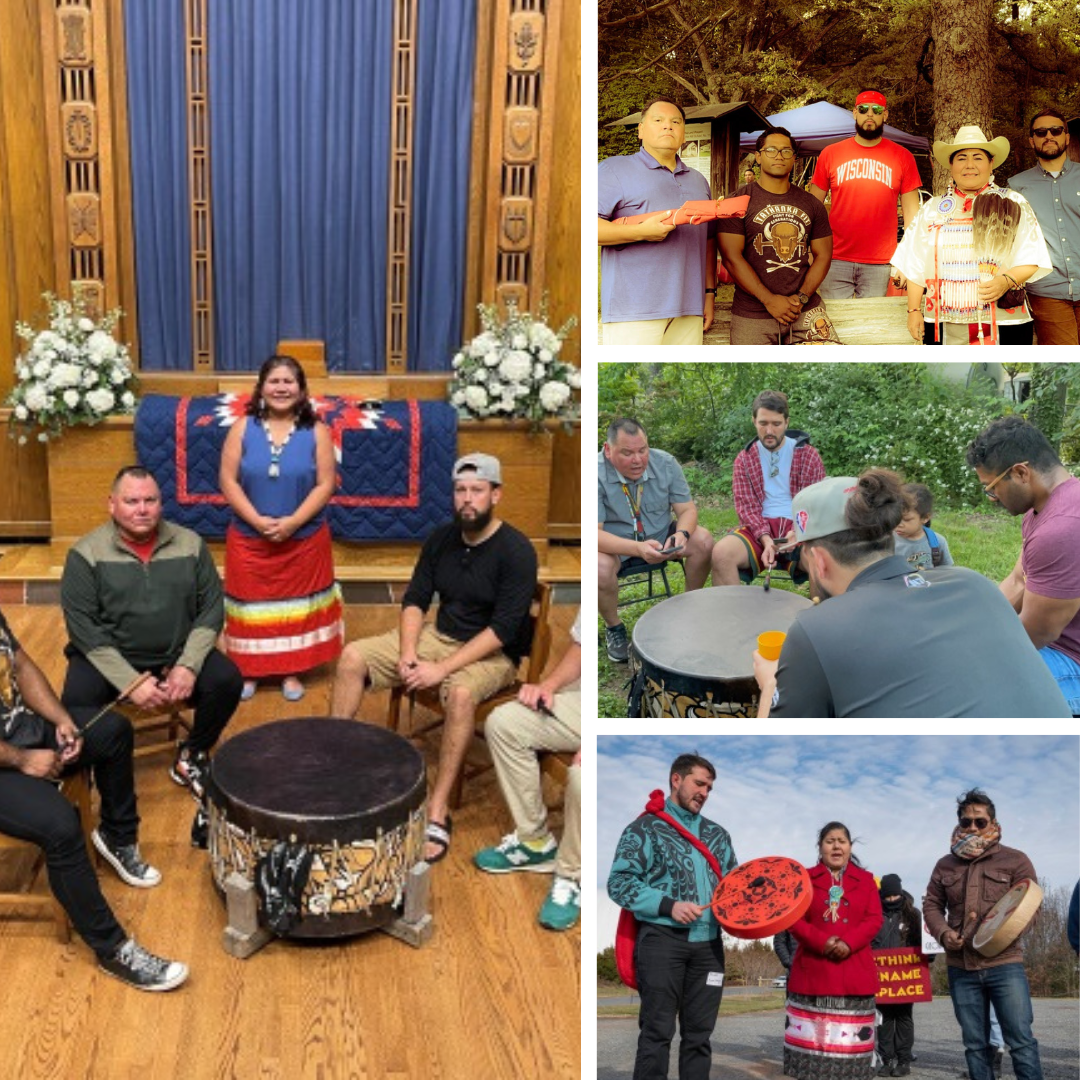
Photo: The Nicholson Project.
The Uptown Singerz are a DC-based intertribal Native American Northern powwow drum group that performs powwow, ceremonial, and in some cases political songs.

We are all enriched when previously below-the-radar groups begin to share their culture more widely. The featured article for today is from the Washington Post and highlights a cultural collaboration by members of several indigenous tribes.

Dana Hedgpeth writes, “When Nick Courtney came to D.C. seven years ago to work on education issues, he missed his Native American tribe in Washington state.

“Longing to connect with other Native Americans in the region, the 31-year-old member of the Makah Tribe helped form the Uptown Singerz, a Native American drum group that shares and celebrates their heritage.

“ ‘D.C. is a transient city because folks come and go, so that can be hard,’ said Courtney, who lives in Baltimore. ‘I still long for my own culture, but this fills my cup. It’s a bond, and I’m a part of something that’s allowed me to build a community here. It’s like a family for me.’

“In the United States, roughly 9.7 million people — or about 3 percent — of the overall population — identified themselves as being American Indian or Alaska Native in the 2020 Census. Fewer than 1 percent of people in the District, Maryland and Virginia said they are American Indian or Alaska Native.

“There are more than 500 federally recognized tribes in the country, and more than 70 percent of American Indians live away from their tribal reservations or communities.

“Being a part of Uptown Singerz gives members who are far from their tribes’ home ‘a renewed sense of community and family every time we sing, every time we drum,’ said Mary Phillips, the group’s lady backup singer (as the role is officially called by Native Americans), who is from the Omaha Tribe in Nebraska and the Laguna Pueblo Tribe in New Mexico. …

“The Uptown Singerz … practice several times a month and perform up to 20 events a year in theaters, rallies, community events and Native American gatherings and powwows in the D.C. region to showcase their talents and educate the public. They, along with the Zotigh Singers — who are from the Kiowa Tribe of Oklahoma and live in Waldorf, Md. — are one of the few American Indian drum groups in the D.C. region.

“ ‘Having the Uptown Singerz is so important because they help keep our culture alive here in D.C.,’ said Angela Gladue, 38, who is a powwow and hoop dancer. A Cree and a member of the Frog Lake First Nation in Alberta, Canada, Gladue moved to Northeast Washington six years ago and got to know other American Indians in the area, along with the drum groups. …

“The Uptown Singerz typically play around one large drum made from wood and dried animal hide. Sometimes they play smaller hand drums. Considered sacred and often used at events and some ceremonies, the drum for many American Indians represents the heartbeat of Mother Earth.

“They follow the Native American tradition of having only men sit around the drum. Women stand behind them and join in the singing because ‘women carry the sacred water of life,’ empowering them to ‘absorb or change the energy of the people around them or the energy of the drum,’ Phillips said. …

“For Gladue, hearing the drum and seeing American Indians from different tribes gather and dance was a special moment. … ‘People will ask, “Indians are still here?” To be around other Natives and not have to explain myself makes me feel good.’ “

More at the Post, here.

Read Full Post »

Photo: Suzanne and John’s Mom.
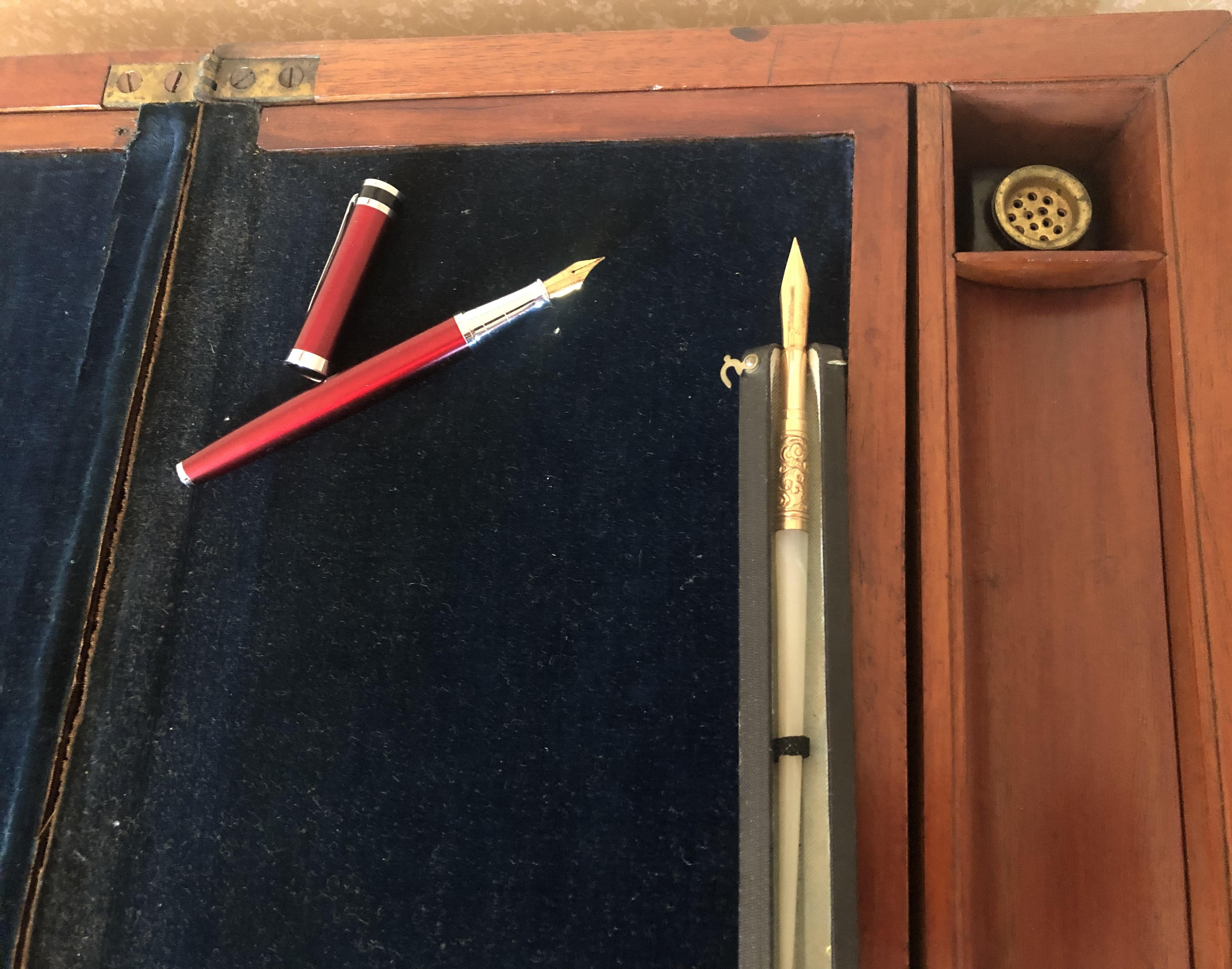
Writing desk and pen of Moses Webster, born 1781. The red pen is new, a Beiluner.

Today’s story shows that love for the old ways can rise up unexpectedly in young people, maybe even start a trend.

Tara Bahrampour writes at the Washington Post, “The enormous patina-green fountain pen juts over the sidewalk on F Street, two blocks from the White House, its gold nib pointing down at the front doors like a command.

“ ‘Fahrney’s Pens,’ the sign in calligraphy reads. Inside, the narrow space with 28-foot ceilings is a cathedral to its acolytes, its objects of worship gleaming under glass counters. Ball or fountain. Plastic or rose gold. Steel or acrylic resin, redwood or ebony, matte or shiny.

“ ‘Allow me to dip it,’ store manager Phuntsok Namgyal says softly. He bathes a nib in a bottle of blue-black ink and hands a fountain pen to a customer, who dashes off his signature. …

“In its 94 years, Fahrney’s has outlasted the advent of mass-produced ballpoints, the rise of email and text messages, and a pandemic that decimated newer downtown businesses all around it. Its staying power can be attributed to a base of loyal customers, along with a new generation raised on the digital but enchanted by the mechanical. …

“[Solomon Dennis, 79] leaning on a copper-colored walking stick, recalled the first pen he bought at Fahrney’s, in 1974: a Montblanc Diplomat. ‘It was a hundred and fifty dollars then; I think it’s a thousand and fifty now,’ he said. When he lost it, he cried for a week.

“Pens at Fahrney’s range from $20 to nearly $5,000 and from themes like Harry Potter to King Tut. Some have historical connections, like the Fisher Apollo, a ballpoint pen that traveled to the moon and contains gas that allows it to work underwater, upside down, in freezing temperatures and at zero gravity. A National Zoo pen features pandas.

“Once, Fahrney’s sold a $130,000 pen ‘completely covered in diamonds,’ store owner Chris Sullivan said. …

“Choosing a pen is personal. How do you tend to hold it? Is your lettering large and loopy? Do you close your L’s? Do you prefer the feel of a light pen or a heavy one? Flashy or subtle? Fine tip or broad? ‘It shows their individuality,’ Sullivan said.

“Sullivan’s parents bought the store in 1972 from founder Earl Fahrney. Sullivan, 62, worked in the shop growing up and now co-owns it with his sister; his 83-year-old mother is still working, too, in the warehouse in Upper Marlboro. (‘I can’t get her to stop,’ he said.) …

“The store still does repairs, though it is getting harder to find parts. It also sells stationery, journals, inks and calligraphy books, a small bulwark against the drift of a country that long ago dropped handwriting classes from school curriculums.

“And yet the generation that didn’t learn cursive has somehow fallen for fountain pens — and their interest is helping drive demand. The average age of customers at Fahrney’s is 60, but it is dropping, Sullivan said.

“ ‘There’s a lot of young buyers — “young” being people in their 30s — paying $1,200 for a pen,’ said [David Baker, executive director of the Writing Instrument Manufacturers Association.] ‘From what I hear, during covid, a lot of collectibles and fine items became significant as people had time to browse and look at these things.’

“Trends like urban sketching and journaling have helped spur interest in fountain pens in particular, said [Jonathan Weinberg, an artist and curator of the Maurice Sendak Foundation in Ridgefield, Conn.] who owns around 250 of them. ‘With a ballpoint pen, your hand tends to get a little cramped,’ he said. ‘Your hand kind of flies across the page with a fountain pen.’ …

“ ‘It’s like a candy store for me,’ [Connor Rosenberger, a 19-year-old music major] said, standing in the middle of Fahrney’s, as if unsure where to turn. ‘A very expensive candy store.’

“For his choir mates, too. Teddy McIntyre, a 21-year-old redhead with a denim jacket and a mustache, said he writes actual letters to relatives. … ‘It gives me an excuse to use my wax seal,’ he said. And Anna Kate Scott, 22, said she writes novels and short stories by pen ‘because I feel more like I’m in it, rather than separated from it by a screen.’ ”

About a year ago, my pal David gave me a fountain pen out of the blue. What a lovely surprise that was!

More at the Post, here.

Read Full Post »

Photo: Pixabay.
Not that you were worried about how rats got along when Covid closed restaurants, but the Post has a story on the reasons rats never run out of options — and what you can do about it.

Few of us are fans of cockroaches, rats, or other durable scourges of the human community, and yet perhaps we owe them grudging respect for an uncanny ability to survive no matter what.

Dana HedgpethTara McCarty and Joe Fox reported at the Washington Post on how the rats of the nation’s capital essentially laughed off Covid and its effect on easy food.

“Rats are a fixture of urban life,” they write, “but early in the pandemic, their populations in urban cores shrank as restaurants, parks and offices shut down — and their access to trash did too. But many adapted, desperate to survive. They ate off the bottom of restaurant doors in search of food … and a large number, to residents’ frustration, migrated.

“ ‘They’ve gotten into places where there were no rats, and now people are calling and saying, “I’ve lived here for 20 years and never seen a rat until now,” ‘ said Gerard Brown, who oversees rodent control at D.C. Health. …

“ ‘There’s a rat resurgence,’ said Bobby Corrigan, among the world’s best-known rodentologists. ‘They may be bouncing back with larger families in both the urban core and in the more residential neighborhoods of D.C.’

“Known formally as Rattus norvegicus, the brown rat is the species found in D.C.’s streets and many major cities. Most people agree that rats are gross and that they can cause health problems and property damage. …

“Orkin, one of the biggest pest control management companies in the country, ranked D.C. fourth in its annual ranking of the top 50 ‘rattiest cities,’ placing it behind Chicago, New York and Los Angeles.

“In D.C., reports of rat sightings are up: The city service hotline has fielded more than 13,300 complaints in the 2022 fiscal year — compared with roughly 6,200 in the 2018 fiscal year, according to the city’s health department. Despite this increase, health officials said they haven’t seen a surge in rat-related illnesses.

“More complaints mean more work for rat catchers: Before the pandemic, Scott Mullaney and his wife, Angie Mullaney — who run a business that uses Patterdale terriers to catch and kill rats — used to average about 25 rats at a job site. Now as people return to life and business as usual, their dogs catch closer to 60 per site some nights. …

“To survive as a rat, you must be clever. Think you have what it takes to scavenge for something to eat or find a safe place to sleep? We built a video game to show you how rats live — and thrive — in the city. You’ll play as Cheddar, a D.C. rat whose name was picked by readers. Try your hand (or paw) at survival by finding food, water and a spot to nest in different environments throughout this story. …

“Rats are smart. They know that they can reliably get food and water from fountains, birdbaths, pet bowls, dripping sprinklers and trash cans and that some decked-out yards offer bigger bounties — including pet poop. …

“Redevelopment creates prime real estate for rats: Home and apartment renovations leave stray pipes that can provide a path from the sewer into buildings and into the walls.

“Jake Rosen was living in Petworth when he repeatedly heard rats inside the walls of his home. He believes they worked their way in through gaps in the concrete under a porch when construction started on a nearby house, where he thinks the rats were probably nesting. It takes only one house on a block to draw rats in, and then suddenly they’re everyone’s problem. …

“Tucked away in an alley off Ward Court NW, in Dupont Circle, rats were scrounging for their meals among a cluster of trash cans and dumpsters by several apartment buildings. They fled pedestrians and their dogs, sprinting under bushes and other plants.

“Michael Beidler has lived on the block for more than three decades and sees rats scavenge in trash bags left outside, often on the ground spilling over from dumpsters. For rats, it’s the perfect setup. They get their food from the dumpsters and then burrow in his yard. Beidler spent about $3,000 on rat traps and had a contractor pour as much concrete as he could to cover up his garden to try to keep out the rats. …

“Apartment buildings offer rats a trash feast. From a dumpster, they can jump onto and scurry up the outside of a trash chute, squeezing into holes behind the brackets to get inside. They also get inside trash rooms through open doors or gnaw through the mortar between bricks in a foundation.

“A rat can fit its head through a hole about the size of a marble. Its rib cage has a ‘collapsibility function,’ and once it gets its head in, a rat uses its vibrissae — long whiskers on its nose and face — to feel to make sure it’s safe. Then it does what Corrigan calls ‘squeeze-wiggle gymnastics’ to get the rest of its body through. …

“Rats will never be eliminated — and play an important role in the ecosystem as food for foxes, coyotes, snakes, hawks and owls. Yet for the D.C. rat-control crew, the end game is to reduce their population in areas where humans live, work and play.” That’s the bottom line.

The Post, here. has a list of what to do if you have rats. And in the interest of helping you outsmart them, the newspaper also offers a game that helps you think like a rat. Check it out.

Read Full Post »

Photo: Chris Linder.
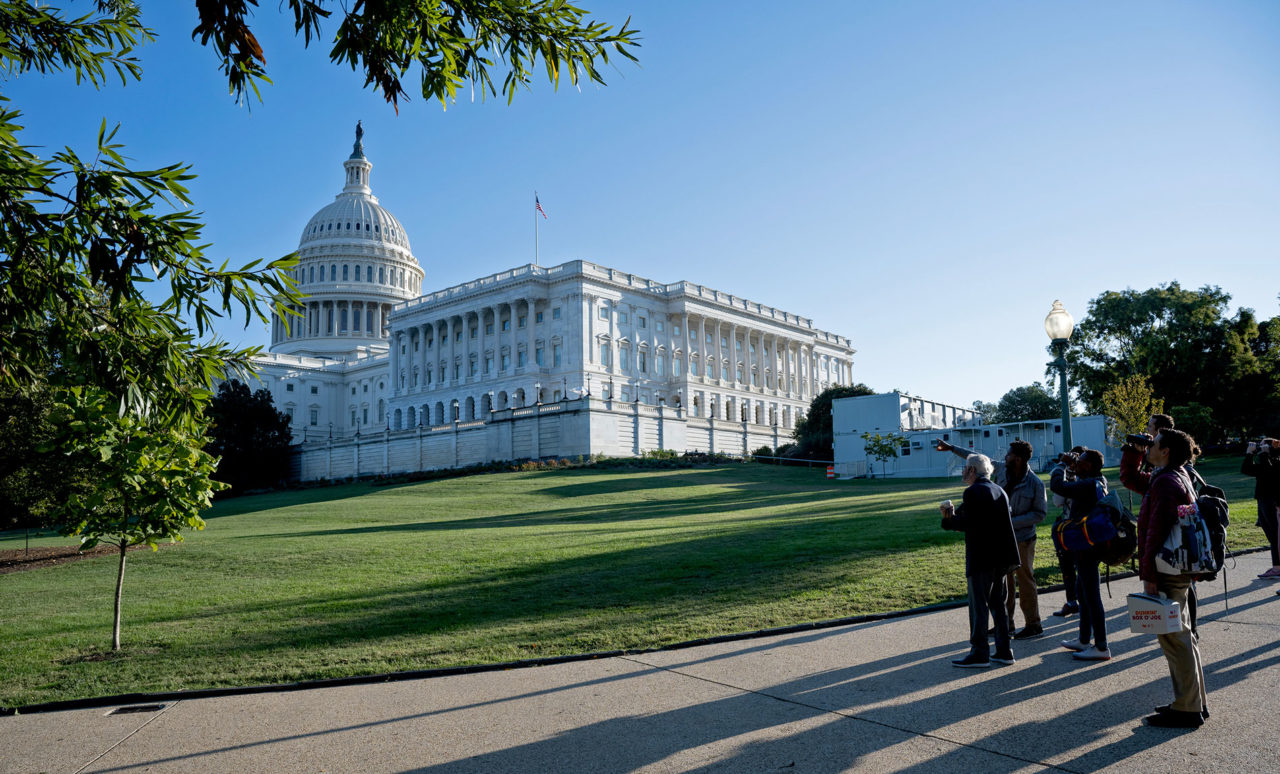
National Audubon Society government affairs coordinator Tykee James (second from left) has been leading monthly bird walks for congressional staff on Capitol Hill since 2019.

A while back I wrote how the Swiss ambassador in Washington, DC, got people there interested in birding (here). Today a story from Cornell Lab’s All About Birds touts the ability of bird walks to build common ground among government opponents.

Ariel Wittenberg writes, “It’s a busy morning on Capitol Hill when the gaggle of congressional staffers and their boss, U.S. Rep. Alan Lowenthal, gather on the back lawn. … This morning’s meeting isn’t about legislation in the House of Representatives. It’s about three visitors perched atop the chamber’s roof, backlit by the Capitol Dome’s soft gold glow.

“ ‘Will you look at that, House Sparrows sitting on the people’s House!’ exclaims Tykee James, the government affairs coordinator for National Audubon Society, eliciting a muffled chuckle from the dozen legislative aides and interns assembled. …

“He started the walks in 2019 as a way to forge connections with lawmakers and their staff who might work on bird-related legislation. … [And] they serve another purpose: building common ground in a place that is perhaps more partisan now than it’s ever been.

‘If you take down the political barriers and you just bird a little bit, if you calm down, smell the flowers, and look for some feathers, then I think that you can genuinely find where people are coming from and that gives you a better opportunity to find where you can meet in the middle,’ he says. …

” ‘I do no kind of lobbying on these walks.’ Instead, he gives pointers on using binoculars, fields questions about the difference between male and female House Sparrows, and mimics the different caws of Fish Crows and American Crows. …

“ ‘It’s not about me being an expert, it’s about me trying to find ways to connect people with the excitement of it all,’ he says. ‘Being present for moments like this makes you feel connected to birds and to their issues.’

“Congressman Lowenthal is no stranger to bird policy. He (a California Democrat) joined with Rep. Brian Fitzpatrick (a Pennsylvania Republican) to coauthor the that’s being considered in the 117th Congress. The Act would permanently codify protections for migratory birds that were rolled back. …. Reps. Lowenthal and Fitzpatrick have also reintroduced legislation calling for the U.S. to join the Agreement on the Conservation of Albatrosses and Petrels, a conservation treaty that covers 31 species of seabirds.

“But this is Lowenthal’s ‘first bird walk,’ he says, and he is genuinely surprised when James tells him that American Robins aren’t actually robins at all, but a type of thrush.

“ ‘Where are the robins, then?’ Lowenthal asks.

“ ‘They are in Europe,’ James says.

“To Lowenthal, participating in a bird walk is a means to escape the grind of the Capitol, where later in the day he will pay his respects to victims of the Covid-19 pandemic at a ceremony near the Washington Monument before returning to the House chamber for more debate on spending bills.

“ ‘There is so much going on, so much uncertainty and stress,’ Lowenthal says. ‘It’s nice to have a focus outside of ourselves.’

“Even though he doesn’t talk politics on his bird walks, James believes they do have policy impact. For example, the legislative director at Lowenthal’s office, Shane Trimmer, has been on almost every bird walk James has offered. And James says that he ‘suspects’ some cosponsors of Lowenthal’s bipartisan migratory bird legislation may have been inspired by the walks. …

“Today’s bird walk is full of first-timers. One aide from Long Beach, California, tells James he is only experienced at ‘identifying pigeons and seagulls,’ and another confesses she has ‘absolutely no birding experience.’ …

“James says he actually prefers to bird with people ‘who are picking up the bins [binoculars] for the first time. … It’s all about meeting people where they are with the birds,’ he says.

“That, and James hopes observing birds can help staffers and politicians think about their own environments in new ways. That was the case for James, when he started birdwatching during his first job out of college at the Cobbs Creek Environmental Center in West Philadelphia. …

“People of color in the United States are less likely to have adequate access to parks and green space. Lack of green space in communities of color often means those neighborhoods of mostly concrete feel hotter than areas with parks and ample tree cover. The phenomenon, called the heat island effect, can exacerbate health disparities because high temperatures can lead to heat exhaustion and stress, which complicate heart and respiratory conditions.

“The lack of access to green space is no accident, James notes, due to historic discriminatory mortgage lending and other practices that segregated neighborhoods. That’s one reason why, outside of his day job, James advocates for increasing diversity within the outdoors community. Last year, he cofounded Black Birders Week to promote the work of Black naturalists and raise the visibility of Black people within the birding community.”

More at All About Birds, here. For something extra entertaining about ornithology, read my post on so-called “birbs,” here.

Read Full Post »

Photo: Noah Robertson/The Christian Science Monitor.
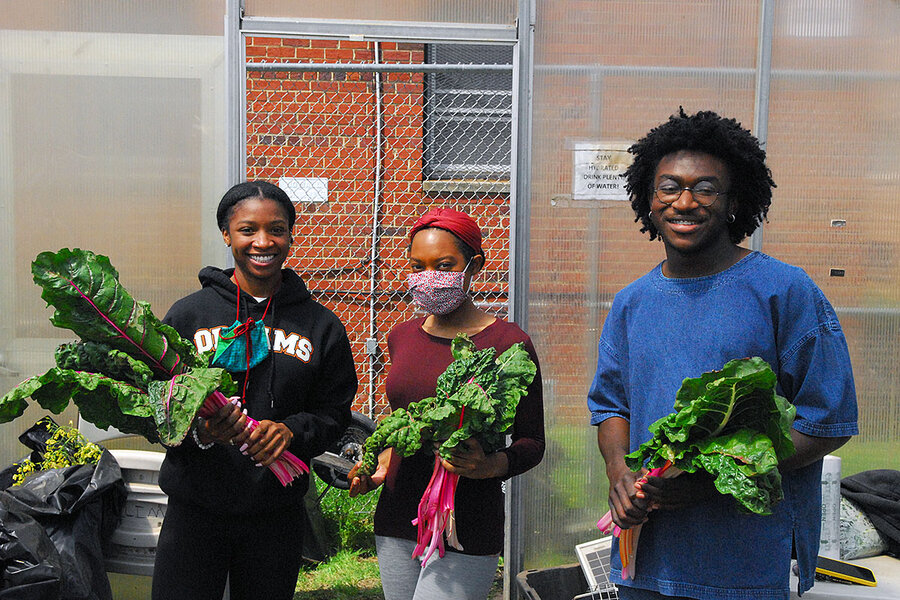
Kwesi Billups (right) and volunteers at Project Eden hold homegrown Swiss chard at the greenhouse in Southeast Washington, DC, April 17, 2021. Project Eden distributes its produce, along with donations from the Capital Area Food Bank, at a nearby church.

As many people learned during the pandemic, small, hopeful things can make a big difference in how a person feels. The same is true of neighborhoods. Even in areas characterized by blight and despair, a bunch Swiss chard that people grow together can make them believe that better days are ahead.

Noah Robertson writes at the Christian Science Monitor, “Three years ago, when Jevael German received his assignment through Washington’s Summer Youth Employment Program, he wanted nothing to do with it. He would be working with Project Eden, a community garden in the city’s troubled Southeast – known for police sirens much more than produce.

“A Washington native himself, Mr. German dreaded the months of labor in the district’s humidity. He didn’t even like vegetables. While meeting his supervisors on his first day, Mr. German laid his head facedown on the desk. 

“ ‘Sir, if you don’t want to be here, you’re welcome to leave,’ he heard back. ‘But you can’t put your head on the desk.’

“Mr. German stayed, and the summer surprised him. He enjoyed the outdoor work, which reminded him of childhood gardening with his grandmother. As an older member of the summer group, he began mentoring some of his younger co-workers. He even started eating greens. 

“At the program’s end, Mr. German asked to continue with Project Eden for another summer.

After returning, he learned that a former summer employee at the garden had died in a shooting. Mr. German, who was still living with one foot in the streets at that time, saw in that tragic death a version of himself if he didn’t change.

“ ‘Right then and there, I was like, I’ve got to leave the streets alone,’ he says. …

“Almost 10 years ago, Cheryl Gaines, a local pastor, started the garden as a response to the South Capitol Street massacre, one of Washington’s worst mass shootings in decades. Her idea then, as now, was that no community chooses violence when it has another option. Since then Ms. Gaines, her son Kwesi Billups, and hundreds of local employees and volunteers have sought to offer such an option.

“While simultaneously addressing challenges of health, food insecurity, and unemployment, Project Eden is at its roots an alternative. The work is rarely convenient, and resources are often low. But the garden’s legacy is that seeds can grow on what may seem like rocky soil – if only there’s a sower.

“ ‘This garden gives back to you what you give to it,’ says Mr. Billups. 

“In 2012, Ms. Gaines was Project Eden’s sower, though an unlikely one at that. She grew up with an abusive, alcoholic father in public housing outside New Orleans, only to trade that past for a career in law, and later the ministry. While at seminary in Rochester, New York, she had a persistent vision that God was calling her to live in Southeast Washington, begin a church, and plant a community garden. In 2010, after having lived in the Washington area for years, she felt the time had come.

“Leaving four dead and six more injured, the South Capitol Street massacre rattled Southeast, and brought the community together to mourn. At a vigil, Ms. Gaines met the owner of an apartment building just blocks away from the the shooting. In that conversation, she eventually shared her vision. Before long, the owner told her she could use her building’s backyard.

“On that land two years later, Project Eden (‘EDEN’ stands for Everyone Deserves to Eat Naturally) began as a 10-by-20-foot patch of dirt, with only rows of tilled soil. The next year Ms. Gaines and her team turned that plot into a 28-by-48-foot greenhouse, complete with aquaponics, and have since expanded to another location at nearby Faith Presbyterian Church.

“A community garden may seem like a boutique project in some areas, but not in Southeast, says Caroline Brewer, director of marketing and communications at the Audubon Naturalist Society, which recently named Mr. Billups its yearly Taking Nature Black youth environmental champion. …

“ ‘When people have opportunities to give back … that allows them to grow and develop and mature and make [an] even greater contribution to their families and their communities,’ says Ms. Brewer.

“Project Eden isn’t just resisting material challenges of nutrition and income, says Ms. Brewer. It’s helping the community resist despair. ‘It’s a constant battle,’ she says, ‘and they’re winning that battle.’ “

More at the Monitor, here.

Read Full Post »

Photo: J. Scott Applewhite/AP.
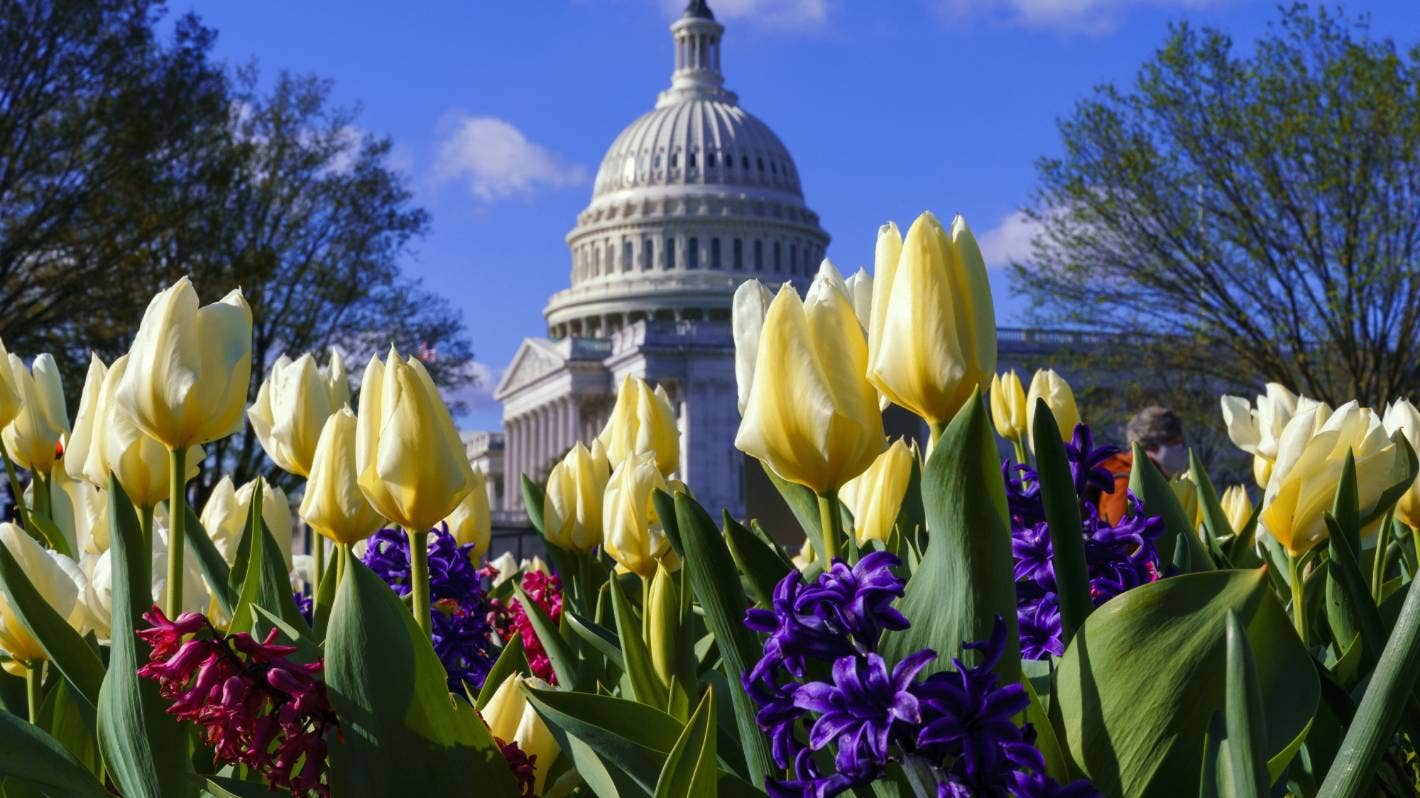
Gardening gurus Jim and Cindy Kaufmann met when they both worked at the National Gallery. Today they work in separate government jobs to brighten Washington, DC, with 300 acres of landscaping and flowers.

Have you ever thought about how the beautiful flowers appear in public places like the US capital — and what it takes to keep them beautiful, even in a pandemic?

Cari Shane reports at the Washington Post reports about a married couple who are responsible for more than 300 acres of the the Washington, DC, landscape.

“Cindy Kaufmann, 56, is chief of horticulture services at the National Gallery of Art and Sculpture Garden. Her husband, Jim Kaufmann, 48, is the director of the Capitol grounds and arboretum for the Architect of the Capitol, which maintains the buildings, monuments and gardens on the U.S. Capitol campus. He also chooses the National Christmas Tree. …

“They call themselves ‘garden geeks’: Jim is ‘a tree guy,’ he says. (His favorite is the white oak.) Cindy loves pink flowering plants the most. ‘But it’s like having children,’ she says. ‘You really just love them all.’

Cindy grew up in Rockville, Md., where she spent hours in the garden, ‘growing flowers and vegetables just to see how they would look,’ she says.

“After studying horticulture at the University of Maryland, she started at the National Gallery right out of college. Jim grew up in Philadelphia, helping his parents take care of their vegetable garden. He attended a public vocational-technical high school that specialized in agriculture, then graduated from Temple University with a degree in horticulture. They met when they both worked at the National Gallery. …

“Cindy’s pre-pandemic life meant arriving at the office at 6 a.m. and ‘walking five miles every day, visiting the campus and directing the wide variety of areas we support from the Sculpture Garden — the greenhouses, the garden courts, terraces and every exhibit and interior space,’ she says.

“Now, like for many of us, her work is done mostly over Zoom. The National Gallery closed and reopened a few times over the past year; each time, Cindy had to be ready, constantly ‘planning for normal.’ The museum’s March anniversary is celebrated annually with a rotating display of 250 azaleas in the Rotunda, and Cindy and her staff spent the winter preparing the plants to transfer from greenhouses in Frederick, Md., but the museum didn’t reopen after all. (The Sculpture Garden reopened in February.)

“For Jim, the pandemic and the Jan. 6 siege on the Capitol — which was followed by the erecting of non-scalable fencing — meant some pivoting, too.

“He and his team continue to care for more than 4,500 trees and all the flowering plants on 274 acres of Capitol landscape. …

“Like Cindy, Jim’s days this past year have been less hands-on, which he misses. ‘Nothing ever replaces the ability or the experience to walk the grounds, feel the landscape and talk to people,’ he says.

“But the pandemic has allowed the Kaufmanns to spend more time in their own garden in Silver Spring, Md. Last summer, tending it was their ‘pandemic therapy,’ says Cindy. It reflects their different horticultural styles, and over the years, the yard has naturally divided into ‘Cindy’ and ‘Jim’ sections.’ “

More at the Washington Post, here.

Read Full Post »

My friend Jeanne has been investigating more-sustainable living and has experimented with producing zero waste. I’m impressed. My small efforts have been almost completely undermined by the pandemic and all the plastic containers that come with takeout — takeout being both a break from cooking and support for our local restaurants.

Even the folks at Plastic Free Hackney, an inspiring effort in an English town, admit that it’s all harder during a pandemic. Still, idealists soldier on and will eventually triumph.

Jessica Wolfrom writes at the Washington Post, ” ‘It was kind of like a slow-moving coup on my part,’ said Anna [Marino], 32, a former seller on the website Etsy, who started researching the meat industry and the zero-waste movement. Even though they were only a family of four — [Anna and Justin] have two children, ages 6 and 3 — they knew they needed to change their lives.

“Paper towels and single-use napkins were the first to go. Then went the plastic. But as they traded traditional products for more eco-friendly items, they quickly realized that their reliance on online shopping was another problem.

“ ‘It almost defeats the purpose,’ said Justin, 43, who previously worked in cybersecurity. ‘I’m ordering something to save the planet, but in order for it to get here, it’s creating a pretty nasty carbon footprint. … And so, we were like, well, there needs to be a store around here.’

“Enter Mason & Greens, the Washington region’s first zero-waste store. … The airy shop is equal parts organic grocer and minimalist boutique, selling items such as package-free shampoo bars, organic produce and drip-irrigated olive oil. Hanging plants and shelves lined with stainless steel containers and books titled ‘All You Need Is Less’ offer shoppers a glimpse into the world of low-waste living. …

“ ‘You know it’s a movement when you don’t know everything that’s going on,’ said Gary Liss, vice president of Zero Waste USA, a nonprofit organization dedicated to reducing waste, who described the growing interest in low-waste living as a sea change in the relationship between people and things.

“Americans throw away about five pounds of trash per person per day, according to the Environmental Protection Agency — 12 percent of which is plastics. … Scientists estimate that up to 91 percent of plastic is never recycled, leaving the rest to burn in incinerators, clog landfills or degrade in the oceans. Scientists have even found microplastics in air, water and food. …

“The coronavirus pandemic has only increased reliance on disposable plastics. Billions of masks and gloves made from plastics and used by health-care workers, first responders and essential workers are being discarded every month, studies show. …

“Mason & Greens, which is based in part on the bulk model, makes a point of avoiding plastics at nearly every turn. Beans and grains come in gravity dispensers. Produce is package-free. Pomberry Kombucha and pinot noir stream from a tap. The spices are self-serve.

“Customers aren’t required to bring their own bags or refillable containers, but the couple said many customers do. The shop employs a tare system that logs the weight of an empty container and then calculates the price of products by the ounce. …

“The couple welcomes newcomers into their waste-free world, but Anna routinely castigates vendors for their packaging practices — she is not above shaming suppliers who send items wrapped in plastic. … ‘I have to go through so much to get a product into the store that’s zero-waste or low-waste.’

“But living a waste-free life might soon become easier. As consumers demand more sustainable options, brands large and small are shifting to make sustainability central to their strategy. Major companies such as Unilever have pledged to halve the use of virgin plastics in packaging by 2025. Walmart, Target, CVS and other retailers are working to develop an environmentally friendly alternative to the plastic bag. And other companies are starting circular delivery services — an updated version of the 1950s milkman — where groceries and goods are packaged in reusable containers that are returned empty.”

Signing up for the guy who brings milk in reusable bottles is one way I’ve actually gotten better at controlling waste in the pandemic. Thanks to my daughter-in-law, I got in under the wire with the dairy farm as other people started lining up for deliveries, too.

Read about a variety of zero-waste shops and the blogger who fit all the waste she produced over four years into a 16-ounce Mason jar at the Washington Post, here.

Read Full Post »

http3a2f2fcdn.cnn_.com2fcnnnext2fdam2fassets2f191115120957-immigrant-food-columbia-road

Photo: Irena Stein Photography/Immigrant Food
Chef Enrique Limardo says the “Columbia Road” bowl at his restaurant, Immigrant Food, combines elements of Salvadoran and Ethiopian cuisine. A special side dish: opportunities to help recent immigrants.

People say, “I’m upset, but I don’t know what to do.” Or, “I don’t have time to do anything extra.”

Look, when you shop, do you have time put a can in the food pantry bin? Do you have time to write a handful of postcards to voters once in a while? There is always time to put a can in a bin; there are always nonprofits that will accept a tiny bit of volunteering. It adds up.

And here’s the biggest benefit: you will feel better. Was it Ann Landers or Dear Abby who was always recommending helping someone worse off as a cure for nonclinical blues? You just need to find a volunteer gig that fits your interests.

This post is mostly about a cool restaurant in Washington, but be sure to note what the owners are trying to do in addition to presenting delicious, creative dishes.

In November, Catherine E. Shoichet reported at CNN about a new restaurant that opened up in the nation’s capital.

“It’s called ‘Immigrant Food,’ ” she wrote, “and it’s just a block from the White House. The fast-casual spot caters to a weekday lunchtime crowd, with bowls blending cuisines from different cultures around the globe — like a dish that combines Vietnamese spicy-rice noodles with pickled bananas in what the restaurant says is an ‘ode both to Central America’s favorite fruit and to German-style pickling.’

“It also gives diners a chance to donate to local immigrant advocacy groups, all under a slogan aiming to bridge the political divide and find common ground: ‘United at the Table.’

“[Co-founder Peter Schechter] wants people to feel at home here, and to hear the story he’s excited to tell. …

“As the child of immigrants from Austria and Germany, Schechter says he felt like he had to respond to the surge in anti-immigrant rhetoric across the United States.

” ‘This isn’t the America I recognize. … Immigrants have been the foundation of growth and vibrancy. This country has been great again and again and again because of immigrants. …

” ‘Immigrants are feeding America,’ he says. ‘All of the industries that make food, whether it is the picking or the shucking or the meatpacking or the slaughterhouses, (or) in restaurants, the servers, the bus boys, this is an industry that is dominated by immigrants.’ …

“At Immigrant Food, menus available by the door describe each of the nine fusion bowls and five vegan drinks on tap. They also encourage visitors to donate to and volunteer with local immigrant advocacy groups.

“Among the suggestions listed on the restaurant’s ‘engagement menu’: teaching English, visiting detention centers, staffing hotlines and helping with mock ICE interviews. …

“There’s also a photo booth featuring a world map. Diners can point to where their families are from, snap a selfie and get a text message with a frame around the image that says, ‘We are all immigrants!’ …

‘People say, “I’m really upset about what’s happening, but I don’t know what to do,” ‘ Schechter says. ‘And so, you come to this restaurant, we will give you stuff to do — concretely and easily.’

“Local immigrant advocacy groups will also be able to use the restaurant’s upstairs space for things like meetings and English classes, free of charge. And on its website, the restaurant will serve up bite-sized breakdowns of immigration policy issues, dubbed ‘The Think Table.’ …

“The location turned out to be a case of serendipity, Schechter says. ‘[But] I really think it goes beyond the political.’ …

As he sips on a drink called ‘Across the Border’ — which blends cacao, dates, peppers, allspice, vanilla and cashew milk — Robert Evans, 72, says he loves the concept but worries the restaurant might end up preaching to the choir rather than crossing political lines.

“But then again, he says, one day someone who works in the White House might stop by. … In Schechter’s view, immigration shouldn’t be a polarizing topic. He points to polls that show most Americans say immigration is a good thing. And he hopes Democrats and Republicans will dine at Immigrant Food together.

” ‘The table, the restaurant, has always been a place where people unite,’ he says.” More.

By the way, if you’re ever in Providence, the immigrant restaurant called Aleppo Sweets is just fantastic. An extra treat for me is running into one of my former ESL (English as a Second Language) students who’s working alongside her family members there.

Read Full Post »

Photo: WGRZ
The owner of Sakina Halal Grill, Kazi Mannan, knows what it’s like to be hungry. Thanks to his paying customers in DC, he can give meals to the homeless for free.

Don’t you love successful people who remember how painful poverty and daily anxiety about food can be — and who decide to help others? Tim Ebner reports at the Eater in Washington, DC, about a restaurateur who did just that.

“Come 2 p.m. in many Washington, D.C., restaurants, the lunch rush is all but over. … But for Kazi Mannan, owner of Sakina Halal Grill, the lunch rush is just getting started.

“On a late-Friday afternoon, the door to his Pakistani-Nepalese-Indian restaurant keeps swinging open. A homeless man who is deaf walks through the door. He carries a note. Mannan reads it, then attempts to sign with the man.

“Mannan asks if he wants something to eat while gesturing toward his mouth. The man holds up two fingers and pulls out $2, but Mannan shakes his head no.

“ ‘No money,’ ” he says. ‘You eat for free.’

“That’s Mannan’s policy for every homeless person who walks through the door. At Sakina Halal Grill, the poor, homeless, and hungry eat for free — Mannan calculates he gave away 6,000 meals in 2016 — and the waiters serve them in the dining room, as if they’re full paying customers.

“The buffet-style, halal restaurant, which is undergoing a name change from Mayur Kabab House to Sakina Halal Grill — ‘It’s a tribute to all the mothers around the world,’ Mannan, who lost his mother Sakina, 26 years ago, says of the switch. …

” ‘I’m the little guy on this block,’ Mannan said. ‘And, I love it. …

‘I want to say, “Hey listen, corporate people and people in politics! Listen to me!” I want to show them what love can do, and I want to spread a wave of love that touches the lives of millions.’

“Mannan says he’s living the immigrant dream, in a place where people are likely to take notice. Keeping his door open — which he did Thursday during the #ADayWithoutImmigrants strike — is more than just good business, it’s an expression of his faith. …

” ‘Kazi Mannan: The restaurant has been here for decades. I took it over in 2013 and this really was my dream. I came from a village in Pakistan that didn’t have electricity or plumbing. Our school was completely outdoors. It was always my dream to overcome poverty and own a restaurant. …

” ‘I started working at a gas station off Benning Road in Northeast. At the time, it was a very dangerous neighborhood. I worked there for a few years, and eventually, I saved enough money to start a limousine service; someone told me that I could make my own money as a driver. The funny thing is — that’s where you meet all of the stars of D.C. I still own the company, and I’m very proud that I can provide jobs to people like me, immigrants. Because seriously for me, this is not about the money. …

” ‘My mother taught me to be generous and give with my time. Because remember, we were broke. But, if we had a guest visit, she would make tea and welcome them into our home. She gave everything of herself. …

” ‘I’m a Muslim-American. And I like to believe that when I’m giving to the poor and hungry, God sees that. Just the act of giving a smile to someone can be a blessing. Just think about what food has the power to do. …

‘ ‘The chefs work together … and not only do they make delicious food, but they represent places, which are typically at odds with each other. They come together in this kitchen and use pure love and food. …

” ‘I am proud to be Muslim-American. I am proud to be a citizen of this country. And as a Muslim, I want to show others the true essence of Islam — and that is to love.”

More at the Eater, here. Manna’s initiative seems to be going strong (click here for a 2019 update), which is reassuring as the Eater article is from 2017. I was sorry to see that when Panera tried something similar, a pay-what-you-want model, it didn’t last. (See Bloomberg.) As philanthropic people keep trying to find ways to feed the hungry while running a business, a model that works long-term will emerge. Meanwhile, one kind individual can make a huge difference in many lives.

Read Full Post »


Photo: Jared Soares for the New York Times
Dupont Underground, a converted trolley station, functions as an experimental art and cultural space in Washington’s Dupont Circle neighborhood.

Kids are pretty literal about things they hear adults say. I knew a girl, a granddaughter of John D. Rockefeller, who when very young was supposed to recite Bible verses with all the students in her school. In her mind, the words “Praise and magnify Him forever” were “Praise the grandfather with a feather.” Someone corrected her.

If I were to tell one of my young granddaughters about underground art, I suspect she’d picture art that was literally under the ground, maybe for the ants that “go marching one by one, down to the ground, to get out of the rain.”

In Washington, DC, she’d be close to the mark. As Avantika Chilkoti wrote recently for the New York Times, an experimental-art space is located under Dupont Circle.

“Roaming the streets of the Dupont Circle neighborhood about 20 years ago, Julian Hunt spotted a grimy staircase leading down from the pavement to a boarded-up door.

“He spent many hours on the phone and in the city’s archives, which led Mr. Hunt to crawl through filthy tunnels with a flashlight to discover an old trolley tunnel inhabited by a small group of homeless people.

“Since the city’s trolley service shut down in 1962, the 75,000-square-foot labyrinth had been the site of a subterranean murder, rumored ’80s rave parties and a Cold War-era bomb shelter. Now, Mr. Hunt, an architect who was a founder of the Hunt Laudi Studio, has turned the tunnels into the Dupont Underground art space, which draws 3,000 visitors every month. …

“The tunnels are now part of a wave of spaces — from small galleries that host artists to sitting rooms that accommodate musicians — where local talent can showcase work in the capital rather than fleeing to New York. …

“ ‘We’re this intermediate opportunity,’ said Noel Kassewitz, director for arts programming at Dupont Underground. ‘We’re a young nonprofit so we have the flexibility to host more experimental works here while at the same time having the space.” …

“The tunnels belong to the District of Columbia government. But after much haggling with the authorities, delayed further by the turmoil of the global financial crisis, Mr. Hunt won a five-year lease in 2014.

“His nonprofit has since spent about $300,000 — raised through crowdfunding and private donations as well as ticket sales — to clean the space and install basic lights and ventilation. Local officials are watching its success closely after an attempt to draw people to the tunnels with a food court on another platform failed in the 1990s.

“For Mr. Hunt, the project is a form of activism in a city where, when people think of beautiful architecture, they think mostly of the preservation of historic buildings.

“ ‘It’s not the kind of activism where you actually do things, new things and where you experiment,’ Mr. Hunt said. ‘That’s not here. This is not an entrepreneurial city.’ ” More here. Check out the pictures.

I do like the concept, but I wish the reporter had told me what happened to the homeless people that Hunt found there 20 years ago.

Read Full Post »