Feeds:
Posts
Comments

Archive for August, 2012

I have blogged several times about vanishing languages and the people who seek to preserve them.

Now it seems that community radio is getting into the act, with programs that are becoming a piece of the cultural-survival puzzle. This is happening worldwide, including in the United States.

“The swift and sure loss of indigenous language in the U.S. was hardly an accident,” writes Alexis Hauk at the Atlantic. “From the latter part of the 19th century to the latter part of the 20th, the Bureau of Indian Affairs systematically sent generations of Native American kids into boarding schools that were more focused on punishment and assimilation than on education. In a piece for NPR in 2008, Charla Bear reported on the terrible conditions that persisted at these schools for a century—how kids were given Anglo names, bathed in kerosene, and forced to shave their heads.

“In recent years, the government has taken steps to reverse some of the damage. In 1990, the Native American Languages Act was passed, recognizing the right of indigenous populations to speak their own language.”

Lobbying by Loris Taylor, the CEO and president of Native Public Media, “helped lead to the creation in 2009 of the [Federal Communications Commission]’s ‘Tribal Priority’ for broadcasting,” writes Hauk, “and then, a year later, to the establishment of the FCC Office of Native Affairs and Policy, which promotes technology and communication access on tribal lands.”

Mark Camp, deputy executive director at Cultural Survival, says that “Congress’s passage of the Community Radio Act in 2011 means that community radio stations could soon—in Camp’s words—’mushroom,’ which offers a lot of potential for Native American media on reservations, where there is usually little infrastructure and in many cases no electricity (certainly no wifi). In these areas, a low-power FM station that’s plugged into the grid in the center of town allows people with battery-powered, handheld radios to listen in to what’s happening all around them.” Read more.

Update: Asakiyume adds this link from “The Take Away.”

Arizona’s KUYI 88.1 broadcasts in Hopi to approximately 9,000 people. Photograph: KUYI

http://cdn.theatlantic.com/static/mt/assets/culture_test/kuyi%20615%20radio.jpg

Read Full Post »

An early version of fast food, as many readers will recall, was the Automat. You didn’t wait for a waiter to wait on you. You took your nickels and quarters to a wall of little doors, popped the coins in where you saw what you wanted to eat, opened the little door, and then took your piece of pie or sandwich or whatever to a table where, more often than not, you dined with strangers.

I found this recent NY Times story by Sam Roberts charming.

“The Automat is being recreated at the New York Public Library on Fifth Avenue starting Friday for an exhibition on lunch. …

“The Automat, which first opened in Philadelphia, was democratic, because its tables accommodated customers from every class. It replaced the free lunch at saloons shuttered by Prohibition. The chrome and brass vending machines framed by Italian marble conveyed cleanliness, because the workers who prepared the food were invisible behind the spinning steel drums that fed the machines. …

“In a doctoral dissertation at Cornell University, Alec Tristin Shuldiner noted that compared with Philadelphians, New Yorkers wanted more sugar in their stewed tomatoes, favored seafood, except for oysters, craved clam chowder and chicken pies, and eschewed scrapple. …

“The playwright Neil Simon once wrote of his Automat memories, recalling that he learned more from his dining partners there than during three years at Princeton:

‘And the years went by and I turned from a day customer to a night patron, working on those first attempts at monologues and sketches at two in the morning, over steaming black coffee and fresh cheese Danish. And a voice from the stranger opposite me.

‘ “Where you from? California?”

‘ “No. I grew up in New York.”

‘ “Is that so? Where in New York?”

‘ “At this table.” ’ ”

But perhaps you’d like to read the whole thing.

Photograph: Berenice Abbott, NY Public Library

Read Full Post »

When I saw the headline at Wired, it didn’t really compute.

“Artists Create Portraits on Live Grass.” What? I don’t get it. Did the artists set up easels and paint with oils? Did they paint directly on the grass?

Writer-photographer Jakob Schiller explains.

“It all started, as these things sometimes do, by accident. In 1990, before they worked in photography, [Heather] Ackroyd and [Dan] Harvey created an art installation that covered an entire room with grass. As part of the art piece they had left a ladder leaning against a wall and when they went to remove it they saw that the ubiquitous and fast-growing plant had been imprinted with the shadow. The grass had stayed yellow where the ladder had prevented it from receiving any light.

“ ‘We didn’t know straight away what we were looking at, but we knew that we had observed something important,’ Ackroyd says.

“They began playing with the idea of manipulating the light that hits grass and by the next year were projecting light through an old 35mm Kodak projector onto a swath of grass on the wall.”

What to think as the grass withers and dies? It’s kind of a Dorian Gray scenario.

Read more about the project at Wired‘s Raw File, here.

Photograph: Ackroyd & Harvey.
Myles, Basia, Nath and Alesha, The Big Chill Festival, Eastnor Castle, between the Cotswolds and the Welsh Marches. 2007

Read Full Post »

A couple Sundays ago, it was so hot that all we could do was sit. When we came to ourselves, we said: Who has air conditioning besides the supermarket? Where can we go to see something interesting or entertaining without wilting?

The deCordova Sculpture Park and Museum is a place of wonder. It’s true that sometimes the wonder takes the form of “What the heck?!” But more often it provokes pondering and admiration. The piece below was both lovely to look at and food for thought. The artist filmed people moving obscurely behind ice. The work suggested ideas to me beyond the idea of ice (although ice itself was worth focusing on that day).

Ice often makes an appearance in art. I think of the First Night (New Year’s Eve) sculptures in Boston.  And I remember a whole ice wonderland in St. Paul one January when we lived in Minnesota. Then there is the ice story by a native of that city, F. Scott Fitzgerald.

Fitzgerald apparently wanted to cut his ties with his hometown, but St. Paul had other thoughts, naming the theater where “A Prairie Home Companion” plays just for him, and conducting a posthumous reading of “The Great Gatsby” in his honor.

Fitzgerald’s short story “The Ice Palace” is about a southern girl who tries to adjust to the culture of her betrothed’s wintry landscape. She becomes lost and terrified in an ice palace that somehow reflects his family and his nature, and she decides her future should unfold back home in the South. I read that a long time ago, but I recall many meanings for ice in it.

Meanwhile, at the deCordova, the “Ice Cave” video seems to be about the limits of perception, about seeing through a glass darkly.

What are the people doing? we wonder. Even if we knew, would we know what it meant?

Please share your ice images with the blog.

Image from Daniel Phillips’s Ice Cave video is at the Dodge Gallery in New York.


Read Full Post »

I liked NY Times columnist Jim Dwyer’s recent article “A Billionaire Philanthropist Struggles to Go Broke.”

“Charles F. Feeney, 81, a man with no romantic attachment to wealth or its trappings, said the world had enough urgent problems that required attention now, before they became even more expensive to solve.

“ ‘When you’ve got the money, you spend it,’ Mr. Feeney said. ‘When you’ve spent it all, let someone else get going and spend theirs.’ …

“Last fall, Mr. Feeney gave his alma mater, Cornell University, $350 million to seal its bid to build a new campus for advanced engineering that New York City has commissioned for Roosevelt Island. …

With “grand philanthropy often comes public glory for wealthy donors, as buildings and institutes are dedicated to benefactors, their names embedded above doorways like graffiti tags chiseled in marble. No building anywhere bears Mr. Feeney’s name. Among tycoons, he has been a countercultural figure of rare force, clinging to his privacy far more fiercely than to his money.

“He set up the philanthropies in Bermuda, in large part because that would allow him to escape United States disclosure requirements. That also meant he could not take tax deductions when he contributed his holdings.”

More recently, he decided to tell his story in order to encourage other people of means to share the wealth.

“Mr. Feeney, who grew up in a working-class family in Elizabeth, N.J., served as a radio operator in the United States Air Force and attended Cornell on the G.I. Bill. He sold liquor to sailors in ports, then formed a company that ran airport duty-free shops around the world. He secretly turned over the duty-free business to the philanthropies in 1984 and continued to invest. …

“He has given away essentially everything he has made, apart from decent, though not extravagant, provisions for his four daughters and one son. They all worked through college as waiters, maids and cashiers.

“ ‘I want the last check I write to bounce,’ Mr. Feeney said.”

Read the article.

“Charles F. Feeney, 81, has already given away $6 billion through his foundations.” Photograph: Brad Vest, NY Times

Read Full Post »

We lived in Minneapolis in the late 1990s and thought the theater scene there was super — many small, under-the-radar groups taking on adventurous work.

We also enjoyed going to music and art events, especially open houses in the former Warehouse District, where some of the Twin Cities’ best restaurants had sprung up.

So we weren’t surprised to learn that a national effort to tackle rundown areas in a way that benefits both local economies and artists emanates from Minneapolis.

Emily Badger writes about Artspace in Fast Company.

“The city of Minneapolis’ arts commission founded Artspace in 1979 to help connect local artists to affordable space in the city’s warehouse district. But the same artists kept coming back, priced out of their homes and studios, in need of yet another space. When [Kelley] Lindquist took over a decade later, the local arts community began to focus instead on the only permanent solution: They needed to control the buildings. Since then, Artspace has completed 30 live/work developments in 21 U.S. cities, with two more opening this fall, two more under construction, and another dozen in the pipeline.

“Lindquist recalls that in the ’80s, four other organizations — in Seattle, San Francisco, Washington and New York — were toying with a concept similar to Artspace’s (at the time, the five had been given a grant by the Apple Foundation to network with each other). Artspace is the only one of those original five that has survived to this day.

“ ‘I do honestly think that there is a prairie spirit here,’ Lindquist says, laughing. He sometimes thinks about why this idea got off the ground in Minnesota when it didn’t elsewhere. ‘Living in Minnesota is pretty rough,’ he says. ‘There can be easily six months of the year that would seem pretty hard to live in and intolerable to a lot of people. But I think it forced those of us here to try harder, and to be a little more experimental, a little more risk-taking on how do we keep our culture vibrant?’ ” Read more.

By the way, this lead came from ArtsJournal.com, a reliable source of bloggy inspiration.

Photograph: Warehouse Entertainment District

Read Full Post »

For an artsy, literary treat, take a look at the Project Gutenberg version of painter Marsden Hartley‘s out-of-print book, Adventures in the Arts: Informal Chapters on Painters, Vaudeville, and Poets, dedicated to Alfred Stieglitz.

Hard to resist an introduction like this:

“Sometimes I think myself one of the unique children among children. I never read a fairy story in my childhood. I always had the feeling as a child, that fairy stories were for grown-ups and were best understood by them, and for that reason I think it must have been that I postponed them. I found them, even at sixteen, too involved and mystifying to take them in with quite the simple gullibility that is necessary. But that was because I was left alone with the incredibly magical reality from morning until nightfall …

“I was constantly confronted with the magic of reality itself, wondering why one thing was built of exquisite curves and another of harmonic angles. It was not a scientific passion in me, it was merely my sensing of the world of visible beauty around me, pressing in on me with the vehemence of splendor, on every side. …

“It is because I love the idea of life better than anything else that I believe most of all in the magic of existence.”

(Thank you, Ellen Levy, for sending me the link.)

Art:  Marsden Hartley

Read Full Post »

Alice Feiring has an interesting story in Newsweek.

She writes that Kazi Anis Ahmed of Bangladesh, the 41-year-old cofounder and president of a company called Teatulia, was getting his doctorate in comparative literature when his father suggested expanding the family media and construction business into tea farming. The location he had in mind was the barren northwest of the country, not far from India’s tea-growing region.

Kazi Anis Ahmed liked the idea but felt strongly that any farm of his should be organic. Additionally, says Feiring, the family’s “mission was to provide jobs to the region. …

“The lack of agricultural tradition proved a blessing because the land was virginal, not ravaged by the government-supported, synthetic-fertilizer-dominated ‘Green Revolution.’ After reading the poetic One Straw Revolution by the master Japanese farmer, Masanobu Fukuoka, Ahmed went one step beyond organic and tried to do low-intervention farming.

“The tea garden functions on minimal irrigation. They installed a plethora of plants next to the tea plants to feed and aerate the soil. What now exists is a breathtaking vision. The barren area has been transformed into an Eden with a resurgence of wildlife never seen before — recently, a pair of monkeys was spotted. The animals had not been seen in the area for decades.”

Read more at the Daily Beast. (Thanks for alerting me to this lovely story, Asakiyume.)

Photograph: Habibul Haque, Teatulia

Read Full Post »

Here is another great music outreach to kids: the Philadelphia Youth Orchestra’s Tune up Philly initiative.

“The mission of Philadelphia Youth Orchestra’s Tune Up Philly program is to nurture urban children in challenging social and economic conditions by keeping them engaged in success through weekday out-of-school hours music instruction.  Through its Tune Up Philly program, Philadelphia Youth Orchestra organization believes that music education is a powerful vehicle for children to master skills that will enable them to acquire valuable tools for cooperative learning, teamwork, academic success and self-esteem.” More.

The Inquirer classical music critic Peter Dobrin wrote at Philly.com that an important goal of the initial program was to show the rest of the city what is possible.

“The brain-child of 24-year-old Curtis Institute of Music graduate Stanford Thompson … and adopted by the Philadelphia Youth Orchestra, Tune Up Philly started at St. Francis de Sales … with the aim of replicating itself at other sites …

“Modeled on the widely praised and emulated El Sistema program that has educated millions of children in Venezuela, Philadelphia’s upstart is already gathering considerable support. Since initial coverage in the Inquirer and subsequent media attention, the program has received donations of cellos, clarinets, double basses, flutes, saxophones, trumpets, trombones, violas, violins and other instruments, plus about $13,000 in cash and $10,000 in in-kind services.” More.

Photograph: First graders exploring xylophones in the 2012 summer program.

Read Full Post »

Not long ago, I listened to a certain “Living on Earth” radio broadcast with amazement. A woman was explaining how she made up her mind to live without plastics. She did not make the effort sound easy, but she did make me think of ways I might cut back.

The “Living on Earth” account begins,”We live in a plastic-filled world. It’s used in almost everything, from cars to chewing gum to prescription drug bottles. Five years ago, Beth Terry decided to stop consuming plastic and she’s survived to tell the tale. Host Bruce Gellerman talks with Terry about her new book, ‘Plastic Free: How I Kicked the Plastic Habit and How You Can Too.’ ”

Terry tells the host, “Five years ago, almost to the day, I stumbled across an article about the plastic pollution problem in the ocean. And what completely blew my mind, and broke my heart, was this photo I saw of a dead albatross chick on Midway Island, thousands of miles from civilization — halfway between the United States and Japan. And it was just the carcass; it was full of plastic pieces. Like the plastic that I used on an everyday basis — things like bottle caps, things that didn’t come from the middle of the Pacific Ocean — they came from us. I just had to change. …

“I didn’t commit to stop using the plastic I already had, first of all, and I don’t recommend that anybody go through their house and purge the plastic and throw it away, because that’s just so wasteful, I think. But when my computer broke and it couldn’t be fixed — my first step is always to try and fix things and make them last as long as possible — but, when it couldn’t be fixed, I looked on Craig’s List and I found a secondhand computer.”

My own worry about plastics is how unstable the components are and how chemicals may escape into the air we breathe and the water we drink. When plastics are heated, as in a microwave, they can be dangerous. Please use ceramic containers for warming food in your — er — plastic microwave.

Read more of Terry’s alternatives to buying new plastics at “Living on Earth.”

Photograph: Beth Terry, with the plastic she collected in the first half of 2007.

Read Full Post »

I love artists. They come up with the wackiest ideas. And often the ideas have bypassed the rest of us because they are in fact so incredibly sane.

In the July 27, 2012, Boston Globe, Stephanie Steinberg writes about two such artists.

Carla “Repice, 40, and Geoffrey Cunningham, 37, who met while studying at Lorenzo de’ Medici school of art in Italy, started the performance art project Office of Blame Accountability [in 2007] while working on a separate project in California. The two artists, now self-proclaimed ‘blame accountants,’ were frustrated by the lack of accountability by the media, government, and individuals. …

“Repice had recently purchased a red 1920s telephone at a flea market. As they sat on a bench outside Cal State Fullerton Grand Central Art Center in Santa Ana discussing whom to blame for personal and countrywide problems, Repice brought up the idea of the phone representing an emergency call.

“ ‘We were talking about blame accountability, and there was this red phone, and we thought, “OK, let’s create an office. . . . Let’s place a desk on the sidewalk and facilitate a space where people can engage this idea of blame and accountability,” ’ ” she said.

“Within an hour, they set up a desk and placed a typewriter, mock blame forms, and, of course, the telephone on top. They then started asking random passersby, ‘Do you have any blame to place?’ ”

The lovely part is that the “blame accountants” also ask people to consider their own role is the thing they are blaming on others. The results can be quite touching. Read more.

Photograph: Tisha Kawcak

Read Full Post »

A NY Times article I saved from November 24, 2009, remains as inspirational as when I first read it.

In “Learning His Body, Learning to Dance,” Neil Genzlinger writes that “Gregg Mozgala, a 31-year-old actor with cerebral palsy, had 12 years of physical therapy while he was growing up. But in the last eight months, a determined choreographer with an unconventional résumé has done what all those therapists could not: She has dramatically changed the way Mr. Mozgala walks.

“In the process, she has changed his view of himself and of his possibilities.
Mr. Mozgala and the choreographer, Tamar Rogoff, have been working since last winter on a dance piece called ‘Diagnosis of a Faun.’ It is to have its premiere on Dec. 3 at La MaMa Annex in the East Village, but the more important work of art may be what Ms. Rogoff has done to transform Mr. Mozgala’s body.

“ ‘ I have felt things that I felt were completely closed off to me for the last 30 years,’ he said. ‘The amount of sensation that comes through the work has been totally unexpected and is really quite wonderful.’ ”

Choreographer Rogoff saw Mozgala perform the role of Romeo in a production by Theater Breaking through Barriers in March 2008 and knew she wanted to create a dance piece for him.

“Originally, [Ms. Rogoff] envisioned a simple study, maybe 10 minutes long. Mr. Mozgala’s expectations when he agreed to the project were equally narrow: he said that he thought that she would either merely create a dance that made use of the physical abilities he already had or, after seeing his limitations, tell him, ‘Thanks but no thanks.’ ”

It turned out that their expectations were way too narrow. Read more.

Photograph by Andrea Mohin at The New York Times shows Gregg Mozgala rehearsing with Emily Pope-Blackman.

Read Full Post »

I believe these marshmallows are used as  prizes in the giants’ midnight games of dodge ball. Please correct me if I’m wrong.

Other photographs of summer are less cryptic.

Read Full Post »

Tom Jacobs alerted me to a piece he published at Pacific Standard, a publication that reports on studies in the social sciences.

Newly published research, he says, provides some support for the notion that children by nature want to help others.

“ ‘From an early age, humans seem to have genuine concern for the welfare of others,’ concludes a research team led by Robert Hepach of the Max Planck Institute for Evolutionary Anthropology. …

“But how exactly do you discover a toddler’s motivation? The researchers took a novel approach: by looking straight into his or her eyes.

“They note that our pupils enlarge in response to emotionally stimulating sights, and deduced this could provide an indication of what specifically prompts kids to perk up and take notice. Are they aroused by the sight of someone in need—or, perhaps, by the realization that they could play the hero by helping?

“Their experiment featured 36 2-year-olds, who viewed a scene in which an adult needed help reaching for a can or crayon. One-third of the children were allowed by their parents to help the person in need (almost all did so); another third were held back from providing assistance.”

Curious? Read more.

(By the way, the same institute was behind some research that Alan Alda featured on the PBS show The Human Spark, here.)

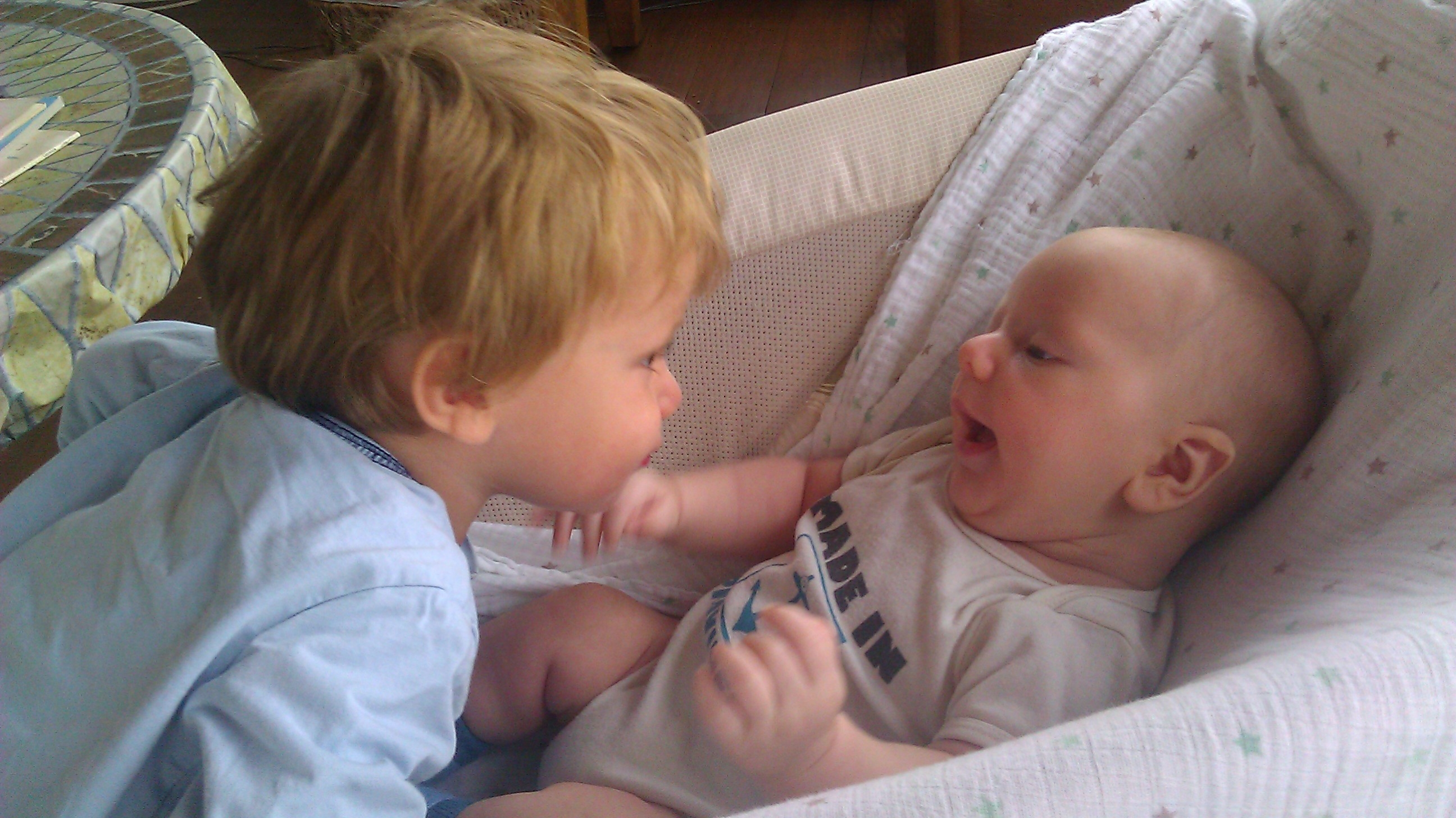
Photograph: Two-year-old meeting his cousin’s need for conversation.

Read Full Post »

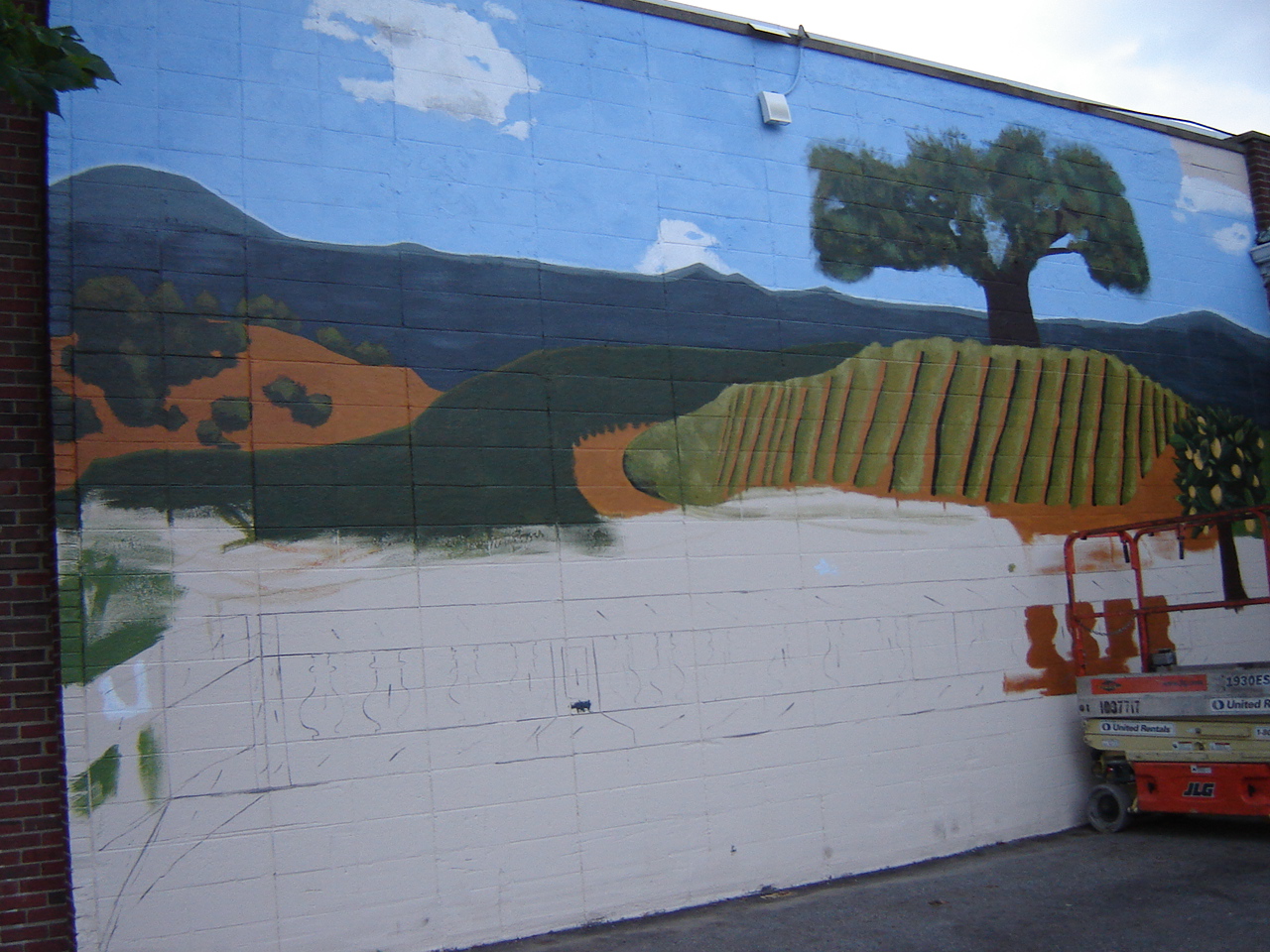
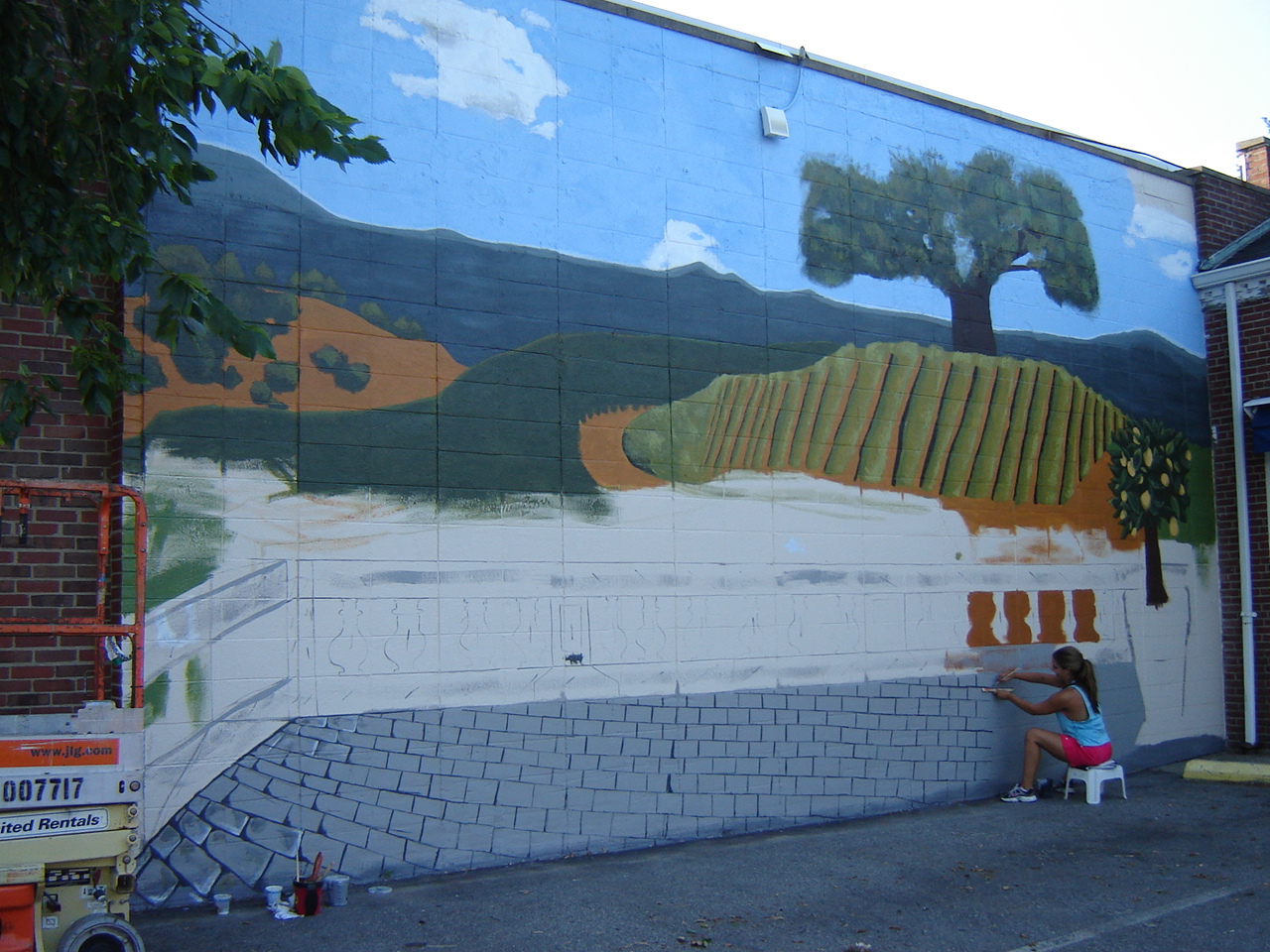
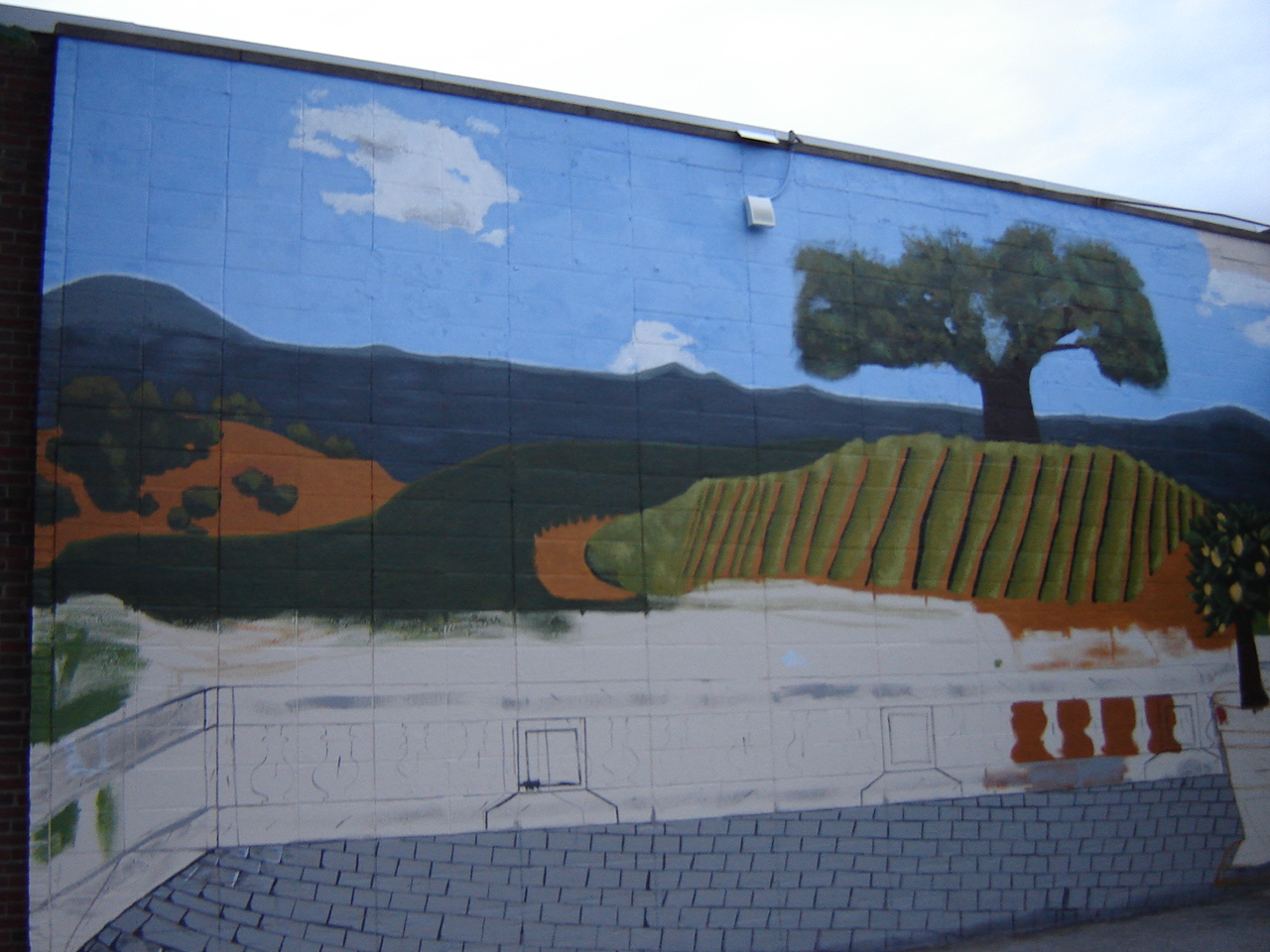
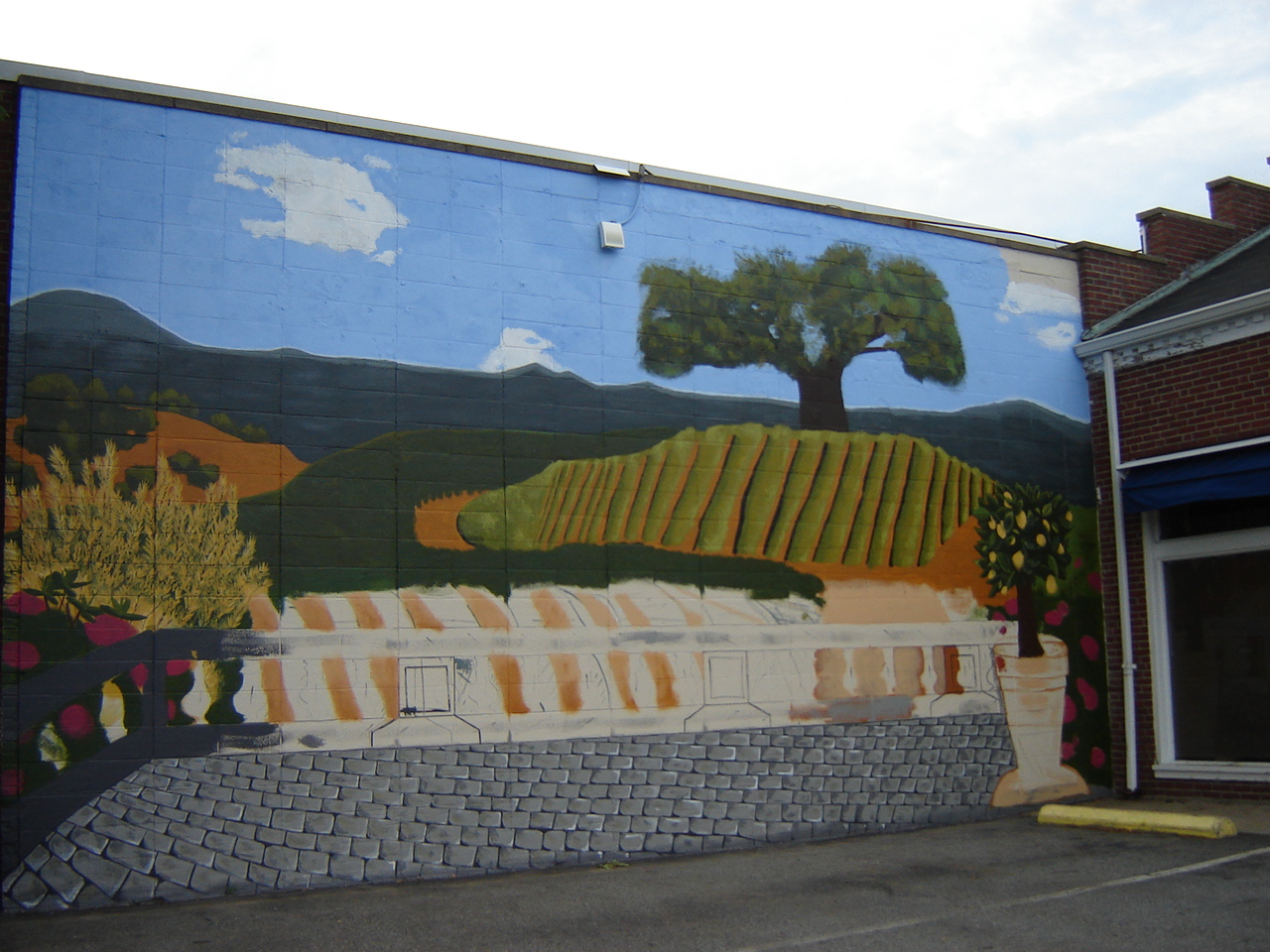
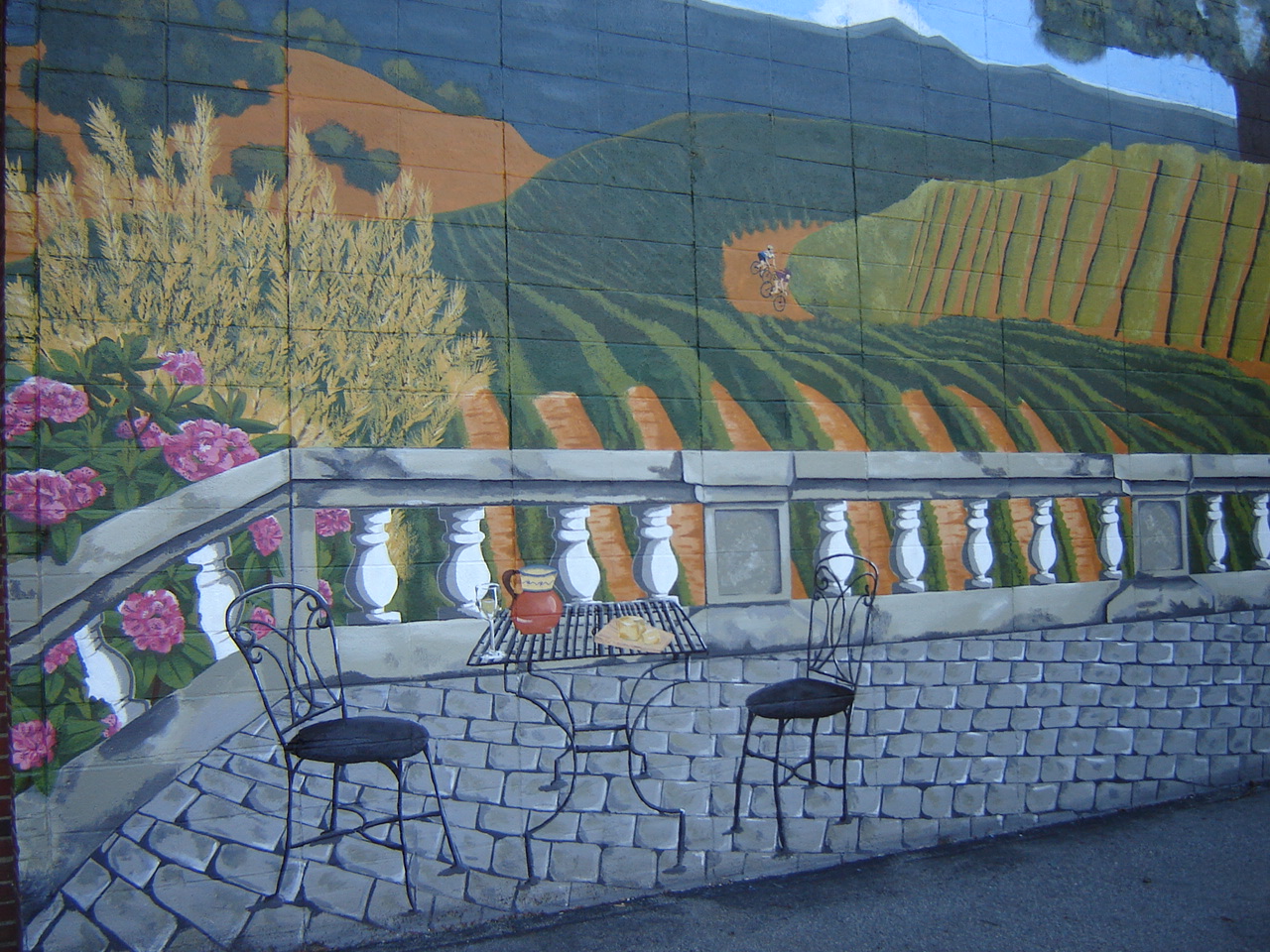
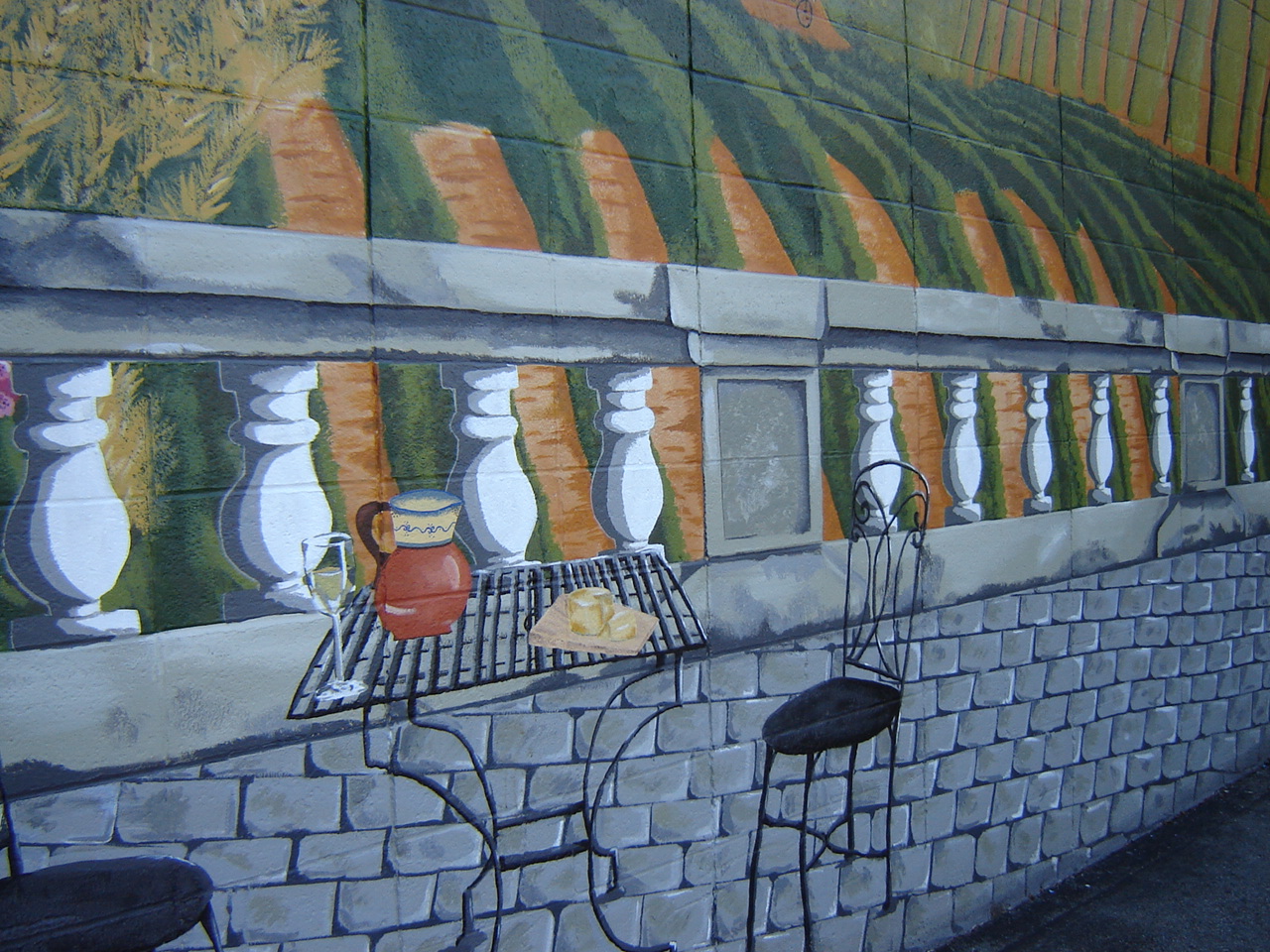
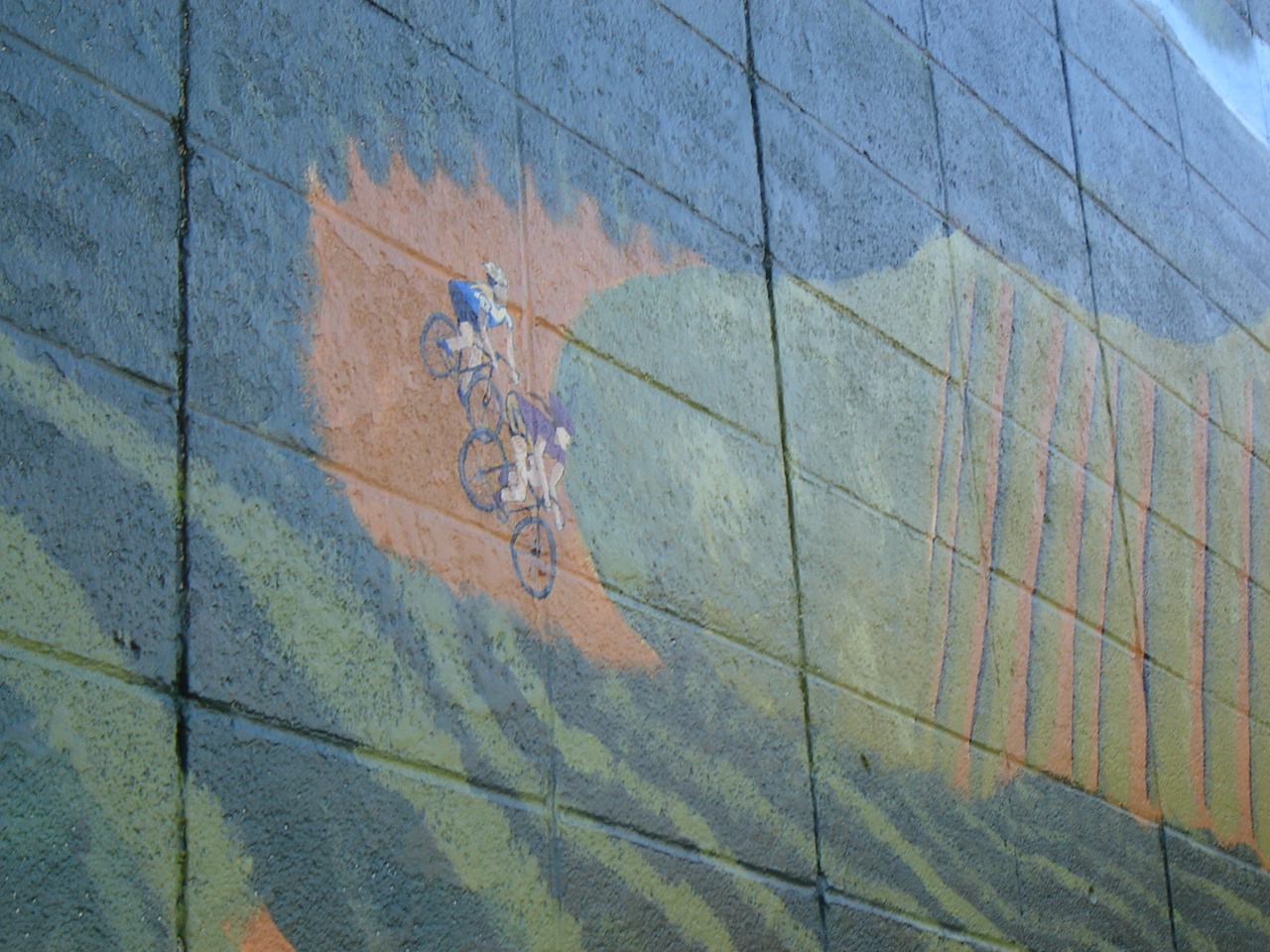
All through one of Concord’s hottest summers, Sophie has been creating a mural of Tuscan vineyards for Period Realty. Take a look at the progression. I especially like the latest touches showing a tasting table and distant bicyclists.

Read more about Sophie and the mural here.

Read Full Post »

« Newer Posts - Older Posts »