Feeds:
Posts
Comments

Archive for October, 2016

Did you hear about the time a mule won the Great American Horse Race? It’s kind of a tortoise and hare story.

At WBUR’s Only a Game, Martin Kessler explains why endurance mattered.

“The year was 1976. … In honor of the bicentennial, trains and airplanes were painted red, white and blue. A fleet of tall ships sailed down the Hudson River.

“And there was a horse race unlike any other.

“It was called the Great American Horse Race, and it would span nearly 100 days and 3,500 miles, starting in New York, heading to Missouri, and then following the Pony Express route to California.

“[Curt] Lewis was hired by the race organizers to document all the greatness and Americaness of the Great American Horse Race. And also the competition.

“The rider who covered the distance fastest would get $25,000 – worth about $100,000 in today’s dollars.

“About 100 riders signed up. Cowboys took a break from rodeos. World War II veterans, finished with their missions on submarines and B-17 bombers, also entered. So did a sheriff — and even an Austrian count. …

“And then there was Virl Norton. He was one of the oldest riders. He didn’t have as big a bank account as most of the others. He didn’t have any fancy horse equipment. Or a big crew to help him set up camp or cook or do laundry.

“But he had a plan.

“While some riders entered Icelandic ponies, quarter horses, and Appaloosas, the consensus was that the horse to ride if you wanted to win was an Arabian. … Virl Norton entered a mule.”

With his 16-year-old son as the only crew, Norton set out across country with his mule Lord Fauntleroy and a backup called Lady Eloise. And left those fast horses in the dust.

Read all about it here.

Photo: Curt Lewis
Virl Norton, winner of the 1976 Great American Horse Race, with mules Lord Fauntleroy and Lady Eloise.

Read Full Post »

EcoRI News is a local environmental site where I often find good stories. I especially like this one. It’s not only an upbeat environmental story, but it features middle-school and high-school enrichment in a district that has not often been able to afford enrichment.

Frank Carini writes from Central Falls, “Crammed into 1.3 square miles is a diverse community of 19,300 residents, lots of traffic and plenty of pavement. The most densely populated city in the smallest state also lacks green.

“Central Falls has the lowest percentage of tree cover in Rhode Island. … Today, only 3 percent of Central Falls is green space, a problem Mayor James Diossa soon began addressing when he took office three years ago.

“ ‘Past administrations had never given priority or importance to the role of trees,’ he told ecoRI News earlier this year during a tour of revitalized Jenks Park and a nearby community garden. ‘Trees are instrumental for a community.’

“When Diossa took office in January 2013, it had been nearly three years since the city filed for receivership and nearly two years since it had filed for bankruptcy. Those challenges, however, didn’t prevent Diossa and his administration from implementing ‘Operation Tree Hugger.’

“In December 2014, students from Calcutt Middle School and Scituate High School partnered with the city to develop a proposal for the America the Beautiful-Tree Rhode Island 2015-2016 grant program. The students’ proposal was funded. Four months later, on April 10, 2015, the students planted 14 trees around Calcutt Middle School and established the Central Falls Arboretum.

“Since then, tree plantings haven’t stopped. Last year a group of local middle-school students planted 15 trees along Hunt Street. On National Arbor Day in April, six trees were planted in front of City Hall. A line item has been added to the budget to fund the planting and maintenance of the city’s slowly growing green space. …

“The city and its many partners, however, aren’t limiting new green to the tall variety. They are bringing back all kinds of vegetation. The 26th-most densely populated city in the country wants an urban jungle that features more than concrete, asphalt, steel and brick.

“The community seems to have embraced its greening. The mayor noted that neighborhood volunteers water new plantings, weed, and keep a watchful eye on new green space.”

More at EcoRI, here.

Photo: Joanna Detz/ecoRI News
Middle-school students have planted 15 trees along Hunt Street. Six trees were planted in front of City Hall in April. Central Falls High School students have planted eggplants, peppers and tomatoes in what used to be a vacant lot.

Read Full Post »

A Week Away, Weaving

I’m reblogging this post from KerryCan. She and her husband just came back from an intensive weaving immersion, learning Swedish, Danish and other Scandinavian weaving techniques.

Read Full Post »

Photo: Cornell University
Small predators related to jellyfish (Hydroids) and other marine creatures made of glass may be viewed at the Corning Museum of Glass until January 8, 2017.

Visitors to the Boston area are often taken to see the famous glass flowers created by Leopold and Rudolf Blaschka in the late 19th and early 20th centuries and displayed at the Harvard Museum of Natural History in Cambridge. I have taken guests there myself.

But it was news to me that the Blaschkas also created sea creatures in glass. Many of those were acquired by Cornell University in Ithaca, N.Y.

According to Wikipedia, the marine specimens came before the flowers.

“Leopold Blaschke was born in Český Dub, Bohemia, to a family which originated from Josefuv Dul (Antoniwald) in the Iser or Izera Mountains, a region known for processing glass, metals and gems. The family had also spent time in the glassblowing industry of Venice.

“Leopold displayed artistic skills as a child, and was apprenticed to a goldsmith and gemcutter. He then joined the family business, which produced glass ornaments and glass eyes. He developed a technique which he termed ‘glass-spinning,’ which permitted the construction of highly precise and detailed works in glass. He also Latinised his family name to ‘Blaschka,’ and began to focus the business on the manufacture of glass eyes.

“In 1853, Leopold was suffering from ill health and was prescribed a sea voyage. He traveled to the United States and back, using the time at sea to study and draw sea animals, primarily invertebrates.’ ” Read how he started making replicas of them at Wikipedia.

The Guardian alerts us to the current exhibition of the Blaschkas’ marine work in upstate New York. “Father and son team Leopold and Rudolf Blaschka created perfect reproductions of invertebrate marine life in glass in their studio in Germany in the 19th century. Cornell University acquired a collection of 570 items in 1885, and a selection of these can be seen at an exhibition at the Corning Museum of Glass. ‘Fragile Legacy: The Marine Invertebrate Glass Models of Leopold and Rudolf Blaschka’ runs until 8 January, 2017.”

Amazing photos here.

Read Full Post »

Is it possible for a group of people to collaborate effectively enough to make their quaint English village carbon neutral?

Tatiana Schlossberg has an answer at the New York Times: “Ashton Hayes is different in an important way when it comes to one of the world’s most pressing issues: climate change. Hundreds of residents have banded together to cut greenhouse emissions — they use clotheslines instead of dryers, take fewer flights, install solar panels and glaze windows to better insulate their homes.

“The effort, reaching its 10th anniversary this year, has led to a 24 percent cut in emissions, according to surveys by a professor of environmental sustainability who lives here.

“But what makes Ashton Hayes unusual is its approach — the residents have done it themselves, without prodding from government. About 200 towns, cities and counties around the world — including Notteroy, Norway; Upper Saddle River, N.J.; and Changhua County, Taiwan — have reached out to learn how the villagers here did it.

“As climate science has become more accepted, and the effects of a warming planet are becoming increasingly clear, Ashton Hayes is a case study for the next phase of battling climate change: getting people to change their habits.

‘We just think everyone should try to clean up their patch,’ ” said Rosemary Dossett, a resident of the village. ‘And rather than going out and shouting about it, we just do it.’

Oh, ye-es! One and one and 50 make a million.

More here.

Read Full Post »

We turned on the heat and started wearing warm coats. (I’m even wearing gloves and earmuffs in the early morning, but don’t tell anyone.)

I think it’s time for a round-up of late summer scenes in New England before the snow flies.

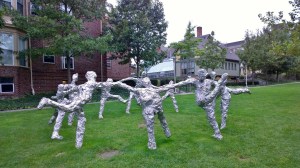
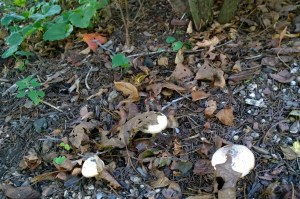
First come two pictures illustrating the Providence claim to fame as Creative Capital. Then shy mushrooms. Next are four photos from New Shoreham, including horses and a turtle who really hoped I’d just go away.

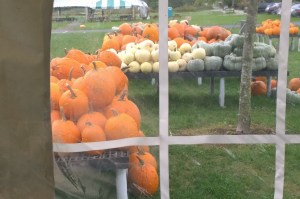
Moving right along: lovely shadows and fall colors in field and farmstand.

092816-creative-capital

100316-joyous-foil-dancers-brown-university

100616-mushrooms-hiding

100616-mushrooms-in-fall

100816-island-house

101016-horses-new-shoreham

101016-dirt-road-new-shoreham

101016-turtle-payne-road

100716-light-and-shadow-at-home

100216-fall-colors-concord-mass

093016-tomatoes-at-farmstand-concord-ma

093016-verrill-farm

Read Full Post »

As in other cities nationwide, relations between communities and police are often tense in Boston, but here is a small effort that focuses on reducing arrests and getting help for people who are troubled.

Evan Allen writes at the Boston Globe, “When Officers Michael Sullivan and Jeff Driscoll and senior crisis clinician Ben Linsky head out on their beat in Mattapan, they seek out the most vulnerable citizens: the drug-addicted, the homeless, and the mentally ill. Theirs is the only unit of its kind in the city, and its mission since it was started in February is to help, not arrest, people [with problems]. It’s part of a broader effort in the Police Department to work with the community. …

“Sullivan, Driscoll, and Linsky, who make up Mattapan’s ‘Operation Helping Hands,’ spend two nights a week freed from dispatch calls. Instead, they get to know the people on the streets, figure out what services they need, and try to provide them.

“ ‘You’re one part social worker, one part cop, and one part older brother,’ Sullivan said. …

“The number that [Police Chief William] Evans is most proud of is arrests: for the past year and a half, officers have been locking up fewer and fewer people. The city saw a 15 percent reduction in 2015, followed by the 10 percent drop so far this year.

” ‘When I came on the job, you measured what kind of an officer someone was by quantitative statistics. How many arrests. How many moving violations. We don’t do that anymore,’ Evans said. ‘I think our officers get it: It’s not about throwing people behind bars, it’s about getting them services and opportunities.’

“Driscoll, a 39-year-old father of two, has been on the force for 10 years, all of them in Mattapan. Before that, he served for several years in Watertown. He and Sullivan, a 32-year-old father of a 2-year-old boy, who joined the force three years ago, both grew up in police families, wanting to be officers. When Mattapan Captain Haseeb Hosein decided to start Helping Hands, they were an easy choice.

“ ‘With everything that’s going on in this country, the biggest thing is trust and fear. So how do we break those two barriers down? I think we break it down by building relationships,’ Hosein said. ‘They’re really good guys who understand the environment that we’re in, that we need to go the extra mile.’ ” More.

Getting people services that really create lasting change would be ideal, but who can cavil with de-escalating potential blowups? Ensuring that you don’t make matters worse than they are already is surely an important step.

Photo: Jessica Rinaldi/Globe Staff
“Operation Helping Hands,” made up of two officers and a crisis clinician, is the only Boston Police unit of its kind.

Read Full Post »

With no wish to detract from the joy that Italians take from their countryman’s spirit of adventure or the pride that Americans feel for positive developments that followed the First Encounter, it’s hard to deny that it wasn’t the best thing for the people already living here. So without beating a drum that isn’t mine to beat, I’ll just share a gentle poem by a major Native American poet, a member of the Muscogee (Creek) Nation. It’s a poem that is good for all people.

Eagle Poem by Joy Harjo

To pray you open your whole self
To sky, to earth, to sun, to moon
To one whole voice that is you.
And know there is more
That you can’t see, can’t hear;
Can’t know except in moments
Steadily growing, and in languages
That aren’t always sound but other
Circles of motion.
Like eagle that Sunday morning
Over Salt River. Circled in blue sky
In wind, swept our hearts clean
With sacred wings.
We see you, see ourselves and know
That we must take the utmost care
And kindness in all things.
Breathe in, knowing we are made of
All this, and breathe, knowing
We are truly blessed because we
Were born, and die soon within a
True circle of motion,
Like eagle rounding out the morning
Inside us.
We pray that it will be done
In beauty.
In beauty.

More at the Poetry Foundation.

Update June 21, 2019: Joy Harjo became the first Native American US Poet Laureate in 2019. Click here.

Photo: Wikipedia
Joy Harjo in 2012.

Read Full Post »

Our friend Mika is back in Hokkaido these days, after several years in New York working in restaurants and perfecting her “house” dancing. But every once in a while she ventures out to help on a street art project. Here is her friend Florence Blanchard’s mural for CBM Network (Crossing Biological Membranes) at the University of Sheffield in England.

At her WordPress site, Florence explains what the art represents, “I am delighted to present my newest mural here – a collaboration with CBMNet at the University Of Sheffield, in conjunction with Festival Of The Mind 2016 / Fear of the Unseen: Engineering Good Bacteria.

“The ‘Crossing Biological Membranes Network’ is composed of scientists working to understand the mechanisms by which substances are transported into, within, and out of cells. Their ultimate aim is to produce knowledge which will enable the development of new technologies in the Industrial Biotechnology and Bioenergy sector (eg: producing biofuels using E coli bacteria).

“My role in this collaboration has been to translate the CBMNet area of work into a large outdoor mural located within the university campus. For this occasion I have presented my interpretation of a detail of a cell membrane as seen under an electron microscope, having undergone a cryofracture.

“A cryofracture is a procedure in which the sample is frozen quickly and then  broken with a sharp blow so you are able to study its structure in very close detail – Imagine breaking a bar of chocolate with hazelnuts, this way you can see how hazelnuts are positioned inside the bar.”

“For an online animation of a biomembrane cryofracture follow this link: http://www.sciencephoto.com/media/530082/view.”

Check out the WordPress post.

Photo: Florence Ema Blanchard
Blanchard’s street art is tied to a scientific quest: “Engineering Good Bacteria.”

Read Full Post »

A “funky, eco-friendly” shop in Providence, Small Point Café, serves wooden cutlery that can be recycled. The only problem is that if you do takeout and want to use the recycling bin at work, wood is not accepted.

Here’s an idea that could solve the problem of takeout-cutlery waste once and for all: utensils you can eat.

Brittany Levine Beckman writes at Mashable, “Tired of seeing mountains of plastic cutlery polluting India’s landfills, Narayana Peesapaty had an idea: What if you could eat your disposable spoon rather than toss it?

“Peesapaty, a researcher and agriculture consultant from Hyderabad, India, developed an edible spoon made of millet, rice and wheat flours, in 2010. Now, after selling 1.5 million spoons for his company Bakeys, he wants to reach even more eaters. Peesapaty knows that means he has to cut the cost of his products to compete with cheaper plastic counterparts. …

“Bakeys plans to use its successful Kickstarter campaign to improve production and expand the product line. Its ‘edible lunch spoon,’ which can last 20 minutes in hot liquid, comes in a variety of flavors: sugar, ginger-cinnamon, ginger-garlic, cumin, celery, black pepper, mint-ginger and carrot-beetroot. The spoons have a shelf life of two to three years.

” ‘You can eat it up. If you don’t want to eat it, you can throw it. It decomposes within four to five days,’ Peesapaty said in a promotional video that has been shared millions of times since posting on March 16. …

” ‘Plastic is very cheap, true. But I can make it as cheap,’ Peesapaty remarks confidently. ‘I can with volumes, and once I get the volumes, I [can go to] the farmers directly and start procuring raw material directly from the farmers, in which case my spoons will be as cheap as the plastic spoons.’ ”

More. Learn how to get a supply of your own.

Photo: Mashable
Edible cutlery is already reducing plastic waste and benefiting the environment.

Read Full Post »

With every new discovery of fossils, it seems, the first appearance of life on Earth is earlier.

Maybe.

There is always controversy, and your belief about the earliest date may depend on just how hellish you think the Hadean period was, when asteroids bombarded the planet and life probably would have been impossible.

Nicholas Wade writes at the New York Times, “Geologists have discovered in Greenland evidence for ancient life in rocks that are 3.7 billion years old. The find, if confirmed, would make these fossils the oldest on Earth and may change scientific understanding of the origins of life.

“Experts are likely to debate whether the structures described in the new report were formed biologically or through natural processes. If biological, the great age of the fossils complicates the task of reconstructing the evolution of life from the chemicals naturally present on the early Earth. It leaves comparatively little time for evolution to have occurred and puts the process close to a time when Earth was being bombarded by destructive asteroids. …

“Certain features ‘are fairly credible hallmarks of microbial activity,’ Abigail C. Allwood of Caltech’s Jet Propulsion Laboratory wrote in a commentary accompanying the Nature article [by Allen P. Nutman et al.]. They have a few features that make them ‘interesting and possibly biological,’ she added in an email.

“Another expert in the early Earth’s environment, Tanja Bosak of M.I.T., said the structures do resemble modern stromatolites but their origin ‘will be hotly debated.’ …

“Dr. Nutman argues that life must therefore have originated even earlier, probably in the late Hadean stage of Earth’s history, which lasted from 4.65 billion years ago — when the planet formed from debris in orbit around the sun — to 4 billion years ago.

“But the Hadean was so called because of the hellish conditions thought to have prevailed, including cataclysmic meteorite impacts that boiled the oceans into steam and turned Earth’s surface into molten lava. The largest of these impacts, at 4.5 billion years ago, tore a piece from Earth that became the moon. It is difficult to see how life could have begun under such circumstances.”

Weigh in on the controversy here.

Photo: Allen Nutman
Stromatolites from Greenland may be evidence of the oldest life on earth.

Read Full Post »

According to Josh Planos at the Atlantic, the forward-looking Dutch are at it again. Not only are they on the cutting edge in matters such as energy use and floating forests, they have anticipated the increase in Alzheimer’s diagnoses, creating a village where patients can feel normal.

“The isolated village of Hogewey lies on the outskirts of Amsterdam in the small town of Wheesp. Dubbed ‘Dementia Village’ by CNN, Hogewey is a cutting-edge elderly-care facility — roughly the size of 10 football fields — where residents are given the chance to live seemingly normal lives.

“With only 152 inhabitants, it’s run like a more benevolent version of The Truman Show, if The Truman Show were about dementia and Alzheimer’s patients. Like most small villages, it has its own town square, theater, garden, and post office. Unlike typical villages, however, this one has cameras monitoring residents every hour of every day, caretakers posing in street clothes, and only one door in and out of town, all part of a security system designed to keep the community safe. Friends and family are encouraged to visit. Some come every day.

“Last year, CNN reported that residents at Hogewey require fewer medications, eat better, live longer, and appear more joyful than those in standard elderly-care facilities. …

“Residents are only admitted if they’re categorized as having ‘severe cases of dementia or Alzheimer’s disease.’ Vacancies are rare, given that a spot only opens when a current resident passes away, and the village has operated virtually at full capacity since it opened in 2009.

“Hogewey was primarily funded by the Dutch government and cost slightly more than $25 million to build. The cost of care is nearly $8,000 per month, but the Dutch government subsidizes the residents—all of whom receive private rooms—to varying degrees; the amount each family pays is based on income, but never exceeds $3,600.”

More at the Atlantic.

Where did I just hear about someone with Alzheimer’s? Oh, right. A detective series on TV. So moving. Boy, I hope that detective’s daughter knows about this village.

Photo: Gabriel Rocha/Flickr

Read Full Post »

Photo: Isabelle de Pommereau
Anja Reefschläger has taken Ahmad Madarati and other refugees under her wing since they arrived near her Berlin home last year.

The Christian Science Monitor always has great stories about good works around the globe, and this one on ordinary Germans who are volunteering to help refugees get settled is no exception.

Isabelle de Pommereau writes, “ ‘Frau Anja.’ Hearing this name for a Berlin volunteer who teaches refugees German – and has become a second mother to many of them – brings a smile to Ahmad Madarati’s long, sad face.

“Mr. Madarati, who fled war-torn Aleppo, Syria, and Anja Reefschläger met on a freezing November morning last year. …

“Today, Madarati works practically gratis at a youth center in Berlin, helping young people build furniture. And in a few weeks, he is set to move out of the so-called Treskowallee camp into a house. The house is next to Reefschläger’s, and she is the one who persuaded the owner to rent it out to Syrians.”

Ordinary Americans are also showing kindness and warm hearts, even when state government refuses to participate.

In Texas, for example, when the governor refused to sign on to the federal effort to resettle Syrians, ordinary Texans and nonprofits stepped up to the plate.

Jim Malewitz writes at the Texas Tribune, “Texas’ top elected officials have not exactly welcomed refugees over the past year. [In September] Gov. Greg Abbott followed through on his threat to end cooperation with the nation’s refugee resettlement program because federal officials refused to ‘unconditionally approve’ a Texas plan requiring extra vetting of applicants. Such a move will not keep refugees from coming here, but it eliminates the state government’s role.

“But everyday Texans seem to be more willing to help refugees from Syria and elsewhere start new lives in the Lone Star State. Nonprofits that resettle refugees say volunteer turnout has increased — in some cases dramatically — since Texas Republicans first suggested they threatened security.” More. See also an article in the Nonprofit Quarterly, here, for details on the critical role of nonprofits and volunteers in Texas at this point in time.

I have personal knowledge of the many volunteers reaching out to refugees in Providence via the Providence Granola Project (how about giving their yummy products as holiday gifts?), the Refugee Dream Center, Genesis Center, and Dorcas International. The Diocese of Providence is also at the forefront of service as an official resettlement agency, like Dorcas.

You know what else? I just heard of a woman in my town who is selling her house and moving to “wherever she’s needed.” She wants to use her years of language-teaching skills to help refugees.

[10/15/16 Update: Read about the outpouring of support for refugees in Lowell, Mass., here.]

Photo: Marjorie Kamys Cotera
A group gathered at Wooldridge Park in Austin on Nov. 22, 2015, to show support for refugees.

Read Full Post »

My husband pointed me to this story about a British scuba diver who found her camera three years after it was lost, thanks to social media.

The Telegraph reports, “A British scuba diver has been reunited with the camera she lost three years ago after it washed up 600 miles away in Sweden — in full working order.

“Adele Devonshire, 37, was diving off St Abbs in Berwickshire, Scotland, when the clip holding her camera snapped. After a search of the shore in July 2013 she gave up hope of ever seeing the Fuji camera and waterproof case ever again.

“But she was astonished when she saw an online post [in July] by Lars Mossberg, 57, who found it perched on a rock on the shore of a small Swedish island.

“The plastic housing was covered in scratches, but despite having travelled across the North Sea, the camera turned on first time — without even being charged.

“Father-of-two Mr Mossberg tracked down Mrs Devonshire by posting some of her photos — of her father and her husband — to a ‘Lost at Sea’ Facebook group where they were seen by a friend.

“It took just five hours to find Mrs Devonshire, after the pictures were recognised by a pal who had been on the dive when she lost it three years earlier. …

“After listening to the voice on movies on the camera [Mr. Mossberg] thought it must belong to a Briton, so posted a few photos of Mrs Devonshire’s husband Paul and father Roger to Lost At Sea.

“The photos were posted at around 5.30pm on Friday, and remarkably were spotted by Mrs Devonshire’s friend by 10.30pm that night. She had only joined the 2,500 member group that day.

“Mr Mossberg verified Mrs Devonshire was the owner by asking her some questions about the photos, and was set to post it back to her on [the following] Monday.

“Mrs Devonshire added: ‘I never did buy a new one so I’m really looking forward to getting it back. It has been on quite the journey.’ ”

More here.

Photo: Lars Mossberg / SWNS.com
Lars Mossberg found Adele Devonshire’s camera perched on a rock on the shore of the small Swedish island Gullholmen.

Read Full Post »

Today there are increasing numbers of opportunities for people with disabilities to enjoy the benefits of activities that others take for granted.

Eva Clifford writes at Women & Girls Hub about one intriguing example: ballet for the blind.

“In a third-floor dance studio, Lorena Nieva begins teaching her ballet class. Every weekend Nieva, the international coordinator of Psicoballet, travels 80 miles (130km) from her home in Puebla to give lessons to a group of girls from Casa Rosa de la Torre, a home for blind children run by nuns. Aged between nine and 22, all of the girls in Nieva’s class are completely blind or partially sighted.

“As the music plays, Nieva guides the girls, steering their movements with the sound of her voice and a gentle push with her hand. While the first half of the lesson is spent rehearsing a dance routine, the second half is devoted to improvisation. Breaking from the rigidity and strictness of conventional ballet training, Nieva brings in objects to inspire movement and games, such as fabric sheets, elastic ribbons and chairs.

“ ‘Dance cannot be reduced to a single sense,’ says Nieva. ‘It has to come from the whole body – from its limitations, too.’

“Founded on the belief that dance is ingrained in our biological roots, Psicoballet was created in 1973 by Cuban psychologist Georgina Fariñas Garcia … Teachers and advocates say Psicoballet, like most forms of dance, improves balance, posture and mobility, while also boosting self-esteem and reducing anxiety and depression. …

“ ‘I really enjoy discovering new ways of teaching, as it forces me to get out of my comfort zone,’ says Nieva, who has instructed people of all ages and various disabilities, but says teaching the blind girls has so far been the most rewarding. ‘I am keen to see that the girls have fun in the lessons, and that what is learned does not just stay in class, but it also enriches their everyday lives.’

“For many of the girls, that’s exactly what Nieva’s teaching does. ‘It has helped me a lot,’ says Itary, 15. ‘I feel I have improved my way of coexisting. Before, I was very aggressive, I walked a little weirdly and crashed up against everything, and this is not the way to be. Everything has to be done in a smooth way. To dance is to express with my movements what is within me.’ ” More here.

I found the article at the Huffington Post, which had reposted it.

Photo: Eva Clifford
Four girls who suffer from blindness wait to be called out for their first dance in Chiapas southern Mexico.

Read Full Post »

« Newer Posts - Older Posts »