Feeds:
Posts
Comments

Archive for February, 2021

Photo: robertharding/Alamy.
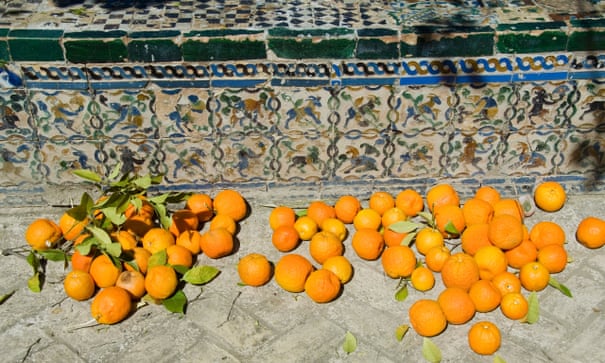
Ripe oranges in the gardens of Seville’s Real Alcazar. The city council employs about 200 people to collect the fruit after it falls and starts to rot. It’s now being used to produce electricity.

In sunny Spain, a pilot project to covert methane from fermenting fruit into clean power for a city water plant is creating hope for supporters of sustainable energy.

Stephen Burgen writes at the Guardian, “In spring, the air in Seville is sweet with the scent of azahar, orange blossom, but the [bitter] fruit the city’s 48,000 trees deposit on the streets in winter are a hazard for pedestrians and a headache for the city’s cleaning department.

“Now a scheme has been launched to produce an entirely different kind of juice from the unwanted oranges: electricity. The southern Spanish city has begun a pilot scheme to use the methane produced as the fruit ferments to generate clean electricity.

“The initial scheme launched by Emasesa, the municipal water company, will use 35 tonnes of fruit to generate clean energy to run one of the city’s water purification plants. The oranges will go into an existing facility that already generates electricity from organic matter. As the oranges ferment, the methane captured will be used to drive the generator.

“ ‘We hope that soon we will be able to recycle all the city’s oranges,’ said Benigno López, the head of Emasesa’s environmental department. …

‘It’s not just about saving money. The oranges are a problem for the city and we’re producing added value from waste.’

“While the aim for now is to use the energy to run the water purification plants, the eventual plan is to put surplus electricity back into the grid. The team behind the project argues that, given the vast quantity of fruit that would otherwise go into landfill or be used as fertiliser, the potential is huge. They say trials have shown that [2,000 pounds will] provide electricity to five homes for one day, and calculate that if all the city’s oranges were recycled and the energy put back into the grid, 73,000 homes could be powered

” ‘Emasesa is now a role model in Spain for sustainability and the fight against climate change,’ Juan Espadas Cejas, the mayor of Seville, told a press conference at the launch of the project. ‘New investment is especially directed at the water purification plants that consume almost 40% of the energy needed to provide the city with drinking water and sanitation.’ …

“The oranges look pretty while on the tree but once they fall and are squashed under the wheels of cars the streets become sticky with juice and black with flies. … The bitter oranges, which originate in Asia, were introduced by the Arabs around 1,000 years ago and have adapted well to the southern Spanish climate.

” ‘They have taken root here, they’re resistant to pollution and have adapted well to the region,’ said Fernando Mora Figueroa, the head of the city’s parks department. …

“The region produces about 15,000 tonnes of the oranges but the Spanish don’t eat them and most of the fruit from the surrounding region is exported to Britain, where it is made into marmalade. Seville oranges are also the key ingredient of Cointreau and Grand Marnier. …

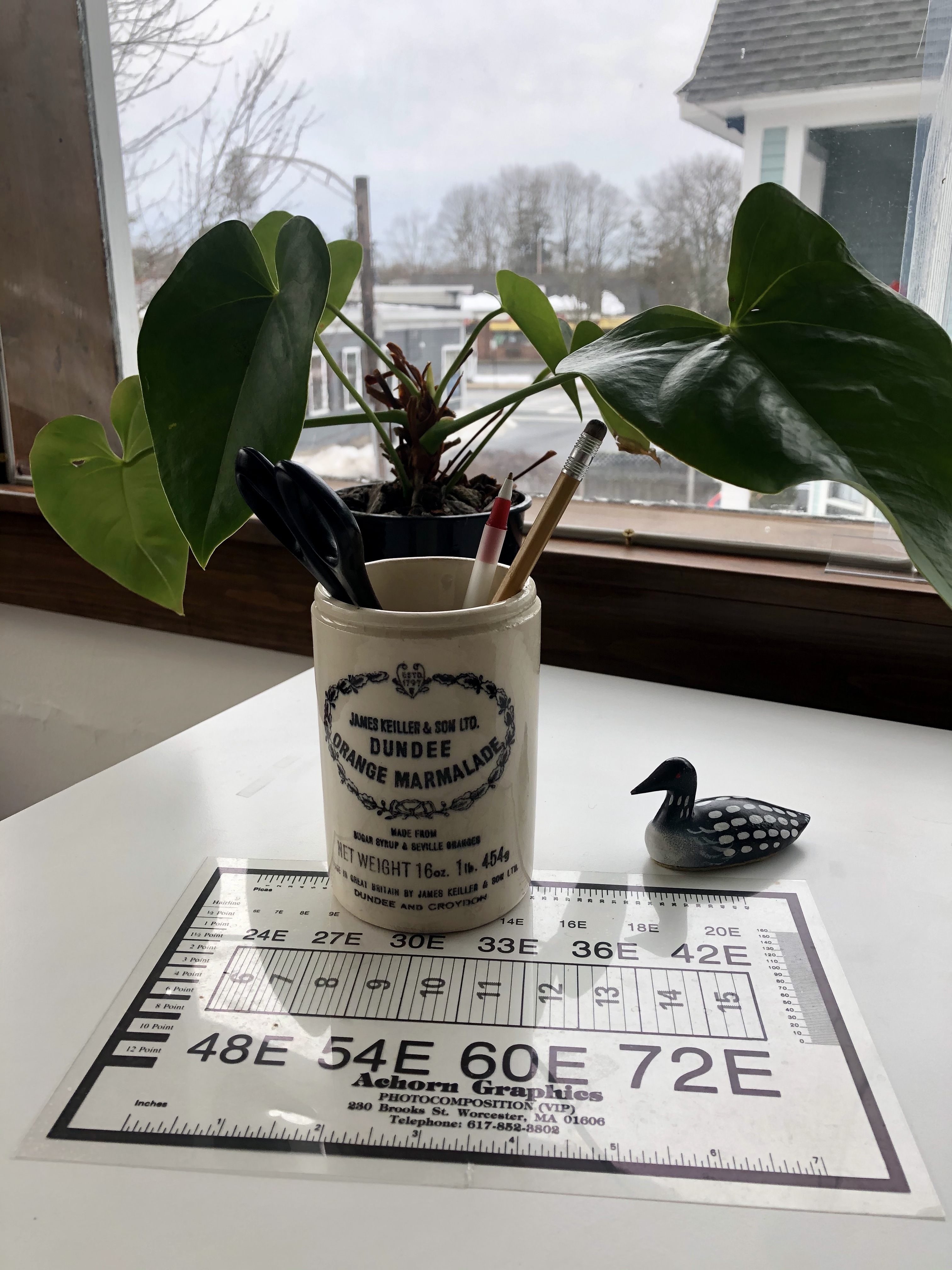
“A handwritten recipe for marmalade dating from 1683 was found in Dunrobin castle in Sutherland in the Scottish Highlands. Legend has it that a ship carrying oranges from Spain took refuge in Dundee harbour and local confectionery maker James Keiller was the first to find a use for the otherwise inedible fruit. This may be a myth, but in 1797 Keiller did produce the first commercial brand of marmalade.”

More at the Guardian, here.

When I was a child, we saved all our Dundee Seville marmalade jars. Clay ones like these are now collectors’ items.
Read Full Post »

Photo: Youtube.
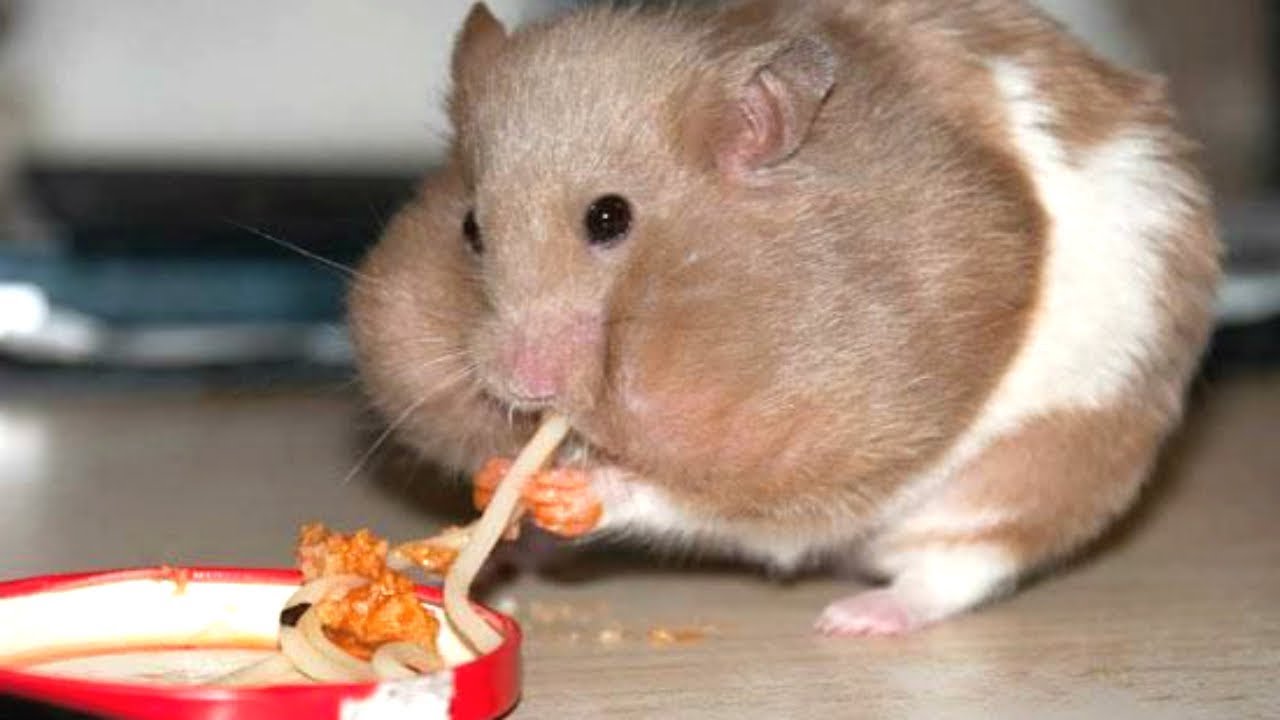
The way hamsters store food is the inspiration behind a word in German that emerged amid wartime hoarding. It has found new life during the pandemic.

Back in the early 1980s, when I was trying to learn Esperanto, I loved how you could make very specific words by gluing other words together. For example, we had a word in our house for me when I was the one to taste the filtered coffee to see if it was ready: kafgustumistino. If it had been my husband, we would have said kafgustumisto.

Rebecca Schuman at Slate explains why agglutinative languages are perfect for creating pandemic-appropriate vocabulary to suit one’s every need.

“During the otherwise Nietzschean abyss of the early pandemic, ” she writes, “one of the few bright lights was a German word: Hamsterkauf, which first emerged during World War II and began circulating in German media last March. Literally ‘hamster buy,’ this coinage described the act of succumbing to our basest animal-brain instincts to hoard more necessities than we would ever actually need. …

“Ah, those delightful Germans! Always with the single word that describes a very specific thing that any normal language would never have a single word to describe! … Over the past year, German has coined some 1,000-plus new terms endemic to the Now Times — ironic capitalization, by the way, being an annoying method that English speakers use to create new language.

“Speaking of which: Unlike English, whose own recent neologisms often read as nonwords that are only cute the first time you encounter them [such as] coronasomnia, situationship … German’s COVID lexicon just looks German. …

“Now, to really make a decent German compound noun, you have to either memorize a very long if-then chart, be a native speaker, or have what’s called a Sprachgefühl — literally ‘language feel,’ or an instinct for what sounds right. But for a semi-workable shortcut, it comes down to this: You start with two nouns, or an adjective and then a noun. … Now here comes the tricky part: Often you have to put in connecting letters, and which letter you use depends on the smaller words’ last letters; this will ostensibly make your big new word easier to pronounce. …

“There’s already a magniloquent viral Twitter thread in appreciation of new superstars such as Impfneid (vaccine envy) — but what about the particular cacophony of imperious voices bickering over how (or when, or if) to relax social distancing and lockdown measures? That’s an Öffnungsdiskusionorgie (OOF-nungs-dee-skoo-ZEEONS-or-ghee), literally an ‘orgy of discussions regarding opening,’ which is coincidentally also the only orgy it’s currently safe to attend.

“Then of course there’s the ol’ socially distanced drink, or Abstandsbier (AHB-stonds-BEE-uh, or ‘distance beer’), which carries with it the many connotations of the word Abstand, including ‘gap,’ ‘interval,’ ’empty space,’ and ‘difference,’ truly encapsulating just why chugging a Godforsaken Beck’s on a frigid sidewalk whilst avoiding small talk might be an unsatisfying Quarentänebruch (KVAH-ren-TAYN-uh-BRUK), or quarantine violation. …

“Here’s a new one: Risikoeinreisender (REE-SEE-koh-AYN-RYE-sun-duh), literally ‘risk-arriver,’ aka one who tromps undeterred into another country straight from an outbreak-rich region without regard to whether he might infect the entire staff of his $309 cabana at the Cancún Ritz-Carlton. (Hopefully the check-in counter at said Ritz-Carlton was already equipped with my personal favorite of this entire Teutonic enterprise: a clear fiberglass Spuckshutztrennscheibe (SHPOOK-shoots-TREN-shy-buh) — literally ‘spittle-protection separation pane.’)

“While it’s always fun to see exactly which surprisingly singular phenomena have heretofore claimed their own German word, I think that the nomenclatures of the Coronazeit (ko-RO-nah-TSITE) are particularly resonant for non-German-speakers because this really is a singular moment in time. …

“Even I, a blasé Germanist, could ruminate all night on such lexicographic majesty as Geisterspieltag (GUY-stuh-SHPEEL-tak), literally ‘ghost game day,’ or the practice of playing Fußball in an empty stadium. But alas, I don’t have time for all 1,000-plus words, given that my daughter has been in Zoom school for a year and possibly just set something on fire. But here’s one new German word that even I don’t really understand: Coronakindergeld (koh-RO-na-KIN-duh-gelt), the ongoing financial support for parents stuck at home with their kids.” Wow, is Germany really paying parents?

More at Slate, here.

Read Full Post »

Photo: Le Lac St Jean.
Jean-Daniel Bouchard (left) in a 2011
Nutcracker. Bouchard now divides his time between ballet and his family’s farm.

I like reading about independently minded people who make surprising decisions that are perfect for them. In this story from Canada, a successful ballet dancer realized during the pandemic that keeping his family farm going is just as important to him as ballet.

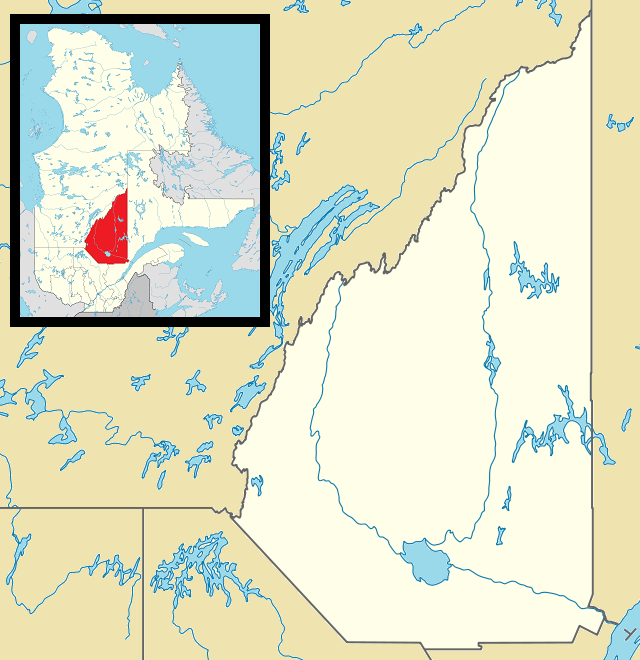
CBC has the story. “A farmer in the Saguenay–Lac-St-Jean region of Quebec is striking a fine, if unusual, balance: running his family dairy farm by day and working as a classical ballet dancer by night.

“Jean-Daniel Bouchard started dancing before he turned four, and after high school he decided to try to make a career of it. His dancing took him to Banff, Alberta, British Columbia, Toronto and Montreal. In all, Bouchard spent almost nine years more or less constantly on tour. …

“But eventually, his rural Quebec upbringing as a sixth-generation farmer in St-Bruno started to call him home.

Map: Wikimedia Commons
St-Bruno, Quebec.

“Bouchard told Quebec AM that he was looking for more stability, to settle down, and his two older brothers were not especially interested in taking over the farm.

‘I thought it would be really sad to lose this family treasure,’ he said. ‘So I thought I could do both — I could come back here, start a company and dance, and do the farming with my dad.’

“Bouchard said although his twin passions may seem like something of a contradiction — farming can be gruelling physical labour and involves plenty of financial mathematics, versus an art form that depends on imagination and creativity — they help him find balance.

” ‘I think this is the perfect match for life,’ he said. ‘You have more stable work and then you can let go of the stress with dance.’

“Plus, there are physical benefits. Bouchard said farm work makes him stronger, which helps with his dancing, whereas the repetitive movements and stretching he uses for ballet help him prevent injury in the barn.

“With theatres closed due to the COVID-19 pandemic, Bouchard is both taking and teaching virtual dance classes. …

” ‘We can’t wait for the studios to open again so we can get back into a full dance ballet class, and to be able to move from a space in the studio to the other end,’ he said. …

“Bouchard said he sometimes misses touring and will dream he’s off dancing somewhere else, but he’s happy with the life he chose as both a farmer and a dancer. … ‘The point should be to be happy,’ he said.”

More at CBC, here. I can’t help wondering how Bouchard will manage when his father is no longer able to work. Somehow, I’m confident he’ll figure it out.

Video by Romy Boutin St-Pierre

Read Full Post »

Native American Comedy

Photo: Richard Pryor Show, 1977.
Oneida Nation comedian Charlie Hill first started getting national attention in 1974.

You might not think that the dislocation and abuse of Native Americans would leave any room for jokes, but the existence of indigenous comedians would indicate otherwise. I guess there is no topic that can’t be turned to humor. And, goodness knows, people always have a need to laugh.

Jason Zinoman writes at the New York Times, “To the extent Will Rogers is known today, it’s as the folksy founding father of topical political comedy. … What’s often overlooked about the early-20th-century superstar is that he was Native American, a fact centered and explored in Kliph Nesteroff’s new book, ‘We Had a Little Real Estate Problem: The Unheralded Story of Native Americans & Comedy.’

“Nesteroff doesn’t just map a direct line from Rogers’s Cherokee roots to his political perspective; the author reintroduces Rogers as an altogether modern comic: moody, depressive, with uglier prejudices than his aw-shucks image would indicate. …

Photo: Underwood & Underwood
Cherokee comedian Will Rogers.

“In recent years, Nesteroff, 40 and often seen wearing a fedora, has carved out a niche as the premier popular historian of comedy. … A meticulous collector of showbiz lore, Nesteroff filled his 2015 book ‘The Comedians: Drunks, Thieves, Scoundrels and the History of American Comedy’ with fascinating detours about obscure figures like Jean Carroll and Shecky Greene. One of his early articles that got attention was a 2010 blog post about Cary Grant’s enthusiasm for LSD. … ‘Now I wouldn’t write about it,’ Nesteroff said, saying he gets annoyed by histories that keep going over common knowledge: ‘I want to write about the details people don’t know.’

“His new book, which darts back and forth in time, is a sprawling look at Indigenous comedians, an overlooked branch of comedy. The book’s title [is] the punchline to a joke by the unsung hero of this narrative, the Oneida Nation comic Charlie Hill. (The setup: ‘My people are from Wisconsin. We used to be from New York.’)

“A contemporary of David Letterman and Jay Leno in the Los Angeles comedy scene of the 1970s, Hill was a handsome performer with superbly crafted jokes who became one of the few famous Indigenous stand-ups. Nesteroff writes that Hill was the first and only such comic on ‘The Tonight Show.’

“On his network television debut, on ‘The Richard Pryor Show,’ Hill delivered a tight, five-minute set that skewered Hollywood stereotypes of Native Americans and described pilgrims as ‘illegal aliens,’ likening them to house guests who won’t leave. Hill performed for three more decades and was a stalwart at the Comedy Store (although he barely received any airtime in the recent five-part documentary on the club), inspiring many Indigenous comics. …

“And yet, while there are many more Native American comics today, including the members of the sketch troupe 1491 that Nesteroff chronicles in his book, mainstream opportunities remain scarce.

‘When we hear diversity in Hollywood, Native Americans are seldom included under that umbrella,’ Nesteroff said. ‘That needs to change.’ …

“His book provides context for an argument about the importance of representation, detailing an exhaustive history of the racism suffered by Indigenous people in popular culture, tracking stereotypes of the stoic, humorless Native American from pulp fiction and animation (which was particularly egregious) to ‘I Love Lucy’ and ‘Dances With Wolves.’ …

“Nesteroff prefers writing about the past over the present, but they often blur in his books. In ‘Real Estate,’ he describes protests against white actors playing Native American roles dating all the way to the 1911 film ‘Curse of the Red Man,’ which led to meetings between Indigenous delegations and President William Howard Taft that sound remarkably similar to current controversies. In another chapter, Nesteroff recounts an argument between Will Rogers and the journalist H.L. Mencken from the 1920s, about how much harm comedy can do, that could be taken from any number of podcasts today. …

“If there is one consistent theme from his intrepid reporting on the roots of comedy, it’s this: there’s less new under the sun than you think.”

More at the New York Times, here.

Read Full Post »

Photo: Bee and Tom Rivett-Carnac.
A painting by Bee Rivett-Carnac in the free digital children’s book
What happened when we all stopped.

Children are really good at understanding the need to protect Nature. When I read about this free book and the video featuring Jane Goodall, I knew they would make good ammunition for kids needing to convince skeptical adults. The Covid angle was cool, too, and made the book seem even more timely.

Rohini Kejrwal has a report at Hyperallergic.

“ ‘No time for sorry, we’re building tomorrow,’ writes author, climate policy strategist, and former Buddist monk Tom Rivett-Carnac in his new and free digital book, What happened when we all stopped. The book emerged during the lockdown as a collaboration between Tom and his sister Bee Rivett-Carnac, who illustrated his poem.

“When the COVID-19 pandemic hit and the entire world was forced to stay home, it became an opportunity for Mother Nature to heal, for the smog to melt, the birds to sing, and the rivers to run clear. As the world began to phase out lockdown measures, Tom’s message to his readers, young and old, was this: Let’s choose well.

“Talking about the inspiration, he says:

‘The creative process is just a mystery to me. But I was thinking a lot and feeling inspired by the idea of a trillion trees — this idea that we can replant a trillion trees and reforest the earth. There were no planes in the sky; people were noticing the birds and remembering a better way of living. It was a strangely optimistic time, and the book was written out of a hope that we need to do things differently.’

“One evening, he sat and wrote the poem in a stream of consciousness. A few edits later, he invited Bee to illustrate it. ‘We were at Mum’s house in Devon, having breakfast, when Tom asked me if I’d fancy illustrating his poem. …

“Bee chose the medium of watercolor paintings to create a sense of lightness and depict the connection to nature. … Being someone who divides her time between spending time with her children, gardening and illustrating, and her shamanic practice, her personal style naturally lent itself to the inspiration and imagery for the book. To make the poem more accessible to children, she introduced two primary characters — a little girl and an owl — who carry the story forward. …

“As the book shaped up, it opened the door to further collaborations. It was developed into a beautiful, animated poem by TED-Ed, an auxiliary of the renowned conference organization geared toward teachers and students. Jane Goodall, celebrated anthropologist and United Nations Messenger of Peace, offered narration. …

“The two collaborations happened fairly organically, owing to Tom’s role as the UN’s chief political strategist and his work as one of the architects of the landmark Paris Agreement on climate change. …

“Tom reiterates that the book is a reminder of the urgent need for change. ‘The next 10 years are the most consequential in the history of humanity. We have to do something, or we’ll lose control over the climatic systems and never get it back,’ he says. ‘We need to reclaim a sense of agency in climate change, which has been deliberately undermined by fossil fuel companies.

“We all have a choice as to who we want to be during this time. Do we want to look back 30 years from now and say we gave up because it was difficult or say that we did everything possible to make a difference even if we don’t succeed? And why won’t we succeed? Real, genuine success is possible!’ he wraps up, firm optimism in his voice.”

More here. Check out the illustrations. Especially the owls.

Read Full Post »

Photos: Barbara Haddock Taylor.
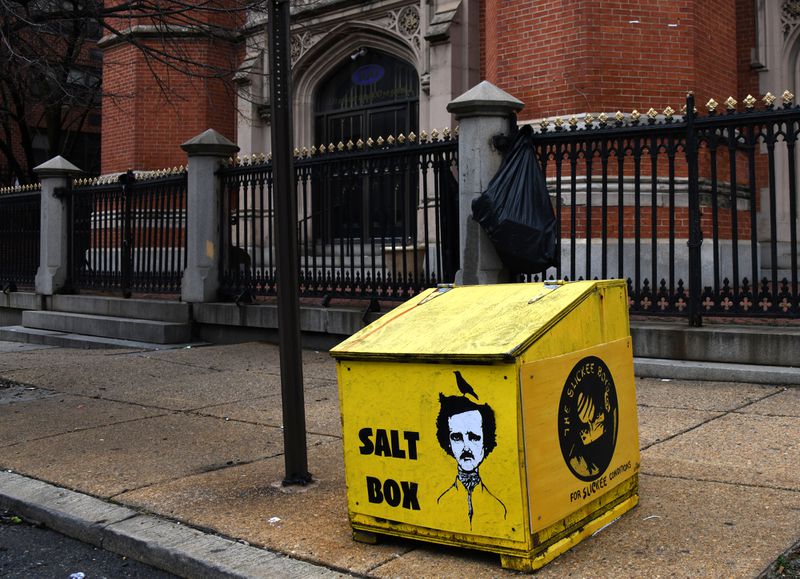
After Baltimore artist Juliet Ames started decorating salt boxes with images associated with Baltimore, others joined in.

What do think of when you see a headline with the phrase “salt boxes.” I was a bit slow, first picturing the boxes of table salt used in old-time kitchens, then New England’s saltbox architecture.

Turns out it referred to the clunky plywood containers for the de-icing salt used on sidewalks and streets.

In an article at the Baltimore Sun, we learn, “The artist Juliet Ames has always loved salt boxes because she has always loved snow. She says she looks forward to the day every fall when the boxes appear on street corners because she thinks ‘it means that a snow day could be around the corner.’

“She’d always wanted to decorate one, especially the boxes that lacked even the stenciled words ‘salt box.’

“ ‘They looked sad,’ she said. ‘A naked salt box needs a dress.’

“Fearful of getting into trouble for damaging city property, she restrained herself — until the day in mid-December when she found herself contemplating a criminally unadorned salt box in Hampden [a Baltimore neighborhood]. Snow was in the forecast.

“ ‘I knew it had to be this box,’ she said. ‘That night, I Tweeted the picture of the decorated box out … and said, “Somebody vandalized the salt box.” ‘

“The next day, she received an email from the city’s Department of Transportation.

“ ‘We told her that we loved the salt boxes and that we looked forward to seeing more as long as they have a salt theme or highlight something special in the surrounding neighborhood,’ said German Vigil, communications manager for the DOT. Ames didn’t need more encouragement. …

“In the past two months, more than 100 of the decorated salt boxes have appeared around Baltimore, including more than 25 adorned by Ames herself.”

You can see a great collection of photos at the Sun, but here are a few descriptions.

The Sun says, “Literary icon Edgar Allan Poe stares out moodily from the front of a salt box across the street from the Enoch Pratt Free Library’s Central Branch. And yes, that’s a raven perched atop his head — a nod to the Bard of Baltimore’s most famous poem and its cryptically croaking bird.

‘I was trying to subtly work in a reference to “nevermore,” Ames said, ‘because there is never more salt. A lot of the boxes have been empty this year.’

The newspaper’s caption for the photo below explains, “Adjacent to the Baltimore School for the Arts is one of its most famous alumni. His hat on backwards, quizzical eyes hooded, mouth open as if preparing to speak is none other than Salt Pac Shakur. (Salt Shaker, get it?) Tupac Shakur studied acting at the high school in the 1980s, where, according to his former teachers, the soon-to-be-renowned rapper had a special gift for performing Shakespeare.”

Among the photos you can see online is one of the “I Love the Morton Salt Girl,” whose slogan you doubtless remember: “When it rains, it pours.” Ames told the Sun, “I have a tattoo of the Morton Salt Girl on my leg that I got five or six years ago. I like her imagery, I love to cook, and we always had canisters of Morton salt when I was growing up.”

One box features jazz great Cab Calloway “looking over his shoulder and warbling a version of his trademark ‘hi-de-ho.’ Ames said, “I first learned about Cab Calloway from a Janet Jackson video in the 1990s. My mom was so excited. She told me, ‘Oh, he’s from Baltimore!’ Even though Cab technically wasn’t technically born here, we like to claim him.”

Two of the other themes shown were particularly interesting to me: local favorite Old Bay seasoning and F. Scott Fitzgerald. The seasoning is for the famed blue-claw crabs associated with Baltimore. Ames said, “That’s the only salt box where I painted the actual lid instead of decorating a yellow plywood panel that attaches to the front of the box. I was painting the lid bright red while people were passing by, and no one questioned what I was doing.”

But why is Minnesota native “F. Salt Fitzgerald” connected to Baltimore? Apparently, he wrote his 1934 novel Tender Is the Night while he was living there. “I decided to have him recline while drinking a martini,” Ames said.

I’ve lost count of the cities that claim Fitzgerald.

Read Full Post »

Photo: Candace Croney.
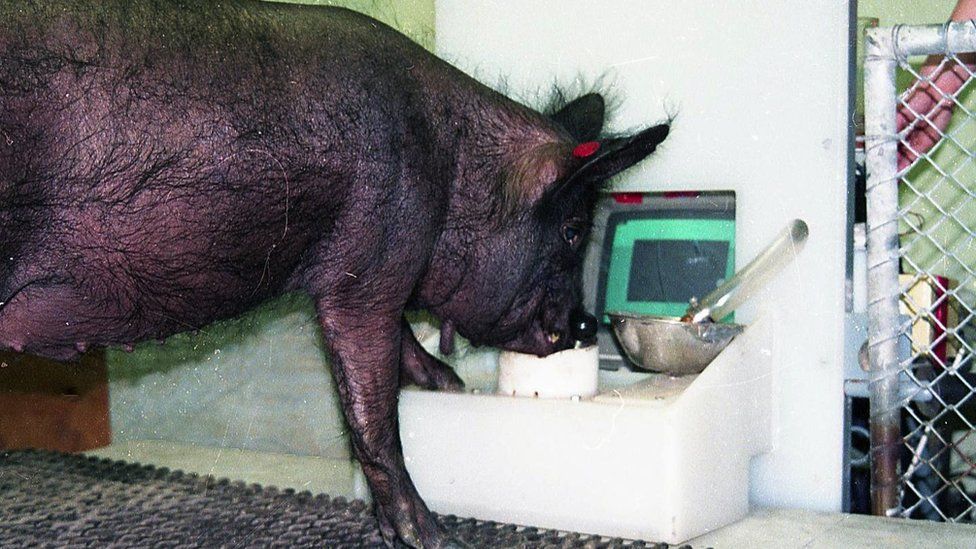
Pigs can play video games, scientists have found. Here, the pig Ebony operates a joystick.

In the same way that most of us are just beginning to understand the deep wisdom of indigenous tribes, we have barely scratched the surface of what animals can do. Fortunately, scientists never stop investigating.

BBC News reports, “Four pigs — Hamlet, Omelette, Ebony and Ivory — were trained to use an arcade-style joystick to steer an on-screen cursor into walls.

“Researchers said the fact that the pigs understood the connection between the stick and the game ‘is no small feat.’ And the pigs even continued playing when the food reward dispenser broke — apparently for the social contact.

“Usually, the pigs would be given a food pellet for ‘winning’ the game level. But during testing, it broke — and they kept clearing the game levels when encouraged by some of the researchers’ kind words. …

“The research team also thought that the fact the pigs could play video games at all — since they are far-sighted animals with no hands or thumbs – was -remarkable.’

“But it was not easy for them. Out of the two Yorkshire pigs, Hamlet, was better at the game than Omelette, but both struggled when it got harder — hitting the single target just under half the time. The Panepinto micro pigs had a bigger gamer skill gap — while Ivory was able to hit one-wall targets 76% of the time, Ebony could only do it 34% of the time.

“But the researchers were still satisfied that the attempts were deliberate and focused, rather than random — what they called ‘above chance.’ That means that ‘to some extent, all acquired the association between the joystick and cursor movement.’

“Kate Daniels, from Willow Farm in Worcestershire, told BBC Radio 4’s Today programme that while the scientists might have been impressed, ‘I don’t think this will come as a surprise to anyone that works with pigs. … They’re not playing Minecraft — but that they can manipulate a situation to get a reward is no surprise at all.’ ” More at the BBC, here.

The research paper was published in the journal Frontiers in Psychology.

For more on the intelligence of pigs, check out naturalist Sy Montgomery’s book The Good Good Pig.

Montgomery’s website says in part, “The Good Good Pig celebrates Christopher Hogwood in all his glory, from his inauspicious infancy to hog heaven in rural New Hampshire, where his boundless zest for life and his large, loving heart made him absolute monarch over a (mostly) peaceable kingdom. At first his domain included only Sy’s cosseted hens and her beautiful border collie, Tess. Then the neighbors began fetching Christopher home from his unauthorized jaunts, the little girls next door started giving him warm, soapy baths, and the villagers brought him delicious leftovers. His intelligence and fame increased along with his gift, and he was eventually featured in USA Today and on several National Public Radio environmental programs. One election day, some voters even wrote in Christopher on their ballots.”

Read Full Post »

Photo: Reuters Marketplace/UK World Online Report.
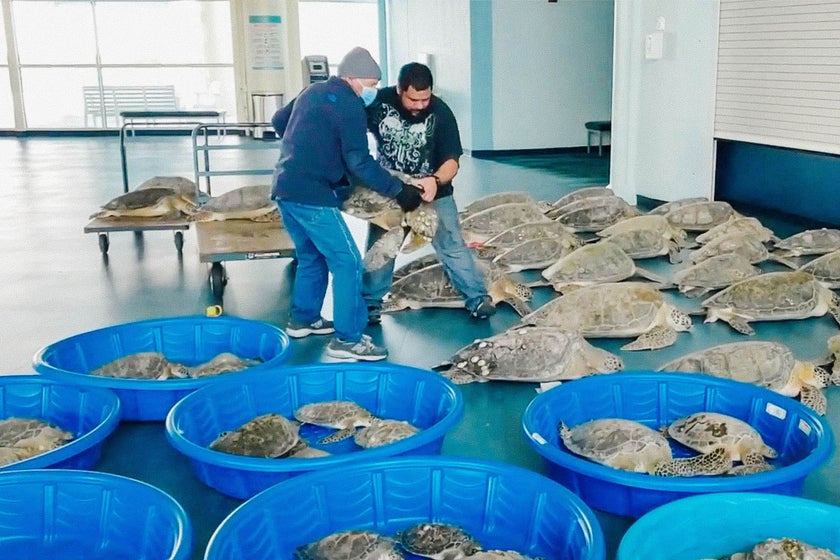
Endangered Green Sea Turtles are placed in bins and kiddie pools to help them warm up gradually.

Sometimes a crisis can bring out the best in human nature. Consider all the people making food for health-care workers in the pandemic or the volunteers manning pantries for 2020’s many unemployed.

This morning, as I was reading about the failure of the Texas electric grid, I learned that one supermarket, having suddenly lost power, couldn’t operate cash registers and let customers go home without paying.

Meanwhile, Texas nature lovers, despite hardships of their own, are rescuing sea turtles from the extreme cold. Many thanks to Hannah for pointing me to the story.

Raechel Allen reports at Slate, “An unprecedented winter storm provoked massive disruption in Texas this week: Millions lost power, hundreds were displaced from homes. [And] because of the temperature, thousands and thousands of sea turtles cannot move.

“An endangered species, these sea turtles usually live off the waters of South Padre Island, which is off the southern coast of Texas. Over the past week, they’ve been loaded into dinner cruise boats and minivans. The rescue center at the nonprofit Sea Turtle Inc. is used to rehabilitating injured sea turtles and responding to minor cold snaps but cannot hold all the turtles — so they’re also filling up a convention center. … Slate spoke to Wendy Knight, Sea Turtle Inc.’s executive director. Our conversation has been edited and condensed for clarity.

Rachael Allen: Can you walk me through what’s been going on this week with the turtles?
Wendy Knight: We are in the midst of the single largest cold-stun event in history. We have approximately 4,800 cold-stunned, federally protected, endangered sea turtles. … On Sunday things really started to hype up and we had local boat owners go out and find hundreds of floating sea turtles.

“What does it mean for a sea turtle to be cold-stunned?
“Sea turtles are cold-blooded so they need the temperature of water to regulate their own body temperature. … If the water gets below a certain temperature, the turtles are no longer able to sustain their own body temperature. Usually, they don’t think about all of their instincts — moving their flippers to swim, eating, diving to the bottom of the ocean, lifting their head up to draw breath. In a cold-stun event, they’re still aware they need to do those things, but because their body is frozen, or cold-stunned, it’s is not reacting to the instinct message. As a result they’re not able to swim, so the turtle floats to the top of the water and because their body is not responding by lifting their head to breathe, they drown in the ocean. I’m sure as we get farther away from the stun event, there will be perished turtles found, regardless of our best efforts.

“How did your team rescue thousands of turtles?
“This is a nesting beach where thousands and thousands of hatchlings are born each season, so everybody is keenly aware that we’re sharing space with sea turtles. We have almost 500 registered volunteers, plus all the city employees, who participate in training at the beginning of cold-stun season. That plan was executed here, just on a much bigger scale.

It’s important to remember that when all this was happening these hundreds of community members didn’t have power of their own. They hadn’t had electricity or running water in days. …

“They had their own personal tragedy happening. And despite that, they took time away to serve an animal that can’t serve itself.

“I can’t explain what it’s like to stand in a convention center that’s probably a football field and a half, and see 4,200 sea turtles laying tip to toe as far as the eye can see. And that’s not even all of them — that’s the overflow. … Nothing happens when they’re stunned — no bodily functions. It’s like a catatonic state. The best thing you can do is to let them rest. As things go along, they will start to wake up, but there are consequences that can come from cold stuns that require antibiotics and IV therapy, like pneumonia. We’ll watch them all closely, and as they recover and become more alert, we’ll start releasing them incrementally back into the Gulf of Mexico.”

I shouldn’t overlook the fact that there are people who volunteer year-round. Which is just to say that it doesn’t always take a crisis to bring out the best in human nature. More at Slate, here.

Read Full Post »

Photo: Vandamm Studio.
Dorothy Parker in the backyard of her family’s residence in New York City, 1924.

Dorothy Parker, one of the founders of the literary powerhouse called the Algonquin Round Table, was outrageous enough to infuriate the powerful and funny enough to end up in poetry collections for children. (She was in one I used with sixth graders when I was a teacher.)

In this article from the Public Domain Review, Jonathan Goldman explains how getting fired from Vanity Fair launched Parker on the independent career that made her an icon.

“Dorothy Parker lost her job as Vanity Fair theater critic on January 11, 1920, in the tea room of the Plaza Hotel. Parker must have known there was trouble brewing as she sat down across from editor Frank Crowninshield. She had been in hot water for months. Her latest column had been a particularly biting one.

“Reviewing The Son-Daughter, Parker contended that David Belasco’s new play followed his old one, East Is West, ‘almost exactly,’ which Belasco made known he considered grounds for a libel suit. A couple paragraphs later, writing about the new Somerset Maugham play Caesar’s Wife, Parker zinged actress Billie Burke for performing ‘as if she were giving an impersonation of Eva Tanguay. The comparison to a risqué vaudevillian enraged Florenz Ziegfeld, one of Vanity Fair’s most reliable advertisers, who happened to be Burke’s producer — and husband.

“Ziegfeld and Belasco both took their umbrage to publisher Condé Nast. … Nast passed the buck to Crowninshield, who met Parker at the Plaza and fired her from the job she had held for two years.

Parker promptly ordered the most expensive dessert on the menu and left.

“In the days that followed, Parker’s cronies who hung out in the Rose Room of the Algonquin Hotel made the firing and its fallout at Vanity Fair into a media scandal. Parker herself would never again hold a desk job or draw a regular salary, finding success instead as a freelance critic, author of brilliant and acclaimed verse, short fiction, essays, plays, and film scripts. The incident changed her career and stature, and its response helped forge the legend of what would eventually be called the Algonquin Round Table.

“Parker may have learned from her parents the tendency to not quite accept the rules. She was … a child of once-forbidden love between Eliza Annie Marston, daughter of British burghers, and Jacob Henry Rothschild, child of Jewish immigrants, who married over the opposition of Marston’s parents. …

“Dorothy’s was not an idyllic childhood. Her mother died when she was five. When she was eighteen, the Titanic sank, taking with it a favored uncle, Martin Rothschild; Parker may have accompanied her distraught father to the docks to greet the shipwreck’s survivors and learn that her uncle was not among them. Henry Rothschild, devastated, fell ill and died less than a year later.

“Needing income beyond her father’s legacy, Parker found a job playing piano at one of many dance schools, which were faddish in the mid-1910s. But she wanted to earn money by writing. She went about it the old, hard way, sending in cold submissions of poetry until her number was called. In 1914 Vanity Fair accepted her poem ‘Any Porch,’ which satirized chitchat of society women …

I don’t want the vote for myself,
But women with property, dear …

“The editor, Crowninshield, was sufficiently impressed. In 1915 he hired her for Vogue, another magazine owned by Nast, to do editorial work and write captions for illustrations of women’s garments. …

“During her two years at Vogue, Parker worked under Edna Woolman Chase, a legend. … Though thrilled when she landed the job, Parker could only follow the leader for so long, and was soon plaguing Chase with unprintable captions, meant to challenge the Vogue sensibility. One nightgown, she suggested, could be worn as a sexual enticement: ‘When she was good she was very very good, and when she was bad she wore this divine nightdress…’ Such insinuation was a no-no for Vogue readers of 1916. The caption made it through several editorial stages before its twist on the ‘girl with the curl’ nursery rhyme was recognized.

“Crowninshield relieved Chase of her problem employee in 1918, bringing Parker over to the editorial staff at Vanity Fair and offering her the theater critic job that would change her career. …

“Parker loved being a theater critic, but she loved less and less Nast and Crowninshield’s attitudes toward the staff. In this, as in many things, she was supported (and egged on) by her two new colleagues at Vanity Fair, Robert Benchley and Robert Sherwood. …

Caesar’s Wife had its opening night in November 1919. … Parker’s review is not completely unkind until its conclusion: ‘Miss Burke, in her role of the young wife, looks charmingly youthful. She is at her best in her more serious moments; in her desire to convey the youthfulness of the character she plays her lighter scenes as if giving an impersonation of Eva Tanguay.’ This was in fact a toned-down revision; in her first draft, Parker had written that Burke ‘threw herself around the stage as if giving an impersonation of exotic dancer Eva Tanguay.’ …

“Eva Tanguay’s name was a byword for indecorum, eroticism, and unbridled physicality. … It also subtly invoked the dynamics of the Burke-Ziegfeld marriage and served as a swipe at patriarchal control. When Parker refers to the ‘young wife,’ and twice reiterates the ‘youthful’ qualities of the role, she loops in the public history of Ziegfeld’s relationships with younger women. …

“Ziegfeld and his women stayed in her sights. In her June 1920 column for Ainslee’s, Parker wrote warmly of Ziegfeld’s Frolics … but skewered the singing of Lillian Lorraine — the longtime Ziegfeld paramour who had been instrumental to Ziegfeld’s divorce. … Commenting sardonically on the show’s female chorus, she wrote: ‘Where the Ziegfeld girls come from will always be one of the world’s great mysteries.’ ”

She may have maddened people, but Parker sure is fun to read. More here.

Read Full Post »

Photo: ENO via CNN.
Australian soprano Alexandra Oomens singing for a English National Opera (ENO)
program that works on singing, breathing and well-being for recovering coronavirus patients.

Who has a story that could happen only in a pandemic? Today I have one silly one that involves me and one serious one that involves opera singers helping Covid patients.

Silly story first. Because I haven’t been going to stores since the pandemic started, I haven’t collected any five-dollar bills to give as tips to delivery people. So I write $5 checks to “cash.” Well. Twice now, a woman I have never met in a nearby town has rescued a muddied check I wrote from her driveway and mailed it back to me. We must have the same milkman, one who is careless with his tips. Meanwhile, I’m gaining a penpal!

Andrew Dickson writes at the New York Times, “On a recent afternoon, the singing coach Suzi Zumpe was running through a warm-up with a student. First, she straightened her spine and broadened her chest, and embarked on a series of breath exercises, expelling short, sharp bursts of air. Then she brought her voice into action, producing a resonant hum that started high in a near-squeal, before sinking low and cycling up again. Finally, she stuck her tongue out, as if in disgust: a workout for the facial muscles.

“The student, Wayne Cameron, repeated everything point by point. … Though the class was being conducted via Zoom, it resembled those Zumpe usually leads at the Royal Academy of Music, or Garsington Opera, where she trains young singers.

“But Cameron, 56, isn’t a singer; he manages warehouse logistics for an office supplies company. The session had been prescribed by doctors as part of his recovery plan after a pummeling experience with Covid-19 last March.

Called E.N.O. Breathe and developed by the English National Opera in collaboration with a London hospital, the six-week program offers patients customized vocal lessons: clinically proven recovery exercises, but reworked by professional singing tutors and delivered online.

“While few cultural organizations have escaped the fallout of the pandemic, opera companies been hit especially hard. … The English National Opera, one of Britain’s two leading companies, has been trying to redirect its energies. …

“In a video interview, Jenny Mollica, who runs the English National Opera’s outreach work, explained that the idea had developed last summer, when ‘long Covid’ cases started emerging: people who have recovered from the acute phase of the disease, but still suffer effects including chest pain, fatigue, brain fog and breathlessness.

” ‘Opera is rooted in breath,’ Mollica said. ‘That’s our expertise. I thought, “Maybe E.N.O. has something to offer.” ‘

“Tentatively, she contacted Dr. Sarah Elkin, a respiratory specialist at one of the country’s biggest public hospital networks, Imperial College N.H.S. Trust. It turned out that Elkin and her team had been racking their brains, too, about how to treat these patients long-term. …

“Twelve patients were initially recruited. After a one-on-one consultation with a vocal specialist to discuss their experience of Covid-19, they took part in weekly group sessions, conducted online. Zumpe started with basics such as posture and breath control before guiding participants through short bursts of humming and singing, trying them out in the class and encouraging them to practice at home.

“The aim was to encourage them to make the most of their lung capacity, which the illness had damaged, in some cases, but also to teach them to breathe calmly and handle anxiety — an issue for many people working through long Covid.

“When Cameron was asked if he wanted to join, he was bemused, he said: ‘I thought, “Am I going to be the next Pavarotti?” ‘

“But Covid-19 had left him feeling battered.. … ‘Everything I did, I was struggling for air,’ he said.

“He added that even a few simple breathing exercises had quickly made a huge difference. ‘The program really does help,’ he said. ‘Physically, mentally, in terms of anxiety.’ Almost as important, he added, was being able to share a virtual space and swap stories with other sufferers. ‘I felt connected,’ he said. …

“And how was Cameron’s singing now? He laughed. ‘I’m more in tune,’ he said. The program had helped him reach high notes when singing along in the car, he added. ‘Having learned the technique, you can manage much better,’ he said. …

“It wasn’t just patients and clinicians that had benefited, Mollica said: E.N.O. Breathe had also given musicians and producers at the company something to focus on during a bleak time. ‘Everyone’s found it really motivating,’ she said. ‘It’s fantastic to realize that this skill set we have is useful.’ ”

More at the New York Times, here.

Read Full Post »

Photo: Travel PR.
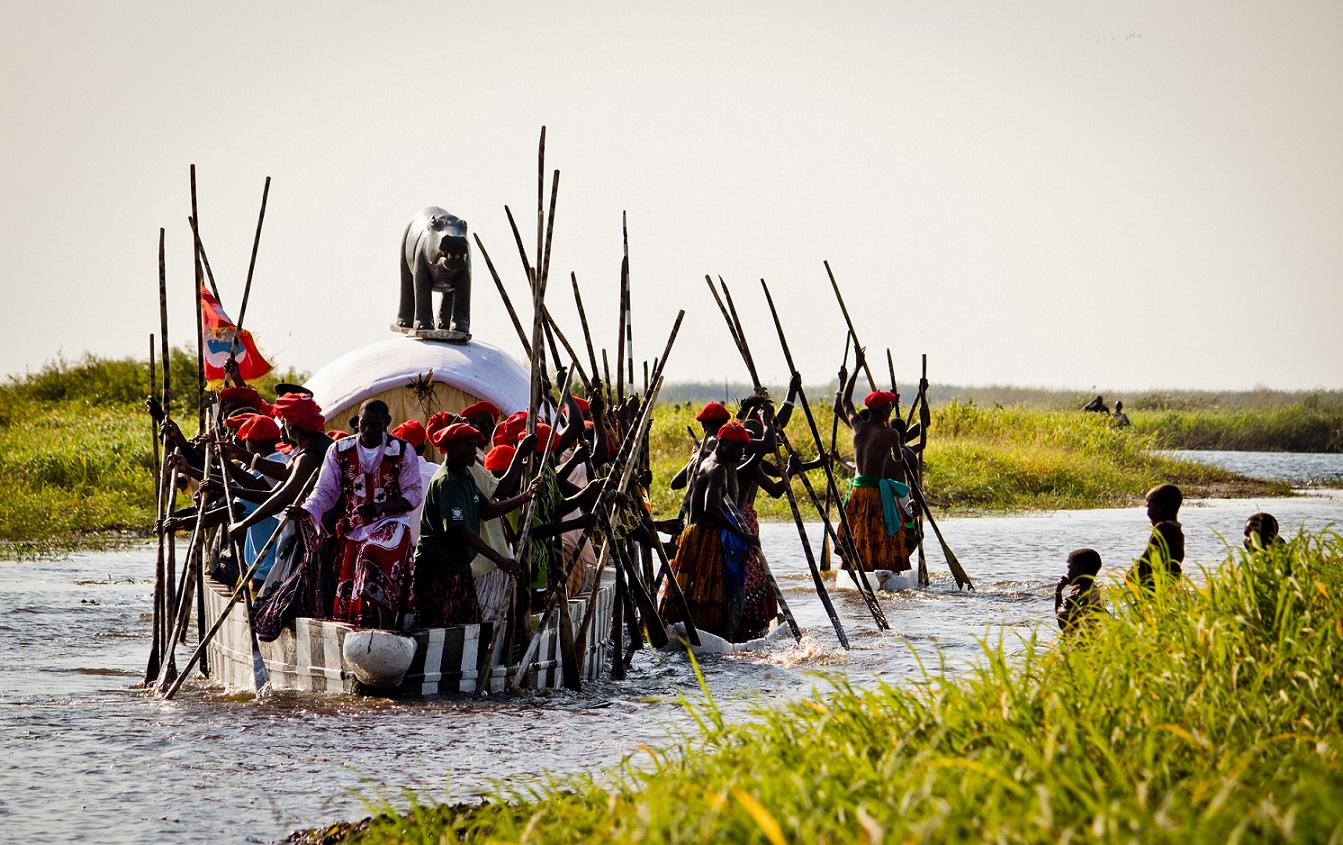
The Kuomboka, celebrated at this time of year if the conditions are right, marks the arrival of the wet season in Zambia. (The elephant’s ears are removable.)

According to my little book of holidays, a celebration called Kuomboka should take place in Zambia today to mark the change of seasons. Several websites, however, say the date is flexible.

GoWhereWhen, which says that coronavirus is an issue this year, describes the event: “This annual procession marks the transition of the Litunga (king) from his summer to winter residence, which is located on higher ground, away from the seasonal flood plains. This ceremony dates back more than 300 years when the Lozi people broke away from the great Lunda Empire to come and settle in the upper regions of the Zambezi.” 

Wikipedia adds, “Kuomboka is a word in the Lozi language; it literally means ‘to get out of water.’ In today’s Zambia it is applied to a traditional ceremony that takes place at the end of the rain season, when the upper Zambezi River floods the plains of the Western Province. …

“Historians claim that before the time of the first known male Lozi chief Mboo, there came a great flood called Meyi-a-Lungwangwa meaning ‘the waters that swallowed everything.’ The vast plain was covered in the deluge, all animals died and every farm was swept away.

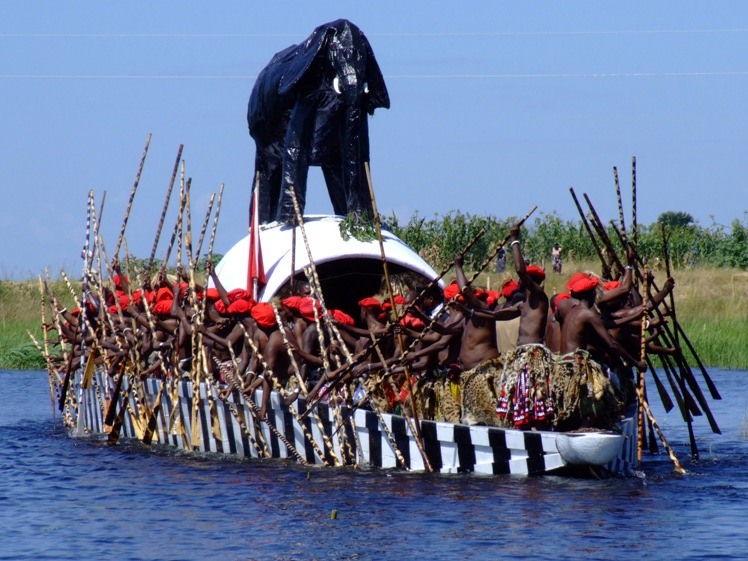
“People were afraid to escape the flood in their little dugout canoes. So it was that the high god, Nyambe, ordered a man called Nakambela to build the first great canoe, Nalikwanda, which means ‘for the people,’ to escape the flood. Thus the start of what is known today as the Kuomboka ceremony.

“The ceremony is preceded by heavy drumming of the royal Maoma drums, which echoes around the royal capital the day before Kuomboka, announcing the event. … The ceremony begins with two white scout canoes that are sent to check the depth of the water and for the presence of any enemies. Once the scouts signal the ‘all clear,’ the journey to the highland begins. … The journey to Limulunga normally takes about 6–8 hours. Drums beat throughout to coordinate and energise those paddling the barge. …

“On the barge is a replica of a huge black elephant, the ears of which can be moved from inside the barge. There is also a fire on board, the smoke from which tells the people that the king is alive and well. The Nalikwanda is large enough to carry his possessions, his attendants, his musicians, his 100 paddlers. It is considered a great honour to be one of the hundred or so paddlers on the nalikwanda and each paddler wears a headdress of a scarlet beret with a piece of a lion’s mane and a knee-length skirt of animal skins.

“For his wife there is a second barge. This one has a huge cattle egret (Nalwange) on top. The wings move like the ears of the elephant, up and down.”

Lonely Planet points out that the dates are not fixed: “They’re dependent on the rains. In fact, the Kuomboka does not happen every year and is not infrequently cancelled because of insufficient flood waters; the 2012 ceremony was called off because it’s against Lozi tradition to hold the Kuomboka under a full moon.”

More at GoWhereWhen, here, at Wikipedia, here, and at Lonely Planet, here.

Photo: Dietmar Hatzenbichler
Legend has it that an African god told a man called Nakambela to build a great canoe to escape the floods. The boat was called Nalikwanda.

Read Full Post »

Photo: Angelika Porst.
New examinations of John the Baptist wall paintings in Augsburg cathedral date them to more than 1,000 years ago
. Above, a decorative detail of the frescoes in the southern transept, which were only revealed in the 1930s.

A word to the wise for artists who hope their work will still be enjoyed in 1,000 years: try frescoes. The Oxford dictionary describes a fresco as “a painting done rapidly in watercolor on wet plaster on a wall or ceiling, so that the colors penetrate the plaster and become fixed as it dries.”

So even though watercolor is transient, plaster holds it.

Catherine Hickley reports at the Art Newspaper, “A series of frescoes showing the life and death of John the Baptist in the cathedral of the Bavarian city of Augsburg have been recently dated to the first decade of the 11th century, ranking them among the oldest wall paintings in a medieval church north of the Alps.

“The frescoes, located high in the southern transept of the church, were whitewashed over and forgotten until the 1930s, when they were uncovered. But it was not until conservation work began on the roof structure in 2009 that they could be proven to date back to the construction of the cathedral more than 1,000 years ago.

Dendrochronological tests revealed that wood in the masonry dated from AD1000, contradicting the previously held dating of the cathedral to around AD1065. The new dating ‘fits with what we know about a massive destruction in 994,’ says Birgit Neuhäuser, a spokeswoman for the Bavarian State Office for Heritage Protection.

“ ‘The oldest frescoes are the first layer above the masonry, and are therefore part of the original decor of the church,’ Neuhäuser says. ‘We can assume that in the case of an important Episcopal church, the frescoes would have been painted soon after the construction, so soon after AD1000.’

“In artistic style, the frescoes bear a strong resemblance to the tenth-century wall paintings at the Church of St George on the island of Reichenau on Lake Constance, near Germany’s border with Switzerland. The island owes its Unesco World Heritage status [read about a World Heritage site I visited, here] in part to the frescoes. Apart from the Reichenau church frescoes, the Augsburg paintings are the biggest preserved frescoes of their era in the German-speaking countries, says Mathias Pfeil, the head of the Bavarian State Office for Heritage Protection. …

“Given the height of the frescoes in the church, there is no need for special conservation measures in the long term, according to Neuhäuser. ‘They are not under any particular stress’ from the humidity or heat generated by visitors’ traffic, she says. ‘After cleaning and conservation, they are in a stable and sustainable condition.’

“The team plans to examine the roof area and the northern transept of the church for further fresco remnants. The research and conservation work is financed by the Beate and Hans Peter Autenrieth Foundation, the Siegfried and Elfriede Denzel Foundation and the Augsburg diocese.” More at the Art Newspaper, here.

Have you ever seen any frescoes? I saw Leonardo da Vinci’s frequently restored Last Supper in Milan when I was a teen. I really liked doing a research project about the frescoes of Giotto in high school although I’m pretty sure I’ve never seen any Giottos except in pictures. Below, I’ve added a nice dragon fresco from the Cloisters. (I wrote about my 2019 visit there in this post.)

Twelfth Century Spanish fresco at the Met Cloisters in New York City.

Read Full Post »

Photo: BBC.
An all-female crew successfully rowed across the Atlantic Ocean in an “eco” boat.

In case you didn’t know, women can do anything. In today’s story, a group of women who wanted to make a statement about sustainable living rowed across the Atlantic in a boat with no backup motor. Sure. Why not?

“The BBC has the story. “Having spent nearly 47 days at sea and rowed for 3,000 miles (4,800km), the Bristol Gulls finished the ‘world’s toughest row’ in Antigua [this month].

“In so doing they became the first crew to complete the crossing in a sustainably-made boat. Skipper Sofia Deambrosi said the foursome was ‘exhausted but happy.’

“The Bristol Gulls — Miss Deambrosi, Lorna Carter, Phoebe Wright and Sarah Hunt — began the Talisker Whisky Atlantic Challenge from La Gomera in the Canary Islands on 12 December. Rowing in two-hour shifts, they survived seasickness, scorching temperatures, being capsized by huge waves and stronger-than-normal headwinds.

” ‘We’re all very proud and happy but our levels of exhaustion are pretty high,’ said Miss Deambrosi. …

“As well as raising awareness and money for charities the RNLI [Royal Navy Lifeboat Institution] in Portishead and Clean Up Bristol Harbour, the team wanted the boat to promote sustainability.

The Bristol Gulls’ motto is ‘To be the trailblazers that inspire others to embrace sustainable change and equality.’

“Their resin and fibreglass boat was built using renewable energy and its foam core was also made from 10,000 recycled plastic bottles. It had no engine and the women, who wore clothing partly made from recycled marine waste, used a solar-powered desalination unit to convert seawater into freshwater.

” ‘We hope in the future that manufacturers will start looking at making boats whose core, at least, is 100% recycled material,’ said Miss Deambrosi. ‘There’s no reason they shouldn’t do that. It doesn’t make a boat any slower or any less robust.’ …

“Miss Deambrosi, who first decided to take on the event in 2018, said she hoped their efforts would inspire others. ‘A lot of the male teams are army guys, navy guys, super endurance athletes, which makes sense because it is a very, very tough thing to do. …

” ‘We are all very down-to-earth, chilled people. It required a lot of training, but we wanted to prove anyone from any background can do it. And we did.’

“The Bristol Gulls placed ninth overall and Miss Deambrosi became the first person from Uruguay and the first woman from South America to row across any of the world’s oceans. ‘I left Uruguay 10 years ago but to represent my country is amazing,’ she said.”

More at the BBC, here.

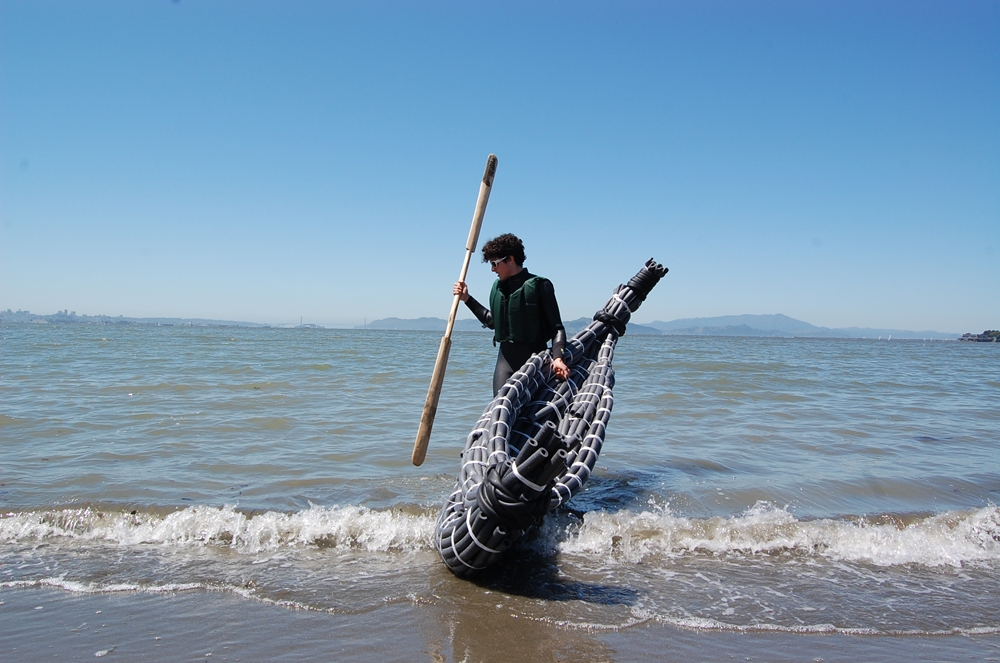
Update: Earle sent this photo of the replica tule balsa his daughter made for an art project. She rowed it between two islands near the Golden Gate Bridge. Cool, huh?

Read Full Post »

Photo: Cronkshaw Fold Farm.
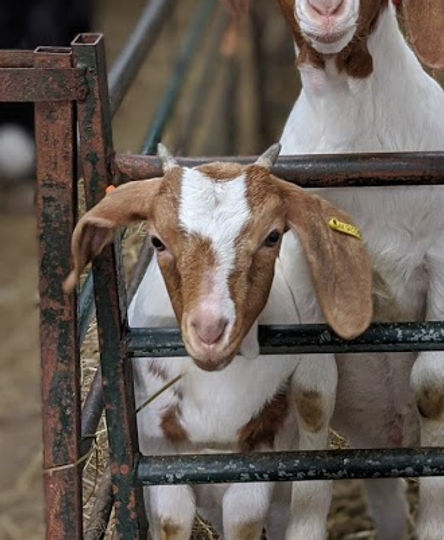
This is Lulu. “Lulu likes to use her treacherous screech to interrupt any time a goat other than her is booked for a call.”

Everybody loves goats. I’ve lost count of the number of times my youngest grandchild has had me tell her the story of the goat that ate my brother’s mitten when he was 2 or 3. Maybe the goat only pulled the mitten off. Not sure. But eating makes a better story, and my granddaughter likes me to embroider the tale with all sorts of other details that never happened.

Meanwhile, in England, goats are participating in Zoom calls. Sydney Page reported the story for the Washington Post.

“At this point in the pandemic, Zoom fatigue is universal. But one woman has a solution you never knew you needed: a live goat on the call.

“Cronkshaw Fold Farm in Lancashire, England, has been offering up their goats to make spontaneous, up-close appearances in virtual meetings anywhere in the world.

” ‘It started as a joke. It wasn’t actually supposed to be a thing,’ said Dot McCarthy, 32, who runs the family farm, which spans two generations.

“The goats drop in on otherwise mundane virtual gatherings, including seemingly serious business meetings, birthday parties, baby showers and high school math lessons. Out of nowhere, a goat will appear in the meeting with its name displayed on the screen.

It’s typically a surprise to all attendees but the organizer. The idea is that the goat ‘crashes’ the party. …

“At first, ‘it was just to give people a laugh, and I thought, maybe we’ll get a few more egg and meat sales because people are on the website,’ McCarthy said. ‘But what actually happened was people were like, “Yes, I need a goat.” ‘

“After sharing a post on the farm’s website explaining the idea one evening early in the pandemic, she woke up the next morning to 200 emails requesting a goat call. In the past 11 months, Cronkshaw Fold Farm has facilitated more than 10,000 five-minute video calls on conferencing platforms.

“While the main idea is to get some laughs during a grim time, the goat video calls have managed to keep the 500-year-old farm afloat — and staff members employed. …

“ ‘You just see people screaming and saying, “Why is there is a goat in here?!” ‘ McCarthy said, adding that each goat is labeled with their name when entering a call because they each have a particular personality.

“People like to have their pick, she said. That’s part of what makes it fun. Seven of the farm’s 40 goats are showcased on the website, with a photo, a brief bio, as well as a ‘what to expect’ section displayed for each. …

“Alongside training sheepdogs and selling eggs, meat, produce and manure (for gardening purposes), the farm financially depends on hosting educational visits, weddings and other events, all of which paused during the coronavirus pandemic.

“Employee wages are normally reliant on these events, McCarthy said, leaving her in a bind. ‘They work so hard,’ she said, explaining that she was adamant about keeping her two employees on the payroll. ‘I just iterated through idea after idea, asking myself what we can do to make money.’ …

“ ‘A few friends who work in the tech sector were saying how bored they are with video calls, and I was like, “You know what would be funny? If you just had a goat appear in your call. Why not throw a goat into the mix?” ‘

“Since April, the spontaneous service has brought in around $60,000, allowing McCarthy to continue paying her staff members. Plus, additional funds go toward her long-term goal of converting the farm to renewable power.”

More at the Washington Post, here.

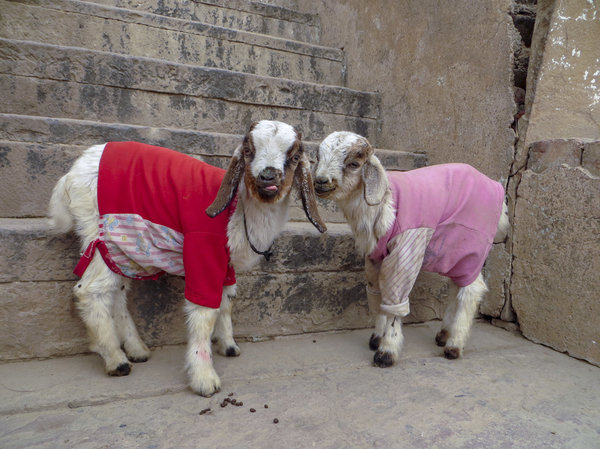
By the way, in Lunenburg, Massachusetts, you can go hiking with a goat for a reasonable fee. Check it out. Are you on Instagram? You’ll get a kick out of @sweateredgoats from Bangladesh and India.

Photo: Christy Sommers.
An Iowa native’s Instagram account features sweatered goats in Bangladesh and India. Check out my previous post.

Read Full Post »

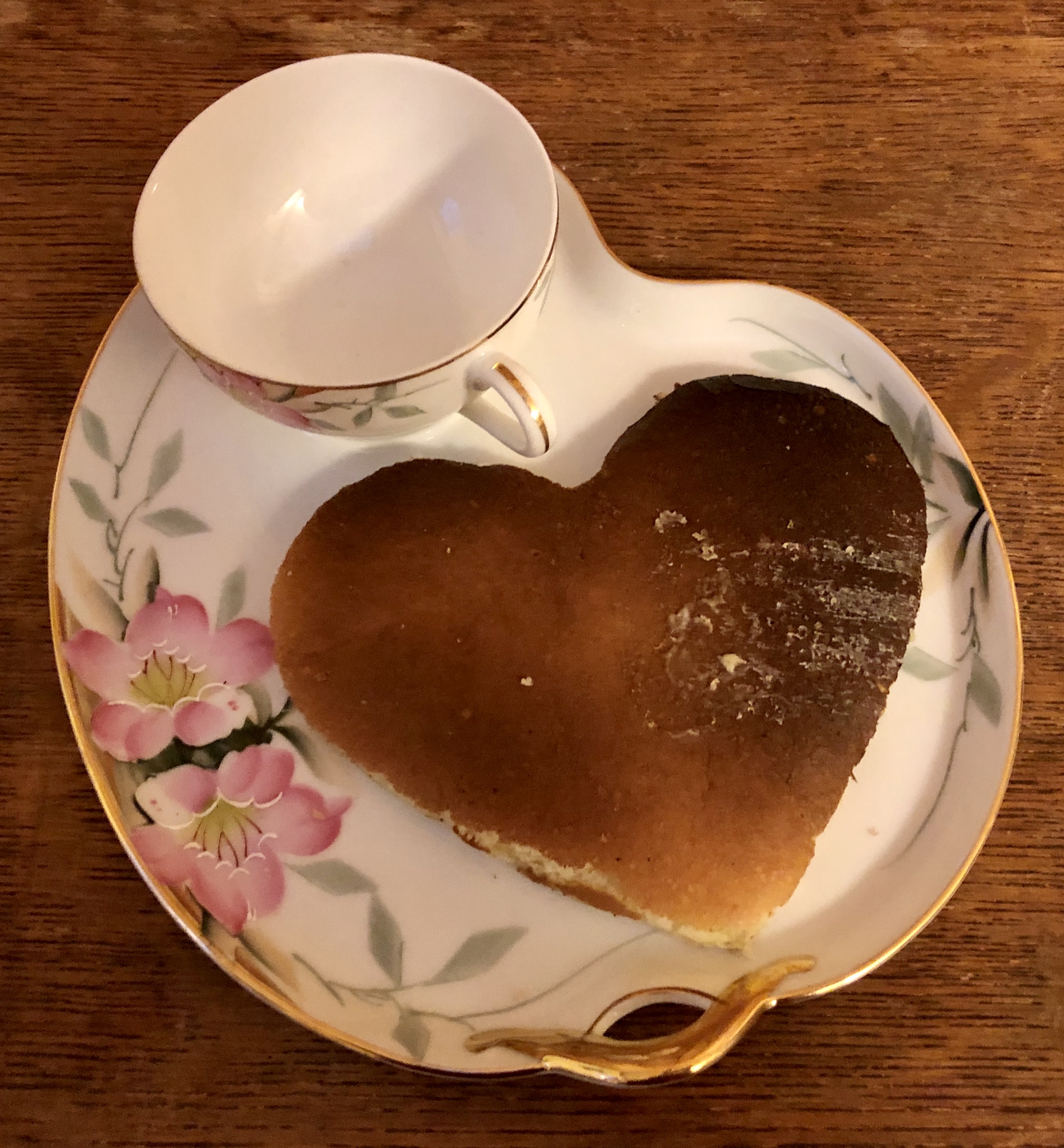
Pancake for Valentine’s Day.

I had high ambitions for heart-shaped pancakes today, with cranberries dotted around the edge in a tidy pattern. My cooking never comes out quite the way I envision, but with butter and maple syrup, it tasted just fine. Today was also the first time we used my mother-in-law’s dainty tea set, though we’ve had it in a cupboard the last 20 years. My husband was surprised.

In other February news, there’s been snow, snow, and more snow. My grandson built a snowman and took a photo one day. Where he lives, the kids don’t always get snow days because, with schools all set up for online classes, teachers want to keep kids learning.

Is that nose a carrot? A pumpkin stem? Looks good to me. I myself felt moved to get playful in the snow, so I shot the Fisher-Price kid with the wheelbarrow for no other reason.

I hope you can feel the weight of the snow in the next few pictures. This winter has been rough on bushes and trees. Not to mention old guys who have to dig out of the driveway in a hurry if they want to get to their scheduled Covid shot in time. (Whew, we both got Dose 1! Onward and Upward!)

The rhododendron blooming indoors represents one upside of having four wild creatures running ’round and ’round outside the house in January and crashing into bushes. Another upside is having them here, running ’round and ’round outside the house in January and crashing into bushes.

Sandra sent the Happy Valentine’s Day photo from New Shoreham, a place that seldom gets much snow. Pretty careful job, huh? If I’d tried, there would’ve been footprints all over it.

Read Full Post »

Older Posts »