Feeds:
Posts
Comments

Archive for the ‘Uncategorized’ Category

Photo:CHHA.

I’ve always thought that housekeepers, whether in an office building, a home, or a hotel, know more about clients than almost anyone. In their quiet efficiency, they are practically invisible to other people, which is why mystery writers and movie makers have noticed they are perfect for providing some surprise clue.

Housekeepers don’t give themselves away. There is no public competition in the realm of intelligence gathering. But there is one in another realm.

At the Washington Post, Dan Michalski wrote in November about big hotel chains’ annual Housekeeping Olympics.

“The arena was bouncing. Screams, clappers and vuvuzela horns echoed from all directions as competitors below scrambled around six queen beds, vigorously flapping white sheets and stuffing pillowcases as the clock ticked.

“The Housekeeping Olympics, held [at] the Michelob Ultra Arena at Mandalay Bay, were back for the first time since before the pandemic. The event was hosted by the Indoor Environmental Healthcare and Hospitality Association.

“Febe Rodriguez was competing for the Bellagio in bed-making.

She faced off against teams from six other Las Vegas hotels, as well as a housekeeping team from the Defense Department and two groups of hospitality workers from Canada. …

“The race was watched by clipboard-carrying judges who assessed time penalties for imperfect hospital corners and ill-measured bedspread fold-overs.

“Her co-workers and their families started chanting ‘Fe-be! Fe-be!’ as she made final tucks and thrust her arms in the air at the finish of what would turn out to be a gold-medal-winning performance. …

“The 33rd running of the Housekeeping Olympics consisted of six events: bed-making, a mop race, vacuuming, a buffer pad toss, a spirit dance and the executive challenge, where hospitality team bosses navigated a slalom course driving floor scrubbers.

“But this year’s competition almost didn’t happen. After three years of coronavirus-related cancellations, this previously annual event put on by the Ohio-based IEHA ran into the possibility of a casino workers strike, potentially the largest in history, just days ahead of the 2023 opening ceremonies.

“The hotel housekeeping landscape has also changed since the last time the event was held. Hotels have dealt with labor shortages and have cut back on daily housekeepingHousekeepers have been hit by a cashless economy that has chipped away at tipping. …

“Just weeks earlier, many of these same housekeeping workers picketed outside Mandalay Bay, Luxor, Park MGM, Bellagio and other casino properties. The Culinary Workers Union, which represents some 53,000 Las Vegas casino workers, was coordinating a potential walkout ahead of the city’s F1 Las Vegas Grand Prix.

“But the casinos and union came to a deal [that] included significant pay increases, better job security and improved working conditions. …

“ ‘Last week, we were angry,’ Rodriguez said. ‘But now we have the contract, so that makes the spirit wake up.’ ”

More at the Post, here.

Read Full Post »

Photo: juniperphoton via Unsplash.
In a world of increasing isolation and loneliness, a community can encourage people to say “hi.”

In retirement communities, I’m learning, there’s a big push to connect people with other people and combat isolation. When new residents go to the dining room, the hosts invariably ask, “Would you like to sit with some other folks?” That effort, I find, can either be helpful or strange. I had one elderly couple write down all the things I said about my history and our decision to move and then not recognize me the next day!

But I understand why the organization does it. Isolation is historically a problem for older people.

Nowadays it’s a problem for younger people, too, who often communicate through electronic media only and don’t gather in person.

Orla Barry writes at the radio show The World, “Loneliness can be as bad for your health as smoking 15 cigarettes a day, according to an international commission launched by the World Health Organization this month.

“Saying hello to a stranger may not seem like that big of a deal. But Åsa Koski, a social strategist with the Luleå municipality in northern Sweden, believes its impact could be greater than one might think. She started the Säg hej! (‘Say hi!’) campaign in Luleå to try and get people to interact more with each other to combat widespread loneliness.

“Luleå is a coastal city located around 93 miles south of the Arctic Circle. Winters there are long and cold and the average temperature can drop to 5 degrees Fahrenheit.

“But Koski, doesn’t think the weather alone is to blame for the isolation that many Swedes reportedly feel. Recent research by Sweden’s public health agency found that a third of 16-29-year-olds say they experience problems caused by loneliness.

“Koski thinks the continual urbanization of the town and an ever-growing dependence on digital technology are far bigger factors than the long dark winters. …

“California-born Lauren Ell is familiar with the Swedish reticence to engage in friendly banter with a stranger but she thinks it’s a generational thing. Ell first moved to Sweden as a foreign exchange student in 2006. Making friends with Swedish students was almost impossible, she said. 

“Like Koski, Ell thinks digital technology is part of the problem.

“ ‘Even back in 2006 gaming was really big and I remember a lot of my classmates would just go home and play video games all evening.’ Today, everyone is stuck on their phones, she said. Ell, who now lives in Skaulo, a small Swedish town north of Luleå, said she knows things aren’t that different in the US. But she said Swedes appear to have a natural tendency to keep to themselves or just mingle within their own social circles, and that makes it even harder for foreigners to integrate into the community.

“Swedish Italian filmmaker Erik Gandini believes other factors may be driving the problem of loneliness in Sweden.

“ ‘A long time ago, this country really embraced the idea of personal autonomy and independence,’ he said. Gandini was born and raised in Italy to a Swedish mother and Italian father. When he moved to Stockholm at the age of 20 he was struck by the number of people in their late teens already living alone.

“In 2021, Sweden recorded the lowest average age of young people leaving the parental home across the European Union — at 19 years. In Italy, the average age is closer to 30. …

“Gunnar Andersson, professor of demography at Stockholm University said Sweden’s ‘culture of individualism’ dates back centuries, with teenagers in rural communities typically leaving home to go and work on another farm. The strong welfare state allows young adults to live independently without the support of their parents. …

“It’s very different from the traditional Italian family structure that Gandini grew up in and in 2015 he made a documentary about the Swedish system called The Swedish Theory of Love. The film got a mixed response in Sweden. Gandini said it touched a nerve. 

“ ‘The idea is so strong in Sweden of making sure that you never need anybody else, it’s become something sacred here. Swedish people don’t like to see that criticized or questioned,’ he said.

“Gandini believes it’s a double-edged sword. The government changes in the 1970s led to greater female emancipation and pushed Sweden toward becoming a more modern society, he said, but that has left people more prone to isolation and loneliness.

“US native Lauren Ell said she often feels lonely living in Sweden. She never intended to live in the Nordic country long term, but 10 years ago, Ell fell in love with a Swedish man and moved to his hometown of Skaulo.

“In the last couple of years Ell, who now has two small children, set about trying to get to know her community better. She began organizing events to bring local residents together. … But Ell finds that just getting people to show up is not easy. It’s demoralizing, she said. …

“Ell, who’s 35, said she finds it harder to connect with Swedes who are her own age and younger. Many of her best conversations are with older neighbors in their 60s and 70s, she said. …

“Teachers in Luleå have reported that the campaign is already having an effect. Koski said students are now challenging each other to see how many ‘hi’s’ they can get in a day. A teacher told Koski that one student, who usually spends most of his time alone, admitted he was buoyed up when other students began to say ‘hi’ to him.”

More at PRI’s The World, here. No firewall.

Read Full Post »

Photo: Isabelle de Pommereau.
Eugen Vaida and an Ambulance for Monuments team repair the Church of St. Nicholas the Hierarch in Fântânele, Romania.

Today’s story is all about the Power of One. That is, one who organizes many. The setting is a post-Communist country that is struggling to build its economy and has little left over for preserving cultural monuments.

Isabelle de Pommereau writes at the Christian Science Monitor, “It is midday on a damp Friday. Eugen Vaida guides his team into the final phase of re-tiling the roof of a church, at the crest of a forested hill in this mountainous Transylvanian village.

“Village craftspeople and students from the city meticulously lay tiles on the roof timbers of the 18th-century Romanian Orthodox Church of St. Nicholas of the Hierarch. From the scaffolding, students respectfully and attentively watch Nicolae Gabriel Lungu, who is descended from a Romani family who all knew this skill. Soon an older woman summons the crew to share in a platter of clătite, thin cheese-filled crepes.

“Once bustling with families and culture, Mr. Vaida’s home region had become a string of largely empty villages surrounding abandoned stone churches. But now, watching this group interact, he has newfound hope. The repair by his group, Ambulance for Monuments, will help safeguard the church’s stunning outer frescoes. And the impact will ripple far beyond the building itself. 

“ ‘People are starting to understand the value of heritage,’ Mr. Vaida says. For the past seven years, he’s been driving around the country with a van equipped with tools and volunteers in a race against time to rescue endangered historic buildings. He has helped save more than 55 historical structures on the verge of collapse, from medieval churches and fortification walls to old watermills and UNESCO World Heritage Sites. He does so by impressing preservation methods and mindsets onto local communities. 

“ ‘I wanted to reconnect the members of the community to their roots, make them aware that those buildings are part of their cultural identity, and show them how they can continue the work we do,’ he says.

“Mr. Vaida offers a ‘best-practice example of how, with not so much effort, you can save the identity of Romania as a country,’ says Ciprian Stefan, director of the ASTRA Museum, Europe’s largest open-air ethnographic museum, in Sibiu.

“Romania’s rich cultural legacy of painted churches and fortified villages was shaped over centuries. But close to 600 historic monuments are in an acute state of degradation, victims of years of dictatorship, poor legislation, and plain neglect, experts say.

“Mr. Vaida experienced the destruction in a very personal way. He grew up playing with Romani and Hungarian friends, as well as the German Saxons who had literally built the region. When the 1989 collapse of communist dictatorship flung Romania’s doors wide open, half a million people left. The mass exodus tore the Romanian soul apart – and fractured Mr. Vaida’s own identity. Ambulance for Monuments is an attempt to reclaim both his identity and that of his country. …

“He, too, left for the city, to get an education, and he became a successful architect in Bucharest. But six years into the job, he quit to return home. The big city was not his future; his home village was.

“He soon discovered that many village craftspeople who had passed on their know-how from generation to generation had left for Western Europe. … Mr. Vaida wanted to use his architectural skills to save his region’s extraordinary architectural and cultural heritage. He started by teaching children about local history. …

“In 2016, he launched Ambulance for Monuments in hopes of connecting architectural students, craftspeople, and communities around a new effort to restore decaying historic buildings. …

“Volunteer students get hands-on practice in historical restoration; local craftspeople get jobs; and communities help house and feed the teams, and donate the material. … ‘It’s going from grassroots up, from down to up,’ says Mr. Vaida. …

” ‘He doesn’t go to villagers to ask for anything, but he goes there to give something,’ says Mr. Stefan. ‘The community stays in the shadows at first. When they see Eugen comes with material and manpower to restore their church, they say, “Let’s help him,” and, little by little, they come and help with housing, with food.’ …

“The task of rescuing Romania’s cultural legacy is huge, but Mr. Vaida sees signs of progress. … ‘People are moving back to the villages of their grandparents, because they feel they belong there,’ he says. ‘They are rediscovering old houses, their heritage, their villages, and are getting involved in the preservation of this type of living.’ ”

More at the Monitor, here. No paywall. Subscriptions solicited.

Read Full Post »

Photo: STR/Reuters/Landov.
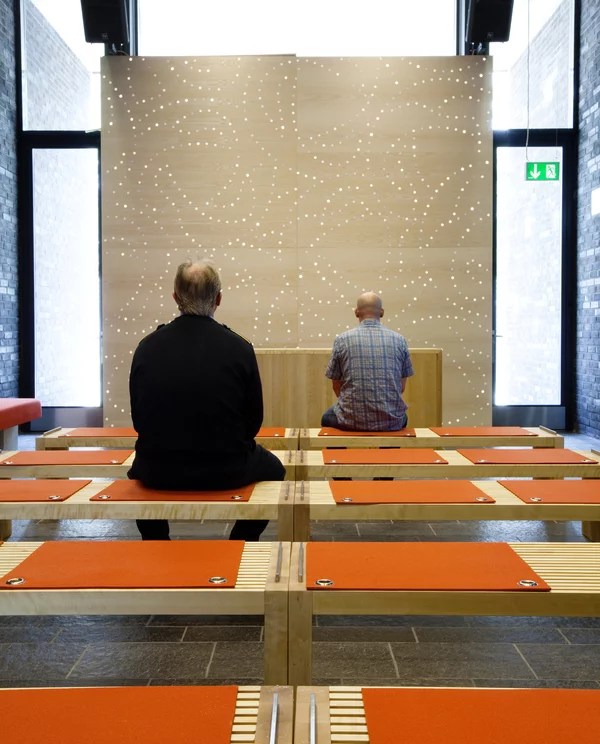
Two men sit inside the chapel at Halden prison in far southeast Norway in this picture taken in 2010. Prisoners here spend 12 hours a day in their cells, compared to many U.S. prisons where inmates spend all but one hour in their cell. NPR’s 2015 story is here.

Some years ago (2016), I wrote about research on Norway’s humane prisons. In a December 2023 Christian Science Monitor article, Troy Aidan Sambajon shows that some US prisons are moving in the same direction. Or at least testing the concept.

“Earlier this year,” he reports, “California Gov. Gavin Newsom announced a new vision for the San Quentin State Penitentiary, centered on rehabilitation and job training, inspired by another prison system that has halved its recidivism rate – in Norway. …

“About 2 out of 3 Americans released from jails and prisons per year are arrested again, and 50% are re-incarcerated, according to the Harvard Political Review. In Norway, that rate is as low as 20%. 

‘It has everything to do with your social safety net, your network, your support structure, and your job opportunities.’

“As more U.S. states seek to improve their correctional systems, the Norwegian model could prove key. It aims to create a less hostile environment, both for people serving time and for prison staff, with the goal of more successfully helping incarcerated people reintegrate into society. …

“ ‘Overcrowding, violence, and long sentences are common in U.S. prisons, often creating a climate of hopelessness for incarcerated people, as well as people who work there,’ says Jordan Hyatt, associate professor of criminology and justice studies at Drexel University. Correctional employees experience some of the highest rates of mental illness, sleep disorders, and physical health issues of all U.S. workers, a 2018 Lexipol report found. …

“Making a prison environment more humane will translate to a more efficient prison system overall, experts say. And the Norwegian model prioritizes rehabilitation and reintegration over punishment. Safety, transparency, and innovation are considered fundamental to its approach. Core practices aim to create a feeling that life as part of a community continues even behind walls and bars, says Synøve Andersen, postdoctoral research criminologist at the University of Oslo. 

“In some Norwegian prisons, incarcerated people wear their own clothes, cook their own meals, and work in jobs that prepare them for employment, says Dr. Andersen. They have their own space, too, since single-unit cells are the norm. …

“While they are separated from society, incarcerated people should experience normal, daily routines so they can have increased opportunities to reform without being preoccupied with fear of violence from other inmates, she argues.

“The principle of dynamic security means correctional officers also must have more complex social duties besides safety and security, including actively observing and engaging with the prison population, understanding individuals’ unique needs, calculating flight risks. …

“Washington state’s Lt. Lance Graham works within restricted housing and solitary confinement units, an environment he says lacks empathy and connection with those incarcerated. ‘We never had the opportunity to connect with the people in our care.’ 

“But when visiting Norway’s isolation units, he saw [that] their staff was much more engaged with the prison population and was much happier. 

“ ‘This program really promotes staff wellness, changing the relationship that you have with the people in your care,’ says Lieutenant Graham. ‘So you’re not going to have as many instances of fight or flight syndrome in your daily work. You reach common ground and talk like normal folks.’

“ ‘If you actually want to change the prison environment, invest in staff,’ says Dr. Andersen. ‘They’re there all the time. They’re doing the work.’

Amend, a nonprofit from the University of California, San Francisco, partnered with four states – California, South Dakota, Oregon, and Washington – to introduce resources inspired by Norwegian principles and sponsor educational trips to Norway for U.S. correctional leaders. 

“At California’s San Quentin, Governor Newsom hopes to emphasize inmate job training for high-paying trades such as plumbers, electricians, or truck drivers. … In Washington state, prison staff began developing supportive working relationships with the incarcerated in their care by developing individual rehabilitation plans. … In North Dakota, former Director of Corrections Leann Bertsch says after revamping the training and responsibilities of prison officers, interactions between staff and inmates felt respectful and calmer. …

“The Pennsylvania Department of Corrections collaborated with the Norwegian Correctional Services to pilot Little Scandinavia, a transformed housing unit operated at half the regular capacity to allow for individual cells. The on-duty officers at Little Scandinavia have reported enjoying their work much more now and there haven’t been any reports of violence since its opening in May 2022, says Dr. Andersen.

“Norway receives much attention for its low rate of recidivism, but some experts disagree on the measure as a rate of success. ‘[Recidivism] is not just a product of the correctional system. It has everything to do with your social safety net, your network, your support structure, and your job opportunities,’ said Dr. Andersen.”

More at the Monitor, here.

Read Full Post »

Photo: JSTOR.
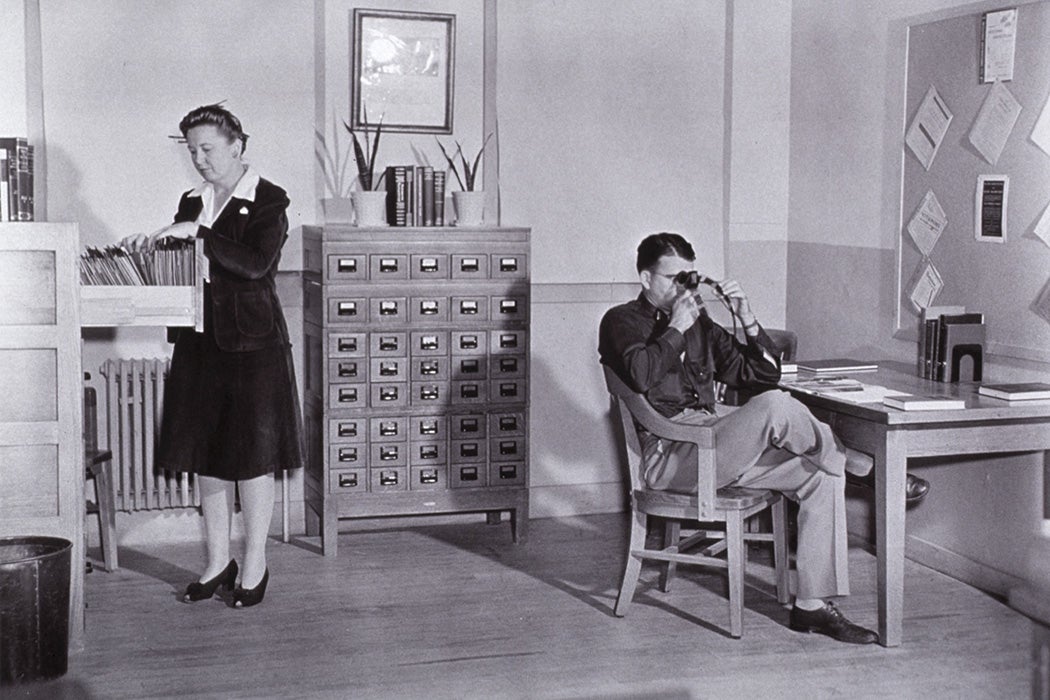
A librarian at the San Antonio Aviation Cadet Center and a patron examining microfilm. US librarians and the invention of microfilm were important to the war effort in the 1940s.

The enduring appeal of fictional detectives like Miss Marple has something to do with the idea that they are very unlikely sleuths. The “mild-mannered” (like Superman’s alter ego Clark Kent) are always undercover, and criminals never notice they are being casually but carefully observed.

Librarians, too, often described as “unassuming,” are not exactly James Bond material. But as we learn in today’s true story, they may provide vital intelligence in wartime.

Katie McBride Moench at JSTOR Daily writes, “In war, as in everything, information is power. And for the United States and its allies in World War II, an epic battle from an analog age, that meant obtaining and transmitting by hand useful intel. ….

“Enter the librarians, tapped by US government officials to help in this effort. These librarians adopted technology from other fields to photograph an array of documents, including those that were rare and/or archival, and found means of sending them across continents. They used both microfilm and microphotography — technologies that came to play a key role in the wars of the twentieth century.

“To the librarians of the World War II-era, microforms were a revelation; microfilm, for instance, was revolutionizing universities. Before its adoption, scholars generally traveled to sites housing materials they wanted or hired locals to do research on their behalf. Microfilm, the product of scaling text or graphics down into miniature forms, made it possible to streamline this process and ship scans anywhere. All that was needed was a microfilm reader on the receiving end to enlarge a scan to the point of readability. This innovation vastly broadened the scope of information researchers around the world could now access.

“It became clear to President Franklin Roosevelt in the months before the US entered the war in 1941 that there was a lag in intelligence gathering. To rectify this, Roosevelt tapped William ‘Wild Bill’ Donovan, a veteran and lawyer, to develop the Office of Strategic Services (OSS) — the precursor to the Central Intelligence Agency. Donovan worked with Archibald MacLeish, a Librarian of Congress who saw the potential for librarians to serve as valuable assets. …

“Under the auspice of the Interdepartmental Committee for the Acquisition of Foreign Publications (IDC), co-created by Donovan and Roosevelt, he enlisted the help of librarians and researchers from across the US.

Adele Kibre, the daughter of a connected Hollywood family, was one such recruit, working out of the IDC’s Stockholm office. Kibre attended the University of California, Berkeley; thereafter she went to the University of Chicago for graduate school, getting a PhD in medieval linguistics in 1930. Like many women of her day, she was denied a career in academia and instead conducted research for other scholars. On one such assignment, she visited the heavily restricted Vatican archives to photograph rare manuscripts; there she saw fellow researchers using microphotography.

“ ‘I acquired the habit of visiting the photographic studio in order to observe philologists, paleographers, and art historians rapidly filming their research materials with miniature cameras,’ Kibre is reported to have said, according to Kathy Peiss’s Information Hunters. Kibre followed suit with a microfilm-producing micro-camera and sent the films back to her employers. …

“Of course, microfilm was only part of the puzzle of increasing the information the US government gathered. … Kibre and IDC staff cultivated relationships with members of resistance movements and Allied sympathizers, creating a pipeline of scientific information leading to the US. Kibre was celebrated for the volume of sources she assembled. She relied on her experience talking her way into archives, museums, and rare books storerooms and on her knack for building relationships with the guardians of these institutions. She cultivated ties with government agencies, librarians, and booksellers sympathetic, or at least agnostic, to the Allied cause. …

“In total, the Stockholm station delivered more than 3,000 books and documents to the US during the war. … The IDC likewise established a station in Lisbon, where its work represented a collaboration between Ralph Carruthers and Reuben Peiss [uncle of author Kathy Peiss] of the OSS and Manuel Sanchez of the Library of Congress. 

“Arriving in Portugal in early 1943, Sanchez spent his first few days shaking the undercover agents trailing him. Once he evaded them, he began buying printed matter he believed would be of value to the Library of Congress. He also cultivated a partnership with the Andrade brothers; they owned a bookstore and were Allied sympathizers.

“The three men habitually crossed into Franco-controlled Spain to elude suspicion during book-buying expeditions. Meanwhile, Carruthers, an expert on microfilm, photographed thousands of pages of text, and Peiss, a librarian, developed systems of information classification and retrieval for the mass of intel collected. So extensive was their work that staff members worked ’round-the-clock shifts to photograph obtained documents, using micro-cameras to create microfilms that would be shipped on a Pan Am Clipper.”

More at JSTOR Daily, here. No firewall.

Read Full Post »

Photo: Charles Lawrence.
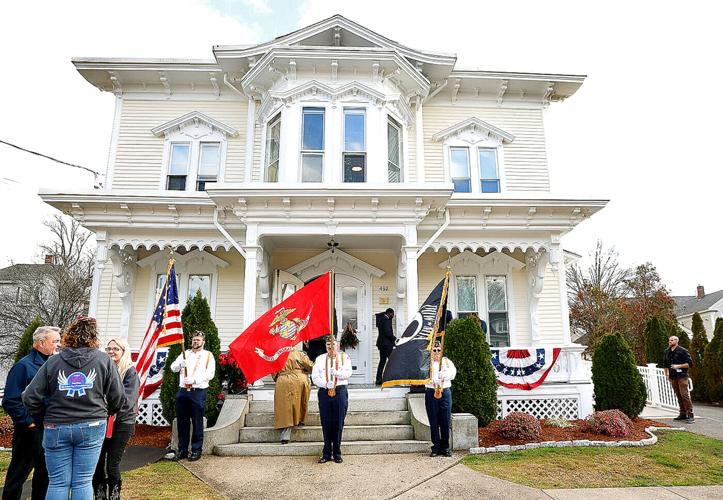
A renovated 1865 Woonsocket, RI, home now provides living space for homeless female veterans.

When one thinks of homeless veterans, one tends to think of men. I remember visiting a new space for veterans when I worked at Rhode Island Housing. Saccoccio & Associates were the architects for the historic renovation of the Heaton and Cowing Mill in Providence, which created 20 units of veterans housing. It was beautifully done, but it did not house women.

So I was interested to read about housing specifically for female veterans in nearby Woonsocket, Rhode Island.

Bella Pelletiere has the story at the Valley Breeze.

“Homeless female veterans in Woonsocket will now have a home to spend the holidays in, say representatives from Operation Stand Down Rhode Island.

“[In November] the historic house at 495 South Main St. was reopened as transitional housing for female veterans in honor of the late Marine Corporal Andrea Ryder.

“Operation Stand Down Rhode Island is Rhode Island’s primary nonprofit resource for homeless and at-risk veterans. OSDRI facilitates a combination of permanent supportive, transitional and recovery housing to low-income and disabled veterans and has 88 locations for housing throughout the state.

“Executive Director Erik Wallin told The Breeze that since 2010, OSDRI has been operating a six-unit facility in Johnston for female veterans. That facility was recently filled to capacity and they have been trying to find alternative ways to house female veterans, who are currently allowed to stay between 6 and 24 months. …

“In May, Wallin told news sources that lead paint had been discovered during renovations, but OSDRI was working with the city and painters to restore the building. Though it was a long process, he said they knew they wanted to restore this ‘magnificent piece of architecture’ for the veterans who were coming to live there.

He added that they wouldn’t house veterans in any building they wouldn’t put their own family members in. …

“OSDRI dedicated the home to Ryder, a Rhode Island native who enlisted in the Marine Corps after graduating high school and was diagnosed with stage three melanoma when she left the service. After numerous surgeries she appeared to be in remission. In 2014, Ryder learned both that she was pregnant and that the cancer had returned at stage four.

“Ryder give birth to her baby girl in 2014, and in 2020, she ultimately succumbed to her illness after spending some time in hospice.

“Wallin said that throughout the years, they had gotten to know Ryder and her family, hosting fundraisers and supporting her until she died. …

“Many officials attended the reopening of the [house], including Tony DeQuattro, president and chairperson of the board of OSDRI, Sen. Sheldon Whitehouse, and Ryder’s family members.

“Ryder’s mother, Donna Paradiso, as well as her daughter, Olivia, and husband, Dennis Bourassa, also came to celebrate the life of their loved one and her name that will live on at 495 South Main St.”

These stories of veteran homelessness are so sad. You just know every time a war starts up that some who serve will come back traumatized. Some will end up homeless. We never do enough for them, but organizations like Operation Stand Down keeping chipping away at the needs.

More at the Valley Breeze, here. No firewall.

Read Full Post »

Photo: Sophie Hills/The Christian Science Monitor.
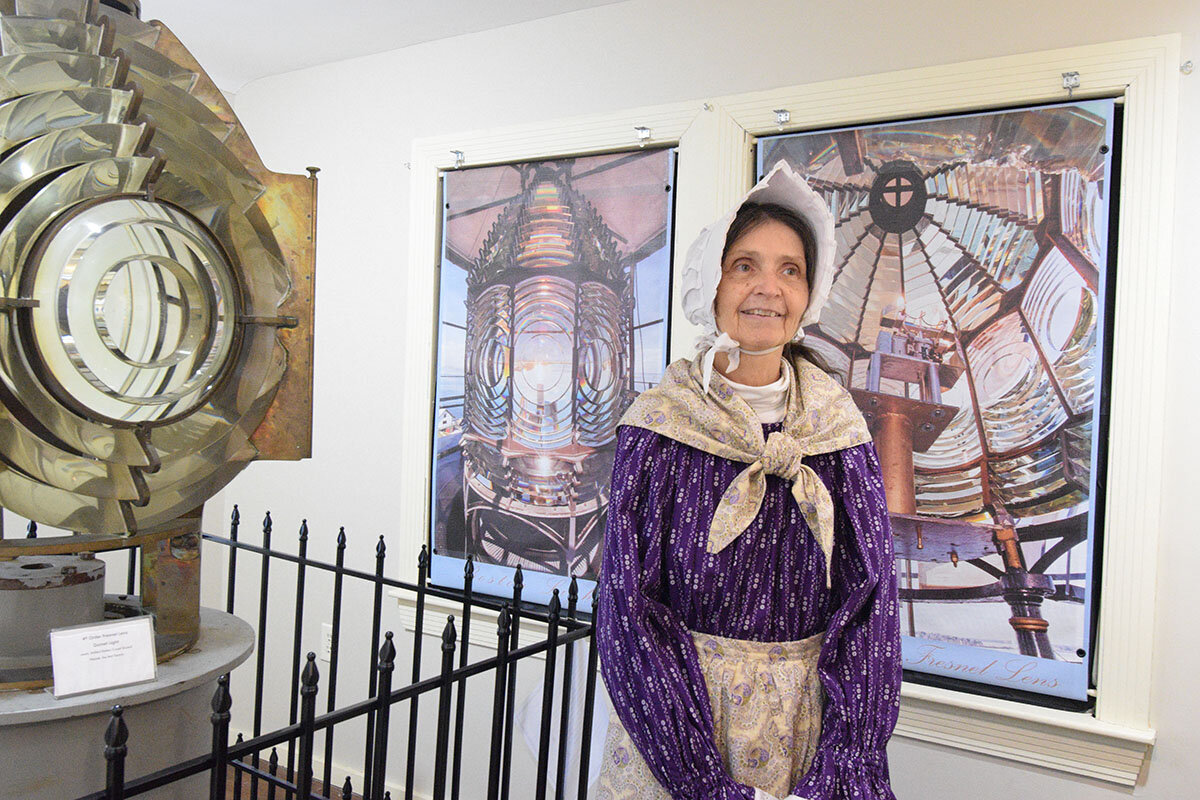
Sally Snowman stands next to a Fresnel lens in the Hull Lifesaving Museum in Hull, Massachusetts, Nov. 9, 2023. She retired at the end of the year after two decades as the keeper of nearby Boston Light.

Lighthouses are to the US what castles are to Europe, and there are many enthusiasts working to ensure that lighthouses don’t crumble but have an economically sustainable future for generations to come.

Sophie Hills reports at the Christian Science Monitor, “When Sally Snowman became the keeper of Boston Light in 2003, she expected the role to last only two years. … Ms. Snowman is the last of the lighthouse keepers in the United States. Her retirement marks the end of 307 years of keepers of Boston Light, originally established in 1716.

“When Ms. Snowman first set foot on Little Brewster Island at age 10, it was love at first sight. ‘I want to work as a keeper and get married here,’ she recalls saying. She did both. Now, after 20 years as keeper and even longer as a volunteer, she’s ready to retire. …

“For centuries lighthouses played the crucial role of guiding sailors safely through hazardous waters. Today, some are still active aids to navigation. They also hold a mystical, sentimental power to many, mariners or not, who balked at the news of the last lighthouse keeper retiring. The keeper herself has little patience for a nostalgia that would hamper the future of the icon she has tended for two decades. Ms. Snowman believes the transition will help lighthouses keep shining in the 21st century, rather than fade away. 

“The appeal of lighthouses reaches far and wide, says Jeremy D’Entremont, who has a weekly podcast, ‘Light Hearted,’ and is the historian for the United States Lighthouse Society. Just recently, his co-host was an 11-year-old girl from Kentucky. 

“While big ships today have ample navigational technology, their captains ‘feel welcomed’ by lights at harbor mouths, says local Dave Waller, who co-owns nearby Graves Light Station in Boston Harbor. And the need is still practical for smaller crafts. …

“The U.S. Coast Guard’s mandate isn’t to restore or preserve historical structures like lighthouses. The military branch will continue to operate the aids to navigation – like the light and foghorn – but the actual upkeep of the physical structures and tours of the island are better suited to a different entity. …

“Over her 46 years as a Coast Guard auxiliary volunteer and keeper, Ms. Snowman has become intricately acquainted with the history of the lighthouse and local nautical history. … A spiritual person, she’s touched by all the light has seen and withstood. And even those things it has not been able to withstand, such as when it was demolished by the British as they made their last escape from the harbor during the Revolutionary War. …

“Ms. Snowman is quietly firm that the transfer of the lighthouse is what’s best. ‘It’s important to ensure that our national icons are properly cared for,’ she says.

“Under a process laid out by the National Historic Lighthouse Preservation Act of 2000, there’s a mechanism for ownership of the historic sites to be transferred. Federally owned lighthouses are offered first to other federal agencies, then state and local governments, followed by nonprofits, and eventually private individuals.

“Graves Light Station was bought at auction a decade ago after sitting neglected. When Mr. Waller stepped out onto the top deck and saw the panoramic view of Boston and the ocean, he ‘fell in love.’ … The lifesaving role of lighthouses ‘is not ancient history,’ says Mr. Waller. Just recently, two men had a boating accident and made it to the rocks at the base of Graves Light before they were rescued.” 

More at the Monitor, here. No paywall. Subscriptions solicited.

Photo: Suzanne and John’s Mom.
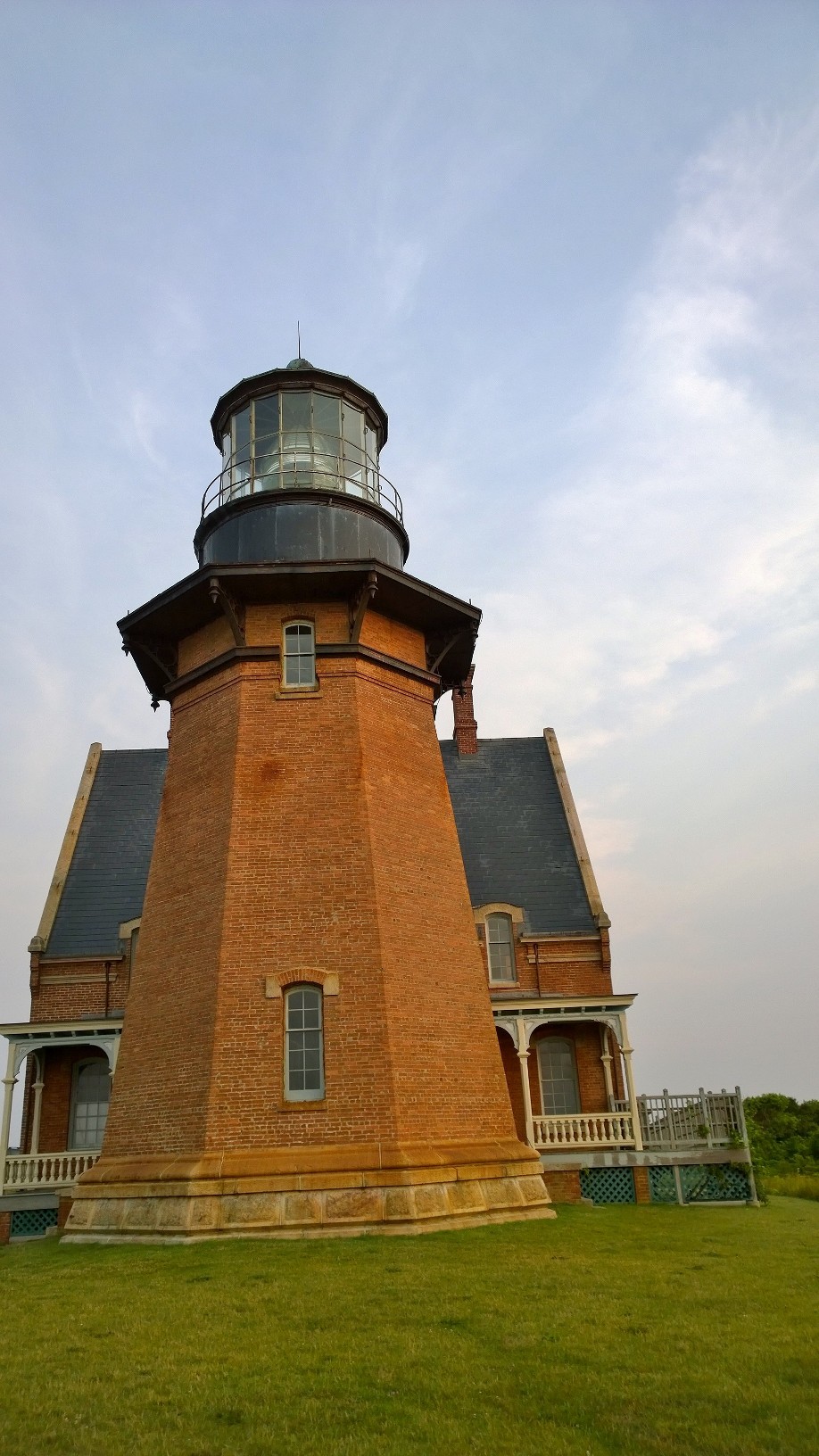
The Southeast Light, New Shoreham, RI, is still important in navigation but is not manned.

Read Full Post »

Photos: Libby Keatley.
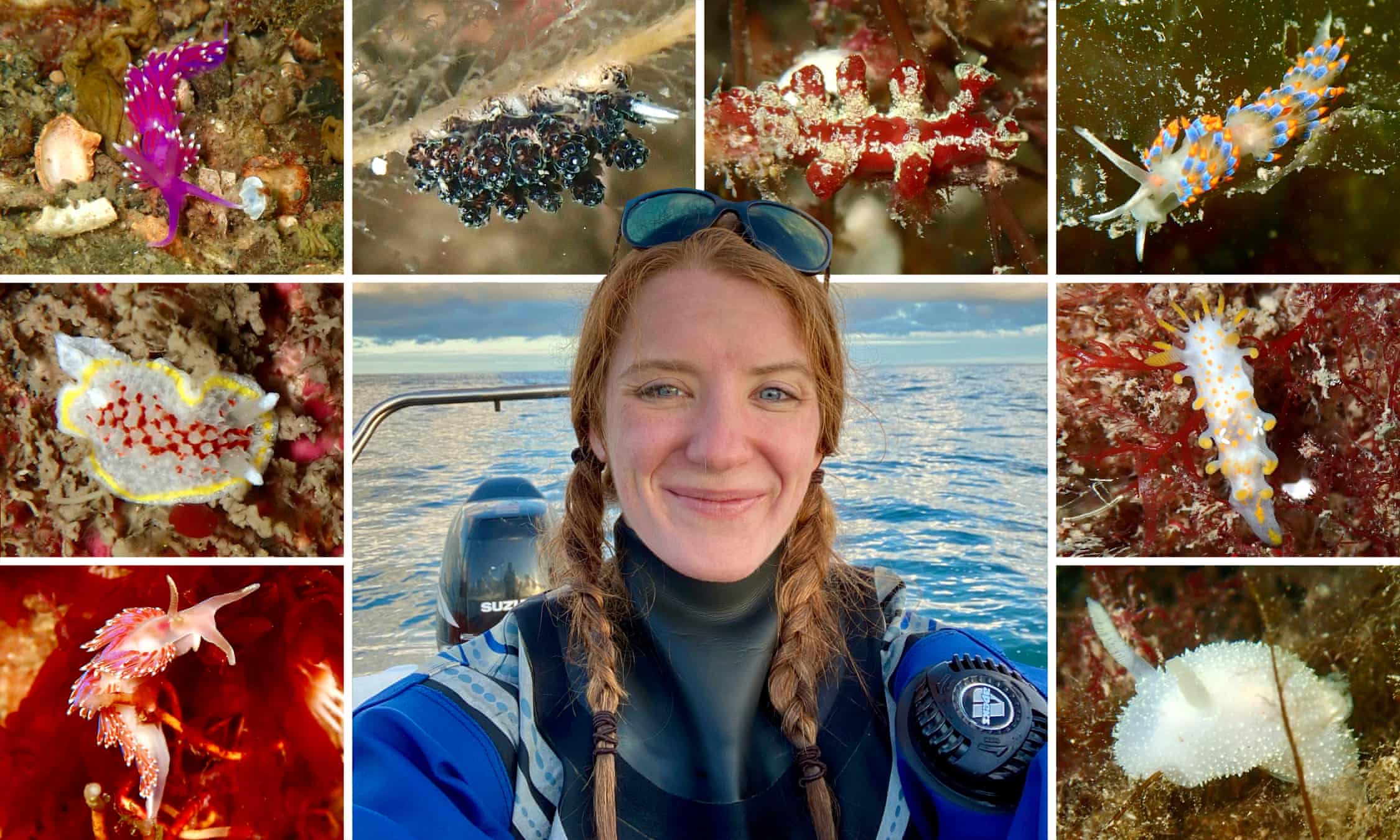
Libby Keatley and some of the “inherently charismaticsea slugs she has encountered. 

After blogging singer Will McMillan told us more than we ever imagined about sea snails once used for a royal purple dye, I remembered that the Guardian had an equally fascinating story on sea slugs. It turns out some young people are huge fans of the critters and are helping scientists keep track of them.

Helen Scales writes, “Two years ago, Libby Keatley was diving off the coast of County Antrim in Northern Ireland when she spotted something unusual. It was a sea slug – or nudibranch – whose transparent body had orange lines running through it and twiggy projections arranged along its back. ‘It was quite distinctive and not like anything I’d seen before,’ she says.

“Keatley called over her diving buddy, Bernard Picton, a local marine biologist and pioneer in UK sea slug studies. He scooped it up in a plastic bag and, back at his lab, confirmed it was a newly discovered species. He named it in Keatley’s honour: Dendronotus keatleyae.

“ ‘Three years ago, I didn’t really know what a nudibranch was or I thought they only lived in tropical countries,’ says Keatley.

‘It just shows you can learn – you don’t have to be somebody who’s been in a lab for 20 years to know that something looks a bit funny or different.’

“For a niche but growing group of amateur naturalists, sea slugs have become an ideal subject: as stunning as butterflies but with the good grace to sit still while you peer in close and take a photograph. Distant relatives of the slimy, drab land-dwellers that live in gardens, sea slugs are an altogether more endearing bunch. Many are daubed in jewel-like colors that warn off predators. Others take on hues to blend in with their surroundings, often gaudy seaweeds and sponges. There are also plenty of sea slugs to discover in UK waters, with about 150 known species across the north Atlantic. …

“To show me why the hobby has attracted a worldwide community of scuba divers and amateur photographers – and how it makes important contributions to scientists’ understanding of how our oceans are changing – Keatley takes me diving in Strangford Lough. An hour’s drive south of Belfast, it is one of Europe’s largest sea inlets and a renowned wildlife spot, home to seabirds, seals and recently a pair of bottlenose dolphins.

“There’s even more going on beneath the waterline. At high tide, the Irish Sea brings in a soup of particles and nutrients which feeds a rich mix of underwater species – and a host of other creatures that feed on them. …

“We are joined on the dive by Keatley’s partner and fellow enthusiast, Phil Wilkinson, and Picton, who recently updated a guidebook to sea slugs of the north Atlantic with Christine Morrow. …

“We find more sea slugs than I’ve ever seen, even in tropical seas: neon pink ones and transparent ones covered with finger-like projections with shiny turquoise tips; another is white with yellow specks and a pair of bunny ears that are for smelling not hearing. We encounter a gathering of sea slugs that look like miniature fried eggs splashed in chili sauce, and Keatley points out a peach-colored specimen hitching a ride on a hermit crab. It feeds on minute hydroids – stinging relatives of jellyfish – that grow on the crab’s shell.

“For Keatley, sea slug spotting was part of an unexpected reawakening of a childhood interest in nature. In January 2019, she learned to scuba dive and was an instant convert to the underwater world. ‘I couldn’t get enough,’ she says. ‘The more I saw, the more I wanted to learn, and then the more I was seeing. So it just snowballed a wee bit.’ ”

Don’t you love the variety of things that people get interested in? At the Guardian, here, you can read about the importance of citizen scientists in the slug world. No firewall. Donations encouraged.

Read Full Post »

Photo: Sarah Matusek/The Christian Science Monitor.
At Colorado’s roving Department of Motor Vehicles — a bus — people experiencing homelessness and others can get an ID.

Some kind of ID is necessary in life — to apply for a job, get a bank account, rent an apartment, and sometimes to vote. That’s why Colorado has decided everyone should be able to get legal identification. The state’s Department of Motor Vehicles (DMV) is making it happen.

Sarah Matusek writes at the Christian Science Monitor, “Radio in hand, Steven Rustemeyer ushers the next person aboard the bus. … This bus has no rows of seats, no driver or destination. This is a project of the Colorado Division of Motor Vehicles – a DMV on wheels. It sits parked with an office inside – complete with computer, printer, fingerprint reader, and vision test chart. 

“ ‘It’s easier that way,’ says Mr. Rustemeyer, who got a new ID from the mobile clinic earlier this year. Homeless for eight years since he aged out of foster care, he says he appreciates not having to pay bus fare to head to the brick-and-mortar office. The bus shows up once a month at a nonprofit whose job readiness program he attends – and where he’s helping out today. The stop is one of several across the state. …

“As it issues IDs and licenses to hard-to-reach Coloradans, the DMV2GO program blunts bureaucracy by saving time and travel to traditional sites. Officially launched last year, the mobile program has issued around 11,000 documents as of September, stopping by incarceration sites, homeless shelters, universities, and rural community hubs. Given how IDs are key to securing housing, work, and other basics, the goal is to ensure equitable access to identity services for all, says Desiree Trostel, the program manager.

‘It’s important to “meet people where they’re at,” ‘ Ms. Trostel says, ‘regardless of circumstance or location.’

“Mobile staff members report more enjoyment on the job, too. Customers on the road are ‘a lot happier to come and see us,’ says Liz Kuhlman, an upbeat licensing technician on the bus.

“In mountainous Archuleta County, where there is no state DMV, Warren Brown says he and his wife saw the problem up close. At their former insurance business, part of the job meant helping older customers navigate license services online. 

“ ‘In my mind, this just didn’t have to be that way,’ says the county commissioner, who contacted the state for help. His constituents were first in line to benefit from the formal rollout of DMV2GO in 2022. …

“Customers can apply for or renew driver’s licenses or ID cards, including out-of-state transfers. The clinic doesn’t offer knowledge tests or print the physical card on-site (those will arrive later by mail), but it does offer temporary ones. …

“The Florida Licensing on Wheels program, or FLOW, has operated since 1988, says David Brown, a FLOW program manager. Beyond making regular stops, it’s also grown to respond to manmade and natural disasters. … ‘In order for you to start the process of rebuilding after a disaster, you need those solid credentials,’ he says.

“Rebuilding can also mean navigating society after incarceration. That’s why DMV2GO’s list of stops includes sites like the Jefferson County jail. …

“Convenience aside, mobile DMVs also aren’t without challenges. Spotty internet access in rural areas, for one, can complicate service. And in Colorado, demand is high for the program that currently involves four licensing technicians and three vehicles. The state says it’s gathering data on DMV2GO’s impact and hopes to expand. 

“That demand is clear at a recent stop at a public library in rural Westcliffe when a dozen people arrive ahead of the clinic’s opening at 10 a.m. Though a couple of locals note the wait, those in line still appreciate the service.

“ ‘This is awesome,’ says John Van Doren, a retiree here for a license renewal. ‘Very convenient.’ “

More at the Monitor, here.

Read Full Post »

Photo: Alamy.
A mosaic of the Byzantine empress Theodora from 547 AD. The purple color was once considered more precious than gold. (It seems a bit brown in photos.)

Today’s story about a valuable pigment that comes from mollusks made me think of “wampum,” the jewelry/currency made from quahog shells by indigenous people in North America. The difference is that to get this royal purple, it was the insides of snails that were used.

Zaria Gorvett reports at the BBC, “For millennia, Tyrian purple was the most valuable color on the planet. Then the recipe to make it was lost. By piecing together ancient clues, could one man bring it back?

“At first, they just looked like stains. It was 2002 at the site of Qatna – a ruined palace at the edge of the Syrian desert, on the shores of a long-vanished lake. Over three millennia after it was abandoned, a team of archaeologists had been granted permission to investigate – and they were on the hunt for the royal tomb.

“After navigating through large hallways and narrow corridors, down crumbling steps, they came across a deep shaft. On one side were two identical statues guarding a sealed door: they had found it. Inside was a hoard of ancient wonders – 2,000 objects, including jewelery and a large golden hand. But there were also some intriguing dark patches on the ground. They sent a sample for testing – eventually separating out a vivid purple layer from the dust and muck.

“The researchers had uncovered one of the most legendary commodities in the ancient world. This precious product forged empires, felled kings, and cemented the power of generations of global rulers. The Egyptian Queen Cleopatra was so obsessed with it, she even used it for the sails of her boat, while some Roman emperors decreed that anyone caught wearing it – other than them – would be sentenced to death.  

“That invention was Tyrian purple, otherwise known as shellfish purple.

But though this noble pigment was the most expensive product in antiquity – worth more than three times its weight in gold, according to a Roman edict issued in 301 AD – no one living today knows how to make it.

“By the 15th Century, the elaborate recipes to extract and process the dye had been lost. But why did this alluring color disappear? And can it be resurrected?

“In a small garden hut in north-eastern Tunisia, just a short distance from what was once the Phoenician city of Carthage, one man has spent most of the last 16 years smashing up sea snails – attempting to coax their entrails into something resembling Tyrian purple. …

“Ancient authors are particular about the precise hue that was worthy of the name: a deep reddish-purple, like that of coagulated blood, tinged with black. Pliny the Elder described it as having a ‘shining appearance when held up to the light.’ …

“It was so central to the success of the Phoenicians it was named after their city-state Tyre, and they became known as the ‘purple people.’ … In 40 AD, the king of Mauretania was killed in a surprise assassination in Rome, ordered by the emperor. Despite being a friend to the Romans, the unfortunate royal had caused grave offense when he strode into an amphitheatre to watch a gladiatorial match wearing a purple robe. The jealous, insatiable lust that the color ignited was sometimes compared to a kind of madness. …

“Tyrian purple could be produced from the secretions of three species of sea snail, each of which made a different color: Hexaplex trunculus (bluish purple), Bolinus brandaris (reddish purple), and Stramonita haemastoma (red). …

“Accounts of how colorless snail slime was transformed into the dye of legends are vague, contradictory and sometimes obviously mistaken – Aristotle said the mucous glands came from the throat of a ‘purple fish.’ To complicate matters further, the dyeing industry was highly secretive – each manufacturer had their own recipe, and these complex, multi-step formulas were closely guarded. …

“The most detailed record comes from Pliny, who explained the process in the 1st Century AD. It went something like this: after isolating the mucous glands, they were salted and left to ferment for three days. Next came the cooking, which was done in tin or possibly lead pots on a ‘moderate’ heat. This continued until the whole mixture had been boiled down to a fraction of its original volume. On the tenth day, the dye was tested by dipping in some fabric – if it emerged stained with the desired shade, it was ready. 

“Given that each snail only contained the tiniest amount of mucous, it could take some 10,000 to make just a single gram of dye. Mounds of billions of discarded sea snail shells have been reported in areas where it was once manufactured. In fact, the production of Tyrian purple has been described as the first chemical industry – and this not only applies to the scale of the operations, but their exacting nature.”

More at the BBC, here.

Read Full Post »

Photo: Fabio De Paola/The Guardian.
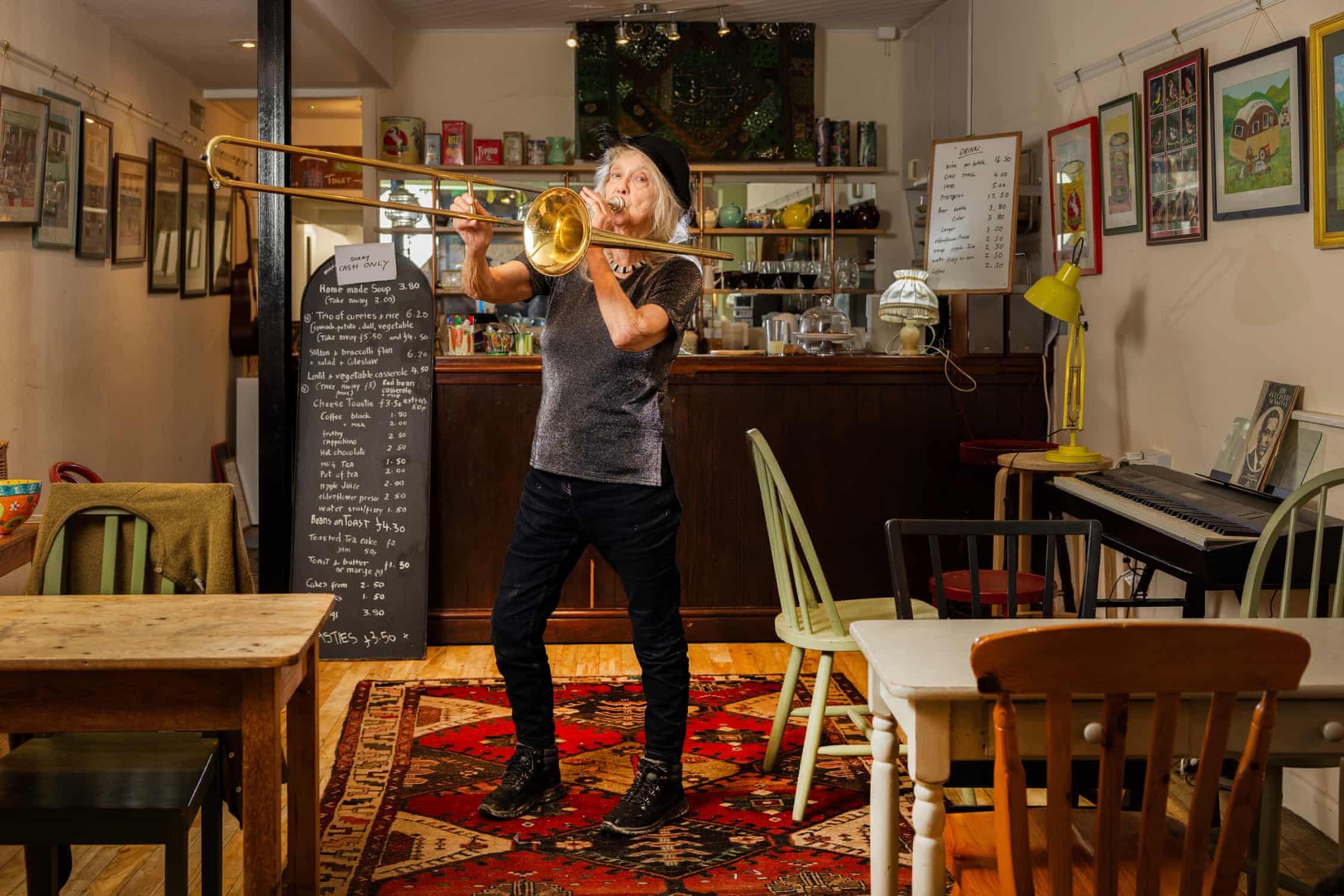
Eighty-four-year-old Noreen Davis took up trombone at 72 and never looked back.

Where I live now, it’s nice to see people taking up some pursuit that always interested them but seemed out of reach. For example, there’s a retired radiologist across the hall whose wife is an artist whose work he has always admired. Nowadays, he’s throwing himself heart and soul into some high-level art classes here and is doing an impressive job.

Today’s story is similar. It starts with a woman in the UK Midlands paying attention to a dream she had when she was sound asleep.

Ammar Kalia writes at the Guardian, “Twelve years ago, Noreen Davies had a dream. In it, the artist and cafe owner, then 72, saw herself wielding an unusual instrument. ‘There was a jazzy tune on in the background and I was playing along on a trombone, bending the notes and having a great time,’ she says. ‘When I woke up, I knew I had to learn it.’

“She headed to her cafe in Leominster, Herefordshire, and had a [routine] meeting with her accountant. ‘At the end, I asked him if he knew anyone with a trombone I could try out and he said he had five! Turns out he played in a local brass band with his wife, so he ended up bringing one round to me, along with an old music book on the instrument, and that’s how it all started.’

“Now 84, Davies has gigged throughout the West Midlands with groups exploring everything from the blues to vintage jazz and big band funk. No matter the tune, she has stayed true to her vision of bending the notes on the giant horn, twisting and wailing like a held string on an electric guitar. ‘I’ve only had two lessons and in the first one the teacher told me to just play what was written, but I do whatever I want to,’ she says. ‘I use it more like a percussion instrument, improvising over the tunes.’

“The trombone is notoriously difficult to learn, since players have to judge the distance between notes by pulling and pushing its tubing, rather than pressing fixed keys. Davies, though, found the instrument easy, thanks to her musical history. At 14, she took up the guitar and taught herself to play chords with her younger brother. ‘I forced him to play along with me. I taught myself the piano, too, by working out songs I liked listening to,’ she says. …

“Davies’ confidence to play live grew through hosting monthly music nights at the cafe, including a jam session with Ric Sanders of Fairport Convention, although she faced a setback when a series of operations on her lungs meant she was unable to play for several months.

“One evening in 2018, when she had regained her strength, she went along to a jam session in nearby Bromyard and met two young musicians who were looking for a trombone to round out their trio. Luckily, she had hers in the boot of her car in case such an opportunity arose. ‘We did a few numbers together and they ended up adopting me,’ she says. ‘We played for a couple of years, until Covid. It was great fun.’

“The open world of jam sessions and gigs has since led Davies to more instruments. She is back on the piano and has added the accordion, the washboard and the baritone ukulele. ‘I ended up in a vintage jazz band because they needed a washboard player and I was the only one who took it up in the local area. I also play Bob Dylan tunes on the ukulele and I’m trying to learn some Cole Porter on the accordion,’ she says. … ‘Everyone should try it out – just get yourself to a jam session somewhere and see what happens.’ “

More at the Guardian, here.

Read Full Post »

Photo: Philippe Lopez/AFP/Getty Images.
This valuable painting, called “The Mocking of Christ,” is by the 13th century Florentine artist Cimabue. It came close to being thrown away when a house in France was getting cleared out.

When the consignment guy comes to help with your lifetime downsizing, he naturally hopes to uncover some neglected item that turns out to be extremely valuable. That would have been OK with me, but the process went more in the opposite direction. Things I always thought were valuable, we couldn’t even give away for free.

Still, one always enjoys someone else’s discovery, like the one in today’s story. …

“Scott Reyburn reports at the New York Times, “A medieval painting that hung for years near the kitchen of an older Frenchwoman before being recognized as a work by the Italian artist Cimabue was auctioned [in October] in France for $26.8 million.

“The work was bought by the London-based dealer Fabrizio Moretti against competition from at least six other bidders.

” ‘I bought it on behalf of two collectors,’ Mr. Moretti said in an interview immediately after the auction. ‘It’s one of the most important old master discoveries in the last 15 years. Cimabue is the beginning of everything. He started modern art. When I held the picture in my hands, I almost cried.’ …

“The 10-inch-high poplar panel was discovered in June during a valuation of the contents of the house of an older Frenchwoman near Compiègne, north of Paris. Thought by the family to be an icon, the painting hung on a wall next to the kitchen.

“ ‘I had a rare emotion with this little painting, almost indescribable,’ said Philomène Wolf of [auction house] Actéon, who had made the discovery. ‘In our profession, we know that this emotion was the result of a great master.’ …

“Actéon consulted Eric Turquin, the Paris-based art expert on old masters, who collaborated on the sale of the painting. … Mr. Turquin said his research identified the Compiègne panel as ‘the only small-scale work of devotion to have been recently added to the catalog of authentic works by Cimabue.’ It was described as being in ‘excellent general condition.’

“ ‘This was an easy sale,’ Mr. Turquin said, comparing the auction of the Cimabue to the canceled public sale in June of the ‘Judith and Holofernes’ attributed to Caravaggio. ‘I was pleased at 10 million and tremendously happy at 15 million,’ he said of the Cimabue sale. ‘The price was more than I could have dreamed, and there was a contemporary art gallery bidding, which was new for us.’

“According to Mr. Turquin, ‘The Mocking of Christ’ was part of the same late-13th-century altarpiece that once included Cimabue’s similarly sized ‘Flagellation of Christ,’ now in the Frick Collection in New York, and the ‘Madonna and Child Enthroned Between Two Angels,’ now in the National Gallery in London.

“The Frick acquired its Cimabue in 1950. The ‘Madonna and Child’ was scheduled to be auctioned at Sotheby’s in 2000, but was sold to the National Gallery by private treaty for about 7.2 million pounds, about $10.8 million. …

“Traces of the original framing, the style and technique of the gold ornamentation and the pattern of wormholes on the back of the Cimabue panel ‘confirm that these panels made up the left side of the same diptych,’ Mr. Turquin said in a pre-auction statement.

“Cimabue pioneered a more fluent and naturalistic style of figure painting in Italy. … The Florence painter takes up the first biography in Giorgio Vasari’s hugely influential Lives of the Most Excellent Painters, Sculptors and Architects, published in 1550. Vasari describes how Cimabue emancipated himself from the ‘stiff manner’ of Byzantine artists and was ‘the first cause of the revival of painting’ before Giotto ‘overshadowed his renown.’ ”

More at the Times, here. If you enjoy this kind of story, see also the Guardian take on a neglected Botticelli, here.

Read Full Post »

Photo: Carrie Shepherd/Axios.
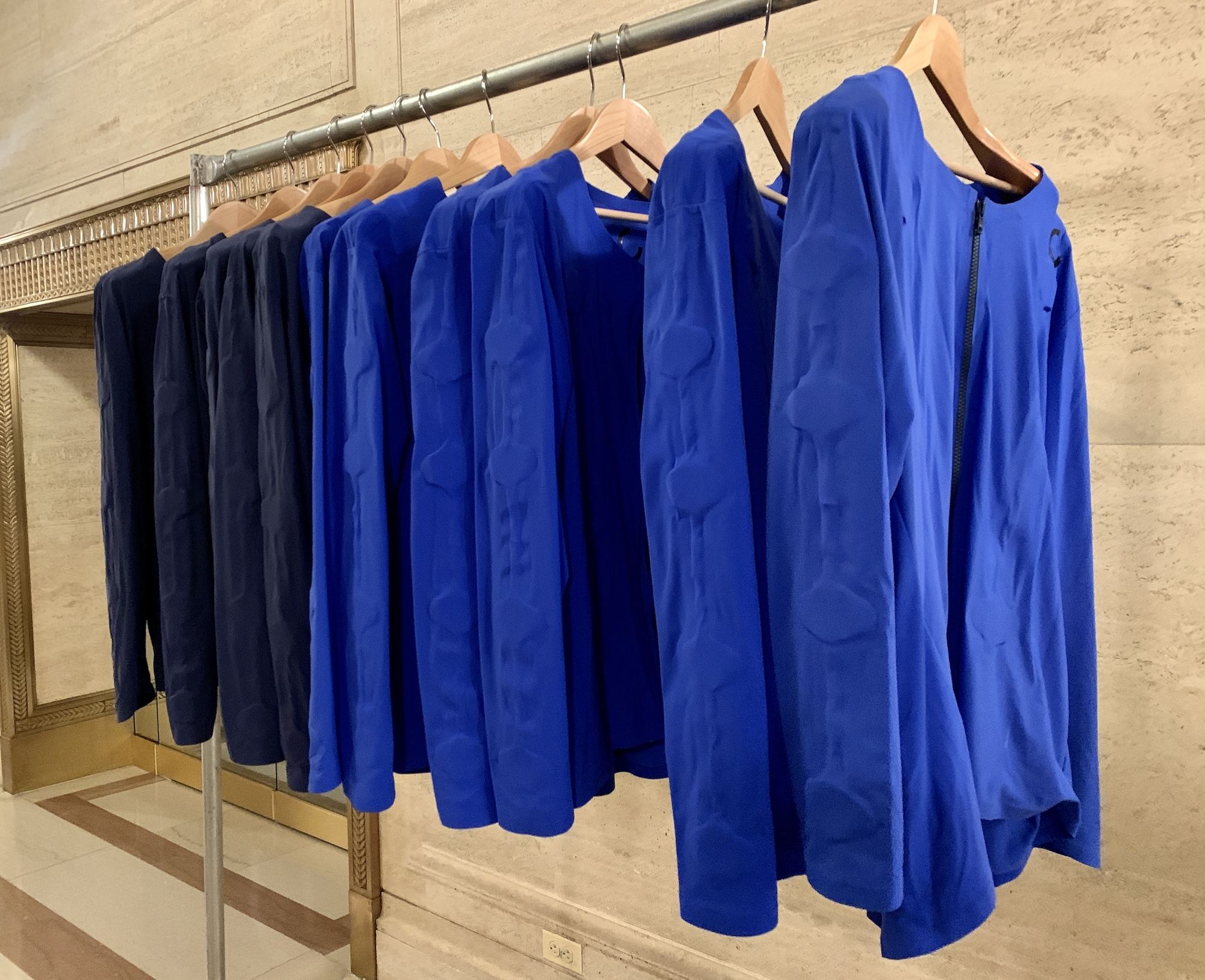
The Lyric Opera of Chicago’s SoundShirts use “patterns and pulses” to make opera more accessible for the deaf.

It used to be that, for people with a disability, there were certain experiences they knew they would probably never access. With technology, that is changing. Consider how “feeling” the music in new, more subtle ways is helping those with hearing loss.

Michael Andor Brodeur reports at the Washington Post about the SoundShirt.

“Opera is everything all at once: music and drama, poetry and dance, grandeur and intimacy, spectacle and sound. This all-encompassing aspect makes it one of the most accessible art forms yet one of the most challenging to make accessible.

“For audience members who are deaf or hard of hearing, or who are blind or have low vision, attending an opera can be a deeply frustrating experience.

“A pilot program at the Lyric Opera of Chicago is trying on a new approach for deaf and hard-of-hearing people to experience opera: the SoundShirt, a jacketlike garment equipped with 16 haptic actuators* that transmit sound from the orchestra and stage into pulses, vibrations and other forms of haptic feedback in the shirt itself. …

“In addition to accommodations for mobility disabilities such as ramps and wheelchair seating, like many opera houses, the Lyric offers performances with American Sign Language interpretation, projected subtitles, and assisted listening devices for deaf and hard-of-hearing patrons. For blind people and those with low vision, the Lyric provides Braille and large-print programs, audio-described performances, high-powered glasses and pre-performance ‘touch tours,’ allowing audience members to feel various props, costumes and surfaces before the curtain rises.

“The SoundShirt, though, is cut from a different cloth than most accessibility technology, providing a mediated experience of the music that registers as physical and personal.

‘It doesn’t re-create the experience of listening to music,’ [director of digital initiatives Brad Dunn] says. ‘It’s its own thing.’

” ‘It translates the music into a different sensory experience that can be felt by people. And what I’ve seen through all of the early testing that we did is that audiences who are deaf or hard of hearing have responded very viscerally to it.’ …

“For attendees at a Lyric production of West Side Story earlier this year, input from the SoundShirt didn’t just help provide additional detail to the performance — it also illuminated the musical spaces in between, the interludes and interstitial passages of music, the overtures overloaded with crucial cues. Dunn recalls one tester’s eyes welling up with tears after the performance. …

“Lyric’s SoundShirt project was launched in partnership with the city of Chicago’s Mayor’s Office for People With Disabilities (MOPD), but the garment itself was designed by CuteCircuit, a London-based wearable technology design firm. …

“At the Lyric, an array of microphones positioned over various sections of the orchestra feeds audio information to a central computer. Dunn and his crew adapt the software to respond to the specific instrumentation of a given piece. … Those audio signals are divided across seven channels, each mapped to one of 16 different ‘zones’ on the SoundShirt, where motifs and melodies register as patterns and pulses across the garment’s 16 actuators.

“Thus, for a production of The Flying Dutchman, the violins and cellos are assigned to trigger haptic feedback along the right and left shoulders and upper arms. Timpani and bass, meanwhile, are sent down to the lower torso and hips. Wagner’s mighty horns are split across the upper arms like goose bumps, while vocals register at the wrists like a pulse. …

“Rachel Arfa is a longtime disability advocate and civil rights attorney who serves as commissioner of MOPD. As a deaf person who wears bilateral cochlear implants, the issue of accessibility has been close to her heart for a long time. … But while expanding accessibility is her life’s work, Arfa also knows that good intentions can often pave the road to nowhere.

“ ‘When Lyric approached me with this shirt, I was highly skeptical,’ Arfa said via email. [But she] agreed to test the SoundShirt at a recent Lyric production of West Side Story. Arfa was surprised to find the shirt actually felt like a good fit for the problem it is trying to solve. …

“ ‘I began to understand that the haptics on the SoundShirt vibrated in conjunction with the orchestra sounds. One example is when string instruments were played, the haptics followed the pitch and rhythm. A second example is when a singer was singing a long melody, the haptics picked up on this and I could experience this through the vibration. I am not able to hear this sound, but I could feel it. It was such a surprise and a thrill.’

“Tina Childress, an audiologist who lives in Champaign, Ill., is a late-deafened adult who wears cochlear implants and works as an advocate for accessibility in the arts. … Childress appreciated the haptic feedback at the wrists to indicate dialogue, and the way the shirt clarified the various elements of the score. After intermission, she lent the shirt to another audience member to try out. ‘I didn’t realize how much I was using it until I didn’t have it.’ ”

More at the Post, here. Axios Chicago has still more, here.

* haptic actuators are gizmos that provide localized bodily sensations and tactile effects

Read Full Post »

Be sure to check out the writings of Laurie Graves. Maya and the Book of Everything is the first in her Great Library fantasy series. Lots of food for thought there.

The blogger and creator of the Great Library fantasy series, Laurie Graves, was kind enough to call out my posts on climate change, and I want to thank her here. She wrote at her blog Notes from the Hinterland, hinterlands.me, that her friend at “Suzanne’s Mom’s Blog shares inspiring articles from around the world about people who are making a difference. The focus isn’t always on climate change — although sometimes it is — but the pieces always illustrate the power of creativity and how people can band together to do good things. When they want to. The time has come when we should all want to.”

Can’t disagree with that! Thank you, Laurie.

Read Full Post »

Photo: LaDameBucolique.
A Mexican Salamander in captivity.

People who put development before the natural environment are known to wax indignant at protections for small critters like the snail darter fish or the northern spotted owl. But what happens to the smallest of these effects us, too. Today’s article explains about pollution and the Mexican salamander.

The Associated Press (AP) reported on November 25th “Ecologists from Mexico’s National Autonomous University on Friday relaunched a fundraising campaign to bolster conservation efforts for axolotls, a native, endangered fish-like type of salamander.

“The campaign, called Adoptaxolotl, asks people for as little as 600 pesos (about $35) to virtually adopt one of the tiny ‘water monsters.’ Virtual adoption comes with live updates on your axolotl’s health. For less money, donors can buy a virtual dinner for one of the creatures, which are relatively popular pets in the US.

“In Mexican axolotls’ main habitat, the population density has plummeted 99.5% in under two decades, according to scientists behind the fundraiser.

“Last year’s Adoptaxolotl campaign raised just more than 450,000 pesos ($26,300) towards an experimental captive-breeding program and efforts to restore habitat in the ancient Aztec canals of Xochimilco, a southern borough of Mexico City.

“Still, there are not enough resources for thorough research, said Alejandro Calzada, an ecologist surveying less well-known species of axolotls for the government’s environment department. …

Despite the creature’s recent rise to popularity, almost all 18 species of axolotl in Mexico remain critically endangered, threatened by encroaching water pollution, a deadly amphibian fungus and non-native rainbow trout.

“While scientists could once find 6,000 axolotls on average per square kilometer in Mexico, there are now only 36, according to the National Autonomous University’s latest census. A more recent international study found less than 1,000 Mexican axolotls left in the wild.

“Luis Zambrano González, one of the university’s scientists announcing the fundraiser, told the Associated Press he hopes to begin a new census (the first since 2014) in March.”Luis Zambrano González, one of the university’s scientists announcing the fundraiser, told the Associated Press he hopes to begin a new census (the first since 2014) in March.

“ ‘There is no more time for Xochimilco,’ said Zambrano. ‘The “invasion” of pollution is very strong: soccer fields, floating dens. It is very sad.’

“Without data on the number and distribution of different axolotl species in Mexico, it is hard to know how long the creatures have left, and where to prioritize what resources are available. …

“Axolotls have grown into a cultural icon in Mexico for their unique, slimy appearance and uncanny ability to regrow limbs. Scientists in labs around the world think this healing power could hold the secret to tissue repair and even cancer recovery.

“In the past, government conservation programs have largely focused on the most popular species: the Mexican axolotl, found in Xochimilco. But other species can be found across the country, from tiny streams in the valley of Mexico to the northern Sonora desert.

“Mexico City’s expanding urbanization has damaged the water quality of the canals, while in lakes around the capital rainbow trout, which escape from farms, can displace axolotls and eat their food.”

More at AP via the Guardian, here, and at Wikipedia, here.

Invasive species that eat the food of native species are a problem everywhere. In a turtle presentation last week I learned that the red-eared slider, one of the 100 most invasive species in the world, is such a problem turtle that environmentalists often recommend killing it in the freezer. Sometimes called the “pet shop turtle,” it is an invasive pest in many parts of the world, making it hard for other turtles to survive.

Read Full Post »

« Newer Posts - Older Posts »