Feeds:
Posts
Comments

Archive for the ‘Uncategorized’ Category

Bringing Braille to Young Readers

Photo: Society6.
Blind alphabet.

I know two people who are losing their sight, but not well enough to ask if they are learning Braille. I always wondered if that is what I would do if I lost my sight, realizing of course, that it is more likely to happen when I’m older and learning takes longer.

Here is a bit about the changing world of Braille by Sophia Stewart at Publisher’s Weekly.

“A few times a day, a strange, pulsating sound fills the Boston headquarters of the National Braille Press. Thun-thun. Thun-thun. This is what employees of the nonprofit braille publisher call the office’s ‘braille heartbeat,’ generated by an assortment of printing presses — 50-year-old Heidelbergs and modern big-roll embossers alike — pumping away in the basement, producing books and other reading materials for blind readers.

“NBP has been at the forefront of braille publishing since 1927, when it was founded by the blind Italian immigrant Francis Ierardi — a classmate of Helen Keller’s at the Perkins School — as a weekly newspaper serving Boston’s blind community. Demand was so great that it went national after just three months. Since then the organization has expanded far beyond a single publication. Today, NBP produces and distributes braille books, reading materials, and technologies for the nation, with clients ranging from individual blind readers to the Library of Congress.

“Bringing braille to young readers in particular is central to NBP’s mission. ‘Our goal is to support braille literacy,’ said NBP president and CEO Brian MacDonald, and fostering that literacy depends on early intervention. As part of its ongoing efforts, in 1983, NBP launched one of its flagship programs, the Children’s Braille Book Club. The first-of-its-kind subscription service pioneered the ‘print/braille’ book format by distributing mainstream children’s books with added braille. (Under the 1996 Chafee Amendment to the U.S. Copyright Law, nonprofits can reproduce copyrighted works in forms that make them accessible for people with disabilities that impact reading.)

“When Harry Potter and the Deathly Hallows was published in 2007, NBP drew headlines by hosting a midnight release party, complete with accessible editions of the book. Scholastic sent NBP the manuscript early in order for it to be transcribed, and the office had to cover its windows and employ an armed guard to protect what was at that point the most valuable manuscript in the world. Staff worked around the clock to ensure the braille volumes were ready in time.

“The work paid off, and on the evening of July 20, young readers in wizard costumes descended on NBP’s offices to unbox their copies of the final Harry Potter book at the stroke of midnight, just as their sighted peers were doing throughout the country.

“What makes NBP unique is its publishing arm. NBP is the only organization in the U.S. that publishes its own books by blind authors for blind readers. Editorial director Kesel Wilson, who had a long career in traditional publishing at companies such as Scholastic and Pearson before joining NBP, commissions and edits original titles.

“The number of new books varies each year because Wilson, who said she’s ‘deeply connected’ to the community NBP serves, commissions titles based on ‘actual demand.’ When she has an idea for a book, she speaks with NBP authors and readers to gauge whether it would meet an immediate need. As a result, NBP has become known for its technology books, which include manuals for various software, operating systems, apps, and devices, as well as lifestyle titles on topics including cooking, fitness, and online dating. Recently, NBP published a guide to emoji, reproducing 97 face emoji as tactile graphics to help blind readers identify the differences among them, which ‘can be as subtle as a lifted eyebrow,’ Wilson said.

“The publishing arm is largely subsidized by what MacDonald called NBP’s ‘exploding’ B2B business producing brochures, tests, textbooks, business cards, airline safety guides, and more. In 2021, for example, NBP produced 35,000 large-print and braille menus for Starbucks stores. These kinds of projects allow it to sell its own books below cost, despite the enormous expense of producing braille, through its own online bookstore. The bookstore is the primary sales outlet for NBP’s titles, which the press promotes at the National Federation for the Blind’s annual convention as well as other related conferences and gatherings.

“ ‘We sell our books at the same price as a print book,’ MacDonald said of the online store, ‘because we don’t think it’s fair for a blind person to pay more, even though braille costs three to four times more to produce.’

“Producing braille books largely falls on the shoulders of specialized publishers like NBP, but some editors think mainstream publishers could be doing more. In 2016, DK senior editor Fleur Star, who works in the U.K., helped launch the DK Braille Books series, which to date comprises five children’s books that combine print, braille, printed images, and tactile images.

“The idea for the series, produced in partnership with the Royal National Institute of Blind People, arose in 2013, when Clearvision, a postal lending library of print/braille children’s books, visited DK’s London offices and outlined how mutually legible print/braille books can unite blind and sighted readers. Star and several colleagues were moved to action.”

More at Publisher’s Weekly, here.
Read Full Post »

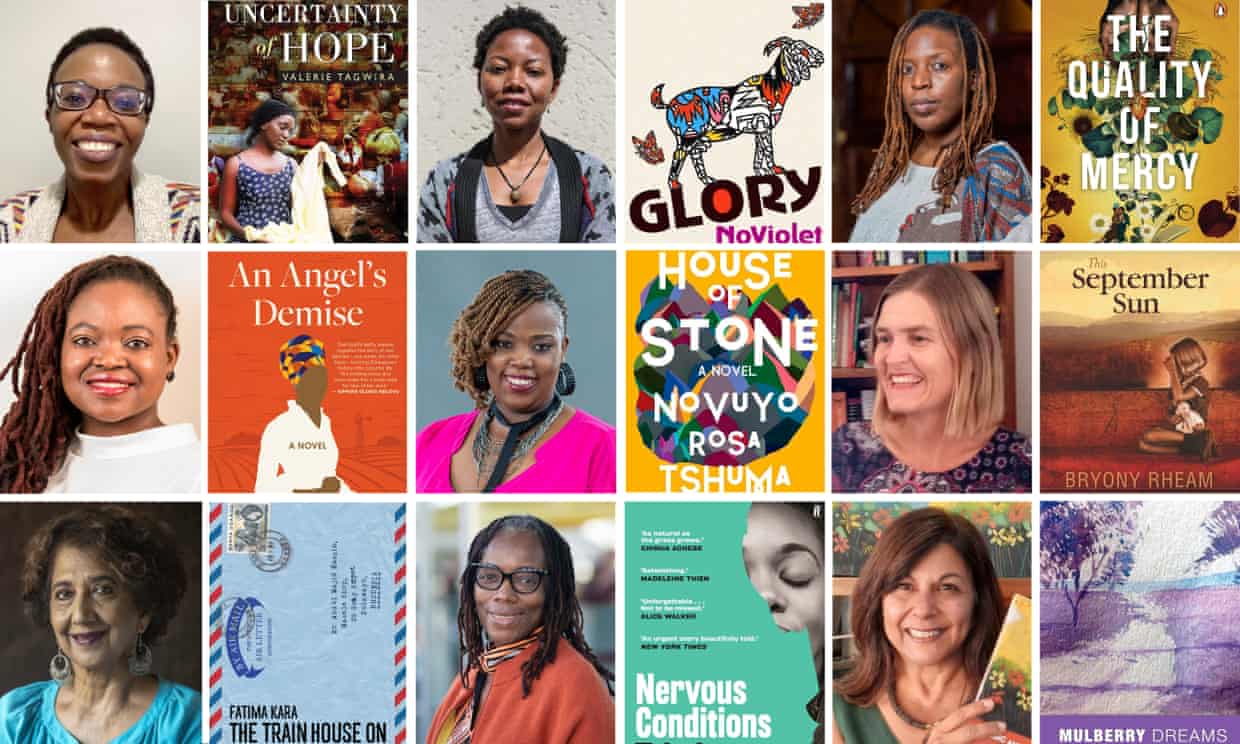
Photo: The Guardian notes that women are at the forefront of a seminal moment in Zimbabwe literature. 

The African nation Zimbabwe, formerly a British colony called Rhodesia, has suffered years of trauma perpetrated by every side in the conflicts. But when women start publishing books in record numbers, you can bet the country is moving into a new and better phase.

Tawanda Mudzonga reports at the Guardian, “A handful of events, says author Siphiwe Gloria Ndlovu, define her generation. ‘The war, the HIV crisis, migration and the brain drain, and the creation of the Zimbabwean diaspora.’

“They have not been topics that the country’s rulers want spoken of and many who have spoken frankly about Zimbabwe have been imprisoned or persecuted. But a new generation of female novelists is exploring the people, the political problems and the history of this complicated and still fledgling nation.

“ ‘I wanted to talk about what had happened. What does 40 years of a postcolonial country look like, and what does 40 years of a postcolonial country look like for us,’ says Ndlovu, author of the award-winning The Theory of Flight

“Ndlovu and her contemporaries, who include Novuyo Rosa Tshuma, Sue Nyathi and Valerie Tagwira, follow in the footsteps of celebrated author Tsitsi Dangarembga, whose 1988 book, Nervous Conditions, was the first published novel that had been written in English by a black Zimbabwean woman.

“Ndlovu’s lyrical writing has reimagined how stories about post-independence Zimbabwe are told, and reflected some of the country’s darker moments. …

“Ndlovu comes from Bulawayo, in the Matabeleland region. In The Theory of Flight, she writes about the Gukurahundi massacres, committed in the 1980s under the direction of Robert Mugabe, which killed an estimated 20,000 people, predominantly ethnic Ndebele from Matabeleland and Midland regions.

“Postcolonial Zimbabwe has been defined by a narrative in which the ruling Zanu-PF party explains its valiant efforts and sacrifice to liberate Zimbabwe, but the events of Gukurahundi do not feature in the country’s history books.

“ ‘What happened in the 80s, in this part of the country – it left something unresolved that needed to be resolved. A lot of writers decided the best way to do that is to write about it.’

“Novuyo Rosa Tshuma explores the same period in her debut book, House of Stone. ‘I didn’t know much about Gukurahundi, and it was the act of writing House of Stone that helped me sit with it and unpeel those layers,’ says Tshuma, who is also from Bulawayo. ‘We didn’t speak about it in my family. We knew it happened, but we were always encouraged not to talk about it. …

“ ‘If you notice the forms of violence that have come after that, experienced in the 2000s, what we are experiencing stemmed from that period, and also from the liberation period. That’s why I think it’s important to look at that time – it helps us to frame and think about and understand why we are where we are.’ …

“The novel is not available inside Zimbabwe. [Says] Tshuma, ‘That made me sad because I had envisioned this as a book that speaks to Zimbabweans directly. I’m talking to my people.’

“Dr Tinashe Mushakavanhu, a research fellow in African and comparative literature at the University of Oxford, says this is a seminal moment in Zimbabwean literature. ‘It’s exciting. … At the turn of the millennium, it is the women writers who have been carrying the burden of Zimbabwean literature.’ …

“The excitement comes at a price. ‘It is a burden to carry because Zimbabwe is not a forgiving country, especially if you choose to use your voice, if you are opinionated,’ Mushakavanhu says. … ‘In terms of the abuse one gets, the name-calling, you do not find that when male writers are writing Zimbabwe.’

“Sue Nyathi, whose novel, An Angel’s Demise, was published in 2022, says there is risk associated with writing. ‘The politics is such that there’s a lot of censorship. You can’t just write what you like without fear.

“ ‘That’s why people write books like Animal Farm. They use satire. There’s a fear of persecution when writers express themselves in their stories, and self-censorship.’ …

“Valerie Tagwira was afraid of the repercussions from her novel The Uncertainty of Hope, published just after the government’s Operation Murambatsvina (Clear Out the Trash), a slum clearance operation which displaced thousands of people in 2005. … ‘[My cousin] said: “Why are you being so reckless? Writing about this, we could end up being targeted.” ‘ …

“Tagwira asked her publisher if she thought it would be seen as a political book. ‘I was a bit scared because of what my cousin said.’ Her publisher assured her it wouldn’t be, and cautioned her against self-censorship. …

“Other success stories are white Zimbabwean Bryony Rheam with her award-winning debut novel, This September Sun, and Violette Kee-Tui and Fatima Kara who have written about Zimbabwe’s mixed-race and Indian communities respectively, in Mulberry Dreams and The Train House on Lobengula Street.

More at the Guardian, here. No firewall.

Read Full Post »

Photo: Asif Hassan/AFP/Getty Images.
A resident with her flood-resistant hut made from bamboo at a cost of about $87.

The news of floods this week is tragic. In Libya a dam suddenly broke, wiping away villages, and even near me, a quixotic rainfall — 11 inches in about 6 hours — submerged many homes in one city while the rest of the region was untouched.

Pakistan, of course, has suffered worse. That’s why it’s extra interesting to read about a sustainable, cost-efficient way that some poor areas there are rebuilding.

Zofeen T Ebrahim writes at the Guardian, “A year ago, Shani Dana’s mudbrick house was swept away in the worst floods on record to hit Pakistan. More than 1,700 people were killed and 900,000 homes damaged or destroyed. Sindh province, where Dana lives, was the worst affected.

“While waiting for government money to rebuild her home in Wasram village, in the Tando Allahyar district, word reached Dana that the Heritage Foundation of Pakistan (HFP), founded by a renowned architect, Yasmeen Lari, was building one-room homes in neighboring Pono village.

“The buildings ‘looked like rounded chauhras [traditional huts], but were octagonal in shape and the walls were much sturdier,’ says Dana.

“The foundation agreed to help Wasram rebuild and in March the HFP team joined villagers to construct 50 new homes. Prefabricated bamboo frames were built on meter-high raised platforms. Walls made of bamboo canes were fixed and plastered with mud mixed with rice husk and lime, and radial-style conical roofs were fitted. Four solar panels, six water hand pumps and 25 toilets were also built.

“ ‘This will not be swept away if the floods come again. It is not built at ground level, it’s airier and brighter since there is a window – ours didn’t have one before – and also looks much neater, since the walls and floor are plastered,’ says Dana outside her new home. …

“The HFP has helped build more than 5,000 chauhras since September [2022]. ‘In the next two months, I should be able to build another 2,600 homes,’ says Lari, who is urging every villager who has built their home to help 10 others build theirs.

“A year after the floods, tens of thousands of people are still waiting for help to rebuild. Organizations like HFP and the NGO Karachi Relief Trust have been stepping in.

“About 250 of the 1,000 one-room homes KRT is building in villages across Sindh, Punjab and Balochistan provinces … are being built using burned-earth bricks or cement blocks with roofs made of steel girders and precast cement slabs. ‘The houses we built in 2010 have survived and aged well,’ said Ahsan Najmi, the trust’s architect. …

“The Sindh People’s Housing Foundation (SPHF), which is overseeing the rebuilding, hopes 50,000 one-bedroom ‘resilient’ cement, brick and steel homes will be livable by September. It has enough money to cover the cost of 350,000 homes, but needs at least $500m to finish all the work. …

“However, Lari questions the cost of the project and believes rebuilding could be cheaper and more sustainable. The houses SPHF is asking people to build cost 300,000 rupees [~$1,030] each, about the same amount KRT’s homes are costing.

“HFP homes, which are made of fully cured bamboo, the ends of which are covered with lime to protect them from termites, cost just 25,000 rupees. The lime in the plaster and bamboo also absorb and store carbon from the air, helping mitigate the effects of the climate crisis.

“ ‘I’m not doing anything new. I may have tweaked the design, but the material used is age-old, indigenous and easily available,’ says Lari, who began her humanitarian work after a 7.6-magnitude earthquake shook northern Pakistan in 2005. …

“Lari, who is this year’s recipient of the Royal Institute of British Architects’ royal gold medal, one of the world’s highest honours for architecture, says she would like the government to adopt sustainable alternatives to housing. ‘I am happy to provide any assistance if they would like to provide a better quality of life for the poor,’ she says. ‘Our design is open source, available free. We can also identify many trained master artisans. It is up to the government. We are there to further the cause.’

“An essential part of Lari’s work is involving communities in the rebuilding process so they learn a trade. While the foundation pays for the bulk of the materials and brings its expertise, local people collect the mud and rice husk, and provide the labor.”

More at the Guardian, here. No firewall. Donations encouraged.

Read Full Post »

Photo: Vincent Tullo/The Guardian.
Tony Tulathimutte won the Whiting award for his first novel, Private Citizens. To support his writing, he gives workshops that have launched other writers.

The other day I heard a watercolor artist talk about having an MBA and an investment career before switching to art. Several people in her audience noted that most painters don’t have such a good foundation for income and often support themselves with more menial jobs.

A recent interview in the Guardian shows a Brooklyn novelist finding a still different way to support his art.

Isabel Slone writes, “The list of past guest speakers at Crit, the writing workshop that author Tony Tulathimutte runs out of his Brooklyn apartment, reads like a veritable who’s who of 21st-century literary greats. … And while Tulathimutte describes himself as ‘literally just some guy’ on his website, he’s won an O Henry award, and former students like Beth Morgan and Rax King have gone on to earn lucrative book deals and win highly prestigious prizes.

“Tulathimutte, 39, founded Crit in 2017 after winning the Whiting award for his first novel, Private Citizens. While he had previously taught courses at Sarah Lawrence College and the University of Massachusetts, and led workshops for indie companies like Sackett Street Writers, these gigs came and went.

“Running his own school seemed like a more sustainable way to make a living while maintaining his career as an author (Tulathimutte announced the sale of his second novel, Rejection, earlier this year). According to the US Bureau of Labor Statistics, writers and authors earn on average $69,510 a year, while an alarming Authors Guild survey showed that its members drew a median income of $6,080 in 2017, down 42% from 2009. …

“Crit accepts nine students per session. They meet twice a week (Wednesdays and Fridays) over the course of two months. Spots cost $800, netting Tulathimutte approximately $30,000 per year. He supplements his income by accepting freelance writing assignments and visiting-faculty positions. He is currently a thesis adviser at Brooklyn College.

“In the six years since Crit’s inception, Tulathimutte has managed to build not just a successful side hustle, but a thriving community of writers. He hosts book swaps, parties, even a dedicated Slack channel where alumni can chitchat, form casual writing groups and perhaps land a connection to the agent or editor who will launch their career.

Guardian: What was the impetus for founding Crit?
“Tulathimutte: I just thought I could design the class I would have wanted to take. Most MFA programs function more like book clubs or discussion groups, where people are reading your work and giving feedback. I try to do formal pedagogy in the class, so I came up with 16 lectures breaking down different aspects of craft and process, such as ‘What is plot? or ‘What is dialogue?’ Students find the career-oriented class especially of interest because [practical matters] very often get neglected in the academy. It’s the last class of the course and it goes on indefinitely. My record is 11 hours and 45 minutes.

Why is it important for you to teach practical skills like money management?
“Most working writers I know slap together a bunch of different sources of income. On the side, I take visiting faculty gigs, pitch articles, freelance as a novel editor and writing consultant, and shoot author photos. Plus, there’s the very occasional windfall from book-related things like speaking engagements and selling foreign rights or film and TV options.

“I teach students how to cobble together different income streams to create something workable. Usually I talk about whatever grants, fellowships, residencies, contests, funded MFAs and other things I think are worth applying for, but I’ve also talked about Roth IRAs, eligible tax deductions from writing income, speakers bureaus, negotiating freelance rates, loan forgiveness programs and so on.

“Does it feel harder to make a living as a writer now than it did in the past?
“It’s definitely harder now, with so many media companies and publication venues folding and ever fewer places to publish book-related content. …

“Crit students have landed 12 book deals to date. What about your classes gives them a competitive edge?
“I think that a lot of my students would have succeeded just fine eventually. I could point to some writers and say, ‘I introduced them to their agent,’ to others, ‘I made X and Y notes on their manuscript,’ but who knows if that increased or decreased their selling prospects. …

How have you managed to get the word out?
“In the beginning, my only marketing strategy was to ask a couple of my more famous friends, like Jenny Zhang [and] Carmen Maria Machado, to retweet me. The slight bump in visibility was enough to get a handful of people signing up for the first few classes. After the first year, the balance shifted to 50/50 Twitter and word of mouth. Now it’s almost entirely word of mouth.

“How do you manage to convince people like Jonathan Franzen to visit your class?
“I email them. … Jonathan Franzen was a massive get, obviously. He asked me to moderate one of his book launch events for Crossroads in 2021 and after the event I asked if he’d like to guest and he said yes. I just figure there’s no harm in asking.”

More at the Guardian, here. No firewall. Can’t agree it’s harder now. Read New Grub Street.

Read Full Post »

Photo: Richard Hansen.
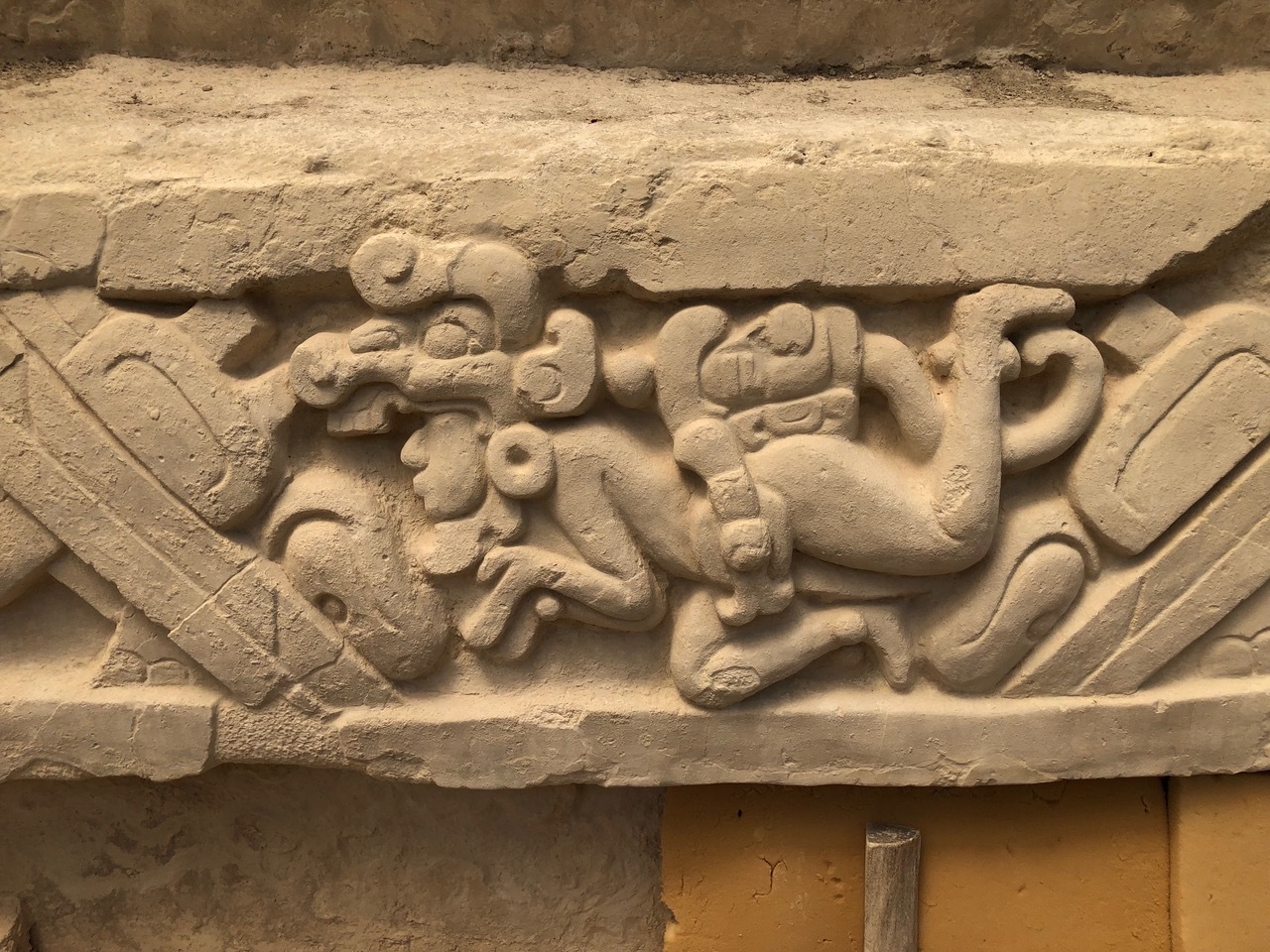
Some of the elaborate carvings researchers uncovered from the Preclassic Maya.

New tools make it possible for archaeologists to discover sites that were densely covered with vegetation. In Guatemala, as a result, almost every day leads to surprising revelations. You wouldn’t think that new insights on the Mayan culture would create controversy, but read on.

Maya Pontone reports at Hyperallergic, “Scientists have uncovered an extraordinary network of Preclassic Maya multi-tiered cities, towns, and villages that date back to 1,000 BCE in Guatemala. The findings indicate a previously unknown culturally and economically complex kingdom-state, dispelling previous beliefs of ‘sparse early human occupation in the Maya Lowlands’ and raising new anthropological questions about this ancient society, according to a research report published in the Cambridge University Press journal Ancient Mesoamerica in December.

“Using airborne light detection and ranging technology (LiDAR), the archaeologists were able to map out 964 lost settlements, which they consolidated into roughly 417 ancient towns, villages, and cities. The team also identified over 100 miles of interconnected roadway. The clusters of sites were found within the Mirador-Calakmul Karst Basin (MCKB), an area that spans northern Guatemala and southern Campeche, Mexico. Like much of the Maya Lowlands, this basin has historically been difficult for archaeologists to explore due to its dense tropical forest terrain, according to the report. New technologies such as LiDAR, however, have created more opportunities in recent years for scientists to conduct this research.

“Beginning in 2015, researchers conducted two aerial surveys using LiDAR at altitudes as high as 2,100 feet. Remote sensing technology works by bouncing pulses of light off of surfaces. The time it takes for these pulses to return to the sensor is then used to determine the distance between the receptor and the surface, allowing scientists to build a detailed map of an area’s environment.

“These analyses found ‘dense concentrations’ of sites including ceremonial and religious complexes, massive triadic constructions, at least 30 ball courts, reservoirs and terraces, defensive structures, villages, and a web of raised causeways. The labor that such constructions would have required suggest ‘a power to organize thousands of workers and specialists,’ the report reads, from lithic [stone] technicians and architects to legal enforcement and religious officials.

“One of these labor-intensive constructions identified from the LiDAR surveys includes the pyramid of Danta. Located east of the El Mirador settlement, this monumental complex stands 236 feet tall, and researchers estimate it required ‘between 6 and 10 million person-days of labor’ to erect.

“Additionally, outside of small marshes, the MCKB lacks perennial bodies of water, which forced the ancient Maya to build alternative systems for water collection and management. Researchers identified 195 artificial water reservoirs, or aguadas, as well as a series of major reservoir systems including dams and canals. 

“Richard Hansen has been researching the early Maya in northern Guatemala for over 38 years. As the director of the Mirador Basin Project, he has been recognized for uncovering major ancient sites in Central America. But in recent years, critics have accused his practices of going against the wishes of local Guatemalan communities. Last month during the Los Angeles Times Festival of Books, demonstrators disrupted a talk Hansen was giving at the University of Southern California, shouting ‘This is stolen land!’ …

“Hansen has also received backlash for his work on the Mirador-Calakmul Basin Maya Security and Conservation Partnership Act, a bipartisan-backed bill introduced to the Senate in 2019. The proposed bill aimed ‘to create a sustainable tourism model’ that would give ‘low-impact, controlled access’ to the MCKB. … While Hansen argues that this bill would provide protections for the area and support local communities, critics have claimed that the act would open up the basin to large-scale tourism.

“In response, Hansen claims that all these criticisms stem from the same source — an alleged misinformation campaign orchestrated by organized crime groups in Guatemala who ‘do not want the security and conservation of that area.’ He said his research has always supported the economic and educational development of communities by hiring and training locals.”

We will have to stay tuned to see how this all shakes out.

More at Hyperallergic, here.

Read Full Post »

Photo: Historic England Archive.
An aerial view of the Isles of Scilly, with St Martin’s in center left and Tresco and Bryher in the background. 
A discovery on Bryher has led to insight into women warriors.

Today’s archaeological story is set in a British island cluster with a name that sounds like “silly.” A discovery there adds to the evidence that there have always been women who have served in male bastions.

Caroline Davies reports at the Guardian, “For decades archaeologists have puzzled over whether the stone-lined burial chamber, which was discovered in 1999 on Bryher Island, contained the remains of a man or a woman.

“Excavations revealed a sword in a copper alloy scabbard and a shield alongside the remains of the sole individual, objects commonly associated with men. But a brooch and a bronze mirror, adorned with what appears to be a sun disc motif and usually associated with women, were also found. The grave is unique in iron age western Europe for containing both mirror and sword.

“Now a scientific study led by Historic England has determined the remains are that of a woman, a discovery that could shed light on the role of female warriors during a period in which violence between communities is thought to have been a fact of life.

“Original attempts to establish sex by traditional methods, such as DNA analysis, failed because of disintegration of the bones. All that could be seen of the skeleton was a dark soil stain where the body had once lain, with only small pieces of bone and teeth. …

“Scientific advances, in particular the development of a sophisticated technique at the University of California, Davis, meant it was possible to test tooth enamel, according to research findings published in the Journal of Archaeological Science: Reports.

“Dr Glendon Parker, an adjunct associate professor in the department of environmental toxicology at UC Davis, said: ‘Tooth enamel is the hardest and most durable substance in the human body. It contains a protein with links to either the X or Y chromosome, which means it can be used to determine sex. This is useful because this protein survives well compared to DNA.

“ ‘Our analysis involved extracting traces of proteins from tiny pieces of the surviving tooth enamel. This allowed us to calculate a 96% probability that the individual was female.’

“The main form of warfare 2,000 years ago is likely to have been raids – surprise attacks – on enemy settlements. The mirror and weapons found in the grave are all associated with warfare.

“It is thought that mirrors may have be used in the iron age for signaling, communicating and coordinating attacks. They also had ritualistic functions, as a tool to communicate with the supernatural world to ensure the success of a raid or ‘cleanse’ warriors on their return.

“Dr Sarah Stark, a human skeletal biologist at Historic England, said … ‘Although we can never know completely about the symbolism of objects found in graves, the combination of a sword and a mirror suggests this woman had high status within her community and may have played a commanding role in local warfare, organizing or leading raids on rival groups. …

” ‘This could suggest that female involvement in raiding and other types of violence was more common in iron age society than we’ve previously thought, and it could have laid the foundations from which leaders like Boudicca would later emerge.’ ”

I guess all British people know who that is, but since I don’t, I went to Wikipedia.

“Boudica was a queen of the ancient British Iceni tribe, who led a failed uprising against the conquering forces of the Roman Empire in AD 60 or 61. She is considered a British national heroine and a symbol of the struggle for justice and independence.

“Boudica’s husband Prasutagus, with whom she had two daughters, ruled as a nominally independent ally of Rome. He left his kingdom jointly to his daughters and to the Roman emperor in his will. When he died, his will was ignored, and the kingdom was annexed and his property taken. … The historian Cassius Dio wrote that previous imperial donations to influential Britons were confiscated and the Roman financier and philosopher Seneca called in the loans he had forced on the reluctant Britons.

“In 60/61, Boudica led the Iceni and other British tribes in revolt. They destroyed Camulodunum (modern Colchester) … at that time a colonia for discharged Roman soldiers. Upon hearing of the revolt, the Roman governor Gaius Suetonius Paulinus hurried from the island of Mona (modern Anglesey) to Londinium, the 20-year-old commercial settlement that was the rebels’ next target.

“Unable to defend the settlement, he evacuated and abandoned it. Boudica’s army defeated a detachment of the Legio IX Hispana, and burnt both Londinium and Verulamium. In all, an estimated 70,000–80,000 Romans and Britons were killed by Boudica’s followers. Suetonius, meanwhile, regrouped his forces, possibly in the West Midlands, and despite being heavily outnumbered, he decisively defeated the Britons. Boudica died, by suicide or illness, shortly afterwards. The crisis of 60/61 caused Nero to consider withdrawing all his imperial forces from Britain, but Suetonius’s victory over Boudica confirmed Roman control of the province.”

More at the Guardian, here. No firewall. Donations encouraged.

Read Full Post »

Photo: Anne Pinto-Rodrigues.
Phungbili Basumatary (left) completes a pass during in ultimate Frisbee in Rowmari village, India. She says the sport has allowed her to bond with teammates from different ethnic backgrounds.

The reason I share so many stories from the Christian Science Monitor is that they seek out good news whenever possible. In India, where ethnic violence has grown worse in recent years, a happy kind of game is drawing young people of different faiths together.

Anne Pinto-Rodrigues writes at the Christian Science Monitor, “On a cool Sunday afternoon, a white disc whizzes through the air in Rowmari village, located in the Indian state of Assam. A teenage girl snatches it out of the air, earning applause and supportive whoops from the other players on the field, who all come from different villages.

“The American flying disc game officially known as ultimate – or ‘ultimate Frisbee,’ for those not worried about trademark infringement – was virtually unheard of in this part of the world till a few years ago. But it’s rapidly gaining popularity throughout northeast India. That includes Assam’s Chirang district, where over 30 girls and boys gathered in Rowmari village last December for a coaching session organized by the Action Northeast Trust (ant), a rural development nonprofit. …

“Chirang was not always this idyllic. Starting in the 1980s, the region experienced over two decades of ethno-religious conflict between the majority Bodos, Muslims, and the several other groups. Poverty is rampant, as are gender inequality and child marriage. But ultimate, with its emphasis on self-governance, provides an opportunity to foster peace among Assam’s newest generation.

“Today, 3,500 children and youth from nearly 100 villages participate. …

“ ‘I’ve observed a substantial transformation in the behavior and attitudes of the young people in communities where the [Frisbee] program is active,’ says Dr. Deben Bachaspatimayum, a social activist and teacher of peace studies based in Manipur, another state contending with violence in northeast India.

‘This bottom-up peace-building approach is helping youth discover a society based on equality and justice.’ …

“The region is largely peaceful now, but as recently as 2014, outbreaks of violence in Chirang and neighboring areas left over 100 dead and thousands homeless. 

“ ‘After the 2014 conflict, we were looking for something that would bring communities together,’ says Jennifer Liang, co-founder of the ant. “Something girls could get involved in.’ …

“It’s a mixed-gender, noncontact, and relatively new sport, meaning everyone in the community would be building their skills from scratch. The game involves two teams of seven players each, who score points by completing passes. There are no referees – instead, players must communicate with each other to call fouls and resolve conflicts. …

“So in 2015, the ant introduced a very simple version of the game to a cluster of villages known as Deosri that had been struggling with violence. … The league recruits young people between the ages of 11 and 14. Team members all come from the same village and, as a result, tend to be from the same ethnic group. The challenge is learning to work with the opposite gender. 

“ ‘Initially in these villages, the boys were skeptical about being in a mixed-gender team,’ says Ms. Liang. ‘In due course, they realized that the girls are equally important.’ …

“Manoranjan players can graduate to the more competitive Rainbow league, where the ant introduces more rules to promote peace building. Each team must include players from a minimum of three different villages, three different ethnicities, and three different mother tongues. … Rainbow sessions end with group discussions on burning social issues like child marriage and suicide. …

“Ms. Ray, who’s part of Durgapur village’s Rajbongshi ethnic group, [said that ultimate came] to the region, ‘there were times we would tell children from other communities or religions not to play with us,’ she says, with great remorse. ‘Now I treat everyone equally.’

“Although ubiquitous in America, Frisbees and other flying discs are available only in one sporting goods store in Assam’s capital city. Ms. Liang hopes that in the future, discs will become available in every village shop, as easy to come by as a soccer ball.

“ ‘My dream is that Frisbee doesn’t remain a nonprofit-led program, but rather something all children can play,’ says Ms. Liang.”

More at the Monitor, here.

Read Full Post »

Photo: Maya Pontone/Hyperallergic.
Xiyadie, “Butterfly” (2023), paper cutout featured in July art show in Queens.  

Queens, a borough of New York City, is often a gateway to America for newcomers, and as a result it has a diverse and interesting population. The art that residents produce is also diverse and interesting, as an unusual show in a mini-mall recently revealed.

Maya Pontone reports at Hyperallergic, “Located at the tail end of the 7 train not far from LaGuardia Airport, Flushing is a magnet for both longtime Asian American Pacific Islander (AAPI) residents and newcomers from overseas. Home to New York City’s largest Chinatown, the Queens community has served as an entryway for new immigrants in search of work and housing.

“A new exhibition pays homage to Flushing and its history by spotlighting the work of eight artists, most of whom are residents of the neighborhood, and encouraging community contributions and interaction. Home-O-Stasis: Life and Livelihoods in Flushing, curated by Herb Tam and Lu Zhang, is staged in one of the area’s many mini-malls — places increasingly threatened by gentrification. …

“On the inside of the space, you can find a butcher, a beauty shop, a cell phone service store, a money transfer service/tea shop, and a barber; and in the far back, a 99-cent store. …

“A community-driven exhibition, Home-O-Stasis is interwoven into the mini-mall space as though camouflaged, blending in and standing out in understated yet profound ways. At the building’s entrance among hanging real estate ads, shoppers are greeted by a red paper-cut butterfly made by Chinese artist Xiyadie, who was taught traditional paper-cut artistry by his grandmother. Decorated with Buddhist etchings and an impression of the U-Haul clocktower on College Point Boulevard, the delicate work was created for the migrant workers who come to the mini-mall in search of housing.

A handwritten sign written by Xueli Wang that reads ‘Mom, have you eaten?’ catches people searching the bulletin board off guard. …

“Above the paper ads directly in view of the shop owners, a deconstructed calendar with dates and symbols carefully cut out by hand hangs from two delicate red threads tied to the ceiling beams — an allusion to the boundless, continual nature of passing time by Flushing-born sculptor Anne Wu. …

“For Home-O-Stasis, Yuki He and Qianfan Gu from the collective Mamahuhu created ‘Flushing Polyphonous’ (2023), a humorous reinterpretation of Flushing’s map as a Monopoly-like board game. With magnetic pieces and a pair of die, the game takes players through the Queens neighborhood focusing on landmarks and shared hyperlocal experiences. …

“ ‘You would say, “Oh, you go to that dumpling house next to the gas station.” Nobody uses the title of the shop,’ Zhang, one of Home-O-Stasis’s curators and artist contributors, told Hyperallergic. …

” ‘You can get everything you need when you start a life in New York,’ Zhang said, pointing out how many newcomers, luggage in hand, will often stop at the mini-mall first to browse the bulletin’s housing options, set up their phones, buy food, send money abroad, and purchase other home supplies. …

“ ‘In the new malls, each vendor is separated in their room. It has like a hierarchy,’ she said, adding that this mini-mall’s open layout gives it a ‘more organic community.’ …

“Zhang also said that when she and Tam were first hanging up the exhibition, some of the shop owners in the mini-mall seemed skeptical. But not long after Home-O-Stasis opened in late May, local businesses adapted to the art, welcoming the works and even caring for the installations when the curators aren’t present. …

“The daughter of the barber shop’s owner, Nikki, moved the cards and magnets to the side from ‘Flushing Polyphonous’ when she noticed that people kept knocking the game pieces to the ground. Tina Lin, who runs the skincare shop Tina House, has taken to caring for Wang’s reimagined flyers and Janice Chung’s photographic series HAN IN TOWN (2022) when the works get moved around. …

“One of the final elements of the exhibition, called Dream City 2.0, is dedicated to a community archive of personal landmarks and experiences. Inspired by a 1940s commercial development project that would have eradicated much of the neighborhood, the project calls on residents to build another version of Flushing based on past dreams rather than a reimagined future. On a sheet, residents have written down the names of vanished noodle shops, bookstores, and other spaces that have since been replaced by new businesses and apartments.” Oooh, I love that concept!

See other unusual art at Hyperallergic, here. No firewall. Subscriptions encouraged.

Read Full Post »

Photo: Richard Saker/Guardian.
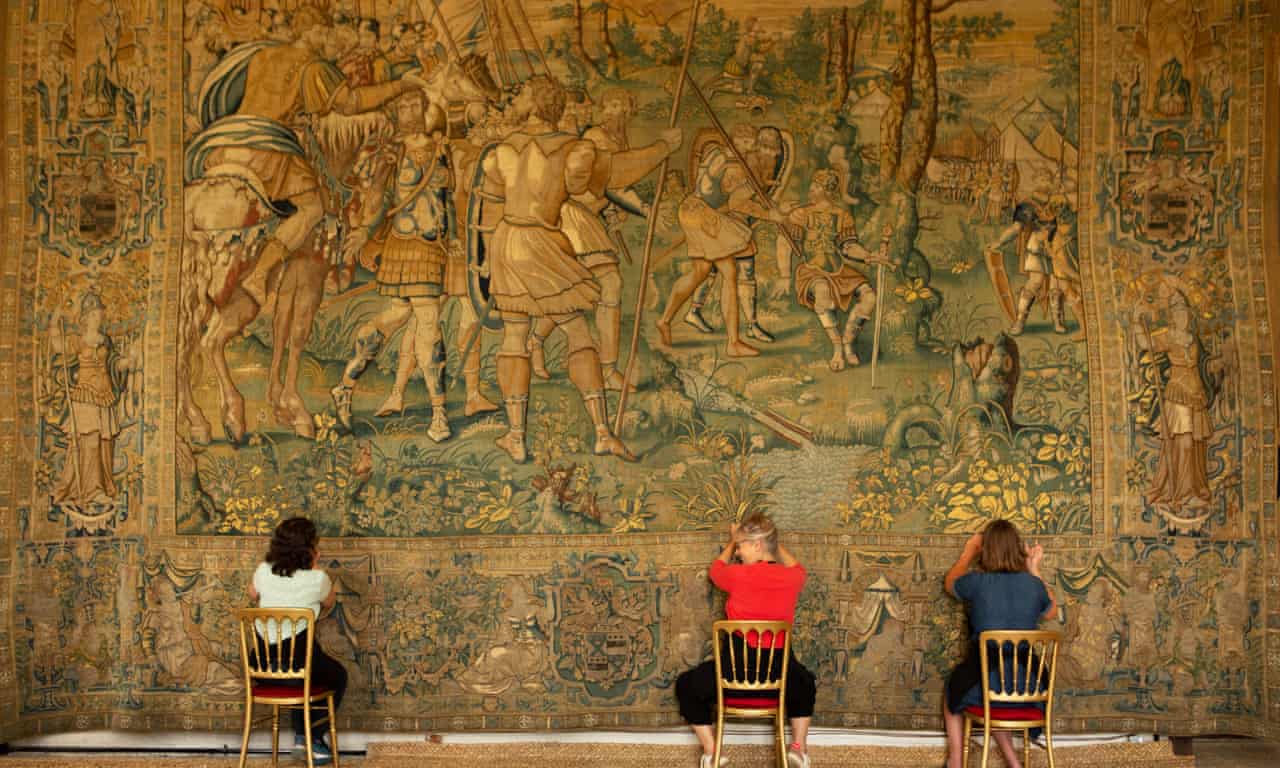
Staff at Hardwick Hall making final adjustments to restored tapestries that Bess of Hardwick bought for £326 15s 9d [~$406] in 1592.

This story is reminding me of childhood visits to the Cloisters before my father had his stroke and how he liked to point out the years of work that went into medieval tapestries.

Jessica Murray, Midlands correspondent of the Guardian, reports on 24 years of work just to do repairs.

“After a 24-year project, the National Trust has finally finished the restoration of a set of 16th-century tapestries at Hardwick Hall in Derbyshire, the longest such endeavor in its history.

“[In July] the final tapestry in the set of 13 Gideon tapestries was unveiled on the wall of the long gallery, the culmination of a painstaking effort to clean and handstitch the huge pieces one at a time, at a cost of £1.7m [~$2,118,718].

“ ‘It has been quite emotional because this is the first time I’ve seen them all on the walls together, and this project was in the background of my every day for so long,’ said Denise Edwards, the former general manager of the estate who retired last year, having overseen the project since 2003.

“ ‘They were supposed to be completed in 2021, the year I was due to retire, but they got delayed because of Covid so I stayed on because I really wanted to see the project through to the end,’ she said. ‘It has taken up a lot of my life for 20 years.’

“The enormous works, 6 metres tall [~20 feet] and more than 70 metres [~230 feet] in length, are considered to be one of the most ambitiously scaled tapestry sets of their time, and were last on display together before the project began in 1999.

“Hardwick Hall, an Elizabethan country house situated on a hilltop between Chesterfield and Mansfield, was at one point surrounded by nine coal mines. ‘You can imagine all the pollution that brought, and with leaky windows they were absolutely filthy,’ Edwards said. ‘And cleaning them is just the beginning of the battle – then it’s repairing all the damage done to the fine silks of the tapestries.’

“The set was bought by Bess of Hardwick, one of the richest women of her time and a friend of Elizabeth I, in 1592 after the death of the lord chancellor Sir Christopher Hatton, who had commissioned them for his estate in Northamptonshire. …

“The set, which depicts the biblical story of Gideon who led an army to save his people from the Midianites, has remained in the long gallery at Hardwick Hall since the end of the 16th century, and unlike many other tapestry sets it has never been moved or cut up. …

“Each tapestry took more than two years to restore, after a process involving a thorough vacuum to remove loose fibers, dust and soot, and a journey to Belgium for specialist wet cleaning.

“National Trust conservators used specialist conservation stitching with hand-dyed yarns to repair damaged areas, with each tapestry taking about 5,000 hours to complete.

“ ‘We work through it slowly … and we use different conservation stitches to bring structure to the tapestry and to fill in the design where it’s missing due to damage,’ said Yoko Hanegreefs, a textile curator, adding that ‘recipe books’ for bespoke dye colors were created to maintain consistency over the life of the project.

” ‘We use wool and stranded cotton to do that because they have faded and no longer have the brightness new silk would have.’ …

“Visitors can see the full Gideon set at Hardwick Hall, and there are plans to remove portraits hanging on some of the tapestries so they can be viewed unrestricted as they would have been 400 years ago.”

More at the Guardian, here. No firewall.

Read Full Post »

Photo: Pawan Sharma/AFP via Getty Images.
The flooded banks of the Yamuna river near the Taj Mahal in Agra, India.

“It’s an ill wind that blows nobody good.” Maybe so, but how can severe flooding ever benefit a landmark?

First, let’s look at the worries about flooding near the Taj Mahal. In a July 20 Nikkei Asia report, Neeta Lal wrote, “Indians watched with alarm this week as the surging Yamuna River reached the outer walls of the country’s most recognizable landmark — the white-marbled Taj Mahal — for the first time in 45 years, due to heavy monsoon rains that have wreaked havoc and killed scores in the north of the country.

“Apart from highlighting the vulnerability of the 17th-century mausoleum in Agra, into which officials on Wednesday assured media the water was unlikely to enter, flooding has disrupted life across several states in recent weeks. Tens of thousands of people have been displaced, roads have caved in, homes have collapsed, and schools have been forced to close. Waist-deep water at Kaziranga National Park sent rare one-horned rhinos, elephants and deer fleeing to nearby villages, authorities said.

“A State Bank of India report this week made an early estimate of economic damage at nearly $2 billion.

“The crisis comes in a year when many parts of the world are experiencing severe heat waves and other extreme conditions attributed to climate change. Although flooding is nothing new in India, experts warn that global warming means the country can expect more extreme weather and must plan accordingly.

“New Delhi has not been spared. In the capital, nearly 10,000 people were forced into 33 makeshift relief camps arranged by the local Aam Admi Party (AAP) government, according to an official statement last week. Some were still in the shelters this week.

“Residents holed up at a camp in Delhi’s Civil Lines area complained of a lack of amenities. ‘We’ve been here for three days after losing all our belongings in floods but are struggling to get basics like food and water. Mosquitoes are also posing a problem,’ said Rashida Bai, 48, a widow and mother of three. However, her neighbor, Amina Yusuf, praised the government ‘for providing rations and promising 10,000 rupees ($122) per family as financial support.’ “

Meanwhile at Bloomberg CityLab, Sreeja Biswas addresses the Taj Mahal angle. “Extreme weather is a threat to cultural sites all over the world, but northern India’s latest monsoon may turn out to be positive for the Taj Mahal.from the Yamuna river, a major tributary of the Ganges, reached the compound walls of the UNESCO World Heritage Site on July 18, following a period of heavy rain that left thousands displaced in the neighboring state of New Delhi and caused devastating floods around the region. It was the closest Yamuna waters had come to the Taj Mahal in 45 years, flooding the visitor viewing area, according to local media reports.

“The Taj Mahal’s white marble exterior may suffer minimal damage, but the heightened water level will likely raise the moisture content of the structure’s wooden foundation, increasing its life span, said Raj Kumar Patel, superintendent archaeologist for the Archaeological Survey of India, a government agency responsible for archaeological research and preservation of historical monuments.

“The Taj Mahal is supported in part by a base of deodar wood, which becomes stronger when it absorbs water, Patel said. Drainage pipes divert the river water, and deep wells filled with rock, wood and other solid material provide stability to the massive building above.

“A drying Yamuna river has previously been a concern for the Taj Mahal — built in the 17th century by Mughal Emperor Shah Jahan in memory of his queen Mumtaz Mahal — as a lack of moisture shrank the supporting rafters at its base. The building has also suffered years of extreme air pollution and acid rain that has turned the monument yellow-green. …

“The recent flooding in northern India has been far less fortunate for other sites. The Mehtab Bagh, or Moonlight Garden, near the Taj Mahal, was mostly submerged in the recent rains and will likely need new grass, according to Patel.”

More at CityLab, here, and at Nikkei Asia, here.

Read Full Post »

Photo: Stephanie Hanes/Christian Science Monitor.
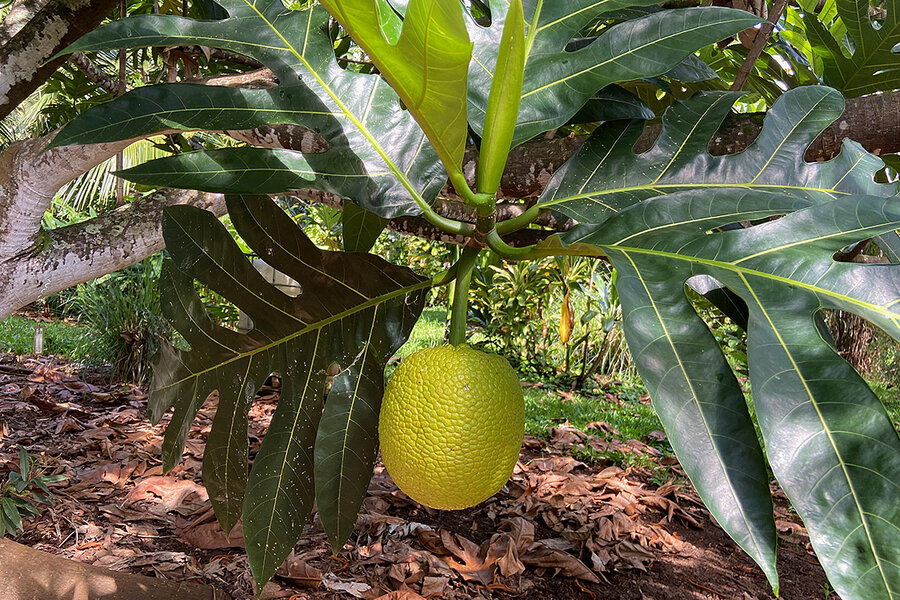
Breadfruit, the new, old wonder food, seen growing in Hawaii.

Everything old is new again. In today’s story, it’s breadfruit, an easy to grow food that’s been rediscovered as a tool in the fight against food insecurity.

Stephanie Hanes reports for the Christian Science Monitor, “When Diane Ragone travels around the Hawaiian Islands these days, it’s not hard for her to spot breadfruit. It is there in the farmers markets, knobby green fruit the size of a softball. It’s listed on menus as an ingredient in soufflés and nachos, flours and pastas. It is celebrated at festivals and studied by international scientists; it is served at food banks.

“It is also growing on trees. 

“Some of these trees are in the National Tropical Botanical Garden, grown from specimens that Dr. Ragone has collected from across the Pacific, tended by the staff of the Breadfruit Institute, an organization she helped create 20 years ago. But there are other breadfruit trees she can spot across the islands, in hardscrabble neighborhoods and on millionaire’s lawns, in middle-class backyards and on university campuses.

“She can tell from their age and variety that many of these trees came from some of the 10,000 or so specimens that she and other groups have distributed across the state. But there is another, simple reason that she is seeing so much breadfruit: The plant, according to a number of researchers here, is becoming popular again, bringing with it a return to an old approach to island food security. …

“She says, ‘When I started working in the ’80s, there was some breadfruit here in Hawaii. … But overall, it was a really undergrown and underutilized plant.’

“The slow resurgence of breadfruit, a species that once served as a key food source across the Pacific but declined in use as local diets became more institutionalized, has big global implications, scientists say. 

Last year, Northwestern University climate scientist Daniel Horton published a study showing that breadfruit, unlike other starchy staple crops, may be relatively unaffected by climate change.

” ‘This is particularly important for the tropics, he says, where communities are facing the interconnected challenges of climate change and food insecurity. …

“Although the breadfruit is not a great fit for industrial agriculture, with its short shelf life and delicate harvest time, it does provide local food resilience. Dr. Horton’s partner on the study, Northwestern University and Chicago Botanic Garden breadfruit expert Nyree Zerega, says that with one mature breadfruit tree, a family can harvest nutrient-dense food for generations.

“ ‘It’s a perennial crop, a tree, so you plant it and it lives for years,’ she says. ‘It doesn’t have as much of a carbon footprint [as other agricultural plants], and simultaneously it sequesters carbon. You can grow it mixed with other crops.’ 

“For people who live on islands, who tend to rely heavily on food imports, this is a big deal. Once a tree matures, it provides 200 to 300 pounds of food every year, says Kento Nemoto, marketing manager of the Hawai‘i ‘Ulu Cooperative, a farmers organization named for the Hawaiian term for breadfruit. ‘In terms of food security, it’s an amazing tree,’ he says. …

“In the library archives at the University of Hawaii in the early 1980s, Dr. Ragone, then a master’s student in horticulture, was charged with writing a paper on a tropical plant and had decided to focus on breadfruit in Tahiti.

“As she sifted through source material in the stacks, she kept coming across references to the plant in missionary accounts, agricultural reports, and more. …

“ ‘Traditional varieties and knowledge about breadfruit was at risk. I was fascinated by that – it just called to me.’ …

“It turned out that stem cuttings are unlikely to survive; to propagate breadfruit, one needs cuttings from the tree’s root system. It was the first of what would be many challenges of finding, collecting, and then growing breadfruit. 

“During fieldwork on some 50 islands, she also recorded the ethnobotany of multiple communities. And then, in 2003 she helped found the Breadfruit Institute with the National Tropical Botanical Garden, and continued coordinating with colleagues throughout the tropics. …

“After challenges with other approaches to propagation, in 2009 Dr. Ragone, the Breadfruit Institute, and partners in Canada launched an initiative to grow trees from germ plasm, or plant genetic material. Today, that effort is largely being carried out by California-based Tissue-Grown Corp. Through a partnership with the nonprofit Trees That Feed and other organizations, it has over the past three years grown and then distributed thousands of trees genetically sourced from Dr. Ragone’s breadfruits, mostly in Central America, the Caribbean, and Africa.

“ ‘Oh my goodness, everyone is interested in it,’ says Karin Bolczyk, operations manager for Tissue-Grown. ‘And you feel like you are really making a difference. Every tree that gets into a backyard feeds a family for a century.’ “

More at the Monitor, here.

Read Full Post »

Photos: John and Suzanne’s Mom.
Above, the fishing flee in Galilee, Rhode Island. And some rather decent clouds.

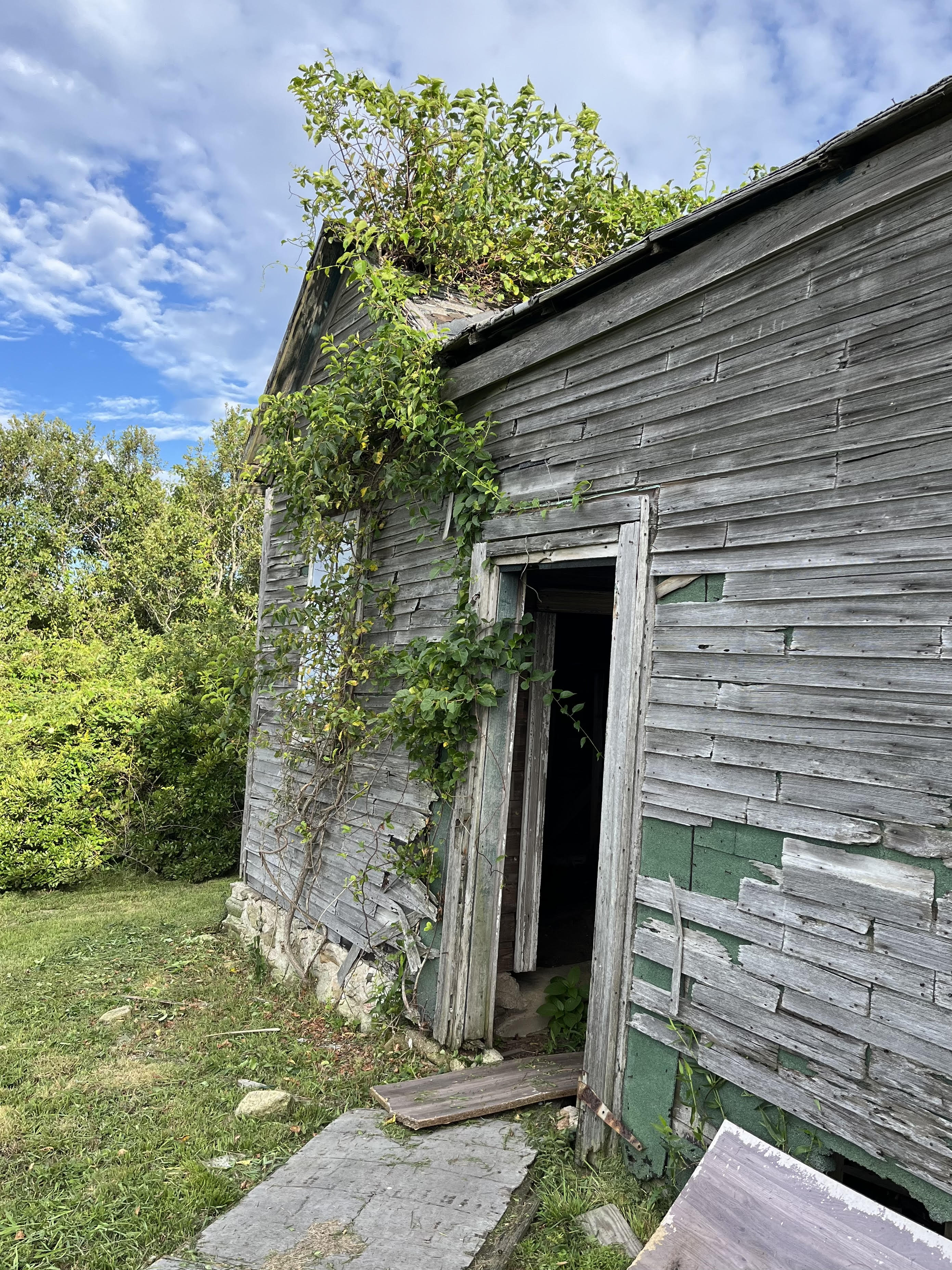
Summer always seems to be the best time for photos. In winter I have to look harder. Here are a few recent shots from New England: specifically, from Massachusetts and Rhode Island.

A luau at our new Place had an unusual approach: Hawaiian food, Caribbean music. Well, OK, I thought, I do like the sound of a steel drum.

A very decent artist brought Gerald and Piggy to the front walk of the Fowler Library.

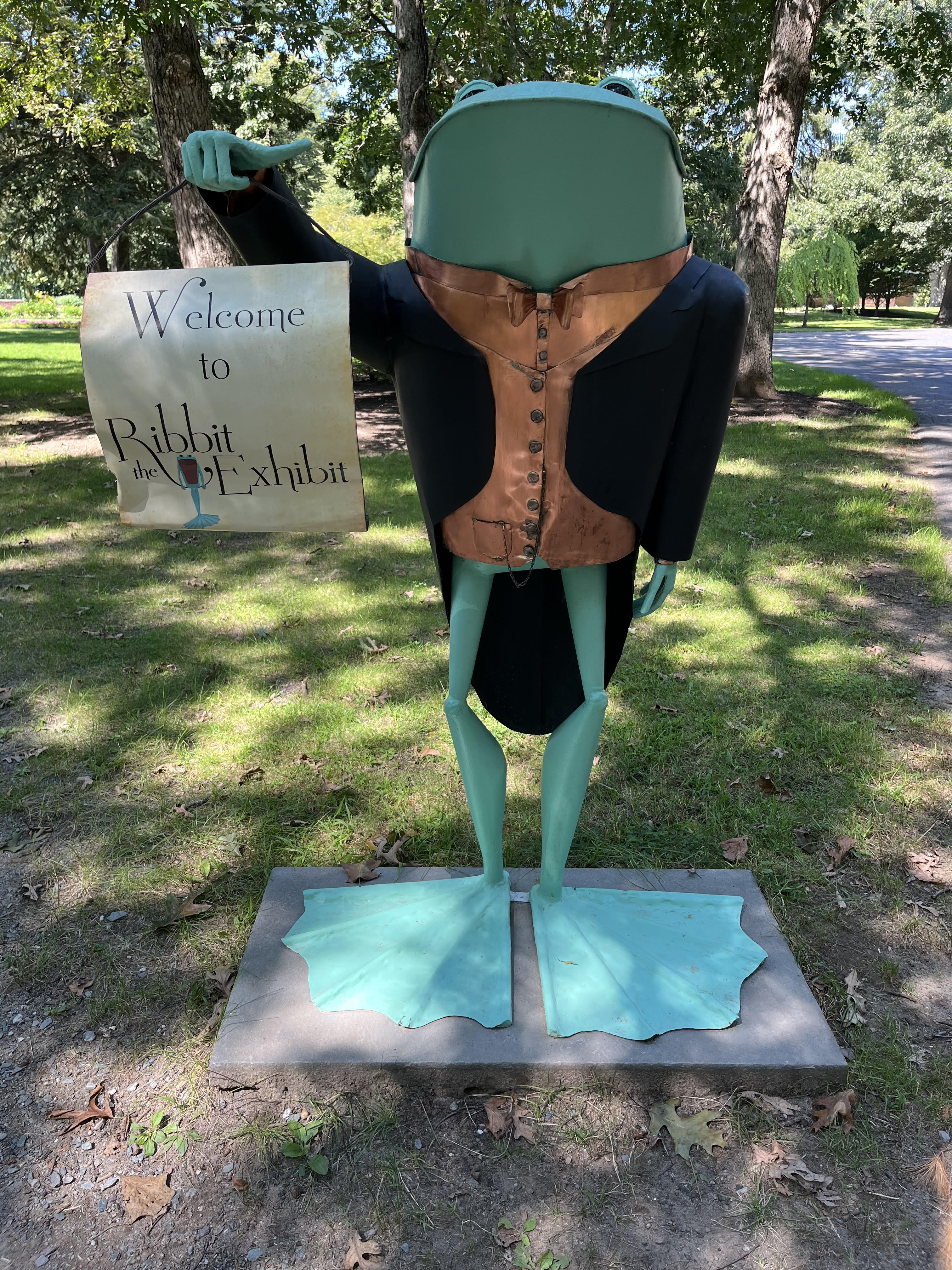
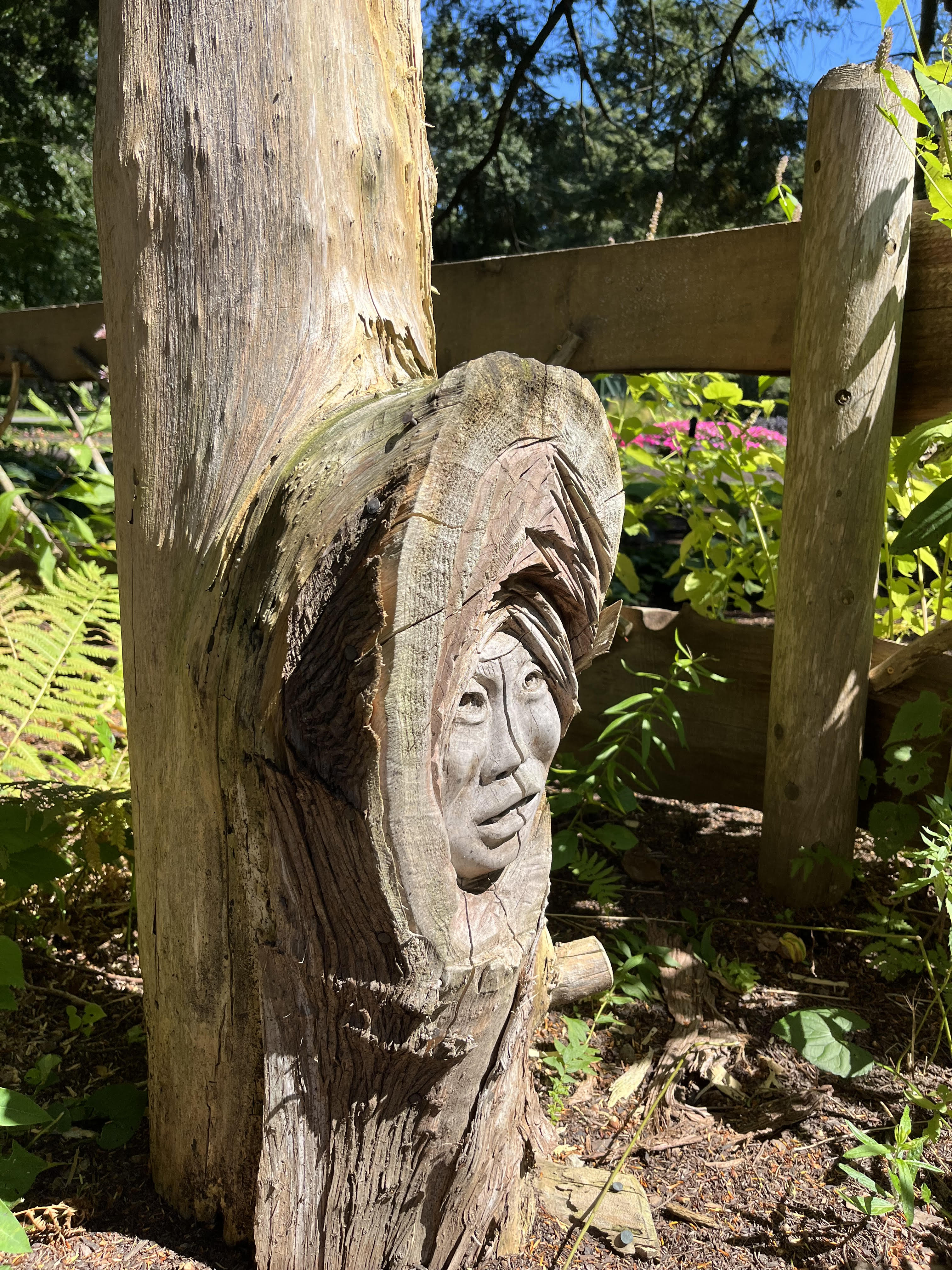
Frog characters welcomed both children and adults to Mass Horticultural Society’s Elm Bank gardens. Nancy and I liked the pollinator garden with its tinkling waterfalls and shady benches a lot more than the formal gardens. I also admired an interesting totem-like carving there.

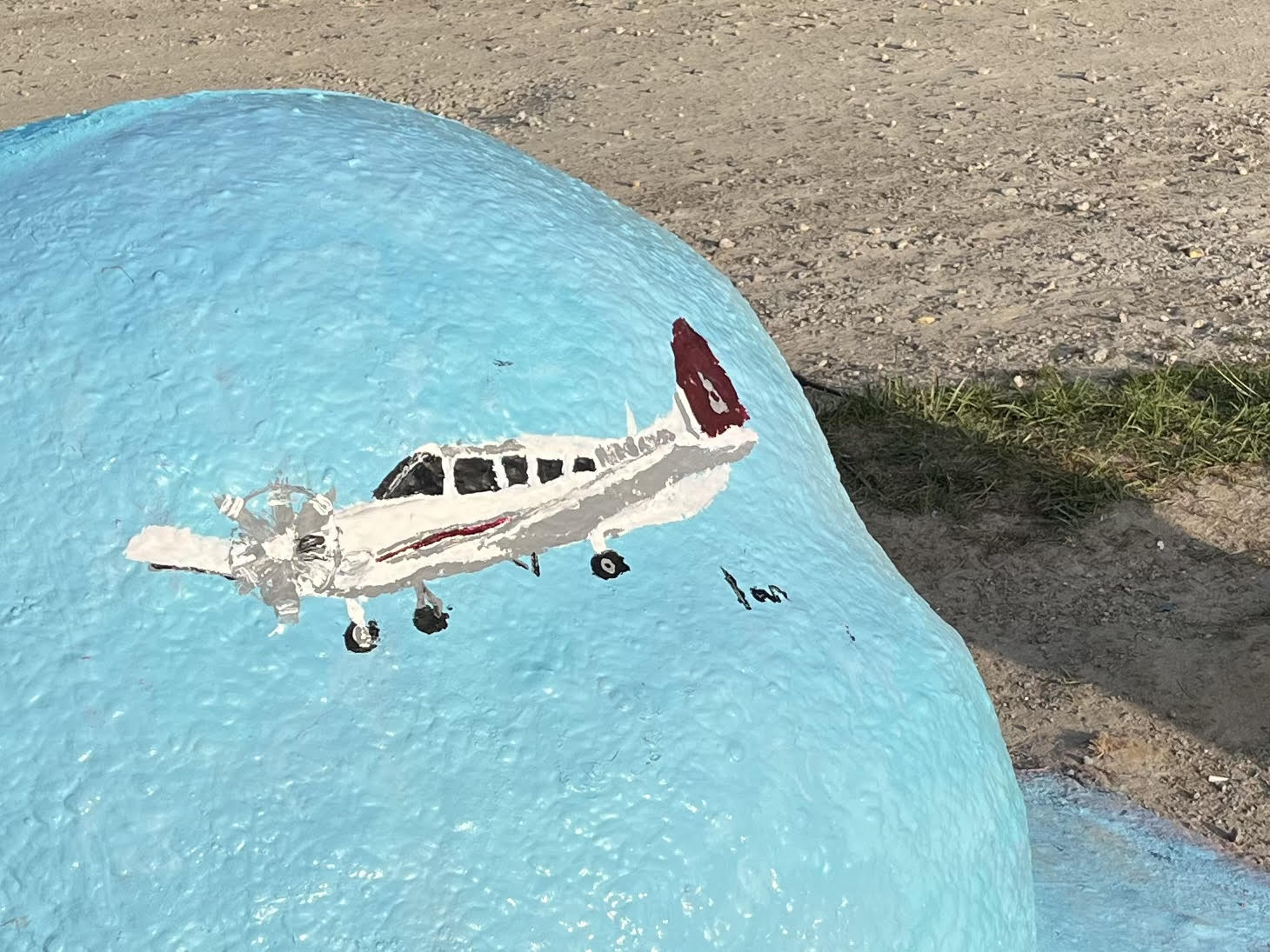
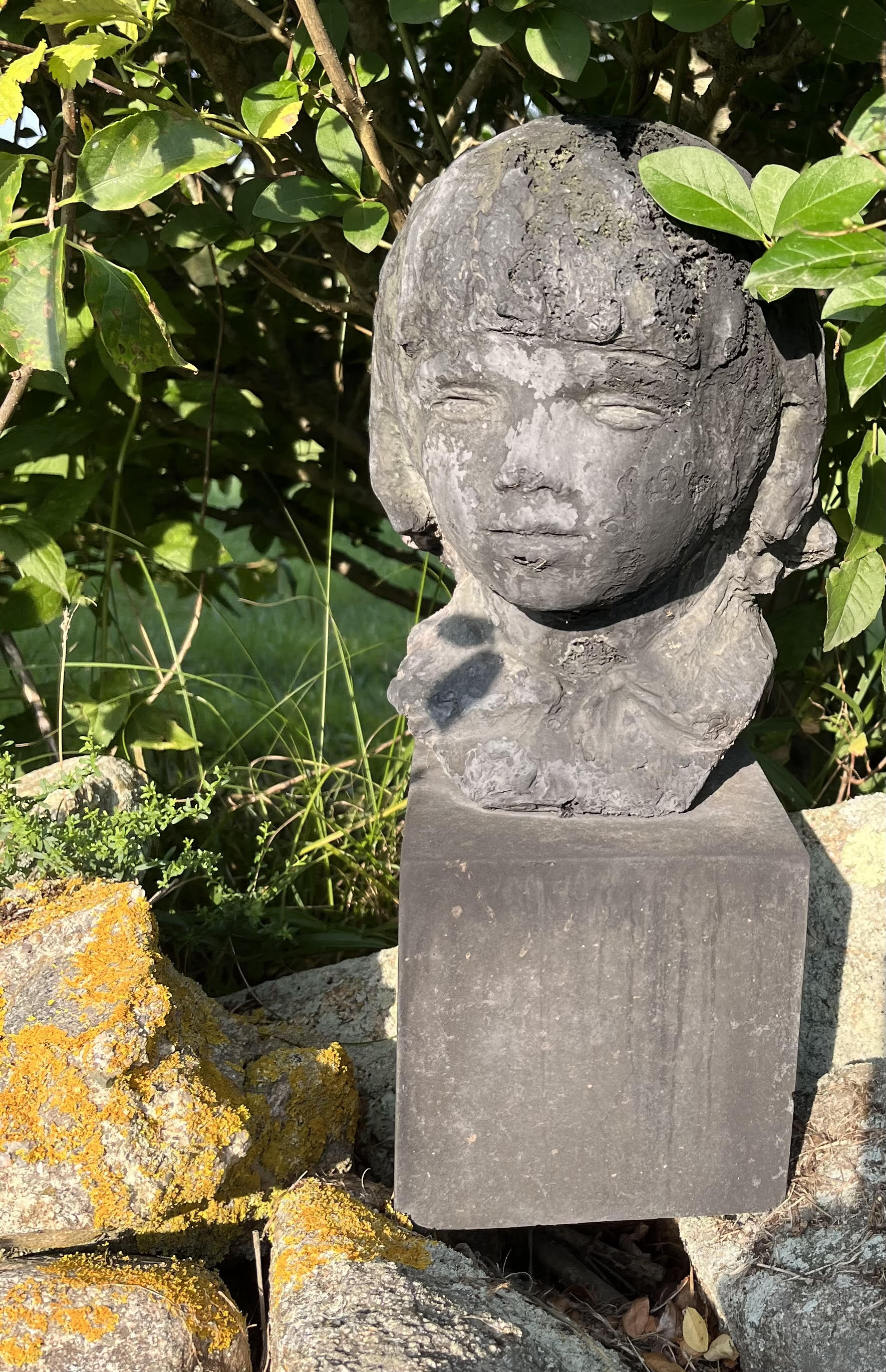
My other photos are just odds and ends that caught my eye. Let me know if you would like more explanation of any.

I do need to explain that the person floating along the bluffs was likely in a motorized parachute. Frightening! And the truck is included because I was fascinated that metal roofing comes off a giant roll that looks to me like nothing so much as chewing gum.

I’ll wrap up with a word on Joan Mallick’s popular “blue pottery. ” As Joan is unwell and no longer able to work, I think her distinctive mugs, plates, planters, and Christmas ornaments are likely to become collectors’ items.

The last shot shows my husband’s clematis trying to get into the house.

Read Full Post »

Photo: John Tlumacki/Globe Staff.
The Boston Globe reported recently on service workers marching “down Tremont Street to Boston Common, where they held a labor rally for new contracts and freedom to unionize.

As a member of the general public, I don’t like being inconvenienced by a labor strike any more than the next person. But I know my history. I know what life was like when workers couldn’t strike and how some gave their lives to change the status quo. So I think of that on Labor Day.

At the Boston Globe, John Hilliard wrote recently about service workers, who are among the last to band together for better working conditions. We need to stay as grateful to them as we were during the pandemic.

“Hundreds of essential workers — including janitors, airport staff, and ride-hailing drivers — marched through Boston’s streets Saturday demanding better post-pandemic workplace conditions after laboring to keep the economy afloat during the health crisis.

“The Labor Day weekend demonstration, organized by Local 32BJ of the Service Employees International Union, drew together service workers from across Greater Boston who are members, as well as some who are organizing to join the union, according to Roxana Rivera, a labor organizer and assistant to 32BJ president Manny Pastreich.

“ ‘This is a moment for workers, because they put so much of themselves out there during the pandemic. They didn’t have a choice to work remotely. Service workers risked their own personal health, and those of their families,’ Rivera said. ‘The fact that they still struggle to make ends meet is unacceptable.’ …

“Luis Medina, of Malden, who works full time as a janitor, said he joined the demonstration because he is fighting to secure full-time hours for colleagues struggling to make ends meet with part-time employment. …

“Saturday’s demonstration came amid a dramatic resurgence in labor organizing and activity across the country — from Starbucks workers seeking to unionize to Hollywood writers and actors now on strike — demanding better pay, benefits, and working conditions from employers.

“Among the successes are Teamsters and UPS workers who have secured new contracts through union efforts.

Support for labor unions in the US has soared, with roughly two-thirds of Americans now saying they approve of them, according to a Gallup poll released Wednesday.

“And demonstrators in Boston Saturday, like Marty, a 43-year-old from Plymouth who works as an Uber driver and gave only his first name, drew a direct line between union successes nationwide and efforts to support workers locally.

“ ‘We are really important, because we are the people who move the economy,’ said Marty, who wore a Screen Actors Guild shirt to support striking actors. ‘If no one is making any money, no one’s spending anything, [and] that’s when the economy starts to suffer.’

“Rivera said that even though many people now can work from home, commercial buildings must still be cleaned and maintained, while airport employees and ride-hailing drivers remain vital to keeping the economy going. ‘We need to make sure that we are not leaving these workers behind,’ Rivera said. …

“Waitstaff and food service workers at restaurants along the route gathered at doors to watch the protesters. One worker left her restaurant, asked a union representative for a flyer being handed out and took it back inside.

“The city was packed with people enjoying a beautiful end-of-summer Saturday, and throngs watched from sidewalks, many taking photos with their phones. Several raised their arms in support, and one man on a scooter beeped his horn as he rode along Tremont Street.

“Elizabeth Hill-Karbowski, who was visiting Boston with family from Wisconsin, watched as demonstrators marched along Tremont Street and read from a flyer.

“ ‘It’s a timely type of demonstration for the Labor Day weekend, very peaceful, well organized and [it is] people just wanting to have their voices heard,’ Hill-Karbowski said. …

“State Senator Lydia Edwards, whose district includes East Boston, Revere, and Winthrop, spoke to workers in Spanish then English. …

“ ‘We celebrate all the victories that we have had, but also we need to remember the lives that we’ve lost in the fight for justice, and the lives that you have saved as workers’ during the pandemic, Edwards said.

“Ed Flynn, Boston City Council president, told the crowd: ‘When workers aren’t receiving a decent wage here in the most liberal, progressive city in the country, there’s something wrong with that.’ ”

More at the Globe, here.

Read Full Post »

Photo: HarGoldMusic.com.
“Harriet Goldberg writes songs evoking old standards,” says her website. In addition, she has an incognito presence you have probably encountered.

Here is a woman who probably would have preferred to get the attention of the New York Times for other reasons than this. Her new claim to fame is not noted on her website. The thing is, she wrote a song that became ubiquitous background music for telephoners put “on hold.”

Sal Cataldi writes, “Harriet Goldberg is the composer of what may be one of the most heard songs in the world today. This 74-year-old New Jersey native is, in her own words, a ‘late blooming, part-time musician.’ …

“Since 2017, Goldberg’s jazzy instrumental, ‘My Time to Fly,‘ has been served up to countless callers who are put on hold by the customer service lines of businesses large and small. …

“Goldberg’s journey from a career in social work to the queen of hold music is an unlikely one. It’s the product of a passion that wasn’t acted on until she was in her late 40s.

” ‘When I was a kid, my family got a free piano,’ Goldberg said in a phone interview from her home in Boston. ‘My dad wrote songs and played jazz as a hobby. I studied a little classical but mainly played folk, rock and the Beatles. …

” ‘In my late 40s, my interest in jazz deepened, mainly standards and cabaret music,’ she said. ‘I started composing songs based on the songs I loved. I knew my limitations and wanted to find someone who could help me with my writing.’

“Looking for a mentor, Goldberg turned to an old friend, the saxophonist Billy Novick, a onetime Berklee College of Music student who has appeared on more than 250 recordings, film and television scores. …

“ ‘Harriet and I knew each other for years and our collaboration started very organically,’ Novick said in a phone interview from his home in Lexington, Mass. ‘She would show me her compositions and I would make suggestions to modify chord structure, melody and the like.’

“After a few years, Goldberg had enough songs to record an album. The result was ‘Bring Back the Moonlight,’ from 2002, a 14-track collection of vocal tunes modeled on the lush classics she loved. Novick created arrangements, booked the studio and engineer, and found the musicians who played and sang on this and four more albums Goldberg self-released through 2021.

“Aware there were better opportunities for Goldberg’s compositions to be licensed as incidental music in film and television if they were instrumentals, Novick suggested she record wordless versions of her songs, most crucially, the title track to her 2011 album, ‘My Time to Fly.’

“But before this tune took off on phones, Goldberg gained a foothold by entering a song from her debut disc, ‘Suddenly You Walked By,’ into a songwriting contest sponsored by Billboard magazine. Though she didn’t win the top prize, she earned a membership with Taxi, a firm that helps composers place music in film and television. By 2008, Goldberg was working with another catalog service, Crucial Music. …

“ ‘We were working … a service that manages the call centers for tens of thousands of businesses worldwide, handling 10 million calls in a day,’ Tanvi Patel, the chief executive of Crucial Music, said in an interview. …

“[Goldberg] didn’t know anything about her place atop the on-hold hit parade until 2019, when she heard from her collaborator.

‘I was on hold with Capital One Bank and heard something familiar,’ Novick said. ‘My first impression was I liked the sax player, but I honestly couldn’t pin it down. I listened again, opened my Shazam app and found out it was one of the songs I recorded with Harriet.’

“While Goldberg’s tune may be spinning more than any other at the moment, it isn’t earning her untold riches. The licensing agreement with Amazon was a buyout, earning Harriet a ‘four-figure flat fee’ for its use in perpetuity.

“But the song has earned this late bloomer unexpected fandom — and some money. Through its release on her own label, Goldberg is making a modest income from streams, downloads and occasional CD sales. She is also garnering positive messages from fans via email and her SoundCloud page. The song’s popularity in Japan was even subject of a skit on Tamori Club, a sort of Japanese Saturday Night Live. …

“ ‘It’s especially funny,’ Goldberg added, ‘when I call my bank and get put on hold and it’s my own music that I have to listen to.’

“Dane Vannatter, the cabaret singer featured on the vocal version of ‘My Time to Fly,’ sometimes performs it at club gigs.

“ ‘Before he sings it, he holds up his phone and plays the instrumental version,’ Goldberg said. ‘Then, he asks how many people have heard the tune. It’s usually most of the audience though they never can quite place exactly where they heard it.’ “

More at the Times, here.

Read Full Post »

Photo: Edwards’s Botanical Register.
The Phillip Island glory pea, which once grew in Australia, is a leading candidate for de-extinction, according to e360

Do you get visions of Frankenstein’s monster when you hear about reversing extinction? Maybe we start with plants, but then what? Dinosaurs?

Well, it’s hard for me to be against anything that extends knowledge, so I’m keeping an open mind about the Yale Environment 360 report on the de-extinction of plants.

Janet Marinelli writes, “In January 1769, botanists Joseph Banks and Daniel Solander found a daisy in Tierra del Fuego, at the southern tip of South America. Later named Chiliotrichum amelloides, it is one of a thousand plant species unknown to European scientists that the two men collected during Captain Cook’s first voyage on the HMS Endeavor. … The plant was dried and pressed for future study. Today, the 254-year-old specimen is among the almost 8 million preserved plants in New York Botanical Garden’s William & Lynda Steere Herbarium.

“ ‘When a plant goes extinct,’ says Giulia Albani Rocchetti, a postdoctoral researcher at Roma Tre University and the lead author of the paper, ‘we don’t just lose a species, we lose a member of a habitat community with a specific role and relations with other species; … we lose genes which could have provided insight into the species and its community and yielded new pharmacological compounds and other products.’ …

“For nearly five centuries, herbaria have helped botanists identify, name, and classify the world’s floral diversity. Now these vast botanical libraries are being tapped to try to create a new chapter in the 500-million-year history of Earth’s terrestrial plant life. In Nature Plants in December, an international group of biologists published the first-ever list of globally extinct plants they believe can be returned from the dead, using seeds available in herbarium specimens. …

“In recent decades, the seeds of rare and imperiled species have been preserved in seed banks at low humidity and temperatures that ease the embryos inside into a kind of state of suspended animation to maximize their longevity. However, species already lost remain only as specimens in the collections of dried and pressed plants known as herbaria, and only in some (lucky) cases. … Only a few of these plants happened to be in fruit and in seed when they were collected. And even when herbarium seeds are discovered, there is no easy way to tell if the embryos inside are dead or lying dormant, waiting to sprout when conditions are right. …

“Abby Meyer, executive director of Botanic Gardens Conservation International in the United States, points to the rise in recent decades of the field of bioinformatics, which has transformed the trove of biodiversity information once locked up in natural history collections — such as herbarium specimens of extinct plants that contain seeds — into browsable digital databases. New York Botanical Garden (NYBG), for example, began digitizing its herbarium specimens in the mid-1990s, and today some 4 million, or about half of its preserved plants, have been scanned and can now be called up on a computer screen by anyone around the globe.

“Data aggregators such as the Global Biodiversity Information Facility provide researchers looking for seeds with instant access to millions of scanned specimens, along with associated ‘metadata’ such as the GPS coordinates where the plants were collected. At the same time, scientists have been refining in vitro embryo rescue techniques, increasing the odds that old or weak seed embryos can grow into viable plants. …

“While attempts to de-extinct the dodo, the woolly mammoth, and other charismatic megafauna continue to grab headlines, they would result at best in a hybrid, genetically engineered animal — a proxy of an extinct species. By contrast, recovering plants by germinating or tissue-culturing any surviving seeds or spores preserved in herbaria would result in the resurrection of the actual species. …

“One of the biggest hurdles is figuring out how to germinate the precious few seeds of often genetically unique plants found only on dried specimens. There is little margin for error, and before attempting to germinate the extinct species itself, scientists must perfect methods for germinating seeds of any closely related species that survive. …

“In December 2019, Giulia Albani Rocchetti sat in Florence’s Central Herbarium, marveling over the remains of Ranunculus mutinensis, an endemic buttercup that once grew in moist floodplain forests of the Po River, as it threads through northeastern Italy. … It was a thrill for her to find not just one but two Ranunculus specimens with numerous mature fruits called achenes. She then spent months at her desk in Rome, blowing up digitized images of extinct plants from herbaria across the globe on her computer screen in the improbable search for seeds.

“She was also spurred on by the knowledge that some seeds have the astonishing ability to survive adverse conditions and sprout after decades, even centuries — such as the Judean date palm, which a team of scientists successfully germinated in 2005 from a 2,000-year-old seed. …

“Albani Rocchetti and colleagues … identified 556 specimens that contained seeds, representing 161 of the extinct plant species [and] proceeded to devise a pioneering roadmap for prioritizing species for de-extinction. Assuming that species whose close kin produce long-lived seeds and newer specimens are the most likely to contain seeds that survive, they combined data on the seed behavior and longevity of closely related plants, as well as the age of each specimen, to create a DEXSCO, or best de-extinction candidate score for each species. …

Streblorrhiza speciosa, a spectacular member of the pea family, was [so] unique that it is considered the only member of its genus, or closely related group of plants. The species’ striking cascades of pink blossoms clambered exuberantly over trees on Phillip Island in the Pacific Ocean east of Brisbane, Australia. Collected in 1804 by Austrian botanist Ferdinand Bauer, the Phillip Island glory pea was an instant hit in Europe, coveted by every wealthy family with a conservatory. Meanwhile, however, Phillip Island was being overrun by pigs, goats, and rabbits introduced by British officers overseeing a nearby penal settlement, leaving barely a scrap of the remote island’s unique vegetation, and the glory pea was never seen in the wild again. …

“The glory pea is now presumed extinct, but at number three is near the top of the list of recommended de-extinction candidates. …

“Another challenge of plant de-extinction is the lack of financial support for pursuing it. But on the bright side, plant de-extinction has not kicked up the controversy surrounding attempts to resurrect, say, the wooly mammoth or passenger pigeon. ‘For whatever reason, the human brain doesn’t seem to be as concerned about plants as about animals,’ Knapp says. ‘But in this case, we’re literally just germinating seed. We’re not reconstructing a genome. And that’s way less intimidating. Everyone can understand that.’ “

More at e360, here. No firewall.

Read Full Post »

« Newer Posts - Older Posts »