Feeds:
Posts
Comments

My friend Jeanne has been investigating more-sustainable living and has experimented with producing zero waste. I’m impressed. My small efforts have been almost completely undermined by the pandemic and all the plastic containers that come with takeout — takeout being both a break from cooking and support for our local restaurants.

Even the folks at Plastic Free Hackney, an inspiring effort in an English town, admit that it’s all harder during a pandemic. Still, idealists soldier on and will eventually triumph.

Jessica Wolfrom writes at the Washington Post, ” ‘It was kind of like a slow-moving coup on my part,’ said Anna [Marino], 32, a former seller on the website Etsy, who started researching the meat industry and the zero-waste movement. Even though they were only a family of four — [Anna and Justin] have two children, ages 6 and 3 — they knew they needed to change their lives.

“Paper towels and single-use napkins were the first to go. Then went the plastic. But as they traded traditional products for more eco-friendly items, they quickly realized that their reliance on online shopping was another problem.

“ ‘It almost defeats the purpose,’ said Justin, 43, who previously worked in cybersecurity. ‘I’m ordering something to save the planet, but in order for it to get here, it’s creating a pretty nasty carbon footprint. … And so, we were like, well, there needs to be a store around here.’

“Enter Mason & Greens, the Washington region’s first zero-waste store. … The airy shop is equal parts organic grocer and minimalist boutique, selling items such as package-free shampoo bars, organic produce and drip-irrigated olive oil. Hanging plants and shelves lined with stainless steel containers and books titled ‘All You Need Is Less’ offer shoppers a glimpse into the world of low-waste living. …

“ ‘You know it’s a movement when you don’t know everything that’s going on,’ said Gary Liss, vice president of Zero Waste USA, a nonprofit organization dedicated to reducing waste, who described the growing interest in low-waste living as a sea change in the relationship between people and things.

“Americans throw away about five pounds of trash per person per day, according to the Environmental Protection Agency — 12 percent of which is plastics. … Scientists estimate that up to 91 percent of plastic is never recycled, leaving the rest to burn in incinerators, clog landfills or degrade in the oceans. Scientists have even found microplastics in air, water and food. …

“The coronavirus pandemic has only increased reliance on disposable plastics. Billions of masks and gloves made from plastics and used by health-care workers, first responders and essential workers are being discarded every month, studies show. …

“Mason & Greens, which is based in part on the bulk model, makes a point of avoiding plastics at nearly every turn. Beans and grains come in gravity dispensers. Produce is package-free. Pomberry Kombucha and pinot noir stream from a tap. The spices are self-serve.

“Customers aren’t required to bring their own bags or refillable containers, but the couple said many customers do. The shop employs a tare system that logs the weight of an empty container and then calculates the price of products by the ounce. …

“The couple welcomes newcomers into their waste-free world, but Anna routinely castigates vendors for their packaging practices — she is not above shaming suppliers who send items wrapped in plastic. … ‘I have to go through so much to get a product into the store that’s zero-waste or low-waste.’

“But living a waste-free life might soon become easier. As consumers demand more sustainable options, brands large and small are shifting to make sustainability central to their strategy. Major companies such as Unilever have pledged to halve the use of virgin plastics in packaging by 2025. Walmart, Target, CVS and other retailers are working to develop an environmentally friendly alternative to the plastic bag. And other companies are starting circular delivery services — an updated version of the 1950s milkman — where groceries and goods are packaged in reusable containers that are returned empty.”

Signing up for the guy who brings milk in reusable bottles is one way I’ve actually gotten better at controlling waste in the pandemic. Thanks to my daughter-in-law, I got in under the wire with the dairy farm as other people started lining up for deliveries, too.

Read about a variety of zero-waste shops and the blogger who fit all the waste she produced over four years into a 16-ounce Mason jar at the Washington Post, here.
To Applaud, Please Honk

A few nights ago, Suzanne attended a drive-in theatrical performance in Providence and posted photos to her Luna & Stella account on Instagram. She went “with” a friend. That is, Suzanne was in her car, and her friend was in another car. The husbands were at home babysitting.

Suzanne’s understanding from the article she had read was that the play had something to do with an illness, maybe not too far from what we are all dealing with now. She had no idea that the illness in question was the one my sister died of a year ago. All illnesses are metaphors these days.

From Susan McDonald’s special report to the Providence Journal: “Two years ago, when Josh Short assumed a role in ‘Constellations,’ it was in the black-box space of Wilbury Theatre Group, where he is artistic director, framed by walls and a ceiling, the audience an arm’s length away.

“When he next slips into the persona of Roland, half of a romantic duo grappling with love and pain against the shifting backdrop of the cosmos, there will be a limitless feeling to the stage and, hopefully, a twinkling drape of actual stars overhead.

“Wilbury and Short teamed with WaterFire Providence to bend the constraints of traditional theater environs and follow the governor’s COVID-safety directive in taking the show outdoors.

“Fueled by a grant from the state’s Take it Outside initiative, the groups offer a new take on Nick Payne’s play ‘Constellations’ through Dec. 19 [in Spanish on Dec. 18, thewilburygroup.org]. Audiences will stay in their vehicles and listen through their radios while a production crew streams multiple angles of the performance on a 40-by-30-foot screen.

“While ‘Constellations’ is staged simply without set or props, Short says the challenge in restaging it has been to maintain the intimate feel of romance. …

‘We stylized it to combine original elements because the intimacy is important. This is a love story about connections and missed connections.’

“Compelling outdoor performances are the bailiwick of Barnaby Evans, WaterFire’s artistic director, who long wanted a towering screen for outdoor movies and artistic performances. The social distancing guidelines in place during the COVID-19 pandemic provided even more impetus. …

“The screen worked well for smaller productions, but he says ‘Constellations’ called for more advanced planning and elaborate production elements, such as four cameras. …

“The story’s health crisis — the female character Marianne, played by Rachel Dulude, grapples with serious illness — also parallels COVID.

“ ‘With COVID, we really understand connections versus distance and random versus determined,’ Evans adds. ‘The context makes the play much, much richer. … Artists thrive on creative challenges, and we just make the safety of the audiences and production team front and center.’ …

“Being safe means tapping CVS for twice-weekly COVID-19 tests for the cast and production crew and working with an epidemiologist on a plan to minimize risk, Short says. The actors union demanded proof of their efforts before granting project approval.

“ ‘It took months to get their approval, and there were hoops to jump through, but you’ve got to drive forward,’ Short says.”

Driving forward. That’s another metaphor for our times.

More here.

As a volunteer in English classes (all online these days), I am aware that most immigrants are determined to contribute to the countries they arrive in. Consider, for example, the Muslim husband and wife in Germany who were largely responsible for the miracle vaccine developed in one year against the odds.

In the Netherlands, the Refugee Company has immigrants employed in making face masks to protect the Dutch against Covid-19.

Michal van der Toorn at the Local Europe has the story.

“Why be dependent on factories on the other side of the world if you can produce face masks locally? That’s exactly what Dutch entrepreneurs Jaap Stelwagen, Fleur Bakker, Johan Blom and Naz Kawan thought in March. The Netherlands, like many other countries at the time, was dealing with a big deficit of surgical face masks.

“Stelwagen, who lived in China, together with his wife who is originally from China, called several people there to ask whether it would be possible to get material. Bakker’s sister, a KLM pilot, managed to get hold of a roll of [fabric] that you need to make face masks, and brought it to the Netherlands on a plane full of other health equipment. Later that month, on one of the few flights that were running at the time, two face mask machines flew 7,000 kilometres to Amsterdam.

“But who would operate them? [One] Company already had a sewing workshop and restaurants in place where people with a refugee background were able to acquire work experience. [The company writes its name Refugee Company to focus on the work, not immigration status.]

“ ‘As a response to the pandemic,’ project spokesperson Peter-Paul de Jong explains, ‘we decided to set up a face mask factory: the Mondmaskerfabriek. … The project not only responded to the deficit of masks in Dutch healthcare,’ de Jong explains, “but also provides people with a refugee background with work experience and knowledge about the labour market in the Netherlands.’

“Firas al Naif, 33, is one of the employees in the factory. ‘I’m doing different tasks,’ he says. ‘I for example have to make sure the masks are properly wrapped and check if the machines work.’ It is all new for Al Naif, as in Syria, he worked as a biology teacher. ‘I wasn’t used to doing technical tasks. The first month was pretty hard, but now it’s going really well. …

” ‘We have a paid four-hour programme next to work, in which we can improve our language and become more familiar with the labour market, and we make for example a CV, application letters, we see how you can find work. …

“ ‘The one thing I like most about this work is solving problems,’ says Al Naif. ‘If there is a problem with the machine from China, I like to look for ways to get it working again.’

“And there were other problems, de Jong explains. After the challenges of getting the right machines and material, the next problem arose: getting certification to create surgical face masks for healthcare professionals. In order to be used in the healthcare sector, the face masks have to be certified by a laboratory to say they meet strict standards. And that took some time. …

“As the building is old, ventilation is a problem and it’s hard to get it up to the antibacterial standards, Bakker writes on the website. The location caused occasional deviations that stood in the way of the factory’s certification.

“The project tried different ways to ensure the masks were up to medical standards, including sterilizing them with gamma radiation and setting up a special sterile production room within the factory with purified air and an antibacterial floor.

“In mid October the certification was acquired and the factory started supplying the Dutch centralized point for healthcare products. …

“ ‘That distinguishes the Mondmaskerfabriek from other projects from the Refugee Company,’ de Jong explains, ‘as we can use the profits to pay employees, instead of only relying on funds and donations.’ …

“ ‘I love how much I learned about technology,’ [al Naif] says. But he would rather be a biology teacher again. ‘When my Dutch is good enough, I want to go back to the classroom.’ ”

More at the Local Europe, here.

There’s something about elegant hotel atriums that carries one back to times gone by. Their ideal temperature must be horrendous to maintain, but they do give a traveler a feeling of being special.

Our family’s all-time favorite atrium was in a Sheraton Hotel in notably unspecial Cheektowaga, New York. The rooms gave onto a warm, landscaped pool area where ducklings and bunnies were added at Easter. Maintaining the trees so that they stayed the right size for the space was challenging, I imagine.

Anthony Paletta at Bloomberg CityLab has more about that.

“If you’re craning your neck as severely when you step inside a building as you did outside it, you might be in an atrium hotel, an intensely American structure for sleep, conferences, cocktails, and much more. These are facilities built around a massive central chamber stretching a dozen or several dozen stories into the sky; at the lobby level, you’ll find bars, restaurants, gardens, live birds, and maybe even a boat or two.

“We don’t build them much anymore, but Americans invented, perfected and exported this unique building style to the world (where it continues to prosper). Birthed in brash excess, atrium hotels were first seen as too gaudy by the modernist architectural establishment and as too profligate by penny-pinching chain hoteliers. To varying observers, they suggest everything from Disney to dystopia. But in their heyday, these buildings promised — and delivered — a spectacle like no other. 

“Real estate developer Trammell Crow, the man with the most Dallas-sounding name you’ve ever heard, provided early inspiration for the form with his Dallas Trade Mart atrium, built in 1958. But it was Atlanta architect-developer John Portman, his occasional partner, who adapted and built the form into a colossus. Portman’s Hyatt Recency Atlanta opened in 1967, and was an immediate sensation. Atriums became a signature of the Hyatt Regency brand, and Portman went on to work for a variety of other chains, including Marriott and Westin.

“Portman wasn’t taking half measures with his hotels. Consider their majestic heights: his first, the Hyatt Regency Atlanta: 22 stories; Marriott Marquis in New York City: 37 stories; Marriott Marquis Atlanta: 50 stories. Only Dubai’s Burj Al Arab, which opened in 1999, eventually topped Portman’s tallest atrium.  …

“The atrium is an ancient architectural feature. It’s fairly rare in skyscrapers, however, as it inevitably involves a waste of leasable space. There are a few direct hospitality antecedents: The Brown Palace Hotel in Denver, built in 1892, boasts a seven-story atrium topped with stained glass, and the West Baden Springs Hotel in French Lick, Indiana, which opened in 1902, features a 200-foot diameter atrium.

“Portman’s first atrium wasn’t in a hotel at all, but in the now-demolished Antoine Graves public housing tower in Atlanta, built in 1965. The idea was simple, says Mickey Steinberg, a structural engineer on many of Portman’s early projects. The architect was just trying to provide some sociable space and ventilation to tenants. (The building was not air conditioned.)

‘If I had a hole down the center of the building,’ Steinberg recalls Portman saying, ‘people could come out and talk to each other and I might be able to get some air through the building.’

“That notion recurred to Portman two years later for the Hyatt Regency. ‘It wasn’t any grand philosophy about a style of architecture,’ Steinberg says. ‘He was designing for people to want to be there.’

“He was also designing for people who might not have wanted to be in Atlanta, whose central business district was in decline. Steinberg recalled Portman’s intention: ‘I’m going to create a space for them to want to be in, because downtown Atlanta doesn’t have it anymore.’ …

“The atrium concept didn’t initially enthrall the moneymen, Steinberg says. …

“[But] a then-unknown savior turned up in the form of Don Pritzker, whose nascent Hyatt chain then had only three locations. That bet paid off once the Hyatt Regency Atlanta opened: Visits to the hotel in the first four months of operation exceeded their expectation of the first five years. Guests lined up just to go up and down in the glass elevators. …

“Sheer space was a vast lure, opening up the typical dark double-loaded urban hotel corridor, Steinberg says. ‘It was different than having a little bitty lobby where you enter and then you take an elevator to where you’re shelved.’ …

“As new construction, you are now likelier to see atrium hotels in the Middle East or Asia. Still, the company that pioneered the form remains enthusiastic about its virtues. ‘This concept changed the idea of what a hotel experience could be by converting lobbies from transactional spaces that guests passed through on their way to check in or check out,’ Sarah Klymson, vice-president of product and brand development at Hyatt, wrote in a statement. ‘The architectural form of atrium hotels acts as a stage that can evolve.’ “

More at CityLab, here.

One of my brothers, the science professor, used to perform regularly as a clown, particularly at church and Sunday School. Clowns-in-ministry is actually a thing, a way to engage parishioners and provide a different perspective on teachings.

In San Francisco during the pandemic, clowns and performers of all kinds have heard the call to keep people healthy using laughter, entertainment, and public-service messaging.

Lily Janiak has the story at the San Francisco Chronicle.

“Robin Lara and Stella Adelman of Dance Mission Theater were strapping on stilts. Michael Houston of San Francisco Bay Area Theatre Company was affixing a red clown nose on top of his face mask. Marcelo Javier, also of SFBATCO, was trying out a jury-rigged pandemic-era clown prop — two extendable massage rollers tied together, allowing him to interact with passersby from a safer distance.

“If these artists were backstage — at a side room in the Mission District restaurant West of Pecos — their theater was Valencia Street on a recent sunny afternoon. And if they were about to open a show, their message was public health.

“These four, along with Rodney E. Jackson Jr. of SFBATCO and Aura Barba of SF Carnaval, were just one shift of artists in San Francisco Creative Corps, a pilot program that recruits underemployed local artists as community health ambassadors to promote healthy behavior during the pandemic.

“A partnership between the San Francisco mayor’s office, Yerba Buena Center for the Arts, the Office of Economic and Workforce Development, and the San Francisco Parks Alliance, the program launched last month. It employs 30 performing artists to encourage mask wearing and other best practices and 30 visual artists to paint murals about public health on boarded-up storefronts.

“The city chose Valencia Street and Washington Square in North Beach as pilot sites because of their high pedestrian traffic, significant amounts of outdoor eating and drinking, low mask compliance and high or increasing case rates, according to Jeff Cretan, director of communications at the mayor’s office. …

“Deborah Cullinan, YBCA’s chief executive officer, approached the city with the idea after being part of Gov. Gavin Newsom’s Task Force on Business and Jobs Recovery.

‘What’s the WPA program for today?’ she recalls thinking, referring to Depression-era initiatives such as the Federal Theatre Project and the Federal Art Project that employed artists not just as work relief but as a broad public investment in art. …

” ‘Artists are very effective in driving health outcomes in communities,’ she said, citing projects ranging from a radio drama combating the spread of Ebola in Sierra Leone to National Endowment for the Arts-backed therapy helping veterans with PTSD and traumatic brain injury at Walter Reed Army Medical Center. …

“On Nov. 29, Lara and Adelman — decked in feathers, bustiers and leg flares in addition to their stilts — paraded down Valencia Street. … Houston, with blazer, tie, rainbow wig and microphone, in addition to the red nose and mask, approached passersby for man-on-the-street interviews, asking — in a news announcer baritone — what they were doing to keep themselves safe from COVID-19. …

“The artists never scolded those without masks — emphatically not the point of the program — and pedestrians who were offered masks usually weren’t hostile. Only once in the first two hours did someone yell in response. Most either kept going or accepted, smiling sheepishly as if to say, ‘Yeah, you’re right. I knew I should have been wearing one.’ …

“ ‘If we need people to take care of one another, they have to feel taken care of first,’ said Cullinan. ‘Messages that make us feel bad aren’t going to work. Messages that make us feel good and want to be a part of something. … That’s what theater makers do.’ ”

More at the San Francisco Chronicle, here.

Cold Weather Photos

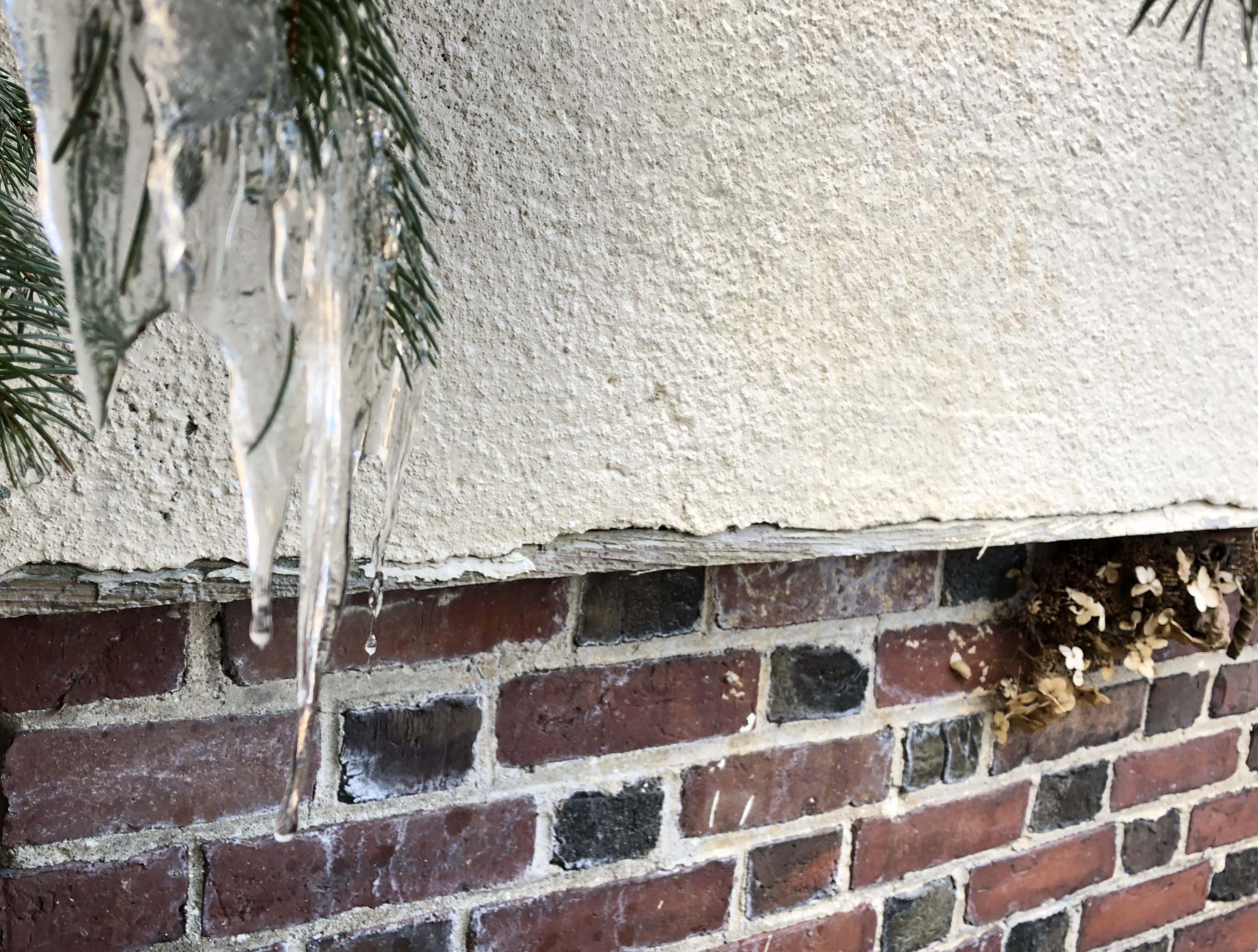
A dripping icicle.

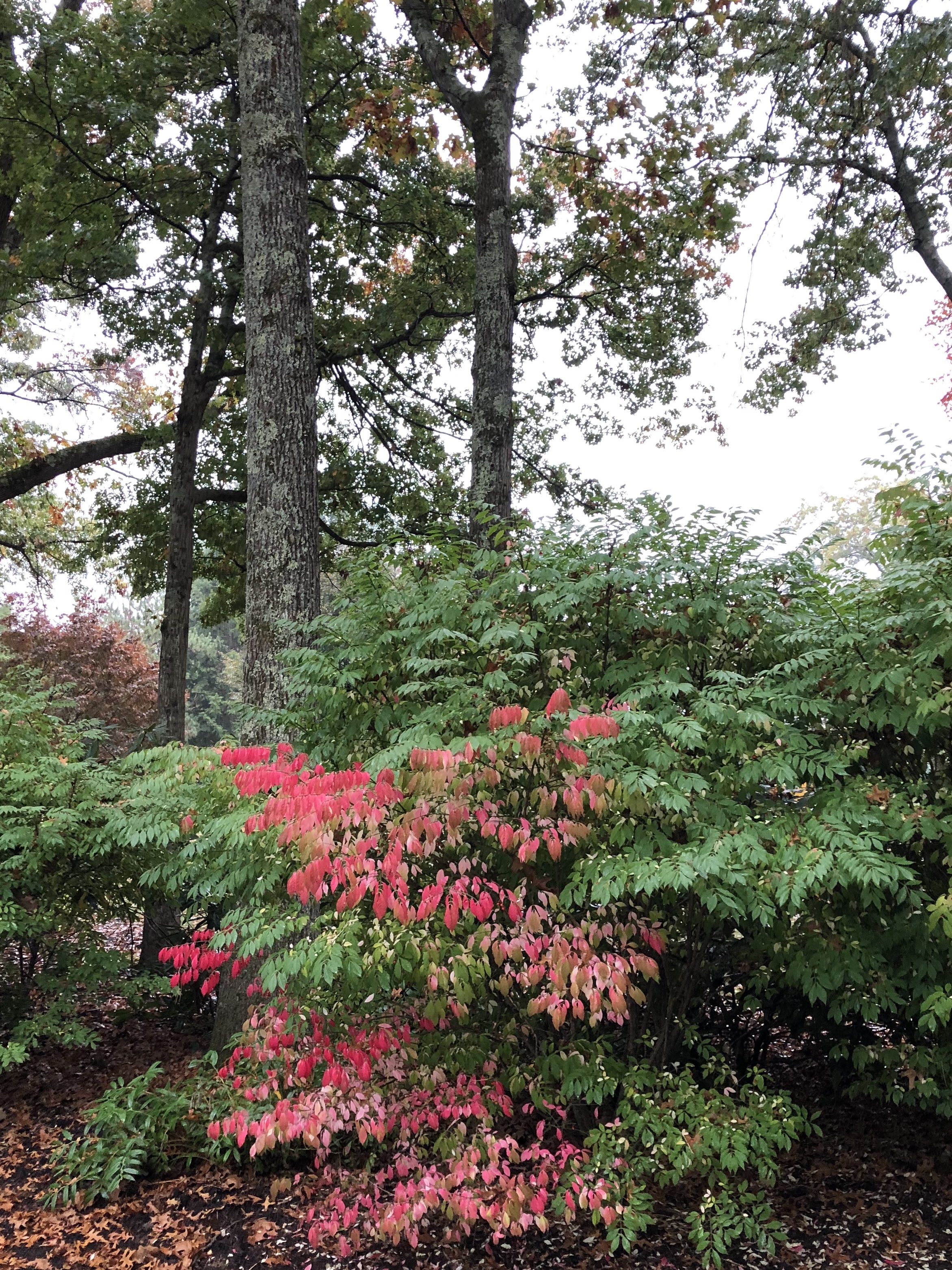
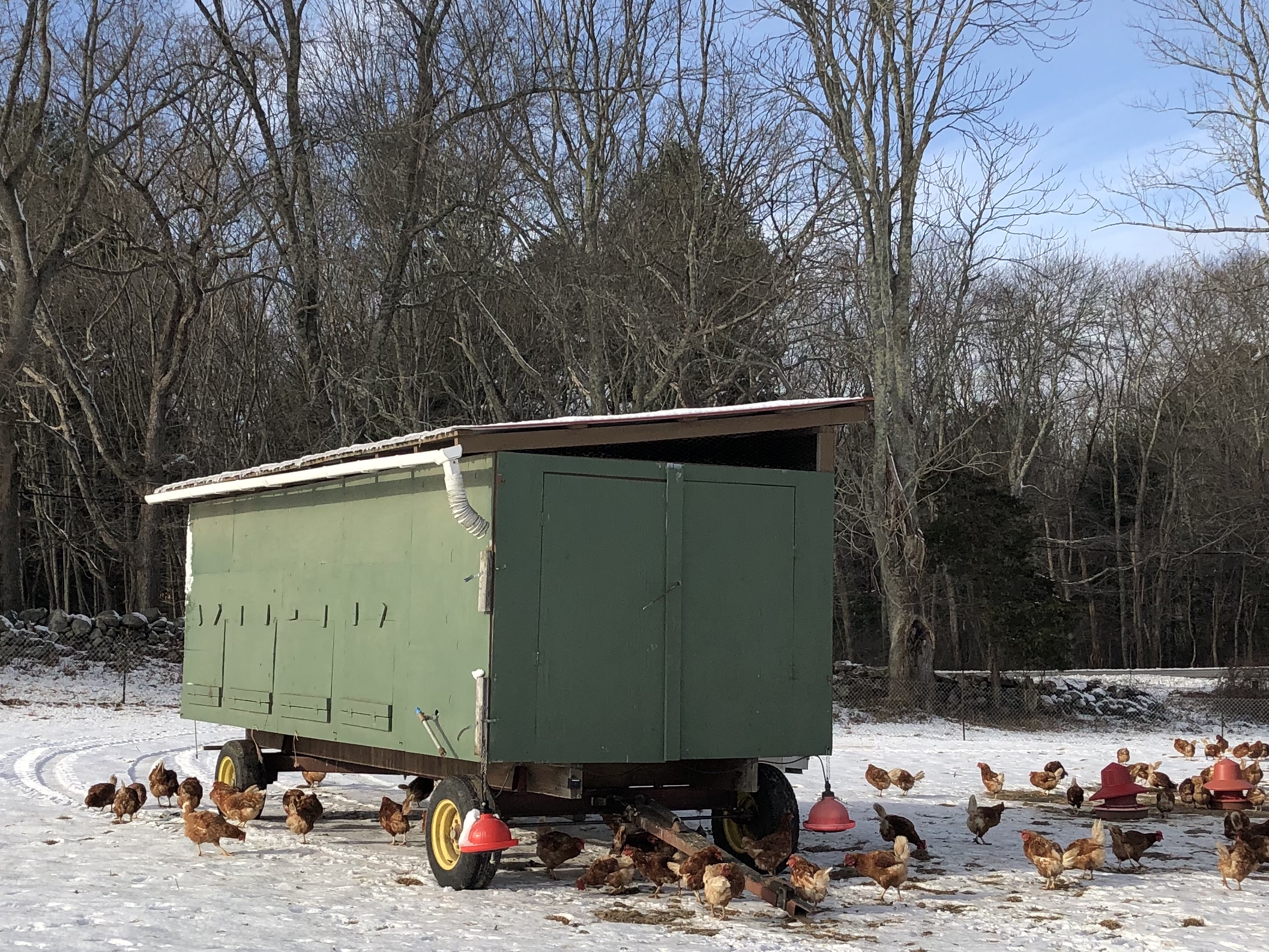
Although officially it’s still fall, there are many days it feels like winter where I live. We are not yet at the point that the dogs are sticking to the sidewalks, but some days it’s pretty cold. Even the chickens at Codman Farm in Lincoln seem to shiver.

The snow we had a week ago froze into a hard and slippery crust, and we put on cleats to take walks. But what is going on with that yard? you ask. The pattern is the result of my husband’s wish never to use a leaf blower. He puts out a net, rolls up the leaves, and carts them to the town’s composting site.

I took a couple red and green photos on warm days, but they made me think of the holiday to come.

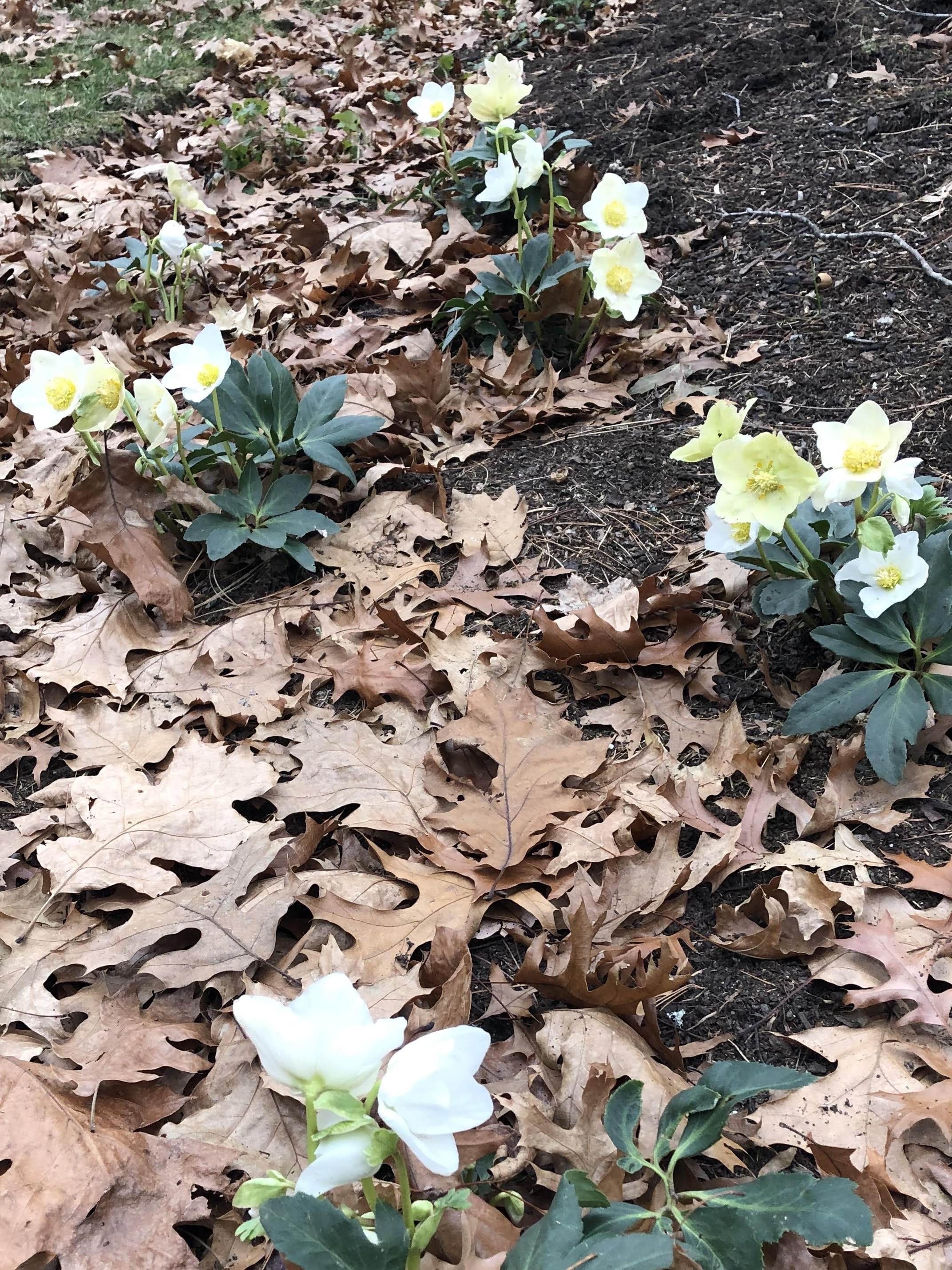
Hellabore uses any break in the weather to flower. So welcome.

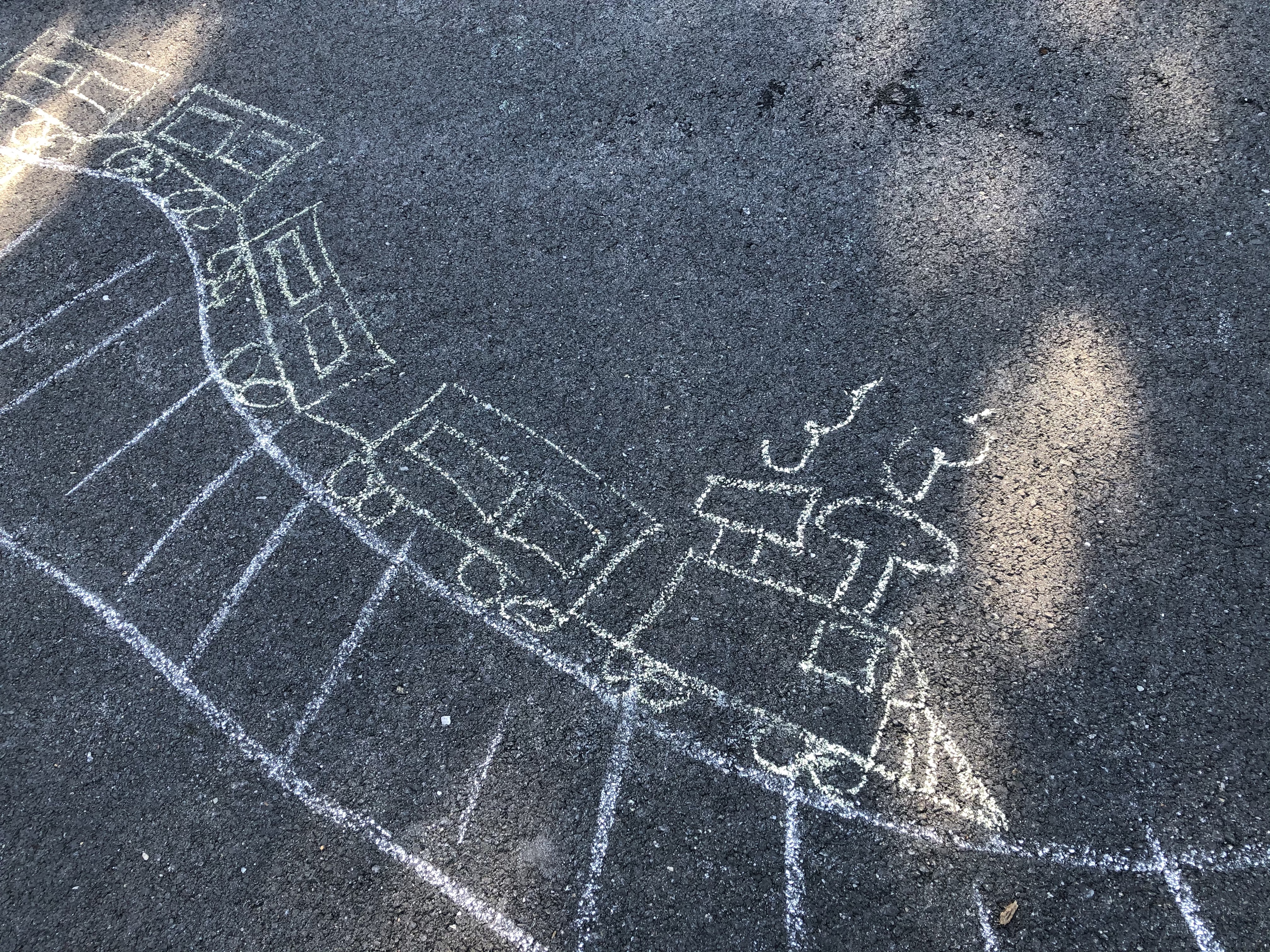
In another picture, you see where someone made a child’s game with chalk. It was actually quite intricate, featuring a variety of tasks and awards for getting to certain squares. A more elaborate version of hopscotch.

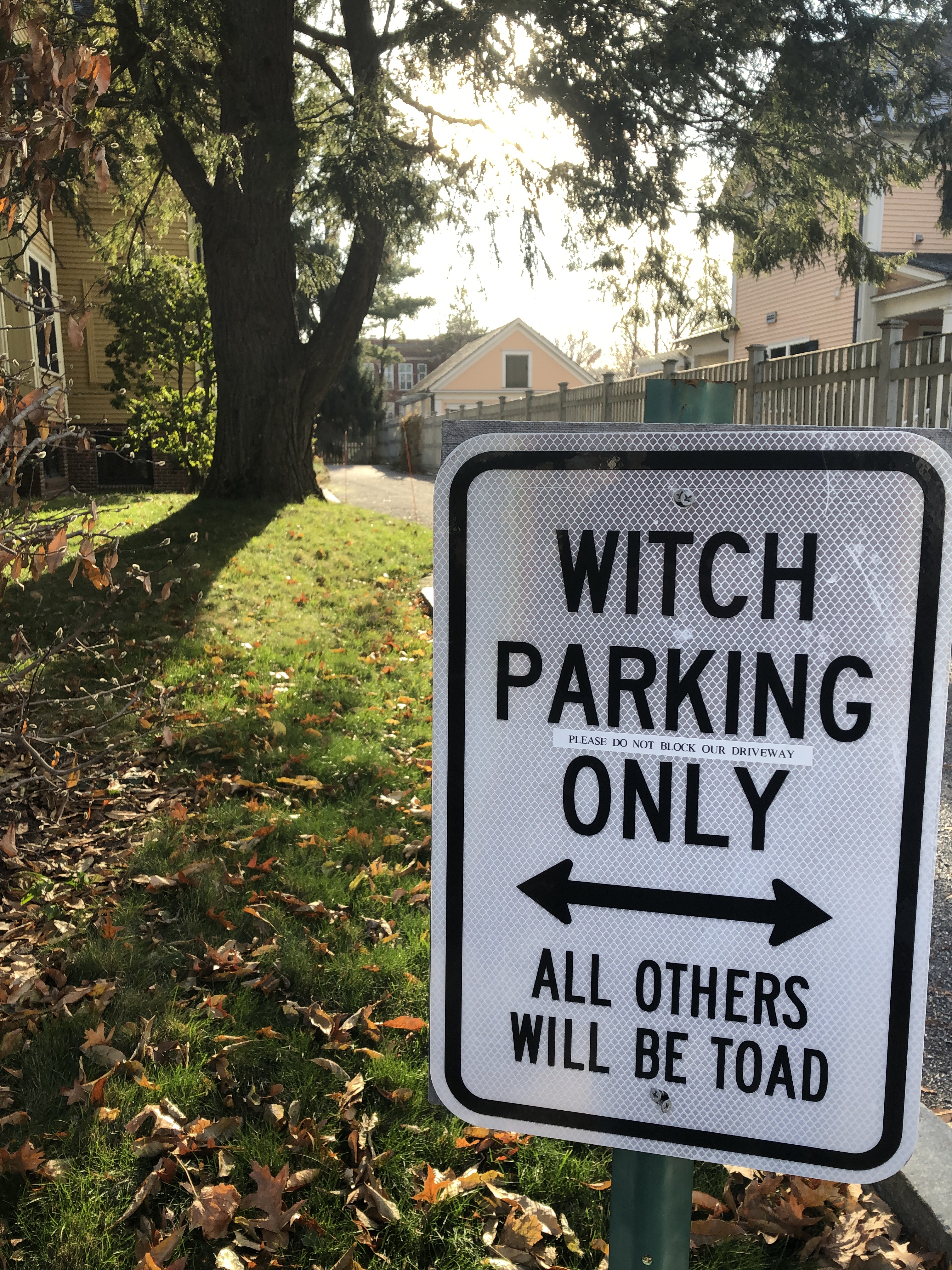
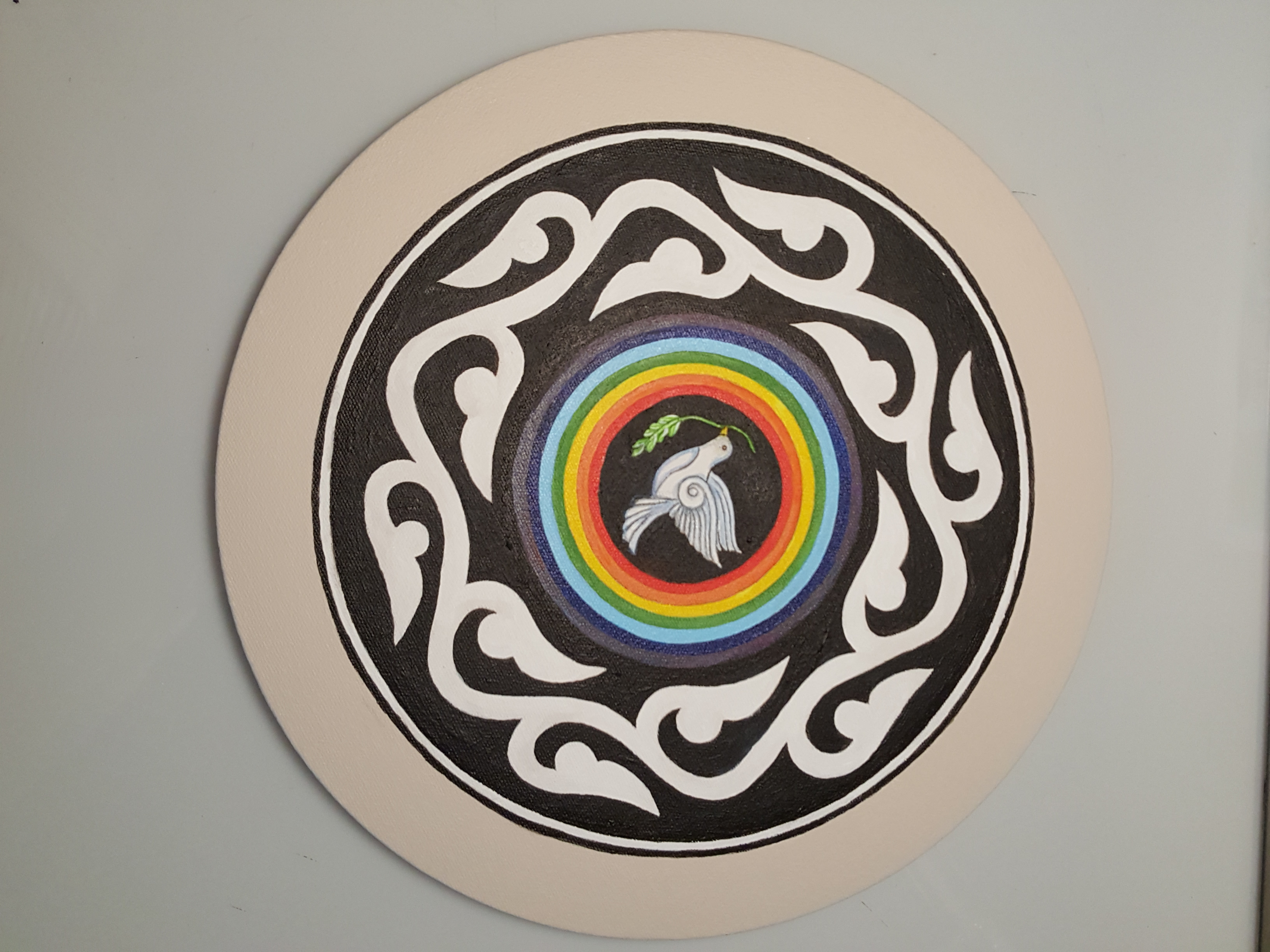
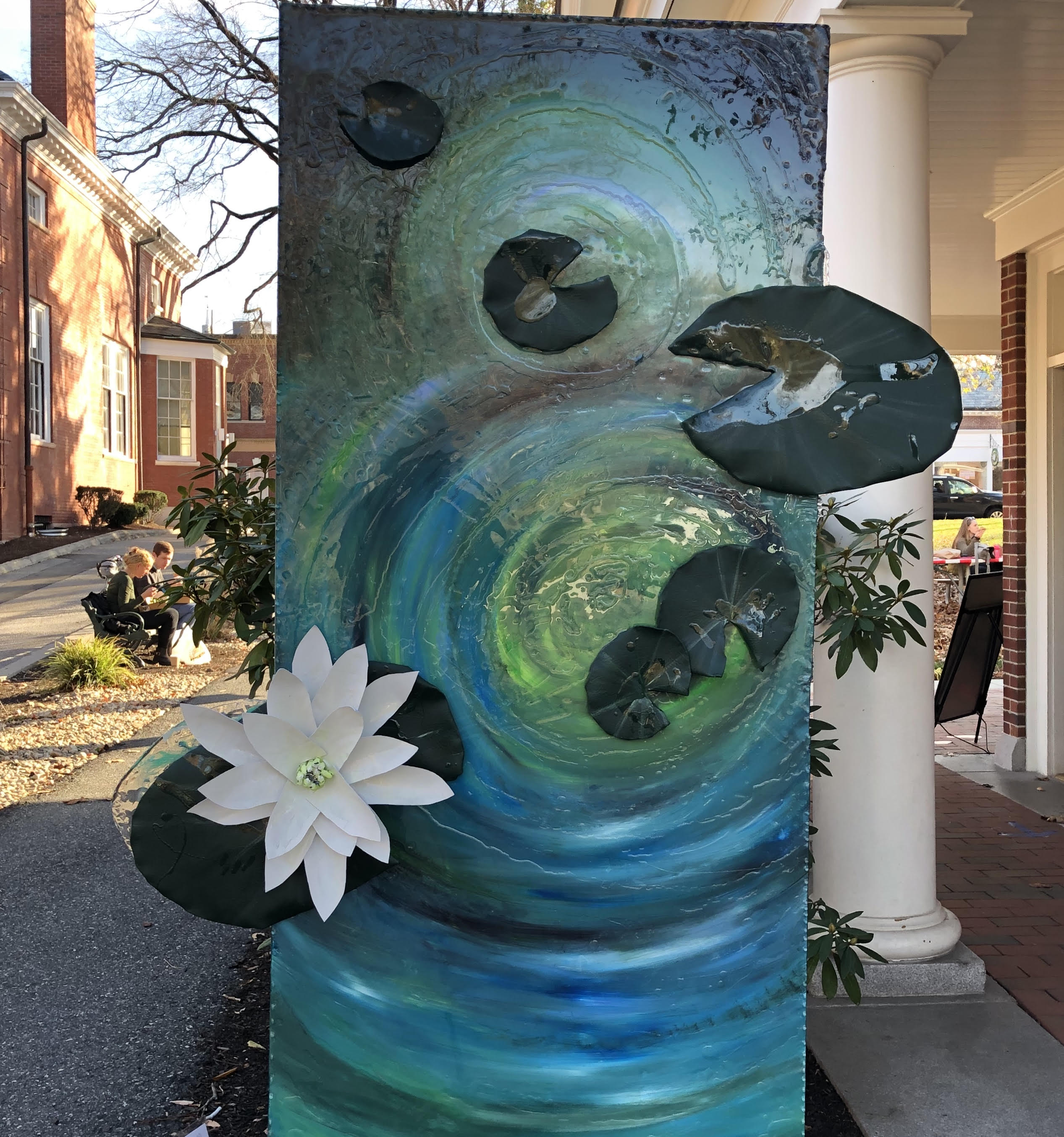
Most of the other photos speak for themselves, but the lovely dove design is by artist Kristina Joyce, a commission for one of her clients. That photo is followed by a painted door from one of the Umbrella artists.

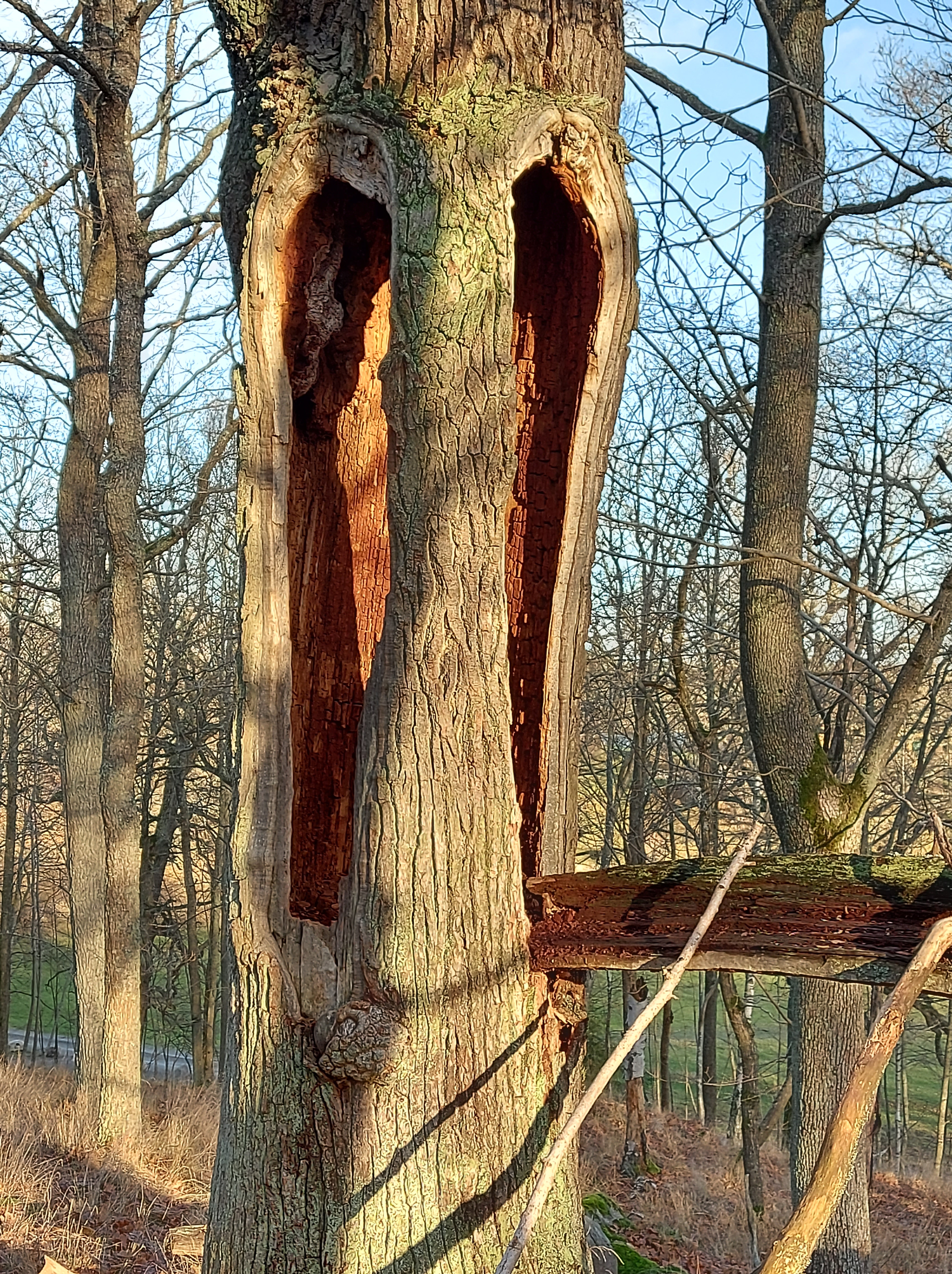
The last two pictures were sent by Stuga40 and were taken on walks in Stockholm.

Penguins Watching TV

Whether or not the penguins at the UK’s Sea Life actually “miss” having people around, the staff hoped to prevent boredom and keep penguins accustomed to visitors during lockdown by showing them movies. According to a senior curator, penguins prefer colorful, lively films and have no patience for romantic conversations.

Monica Humphries writes at Insider, “Like so many of us, the penguins at the Sea Life London Aquarium are getting into the holiday spirit by watching Christmas movies. As the aquarium’s Gentoo penguins await the arrival of [more] visitors, they’ve filled the past few weeks by watching holiday classics, like ‘Elf.’ …

” ‘It’s great to see how much our Gentoo Penguins are enjoying the Christmas movies we’ve put on for them,’ Leah Pettitt, an aquarist at the aquarium, said in a statement. …

“Experts at zoos and aquariums are constantly designing games and activities for animal enrichment, according to various zoo websites. They report that this enrichment stimulates, encourages, and challenges their minds and keeps animals’ natural instincts sharp. 

“There’s a long debate on whether animals should be held captive in the first place. Aquariums, for instance, often provide educational opportunities for children and adults alike, but on the flip side, they further the idea that animals should be held captive for human entertainment. For penguins in enclosures, enrichment is one way to help them engage in beneficial, natural behaviors. 

“In one study from 1995, researchers found that animal enrichment could improve health, like reproductive success or increased inclusive fitness. The same study notes that a common shortcoming of animal enrichment is when it has little function relevance, like listening to music or playing with toys. 

“A 2006 study found that an enriching environment decreases animals’ stereotypic behavior, which are repetitive and functionless actions, like pacing or overgrooming. 

“For penguins in enclosures, enrichment is one way to help them engage in beneficial, natural behaviors.  By watching Will Ferrel dressed as an elf, the penguins engage in one of the five forms of animal enrichment.

“And it’s not just the penguins at the London Aquarium enjoying Will Ferrell’s acting. Gentoo penguins in Sea Life aquariums across the UK have watched films and TV shows to stay entertained. 

“Earlier this year, penguins were spotted frolicking through the Nelson-Atkins Museum of Art in Kansas City, Missouri. Meanwhile, penguins were roaming the streets in Cape Town, South Africa.”

I admit I haven’t seen Elf and am probably not qualified to judge, but I’m having trouble imagining a Will Ferrell movie keeping any mind “sharp.”

More at Insider, here. You can also can listen to Public Radio International’s Marco Werman interview the aquarium’s senior curator, James Robson, about the project, here.

Love for Fungi

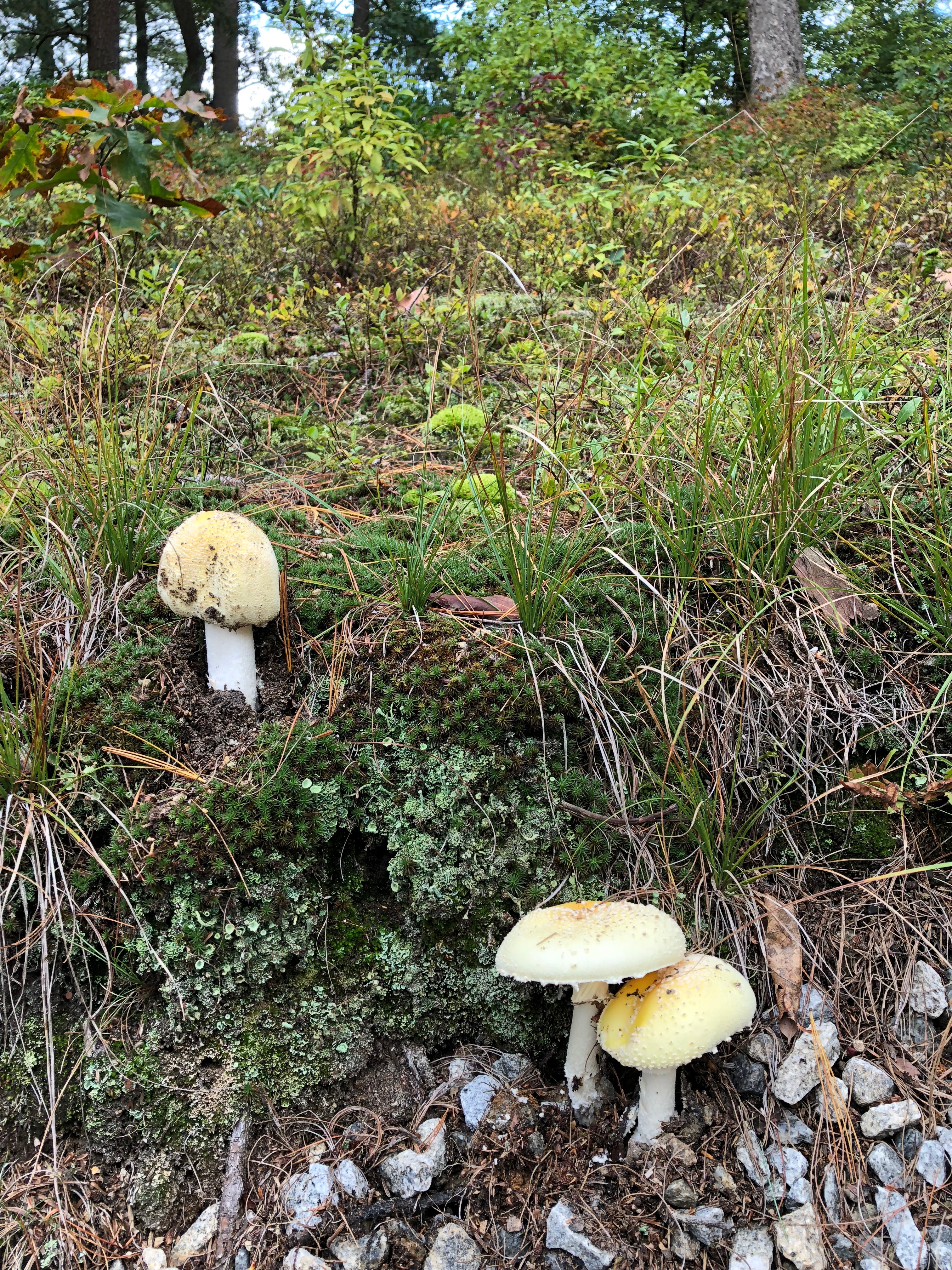
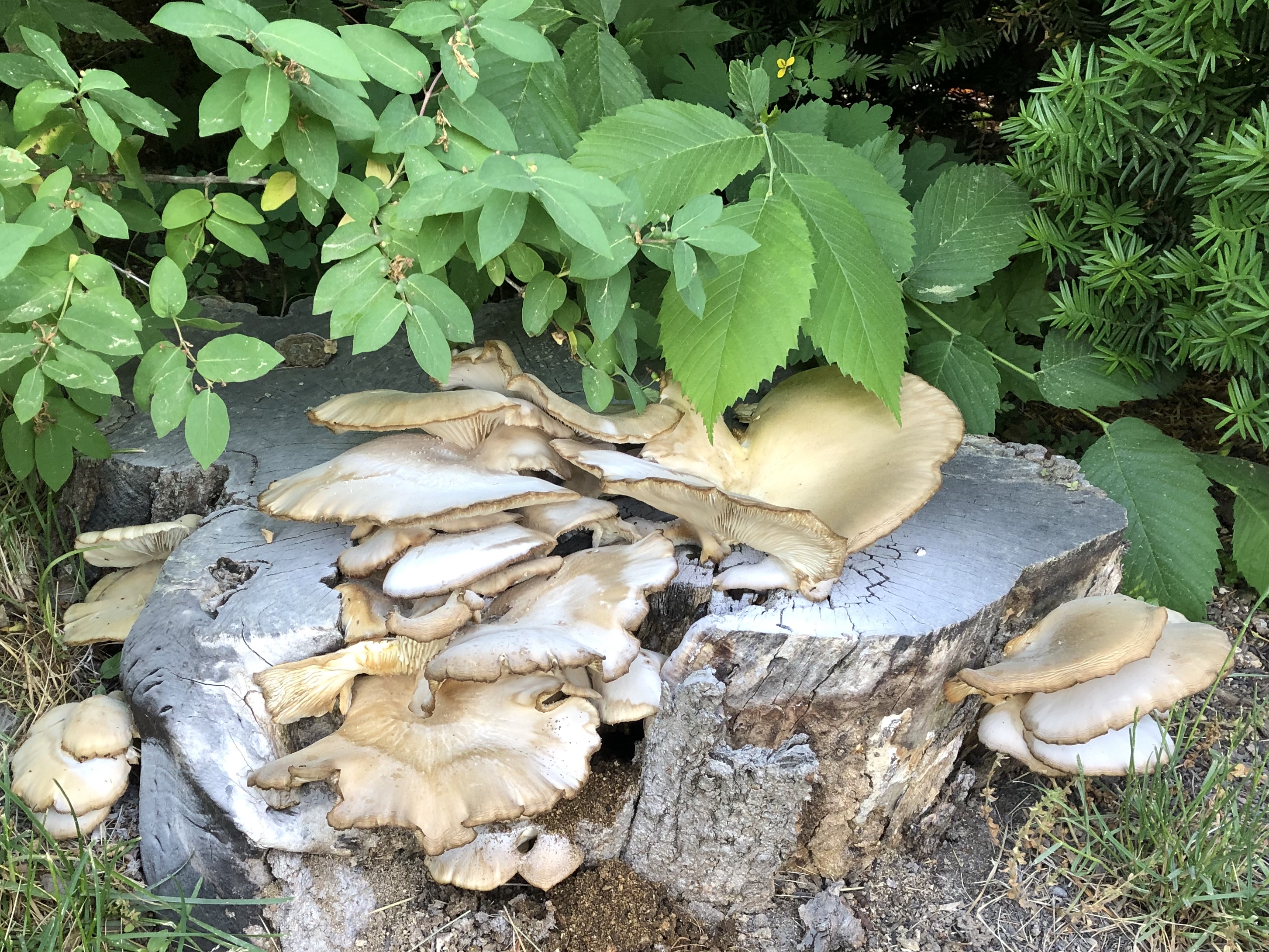
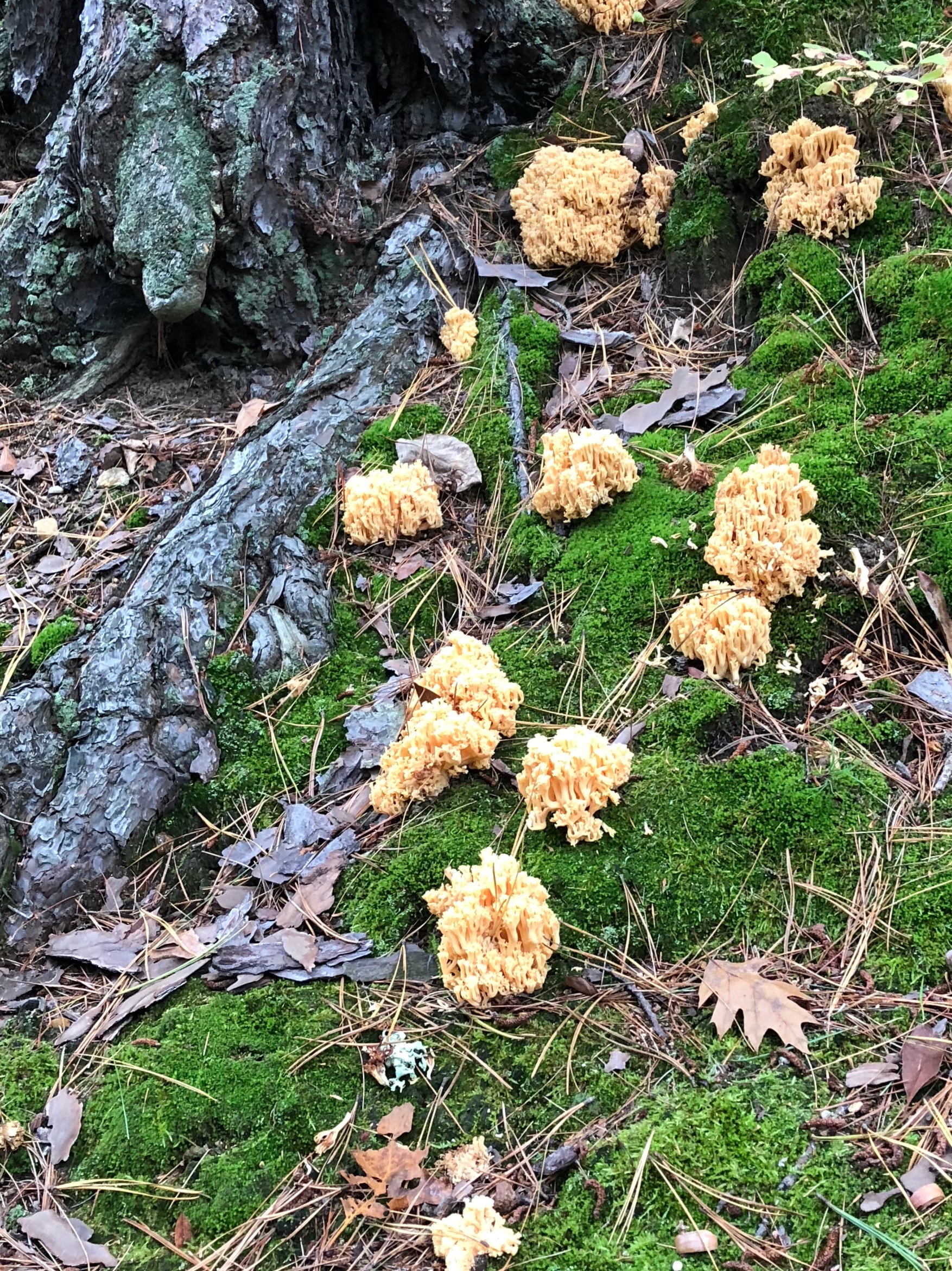
As a kid, I was kind of creeped out by fungi, but in recent years I’ve found myself fascinated by their unexpected beauty and mystery. And I’ve taken lots of pictures, three of which are here.

In an article at the New York Times, Ferris Jabr, describing the symbiotic relationship between trees and fungi, talks to forest ecologist Suzanne Simard about what trees are communicating with one another through their subterranean networks of fungi.

“By the time she was in grad school at Oregon State University, [Simard] understood that commercial clearcutting had largely superseded the sustainable logging practices of the past. Loggers were replacing diverse forests with homogeneous plantations, evenly spaced in upturned soil stripped of most underbrush. Without any competitors, the thinking went, the newly planted trees would thrive. Instead, they were frequently more vulnerable to disease and climatic stress than trees in old-growth forests.

“In particular, Simard noticed that up to 10 percent of newly planted Douglas fir were likely to get sick and die whenever nearby aspen, paper birch and cottonwood were removed. The reasons were unclear. The planted saplings had plenty of space, and they received more light and water than trees in old, dense forests. So why were they so frail?

“Simard suspected that the answer was buried in the soil. Underground, trees and fungi form partnerships known as mycorrhizas: Threadlike fungi envelop and fuse with tree roots, helping them extract water and nutrients like phosphorus and nitrogen in exchange for some of the carbon-rich sugars the trees make through photosynthesis.

“Research had demonstrated that mycorrhizas also connected plants to one another and that these associations might be ecologically important, but most scientists had studied them in greenhouses and laboratories, not in the wild. For her doctoral thesis, Simard decided to investigate fungal links between Douglas fir and paper birch in the forests of British Columbia. …

‘The old foresters were like, Why don’t you just study growth and yield?’ Simard told me. ‘I was more interested in how these plants interact. They thought it was all very girlie.’

“Now a professor of forest ecology at the University of British Columbia, Simard, who is 60, has studied webs of root and fungi in the Arctic, temperate and coastal forests of North America for nearly three decades. Her initial inklings about the importance of mycorrhizal networks were prescient, inspiring whole new lines of research that ultimately overturned longstanding misconceptions about forest ecosystems. By analyzing the DNA in root tips and tracing the movement of molecules through underground conduits, Simard has discovered that fungal threads link nearly every tree in a forest — even trees of different species. Carbon, water, nutrients, alarm signals and hormones can pass from tree to tree through these subterranean circuits.

“Resources tend to flow from the oldest and biggest trees to the youngest and smallest. Chemical alarm signals generated by one tree prepare nearby trees for danger. Seedlings severed from the forest’s underground lifelines are much more likely to die than their networked counterparts. And if a tree is on the brink of death, it sometimes bequeaths a substantial share of its carbon to its neighbors.

“Although Simard’s peers were skeptical and sometimes even disparaging of her early work, they now generally regard her as one of the most rigorous and innovative scientists studying plant communication and behavior. … In May, Knopf will publish [her] book, Finding the Mother Tree, a vivid and compelling memoir of her lifelong quest to prove that ‘the forest was more than just a collection of trees.’ …

“Before Simard and other ecologists revealed the extent and significance of mycorrhizal networks, foresters typically regarded trees as solitary individuals that competed for space and resources and were otherwise indifferent to one another. Simard and her peers have demonstrated that this framework is far too simplistic. An old-growth forest is neither an assemblage of stoic organisms tolerating one another’s presence nor a merciless battle royale: It’s a vast, ancient and intricate society. There is conflict in a forest, but there is also negotiation, reciprocity and perhaps even selflessness. The trees, understory plants, fungi and microbes in a forest are so thoroughly connected, communicative and codependent that some scientists have described them as superorganisms. …

“Together, these symbiotic partners knit Earth’s soils into nearly contiguous living networks of unfathomable scale and complexity. ‘I was taught that you have a tree, and it’s out there to find its own way,’ Simard told me. ‘It’s not how a forest works, though.’ ”

More at the New York Times, here.

Hat tip: Hannah.

Did you ever picture yourself running away from home as a kid? I did. I liked the book The Boxcar Children because it suggested that kids could manage on their own. Even as a young adult, I was still puzzling about it in my imagination but was never able to invent a scenario that didn’t involve some helpful adult.

When I read today’s story, I was reminded of that conundrum because the author, Sabra Boyd, notes the impossibility of getting any landlord to rent to a 14-girl-old with two younger siblings. Her article at the Washington Post also discusses how foraging for food influenced her cooking style.

“Desperate times call for comfort food,” Boyd writes. “And whenever I have time, making fresh pasta helps me embrace being home. … Rolling out fettuccine noodles is the only kind of meditation I have patience for these days. I press my hands firmly into the dough, feeling grateful to have a kitchen. I coat the rolling pin in extra flour and think about how, as a homeless teenager 20 years ago, I cooked using only a backpacking stove. Surviving teen homelessness prepared me for a pandemic in ways I never could have imagined.

“My mother first kicked me out when I was 14. … I didn’t know anyone to crash with, so I trudged uphill to the dark high school because I could not think of anywhere better to go other than the place I needed to be in the morning. I climbed the roof of the auditorium and took a clumsy parkour leap from the eave of my English classroom’s window. Tracing constellations with my finger, I pulled my hoodie tight against the cold. The glare of a neon crucifix, perched on a hill above the school, flooded the football field with light. I closed my eyes and tried to fall asleep.

“The following night, I sneaked into my mom’s house through a window and packed my camping gear. I set up my new home in a cave above the Elwha River. Sometimes I slept in an abandoned house in Eden Valley. When it grew too cold, I stayed at a hippie commune, in the goat stable, but I left when the commune became too dangerous. I returned periodically to check on my younger siblings, but Mom would fly into an alcoholic rage, so I spent most of high school homeless. …

“I kept my favorite nonperishables in a bear canister: instant noodles, dehydrated miso soup, granola bars and halvah. In the spring, I sauteed fiddleheads and horsetails in olive oil with my compact camp stove. In summer, I gorged on blackberries, delicately picked bright red thimbleberries and, when their pink blossoms fell, hunted for the electric hue of salmonberries. In the fall I gathered apples from wild orchards and scanned the sepia leaves on the forest floor, training my eye for a pop of yellow chanterelle.

“In winter I relied more on eating lunch at school and at work, or restocking my canister with trips to the co-op near my many after-school jobs. I worked as a barista, landscaper, maid, caregiver, caterer and pastry chef. I also volunteered for Olympic National Park’s revegetation crew and as a tour guide at the local aquarium. Volunteering and working all the time distracted me from everything going wrong in my life — plus, I hoped it would help me get into a good college far away. Volunteering also meant I could spend a few extra hours indoors if it was raining or cold outside.

Despite working seven days a week, I could never save enough money to persuade a landlord to rent an apartment to a 14-year-old girl and her two siblings.

“Striving to make fewer trips to the grocery store during the coronavirus pandemic has pushed me to become more creative and less precious about my culinary endeavors. … I am making Douglas-fir fettuccine Alfredo, or fettuccine al burro, named for its rich butter sauce, because the weather has turned cold and there is not much else to forage. The bright citrus tang of Doug fir is welcome when the days turn dreary, and I use it as a wild alternative to rosemary. …

“The leaves are most tender in the spring when they are neon, but they can be harvested year round, making this literally an evergreen recipe. The first rule of foraging is to be certain that you know what you are eating, because otherwise it can be dangerous.”

Get both the recipe and the rest of the story at the Washington Post, here.
Everybody needs books, maybe especially children who are developing. But children living in poverty often lack access.

I’ve blogged several times about efforts around the world to get books into the hands of poor children. (This post, for example, is about doing it by boat. And here’s one about delivering books on horseback and another by camel!)

Singer and philanthropist Dolly Parton is probably the best known person getting books to kids in the United States. We do have poverty here. Parton grew up poor and knows the discomfort of admitting you need help, so she gives out books without regard to family income.

Bharatha Mallawarachi writes at the Associated Press (AP) about a guy in Sri Lanka who is not famous but is equally determined to fill a need for reading material.

“During his leisure time, Mahinda Dasanayaka packs his motorbike with books and rides his mobile library — across mostly muddy roads running through tea-growing mountain areas — to underprivileged children in backward rural parts of Sri Lanka.

“Having witnessed the hardships faced by children whose villages have no library facilities, Dasanayaka was looking for ways to help them. Then he got the idea for his library on wheels. …

‘There are some kids who hadn’t seen even a children’s storybook until I went to their villages,’ he said.

“Dasanayaka, 32, works as a child protection officer for the government. On his off days — mostly during weekends — he rides his motorbike, which is fixed with a steel box to hold books, to rural villages and distributes the reading material to children free of charge. …

“His collection includes about 3,000 books on a variety of subjects. ‘Boys mostly like to read detective stories such as Sherlock Holmes, while girls prefer to read youth novels and biographies,’ he said. …

“He began the program in 2017 with 150 books — some of his own and others donated by friends, colleagues and well-wishers. He bought a second-hand Honda motorbike for 30,000 Sri Lankan rupees ($162). He then fixed a steel box on the bike’s pillion seat. …

“Apart from giving away books, Dasanayaka also speaks to the children for a few minutes, usually under a roadside tree, highlighting the value of reading, books and authors. He then conducts a discussion on books the children have read, with the aim of eventually forming reading clubs.

“His program has spread to more than 20 villages in Kegalle. He also has expanded it to some villages in Sri Lanka’s former civil war zone in the northern region, more than 340 kilometers (211 miles) from his home.

“The long civil war ended in 2009 when government troops defeated Tamil rebels who were fighting to create a separate state for their ethnic minority in the north.

“Dasanayaka, who is from the ethnic majority Sinhalese, believes books can build a ‘bridge between two ethnic groups. … Books can be used for the betterment of society and promote ethnic reconciliation — because no one can get angry with books,’ he said.

“He also has established mini libraries at intersections in some of the villages he visits, giving children and adults a place to share books. These involve installing a small steel box that can be opened from one side onto a wall or on a stand. So far, he has built four such facilities and aims to set up 20 in different villages.

“While Dasanayaka spends his own money on his program, he is not wealthy, with a take-home income of 20,000 rupees ($108) a month from his job. He said he spends about a quarter of that on gasoline for his mobile library. …

“ ‘I live a simple life,’ he said. ‘No big hopes, and I am not chasing after material values such as big houses and cars.’ …

“Dasanayaka said he does not seek any monetary benefit from his program.’My only happiness is to see that children read books, and I would be delighted to hear the kids say that books helped them to change their lives.’ “

More at AP, here.

Although headlines tend to feature the thoughts of leaders with limited imagination, that doesn’t stop other people from thinking. Stories like today’s make me happy, whether or not the ideas ever are fully implemented, because it’s reassuring to know there are always people working on creative solutions to problems.

Phoebe Weston writes about a UK mall at the Guardian, “An empty 1970s shopping centre in Nottingham could be transformed into wetlands, pocket woodlands and a wildflower meadow as part of a post-pandemic urban rewilding project.

“The debate about Broadmarsh shopping centre, considered an eyesore by many, has rumbled on for years. This year it was undergoing a [$116 million] revamp by real estate investment trust Intu when the firm went into [bankruptcy]. …

“As retail giants such as Debenhams and Arcadia Group falter, Nottinghamshire Wildlife Trust has come up with a new model of inner city regeneration: urban rewilding.

“The trust wants to bulldoze the already half-demolished Broadmarsh building and turn it into [6 acres] of scruffy green space at an estimated cost of [about $5 million]. The designs were created with Influence Landscape Architects and could set a precedent for what to do with the growing amount of vacant retail space in other cities. …

“Ponds surrounded by reeds, crocus meadows and wet grasslands would attract butterflies, dragonflies and a range of birds including reed warblers and black redstarts, according to the Wildlife Trust, which is calling on people to back its green vision. It will put its plans to Nottingham city council in the coming weeks as the authority canvasses views on what Broadmarsh could become as part of a 10-week consultation process.

“The proposed scheme would run counter to the conventional idea of urban parks and instead hark back to what Broadmarsh would have looked like in centuries gone by.

“ ‘Often open spaces in cities can be manicured and a bit formal,’ said [Sara Boland, managing director of Influence].

‘The idea of this was to have more rewilding, restoring, protecting [so] the zones we then developed were about foraging, pond dipping and protecting species.’

“Nineteenth-century maps helped architects get a clear picture of what this part of Nottinghamshire once looked like – a fertile garden area covered in fruit trees. Old street names include Pear Street and Peach Street; those fruits would be grown in the park to reflect its heritage. Crisscrossing the park would be walkways based on centuries-old street layouts.

“Nottingham Wildlife Trust has long wanted to create green corridors in this area of the city to connect it to Sherwood Forest to the north. It has put up nest boxes on many buildings close to Broadmarsh to encourage black redstarts, which used to live in the city but are now rarely seen. …

” ‘Over the past 20 or 30 years … we’ve submitted ideas for roof gardens and new avenues, all sorts of greener features,’ said Erin McDaid, head of communications and marketing at Nottinghamshire Wildlife Trust. ‘We feel this could be a real opportunity for the city to stand out from the crowd as cities across the UK look to recover their economies and find a new direction for urban centres.’ …

“ ‘Anyone coming into Nottingham on the train would have to pass by [Broadmarsh] before they reached the city centre, and it was just this horrible, ugly building with no windows. It was very unwelcoming,’ [Nottingham resident Ewan Cameron] said. …

“David Mellen, Nottingham city council leader, said the conversation about the Broadmarsh site had captured people’s imagination. He said: ‘It’s a once-in-a-generation opportunity to reimagine a significant space right in the heart of one of the country’s core cities.’ ”

More at the Guardian, here.

Rare Minerals on Mars

Today I’m putting the idea of mining on Mars out there not because it’s imminent but because I’d appreciate hearing folks’ views on that sort of thing. I know we use rare minerals such as those on Mars for all our electronics, but on Earth the mining leads to exploitation and pollution in places like Africa and Afghanistan.

Here’s what Kenneth Chang at the New York Times has to say about the potential of Mars and how certain microbes could perform a cleaner kind of mining.

“Microbes may be the friends of future colonists living off the land on the moon, Mars or elsewhere in the solar system and aiming to establish self-sufficient homes.

“Space colonists, like people on Earth, will need what are known as rare earth elements, which are critical to modern technologies. These 17 elements, with daunting names like yttrium, lanthanum, neodymium and gadolinium, are sparsely distributed in the Earth’s crust. Without the rare earths, we wouldn’t have certain lasers, metallic alloys and powerful magnets that are used in cellphones and electric cars.

“But mining them on Earth today is an arduous process. It requires crushing tons of ore and then extracting smidgens of these metals using chemicals that leave behind rivers of toxic waste water.

“Experiments conducted aboard the International Space Station show that a potentially cleaner, more efficient method could work on other worlds: let bacteria do the messy work of separating rare earth elements from rock. …

“On Earth, such biomining techniques are already used to produce 10 to 20 percent of the world’s copper and also at some gold mines; scientists have identified microbes that help leach rare earth elements out of rocks.

“[Charles S. Cockell, a professor of astrobiology at the University of Edinburgh,] and his colleagues wanted to know whether these microbes would still live and function as effectively on Mars, where the pull of gravity on the surface is just 38 percent of Earth’s, or even when there is no gravity at all. So they sent some of them to the International Space Station last year.

“The results, published [Nov. 10] in the journal Nature Communications, show that at least one of those bacteria, a species named Sphingomonas desiccabilis, is unfazed by differing forces of gravity. …

“At the space station, Luca Parmitano, a European Space Agency astronaut, placed some of [Bacteria and basalt samples] in a centrifuge spun at speeds to simulate Mars or Earth gravity. …

“For two of the three types of bacteria, the results were disappointing. But S. desiccabilis increased the amount of rare earth elements extracted from the basalt by roughly a factor of two, even in the zero-gravity environment. … The results were even somewhat better for the lower Mars gravity. …

“ ‘Certainly this isn’t a demonstration of commercial biomining. … [But] I think eventually, you could scale this up to do it on Mars,’ Dr. Cockell said.” More here.

I wonder — by the time countries are capable of doing mining on Mars, will we even be using those minerals?

Photo: ESA & MPS for OSIRIS Team
Planet Mars, the “red planet.”

Less-Polluting Tires

Today’s post features two articles on a worrisome environmental issue. In the Guardian, Oliver Milman reports that pollution from abandoned tires is killing off salmon in the Pacific Northwest and may be harming other wildlife as well. But at the Christian Science Monitor, writer Lindsey McGinnis suggests help is on the way.

Oliver Milman: “Pollution from car tires that washes into waterways is helping cause a mass die-off of salmon on the US west coast, researchers have found.

“In recent years, scientists have realized half or more of the coho salmon, also known as silver salmon, returning to streams in Washington state were dying before spawning. The salmon, which reach 2ft in length, are born in freshwater streams before making an epic journey out to sea where they live most of their adult lives. A small number then return to their original streams to lay eggs before dying.

“The cause of the die-off has remained a mystery but a new study, published in Science, has seemingly found a culprit. When it rains, stormwater carries fragments of old car tires into nearby creeks and streams. The tires contain certain chemicals that prevent them breaking down but also prove deadly to the coho salmon. …

“Said Jenifer McIntyre, an assistant professor of aquatic toxicology at Washington State University. ‘The more we look, the more we find it. In some years all of the fish we find dead did not spawn.’

“Samples taken from urban streams around Puget Sound, near Seattle, and subsequent laboratory work identified a substance called 6PPD, which is used as a preservative for car tires, as the toxic chemical responsible for killing the salmon.”

What can be done? Lindsey McGinnis talks to a group of inventive young people in England who may have an answer.

“Every time a car brakes, accelerates, or changes direction, the friction wears down the exterior of the tire, sending particles into the environment. Some remain suspended in the air, and others get swept into local waterways, where they can have devastating effects on plant and animal life. …

“A group of master’s students from Imperial College London and the Royal College of Art had an idea: what if the tires picked up after themselves?

“The Tyre Collective, a project by recent graduates Hugo Richardson, Siobhan Anderson, Deepak Mallya, and Hanson Cheng, seeks to capture this stealthy pollutant as it flies off the wheel. For the past year, they’ve been working on a device that can attach to the bottom of a car and use electrostatic charges, along with the airflow of the moving wheel, to collect particles for reuse.  

“The inspiration came from rubbing a balloon over a sweater and seeing the pieces ‘dancing around,’ says Mr. Richardson, chief technical officer of The Tyre Collective. ‘That led us to the assumption that the particles are charged due to the friction.’ ” 

The Tyre Collective won the 2020 James Dyson Award for the UK, which celebrates the next generation of design engineers. It was a runner-up for the international version of the award.

“Gavin Whitmore, manager of the Tire Industry Project, an initiative by the World Business Council for Sustainable Development geared toward better understanding the potential health and environmental impact of tires, says his organization is keeping an eye on their work … said, ‘We’re certainly interested to learn more, because it could be a very, very promising thing.’

“Tires are more complex than they look. The vulcanized rubber compound that makes up the outermost layer, the tread, often contains sulfur, zinc, carbon black, bisphenol A (BPA), and other chemicals. A lot of that gets swept off the roads by rain, along with motor oil, bits of pavement, and other litter.

“A three-year study by the San Francisco Estuary Institute (SFEI) found that stormwater carries roughly 7 trillion microplastic pieces into the bay annually – more than 300 times the discharge from the area’s wastewater treatment plant. Nearly half of those appear to be tire fragments.

” ‘Seeing all these black rubbery particles was a surprise,’ said Rebecca Sutton, a senior scientist at SFEI. … ‘No one had really looked at stormwater. It’s also probably just a tip of the iceberg, because most tire particles are actually smaller than our sieve size.’ …

“Tires are the second-largest source of primary microplastic pollution in the ocean, after synthetic textiles, according to the International Union for Conservation of Nature and Natural Resources. To reduce the amount of tire pollution, Dr. Sutton says governments could consider setting emission standards similar to those for engine exhaust.

“But it can be hard to figure out how much material tires are actually shedding, or should be shedding. Tire wear is heavily influenced by the roadway, the weight and type of vehicle, and the driver’s behavior. In London, The Tyre Collective says a busy bus route can generate a grapefruit-size pile of tire dust in a day. …

“Says Sarah Amick, vice president of environment, health, safety, and sustainability for the U.S. Tire Manufacturers Association, ‘Tires are one of the most regulated products for safety in the United States. [Ensuring] that we can continue to meet those safety requirements, plus adding more renewable and recyclable materials to our tires, it’s a challenge, but our members are working on that.’ …

“During lockdown, the [Tyre Collective] team has focused on turning their vision into a full-fledged startup. They say several manufacturers have expressed interest in their design, though no partnership has been formalized yet. When restrictions due to COVID-19 ease, they’re looking forward to returning to the lab and producing a set of first-generation prototypes to test with potential partners.” More

I first heard about an unusual crafting community in New Jersey when Ann sent me a video of her online textile instructor. Peters Valley School of Craft was founded in 1970, but it has the vibe of a early American craft colony. That sense of highly skilled artisans with a united, focused purpose also reminds me of the Rochester Folk Art Guild, which we used to frequent when we lived in upstate New York.

Here’s a report on an exhibit celebrating Peters Valley School’s 50th year.

Ilene Dube writes at Hyperallergic, “I recently visited the Peters Valley Craft Fair, usually held in the Delaware Water Gap National Recreation Area. This year, without leaving home, I could drop in on artists in their studios in Buffalo, New York, Portland, Maine, and Bristol, Connecticut, within a matter of minutes, watching them work and talking with them one-on-one about their processes. And this past summer, I was able to attend Peters Valley faculty presentations — one of the highlight events for those studying at Peters Valley School of Craft — every Friday night via Zoom. I traveled to studios all over the world.

“Physically based in Layton, New Jersey, Peters Valley School of Craft is celebrating its 50th anniversary with an exhibition at the Hunterdon Art Museum in Clinton, New Jersey — and yes, you can … visit live if you are properly masked. From the Ground Up, on view through January 10, recounts the story of Peters Valley from its earliest formation as an experimental craft colony, to the prominence of its women blacksmiths in the early 2000s. What better way to tell the story than through the works in fiber, jewelry, ceramics, wood, photography, and metal produced during artist residencies?

“Peters Valley began in 1970 as a planned colony of resident blacksmiths, ceramists, fiber artists, metalsmiths, woodworkers, and photographers who populated the site’s 18th- and 19th-century buildings. Over time, Peters Valley’s (non-degree) educational mission evolved into the craft school it is today, bringing together students with artists of local, national, and international renown for immersive workshops.

“Peters Valley was the ancestral home of the Delaware Tribe of Indians, Delaware Nation, and Stockbridge-Munsee Community. Dutch and British colonists forced their removal beginning in the 17th century, then worked the farmland for generations.

“Peters Valley acquired the land as a result of the aborted, and controversial, 1950 proposal to build the Tocks Island Dam, which would have created a 37-mile reservoir between New Jersey and Pennsylvania but instead became the Delaware Water Gap National Recreation Area. Among the 72,000 acres acquired through eminent domain was the village of Bevans, now home to Peters Valley.

“The founders had to convince the National Park Service of the value of putting a craft community there, and the original craft fair was produced to gauge interest. With 30 exhibitors, the organizers expected hundreds would visit; thousands came.

“In a soon-to-be-published catalogue, Andrew Willner, one of the first residents-in-wood, recounts that a week before students were to arrive that first summer in 1971, the small team realized everyone had to be housed and fed, and sprang into action.

“ ‘We found a prep table, an old refrigerator, and made a dining room,’ Willner said.

‘The dormitory was fashioned from an old farmhouse. We planted a garden, and by August that garden was feeding people who were enrolled in classes and staying at the valley. For many of us, it was our first experience living communally and it has had lifelong implications. …

“ ‘Learning from each other was an important element. We were in and out of each other’s homes and studios. All of us were able to take a hand at iron forging, jewelry making, ceramic and fiber arts. We even baked bread together.’

“My enchantment goes back to visiting as a teenager when my parents had a summer home in the nearby Pocono Mountains. … The hand-made ceramics and weavings, as well as the soot on the blacksmiths’ overalls and the stir-fried veggies served over brown rice at that early craft festival made me feel like I was among my people. …

“Participants share meals, mostly vegetarian, in the communal dining hall. In the summer of 2019, I met and was starstruck by the blacksmith and faculty member Elizabeth Brim, who renders frilly dresses, strappy stilettos, and bonnets in iron, transforming the gender expectations of her childhood. …

“In addition to its acclaimed blacksmithing and fiber art classes, Peters Valley is known in the ceramics world for its anagama kiln. ‘It gives you surfaces that are stunningly beautiful and really can’t be made any other way,’ said Peters Valley Executive Director Kristin Muller, who found her way to Peters Valley as a ceramic artist and wood-fire expert. Muller’s ‘Pod Vessel,’ fired in the anagama, is on view at the Hunterdon.

“Anagama kilns were introduced to Japan from Korea in the third century. Japanese kiln builder Katsuyuki Sakazume spent a year constructing the 46-foot long, tunnel-like structure, burrowing into the hillside at Peters Valley. Fired only once a year, it takes two to three days to load, and another five to six days to fire, burning 25,000 pounds of wood. A community forms around the ritual, which involves stoking the fire round the clock. The flames, gases, and ashes exposed to the clay in the single-chamber kiln impart their magic to the finished piece. It is said that the fire is an active participant in the process.”

Read more about this unusual place at Hyperallergic, here.

Countering Medical Debt

This is such a great idea. It shouldn’t be necessary in a country rich enough for CEOs to earn billions of dollars, but that’s where we are. Today’s story is about churches that have taken it on themselves to relieve struggling patients of intolerable burdens by buying up medical debt for pennies on the dollar.

In an opinion piece in the New York Times, Elizabeth Bruenig writes, “Vanessa Matos couldn’t believe what she was reading. ‘I was like, OK, this is a scam,’ she recalled of the letter she received in February. …

“Ms. Matos’s medical debt — more than $900 owed because of complications from surgery at the Massachusetts hospital where she had worked as a nurse — had been forgiven by strangers at a church she had never been to.

“Adam Mabry, the lead pastor of that congregation, Aletheia Church, a multiethnic, 1,400-member Boston-area Christian community, doesn’t know Ms. Matos, and she doesn’t know him; the two have never spoken. …

“Aletheia worked through RIP Medical Debt, a charitable organization founded in 2014 by two former debt collection executives, Craig Antico and Jerry Ashton. It uses donations to buy portfolios of medical debt at a fraction of their value — and then forgives it.

“Debt is a particularly destructive consequence of an American health care system that treats medical care as a consumer good. A Kaiser Family Foundation survey in 2018 found that 67 percent of Americans worry about paying for unexpected medical bills. …

“In just societies, these debts do not exist. But in our society, charity must stand in for justice so long as the latter is in short supply.

“Partners of RIP Medical Debt need not raise the actual amount of money they intend to relieve in debt, because the price of debt reflects what collectors could recover — far less than is owed. That means a buyer can eliminate the debt for much less money than the debtor could.

RIP Medical Debt estimates that just one dollar can purchase, and relieve, $100 in medical debt.

“So with a series of relatively moderate fund-raising efforts and donations from corporations, nonprofit and religious groups, and individuals, RIP Medical Debt said, it has been able to eliminate almost $2.7 billion in medical debt.

“Some religious congregations … grasp what our legislators can’t: The cost of survival in this country is unconscionable, and we all share a moral obligation to do something about it. …

“Forgiving medical debt has managed to ally very different Christians behind the same cause.

“Mr. Mabry, for example, cheekily described his theological stance as ‘historically boring and orthodox,’ even evangelical. Most people ‘would associate social concern with progressivism and maybe theological liberalism,’ he said, but ‘the great majority of actual social programs are funded and executed by really frustratingly conservative, boring, historic, orthodox people.’

“The Rev. Traci Blackmon is associate general minister of justice and local church ministries for the United Church of Christ, a fairly liberal denomination. ‘The U.C.C. has no rigid formulation of doctrine or attachment to creeds or structures,’ the church’s website says. ‘Its overarching creed is love.’

“A recent campaign led by the church abolished more than $26 million in medical debt throughout New England, and the church plans to expand efforts to include the entire country. …

“ ‘We’re buying somewhere close to $100 worth of debt for a dollar,’ she told me, ‘and when you think about how many people’s credit is being ruined, how much access is being denied people because they can’t pay that bill, and I can come and pay your $5,000 bill with $12 — that’s not just.’ …

“The trouble with medical debt is that it is a consequence of the way our health care system is structured, with individuals owing, even in the best case, some out-of-pocket costs for their care. Debt may be eliminated today, but more will begin accumulating tomorrow unless drastic changes are made. …

“There is an apocryphal statement often attributed to Saint Augustine, who helped lay the foundations of modern Christian theology: ‘Charity is no substitute for justice withheld.’ “

More at the New York Times, here.