Feeds:
Posts
Comments

If you live anywhere near Worcester, Mass., try to get to a unique photography exhibit at the Worcester Art Museum by February 25.

Asakiyume and I meet up about once a year, often in a museum, and we saw three interesting shows at the Worcester Art Museum over the Martin Luther King, Jr., holiday.

First, we checked out a small exhibit on antique Japanese metalwork from the Higgins Armory collection. I thought Asakiyume would be interested because of her many ties to Japan. We especially liked a tiny metal dragon and a lifelike lobster — beautiful.

We appreciated the museum’s main event, too, a show featuring art Winslow Homer created while living in England. Related work by J.M.W. Turner and other artists who influenced Homer filled out the exhibit, here.

But it was the collection of William Bullard‘s recently discovered photos of an early 20th century mixed-race Worcester community that had us riveted. Asakiyume wrote about it on her own blog, here.

What was the most remarkable aspect? That there was a mixed-race community at all in Massachusetts at that time? That the photographer whose photos were mostly of African Americans was white? That his subjects looked so relaxed, as opposed to the stiff people seen in most portrait photography of the time? That the works were lost for decades? That they were recovered in the form of glass slides and were printed for the first time for the show?

No, I think what touched us the most were quotations in certain wall texts. Amazingly, the photographer kept detailed notes on who everyone was, so stunned descendants of many subjects got to see their ancestors for the first time or to learn that a family legend was true.

The photographer was poor and couldn’t afford handsome settings. Some subjects had to pose in front of a worn sheet. Bullard lived with his mother and earned little money or recognition from his avocation. He died by his own hand.

How I wish he could have seen what his art meant to people! It wasn’t until the purchaser of the slides remembered he had also bought Bullard’s logs that two and two made four.

Reports the Daily Mail, “In January 2014 [purchaser Frank J. Morrill] and Clark University history professor Janette Thomas Greenwood and her class began researching the stories behind Bullard’s subjects, constructing rich individual narratives and community history. ” (Asakiyume found the Daily Mail article. Read it here and enjoy the array of pictures.)

The Worcester Art Museum adds, “A comprehensive website hosted by Clark University (www.bullardphotos.org) offers teaching resources for educators, all of the photographs and sitters featured in Rediscovering an American Community of Color, a map of the Beaver Brook neighborhood (circa 1911), and additional research written by the Clark students who participated in a seminar related to the exhibition.”

Asakiyume took this photo of Bullard’s photo because she loved sweet-faced Luvenia Ward (right), shown here with her sisters. The photo was printed in 2016 from recently discovered glass slides of Worcester, Mass., photographer William Bullard (1876-1918).

First There Was Ice

010618-ice-lanterns-Arlington 2


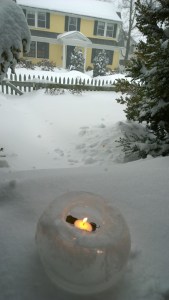
When you don’t have to travel, ice and snow are not the burden they are to a driver. You can wander a little outside your home and take pictures, bake banana bread, put out carrots for the bunny that appears at dawn, feed the birds, make ice lanterns.

The ice lanterns above were made by John’s children, and the photo was taken by my daughter-in-law. I love the smoky, swirly, mysterious aura that she captured.

My own 2018 ice lantern is below. My husband was critical to the enterprise. If you want to make an ice lantern yourself, check out an earlier post, here. You need a really cold day.

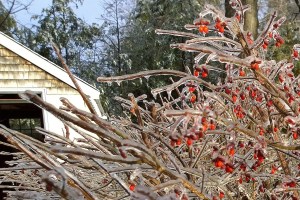
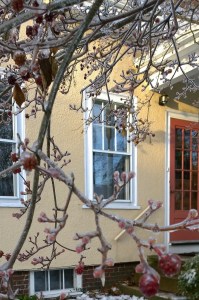
Right before Christmas, I took several photos of ice on trees and bushes because it looked so pretty. I know it’s not good for plants, though.

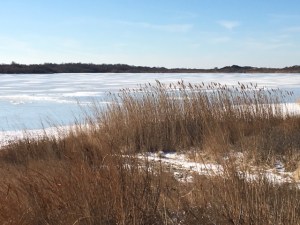
Sandra M. Kelly is the photographer behind the two photos of frozen bodies of water in New Shoreham — water that hardly ever freezes. It didn’t stay frozen long enough for her to get shots of ice boat racing, however. New England is swinging too quickly from deep freeze to balmy.

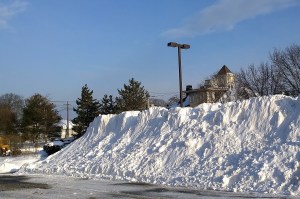
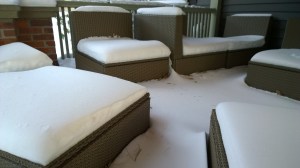
The big snow January 4th produced the mountain I noticed in a parking lot and the deceptive cushions on Suzanne’s porch furniture.

010418-newest-ice-lantern

122417-nice-ice-not-great-for-bush


010318-lacy-ice

122417-when-ice-in-the-dooryard-bloomed


010318-Sandra-Kelly-Block-islandJPG

010318-Sandra-Kelly-New-Shoreham-frozen-pond


0518-snow-pile-in-parking-lot

010818-snow-pillows-Providence


Photo: Tim Clyne
Genesis Blu calls herself a “raptivist” — a mix of rapper and activist. She also works as a psychotherapist.

I heard Genesis Blu interviewed on National Public Radio (NPR) one day when I was driving and thought you might be interested. She is a rapper, an activist, and a psycotherapist.

NPR’s Lulu Garcia-Navarro interviewed her at SugarHill Recording Studios, where Genesis Blu recorded the tracks for her EP, “Bluming Season.”

“Genesis Blu calls herself a ‘raptivist,’ mixing hip-hop with advocacy. She says she dedicates time to ‘facilitating change in her community.’ The dual passions for politics and music started at a young age.

” ‘I would be like 12 years old, going to a nightclub, where people are smoking and drinking. I was always a different type of kid, so my songs would be about the struggle, the political climate — even that young. And they would be like, “Where is this little girl coming from with this stuff?” ‘

“But when she got older, she put the music career on hold and focused on school — a lot of school. She got a bachelor’s, a master’s and started her doctorate. Until she had an epiphany one day — she wanted to be back in the community, writing music. She was in the middle of her dissertation.

” ‘I literally stopped that day, put down that pen and picked up another pen and a notepad and began to write music,’ she says. ‘And I’ve been doing that since.’

“Well, it’s not quite all of what she’s been doing since. She’s also a full-time psychotherapist. Blu works with children and families and teens ‘who are removed from their home due to abuse of some sort or due to their emotional disturbances,’ she says.

” ‘People ask me to choose [between music and therapy] and I cannot, I love them equally,’ she says. ‘Because you’re able to change lives both ways.’ ”

Here are some highlights of the interview.

” ‘I don’t want my people left behind. So, what’s happening [in Houston] right now is gentrification, in the worst way. They are pushing these people out. And there’s not many other options [of places] to go, because we don’t have a great public transportation system …

” ‘It’s upsetting a lot of us who have been in this community and are working in this community. And so even though I’m very happy about the diversity, what it also is doing is allowing people to come in with a bunch of money, throw money at some things, tear some things down, buy it out — and then leave the people who have been here stranded.’ …

” ‘My history is that my grandmother grew up in another neighborhood in Houston as well called Acres Homes. So living between Greenspoint and Acres Homes, which were rivals at the time when I was a kid by the way. So I would have to go to my grandmother’s house after school if my mother couldn’t be home from work.

” ‘And that was interesting because I was bullied — a lot. Because I’m too proper for the black kids and I’m not white enough for the white children, so I’m in a very awkward place. But still loving the culture of where I come from.

” ‘But my grandmother was also an activist. She was very influential in the war on drugs here in Houston. So … she would have me marching with her. So I get that from her.’ ”

More at NPR, here.

You probably don’t need to be told this, but bathing yourself in nature can help you calm down, reduce stress. When I was a child, I lived near forest and could take a walk in the woods almost anytime. Not everyone can do that, which is why it’s so important to bring nature into cities and towns as much as possible. Even listening to recordings of nature can be soothing.

Anjali Nayar at Motherboard writes, “When Cale Holmes moved from Virginia to New York City for grad school, he started to have trouble sleeping. All night long the trains thundered past his building, garbage trucks groaned, and police sirens wailed. …

“One night, Holmes recalled how calm he used to feel whenever he visited a beach. He went to YouTube and ran a search for ocean sounds. Innumerable recordings of ocean waves popped up, some as long as 12 or 14 hours. He selected a nighttime version and let his room fill with the sound of the crashing of waves. …

“The next thing he knew, warm sunlight was filtering in through the curtains. When he checked his laptop, he saw that the recording had paused at just after four minutes when the laptop had powered off. … How had the recording helped him so much? …

“Jake Benfield, soundscape researcher and professor of Environmental Psychology at Penn State University, has been studying nature sounds for over a decade. … In 2014, Benfield led a research study to examine whether natural sounds had any impact on participants’ moods. The researchers first evaluated the volunteers’ moods and then deliberately spoiled their moods by showing them disturbing medical videos of hand surgeries. ‘As we would expect,’ Benfield said, ‘watching medical videos makes people disgusted, negative, and generally in a bad mood.’

“The researchers then randomly assigned the volunteers to three groups and made them listen to different soundscapes. One group was made to listen to city sounds and traffic. Members of this group reported that their moods became worse. Another group listened to mixed environments containing nature and city sounds, and this group reported no significant mood changes.

“The third group, however, listened to purely natural sounds — like the sound of the wind rustling through trees or the chirping of birds. Participants in this group reported a complete mood recovery.”

In another study, Benfield told Motherboard, “Researchers at University of Gavle, Sweden [designed] an ambiguous, fuzzy sound, which wasn’t entirely discernible, and hence open to interpretation. The researchers then enlisted participants and told half of them that the sound was that of a waterfall while telling the others that it was from an industrial source.

“What they discovered was that the first group, the one that had thought that the sound was that of running water, showed remarkable mood recovery. On the other hand, the second group that had assumed the sound was unnatural, reported no mood recovery.”

Several related studies are described at Motherboard, here. Enjoy!

Quilters in Liberia

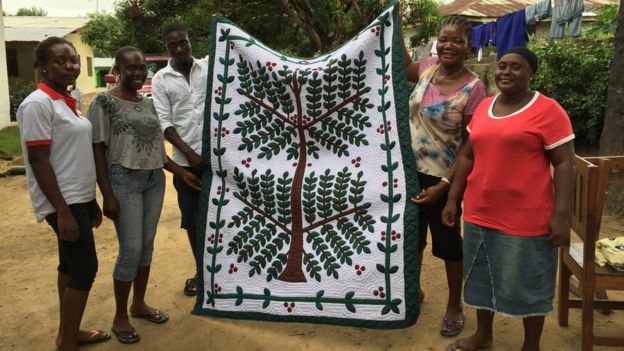
A quilt in Liberia’s executive mansion. Former president Ellen Johnson Sirleaf was a great booster of Liberia’s quilting tradition.

Here’s a tidbit for the quilters who visit this blog.

According to Cholo Brooks at Global News Network Liberia, the African nation founded by former US slaves has a proud quilting tradition that includes a story about Queen Victoria.

Brooks writes that Ellen Johnson Sirleaf, until recently president of Liberia, got together with Liberian quilters last fall to reaffirm her support. She praised “the Associations of Liberian Women who produced quilts for national and international use – urging them to work together and be strong in lifting Liberia: ‘Let me commend you for what you have been doing.’ …

“President Sirleaf made the statement on Thursday, October 26, 2017, at her Foreign Ministry office in Monrovia when she received in audience over 23 female quilters from different communities in Monrovia and parts adjacent. …

“At a forum aimed at promoting Liberian women in business, President Sirleaf … pledged her continued support and thanked them for their contribution to Liberia, including keeping the peace Liberia now enjoys. …

“The women appealed to President Sirleaf for additional support in promoting quilts both nationally and internationally, especially by securing a place for them to operate their businesses.” More at Global News Network Liberia, here.

See also this BBC article about Martha Ricks, the Liberian who made a Coffee Tree quilt for Queen Victoria — and delivered it to her.

Photo: Penny Dale
Quageh quilting group in Caldwell, Liberia, recreated the Coffee Tree quilt that Martha Ricks gave to Queen Victoria at Windsor Castle in 1892.

Photo: Kathryn Scott Osler/Denver Post via Getty Images
Black-footed ferrets are the most endangered mammal in North America. Scientists in Montana are trying to save the ferrets by saving their main food source, prairie dogs.

Never doubt the power of a research report written in elementary school. Maybe I would have become interested in conservation anyway (my mother headed up a local conservation group for years), but a report I wrote in 6th grade about the devastation to birds caused by fancy hats pre-WWI made me pay particular attention to birds. John, an environmentalist today, really got into the cause of endangered black-footed ferrets when he wrote a report on them in elementary school.

Although once-threatened birds like the snowy egret and the great egret have been saved, the black-footed ferret, alas, is still endangered. At National Public Radio, Nate Hegyi reports on how scientists are addressing the problem today.

“In central Montana, drones are dropping peanut butter pellets on prairie dog colonies. It’s part of an effort by biologists to save North America’s most endangered mammal — the black-footed ferret (or as the U.S. Fish and Wildlife Service calls it, the BFF).

“Prairie dogs make up the vast majority of a BFF’s diet. Save the food and you save the ferret, biologists wager. …

“Kristy Bly, a senior biologist with the World Wildlife Fund, [said] there are only about 300 black-footed ferrets left in the wild, and they depend almost entirely on prairie dogs to survive. And protecting the prairie dog population is beneficial to species beyond the ferrets.

” ‘Prairie dogs are Chicken McNuggets of the prairie, where so many species eat them,’ Bly said.

“But in recent years, prairie dog towns across the American West have been exposed to a deadly disease called sylvatic plague. While it’s treatable in humans, sylvatic plague can wipe out entire prairie dog towns in less than a month. And that means no more food for endangered black-footed ferrets.

“So Bly, [Fish and Wildlife biologist Randy Matchett] and a team of scientists and engineers have spent this year vaccinating prairie dogs in central Montana against the plague using drones.

“Drone pilots fly the machines across the prairie, dropping blueberry-sized pellets about every 30 feet. They are flavored to taste like peanut butter, and prairie dogs love peanut butter. The kicker is that they’re laced with a live vaccine that protects them from the plague. …

“By the end of [one] day, they hope to expose more than 4,000 prairie dogs to the vaccine. Past field trials have shown that prairie dogs living in vaccinated areas survive waves of the plague.

” ‘Without [the ferret], do we really have a complete ecosystem?’ Bly asked. ‘You start taking those pieces apart, it’s like a domino effect. When we have ferrets on the landscape the piece of the puzzle that is the American prairie all fits.’ ” More here.

I like the idea of using drones this way. Makes me wonder if the technique could be adapted to handle the overabundance of deer in areas suffering from tick-borne disease. Couldn’t a deer contraceptive in salt pellets be scattered by drones? Just asking.

Stock Market Poem

Today’s bonus is a wonderful poem by Alexa Selph that appeared on the Poetry Foundation website. Asakiyume sent it to me.

Market Forecast
By Alexa Selph

“Adjectives continue
“their downward spiral,
“with adverbs likely to follow.

“Wisdom, grace, and beauty
“can be had three for a dollar,
“as they head for a recession.

“Diaphanous, filigree,
pearlescent, and love
“are now available
“at wholesale prices.

“Verbs are still blue-chip investments,
“but not many are willing to sell. …”

Please read the whole, delicious thing here.

“Alexa Selph, a freelance editor in Atlanta,” says the Poetry Foundation website, “teaches a class called ‘The Pleasure of Reading Poetry’ as part of the adult education program at Emory University. She has contributed poems to Georgia State University Review, Habersham Review, and Blue Mesa.”

alexa-selph


Photo: New Zealand Herald
Royal New Zealand Ballet dance educator Pagan Dorgan said a dance initiative with women prisoners aims to build confidence and cooperation.

I like reading about programs designed to help individuals in prison grow in positive ways. I also like the idea of arts groups that, in addition to giving their art to the world, develop other ways to benefit society.

Consider this Royal New Zealand Ballet pilot for women prisoners. Meghan Lawrence at the New Zealand Herald has the story.

“Pirouettes and pliés are being used to break boundaries in a new initiative run by the Royal New Zealand Ballet (RNZB) Company.

“Best known for its dynamic dancers and eclectic repertoire of dance moves, RNZB has chosen to put accessibility and inclusion at the forefront of its latest project run in partnership with the Department of Corrections.

“Three of RNZB’s artistic staff have decided to put aside the national and international stages for [six weeks starting in November 2017] and spend their time teaching prisoners at Arohata Women’s Prison in Wellington. …

“Community manager Pascale Parenteau … said the initiative fits perfectly with the company’s primary goal of making dance accessible to all New Zealanders.

” ‘It was actually very timely because for some time the education team for RNZB have been working on developing an Accessibility Commitment Policy,’ she said.

“As part of that policy the company have run three other projects; the first sign-language interpreted guided tour of the St James Theatre, a sensory-friendly performance for children and adults with autism and special needs, and NZ’s first audio-described ballet performance for visually impaired children and adults. …

“[Parenteau] said the project aims to enhance prisoners’ confidence, communications skills and ability to work with others. …

” ‘When I was setting the programme up I was told that a lot of the women come from broken or disheartening homes and backgrounds, which means they would have never experienced participating in a high-profile training environment, so this is a bit of a boost for them.

” ‘I think they have been very courageous to put their hand up and have a go, but I think the freedom of expression that it allows them is going to be very beneficial.’

“Dance educator Pagan Dorgan was excited to take on the challenge, having previously run a similar initiative with male prisoners in the UK. …

“Dorgan said the project is run in two phases; six weeks of workshops leading up to the Christmas production, and then further sessions [in 2018] to learn specific RNZB repertoire.

“[The first session] was a little bit of everyone getting to know each other and we also did an aerobics or gym type warm-up’ she said. ‘We then went through some basic dance movements that were a mixture of jazz, contemporary and Latin.’ … There was no resistance at all and there was a nice, positive atmosphere.’

“Participants in the project said the experience gave them hope and inspiration, provided a chance to grow as individuals, and made them appreciate life outside of prison walls. …

“Parenteau said the project was set up as a one-off but she is hoping to get further funding to expand the classes.”

More at the New Zealand Herald, here. And Radio New Zealand has audio, here.

Photo: Radio New Zealand
A dance class in a prison.


Photo: Auscape/Getty Images/Universal Images Group
Scientists hope to restore damaged coral on the Great Barrier Reef with a technique that has seen success in the Philippines.

As I was preparing this post on an effort to save the Great Barrier Reef, I stumbled upon the news that the 37-year-old ocean warrior behind the climate-change movie Revolution, Rob Stewart, died a year ago in a dive off Key Largo.

That gives a whole different cast to my thoughts. I was going to say something about how happy he must be about the new coral-breeding program that offers a “glimmer of hope” to the Great Barrier Reef. Now it’s “how happy he would have been.” The world can ill-afford to lose an energetic ocean crusader like Stewart.

As the Guardian reports, the coral-breeding project has seen success in the Philippines and is now being tried in Australia.

“Scientists have stepped in as environmental matchmakers by breeding baby coral on the Great Barrier Reef in a move that could have worldwide significance.

“Coral eggs and sperm were collected from Heron Island’s reef during [the November 2016] coral spawning to produce more than a million larvae. The larvae were returned to the wild and placed on to reef patches in underwater mesh tents, with 100 surviving and growing successfully.

“The lead project researcher and Southern Cross University professor Peter Harrison, who discovered mass coral spawning in the 1980s, says the ‘results are very promising.’ …

“The project has the ability to restore damaged coral populations and has seen similar success in the Philippines where blast fishing using explosives to kill schools of fish has destroyed coral.

“The Great Barrier Reef Foundation managing director, Anna Marsden, said the research is an important step for the reef, but one that should not lessen the strong action needed against climate change.”

That’s because, as I learned watching Stewart’s movie, it’s the CO2 resulting from climate change that is the big danger.

More at the Guardian, here. See also my review of the movie Revolution, here.

Photo: Sven Creutzmann/Mambo photo/Getty Images
A performance at the 2015 Havana Biennial. When the Cuban government postponed this year’s event, artists took matters into their own hands.

The recent hurricanes have stressed official budgets all over the Caribbean, and in Cuba, the government blames Irma recovery costs for its decision to postpone a popular arts biennial.

So artists and art lovers decided to organize an alternative event, as Laurie Rojas reports at the Art Newspaper.

“A crowdfunding campaign was launched [in December] for the #00Bienal (5-15 May 2018), an independent alternative event that is due to take the place of the 13th Havana Biennial, which the Cuban government has postponed until 2019 because of a lack of resources after Hurricane Irma hit the island. …

“ ‘The democratically minded #00Bienal will be ‘the Havana Biennial for everyone,’ says the artist Luis Manuel Otero Alcántara, one of the main organisers of the event.

“The aim is to provide a platform for artists who do not have the visibility or official status to participate in a government-sponsored biennial. Street, Outsider, performance, digital and conceptual artists and photographers are all invited to submit proposals. …

“[Alcántara] says that ‘the government made a grave error’ when it postponed the Havana Biennial, describing it as ‘the most important cultural event in the country.’

“Other artists and curators, including Tania Bruguera, Alvaro Saavedra and Coco Fusco, as well as independent cultural spaces in Havana, have volunteered to help realise the #00Bienal. It will be completely self-funded and will not seek money from the state.”

Check out the Art Newspaper, here, as well as the Havana Times, here. Hyperallergic details here the government hostility Alcántara ran into for organizing the alternative event.

Two couples I know went to Cuba last year and loved it. If you go in May, please let me know if you see the arts event.


Photo: The Empowerment Plan
Many people experiencing homelessness would like a job even more than a coat warm enough to sleep in outside.

A student’s idea to help people experiencing homelessness got a whole lot better after a homeless woman offered advice.

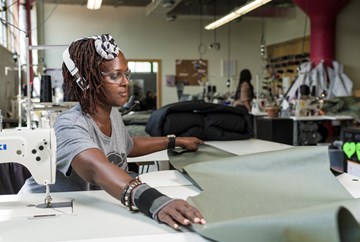
Kimberly Wong writes at Streetwise magazine, “Some students might believe that school projects are only good for a grade, but Empowerment Plan founder and CEO Veronika Scott knew that they could be something more. Scott was a student at The College for Creative Studies in Detroit when her professor assigned her class a project to fill a real need in the community. Noticing the homelessness that pervaded the city, Scott, who was only 20 years old at the time, began to visit a homeless shelter to try to figure out how she could help people who were homeless. …

“Scott visited the homeless shelter three times a week for five months. Hearing the ideas of the people living in the shelter showed her what she needed to do — she had to make a coat. She learned to sew from her mother, and even after the project was over, she continued to work on this coat that she hoped would change the lives of as many of the homeless as possible.

“The water-resistant coat she was designing would be able to be transformed into a sleeping bag at night or into an over-the-shoulder bag on warmer days. As Scott was in the process of perfecting the design for her coat, she was approached by a homeless woman who told her emphatically that what she really needed wasn’t a coat, but a job.

“Taking this feedback to heart, Scott partnered with a shelter and hired two homeless women to start making coats that would come to be known as EMPWR coats.

“Scott paid the women to learn industrial sewing and manufacturing and brought local designers on to the project. Just like that, the Empowerment Plan was born. …

“The Empowerment Plan has been running for almost seven years and has 35 employees. All of the employees were hired while homeless and have since secured permanent housing with their families.

“Jessica West, a seamstress team leader at the Empowerment Plan, is just one example of the way the Empowerment Plan has changed lives. West was sleeping in her car with her children before they moved into a homeless shelter. She discovered the Empowerment Plan while living in the shelter and has been working with them for two years. She and her children currently live in a comfortable home fully furnished by non-profit organization Humble Design, … one of the many organizations the Empowerment Plan works with to improve the lives of their employees. …

“Usually, Empowerment Plan employees work at the organization from one to three years, but this is by no means a set timeline. Above all, the Empowerment Plan is focused on the individual growth of its employees.

“The employees at the Empowerment Plan are paid through the sponsorship of EMPWR coats — and since the coats also go toward helping the homeless community, it’s a win-win situation. Sponsoring an EMPWR coat costs $100, which covers the cost of materials, the seamstresses’ wages, and overhead. EMPWR coats are mainly sponsored by individuals, corporations, and non-profit organizations. The Red Cross has even sponsored EMPWR coats for disaster relief. …

“While the organization currently relies on donations, it is working to become self-sustaining [with] a new retail line of coats with functions similar to the EMPWR coat but with its own style.”

More here.

Hat tip: Spare Change News, Boston’s street newspaper.

Bookshop on Water


Photo: Lucy Young/Evening Standard
Jonathan Privett, co-owner of Word On The Water inside the barge.

I love stories about unusual libraries and unusual bookstores. Here’s one from the New York Times about a bookselling endeavor powered by the famed eccentricity of Englishmen.

Rod Nordland writes, “The two men who run London’s only floating bookstore, Word on the Water, are living proof that there really is something you can do in life with an English lit degree, other than teach English literature.

“The store — a 50-foot-long canalboat stuffed to its bulkheads and overflowing onto the towpath with books — has a permanent berth on the Regent’s Canal, around the corner from the British Library. This comes after years of its owners staying one step ahead of eviction from the canals, by relocating fortnightly.

“It is doing so well that Paddy Screech, 51, an Oxford-educated Cornishman with a close-trimmed beard and a soft-spoken manner, and Jonathan Privett, 52, a gaptoothed Yorkshireman who has trouble staying still for long (except with a book), finally took their dream vacations this year. …

“The men got the idea for the store from a book, of course — ‘Children of Ol’ Man River,’ in which Billy Bryant recounts how his British immigrant family arrived on the Mississippi River, homeless, living on a floating board, which they built into a theater, and then into the showboat craze of the late 1800s.

“When they met, Mr. Privett was living on a canalboat, part of a subculture of boat dwellers who berth on London’s canals for free — as long as they keep moving periodically. Mr. Screech had been working with homeless people and drug addicts, while caring for an alcoholic mother at home. ‘Overnight, she stopped drinking and turned into a little old lady who only drank tea,’ he said. …

“Mr. Privett had the book-business experience. Before settling on his canalboat, he had at times been a homeless squatter who supported himself selling used books from street stalls.

“A French friend, Stephane Chaudat, provided a boat big enough to be a store, a 1920s-era Dutch barge; he remains their partner.

“Mr. Privett had a stock of used books. Mr. Screech borrowed 2,000 pounds from his then-sober mother as capital, and their business was born in early 2010. …

“Things went downstream fast. Forced by the berthing laws to move every fortnight, they often found themselves on parts of the nine-mile-long Regent’s Canal with industrial buildings and no customers. …

“Mr. Screech said. ‘For years, it just felt like it was going to sink.’

“Then it did. A friend used the sea toilet on the book barge and left an inlet open, and the boat sank to the bottom; even their prized copy of ‘Ol’ Man River’ was lost. Shortly later, the boat Mr. Privett lived on sunk as well, and he lost all of his family photographs.

“ ‘[We] were just sitting there on the towpath, crying,’ Mr. Screech said. …

“As the canal trust peppered them with legal notices, fines and threats to have the boat barge lifted out of the water and broken up, their supporters got busy, too. One rallying cry of a Twitter post, from the science-fiction author Cory Doctorow, was retweeted a million times, Mr. Screech said.”

Read the whole saga here.

As small blurbs filling out New Yorker magazine columns were once titled, “There’ll always be an England.”

Photo: Wikipedia
The facade of the BIQ (Bio Intelligent Quotient) house in Hamburg has tanks filled with microalgae that produce biomass used to generate electricity.

It’s reassuring that there are always thinkers who are really “out there,” wildly inventing better ways to do things. For example, in architecture. Did you know there was such a thing as experimental architecture? Me neither.

Rachel Armstrong is a professor of experimental architecture at Newcastle University in the United Kingdom. You can read about her views on breathable buildings at the website Aeon.

“Traditional buildings are designed to provide protection against a savage world, with us safe on one side and our waste on the other. Architects have long relied on ‘hard’ materials such as masonry, aluminium and glass, specifically chosen to prevent the outside environment from getting in. Impermeability was, and is, a driving goal.

“It is time to rethink that approach. Our current built environment squanders too much fresh water and other vital resources, and tips too many poisonous substances into our surroundings. To develop a more sustainable relationship with the natural world, we need to allow chemical exchanges that take place within our living spaces, and between the inside and the outside. We need to embrace permeability. …

“In many offices, it is no longer possible to open windows manually to let in a breeze. Automated air-conditioning systems (often answering only to sensors and software) blast summer heat out into scorching walkways, amplifying the urban heat-island effect and contributing to heat-related health risks. Such buildings ignore the metabolism that is the dynamic scaffolding of living systems.

“During the 1970s, the ecologists John and Nancy Jack Todd and William McLarney founded the New Alchemy Institute – now the Green Center on Cape Cod in Massachusetts – to reconceive building spaces as part of a self-sustaining human ecosystem. Such spaces would not be hermetically sealed, but rather open to the flow of natural elements. …

“Incorporating permeability into architecture begins with a building’s composition. In the past 20 years, engineers have developed organic construction materials that have various degrees of permeability. Mycotecture – architectural building blocks that are formed from the fibrous material of fungal roots – are as strong as concrete and as insulating as fibreglass. BioMASON bricks are built by microorganisms; they do not need firing and are as strong as traditional masonry. Bioplastics are produced by bacteria using biogas from landfills and wastewater treatment plants. Since they are not derived from petroleum, bioplastics have lower carbon footprints. Like wood, they are ‘farmed’ into existence. …

“Semi-permeable ceramics in particular can be treated to provide binding surfaces for biofilms, large coordinated colonies of bacteria or other microorganisms. Biofilms can be grown to have semiconductor properties, akin to solar cells or computer circuits. When treated with manganese, biofilms can become filters that regulate the flow of air and water into a building. …

“The BIQ House in Hamburg has a façade of thin-walled tanks filled with microalgae. The algae harvest sunlight and carbon dioxide, and produce biomass that can be used to generate electricity. The translucent, living tanks also regulate the building temperature by absorbing more sunshine as the biomass increases. In this case, the glass of the tanks is impermeable to water but lets in sunlight – a different kind of permeability, which is critical for the organic exchanges within the façade.

“The Living Architecture (LIAR) project, funded by the European Union among others, is a fruitful effort to create showcases of semi-permeable design. For instance, the project aims to transform bathrooms, kitchens and commercial spaces into environmentally sensitive, productive sites. …

“The LIAR project is still in a prototype phase. Quantitative inputs and outputs have not yet been formally established. But project leaders expect to see integrated bioreactor wall systems in real homes within the next 10 years.” More at Aeon, here.

All I can think of right now, having recently experienced a week of below zero Fahrenheit degrees, is, “Will the solar properties be enough? Can buildings turn off the permeability?”

98989420_04ba6d56-1f9e-40c2-a5e0-e5d9484b2294 Photo: Penny Dale/BBC Africa
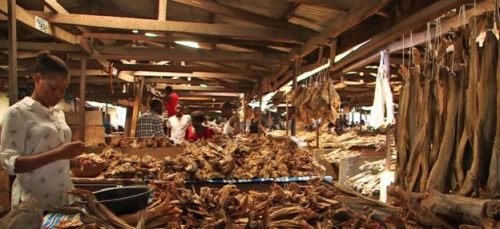
In Nigerian markets the smell of stockfish — a culinary stable that comes from Norway — permeates the air.

I was interested to learn that something called “stockfish,” from Norway, has become a staple of the Nigerian diet. Penny Dale and Victoria Uwonkunda of BBC Africa have the story.

” ‘The taste of stockfish is life. We can’t cook without stockfish.’

“That’s the verdict of women at the bustling Onyingbo market in Nigeria’s commercial capital, Lagos, as they carefully choose pieces of the specially dried cod. …

“The smell of stockfish is pungent. … As the moisture drips out, the flavour of the fish deepens to create a rich, intense and complex taste.

“It is perfect for a Nigerian palate, which favours big and bold flavours such as fermented locust beans and chilli pepper, says young chef Michael Elegbde.

“Based in Lagos, Mr Elegbde is a rising star in Nigeria’s culinary world — and his signature dishes revolve around stockfish. Growing up, he spent a lot of time helping his grandmother in the kitchen, and she loved stockfish as a key ingredient in traditional dishes. …

“It was only later in life — when he had followed in his grandmother’s cooking footsteps — that he discovered the fish that he had grown up with actually came from almost half-way round the world, in the cold Arctic waters off the coast of Norway. …

“Between January and April, millions of cod migrate from the Barents Sea to breed in the fjords — and the climate is perfect for the natural drying process.

” ‘You need both cold and dry weather, and you need sun. We have everything here. We are gifted from God,’ laughs Erling Falchs, whose family business Saga Fisk has been in the stockfish trade for six generations.

“After gutting, cod is hung out on huge wooden A-frames, up to 10 metres high, and left to dry for three months in in the cold, crisp winter air. No salt, no additives – just in the same way that it has been dried since the time of the Vikings.

“Although Nigeria has a long coastline teeming with other species of fish, people say the stockfish has a unique taste and so it is Norway’s biggest export market for the fish. …

“It was the Biafran civil war in Nigeria 50 years that really set the scene for stockfish to become a must-have ingredient in Nigerian cuisine. In the course of three bloody years, more than a million people died — mostly from hunger. It was a humanitarian crisis on an unprecedented scale, and churches and relief agencies from all over the world joined together to fly in emergency supplies.

“Norway’s contribution was stockfish. It doesn’t need refrigeration, and it is full of protein and vitamins — perfect to combat kwashiorkor, the malnutrition that characterised the Biafran war.”

Read more at the BBC, here.


Map: Athanasius Kircher, from Mundus Subterraneus (Amsterdam, 1665)
Beneath Our Feet: Mapping the World Below is on exhibit through February 25 at the Norman B. Leventhal Map Center, Boston Public Library.

You don’t have to be keen on fantasies like Alice’s Adventures Underground or Jules Verne’s Journey to the Center of the Earth to be fascinated by maps of the world below our feet.

That is why, as Allison Meier writes at Hyperallergic, the Boston Public Library (BPL) is sharing its amazing array of subterranean cartography — from mythology to science, from the God of Death in Pompeii to leaded water in Flint, Michigan.

“Only in recent centuries have cartographers visualized what’s underground,” she writes. “Early mapmakers employed mythology to explain the volcanic eruptions and earthquakes that seemed to erupt from some dark force, and sometimes swallow whole communities, like Pompeii or Herculaneum. Even now, our ability to delve below the thin crust on which we’ve built our civilization is limited by the intense pressure and molten magma that churns within the planet. …

“The Leventhal Map Center is exhibiting ‘Beneath Our Feet: Mapping the World Below,’ featuring 400 years of subterranean maps from their collections. These visualize volcanoes, catacombs, pipelines, mines, and seabeds, ranging from 19th-century geological surveys to 21st-century sensing technology. …

“ ‘We’re seeing that these maps were typically produced much later than the weather maps,’ [Stephanie Cyr, associate curator] explained. The exhibition is organized into different underground subjects, such as ‘Earth’s Crust,’ ‘Oceans,’ ‘Mining,’ ‘Archaeology,’ and ‘Beneath Boston.’ These are all further explored in an online component. …

“As soon as people found a way to map the Earth’s underground, they began to exploit it as a resource, drilling natural gas pipelines and digging coal mines.

“Yet as Cyr noted, ‘Before we could actually get down there and explore and survey it, people had to cope with things in the best way they could, and mythology helped people do that.’

“A 17th-century map on view, by Athanasius Kircher, has a tumultuous subsurface scene, with a ball of fire at the center of the Earth and all its bodies of water linked by underground waterways. …

“The maps in ‘Beneath Our Feet’ continue into the 21st century. … And (as the inclusion of maps of lead testing in Flint, Michigan, and the invasive technique of fracking remind viewers) this knowledge can have a significant impact on the lives of the people above.”

If you can’t get to the show, you can at least see some great underground maps here and explore the online features of the show.

Hat tip: Michelle Aldredge (@gwarlingo) on twitter.