June 30, 2016 by suzannesmom
This is a sampling of the bloggers I follow.
First is Asakiyume, from whom I learned everything I know about blogging, including how to borrow a photo from another site in such a way that readers will go to that site. She is an editor and a novelist, and she blogs about a wide range of topics, from personal to global.
In this post she compares a chest of drawers in a local coffee shop to something she saw in the animated Japanese feature Spirited Away. She offers many inspiring social justice ruminations plus thoughtful literary criticism, especially of fantasy and science fiction: the interstitial world.
KerryCan is a retired English professor who is very serious about crafts, selling many of her own on Etsy. She is a chocolate maker, a weaver, a quilter — you name it. I like her description of studying and resurrecting a forgotten quilt art in a recent post on “redwork.”
“I have been using an inexpensive child’s lightbox to trace the redwork panels on to paper,” KerryCan writes, “so I can keep them. Then I trace from the paper version on to off-white cotton fabric. As I trace and then stitch, I enjoy the designs. There are flowers, lots and lots of flowers. And there are animals; some are the ones the maker would know from the farm and some are exotic, known only from books or dreams.
“My favorite blocks, though, are the ones with the people, and, especially, children. The children depicted are not the cute and pampered and romanticized children of modern America but are serious and, often, awkward-looking.” Check it out.
New England Nomad is a perfect blog for learning about hidden places that even natives don’t know. The Nomad takes lots of pictures and provides detailed information on directions, special features, parking and costs. You may have heard about the Newport Cliff Walk, and the Nomad covers it, but do you know the “gem of Rhode Island,” Colt State Park in Bristol? Read about it here.
A Musical Life on Planet Earth blogger doesn’t post often, but when he does, Wow. Not only is he a music teacher and singer, he is deeply knowledgeable about the American Songbook, Broadway in particular — Rodgers, Hart, Hammerstein, Harold Arlen, Irving Berlin … . He cleans out the local library when doing research for one of his featured-composer shows. Find everything you ever want to know about the great Jerome Kern at this post, and listen to Will sing.
I’ll be doing more of these blogger recognitions from time to time, but before I leave today, I have to say I’ve been riveted to relatives’ Burning Cloud Blog, detailing the ups and downs of five months in a sailboat. Most of the posts are written by the children in the family. Read the entry “I have operated a lock” here.
Photo: New England Nomad
Colt State Park, the “gem of Rhode Island.”

Posted in Uncategorized | Tagged blog, blogging, craft, jerome kern, locks, new england, photos, postaday, quilt, redwork, sailboat, science fiction | 9 Comments »
June 29, 2016 by suzannesmom
As I was driving home today, I heard a radio commentator say that the cost of solar has gone way down. John has solar now and can actually sell some of the energy produced back to the utility.
Nevertheless, the typical solar infrastructure is beyond the reach of many low-income people.
In Kenya, however, solar energy is being produced without the intermediary of the panels you may be picturing.
Derek Markham writes at TreeHugger, “Solar energy promises to be one of the backbones of our clean energy future, and its most well-known application is probably solar photovoltaic (PV) arrays, which can produce low-carbon electricity for homes and businesses alike. However, even as solar PV efficiencies rise, and costs drop, solar electricity is still out of reach for many people, as it requires a considerable up-front investment, as well as knowledgeable designers, manufacturers, and installers.
“In the developing world, small-scale solar, which can be used for lighting and charging mobile devices, is one of the solar technologies within reach of low-income residents, and while it can certainly fill some of the energy needs of people (such as a clean light source to replace kerosene, and to keep cell phones charged up), it’s only one piece of the energy puzzle.
“Another larger energy demand is for producing heat, whether it’s for cooking or water sterilization, which is often met by using electricity (at the risk of regular blackouts and high costs) or wood (which contributes to deforestation and indoor air pollution), but there is a viable and sustainable alternative solution in the form of solar thermal technology.
“Using the sun’s rays directly, without the need for expensive and complex components, is a perfect fit for quite a bit of the developing world’s energy needs, as well as being an appropriate technology even in First World countries. …
“GoSol is demonstrating what is possible with several pilot projects, including a solar bakery and a peanut butter cooperative in Kenya, and is offering up plans for its solar concentrator at a very reasonable cost. …
“The GoSol Sol4 uses 4 square meters of mirrors to produce an estimated solar thermal output of 2 kW (said to be roughly equal to a standard gas stove) at a construction cost of between $350 and $500 USD (depending on whether recycled or new materials are used), and can pay for itself in the developing world within a year.” More here.
Simple and smart. Makes me think of Boy Scouts learning to start a fire with a magnifying glass that focuses the sun’s rays. GoSol sounds creative.
Photo: GoSol
Posted in Uncategorized | Tagged clean energy, climate change, derek markham, direct solar, electricity, gosol, heat, kenya, low carbon, solar concentrator, solar energy, solar photovoltaic, treehugger | 2 Comments »
June 28, 2016 by suzannesmom
The People Making a Difference series of the Christian Science Monitor is a reliable source of worthy stories that don’t make the US headlines. I thought this one — about women in Nepal holding things together as their husbands pursue jobs in India — was worth sharing.
Zoe Tabary, of the Thomson Reuters Foundation writes, “Ratna Chaudhary delicately lifts the hem of her pink and green dress with one hand, while using the other to scoop up a batch of cabbages in her garden in the village of Phulbari, a dozen kilometers from the Nepal-India border.
“She calls three women to help, who join the dance-like movement, bending and swaying as they pick up vegetables and lay them in a basket.
” ‘Since my husband works in India now, I’m responsible for harvesting all our crops,’ said Chaudhary, holding two cabbages to her face before throwing the yellower one to the ground.
“Her husband, Chatkauna, is one of at least 2.2 million Nepalis – nearly 10 percent of the population – who work abroad, according to the Nepal Institute of Development Studies.
“For the past three years, Chatkauna has taken on seasonal work for most of the year as a miner in the Indian city of Haldwani. It pays more than the daily jobs he used to do in his hometown, and he returns to Phulbari every four months to see his family and hand over his earnings. …
“The outflow of male workers – in particular from rural areas faced with worsening climate conditions – has major implications for the country’s agricultural sector, believes Madan Pariyar, project director at International Development Enterprises (iDE), a non-profit group that helps poor farmers with work and income opportunities. …
“Chaudhary used to work on a sugarcane farm in India herself. ‘We just couldn’t earn enough in our village,’ she said.
“For the past six months, however, she has cultivated her own patch of land and leases the remainder of it – 1,700 square meters (18,299 square feet) – to other poor, low-caste farmers from the ‘tharu’ ethnic minority group, one of Nepal’s largest.
“In 2015, iDE helped Chaudhary set up a village vegetable co-operative, which she chairs, to boost local farmers’ incomes. The project is part of the Building Resilience and Adaptation to Climate Extremes and Disasters (BRACED) program, funded by the British government. …
“With iDE’s help, 25 subsistence farmers – 18 women and five men – grow vegetables on 68 square-meter plots of land, which they rent from Chaudhary, paying her in cash or in kind. They bring their spare produce to a collection center, which transports the vegetables and other crops to large markets or sells them to regular buyers.
“The co-operative also gives farmers better access to cheaper seeds, fertilizers and finance such as private investment and micro-credit. While the project is still in its early days, it is already yielding results. ‘Farmers now earn 50 rupees ($0.50) more a day than they did previously,’ said Pariyar.”
More here.
Photo: Zoe Tabary
Women farmers pick vegetable crops in the village of Phulbari, Nepal, May 18, 2016.

Posted in Uncategorized | Tagged braced, Building Resilience and Adaptation to Climate Extremes and Disasters, Chatkauna, crops, farm, harvest, iDE, india, International Development Enterprises, Madan Pariyar, nepal, Nepal Institute of Development Studies, Phulbari, postaday, Ratna Chaudhary, tharu, zoe tabary | 4 Comments »
June 27, 2016 by suzannesmom
Here’s a story from Fast Company on the role of boredom in creativity.
Martin Lindstrom writes, “According to the Kaiser Family Foundation, young people cram an average of more than 10 hours of media content into each and every day—close to 10 times the amount of time they spend with their parents.
“Recently, the International Center for Media and Public Agenda asked 1,000 students to live without any electronic devices for 24 hours. Not such a monumental task, you’d think? But more than half had given up within two hours, and the ‘survivors’ reported an overwhelming sense of emptiness and boredom. …
“While boredom may threaten your ability to work quickly and efficiently, it may be essential to working well. As writer and philosopher Robert Pirsig claimed, ‘Boredom always precedes a period of great creativity.’ Even if that isn’t always the case for you, chances are you need to be a little bored in order to generate your most inventive ideas and produce your highest-quality work. …
“Some of the most talented and successful people all share the ability to combine two or more ordinary things in an completely novel way. That kind of creative thinking doesn’t happen as a result of brute-force cogitation. In my experience, and in the experiences of the many creatives I’ve interviewed about this process, it happens during those transition zones, the moments of unforced boredom that they’ve each made an intentional effort to restore to their lives. …
“The transition zones that work for you … might be taking a leisurely walk around the neighborhood. Or it might mean a 10-mile run. It might be in the car. It might involve a glass of iced tea in an Adirondack chair on your patio. Whatever it is for you, it’s a time when you give yourself permission to put the electronics away, stop forcing your thought process forward at a frantic clip, and allow your thoughts to take their own meandering course.” More here.
It’s worth acknowledging that long-term boredom can be debilitating. But I agree it’s important to give yourself plenty of spaces to do nothing, to think. Plenty of spaces every day, I’d say.
Photo: Annabel Fitzsimmons
Posted in Uncategorized | Tagged annabel Fitzsimmons, boredom, creativity, International Center for Media and Public Agenda, Kaiser Family Foundation, Martin Lindstrom, postaday, robert pirsig, transition zone | 2 Comments »
June 26, 2016 by suzannesmom
You know how once you become aware of a thing, you see it everywhere? That’s what I’ve been experiencing since I learned about how the Providence Granola Project trains refugees on the ins and outs of a food business, acclimating them to the US work culture and helping them develop concrete skills.
Now every few days I seem to read about another food business focused on hiring refugees. Autumn Spanne wrote recently for the Guardian about one in New York that hires refugees who have cooked for large groups (including large families).
“When Manal Kahi arrived in New York from Lebanon two years ago, to pursue a master’s degree in public administration, she longed for authentic hummus, but couldn’t find a restaurant or supermarket that came close to her expectations. So she started making her own, based on a recipe from her Syrian grandmother.
“The recipe was a hit with her friends, and it occurred to Kahi that there might be a successful business in it. The idea also dovetailed with her growing concern about the Syrian refugee crisis. Since the beginning of 2013, the number of Syrian refugees registered worldwide by the United Nations has grown from half a million to more than 5.5 million. …
“Kahi sought a way to help. She decided to start a social enterprise designed to help refugees from all over the world get established in their new country and provide New Yorkers a positive entry point for interacting with the city’s refugee community. Kahi’s efforts put the spotlight on the role business has to play in the refugee crisis, and whether there’s a need for new approaches to help recently arriving refugees integrate and become self-sustaining.”
In January, “Kahi and her brother launched Eat Offbeat, a for-profit meal delivery startup that employs recently resettled refugees from around the world as chefs who prepare traditional dishes from their countries of origin. The main prerequisite is that they enjoy cooking and have had experience cooking for groups – even if that just means extended family. …
“The goal, said Kahi, is twofold: help refugees get a foothold in the US, and ‘change the narrative around refugees.’ ”
More here.
Photo: Eva Cruz/Eat Offbeat
Potato kibbeh is one of the dishes on the Eat Offbeat menu. 
Posted in Uncategorized | Tagged Autumn Spanne, eat offbeat, eva cruz, food business, immigrants, lebanon, Manal Kahi, meal delivery, postaday, providence granola project, refugee, social enterprise, syrian | 2 Comments »
June 25, 2016 by suzannesmom
It’s amazing what you can learn from DNA. Recently, scientists have been collecting insights from camel DNA about how camel ancestors were used on ancient trade routes.
Victoria Gill writes at the BBC, “Scientists examined DNA samples from more than 1,000 one-humped camels. Despite populations being hundreds of miles apart, they were genetically very similar. Scientists explained that centuries of cross-continental trade had led to this ‘blurring’ of genetics.
“The findings are published in the Proceedings of the National Academy of Sciences.
“One of the team, Prof Olivier Hanotte, from Nottingham University, explained that what made the dromedary so biologically fascinating was its close link to human history.
” ‘They have moved with people, through trading,’ he told BBC News. ‘So by analysing dromedaries, we can find a signature of our own past. … Our international collaboration meant we were able to get samples from West Africa, Pakistan, Oman and even Syria.’ …
” ‘People would travel hundreds of miles with their camels carrying all their precious goods. And when they reached the Mediterranean, the animals would be exhausted.
” ‘So they would leave those animals to recover and take new animals for their return journey.’
“This caused centuries of genetic ‘shuffling’, making dromedaries that are separated by entire continents remarkably similar.
“Crucially, this has also ensured that the animals maintained their genetic diversity — constantly mixing up the population. This means that dromedaries are likely to be much more adaptable in the face of a changing environment. …
” ‘The dromedary will be our better option for livestock production of meat and milk. It could replace cattle and even sheep and goats that are less well-adapted.’ ”
More at the BBC website, here.
Photo: Mark Payne/Gill/NPL
Ships of the desert: camels provide transport, milk and food in arid, hostile environments 
Posted in Uncategorized | Tagged adapt, biology, camel, climate change, diversity, dna, dromedary, genetics, mark payne, National Academy of Sciences, Nottingham University, Olivier Hanotte, postaday, trade route, vistoria gill | 2 Comments »
June 24, 2016 by suzannesmom
In honor of the Kentucky Derby last month, Karen Given reported a story on Only a Game about the naming of thoroughbred horses. At the end, the radio show’s host, Bill Littlefield, did a funny imitation of calling a race. I won’t be able to do it justice. You’ll have to listen to the clip.
“Since 2004,” Given reports, “Rick Bailey has been the registrar for the Jockey Club, and he really enjoys the creativity he gets to witness in his job. Bailey and his staff review about 40,000 names every year and approve two-thirds to three-quarters of them. The numbers add up pretty quickly.
” ‘We do have 350,000 to 400,000 names that are considered active,’ Bailey says.
“With that many names off the table, maybe owners are just running out of normal horse names to choose from? …
“The list of available names is getting bigger, Bailey says, because the horse racing industry is getting smaller.
“There will never be another Secretariat or Seabiscuit. Those names have been permanently retired. But the names of less successful horses are eventually released. Bailey publishes those names on the Jockey Club’s website every year. This year, that list included more than 45,000 names. …
“The list includes Bambi le Bleu, Fabulous Rex, and Zippity Doodah Day. …
“Most ancient horses, says [Philip Sidnell, who has written the book on ancient warhorses], are named for pretty mundane reasons. Take the horses who ran in the ancient Roman chariot races.
” ‘They had names like “Swift” or another called “Snotty” and one called “Chatterbox.” ‘ “
Listen to Littlefield showcase some unusual horse names in the clip, here. “It’s Cookie Monster, Maple Syrup and Spineless Jellyfish … Cookie Monster is hungry on the outside …”
Photo: Only a Game
Posted in Uncategorized | Tagged bill littlefield, derby, horse names, horse race, jockey club, karen given, Kentucky, only a game, postaday, rick bailey, sidnell, warhorse | 2 Comments »
June 23, 2016 by suzannesmom
Members of a family separated for 77 years were recently reunited through the wonders of the Internet. Caitlin Gibson has the story at the Washington Post.
“The five women crowded together around the kitchen table in New Jersey, their eyes fixed on a laptop screen. It was 7 a.m., and none of them had slept well the night before; they were too anxious and excited for this moment. Jess Katz logged into Skype as her mother and three sisters watched.
“A face flickered into view: their cousin, the son of a long-missing uncle, the family they thought they had lost forever in the Holocaust.
“On the other side of the screen, on the other side of the world, Evgeny Belzhitsky sat with his daughter, his granddaughter and a translator in his home on Sakhalin Island, Russia.
The eight family members smiled at each other, speechless. Then, Katz recalls, they all started to cry. …
“More than 70 years had passed since Katz’s grandfather, Abram Belz, first tried to find his younger brother, Chaim. Abram last saw Chaim in 1939, the year their family was relocated along with thousands of other Polish Jews to the Piotrków Trybunalski ghetto at the start of World War II.
“The brothers died without seeing each other again, but on April 20 their families had been joyfully reunited. …
“ ‘My grandfather, because he was the oldest son, felt an obligation to stay,’ [Katz] says. ‘But it was important to their mom that Chaim try to escape.’
“With his mother’s help, Chaim slipped through a gap in the ghetto wall and fled across the border to the Soviet Union. The family knew he made it there, Katz says, because he sent letters and packages to his family. But then the letters and packages stopped coming. …
“In April, Katz — a tech-savvy 25-year-old who works for a software company in New York City and has blogged about her family’s Jewish roots — had extra time on her hands as she recovered from minor surgery at home. She decided to take up the search.
“After decades of tedious research and letter-writing, it took Katz two weeks to find Chaim’s son.
“It was a success born of an improbable alchemy: the serendipity of social media, the generosity of helpful strangers, and access to technology that allowed distant relatives to bridge thousands of miles, a 14-hour time difference and a language barrier.” Read the read the happy ending here.
Let’s hope that technology will also help the refugee families that are getting separated today. There is nothing in the world like the pull of family.
Photo: Jess Katz
The Katz and Belzhitsky families Skype together on Passover.
Posted in Uncategorized | Tagged Abram Belz, brothers, caitlin gibson, chaim, Evgeny Belzhitsky, holocaust, jess katz, jewish, passover, Piotrków Trybunalski, postaday, russia, Sakhalin Island, skype | 4 Comments »
June 22, 2016 by suzannesmom
Although I didn’t get to see it in person, I was excited to learn from Timmons Roberts by way of Erik that the indigenous Hawaiian canoe Hōkūleʻa was making a stop in Rhode Island.
Lars Trodson writes at the Block Island Times, “The island welcomed the crew of the Polynesian catamaran Hōkūle‘a [June 21] at a ceremony held at the Block Island Maritime Center in New Harbor. The crew was greeted with songs sung by the students from the Block Island School, as well as greetings and tribal gifts from Loren Spears, an educator and former Council Member of the Narragansett Tribe of Rhode Island. Capt. Kalepa Baybayan of the Hōkūle‘a also offered brief remarks.
“The Hōkūle‘a is traveling around the world to teach about ocean conservation. ‘We live on a blue planet,’said capt. Baybayan. ‘Without the blue there would be no green.’ …
“Block Island is the Hōkūle‘a’s only stop in Rhode Island.”
From the Hōkūleʻa website: “Our Polynesian voyaging canoes, Hōkūleʻa and Hikianalia, are traveling over 60,000 nautical miles around the earth, bringing people around the world together to set a course for a sustainable future.
“We are sailing like our ancestors have for a thousand years—using wayfinding. On board, there is no compass, sextant, or cellphone, watch, or GPS for direction. In wayfinding, the sun, moon, and stars are a map that surrounds the navigators. When clouds and storms make it impossible to see that map, wave patterns, currents, and animal behavior give a navigator directional clues to find tiny islands in the vast ocean. …
“Everyone can be the navigator our earth needs. Every person on earth can help navigate us to a healthy future where our Island Earth is safe and thriving again. …
“We are asking kids, families, governments, communities, and businesses to share how they mālama honua—take care of our Island Earth. Please visit our Mālama Honua map, and help us grow the movement by adding stories of hope that can inspire and educate us all. …
“Hōkūleʻa, our Star of Gladness, began as a dream of reviving the legacy of exploration, courage, and ingenuity that brought the first Polynesians to the archipelago of Hawaiʻi. The canoes that brought the first Hawaiians to their island home had disappeared from earth. Cultural extinction felt dangerously close to many Hawaiians when artist Herb Kane dreamed of rebuilding a double-hulled sailing canoe similar to the ones that his ancestors sailed.
“Though more than 600 years had passed since the last of these canoes had been seen, this dream brought together people of diverse backgrounds and professions. Since she was first built and launched in the 1970s, Hōkūle’a continues to bring people together from all walks of life. She is more than a voyaging canoe—she represents the common desire shared by the people of Hawaii, the Pacific, and the World to protect our most cherished values and places from disappearing.”
Lots more at www-dot-hokulea-dot-com.
Photo: Block Island Times

Posted in Uncategorized | Tagged block island, Block Island Maritime Center, canoe, Capt. Kalepa Baybayan, catamaran, conservation, hawaii, herb kane, hokulea, Hōkūleʻa, indigenous, Lars Trodson, Lorén Spears, mālama honua, navigate, new shoreham, ocean, pacific, Polynesian, postaday, timmons roberts, wayfinding | 2 Comments »
June 21, 2016 by suzannesmom
I find so many more photo ops in summer than in winter, although that may mean I am not paying enough attention when it’s cold out. Surely there are great shadows everywhere.
Here are a few pictures from the last two weeks.
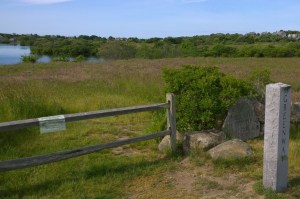
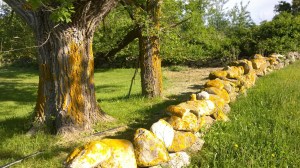
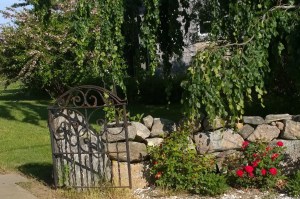
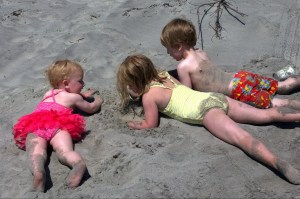
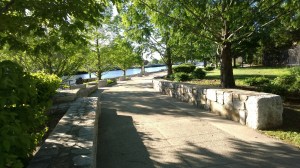
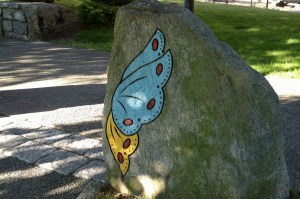
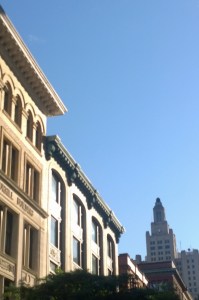
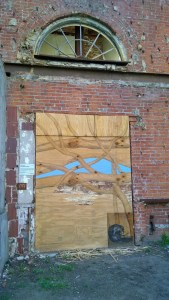
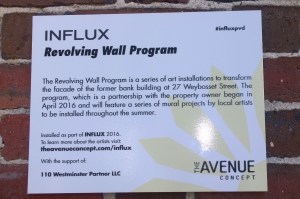
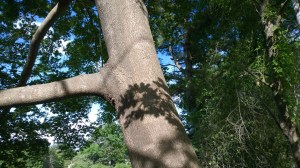
From New Shoreham: a field with Fresh Pond in the upper left corner, yellow lichen taking over a stone wall and trees, roses growing by a gate, children warming up in the dark sand. In Providence: a shady walk on the west side of the Providence River, a painted butterfly on the path, a swan preening, a distant view of the so-called Superman Building, public art with a muskrat fishing (?), a poster explaining the art project. In Massachusetts: shadows on a tree, a chipmunk on a lichen-covered rock.


Posted in Uncategorized | Tagged art, beach, chipmunk, lichen, new shoreham, photographs, photos, postaday, providence, public art, sand, swan | 4 Comments »
June 20, 2016 by suzannesmom
MilfordStreet is on WordPress, and we’ve been clicking “like” on each other’s posts for a while. His Boston-area photography has been especially noteworthy.
Recently he announced he was leaving his job to teach for several months in El Salvador, after which he would get a master’s that he hoped would enable him to find work teaching English as a second language back in the States.
Wow. I’m so impressed.
Now he is creating blog posts about El Salvador. In “Too Young,” he writes about the school children he teaches who have to work in markets and restaurants to help support their desperately poor families.
The post from MilfordStreet referenced Humanium.org (an international child sponsorship NGO dedicated to stopping violations of children’s rights throughout the world), which called to mind a children’s rights movement in the United States.
Michael Schmidt in Communities & Banking magazine describes increasing efforts to ensure that proposed governmental and other policies don’t inadvertently harm children. He provides these elements of a child-rights impact assessment:
A description of the proposed policy; a description of how it is likely to impact children; an indication of whether it is consistent with the U.N. Convention on the Rights of the Child; identification of any disagreements over the likely impact on children; where adverse impacts are predicted, how they might be avoided or mitigated; an indication of the report’s limitations; parents’ and children’s views; a description of what the measure could have done instead and what needs to be monitored and evaluated after the decision has been implemented; explanations of conflicts (that is, where the interests of children conflict with the interests of others); an analysis of the proposed legislation or policy that weighs the costs and benefits associated with children’s well-being.
Check it out.
Photo: Milford Street

Posted in Uncategorized | Tagged assessment, child labor, child rights, communities & banking, el salvador, humanium, impact, Michael Schmidt, milford street, policy, postaday | 2 Comments »
June 19, 2016 by suzannesmom
I noticed the Eric Carle picture book Mister Seahorse at Suzanne and Erik’s house today, and it got me thinking about seahorses as fathers.
Did you know seahorse fathers carry the babies from conception to birth, not the mothers?
According to Wikipedia, “The male seahorse is equipped with a pouch on the ventral, or front-facing, side of the tail. When mating, the female seahorse deposits up to 1,500 eggs in the male’s pouch. The male carries the eggs for 9 to 45 days until the seahorses emerge fully developed, but very small. Once the young are released into the water, the male’s role is done and he offers no further care.”
It’s kind of the reverse of today’s devoted fathers. With no direct role in giving birth to babies, they sure do get involved in the daily care and feeding. Grandfathers, too. My husband babysits regularly, and can handle most anything, including diapers.
For more on seahorses, and how to protect them, check out the Sea Horse Trust, here. And if you’re up for a refresher on how increased carbon dioxide in the atmosphere is endangering sea creatures with spines, including the pygmy seahorse, reread my review of the climate-change movie Revolution, here.
Art: Eric Carle

Posted in Uncategorized | Tagged climate change, dad, father, film, ocean, postaday, revolution, seahorse, spine | 2 Comments »
June 18, 2016 by suzannesmom
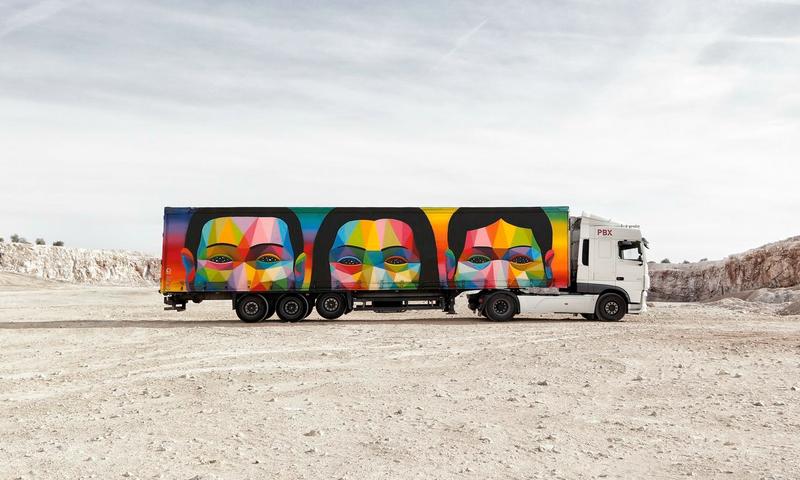
Street art is not just for stationary walls any more. According to Kate Essig at WNYC radio, some pretty amazing specimens are now on the move.
“Art in Spain got a sweet new set of wheels thanks to the Truck Art Project,” she writes. “In this collaboration between a transport company and the local art community, street art takes the form of stunning mobile murals on — you guessed it — trucks.
“The project works with popular urban artists like Javier Arce, Suso33, and Marina Vargas to take their works off the wall and put them in motion. …
“The goal of the project is to make contemporary artwork accessible to all, even if it’s just a surprise sighting at a stoplight — so those in Spain who aren’t frequent gallery go-ers can still glimpse this art on the go.” An inspiring array of truck-art photos can be seen here.
And be sure to check out the project website, which reads in part, “Truck Art Project is an original art patronage project launched by the entrepreneur and collector Jaime Colsa, and curated by Fer Francés in contemporary art and Óscar Sanz in urban art. …
“The trucks working with the project will be the gigantic backdrops for the artworks. The initiative thereby becomes a living display of the most current tendencies in the country’s painting, drawing, and urban art (although the ambitious program intends to be even more multidisciplinary, involving other art forms such as photography, music, or cinema), away from the confines of a museum and aimed at non-traditional spectators and contexts that don’t usually lend themselves to contemporary art.”
Posted in Uncategorized | Tagged art, Óscar Sanz, Fer Francés, Jaime Colsa, Javier Arce, kate essig, Marina Vargas, mobile, mural, Okuda San Miguel, Panci Calvo, postaday, spain, street art, Suso33, truck art project | 3 Comments »
June 17, 2016 by suzannesmom

On my walk this morning I saw an official-looking sign on a fence in a residential neighborhood. The sign read “Certified Wildlife Habitat.”
I had to look it up when I got home. The website of the National Wildlife Federation says, “Wildlife needs our help. … You can invite wildlife back to your own yard and neighborhood by planting a simple garden that provides habitat. …
“Providing a sustainable habitat for wildlife begins with your plants. That’s why we call it a wildlife habitat ‘garden.’ When you plant the native plant species that wildlife depend on, you create habitat and begin to restore your local environment. Adding water sources, nesting boxes and other habitat features enhances the habitat value of your garden to wildlife. By choosing natural gardening practices, you make your yard a safe place for wildlife. …
“Here is what your wildlife garden should include:
“Food: Native plants provide nectar, seeds, nuts, fruits, berries, foliage, pollen and insects eaten by an exciting variety of wildlife. Feeders can supplement natural food sources.
“Water: All animals need water to survive and some need it for bathing or breeding as well.
“Cover: Wildlife needs places to find shelter from bad weather and places to hide from predators or stalk prey.
“Places to Raise Young: Wildlife needs resources to reproduce and keep their species going. Some species have totally different habitat needs in their juvenile phase than they do as adults.
“Sustainable Practices: How you manage your garden can have an effect on the health of the soil, air, water and habitat for native wildlife as well as the human community.
“Already have all these elements in your wildlife garden? Certify today!” And there’s a box to click on if you think you are ready.
Now I’m wondering if the chipmunk on our back steps today thinks our yard could qualify. It’s a small yard, so not much cover. And we’d need to provide water. Hmm.
More at the National Wildlife Federation, here.

Posted in Uncategorized | Tagged Bernadette Banville, certification, ecology, environment, habitat, national wildlife federation, nature, postaday, wildlife | 4 Comments »
June 16, 2016 by suzannesmom
I liked this story from the “People Making a Difference” series at the Christian Science Monitor. It’s about refugee musicians in Europe finding one another and bringing beauty and deeper understanding to their new countries.
Isabelle de Pommereau writes, “On a March evening in Berlin, bassist Raed Jazbeh and other musicians play the melancholic tones of ‘Sea Waves’ by Syrian composer MAias Alyamani. Mr. Alyamani wrote the song a decade ago after leaving his homeland, ‘to hold in my mind a piece from my country in my music.’
“Now, with hundreds of thousands of Syrian refugees flooding Germany, ‘Sea Waves’ takes on new meaning.
“Mr. Jazbeh himself fled Syria three years ago, as war tore it apart. So did many of the other musicians – also Syrians – performing ‘Sea Waves.’ Some had risked their lives and lost their instruments crossing Turkey and the Mediterranean Sea and then trekking into Europe.
“Jazbeh is the one who brought these musicians together. Last fall, he created the world’s first philharmonic orchestra of Syrian musicians in exile, reuniting the violinists and harpists, percussionists and trumpet players …
“The Syrian Expat Philharmonic Orchestra (SEPO) has been giving Syrians and Germans a chance to connect in a fresh way, around music. The ensemble is helping to shatter stereotypical images of refugees, instead offering a portrayal of them as hardworking, creative people who have much to contribute to society. …
“Jazbeh grew up in the city of Aleppo, in northern Syria, with music at the center of his life. … After he landed at a refugee center in Bremen, he played chamber music for friends and at community centers. [He also] began looking for friends from his days at the Damascus conservatory. ‘Facebook was so important,’ he notes.
“Gradually, he found them. In Italy. Sweden. The Netherlands. France. …
“In all, about 30 Syrian musicians came together for that first concert. ‘It was very emotional,’ Jazbeh remembers. …
“ ‘The music touched my heart,’ said concertgoer Abdulrhman Hamdan, fighting back tears. At home, in Damascus, he had had to stop his engineering studies. He arrived in Berlin last winter after a journey by foot, bus, and boat.
“ ‘It makes me feel sad and happy,’ he added. ‘On the one hand, the music [evoked the] war. On the other hand, it was hope that there is peace again.’ ”
Read how the concert changed the impressions of one German audience member here.
Photo: Isabelle de Pommereau
Raed Jazbeh, a Syrian refugee, had to play a borrowed instrument until an anonymous German donor sent him this double bass as a gift.

Posted in Uncategorized | Tagged black entrepreneurs, bremen, Damascus conservatory, double bass, emotional, germany, Isabelle de Pommereau, MAias Alyamani, music, musician, postaday, Raed Jazbeh, refugee, SEPO, syria, Syrian Expat Philharmonic Orchestra | 4 Comments »
« Newer Posts - Older Posts »


