Shawn and Laura Sears were touched by inner-city kids with too many strikes against them and invited a few for an outdoor camping experience. The outing was so satisfying all around that they just kept doing it.
“Leaving college with liberal arts degrees – his in psychology, hers in geology – Shawn and Laura applied to Teach for America and were eventually placed to teach in one of the poorest regions in the country.
“Today, celebrating 14 years together (getting married along the way in 2004), they’ve seen the seeds sown during their experiences in Mississippi grow to fruition in the founding of Vida Verde Nature Education, a nonprofit outdoor education camp they’ve now run for 11 years.
“Located on northern California’s spectacular coast between San Francisco and Santa Cruz, this free camp for children from low-income families has served more than 7,000 kids from the inner cities of Oakland, East Palo Alto, San Francisco, and San Jose.
” ‘We help them let go of much of the negativity they often carry,’ Shawn says. ‘It’s nonstop fun, and they get to just be kids for a few days. Three days later, they’re transformed.’ ”
Tony Avelar/Special to the Christian Science Monitor Laura and Shawn Sears founded Vida Verde to give groups of students three days of exposure to and hands-on experience in the outdoors.
I like win-win stories like this one from National Public Radio. It’s about a new crop with a lot of monetary potential — and distinct advantages for the environment.
“It doesn’t require any land or fertilizer. Farming it improves the environment, and it can be used in a number of ways. So what is this miracle cash crop of the future? It’s seaweed.
“Charlie Yarish, professor of ecology and evolutionary biology at the University of Connecticut, loves seaweed. In nature, he says, when seaweed turns a rich chocolate color, that means the plant is picking up nitrogen, a process called nutrient bioextraction. …
“Many plants and animals cannot survive when there is too much nitrogen in the water, but seaweed is able to ‘capture’ the nitrogen, as well as contaminants in the water.
“A United Nations report says that nearly 16 million tons of seaweed were farmed in 2008 — most of it in Asia. Yarish helped a company called Ocean Approved start the United States’ first open-water kelp farm in the Gulf of Maine in 2006 … Now, he’s helping to create a seaweed farm off the coast of Connecticut.
“Bren Smith owns and runs the Thimble Island Oyster Company, off the coast of Branford, Conn. After his business was hit hard by Tropical Storm Irene last year, ruining about 80 percent of the shellfish crop, Smith started looking around for something more resilient to farm. That’s when he found Yarish, who agreed to help set him up in the seaweed farming business. …
” ‘There’s no barns, there’s no tractors. This is what’s so special about ocean farming. It’s that it’s got a small footprint and it’s under the water. I mean, we’re so lucky; I feel like I stumbled on this just great secret that we then can model and spread out to other places,’ ” Smith says. …
” ‘The plan is to actually split it into a couple different experimental markets — one for food, one for fertilizer, one for fish food. I’m [also] working with a skin care company in Connecticut, and then one for biofuel,’ Smith says. He’s even hoping he can someday fuel his own boat with biofuel from the seaweed.”
Craig LeMoult has the whole story here at NPR, where you also can listen to the audio.
Photograph by Ron Gautreau Oyster fisherman Bren Smith on his boat.
How great an idea is this? Somerville’s League of Urban Canners gleans neglected fruits from city lots and neighbors’ trees and turns them into jellies, jams, and preserves.
Writes Kathleen Weldon in the Boston Globe, “The group is the brainchild of Sam Katz-Christy of Somerville, who was struck by inspiration last fall after receiving 10 pounds of plums from a neighbor who happened to have an unusually productive backyard tree. Armed with little more than a cookbook and a bit of courage, he and his family preserved their windfall in glistening Mason jars. The committed locavore, who commutes by bike to his job in Cambridge’s Central Square, began to notice just how much unused fruit was hiding in plain sight among the squares and one-way streets he traveled. His daily rides became a treasure hunt.
“After recruiting a posse of workers from his network of food-loving friends, he began knocking on doors, offering an unusual deal to the owners of neglected one-tree orchards: the League would pick their crop, can the harvest, and give residents back 10 percent of the results. The volunteers keep the rest.
“The initiative has proven remarkably successful. More than 220 sites are currently listed in the League’s database, representing more than 3,500 pounds of collected fruit. …
“Though at first the League expected to reap mostly apples and grapes, soon it became clear that Somerville, Cambridge, and Jamaica Plain were rich with ripe possibilities from mulberries to pears, raspberries to quince. A single tree in Harvard Square yielded 245 pounds of apricots, which turned into countless jars of jam.” Read more.
Suzanne loved the mulberries growing in our neighborhood when she was about five. I wonder how we might get our hands on mulberry preserves.
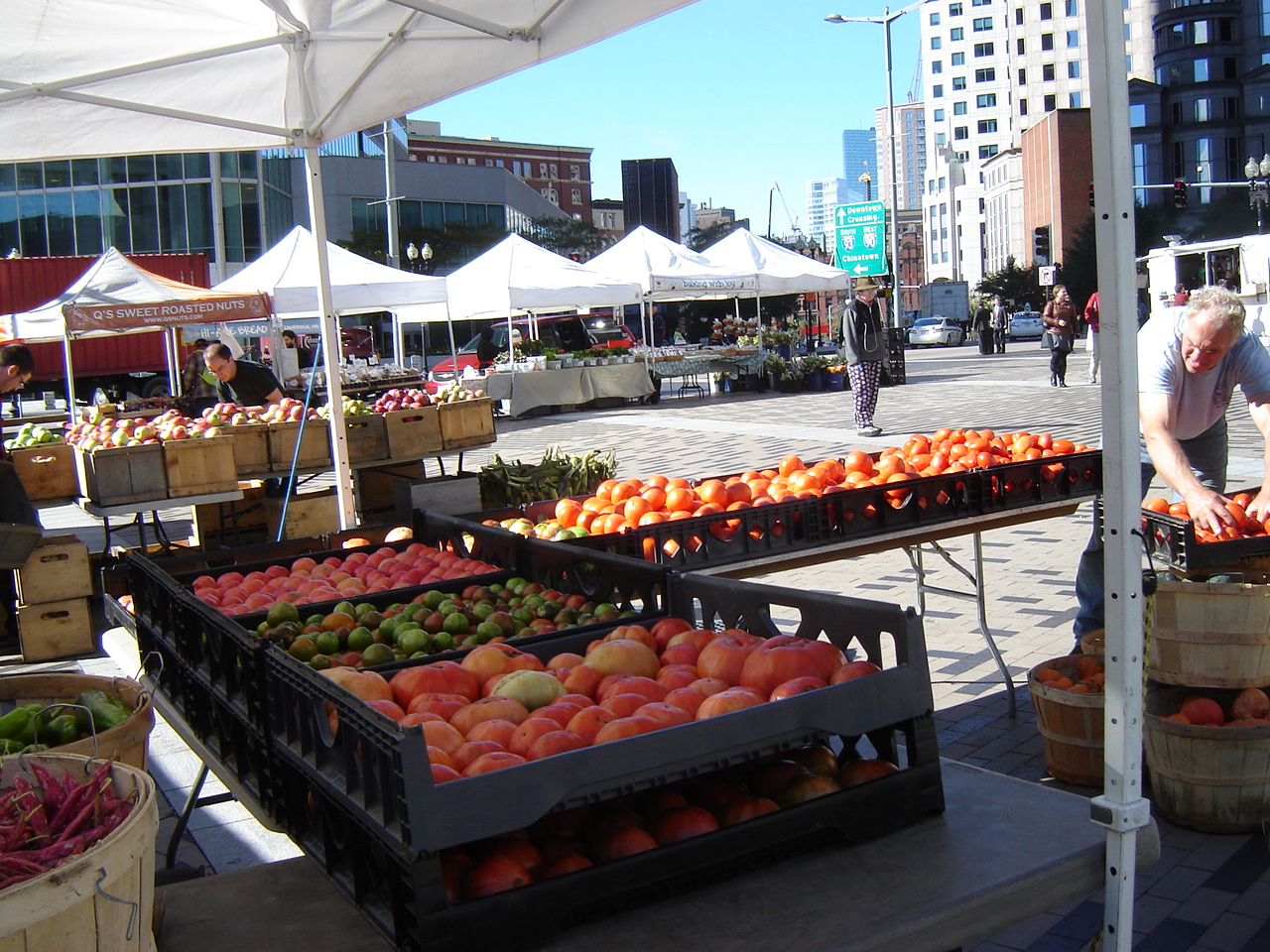
Mulberry season is long past, but there’s still plenty of produce out there, as evidenced by the hardy farmstands at the farmers market today.
The U.S. Department of Agriculture funds a wide range of activities to boost the economic strength of small towns and rural areas. It doesn’t just fund farmers, although farmers may benefit from a more vibrant rural economy.
To that point, here’s an story from the Philadelphia Inquirer by Howard Shapiro on how the USDA is helping a New Jersey theater.
“A little semiprofessional theater amid the farmland of Hammonton, N.J., has become the beneficiary of more than a half-million dollars in grants and low-interest loans from a most unlikely arts angel: the U.S. Department of Agriculture. …
“The Agriculture Department money is coming directly to the theater in three acts, so to speak: a $23,000 grant to improve its historic building and its ticketing and computer programming; an $89,000 20-year loan at 3.5 percent interest, mainly to enhance stage equipment; and a 30-year loan of $482,000 at 3.38 percent interest, to buy its building.
” ‘It’s an unusual project for the USDA to finance,’ said Howard Henderson, the department’s rural-development director for New Jersey. “This is a fascinating way we’ve been able to benefit a rural community.’
“The Rural Development program, financed by Congress, exists to strengthen or help establish facilities in rural communities that will improve downtowns, provide services, and encourage local activities. But money usually goes to such projects as firehouse restoration or, as in New Jersey’s northern Sussex County, a plan for hospice units.”
The Eagle Theatre applied for the money because, according to Henderson, everyone around Hammonton knows how active the USDA has been in supporting growth. More.
I’ve written several posts on the threat to languages that have few speakers — and on the linguistic preservationists racing against time. (Here, for example.)
Why does language extinction matter, you ask? Because language embodies so much about culture. We are poorer in being ignorant of how different people live and in having a chance to learn taken away from us.
Now the last speaker of a rare Scots dialect is gone. Writes the Associated Press, “In a remote fishing town on the tip of Scotland’s Black Isle, the last native speaker of the Cromarty dialect has passed away, taking with him a little fragment of the English linguistic mosaic.
“Academics said [October 3] that Bobby Hogg, who was 92 when he died … was the last person fluent in the dialect once common to the seaside town of Cromarty, 175 miles (280 kilometers) north of Edinburgh.
“ ‘I think that’s a terrible thing,’ said Robert Millar, a linguist at the University of Aberdeen in northern Scotland. ‘The more diversity in terms of nature we have, the healthier we are. It’s the same with language.’ …
“It’s part of a relentless trend toward standardization which has driven many regional dialects and local languages into oblivion. Linguists often debate how to define and differentiate the world’s many dialects, but most agree that urbanization, compulsory education and mass media have conspired to iron out many of the kinks that make rural speech unique.” More.
Photograph: Am Baile-High Life Highland/Associated Press.
Bobby Hogg, who recently passed away aged 92.
In a sign of moving with the times, the 54-year-old Littleton, Mass., Country Gardeners now call themselves a flash mob when they descend on public spaces to pull weeds and trim bushes.
Writes Grant Welker of the Sun, “The club of 34 active members — ranging in age from 30s to 90s, and all women — might not turn as many heads as a flash mob that quickly forms in a public setting, and there’s surely no dancing or singing involved. But it does serve more of a purpose.
“This group plans its mobs, shows up at the arranged time, works its gardening magic, and then disappears again, leaving a beautified space in its wake. …
“On a recent Saturday at 1 p.m., a group of five assembled at the Littleton Cemetery at the intersection of King Street and New Estate Road, fixed up a butterfly garden and, within about an hour, was gone, with some of the same members on to the next project. There were three mob-gardening sessions that day: at the cemetery, and then at Littleton Cafe at 3 p.m., and Common Convenience on Littleton Common at 5 that afternoon.” More.
Now, without calling these cheerful efforts at all staid, I can’t help thinking that a little singing and dancing wouldn’t hurt. I wonder if anyone has ever thought of pulling a flash mob on a flash mob?
You could find out when the gardening flash mob was scheduled, then show up with a brass band and baton twirlers to encourage the workers in the town common.
Or what about something around Halloween, with the surprise mob descending on the cemetery clean-up wearing costumes and handing out candied apples while “Monster Mash” plays on someone’s iPod?
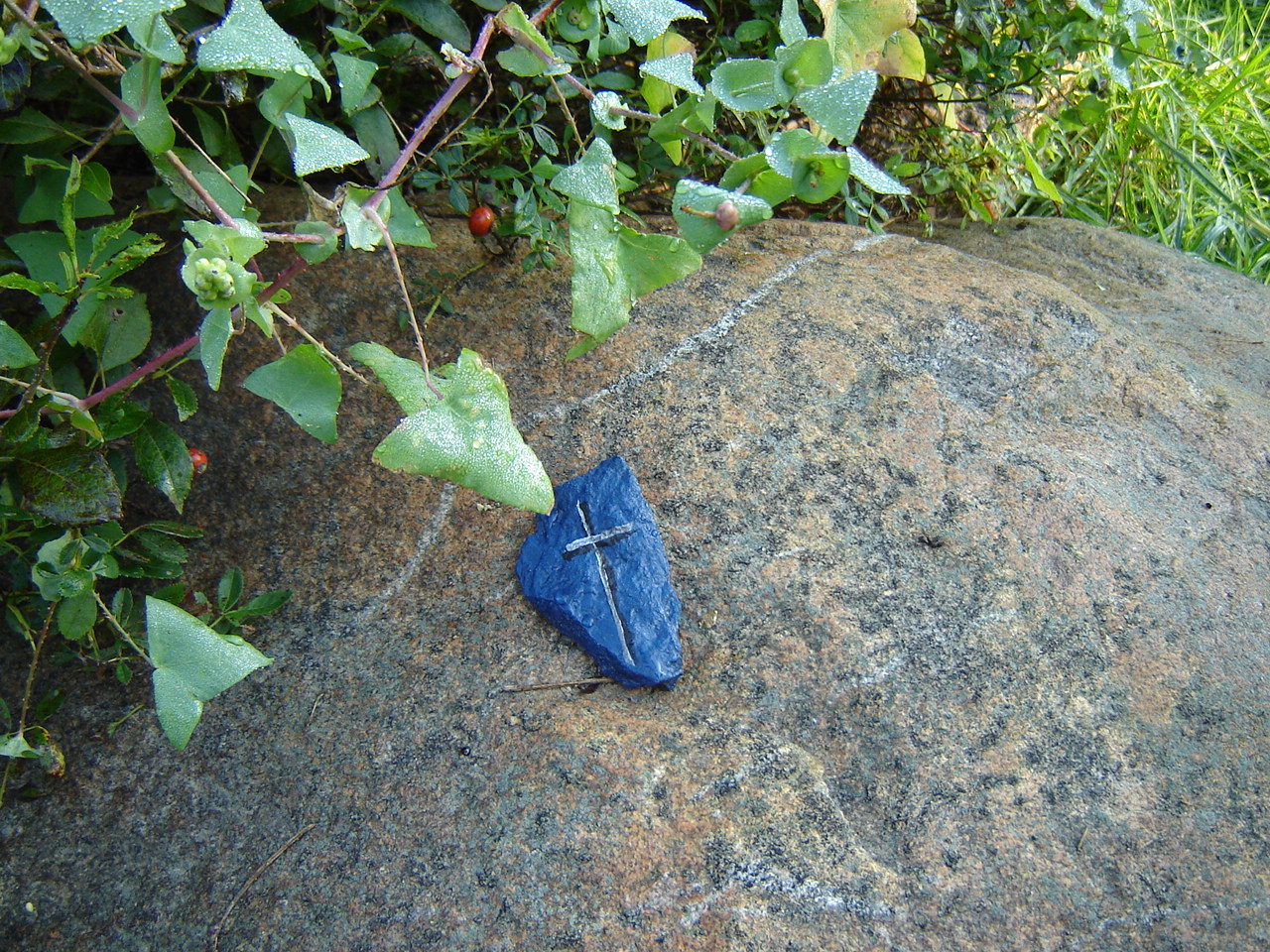
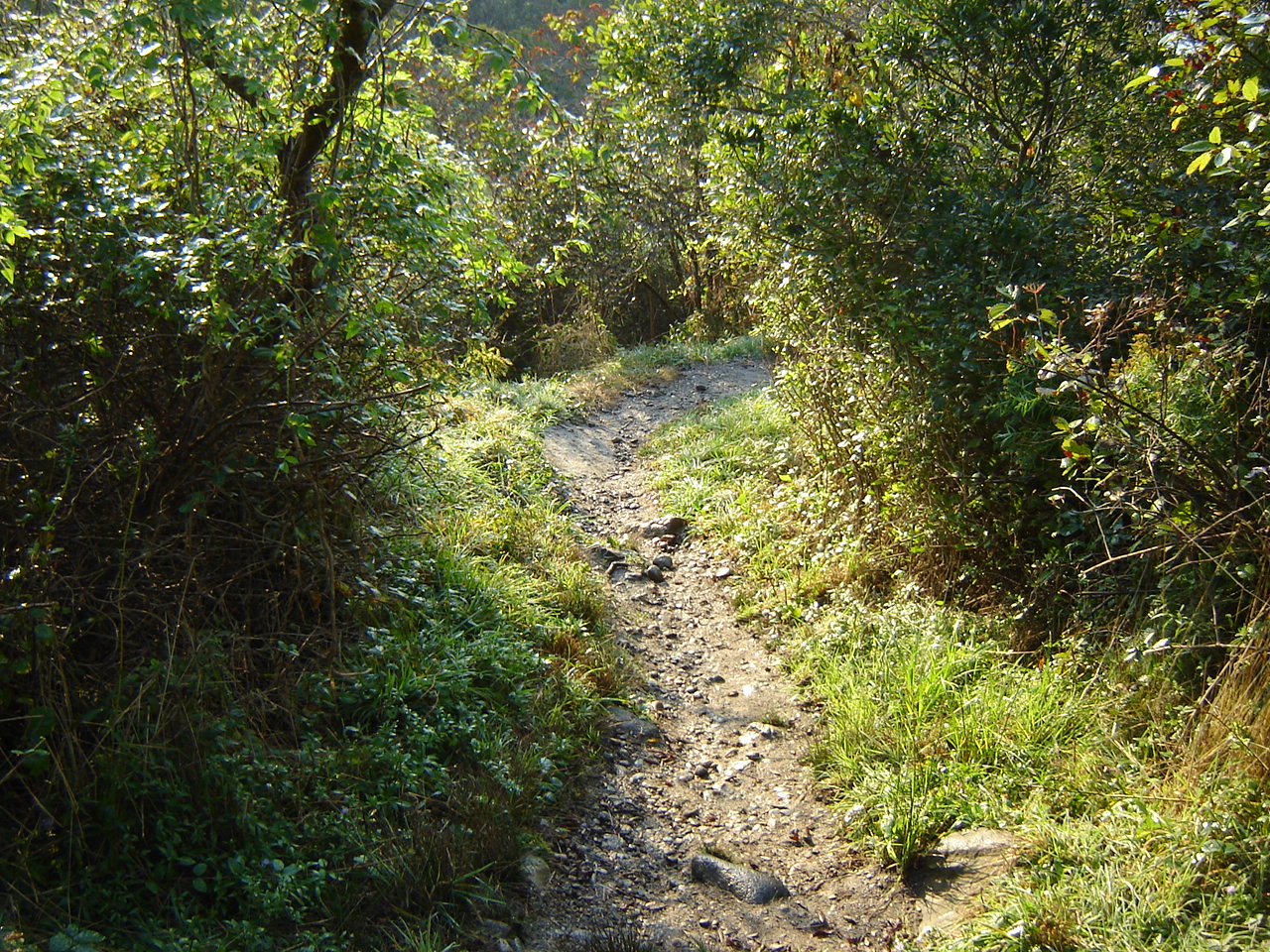
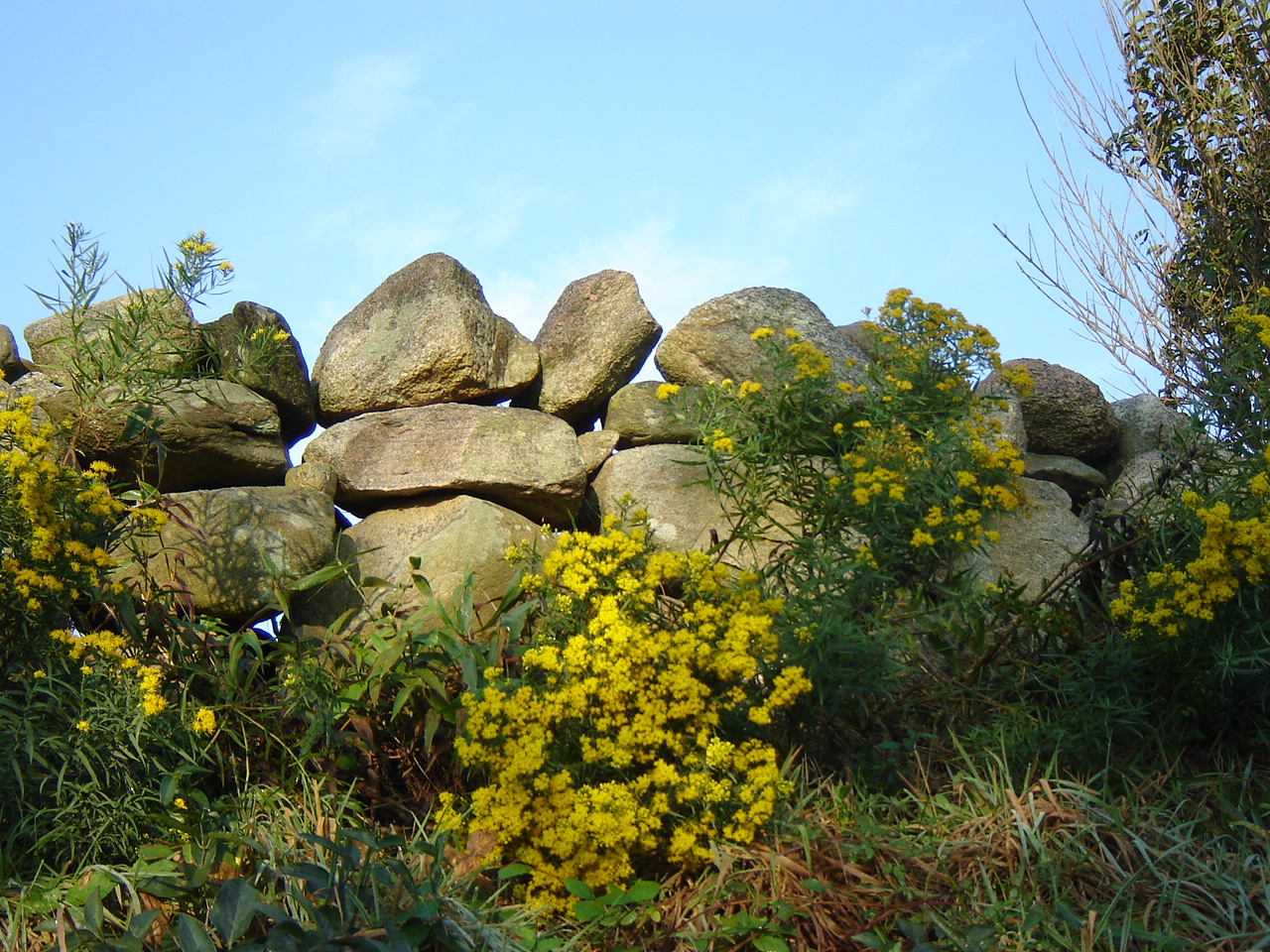
Who lives in the small house? Is the hole in the wall an entrance or an escape route? Why are the tree trunks yellow? Who put a new house number on an overgrown foundation? And where has that car been?
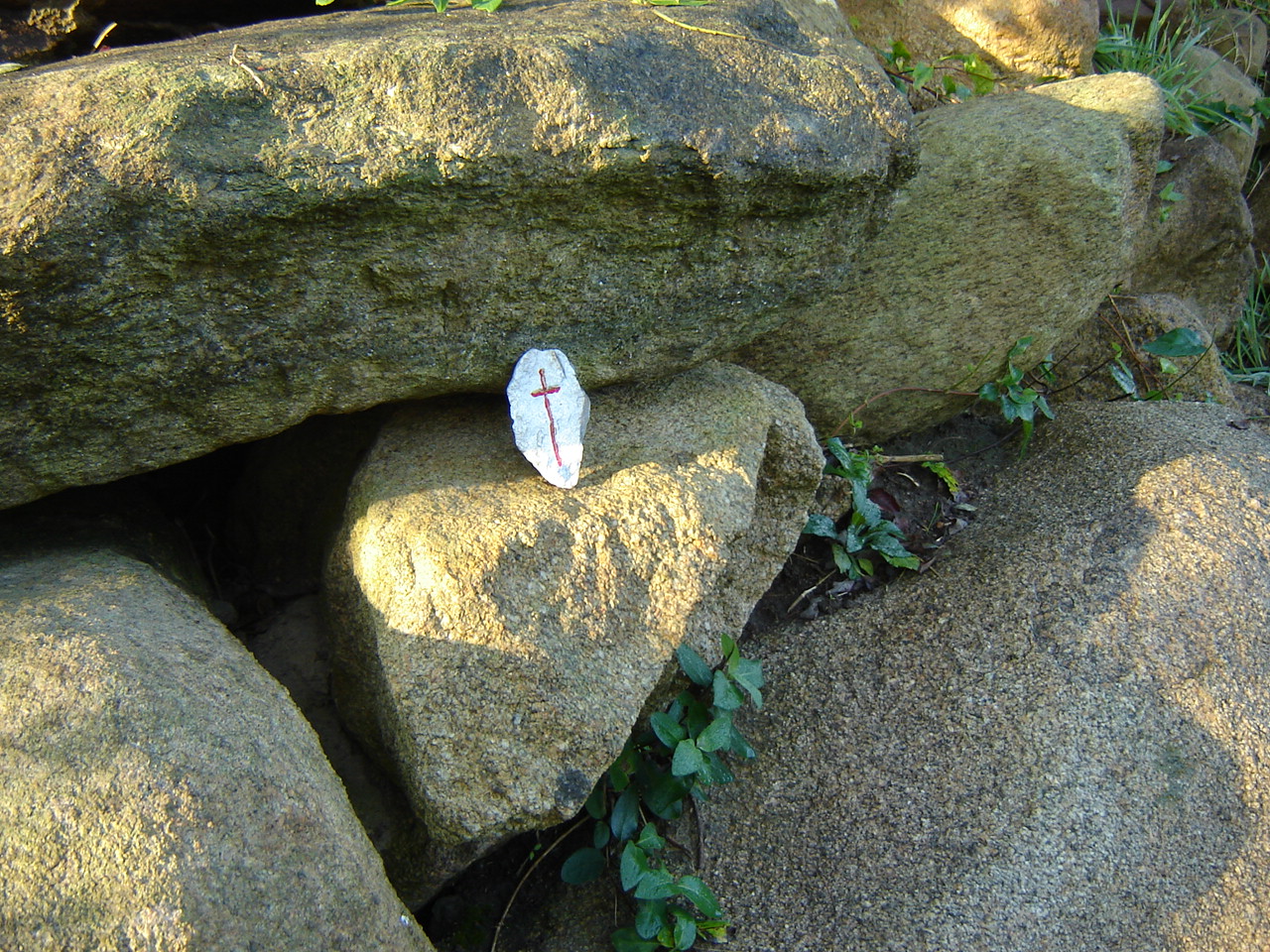
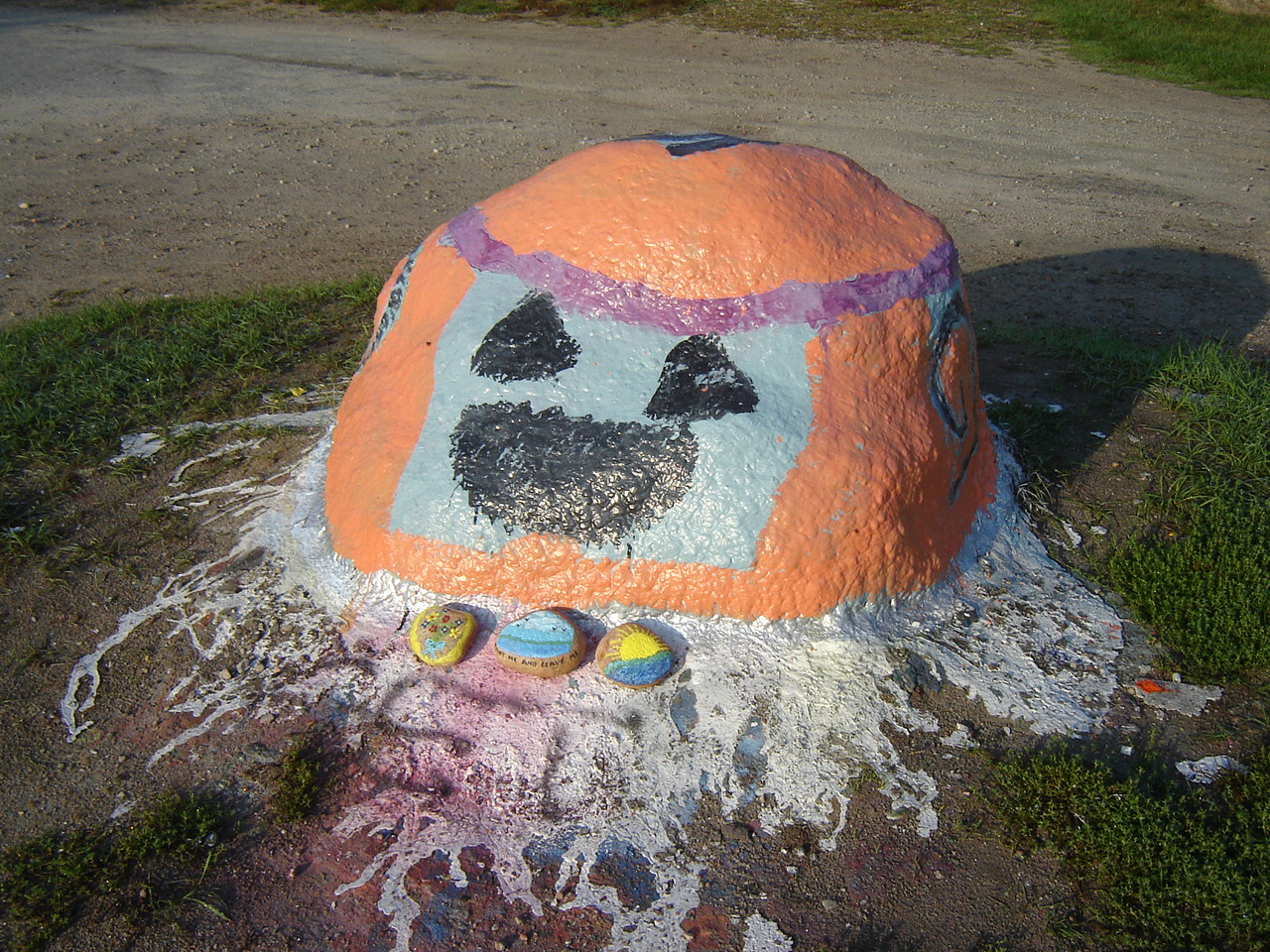
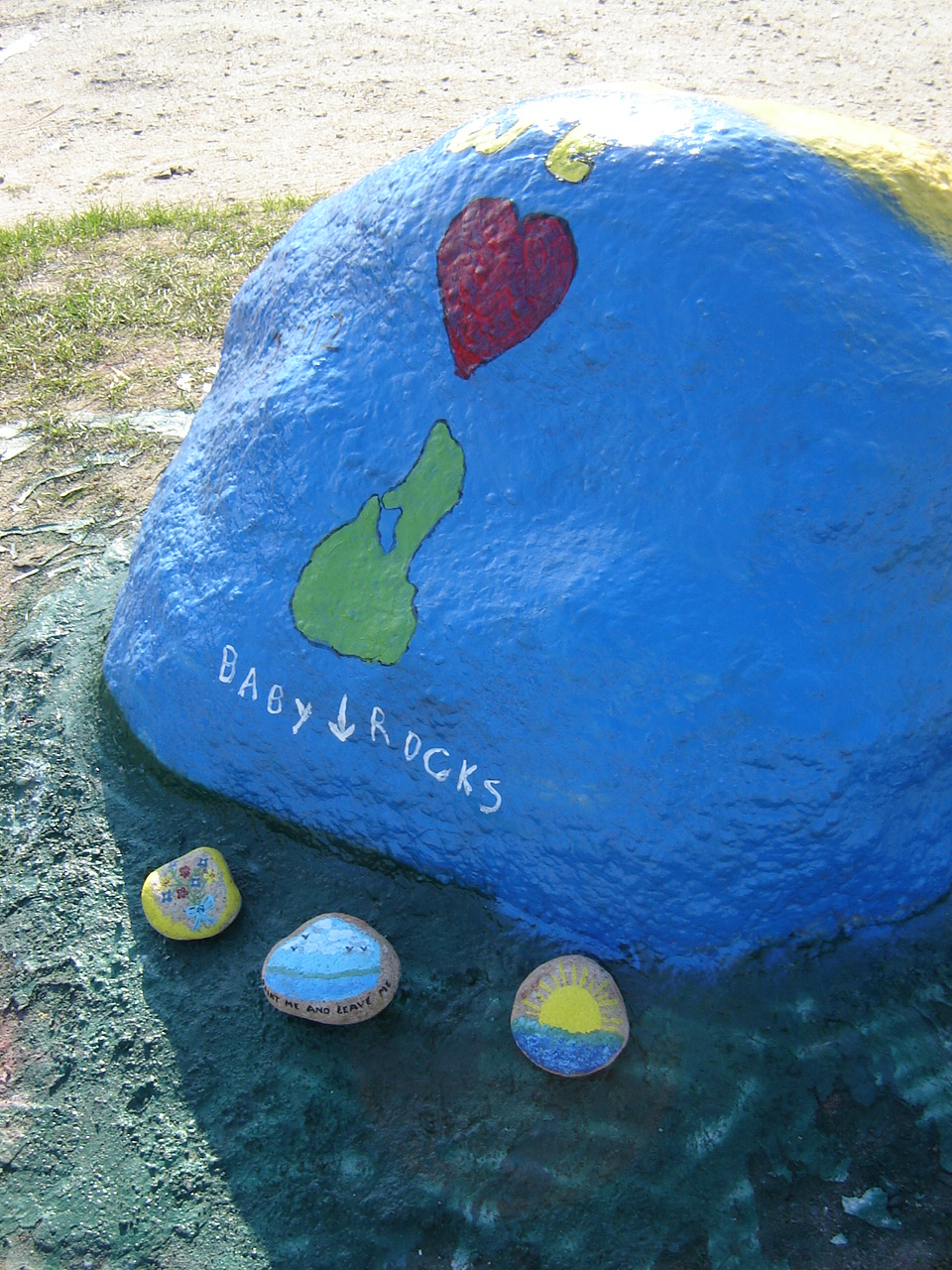
I noted the little blue talisman but didn’t stop, walking on toward the path. Then I turned back. “Asakiyume would take a picture,” I thought. On the way back up the path I saw the little white talisman.
I’m a sucker for a good title. I even bought a novel once just because I liked the title — Time Will Darken It. (I didn’t like the book, but what a great title!)
So here I am recommending a song by Greg Brown called “Playing the Poet Game.” The other words are good, too. See how you like them.
As wistful as the lyrics are, you could do worse than play the poet game. I know someone who is building a fine reputation as a poet today. It is clearly a better arena than the one he was in before. He was active in politics and got carried away with his enthusiasm for one guy and his fear of what would happen if the other guy won. He broke the law. And paid for it.
Today, his poetry is enriched by his hard life lessons.
Poetry is good for everyone because, at its best, it is first cousin to truth.
In a recent article in the NY Times, Kathryn Shattuck described a festival that took place on “600 acres of pasture and test plots at the Land Institute on the outskirts of Salina, Kansas. …
“Each autumn for 34 years, during its annual Prairie Festival, this nonprofit research organization has become a Mecca of sorts for those whose passions run to sustainability, farming and feeding the world.
“For two days, Friday evening through Sunday afternoon, lectures and walking tours, interspersed with art installations and musical performances, focused on climate change, agricultural practices and what the institute’s president, Wes Jackson, called ‘getting over the hump’ in the use of carbon-based energy sources. …
“Jackson, a plant geneticist who co-founded the institute in 1976, calls the festival ‘an intellectual hootenanny,’ where ideas collide with music, art, food like bison chili, and bread and beer made from Kernza, the institute’s trademarked perennial wheatgrass.
“But the democratic casualness of the environment — listeners sprawled on hay bales, children frolicking on the hillside — belied the seriousness of purpose as college hipsters and wizened hippies shared space with revered scientists and conservationists like David Orr, an environmental studies professor at Oberlin; Fred Kirschenmann, a distinguished fellow at the Leopold Center for Sustainable Agriculture at Iowa State University who is also the president of the Stone Barns Center for Food and Agriculture in Pocantico Hills, N.Y.; and Douglas Tompkins, who has preserved more than two million acres of wilderness in Chile and Argentina.”
K. Emily Bond has a nice article at EcoSalon on the greening of architecture. (Thanks for the lead, ArtsJournal!)
“The trend of vertical gardening is up,” writes Bond, “as is the rise of the jolly green skyscraper. Easy on the eyes and easier on the planet, the trend of upward greenery is transforming our concrete jungles into ivied oases. …
“As watchers of modern eco architecture, of course, there does come a point when we ask what it is, exactly, we’re looking at. … Is it architecture, or vegitecture?
“That’s what the Barcelona City Council and one Spanish firm are calling this, the Green Side-Wall, ‘represent[ing] the birth of a novel type of construction in the field of vegitecture.’ ” See the photograph.
“An interior staircase lends access to the metal platforms throughout; a pulley system facilitates the transport of planters, nests, and other materials within the prefabricated steel frame.” More.
When I was working at the newspaper in the early ’90s, beginners were often given the task of writing obituaries. Whether the family or the funeral home offered the information, the assignment was mostly a question of putting the obit in AP style and perhaps making a call to get a key detail. You didn’t often get a sense of the writer’s style in an obit.
Margalit Fox of the NY Times may be an exception.
“Dr. Peter Praeger, a heart surgeon who saved a man’s life and as a result wound up owning a gefilte fish company — and who as a result of that wound up starting a successful natural-foods company — died on Sept. 22 in Hackensack, N.J. He was 65. …
“Though the story of Dr. Praeger’s company — born of two rabbinical prognostications, any number of hairpin turns of fate and the transformative realization that man cannot live by gefilte fish alone — reads like something out of Sholem Aleichem, it began, no less, on a Christmas Eve.”
Dr. Praeger helped to save the life of a man on Christmas Eve and over time developed a friendship with the man’s brother-in-law, Rubin Unger, the owner of a struggling gefilte fish company. The family rabbi made a prediction: “Any surgeon smart enough to save his congregant’s life would be smart enough to save his congregant’s brother-in-law’s gefilte fish company.
“Dr. Praeger demurred: he was, after all, a surgeon, not a fish maven. Mr. Ungar persisted. …
“Who, in the end, can fly in the face of rabbinical foreordination?” asks the obit writer.
“ ‘It was like The Godfather,’ Dr. Praeger told the magazine New Jersey Monthly in 2007. ‘They pulled me into it.’ ”
At his death, Dr. Praeger was as well-known for the food company that emerged from the gefilte fish as for his surgical prowess.
In case you missed it, last week Prince Charles’s campaign to sell British wool in the United States brought 30 lovely sheep to Bryant Park in New York (where surprising things seem to happen on a regular basis).
Erin Durkin described the happening in the NY Daily News:
“The Bryant Park lawn looked more like the Sheep Meadow Thursday as a flock of wooly livestock took over the famous green space for the day.
“The thirty sheep were brought in to launch the Campaign for Wool, an effort by Prince Charles to promote the wool industry in the United States. …
“The Bryant Park Corporation signed off on the event — the first time they’ve ever hosted ‘live animals of this quantity,’ according to spokesman Joe Carella — after the local community board voted unanimously in favor of hosting it.”
Well, you know, we have a lot of nice sheep right here in the U.S. of A. Do you have a neighborhood park? If Prince Charles is too busy, maybe a local farmer would show off some sheep. I could see this attracting a lot of attention around Easter.
Bally Duff Farm in Chepachet, Rhode Island, for example, raises Black Lincoln sheep. Other Ocean State farms are listed here.
The Prince of Wales can afford giveaways, and that could be a challenge for local farmers. Enter to win a wool mattress from his campaign, here. Extra photos here.
Photograph: Diane L Cohen
Bryant Park was transformed into a wool installation to celebrate the launch of HRH Prince of Wales Campaign for Wool in the USA.
At first, Suzanne and Erik thought the chair backs attached to tree stumps on Blackstone Boulevard must have been the work of a conservancy-type organization. The boulevard’s broad, shaded medial strip for walkers, runners, and baby carriages is always well maintained and welcoming.
But it turns out that a “guerrilla good deed campaign” is behind the tree-stump art. Erin Swanson, of Providence’s East Side Monthly, tracked down a vigilante known as Johnny Chair Seed.
“Last summer,” Swanson writes, “a few friends were having themselves a little stroll down Power Street when they stumbled upon a broken chair, discarded on the sidewalk. A few footsteps further, they happened upon a tree stump. ‘It started as just a random idea. We figured someone got drunk and broke the chair,’ says the anonymous mastermind behind the array of stump chairs now scattered throughout the East Side. ‘I hear people have started calling me Johnny Chair Seed,’ he says with a devilish smile. ‘I kind of like it.’
“With the help of two friends (two of the ‘select few’ who know his true identity), Johnny has constructed a total of ten stump chairs including those on Hope, Rochambeau, Blackstone, Elmgrove and Larch, among others.” The full article is here.
Makes me want to do a stealth project again. It’s been too long. I have something in mind involving poetry. Stay tuned.
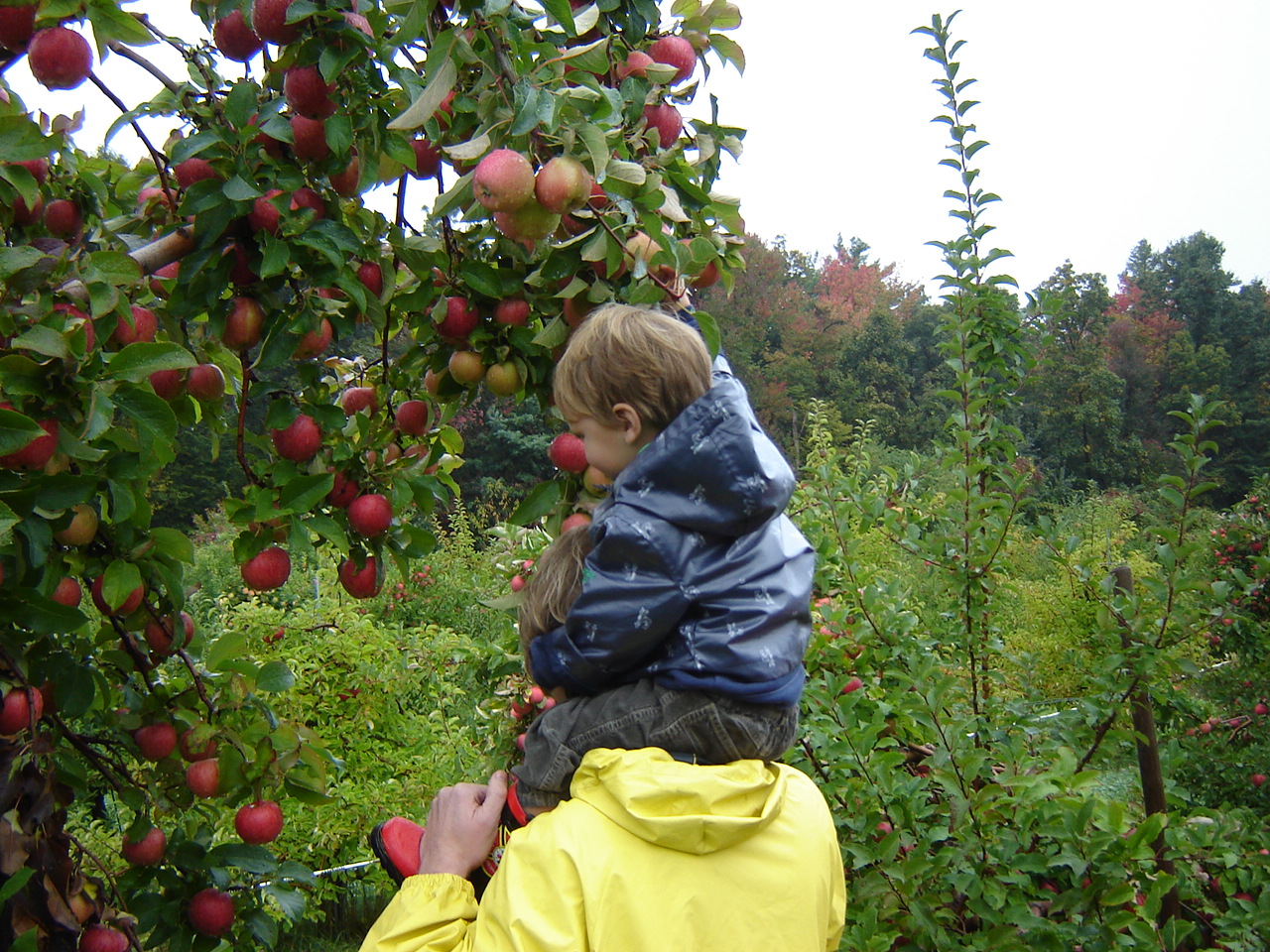
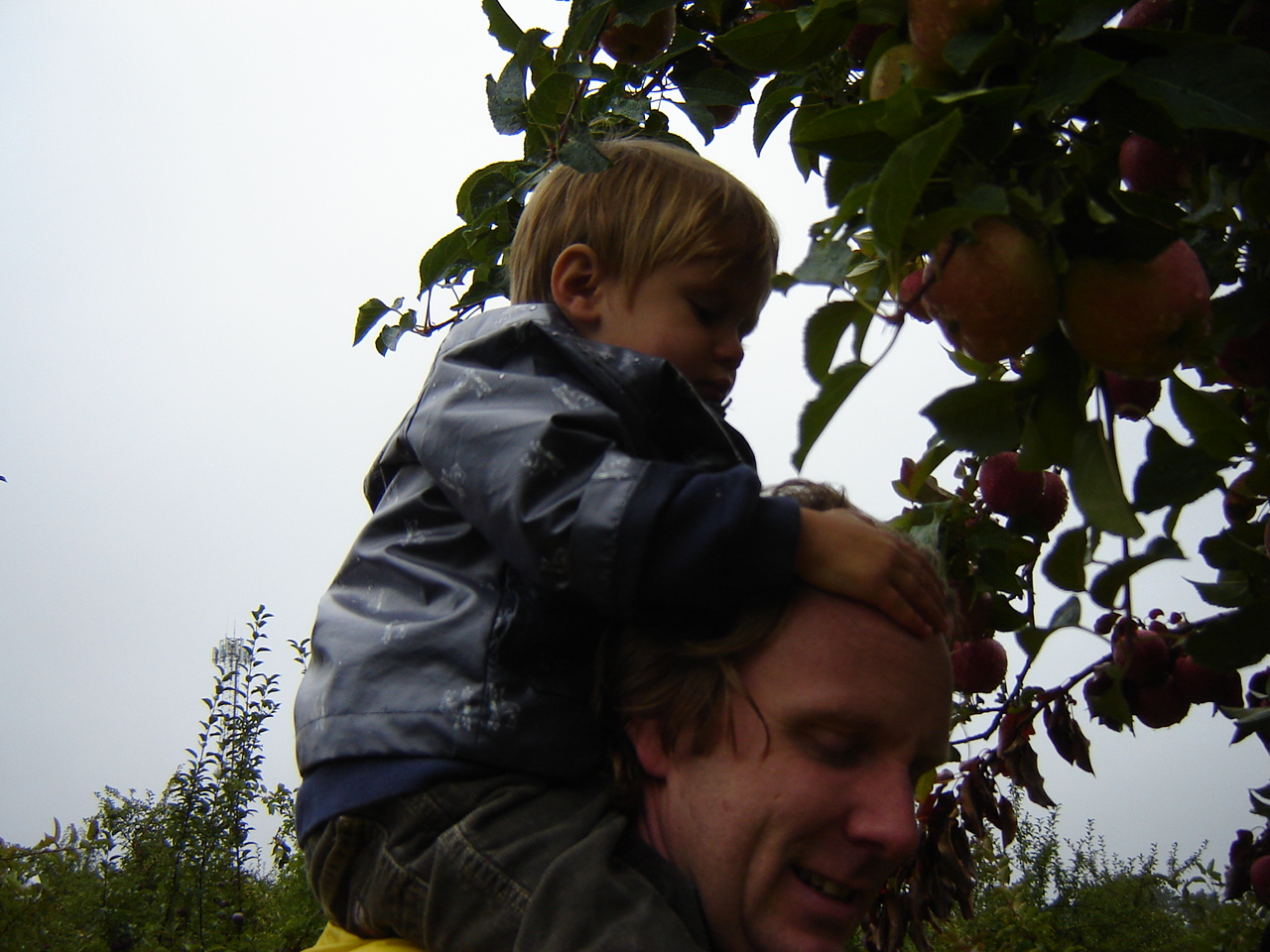
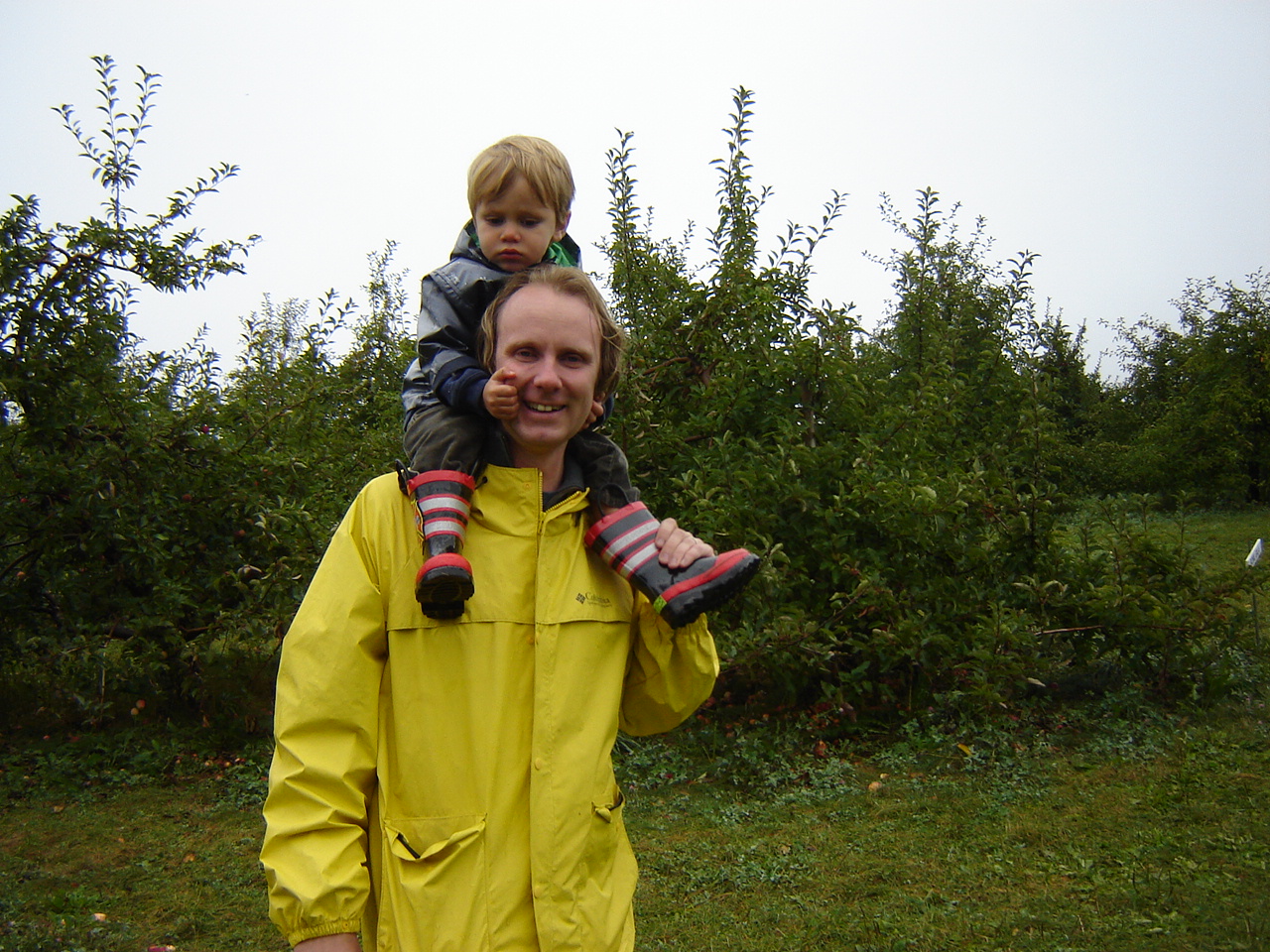
Today we joined forces with our son, daughter-in-law, and two-year-old grandson for a lovely, low-key apple-picking adventure in Harvard, Massachusetts.
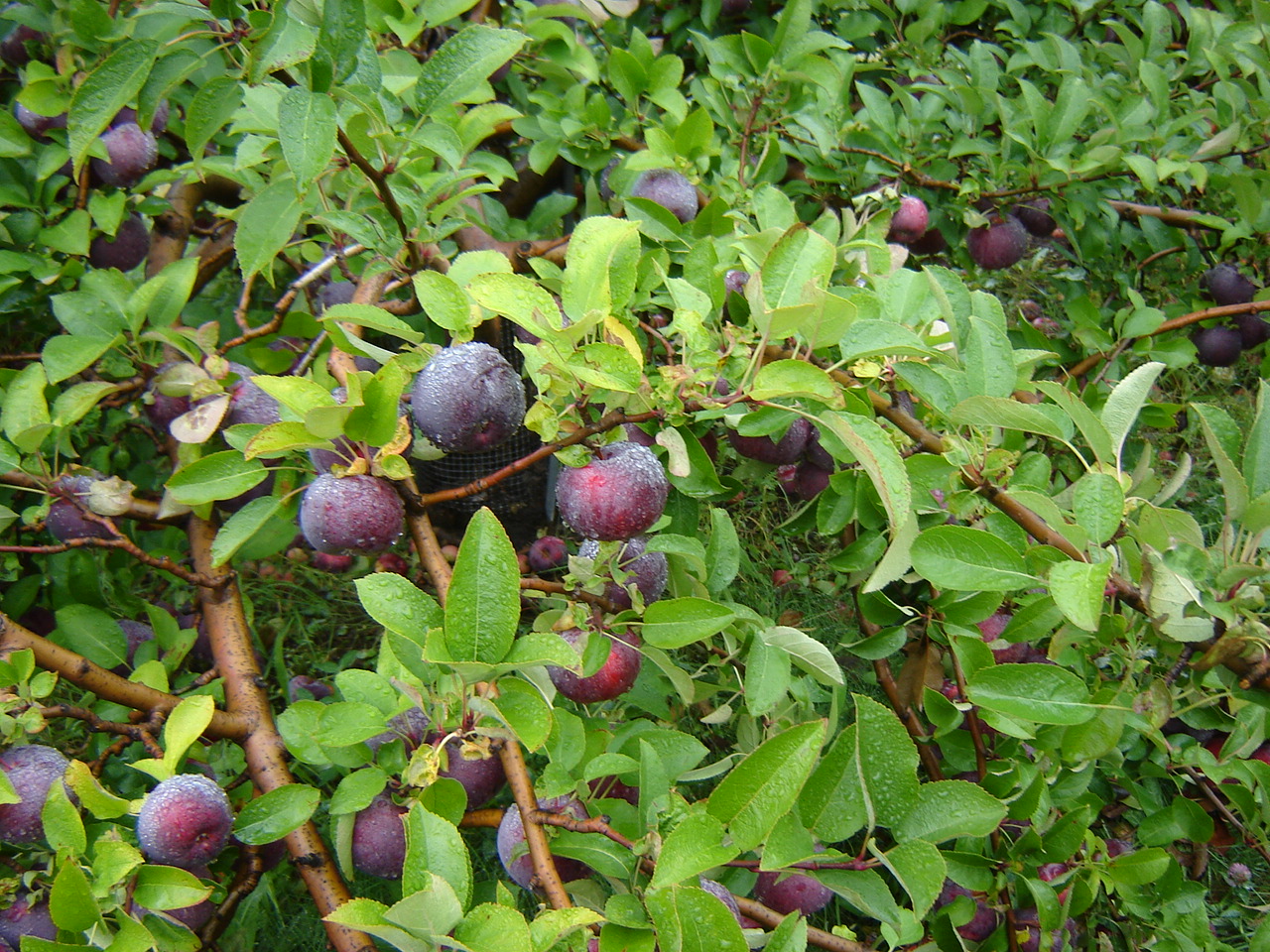
Carlson Orchards has many varieties of apples. Small painted signs tell you which ones grow in which part of the farm. The trees have been pruned so as not to grow too tall, and they are loaded with fruit. The purplish ones are Empire. I had never seen Empire apples that looked purple. We picked Empire, Cortland, Mac, and Pink Gala.
A friend from the office told me about the farm. She likes to go pick peaches in summer.
The little general store had hot cider and donuts, pumpkins and a nice variety of apple products and jams.











 Suzanne's Mom's Blog