At their wedding, Suzanne and Erik seated me next to Erik’s uncle on one side and Jonathan on the other. Jonathan was into literature. In fact he wrote a poem for Suzanne and Erik that he read as a toast. (You would not believe how many toasts Swedes give at weddings. It’s an awful lot of fun!)
Jonathan knew a lot about American and English poets, and I asked him to suggest a Swedish poet that I could read in translation. I figured that Google Translate might not be optimal for poetry. He recommended Tomas Tranströmer. After the wedding, I bought Tranströmer’s The Half-Finished Heaven, translated by Robert Bly. (Who knew Robert Bly translated Swedish?)
Last week, Tranströmer was awarded the 2011 Nobel Prize for Literature. Here is a short Tranströmer poem from the book, illustrated by a photo my husband took before Hurricane Earl in 2010. (The photo is called “Red Sky at Morning, Sailors Take Warning.”)
Storm, by Tomas Tranströmer
The man on a walk suddenly meets the old
giant oak like an elk turned to stone with
its enormous antlers against the dark green castle wall of the fall ocean.
Storm from the north. It’s nearly time for the
rowanberries to ripen. Awake in the night he
hears the constellations far above the oak stamping in their stalls.
Around this time last year, a young cub scout rang the bell. He was selling popcorn as a fundraiser for his den. His mother waited by the gate. While I was filling out an order form, he studied the black net over my yard and the way our leaves seemed to float.
“What do you think that’s for?” I asked.
The cub scout pondered only a moment. “When all the leaves fall down,” he said, “you roll them up in the net and dump them in a leaf pile.”
Bingo. He had put his finger on my husband’s innovation to alter and illuminate the fall leaf-raking ritual.
I looked up at the cub scout’s mother and said, “This young man is going places!”
I finished Jason Elliot’s book about Iran, Mirrors of the Unseen. It was hard work but rewarding.
I bought the book because I really liked Elliot’s An Unexpected Light about the history, culture, and daily life of Afghanistan back when the mujahideen were still fighting the Soviets. (I’m reasonably sure that Tony Kushner’s prophetic play Homebody/Kabulwas partially based on that book.)
Mirrors of the Unseen is a challenging read at times because it is very intellectual. It has lots of words and history and concepts that were new to me, but it also has wonderful stories about the ordinary people Elliot met. Even though he wrote it a few years before the the June 20, 2009, Green Revolution, you can get a sense of the attitudes of normal Iranians and what might have led to the unsuccessful revolt.
Elliot does not focus on politics, but rather on Persian art and architecture, which inspired him at a deep level.
I was reading a passage to my friend Claire on the train, and she said, “No wonder it has taken so long to read! It’s poetry!”
So for my last post on the book, I will give a few examples of Elliot’s style. He describes some English tourists as looking “very sad, and it seemed quite likely they had arrived in Iran by accident, like fish that are said to be swept up in hailstones and deposited hundreds of miles away.”
As he travels toward the southern part of Tehran toward the train station, “the surroundings grew steadily more decrepit, as if an old witch was being shed of her make-up.” And the train itself “had the air of a dragon straining at its leash.”
Here’s my favorite, from a discussion of whether the fascination that all religions seem to have with flame is passed from ancient cultures to modern or is something innate in humans: “Had the sanctity of flame erupted irresistibly into human consciousness as mysteriously as the hexagon into the intelligence of the bee?”
My other posts on the book are here, here, and here.
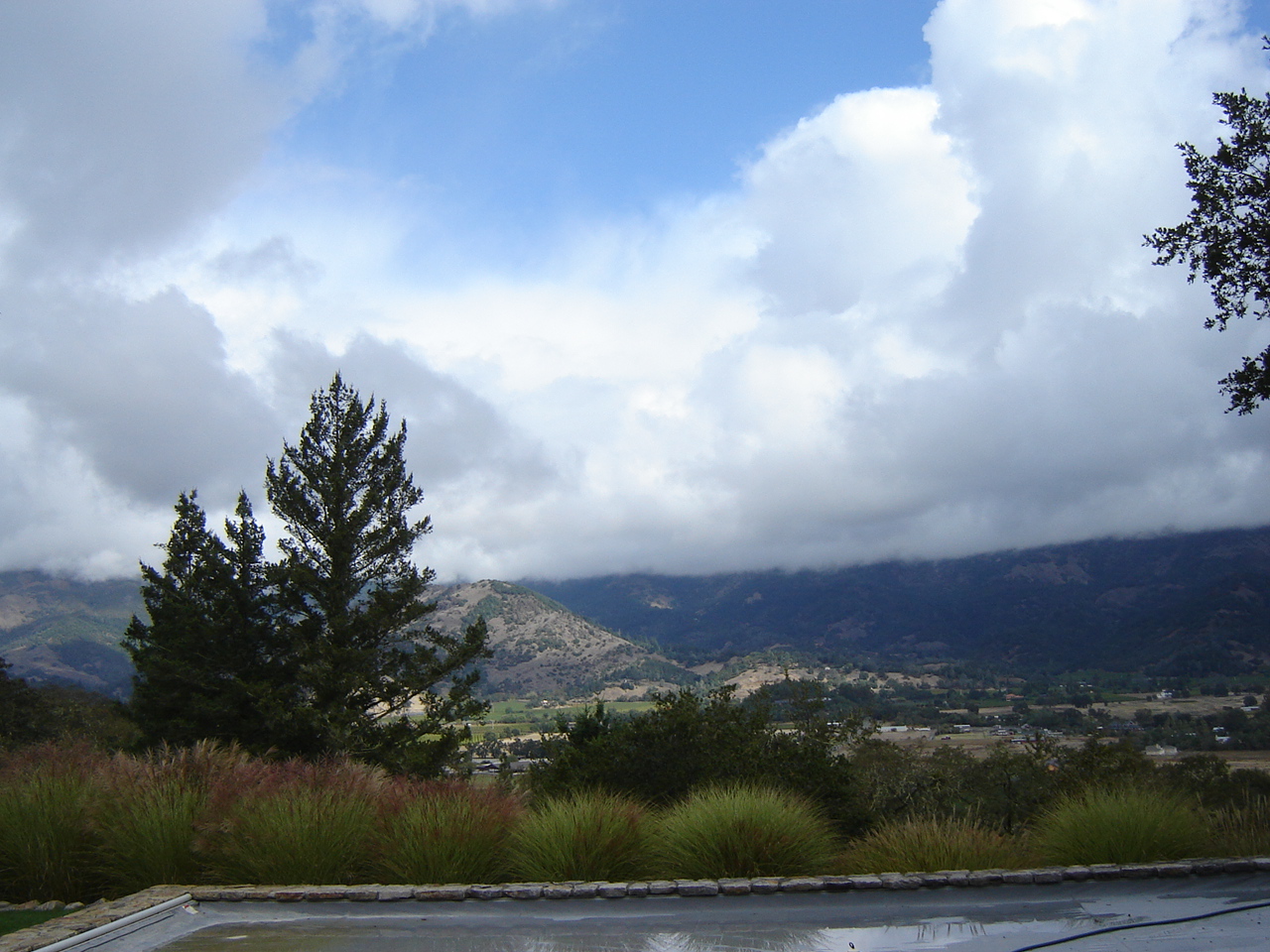
As an inveterate Easterner, currently in California for a family wedding, I’m amazed by this state. I’ve been here before, but I never can get over how different it looks from what I know!
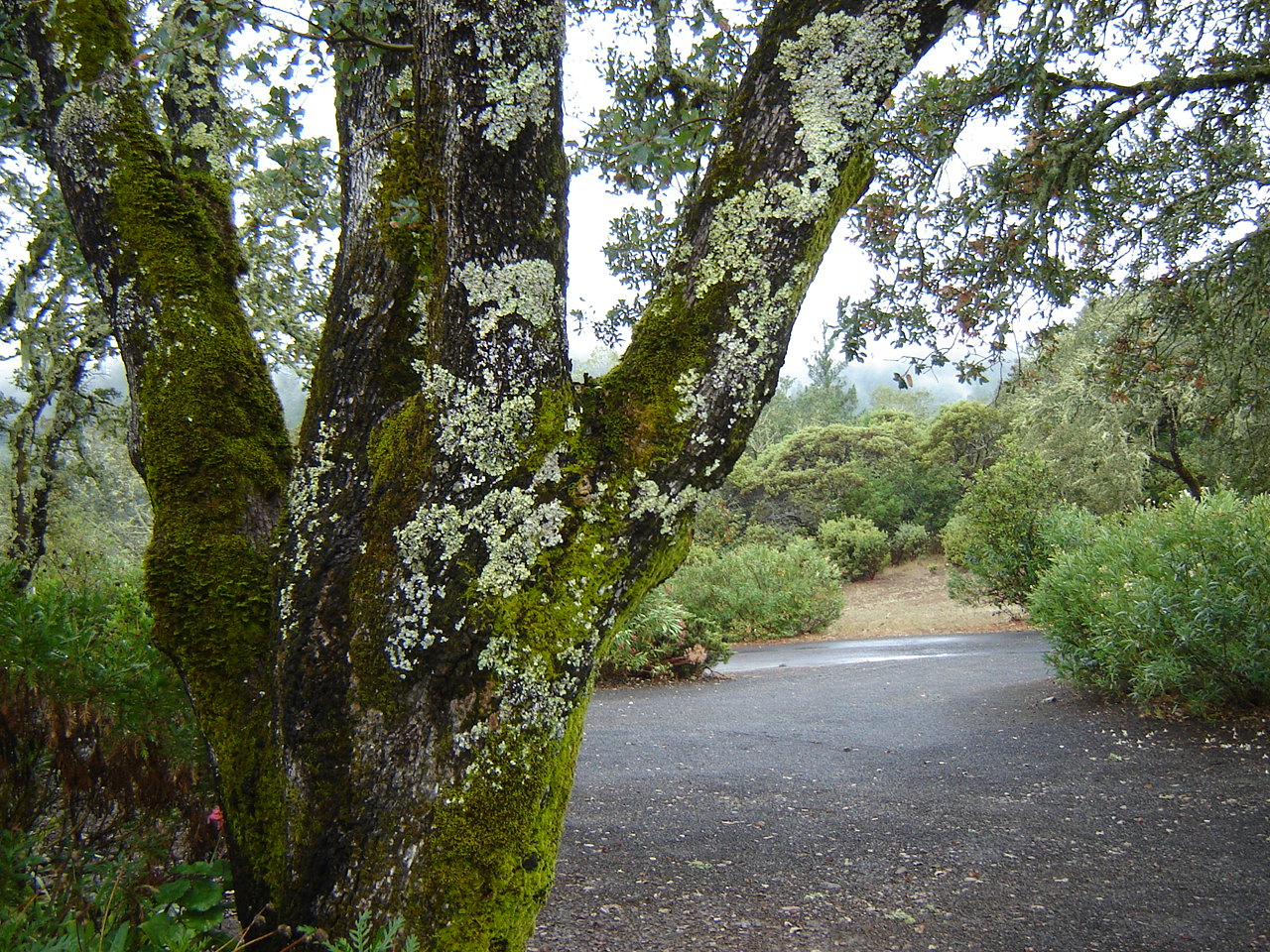
In California, I saw a sign on a tree that was covered with lichens and surrounded by dead trees. It seemed a plea for help. But according to the Hastings Biological Field Station of the University of California, lichens can capture airborne nutrients and return them to the soil. That is considered good. Another website paints a more complex picture, suggesting lichens may sometimes be associated with the death of trees in California. Read it here.
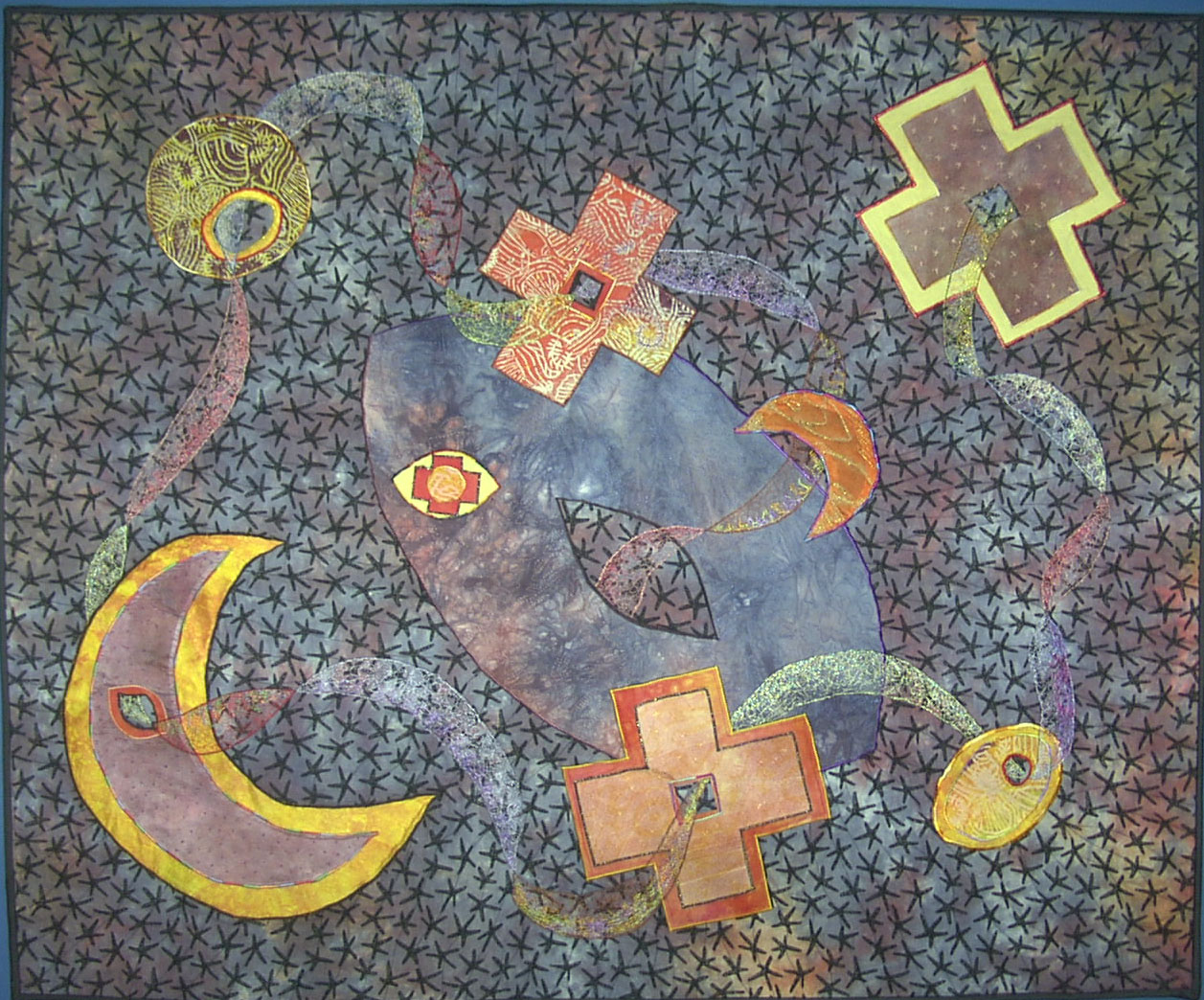
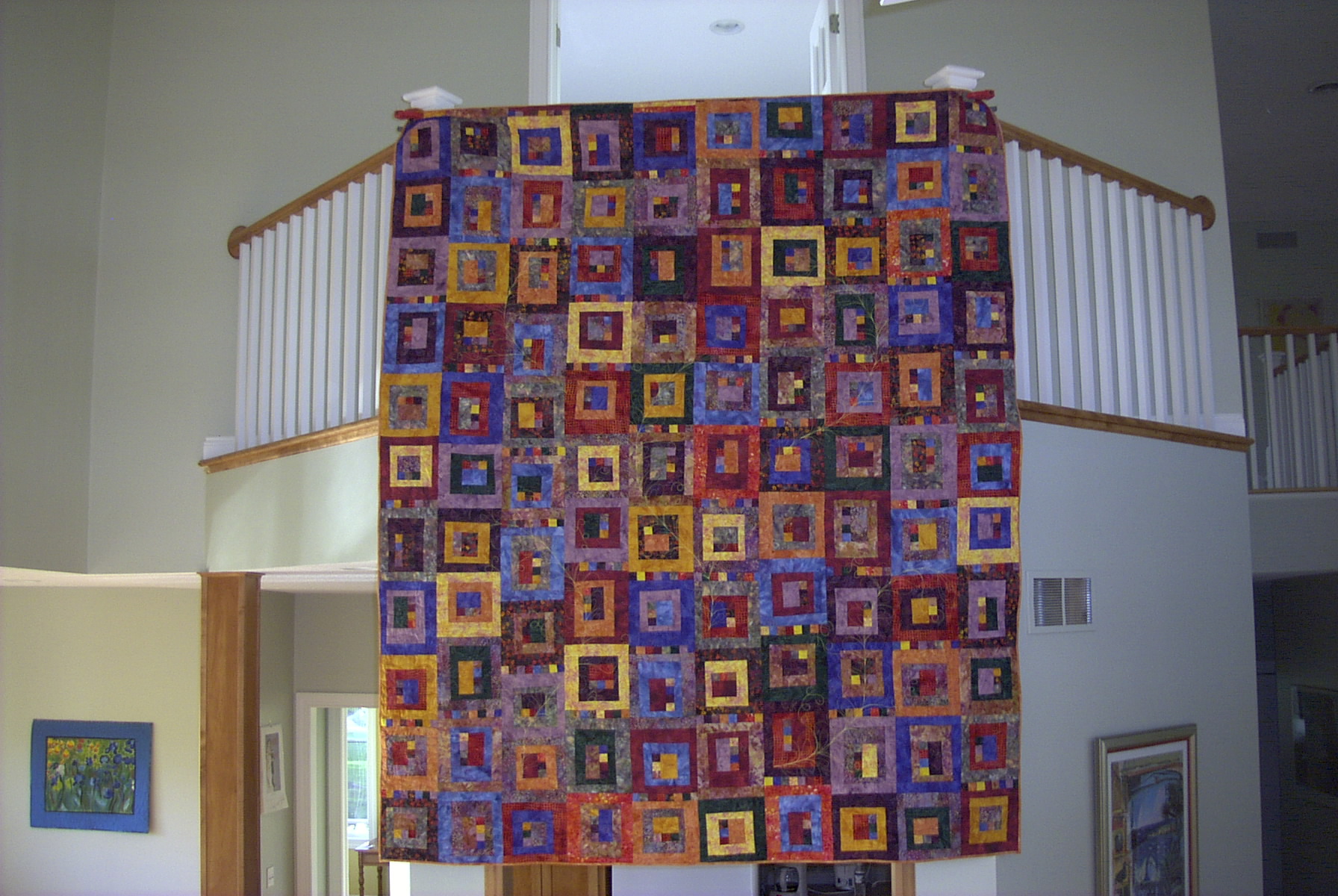
My friend Ann Ribbens creates unique, artistic quilts and has shown her work in many places, including the Minneapolis Institute of the Arts. Here are two samples of her work.
I don’t know much about quilts, but I am always happy to see new creative energy go into old art forms.
Some years ago, the John Adams family biographer Paul Nagel introduced me to physician/poet Norbert Hirschhorn. Paul told me that Bert was on the team that helped save thousands of lives in Third World countries simply by distributing water to which sugar and electrolytes had been added. (A National Institutes of Health paper references Bert’s 1973 research on “oral glucose electrolyte solution for all children with acute gastroenteritis” here.)
A special NY Times science supplement on Sept. 27, 2011, “Small Fixes,” reminded me of Bert and the notion that small innovations can have a huge impact.
Among the great stories in the supplement. is this one about Thailand’s success fighting cervical cancer with vinegar.
It turns out that precancerous spots on the cervix turn white when brushed with vinegar. “They can then be immediately frozen off with a metal probe cooled by a tank of carbon dioxide, available from any Coca-Cola bottling plant.” The complete procedure, which can be handled by a nurse in one visit, has been used widely in Thailand, where there are a lot of nurses in rural areas.
In Brighton, Massachusetts, Harvard’s George Whitesides founded Diagnositcs for All to commercialize his inventions, including a tiny piece of paper that substitutes for a traditional blood test for liver damage. Costing less than a penny, “it requires a single drop of blood, takes 15 minutes and can be read by an untrained eye: If a round spot the size of a sesame seed on the paper changes to pink from purple, the patient is probably in danger.” Read the Times article.
Amy Smith at MIT is another one who thinks big by thinking small. Read about her Charcoal Project, which saves trees in poor countries by using vegetable waste to make briquettes for fuel.
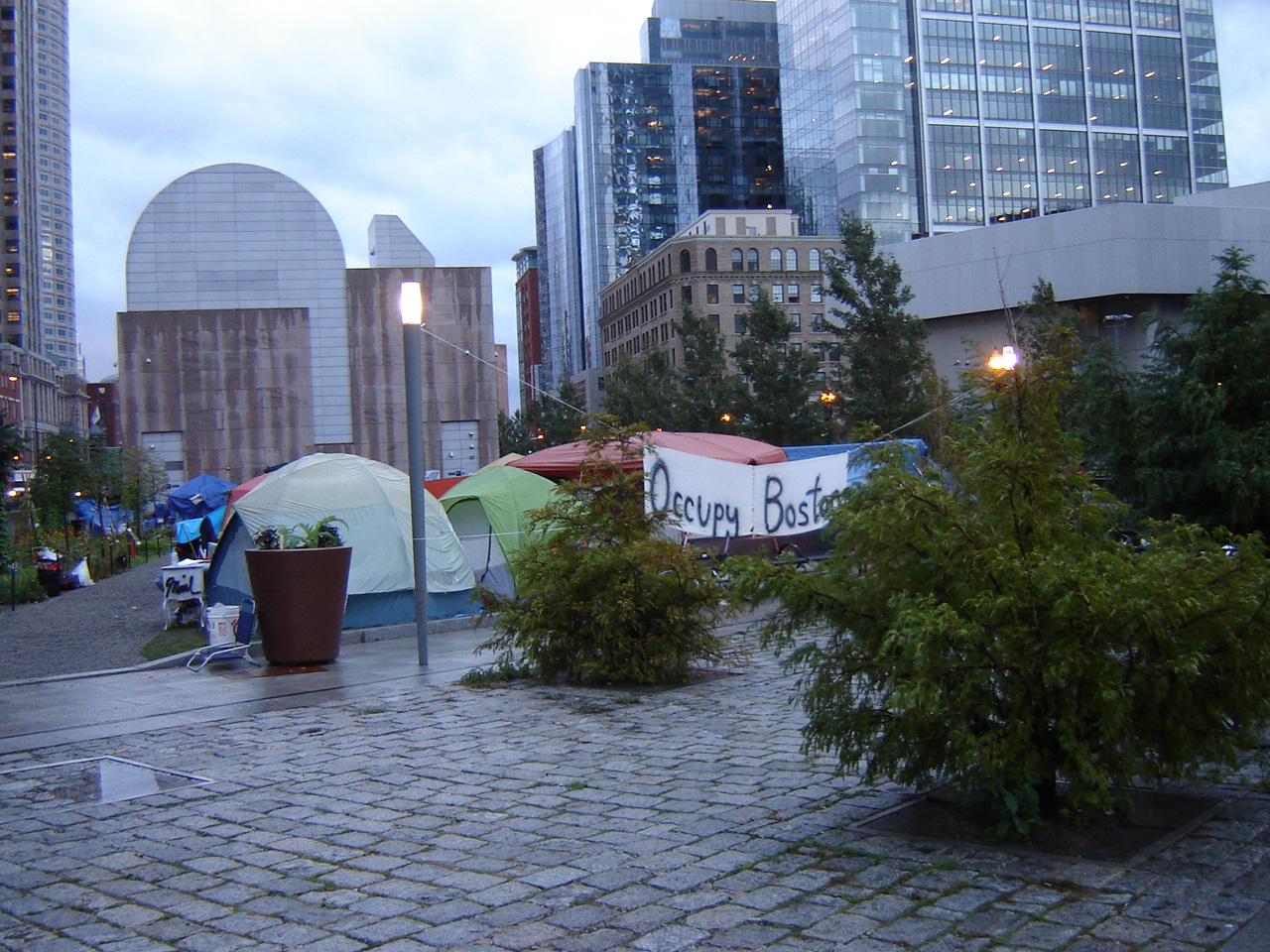
Here is Middle America at 7 a.m. waking up in Boston’s financial district after a cold, rainy night in a tent — and wondering why its college degrees have not led to jobs. It’s not Hooverville. But I think it represents something real.
There is actually a wide array of causes represented. No obvious central theme has emerged. End the War, Tax the Rich, Socialism … .
Every day I get tweets from the Equal Exchange coffee trike. With the Occupiers of Boston, the curiosity seekers, the media, and the police, there has been a steady demand for coffee. Today’s message was “EEFreeRange EE Free Range Cafe: So busy I can’t get a tweet in edgewise! Trikes are at Charles/MGH and Dewey Sq. Come see us!”
At the Washington Post, Ezra Klein is trying to figure out what it all means. He decided it probably does mean something after he started reading a Tumblr blog called We Are The 99 Percent. He describes the blog as all “grainy pictures of people holding handwritten signs telling their stories, one after the other.
” ‘I am 20K in debt and am paying out of pocket for my current tuition while I start paying back loans with two part time jobs.’
“These are not rants against the system,” Klein continues. “They’re not anarchist manifestos. They’re not calls for a revolution. They’re small stories of people who played by the rules, did what they were told, and now have nothing to show for it. Or, worse, they have tens of thousands in debt to show for it.” Read more.
In the afternoon I went over and read a few signs. Would love your comments on this one: “I couldn’t afford my own politician, so I made this sign.”
It’s 11/6/11, and I just learned about another great source of Occupy signs, at Mother Nature Network. Check out “I’ll believe corporations are people when Texas executes one” here.
I believe that people must take responsibility for their actions, that crimes should have punishments, and that every effort should be made to protect society from danger. But I don’t think society is protected if the place of punishment makes a person who committed a crime more angry and hostile than when she did it.
That’s why I like to post about the many kinds of volunteers who work with inmates to turn their hearts to better purposes. It may not always work, but it seems worth trying.
A while back, I blogged about one friend who works with ex-offenders through an organization called OWLL (On With Living and Learning: Jobs Skills for the 21st Century).
Now another friend has written about being accepted into a volunteer program at a low-level women’s prison near her home. The way this friend writes about her orientation, I can see the whole thing.
“I had a letter telling me not to bring a cell phone, smoking paraphernalia, medications, or sharp objects, and not to wear tight clothing, open-toed shoes, dangly earrings, or anything green or orange. … About half the volunteers were people of color and half were white. About a quarter spoke to one another in Spanish. More than half were middle-aged or older. One woman was in a wheelchair. So, it was a pretty diverse group. … There was lots of impressive high-tech security. There are lots of things we’re not allowed to do, like buy things for the inmates, or bring them messages. Or–and the volunteer handbook says this explicitly–help them escape or cover up an escape attempt.” (!)
Are touchy-feely prison programs all too naïve? Well, a highly skeptical prison warden at a Florida prison where there is a dance program admits that he came to see the benefit of women inmates having more-positive ways of expressing themselves:
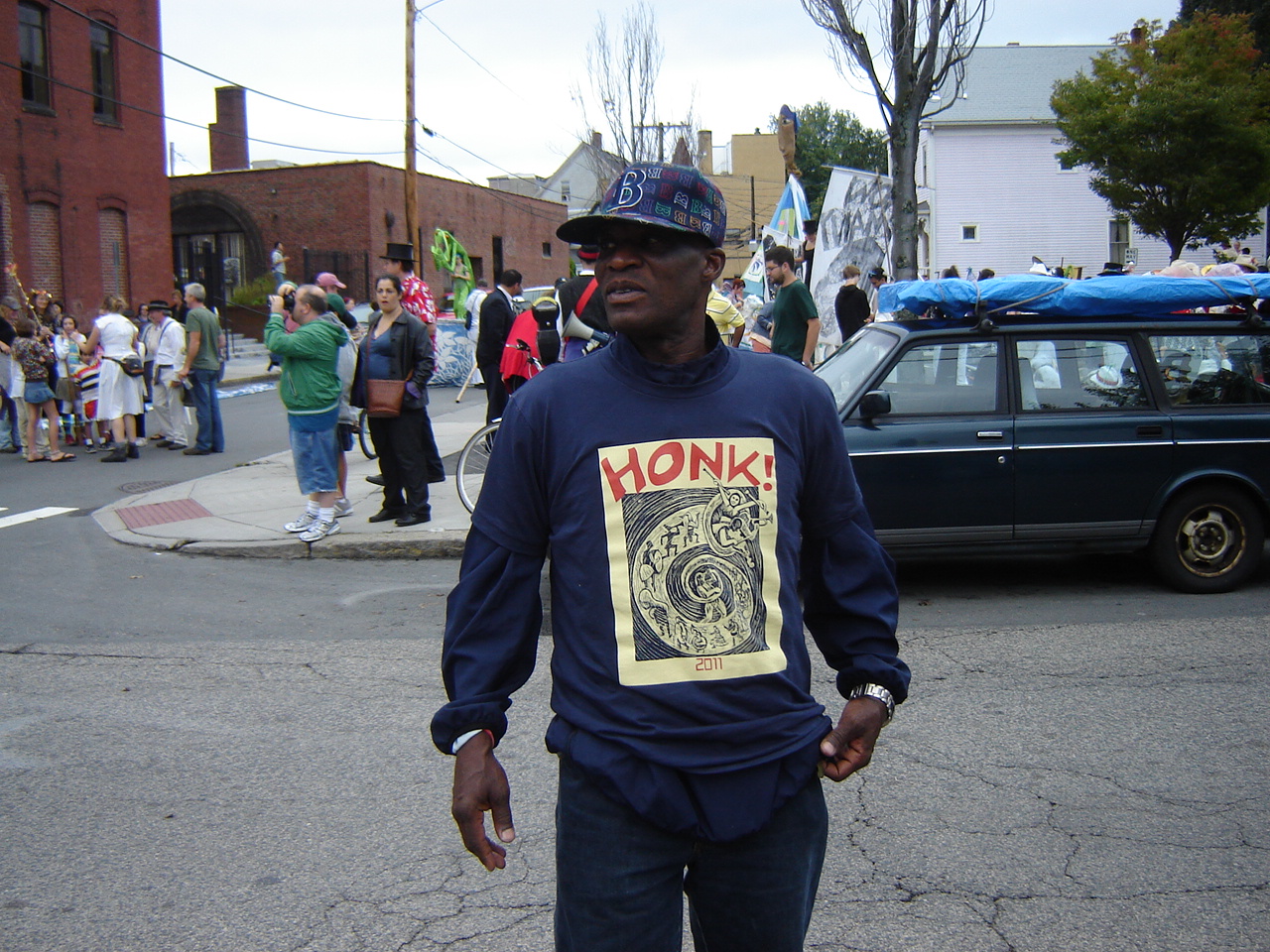
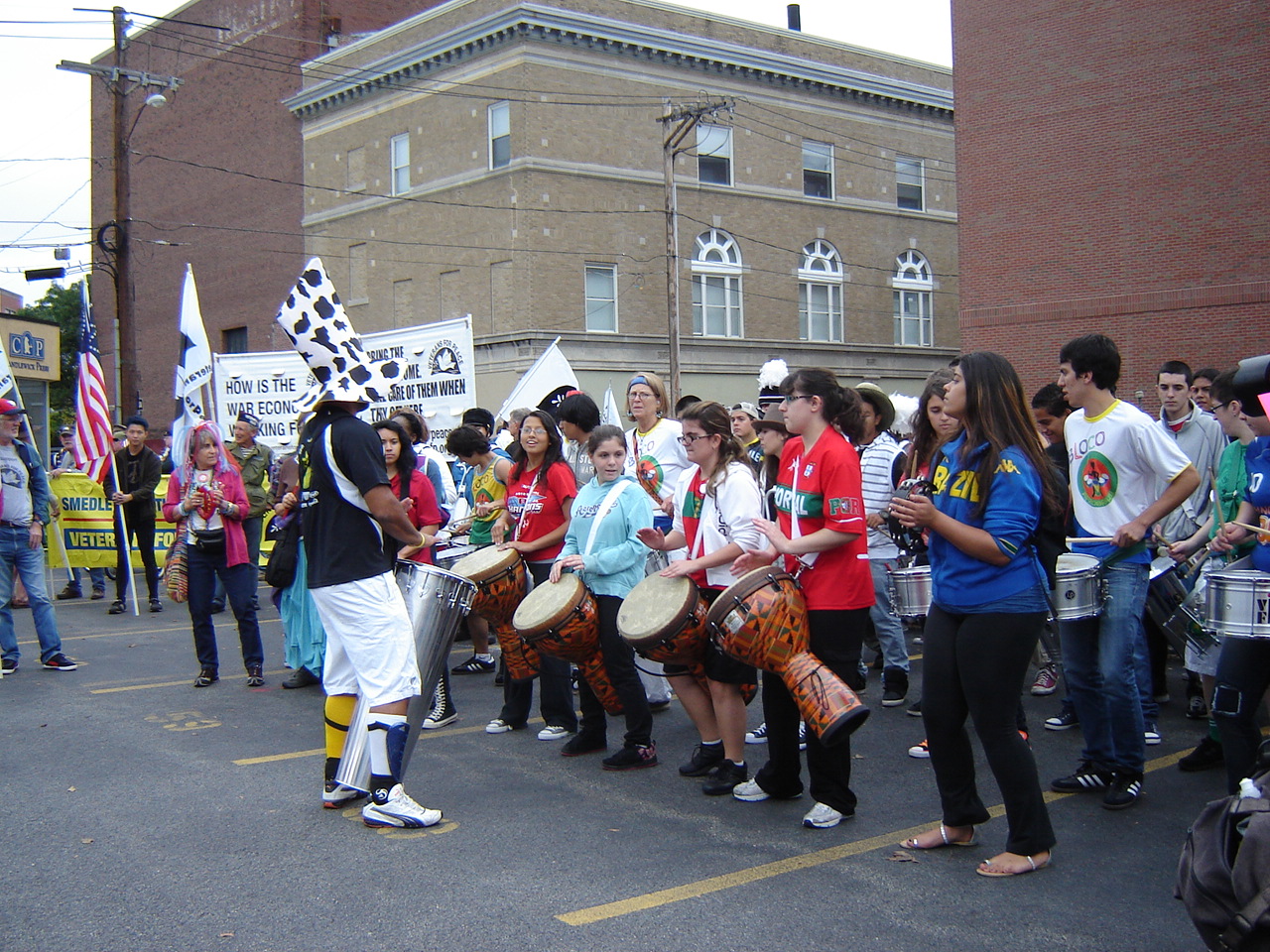
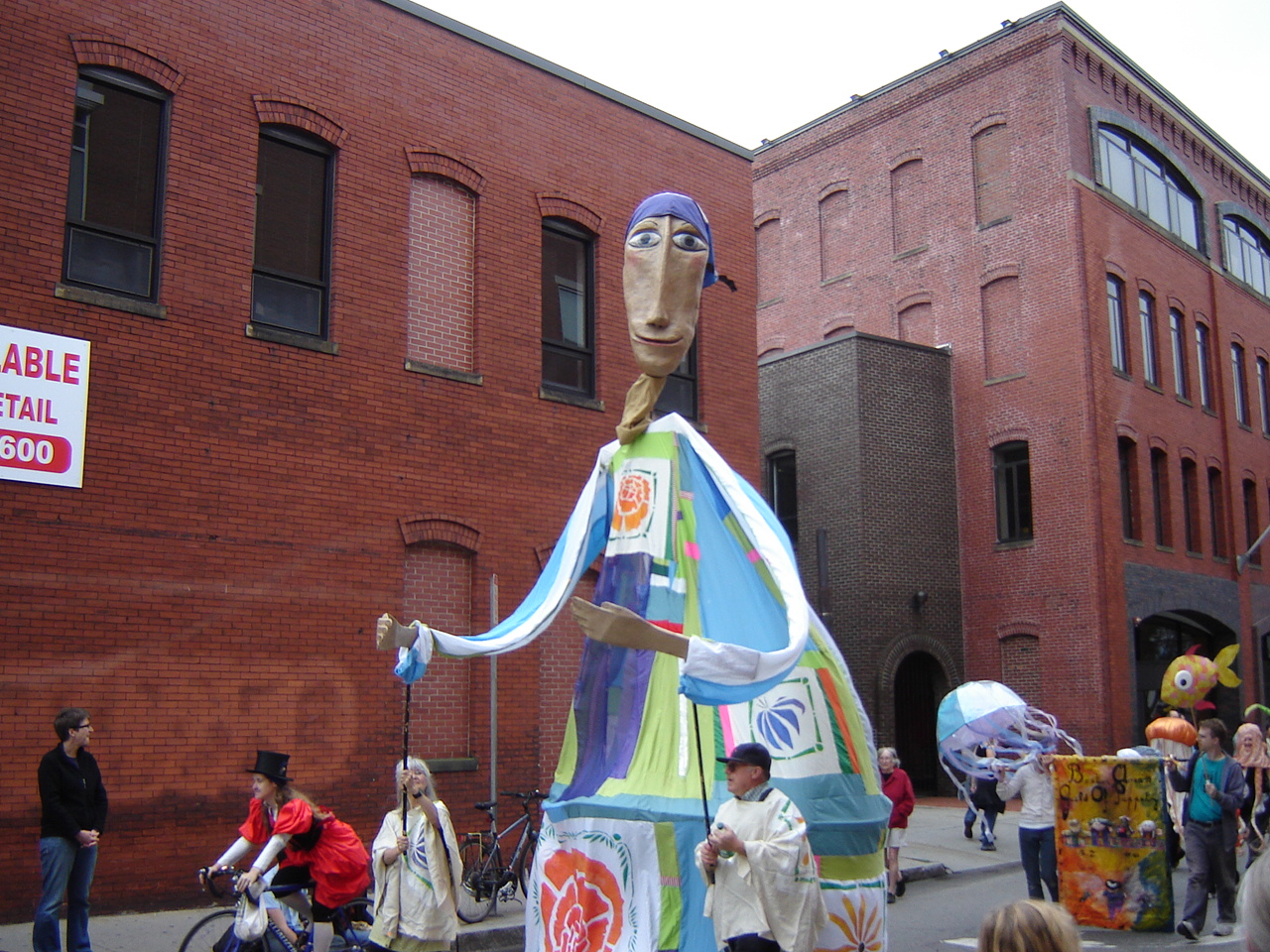
We went to Honk! in Somerville today. A few uncomfortable-looking masons and many counterculture bands marched to Harvard Square. It was a hoot. So nice to see these offbeat ’60s types are still springing up. All is not lost! The name of one band may give you a sense of where they are coming from: The Extraordinary Rendition Band. The Institute for Infinitely Small Things joined forces with the Occupy Boston contingent.
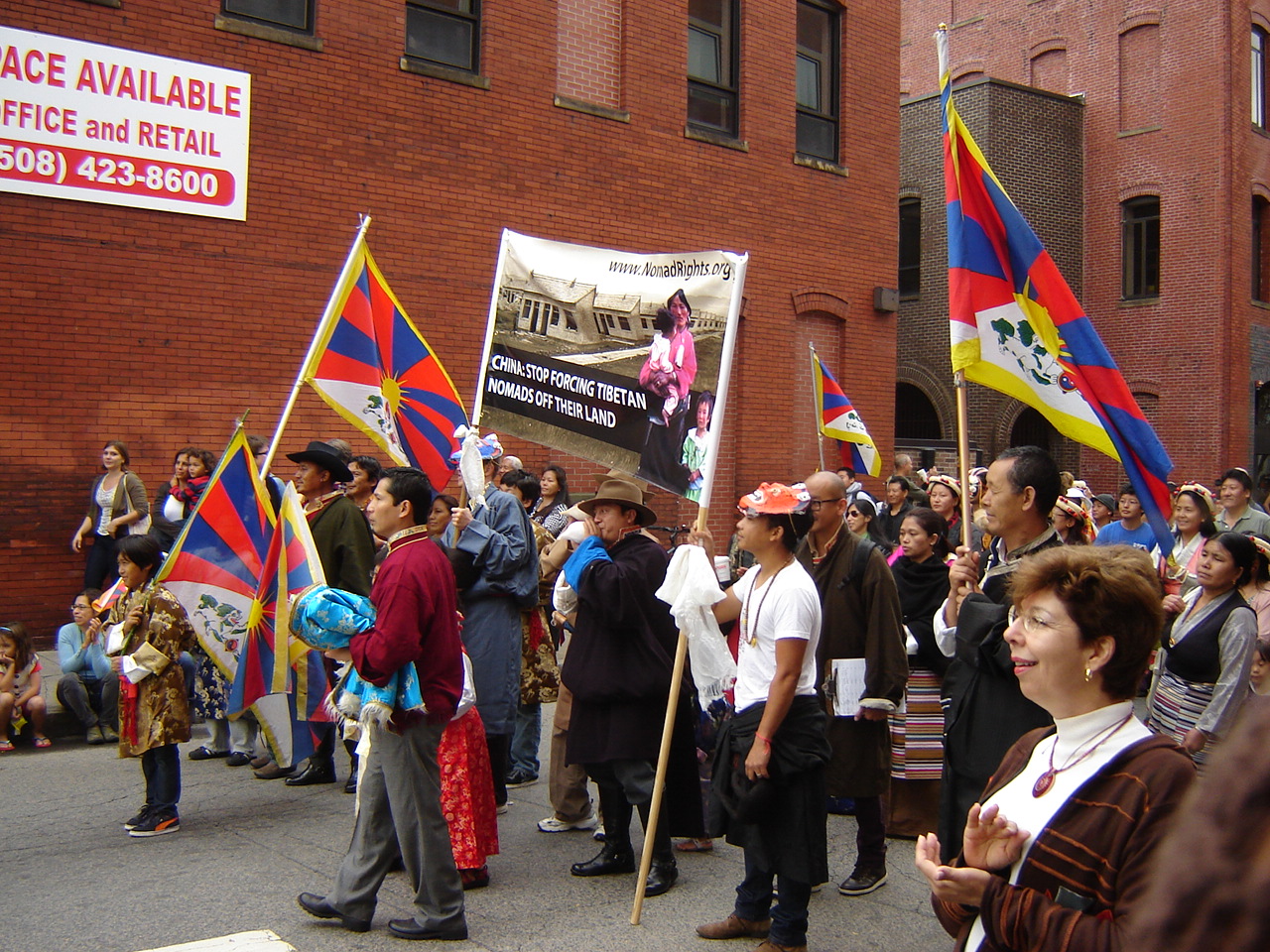
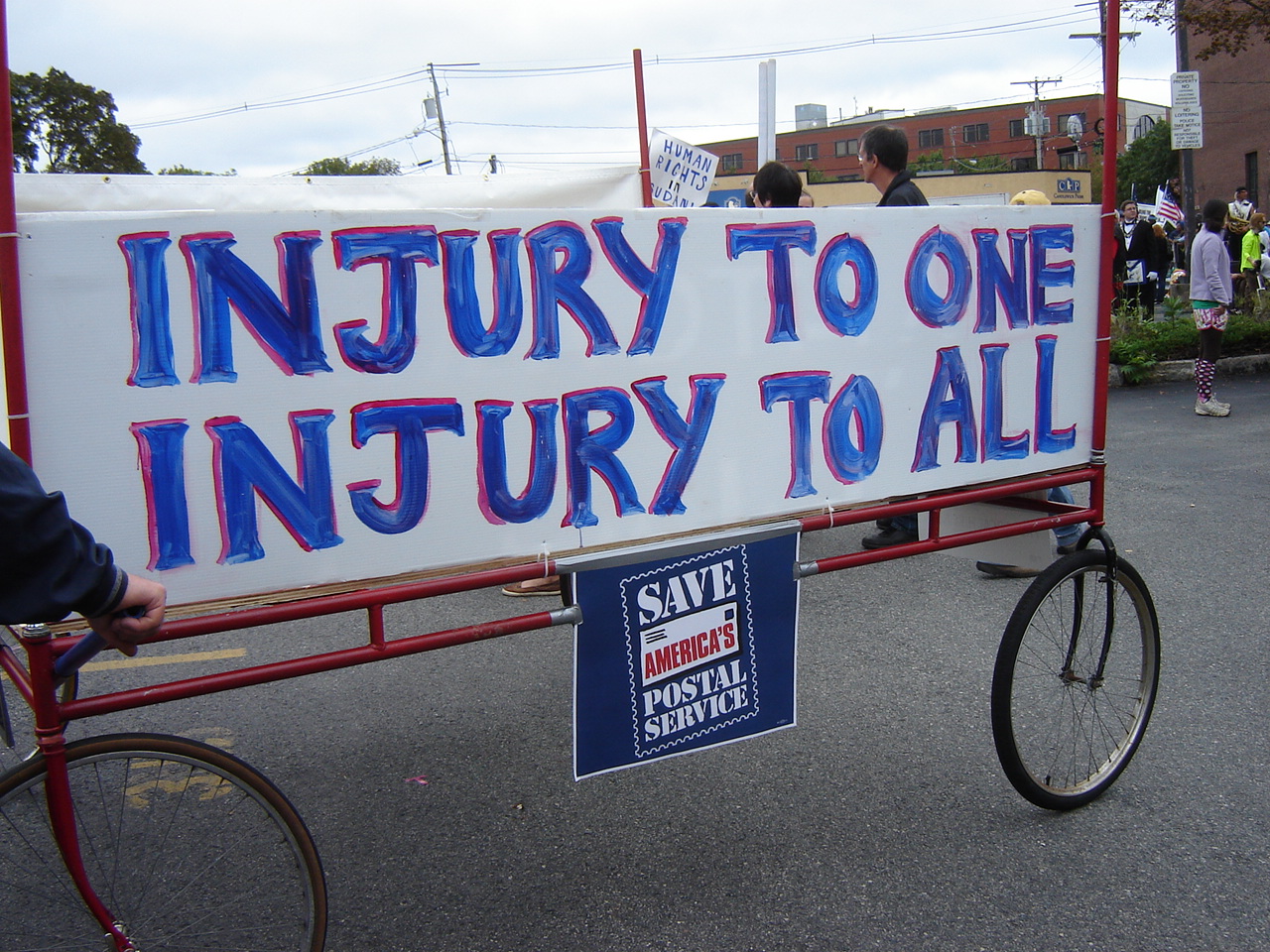
Represented below are Nomad Rights (a Tibetan group), unions (including the Postal Service), Darfur activists, and the Puppeteers Co-operative.
A while back I blogged about the book groups called Daughters of Abraham, involving women from three related religions: Muslim, Jewish, Christian. I mentioned that I had met book group participant Heidi, who founded something similar for children, Kids4Peace.
Today I thought I would check back to see what Heidi’s organization has been up to, and I was led to a delightful blog on the first Kids4Peace summer camp. Here’s a taste.
“July 11, 2011 — This morning there was basketball before breakfast! The Christian children had prepared a Sunday morning service for us with the Reverend Josh Thomas, Executive Director of Kids4Peace USA, presiding. The Muslim and Jewish children had many questions after the service and the Christian children were able to answer many of them. In the afternoon, we had our choice of activities with other campers whom we hadn’t met before. Choices included archery, windsurfing, arts and crafts, drama, and woodworking.”
A different sort of project took the Kids4Peace folks to the Interfaith Youth Service Day at the Swedenborgian Church on the Hill (Beacon Hill, Boston). Heidi wrote me that Kids4Peace organized “a program geared towards children under 12 (the older kids did outdoor service projects). We created 40 toiletry kits, cards and scarves to be donated to a women and children’s shelter in Boston.” Read about it here.
I really like Michelle Aldredge’s blog on writing and the arts, Gwarlingo. (The word gwarlingo, Aldredge says, is Welsh for the rushing sound a grandfather clock makes before striking, “the movement before the moment.”)
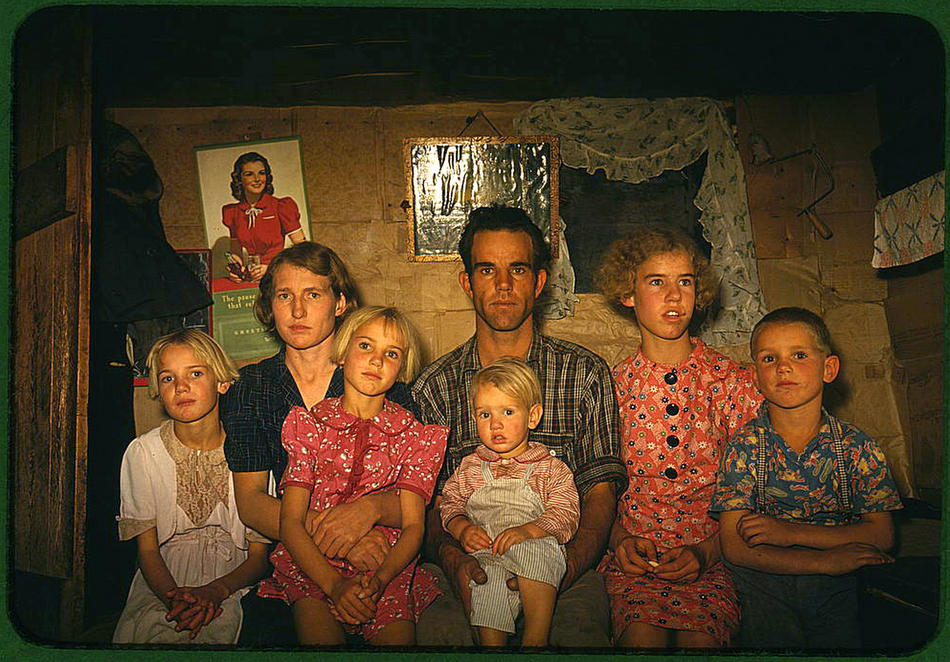
This week Aldredge wrote that she had recently “stumbled across a small online collection of rare color images taken by photographers from the Farm Security Administration and Office of War Information. The … photograph of Jack Whinery and his family was so remarkable and surprising that I immediately began exploring the online archive of the Library of Congress, which owns the images. The 1,610 Kodachrome transparencies were produced by FSA and OWI photographers like John Vachon, Marion Post Wolcott, Jack Delano, and Russell Lee. They are less well known and far less extensive than their black and white images, but their rarity only increases their impact.”
*Jack Whinery, homesteader, and his family. Pie Town, New Mexico, October 1940. Photo by Russell Lee. Prints and Photographs Division, Library of Congress*
Another great Gwarlingo post was on poetry bombing.
“Since 2001,” writes Aldredge, “the Chilean art collective Casagrande has been staging ‘Poetry Rain’ projects in cities like Warsaw, Berlin, Santiago de Chile, Dubrovnik, and Guernica – all cities that have suffered aerial bombings in their history. The most recent event took place in Berlin in 2010 and was part of the Long Night of Museums. Crowds of thousands gathered in the city’s Lustgarten as 100,000 poems rained down from the sky.” Read more here.
Nicholas Kristof writes in the NY Times about a Kenyan called Jane, who was pushed out when her husband took a second wife and who found herself supporting her children through prostitution. That is, until she joined a remarkable nonprofit and made a better life for herself through sewing. She takes used wedding gowns and bridesmaid gowns and cuts them up to create several smaller dresses that she can sell.
Kristof writes that in 1999, Jane was fortunate to find “an antipoverty organization called Jamii Bora, which means ‘good families’ in Swahili. The group, founded by 50 street beggars with the help of a Swedish woman, Ingrid Munro, who still lives in Nairobi, became Kenya’s largest microfinance organization, with more than 300,000 members. But it also runs entrepreneurship training, a sobriety campaign to reduce alcoholism, and a housing program to help slum-dwellers move to the suburbs.” Jane became an entrepreneur, was able to get her children into good schools, and rejoiced to see them thriving.
But as Kristof explains, the lives of the working poor tend to remain one accident or illness away from upheaval. Jane’s daughter was hurt in a traffic accident and treatment for the injury sucked up all Jane’s savings, affecting her ability to pay for school.
Kristof likes to go beyond traditional reporting in his columns and give readers a way to help, so you might want to check his blog.
Huck Gutman, the chief of staff for Vermont Senator Bernie Sanders, is a man who knows the value of putting your head into a poem once in a while and leaving the chaos behind. And according to the Boston Globe, an increasing number of people are signing up for his poetry listserv.
“The chief of staff for the Senate’s liberal firebrand has created an unlikely patch of common ground. That place lies in the power of the poetry that longtime University of Vermont professor Huck Gutman … distributes by e-mail to 1,700 readers who include all the Senate chiefs of staff, several White House staffers, university presidents, academics, journalists, and former students.” Read more.
Wallace Stegner has written, “No place is a place until it has a poet.”In fact, there are countries where poetry, ancient and modern, is core to national identity. Perhaps surprising to Americans, one such country is Iran.
One of the most intriguing aspects of Elliot’s book is how many ordinary people he meets who have interests that would seem quite high brow to the average Westerner. Workmen who know all about ancient architecture. Postal employees who are still angry that the Greeks twisted the facts about Persia hundreds of years ago. And people who love poetry.
In one anecdote, Elliot makes a vague poetic reference to a seatmate on an airplane who encourages him to go on and read from the blind poet Rudaqi. “I read the first couplet in Persian,” writes Elliot, “but before I could reach the second [my seatmate] said, ‘No, no, it’s like this.’ ” He reads the rest with deep feeling, adding, “Poetry … makes us very emotional.”
Similarly, at a private home, Elliot watches a man rapt and gently swaying to a musical recitation of classical poetry. The man turns out to be the Foreign Minister.
And when Elliot goes to see the chief of immigration police in Isfahan on a routine matter, he interrupts him reading a poetry book and observes that “the final syllables as he stood up, with an unmistakably distant look on his face, were still fading visibly from his lips.”
I would like to tell you about Woophy, the international photo-sharing site. One of many great things about Woophy is its home page, which features a map of the world with each photo’s location. Do click on it.
I have uploaded photos to Woophy off and on since first reading about it in the Wall Street Journal. (That was when I was still reading the WSJ, which used to be full of great articles. I was one of the 170 people who cancelled their subscriptions the day Rupert Murdoch bought the paper. I know this because the WSJ wrote the next day that 170 subscribers out of 1.7 milion had cancelled.)
Woophy has always been managed by unpaid volunteers, and in recent years they struggled to keep up with the work. Loyalists worldwide helped out. Now Woophy has crossed a threshold and has partnered with a travel company. I’m glad because I would like to see it survive. I particularly enjoyed getting comments from far-away places whenever I posted a picture.
Here’s Wikipedia’s description: “Woophy (World of photography) is a photo sharing website and an online community where members can put their photos on a world map. Founded in 2005 by Joris van Hoytema, Hoyte van Hoytema and Marcel Geenevasen, the site has over 39,300 members and contains around a million photos from over 43,000 cities and villages in the world. Most of the uploaded pictures are from surroundings, buildings, nature and problems in the world. Woophy also has an active forum where photographers discuss their photos in a critical way. Woophy now has a finance deal with Eurobookings.com which should enable it to survive through the use of advertising.”
Woophians are planning a meeting in Madrid next spring. See photos of a previous Woophy forum (with music):













 Suzanne's Mom's Blog