Feeds:
Posts
Comments

Posts Tagged ‘art’

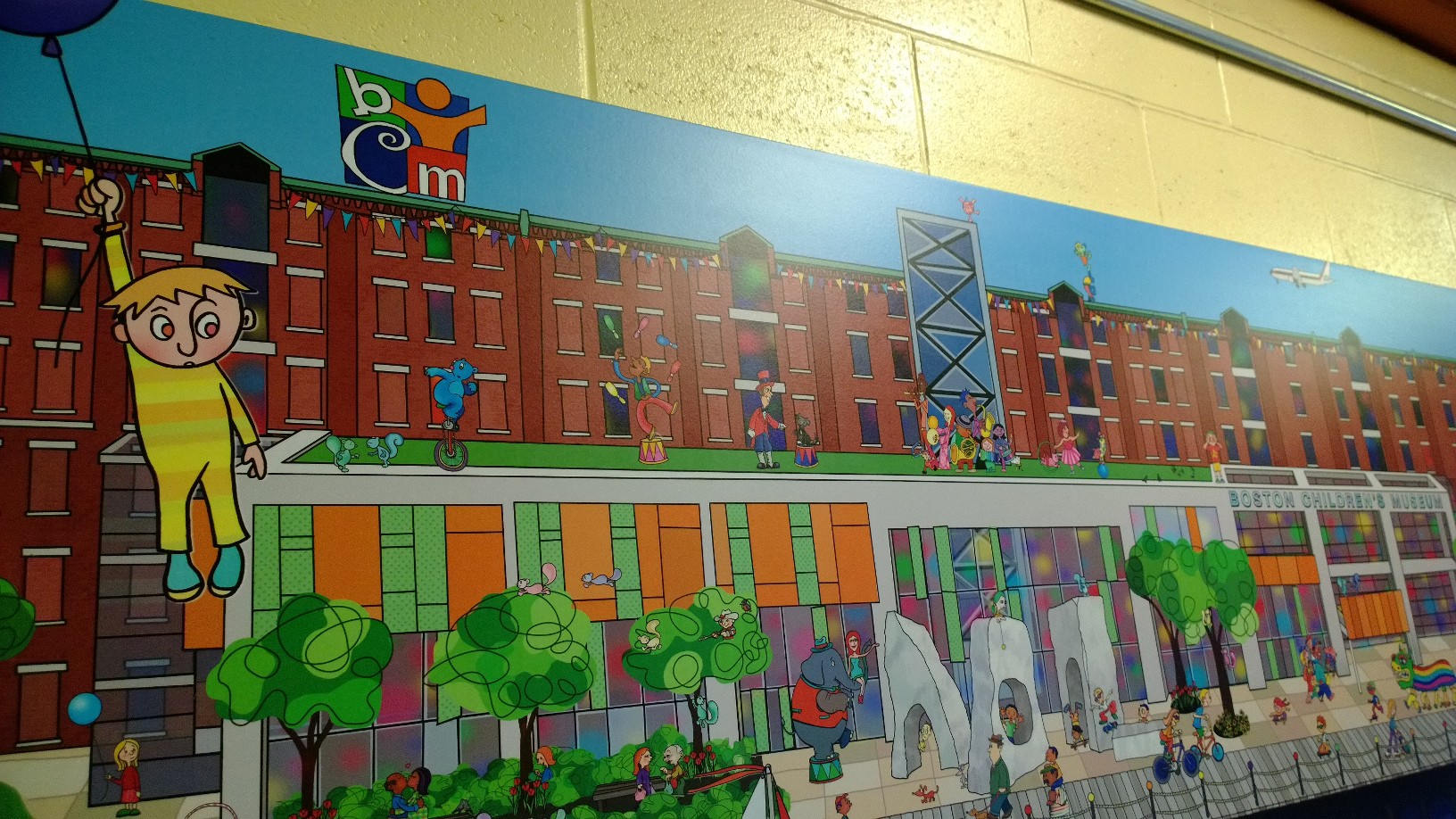
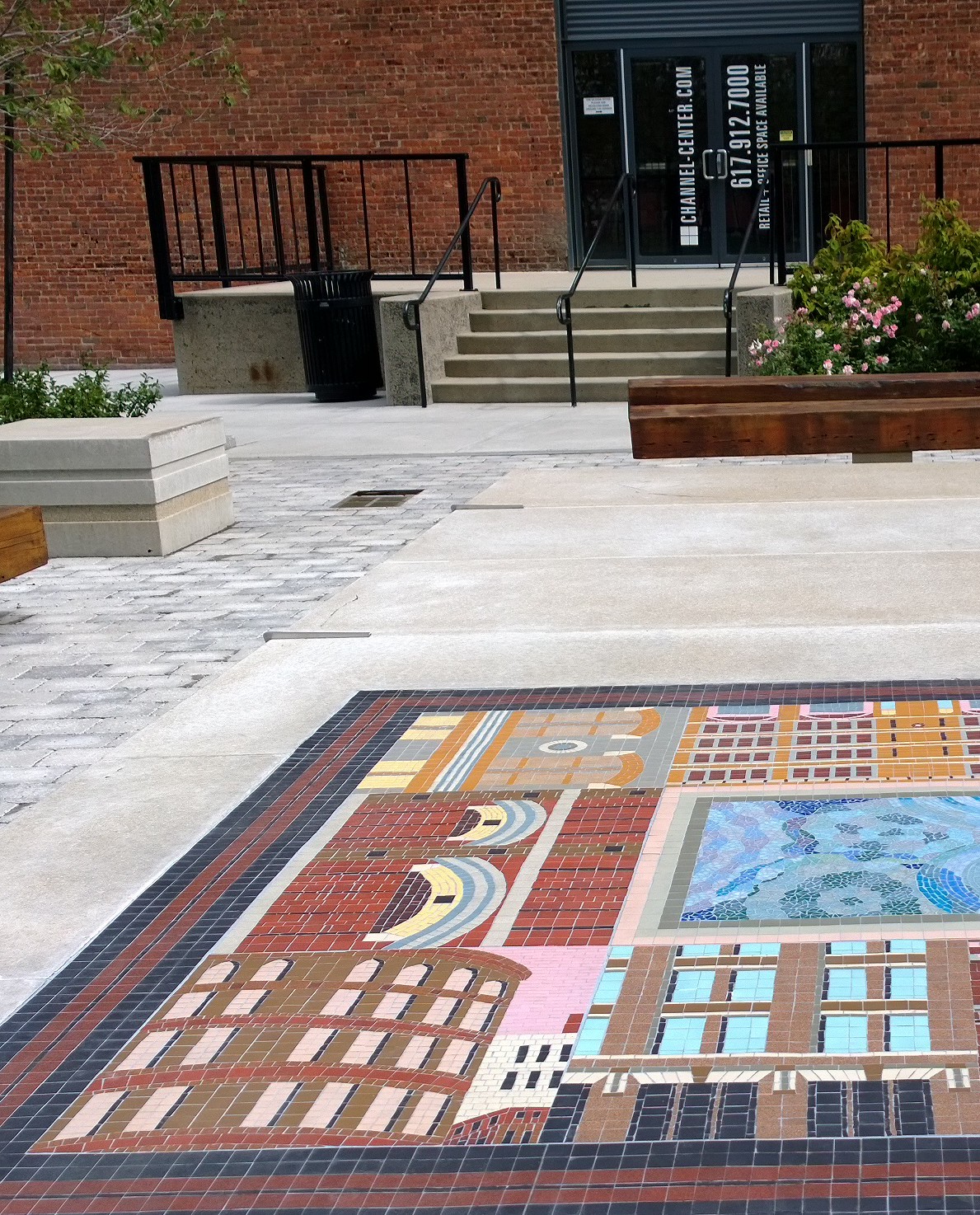
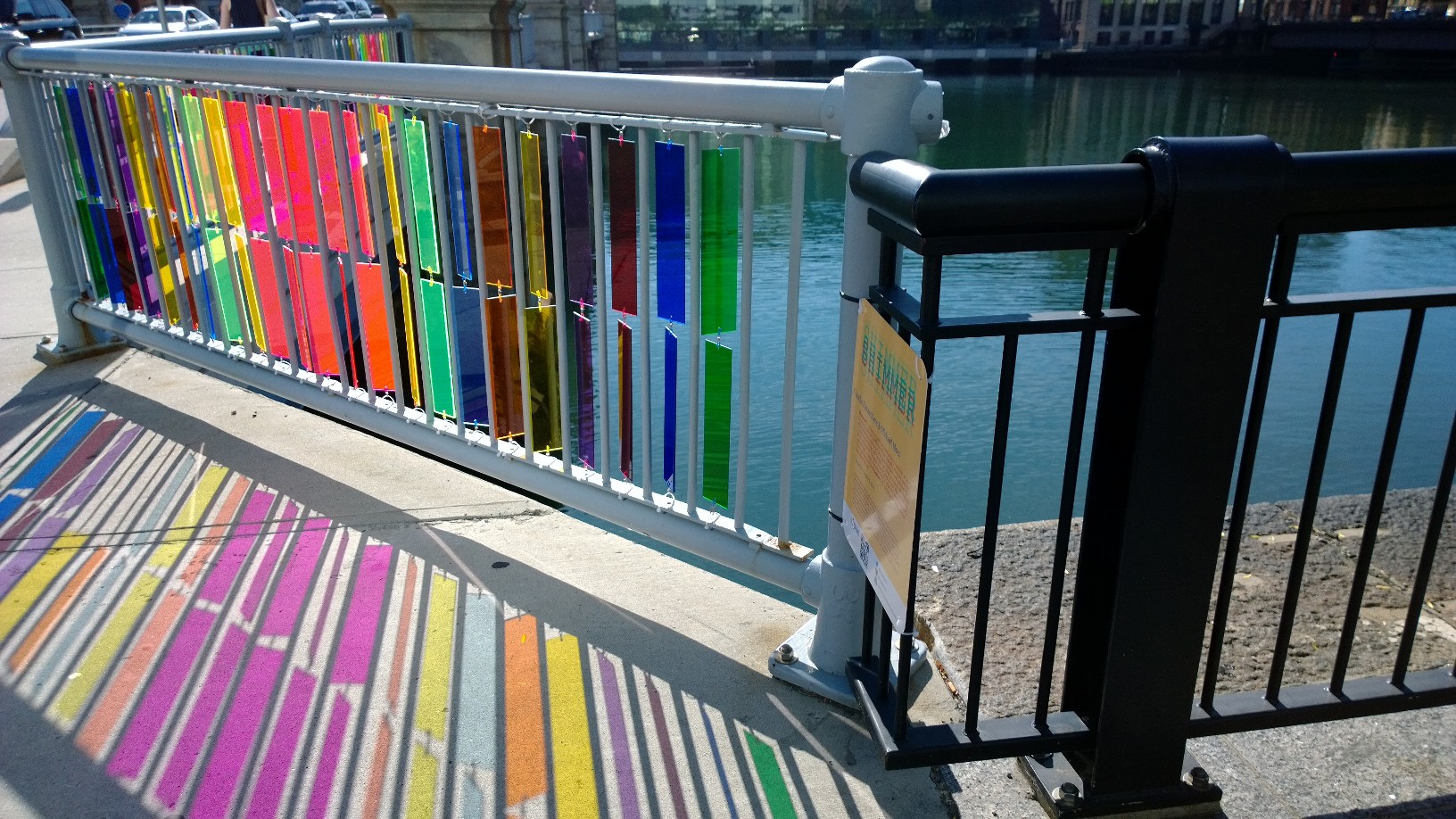
As usual, the Fort Point area is swimming in art this September. The few examples below don’t begin to scratch the surface, but they caught my eye: a longtime mural in a Farnsworth Street garage, a mosaic at Channel Center, and the rainbow-like installation “Shimmer” that draws a smile from many passersby.

Says the Fort Point Arts site, “ ‘Shimmer‘ is a temporary public art installation by Fort Point artists Claudia Ravaschiere and Michael Moss. Using the refractive qualities of florescent and jewel toned plexi glass, this piece activates the the Congress Street Bridge and changes the public perception of a familiar urban environment.  The piece is constructed to catch the natural and ambient light to create a luminous field of color and alternating hues. The visual impact of the’ Shimmer’ will change as the light changes throughout the day.”

Farnsworth-St-garage-mural-1

Farnsworth-garage-mural-2


Channel-Center-mosaic

art-installation-Fort-Point-Channel


Shimmer-art-installation-Boston


Read Full Post »

I was all set to blog about Providence PuttPutt, an artist-inspired, Kickstarter-supported pop-up entertainment for kids when I found out it was scheduled to last only for the summer and has just closed. Sigh.

So, sticking to a small-pleasures, quality-of-life theme, we turn once more to Denmark, where biking made a big jump in one year.

 at StreetsBlog Network writes, “For years the bike commuting rate has remained roughly steady at just over a third of trips. Then last year the city’s bike commute mode share increased from 36 percent to 41 percent. Meanwhile, driving declined 3 percent as a share of commuting trips.

“The unexpected increase had a lot of people baffled. But Mikael Colville-Andersen at Copenhagenize thinks he knows what happened …

What has happened is that 17 huge construction sites fell out of the sky all at once. Not something that happens every day. In addition, most of central Copenhagen — between 2012 and 2013 — was under further construction because of the upgrading of district heating pipes under many streets that had to be ripped up. …

Driving was rendered incredibly difficult. Copenhageners, being rational homo sapiens, chose other transport forms. Public transport has increased, too, but the bicycle is clearly the chariot of choice. It’s no surprise at all why cycling is booming.

“There you have it,” Schmitt adds. “If you want to improve cycling in your city, make it an awesome place to bike, sure, but don’t forget make it a terrible place to drive. ”

More here.

Photo: Mikael Colville-Andersen 
Biking in Copenhagen

Read Full Post »

Do you believe in miracles? Consider the snowflake, consider the soap bubble.

Our family is big on soap bubbles in summer. Wired magazine seems to be big on soap bubbles, too, with a recent article on an installation involving bubble magic.

Kyle Vanhemert writes, “Soap is pretty ordinary stuff – until you blow a bubble with it. Then it becomes something a little bit magical, shimmering with delicate, ever-changing color. Unsurprisingly, if you shine a light through that swirling orb, it makes for a pretty incredible show.

“That’s the gist of ‘Invisible Acoustics,’ an audiovisual installation by Royal College of Art graduate Dagny Rewera. For the project, Rewera created three apparatuses that combine light, sound, and soap to spectacular effect.

“First, a wand dips itself into a pool of water, creating a wet, soapy lens. A speaker plays tones and chords, vibrating the soap, while a light projects the proceedings on the ceiling above. …

“Each of the three units is set to play a different range of frequencies, making for three distinct sets of patterns unfolding overhead.” More here.

Art: Dagny Rewera 

Read Full Post »


Art: Salvador Dali

I was swept away by theater at age 10 as the understudy for Alice in Binny Rabinowitz’s adaptation of Alice in Wonderland. Ever since, I’ve been a fan of the little girl who was so clear-eyed about the unreasonableness of grownups.

So imagine my delight at Maria Popova’s essay on the many different ways the story has been illustrated, including by Salvador Dali.

“In the century and a half since Sir John Tenniel’s original illustrations, the Carroll classic has sprouted everything from a pop-up book adaptation to a witty cookbook to a quantum physics allegory, and hundreds of artists around the world have reimagined it with remarkable creative vision. …

“In 1969, Salvador Dalí was commissioned by New York’s Maecenas Press-Random House to illustrate a special edition of the Carroll classic, consisting of12 heliogravures — one for each chapter of the book and an original signed etching in four colors as the frontispiece. Distributed as the publisher’s book of the month, the volume went on to become one of the most sought-after Dalí suites of all time.”

See a splendid array at Brainpickings, here.

Art: Lisbeth Zwerger 

Read Full Post »

In a recent NY Times article, art critic Holland Cotter expressed skepticism that a show of new artists lumped together as “Arab” could work. (Some artists declined to participate for the same  reason.)  The artists in the New Museum exhibit are from “Egypt, Iraq, Jordan, Kuwait, Lebanon, Morocco, Saudi Arabia, Syria, Tunisia and the United Arab Emirates, not to mention Europe and the United States.”

But in the end, he was thrilled with the opportunity to see the new works.

“It’s a big show, intricately pieced together on all five floors of the museum, and starts on the street-level facade with a large-scale photograph of an ultra-plush Abu Dhabi hotel. The image was installed by the cosmopolitan collective called GCC, made up of eight artists scattered from Dubai to London and New York who make it their business to focus on the preposterous wealth concentrated in a few hands in a few oil-rich countries on the Persian Gulf.”

Cotter goes on to describe many of the pieces in detail, here, and concludes with some advice for visitors.

“To appreciate this show fully, a little homework can’t hurt. But really all you need to do is be willing to linger, read labels and let not-knowing be a form of bliss. In return, you’ll get wonderful artists, deep ideas, fabulous stories and the chance, still too seldom offered by our museums, to be a global citizen. Don’t pass it up.”

The show will be up until September 28.

Photo: Ruth Fremson/The New York Times

“Here and Elsewhere” show at the New Museum

Read Full Post »

Years ago, when I was expecting, I learned the baby would be a girl. My husband and I went right out and bought a beautiful dollhouse built by a teenage boy we read about in the local paper.

Recently, Nancy Shohet West wrote in the Boston Globe about a new dollhouse show. My husband said, “If you go, see if you can find someone who can repair dollhouses.” (Suzanne’s needs a face lift.)

But we didn’t read the article carefully. The show featured art works from artists contemplating the resonance of “dollhouse.”

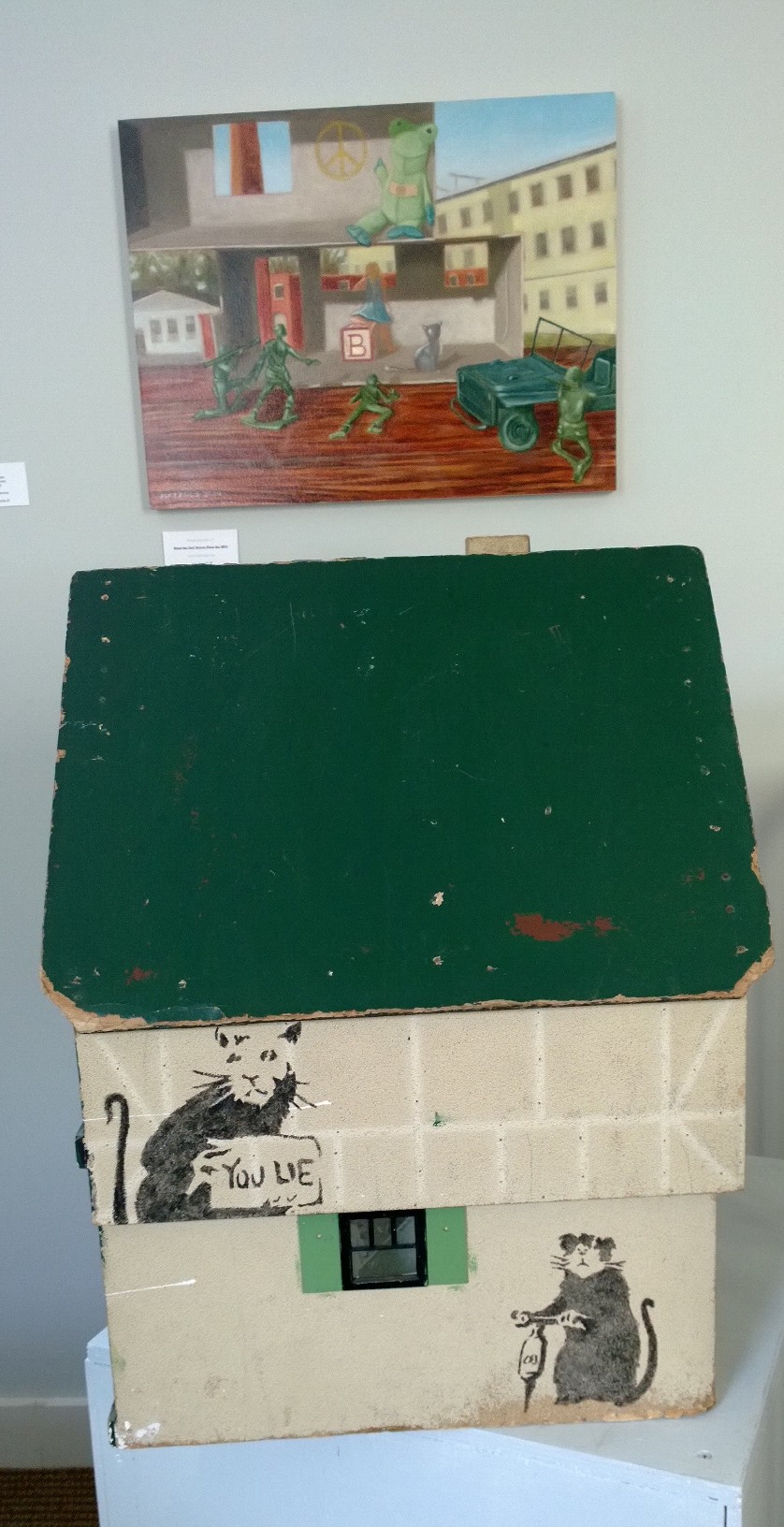
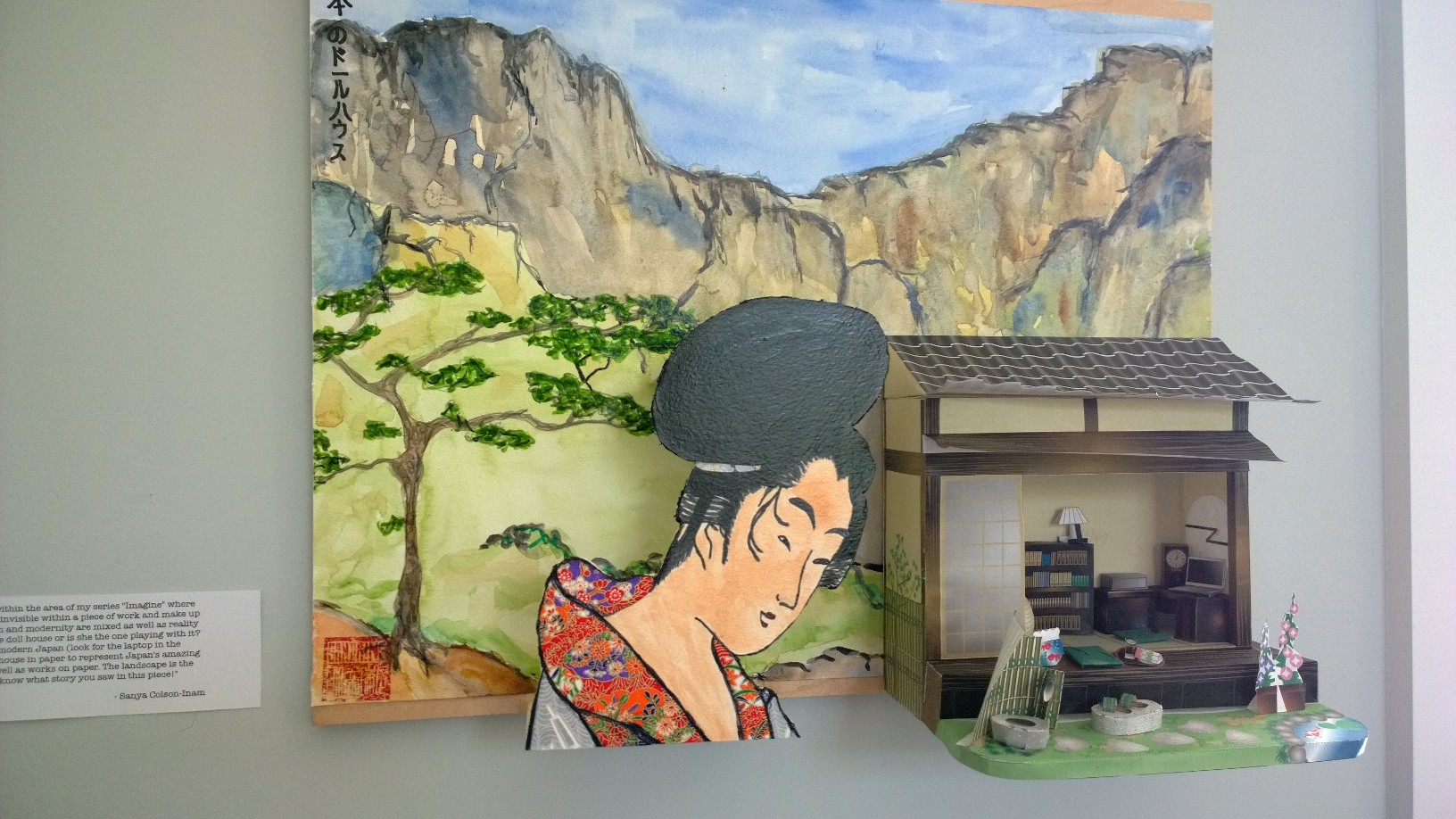
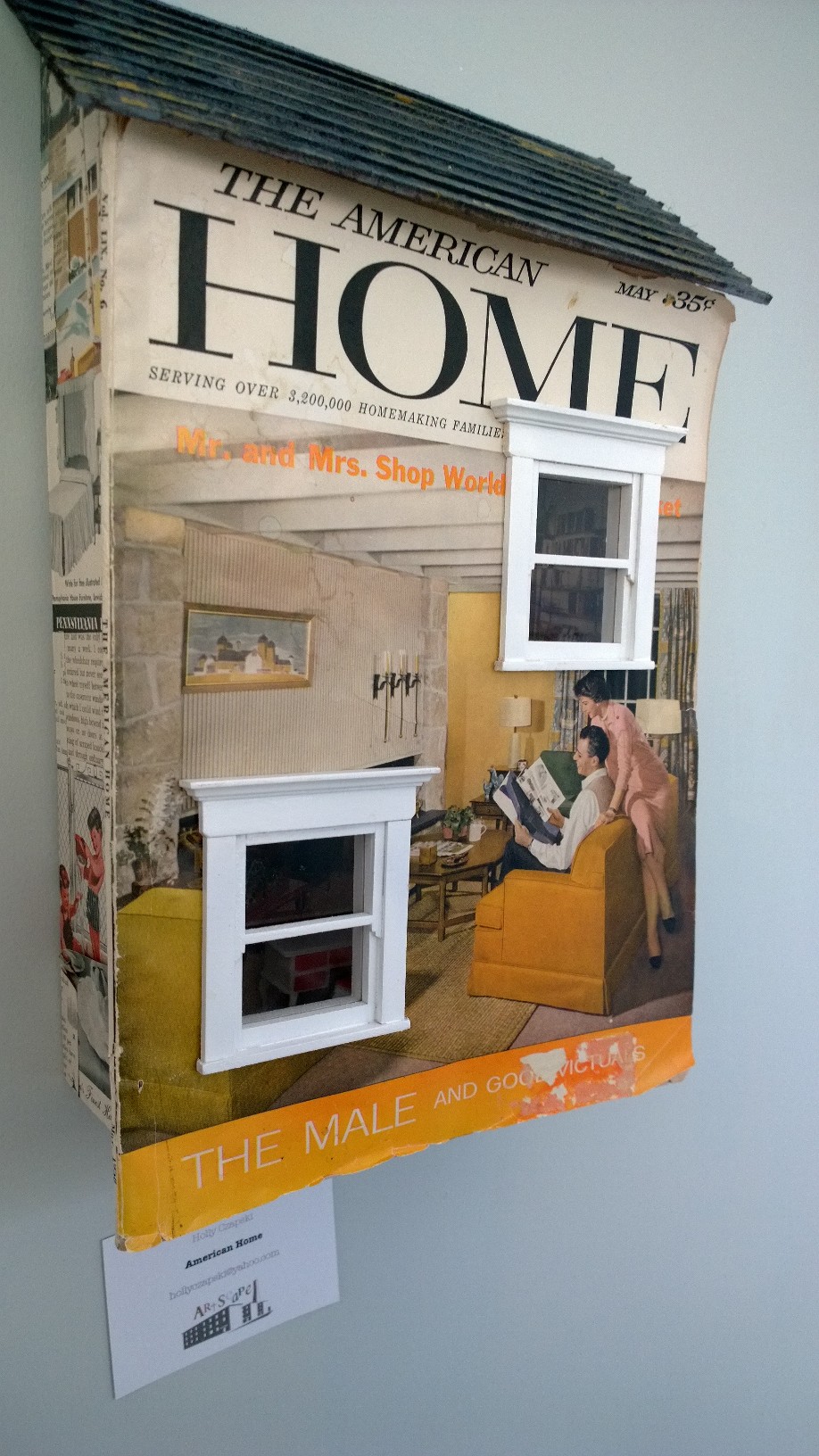
Note the foreclosed house with a Banksy on an exterior wall (above it, the only entry by a male artist, with tiny soldiers), the Japanese-inspired house, and the 1950s domestic fantasy house, below. It was a fine show, but I didn’t find anyone to repair Suzanne’s dollhouse.

The exhibit was in a renovated warehouse where artists have studios and where there also is shared space for entrepreneurs. The business space is called the Wheelhouse, and it features a common area for eating and relaxing, small offices with names on glass doors, small conference rooms — and lots of art.

I was surprised. The last time my husband and I were in that building we were taking a stretch class with a classmate of Suzanne’s, and the Bradford Mill was so rickety one expected the staircase to collapse at any moment. Times change.

The dollhouse show is up until August 28. Read more about it here.

dollhouse-with-a-Banksy


Japanese-dollhouse


1950s-domestic-fantasy

Read Full Post »

Photo: Jake Naughton/The New York Times
Ayun Halliday creating a new issue of “The East Village Inky”  as part of the MTA Zine Residency

Remember the Amtrak Artist Residency? Here’s what might be called a “stealth residency,” organized by a librarian in New York and taking place on the New York subway system.

Colin Moynihan writes at the NY Times, “Thirteen people formed a sort of mobile salon just after noon on Friday, boarding an F Train in the Gowanus area of Brooklyn with the aim of riding for hours through three boroughs while writing and illustrating zines — self-published, photocopied periodicals usually made by hand. …

“The two-day event, called the MTA Zine Residency, had been organized by a librarian and an archivist at the Barnard College library, which they said has the largest circulating collection of zines in an academic library. …

“Despite the initials in its name, the event was organized without the knowledge or collaboration of the Metropolitan Transportation Authority, which runs the subway system. The peaceful takeover of the subway car reflected the do-it-yourself spirit that is a basic prerequisite to zine making, said the other organizer, the archivist Shannon O’Neill. …

“ ‘Remember the promise and betrayal of the #AmtrakResidency?’ the organizers of the subway project wrote, while announcing their own subway and ferry trips. ‘We won’t pay for your MetroCard, but we also won’t demand to own your stuff!’ …

“Transit officials had no objection to the activities. ‘As long as they abide by our rules of conduct, we certainly welcome them in the subway system to nurture creative self-expression,’ said a spokesman, Kevin Ortiz.”

More here.

I’m thinking of several artistic readers of this blog when I say you may want to get on board this train the next time it comes around.

Photo: Jake Naughton/The New York Times 
Composing zines on the F train on Friday during the MTA Zine Residency. 

Read Full Post »

In 2010, photographer Rose-Lynn Fisher published a book of remarkable images that captured the honeybee in an entirely new light. By using powerful scanning electron microscopes, she magnified a bee’s microscopic structures by hundreds or even thousands of times in size, revealing startling, abstract forms that are far too small to see with the naked eye.

Now, as part of a new project called “Topography of Tears,” she’s using microscopes to give us an unexpected view of another familiar subject: dried human tears.

Read more: http://www.smithsonianmag.com/science-nature/the-microscopic-structures-of-dried-human-tears-180947766/#UBkOIVzILZd8kaLc.99
Give the gift of Smithsonian magazine for only $12! http://bit.ly/1cGUiGv
Follow us: @SmithsonianMag on Twitter

In 2010, photographer Rose-Lynn Fisher published a book of remarkable images that captured the honeybee in an entirely new light. By using powerful scanning electron microscopes, she magnified a bee’s microscopic structures by hundreds or even thousands of times in size, revealing startling, abstract forms that are far too small to see with the naked eye.

Now, as part of a new project called “Topography of Tears,” she’s using microscopes to give us an unexpected view of another familiar subject: dried human tears.

Read more: http://www.smithsonianmag.com/science-nature/the-microscopic-structures-of-dried-human-tears-180947766/#UBkOIVzILZd8kaLc.99
Give the gift of Smithsonian magazine for only $12! http://bit.ly/1cGUiGv
Follow us: @SmithsonianMag on Twitter

A Smithsonian article by Joseph Stromberg about photographs of tears is resonant on so many levels one doesn’t know where to start.

Stromberg writes, “In 2010, photographer Rose-Lynn Fisher published a book of remarkable images that captured the honeybee in an entirely new light. By using powerful scanning electron microscopes, she magnified a bee’s microscopic structures by hundreds or even thousands of times in size, revealing startling, abstract forms that are far too small to see with the naked eye.

“Now, as part of a new project called ‘Topography of Tears,’ she’s using microscopes to give us an unexpected view of another familiar subject: dried human tears….

“Scientifically, tears are divided into three different types, based on their origin. Both tears of grief and joy are psychic tears, triggered by extreme emotions, whether positive or negative. Basal tears are released continuously in tiny quantities (on average, 0.75 to 1.1 grams over a 24-hour period) to keep the cornea lubricated. Reflex tears are secreted in response to an irritant, like dust, onion vapors or tear gas.”

Oh, but I knew that tears from different causes are different. I learned that from a fantasy I was exposed to at age 10, when the future star of stage and screen René Auberjonois, age 13, played the wicked uncle in a production of James Thurber’s The 13 Clocks.

The wicked uncle requires jewels to release his lovely niece, the Princess Saralinda, from captivity.

Although you really will get a kick out of reading the whole book, all you need to know for present purposes is from Wikipedia:  “Zorn and the Golux travel to the home of Hagga, a woman with the ability to weep jewels, only to discover that she was made to weep so much that she is no longer able to cry.

“As the realization that they have failed sets in, Hagga begins to laugh inexplicably until she cries, producing an abundance of jewels. Hagga informs them that the magic spell that let her cry tears was altered, so whereas ‘the tears of sadness shall last without measure, the tears of laughter shall give but little pleasure.’ Jewels from the tears of happiness return to the state of tears a fortnight after they were made.”

(Fortunately, that was enough time to trick the wicked uncle.)

Photo: Rose-Lynn Fisher/Craig Krull Gallery
“Tears of Timeless Reunion”

Read Full Post »

fish-car-made-with-vinyl-stickersHere are a few recent photos. The owner of the fish car showed up as I was taking the picture, so I heard the artist’s story. He threw a party and provided his friends with every shade of adhesive-backed vinyl and pairs of scissors. And they cut small pieces to create a kind of mosaic of the fish, the sea, the goldfinch on the mirror, and so on.

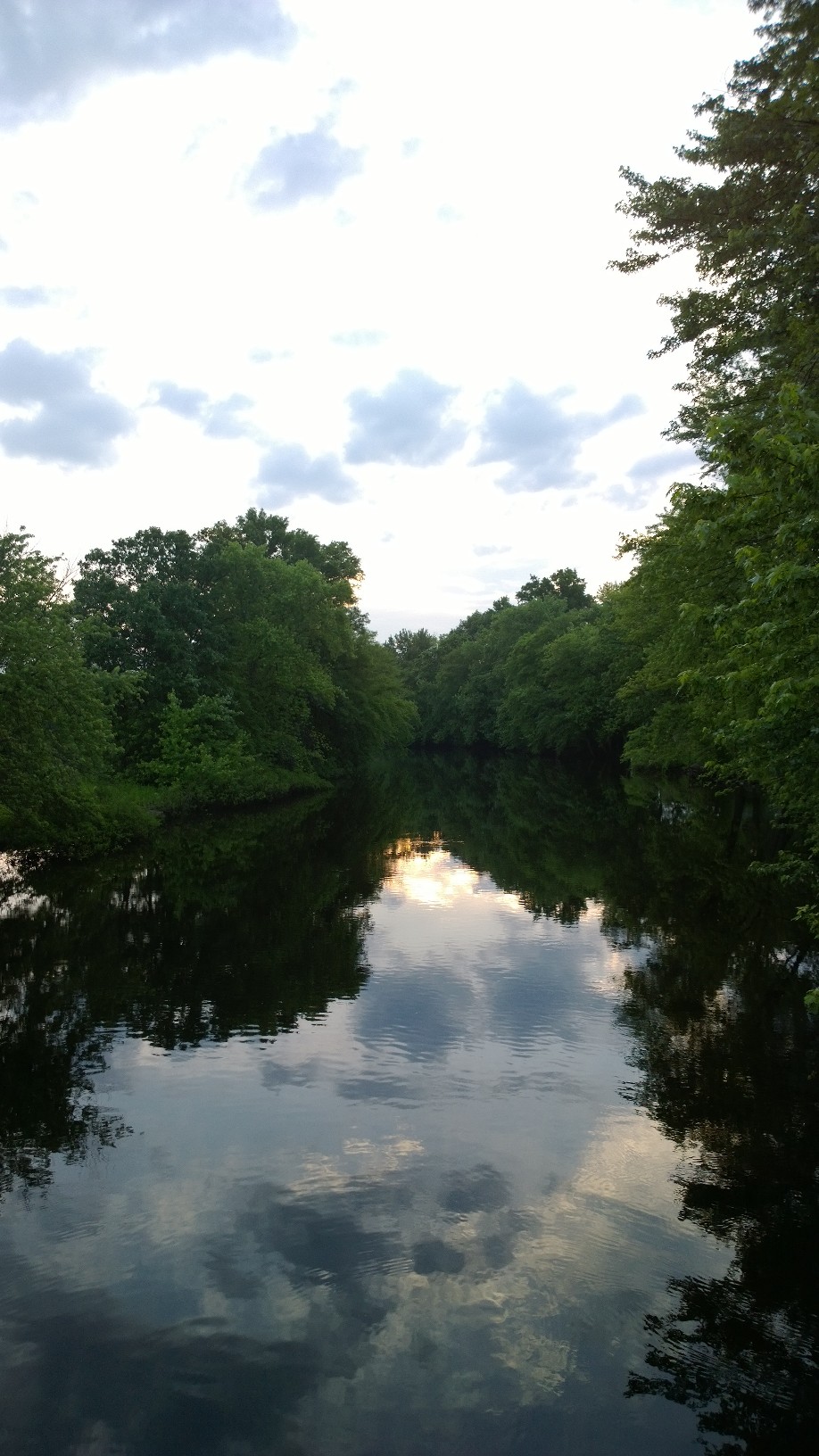
Next we have early morning looking over a river in Concord, then early-morning rowers on the Seekonk in Providence.

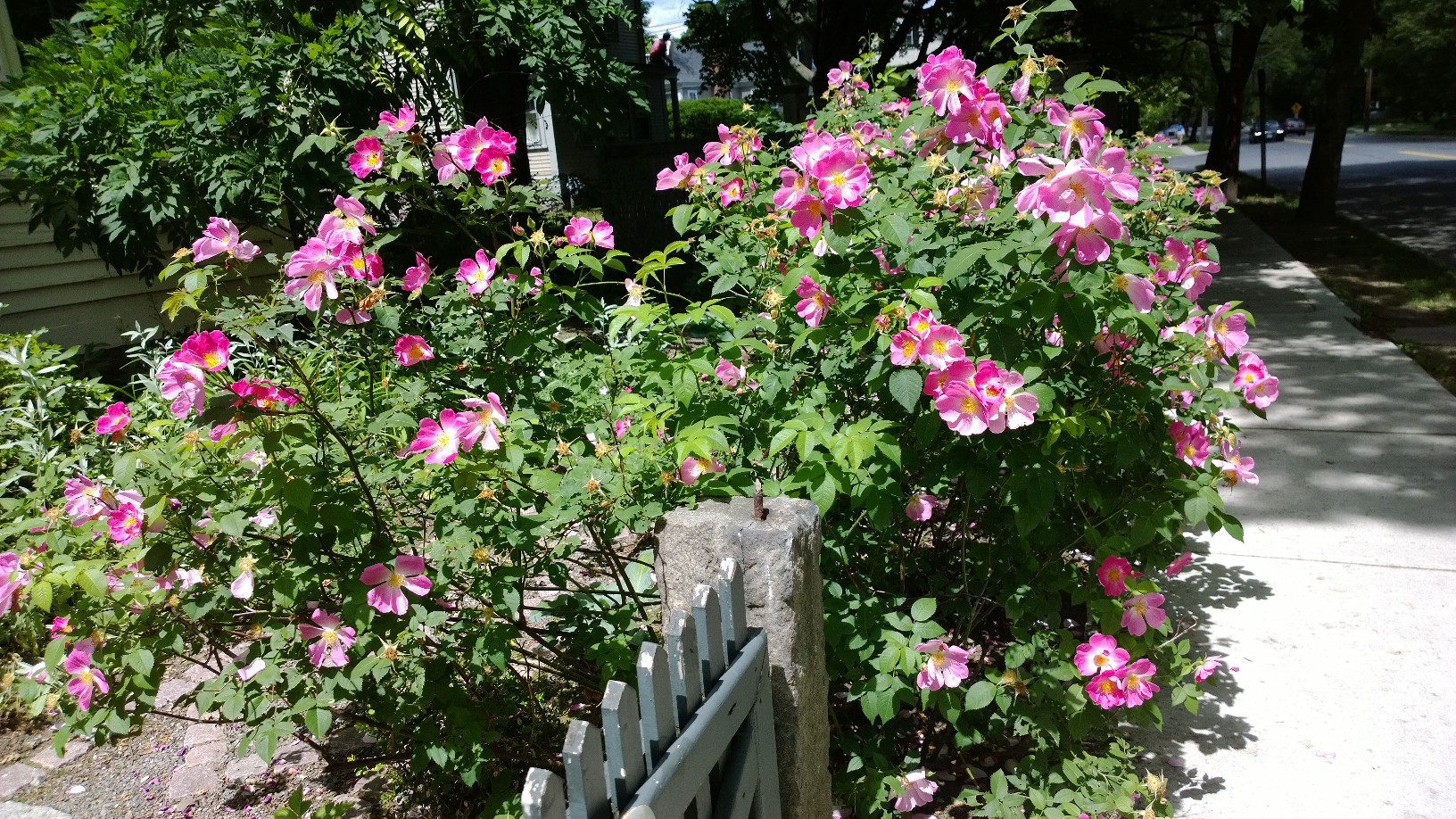
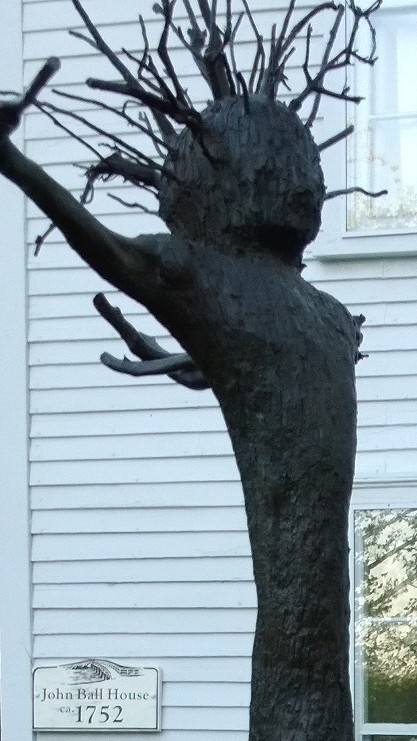
Early-morning roses follow on early-morning clematis. Modern sculpture does an early-morning stretch in front of the historic house that is now an art center.

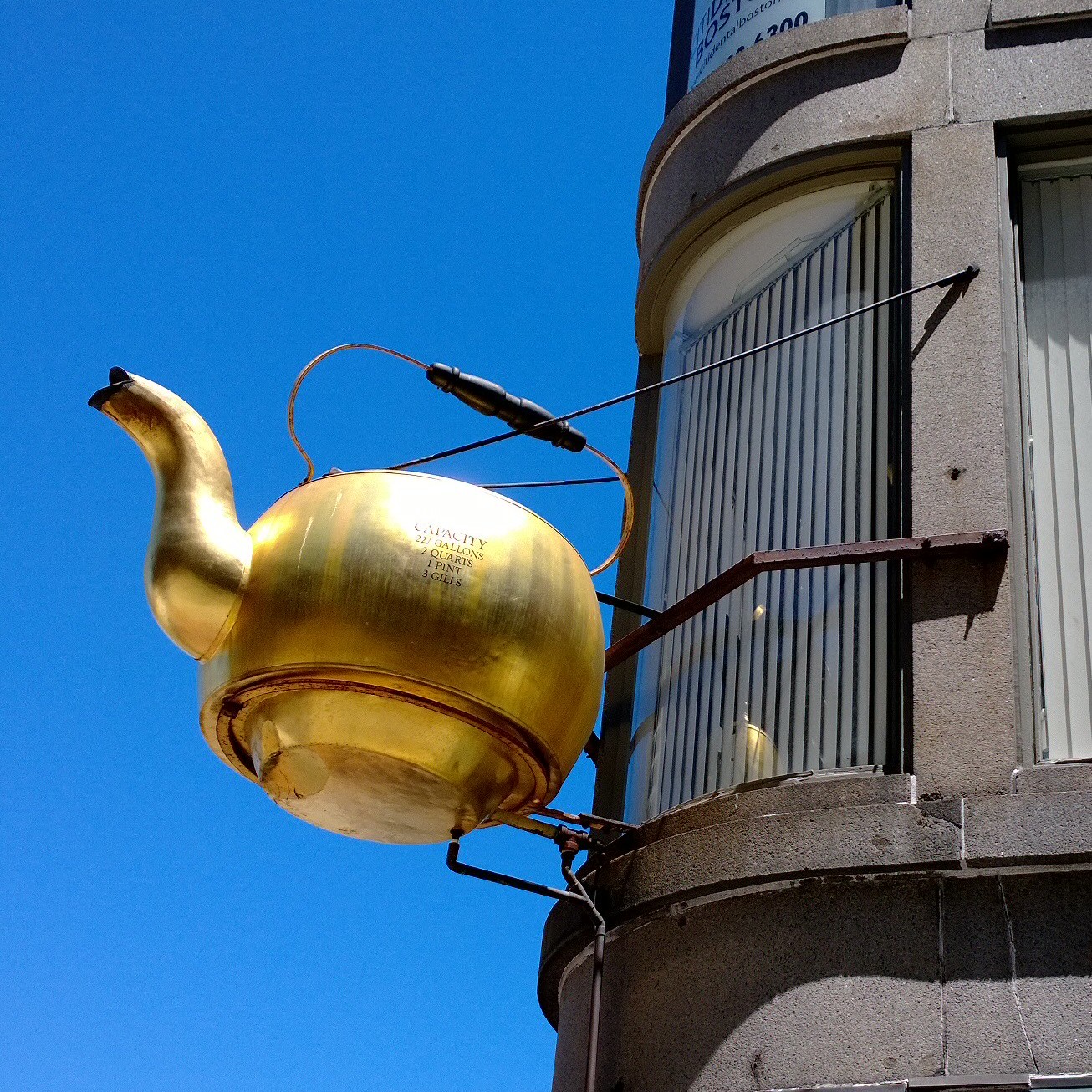
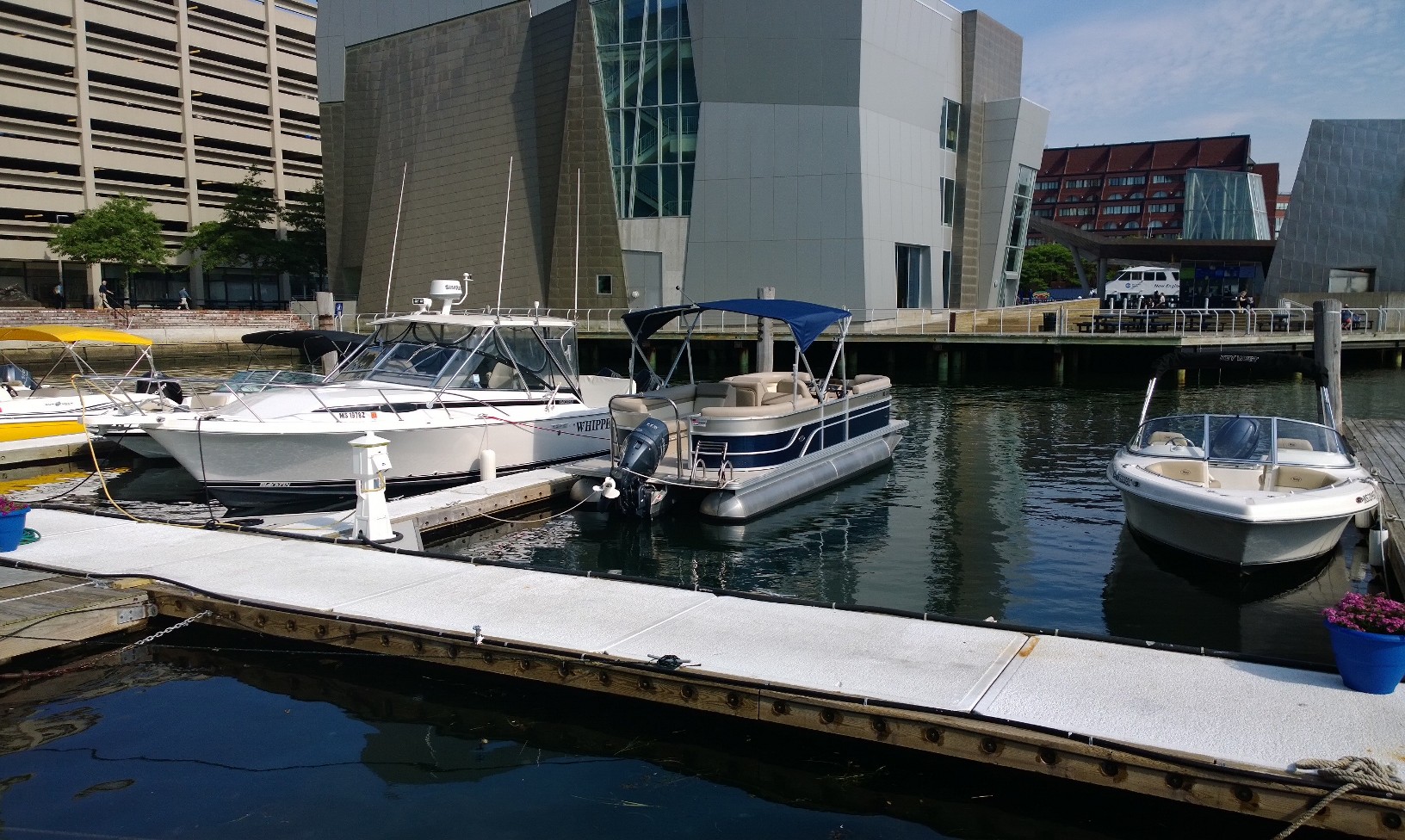
Then there is the teapot near Boston’s Government Center, private boats in Boston Harbor, and milkweed. (You’ll have to take my word for it that the milkweed was full of bees.)

061814-dawn-over-the-river


early-rowing-seekonk-river


061514-clematis

roses-on-fence


art-outside-Concord-Art-Assoc

teapot-near-govt-center-Boston


boat-dock-boston

milkweed-with-bees


Read Full Post »

Judith Ross, who also has a WordPress blog, saw a story she knew I would like. It’s about a Mass College of Art professor who got an idea for a quiet little memorial to Trayvon Martin.

Greg Cook writes at WBUR radio’s The Artery, “For about four years, Matthew Hincman had been eyeing the old stump of a lamppost at the corner of Eliot and Centre streets in Jamaica Plain’s Monument Square. It stood there, with two screws sticking pointing up, as if calling for something to go on top. …

“And he got to thinking about the granite monument tower on the other side of the square to a couple dozen West Roxbury men who died in the Civil War. …

“ ‘Who do we memorialize?’ he began to ask himself. ‘Why do we memorialize them in the public space?’

“And so it happened that a couple Wednesdays ago, right in the middle of the day, the Boston sculptor arrived with an assistant and proceeded, without permission from any official authorities, to attach a small, secret, cylindrical metal thing atop that lamppost.

“On its flat top is a low relief depicting a hoodie sweatshirt cast to the ground. … For Hincman, it’s a street art monument to Trayvon Martin.”

Read about other art projects by Hincman at The Artery, here. I like his stealth approach to many of them.

Photo: Michael Hincman
A street art monument to Trayvon Martin

Read Full Post »

When a do-gooder from the nonprofit Kounkuey Design Initiative told poor farmworkers at a California trailer park she wanted to work with them to build a place to relax and play, they didn’t think much would come of it.

Patricia Leigh Brown writes at the NY Times why the community is happy to have been proved wrong.

“When Chelina Odbert, the 36-year-old co-founder of the nonprofit Kounkuey Design Initiative, based in Los Angeles, showed up two years ago and asked residents to propose ideas for a park that they might design and build collaboratively, most assumed she was yet another do-gooder bearing ‘muchas promesas’ that would come to naught.

“And yet, after more than a year of drawing, debating, hauling rocks and waiting out bureaucratic delays, the residents had a fiesta recently to celebrate the opening of the park, a public space built out of railroad ties and other simple materials. It has a playground, a community garden, an outdoor stage and a shade structure where neighbors can gather and gossip even on 110-plus-degree days.

“The park, which doubles as a zócalo, or traditional town square, exemplifies a new phase for both Kounkuey (KDI for short) and the field of public-interest design, which tries to put design tools into the hands of neighbors who can create local change. …

“Alberto Arredondo, 51, lives across from the garden and has become its keeper. … Before, he said, he would come home after a day in the fields picking grapes and collapse on the sofa. The park, he added, has ‘de-stressed the women.’

“His theory was borne out by Rosa Prado, whose commitment to the park never wavered. ‘It helps with depression,’ she said. ‘You go out your door, and you see a lady in the park and sit next to her.’ She added, ‘Then a few minutes later, you forget what you’re worried about.’ ”

More here.

Photo: Monica Almeida/The New York Times
Residents of all ages turn out for the opening of a new public space, by the Kounkuey Design Initiative, in St. Anthony’s Trailer Park, home to farmworkers east of Palm Springs, Calif. 

Read Full Post »

Here’s an unusual approach to art. Christopher Bollen at Interview magazine has the story.

“Since 2005, the 41-year-old [Marie] Lorenz has been navigating New York Harbor in her handmade plywood-and-fiberglass boat, taking friends, artists, and willing participants on nautical odysseys of the city’s rivers and islands.

“The project, Tide and Current Taxi … has its roots in multiple artistic practices — from traditional Romantic seascape and marine painting to more radical iterations of performance art …

“It helps that the Brooklyn-based artist, who could command a boat by the age of 6, is an adventurer at heart — the kind of avant-garde pioneer more often found on Manhattan’s dry land than in its surrounding waters. Lorenz has extensive knowledge of the city’s waterways. ‘When I got to New York, I realized that the tides were significant,’ she says. …

“Lorenz uses the tides like a motor to propel her boat, as well as the time-trusted manual labor of paddling. She usually sits at the stern, with passengers facing forward at the bow and in the middle.  …

“The boat trips themselves are often captured on video by a waterproof digital camera fixed to a metal pole jutting up from the stern. The camera’s eye is in the position of fellow traveler or a Charon-like ferryman through the derelict metropolis. Perhaps what is most arresting about her work is the way it destabilizes our usual perception of the city itself — specifically the hypnotic rocking of the Manhattan skyline.

” ‘You usually see the city on solid ground,’ Lorenz says. ‘I think when you’re floating, you see differently, your vision expands. You get to see the city from an in-between zone.’ ”

More here.

Sebastian Kim

Read Full Post »

I love the staircases from around the world that are posted at Catraca Livre. Wish I could remember where I got this link. Andrew Sullivan? Twitter? This Is Colossal? It’s been a while since I saw it.

I picked the staircase with the koi fish to show you, but there are 16 other amazing staircases at the site. The website is based in Brazil and run by Gilberto Dimenstein. I can’t read the Portuguese. If you can, let me know what it says?

“Muitas pessoas fazem o possível para fugir do esforço de subir alguns degraus. Mas para alguns artistas de rua, elas são fontes de inspiração para suas criações. O site BoredPanda listou 17 escadas ao redor do mundo que são verdadeiras obras de artes a céu aberto.”

OK. I guess the pictures originated at Bored Panda, a site we blogged about once before. You should check that, too.

More staircases here.

Photo: http://queminova.catracalivre.com

Read Full Post »

Someone has finally recognized seaweed for the artistic creation it is.

That someone is Josie Iselin, whose book An Ocean Garden: The Secret Life of Seaweed was reviewed by Dana Jennings in the NY Times Science section Tuesday.

Jennings begins, “The secret to finding unsuspected beauty, artists and naturalists will tell you, is in knowing how to slow down and really look. The writer and photographer Josie Iselin certainly knows how to do that, as she shows in her beguiling new book, An Ocean Garden.

“In her introduction Ms. Iselin … writes, ‘I fell in love with seaweed at the kitchen counter.’ (She would bring back samples and study them there.) And it vexes her that others don’t share in her tidal pool crush. …

“The 100 color photographs here, though, just might convince some people …  The book focuses on seaweeds found in Maine and California, both states she has lived in; the species names tickle the tongue in the same way that the seaweeds themselves can tingle bare feet: knotweed and bladderwrack, bull kelp and green scrap, pepper dulse and sugar kelp, Turkish towel and Irish moss.” Read more about the book, here.

We’re headed to the beach this weekend with John and his little ones. Maybe we will be able to identify some seaweeds there.

Photos: Josie Iselin
Clockwise from top left, seaweeds from Josie Iselin’s new book: Macrocystis, Ulva lobata, Calliarthron tuberculosum, Egregia menziesii, Gloiosiphonia verticillaris and coralline algae.

Read Full Post »

Barnes-3


Barnes-waterfall

Today I need the Indian goddess with the many arms because I want to say about the Barnes Collection in its new home, “On the one hand, on the other hand, on the third hand …”

After I saw the documentary The Art of the Steal, about how the fabulous art collection that was willed to a historically black college to keep it from art-world experts ended up in the hands of art world experts, I thought a trustee at Lincoln University had sold his patrimony for a mess of pottage. Now I think that receiving untold wealth is a curse and the donor better have a good plan and lots of resources to support the unfortunate recipient. (More about the movie.)

That’s two hands.

On Thursday, having visited the Albert C. Barnes collection in its new Philadelphia Museum of Art building, I needed a few more hands.

On the third hand, the building is gorgeous in its simplicity and displays the art (69 Cezannes, anyone? How about 60 Matisses? 44 Picassos? 178 Renoirs? Do you love Seurat? Van Gogh? Pennsylvania Dutch furniture?) in the quirky layout of the old Merion, Pa., setting and without labels as Barnes did. On the fourth hand, lack of labels is annoying. On the fifth hand, the art experts provide an ipod with lectures on selected works and a booklet to identify all the items exhibited. On the sixth hand, faithful as the layout is, Dr. Barnes, who made his money in pharmaceuticals and wanted ordinary working families to enjoy and study art without the filter of the art establishment — would have had a heart attack about the entry fee and the standard gift shop and coffee shop and other luxurious museum appointments.

The museum is definitely worth seeing, for the building, the art, and the way the roaring controversy was all handled. But it’s the little things I will cherish like finding black and white illustrations that reminded me of Dickens illustrations and turned out to be by the school friend Barnes asked to help form his taste and get him started on collecting (William Glackens).

Giorgio de Chirico, Portrait of Albert C. Barnes, 1926

Read Full Post »

« Newer Posts - Older Posts »