Feeds:
Posts
Comments

Posts Tagged ‘brain’

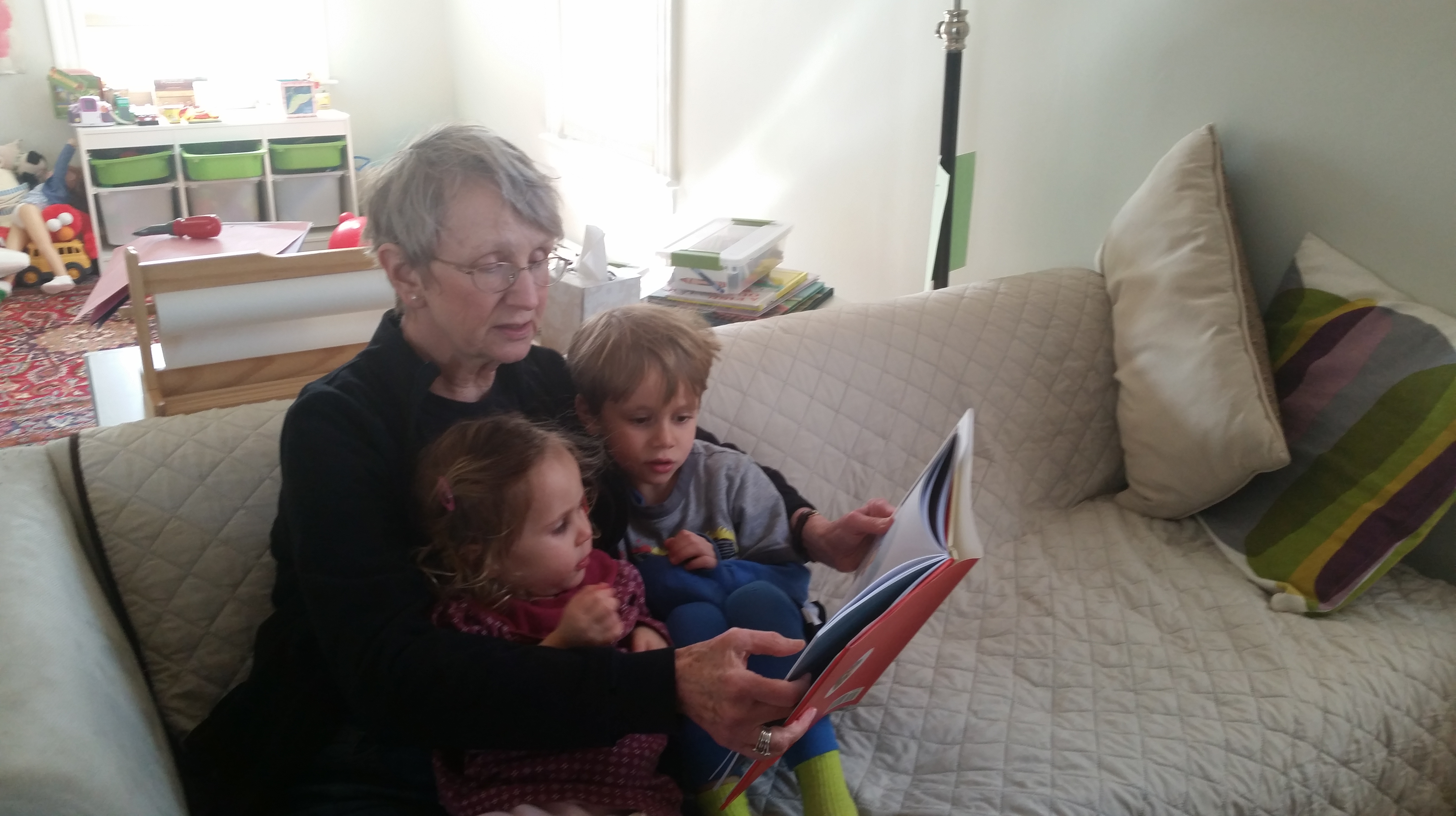
Photo: John.

People absorb information differently, so to each his own. I hope today’s attempt to explain scientific differences between reading a book and listening to one doesn’t make you think reading is necessarily better than listening. We all know the vital importance of being read to as a child.

Let’s see what Stephanie N. Del Tufo, assistant professor of education & human development at the University of Delaware, has to say at Science Alert, via the Conversation.

“As a language scientist, I study how biological factors and social experiences shape language. My work explores how the brain processes spoken and written language, using tools like MRI and EEG.

“Whether reading a book or listening to a recording, the goal is the same: understanding. But these activities aren’t exactly alike. Each supports comprehension in different ways. Listening doesn’t provide all the benefits of reading, and reading doesn’t offer everything listening does. Both are important, but they are not interchangeable.

“Your brain uses some of the same language and cognitive systems for both reading and listening, but it also performs different functions depending on how you’re taking in the information.

“When you read, your brain is working hard behind the scenes. It recognizes the shapes of letters, matches them to speech sounds, connects those sounds to meaning, then links those meanings across words, sentences and even whole books. The text uses visual structure such as punctuation marks, paragraph breaks or bolded words to guide understanding. You can go at your own speed.

“Listening, on the other hand, requires your brain to work at the pace of the speaker. Because spoken language is fleeting, listeners must rely on cognitive processes, including memory to hold onto what they just heard.

“Speech is also a continuous stream, not neatly separated words. When someone speaks, the sounds blend together in a process called coarticulation. This requires the listener’s brain to quickly identify word boundaries and connect sounds to meanings.

“Beyond identifying the words themselves, the listener’s brain must also pay attention to tone, speaker identity and context to understand the speaker’s meaning.

“Many people assume that listening is easier than reading, but this is not usually the case. Research shows that listening can be harder than reading, especially when the material is complex or unfamiliar.

“Listening and reading comprehension are more similar for simple narratives, like fictional stories, than for nonfiction books or essays that explain facts, ideas or how things work. My research shows that genre affects how you read. In fact, different kinds of texts rely on specialized brain networks.

“Fictional stories engage regions of the brain involved in social understanding and storytelling. Nonfiction texts, on the other hand, rely on a brain network that helps with strategic thinking and goal-directed attention.

“Reading difficult material tends to be easier than listening from a practical standpoint, as well. Reading lets you move around within the text easily, rereading particular sections if you’re struggling to understand, or underlining important points to revisit later.

“A listener who is having trouble following a particular point must pause and rewind, which is less precise than scanning a page and can interrupt the flow of listening, impeding understanding.

“Even so, for some people, like those with developmental dyslexia, listening may be easier. Individuals with developmental dyslexia often struggle to apply their knowledge of written language to correctly pronounce written words, a process known as decoding. Listening allows the brain to extract meaning without the difficult process of decoding.

“One last thing to consider is engagement. In this context, engagement refers to being mentally present, actively focusing, processing information and connecting ideas to what you already know.

“People often listen while doing other things, like exercising, cooking or browsing the internet – activities that would be hard to do while reading. When researchers asked college students to either read or listen to a podcast on their own time, students who read the material performed significantly better on a quiz than those who listened.

“Many of the students who listened reported multitasking, such as clicking around on their computers while the podcast played. This is particularly important, as paying attention appears to be more important for listening comprehension than reading comprehension. …

“Each activity offers something different, and they are not interchangeable. The best way to learn is not by treating books and audio recordings as the same, but by knowing how each works and using both to better understand the world.”

More at the Conversation, here.

Read Full Post »

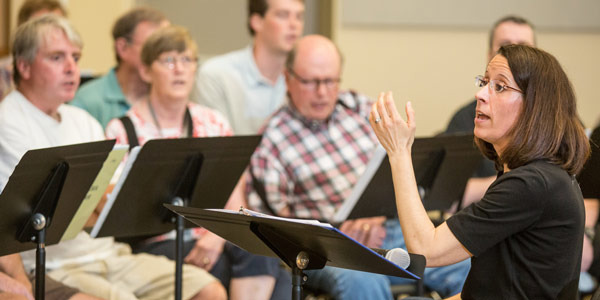
Photo: The Aphasia Choir of Vermont.
Aphasia Choir of Vermont founder and director Karen McFeeters Leary leading the group in a concert. Aphasia is caused by damage to the parts of the brain that control language.

We all know, or knew, someone who lost the ability to speak well because of a stroke or other brain injury. The condition is called aphasia. We also have heard that music can do miracles for people with disabilities — dementia for example. (Click here.)

Now read about the Aphasia Choir of Vermont and how it produces miracles for people with aphasia — and their families.

From the website: “The Aphasia Choir of Vermont was founded in 2014 by singer/songwriter and former speech-language pathologist Karen McFeeters Leary.

“The choir is composed of stroke and traumatic brain injury survivors who have expressive aphasia (difficulty talking or using language) as well as spouses, family members, University of Vermont (UVM) students studying speech-language pathology, and rehabilitation professionals from the UVM Medical Center who provide assistance.

“Because music is largely mediated by the undamaged hemispheres of the brains of people with aphasia, they can sing and are often fluent while singing even if they have severe difficulty speaking or are nonverbal. Bringing these individuals together in song enables them to experience freedom of expression in a context that fosters social connections and a sense of belonging.

“In honor of National Aphasia Awareness Month, the Aphasia Choir of Vermont performs a free public concert each spring, wherein educational information is provided in order to raise aphasia awareness in our communities. Concert audiences have grown since the choir’s inception, and attendees have used words and phrases such as ‘amazing’ and ‘awe-inspiring’ to describe what they’ve witnessed. In 2020, the American Stroke Association chose the Aphasia Choir of Vermont as the winner of their Stroke Hero Award for Outstanding Group. …

“If you or someone you know has aphasia and is interested in joining next year’s choir program, please contact Karen McFeeters Leary at kmcfeeters@aol.com or (802) 288-9777 for more information.”

But if you don’t live in Vermont, you should know there are aphasia choirs around the world. Click here.

It was my daughter-in-law who first heard about this music program in Vermont and knew it would be great for the blog. More here.

Read Full Post »

Photo: David Matos via Unsplash.

I take naps pretty regularly. Not just because I am tired but because my brain needs a rest. And I’m a big believer in letting the sleeping, unconscious brain sort out things that have me going around in circles when awake. That’s why I was impressed with the presidential candidate who wanted to “sleep on it” before choosing a running mate. To me, that was really smart. Often when you “sleep on it,” vibes you have unconsciously picked up when awake become more clear to you.

Now let’s look at some research on letting your brain take rests.

Jamie Friedlander Serrano writes at the Washington Post, “Downtime is a necessary part of life. Science shows it helps us to be healthier, more focused, more productive and more creative. Yet, somehow, we often lose sight of this.

“ ‘Downtime is important for our health and our body, but also for our minds,’ says Elissa Epel, a professor in the psychiatry department at the School of Medicine at the University of California at San Francisco.

“Epel and others acknowledge that many of us feel as though we’re wasting time if we aren’t getting things done, but research points to the costs of always being ‘on’ and the importance of giving our brains a break. Our brains aren’t built to handle constant activity.

“Even the briefest moments of idle time, or pauses, are important, says Robert Poynton, author of Do Pause: You Are Not a To-Do List.

“Short pauses — whether you take a few breaths before entering a room or walk through the woods for 10 minutes — can lead to necessary self-reflection.

“ ‘I think we feel that we need to be getting on with things,’ says Poynton, who is an associate fellow at the University of Oxford in England. But ‘if we’re always getting on with things, we haven’t taken any time to decide or examine whether what we’re getting on with is the most interesting, important, fruitful, delightful, pleasurable or healthy thing.’ …

“Well-established research has shown that low-level daily stress can create such intense wear and tear on our body’s physiological systems that we see accelerated aging in our cells, says Epel, who co-wrote the book The Telomere Effect. Epel added: ‘Mindfulness-based interventions can slow biological aging by interrupting chronic stress, giving us freedom to deal with difficult situations without the wear and tear — and giving our bodies a break.’ …

“One small study published in the journal Cognition found that those who took short breaks had better focus on a task when compared with those who didn’t take a break. [And a 2022 meta-analysis published in the journal PLOS One looked at how ‘micro-breaks’ can affect well-being. The review found that breaks as short as 10 minutes can boost vigor and reduce fatigue. …

“In 2021, when many Americans were working remotely all the time, Microsoft conducted a study that followed two groups of people: The first had back-to-back Zoom meetings, and the other group took 10-minute meditation breaks between meetings. Microsoft monitored brain activity of 14 participants in the study using an electroencephalogram (EEG).

“In the first group, ‘what you see is a brain that’s filled with cortisol and adrenaline,’ says Celeste Headlee, a journalist and author of Do Nothing: How to Break Away From Overworking, Overdoing, and Underliving. ‘It’s tired, it’s stressed, it’s probably more irritable, and it’s probably less compassionate.’ The other group? ‘You can see in brilliant color what a difference [the breaks] make,’ she says. ‘Those are brains that are relaxed.’ …

“New research has begun showing the negative effects our cellphones can have on our health. Smartphone addiction (which [James Danckert, a professor of cognitive neuroscience at the University of Waterloo in Ontario, Canada, and co-author of Out of My Skull: The Psychology of Boredom] says afflicts 4 to 8 percent of people) is becoming increasingly common worldwide.

“It has been linked to physical health problems, such as digital eyestrain and cervical disc degeneration, as well as anxiety and depression. Some recent research also suggests it can affect the structure of our brains: Two studies found smartphone addiction was correlated with lower white matter integrity and lower gray matter volume in the brain. …

“Most Americans think of downtime as something that is extra or indulgent — a treat that has to be earned only after we’ve done all of our productive tasks, says Amber Childs, a psychologist and associate professor at Yale School of Medicine’s Department of Psychiatry. But research would suggest the opposite: Downtime is a basic human need.”

More at the Post, here.

Read Full Post »

Photo: Mikkel Rolighed.
A bucket set made from sugarcane is an improvement on bioplastics, though the ocean won’t thank you if this is lost at sea – it won’t safely biodegrade (ditto recycled plastic toys). 

Now that we know that plastics have been found in the human brain, are we motivated to fight harder or are we despairing? Michelle O, you know, exhorts us to “do something” and not give in to despair, so here’s a place to start: the beach.

Fleur Britten at the Guardian has put together an impressive list of plastic substitutes you might take to the beach.

She writes, “Pre-1950, we just didn’t take plastic to the beach. Now it’s virtually impossible not to, even if it’s just you and your swimmers.

” ‘If you’re looking for plastic-free nirvana, you may never find it,’ says Anne-Marie Soulsby, aka the Sustainable Lifecoach. Matters are improving – though there’s usually a premium to pay if you want to minus cheap plastic from the mix. So why not borrow the plastic that already exists from friends, family or your local Library of Things. And don’t forget your reusable cutlery and containers for eating and drinking à la plage. If you can’t track down beach essentials from these sources, these are the other best ways to avoid seaside plastic pollution.

“ ‘The most sustainable swimwear is what you already own,’ says Soulsby. If you’re in need of new togs, they’ll most likely contain plastic. However, some brands are minimizing that: Italian label Isole & Vulcani’s swimwear for women and kids uses 93% GOTS-certified organic cotton jersey, with 7% elastane (which is fossil fuel-derived). …

“Inflatables and body boards: ‘Inflatables are a nightmare,’ says Lucy Johnson, founder of the Green Salon consultancy. ‘There isn’t a solution.’ According to one study, UK holidaymakers abandoned around 3 million [pool floats] in 2018. Even the genius Inflatable Amnesty is at capacity and can’t accept any more broken pool toys (though you can still buy its upcycled accessories). So borrow, or look after what you have. … 

“If you do need new toys, she advises silicon: ‘You can squish it into your bag and it doesn’t go brittle or rust’ (Johnson recommends Liewood’s silicon beach set from Kidly). Bioplastic toys are an improvement on regular plastic – for example, Dantoy’s bucket set made from sugarcane.”

As for sun screens, “ ‘There is no perfect solution,’ says Jen Gale, author of The Sustainable(ish) Living Guide. If you want to be absolutely plastic-free – including those pervasive nano-plastics – then your safest option is a zinc oxide-based formulation. …

“It is actually possible to find plastic-free eyewear, provided that you are one very careful person, because we’re talking glass lenses. The Marylebone-based brand Monc’s sunglasses feature wire and bio-acetate frames (made from wood pulp) and mineral glass lenses. …

“Flipflop pollution is real. Hardly surprising, given that about 3 billion are produced annually. According to the charity Ocean Sole, 90 tonnes of flipflops wash up annually on East Africa’s beaches alone. One alternative, suggests [Wendy Graham of the blog Moral Fibres], is Waves Flipflops, made from FSC-certified natural rubber. They also take back old Waves flipflops for recycling into, for example, children’s playground matting, and offer a free TerraCycle recycling programme for plastic flipflops from any brand.”

There’s lots more, including information on dry robes and wetsuits, at the Guardian, here. No paywall. Donations encouraged.

Read Full Post »

Photo: Mia McPherson/ On the Wing Photography.
Western Meadowlark singing.

Doctors are starting to recommend meditation to lower blood pressure in older people. When meditation was first suggested to me, I scoffed in my usual know-it-all way (what my husband used to call my “stranglehold on the truth”), but as I researched different kinds of meditation on the web, I gradually became a believer.

One of the ways meditation experts get you to focus on the here and now is to have you pay attention to each of your five senses in sequence, as in one five-minute meditation from the Washington Post. Others add that listening specifically to birdcalls can be therapeutic.

At the Post, Richard Sima says, “Looking to improve your mental health? Pay attention to birds. Two studies published last year in Scientific Reports said that seeing or hearing birds could be good for our mental well-being. …

“Research has consistently shown that more contact and interaction with nature are associated with better body and brain health.

“Birds appear to be a specific source of these healing benefits. They are almost everywhere and provide a way to connect us to nature. And even if they are hidden in trees or in the underbrush, we can still revel in their songs.

” ‘The special thing about birdsongs is that even if people live in very urban environments and do not have a lot of contact with nature, they link the songs of birds to vital and intact natural environments,’ said Emil Stobbe, an environmental neuroscience graduate student at the Max Planck Institute for Human Development and author of one of the studies.

“Recent research also suggests that listening to recordings of their songs, even through headphones, can alleviate negative emotions. …

“In one study, researchers asked about 1,300 participants to collect information about their environment and well-being three times a day using a smartphone app called Urban Mind.

“The participants were not explicitly told that the researchers were looking at birds — the app was also collecting data about other vitals such as sleep quality, subjective assessment of air quality, and location details. But the 26,856 assessments offered a rich data set of what is associated with mental well-being in real time in the real world.

“By analyzing the data, the researchers found a significant positive association between seeing or hearing birds and improved mental well-being, even when accounting for other possible explanations such as education, occupation, or the presence of greenery and water, which have themselves been associated with positive mental health.

“The benefits persisted well beyond the bird encounter. If a participant reported seeing or hearing birds at one point, their mental well-being was higher, on average, hours later even if they did not encounter birds at the next check-in.

Ryan Hammoud, a PhD candidate at the Institute of Psychiatry, Psychology & Neuroscience at King’s College London and an author of the study, called it a ‘time-lasting link.’

“Intriguingly, the birds benefit both healthy participants and those who have been diagnosed with depression. …

“A second study found that listening to short — just six-minute — audio clips of birdsong could reduce feelings of anxiety, depression and paranoia in healthy participants.

“ ‘Listening to birdsong through headphones was able to hit the same pathways that might be beneficial toward mental well-being,’ said Hammoud, who was not involved in the second study. …

“Researchers asked 295 online participants to self-assess their emotional states and to take a cognitive memory test. Then they randomly assigned the participants to listen to birdsongs or traffic noise, of more or less diversity. The researchers then had the subjects remeasure their emotional and cognitive states.

“Participants who listened to more diverse birdsongs (featuring the acoustic acrobatics of eight species) reported a decrease in depressive symptoms in addition to significant decreases in feelings of anxiety and paranoia. And those who listened to less diverse birdsongs (two bird species) also reported a significant decrease in feelings of anxiety and paranoia. …

“By contrast, listening to more or less diverse traffic noise worsened symptoms of depressive states.

“The research shows the ‘healing aspects of nature, or also the not-so-positive effects of urban surroundings,’ said Stobbe, an author of the second study. …

“Birds help us feel more connected with nature and its health effects, Stobbe said, and the more connected we are to nature, the more we can benefit from those effects.

“One hypothesis on nature’s salubrious effects, known as the attention restoration theory, posits that being in nature is good for improving concentration and decreasing the mental fatigue associated with living in stressful urban environments. Natural stimuli, such as birdsong, may allow us to engage in ‘soft fascination,’ which holds our attention but also allows it to replenish.

Nature — and birdsong — also reduce stress. Previous research has found that time spent in green outdoor spaces can lower blood pressure and cortisol levels, Hammoud said.

“It is not yet understood how birdsong affects our brains, but neuroimaging studies have found brain responses of stress reduction to other forms of nature exposure.”

More at the Post, here.

Read Full Post »

Photo: Stuga40 leading outdoor exercise during the pandemic in Stockholm.

I’ve been looking into the fitness offerings now available to me. There is quite a variety, including an exercise class specifically designed to boost brain health. I hope to try everything, as I keep reading that exercise does a lot more than build muscles.

For example, Gretchen Reynolds wrote at the Washington Post, “New findings from a 350,000-person study make the strongest case yet that exercise improves cognition. 

“To build a better brain, just exercise. That’s the message of two important new studies of how physical activity changes our minds. In one, scientists delved into the lives, DNA and cognition of thousands of people to show that regular exercise leads to much sharper thinking.

“Another study helps explain why exercise is good for the brain. Researchers found that just six minutes of strenuous exertion quintupled production of a neurochemical known to be essential for lifelong brain health. …

“These studies reinforce the idea that ‘absolutely, exercise is one of the best things you can do’ for your brain, said Matthieu Boisgontier, an associate professor at the University of Ottawa, who oversaw one of the studies.

“The first inklings that exercise remodels brains and minds came decades ago in mouse studies. Active, running animals in these experiments scored much higher on rodent intelligence tests than sedentary mice, and their brain tissues teemed with elevated levels of a substance known as brain-derived neurotrophic factor or BDNF, often referred to as ‘Miracle-Gro’ for the brain. BDNF prompts the creation and maturation of new brain cells and synapses. It bulks up brains.

“Studies in people have since established that exercise also raises BDNF levels in our bloodstreams, although it’s harder to look inside our brains and see if it rises there. Multiple, large-scale epidemiological studies, meanwhile, have linked more exercise to better memories and thinking skills and less risk for neurodegenerative diseases, such as Alzheimer’s.

“Qualms have lingered, though, about just how potent exercise really is for our brains. … Many human studies of exercise and cognition have been too small or otherwise limited to show persuasive benefits for brain health from working out.

“The study from Boisgontier and his colleagues, published [in March] in Scientific Reports, uses a novel and complex type of statistical analysis to go beyond traditional observational research and firmly establish that exercise does improve your brain skills.

“They turned to DNA and Mendelian randomization, a recently popularized method of using genetic variations to characterize and sort people. We each are born with or without certain snippets of DNA, some of which are known to contribute to a likelihood of being physically active. From before birth, we are, in effect, randomized by nature to be someone who is or isn’t prone to move. Other gene snippets play a similar role in cognition.

“By cross-checking the cognitive scores of people who have or lack the exercise-promoting snippets against those of people with the gene variants related to cognition, scientists can discern the extent to which exercise contributes to thinking skills. … People with a genetic predisposition to exercise typically did exercise, they found, and scored better on tests of thinking, if their exercise was at least moderate, comparable to jogging.

“And, yes, you can get brain benefits from exercise even if you don’t have the gene snippets. …

“The other new study, although comparatively small, may help explain how exercise keeps your brain healthy.

“In this experiment, 12 healthy, young people rode an exercise bike at a very leisurely pace for 90 minutes, followed by six minutes of intervals consisting of 40 seconds of all-out pedaling interspersed with 20 seconds of rest. Before, during and after each session, researchers tracked BDNF in people’s blood.

“They also measured levels of lactate. Muscles release lactate, often called lactic acid, during exercise, especially if it’s strenuous. It can travel to and be sucked up by the brain as fuel. … During easy riding, lactate levels rose slightly in people’s blood after about 30 minutes, as did the amounts of BDNF in their blood. But during and after the six minutes of hard, fast pedaling, lactate soared and so did BDNF.”

More at the Post, here.

Read Full Post »

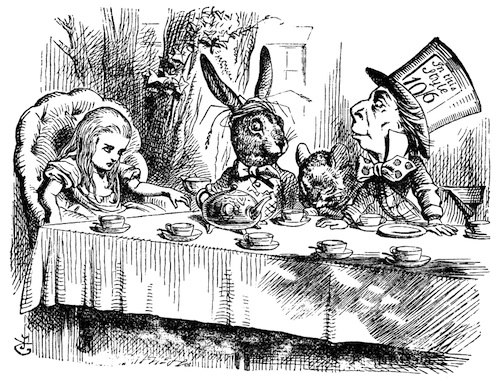
Art: John Tenniel.
The Dormouse in Alice in Wonderland tells a story of sisters at the bottom of a well who were learning to draw “all manner of things — everything that begins with an M … such as mouse-traps, and the moon, and memory.”

When periodicals like the Washington Post block bloggers from linking to their images, we scavenge around for alternative illustrations. Today’s Post article on music and memory made me think of words that begin with an “m,” as the Dormouse did in Alice in Wonderland. The Dormouse even talks about “drawing” memory. Look it up.

Marlene Cimons has a report on music and dementia.

“When Laura Nye Falsone’s first child was born in 1996, the Wallflowers album ‘Bringing Down the Horse’ was a big hit. ‘All I have to hear are the first notes from “One Headlight,” and I am back to dancing … with my brand-new baby boy in my arms,’ she says. …

“When Carol Howard’s early-onset Alzheimer’s worsened, often she couldn’t recognize her husband. She once introduced him as her father. But if she heard a 1960s Simon & Garfunkel song playing, Howard, a marine biologist who died in 2019, could sing every word ‘effortlessly,’ her husband says.

“This ability of music to conjure up vivid memories is a phenomenon well known to brain researchers. It can trigger intense recollections from years past — for many, more strongly than other senses such as taste and smell — and provoke strong emotions from those earlier experiences.

“ ‘Music can open forgotten doors to your memory,’ says Andrew Budson, chief of cognitive and behavioral neurology, associate chief of staff for education and director of the Center for Translational Cognitive Neuroscience at Veterans Affairs Boston Healthcare System.

“ ‘Music can take you back in time, as well as act like a jolt of electricity that can fire up your brain and get it going,’ he says. ‘We all have the familiar experience of going back to our hometown, visiting our high school and feeling the memories come flooding back. Music can do same thing. It provides an auditory and emotional setting that allows us to retrieve all those memories.’

“Scientists who study music’s powerful effects on the brain say that growing knowledge could improve therapy for such conditions as dementia and other memory disorders, anxietystress and depression, learning disabilities and many physical illnesses, such as chronic paincancer and Parkinson’s disease.

Evidence also exists that music prompts the secretion of brain neurotransmitters, such as dopamine, a chemical messenger that plays a role in the brain’s reward/pleasure system. Other studies have shown that music reduces the stress-producing hormone cortisol and increases the secretion of oxytocin, which plays a role in labor and childbirth, as well as in infant-parental bonding, trust and romantic attachment.

“ ‘Music activates different parts of the brain,’ making it an especially versatile tool, says Amy Belfi, assistant professor of psychological science at Missouri University of Science and Technology and principal investigator in its Music Cognition and Aesthetics Lab. ‘We can use it to improve mood, to help us learn, to socially bond with other people. It becomes part of our identity.’ …

“Some experts also see a role for music — which can ease agitation in those with dementia — as an alternative to sedating medications, for example, or as a means of enabling patients to keep living at home.

Frank Russo, professor of psychology at Toronto Metropolitan University, says he believes this ultimately will be possible. He is chief scientific officer of a company that is developing a music player that uses artificial intelligence to curate an individualized play list designed to guide a patient from a state of anxiety to one of calm.

“ ‘One of the really challenging things for caregivers is the anxiety and agitation,’ says Russo, whose research focuses on the intersection of neuroscience and music. … ‘Music has a real opportunity here.’

“Melissa Owens, a music therapist at Virginia Commonwealth University Health, already has seen this in her work. ‘I still find myself in awe of music’s ability to positively change behavior, emotion and even the relationship between a caregiver and their loved one, if even only for the duration of the specific song,’ she says. It provides ‘a moment of normalcy which so much of the time seems lost.’ ”

Read how experts look at the different types of memory involved at the Post, here.

Read Full Post »

Photo: Harv Greenberg via Etsy.
How to illustrate a story on the brain’s mysterious remembering and forgetting? Do you approve of this shot of Arizona’s Antelope Canyon for the purpose?

As forgetful moments become more common for me, I tend to think of them only as bad news. This article by Sanjay Sarma and Luke Yoquinto at BBC Future asks me to look on the bright side.

“On 25 February 1988, at a performance in Worcester, Massachusetts,” they write, “Bruce Springsteen forgot the opening lines to his all-time greatest hit, ‘Born to Run.’

“According to the conventional wisdom about the nature of forgetting, set down in the decades straddling the turn of 20th Century, this simply should not have happened. Forgetting seems like the inevitable consequence of entropy: where memory formation represents a sort of order in our brains that inevitably turns to disorder. …

“In such a model, the preservation of information like song lyrics requires constant upkeep – which, in the case of ‘Born to Run,’ no one could accuse Springsteen of neglecting. … According to the entropic model of forgetting, such a slip-up made little sense. … Schools and education systems around the world had been built based on the best psychological theories of the early 20th Century. If these models of learning – and its supposed opposite number, forgetting – were wrong, who could tell how many learners had been done a disservice? …

“Efforts to explain forgetting date back to the late 1800s, when psychological researchers began – slowly, at first – to incorporate mathematical tools into their experiments. The German psychologist Hermann Ebbinghaus studied his own powers of recall by memorising long series of nonsense syllables, then recording how well he remembered them as time elapsed. His ability to summon up this meaningless information, he discovered, sloped downward over time in a curved distribution: he lost most of his hard-won syllables quickly, but a small percentage of them persisted in his memory long after his initial memorization efforts.

“These results seemed to support the intuitive idea that forgetting was the result of the simple erosion of information. But even in these early efforts, wrinkles appeared in the data suggesting that there might be more to forgetting than met the eye. Importantly, the timing of Ebbinghaus’s rehearsals wielded enormous influence over how well he remembered items, with a spaced-out practice schedule outperforming rehearsal sessions that were bunched together.

“This finding was mysterious, hinting at some unexplained requirements of the memorizing mind, but at the same time it was unsurprising. Indeed, the benefits of spacing out one’s studies were known to most students. …

“In Ebbinghaus’s time [quantitative] methods were the exception in psychological research, but a generation later, they were rapidly gaining adherents. Perhaps no psychologist was more responsible for this change than Columbia University’s number-loving psychologist Edward L. Thorndike. … His research laid the groundwork for the influential mid-century movement in psychology known as Behaviorism, which attempts to explain behaviors purely as a function of environmental conditioning, not any intervening mental processes. …

“From his observations he produced three basic laws of learning for human and non-human animals alike. These concerned how the brain ‘stamps in‘ associations (which he dubbed his Law of Effect); under what conditions learning occurs (his Law of Readiness); and how memories are maintained or forgotten: his Law of Exercise, which breaks down into sub-theories of use and disuse. …

“Thorndike’s theory of forgetting largely aligned with Ebbinghaus’s observations, except it didn’t account for the still-mysterious fact that spaced rehearsal of information seemed to steel-plate information against forgetfulness. It would take decades for cognitive scientists to come up with a model of forgetting that satisfactorily accounted for this issue. …

“In both the standardization of education and the ongoing research into learning, forgetting became something of a sideshow. Its status began to improve, however, thanks to two separate research traditions begun in the 1960s and 1970s. One operates at the level of neurons and is detectable through tiny electrodes implanted in cells, while the other operates at the level of cognitive psychology and is detectable through cleverly designed quizzes.

“At the cellular level, Eric Kandel, in a Nobel-winning series of studies, demonstrated that memories are preserved in the form of strengthened connections between neurons. Training regimes, he showed, whether conducted on intact, living, learning animals, or by electrically prodding neurons in a dish, create such beefed-up connections. And, as Ebbinghaus first observed, training (or rehearsal, or study) with extra time scheduled in between led these connections to be longer-lasting. This is a fact that holds true throughout the animal kingdom, from sea slugs to mammals. …

“At the cellular level, part of the answer may be that some of the mechanisms involved in preserving memories seem to require downtime: recharging periods, in effect, before neurons can get back to the work of strengthening their connections.

“A different, yet perhaps complementary, answer is forthcoming in the research tradition of cognitive psychology. Here, a variety of studies suggest that gaps in one’s rehearsal or study schedule are so helpful because, counterintuitively, they create the opportunity for a salutary bit of forgetting. To understanding how forgetting can be useful, it’s important to first recognize that a memory is never simply strong or weak.

Forgetting, it seemed, was less like a cliff slowly collapsing into the sea, and more like a house deep in the woods that becomes harder and harder to find.

“Rather, the ease with which you can summon up a memory (its retrieval strength) is different from how fully represented it is in your mind (its storage strength). The name of your parent, for instance, would be one example of a memory with both high storage and retrieval strength. A phone number you held in your head only momentarily a decade ago could be said to have low storage and retrieval strength. The name of someone you met a party mere minutes ago might have high retrieval but low storage strength. …

“Psychologists became aware of the distinction between storage and retrieval as early as the 1930s, when John Alexander McGeoch, a psychologist at the University of Missouri, tasked study subjects with memorizing pairs of unrelated words. For example, every time I say pencil, for instance, you say chessboard. That task became far more difficult, he discovered, when, before asking his subjects to recite what they’d memorized, he confronted them with decoy pairs: pencil and cheese, pencil and table. The decoy pairs, it seemed, competed with the true pair for the memorizer’s attention.

“As this line of research gained traction, the metaphor for forgetting changed. Forgetting, it seemed, was less like a cliff slowly collapsing into the sea, and more like a house deep in the woods that becomes harder and harder to find. The house might be perfectly sound – that is, its storage strength remains high – but if the path leading to it becomes surrounded by equally plausible paths leading the wrong way, one’s formerly clear mental map can transform into a maze.

“In Springsteen’s case, it’s easy to see how his mental wayfinding might have gotten thrown off track. ‘The reason for the muff, apparently was that he was concentrating so much on the spoken introduction, telling the audience how the song has assumed a new meaning to him over the years,’ the Los Angeles Times’ music critic wrote several days after the event. The new introduction meant he was approaching the same old memory from a different set of cues: a different starting point. Suddenly, the once-reliable path to the opening lines of the song was surrounded by false starts. But soon, the lyrics came roaring back.” The idea is that now the memory is more accessible and the heightened accessibility will stick around. 

Pretty cool stuff. More at the BBC, here. No firewall.

Read Full Post »

Your Bilingual Dog

Photo: Raúl Hernández.
Kun Kun has been participating in tests to tell if dogs can distinguish one language from another. Here is Kun Kun taking a break from the MRI machine.

Anyone who has ever been attached to a dog, talking to the dog and studying its reactions, must have wondered what dogs understand and how they understand it. Among the studies that have been done on the question is a recent one about being able to understand different languages.

Alejandra Marquez Janse and Christopher Intagliata present the story at National Public Radio.

“Imagine you’re moving to a new country on the other side of the world. Besides the geographical and cultural changes, you will find a key difference will be the language. But will your pets notice the difference?

“It was a question that nagged at Laura Cuaya, a brain researcher at the Neuroethology of Communication Lab at at Eötvös Loránd University in Budapest.

” ‘When I moved from Mexico to Hungary to start my post-doc research, all was new for me. Obviously, here, people in Budapest speak Hungarian. So you’ve had a different language, completely different for me,’ she said.

“The language was also new to her two dogs: Kun Kun and Odín.

” ‘People are super friendly with their dogs [in Budapest]. And my dogs, they are interested in interacting with people,’ Cuaya said. ‘But I wonder, did they also notice people here … spoke a different language?”

“Cuaya set out to find the answer. She and her colleagues designed an experiment with 18 volunteer dogs — including her two border collies — to see if they could differentiate between two languages. Kun Kun and Odín were used to hearing Spanish; the other dogs Hungarian.

The dogs sat still within an MRI machine, while listening to an excerpt from the story The Little Prince. They heard one version in Spanish, and another in Hungarian. Then the scientists analyzed the dogs’ brain activity.

“Attila Andics leads the lab where the study took place and said researchers were looking for brain regions that showed a different activity pattern for one language versus the other.

” ‘And we found a brain region — the secondary auditory cortex, which is a higher level processing region in the auditory hierarchy — which showed a different activity pattern for the familiar language and for the unfamiliar language,’ Andics said.

“This activity pattern difference to the two languages suggests that dogs’ brain can differentiate between these two languages. In terms of brain imaging studies, this study is the very first one which showed that a non-human species brain can discriminate between languages.

“They also found that older dogs brains’ showed bigger differences in brain activity between the two languages, perhaps because older dogs have more experience listening to human language. Their findings were published this week in the journal NeuroImage.

“Amritha Mallikarjun is a researcher at the Penn Vet Working Dog Center in Philadelphia. She wasn’t involved in this study, but has been working on similar research about dogs and language. … While this work relied on brain imaging, Mallikarjun said it would be worth investigating whether dogs could differentiate between languages in behavioral studies, too…. ‘Because often with neural studies, you can find differences that don’t play out in the behavior.’ ” More at NPR, here.

Being curious about the choice of The Little Prince for the text, I went to the original study: “Our linguistic material consisted of a recording of the XXI chapter of The Little Prince written by Antoine de Saint-Exupéry read by two different native, female speakers, with similar timbre, and vocal characteristics [one] in each language. … The text, as well as the speakers were unknown to all dogs and the text was recorded with a lively, engaging intonation.”

So then I looked up the passage, finding it described at a website call Shmoop: “The little prince tells the fox that he is unhappy and asks him to come play with him; but the fox says he cannot because he is not ‘tamed’ (21.8). He explains that ‘to tame’ means ‘to establish ties’ (21.16). Through the process of taming, they will come to need each other, and will become special to one another. The fox requests the little prince to tame him.”

Read Full Post »


Photo: Alan Berner/The Seattle Times
Neurologist and musician Thomas Deuel, wearing a wired-up electrode cap, is researching brain activity in musicians and developing the encephalophone for people with limited motor ability so they can play by thinking.

Imagine being able to play music just by thinking about it! That day is coming, according to Brendan Kiley at the Seattle Times.

He writes, “In April of 2016, Seattle choir director and fifth-grade teacher Margaret Haney checked into the emergency room with an unusual problem — suddenly, she couldn’t sing.

“Haney had been in the classroom, trying to lead her students through George Gershwin’s ‘Summertime’ when, as she put it, ‘I failed miserably, like I never have.’ …

“The physicians ordered some brain scans and discovered she was suffering from ‘amusia’ — the inability to make music — due to a viral encephalitis infection in one section of her brain.

“After the tests, she was referred to Dr. Thomas Deuel, a Swedish neurologist who plays trumpet and guitar, studied musical composition and molecular biology at Princeton University, and then jazz at New England Conservatory in Boston. …

“Deuel had been working with DXARTS, a University of Washington program that incubates collaborations between scientists and artists. DXARTS was launched in 2001, with an emphasis on projects that boldly crisscross borders: video, performance, music, virtual reality, robotics and all-around tech-art hacking.

“Lately, Deuel had advised DXARTS on building a lab, with state-of-the-art technology to study the relationship between neurology and art (particularly music), and explore deep connections between the body and the brain. Deuel had also teamed up with UW-based physicist Felix Darvas on a neuro-musical invention: the encephalophone (pronounced ‘en-sef-ah-lo-fone’), an instrument you can play simply by thinking. …

“To play the encephalophone, a musician wears an electroencephalogram (EEG) cap fitted with electrodes that read brain waves and transmit them to a synthesizer. The EEG caps looks like a beanie without the propeller but protrudes a cluster of wires hooked up to amplifiers and computers. The instrument is a kind of ‘brain-computer interface,’ and sounds like an electric piano, electric strings, or whatever other kind of music the connected synthesizer can produce. …

“[DXARTS co-founder Juan] Pampin hopes the encephalophone will be developed enough to host a public concert of ‘brain performers’ by late 2018. …

“And Margaret Haney? Doctors … treated her with antiviral medication to halt the spread of the infection — and the instrument helped relieve her amusia.

“[Deuel says] learning to play the encephalophone ‘helped her make pitch. We weren’t able to completely cure her, but she was able to get back to singing again. We can’t prove that we’ve done a lot with just one patient, but it was a promising start.’ ”

More here.

Read Full Post »

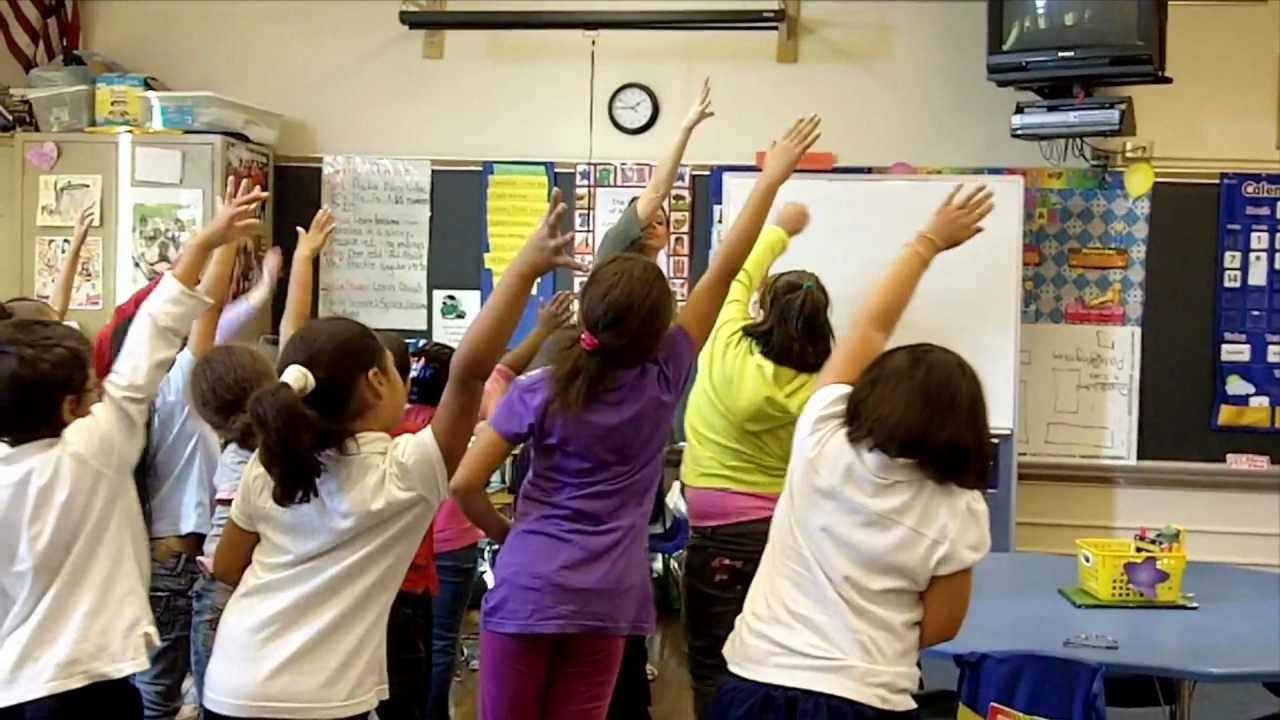
Photo: Milwaukee Public Schools
Sarah Wenzel and her class at Forest Home Elementary demonstrate a series of poses from the YogaKids cards, http://www.yogakids.com.

When I was in kindergarten, someone would come to play the piano and we children would walk in a circle pretending to be giraffes (re-e-eaching!) and elephants (swinging gently while bent over).

Just the other day, I realized that those kindergarten stretches were the same as stretches I’ve been doing for my back.

Decades ago, schools like mine were helping kids exercise for health. Now an increasing number of studies suggest that moving while in class helps children’s brains learn better, too.

Donna de la Cruz writes at the NY Times, “Sit still. It’s the mantra of every classroom. But that is changing as evidence builds that taking brief activity breaks during the day helps children learn and be more attentive in class, and a growing number of programs designed to promote movement are being adopted in schools. …

“A 2013 report from the Institute of Medicine concluded that children who are more active ‘show greater attention, have faster cognitive processing speed and perform better on standardized academic tests than children who are less active.’ And a study released in January by Lund University in Sweden shows that students, especially boys, who had daily physical education, did better in school.

“ ‘Daily physical activity is an opportunity for the average school to become a high-performing school,’ said Jesper Fritz, a doctoral student at Lund University and physician at the Skane University Hospital in Malmo, who was the study’s lead author. …

“ ‘Kids aren’t meant to sit still all day and take in information,’ said Steve Boyle, one of the co-founders of the National Association of Physical Literacy, which aims to bring movement into schools. ‘Adults aren’t wired that way either.’

“Mr. Boyle’s association has introduced a series of three- to five-minute videos called ‘BrainErgizers‘ that are being used in schools and Boys and Girls Clubs in 15 states and in Canada, Mexico, Ireland and Australia, he said. A version of the program is available to schools at no charge. …

“ ‘At the end of the week, kids have gotten an hour or more worth of movement, and it’s all done in the classroom with no special equipment,’ Mr. Boyle said. ‘We’re not looking to replace gym classes, we’re aiming to give kids more minutes of movement per week. And by introducing sports into the videos, giving kids a chance to try sports they may not have ever tried before.’ ”

To read more at the NY Times, click here.

Read Full Post »

serious-truck-driver


Play is important for all kinds of reasons in childhood, including testing out skills and experiencing the satisfaction of creativity.

John Poole at National Public Radio focused on the socialization aspects of play in a recent report.

He began, “Why do we humans like to play so much? Play sports, play tag, play the stock market, play duck, duck, goose? We love it all. And we’re not the only ones. Dogs, cats, bears, even birds seem to like to play. …

“The scientist who has perhaps done more research on brains at play than any other is a man named Jaak Panksepp. And he has developed a pretty good hypothesis.

“In a nutshell, he, and many others, think play is how we social animals learn the rules of being social.  …

“Play seems so deeply wired by evolution into the brains of highly social animals that it might not be a stretch to say that play is crucial to how we and they learn much of what we know that isn’t instinct. …

“Not surprisingly, Panksepp and others think the lack of play is a serious problem. Especially at younger ages. And particularly in school settings. …

” ‘It’s not just superfluous,’ says Panksepp. ‘It’s a very valuable thing for childhood development. And we as a culture have to learn to use it properly and have to make sure our kids get plenty of it.’ ” More here.

More still from Jon Hamilton, another reporter in the NPR series on play, here.

Photo: David Gilkey/NPR
Deion Jefferson, 10, and Samuel Jefferson, 7, take turns climbing and jumping off a stack of old tires at the Berkeley Adventure Playground in California. The playground is a half-acre park with a junkyard feel where kids are encouraged to “play wild.” 

Read Full Post »

The NY Times contains a Science section on Tuesdays, and it always has delightful tidbits. Today Sindya N. Bhanoo writes that if you had music lessons at a young age, the experience may benefit you in old age.

“A new study reports that older adults who took lessons at a young age can process the sounds of speech faster than those who did not.

“ ‘It didn’t matter what instrument you played, it just mattered that you played,’ said Nina Kraus, a neuroscientist at Northwestern University and an author of the study, which appears in The Journal of Neuroscience.

“She and her collaborators looked at 44 healthy adults ages 55 to 76, measuring electrical activity in a region of the brain that processes sound.

“They found that participants who had four to 14 years of musical training had faster responses to speech sounds than participants without any training — even though no one in the first group had played an instrument for about 40 years.” More here.

Now, of course, I am looking back and trying to count how many years of piano lessons I had as a kid. I’m sure it was at least the four Kraus deems necessary. But I hardly ever practiced, so probably the effect was small.

The serious pianist below was sitting on my lap when the picture was taken in 2011.

at-the-piano

Read Full Post »

If you need more hours in the day, be sure to read “How to trick your brain into thinking your day is longer,” an article John found. (But if time is dragging and you want fewer hours waiting in line or being stalled on the subway, I suggest you try reciting poetry.)

Belle Beth Cooper writes at LifeHacker that intense concentration can make you feel like you have added on all the time you need to do whatever you are doing.

“Can you remember a period in your life when, if you look back on it now, time seemed to stretch on forever? … Chances are, you were probably doing something—or a whole bunch of somethings—that was brand new to you and demanded your attention.

“The funny thing is, by focusing on what you were doing, you actually slowed down time (or how your brain perceived that time, anyway). Neuroscientist David Eagleman” explains how it works here. …

“As we age, this process comes into play even more, making time seem to fly by much faster. This is because the more we age, the more often we come into contact with information our brains have already processed. This familiar information takes a shortcut through our brains, giving us the feeling that time is speeding up and passing us by.

“For young children, it’s easy to see how this would work in reverse, since the majority of information their brains are processing would be brand new, and require more time to process. …

“According to the research, if we feed our brains more new information, the extra processing time required will make us feel like time is moving more slowly.” Try it out. More of the science at LifeHacker.

Photo: Andrada Misca, lovingphotography.wordpress.com
The very image of concentration.

Read Full Post »

I love stories like this in any field, even a field as foreign to me as mathematics.

A mathematical puzzle that most experts didn’t expect to see solved in their lifetime has been quietly mastered by a professor in New Hampshire. He just got an idea and worked it out.

Carolyn Y. Johnson covers the story for the Boston Globe:

“A soft-spoken, virtually unknown mathematician from the University of New Hampshire has found himself overnight a minor celebrity, flooded with requests to give talks at top universities.

“On May 9, mathematician Yitang Zhang, who goes by Tom, received word that the editors of a prestigious journal, Annals of Mathematics, had accepted a paper in which he took an important step toward proving a very old problem in mathematics.”

He showed that there are “an infinite number of primes separated by less than 70 million. [It] excites mathematicians because it is the first time anyone has proved there are an infinite number of primes separated by an actual number. … News of the feat rippled across the math world.

“ ‘This is certainly one of the most spectacular results of the last decade,’ Alex Kontorovich, a mathematician at Yale University, wrote in an e-mail. ‘Many people expected not to see this result proved in their lifetime.’

“Zhang said that he began to think seriously about solving the problem four years ago. … The epiphany did not come to him until July 3 of last year, when he realized he could modify existing techniques, building on what others had tried.

“ ‘It is hard to answer “how,” ‘ Zhang wrote in an e-mail. ‘I can only say that it came to my mind very suddenly.’

“The mathematician lives a simple life that he says gives him the ability to concentrate on his work. … Zhang’s achievement shows what can be accomplished by the elegant instrument of the human mind, working alone.

“ ‘Keep thinking, think of it everyday,’ Zhang said he would tell himself. ..

“ ‘The old adage is that mathematics is a young person’s game, and moreover most of the top results come from people or groups of people known to produce them,’ Kontorovich wrote. “Professor Zhang has demonstrated not only that one can continue to be creative and inventive well into middle-age [he’s in his 50s], but that someone working hard enough, even (or especially) in isolation, can make astounding breakthroughs.’ ”

I love the reminder about the importance of time to think. Everyone needs time to think. Even people who are not solving math puzzles for the ages.

Photo: Boston Globe

Read Full Post »

Older Posts »