Feeds:
Posts
Comments

Posts Tagged ‘green’

At the radio show Living on Earth, Steve Curwood recently interviewed Gary Cook of Greenpeace about an effort to get tech companies to be greener.

CURWOOD: “Back in 2012, you criticized Apple for using carbon-intensive energy from coal plants to power its servers. …

COOK: “Just after we spoke, they made a commitment to be 100 percent renewably powered, and as the end of last year, they even made that goal. So, it’s been quite a big shift.

CURWOOD: “100 percent renewable energy. How’s that possible?

COOK: “It requires some effort. Apple has done a lot in North Carolina where they have their largest data center in terms of deploying two different solar farms and an onsite fuel cell that’s powered with biogas energy, so it’s all renewable. They have several other data centers. … In Oregon they’re using wind; in Nevada they’re using solar.

“So they’ve actually shown a commitment from the top, been very aggressive, probably the most aggressive of any of the brands to make sure as they grow, they’re using clean energy.

CURWOOD: “Biogas. Where are they getting that from?’

COOK:” Currently, they’re getting that from landfill and some other renewable sources. The landfill is methane capture in the southeast, and they’re having that piped to where their data center is in North Carolina.”

The radio interview covers several other efforts tech companies are making. It’s a good thing, too, when you consider, as Living on Earth points out, “If the Internet were a country, it would be the sixth largest consumer of electricity in the world.” More here.

Photo: George Nikitin, Greenpeace
The Greenpeace Airship A.E. Bates flies over Facebook headquarters with a banners reading “Building a Greener Internet” and “Who’s The Next To Go Green?” Apple, Facebook and Google have committed to powering their data centers with renewable energy.

Read Full Post »

No matter how much you like your routine or how pleasant your surroundings, sometimes you just have to get up and go out. Today I needed a change of scene so, in spite of the freezing temperatures and high wind, I went to look at some art.

The Design Museum is not far from my office, and the folks there come up with lots of good projects. I blogged here about their Street Seats, an array of public benches designed by creative people from around the world.

This being Design Week in Boston, I decided to check out the exhibit space they are using in a new apartment building called 315 on A, a lovely renovation of an 18th century warehouse for coffee.

The new exhibit is called Green Patriot Posters and features handsome posters from professionals as well as the pretty impressive results of a school poster contest on the conservation theme.

Many of the posters explicitly reference WW II posters. You know: “Loose lips sink ships” and all that. Here, the posters urge viewers to pursue a more sustainable way of life and fight global warming. More.

Be sure to check the poster over the left shoulder of the woman speaker in this video. That was my favorite in the show because it made me laugh out loud. I think you can see a Paul Bunyan figure with an ax. He is looking at the tree he was going to cut with an uncertain expression as the tree is growing out of his foot.


Read Full Post »

I’m grateful to Scott, a former colleague, for putting this cool thing on Facebook. Looking at these healthy, growing plants is especially warming today, now that the temperature has gone back to 15 F.

Tim Blank at Future Growing LLC (which produces vertical aeroponic food farms) writes, “When you hear about a farm that supplies all-natural, sustainable produce, using 90% less water and 90% less land, one that utilizes the most advanced vertical aeroponic technology on earth, you surely would not guess it would be an Amish farm.

“Yet in Topeka, Indiana, you cannot get produce that is more local, fresh, healthy, and sustainable — even in the middle of an Indiana blizzard — like you can get at Sunrise Hydroponics, an Amish farm.

“Sunrise Hydroponics is owned and operated by husband-and-wife team Marlin and Loretta Miller on their rural farm in Topeka. I have had the privilege of working with the Amish community for more than half a decade, and have come to learn that, while their lives seem simple to many outsiders, their homes, farms, and businesses are highly innovative. The Amish utilize cutting-edge and creative forms of technology to improve their lives, while still falling within the guidelines of their belief system.” Read more here.

Greenhouse at Sunrise Hydroponics

Read Full Post »

Trust Vermont to figure out how to do this.

The state had a highway rest stop in Guilford that was overwhelmed with visitors. The toilets could not keep up. Portable toilets were brought in to help, and everyone hated them.

“State officials,” says the Federal Highway Administration website, “needed a solution that could be designed and built quickly for the next foliage season.

” ‘We were looking for an alternative because we couldn’t continue with that high level of frustration,’ said [Dick Foster, director of the Vermont Information Center Division of the state’s Department of Buildings and General Services.]

“To further complicate matters, the welcome center was slated to be replaced by a newer facility in 2000, so the ‘quick fix’ also needed to be low cost. Tom Leytham, an architect who had designed other rest areas in the state, suggested the concept of using a Living Machine to Foster. …

” ‘I’d heard about Living Technologies, who had come up with a very elegant, simple solution that cleaned wastewater through a natural process involving plants.’

“Leytham drove Foster to South Burlington, Vt., where Living Technologies had installed a Living Machine to treat municipal wastewater. …

“In December 1996, in response to an inquiry from state officials, Living Technologies proposed a sewage-to-reuse system to reduce flows to the leachfields by recycling treated wastewater back into the restrooms to flush toilets. The Living Machine could be installed to serve the existing facilities at the Guilford center, and because the system was a modular design, it could be moved to another rest area when the center was relocated.

“In only eight months, the system was approved by the Vermont Agency of Natural Resources, funded by the Federal Highway Administration (FHWA) and Vermont Department of Buildings and General Services, and installed by Living Technologies.”

The rest of the FHWA story by Molly Farrell, Liz Van der Hoven, and Tedann Olsen is here.

Katie Zezima at the NY Times adds more: “In a wing of the building, in the glass greenhouse, visitors look down on the vegetation from a grated ledge. The room, which offers spectacular mountain views, smells like a combination of mulch and chlorine.

“The building is heated and cooled by 24 geothermal wells. A similar system lies under the sidewalks to melt snow in the winter.” More from Zezima here.

Photo: Federal Highway Administration

http://www.fhwa.dot.gov/publications/publicroads/00mayjun/vermont.cfm

Read Full Post »

I was reading an article by Kathleen Wolf, a social scientist whose “work is based on principles of environmental psychology and focuses on the human dimensions of urban forests and ecosystems.”

The following words struck me: “Interviewees say that merely looking at trees tends to reduce mental and physical stress. A walkable green environment is also thought to increase life satisfaction in later life and even longevity.” Hmm.

So to borrow some words from local honcho H.D. Thoreau, “I went to the woods to see if I could live” longer.

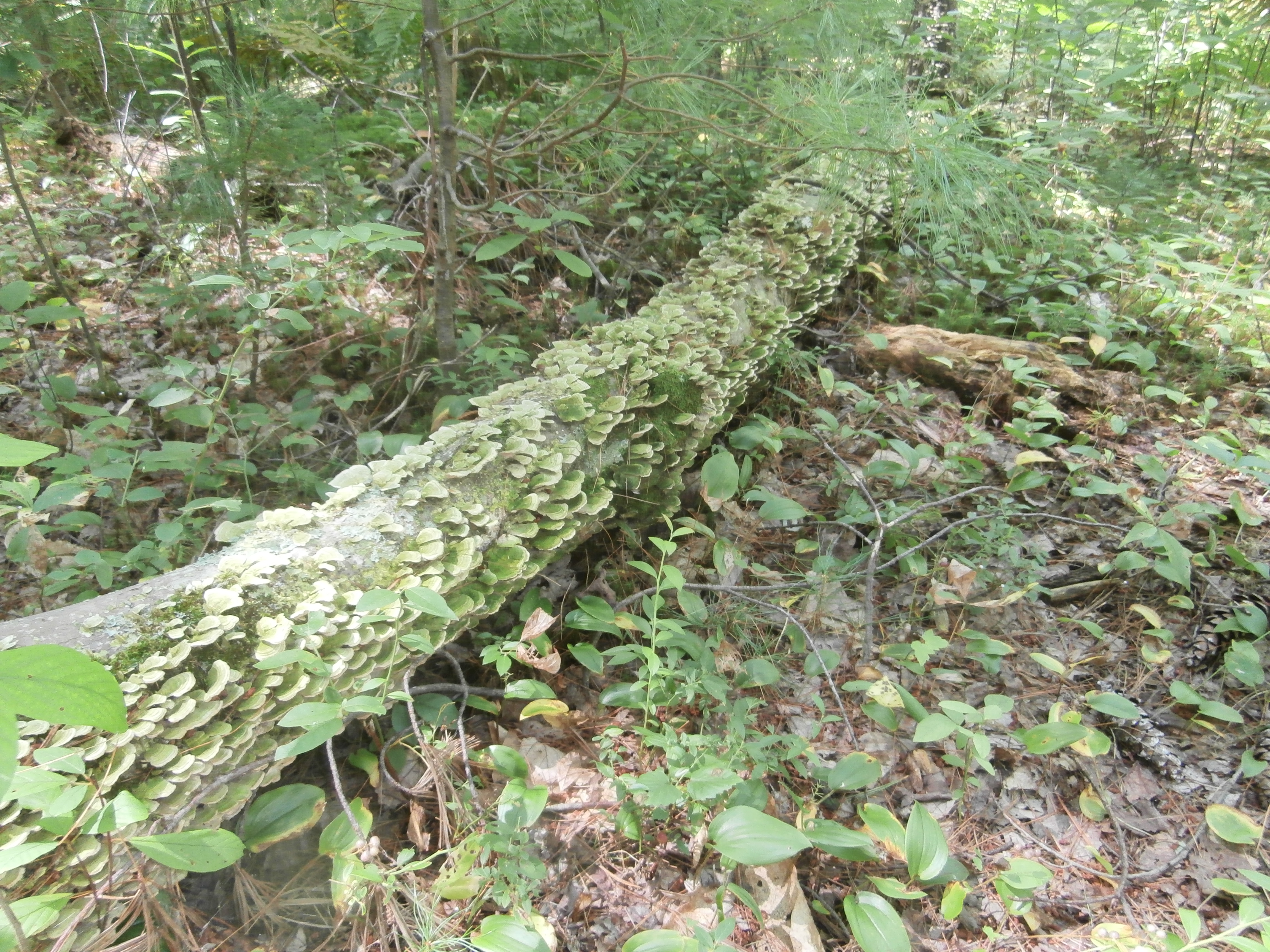
Photos include the Hapgood Wright Town Forest, Joe Pye Weed, an Eastern Tiger Swallowtail, a log like a scaly snake, and various fungi indicating mysteries beneath the surface.

hapgood-wright-town-forest

scaly-snake-log

joe-pye-weed

10-fott-weed-and-swallowtail

fungus

lonely-mushroom

something-is-below-the-surface

Read Full Post »

Building energy savings into school design means more money for education.

At Yes! Magazine, Erin L. McCoy describes what planners did for the rural Richardsville Elementary School near Bowling Green, Kentucky.

“When Richardsville opened its doors in fall 2010, it was the first net zero school in the nation, meaning that the school produces more energy on-site than it uses in a year.

“Solar tubes piping sunlight directly into classrooms eliminate much of the school’s demand for electric light, while a combination of geothermal and solar power cut down on the rest of the energy bill. Concrete floors treated with a soy-based stain don’t need buffing. The kitchen, which in most schools contributes to 20 percent of the energy bill, houses a combi-oven that cooks healthier meals and eliminates frying. This means an exhaust fan doesn’t pipe the school’s temperature-controlled air to the outdoors all day long.

“Meanwhile, ‘green screens’ in the front hall track the school’s energy usage so kids can see the impact of turning off a light in real time.

“These and other innovations make Richardsville better than net zero. It actually earns about $2,000 a month selling excess energy to the Tennessee Valley Authority. …

“Three factors are essential to making a green school work: First, you need the participation of the community and the local power company; second, you can’t forget that a school is a dynamic learning environment; and third, you need to speak the language of money.

“Since the economic recession began in 2008, school districts have suffered. Local tax bases were shaken as property values plummeted, and states have cut back on funding to districts, which were pushed to cut funds wherever they were able. Addressing energy use made a lot of financial sense.”

More.

Photograph: Michael Heinz/The Journal & Courier/AP/File
Students gather on the first day of school at Wyandotte Elementary School near Lafayette, Ind., in 2011. Wyandotte is one of many US schools that have made cutting energy use a priority.


Read Full Post »

On Saturday we watched the documentary Urbanized, about urban planning.

Although there were many discouraging notes (Mumbai slums, Beijing smog, destructive construction in Stuttgart), there were enough positive ones to give hope.

I liked the grassroots gardening efforts in Detroit, pedestrian/bike paths in Bogota (while cars were relegated to mud), miraculous transformations of aging infrastructure (the High Line in Manhattan), lighted paths in Cape Town, and bicycle commuting in Copenhagen.

The point was made that walkability (one of my favorite topics, as readers know) and similar quality-of-life improvements in cities can be hugely beneficial to the planet just because cities are so big and changes there affect so many people.

Doug Foy, who helped get Boston Harbor cleaned up and now consults with New York City’s Mayor Bloomberg, has spoken at my workplace a few times. He likes to talk about how New York avoided buying a whole new water supply simply by partnering with plumbers unions to get standard toilets gradually replaced with low-flush toilets.

Read Full Post »

Planetizen’s Brent Toderian wrote a while back that he attended a book party in Vancouver where Simon Fraser University City Program Director Gordon Price asked “each member of the crowd to state an urban design decision that ‘they loved.’ …

“When it came to my turn, my answer took a big picture and perhaps surprising approach, depending on your definition of urban design. In Vancouver, a city often referred to as ‘a city by design,’ the most important urban design decision we ever made, the decision I loved most, is actually usually referred to as a transportation decision.

“In 1997, the city approved its first influential Transportation Plan.

“It was a game-changer for our city-making model in many ways, most notably in its decision to prioritize the ways we get around, rather than balance them. The active, healthy and green ways of getting around were ranked highest – first walking, our top priority, then biking, and then transit, in that order. The prioritization then went on to goods movement for the purposes of business support and economic development, and lastly, the private vehicle. …

“If you’re a driver who is worried about a ‘war on the car,’ remember this — our model of city building understands the ‘Law of Congestion’ and proves that when you build a multimodal city, it makes getting around better and easier for every mode of transportation, including the car. It makes our city work better in every way.”

Read Toderian’s whole Planetizen post, here.

Photo: Vancouver.ca

Read Full Post »

Happy President’s Day! Why are you working?

​According to Mother Jones, economist David Rosnick has “found that dialing back the amount of time the average person works by 0.5 percent per year would mean a significant reduction in greenhouse gas emissions. If you work 40 hours a week, that would mean shaving about 12 minutes off the average work week per year. Working one minute less per month seems pretty doable. Basically, we’re using a whole lot more of everything when we’re working – electricity, gasoline, heating, air conditioning, etc. Leisure requires less greenhouse-gas-producing activity.”

I forget were I found this story first, but you can read more at Mother Jones, here.

Photograph: http://yasmincolemanportraits.wordpress.com/
“Lazy Bones, sleeping in the shade. How you ‘spect to get your corn meal made?”
(Hoagy Carmichael)

Read Full Post »

Cathryn J. Prince has a story in the Christian Science Monitor about a research ecologist who thinks we can have our cake and eat it too: that is, have a strong economy and a sustainable future.

Prince writes, “As head of the conservation biology department at Antioch University New England in Keene, NH, [Tom] Wessels isn’t against chopping down trees or clearing land to farm. He just wants to see more people embrace sustainable forest and land management practices.

“Wessels, trained as a research ecologist, says economics plays as much a role in protecting the environment as does saving energy. Think how the adoption of fair trade principles for growing and selling coffee have changed the economics of that industry. Forests can benefit in the same way.

“ ‘Adam Smith, the father of modern economic theory, wrote about this in Wealth of Nations,’ Wessels says. ‘People will act out of self-interest, but they can support each other doing it. …

“Market forces can help to conserve forests and farmlands, says Wessels, who also serves as chair of the Vermont-based Center for Whole Communities. …

“ ‘We are incredibly frivolous about our energy use,’ Wessels says. ‘Any organism or population that is energy wasteful gets selected out of the system.” Charles Darwin explained this when he wrote about survival of the fittest, he says. Survival of the fittest also means survival of the most adaptable, and the most energy efficient, he says. …

“Partnering with more than 400 organizations in 47 states, Whole Communities aims to help create communities where people rely on each other for their food and other needs.

“For example, Wessels would like to see Detroit become a different kind of urban jungle. The city has lost about 50 percent of its population since the late 1980s. Empty lots abound. But now community gardens have begun to fill these open tracts with food crops. The Detroit Food Policy Council and the city government want to make Detroit food secure by 2020 – meaning that everyone will have access to sufficient, safe, and nutritious food.

“ ‘A lot of our focus is around food security,’ Wessels says. ‘Detroit will become a model for other urban areas.’ ” More here.

Photograph: Cathryn J. Prince

Read Full Post »

Not long ago, I listened to a certain “Living on Earth” radio broadcast with amazement. A woman was explaining how she made up her mind to live without plastics. She did not make the effort sound easy, but she did make me think of ways I might cut back.

The “Living on Earth” account begins,”We live in a plastic-filled world. It’s used in almost everything, from cars to chewing gum to prescription drug bottles. Five years ago, Beth Terry decided to stop consuming plastic and she’s survived to tell the tale. Host Bruce Gellerman talks with Terry about her new book, ‘Plastic Free: How I Kicked the Plastic Habit and How You Can Too.’ ”

Terry tells the host, “Five years ago, almost to the day, I stumbled across an article about the plastic pollution problem in the ocean. And what completely blew my mind, and broke my heart, was this photo I saw of a dead albatross chick on Midway Island, thousands of miles from civilization — halfway between the United States and Japan. And it was just the carcass; it was full of plastic pieces. Like the plastic that I used on an everyday basis — things like bottle caps, things that didn’t come from the middle of the Pacific Ocean — they came from us. I just had to change. …

“I didn’t commit to stop using the plastic I already had, first of all, and I don’t recommend that anybody go through their house and purge the plastic and throw it away, because that’s just so wasteful, I think. But when my computer broke and it couldn’t be fixed — my first step is always to try and fix things and make them last as long as possible — but, when it couldn’t be fixed, I looked on Craig’s List and I found a secondhand computer.”

My own worry about plastics is how unstable the components are and how chemicals may escape into the air we breathe and the water we drink. When plastics are heated, as in a microwave, they can be dangerous. Please use ceramic containers for warming food in your — er — plastic microwave.

Read more of Terry’s alternatives to buying new plastics at “Living on Earth.”

Photograph: Beth Terry, with the plastic she collected in the first half of 2007.

Read Full Post »

Living on Earth, a radio show based in Somerville, Massachusetts, and distributed by Public Radio International, recently did a story on East Africa and the worst drought in 60 years. Bobby Bascomb interviewed musicians who decided to do something about it, letting their voices be heard in the way they know best.

They call themselves the Caravan of Hope, says Bascomb. “More than 25 bands from 11 different African nations are traveling across the continent to raise awareness about climate change … as international climate talks begin in Durban, South Africa.”

Singer Angella Katatumba of Uganda explains, “We use our voices to get people fired up and educate people about climate change in Africa. Uganda usually has an amazing climate. It’s usually warm and just perfect. These days, when it’s hot it’s way too hot. When it’s cold it’s way too cold. When it’s wet, it’s storming. We’re seeing things like landslides, which we’ve never had before.” So she’s taking her concern on the road. Read more here.

Read Full Post »

I was reading about the latest enthusiastic group of LEAF interns in the Block Island Times tonight and decided to look up more information on the program.

The Leaders in Environmental Action for the Future (LEAF) program is an initiative started by the Nature Conservancy (TNC) 17 years ago. According to the TNC website, it “provides paid summer internships for high school students and helps educators from environmental high schools share best practices and scientific resources. The long-term goal of LEAF is to support more than 30 environmental high schools across the country, ultimately serving over 20,000 students.”

The Block Island Times notes that this is the third year of the island’s participation. The three girls who are currently interning have come with their mentor come from Atlanta. Intern Niniola Mark tells the newspaper, “This is my first time in New England, and I also saw the ocean for the very first time.” The article doesn’t say what high school the girls attend, but the only one in Georgia that I see on the TNC site is the Arabia Mountain High School.

What fun to go to an environmental high school!

Read Full Post »

« Newer Posts