Feeds:
Posts
Comments

Posts Tagged ‘mosaic’

Photo: FoxyDonuts.
Seattle is making a game of loving rats.

Gotta love the kooky things people come up with. Today’s story is about people in the state of Washington who’ve decided there is a patron saint of rats. They call him St. Rat.

Nathalie Graham writes at the Stranger, “Heat waves shimmer along Pine Street. A rancid, somehow warm fishy smell wafts from Momiji’s dumpster, which is baking in the hot sun on 12th Avenue. The crumb rubber in Bobby Morris Playfield’s astroturf emits its own corona of heat, absorbing the sun’s rays. …

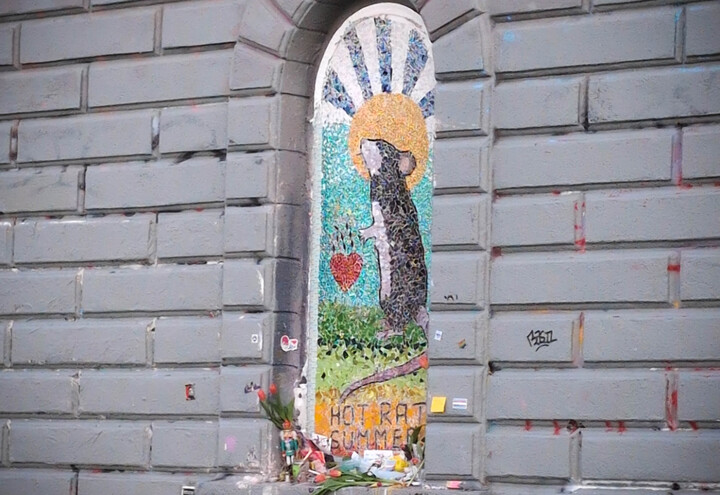
“Nearby, genderqueer youths balance on the concrete lip of the Cal Anderson Gatehouse scrubbing Hot Rat Summer, a pseudo-famous, pseudo-religious guerrilla mosaic of a rat with a halo. …

“Hot Rat Summer features St. Rat, a kind of patron saint for those at the bottom of the societal heap. … They leave offerings of doodles, flowers, and snacks at St. Rat’s feet. They protect the art and the saint within it.

“Last month, City Hall decided to protect Hot Rat Summer from bureaucracy, but that has not kept it safe from taggers, who’ve consistently spraypainted it. Ten days ago, it was a wash of black. …

“The taggers may not see the value of St. Rat, but the art and theology professors at Seattle University who spoke to the Stranger certainly did. They gave a few hot takes on this venerable rat.  

“Ken Allen, an associate professor of Art History at Seattle University, strolled over to Hot Rat Summer to analyze it in person. For the scholar of West Coast art in the mid-20th century, the rat’s saintly halo evoked the Beatnik era and artist Joan Brown, part of a loose, bohemian artist collective in the mid-50s called the Rat Bastard Protective Association

“These bastards ‘often used urban detritus in their assemblage and collage work,’ Allan wrote in an email. Brown, herself, often featured animals, including rats, ‘in a similarly dignified if not quite saintly way as in the Rat Summer piece.’ Take her various portraits of weird cats or The Bride, a painting of a beautiful cat in a wedding dress with a leashed pet rat (the groom?). Or the less sanctified Fur Rat, a rat sculpture made with chicken-wire and a raccoon fur coat.  

“ ‘They would have admired the underground spirit of the anonymous artist of Rat Summer, no doubt,’ he continued. 

“As would Beatnik writers like Jack Kerouac, who ‘idealized the poor and oppressed.’ …

“Dr. Kristin Doll, adjunct professor in Seattle University’s Department of Theology and Religious Studies, meditated quite a bit on the ‘Saint Rat’ figure central to Hot Rat Summer. 

“Doll wrote in an email that she couldn’t attribute any intentional religious metaphors to the artist(s) because she did not know them, but says the work is full of symbols with a clear religious history that make for a ‘clever twist on tradition.’ She loved it. 

“ ‘The creators of Hot Rat Summer are certainly creative, humorous, and they have injected a serious topic (protection of trans people and their rights) with tongue-in-cheek versions of traditional religious themes,’ she wrote. …

“Mosaics are common in religious art, Doll wrote, especially in the Eastern Orthodox tradition and in the Byzantine empire, which popularized the style. …

“St. Rat is not a saint. Cannonization is a lengthy, posthumous process analyzing a saint’s life for piety and holiness, plus a series of documented miracles. We don’t know if St. Rat is based on a real rat, if that real rat is dead or living. … This makes analyzing holiness hard. 

“And, Doll points out, the Vatican formalized the process in the 12th century to prevent situations exactly like Saint Rat, or, as she explained, ‘the rise of a popular cult based on a figure that may not meet the Church’s standards of holiness.’ Worshippers of Saint Guinefort, a greyhound who became a folk saint in 13th century France, know what she’s talking about.  

“Anyone who has been to Cal Anderson has seen the dog worshippers. Rats are not so well loved. We’re quicker to associate rats with garbage, plague, and excellent French cooking than we are to associate them with holiness. ‘A rat is a subversive image that challenges traditional notions of sanctity,’ Doll wrote.”

More at the Stranger, here, and on Instagram. Fun pictures at both sites.

Read Full Post »

Photo: Reuters.
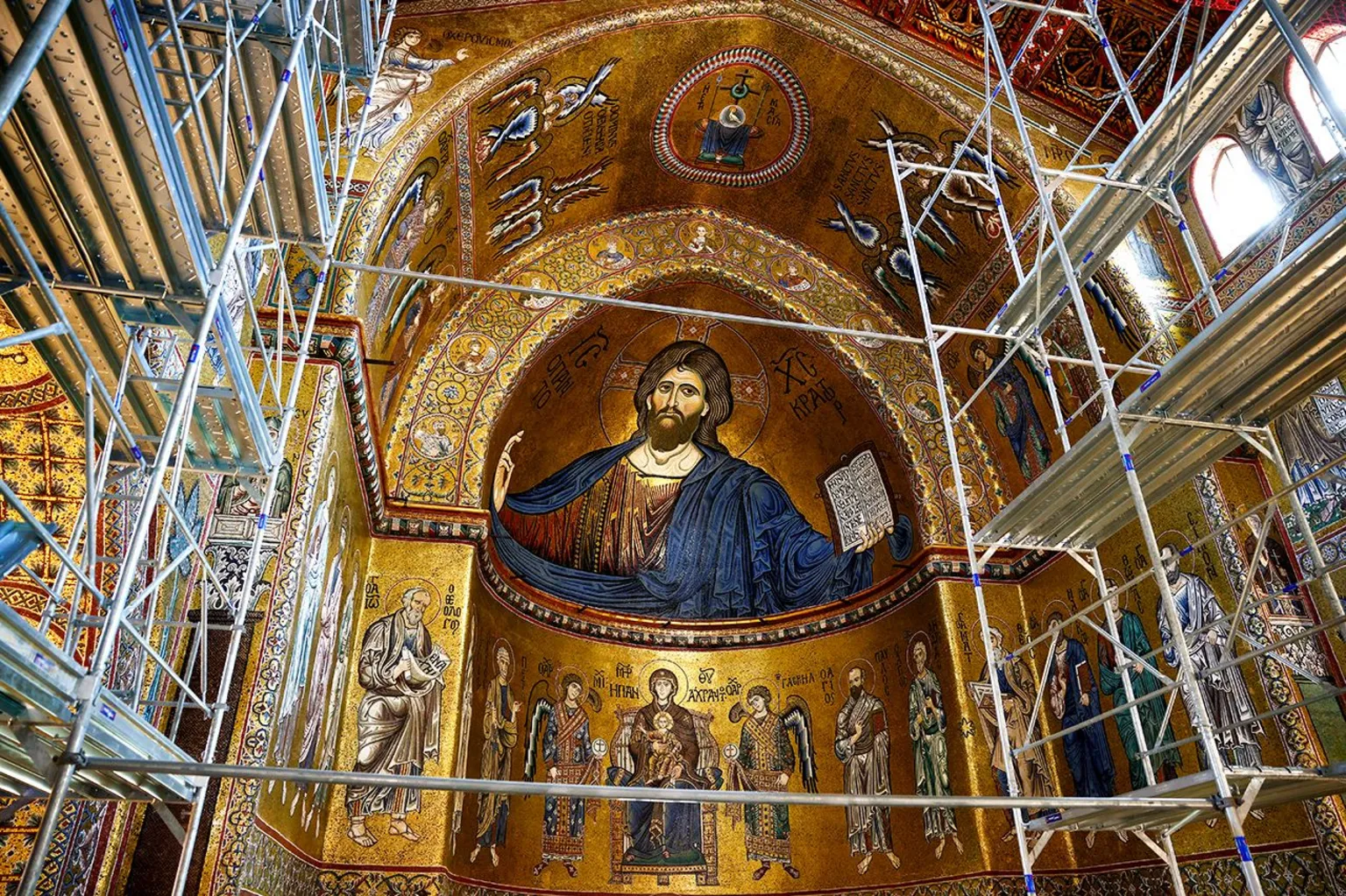
The Monreale cathedral was declared a Unesco World Heritage Site in 2015, and has recently undergone extensive restoration.

Some organized religions eschew signs of wealth and pomp. For others, such things emphasize the value they put on their faith. I always like hearing about the individual stonemasons who gave their heart and soul to carving small corners of the great cathedrals, but I have mixed feelings about covering churches in gold, however beautiful. I was not part of the fundraising for my church’s dome, which one member paid to gild, covering the sky-blue paint.

All to say that an extraordinary amount of gold is now drawing tourists to a cathedral in Sicily, a UNESCO World Heritage site.

The BBC’s Sara Monetta writes, “On a hill overlooking the city of Palermo, in Sicily, sits a lesser-known gem of Italian art: the cathedral of Monreale. Built in the 12th century under Norman rule, it boasts Italy’s largest Byzantine-style mosaics, second in the world only to those of Hagia Sophia in Istanbul.

“Now, this Unesco World Heritage site has undergone an extensive restoration to bring it back to its former glory. The Monreale mosaics were meant to impress, humble and inspire the visitor who walked down the central nave, following the fashion of Constantinople, the capital of the surviving Roman empire in the east.

“They span over [69,000 square feet] and contain about [4.6 pounds] of solid gold. …

“Local experts from the Italian Ministry of Culture led a series of interventions, starting with the removal of a thick layer of dust that had accumulated on the mosaics over the years. Then they repaired some of the tiles that had lost their enamel and gold leaf, making them look like black spots from down below. Finally, they intervened in the areas where the tiles were peeling off the wall and secured them.

“Working on the mosaics was a challenge and a big responsibility, says Father Nicola Gaglio. He has been a priest here for 17 years and has followed the restoration closely, not unlike an apprehensive dad.

” ‘The team approached this work almost on their tiptoes,’ he tells me. ‘At times, there were some unforeseen issues and they had to pause the operations while they found a solution. For example, when they got to the ceiling, they realized that in the past it had been covered with a layer of varnish that had turned yellowish. They had to peel it off, quite literally, like cling film.’

“The mosaics were last partly restored in 1978 , but this time the intervention had a much wider scope and it included replacing the old lighting system.

” ‘There was a very old system. The light was low, the energy costs were through the roof and in no way it made justice to the beauty of the mosaics,’ says Matteo Cundari. He’s the Country Manager of Zumtobel, the firm that was tasked with installing the new lights. …

“I ask Fr Gaglio what it was like to see the scaffolding finally come off and the mosaics shine in their new light. He laughs and shrugs.

” ‘When you see it, you’re overwhelmed with awe and you can’t really think of anything. It’s pure beauty,’ he says. ‘It’s a responsibility to be the keeper of such world heritage. This world needs beauty, because it reminds us of what’s good in humanity, of what it means to be men and women.’ “

More at the BBC, here. No firewall.

Read Full Post »

Photo: Alamy.
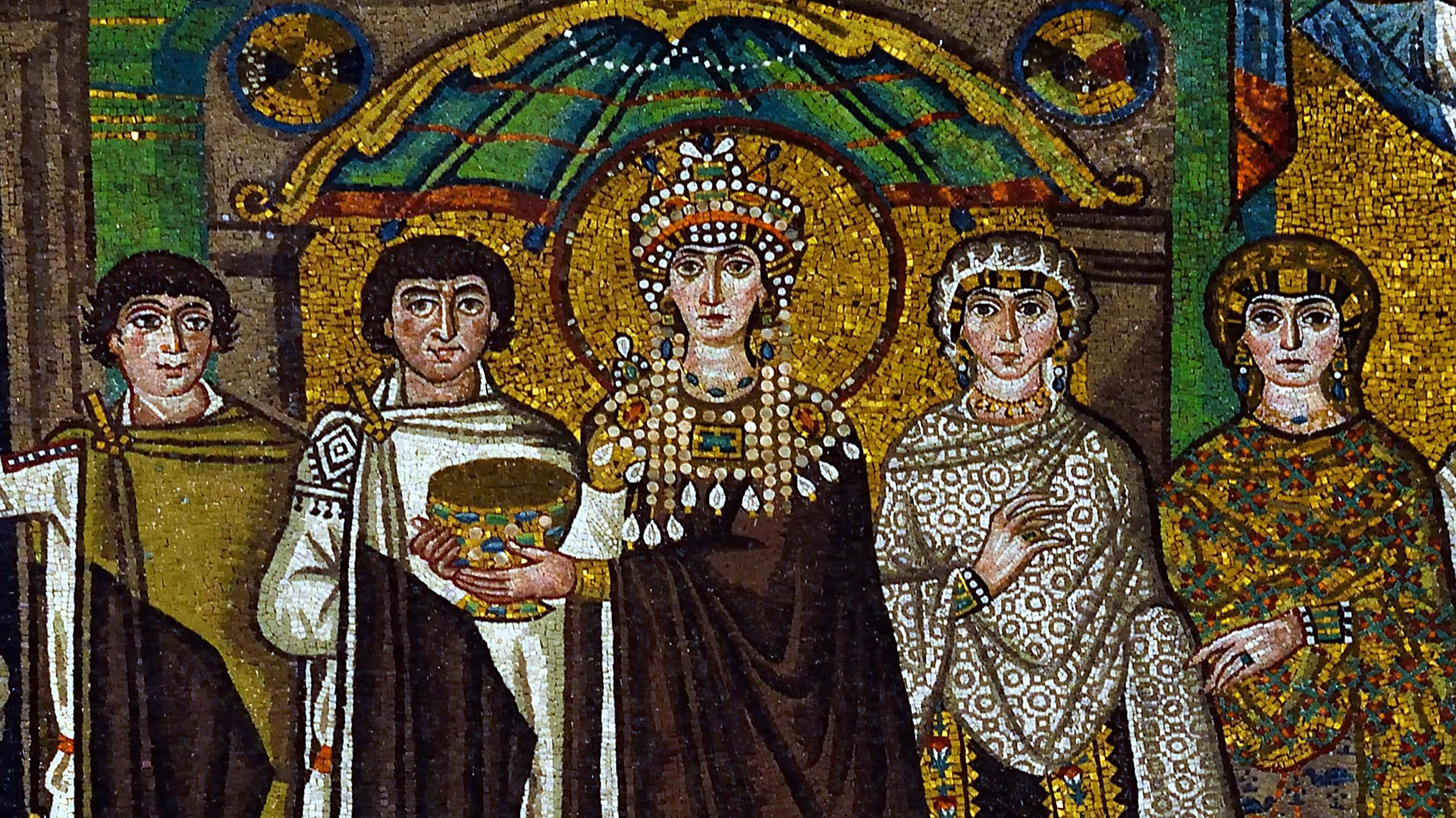
A mosaic of the Byzantine empress Theodora from 547 AD. The purple color was once considered more precious than gold. (It seems a bit brown in photos.)

Today’s story about a valuable pigment that comes from mollusks made me think of “wampum,” the jewelry/currency made from quahog shells by indigenous people in North America. The difference is that to get this royal purple, it was the insides of snails that were used.

Zaria Gorvett reports at the BBC, “For millennia, Tyrian purple was the most valuable color on the planet. Then the recipe to make it was lost. By piecing together ancient clues, could one man bring it back?

“At first, they just looked like stains. It was 2002 at the site of Qatna – a ruined palace at the edge of the Syrian desert, on the shores of a long-vanished lake. Over three millennia after it was abandoned, a team of archaeologists had been granted permission to investigate – and they were on the hunt for the royal tomb.

“After navigating through large hallways and narrow corridors, down crumbling steps, they came across a deep shaft. On one side were two identical statues guarding a sealed door: they had found it. Inside was a hoard of ancient wonders – 2,000 objects, including jewelery and a large golden hand. But there were also some intriguing dark patches on the ground. They sent a sample for testing – eventually separating out a vivid purple layer from the dust and muck.

“The researchers had uncovered one of the most legendary commodities in the ancient world. This precious product forged empires, felled kings, and cemented the power of generations of global rulers. The Egyptian Queen Cleopatra was so obsessed with it, she even used it for the sails of her boat, while some Roman emperors decreed that anyone caught wearing it – other than them – would be sentenced to death.  

“That invention was Tyrian purple, otherwise known as shellfish purple.

But though this noble pigment was the most expensive product in antiquity – worth more than three times its weight in gold, according to a Roman edict issued in 301 AD – no one living today knows how to make it.

“By the 15th Century, the elaborate recipes to extract and process the dye had been lost. But why did this alluring color disappear? And can it be resurrected?

“In a small garden hut in north-eastern Tunisia, just a short distance from what was once the Phoenician city of Carthage, one man has spent most of the last 16 years smashing up sea snails – attempting to coax their entrails into something resembling Tyrian purple. …

“Ancient authors are particular about the precise hue that was worthy of the name: a deep reddish-purple, like that of coagulated blood, tinged with black. Pliny the Elder described it as having a ‘shining appearance when held up to the light.’ …

“It was so central to the success of the Phoenicians it was named after their city-state Tyre, and they became known as the ‘purple people.’ … In 40 AD, the king of Mauretania was killed in a surprise assassination in Rome, ordered by the emperor. Despite being a friend to the Romans, the unfortunate royal had caused grave offense when he strode into an amphitheatre to watch a gladiatorial match wearing a purple robe. The jealous, insatiable lust that the color ignited was sometimes compared to a kind of madness. …

“Tyrian purple could be produced from the secretions of three species of sea snail, each of which made a different color: Hexaplex trunculus (bluish purple), Bolinus brandaris (reddish purple), and Stramonita haemastoma (red). …

“Accounts of how colorless snail slime was transformed into the dye of legends are vague, contradictory and sometimes obviously mistaken – Aristotle said the mucous glands came from the throat of a ‘purple fish.’ To complicate matters further, the dyeing industry was highly secretive – each manufacturer had their own recipe, and these complex, multi-step formulas were closely guarded. …

“The most detailed record comes from Pliny, who explained the process in the 1st Century AD. It went something like this: after isolating the mucous glands, they were salted and left to ferment for three days. Next came the cooking, which was done in tin or possibly lead pots on a ‘moderate’ heat. This continued until the whole mixture had been boiled down to a fraction of its original volume. On the tenth day, the dye was tested by dipping in some fabric – if it emerged stained with the desired shade, it was ready. 

“Given that each snail only contained the tiniest amount of mucous, it could take some 10,000 to make just a single gram of dye. Mounds of billions of discarded sea snail shells have been reported in areas where it was once manufactured. In fact, the production of Tyrian purple has been described as the first chemical industry – and this not only applies to the scale of the operations, but their exacting nature.”

More at the BBC, here.

Read Full Post »

Artist Tackles Potholes

Photo: Jim Bachor via CBS News.

If any of you were following this blog in 2015, you might have seen what a stealth artist was doing in Boston to highlight crumbling infrastructure. Check out that artist’s Lego patchwork here.

Today, a different artist is working on potholes — using mosaics, not Legos. And he’s not anonymous.

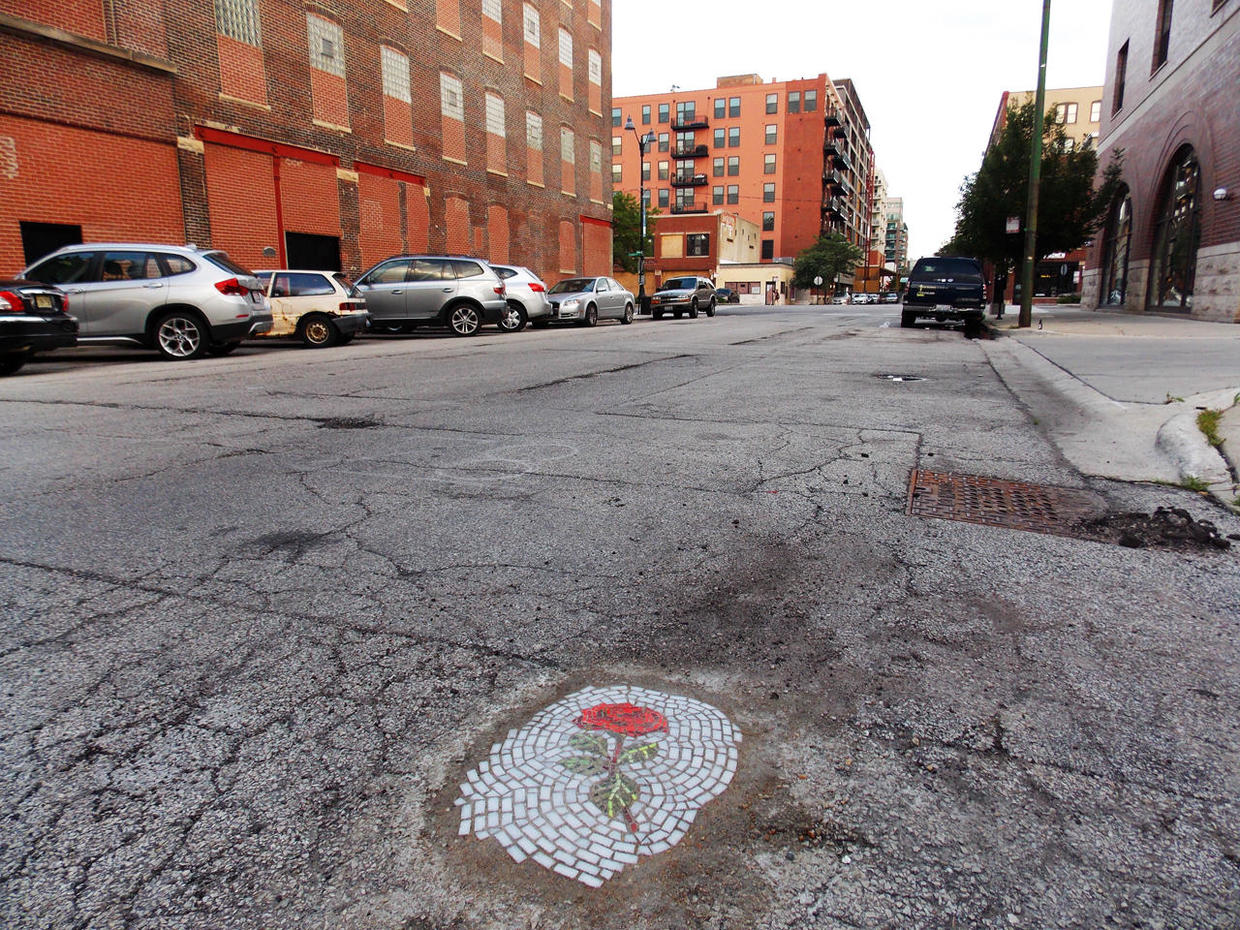
Cathy Free reports at the Washington Post, “Jim Bachor travels across the country filling potholes for a living. He doesn’t just fill the unsightly road gaps with cement, he actually turns them into art — and often, social commentary.

“Bachor uses hundreds of pieces of Italian glass and marble that he cuts to create the sometimes subversive mosaics, which he installs on the ground to beautify unsightly city streets. He doesn’t work with cities on the installations, he works rogue, and he places the mosaics himself.

Bachor began his pothole art in Chicago, where he lives, by installing the word ‘pothole’ in black and white marble in a road divot in 2013.

“ ‘People loved it and thought it was funny,’ he said. ‘Was it legal? I still don’t know. I decided to turn my hobby into a bit of a Robin Hood thing. If I had to ask for permission, I wouldn’t be doing this.’ …

“In D.C., Bachor was hired by the #RelistWolves Campaign, a privately-funded group that is working to get Northern Rocky Mountain wolves reclassified as an endangered species in an effort to get them the same protection as other gray wolves.

“Samantha Attwood, one of the group’s co-founders, said they decided to hire Bachor to fill several potholes with mosaics of wolves to help draw attention to their efforts. …

“He made the pieces earlier in his basement studio in Chicago, then selected the locations himself after asking a few of his Instagram followers in D.C. to narrow down the possibilities. Attwood said she was pleased to see the campaign take off in front of Solid State Books at the 600 H Street location.

“ ‘The store put up a display with books and information about relisting the wolves, and they made sure that Jim’s pothole didn’t get covered up by cars parking there,’ she said. …

“He diligently scouts before he decides on a work site for his art, which usually measures 18 inches by 24 inches.

“ ‘The perfect pothole is actually really hard to find,’ said Bachor. ‘It has to be on the edge of a road that isn’t too beat up, and people have to be able to see it from five or six feet away.’ …

“Bachor said he first became intrigued by mosaic art in the late 1990s during a trip to see the archaeological ruins of Pompeii, Italy.

“ ‘A guide pointed out a mosaic on the site and said the art looked the same as the artist intended 2,000 years ago because marble and glass don’t fade,’ he said. ‘It blew me away to think that an art form could endure for centuries after I was gone.’

“Bachor returned to his advertising job in Chicago and began dabbling in mosaics. When he was laid off from his job and decided to make a living as an artist, his inspiration came from an unlikely place.

“ ‘In 2013, the potholes in my neighborhood were particularly bad,’ Bachor said. … Bachor filled the pothole with cement and stuck a flat piece of artwork on the top, making his first in-ground art very meta with the word ‘pothole.’

“After that first project, Bachor said he decided to transform other ugly potholes in his neighborhood into asphalt masterpieces. …

“Bachor enjoyed turning the streets into a drive-over gallery and was soon installing mosaic hot dogs, Cupids and flowerpots. For some of the designs … he installed the phone numbers of car repair places he liked, which he considered a public service.”

More at the Post, here. There is one mosaic based on Edward Hopper’s “Nighthawks” and another showing Van Gogh’s “The Bedroom.” The “Dead Rat” mosaic made me laugh.

Read Full Post »

Photo: Ahmed Zakot.
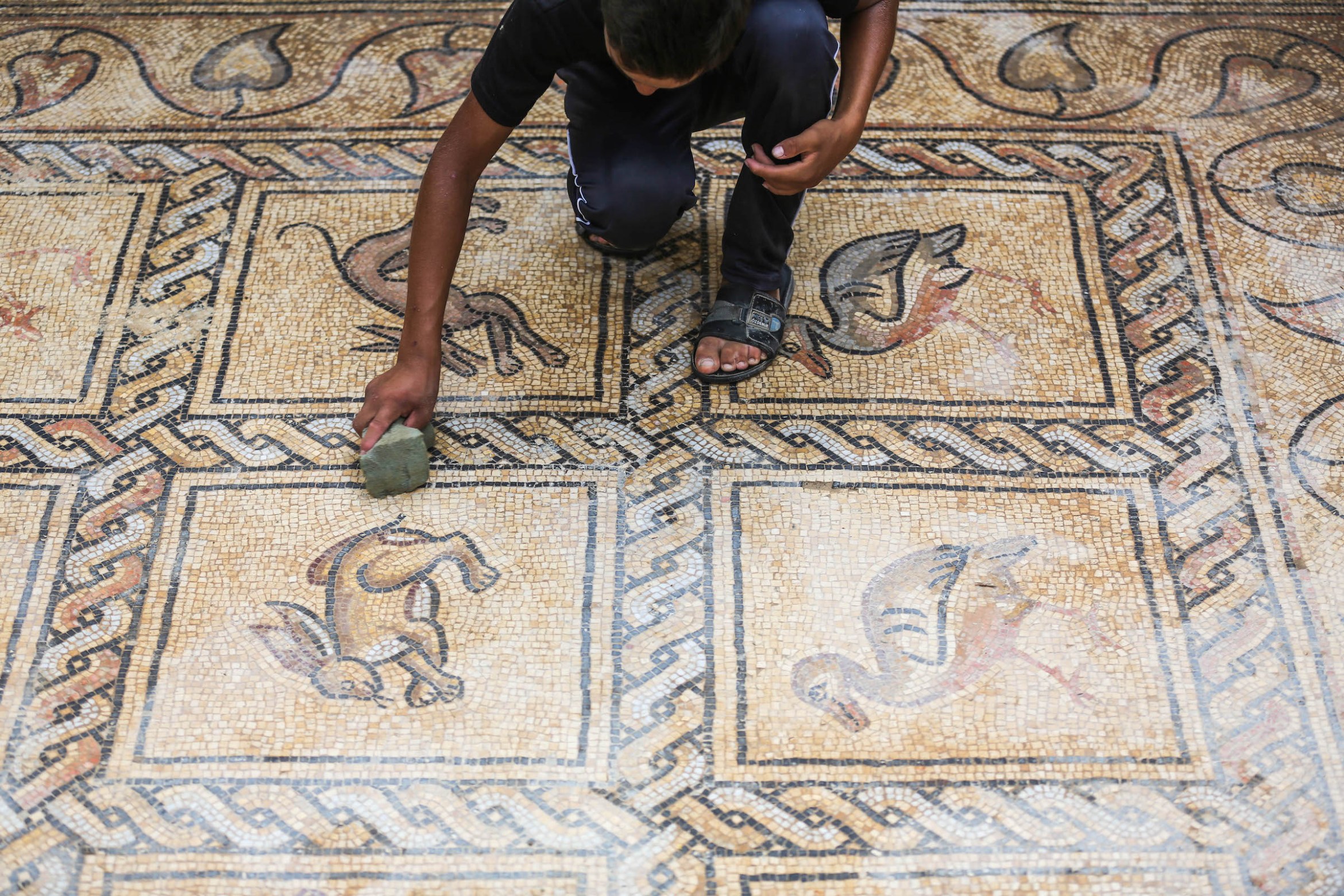
A Palestinian farmer unearthed a Byzantine floor mosaic beneath his olive grove.

We keep learning that beautiful discoveries can still be made, even in mundane settings. Perhaps you have discovered yellowed letters your parents wrote to each other when courting. Perhaps there was an antique bottle inside a wall when you renovated.

Such items can be exciting, but it’s hard to beat the discovery a farmer in today’s stumbled upon.

Elaine Velie reports at Hyperallergic, “Salman al-Nabahin, a farmer from Gaza’s Bureij refugee camp, was trying to plant new olive trees in his orchard but something underneath the soil was standing in his way. He investigated for three months, digging out the soil with his son until they unearthed a stunningly well-preserved Byzantine floor mosaic.

“Al-Nabahin told Reuters that he searched the internet to asses the mosaic’s origins. An archaeologist from the French Biblical and Archaeological School of Jerusalem, René Elter, later confirmed the work as a Byzantine mosaic, placing the mosaic between the fifth and seventh centuries CE. …

“ ‘Never have mosaic floors of this finesse, this precision in the graphics and richness of the colors been discovered in the Gaza Strip,’ Elter [told the Associated Press], adding that more research is needed to determine the work’s intended function.

“The Palestinian Ministry of Culture stated that investigation into the mosaic was still in its early stages and a team of national experts would partner with experts at the French Biblical and Archaeological School of Jerusalem to research the work.

“Gaza is situated on a thriving ancient trade route, and dozens of important archaeological discoveries have been uncovered there in the last few years. The recently revealed mosaic, however, sits less than a mile away from the Gaza-Israel barrier, which Elten said puts the discovery in ‘grave danger.’ …

“ ‘I see it as a treasure, dearer than a treasure,’ al-Nabahin told Reuters. ‘It isn’t personal, it belongs to every Palestinian.’ “

Sarah Kuta at the Smithsonian adds, “Now, archaeologists with the Palestinian Ministry of Tourism and Antiquities and the French Archaeology School are hard at work studying the flooring to learn more about its ‘secrets and civilization values,’ says the ministry in a press statement.

“The mosaic features 17 iconographies of birds and other animals depicted in bright colors. Archaeologists … don’t know whether the mosaic had religious or secular origins.

“The farmer has been covering the unearthed areas of the mosaic floor with tin sheets to protect them; so far, he’s dug up three separate sections, the widest measuring 6 feet by 9 feet, according to Fares Akram of the Associated Press. In total, the land covering the entire mosaic is about 5,400 square feet, and the mosaic itself measures about 250 square feet. Some parts of the mosaic appear to be damaged, likely from the roots of an old olive tree.

“ ‘These are the most beautiful mosaic floors discovered in Gaza, both in terms of the quality of the graphic representation and the complexity of the geometry,’ [Elter] tells the AP. …

“The Bureij refugee camp [is] located about half a mile from the border with Israel. Archaeologists and other experts are concerned about the mosaic’s future because of the ongoing Israeli-Palestinian conflict, as well as looting and a lack of funding for historical preservation.

“ ‘It is a spectacular find, especially as our knowledge of archaeology is sadly so spotty given circumstances there,’ Asa Eger, an archaeologist at the University of North Carolina at Greensboro, tells the Art Newspaper’s Hadani Ditmars. ‘Gaza was very important during the period of this mosaic and known for its burgeoning wine production exported across the Mediterranean.’ “

You’ll love the photos at Hyperallergic, here, and at Smithsonian, here. No firewalls.

Read Full Post »

Photo: Andy Chopping/MOLA.
This newly unearthed mosaic is thought to have adorned the floors of a Roman dining room. The spot where it stands is close to London Bridge.

There are still surprises to be found on Planet Earth. Sometimes right beneath your feet. In today’s story, it was a Roman mosaic buried below a parking lot. Wouldn’t you have liked to be the chap who first realized what was there? As often happens in archaeology, the mosaic was discovered in the process of prepping a site for new construction. Jeevan Ravindran had the story at CNN.

“A large area of well-preserved Roman mosaic — parts of it approximately 1,800 years old — has been uncovered in London near one of the city’s most popular landmarks. The mosaic is thought to have adorned the floors of a Roman dining room, and the spot where it stands is near the Shard — the capital’s tallest building, close to London Bridge.

“Archaeologists from the Museum of London Archaeology (MOLA) unearthed the mosaic earlier this month during an excavation ahead of building work due to take place on the site, which previously served as a car park.

“The find is the largest area of Roman mosaic to have been discovered in London in at least 50 years, according to a press release from MOLA.

” ‘It is a really, really special find,’ Sophie Jackson, MOLA’s director of developer services, told CNN Wednesday, adding that large Roman mosaics were not often built in London due to it being a ‘crowded’ city. …

“The dining room where the mosaic was found is thought to have been part of a Roman ‘mansio,’ or ‘upmarket “motel” offering accommodation, stabling, and dining facilities,’ the team said in the press release. The lavish decorations and size indicated only ‘high-ranking officers and their guests’ would have stayed there.

“The mosaic itself is [composed] of two panels, with the larger dating to the late 2nd or early 3rd century AD. However, the team spotted traces of an earlier mosaic underneath, which Jackson said an expert will now attempt to retrace and reconstruct.

“The larger panel is decorated with ‘large, colorful flowers surrounded by bands of intertwining strands’ and patterns including a Solomon’s knot (a looped motif). …

“As there is an ‘exact parallel’ to this design in a mosaic found in the German city of Trier, the team believes the same artists worked on both, suggesting a tradition of ‘traveling Roman artisans at work in London.’ …

“Near the spot where the mosaic was found, the team also found traces of ‘lavishly’ painted walls, terrazzo-style and mosaic floors, coins, jewelry and decorated bone hairpins, suggesting the area was occupied by wealthy inhabitants.

“Although the mosaic’s future is not yet decided, Jackson said it will likely go on public display. The archaeologists will now proceed to the final stage of the excavation, at a spot that has not previously been examined.”

Bet the folks behind the planned construction are feeling a little frustrated! More at CNN, here.

You may also like to read about the mosaics in Trier, a World Heritage site. Dr. Marcus Reuter, director of the Rheinisches Landesmuseum, says, “Most of the mosaics come from our own excavations in the region. Many impressive objects that point to the Roman city’s significance have been found in the former Roman Imperial Residence of Trier.” More from Germany here.

Read Full Post »

Photos: AFP/THOMAS COEX
Renovated mosaics and columns inside the Church of the Nativity in the occupied West Bank biblical city of Bethlehem.

Do you like mosaics? I relate to arts such as mosaics or collage because I love putting pieces of things together to make something new. As quilters do. And editors. And activists who change the world one by one.

This is a story from Bethlehem, in the Palestinian Territories, where restoration work has tapped the artistry of workers who can envision how small pieces together make a whole.

Clothilde Mraffko writes at Yahoo News, “Masked for centuries by the soot of candles and lately by scaffolding, the mosaics of Bethlehem’s Church of the Nativity have been restored. …

“Over the past 15 months, experts have cleaned and repaired surviving fragments of the 12th century masterworks, preserving 1,345 square feet (125 square metres) of what was once 21,528 square feet (2,000 square metres) of glittering gold and glass. The rest has been eaten away by wear, humidity, wars and earthquakes.

“Now the restored remains shine against the white walls above the heads of visitors to the church in the Israeli-occupied West Bank city of Bethlehem that marks the traditional birthplace of Jesus.

“Overlooking the nave are seven angels framed in gold who appear to have landed on a carpet of vivid green grass. …

” ‘These mosaics are made of gold leaf placed between two glass plates,’ Marcello Piacenti, who supervises the work on behalf of his Italian family restoration firm Piacenti, told AFP [Agence France-Presse]. ‘Only faces and limbs are drawn with small pieces of stone.’

“One of the partially destroyed angel figures was restored using different materials to the original so as not to mislead future archaeologists. [!]

“Ibrahim Abed Rabbo, a Palestinian Authority (PA) engineer said the transformation caused by the restoration is striking. ‘When you entered the church before, you could not even make out that there were mosaics, it was so black,’ he said.

“In a rarity for the period, the works were signed by the craftsmen responsible, Abed Rabbo said. …

“Father Asbed Balian is the senior cleric of the Armenian church at the basilica, where property rights are shared with the Roman Catholic and Greek Orthodox faiths. After seeing the completed restoration, he said, he was ‘stunned. … Spiritually, we feel more exalted.’ …

“When the Palestinian Authority began renovations in 2013, ‘the basilica was in danger,’ PA restoration consultant Afif Tweme said. …

” ‘It’s very special, because of the location,’ said Piacenti. ‘Sometimes I have to force them (workers) to leave’ at the end of the day.” More here.

Read Full Post »

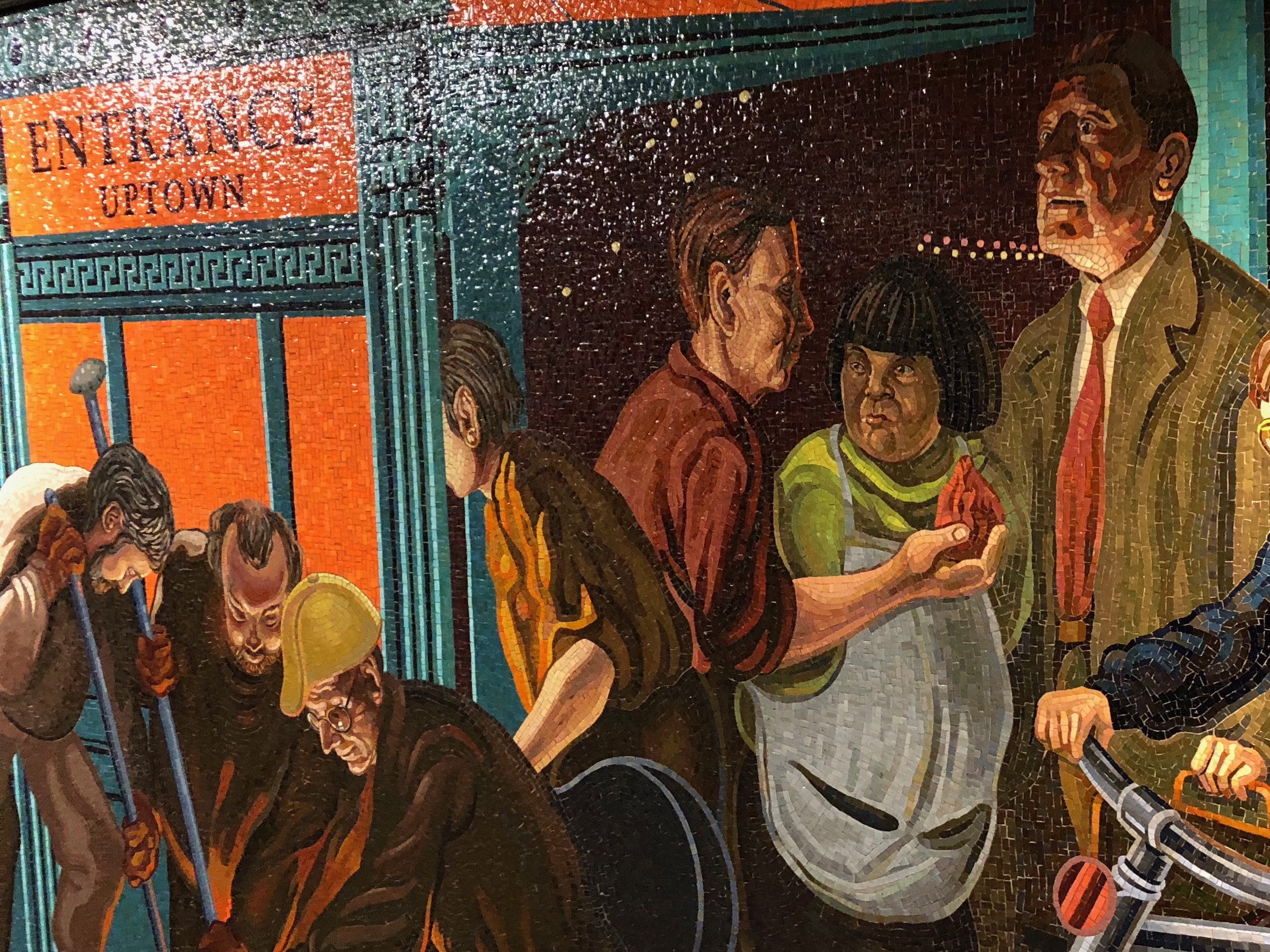
102318-photographing-subway-mosaic

Yesterday was beautiful in New York, and my sister was feeling fine, having been off chemo and radiation a month. New treatments start today.

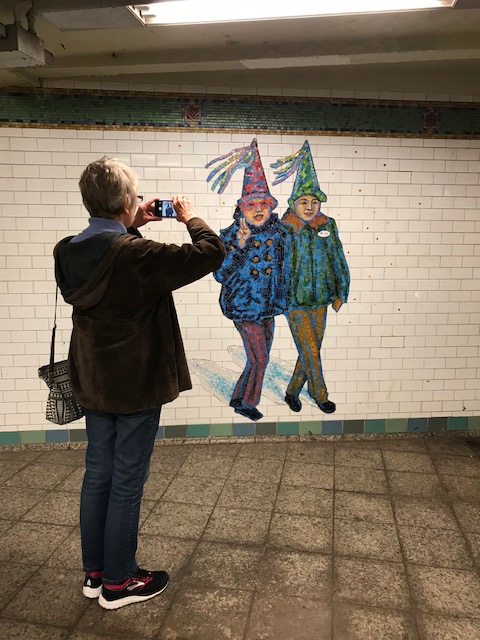
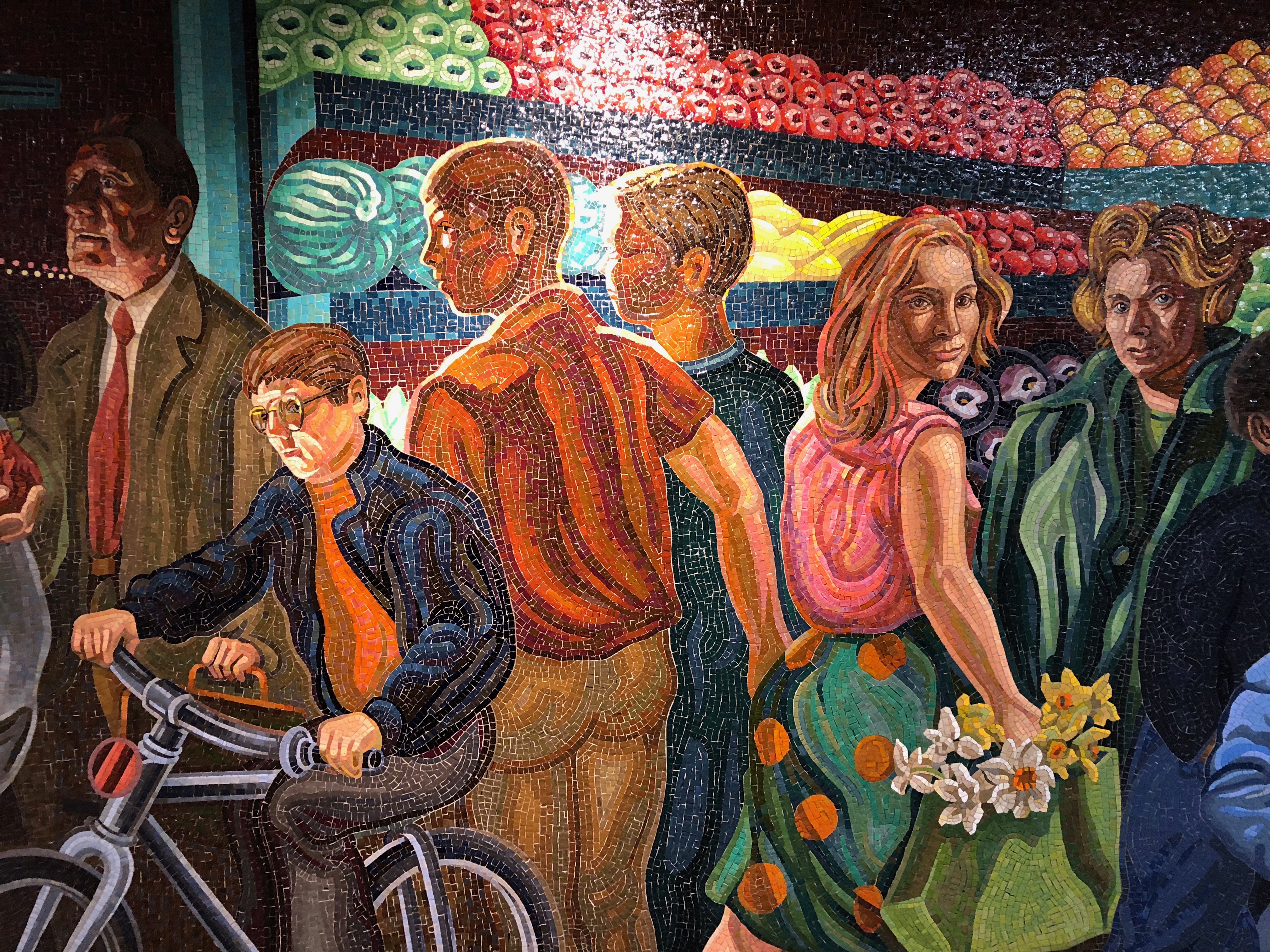
We took the subway from the Upper West Side down to Chelsea, which she says feels like a whole different city to her. We went to a very avant garde museum, walked around, met up with childhood friends, had tea at an indy bookstore, and admired several subway mosaics.

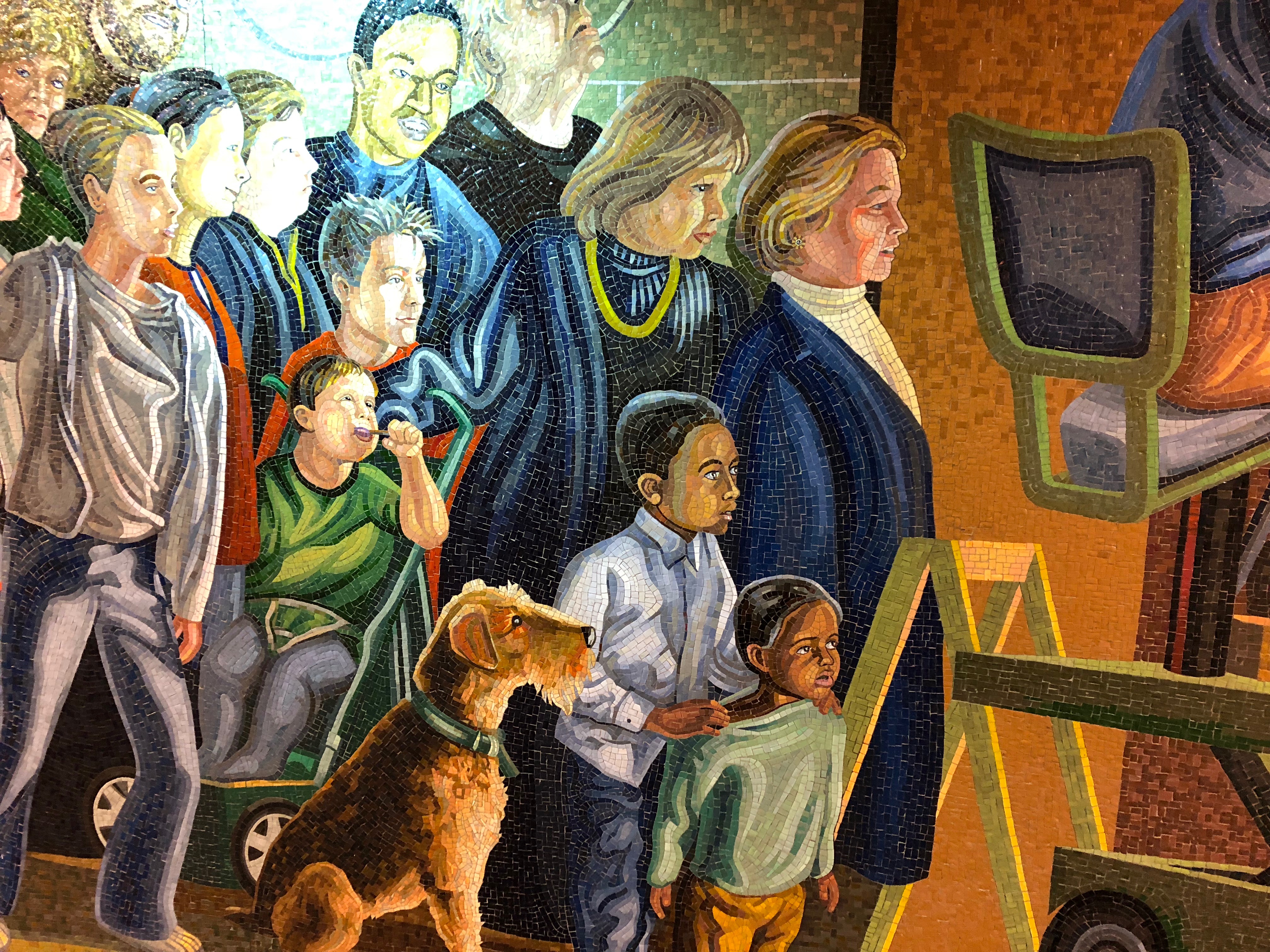
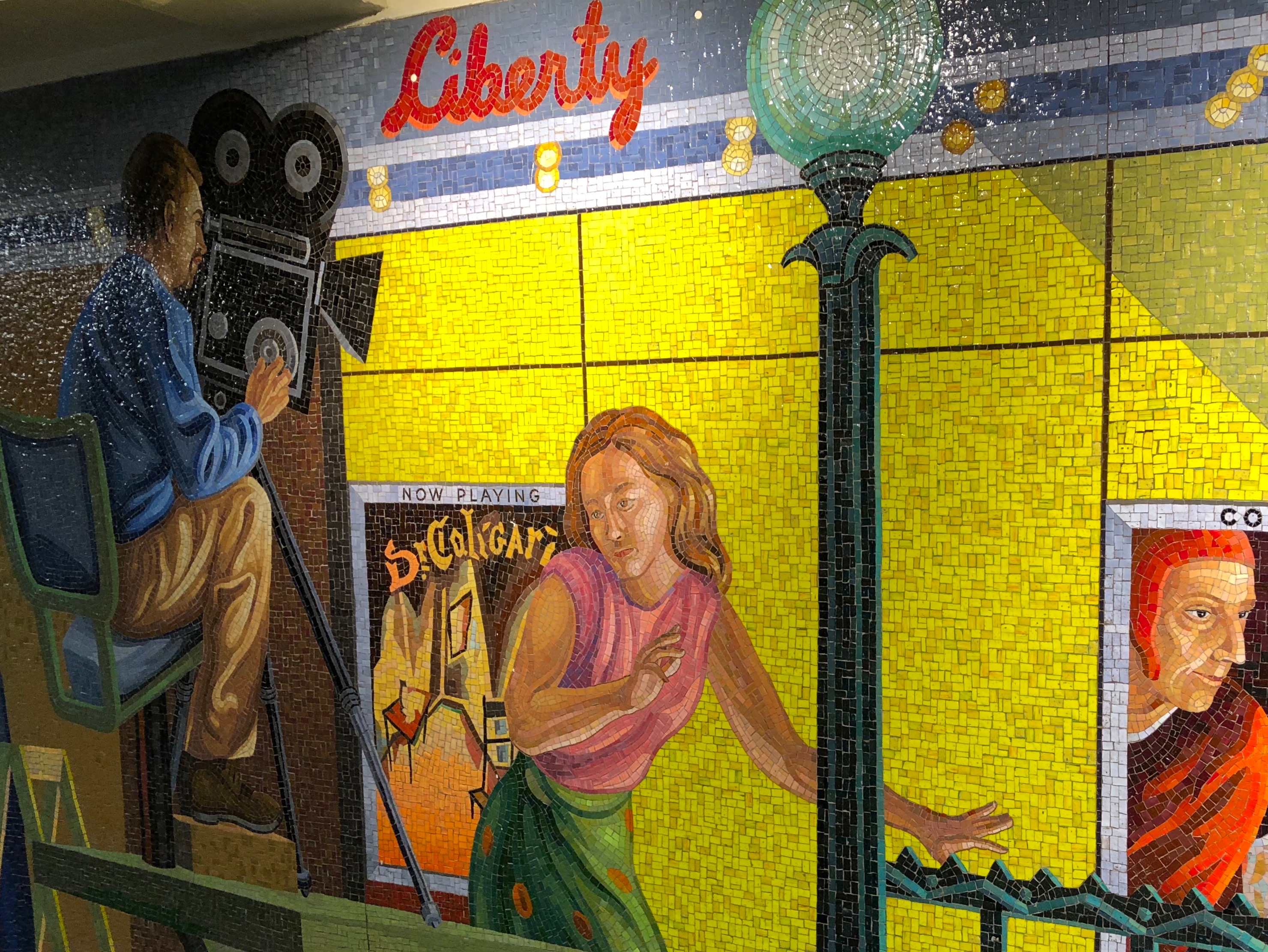
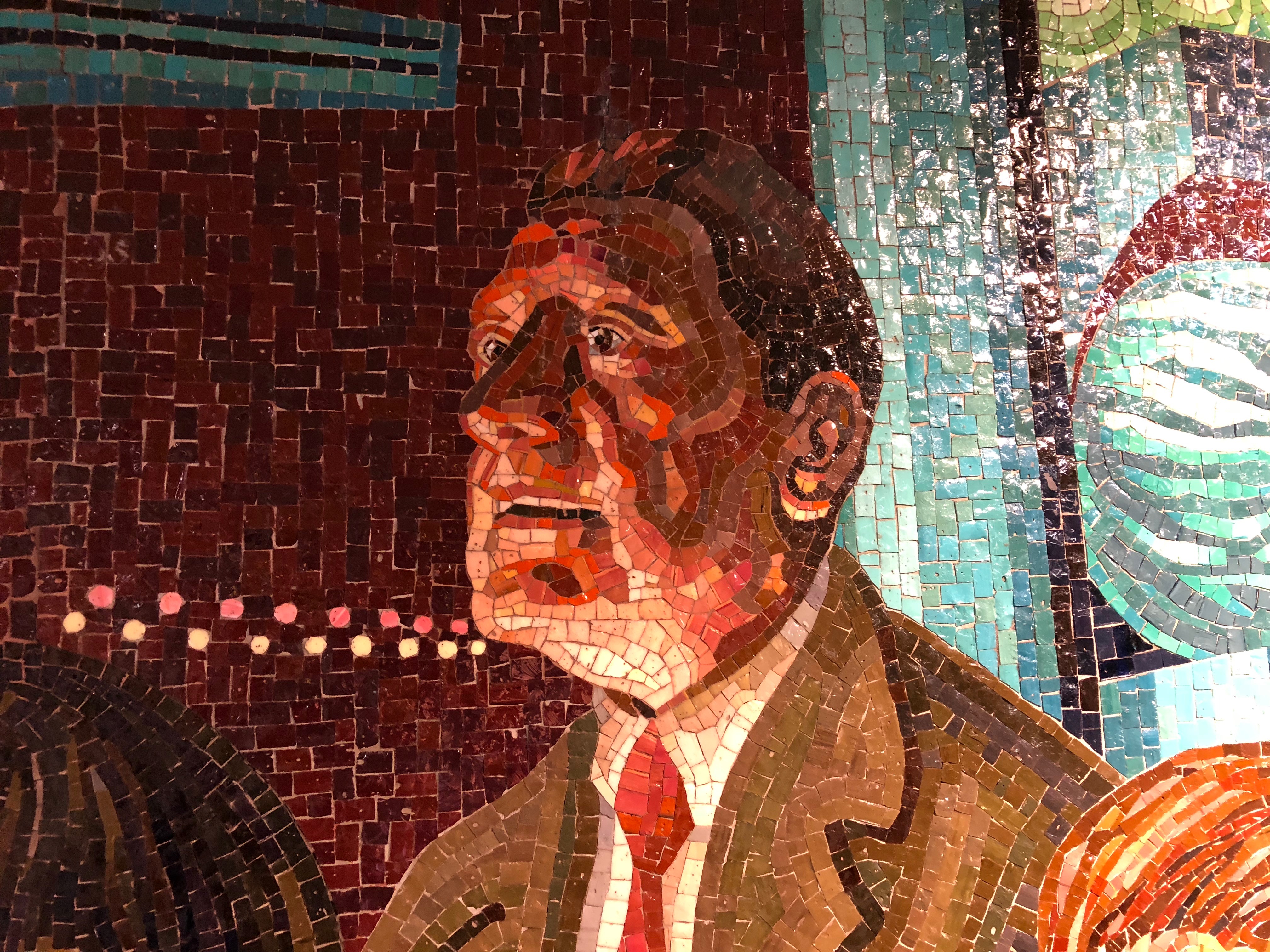
In the first photo below, a New York crowd is watching a cameraman who is making a movie of the woman in the second photo. Then there are several shots of a long city-life mural. I was especially struck by the man in the red tie, who seems to be riveted by a miracle that only he can see.

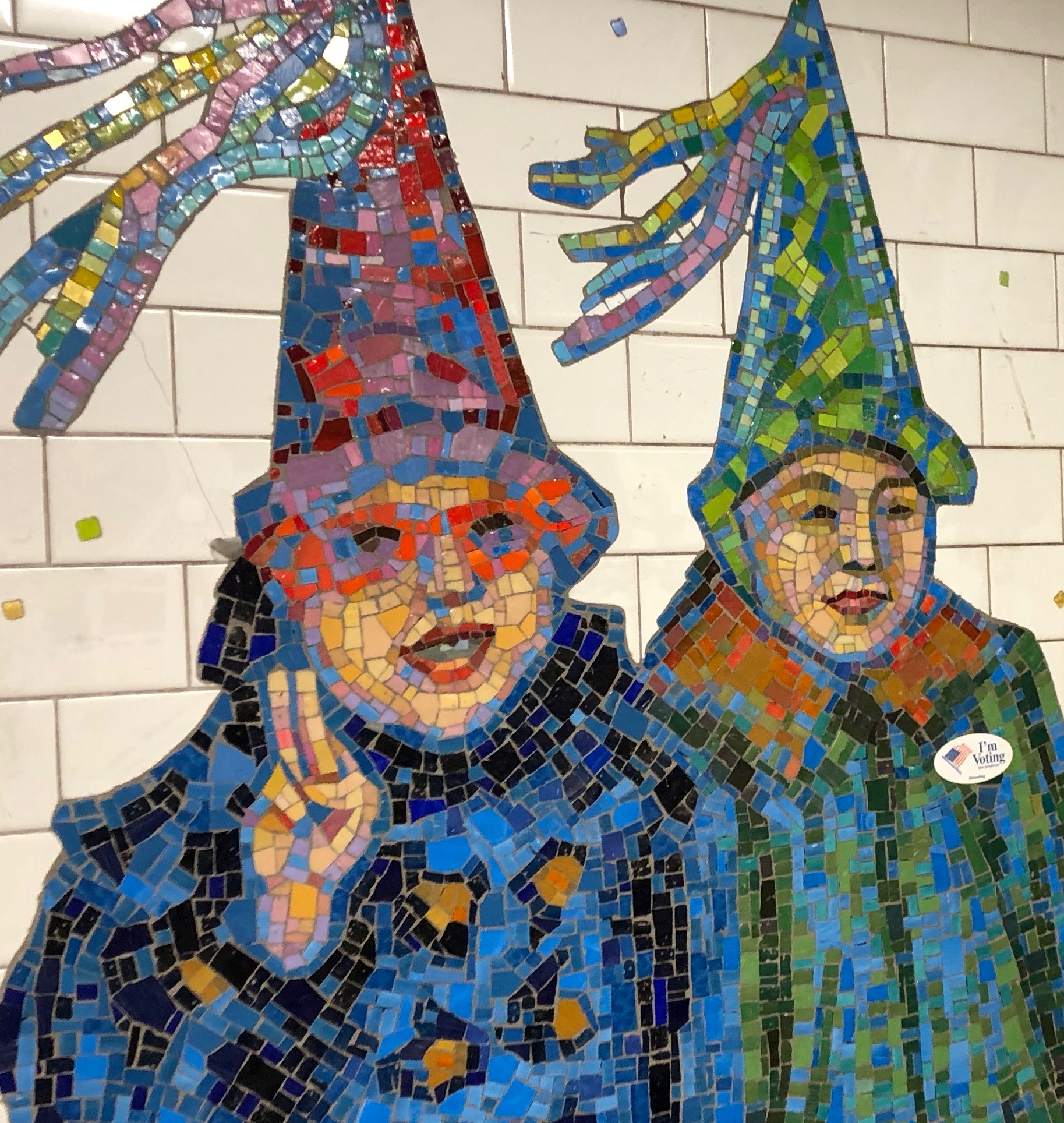
Next come New Year’s Eve revelers. The added sticker is a sign of how very eager New Yorkers are to vote right now, longing for a miracle.

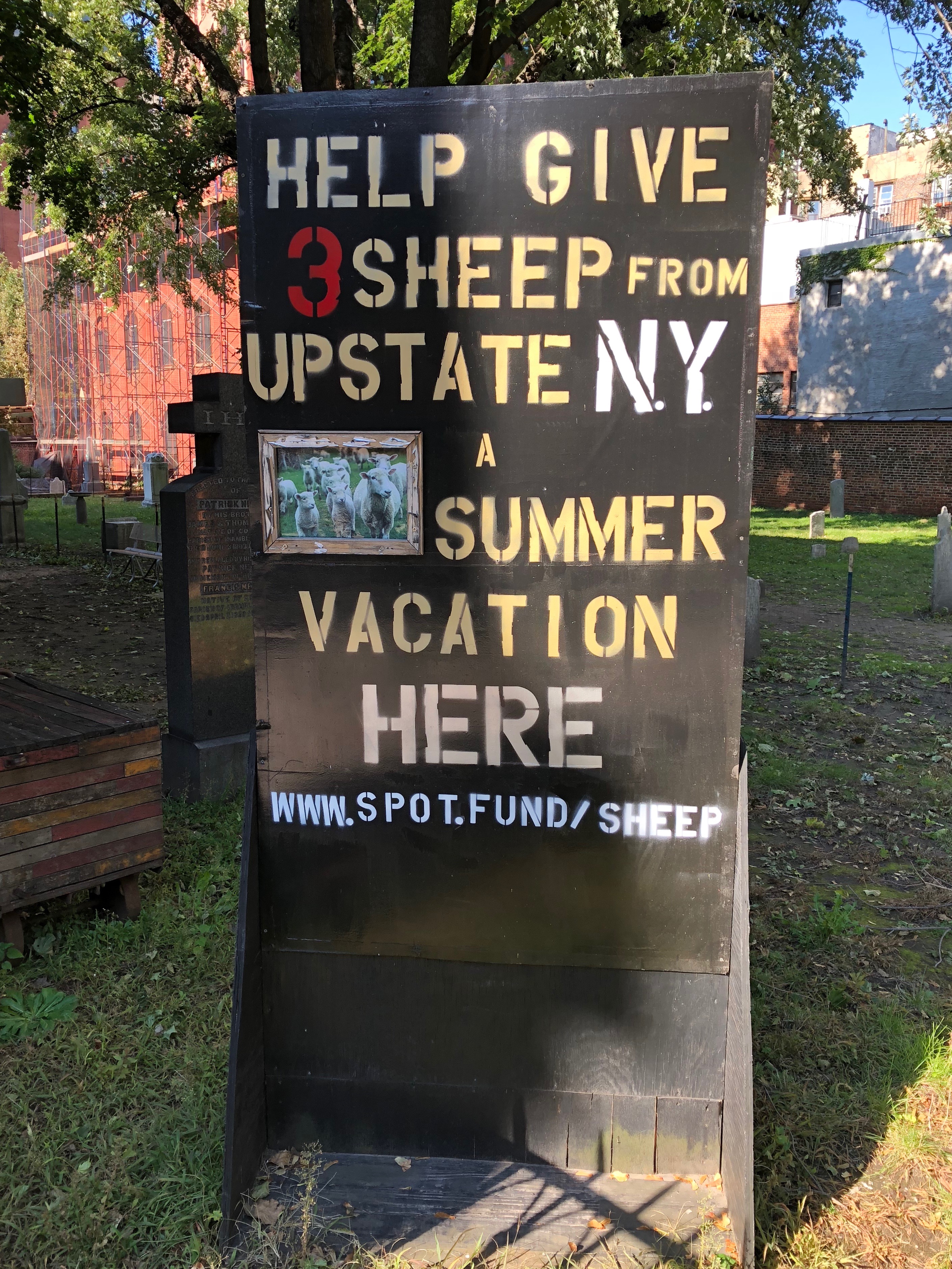
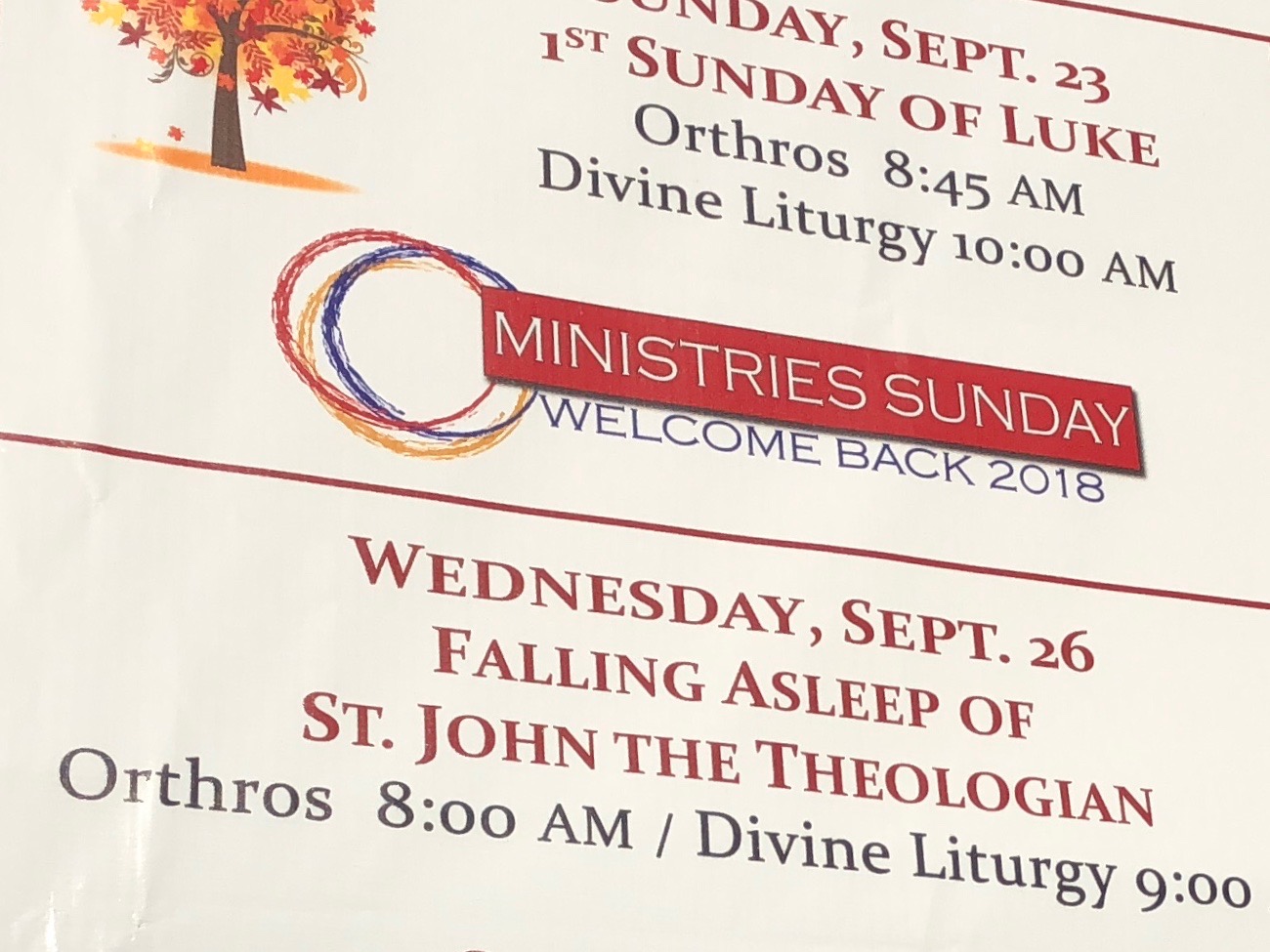
Next come two unusual church signs. The first is in the graveyard of the Basilica of St. Patrick on Prince Street. I’m guessing they wanted the sheep for mowing the grass. The second is from a Greek Orthodox church on West End Avenue that has a service called the Falling Asleep of St. John the Theologian.

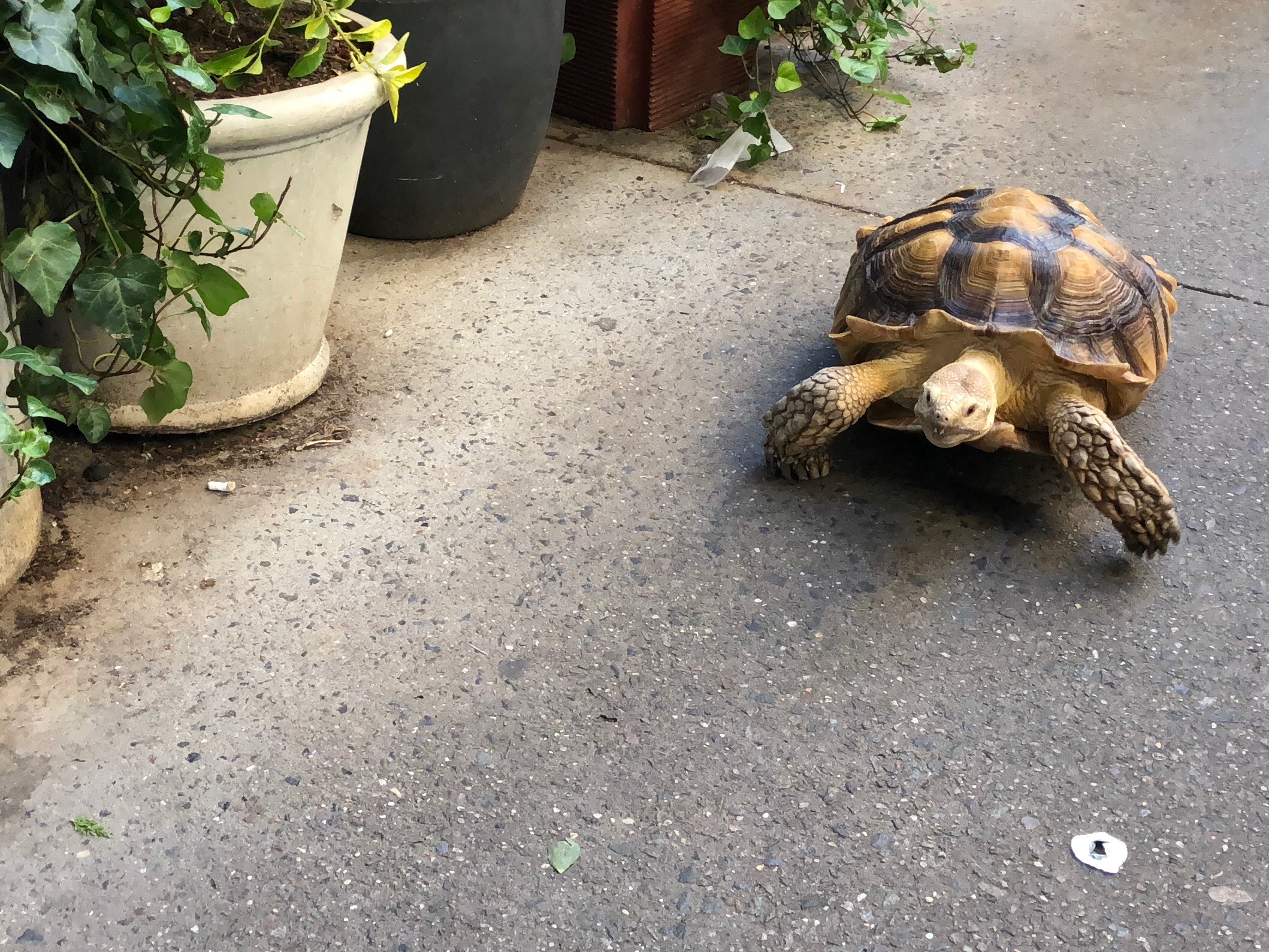
Finally, someone’s tortoise is running like a hare from paparazzi.

That’s New York for you.

102318-mosaic-watching-film-making-

102318-mosaic-NYC-film-making

102318-mosaic-NY-city-scene

102318-mosaic-NYC-scene

102318-mosaic-man-sees-miracle

102318-MTA-New-Yearmosaic-

102318-St-Pat-Basilica-graveyard

IMG-0674

IMG-0689


Read Full Post »

screen-shot-2012-07-15-at-10-09-57-am

Photo: MTA Arts for Transit
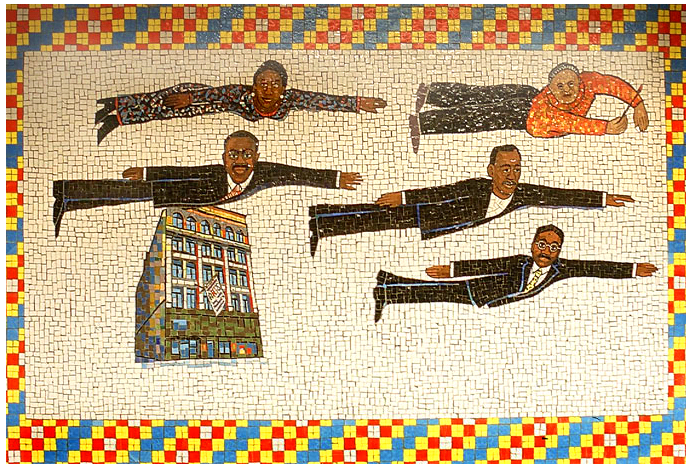
Faith Ringgold’s mosaic “Flying Home: Harlem Heroes and Heroines (Downtown and Uptown),” 1996, is one of the pieces of subway art featured in a PBS documentary.

I’m always amazed by the beauty of the mosaics in the New York subway, even the ones that merely tell you what street you’re at. It makes me happy to see that the city values them, too, and periodically cleans up the oldest ones. They go back as early as 1901.

My sister alerted me to an excellent PBS documentary about recent additions to the art in the subway system. You can read about it at the website Mosaic Art Now.

“For a delightful immersion into the history and current activities of the enormous underground museum that is the New York subway system’s Arts For Transit program, treat yourself to WNET Channel Thirteen’s free one hour video called ‘Treasures of New York: Art Underground.’ …

“Mosaic artist Steven Miotto gets major face time. His decades-long collaboration with artists of all stripes is a fascinating story in itself. When selected by a commissioned artist as a collaborating partner, he gets into their minds and hearts, leading them through the complex process of translating their vision and their graphic designs into mosaic ‘paintings for eternity.’ …

Faith Ringgold, speaks eloquently and nostalgically about the series of paintings – now mosaics – that portray the heroes of her Harlem childhood. Writers and musicians fly across the cityscape in flattened but vivid characterizations. I had the opportunity to interview her when she was in Miami last year, and she spoke about the challenges of trying to ‘make it’ as an African-American artist dealing with political themes at a time when the galleries favored the abstract.  Click here (http://bitly.com/yxGJ3R) to listen to that interview with her.”

See some of the beautiful new mosaics and watch the video here.

If you are up for more on transit-system art, be sure to check out an excellent article by Sarah Hotchkiss at KQED about what’s going on with San Francisco’s Transbay system, here.


Read Full Post »

Photo: beniculturali.gov.it
The newly discovered “commander’s house” was found while digging Rome’s Metro C subway line. It dates back to the 2nd century.

Nowadays, archaeologists get involved at construction sites early, especially if there’s a suspicion of buried culture deep down. It must be frustrating for builders to delay a project when something of historical significance is unearthed, but I like to think that some builders (or perhaps some low-level workers) find it exciting to be part of history. I like to imagine that once in a while an inspired worker goes back to school and becomes an archaeologist.

In Rome, a subway project first revealed unexpected treasure in 2016. Elena Goukassian has a report at Hyperallergic.

“In the summer of 2016, while digging the new Metro C subway line in Rome, workers came across a rare archeological find, a 2nd-century CE Roman barracks. [More recently] archeologists uncovered the remains of a ‘commander’s house’ (domus) connected to the barracks, ‘the first discovery of its kind in the Italian capital,’ according to the Agenzia Nazionale Stampa Associata (ANSA).

“Complete with marble floors, mosaics, and frescoes, the Hadrian-era house was found [roughly 39 feet] under the Amba Aradam station, close to the Basilica of San Giovanni Laterano. …

“Measuring 300 square meters (~3,200 square feet), the house contains 14 separate rooms, including a ‘bathhouse with underfloor heating.’

“The house will be dismantled piece by piece and temporarily moved, before returning to its original location and incorporated into the new metro station, which ‘will surely become the most beautiful metro station in the world,” [the head of Rome’s monuments authority, Francesco Prosperetti] told reporters.”

Great pictures at Hyperallergic, here.

Who wouldn’t love the mosaic owl discovered under a subway line in Italy?

Read Full Post »

A few photos.

The Barrow Bookstore featured a Thoreau quote on its kale-decorated book barrow at Thanksgiving: “My Thanksgiving is perpetual … for my wealth is not possession but enjoyment.” This shop off Main Street is the place to go for gently used and out-of-print books.

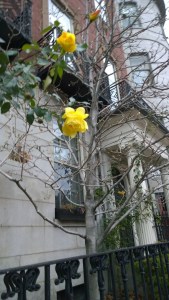
A yellow rose was blooming on Beacon Hill as late as November 19.

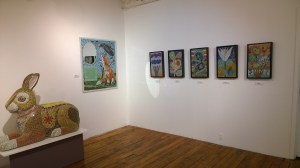
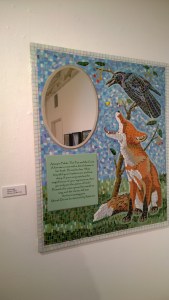
Fort Point Arts has a new show by six contemporary mosaic artists using a variety of techniques and materials. One favorite example: Aesop’s wisdom about the fox, the grapes, and the crow, rendered as a mirror.

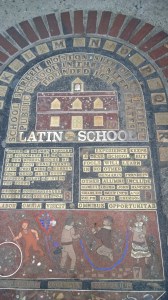
Finally, no matter how many times I have walked up and down School Street in Boston, I have failed until now to zero in on the reason it is called School Street. A Latin school was established there in 1635, before the founding of Harvard even, and many notables attended over the years. You should be able to read these names on the plaque in the sidewalk: Benjamin Franklin, Samuel Adams, John Hancock, Charles Bullfinch, and Ralph Waldo Emerson. Boston Latin is still going strong, but in a new location.

I love that the original Boston Lain was teaching Latin and Greek, languages I once knew a bit. I am also reminded that those languages were taught at outdoor hedge schools in 18th Century Ireland, when the English were blocking education by Catholics.

112915-thoreau-quote-barrow-bookstore

111915-rose-on-Beacon-Hill


112015-fort-point-art-gallery

112015-Aesop-fox-and-crow-mosiac


112515-Boston-School-Street

11-25-15-who-went-to-early-Latin-school


Read Full Post »

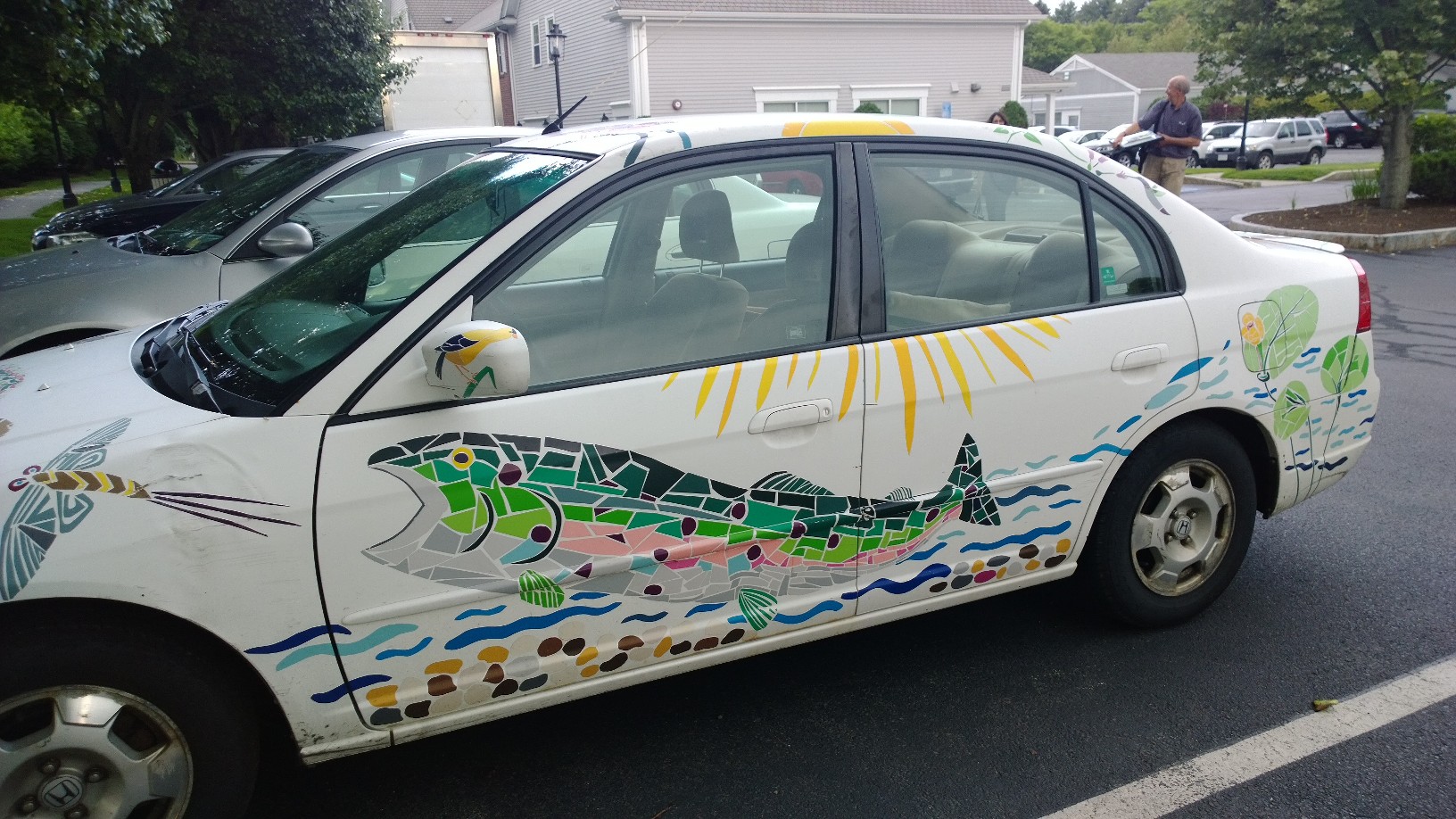
fish-car-made-with-vinyl-stickersHere are a few recent photos. The owner of the fish car showed up as I was taking the picture, so I heard the artist’s story. He threw a party and provided his friends with every shade of adhesive-backed vinyl and pairs of scissors. And they cut small pieces to create a kind of mosaic of the fish, the sea, the goldfinch on the mirror, and so on.

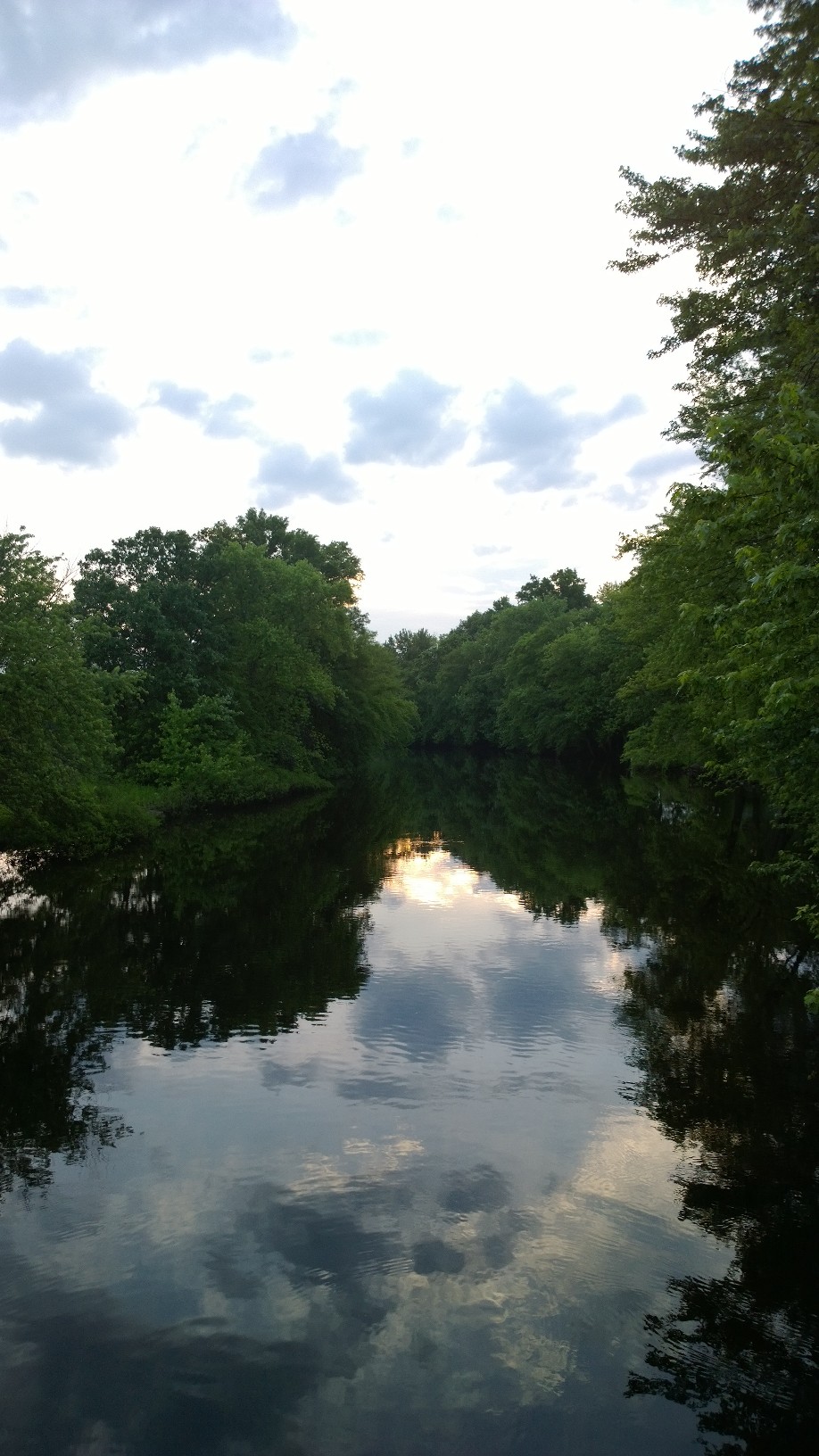
Next we have early morning looking over a river in Concord, then early-morning rowers on the Seekonk in Providence.

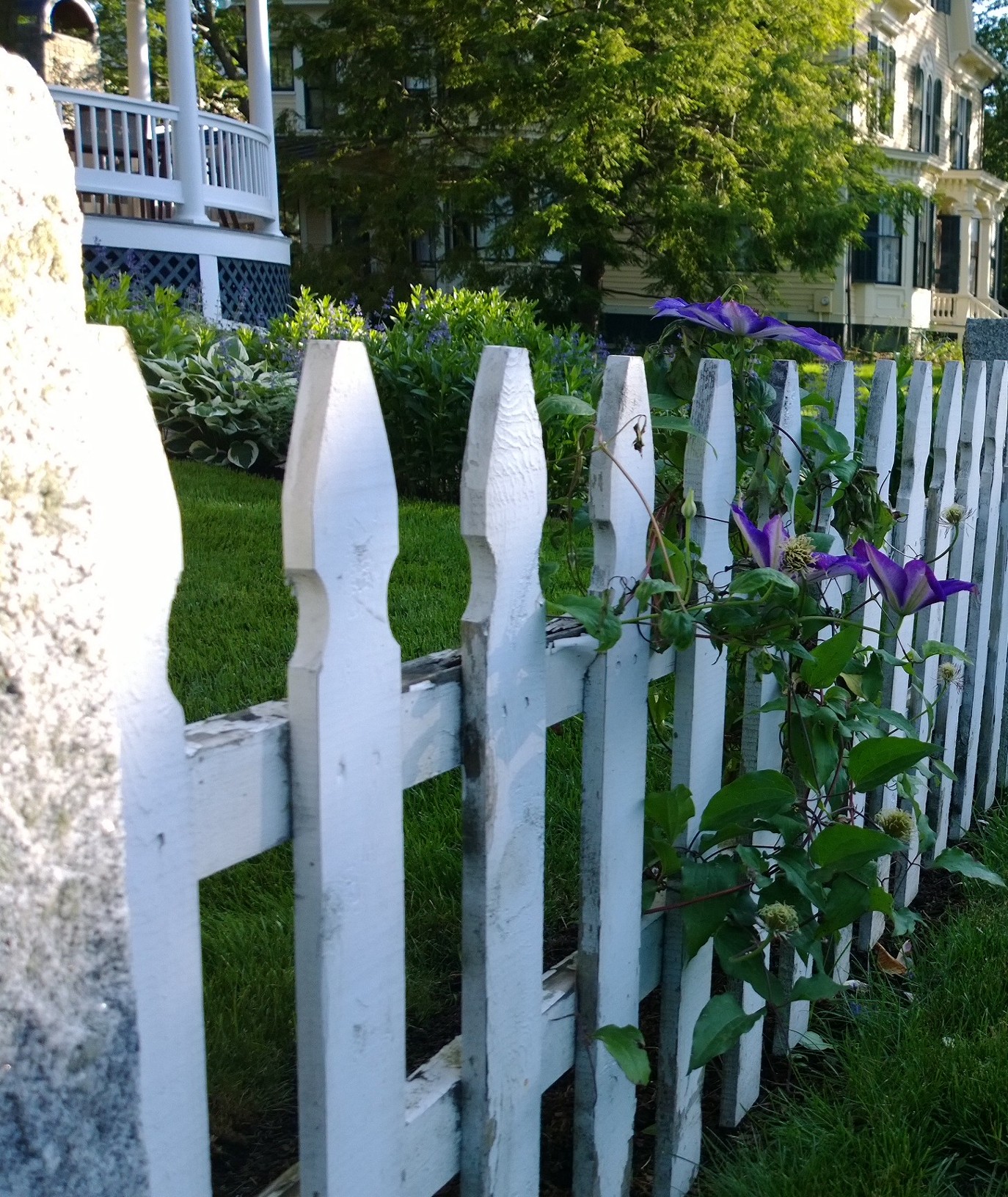
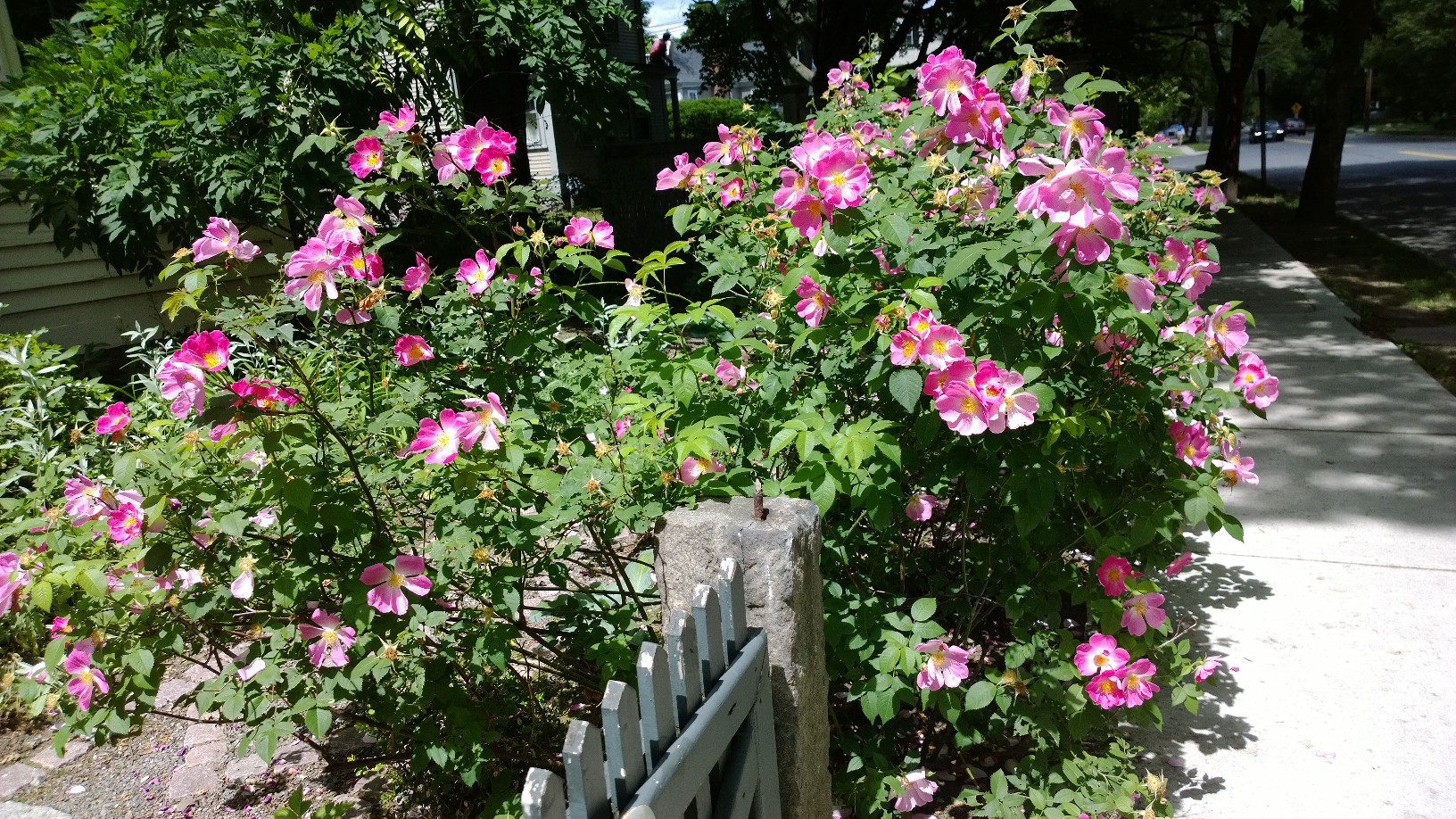
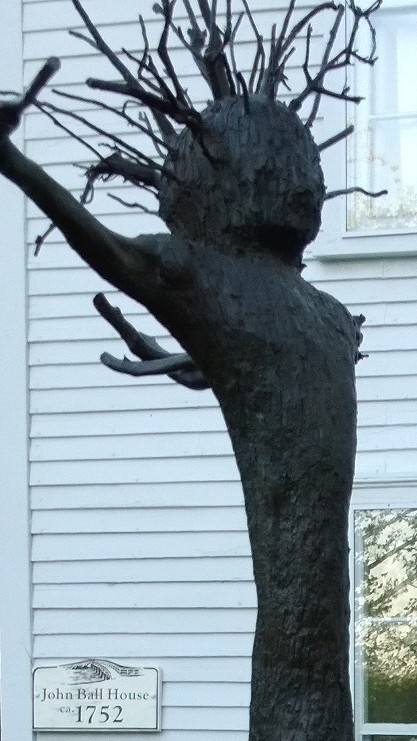
Early-morning roses follow on early-morning clematis. Modern sculpture does an early-morning stretch in front of the historic house that is now an art center.

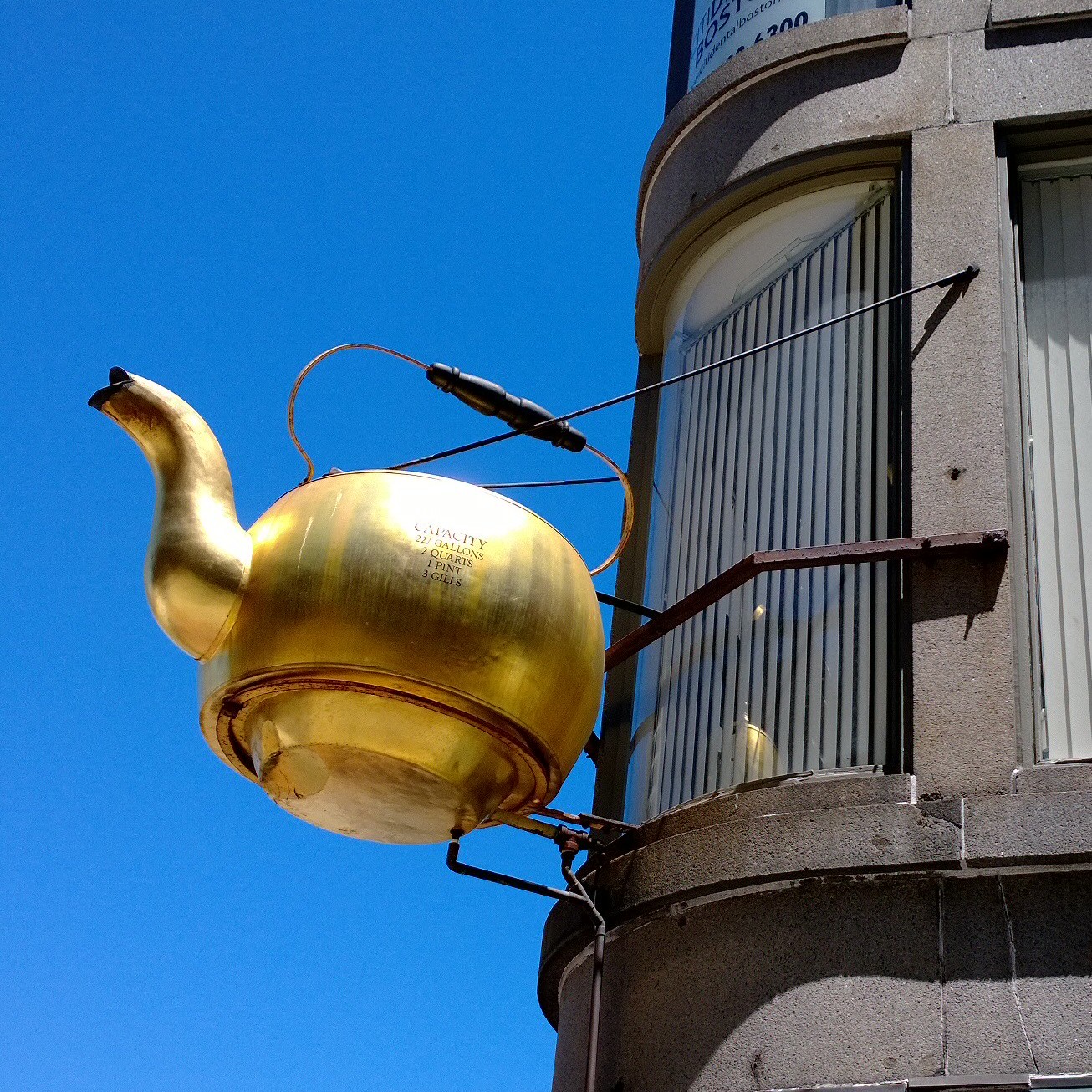
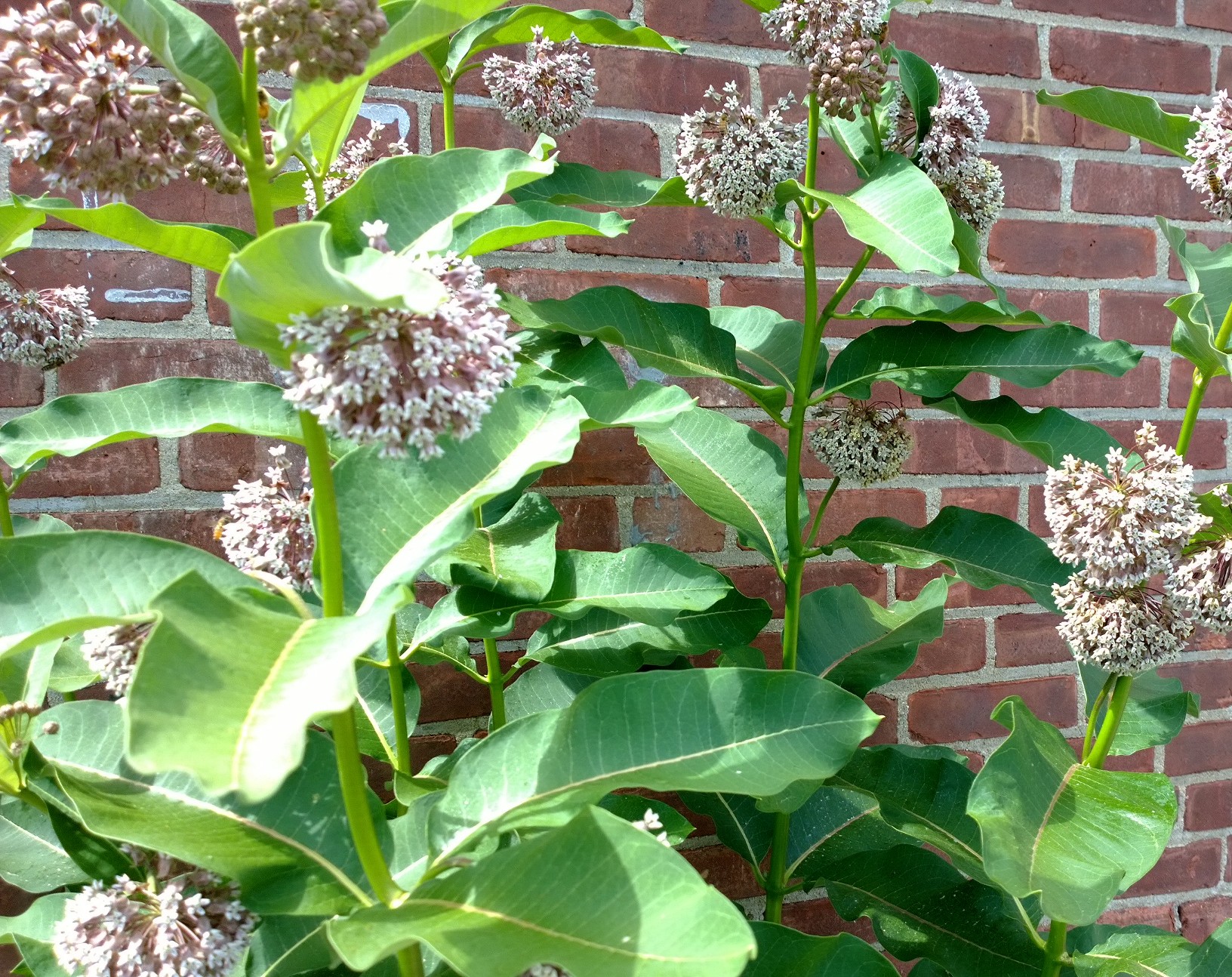
Then there is the teapot near Boston’s Government Center, private boats in Boston Harbor, and milkweed. (You’ll have to take my word for it that the milkweed was full of bees.)

061814-dawn-over-the-river


early-rowing-seekonk-river


061514-clematis

roses-on-fence


art-outside-Concord-Art-Assoc

teapot-near-govt-center-Boston


boat-dock-boston

milkweed-with-bees


Read Full Post »